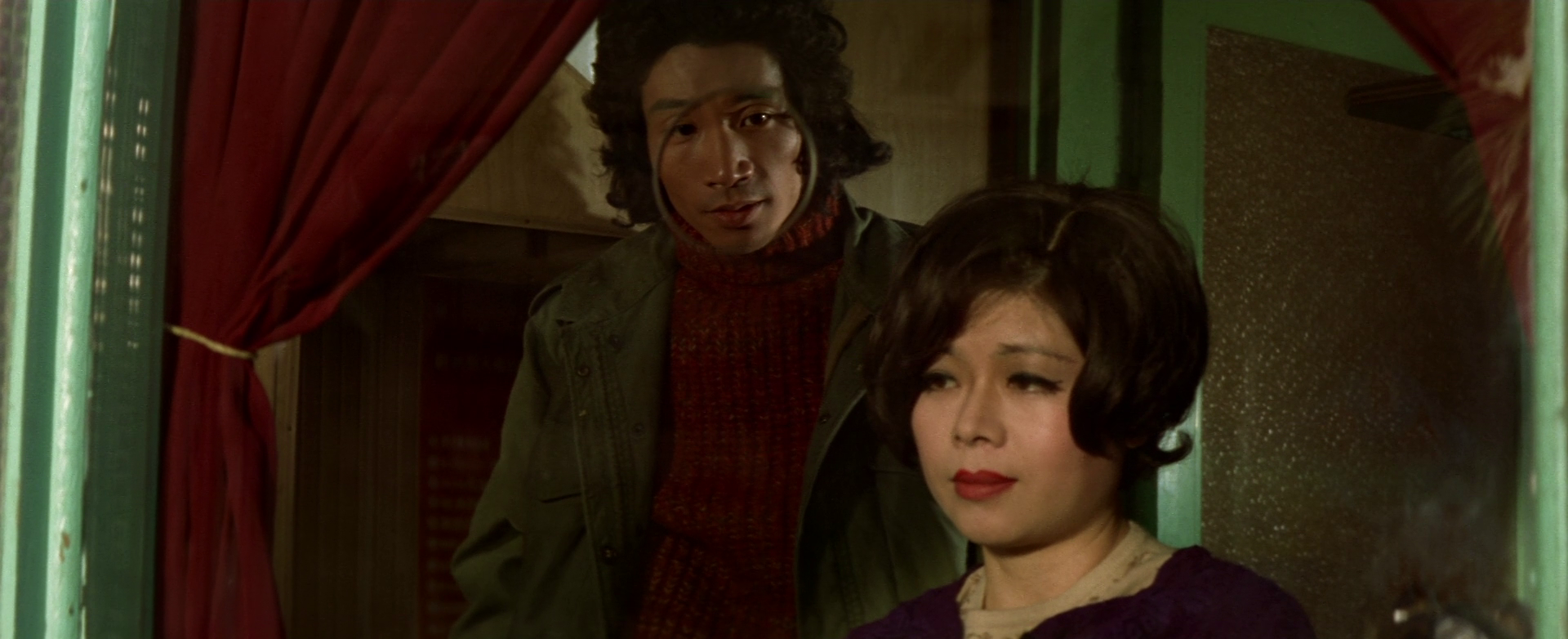
Everyone keeps asking Katsu (Toru Ohe) if he’s Katsu, but he continues to deny it. No matter how insistent those around him are that this is his hometown, Katsu refuses to acknowledge it while claiming no other identity. It is in a way, the ultimate negation of the self and the town to him is a kind of liminal space in which he’s only ever waiting for something or else putting off the act of leaving as if prevented from moving on.
This sense of listless rootlessness may reflect that of a youth generation orphaned after the collapse of the counter-culture movement. Katsu sings bawdy folk songs in the manner of a protest singer with nothing to protest. Yoshie (Moeko Ezawa), the wife of the owner of the cinema where Katsu is working, asks him if he’s a member of the far-left movement on the run from the authorities, but Katsu says he’s not smart enough for something like that, though later admitting that he does seem to be on the run from something.
Though she’s curious about his past, Yoshie doesn’t seem to question him about being Katsu and rather appears to want him to be an embodiment of her projected desires. She is too is trapped in this place, pinned behind the box office window with only a cat for company. Her husband rarely comes home and spends all his time with a mistress. He knows that Katsu is sleeping with his wife, but couldn’t care less. Or rather, he’s sort of grateful because it’s one less thing for him worry about. Yoshie, meanwhile, clings to him because Katsu is her only means of escape from this moribund existence. She pleads with him to stay and to love her, but Katsu doesn’t seem to be capable of love and is only sticking around for the occasional tryst.
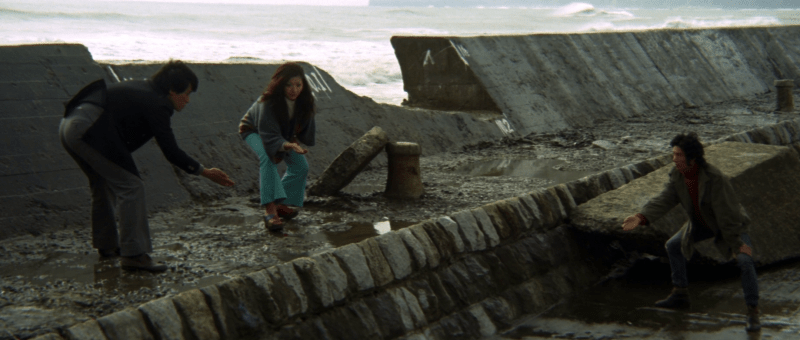
Catching sight of another couple having sex in the wild, he stops to peep and gets into a fist fight with the man, Mitsuo (Rebun Hori), after which they become awkward friends. Mitsuo sets him up with another girl despite Katsu’s insistence that he’s not hard up for them, but Katsu immediately tries to rape her as if asserting his primal masculinity. Ironically enough, he rides around with the banner for Sex Animal on his bike as a means of advertising and Yoko (Rie Nakagawa), the girl, later remarks that he’s reenacting the poster in his attempt to rape Sachiko (Chizuyu Azami). A sex animal seems to be what he’s become as he purses meaningless and impulsive sex that care little for the woman’s feelings, only about dominance and conquest. Sachiko later brings Katsu’s mother as if to remind him of his true identity but her rejects her, while the girl later gets the upper hand by telling both the men to get lost and no matter how much they might think they’ve won, they really haven’t.
As Katsu rapes Sachiko, Yoko and Mitsuo share ironic banter in voiceover offering a running commentary while doing nothing to help Sachiko. They too seem bored and listless, which might be why Yoko seems drawn to Katsu even if in him she perhaps sees a shadow of death which would be another way of leaving this town. He later tells her that he killed someone for money, offering the money as proof, though it’s a fairly meaningless gesture as is the money itself which doesn’t seem to have increased his possibilities. Probably, he doesn’t know what to do with it. He describes Yoshie’s warmth as like a womb, and is apparently in this town waiting either for death or to be reborn, though Yoshie’s own failed suicide attempt seems to suggest there is no real escape from this purgatorial existence. When he tells her he wants to go somewhere else, Yoshie tells him that it’s the same everywhere anyway, so leaving will make no difference and there is nowhere he can go.
The increasingly prosperous Japan of the mid-1970s in which the student movement has died seems to have no place for him. Kumashiro kicks back against this sense of ennui partly through his ironic use of censorship which cannot help but suggest what it hides. The large black bars and scratched out pools of white hint at an attempt to erase and oppress sexuality, which is the means by which Katsu and fails to find freedom, just as they oppress freedom of expression. Katsu meanwhile continues to block things out, rejecting his identity and behaving like a character from a film more hollow archetype than man just as Yoko seems to be an embodiment of his projected desires. She too may have only one destination available to her in this inescapable cycle of unfulfilled longing and crushing ennui.