Soul (失魂, Chung Mong-Hong, 2013)

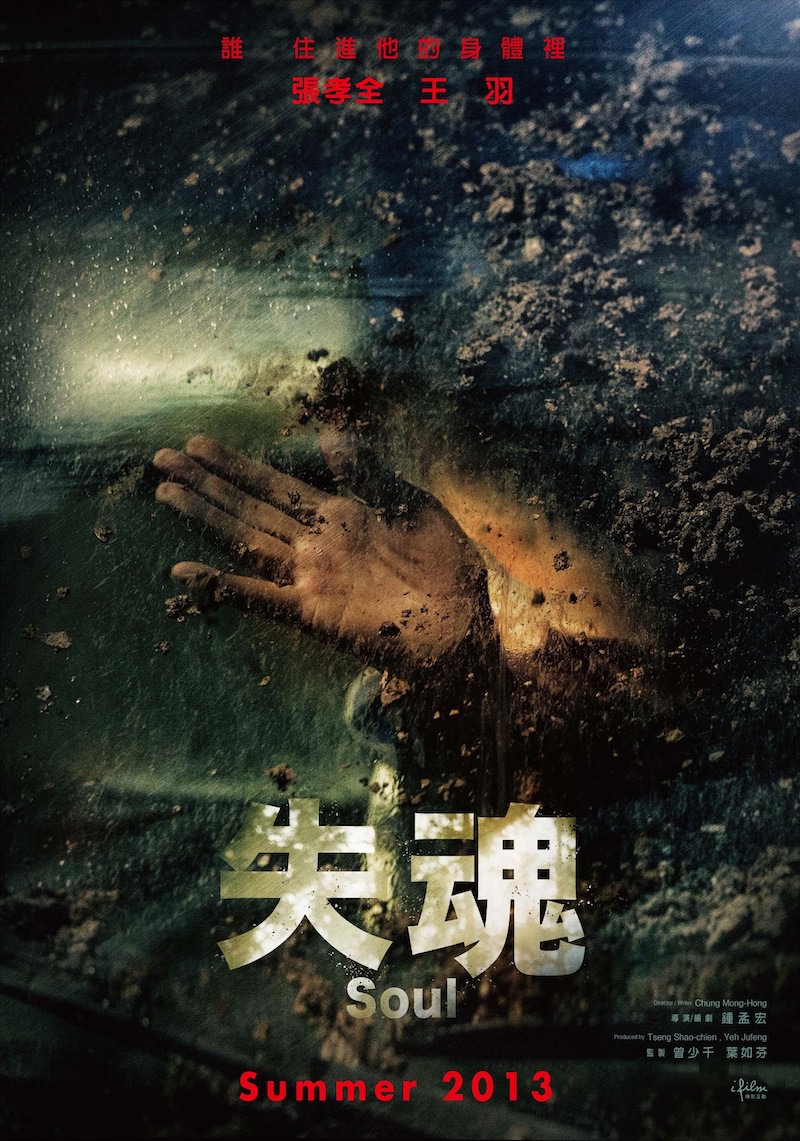
“Sometimes the things you see aren’t what they seem” the stoical father at the centre of Chung Mong-Hong’s supernatural psycho-drama Soul (失魂, Shī hún) later advises, for the moment creating a new, more convenient reality but also hinting at the mutability of memory and perception. Distinctly eerie and beautifully shot amidst the gothic atmosphere of the misty Taiwan mountain forests, Chung’s ethereal drama is at heart a tale of fathers and sons and the griefs and traumas which exist between them. 

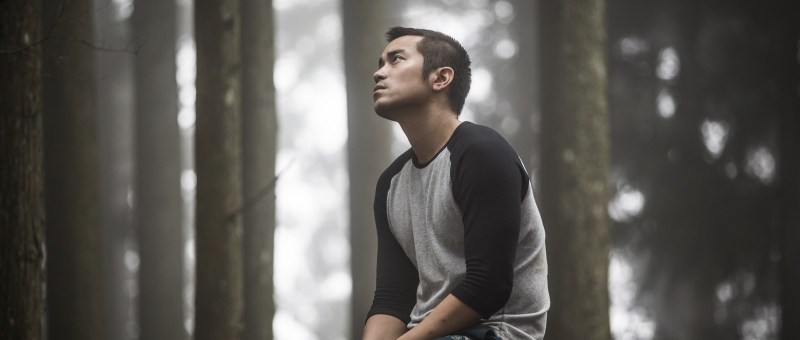
When sushi chef Ah-Chuan (Joseph Chang) collapses at work, no one can figure out what’s wrong with him, finally suggesting perhaps it may be depression. His boss instructs three of his colleagues to take him back to his apparently estranged family to recuperate for reasons perhaps not altogether altruistic. In a near catatonic state, Ah-chuan is barely present offering no response to his name and staring vacantly in no particular direction. When he finally does begin talking, it’s to insist he’s no longer Ah-Chuan explaining that this body happened to be vacant and so he’s moved in while Ah-Chuan will apparently be off wandering for some time. Ah-Chuan, however, then abruptly stabs his sister Yun (Chen Shiang-chyi), who had travelled from Taipei to look after him, to death and is discovered covered in blood sitting calmly over her body offering only the justification that she was intending to harm him. 

Wang (Jimmy Wang), Ah-Chuan’s father barely reacts to finding his daughter’s corpse, merely rolling her under a bench and attempting to mop up the blood when a family friend, Wu (Chen Yu-hsun), who happens to be a policeman suddenly comes calling. Wang is either infinitely pragmatic instantly deciding there’s nothing he can do for his daughter so he’ll try his best to save his son, or else near sociopathic appearing to care nothing at all that Yun is dead. Nevertheless, realising that Ah-Chuan may be dangerous he takes him up to his remote cabin near the orchid garden and locks him inside while trying to figure out what or who this presence that has his son’s appearance might or might not be. As he later says, this brief time together is the most he’s spoken to his “son” if that’s who he is in years even if acknowledging that this Ah-Chuan is quite different from the old. Yet if it were not for the obvious fact that others see and interact with him we might wonder if Wang had simply conjured Ah-Chuan, projecting his own latent violence, guilt, and regret onto the figure of his son who is also in a way himself. 

Yet whatever Ah-Chuan now is he finds himself growing closer to the old man, feeling a filial responsibility towards him that he otherwise would not own. He contacts a “messenger” from “across the woods” to help his find Ah-Chuan’s wandering soul to tell him that his dad’s not doing so well, entering a space of dream and memory that reveals the trauma at the heart of their relationship that might in part help explain Wang’s apparent coldness. Just as the two Ah-Chuans begin to blur into each other, so perhaps to father and son, Wang prepared to go to great lengths to protect his only remaining child while, ironically, offering some harsh words to his son-in-law for not better protecting “the only daughter I have”. 

Chung hints at a kind fluidity of consciousness, each episode of “death” or “possession” accompanied by that of another creature, fish gasping and flapping around, a tired bug trying desperately to cling onto a leaf but failing, or a pair of snakes twisting themselves into a knot. Is Ah-Chuan merely experiencing a protracted dissociative episode under the delusion he is “possessed” while his essential selves “wander” the recesses of his consciousness or has someone else, a second soul, taken up residence in a body left vacant by a man who was in a way already “dead”. Wang in fact hints at this, telling the doctor that he had sometimes thought of Ah-Chuan as dead, or at least wondered if he might be seeing as they had long been estranged, suggesting that the Ah-Chuan of his heart and memory was already gone Wang believing himself to have killed something in him through his own violence when he was only a child. 

The two men mirror each other, growing closer yet also further apart as they make their way back towards the truth that might set them, metaphorically at least, free. Often viscerally violent not least in its jagged, abrupt cuts to black that feel almost like dropping out of consciousness or else waking fitfully with brief flickers of other realities, Chung’s eerie, ethereal drama ventures into the metaphysical but in its strangely surreal final scenes returns us to a more concrete “reality” in which the way home is found it seems only in dreams. 


Original trailer (Traditional Chinese / English subtitles)

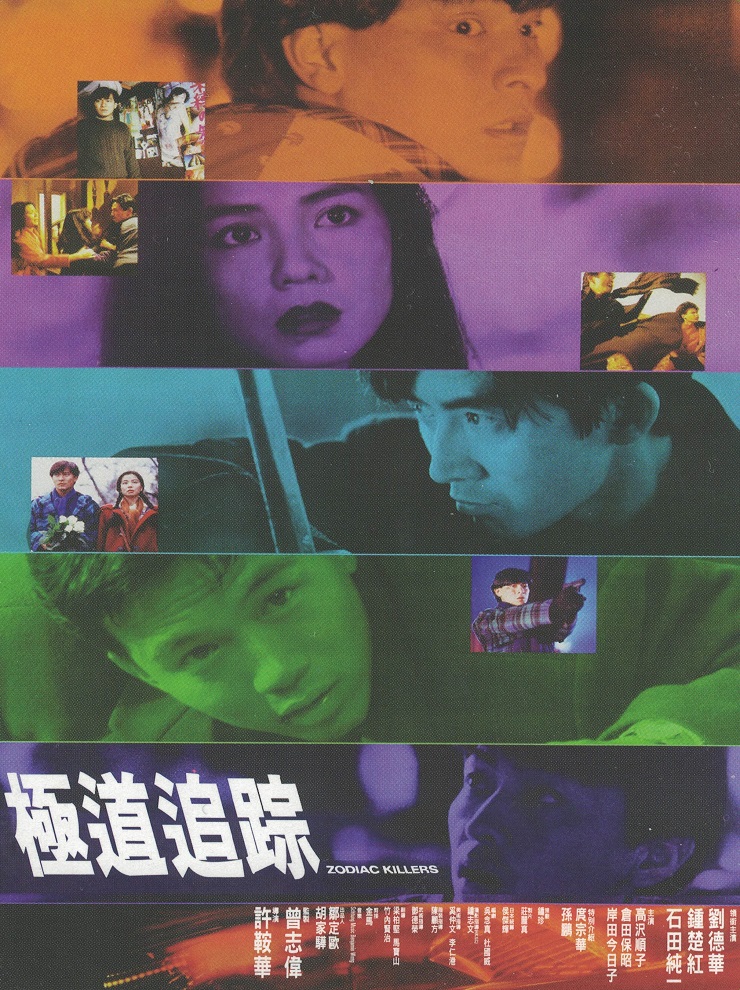
Zodiac Killers (極道追踪, Ann Hui, 1991)

Melancholy exiles seeking a better future find only futility in the dying days of the bubble economy in Ann Hui’s 1991 gangster drama, Zodiac Killers (極道追踪). The English title is admittedly misleading, there’s seemingly no connection to any kind of “zodiac” and no hint of conspiracy murder except those forced by the world’s enduring cruelty, though the Chinese is perhaps equally so meaning something like “yakuza pursuit” which is accurate but only to a point.

The hero, Ben (Andy Lau Tak-wah), has come to Tokyo from Hong Kong to study film but rarely goes to classes, preferring to learn how to make money instead. Making the most of the then affluent city, he works as a tour guide for Chinese tourists, dutifully delivering the men to the strip clubs of Shinjuku in the evenings for kickbacks and giving his boss a kicking when he tries to stiff him out of the agreed amount, heading to his second job in a kitchen immediately afterwards. “Man does not live to make money only, you must learn to spend it too”, he explains to his friend, Chang (Tou Chung-hua), persuading him to come hang out in a swanky bar they’ve been invited to by Ben’s shady relative Ming (Suen Pang) who is currently trying to make it as a yakuza by marrying the boss’ mama-san sister Yuriko (Junko Takazawa). It’s at the bar that Ben first sets eyes on Tieh-lan (Cherie Chung Chor-hung), a young woman from the Mainland in Tokyo studying at a Japanese language school and working as a hostess to make ends meet though as she points out “not every Chinese girl likes to work here”, instantly offending Ming but interestingly not Yuriko who seems sympathetic if embarrassed. 

All of them are in Tokyo because at that moment in time Japan looked like the future, though the window was rapidly closing. Tieh-lan is beginning to wonder why she came. Her friend Mei-mei (Tsang Wai-fai) has ended up in an unwanted sexual relationship with the man who sponsored their visas, Harada (Law Fei-yu), who nevertheless continually sexually harasses Tieh-lan. “Why did we come here?”, Tieh-lan asks Mei-mei, “for our future or for men? You can debase yourself at home, why have you come to Japan to do it?”. Ben later asks something similar of Ming who freely admits that he is prepared to sell his body for influence, “satisfying” Yuriko in order to buy influence with her brother and be admitted into his yakuza clan. The Tokyo they inhabit is one steeped in exile. They surround themselves with other Chinese migrants, be they from the Mainland, Hong Kong, or Taiwan, and congregate in the seedier parts of Shinjuku living on the fringes of society, working as bar hostesses, or gangsters, or in kitchens. For Ben whose bachelor pad student dorm is adorned with posters of Bruce Lee and Rocky, his purpose is more adventure and youthful longing for freedom than escape which is why he makes a point of ignoring his loving mother’s phone calls, but even he struggles to find what he needs on the unforgiving streets of a hostile city. 

That hostility is first brought home to him by a gang of ultranationalist bikers flying the imperial flag one of whom threatens him with a samurai sword (a moment which is tragically echoed in the film’s nihilistic conclusion). They are not, however, the only ones feeling displaced, as a heartbreaking cameo from golden age star Kyoko Kishida as an ageing geisha makes plain. Asano (Junichi Ishida), the melancholy yakuza with whom Tieh-lan has fallen in love much to Ben’s disappointment, declares himself “always a loner”, returning to Tokyo after years of exile in South America. An orphan, Asano laments that the beach he visited as child no longer exists and the city he’s come home to is changed beyond all recognition. Perhaps for that reason he falls for melancholy exile Tieh-lan as they bond in a shared sense of hopeless rootlessness. 

With the surprise introduction of Asano, Hui transitions into the moody noir with which the film opened, shots of Andy Lau plaintively looking back at the shore from a boat on the open sea intercut with Cherie Chung walking sadly through an empty, neon-lit city. Asano hoped for reconciliation but found only betrayal, there can be no home for exiles even if they return. The trio’s broken dreams find their final expression in the nihilistic violence of a non-existent yakuza war. Asano’s final gesture was one only of futility, no one wants to hear his inconvenient truth because the clans in question have already made “peace” and are intent on working together for future prosperity. “Your heart is too soft for this wicked world” Ming says of Ben but it’s a statement that rings true for them all, living life by movie logic in which good will eventually triumph. Ming sees no point in returning to Hong Kong because he’d be a nobody, tragically believing that being a gang boss’ brother-in-law is close enough to somebody in Shinjuku. Only Chang, who came to Japan to look for his missing sweetheart, manages to keep himself safe but largely, as we later find out during a rather bizarre sequence featuring a surprise outdoor porno shoot, because he does not yet know that his dream is futile too. A chronicle of a world in collapse, Zodiac Killers leaves its marginalised heroes with no place left to run, permanent exiles denied safe harbour sailing towards a promised horizon with no land in sight.


Original trailer (no subtitles)

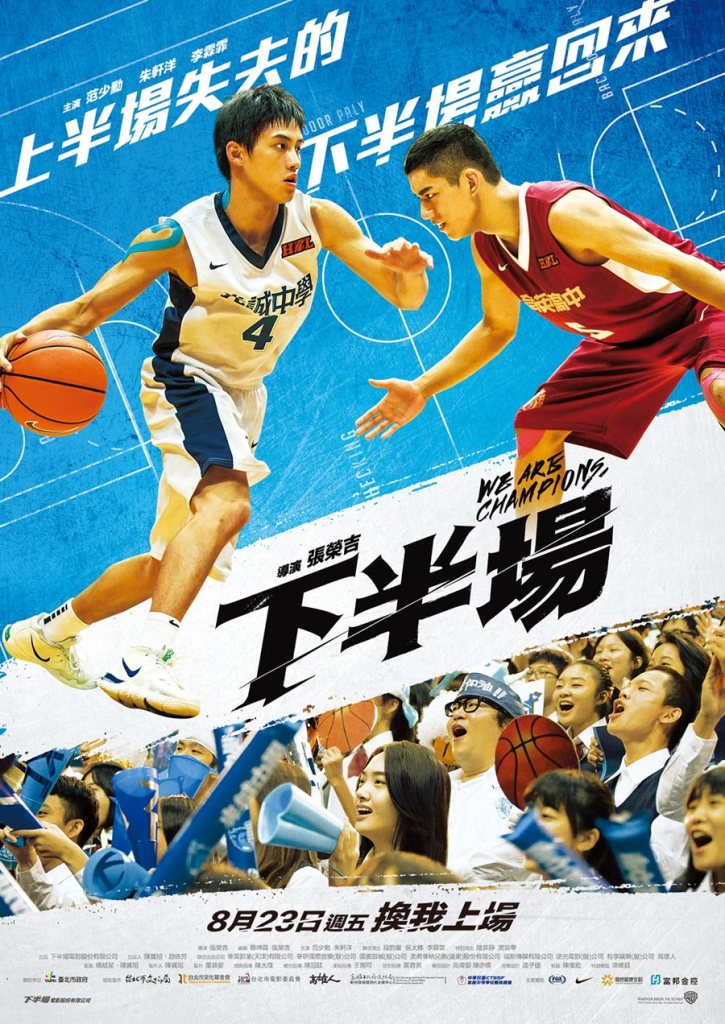
We Are Champions (下半場, Chang Jung-Chi, 2019)

What is the best way to “win”, team work and camaraderie or authoritarian austerity? Two brothers find themselves on different paths in Chang Jung-Chi’s high school basketball drama We Are Champions (下半場, Xiàbàn Cháng), but in true manly fashion eventually end up repairing their fracturing familial relationships through sporting competition as a healthier substitute for physical violence (though that too is not entirely absent). Who wins and who loses might not be as important as it first seems, but then again perhaps there is more than one way to “win”. 

Close in age, big brother Hsiu-yu (Fandy Fan Shao Hsun) and little brother Tung-hao (Berant Zhu Ting-Dian) live with an aunt and uncle in the backroom behind their seamstressing factory and spend most of their free time playing basketball out in the street with other youngsters. The boys’ mother passed away when they were small and times being what they are, their dad has had to travel to find work and is not able to check in on them very often. The reason the guys play basketball so much is that they hate living with their permanently angry uncle and want to move out, putting the money they make through street games and part time jobs into an escape fund. 

Things begin to change for them when they’re spotted by a basketball coach from a local high school who gives them a few tips and offers them a shot at joining the team. Tung-hao is keen, but Hsiu-yu has given up on his dreams of basketball glory because of a hearing injury that saw him mercilessly bullied on the middle school courts. Tung-hao ends up getting scouted by an elite school, Yuying, but the authoritarian coach flatly tells him that there’s no space for Hsiu-yu because he doesn’t allow disabled people on his team. Tung-hao is conflicted, but ends up joining after fighting with his uncle and storming out of the house. He’s sorry for his brother, but all he wants to do is play basketball so he’s taking his chance. Hsiu-yu is happy for him and wishes him well, eventually taking the sympathetic coach who spotted them at the outdoor court up on his offer to play for decidedly small but scrappy high school team Kuang Cheng. 

Kuang Cheng isn’t perfect, Hsiu-yu still gets bullied because of his hearing aid at least to begin with, but unlike Yuying they run on a principle of solidarity. The coach is a supportive, paternal presence that Hsiu-yu finds particularly useful in the continuing absence of his father and motivates his players through trying to give them the confidence to be all they can be. Over at Yuying, meanwhile, they all wear identical black uniforms, have buzz cuts, and spend all their time drilling with military discipline. The coach has no time for the personal lives of his players, abruptly kicking one guy off the team simply because he was late to practice. Yuying is, to put it bluntly, a bedrock of ruthless authoritarian elitism. They think they’re entitled to win because they’re the best, and they won’t hear any arguments to the contrary. 

These ideological differences continue to place a strain on the brothers’ relationship with Tung-hao remaining conflicted about his decision to leave his brother behind and doubling down on the manly militarism of his coach’s philosophy to make it seem worthwhile. Having not seen him in a long while, Hsiu-yu calls out to his brother across the basketball court but Tung-hao ignores him, eventually answering only after Hsiu-yu returns to let him know that he’s just had a call about a relative being seriously injured and taken to hospital. Tung-hao tells him he’s not interested in family drama because he’s here to practice with his new buddies before crossing the line back towards the other side. 

Despite all of that, however, good brother Hsiu-yu never gives up on family feeling and continues to support Tung-hao in his heart even while they’re rivals on the court. Tung-hao is increasingly conflicted by his coach’s determination to destroy his brother, even using his hearing problems against him, but is eventually healed by Hsiu-yu’s forgiveness even as he prepares to shatter all his dreams. Sometimes you can “win” by being the better man, or by accepting someone’s forgiveness, or just doing your best, and other times you can throw a ball through a hoop all on your own. Victories come in all shapes and sizes, but true champions are the ones who know how to lose with grace and win with magnanimity. 


Originally scheduled as the centrepiece of the suspended Season 10, We Are Champions streams for free in the US on June 12 as part of Asian Pop-Up Cinema’s Mini-Focus: Taiwan Cinema Online. Viewers in Italy will also be able to catch it streaming as part of this year’s online Udine Far East Film Festival.

Original trailer (English subtitles)