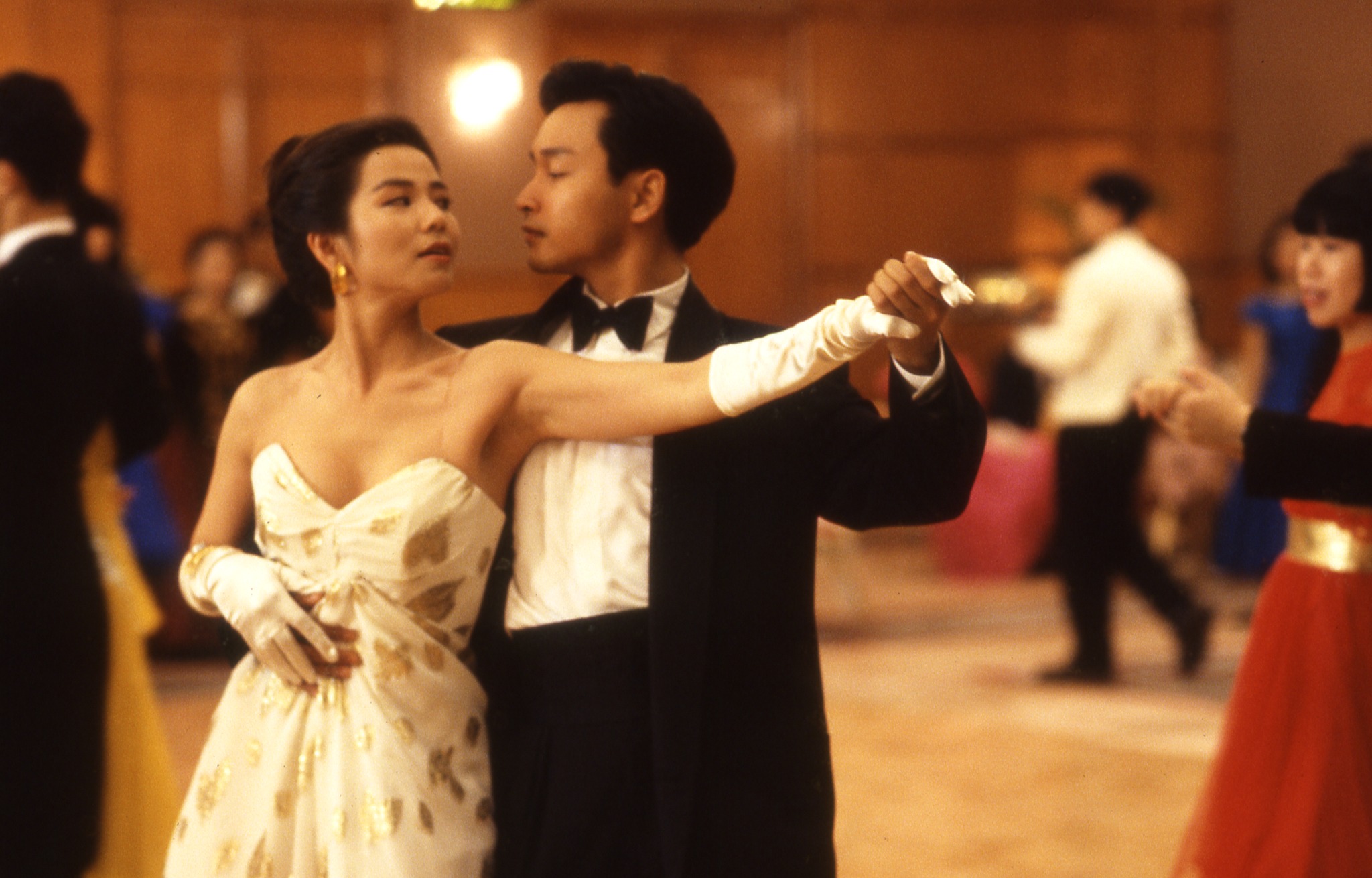
Once a Thief (縱橫四海, John Woo, 1991)

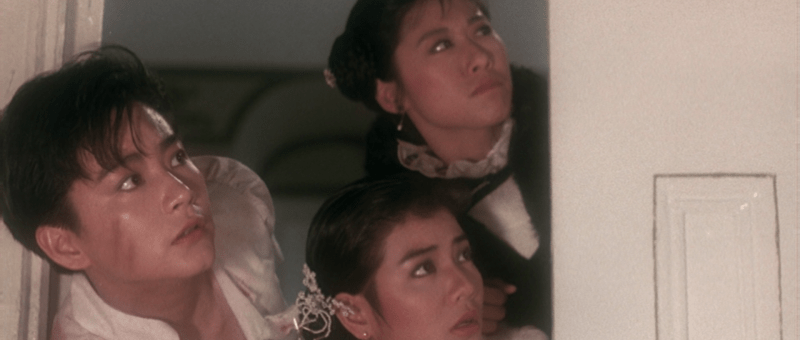
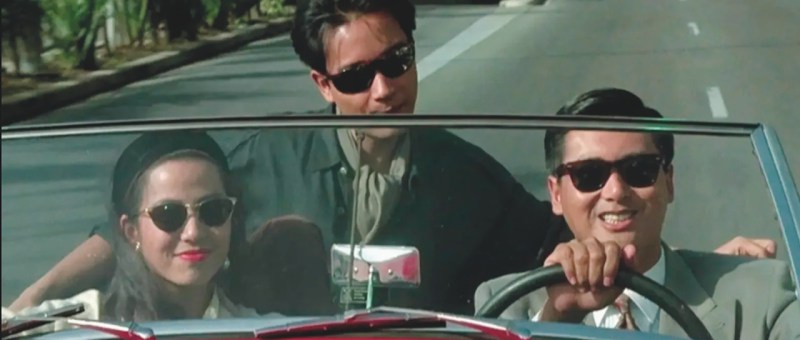
A trio of orphans raised to be international art thieves rebel against their mentor when a job goes wrong in John Woo’s throwback to his early comedies, Once a Thief (縱橫四海). A breezy, Lupin III-esque adventure, the film on one level seems to be satirising the vacuity of extreme wealth as the rich spend huge amounts of money to buy stolen paintings they can’t show to anyone while painting our heroes as anti-capitalist rebels for whom the money is but a secondary concern.

They are, after all, having quite a lot of fun with their complicated heists. Though the robberies are finely tuned affairs, we also see that the team are not infallible and often riding on bravado such as Rice Pudding (Chow Yun-fat) failing to land smoothly in the getaway car and being left trailing behind alone. The trio take it in good humour and have a real sense of camaraderie in which they’re forever playing tricks on each other. Not even the intrusion of romantic rivalry can disrupt their friendship as it becomes clear that both Jim (Leslie Cheung) and Rice Pudding are in love with Red Bean (Cherie Chung), with Rice Pudding originally having the upper hand.

There is something quite funny about the fact that the other two are called “Rice Pudding” and “Red Bean” but “Jim” is just “Jim”. Despite the romantic rivalry, there’s also a sense of homoerotic tension that exists between the two men, with Jim cheekily flirting with a portrait artist while boasting of the gang’s success. The European setting adds a sense of sophistication and international glamour that recalls classic Hollywood cinema, while hinting a new globalised society. The gang are wanted by “Interpol”, and the Zenigata-like figure of a Hong Kong policeman (Paul Chu) who acts as a kind of alternate father figure watching over the trio since they were children and trying to get them to give up their life crime.

The man who raised them, Boss Chow (Kenneth Tsang), meanwhile, was cruel and mainly sees them as tools to be used to enrich himself. When Rice Pudding loses the use of his legs and uses a wheelchair to get around, he is more or less disowned as no longer useful, only to be rescued by their Godfather. Rice Pudding, however, is surprisingly adept and able to perform some killer dance moves in his chair not to mention fighting bad guys in much the same way he did before. But despite the cartoonish fun, there is an unexpectedly violent aspect to the gang’s final heist as Jim strangles guards and Rice Pudding throws plastic explosives at their heads which he then detonates remotely. 

Read Bean, meanwhile, is largely relegated to making travel arrangements and hanging around at airports to waiting to find out if her friends have survived or not. She also acts as a kind of interpreter, speaking French to facilitate their deals which suggests Chow trained them in specific ways, though she does not always translate accurately, trying to put the guys off accepting a risky job from a wealthy Frenchman because she wants to get out of their life of crime and settle down even while Rice Pudding and Jim still seem to be addicted to the thrill of the chase. Their mission sees them sneak into a chateau and steal a painting from a hidden cellar they can only access through a secret door while avoiding booby traps like electrified floors and laser fields they cheekily dance the limbo through. 

For them, it was never really about the artwork nor the money, but the sense of achievement in stealing without being caught while running rings around law enforcement. This sense of rebellion which extends in a way towards the capitalist system in which the super wealthy squabble over trinkets while elderly women starve, is eventually turned back on Chow whom they end up defying in order to break free of his control. Chow got greedy, double-crossing just about everyone in order to make his stolen painting more valuable when he sells it and then steals it back again. Filled with zany humour and expertly crafted action sequences, the film never takes itself all that seriously while revealing in the roguish antics of the three gentlemen thieves living their best lives rebelling against a world ruled by wealth and privilege through ingenious crime.


Trailer (English subtitles)

Peking Opera Blues (刀馬旦, Tsui Hark, 1986)

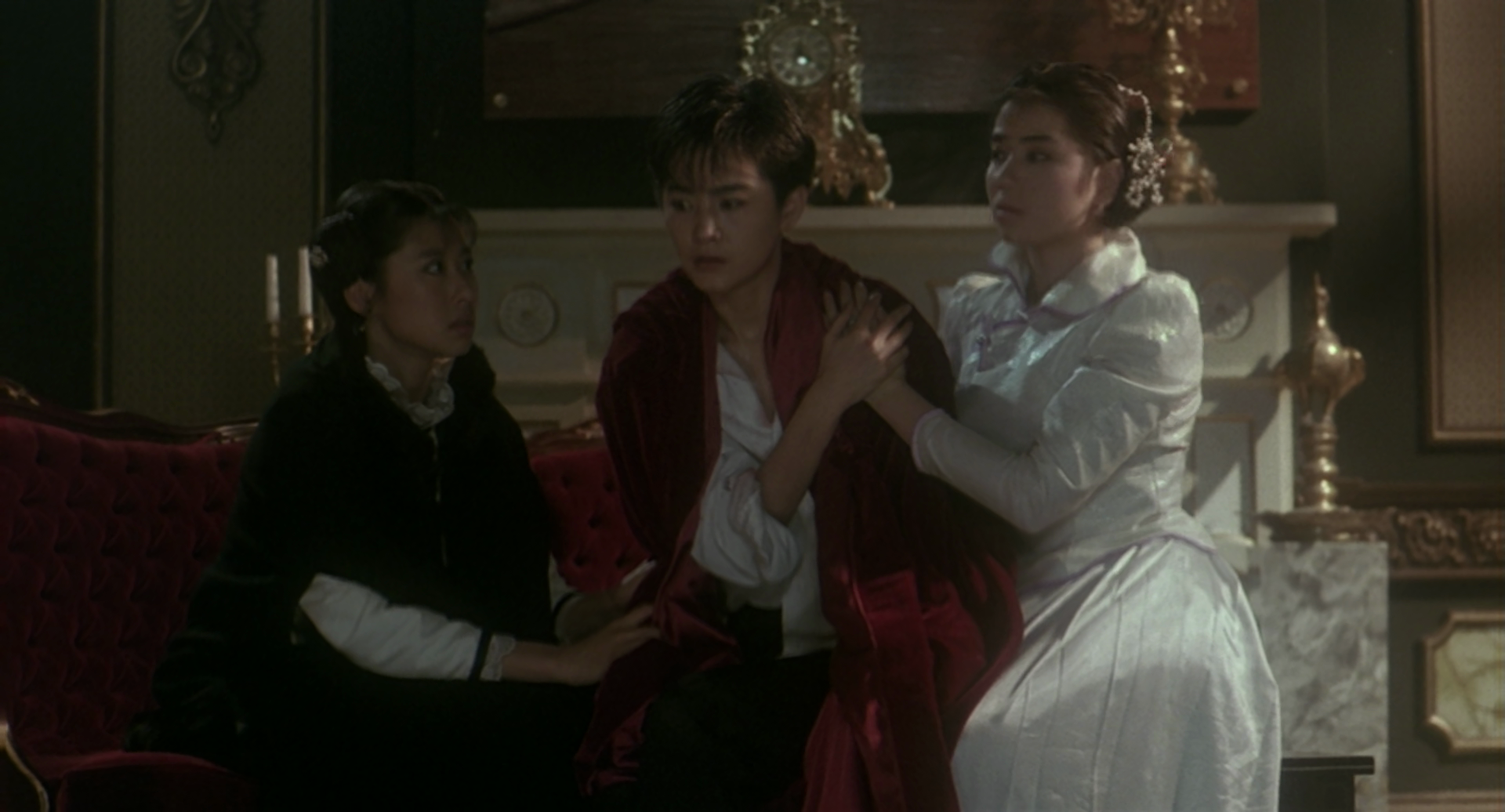
“There aren’t enough heroes,” the leader of an opera troupe shouts, “quick, those of you who were villains change your clothes.” Only the names change in Tsui Hark’s Peking Opera Blues (刀馬旦). Politics and history are mere performance in the revolving doors of power. Set in 1913 at the beginning of the warlord era that followed the end of the Qing dynasty, the film is also speaking to a nascent sense of Handover anxiety. As one warlord falls, another rises to take his place. When he too is defeated, the first warlord returns. Meanwhile, our heroes stand still as history happens around them without their consent, longing for an age of democracy which even now has not yet arrived.

As the film opens, warlord Tun (Huang Ha) is carousing with courtesans and boasting about his 28 wives when his soldiers begin to revolt because they’ve not been paid. Tun has lost all his money gambling and decides to flee while the soldiers loot the palace. His downfall both satirises the innate corruption of power and its anonymous nature as he is soon replaced by the governor who can’t believe his luck. The governor is accompanied by his androgynous daughter, Tsao (Brigitte Lin), who has short hair and dresses in military uniforms, and has recently returned after studying abroad. 

Unbeknownst to her father, Tsao is secretly working for the democratic resistance. President Yuan Shi Kai has been borrowing money from foreign banks to finance a bid to restore the monarchy. Tsao knows her father is the broker and plans to steal secret documents to expose Yuan’s corruption and thereby usher in a democratic revolution. Yet she also finds herself conflicted in the necessity of betraying her father knowing that she is the only person in whom she has absolute trust. In the absence of a son, he plans to hand his empire to her, only she doesn’t really want it. To find her new democratic future, she will have to let the old world die and that means letting men like Tun and her father go with it.

Her mission is contrasted with that of Bai Niu (Sally Yeh), the daughter of a Peking Opera troupe manager. Bai Niu’s greatest desire is to be on stage, but women are barred from performing. All female roles are played by men who are also sexuality exploited, essentially pimped out to important people and supporters to ensure the troupe’s survival. Though Tun and Tsao may openly vie for power, the real source of power lies with corrupt police chief, Liu (Ku Feng), who insists on sleeping with the troupe’s biggest star. When he flees, he gives Bai Niu his spot and permission to perform despite her father’s objections, but what she perhaps doesn’t realise is that this “freedom” also traps her with the threat of sexual exploitation, something she is later subject to while assisting with Tsao’s plan to knock her father out so she can steal the key to his safe.

Wandering musician Sheung Hung (Cherie Chung), meanwhile, is much more accustomed to using her sexuality to get by and seeks freedom through riches. She wants the money so that she can flee abroad, which is both an expression of a desire for broader horizons and that to escape the chaos of the warlord era. It also, of course, speaks to the present day and those planning to get rich quick and leave Hong Kong before the Mainland takes over. The three women in ways reflect different reactions to the looming anxieties of the Handover, Tsao the revolutionary staying to fight for democracy, Bai-niu holding fast to her family and culture and trying to live through it as best she can, and Sheung Hung who is planning to leave.

They are all, however, at the mercy of circumstance and there’s an essential irony in the film’s conclusion which leaves them all scattered, vowing to reunite when the chaos is over and democracy has been restored, given that this likely means they will never meet again as the promised age of democratic freedom has not yet come to pass. Yuan is exposed, but it makes no difference. As if signalling the absurdity, Tsui flashes back to the laughing face of the Peking Opera performer with which the film opened. Rocketing between farcical humour, the subversive homoeroticism between the women, the grim reality of authoritarianism as Tsao finds herself tortured by the resurgent Tun, and the kinetic energy of the finely crafted action scenes, Tsui finds a genuine sense of poignancy in the futility of of the heroes’ quest. Finally, the best weapon they have is friendship and solidarity in which they protect and save each other while otherwise at the mercy of history being made all around them that they are otherwise powerless to influence.


Trailer (no subtitles)

Zodiac Killers (極道追踪, Ann Hui, 1991)

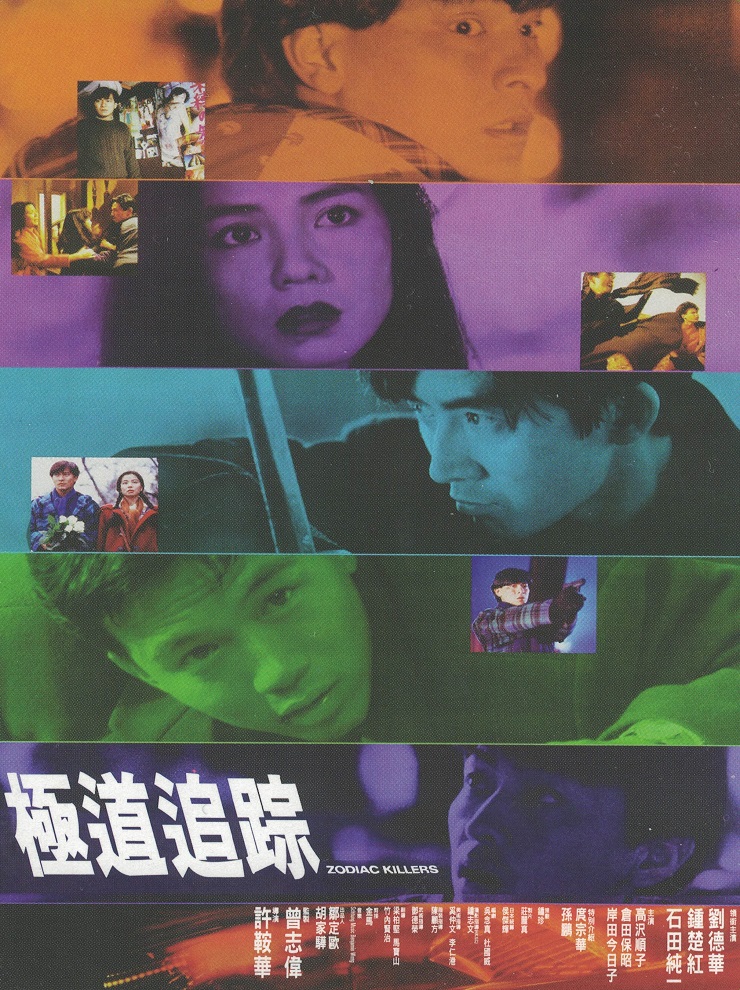
Melancholy exiles seeking a better future find only futility in the dying days of the bubble economy in Ann Hui’s 1991 gangster drama, Zodiac Killers (極道追踪). The English title is admittedly misleading, there’s seemingly no connection to any kind of “zodiac” and no hint of conspiracy murder except those forced by the world’s enduring cruelty, though the Chinese is perhaps equally so meaning something like “yakuza pursuit” which is accurate but only to a point.

The hero, Ben (Andy Lau Tak-wah), has come to Tokyo from Hong Kong to study film but rarely goes to classes, preferring to learn how to make money instead. Making the most of the then affluent city, he works as a tour guide for Chinese tourists, dutifully delivering the men to the strip clubs of Shinjuku in the evenings for kickbacks and giving his boss a kicking when he tries to stiff him out of the agreed amount, heading to his second job in a kitchen immediately afterwards. “Man does not live to make money only, you must learn to spend it too”, he explains to his friend, Chang (Tou Chung-hua), persuading him to come hang out in a swanky bar they’ve been invited to by Ben’s shady relative Ming (Suen Pang) who is currently trying to make it as a yakuza by marrying the boss’ mama-san sister Yuriko (Junko Takazawa). It’s at the bar that Ben first sets eyes on Tieh-lan (Cherie Chung Chor-hung), a young woman from the Mainland in Tokyo studying at a Japanese language school and working as a hostess to make ends meet though as she points out “not every Chinese girl likes to work here”, instantly offending Ming but interestingly not Yuriko who seems sympathetic if embarrassed. 

All of them are in Tokyo because at that moment in time Japan looked like the future, though the window was rapidly closing. Tieh-lan is beginning to wonder why she came. Her friend Mei-mei (Tsang Wai-fai) has ended up in an unwanted sexual relationship with the man who sponsored their visas, Harada (Law Fei-yu), who nevertheless continually sexually harasses Tieh-lan. “Why did we come here?”, Tieh-lan asks Mei-mei, “for our future or for men? You can debase yourself at home, why have you come to Japan to do it?”. Ben later asks something similar of Ming who freely admits that he is prepared to sell his body for influence, “satisfying” Yuriko in order to buy influence with her brother and be admitted into his yakuza clan. The Tokyo they inhabit is one steeped in exile. They surround themselves with other Chinese migrants, be they from the Mainland, Hong Kong, or Taiwan, and congregate in the seedier parts of Shinjuku living on the fringes of society, working as bar hostesses, or gangsters, or in kitchens. For Ben whose bachelor pad student dorm is adorned with posters of Bruce Lee and Rocky, his purpose is more adventure and youthful longing for freedom than escape which is why he makes a point of ignoring his loving mother’s phone calls, but even he struggles to find what he needs on the unforgiving streets of a hostile city. 

That hostility is first brought home to him by a gang of ultranationalist bikers flying the imperial flag one of whom threatens him with a samurai sword (a moment which is tragically echoed in the film’s nihilistic conclusion). They are not, however, the only ones feeling displaced, as a heartbreaking cameo from golden age star Kyoko Kishida as an ageing geisha makes plain. Asano (Junichi Ishida), the melancholy yakuza with whom Tieh-lan has fallen in love much to Ben’s disappointment, declares himself “always a loner”, returning to Tokyo after years of exile in South America. An orphan, Asano laments that the beach he visited as child no longer exists and the city he’s come home to is changed beyond all recognition. Perhaps for that reason he falls for melancholy exile Tieh-lan as they bond in a shared sense of hopeless rootlessness. 

With the surprise introduction of Asano, Hui transitions into the moody noir with which the film opened, shots of Andy Lau plaintively looking back at the shore from a boat on the open sea intercut with Cherie Chung walking sadly through an empty, neon-lit city. Asano hoped for reconciliation but found only betrayal, there can be no home for exiles even if they return. The trio’s broken dreams find their final expression in the nihilistic violence of a non-existent yakuza war. Asano’s final gesture was one only of futility, no one wants to hear his inconvenient truth because the clans in question have already made “peace” and are intent on working together for future prosperity. “Your heart is too soft for this wicked world” Ming says of Ben but it’s a statement that rings true for them all, living life by movie logic in which good will eventually triumph. Ming sees no point in returning to Hong Kong because he’d be a nobody, tragically believing that being a gang boss’ brother-in-law is close enough to somebody in Shinjuku. Only Chang, who came to Japan to look for his missing sweetheart, manages to keep himself safe but largely, as we later find out during a rather bizarre sequence featuring a surprise outdoor porno shoot, because he does not yet know that his dream is futile too. A chronicle of a world in collapse, Zodiac Killers leaves its marginalised heroes with no place left to run, permanent exiles denied safe harbour sailing towards a promised horizon with no land in sight.


Original trailer (no subtitles)

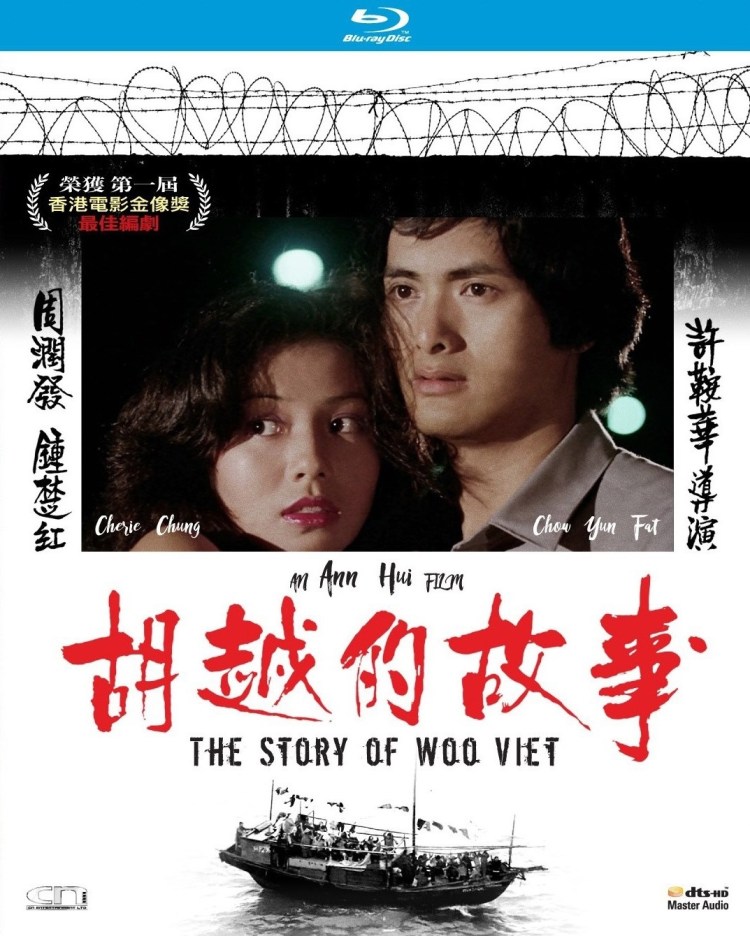
The Story of Woo Viet (胡越的故事, Ann Hui, 1981)

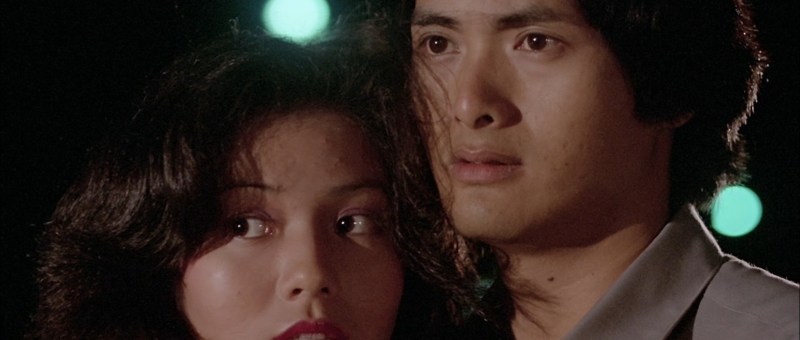
Displacement and a legacy of violence conspire against a young man attempting to escape the trauma of war in the second in Ann Hui’s “Vietnam trilogy”, The Story of Woo Viet (胡越的故事, AKA God of Killers). Starring a young Chow Yun-fat as Chinese-Vietnamese refugee headed to Hong Kong with a hope of making it to the US, Woo Viet’s story suggests that violence may be impossible to escape in a world increasingly corrupted by human indifference while only crushing disappointment awaits for those who live on dreams alone. 

After years fighting for the South Vietnamese army, Woo Viet (Chow Yun-fat) is one of many young Chinese-Vietnamese men attempting to escape through claiming asylum in Hong Kong so that he can eventually apply for a visa to the US. The reasons he needed to leave are readily apparent. Even on the overcrowded, primitive boat on which he arrives in Hong Kong, Woo Viet has already witnessed several atrocities in which fellow passengers were dumped overboard, killed, or marooned on isolated islands. He has become the surrogate father to a little boy who is now alone on the boat because his dad was killed by the guards, and subsequently becomes a target for Viet Cong “special agents” after they strangle his friend in his sleep for having seen something he shouldn’t have.  

Luckily, Woo Viet has a friend in Hong Kong, a female “penpal” Lap Quan (Cora Miao Chien-Jen) who sent him letters he rarely answered all through the war. After Woo Viet is forced to kill a special agent in the refugee camp in order to ensure his own survival, he finds himself relying on Lap Quan to help him organise a fake passport. He no longer has the luxury of waiting to do things properly, he needs to leave the country as soon as possible. The fake passports available are, for some reason, Japanese meaning he has to learn to at least sound plausible by picking up a few handy phrases to fool the border guards. It’s in the language classes that he meets fellow refugee Shum Ching (Cherie Chung Chor-hung) who is travelling to the US because a former customer who has already emigrated told her that he wanted her to come no matter what the cost. The problem is the HK trafficker has not been honest with either of them. Woo Viet may have a decent shot at actually making it to the US, but the girls are to be sold on at the first available Chinatown, which in this case is Manila where they’re waiting for a connecting flight. Having bonded with Shum Ching, Woo Viet surprises the traffickers by giving up his chance to go to America to stay in the Philippines to try and rescue her. 

“Whichever Chinatown it is, I think my situation will be the same” Woo Viet writes back to Lap Quan, keeping up a correspondence which becomes increasingly dishonest as he struggles come to terms the shattering of all his dreams. Trapped in a Philippine Chinatown, he discovers the only way he can save Shum Ching is by serving the gangsters that “bought” her from the HK trafficker. Yet, also in his letter to Lap Quan he claims that “it is much simpler to kill people here compared to Vietnam”, while suggesting that the reason his situation is “the same” in Chinatowns the world over is that he has no real identity and can therefore “solve people’s problems with no problem” which is why he’s ended up working as a hired gun for HK gangster Chung. 

Even so, he still harbours hopes of making it to the US when he’s made enough money to “redeem” Shum Ching who is already dreaming of finding a tiny house for them both where she can cook him proper Vietnamese food. While in Manila, he’s partnered with a slightly older man, Sarm (Lo Lieh), who came from Hong Kong a decade earlier. Woo Viet thinks he should have earned plenty of money after a decade making kills for Chung, so he doesn’t understand why he’s still here rather than off somewhere else enjoying a better life. He still doesn’t quite see that Sarm is a vision of his possible future, a man so beaten down by life that his only goal is to drink himself into an early grave. Sarm no longer believes in a future for himself, but he wants to believe in one for Woo Viet, and so he tries to help him but brotherhood, like love, is no match for the casual cruelty of the world in which they live. 

Woo Viet’s floating rootlessness is perhaps an echo of a potential anxiety in a Hong Kong facing its own sense of displacement with the handover less than 20 years away, as perhaps are his feelings of hopelessness as he attempts to write himself into a better future in his now constant letters to Lap Quan in which he somewhat insensitively talks of his love for Shum Ching born precisely out of that same sense of rootless desperation. Soon after they meet, the pair attempt to visit a flower market at night but their romantic moment is disrupted by another refugee couple being caught and dragged away by police, instantly throwing a fatalistic shadow over their innocent connection. All Woo Viet wanted was an ordinary settled life, perhaps adopting that orphaned little boy from the refugee camp and bringing him with them as he and Shum Ching claim a better life in the US, but even small dreams are seemingly impossible in a world in which the predominating force is not love or compassion but violence.  


Women (女人心, Stanley Kwan, 1985)

Women posterThings are changing in ‘80s Hong Kong, but when it comes right down to it are there really any more choices than there were in the past? Stanley Kwan would become known for his fiercely female led filmmaking and his debut, Women (女人心), is indeed a statement of intent if heeling close to the Shaw Brothers house style and possessed of a particularly mid-80s kind of cynicism. Marriage falls under the spotlight but for all of its minor oppressions and petty aggravations the net seems almost impossible to escape.

Kwan opens with a strangely cheerful family scene which quickly turns sour as housewife Bao-er (Cora Miao Chien-Jen) is excluded by her husband, Derek (Chow Yun-Fat), and son, Dang-dang (Leung Hoi-Leung), who close the bathroom door on her before declaring a pissing contest. Irked, Bao-er finds herself mildly enraged by the sight of her husband’s undies and decides to take this opportunity to tell him she wants a divorce. She’s found out all about Derek’s fancy woman Sha-niu (Cherie Chung Cho-Hung) and has had enough. Decamping to her mother’s with Dang-dang in tow, Bao-er finds herself the latest member of her friends’ “forever happy single women’s club” but remains conflicted when it comes to considering the further direction of her life.

The “forever happy single women’s club” is itself somewhat confused in its outlook in that most of Bao-er’s friends are not really intending to remain single forever but are hoping to find a new partner, if perhaps also enjoying playing the field while they look. None of them are really very happy with the status quo and the various get-togethers at which they enjoy lavish buffets and copious amounts of alcohol are mostly filled with bawdy discussions about men and sex, much to the consternation of the rather uptight Bao-er. 

In fact, Bao-er’s “refinement” seems to be one of the chief issues in her marriage which is perhaps why Derek has found himself intwined with a clingy free spirit who quickly moves into the family home and does her best to stake a claim on little Dang-dang but is unwilling to keep house with the consequence that the apartment is quickly overrun with old newspapers and empty food cartons – a sight which fair breaks Bao-er’s heart when she’s forced to visit only to be presented with some of Sha-niu’s patented “spicy soup”. During a candid conversation with her mother, Bao-er reveals that throughout her married life she’d gone to great lengths to preserve her feminine mystique only for Derek to take off with a woman prepared to let it all hang out. Her mother, broadly supportive of her choices, advises her to think carefully about her future. If the marriage was unhappy then it’s best to call it quits, but if Sha-niu is just a passing fad then perhaps she’s one worth putting up with in the absence of other options.

Bao-er’s mother seems to think that ignorance is bliss when it comes to a healthy marriage, but as a “modern” woman, Bao-er expected more. Even so, despite not requesting alimony (she only wants money to cover Dang-dang’s expensive private school fees), we don’t see Bao-er looking for work though it’s also clear she isn’t looking to remarry in the immediate future. Like many of her friends, Bao-er seems to have her doubts about living as an “independent” woman and continues to be irritated by Derek’s relationship with Sha-niu even while attempting to firmly close the door on her marriage.

The end of the relationship does however give her an opportunity to consider what it is that she wants, even if middle-class conservatism ultimately wins out. This is particularly true of an unexpected attraction to a lesbian friend which she chooses not to pursue seemingly because of the social taboo. Despite being fully out and accepted by the group, Terry (Cheung Yin-Gwan) is also pitied by some of the other members who believe she is locked out of the conventional family life most of them are looking for because she is looking for a woman and not a man. Even if it’s true that Bao-er can only really be fully herself with her female friends, she and the others still hanker after male companionship and do not feel complete without it.   

The major theme which emerges is that marriage and family are essential, if imperfect, and must be maintained even if perhaps superficially as the closing text which conveniently condones Derek’s poor behaviour while allowing Bao-er her “revenge” implies. A slightly cynical point, to be sure but undercut by Kwan’s sense of empathetic irony which asks what other real choices Bao-er has while refusing to condemn her for the ones she eventually makes. Socially conservative as it may be, the fact remains that possibilities are bleak for women of a certain age in ‘80s Hong Kong which remains a playground for men like Derek while women like Bao-er and her friends are left with only complicit means of personal rebellion.


Women screens as part of the 2019 Chinese Visual Festival on 5th May at King’s College London where director Stanley Kwan will be present for a Q&A.

Celestial Pictures trailer (English subtitles)

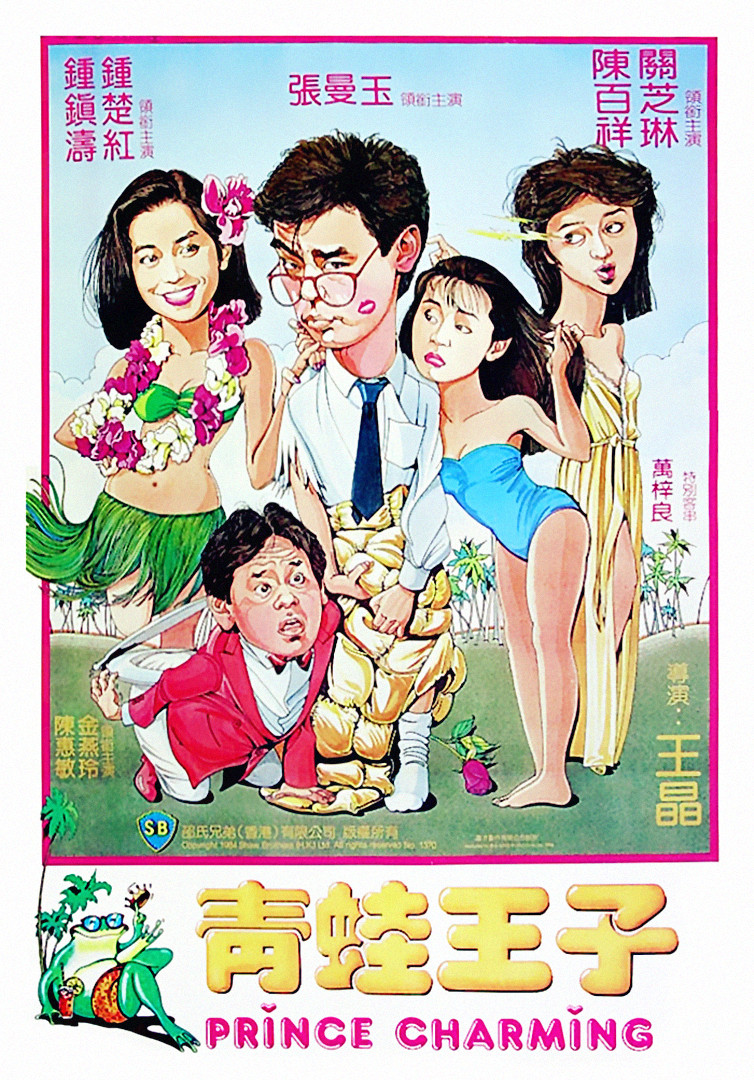
Prince Charming (青蛙王子, Wong Jing, 1984)

Prince charming 84 poster“This isn’t a film from the 1930s!” a confused sidekick exclaims part way through Wong Jing’s zany ‘80s comedy Prince Charming (青蛙王子). He’s right, it isn’t, but it might as well be for all the farcical goings on in Wong’s hugely populist, unabashedly zeitgeisty romp through a rapidly modernising society. Starring popstar Kenny Bee, Prince Charming also marks the feature film debut of the later legendary Maggie Cheung who would find herself making a fair few disposable comedies in the early part of her career. All the Wong trademarks are very much in evidence from the sometimes crude humour to the random narrative developments and deliberate theatricality but it has its charms, even if perhaps despite itself.

Signalling the “aspirational” atmosphere right away, Wong opens in “Hawaii” with Kenny Bee performing one of the many musical numbers which will be heard throughout the film (which is also a kind of idol movie as well as a populist Shaw Brothers Comedy). Chen Li Pen (Kenny Bee) is the son of an oil magnate and hotel chain manager but unlike his father, is a sensitive, nerdy young man who gets the hiccups around attractive women and has never had any luck with the opposite sex. Nevertheless, his mother wants to set him up with an arranged marriage – something which he vehemently opposes but understands will become harder for him fend off if he can’t find himself a love match in good time. Enter his old friend Lolanto (Nat Chan Pak-Cheung) who is a self-styled ladies man if a bit “common”. Lolanto has come to Hawaii on holiday and to hang out with Li Pen, but like any young guy he also wants to meet some girls.

The guys end up in a kind of sparring match with the two ladies staying in an adjacent room at the hotel, May (Cherie Chung Cho-Hung) and Kitty, (Maggie Cheung Man-Yuk) following a series of misunderstandings. When the girls drug them and then somehow leave them on a rock in the middle of the ocean, the boys are humiliated but don’t have too long to nurse their wounds because Li Pen’s dad sends them back to Hong Kong to investigate suspected embezzlement at head office. As luck would have it, both May and Kitty work for Li Pen’s family firm (which was perhaps why they were staying in the hotel). Another misunderstanding sees May assume Li Pen is a former triad looking for a new start, so she “bribes” the hiring department to get him a job as a chauffeur, while Lolanto ends up in the boss’ office posing as Li Pen. Hilarity ensues.

Aiming a squarely for the populist, Wong’s defiantly aspirational vision revolves around the fabulously wealthy and internationalised Li Pen who went to college in the US and lives most of his life in Hawaii, perhaps not quite understanding Hong Kong in the same way Lolanto does, both because of his outsider status and because of the freedom his wealth gives him. When the two swap roles they each get a kind of education, but their real quest (while halfheartedly investigating the embezzlement scandal) is winning over Kitty and May who think they’re dating a CEO and a chauffeur respectively. Despite their irritation when they realise their mistake, both May and Kitty perhaps come to realise that the deception is a part of what eventually drew them to the guys and they’re a better match than they might otherwise have imagined.

Meanwhile, Wong finally remembers the embezzlement plot and introduces a third woman, Puipui (Rosamund Kwan Chi-Lam), who is secretly a plant set up to seduce the pure hearted Li Pen and marry him because this will in some way prevent the embezzlement scam from coming to light. Puipui’s scheme eventually kicks off the ridiculous finale in which the gang find themselves chased by goons and having to play pool for their lives with hostages hooked up to electric chairs which will be triggered when a certain number of points are scored. Wong adds a host of cutesy touches from cartoon hearts around our lovelorn heroes and adorable doodles popping up as on screen graphics while Kenny Bee and Cherie Chung also get a completely bizarre musical number at the midway point where they pretend to be happy frogs marooned on a private lily pad. It doesn’t make any sense, but it really doesn’t matter. Completely throw away, but strangely fun.


Currently streaming on Netflix UK (and perhaps other territories)

Celestial Pictures trailer (English subtitles)