Millennium Mambo (千禧曼波, Hou Hsiao-hsien, 2001)

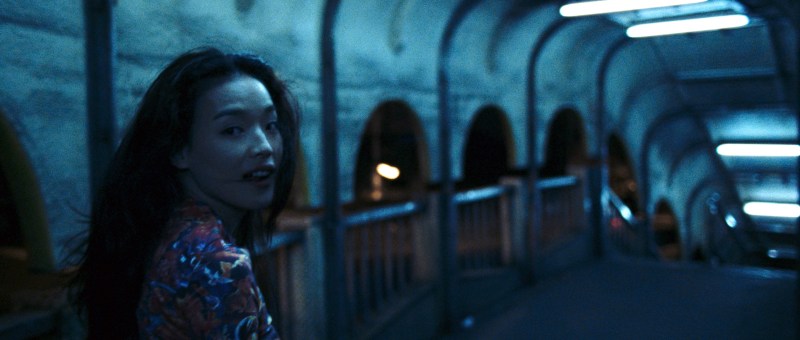
In the iconic opening sequence of Hou Hsiao-Hsien’s Millennium Mambo (千禧曼波, Qiānxī Mànbō), a young woman bounces enigmatically along a walkway, filled with joy and abandon and seemingly exultant in her freedom. Occasionally she glances back as if someone were actually filming her but then we start to wonder if this isn’t just her looking back at herself as she narrates her story in the third person, as if it happened to someone else because in a sense it did. “This happened 10 years ago,” she explains from the vantage point of 2011 looking back on the coming millennium and her own slow dance towards a new world. 

Then again, as she admits Vicky (Shu Qi) always seems to be drawn back into the orbit of Hao (Tuan Chun-hao), her no good, abusive boyfriend who is so controlling that he deliberately prevented her from taking her high school exams out of fear that she’d “move on”. Circling around Vicky’s memories, Hou often cuts to Hao in exactly the same position as he was before while Vicky has indeed moved on if not always in the direction she might have chosen such as the abrupt transition to her naked behind as a dancer at a nightclub where she is forced to work because Hao refuses to earn a living. When we first see her arrive at their apartment, Hao is sitting in the dark and we don’t even notice him until he gets up after Vicky enters the bathroom. Where her bedroom is colourful and cosy, bathed in soft light and demonstrating her ability to find small comforts in an otherwise harsh existence, Hao’s space is gloomy and ominous in its austerity. 

While Vicky tries to move into a more responsible adulthood, Hao extends Taipei clubland into their home frequently hanging out with friends while djing on the rig in his room. He takes drugs to keep his weight down to evade military service and gets into trouble with the law after pinching and pawning an expensive watch from his dad rather than trying to get job. He is the force which seems to keep Vicky trapped in a disappointing existence. By her own admission she finds herself returning to him as if she were in a kind a kind of trance, unable to escape though at times clearly despising him and perhaps herself too. Even Hao is fond of saying that they’re from different worlds, stuck on parallel orbits and otherwise incompatible. Even their apartment seems to be divided into night and day. 

Yet it’s also Taipei clubland that offers Vicky an escape route through the community she finds surrounding her amid the pulsing beats of millennial techno. A kindhearted gangster, Jack (Jack Kao), comes to her aid though he is later brought low by the recklessness of youth as his naive underlings bring their world crashing down around them. Jack takes her in and protects her with paternal affection, eventually inviting her to go on the run with him in Japan but immediately disappearing, just like the snowman she later describes Hao to have been in a moment imprinted on her memory. She carries Jack’s phone around with her unable to let go of him while recalling the scent of his abandoned jacket as she tries to make a decision in a snowy Tokyo just as she’d sworn to herself she’d leave Hao when she ran through her savings. 

Hou and cinematographer Mark Lee Ping-bing shoot all of this through the breeziness memory, following emotional logic rather than the literal as Vicki narrates to us events which are at odds with those occurring on screen and zig zags through the story of her youth before arriving at what seems to be a genuine moment of warmth amid heavy snow, perhaps finally “moving on” from the dissatisfying past to a future of her own choosing. Then again, her fleeting recollections amount to a constructed narrative, the story of the girl on the walkway who finally reaches the other side and disappears into the night either progressing into the new millennium or remaining trapped in a thousand year mambo of memory reliving the key moments of her life in a gentle oscillation, “as if under a spell or hypnotised” , unable to escape from the dangerous allure of nostalgia. 


Millennium Mambo is screening now at New York’s Metrograph and available to stream in the US via Metrograph at Home courtesy of Metrograph Pictures.

Trailer (English subtitles)
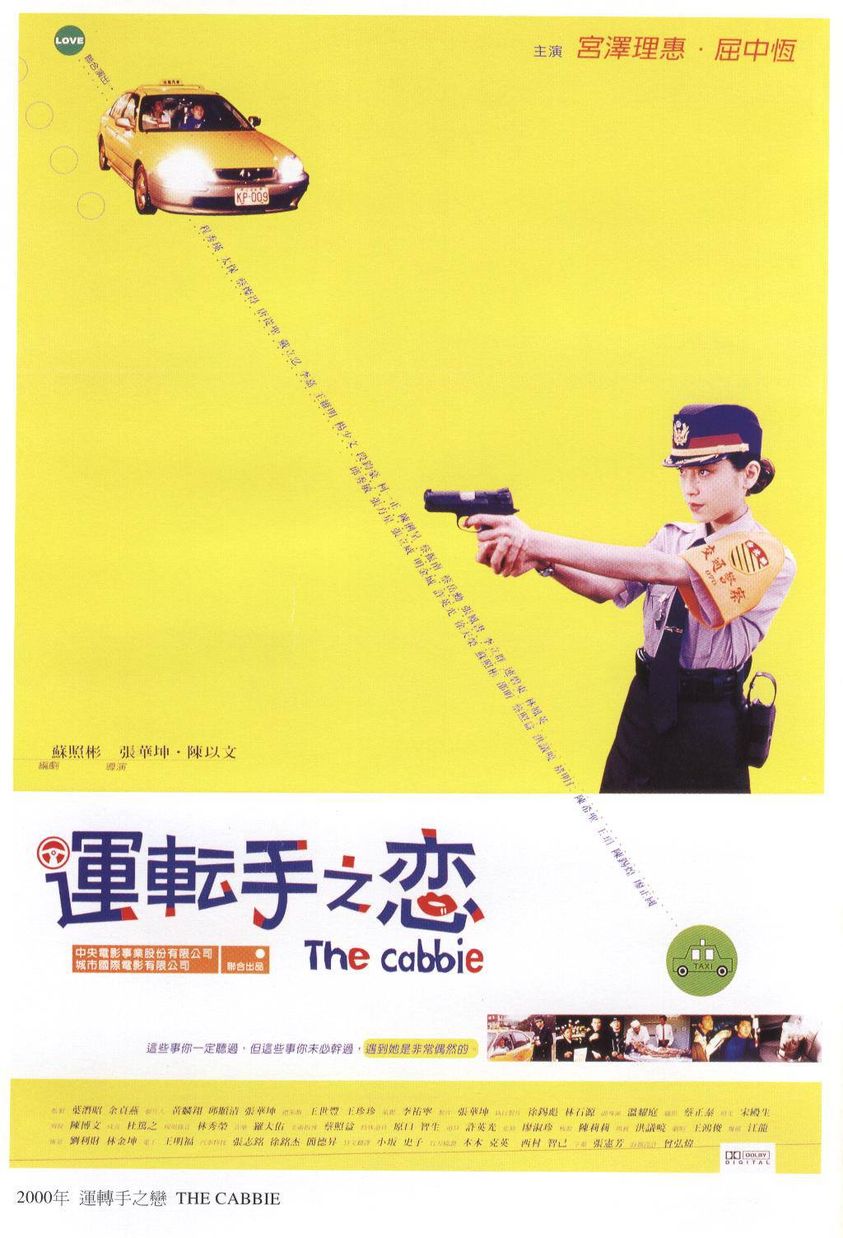
The Cabbie (運転手之戀, Chen Yi-wen & Chang Hwa-kun, 2000)

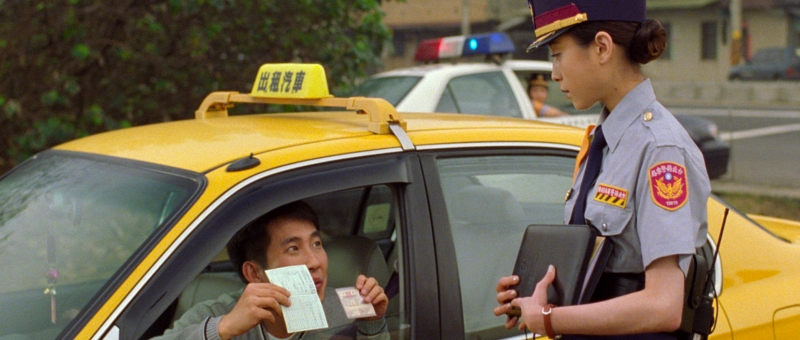
The crazy freewheeling life of a lovestruck taxi driver eventually takes a turn for the contemplative in Chen Yi-wen & Chang Hwa-kun’s infinitely charming comedy, The Cabbie (運転手之戀, yùn zhuǎn shǒu zhī liàn). Despite the film’s sunny atmosphere, darkness does indeed hang around the edges in the frequent references to car accidents and dismemberment yet it seems to be something that the affable hero can live with as he narrates a series of strange incidents from his ordinary life while meditating on his zany family when faced with mortal anxiety. 

As taxi driver Quan (Chu Chung-heng) points out, life can be pretty strange. His taxi can sometimes act as an unofficial confessional as his fares take the opportunity to unburden themselves to a complete stranger in a confined space, confessing the embarrassing details of their lives and even at one point seemingly confessing to a murder. Quan takes it in his stride, feeling as if he is one with his cab, Ah Di, and duty-bound to deliver his charges to their rightful destinations physical and emotional. Yet in an odd way it’s almost as if we’ve become the driver in this story and Quan is our fare, breaking the the fourth wall to speak to us directly of his strange life and the circumstances which led to this present turn of events. 

Quan is however unusual in that he tells his mother and father quite directly that he has no intention of marrying, giving a fairly logical reasoning based on the fact he believes women do not like him and he is not apparently much interested in them. This is of course a source of anxiety for his parents, his taxi driver father also turning fare in ranting at an old lady at the convenience store about his wayward son before trying to awaken something within him by gifting him porn. His mother meanwhile, the local coroner, decides to give up on him while ordering Quan to freeze his sperm so she can have a grandchild with or without his direct involvement at some point down the line. 

In any case, Quan changes his mind on falling in love at first sight with grumpy policewoman Jingwen (Japanese actress Rie Miyazawa, dubbed into Mandarin). Taking his mother’s advice about making an impression (not necessarily a good one) to heart, Quan decides the best way to woo his crush is to get fined by her as many times as possible. Even so there’s an undeniable Romeo and Juliet vibe to their relationship given the natural animosity between taxi drivers and traffic cops, along with a sense of cosmic irony that feeds directly back into the film’s darker themes. So much of life for Quan is coincidence, an act of cosmic collision not unlike the car crashes that occur so frequently outside the taxi depot. Quan encounters Jingwen by chance and then continues to push his luck by meeting her again in similar circumstances until she gives in to his unusual ardour. Yet not all of these accidents end well. One of Quan’s neighbours earns extra cash turning up at crash sites and making sure that the family gets all of the deceased’s body parts, reaching under twisted metal to retrieve pieces of severed flesh while his mother is indeed a coroner with a severed head in a jar sitting proudly in her office. 

In the end it might be that Quan is a mere passenger of fate, relating his life to us as it flashes before his eyes while threatened by a weird fare. What begins as absurd nonsense comedy as Quan tells us about his crazy family and the strangers who climb into his cab eventually takes an unexpected, poignant turn for the existential even as Quan continues to closely identify himself with Ah Di which might beg the question of who is driving who. Madcap and anarchic, there is something genuinely cheerful in Quan’s often simple existence governed both by chance and the rules of the road lending a fatalistic pall to all of his otherwise freewheeling adventures. Things don’t always always go right for him, but even when they go wrong it’s generally in the right way. Fast-forwarding though the “boring bits”, Quan races us through his life in the cab before taking us where we need to go keeping it cheerful while preparing for the inevitable collision with cosmic irony. 


The Cabbie screens 20th October as part of this year’s Taiwan Film Festival Edinburgh.

Original trailer (Traditional Chinese / English subtitles)

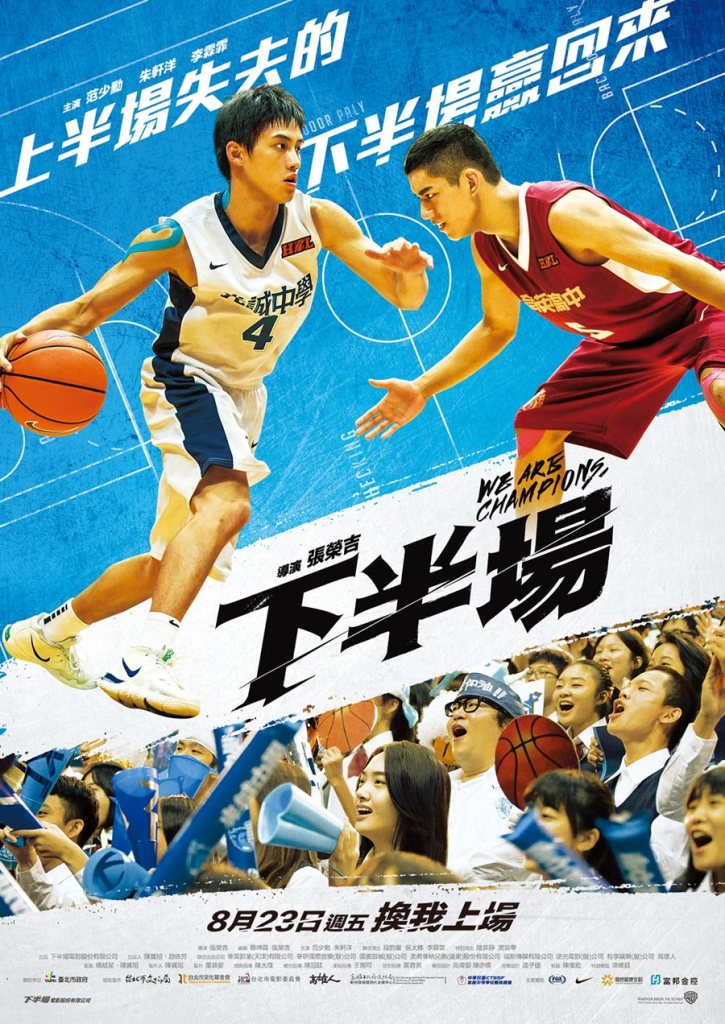
We Are Champions (下半場, Chang Jung-Chi, 2019)

What is the best way to “win”, team work and camaraderie or authoritarian austerity? Two brothers find themselves on different paths in Chang Jung-Chi’s high school basketball drama We Are Champions (下半場, Xiàbàn Cháng), but in true manly fashion eventually end up repairing their fracturing familial relationships through sporting competition as a healthier substitute for physical violence (though that too is not entirely absent). Who wins and who loses might not be as important as it first seems, but then again perhaps there is more than one way to “win”. 

Close in age, big brother Hsiu-yu (Fandy Fan Shao Hsun) and little brother Tung-hao (Berant Zhu Ting-Dian) live with an aunt and uncle in the backroom behind their seamstressing factory and spend most of their free time playing basketball out in the street with other youngsters. The boys’ mother passed away when they were small and times being what they are, their dad has had to travel to find work and is not able to check in on them very often. The reason the guys play basketball so much is that they hate living with their permanently angry uncle and want to move out, putting the money they make through street games and part time jobs into an escape fund. 

Things begin to change for them when they’re spotted by a basketball coach from a local high school who gives them a few tips and offers them a shot at joining the team. Tung-hao is keen, but Hsiu-yu has given up on his dreams of basketball glory because of a hearing injury that saw him mercilessly bullied on the middle school courts. Tung-hao ends up getting scouted by an elite school, Yuying, but the authoritarian coach flatly tells him that there’s no space for Hsiu-yu because he doesn’t allow disabled people on his team. Tung-hao is conflicted, but ends up joining after fighting with his uncle and storming out of the house. He’s sorry for his brother, but all he wants to do is play basketball so he’s taking his chance. Hsiu-yu is happy for him and wishes him well, eventually taking the sympathetic coach who spotted them at the outdoor court up on his offer to play for decidedly small but scrappy high school team Kuang Cheng. 

Kuang Cheng isn’t perfect, Hsiu-yu still gets bullied because of his hearing aid at least to begin with, but unlike Yuying they run on a principle of solidarity. The coach is a supportive, paternal presence that Hsiu-yu finds particularly useful in the continuing absence of his father and motivates his players through trying to give them the confidence to be all they can be. Over at Yuying, meanwhile, they all wear identical black uniforms, have buzz cuts, and spend all their time drilling with military discipline. The coach has no time for the personal lives of his players, abruptly kicking one guy off the team simply because he was late to practice. Yuying is, to put it bluntly, a bedrock of ruthless authoritarian elitism. They think they’re entitled to win because they’re the best, and they won’t hear any arguments to the contrary. 

These ideological differences continue to place a strain on the brothers’ relationship with Tung-hao remaining conflicted about his decision to leave his brother behind and doubling down on the manly militarism of his coach’s philosophy to make it seem worthwhile. Having not seen him in a long while, Hsiu-yu calls out to his brother across the basketball court but Tung-hao ignores him, eventually answering only after Hsiu-yu returns to let him know that he’s just had a call about a relative being seriously injured and taken to hospital. Tung-hao tells him he’s not interested in family drama because he’s here to practice with his new buddies before crossing the line back towards the other side. 

Despite all of that, however, good brother Hsiu-yu never gives up on family feeling and continues to support Tung-hao in his heart even while they’re rivals on the court. Tung-hao is increasingly conflicted by his coach’s determination to destroy his brother, even using his hearing problems against him, but is eventually healed by Hsiu-yu’s forgiveness even as he prepares to shatter all his dreams. Sometimes you can “win” by being the better man, or by accepting someone’s forgiveness, or just doing your best, and other times you can throw a ball through a hoop all on your own. Victories come in all shapes and sizes, but true champions are the ones who know how to lose with grace and win with magnanimity. 


Originally scheduled as the centrepiece of the suspended Season 10, We Are Champions streams for free in the US on June 12 as part of Asian Pop-Up Cinema’s Mini-Focus: Taiwan Cinema Online. Viewers in Italy will also be able to catch it streaming as part of this year’s online Udine Far East Film Festival.

Original trailer (English subtitles)

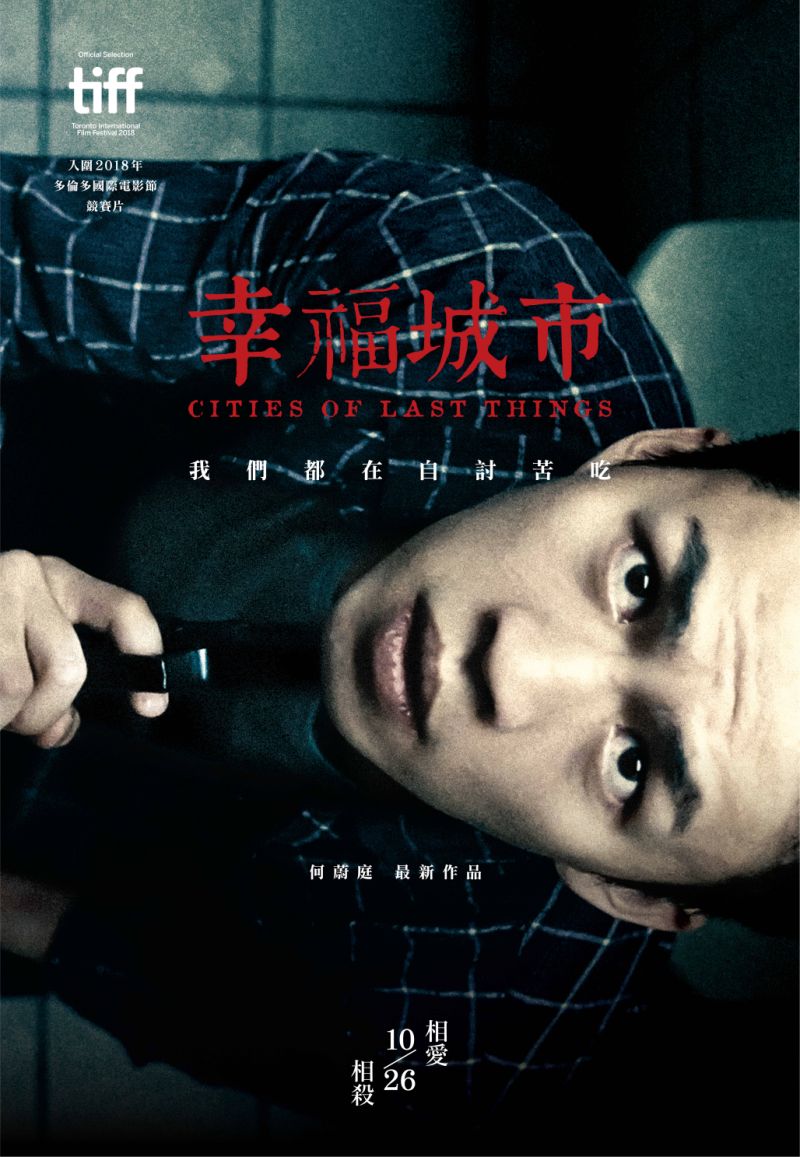
Cities of Last Things (幸福城市, Ho Wi Ding, 2018)

Cities of last things poster 1A sense of finality defines the appropriately titled Cities of Last Things (幸福城市, Xìngfú Chéngshì), even as it works itself backwards from the darkness towards the light. Still more ironic, the Chinese title hints at “Happiness City” (neatly subverting Hou Hsiao-hsien’s “City of Sadness”) but that, it seems, is somewhere its hero has never quite felt himself to be. Embittered by a series of abandonments, betrayals, and impossibilities, he grows resentful of the brave new world in which old age has marooned him. 

Ho opens with a bouncy, retro track advising that one should never be too generous with love only for a body to suddenly rain down from above. As we later discover, the body belongs to 60-something former policeman Dong-ling (Jack Kao) who has grown disillusioned with his futuristic, digital world, stubbornly smoking cigarettes and growing old gracefully while surrounded by vapers and ads for rejuvenating drugs. For reasons we don’t yet understand, he ventures into the red light district to buy a gun, punches his wife’s dance partner, and visits a hard-nosed sex worker who reminds him of a woman he loved and lost thirty years previously.

Love, guns, death and revenge become persistent themes for the older Dong-ling whose only bright spot seems to be a grownup daughter preparing to move abroad with her foreign boyfriend. Thirty years previously Dong-ling (Lee Hong-chi) too dreamed of running overseas. Consumed with rage on discovering his wife’s infidelity, he imagines himself killing her, her lover, and himself but settles only for a petty revenge against a colleague which exposes the entrenched police corruption he had refused to participate in, alienating his fellow officers. Bonding with a French kleptomaniac (Louise Grinberg) on the run from some kind of unresolved conflict with her father, he sees a way out only to have the door cruelly closed on him just as it was so many years before when he was just a teenager picked up for trying to steal a scooter.

In true film noir style, all women are perhaps one woman. Abruptly shifting tone in venturing into the recent past, we are introduced to Big Sister Wang (Ding Ning) – an embittered, disappointed femme fatale running out of road, hemmed in by the choices she has already made. She may already know there’s no way out for her, little needing the policeman’s warning that after her arrest everyone in gangland will assume she talked when they let her go, but she refuses to give in, repeatedly insisting on cigarettes and asserting her dominance while the unsympathetic policemen get on with their grim business.

Cornered, Ara, the shoplifting free spirit, decides to interrogate her interrogator, calling back to the later version of herself in asking why it is that prostitution is illegal. The policeman has no answer for her, save that he does not make the rules only follow them. Dong-ling too wanted to be a force of order, perhaps taking Big Sister Wang’s impassioned pleas to be a good person and not end up like her a little too much to heart. He follows the rules too closely for the comfort of his colleagues but finds himself dangerously exposed by an inability to regulate his feelings, a victim of toxic masculinity humiliated by his wife’s betrayal but unable to stand up to the corrupt superior who so casually closes down the only escape route he has been able to find.

The older Dong-ling is horrified by his daughter’s revelation that she lasered away a birthmark. How else can you recognise someone you lost long ago in the great wide world other than by a mark placed on them when they were born? His daughter rolls her eyes and reminds him that these days everyone is chipped, but there may be something in his rationale that everyone is marked at birth. Dong-ling is surrounded by handcuffs, self-driving vehicles, and locked doors. His fate is sealed, as we know, because we saw him fall, yet like Big Sister Wang he fought back only his resistance was violent and vengeful, abhorrent in its enraged pettiness. His is a tale of fatalistic resentment and of an existence consumed by a sense of hopeless abandonment, coloured only by a longing for lost love. Ho’s decision to end the film with its happiest moment, bright sunshine in place of rain soaked night, is ironic in the extreme but returns us to the grim serenity of the opening as the cheerful retro strains re-echo and Dong-ling catapults himself into a life of misery in the cities of last things where all hope is futile and all love loss. 


Screened as part of the 2019 London East Asia Film Festival, Cities of Last Things is also available to stream online via Netflix.

TIFF trailer (English subtitles)

Liu Wen-cheng – Don’t Be Too Generous About Love