
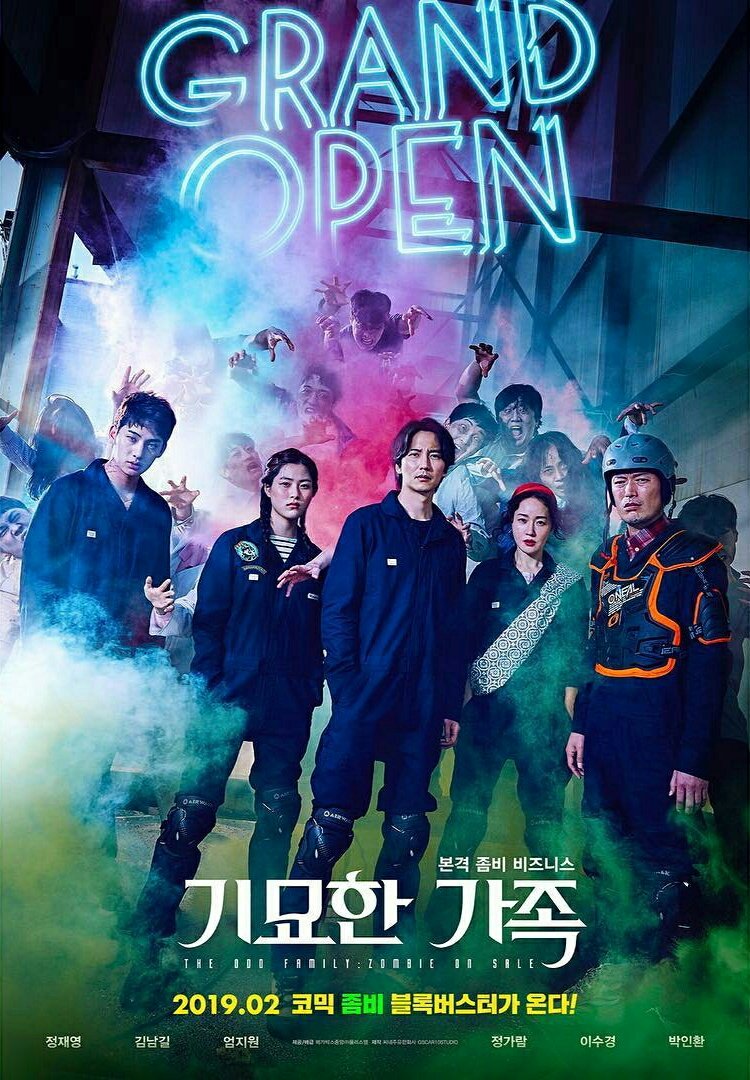
 It takes a special sort of mind to see a zombie and think “business opportunity”, but that’s exactly the kind of out of the box thinking you’ll find with the the Parks – a very strange family living way out in the countryside. Korean cinema is having a bit of a zombie moment, but they’ve rarely been as amusing as this. The debut feature from Lee Min-jae, The Odd Family: Zombie On Sale (기묘한 가족, Gimyohan Gajok) is a surreal satire of changing family values, the stereotypical strangeness of farm country, and the growing suspicion of underhanded practices in the pharmaceuticals trade.
As an opening voiceover informs us, there have long been rumours of diabetes drug manufacturer Human Bio kidnapping innocent members of the public to test their NoInsulin wonder drug. One day, a young man (Jung Ga-ram) manages to crawl out of a hole in the ground and shuffles zombie-like into the nearest village where he encounters the patriarch of the Park family (Park In-hwan), eventually biting him on the head. The Parks once owned the local petrol station, but with things as they are the business is all dried up and so now they mainly make their living by engineering road traffic “accidents” they can later charge exorbitant fees to fix seeing as they are literally the only place in town. When Mr. Park realises that after getting bitten on the head he’s regained his youthful virility, the family become less afraid of the fairly docile lad and decide to take him in partly with the idea of pimping him out to the other sad old men in town who long for nothing more than to regain their glory days.
Only middle son and recently returned failed salaryman Min-gul (Kim Nam-gil) wonders if there’s something not quite right about the new member of their family, showing the others a brief clip from Train to Busan to get his point across, but even he is temporarily won over by the money making opportunity. Tellingly, no one really stops to wonder if it’s OK to lock a young man up in the shed and make him do your bidding for no remuneration, but then where really is the harm if biting people on the arm makes them feel better about themselves? The harm is he’s a zombie which will eventually become quite a big problem.
Meanwhile, the strange Park family continues to fray at the seams. Youngest daughter Hae-gul (Lee Soo-kyung), an ethereal girl in dungarees with a fondness for pet rabbits she can’t seem to keep alive much longer than a month, takes to the zombie instantly. Naming him “Jong-bi” in a pun on his being a zombie and in keeping with the naming system for her rabbits, she installs him on a mattress right next to the hutch and proceeds to feed him cabbages for which he develops an intense fondness (along with ketchup which is Hae-gul’s personal favourite). Meanwhile oldest son Joon-gul (Jung Jae-young) does his best to keep out of the way while his heavily pregnant wife Nam-joo (Uhm Ji-won) keeps an iron grip on the family finances and the house in general. When everyone starts to wonder if dad is going to turn zombie, filial piety goes out the window but all Mr. Park wants is to jet off to Hawaii and leave the family to deal with the mess on their own.
With the patriarch out of the picture and a new little brother to play with (plus quite a lot of money to buy a new start), the Parks begin to repair themselves and make the “family” anew but the cracks are still there as Min-gul turns out to be more like his dad than he seemed in always looking for the best angle and opportunity to make some money no matter the risks or ethical concerns. Nevertheless, the zombie apocalypse does its best to remind them what’s really important as they find themselves having to work together to come up with a plan for survival. Riffing strongly off wholesome ‘50s Americana and kitschy pop-culture cues, The Odd Family is a charmingly surreal ode to family values in which one family’s money grubbing entrepreneurship almost leads to the end of the world only to paradoxically become its salvation as they prove that there’s nothing so potent as togetherness in combatting existential threat.
The Odd Family: Zombie On Sale was screened as part of the 2019 Udine Far East Film Festival.
International trailer (English subtitles)
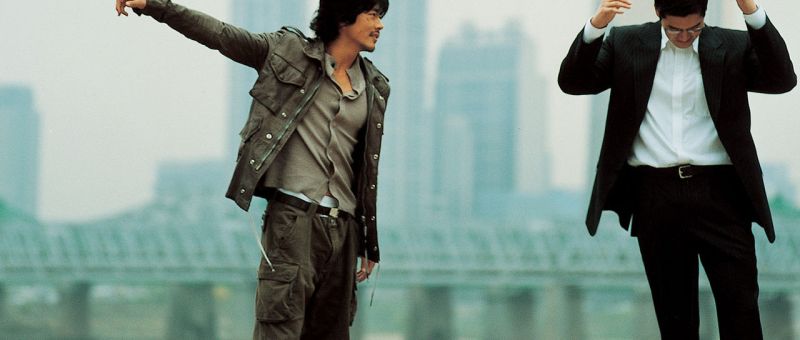
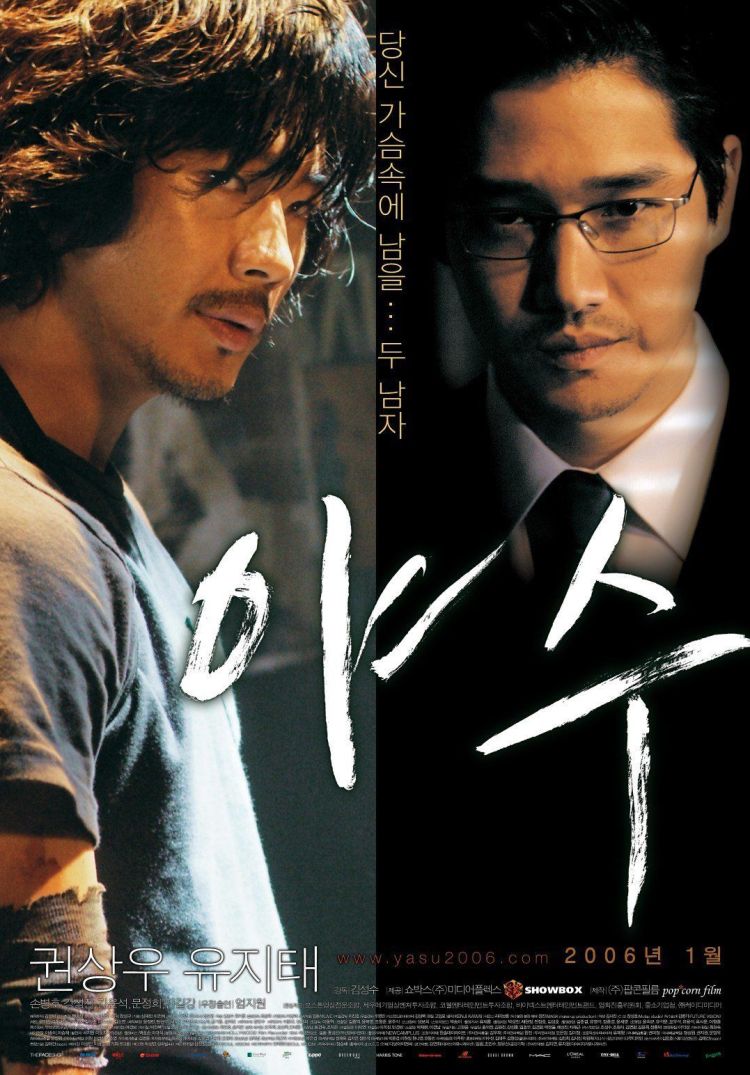
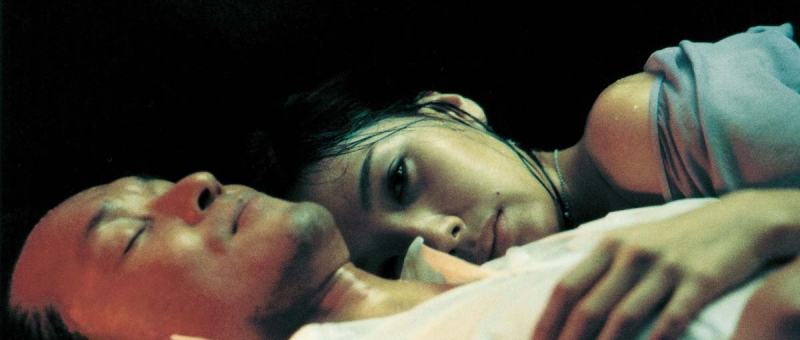
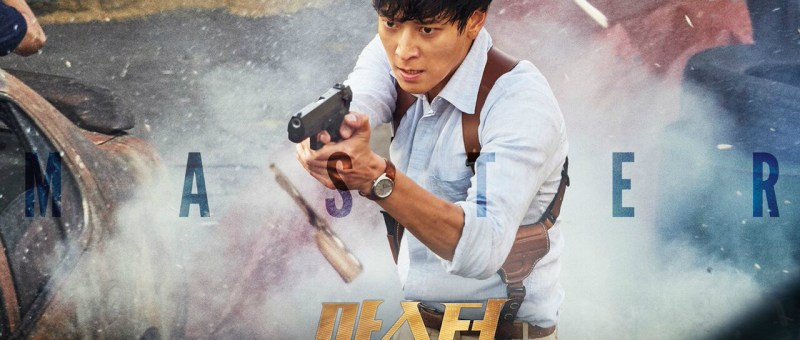
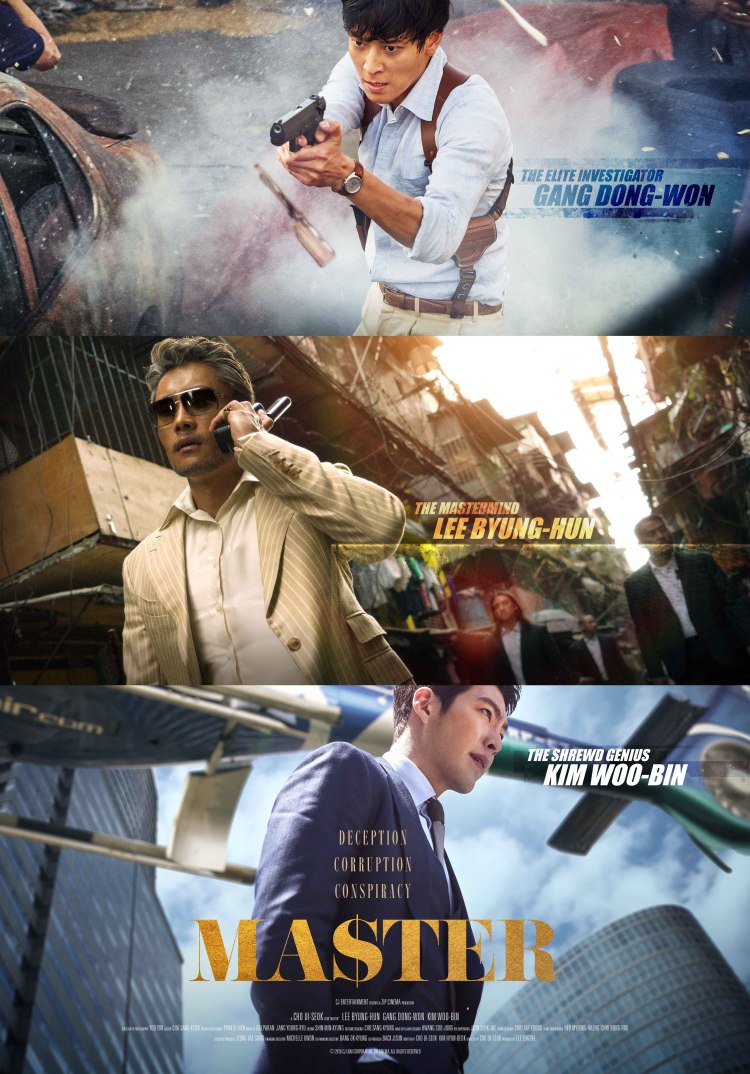 Corruption has become a major theme in Korean cinema. Perhaps understandably given current events, but you’ll have to look hard to find anyone occupying a high level corporate, political, or judicial position who can be counted worthy of public trust in any Korean film from the democratic era. Cho Ui-seok’s Master (마스터) goes further than most in building its case higher and harder as its sleazy, heartless, conman of an antagonist casts himself onto the world stage as some kind of international megastar promising riches to the poor all the while planning to deprive them of what little they have. The forces which oppose him, cerebral cops from the financial fraud devision, may be committed to exposing his criminality but they aren’t above playing his game to do it.
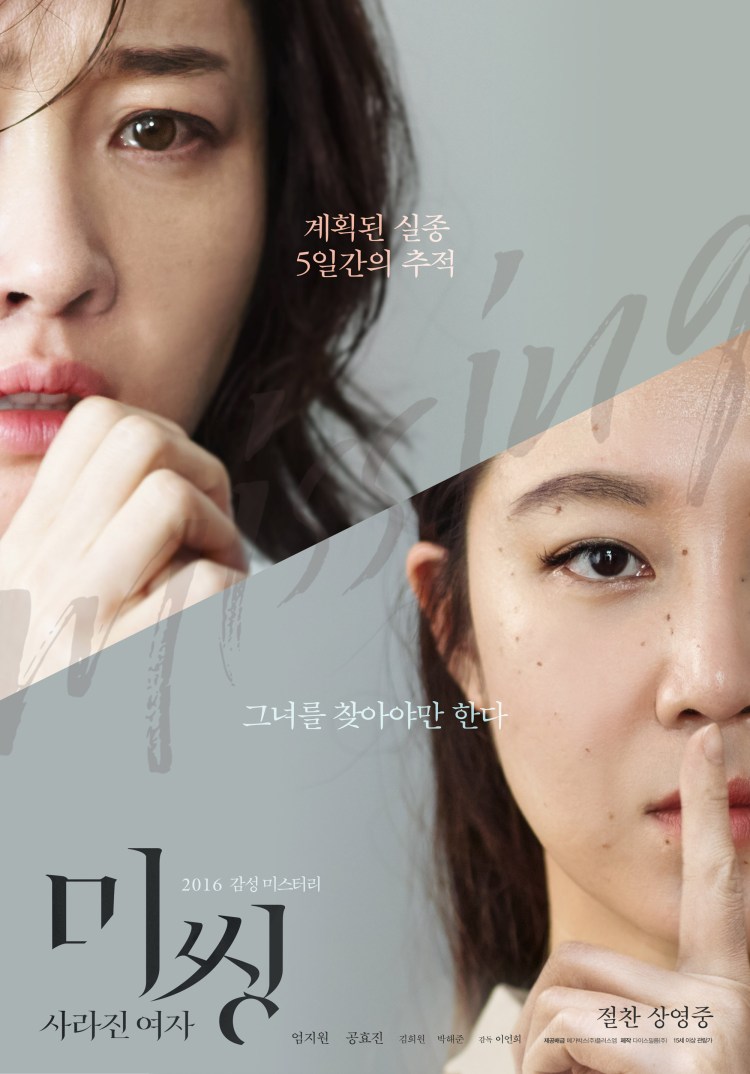 Since ancient times drama has had a preoccupation with motherhood and a need to point fingers at those who aren’t measuring up to social expectation. E Oni’s Missing plays out like a Caucasian Chalk Circle for our times as a privileged woman finds herself in difficult circumstances only to have her precious daughter swept away from her just as it looked as if she would be lost through a series of social disadvantages. Missing is partly a story of motherhood, but also of women and the various ways they find themselves consistently misused, disbelieved, and betrayed. The two women at the centre of the storm, desperate mother Ji-sun (Uhm Ji-won) and her mysterious Chinese nanny Han-mae (Gong Hyo-jin) are both in their own ways tragic figures caught in one frantic moment as a choice is made on each of their behalves which will have terrible, unforeseen and irreversible consequences.
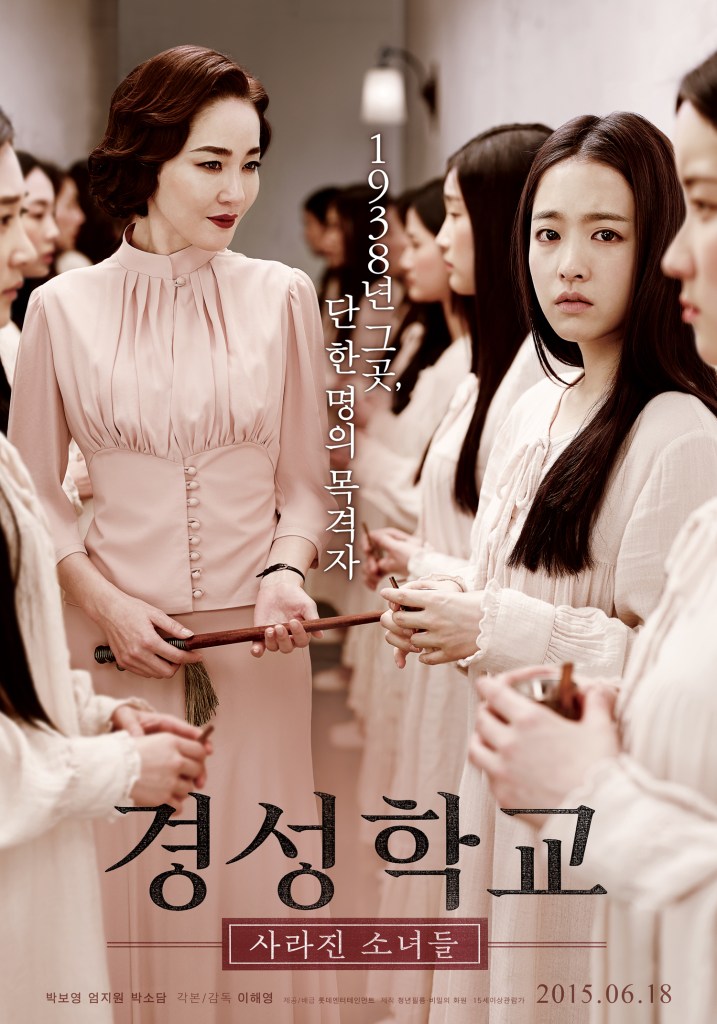 The Silenced (경성학교: 사라진 소녀들, Gyeongseonghakyoo: Sarajin Sonyeodeul) has all the classic genre aspects of the boarding school horror story familiar to fans of gothic literature everywhere, but this is no Victorian tale of repressed sexuality and hallucinatory psychosis. What The Silence does is take all of these essential elements and remix them as a metaphor for the horror of colonialism. Surrounded by quislings and forced into submission in order to survive, how does the essential soul of an oppressed people survive? The Silence would seem to argue that perhaps it can’t, but can evolve and learn to resist its colonisers even if it has to bend to do so.
 Windows on Worlds