The Shameless (무뢰한, Oh Seung-uk, 2015)

fullsizephoto602641Review of Oh Seung-uk’s The Shameless (무뢰한, Moorwehan) up at UK Anime Network. I read some lukewarm reviews but I actually really liked this one (though I’m a sucker for B-movie noirs and my tolerance for melodrama is sky high)!


Director Oh Seung-uk maybe best known as the screenwriter behind such varied and well respected efforts as Green Fish (directed by Korean auteur Lee Chang-dong), Christmas in August and H, but way back in 2001 he made a minor splash at Cannes with his existential gangster piece, Kilimanjaro. The Shameless sees him one again turn to the shady world of underground crime though this time what he’s interested in is a romantic melodrama laced with deadly film noir morality.

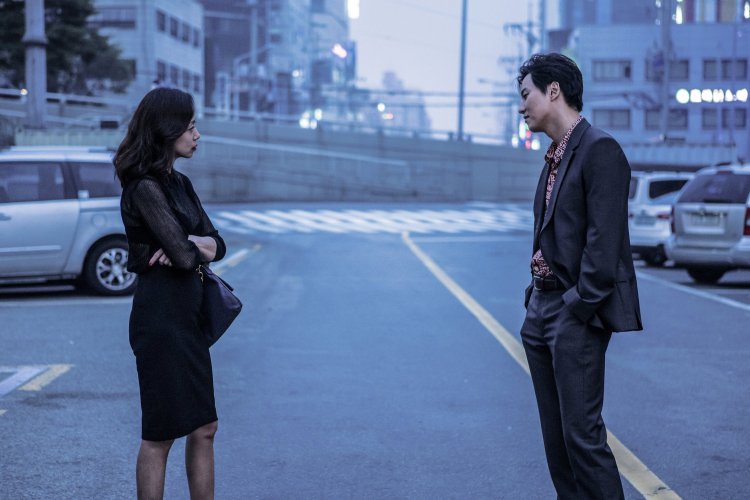
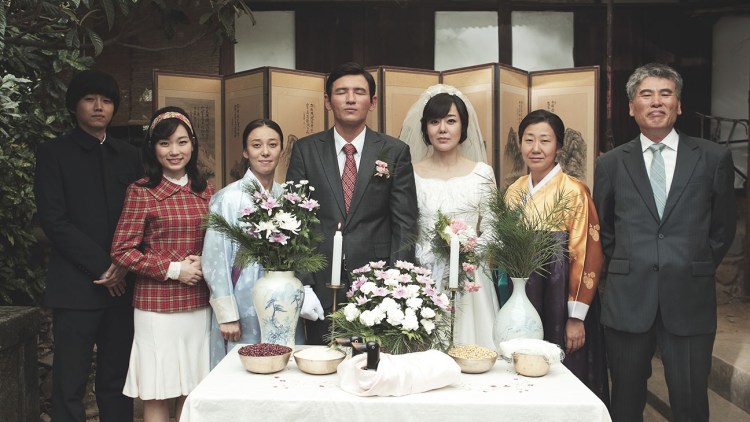
Recently divorced police detective Jung Jae-gon has been handed what seems like a fairly straightforward murder. They already know who the killer is and the motive behind the crime, all that remains is to track the guy down. Luckily they also know that Park, a gangland thug, has a regular girlfriend, Kim Hye-kyung, who works at a seedy downtown bar. Through tailing her they’ll find their man. This is where things get sticky. Said girlfriend is the former lover of the head of another crime syndicate who’d now like to use Park’s current predicament to exact some revenge on the drifter who’s stolen his girl. Roping in a disgraced ex-cop, the gang offer Jae-gon a significant amount of money to cripple Park during his arrest and take him out of the picture for good. Jae-gon is conflicted. The way he sees it, the day you can’t tell which side you’re really on is the day you need to hand back your badge, but Jae-gon’s in need of money, this guy used to be his friend and then, there’s the girl…

Right here you have all the essential elements of your classic film noir. Basically good, if imperfect, detective receives an offer he can’t refuse and ultimately accepts it against his better judgement in part because of a femme fatale that he just can’t get out of his mind even if the more rational part of his brain knows this is something that is never going to happen. Before you know it, Jae-gon has researched Park’s history and adopted the persona of a former cellmate before taking an undercover job at Hye-kyung’s bar and attempting to become close to her in the hope that she’ll eventually lead them to Park’s whereabouts. Of course, he starts falling for her too and though she remains doggedly committed to Park, something in her begins to warm to him in return. This is a situation which can never end well and its classic B-movie style inevitability only adds to the eventual pathos of its deliberately downbeat ending.

The film is called The Shameless for a reason – nobody looks good in this shady world of corrupt cops and vicious gangsters who will stop at nothing to get what they want. The fact that you can barely tell who is on which side is a good indicator of the levels to which this world of chaos has become warped. Even the police are literally “shameless” stooping so far as to indulge in an interrogation technique which is, in fact, a sexual assault. At least the gangsters are abiding by their own rules.

The picture has a slick, stylish aesthetic which is perfectly in keeping with its morally grey, film noir inspired mood. It’s full of existential angst and the ennui of modern, aimless life. As usual for this kind of film, Hye-kyung repeatedly gets the short end of the stick – used and abused by faithless men, so massively in debt it’s almost impossible she’ll be able to extricate herself from the seedy world of hostess bars and petty gangsters before its too late. She’s only one victim of the pervasive sexism that defines this harsh world. Clinging desperately to Park, Hye-kyung’s one and only escape route is to hope one of these feckless men is the one who can take her away from this place.

Needless to say this isn’t one of those films where everyone gets what they want and walks off into the sunset of eternal happiness, but perhaps it isn’t as apocalyptic as the original premise might promise. That is actually something of a problem as the slightly softer ending undercuts the film’s emotional resonance and ultimately leaves one feeling a little less than satisfied. Still, even if The Shameless fails to hit its mark at the very end, Oh has still crafted a stylish and beautifully photographed neo-noir romance that stays true to its classic B-movie roots whilst also embracing the best of the modern crime movie.


Reviewed at the London Korean Film Festival 2015.
 

Ode to My Father (국제시장, JK Yoon, 2014)

ode_to_my_father_stillReview of JK Yoon’s Ode to My Father (국제시장, Gukjeshijang) – first published by UK Anime Network.


Of late, we’ve seen a lot of films attempt to trace the history of a nation through the story of one man and his family which ultimately becomes a metaphor for the that of the land itself. Many of these have come from China which shares something of the turbulent history that has affected the Korean peninsula over the last hundred years. In Ode to My Father, director JK Youn has tried to pay tribute both to his own father and to all the fathers of modern Korea who underwent great difficulties and suffered immensely in the hope of building a better, happier, future for their own children.

Mostly we view events from the point of view of Duk-soo – an old man at the beginning of the film who has made a success of himself and is surrounded by a large, loving family though seems to retain a kind of unresolved sadness. When we travel back with him, he’s just a small boy fleeing his homeland with his parents and siblings. As the oldest, he’s put in charge of his sister only to have her cruelly snatched away from him during the final escape. This event colours the rest of Duk-soo’s life as he carries with him both the tremendous guilt of having failed to protect his sister and of losing his father has he went back to look for her. The remaining family members gather together at the small imported goods shop belonging to an aunt which becomes another motif of the film.

Growing into manhood, Duk-soo is now the man of the house with both his siblings and his mother to provide for. Making countless sacrifices which see him abandoning his own dreams and travelling abroad to seek better paid work – first in the coalmines of West Germany and later the warzone of Vietnam, Duk-soo puts his family before himself every single time. Working tirelessly, Duk-soo grows up but inside he’s forever the little boy on a boat watching his father drift away him and desperately hoping he’ll some day miraculously turn up at the shop with a smile and an improbable story.

This is a story of painful separations and the shockwaves they send through the rest of one’s life and of all the lives throughout history. Having fled the Chinese and the communists in the North, Duk-soo and his family are excited about the prospect of being able to go home at the “end” of the war. However, this is a war which is still not technically over, merely suspended by a truce, and Duk-soo will never see his hometown again. Eventually, during the ‘80s, 30 years since Duk-soo was separated from his father and sister, a nationwide campaign is held to try and re-unite family members forced apart by the traumatic events of the 1950s. Entire squares in the city are covered with people desperately looking for each other wearing signs with their relatives’ names and point of last sighting, clothing etc all in the hope of finally finding each other again. Needless to say, some of these people are luckier than others and there are tears of both joy and sadness.

Still, all in all, Duk-soo and South Korea made a success of themselves even if there’s a resulting ache from the great wound which has split the nation in two. Much of the story is universal – a father’s love for his family, but Ode to My Father will obviously speak loudest to Koreans who can identify more strongly with the historical context. Yoon has also injected some humorous incidents involving real life Korean historical celebrities which may mystify international viewers even if they’re sign posted well enough that one gets the gist of it anyway.

Unabashedly sentimental and oftentimes overblown, Ode to My Father nevertheless succeeds in tugging at the heartstrings in all the intended ways. A paean to the post war generation and all that they endured in building the modern Korea that their children could live in without fear or hunger, Ode to My Father is in the end far too sugary but also, it has to be said, affecting.


Reviewed at the London Korean Film Festival 2015.

 

Ryuzo and the Seven Henchmen (龍三と七人の子分たち, Takeshi Kitano, 2015)

142984037484393493178_ryuzo-7nin-kobuntachi-g4First published on UK Anime Network – review of Takeshi Kitano’s Ryuzo and the Seven Henchman (龍三と七人の子分たち Ryuzo to Shichinin no Kobuntachi) from LFF 2015.


Most people probably know Takeshi Kitano best for his series of ultra violent ’90s gangster movies, his role as the sadistic teacher in the controversial Battle Royale or as the host of bizarre Japanese endurance game show Takeshi’s Castle. However, in Japan he’s probably best known as a comedian though few of his comedy films have ever made it overseas. This may change with his latest effort, Ryuzo and the Seven Henchmen, which both takes him back to his yakuza roots and celebrates his comedic talents.

Ryuzo “the demon” was once a yakuza more feared the than respected whose very name alone made women swoon and struck fear into the hearts of men. Now though, he’s a grumpy grandpa living with his ultra conservative son who’d rather the neighbours didn’t know he had a gangster living in his house. After some punks make the mistake of trying an “ore ore” scam on him, Ryuzo gets back into the spirit of his gangster days and takes the guy down in a classic intimidation play. However, some of his other yakuza buddies also seem to be getting into trouble with upstart youngsters and once again it’s up to Ryuzo and his seven old timer yakuza buddies to set the town to rights.

The world has changed since Ryuzo and his guys were ruling the streets. In the old days the yakuza were a family, they had rules and ethics and they stuck to them. They saw themselves both as heroic outlaws and as defenders of the rights of ordinary people (even if they made their money through extorting those very people they claimed to protect). This new brand of crooks doesn’t care about honour, or morality or human kindness – they aren’t above conning the vulnerable into falling for obvious telephone scams or loaning large amounts of money to desperate people at ridiculously high interest just to make a buck. These guys are “business men” running a “legitimate enterprise” where the only rules are that you get rich and stay rich.

Ryuzo and co may be old, but they still have their honour and their pride. Watching the old guys trying to relive their former glory days is often funny, if a little sad as their grand schemes take on the absurd quality of little boys playing cops and robbers. It goes without saying that the film is hilarious though perhaps takes certain instances of low humour a too little far. Each of the main eight old timer yakuza has his own particular strength which endures despite their advanced ages though perhaps in slightly different forms and even if they’re coasting on former glory none of them has forgotten their former status.

Though not quite a return to the artistic highs of Sonatine or Hana-bi, Ryuzo and the Seven Henchmen is nevertheless an entertaining mix of Kitano’s tough guy yakuza and absurd comedian personas. Unlikely to walk away with any awards or lasting praise, Ryuzo and the Seven Henchmen is sure to be remembered fondly for its expertly timed and often gleefully absurd humour.


Reviewed at LFF 2015.


Kiju Yoshida: Love + Anarchism

133365_frontGeneral review of Arrow’s Kiju Yoshida: Love + Anarchism box set up at UK Anime Network.


Kiju (also known as Yoshishige) Yoshida is one of the primary names in Japan’s 1960s art movie boom though he’s comparatively unknown and, in fact, little seen outside of Japan. Though some of this is down to Yoshida’s fierce self ownership of his own back catalogue, this new HD blu-ray box set from Arrow Films is the first time any of his films will be readily available with English subtitles. Titled Love + Anarchy, the box set includes both the original director’s cut of Yoshida’s magnum opus Eros + Massacre as well as the shortened theatrical cut of the film, his examination of ’60s radical leftist politics in Heroic Purgatory and his look at a failed ‘30s rightist insurrection in Coup d’Etat.

Eros + Massacre is the film Yoshida has become best known for and the one with which he is most closely associated. The film tells two parallel stories beginning with the 1960s students Eiko and Wada who are running an extra curricular research project into the lives of a group of Taisho era anarchists including feminist Ito Noe and poet Osugi Sakae who was an early exponent of free love which is something that particularly interests Eiko. The Taisho era scenes are less a historical examination than they are the results of the research project conducted by Eiko and Wada and so are a sum of their refracted perceptions. The film is full of surrealistic touches like the Taisho characters suddenly turning up in modern day Tokyo or unexpected scenes of expressionism breaking in without warning. A fantastic example of ‘60s avant-garde cinema, Eros + Massacre is a film which should have been more widely seen and now hopefully will be.

The first question – why two versions? The answer is not the one you’re thinking of. Though the film is undoubtedly long at over 3.5hrs, Yoshida largely financed the film himself and intended to release it in his original version. However, though Ito and Osugi were assassinated along side Osugi’s six year old nephew in the chaos following the Great Kanto Earthquake in 1923, another of Osugi’s mistresses, Kamichika Ichiko, was still very much alive (though obviously an old woman) and a serving politician. She got wind of the film and after seeing it threatened to sue over her portrayal. Yoshida voluntarily recut the film to minimise her scenes, renamed her character and exhibited the shortened version to great acclaim. Though the director’s cut is truest to Yoshida’s vision, even in the shortened version his artistry shines through.

The second film in Yoshida’s “political trilogy” is the even more avant-garde Heroic Purgatory. Far less accessible than the other two films in the set, Heroic Purgatory spans three distinct time periods from the recent past to the present and the near future and focuses on the current Japanese leftist movement with particular reference to its opposition towards the renewals of the Japanese and American mutual defence treaty. However, what all of this really amounts to is paean to love and marriage. Full of strange and beautiful photography Heroic Purgatory is the iconic avant-garde film. Which is to say it’s undoubtedly difficult, inscrutable and perhaps more experienced than understood.

By contrast Coup d’Etat is the most straightforward of the films presented. Marking the only time in his career where Yoshida was not involved in the screenplay, the film moves across the political divide and examines the final days of right wing intellectual Ikki Kita. Ironically enough, the thrust of the film concerns an attempted political coup by a group of young army officers who disapproved of the government’s treatment of its people and particularly of its failure to properly provide for the poor. Their revolution was in the name of the emperor, they merely wanted to eject the sitting government. Despite his repeated protestations and lack of direct involvement in the planning of the coup, Kita still paid the price as his stature and the influence of his writings were simply too strong making him a dangerous individual and a pretty fitting scapegoat. The last film Yoshida would make with ATG (and in fact the only one which was entirely produced with them), Coup d’Etat retains his characteristically complex imagery even if it ejects his surreal storytelling style. It also loses his wife, Mariko Okada, but gains the towering presence of star character actor Rentaro Mikuni.

Available for the first time with English subtitles and in HD this new box set from Arrow Films is a long overdue opportunity to finally witness the challenging yet hugely important work of this hitherto neglected filmmaker. Yoshida’s work is not easy to digest (it will also help to have a little knowledge of 20th century Japanese history or to make careful use of the excellent essays included with the box set) but is always beautiful. The unseen genius of the ‘60s avant-garde art scene, Yoshida is an uncompromising figure which may be why it’s taken so long for work to reach us, but now that it has, it’s an opportunity that should not be ignored.


Links to individual reviews of each of the films:


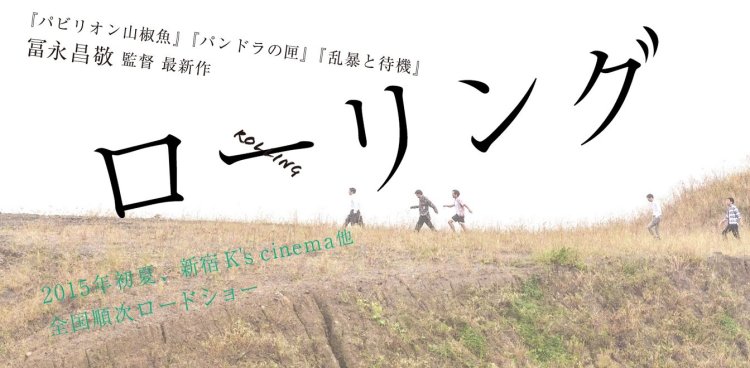
Rolling (ローリング, Masanori Tominaga, 2015)

384f90_4054bb8ba5554cc186f2bce4c6beb853“Weird teacher” is almost becoming a genre now. Even so, the teacher at the center of Masanori Tominaga’s Rolling may give them all a run for their money (well, for about five yards before having somekind of bizarre accident, anyway). Gondo is a feckless middle aged man who was fired from his teaching position ten years previously after having been caught secretly filming the girls’ changing rooms. Now he’s back in his old stalking ground after having pulled off an improbable white knight routine by rescuing the young and pretty Mihara from a bad boyfriend in Tokyo. However, his former students have not forgotten him or his pervy ways! It’s not long before the entire town of twenty somethings are on Gondo’s case hoping for a little vengeance for their teenage betrayal.

However, Gondo’s fortunes improve slightly when it’s discovered that some of his secret recordings feature some rather salacious goings on starring a former classmate whose TV career is just about to kick off. Smelling money in the air, Gondo is suddenly everyone’s best friend again. Gondo is…still Gondo though so as you may expect this state of affairs will not last. He’s even lost Mihara to a former student of his, one he even quite likes too…

Despite his failings and protestations to the contrary, what Gondo ultimately remains is a teacher. Yes he’s made some mistakes (understatement of the century), and he’s actually quite unpleasant in a lot of ways but somehow he still wants to protect this ragtag bag of not quite young people that he previously harmed. Coming to the realisation that his actions not only resulted in revulsion and violation of trust but also had a disruptive effect on the educational progress of his students simply resulting from his abrupt dismissal, Gondo does at least want to make amends (in his own way).

However, Gondo’s just the kind of guy things never work out for. “All my students are idiots” he proclaims at one point and he’s not altogether wrong. Attempting to hatch a blackmail plot with a very strange group of a idol managers-cum-gangsters and an ex-policeman, the gang get themselves into a whole world of trouble which is only exacerbated when the almost famous subject of the video comes forward and makes a very surprising request of her old flame and Gondo’s kindly love rival Kanichi.

Darkly comic, Rolling has the air of a film noir B movie with its ever present voice over and thriller trappings including secret video taping, a blackmail plot and trio of business-like gangsters. It is though, also firmly grounded in the now despite its often surreal humour. Also branded an “erotic comedy” Rolling is fairly high on sexual content adding to its generally sleazy feeling. It may well go down as a cult hit simply for the phrase “I’m going to make a milkshake out of your filthy boob juice” which gives you some indication as to the tone.

Far from perfect but oddly touching if sometimes baffling too, Rolling is another strange and surreal adventure from Tominaga. Its slightly vulgar tone may put off some but by and large it gets away with it through sheer cheekiness and absurd humour. Gondo is a dreadful person almost all of the time, selfish and needy yet he also seems to have this yearning for redemption which makes him seem not so bad really, as does the fact that most of his former students have not turned out all that well – even the “hero” Kanichi has his problems. For those that can accept its oddly surreal tone and decidedly old fashioned gender politics, Rolling is a rewarding and delightfully absurd film that does also manage to pack in a decent (if subtle) amount of social commentary.


Reviewed at Raindance 2015.

Review of Masanori Tominaga’s Rolling (ローリング) – first published by UK Anime Network.

King of Pigs (UK Anime Network Review)

image-8-king-of-pigsFirst Published on UK Anime Network in May 2013


Korea has a long tradition of animation but is perhaps more famous overseas for providing technical services to higher profile productions from other countries. The King of Pigs is the first feature length Korean animation to be shown at Cannes and has been screened at several other film festivals worldwide, picking up a few awards along the way too. Korean live action cinema of recent times has earned itself a reputation for being unafraid of violence and difficult subject matters – an ethos which appears to have directly penetrated into King of Pigs which nothing if not extremely bleak.

As the film begins, failed businessman Kyung-min weeps naked in a shower while the contorted face of a strangled woman lingers hauntingly in the next room. He makes a phone call hoping to track down an old childhood friend – perhaps because he feels he’s the only one who can help him understand what he’s done or because he feels somehow as if this person represents a fracture point in his life where everything started to go wrong. This long lost friend, Jong-suk, seems to be in a similarly dismal situation – an under appreciated ghost writer who’s constantly berated for writing unemotional prose, he returns home to beat his wife after accusing her of having an affair (which turns out to be doubly wrong as she’d been meeting with a publisher about Jong-suk’s own novel). The two men meet and talk over a traumatic period in their childhood when their only protector was another boy, Chul – self titled King of Pigs.

The school system was divided rigidly along lines of economic/social status and academic prowess and neither Kyung-min nor Jong-suk found themselves in the elite camp. Beaten, humiliated and molested the boys appear to have no recourse except to grin and bear it – even the teachers and authorities appear complicit in this unofficial caste system. That is until Chul dares to fight back, violently, on behalf of not only himself but all the other ‘pigs’ too. The three end up becoming a team bound by mutual suffering much more than friendship or human emotion. It takes more than one boy to destroy a system though and circumstances conspire to ruin whatever headway they might have made. These times will affect each boy more than he could ever have guessed and these changes will not be for the better.

The King of Pigs is certainly not an optimistic film. Though it seeks to depict a corrupt system based on arbitrary and unfair principles, perpetuated by the adults in charge and those trapped inside it, it has to be said that by the time we meet the young counterparts none of them is especially sympathetic. It’s an unfortunate part of the film’s message but the fact that both the young boys are so passive and complicit in their own degradation makes it very difficult to build up a sense of sympathy for them. You might think then that Chul would be the natural hero of this piece as the self appointed ‘savior’ of the hopeless cases but his manifesto rapidly turns so repellant that you can’t get behind him either. What you’re left with is a group of misogynistic ‘little men’ who in turn transfer the frustration they feel with their own sense of inferiority on to those they believe to be even weaker than themselves. The film tries to imply that the grown up failures of these men are a direct consequence of a broken school system, yet as we meet them already in the system rather than as totally innocent children, it’s not possible to follow this line of reasoning as the boys appear deeply unpleasant from the offset.

Unfortunately, another thing the film isn’t is subtle. The director really wants to hammer home his message about the socio-economic unfairness that seems to penetrate every area of society and prevent any sort of social mobility, but often it’s akin to being hit over the head with the same idea repeatedly several times over the course of the film. It is extremely violent in a deeply uncomfortable way to the extent that you could call this a ‘nasty’ film – the scene of animal cruelty alone feels both like an underdeveloped cliché and a thinly veiled attempt at shock value. In short, the film constantly undermines itself by shooting straight for the extreme where a more nuanced approach may have made its subject matter all the more powerful.

As it stands, it’s quite difficult to recommend The King of Pigs either as an entertainment piece or as a serious art film seeking to examine Korea’s attitudes to social class. The film was made on an independent basis and some may find its aesthetic a little basic in terms of animation quality yet it does have some interesting directorial ideas and composition. Though it ultimately fails, the film does deserve some praise for tackling such a difficult subject matter – genuinely adult contemporary animation can often be difficult to find. However it’s partly its desire to be ‘adult’ that destroys its ability to be taken seriously – by skewing towards the ‘extreme’ audience who may only be interested in the violence rather the problems that underly it, The King of Pigs risks been seen as a schlocky horror story rather than a parable about some very real social issues.


Available now in the UK from Terracotta Distribution.

Review of Yeon Sang-ho’s second and much improved animated feature The Fake.


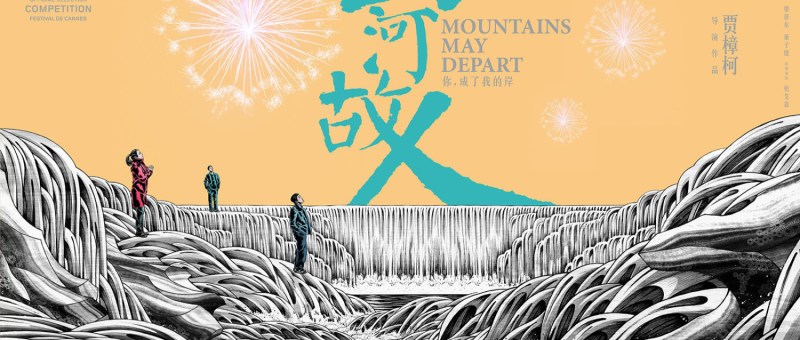
Mountains May Depart (山河故人, Jia Zhangke, 2015)

mountains may depart poster verticleJia Zhangke has made something of a career out of charting his nation’s history through the lives of ordinary people caught up in the business of living when everything about them is changing. Mountains May Depart (山河故人, Shānhé gùrén) isn’t the first of his films to span a comparatively wide period of time, though it is the first to venture into the “future” if only by a decade or so. Through a story of dislocation and isolation both cultural and personal, Jia has traversed the melancholy odyssey of those who grow up to discover that all the wrong choices have already been made.


The film begins at Chinese New Year 1999 – the dawning of a new age. Tao line dances and conga lines to The Pet Shop Boys’ Go West before joining in the celebrations by singing a song in the town square. She’s good friends with Liangzi whose company she seems to enjoy and they seem to get on together very well but it’s unclear if there’s anything more to it than that. Obnoxious rich boy Jiangsheng is also VERY interested in Tao and resents her friendship with Liangzi. Eventually things come to a head and Tao has to choose, and she does but in trying not to hurt anyone she ends up hurting everyone. On Tao’s eventual marriage to Jiangsheng, Liangzi, heartbroken, leaves town intending never to return. The segment ends with the birth of Tao and Jiansheng’s son, Dollar.

In 2014, Tao is divorced and Jiangsheng has taken her son to live with him in Shanghai where he’s a high stakes capitalist mogul. Liangzi, meanwhile, has married and had a child but has ended up working in a coal mine and has now become gravely ill. Unable to work he returns home and considers asking friends and family to help him through these difficult times. Sometime later a family tragedy occurs – the one silver lining being that Tao gets to see Dollar again but he barely remembers her and makes constant phone calls to his “mommy” in Shanghai.

In 2025, Dollar and Jingsheng have moved to Australia. Dollar is taking classes in Chinese which he barely remembers while Jingsheng has become a dishevelled and angry old man. Dollar has almost no memory of his real mother or his childhood in China and starts up an oedipal relationship with a lonely, middle-aged Chinese woman.

Jia paints the passing of time through a series of expanding screen ratios – beginning with 4:3 in 1999, to 16:9 in 2014 and finally 2.35:1 in 2025. The world literally gets bigger, wider, and our focus shifts from Tao to a more expansive canvas of displaced Chinese citizens finally reaching far across the seas. The first segment is more like Jia’s earlier films as Tao is caught between two lovers with possibly tragic consequences whereas the second part has more in common with his more recent work but part three takes things in an entirely new direction.

The 2025 segment doesn’t even feature Tao until the very end and focuses on her son – the ironically named “Dollar”. Having lived the last ten years in Australia he barely speaks Mandarin and has become an angry young man determined to drop out of college because “nothing really interests” him. Jinsheng never learned English and the pair can’t communicate. Gone is Jinsheng’s swagger – now he has a paunch, dishevelled hair and an unruly mustache. In 1999 he dressed in the self consciously stylish clothes of someone who has money and really wants you know it, but now his clothes are worn out and typical of any old man you might find sitting reading a paper on the side of a road. Dollar is lost. Eventually he strikes up a friendship with his Chinese teacher that’s founded on the shared loneliness of two people who’ve been separated from their homelands and loved ones. Looking for his mother in all the wrong places, Dollar’s eventual romance is likely to end in tears but luckily his Chinese teacher is a wise and kind woman who is able to offer some of her wisdom and a steady hand of guidance.

Though much has been made of the “futurism” of the 2025 segment, it’s in no way a science fiction experiment. The chief difference, as might be expected, is in technology though even this is subtle – see through tablets, electronic displays rather than blackboards (only a little more advanced than many institutions already use) and a much more intuitive embedding of google translate. More distracting are the strange anachronisms – vinyl records being played on a classroom turntable, visiting a travel agent to book a flight (does anyone even do this now?) and a preference for older cars. Most damaging though is that, as it’s set in Australia, the bulk of the dialogue is in English which somehow never sounds convincing despite the quality performances on offer.

Dollar wants his freedom from his overbearing, failure of a father though freedom itself is also a burden. The son flails aimlessly while the literal motherland, Tao, is alone, abandoned and forgotten. There’s something quite heartbreaking in the way Jia sculpts his overarching story. We begin with so much hope as Tao and her friends dance enthusiastically to the rather ironic choice of Go West in 1999 as her life is just beginning. When she dances to it again, alone, with the snow falling all around her it’s as if she’s crawled inside a memory, reliving a happy day rather than exulting in the now.

Mountains May Depart is a rich and complex film that is heavy with symbolism and metaphor. Jia wants to ask us where we’re going, and where we’ve been – China’s modernisation has occurred at such a breakneck speed that it’s left an entire nation bewildered. Facing a choice between “going west” and “taking care” of Chinese values (Sally Yeh’s 1990 Cantopop hit Take Care forms the opposing musical motif of the film) many, like Tao, have found themselves choosing poorly and paying a heavy price. What’s in store? A lonely, but wealthy, future devoid of all human connection where “sons” forget their “mothers”? The title suggests old friends like mountains and rivers never part but once the erosion sets in mountains crumble and rivers run dry – you have to look around you and remember what it is that’s really worth living for.


This is getting a full UK release from New Wave Films in Spring 2016!

For the curious here is Sally Yeh’s (葉蒨文) 1990 Cantopop hit Take Care (珍重) which does its best to tug at the heartstrings throughout the later part of the film (and largely succeeds).

First published by UK Anime Network.

Obon Brothers (お盆の弟, Akira Osaki, 2015)

Obon BrothersReview of quirky comedy Obon Brothers (お盆の弟 Obon no Ototo) from this year’s Raindance up at UK Anime Network. I was also lucky enough to interview the director, Akira Osaki, while he was at Raindance to introduce the film which you can also read over at UK Anime Network.


Sometimes you think everything is going to be alright, but then several calamities arrive all at once. Down on his luck film director and stay at home dad Takashi has only been able to get one film made so far and it doesn’t look good for another any time soon. Right now he’s spending sometime apart from his wife and daughter as his elder brother Wataru is ill with colon cancer and as his brother never married, both their parents are dead and they have no other family Takashi has gone to look after him. However, Wataru is anything but grateful and proceeds to mope about the house repeatedly asking when Takashi plans to go home.

When he finally does go home, Takashi’s wife realises she liked it better when he wasn’t there and asks for a divorce. With nowhere else to go except back to Wataru’s, a confused and heartbroken Takashi goes home to Gunma where he reconnects with his screenwriting partner who’s finally met a girl through internet dating. Persuaded to come on a double date, Takashi strikes up a friendship with Ryoko despite still harbouring hopes for a reconciliation with his wife. No job, no home, no wife – what does the future hold for a mild mannered man like Takashi?

Like last year’s Raindance highlight And the Mudship sails away, Obon Brothers stars Kiyohiko Shibukawa though this “Takashi” is a little more sympathetic than the completely apathetic character from Watanabe’s film. With a sort of gentleness of spirit, Takashi is the sort of person who enjoys taking care of others like his ailing brother and cute little daughter and is just as happy keeping house as anything else. For his wife, his passivity becomes a major issue as she finds herself taking on a more independent role and comes to feel she needs someone with more drive at her side rather than the meek Takashi who’s content just muddling through.

Indeed, just muddling through ends up becoming an accidental theme of the film. Every morning, Takashi stops at the local shrine, throws a coin in the donation box and prays for everything to work out…and then goes home and waits for things to happen. However, things don’t just happen no matter how much you want and pray for them – at the end of the day you have to put the effort in which goes for all things in life from marriages to friendships and careers. If anybody gets anything at all out of Takashi’s religious practices, it’s ironically the older brother Wataru who thinks all this religious stuff is hokum – even going so far as to urinate into a sacred pond!

Also like Watanabe’s And the Mudship Sails Away, Obon Brothers is shot in black and white with a preference for long takes and static camera. Consequently it has an innately sophisticated indie comedy feeling which, coupled with its naturalistic tone, bring a kind of warmth and familiarity that it’s hard to resist. Though the film touches on some heavy themes – cancer, the breakdown of a marriage, it treats them all with a degree of matter of factness that never lets them overshadow the main narrative. After all, these things happen and life carries on while they do.

A loving tribute to the prefecture of Gunma from which many of the cast and crew originate including the director Akira Osaki, scriptwriter Shin Adachi and leading actor Kiyohiko Shibukawa, Obon Brothers has more than a little autobiographical content though it doesn’t reflect the actual circumstances of any of the creative team’s lives. It’s a gentle comedy, though one with shades of darkness creeping in around the edges, and moves at an equally gentle pace which gives you ample time to see into these characters and their lives. Osaki’s camera is unjudgemental, it gives equal sympathy and understanding to everyone and even the eventual end of Takashi’s marriage is accomplished with the utmost amicability. Whether or not Takashi has actually changed very much by the end of the film or has just gained a little more knowledge about who he is as a person, Obon Brothers gives you the feeling that it’s alright to start all over again – even if you’re just muddling though!


Obon Brothers is getting a UK release from Third Window Films next year(?) – highly recommended, especially if you like gentle, indie comedies!


Love & Peace (ラブ&ピース, Sion Sono, 2015)

UUqPRiT

Another day another Sion Sono – review of Love & Peace from the London Film Festival up at UK Anime Network. Quite liked this one, shame it’s not out in time for Christmas.


Last time we met Sion Sono it was for a street style rap musical about gang warfare. Before that we’ve mostly been admiring him for his epic and irreverent tale of panty shot perverts and bizarre religion Love Exposure, bloody serial killer true crime thriller Cold Fish or poetic exploration of a woman looking for love in all the wrong places in Guilty of Romance, not to mention a tale of teenage rage and post Earthquake anxiety in Himizu or state of the nation address in Land of Hope. Recently prolific and varied enough to give even Takashi Miike a run for his money, it should come as no surprise that Sono’s latest effort is, essentially, a family film about a man’s love for his pet turtle.

Ryoichi Suzuki is a mild mannered office worker with dreams of becoming a rock star. Belittled by his colleagues, Ryoichi has no friends – that is until he falls hard for a tiny turtle sold by a strange man on a rooftop. Hatching plans together for Ryoichi’s rise to superstardom the pair become inseparable. However, after another round of humiliation at work Ryoichi flushes “Pikadon” down the toilet! Full of remorse, Ryoichi pines for his lost friend meanwhile, Pikadon arrives at the lair of a mysterious sewer dweller who rescues broken and discarded creatures. When Pikadon is given a “wish” pill by mistake, Ryoichi’s life soon begins to change!

In case it needs saying, Love & Peace is in no way a “serious” film – much as that may sound like a pejorative comment, all that means is that it’s delightfully absurd and heaps of fun and where it harks back to some of Sono’s key concerns it does so in a light hearted, even mocking manner. The plot maybe conventional in a lot of ways – down trodden loser suddenly makes something of himself with magical help but ends up becoming arrogant and forgetting his true self before being redeemed by a massive fall from grace but as usual Sono has managed to bring something new to even this comparatively tired tale.

Largely, that’s thanks to his bizarre side story of the land of misfit toys being cared for by a mysterious yet kindly old man who lives in a tiny alcove in one of Tokyo’s sewer complexes. Cheerfully harking back to some of those classic ‘80s kids movies, the strange collection of broken robots, damaged cat toys and lovelorn dolls do their best to tug at the heart strings with their stories of loss and abandonment while the mysterious old man keeps them going with tales of hope and magic pills which grant the power of speech or wishes.

However, as Ryoichi’s dreams grow bigger so does Pikadon himself and its not long before the cute little turtle’s devotion to his master becomes a dangerous threat to the entire city. Ryoichi chose the name “Pikadon” seemingly at random and without realising that it’s become a byword for the atomic bomb. Thus Ryoichi’s eventual ballad of love and regret for his lost turtle buddy is misunderstood as a lament for modern Japan and a pledge to “never forget” the wartime nuclear attacks. Of course, this “subversive political rock song” becomes a giant hit catapulting Ryoichi on the road to superstardom. However, there is more heartbreak for Pikadon to come as he’s continually betrayed by the ever more ambitious Ryoichi who’s only too quick to sell out his beloved friend to get ahead with cruel and potentially tragic consequences.

Of course, the one thing that needs mentioning is the amazing music in the film including the title song which is tailor made for waving a lighter in the air and is sure to become your latest ear worm. Ryoichi only writes a few songs but Sono also manages to throw in a musical self reference to a previous film that makes for a fun Easter Egg for his avid fans to find and the rest of the soundtrack is equally catchy too.

In short, Love & Peace is the Christmas themed punk rock kid’s movie you never knew you needed. Yes, it goes to some very dark places – the least of which is the accidental destruction of the city of Tokyo by the now colossal kaiju incarnation of Pikadon whose only wish is to make his best friend’s rockstar dreams come true, but it does so with heart. In true family film fashion, it addresses the themes of true friendship, the importance of being true to yourself and that the love of man and turtle can be a beautiful, if terrifying, thing. Strange, surreal and totally mad, Love & Peace is the ideal Christmas gift for all the family and Sono’s most enjoyably bizarre effort yet.


I wrote this review before I’d seen Tag which is also “enjoyably bizarre”, it has to be said. Love & Peace will be released in the UK in 2016 courtesy of Third Window Films.

Some other Reviews of Sion Sono movies written by me:

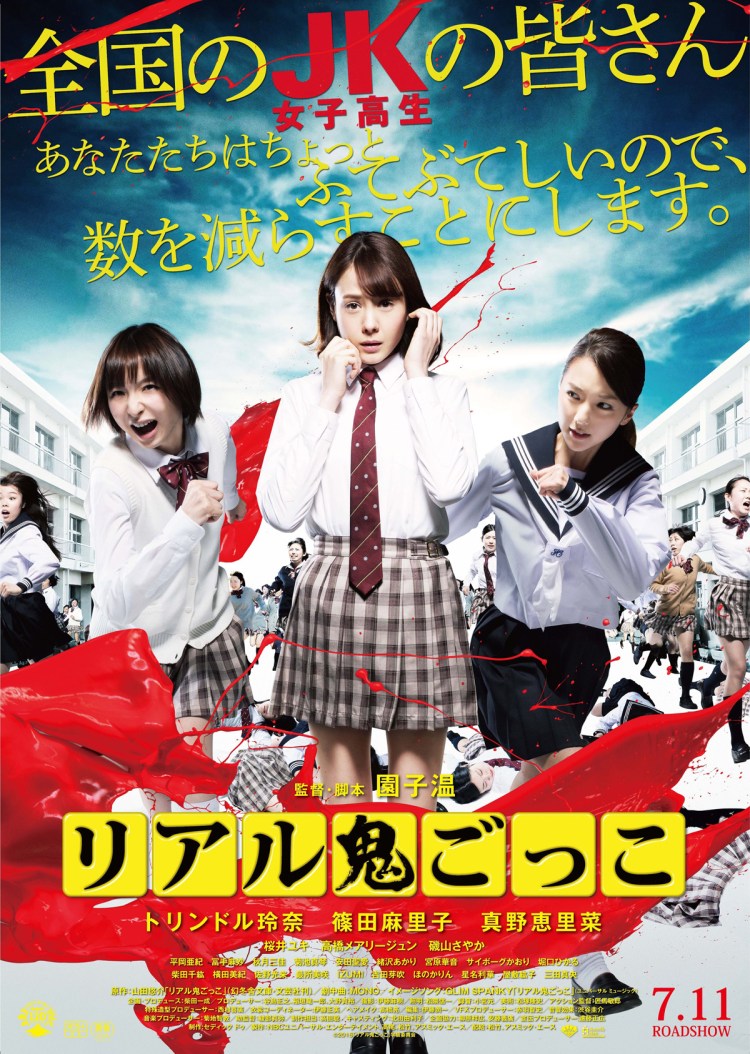
Tag (リアル鬼ごっこ, Sion Sono, 2015)

tag posterYou could say Sion Sono is back, though with six films released within a year it’s almost as if he just nipped out to make a cup of tea. At first look Tag (リアル鬼ごっこ, Riaru Onigokko) seems as if it might be towards the bottom of the pile – school girls running away from things for 90 minutes whilst contending with awkward gusts of wind, but this is Sion Sono after all and so there’s a whole world of craziness going on below the surface.

The action begins with a gaggle of school girls on a bus. Two of them start ribbing the girl on the opposite bank of seats, Mitsuko (Reina Triendl), because she’s always writing poetry. The pen gets knocked out of her hand and as she bends down to pick it up she notices a white feather stuck to the clip. Gazing at the improbable symbol, Mitsuko becomes the only survivor when a sudden gust of wind blows the top off the bus taking all of the other passengers’ heads with it. Mitsuko starts running, re-encountering the dreaded wind monster over and over again before stopping at a stream to wash the blood off her face and change into the cleaner set of clothes she finds abandoned there.

After this she finds herself ending up at an entirely different school where everyone seems to know her. Has she gone mad, had a psychotic break? If not then then she’s about to as an attempt to ditch class with some of the other girls results in yet another freak school girl apocalypse.

Running again, Mitsuko ends up at a police box where another woman seems to know her but insists her name’s Keiko (Mariko Shinoda). Oh, and it’s her wedding day today! That’s not even the last time that’s going to happen and it’s far from the weirdest thing that’s going to happen to Mitsuko today. As a friend of Mitsuko 2’s reminds us, “Life is surreal, don’t let it get to you”.

Answers come, after a fashion. Though Tag is nominally based on a novel by Yusuke Yamada (previously adapted into a long running film series), Sono apparently did not even read the book and has only taken its theme – everyone with the same surname being hunted down and exterminated, and repurposed it for his own ends. This time rather than a common surname, it’s an entire gender that is forced to live under constant threat as the plaything of a far off entity that is as invisible and ever present as the wind. It’s no accident that everyone we meet up until the half way point is female, and that the first (presumed) male we meet is wearing a giant pig’s head. Mitsuko and her cohorts have in fact been used as a literal toy by the men on the other side of the curtain. Their very DNA has been co-opted for the “entertainment” of the male world without their consent or even knowledge, and even if she had known, Mitsuko is powerless to resist.

The solution that is found is both very old and very profound. It’s far from an original ending to this kind of story though in these hands, and used in this way, it can, and has, caused offence. Tag wants to ask you about life, about death, about agency and misogyny – but it wants to ask you all those things whilst watching school girls get ripped apart by the same wind that keeps blowing their skirts up. Sono has his cake and eats it too. There will undoubtedly be those that feel that far from satirising mainstream attitudes to women, Sono has, in fact, indulged in the worst parts of them.

If all of that was sounding a little heavy, Tag runs (literally) at breakneck speed with barely any time for conscious thought between the first bizarre case of gore filled mass murder and the next. It’s also strangely beautiful with a hazy, dreamlike veneer full of repeated images and scenes of idyllic serenity. Is any of this real? Who could really say. The ultramodern, indie score also strikes a slightly hypnotic note lending to the feeling of freewheeling weightlessness.

In many ways, Tag has much more in common with early Sono hit Suicide Club thanks to a general thematic sensibility than to any of his more straightforward work since. That said, Tag never quite resolves itself in a wholly satisfying way and though its final moments are filled with a poetic sensitivity, there’s a certain barrier created by its ambiguity that feels unfinished rather than deliberate. Another predictably “not what it looks like” effort from Sono, Tag may just come to be remembered as his most considered effort of 2015.


First Published on UK Anime Network in November 2015.

Playing at the Leeds International Film Festival on 18th November 2015.

Other movies playing at Leeds include Assassination Classroom, Happy Hour, Our Little Sister and Love & Peace.

Can’t find a subtitled trailer for some reason but to be honest you’ll get the gist of it: