Asleep (白河夜船, Shingo Wakagi, 2015)

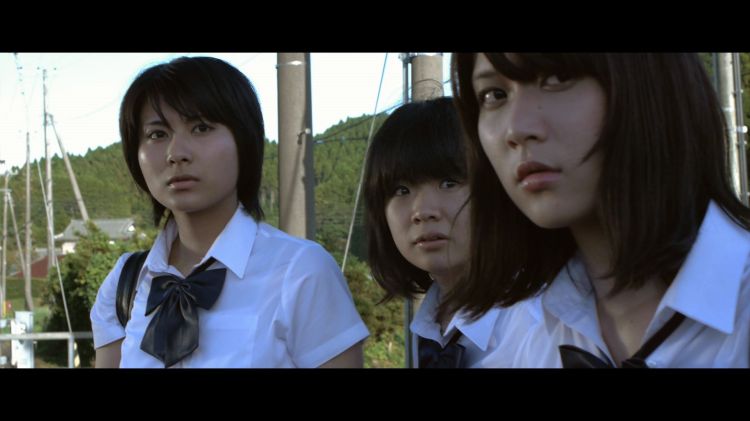
asleep posterBased on the third of three short stories in Banana Yoshimoto’s novel of the same name, Asleep (白河夜船, Shirakawayofune) is an apt name for this tale of grief and listlessness. Starring actress of the moment Sakura Ando, the film proves that little has changed since the release of the book in 1989 when it comes to young lives disrupted by a traumatic event. Slow and meandering, Asleep’s gentle pace may frustrate some but its melancholic poetry is sure to leave its mark.

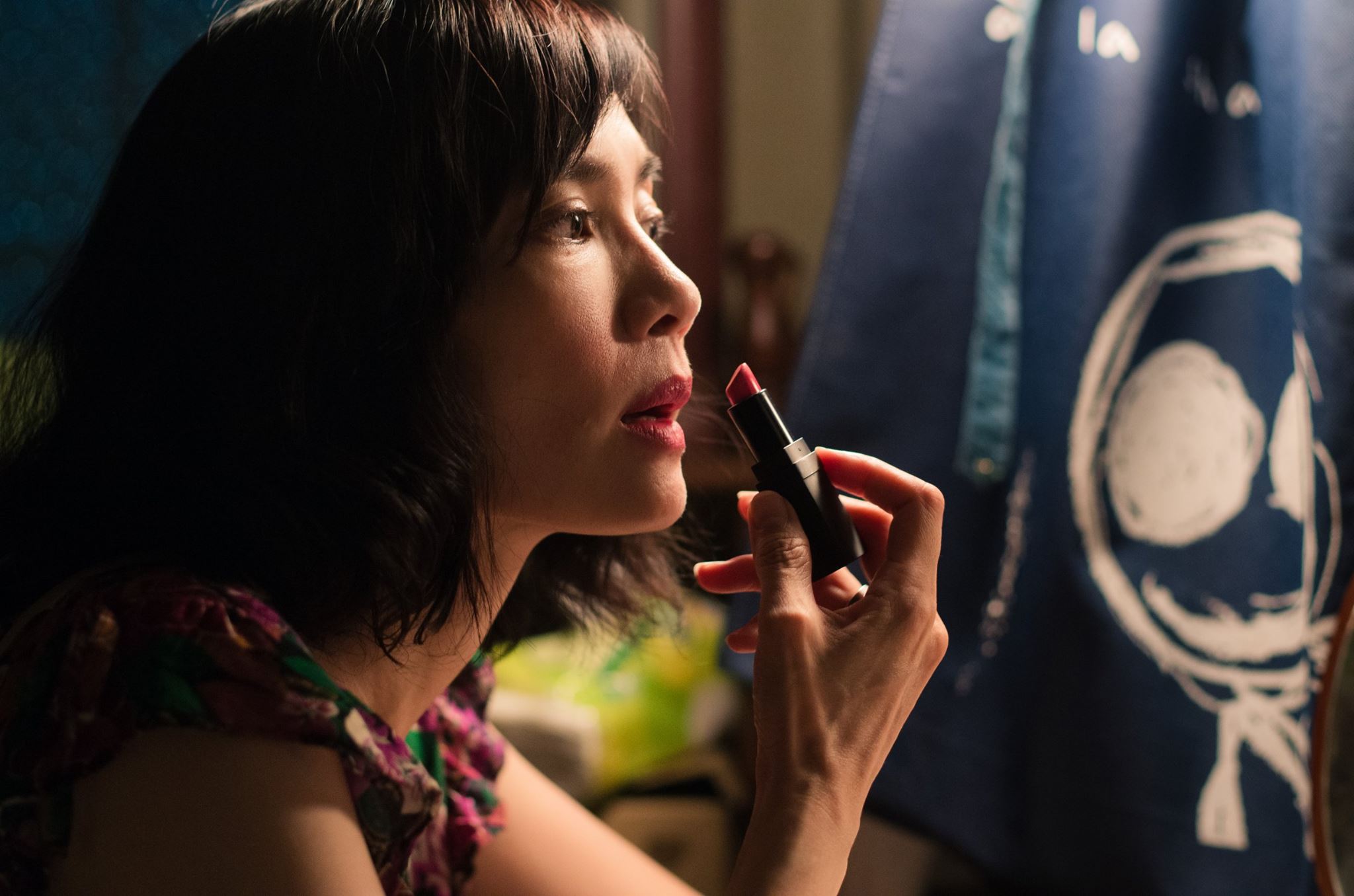
Terako (Sakura Ando) is a young woman who sleeps a lot. Almost all the time, in fact. The kept woman of a married man whose wife, oddly enough, is in a coma following a traffic accident, Terako has been in a kind of limbo since her former roommate and good friend committed suicide by taking an overdose of sleeping pills. Prior to her death, Shiori had taken up an unusual occupation – she lies next to lonely strangers who just want to know that someone is watching over them while they sleep and will be there when they awake. This also meant that she rarely had the opportunity to sleep herself as her occupation demanded keeping a watchful eye over her charges and falling asleep on the job seemed like a lapse of professionalism.

Mr. Iwanaga, Terako’s boyfriend, is an enabler of the first order. He prefers that Terako not work so that she’s available for him whenever he feels the need to call meaning that she’s always at home, sleeping. She sleeps and sleeps but finds no relief from her exhaustion. Even her dates with Iwanaga feel “like the shadow of a dream”. The constant flashbacks and meandering timelines perfectly reflect someone trying to think through the distorted reality of fractured sleep where the boundaries between dream and reality have become impossibly blurred.

There’s an odd sort of triumvirate of sleeping women here – Terako herself who does little but sleep but is still constantly exhausted, Shiori who denied herself sleep until ultimately deciding to take enough sleeping pills to go to sleep forever and Iwanaga’s wife who’s trapped in coma. At one point, in a conversation which either happened some time ago or not at all, Shiori remarks that Iwanaga has Terako “on pause” because he’s afraid to move on from his wife (the fact of his having an affair while his wife is lying in a hospital bed even has Terako labelling him a cold, unfeeling man but then she says she likes that kind of thing anyway). It’s as if she’s waiting for someone to hit the spacebar to wake her up again, though Iwanaga is “on pause” too – torn between the choice of abandoning his wife who will likely never wake up and being labeled heartless, or sacrificing the rest of his life in devotion to a memory.

Help does come, in a way, through the intervention of a either a dream or a kind of cosmic transference – an impossible conversation between two women equally in need of it. Shingo Wakagi’s adaptation is more interested in psychology and existential questioning than it is in hard realities or concrete solutions. A vignette of a moment in a young woman’s life, Asleep gives us little in the way of backstory or explanatory epiphanies, and finally ends in the characteristically ambiguous way many Japanese novellas often do though there is a hint at a possible shift in Terako’s life offered by the final images. A poetic meditation on dream, memory, grief and loneliness, Asleep is beautifully framed, if appropriately distant, look at modern life in limbo.


Reviewed at Raindance 2015

First Published on UK Anime Network in 2015.
Makeup Room (メイクルーム, Kei Morikawa, 2015)

SBLEkl5First Published on UK Anime Network


It’s a little known fact that everyone seems to know, but the Japanese pornography industry is one of the most lucrative in the world producing countless hours of “AV” or “adult video” movies every year. No one expects the world of erotic filmmaking to be glamorous, but rest assured Makeup Room is not interested in exploring the dark side of the industry either. For the characters involved in this rather witty backstage drama it’s just another working day filled with personal concerns and petty office disputes.

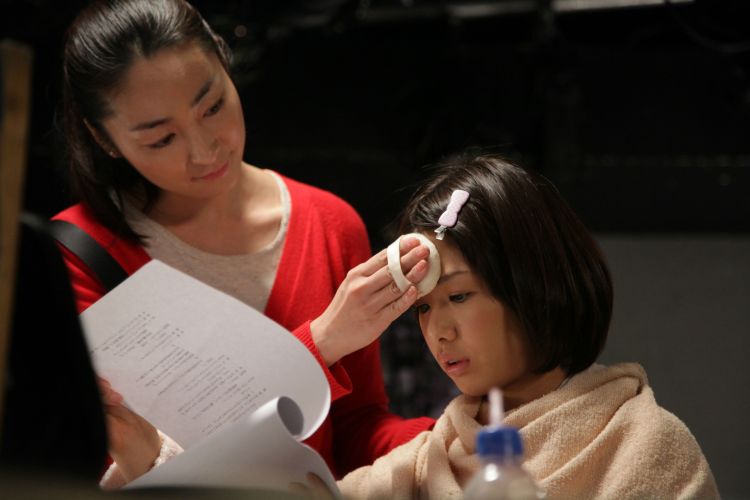
In fact, Makeup Room began as a stage play and occupies just the one set – the green room where the various starlets hang out before the performance. The star of the show in here is the veteran makeup artist, Kyoko, who is responsible both for creating whichever look the director has asked for from innocent school girl to sexy cop or dominatrix and for providing guidance and moral support as she chats away to the various divas and ingenues who occupy her chair. Porno shoots happen very fast, the team only have a brief amount of time in this location before the next crew arrive to shoot another porno so everything needs to go to plan. Today, nothing goes to plan. The lead actress is late, another actress has an undisclosed tattoo meaning she’ll have to switch roles requiring some hasty script edits, and the new girl who’s apparently an inexperienced nymphomaniac is having a few last minute jitters. The director’s stressed, the veteran actress is getting antsy and they’re all just lucky Kyoko is around to keep everything running smoothly!

Makeup Room starts with a rather worrying disclaimer to the effect that this was an extremely low budget shoot and that given the materials available, there is a degree of stuttering in the video which cannot be fixed. In actuality it isn’t that much of a problem but you’d have to admit Makeup Room is never a very pretty looking film. Perhaps appropriately it has a very cheap video look and a simplistic directing style using mostly static shots camera from different angles of its one set location.

However, the rather basic approach does allow the script and performances to shine. Undoubtedly witty, the dialogue both rings true and offers a fair amount of humour at the expense of the diverse cast and crew many of whom are played by real life AV actresses making their “debuts” in a purely narrative film. This is not a tale of fallen women forced into the sex industry through a series of traumatic events, each of the women is fine with their career choice and likes what they do. Though one character reveals that many of the people in her life don’t know what she does and not all of those who do approve, including her boyfriend who’s only just found out and not taken it well, mostly the women talk about the practicalities of their work. Whether that’s having a tattoo that’s much larger than your manager tells people it is, or having your nails done right before finding out you’re down for a lesbian scene meaning they’ll all have to be cut off, or chatting about the way your work is going to change as you get older, the kind of workplace problems that occur perhaps aren’t altogether different than those women experience in all industries.

Director Kei Morikawa has had a long career in the AV industry as well as in more mainstream fare and makes good use of his personal experience to create a film which at least feels very authentic as well as giving the impression of a group of friends getting together to send themselves up in classic style. Full of frank humour though very little explicit content, Makeup Room comes across as a warm and refreshingly straightforward look at the Japanese porn industry though its extreme low budget stylings are likely to put off viewers who prefer the glossier side of things.


Out now from Third Window Films

A Snake of June ((六月の蛇, Shinya Tsukamoto, 2002)

Mr9TSdN - ImgurOne day, I will add some new content to this blog! Today is not that day. Nor is tomorrow, or the day after or the day after that (probably) but someday soon and for the rest of my life! Sorry, carried away there. Anyway, review of the newly restored HD blu-ray release of Shinya Tsukamoto’s masterpiece A Snake of June up at UK Anime Network. It’s very weird and I love it a lot.


Shinya Tsukamoto made his name with body horror infused, pulsing cult hits such as Tetsuo the Iron Man, Tokyo Fist and Bullet Ballet (all of which are also available in the UK on blu-ray courtesy of Third Window Films). He’s no stranger to the avant-garde, the surreal or the troubling but even then Snake of June takes things one step further than even his generally intense filmmaking would usually go. A literal “blue movie”, Snake of June is the story of one woman’s sexual awakening, her husband’s release from OCD and the final fulfilment of the couple’s relationship set against the backdrop of a cold and unfeeling city.

Rinko is an attractive, if slightly mousy, young woman who works a telephone counsellor at a Samaritans-like call centre. As for her homelife, she lives in an upscale Tokyo apartment with her salaryman husband Shigehiko. It’s unkind to say, but the couple are a total mismatch – Rinko, young and pretty even if a little shy, is obviously way out her slightly overweight, balding middleaged husband’s league. Though they seem to have a pleasant enough relationship, there’s no spark between them and they live more like friends or roommates than a married couple. Shigehiko also has an extreme love of cleaning and a touch of OCD that sees him more often caressing the bathtub rather than his wife.

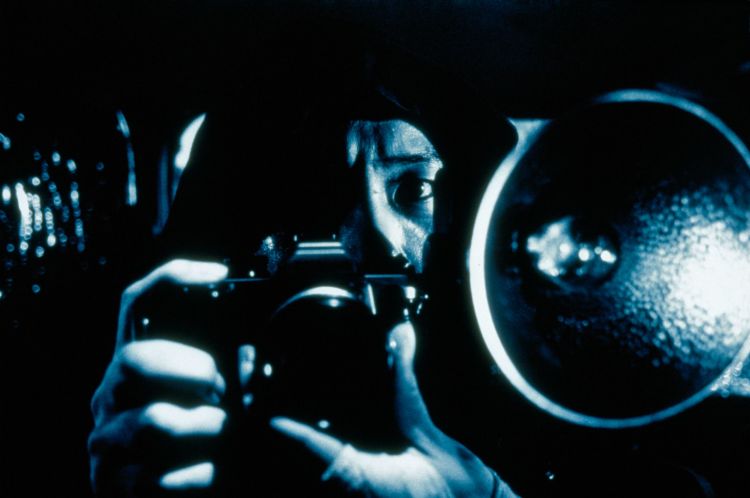
All that changes however when Rinko receives a mysterious envelope full of voyeuristic photos of her masturbating and looking up erotic material on the internet. Soon enough, it turns out these are a “gift” from a troubled photographer, Iguchi, who had planned to commit suicide before talking to Rinko on the helpline. Now he wants to help her by encouraging her to embrace her sexuality and her deepest, darkest desires. Iguchi sets her several tasks to set her on her way such as buying sex toys and walking through town in revealing outfits in an attempt to make her more comfortable with her own sexuality. However, having watched Rinko blossom, Iguchi eventually turns his attention to her husband and events take a decided turn for the surreal.

Erotic – yes, in some senses of the word, but never exploitative. Shot in a melancholy blue designed to mimic the color of the falling rainwater that stains a rainy season June in Tokyo, A Snake of June is a neon inflected journey into urban isolation where the demands of city life drown out the inner fire of those who live in it. Shy and repressed Rinko makes her first foray into town wearing the ridiculously short skirt her blackmailer has “prescribed” for her nervously, clutching a long umbrella in front of her like a shield. Making the same journey sometime later Rinko walks with a swagger, almost dancingly flirtatious she owns herself – her former shield is now a sword. Her “awakening” has nothing to do with her husband or with Iguchi, it’s something she’s achieved for herself and by herself and has left her a happier and more complete person than she’s previously been allowed to be.

Her husband, Shigehiko, by contrast hasn’t quite come to terms with this new version of his wife and even when graphically confronted with it responds in an entirely passive, selfish way. Cracking Shigehiko’s shell will require a little more than gentle coaxing, manipulation and blackmail and thus begins the nightmarish second volume of the film which becomes increasingly bizarre from here on out. Strange drowning themed sex shows where a woman bangs a drum and you have to wear a funny cone on your face which only lets you view everything through a tiny circle like the iris of a an old silent movie? It’s certainly an unorthodox solution.

Like all of Tsukamoto’s work, A Snake of June is exquisitely shot with its blue tint only adding to its native beauty. This new blu-ray edition from Third Window Films remastered from the original negative and supervised by Tsukamoto himself is a pristine presentation of the film which reveals all the tiny details that were rendered invisible by previous transfers. Strange and surreal, A Snake of June is a richly multilayered film dripping with symbolism, not to mention urban melancholy, that has lost none of its power in the intervening years since its shocking debut.


Stuck on Tsukamoto? Here are some more reviews by me:

Also, look out for a review of his latest movie Fires on the Plain which is ready to go some time soon!

Taiwanese Cinema About to Hit the UK in a Big Way

exit 1This is kind of another link post, but bear with me! First up Ang Lee’s first three films finally became available on DVD in the UK. Cunningly titled The Ang Lee Trilogy, you can now feast your eyes on Pushing Hands, The Wedding Banquet and Eat Drink Man Woman for the first time. Feast is the right word too as all the movies feature food in a very prominent way so make sure you have the proper supplies arranged before you sit down to watch them. You can read my review of the trilogy over at UK Anime Network. They’re all great, but I particularly like The Wedding Banquet because it’s just so funny!

Here’s an awful old school trailer for The Wedding Banquet (the film is better than this, I promise).

OK, moving on you can also pick up the award winning debut from Chienn Hsiang EXIT on DVD and VOD courtesy of Facet Films. I reviewed the film when it played at the Glasgow Film Festival and you can read that at UK Anime Network too. I also had the opportunity to interview the film’s star Chen Shiang-Chyi while she’s over here shooting The Receptionist. Contrary to expectations, Chen Shiang-Chyi was actually very chatty and super nice so the only reason the interview seems a little short is because she gave very long and detailed answers! You can checkout the interview over at UK Anime Network.

Which brings me on to the upcoming Hou Hsiao-Hsien season at the BFI which begins tomorrow. Pretty much everyone is expecting his new movie The Assassin starring his regular muse Shu Qi to appear in the film festival (it would be really strange if it didn’t right?) and I for one am really looking forward to seeing it.

Hou Hsiao-Hsien will be appearing in conversation at the BFI on 14th September (tickets apparently still available) ahead of a screening of one of his greatest films, The Time to Live and the Time to Die. I was lucky enough to see this one during the BFI’s extended season of Chinese films last year and though it’s not always an easy watch, Hou’s biographical tale of mainland refugees and their Taiwanese offspring is nevertheless a moving and fairly universal coming of age tale.

I’d also recommend Dust in the Wind 

and A City of Sadness

but I just have to post this scene from Three Times again because I love it so much

They’re also showing Hou’s Ozu tribute and Japanese set Café Lumière starring Tadanobu Asano if that’s more your speed.

That’s a lot of Taiwanese cinema all of a sudden right? It’s a good thing though! If you still want more I’ll direct you to the films of Edward Yang as mentioned in Chen Shiang-Chyi’s interview:

Yi Yi: A One and a Two

No trailers for a Confucian Confusion or A Brighter Summer Day though – both are a little more difficult to get hold of but worth the effort. A Confucian Confusion has a great Rom-Com style ending (though not as good as Comrades: Almost a Love a Story which has the best ending of any film, ever, but I digress) and A Brighter Summer Day which is an epic at four hours long but a total heartbreaker.


The Happiness of the Katakuris (カタクリ家の幸福, Takashi Miike, 2002)

DB9gUGk
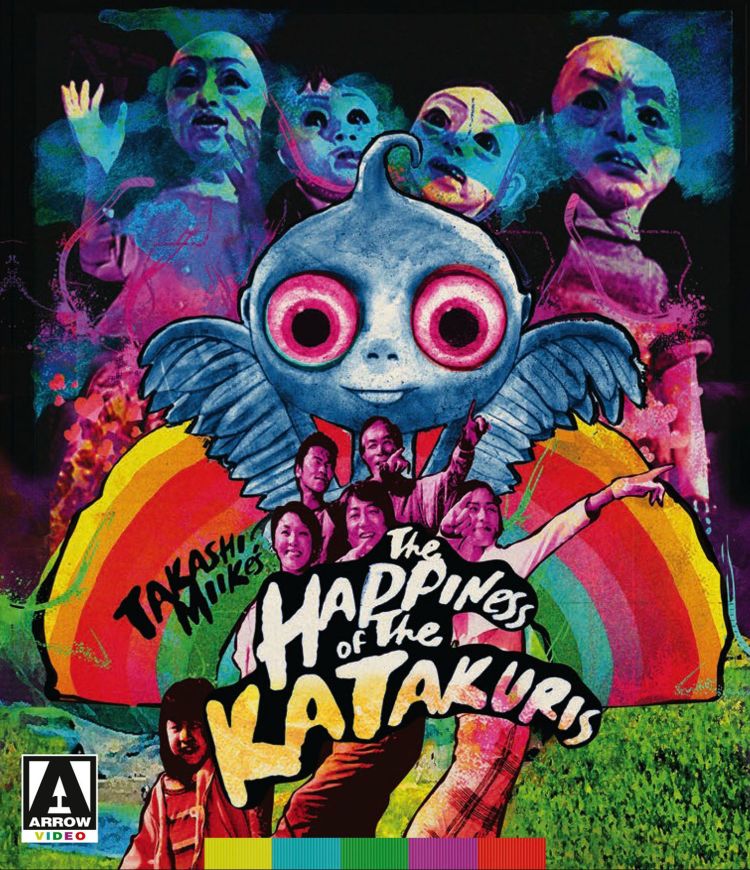
This new cover art from Arrow is actually really great, isn’t it?

Arrow Films are really spoiling us lately when it comes to amazing Japanese cinema – they’ve given us some cool ’60s classics and forgotten gems like Lady Snowblood, The Stray Cat Rock movies, Branded to Kill, Massacre Gun and Retaliation but now they’ve zapped back to the more recent past and brought us one of Takashi Miike’s zaniest and best loved efforts, The Happiness of the Katakuris. You don’t need me to tell you what this crazy, zombie and murderous inn keeper themed musical psychedelic masterpiece is about but you can read my review of the film and Arrow’s new HD effort over at UK Anime Network. (Spoiler, it’s pretty great).


Ah, Takashi Miike – that unpredictable Japanese auteur who’s equally at home with bloody yakuza dramas, gore soaked satire and strange fever dream experiments. There’s no denying his out put is decidedly patchy, which given his prolific career isn’t particularly surprising, but there’s really nothing he won’t at least try. Such is the joy of a Takashi Miike movie. The Happiness of the Katakuri’s wasn’t the first time he made use of musical sequences in his films and it wasn’t the last, but it is one of the craziest. Inspired by the 1998 Korean film The Quiet Family (debut movie of Kim Jee-woon) The Happiness of the Katakuris is, essentially, a family drama which incorporates shady goings on at a guest house, singing zombies, volcanoes and weird stop motion creatures appearing in people’s soup only to fly off with their uvulas (dangly bit between your tonsils).

The film begins with a young girl finding a weird looking creature in her soup which then rips out her uvula and flies off with it before before being snatched by a crow which is then hit with a log by an old man with surprisingly good log throwing game. The old guy is the grandpa of a family which runs a small hotel in the middle of nowhere. Family patriarch Masao used to be a shoe salesman but after losing his job was convinced to buy a hotel after a tip off that a road was supposed to be built nearby which would likely mean lots of customers. Predictably, the road has not materialised and the fledgling inn isn’t exactly packing them in. Besides grandpa, Masao is helped out by his long suffering wife, grown up daughter with a little daughter of her own and a grown up yet seemingly feckless son.

At last, a guest arrives but unfortunately dies soon afterwards. Bearing in mind the declining state of their new business, Masao makes the decision to quickly bury the body in the woods rather than report the death and suffer the negative publicity. Just when things were looking up, another two guests arrive and then promptly die too (in somewhat embarrassing circumstances). As if that weren’t enough, love sick daughter Shizue has fallen in love…again! With “Richard” the secret Japanese love child of the British royal family who’s also some kind of sailor which is why it’s difficult to get in touch with him. All told through the child’s eye view of the youngest member of the family, Shizue’s daughter Yurie, this was one crazy summer in the life of this strange family.

It would be wrong to call The Happiness of the Katakuris a musical, there’s no real musical through line so much as a collection of musical sequences inserted at points of high tension. The musical numbers themselves often act as parodies of other genres with their traditional ballads, karaoke video style sequences and the bonkers Sound of Music-esque field frolicking. Then there’s the singing corpses – who knew zombies were so jolly?

It all undeniably gets a bit grim as the family have to contend with burying the bodies of their unfortunate customers all the while waiting for someone to finally build this long promised road so their business can take off. Each of them is chasing a different kind of “happiness” the father in looking for success in business which will lead to financial security for the family, the daughter in looking for love (in all the wrong places) but it takes the totally bizarre death filled adventure of demons, corpses and escaped murderers to make them realise that they had what they needed to be happy all along – each other. The Katakuris may not be a model family, but everything runs better when they work as a team and they are very happy together no matter what strange adventures befall them. Despite all the trappings of weirdness, The Happiness of the Katakuris maybe Miike’s most subversively conservative film as it ultimately fulfils the role of that most Japanese of genres, the family drama, in which the traditional family is reformed and everything in the world is right again.

Available for the first time in HD, Arrow’s new set is nothing short of a wonder. Shot near the beginning of the digital age before the cameras where anywhere near as good as they are now, you wouldn’t assume The Happiness of the Katakuris would look this good and even if it does show its age here and there the presentation is pretty much top notch and the best it’s ever going to look. The set also comes with a host of special features, some ported over from the original release but also adds a Takashi Miike commentary with critic, Miike champion and sometime actor Toshitoki Shiota in Japanese with English subtitles but also, in an appropriately strange and surreal option, a dubbed version with actors “playing” Miike and Shiota speaking their lines in English too. You also get an entirely new commentary from Japanese film scholar and Miike expert Tom Mes of the recently deceased Midnight Eye plus a short video essay about Miike’s career and a couple of new Miike interviews too.

Almost 15 years on, The Happiness of the Katakuris remains as endearingly bizarre as it did on its first release and is truly worthy of its status as a beloved cult movie that continues to be the go-to weird Japan choice for the genre savvy cinephile. Back and better than ever, this new set from Arrow breathes new life into the film and is a great excuse for another stay at the White Lover’s Inn.


Here’s a trailer for the film:

http://www.youtube.com/watch?v=XDfMXwRapNc

If Takashi Miike x musical madness is your thing you also need to see Ai to Makoto (AKA For Love’s Sake) – available in the UK from Third Window Films.

Also a mini reminder for Miike fans that Over Your Dead Body is going to be at Frightfest and is apparently going to receive a UK release from Yume Pictures (the same people who released A Tale of Samurai Cooking: A True Love Story, now available on UK DVD). Miike madness is back! In more ways than one.

Over Your Dead Body trailer:

Fukuchan of Fukufuku Flats Released on UK DVD Today

44ea2aa088e78643f1ee584fde4e3d2eQuirky comedy Fukuchan of Fukufuku Flats is released on UK DVD today by Third Window Films. I reviewed the film for UK Anime Network back when it was screened at Raindance last year and I also had the opportunity to interview the director Yosuke Fujita while he was over here doing promotion.

Fukuchan of Fukufuku Flats UK Anime Network Review (previous link post)

Yosuke Fujita Interview also for UK Anime Network (previous link post)

I also reviewed the portmanteau movie Quirky Guys and Gals which Fujita directed a segment of (the “Cheer Girls” bit with the overly helpful cheerleaders) and the movie also contains a short film by Mipo O (The Light Shines Only There) about a woman who’s neglected to pay her electricity bill so it’s well worth a look (also released in the UK by Third Window Films).

Here’s a trailer for Fukuchan

Anyway I completely loved this movie. It also has an amazing song (with thanks again to Genkina Hito who tracked it down).

You should all go and watch this very funny film right now because I want to see more movies by Fujita (and I’m selfish like that).

P.S.

The Tale of Princess Kaguya is also out today and you can read a review of that over here . ‘Tis very good though you likely knew that already 😉

Concrete Clouds (ภวังค์รัก, Lee Chatametikool, 2014)

Concrete CloudsI reviewed this flawed yet interesting film, Concrete Clouds, for UK Anime Network. Probably I think I liked it a bit more than the score suggests but it does have its problems. Also ’90s (or maybe ’80s?) Thai pop is kind of amazing.


Up to now Lee Chatametikool has been best known as the regular editor on the films of Apichatpong Weerasethakul (Uncle Boonmee, Tropical Malady) but with Concrete Clouds he’s finally stepped out of the edit suite and behind the camera to direct his very first feature film. However, Concrete Clouds owes less to Apichatpong Weerasethakul or any of the other well known Thai directors he’s been working with over the last decade than it does to early period Tsai Ming-Liang and the Taiwanese new wave. A mood piece heavy on directorial flair but light on detail, Concrete Clouds never quite comes together but still manages to offer a few rewards for the patient viewer.

Set in 1997 just as the Asian Economic crisis begins to take hold, long time emigré Mutt (Ananda Everingham) gets a late night phone call from his high school age brother to say their father has just jumped off the roof. Mutt goes home for the first time in a long time aiming to lay a few ghosts – less that of his father than that of his teenage self and half forgotten love. Meanwhile, younger brother Nic has formed a tentative romance with a girl from the next building who appears to be living more or less alone and has just begun working in a hostess club. Just like his brother he’ll have to decide whether to abandon his love in Thailand to seek new dreams overseas or chase an ever elusive future in the land of his birth.

To be frank, the somewhat shocking and early death of the father retains little impact after the fact as neither of the now orphaned sons seems to dwell very long on the loss of their only parental figure and there’s no real soul searching over why he did what he did. The blueprints for new buildings he was looking at right before and the constant financial concern on the news screens seem to be evidence enough of his ultimate motives. Neither is much mention made of the absent mother who, one assumes, has been absent for a relatively long time. The age gap between the brothers also means that their relationship is not as close as you might assume brothers to be as Mutt must have left for America when Nic was little more than a toddler. Nevertheless, both boys are cast adrift by the older man’s decision, taken alone and with seemingly little concern for those around him.

The historical context is fairly key to the film though may be impenetrable for those less versed in recent history. In setting the story in 1997, the director intends both to imply that many of Thailand’s present social and economic problems stem back to the Asian Financial Crisis and the new Thai constitution which was created around that time but also to deal with the fragile nature of memory and our own tendencies to over romanticise our pasts by falling in love with a fantasy of our own creation. Mutt has dreamed of his high school girlfriend, Sai, ever since leaving her to go to college in America. He lives with a woman in New York but their relationship doesn’t seem particularly serious and she has not accompanied him to Thailand for his father’s funeral. Even though years have passed he’s remained faithful to the image of Sai he has in his mind and however much he tells himself nothing has changed it’s his own self created image that he’s wedded to, rather than the flesh and blood Sai who’s been busy getting on with her own life in the intervening ten years.

In a another cloud based film, Mikio Naruse’s Floating Clouds, the title refers to the the central characters who are unable to re-root themselves after the disruption caused to their lives firstly in failed Manchurian expedition and then by the after effects of the war. They float aimlessly trying to find something they can cling on to that will allow them to move forward with their lives and ultimately never find it. In Concrete Clouds it’s almost the opposite problem, the characters are weighed down by their dreams, almost crushed by them and unable to move. Their dreams will never lift off the ground because they can’t bear to let go of the past, of the people they once were and things they once thought they wanted.

The most notable element of Concrete Clouds is its unusual shooting style which incorporates everything from snatches of archival footage to long stretches of fantasy sequences played out as karaoke videos to late ‘90s Thai pop songs. The film has an interesting aesthetic which appropriately matches its melancholy and slightly wistful tone though it fails to capture the exact emotional ache that it seems to be going for. Ultimately its disparate elements never quite seem to coalesce into something more and though Concrete Clouds has plenty to admire it stops short of capturing the heart. Nevertheless it’s an impressive debut from Lee Chatametikool who has marked himself out as new talent to look out for in Thai cinema.


This is getting a release from Day For Night in the UK and here’s the trailer

And here’s a clip of one of the karaoke sequences

And another from the OST

(I don’t know any Thai at all, what is this music?)

Raindance 2014 Interviews – Hirobumi Watanabe / Kosuke Takaya (Via UK Anime Network)

Forgot to link to the other two interviews I conducted at Raindance last year for UK Anime Network.

nOOWOtL - Imgur
And the Mud Ship Sails Away

Hirobumi Watanabe – Director of And the Mudship Sails Away

BUY BLING GET ONE FREE - Imgur
Buy Bling Get One Free

Kosuke Takaya – Director of Buy Bling Get One Free.

Both of these films are available in Third Window Films’ New Directors From Japan box set alongside Nagisa Isogai’s The Lust of Angels whom I also interviewed at the festival.

CnIJg5w - Imgur
The Lust of Angels

Um, maybe don’t read them all though or you’ll figure out that I mostly just asked everyone the same questions without quite realising at the time….

I’d like to think I’m getting better at this but perhaps not, judge for yourselves!


Yee Chih-Yen Interview (UK Anime Network)

Director-YEE-Chih-Yen-300dpiI had the opportunity to interview Blue Gate Crossing director Yee Chih-Yen on behalf of UK Anime Network when he was over here promoting his latest film, Salute! Sun Yat-Sen which was featured as the closing night Gala of the Chinese Visual Festival 2015. You can also read my review of the film which I liked very much and be sure to catch Salute! Sun Yat-Sen when it receives a UK DVD and VOD release courtesy of Facet Film Distribution on 27th July 2015.

Trailer and a few more images from the film below.

articlesubpic1597


Salute! Sun Yat-Sen (UK Anime Network Review)

articlesubpic1597Reviewed the latest film from Blue Gate Crossing director Yee Chih-Yen Salute! Sun Yat-Sen for UK Anime Network. Also interviewed the director when he was here for the film’s screening as the closing night gala of the 2015 Chinese Visual Festival (under the old title of Meeting Dr Sun). This will also be getting a DVD/VOD release from Facet Film Distribution on 27th July if you didn’t manage to make it to the festival. Good movie, kind of cute but with bite too.


Salute! Sun Yat-Sen is the long awaited new film from Taiwanese director Yee Chih-Yen which arrives a massive 13 years after the award winning Blue Gate Crossing. Like Blue Gate Crossing, Salute! Sun Yat-Sen centres around the everyday life of teenagers with a subtle level of social commentary though this time it swaps sexuality for social inequality and complicated male friendships.

Lefty is a typical high school boy, at once giddy and lackadaisical. His major problem in life is that he’s behind on his school fees and despite his attempts to dodge the issue, it’s become an embarrassment for him around the school. Lefty lives with his grandmother who’s on a low income and he simply does not have the money to pay. That’s when he catches sight of an abandoned metal statue in a school storeroom and hatches on a plan to steal it and sell it for scrap. However, just when it looks like the plan is complete, Lefty and his friends discover another group of boys has hatched on the same idea! It’s then up to Lefty & co to figure out a way of getting to the statue before the other gang.

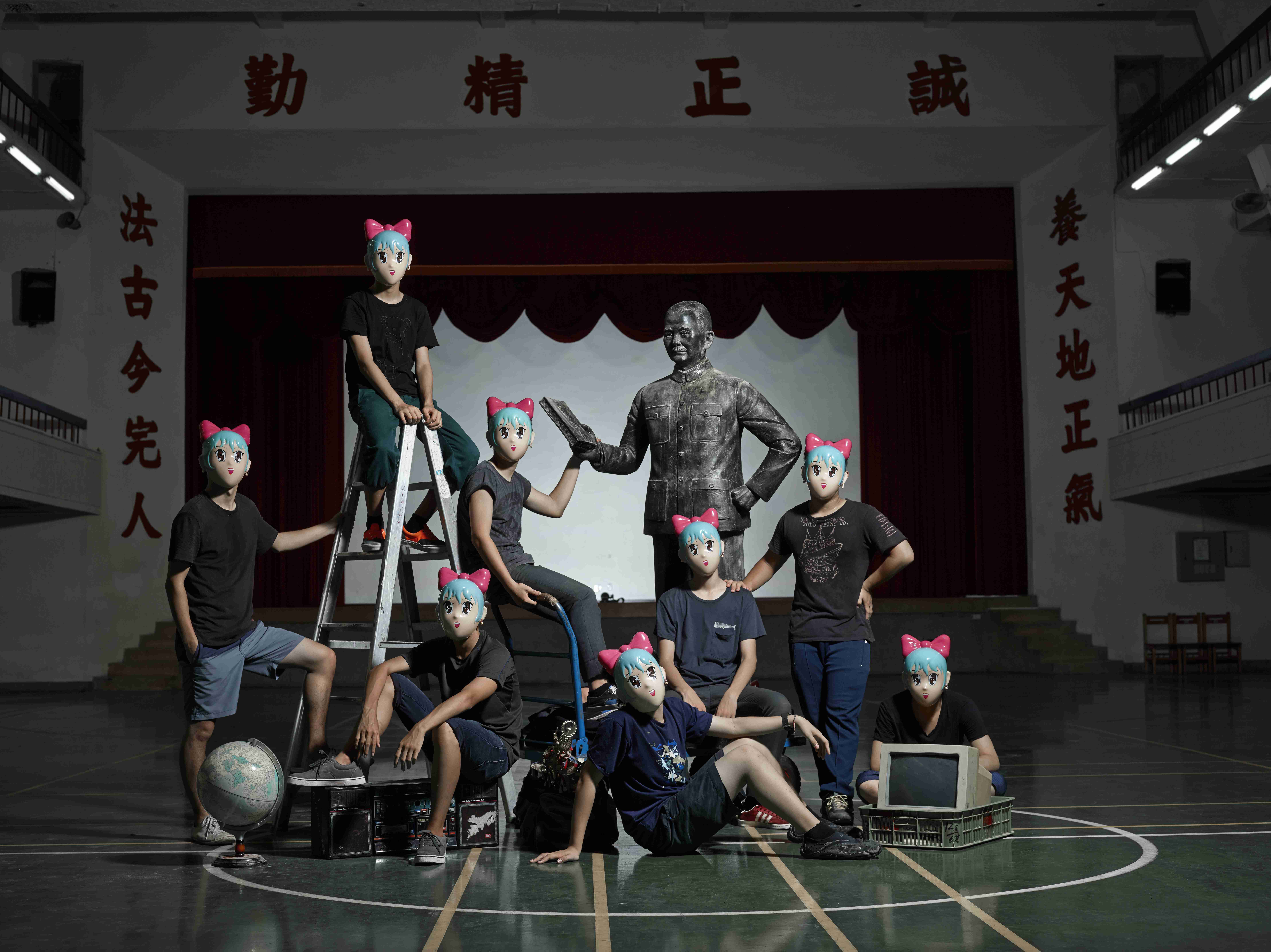
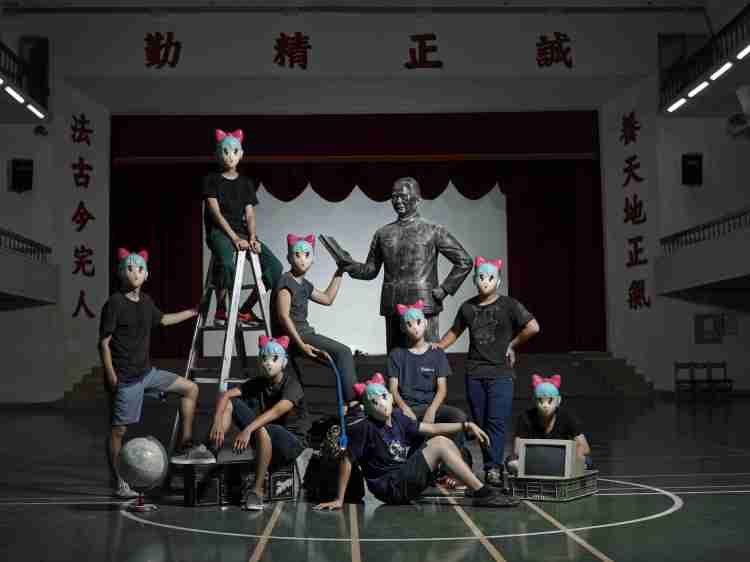
Salute! Sun Yat-Sen mixes comedy caper tropes with high school drama as the boys try to beat each other to this overly symbolic statue that they intend to sell for scrap. The plan is, of course, a little bit ridiculous – first of all the business of sneaking an extremely heavy and cumbersome metal statue out of the school with no one noticing and then simply taking it to a scrap metal merchant and selling it, all without anyone asking how exactly they came by this distinctive statue, is quite a childishly naive plan but one which makes for quite a lot of comedy. One of the best moments being the boys trying to buy masks to hide their faces from the security cameras and having to go for the cheapest one which happens to be a horrible anime style face which is so cheaply priced because it’s made from an awful plastic which gives you a rash and makes your face itch if you wear it too long.

Sun Yat-Sen is obviously a hugely important, inspirational and well known historical figure particularly in Taiwan but also across mainland China. However, it has to be said that he is not such a well known figure in the UK and, especially as his name is not even mentioned until a news report close to the end, UK viewers may find that the symbolism his name carries is largely lost on them as is the film’s subtle social commentary. Briefly put, Sun Yat-Sen was the “father of the Chinese Republic” who sought to steer China towards a democratic and more egalitarian society after the collapse of the Qing dynasty and the Chinese revolution in 1911. Sadly, his utopian vision for the new China was not to be but his idealism and humanitarian thinking are still widely praised in Chinese culture. He also still appears on Taiwanese bank notes and so may be primarily linked with money in the minds of these young boys, but there is a central irony that it’s a statue of the left leaning Sun Yat-Sen that these money strapped young men have chosen to steal and melt down to get the money they so desperately need to get by.

However, even without grasping all of the complex political allusions to Taiwanese cultural issues both historical and contemporary, Salute! Sun Yat-Sen still succeeds as a warm and amusing coming of age tale in which a group of teenage boys on the cusp of adulthood come to realise a few things about themselves and the culture they live in. Though the central two boys are in someways very different, in other ways they have a lot in common and it’s a fun ride seeing how their conflicting personalities rub up against each other until a tentative friendship eventually develops. The second boy (who repeatedly avoids telling Lefty his name throughout the film) is, in many ways, in a far worse position than Lefty which has made him bitter and devoid of hope for the future but thanks to Lefty’s optimism perhaps begins to think it’s not all as gloomy as he once thought.

Like Blue Gate Crossing, Salute! Sun Yat-Sen is a quiet sort of film where plot takes second place to character (although all the heist shenanigans are undeniably entertaining – especially one horror movie inspired episode). The film feels authentically youthful, manages to imbue its young cast with an unusual degree of realism and it’s very hard not to be charmed by Lefty’s giant smile and happy go lucky attitude. Simply put, Salute! Sun Yat-Sen is unlikely to spark a revolution but its quietly encouraging messages are certainly a good start.