The Chef, The Actor, The Scoundrel (厨子戏子痞子, Guan Hu, 2013)

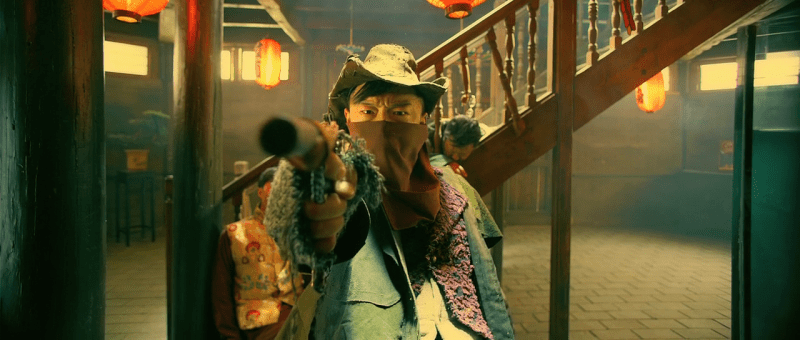
“They were described as insane. But others said they were heroes,” according to the opening narration of Guan Hu’s zany wartime comedy, The Chef, The Actor, The Scoundrel (厨子戏子痞子, Chúzi Xìzi Pǐzi). Of course, the truth is that they seem to be both, a band of anonymous avengers desperately trying to end the cholera outbreak in Beijing in 1942 by stealing a vaccine from the Japanese and distributing it to the local population. 

They do this by kidnapping two Japanese soldiers who were involved with Unit 731 working on bioweapons. In a touch of irony, they may have intended to spread the disease intentionally to use to local Chinese population as test subjects, but the Japanese army in China is now so heavily affected they think it might just cost them the war. In any case, the plan goes awry because Ogasawara (Masanobu Otsuka) turns out not to be carrying the vaccine, but a sample of an even deadlier strain against which the existing version won’t work. Meanwhile, the restaurant where the gang are holed up is also surrounded by bandits who think the soldiers were carrying a different sort of treasure. 

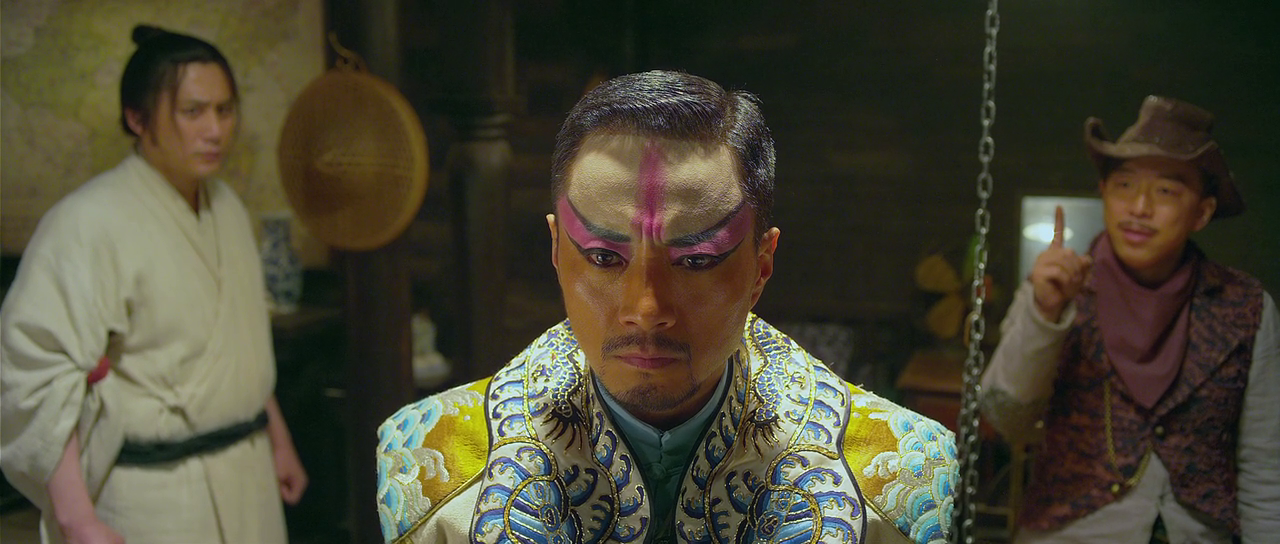
In truth, the gang are scientifically trained special agents with a mission to retrieve the vaccine but having realised that the Japanese can’t be tortured into giving it up, are forced to put on a charade pretending to be a camp sushi chef, his mute wife, a Peking opera performer, and a cowboy. What looks like completely random, bumbling incompetence is actually a finally turned plan designed to get Ogasawara to give up the secret of the vaccine. When Ogasawara’s ogre-like assistant points out they’ve killed far too many people for their captors to let them go, Ogasawara insists they weren’t people, they were test subjects, before explaining that their captors’ biggest weakness is a lack of unity.

This is, of course, ironic, as even if the band are pretending to be at each other’s throats trying to take control of their prey, they are actually working together. Meanwhile, though it may, at times, seem as if Ogasawara is playing them at their own game, it turns out he doesn’t have a game plan either and isn’t really thinking that far ahead. The Japanese just want the code to create the vaccine, and only commit to rescuing Ogasawara when it turns out the recipe he gave them doesn’t work, meaning they need him to come back and work on the project. But the heroes are a little bit ahead of him, realising they might have access to what’s needed to create the vaccine for themselves and spread it throughout the city. 

The final title card dedicates the film to “the movies we loved when we were young,” and Guan certainly does make good use of silent film aesthetics, even in also falling into a more mainstream sensibility and employing may of the same mannerisms as similar blockbuster movies with split screens and fast zooms. The film’s zany humour plays out almost as a kind of reaction to the grim and absurd world all around it in which death lurks all around, along with Japanese Imperial forces and bandits, and nothing is quite as it first seems to be. The Japanese soldiers refer to the Chinese as “Shinajin,” a sort of derogatory term meaning “Chinaman,” while the trio refer to the Japanese as “kimonos” as if to signal their mutual animosity while the dialogue itself is full of silly puns and weird swearing. 

Which is quite something considering the darkness of the premise. Not only are we dealing the atrocities of Unit 731 which is not only responsible for the cholera outbreak, but potential apocalypse for China which is under threat from several angles including the Nationalists and bandits. The sickness they are really trying to cure is their subjugation as they take care to issue the vaccine to ordinary Chinese people without seeking fame or fortune. Nevertheless, the closing titles insist they were based on real people who studied at Yenching University Medical College before the war and then went on to lead quite ordinary lives after this brief moment of heroic insanity as they harness nonsense as a weapon to trick the enemy into betraying themselves before giving up the ghost.


Trailer (Simplified Chinese and English subtitles)
Johnny Keep Walking! (年会不能停!, Dong Runnian, 2024)

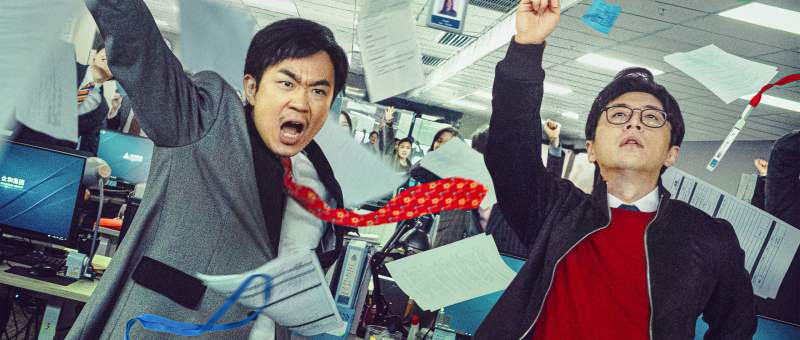
A satirical morality tale, Dong Runnian’s incredibly witty comedy Johnny Keep Walking! (niánhuì bùnéng tíng) sees a bumpkinish middle-aged factory worker still filled with an idealism that seems outdated even in the late 90s transferred into a lion’s den of corporate greed and dubious morality while ultimately expressing the younger generation’s increasing dissatisfaction with the inherent unfairness of corporate life in modern China. Ironically turning Tom Chang’s 1988 hit My Future is Not A Dream into a rallying cry from disillusioned youth, the film nevertheless places its faith in the moral generosity of a fat cat factory owner who struck gold in the nation’s 90s reforms but has largely forgotten those who helped him get there.

Key among them would be Jianlin (Da Peng) whom we first see trying to fix the disco ball at the factory’s 1998 gala and being asked to sing a song instead. 20 years pass with Jianlin still living the life of a model factory worker stuck on the same old salary while applying to perform in the company’s annual gala has become his only joy in life. Meanwhile, the factory owner has gone on to head an increasingly powerful multi-national company leaving Jianlin and those like him far behind deprived of the successes that the modern China has to offer. 

This is in part a paean for those left behind by the economic reforms of the 1990s which saw the end of the old factory system with mass unemployment and displacement amid frequent plant closures. Jianlin’s is still open, but devoid of the sense of comaradie that mark the opening scenes. His scheming floor manager, Zhangzi is trying to engineer a transfer to head office so that his son could attend a better school in the city and has been helping a series of corporate lackeys defraud the company, in addition to paying a direct bribe, in return for a job offer. A drunken mix up by office party boy Peter (Sun Yizhou) results in Jianlin being hired instead in a shock move that proves inexplicable to all. 

Jianlin is such an innocent that he thinks the reason he’s been given a huge promotion is because he was employee of the year for 12 years straight and the company probably want to send a message to the youngsters that hard work really will be rewarded. Of course, the opposite is true. HR manager Magic (Bai-Ke) quickly spots the mistake but is prevented from fixing it because it would get them all into trouble, and while it’s obvious to most people that Jianlin has no idea what he’s doing they choose to say nothing because they assume he must be a nepotism hire and they want to stay in the boss’ good books. Everyone at the company uses an English name with Jianlin rechristened “Johnny” though he understands no English and struggles with Chinese business jargon having no idea what people mean when they go on about “aligning the details”. Charged with firing someone under the company’s radical new “optimisation” programme, he takes the word at face value and gives them a promotion and a raise instead.

In fact, much of the film is him muddling along like typical middle-manager promoted beyond his abilities. He’s advised that good management is all about setting employees against each other so they forget about resenting you while basically delegating all your tasks to your subordinates who will be only too happy to help in order to curry favour. Slowly corrupted, Jianlin beings to play along, taking all the perks of corporate success while signing documents he couldn’t understand even if he actually read them.

Nevertheless, he develops a kind of team spirit with Magic, a man stuck in a mid-career rut because of his lack of skill at office politics, and Penny temp whose perpetually kept on the hook rather than being given full employee status so that the company can exploit her more. Penny also suffers sexual harassment at the hands of the party happy Peter with Jianlin getting her out of a sticky situation by telling her to finish a report and drinking with Peter himself. Together, and with the assistance of the workers at the factory and others about to be unceremoniously fired as part of the cost cutting enterprise, they attempt to expose corporate corruption and stage a protest against unfair working practices but the only saviour they have to turn to is the company president strongly suggesting a return to the old factory days which, it is implied, were much more wholesome and innocent. In any case, justice eventually wins out with the good rewarded and the bad getting their just desserts though it doesn’t do too much to tackle the inherent and quite ironic rottenness of the system in which the worker has been reduced to a mere tool to be used and discarded by a faceless and uncaring corporate entity. 


International trailer (English subtitles)

My Future is not a Dream (Tom Chang)

Under the Light (坚如磐石, Zhang Yimou, 2023)

The irony at the centre of Zhang Yimou’s Under the Light (坚如磐石, jiānrúpánshí) is that it takes place in a neon-lit city of eternal visibility, though of course where you have light you’ll also find shadows. Even so, it appears he’s trying to make a point in the plain sight nature of political corruption and it’s connections with organised crime. At heart it’s a tense cat and mouse game between two men who share some kind of sordid past, but also of how it’s the next generation that often pay in the infinitely corrupted paternity of the contemporary society.

Zhang opens with a hostage crisis as a man hijacks a bus and threatens to blow it up if he doesn’t receive a visit from deputy mayor Zheng Gang (Zhang Guoli). Zheng attends but his policeman son Jianming (Lei Jiayin), currently assigned to the tech division, notices that the bomb can be detonated remotely and it doesn’t appear the hostage taker knew that it was real. In any case, all is not as it seems and as Zheng is soon squaring off against shady businessman Li Zhitian (Yu Hewei) who invites Jianming to dinner and puts on a show by blackmailing another business owner with a sex photo before forcing him to put his hand in boiling oil. 

In contrast to his ruthless exterior, Zhitian dotes on his grown up daughter currently pregnant with her first child and about to be formally married to his business heir David (Sun Yizhou). Jianming meanwhile has a complicated relationship with his father by whom he feels rejected in part because he’s adopted. Zheng also appears to be meeting with a mysterious young woman for unclear reasons, later hinting that she’s a kind of daughter figure someone at some point asked him to protect. In a strange and probably unintended way, it’s this parental quality of protection that has been disrupted by ingrained corruption and is then re-channeled in a desire to protect society in general. When it’s all over, Jianming asks his bosses why they trusted him to make the right decision, and they tell him it’s because he told them he wanted to be a “true policeman” for the people.

Apparently stuck in limbo for four years because of censorship concerns, the propaganda thrust of the film centres on the crackdown against political and judicial corruption. Zheng is engaged in a political project to target corrupt officials but is heavily implied to be on the wrong side of the fence himself which would explain his connection with Zhitian, a supposedly self-made man who keeps a heavy pole in his living room to remind him of his roots as a lowly porter in a rural town before taking advantage of the ‘90s economic reforms to make himself wealthy beyond his wildest dreams. 

They each have hidden secrets which Jianming becomes determined to drag into the light while working with the anti-corruption officers in his precinct, as well as old flame Hui-lin (Zhou Dongyu). Zhang adds in some distinctly retro comedy vibes not least in the frustrated romance of Jianming and Huilin who at one point dangle dangerously off a building while she later bites back, “don’t deprive me of the chance to protect you. It’s what they call love” when firing a pistol at a bunch or marauding bad guys. Yet the comedy seems incongruous with infinite bleakness of the resolution in which once again the children are made to suffer as Jianming comes to a greater understanding of his origins. 

In an ironic touch, the villains are later revealed to have been dyeing their hair which is in reality already white though they are not really all that old. Playing into the themes of duplicity, it also hints at the central message that the older generation must recede and the young, like Jianming, learn to find an accommodation with their failures in order to reclaim a sense of justice. Then again, the film itself is quite duplicitous with a series of glaring plotholes including a giant one relating to the DNA identification of a missing woman whose body is finally dragged into the light. Huiling warns Jianming that there are some boxes it’s better not to open. At the film’s conclusion he may wish he’d listened, but his job is to drag truth into the light and not least his own. In any Zhang’s infinitely bright, ever illuminated city of neon and glass has a host of hidden darkness only temporarily exorcised by the unusually lengthy parade of the now standard title cards explaining that the wrongdoers were caught and punished while deprived of their ill-gotten gains no matter how much it might seem that crime really does pay.


International trailer (Simplified Chinese / English subtitles)

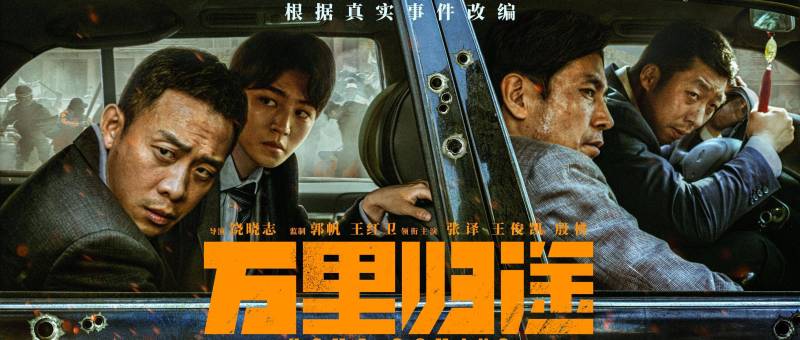
Home Coming (万里归途, Rao Xiaozhi, 2022)

A pair of Chinese diplomats find themselves the last hope of stranded construction workers when civil war erupts in a middle-eastern nation in Rao Xiaozhi’s visually impressive action drama, Home Coming (万里归途, Wànlǐ Guītú). A “Main Melody” National Day release, the film is less heavy on jingoistic patriotism than might be expected if slotting neatly into the recent trend of celebrating various branches of officialdom, this time foreign service consular staff, but nevertheless leans into the recurrent “just stay in China” message of government-backed big budget cinema in insisting that nowhere is the Chinese citizen safe other than at “home”. 

According the closing titles inspired by a series of real life events, the film opens in the fictional nation of Numia which is currently experiencing a period of instability with widespread protests against the government. As tensions quickly rise amid a full-scale uprising led by rebel warlords, consular staff are tasked with evacuating Chinese citizens. Jaded consular attaché Zong (Zhang Yi) has a heavily pregnant wife at home, but gives up his seat on the last plane out to a “Taiwanese compatriot” in what can only be read as a less than subtle advocation for a One China philosophy. Booked on the next boat out, Zong nevertheless ends up staying behind to help rescue a contingent of construction workers who are unable to cross the border as they have lost their documentation and require consular assistance to secure exist visas to a neighbouring nation. 

The message of the film might in some ways seem confusing. The by now familiar inclusion of stock footage featuring Chinese citizens overjoyed to arrive home thanks to the assistance of the consular officials emphasises that the Chinese government will always be committed to protecting the interests and safety of Chinese citizens abroad, but it’s also clear that the safest thing of all is not to leave or else to return home as quickly as possible. “Let’s go home” becomes a recurring motif as the construction workers and diplomats will themselves forward fuelled by hometown memories and a desire to see their families as much as simply to survive. Then again, there is also a subtle defence of the role of Chinese corporations overseas. An elderly driver from the local area makes a point of defending his friends and employers to a warlord as he points a gun at his head, reminding him that the Chinese do them a service by building railways and hospitals though it seems this corporate intrusion is one of the things the warlord is rising up against.

No information is really given as to why there is animosity towards the ruling regime, but the film nevertheless goes out of its way critique dissent by suggesting that it is the rebels who are in the wrong. Bodies are frequently seen hanging from billboards and bridges, and rebel leader Mufta tortures and pillages while playing sadistic games with captives. A secondary plot strand seems to suggest that a good leader must sometimes mislead those around them for their own good. Zong finds himself in conflict with his young and naive partner Lang who thinks they should be honest and admit that even if they make it to the next town there may be no one waiting for them while Zong knows that if they tell the construction workers that they’ll never reach it anyway in which case there’s nothing else to do but stay still and die. Zong is proved right, implying that Lang’s problem was that he had insufficient faith in China to protect them (which they can largely because of their massive satellite surveillance network) and endangered the lives of others because of it. But then Mufta also makes a strategic error in a bit of showmanship that effectively unmasks him in front of his men as a duplicitous coward rather than the grizzled revolutionary they thought they were following. 

In any case the closing news reports emphasise the rescue’s value in demonstrating that China is a strong and reliable country capable of protecting its people abroad, though the flip side of that is also seen in Zong’s insistence to the warlord that China will retaliate if any of his people are harmed. Meanwhile, Zong also seems keen to prove that China is a more inclusive place than many others, offering to take their driver back with them if he wanted to come. When the rebels finally concede the Chinese can leave, they refuse permission for an orphaned local girl who had been adopted by a Chinese couple but Zong refuses to leave without her insisting that as she has been adopted she is now incontrovertibly Chinese and he will protect her too. Rao shoots with a gritty roving camera drawing inspiration from the paranoid thrillers of the 1970s along with similarly themed contemporary pictures such as Korea’s Escape From Mogadishu and Hollywood’s Argo, while making the most of incredibly high production values with a series of explosive action sequences but does his best to mitigate the jingoistic undertones through his uncertain, battle weary hero even if ending on a slightly ironic note with an unexpected, post-credits appearance from a National Day movie icon.


international trailer (English / Simplified Chinese subtitles)

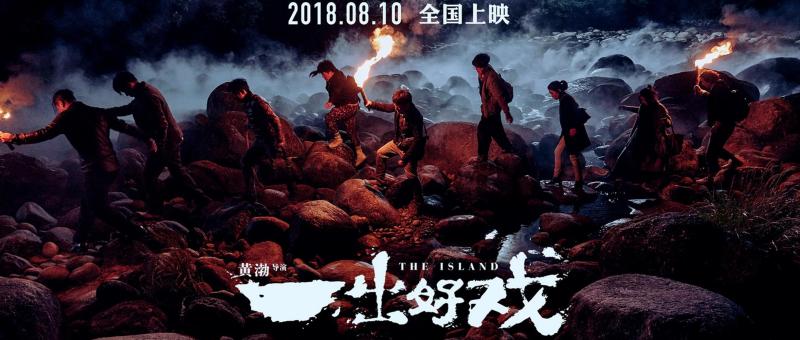
The Island (一出好戏, Huang Bo, 2018)

the island poster 1Comedy seems to have regained its bite of late. Filmmakers seeking to deliver pointed barbs at the modern China are pulling away from the traditionally safe areas of the period drama for a natural home in satire which for the time being at least is running rings around the censors’ board, albeit in a subdued fashion. The directorial debut from comedic actor Huang Bo, The Island (一出好戏, Yìchū Hăoxì) offers a mini lesson on the perils of untapped capitalism, tyranny, propaganda and “fake news” agendas in the form of a genial romcom in which a nice guy loser makes himself the king and wins the heart of his fair princess only for his empire to crumble under the weight of his own conflicted moralities.

On the day a meteor may or may not be on course to fall to Earth, dejected middle-aged office worker Ma Jin (Huang Bo) is off on a “team building” trip with his colleagues which involves a lengthy journey on an aquatic bus. Ma seems to owe money to just about everyone but swears he will soon pay them back, meanwhile he’s also hoping to get close to office beauty Shanshan (Shu Qi ) on whom he has a longstanding crush. At long last, it seems like Ma’s ship has finally come in – on checking his lottery numbers, Ma realises he’s the jackpot winner and can probably quit his boring job as soon as they dock, possibly even sweeping Shanshan off her feet as he does so. Alas it is not to be as seconds later the meteorite strikes engulfing the duck boat in a tsunami and eventually marooning the entire party on a deserted rocky island somewhere in the middle of the sea.

Huang wastes no time mocking modern consumerism. Ma Jin is now a millionaire but it couldn’t matter less. Likewise, slick boss Zhang (Yu Hewei) is at a similar impasse. He’s supposed to be in charge, an innovator and entrepreneur with all the ideas and a clear path to success but he is stunned and can only scream into the ocean while vowing to use his vast wealth to buy a new ship. The passengers look for leaders, some sticking with their social superior Zhang while others start to flock to the energetic bus driver Wang (Wang Baoqiang) who offers more practical solutions having discovered an abundant crop of fruit trees during an early exploration of the terrain. Wang used to be a monkey keeper and quickly assumes control with an authority born of strength and dominance as well as the withholding of the means to survive from those who do not submit to him.

It’s not long before some of the passengers long to be free of his oppressive yoke and the ideal opportunity arises when capitalist boss Zhang chances on a ready supply of capital in the form of a shipwrecked, upside-down boat which is laden with supplies. Ma Jin and his cousin Xing (Lay Zhang) follow Zhang who later institutes a market economy using playing cards for currency which offers the illusion of freedom but traps the employees in a system of capitalistic wage slavery while Zhang gets “rich” at the top of the pile. Ma Jin and Xing eventually grow disillusioned with their increased status at Zhang’s side when they realise he doesn’t have a plan for getting off the island and has given up on the idea of returning to civilisation.

Pitting two sides against the other, Ma Jin manages to create unity under a system of communism with capitalist characteristics (you see where he going with this?) in which he reigns as something like first among equals. Ma Jin’s “communist” utopia filled with laughter, song, and impromptu dance sequences is only born when he realises he’s missed the date to claim his lottery ticket and that there’s nothing worth going back for whether civilisation still exists or not. With his new found status, he’s finally able to get close the emotionally wounded Shanshan but becomes increasingly conflicted as the “fakery’ required to keep his regime in place begins to weigh on his mind, especially when a boat is spotted on the horizon and the entire system seems primed to crumble. Ma Jin gives in to his worst instincts at the instigation of his even more corrupted cousin who brands the boat visionary a false prophet, a madman who can’t accept the wonders of the new regime.

Only when confronted with Shanshan’s genuine emotion for the man he was pretending to be does Ma Jin wake up from his embittered fever dream to realise the dangers of the world he has created out of his own sense of inferiority, and particularly the harm done to his cousin who perhaps always felt a little oppressed just by him. The message is however compromised by Ma Jin’s otherwise positive realisation that lack of money was not as big a barrier to his success as lack of self confidence and avoidance of truthful emotional connections which of course undermines the central criticism of the increasing inequalities of modern Chinese society just as the ironic coda undoes the anti-consumerist message. Nevertheless, though overlong The Island successfully marries its romantic comedy core with its satirical aspirations thanks to the committed performances of the always radiant Shu Qi who invests the underwritten Shanshan with the necessary levels of wavering earnest while Huang Bo brings his usual hangdog charm to the role of the corrupted everyman.


International trailer (English subtitles)