Panda Plan (熊猫计划, Zhang Luan, 2024)

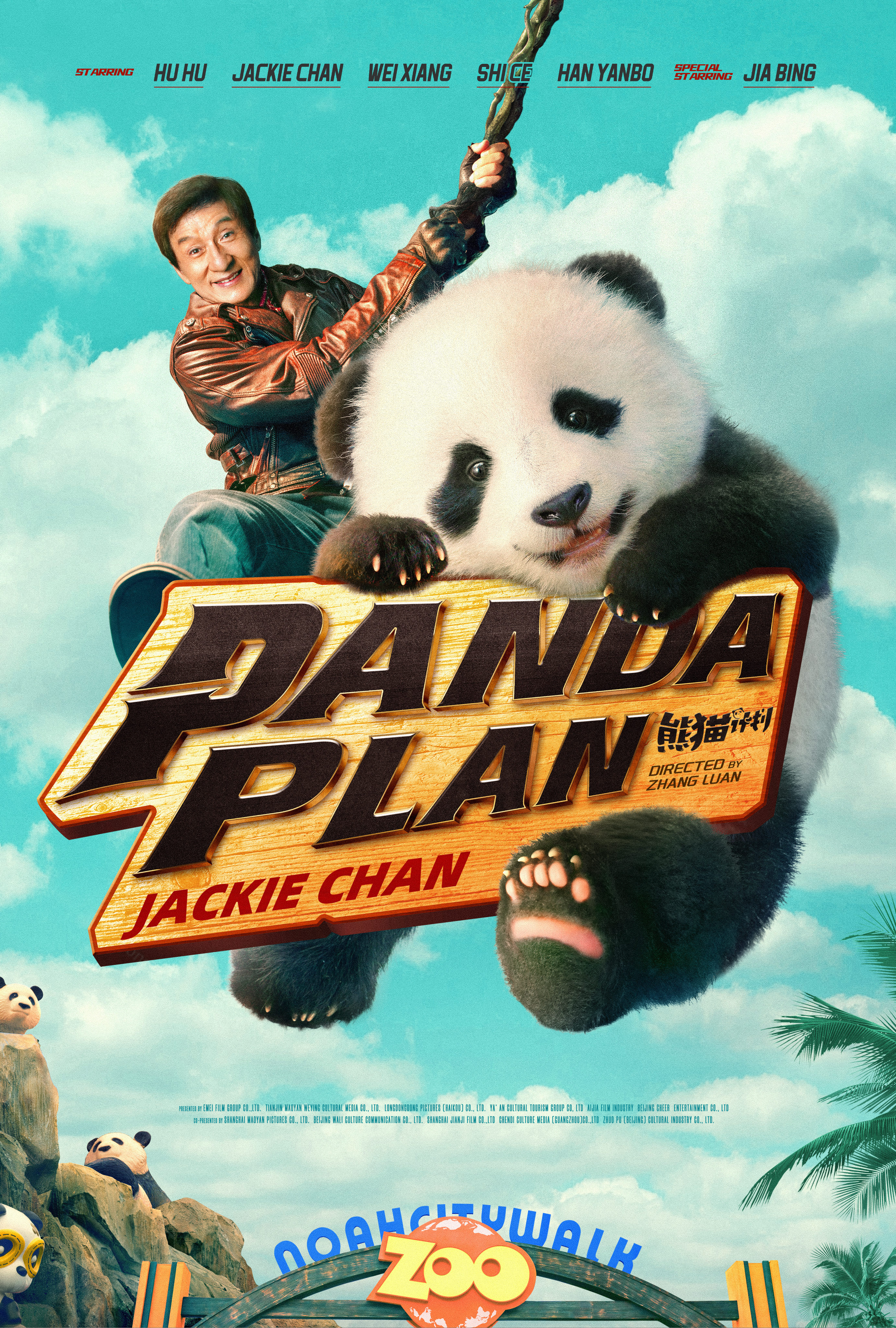
Now 70 years old, Jackie Chan’s later career has mostly seen him trying to find ways to mitigate his age. Often he’s played the role of a mentor figure taking part in a limited number of action scenes while a younger actor does the heavy lifting and takes care of any romantic subplots. Rest assured, there’s no romance in Panda Plan (熊猫计划, xióngmāo jìhuà) but it does otherwise see Chan trying to recapture past glory in seemingly appearing in lengthier action scenes while playing a version of himself.

As the film’s Jackie, he tells young panda nanny Zhuzhu (Shi Ce) that the reason he can’t bring himself to retire is that as soon as someone shouts “action” he can be an all powerful hero rather than a flawed human being that gets sad or tired or beaten down. He even pokes fun at himself with an early scene of Jackie shooting a movie and challenging the director that it’s unrealistic for him to take out all these bad guys all on his own. Though he is apparently sick of doing action, all of the directors future ideas for him sound like they will once again involve quite a lot of fighting. 

It is then a bit ironic that Panda Plan’s action scenes are often choppily edited because it’s obvious that they’re cutting back and fore between Chan and a stunt double with quite a lot of CGI filling in the blanks. You can even clearly see the heavy duty knee pads Chan is wearing under his suit, not that he shouldn’t have them, only that more care wasn’t taken to make them less visible considering there’s no situational explanation for why he’d be wearing knee pads to attend this ceremony marking his decision to “adopt” a baby panda at a random zoo in a fictional country where almost everyone speaks Mandarin. 

The baby panda has become a viral star because of its “unique” look with one eye patch smaller than the other. A sheik apparently decides he must have this panda and hires a bunch of mercenaries to kidnap it when his attempts to buy it fail. Of course, Jackie can’t let this happen and is determined to protect the baby panda from the international kidnappers. A panda is after all a symbol of China itself which can’t simply be bought by outside powers or the super rich while many of the mercenaries, who it’s implied are probably Eastern European, speak with American accents though in a stroke of luck, the main two turn out to be huge Jackie Chan fans and decide to help him so they aren’t that bad really while the leader actually seems to be Chinese anyway. That said, the guards at the zoo are both American and are shown to be slacking off at their job, eating donuts while remarking that they have an easy day ahead of them. It turns out the sheik had a heartrending reason for wanting the panda which wasn’t about the excesses of the super rich and Jackie’s decision to help him out paints China as generous and compassionate rather than coldhearted and possessive over its pandas.

In any case, despite the mild violence of the action scenes the film appears to be aimed at a family audience and has plenty of farcical humour as Jackie and Zhuzhu try to outsmart the kidnappers and save the panda who is eventually deposited at a panda park in China proper which is to say brought home again, where it belongs. The panda is rendered in unconvincing CGI but as using an actual panda would not be appropriate perhaps that really is the best solution and at least it’s a pretty cute CGI panda even if it’s obvious that it was added afterwards. The panda rescue being so successful, Jackie also gets asked to rescue the late Queen’s kidnapped corgis though it’s quite clear that he already has a very busy social calendar and is really getting fed up with doing action. Even so it has to be said that there’s already a Panda Plan 2 scheduled for release later this year, so he’ll presumably have to do some rescuing again.


Panda Plan is released in the US on Digital, Blu-ray & DVD February 18 courtesy of Well Go USA.

Trailer (English subtitles)
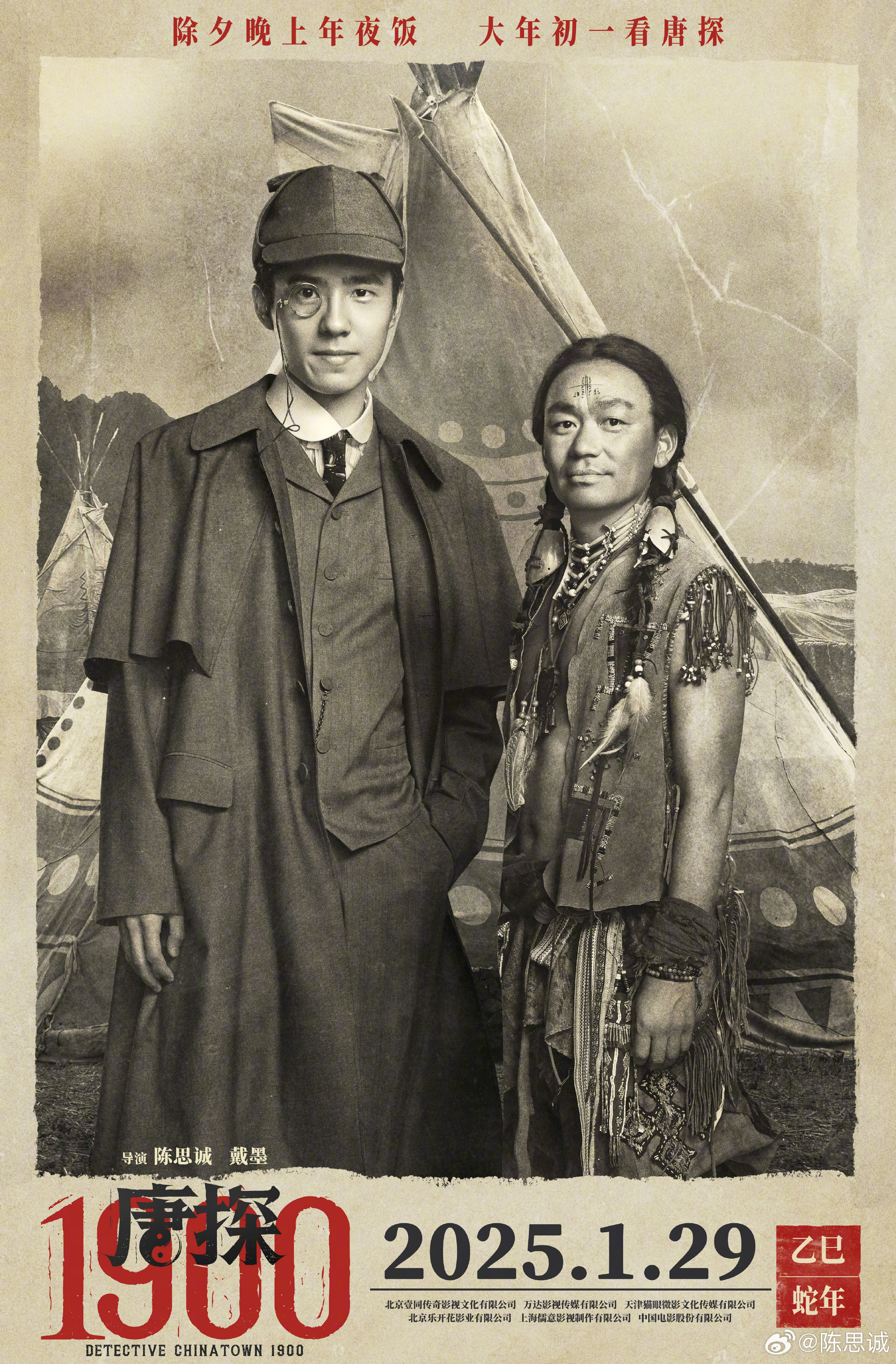
Detective Chinatown 1900 (唐探1900, Chen Sicheng & Dai Mo, 2025)

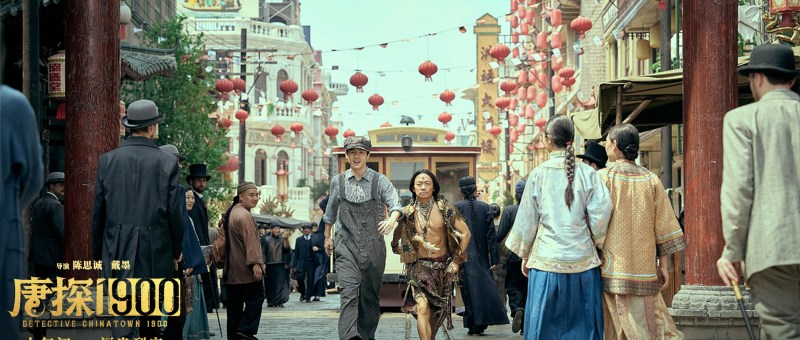
The Detective Chinatown team head back to turn of the contrary San Francisco in the latest instalment of the mega hit franchise, Detective Chinatown 1900 (唐探1900, Tángtàn 1900). Like many recent mainstream films, its main thrust is that Chinese citizens are only really safe in China, but also implies that diaspora communities exist outside the majority population and therefore can only rely on each other. Nevertheless, there’s something quite uncanny in the film’s ironic prescience as racist politicians wax on about how here rules are made by the people rather than an emperor and plaster “make America strong again” banners on their buses. 

The crime here though is the murder of a young white woman, Alice (Anastasia Shestakova), the daughter of Senator Grant (John Cusack) who is attempting to push the renewal of the Chinese Exclusion Act through government and destroy all the Chinatowns in the United States. An older Native American man was also found dead alongside her. Some have attributed the crime to Jack the Ripper as Alice was mutilated before she died and some of her organs were taken. The son of local gangster Bai (Chow Yun-Fat), Zhenbang (Zhang Xincheng), is quickly arrested for the crime while his father hires Qin Fu (Liu Hairan) to exonerate him believing Qin Fu to be Sherlock Holmes. 

What Qin Fu, an expert in Chinese medicine recently working as an interpreter for the famous consulting detective, finds himself mixed up in is also a slow moving revolution as it turns out Zhenbang is involved with the plot to overthrow the Qing dynasty (which would finally fall in 1912). As the film opens, corrupt courtiers to sell off large golden Buddha statues to American “allies” who are later seen saying that they plan to fleece China and then renege on their promises to protect it. Meanwhile, the Dowager Empress has sent emissaries to San Francisco to take out the revolutionaries in hiding there including Sun Yat-sen.

Of course, in this case, the Qing are the bad guys that were eventually overthrown by brave Communist revolutionaries that paved the way for China of today which is alluded to in the closing scenes when Zhenbang’s exiled friend Shiliang (Bai Ke) says that China will one day become the most powerful country in the world implying that no-one will look down on the Chinese people again. But on the other hand, they are still all Chinese and so the emissary tells Qin Fu to “Save China” as he lays dying having met his own end shortly after hearing that the British have invaded Peking signalling the death blow for the Qing dynasty. 

Nevertheless, there is a degree of irony in the fact that the secondary antagonist is an Irish gang who have signs reading “no dogs, no Chinese,” mimicking those they themselves famously face. The Irish gang is in league with Grant and content to do his dirty work, while Bai is supported by another prominent man who speaks Mandarin and pretends to be a friend to the Chinese but in reality is against the Exclusion Act on the grounds he wants to go on being able to exploit cheap Chinese labour. In this iteration, Ah Gui (Wang Baoqiang) is “Ghost,” a man whose parents were killed building the American railroad and was subsequently taken in and raised by a Native American community. In Bai’s final confrontation with the authorities, he takes them to task for their hypocrisy reminding them how important the Chinese have been in building the society in which they alone are privileged while “equality” does not appear to extend to them.

Through reinforcing these messages of prejudice and exploitation, the film once again encourages Chinese people living abroad to return home. Though set in 1900, the scenes of protest can’t help but echo those we’ve seen in the wake of the Covid-19 pandemic when racist hatred towards Asian communities has become much more open and pronounced. Qin Fu and Ghost do at least succeed in solving the mystery through scientific principles while ironically assisted by an earnest American policeman who says he thinks it’s important to uphold the law even as we can see the head of the golden Buddha sitting behind the victorious politician’s banquet table and realise that in reality taking out Grant has made little difference for the Exclusion Act will still be renewed (it was repealed only in 1943). They may have saved Chinatown, but Bai must sacrifice his American wealth and return to China much the way he left it having reflected on his life in light of the revolutionary course charted by his more earnest son. As Ghost and Qin Fu remark, if things were better there no one would want to come here though they themselves apparently elect to stay, solving more crimes and making sure that their descendants know they were here and where they were from.


International trailer (Simplified Chinese / English subtitles)

Successor (抓娃娃, Yan Fei & Peng Damo, 2024)

Embodying the contradictions of the modern China, Successor (抓娃娃, zhuā wáwa), the latest from the FunAge team sees a billionaire father recreate a utopian vision of crushing poverty amid the socialist values of China pre the 90s reforms but only so that his son can develop a desire to become a capitalist fat cat. For all that, however, it’s also a reaction against micromanaging parents, life under oppressive state control, and a high pressure, conformist society obsessed with very narrowly defined visions of success that are increasingly at odds with what a younger generation might want.

The surprising thing is how easily the young boy, Jiye, is able to straddle these two worlds while only gradually beginning to realise that it’s odd his neighbours keep asking him complex maths questions and he’s always running into foreigners who conveniently want to know the way to the local post office. Ostensibly, the Ma family live in an old-fashioned courtyard that according to the sign over the front entrance was constructed in 1958. As the film opens, Jiye’s teacher has brought a wealthy man to their home, in fact the father of one of Jiye’s classmates, who offers to sponsor his education while each of them look mystified around the flat which seems to exist in a kind of time warp. Jiye’s father, Chenggang (Shen Teng), sends them the packing explaining that they live exactly as they want to and don’t need anyone’s help. 

Yet Jiye is fascinated by his friend’s iPad and aware of the world outside works even as his parents try live like it’s the 1960s, sitting round reading good socialist literature which is also recommend to Jiye by the man who owns the bookshop downstairs and is actually one of Changgang’s many hidden “teachers”. But unbeknownst to him, there’s a lift behind his parents’ closet door that leads to a huge control centre where his every move is being monitored. Chenggang is actually a fantastically wealthy businessman who wants Jiye to develop good character so that he can take over his business after getting into a prestigious university.

In a very high tech and invasive way, it’s a reflection of the confused ideology being forced on Jiye by unseen external forces. Once he’s a little older and able to see that his world is definitely not normal, he begins to feel as if some mysterious force is indeed controlling his life but attributes it to vague notions of fate or cosmos rather than wider authoritarianism or parental manipulation. Chenggang is convinced this is the proper way to educate his son, to give him both old-fashioned socialist values and a heathy desire to overcome his poverty and live in a fancy mansion. He feels this way in part due to his dissatisfaction with a grown-up son from a previous relationship who failed his exams and was sent to America in disgrace. Somewhat uncomfortably, one of the reasons Chenggang is so disappointed in Dajun (Zhang Zidong) who continues to crave his approval is that he’s gay and in a committed relationship with an American man who probably should have given more thought to his Chinese name. 

In order to keep up the pretence, Chenggang never tells Jiye that he has a half-brother though he does allow him to see his maternal grandparents on occasion though they, evidently very wealthy themselves, do not approve of Chenngang’s parenting and resent being unable to spoil their grandson in the way they’d like. Chenngang may have a point here, though his chief objection being that the little Jiye was already quite chubby from being relentlessly pampered lands in the realms of fat shaming rather than a serious questioning of indulgent parenting in the wake of the One Child Policy.. He didn’t want him to grow up to be selfish and entitled or to have a distorted sense of the value of money but also seems to have a conviction that the boy will just laugh and say thank you when he finds out his entire life has been a lie and his parents made him suffer needlessly when they were in reality vastly wealthy. 

But what Jiye emerges with is, perhaps surprisingly, a more wholesome sense of rebellion, stepping out from the cosseted false reality his parents had given him and prepared to chart his own course. In an undercutting of the apparent homophobia which surrounds Dajun, the film also refreshingly, and perhaps subversively given the usual treatment of LGBTQ+ themes in mainstream Chinese cinema, suggests that he has done the same and was right to do so validating his relationship with Peter while a kind of solidarity emerges between the brothers in the shared defiance of the path their parents had set down for them. Often hilarious in its surreal humour and penetrating in its satire, the film echoes a sense of dissatisfaction amid contemporary youth no longer so hung up on outdated ideology and craving more individual freedom in a society in which lives can ultimately feel oppressively micromanaged by shady, unseen forces.


International trailer (Simplified Chinese / English subtitles)

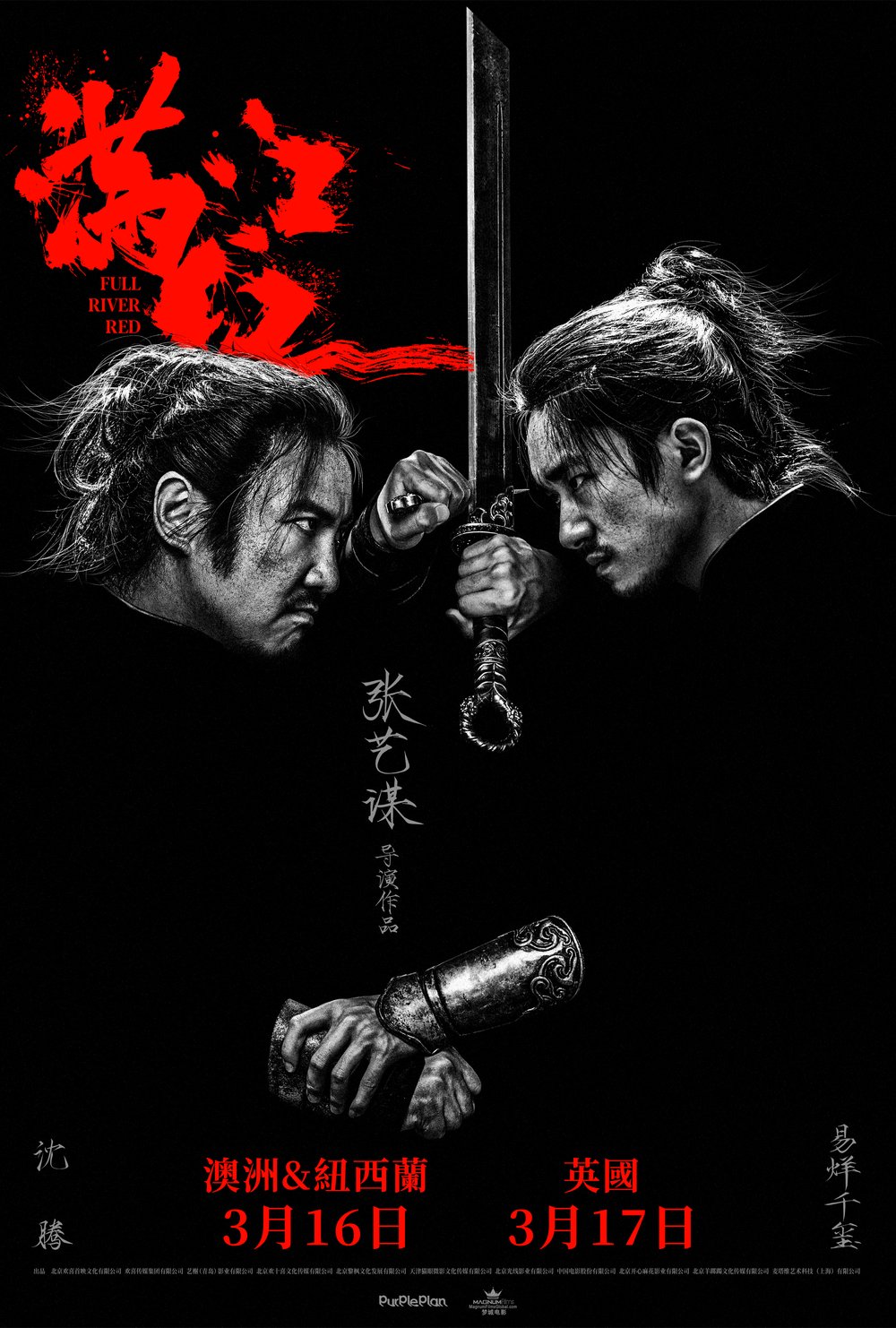
Full River Red (满江红, Zhang Yimou, 2023)

It’s a curious thing, in a way, that the central conceit of Zhang Yimou’s deliciously convoluted Song Dynasty mystery Full River Red (满江红, Mǎnjiānghóng) should turn on the idea that a truth that shames you should not be concealed. Its heroes die for a poem written by a wronged man that according to the closing text at least every child in the China of today knows by heart. Yet one could also say that this tale of intrigue in the court has it parallels in the political realities of the contemporary society, while the ambiguous ending which implies a rejection of the systemic corruptions of the feudal era might also in its way be subversive despite the rabid jingoism of the closing scenes and their thinly veiled allusions to a One China philosophy.

In any case, the film takes its title from a classic poem attributed to general Yue Fei who was put to death on a trumped up charge by corrupt prime minister Qin Hui (Lei Jiayin) who favoured making peace with the warlike Jin over Yue’s bloodthirsty conquest. Qin is about to meet with the Jin on an important matter and it seems to help clear his name only a Jin diplomat is inconveniently murdered in the palace and not only that, it’s also thought he was carrying a highly confidential letter intended for Qin’s eyes only which may implicate him in treachery. For somewhat unclear reasons, buffoonish corporal Zhang Da (Shen Teng) is given two hours to find the letter and figure out who killed the diplomat or prepare to meet his end. Though as he knows find it or not certain death is all that awaits him. 

Zhang uses Shen Teng’s comic background to his advantage, painting Zhang Da as a man desperately trying to talk himself out of trouble whose word for those reasons cannot be relied upon. Though all is not as it seems, and Zhang Da proves unexpectedly astute in navigating the complicated machinations of the courtly life. The letter is something of a MacGuffin, but it’s clear that everyone wants it largely as a safety net, hoping to get kompromat on Qin they can use protect themselves in this hellish prison where death lurks around every corner. This is indeed a world in which blood will have blood, nobody is safe, and no one can be trusted. Getting the letter is like getting an immunity card from palace intrigue, something which diffident courtier Wu (Yue Yunpeng) assumed he already had in a golden seal gifted to him by the emperor only to discover it can’t necessarily protect him from someone with no respect for the system. 

The palace itself is reflection of the feudal order with its labyrinthine corridors barely narrow enough for two men to pass. There’s a constant feeling of constraint and oppression, not least in the persistent greyness of the palace walls. Even Qin seems to have adopted an air of austerity or perhaps because of the illness he affects dresses less elaborately than one might expect as do his colour coded handmaidens in blue and green who have been rendered deaf and mute to prevent them revealing any of his secrets. Zhang Da is paired with the serious commander Sun (Jackson Yee) who in a running gag is actually his uncle though much younger than him. On one level Sun is committed to this system and fully complicit with it even if casting suspicion on himself with his counterproductive habit of killing of potential suspects before they’ve given up any information, but also harbours a lingering resentment in being rendered little more than a tool for a corrupt order for which he is willing to debase him in wilfully waterboarding a friend with vinegar in a bid for redemption in the eyes of the palace.

The tone is however ironic and filled with dark humour as a kind of rebellion against the amoral nihilism of constant betrayals that define feudal life. The heroes are tattooed with the world loyalty on their backs as if standing for a more wholesome humanity though there’s no particular reason to think the system they are loyal to is much better especially given the bloodthirsty quality of Yue’s death poem which is the text that’s really being sought in its talk of national humiliation, lost lands, and feasting on the corpses of one’s enemies. Moving with the comic beats of Peking opera, Zhang scores the film with a mix of classical instrumentation and angry, hip hop-style arrangements of warlike folk songs that reinforce the duality of this tale of so many dualities in talking both of the present day and the ancient past. In any case, the ending most closely resembles a western as the world weary hero recovers his self-respect and rides off into the sunset to live as an ordinary man far away from the corrupt world of the court and finally free of its tyrannous constraints.


Full River Red was released in UK cinemas courtesy of Magnum Films.

Original trailer (Simplified Chinese / English subtitles)

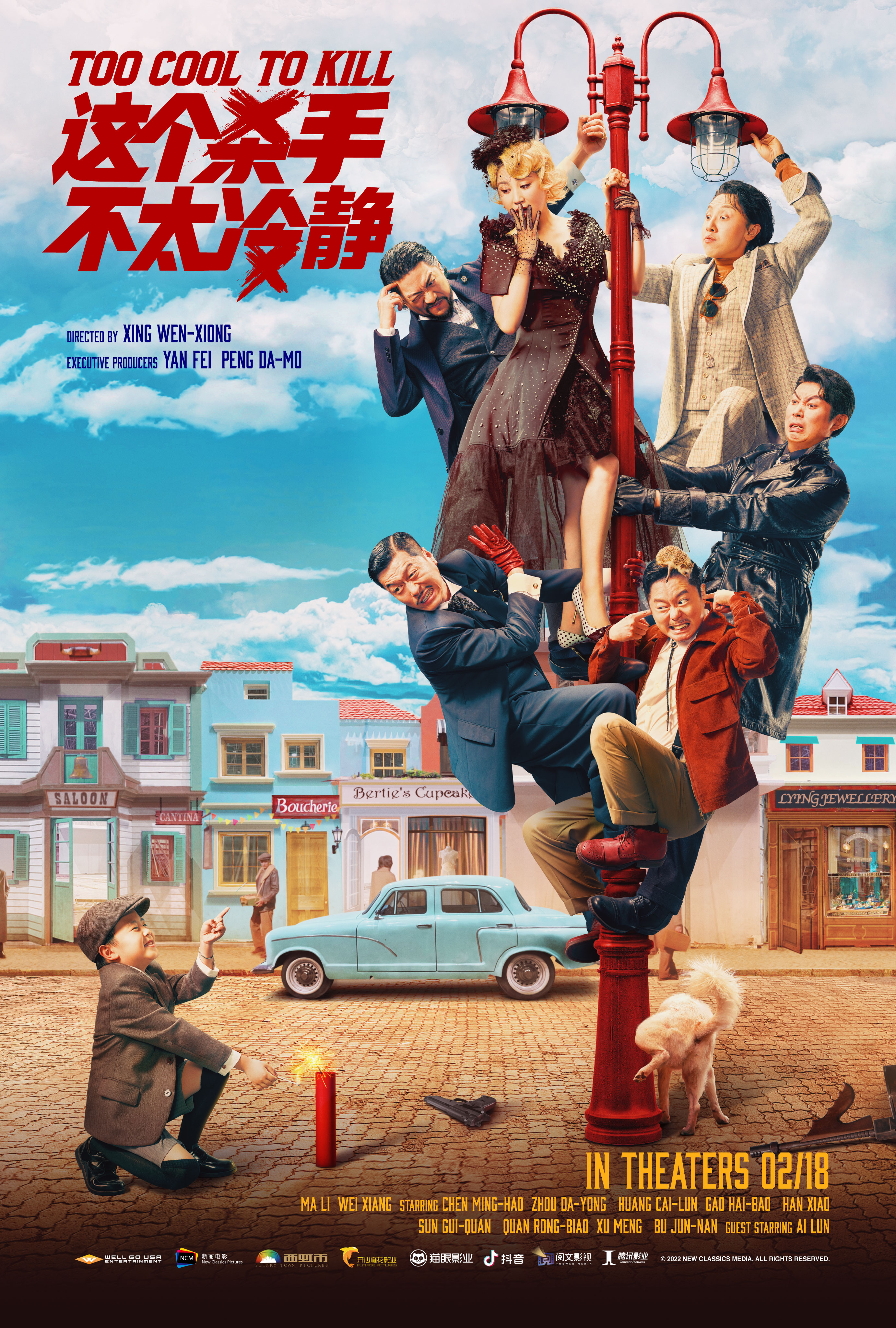
Too Cool to Kill (这个杀手不太冷静, Xing Wenxiong, 2022)

Fantasy and reality begin to blur for a jobbing actor suddenly offered a leading role in an experimental hitman movie in Xing Wenxiong’s meta take on Koki Mitani’s The Magic Hour, Too Cool to Kill (这个杀手不太冷静, Zhè ge Shāshǒu Bú Tài Lěngjìng). A veteran comic actor, Wei Xiang like his character is also playing his first leading role and tearfully thanks the crew for the opportunity in a moment of behind the scenes footage playing over the ending credits proving that there might be “method” in the madness as his utterly guileless hero continues to “act” in a drama that is all too real. 

Big time gangster Harvey of the Magic Gang (Chen Minghao) is currently being targeted by rival outfit Movement. Top hitman Karl (Ai Lun) has been sent to assassinate him, but is ironically caught in the explosion at the quarry Harvey has just opened, his bullet merely grazing Harvey’s ear. Having no idea the injured worker was trying to kill him, Harvey plays the standup guy by visiting him in hospital and ironically swearing vengeance. Meanwhile, he’s also busy putting the squeeze on an actress he fancies, Milan (Ma Li), who has accepted his money to make a movie but has no intention of consenting to his terms. When Harvey threatens to fit Milan and her director brother Miller (Huang Cailun) with some concrete boots, she quickly counters that Karl is a personal friend of hers and she’ll certainly deliver him to Harvey if he gives her some time. But Milan was only bluffing and she doesn’t have enough time to flee the country before Harvey finds out, so she hatches on the idea of getting a random actor to play the part of “Karl the Killer” seeing as no one’s ever seen his face. 

The thing about Wei (Wei Xiang) is that he’s very earnest. He genuinely loves the craft of acting and is always trying to “improve” his performance such as cackling maniacally before he “dies” to show his utter contempt for death. All of this makes him quite irritating on set, but also the perfect fall guy for Milan and Miller who are, somewhat darkly, aware that Wei is not likely to survive his encounter with Harvey which will buy them some time to get away. What they didn’t bank on was Wei’s utter commitment to the role. Because he thinks it’s just a movie, he isn’t scared at all and doesn’t realise there’s a chance Harvey’s guys will actually kill him. Thus he pulls a bunch of ultra-cool, James Bond-style moves assuming he’s improvising an action drama in which he’s the hero so technically can’t “die” or at least not until the final scene. The plan begins to backfire when Harvey is so impressed that he actually offers Wei, well “Karl”, a job in his gang which only leads to further intrigue. 

It may just be that Wei’s behaviour is otherwise so odd that no one really notices, but his constant references to being in a film almost go unacknowledged. While negotiating with an Italian mob boss, he confesses he left the gun they were meant to be selling behind because it was too heavy but they can just fill it in with “special effects” later, while often asking to go for a second take because he’s not convinced the “invisible” cameras captured his best angle. On his first appearance, Wei shows up dressed like John Travolta in Pulp Fiction. Later he reenacts a scene from Desperado and even dances along to Singing in the Rain demonstrating his true love of the movies if somewhat anachronously to the movie’s ambiguous setting, 

Xing later does something similar in suddenly cutting the CGI backgrounds to show us the small island promenade surrounded blue tarp as if laying bare the “magic of the movies”. Echoing Mitan’is original he sets most of the action in a quaint Mediterranean backlot that is indeed a “fake” world to begin with where earnest actor Wei is the only one who’s “real”. Gradually, Milan starts to fall for his guileless goodness, especially on learning that he’s also been playing a role in real life that he’s committed to completely out of kindness and compassion all of which has made her regret her callous decision to feed him to the sharks so she could get out of town. A tribute to movie-loving pros, Too Cool to Kill celebrates the “unreality” of the silver screen but also the sincerity of a try hard actor who finally gains the role he was born to play.


Too Cool to Kill is available digitally in the USA courtesy of Well Go USA.

Trailer (Simplified Chinese / English subtitles)

Give Me Five (哥,你好, Zhang Luan, 2022)

A struggling 30-year-old begins to repair his relationship with the difficult father he believed never liked him after being unexpectedly thrown back to the past and almost erasing himself from history in Zhang Luan’s sci-fi-inflected tale of filiality, Give Me Five (哥,你好, gē nǐhǎo). What begins as a Chinese riff on Back to the Future eventually skews closer to recent hit Hi, Mom which the Chinese title subtly echoes as the hero comes to appreciate the power of maternal love and sacrifice through bonding with the younger versions of his parents. 

Now 30 years old, Xiaowu (Chang Yuan) explains that he was long estranged from his grumpy father Wu Hongqi (Wei Xiang) and rarely visited him but has since become his main carer now that he is living with Alzheimer’s. Xiaowu makes his living as an e-sports entrepreneur which is not something former engineer Hongqi can well understand and in truth Xioawu doesn’t seem to be that successful as he’s been putting off proposing to longterm girlfriend Huahua because of an anxiety about his finances. When Hongqi suddenly jumps off a bridge for no apparent reason and ends up in a coma, Xiaowu is at first oddly pleased and immediately begins raiding his office looking for his bankbooks only to find a mysterious ring and an old diary penned by his mother who died when he was a baby. Putting the ring on sends him back to 1986 where he manages to mess up his parents’ meet cute, endangering his own existence. In order to put things right he has to go back in time Marty McFly-style to ensure his mum and dad fall in love just like they were supposed to. 

Back to the Future is a film from the 1980s expressing nostalgia for an idealised 1950s small-town America. Give Me Five to a degree romanticises the China of the mid-1980s but does so from an entirely different angle than the recent trend in 80s nostalgia which has taken hold in the West in that, other than a brief romantic moment featuring Teresa Teng’s Tian Mi Mi along with a few other retro hits, it is largely uninterested in pop culture or revisiting childhood memories but is attempting to draw a comparison between China before economic reform and the ultra-capitalist society of today. In what some might see as a simpler time, Xiaowu’s mother Daliu (Ma Li) is, as she’s fond of saying, a “model worker” in a factory which is in danger of closure while the “Biff” character, Qiang (Jia Bing), is a former employee who was dismissed for stealing coal. Having become wealthy after almost certainly doing something dodgy in Hong Kong he’s returned with a prominent Cantonese accent to buy the factory as part of a public-private partnership. A feisty young woman, Daliu sends him packing insisting she won’t let anyone disadvantage her fellow workers. 

The comparison is further borne out by the melancholy figure of Qin (Huang Yuntong) who dated Hongqi after getting the meet cute that was supposed to go to Daliu but thew him over for the promise of riches with Qiang only to be left lonely in her old age having unwisely betrayed love for material gain. Meanwhile, there’s an interestingly progressive element to the relationship between Daliu and Hongqi in which Hongqi is somewhat feminised as the domestic partner cooking and shopping for his wife while Daliu is the uncompromising model worker as she proves during a high impact welding competition while eight months pregnant. The couple first fall in love talking over industrial plans with Daliu offering advice from the shop floor to help improve educated engineer Hongqi’s designs. While interacting with his parents before he was born, Xiaowu gains the familial experience he always felt he lacked in being able to share a family meal while touched by the love that existed between his mother and father and the knowledge that his parents were at least blissfuly happy with each other even if it was only for a short time. 

Xiaowu had been resentful of his father that he never really told him how his mother died. He decides to try saving his mother’s life too and through his various experiences comes to an appreciation of maternal love not least through somehow being able to time travel into the womb to forge a more direct connection with her. In part an advocation for a more traditional filiality in which Xiaowu develops an understanding of the interplay between love and sacrifice between parent and child while coming to understand his relationship with his father after learning his family history, the film also offers a subtle rebuke against the consumerist society in idolising Daliu and her model worker attitude insisting that everything was better when people worked together for the good of all rather than for personal gain. It might be a slightly disingenuous message, Daliu’s factory life is indeed somewhat idealised, but there is something touching in Xiaowu’s eventual conversion and belated bonding with his heartbroken father. 


Give Me Five is in cinemas across the UK, Australia and New Zealand courtesy of CMC and Well Go USA in the US and Canada.

International trailer (Simplified Chinese / English subtitles)