Sasori (さそり, Joe Ma Wai-Ho, 2008)

Sasori had been dormant for a decade before being resurrected in this Hong Kong co-production directed by Joe Ma. She is, however, a very different Nami Matsushima (Mizuno Miki) who becomes less a feminist avenger than a sociopathic killer, albeit one fixated on revenge and with ambivalent feelings towards her former lover, Hei Tai (Dylan Kuo Pin-Chao), who evidently did not have enough faith in her to realise that she didn’t murder his entire family just because she felt like it.

Nevertheless, in contrast to other Namis, she did make the decision to do it and went through with stabbing Hei Tai’s sister in the heart right in front of him even if she did it to protect him from the crooks who’d invaded their home. Motives are never explicitly explained, but it’s later suggested that Hei Tai’s professor father may have been knocked off by a rival scholar/gangster researching “inhuman organ treatment”. In any case, the goons that break into her home sexually assault Nami and tell her the only way to save Hei Tai is to help them kill his father and sister. Unfortunately, Hei Tai does not seem to recognise the position she was in nor her transgressive love for him, so is filled with boiling rage and resentment. Curiously, Nami never actually explains either, but is by that point mired in a women’s prison where she contends with the sleazy warden (Lam Suet) and the cellblock’s toughest lady, Dieyou (Natsume Nana), through the medium of cage-based mud wrestling.

This Nami’s transformation is obvious when she rips the loose skull fragment from a woman with learning difficulties she’s befriended and uses it to kill Dieyou. The moment at which she kills Dieyou’s sister, a woman she has no quarrel with, solely to unbalance her rival is presented as a kind of climax in which Nami herself appears to get off on the act of killing. During this earlier stretch of the film, Nami’s victims are largely female and killed for petty reasons. Seemingly cowed and beaten down, she does what the warden says rather than opposing him or like other Nami’s stabbing him in an eye. 

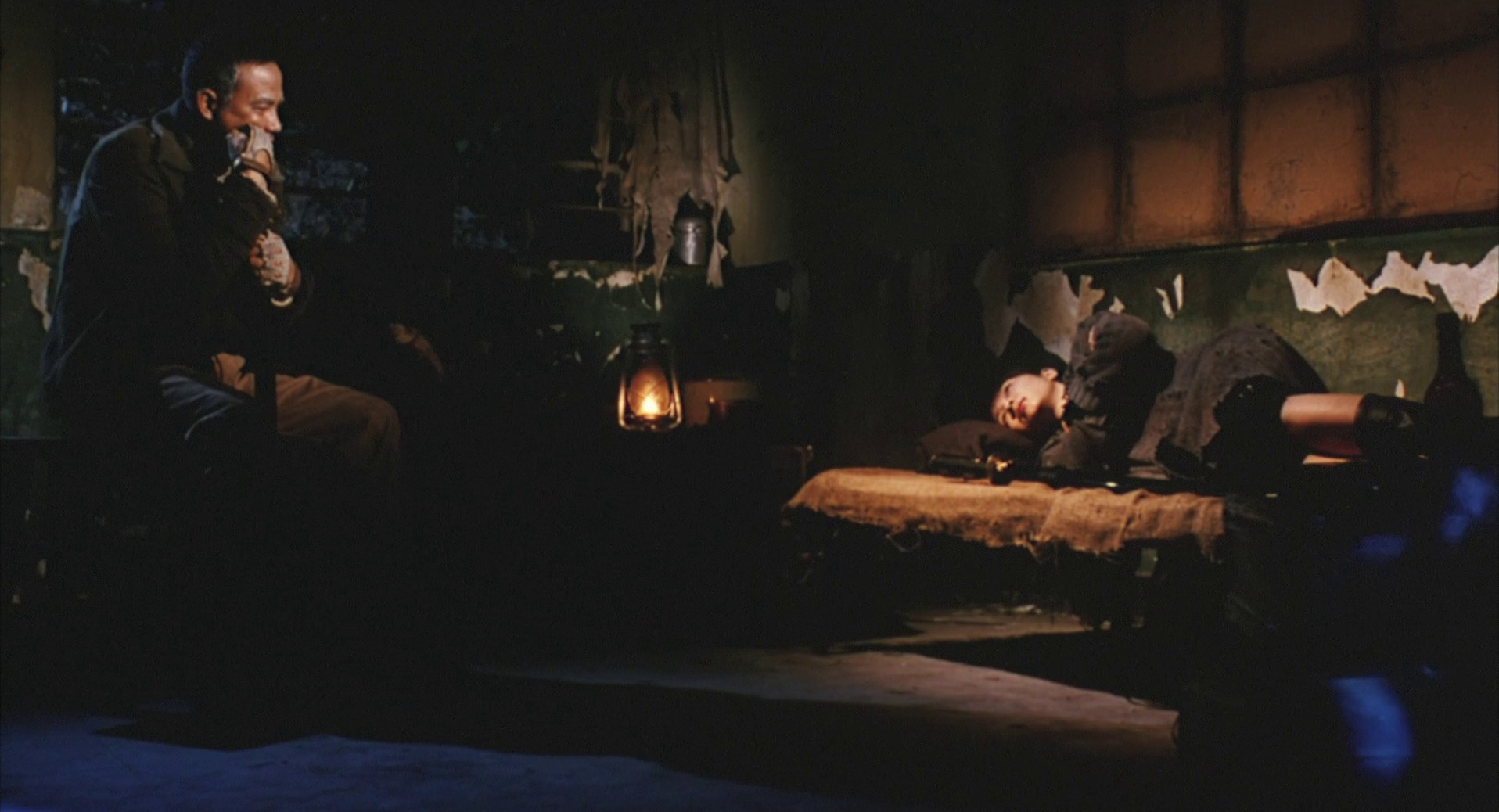
This does, however, eventually allow her to escape if as a corpse rescued by a mysterious “corpse collector” (Simon Yam Tat-Wah) who gifts her a Japanese sword and teaches her kung fu so she can achieve her revenge. It’s at this moment that she becomes a kind of supernaturally powered embodiment of vengeance, but it’s immediately made clear that the only revenge she seeks is personal. Spotting a pimp kicking a sex worker in the street, she strikes him down but only tells the sex worker that she doesn’t plan to kill her too otherwise making no further attempt to help her. Ma then takes the action back to its manga roots, relying on obvious wirework to lend a kind of unreality to the fight scenes even if the hand-to-hand combat is generally more realistic. 

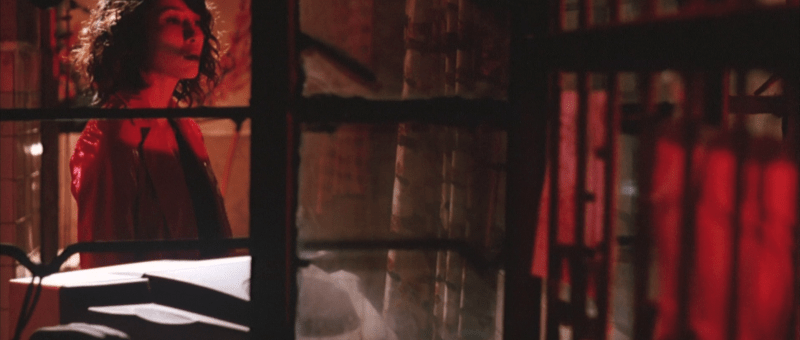
But at the same time, Nami steps into a more arthouse space in a meditation on time and memory that seems to be borrowing a little from Old Boy or perhaps 2046 as she walks into a bar where the barman tells her that he can hypnotise people to erase their memories though he doesn’t they should. Re-encountering Hei Tai who no longer remembers her or his past life as a policeman, she finds herself ambivalent about her revenge, on one level resenting him and on another wondering if she has the right to start over without the problematic fact of her having been responsible for the deaths of Hei Tai’s whole family. 

There are many things that don’t really make all that much sense, from the inhuman organ research to Hei Tai’s possibly selective amnesia. Nevertheless, Ma piles on the style with a particularly 2000s Hong Kong aesthetic with its neon lighting and woozy camera work but also adopts a retro sensibility brought out by the use of mainly post-sync sound in which the Japanese actors are dubbed into Cantonese. By the film’s conclusion, Nami has once again become a legend but this time a much less palatable one not so much avenger for an oppressed minority as a cold-blooded and sadistic vigilante interested in little more than personal revenge.


International trailer

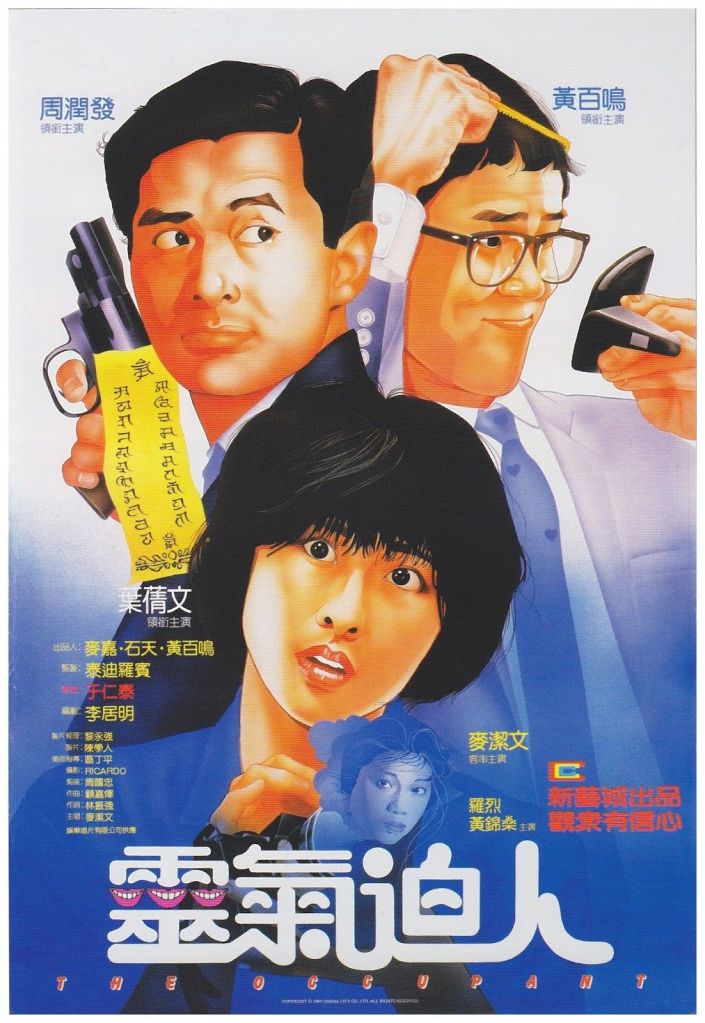
The Occupant (靈氣逼人, Ronny Yu Yan-Tai, 1984)

There’s no such thing as a reasonably priced apartment, and so when you find one that seems strangely spacious for the rent, it’s prudent to wonder why that might be. Yes, that’s right, your dream apartment may in fact be haunted! Going a bit meta, Ronny Yu Yan-Tai gets in on the comedy ghost game with The Occupant (靈氣逼人), a tale of supernatural suspense starring Taiwanese-Canadian actress and singer Sally Yeh as a young woman returning from Canada for a three week stay to work on her dissertation researching “Chinese superstition”.

Having not thought to book ahead for her accommodation, Angie (Sally Yeh Chian-Wen) is shocked to discover that hotel rooms in the Hong Kong of 1984 are in no way cheap. Locked out of even the cheapest flea pits, she decides to try renting an apartment only to run into the slimy Hansome Wong (Raymond Wong Pak-Ming), an unscrupulous estate agent/used car salesman. Angie spots an apartment sitting on his board that’s in her budget and asks to see it. Hansome is delighted because it’s been on the market ages, but what he doesn’t disclose is that the reason it’s so cheap is that the place is haunted. Angie is originally quite confused by the fact her furniture seems to move back to its original position all by itself, and irritated by loud noises such as a woman singing and a couple having an argument late at night, but on being told that she’s the only resident by the decidedly creepy caretaker (Yam Ho), decides she’s not really bothered if the apartment has another occupant besides herself and anyway it might be quite useful for her thesis. 

Very much in the Wong Jing vein, much of the early comedy revolves around Hansome’s cringeworthy attempts to worm his way into Angie’s life. Luckily for her, he says, Hansome is a very “superstitious” person and so offers to show her around all the best “superstitious” sights of the city, particularly a local temple where they seem to do every kind of taoist ritual going. The problem is that Angie can’t seem to get rid of him. He even pulls the trick of saying that he left something behind in her apartment so he can come in and retrieve it, only to get his arm trapped in a priceless vase. Hearing about the ghost he vows to stay the night and protect her from the boogeyman, but he didn’t count on the real thing turning up and expelling him from the apartment in exasperation with creepy men everywhere. 

Meanwhile, Angie is actually quite taken with a handsome policeman she runs into at the airport, but incorrectly assumes he’s a “sex maniac” because he was only hanging out with her as camouflage for surveilling another woman who turned out to be a pickpocket. Valentino (Chow Yun-Fat) is an honest cop, which is why he ends up getting asked to take some time off after discovering a fellow officer visiting an establishment they were raiding on a tip off that it was employing underage girls. Like Hansome, Valentino has also taken to Angie, if in a slightly less creepy way, and the three of them eventually get together to try and solve the ghost problem (not that Angie actually has much of a problem with it). 

On investigation, Angie discovers that the previous occupant of the apartment was a nightclub singer who apparently shot herself after a failed affair with a married man who wouldn’t leave his family. She becomes ever more obsessed with the dead woman, Lisa Law (Kitman Mak Kit-Man), despite the warnings from Valentino’s former policeman turned taoist priest buddy (Lo Lieh) who tells her that the ghost most likely bears a grudge and will try to engineer a reprise of her tragedy using a susceptible subject. Yu has fun parodying some of the genre staples like magical charms supposed to ward off ghosts which get mysteriously lost at critical moments, but edges towards a real supernatural dread as the curse takes hold, swallowing our trio in a bizarre recreation of the past which accidentally reveals a long hidden truth and helps to alleviate the ghost’s anger. In her frequent voice overs recorded on a dictaphone, Angie reveals that she came to Hong Kong with a low view of “Chinese superstition” but thanks to her experiences now has a new appreciation for the power of the supernatural. Ghosts it seems can’t be exorcised so much as appeased, ignore them at your peril.


Original trailer (no subtitles)