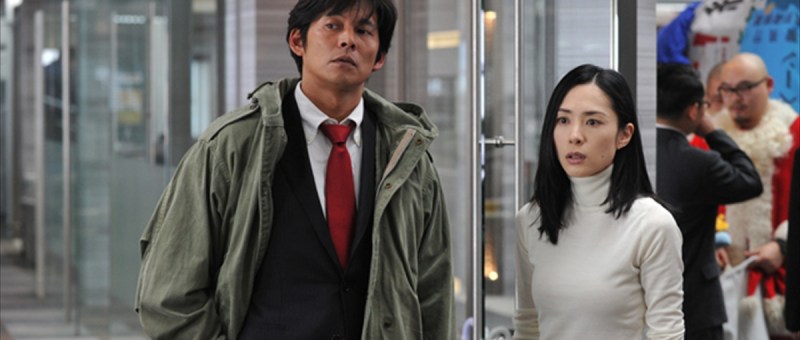
Bayside Shakedown the Final: The New Hope (踊る大捜査線: THE FINAL 新たなる希望, Katsuyuki Motohiro, 2012)

Is it really the end? Billed as the “final” instalment in the Bayside Shakedown series which began with a TV drama in 1997, Bayside Shakedown the Final: The New Hope (踊る大捜査線: THE FINAL 新たなる希望, Odoru Daisousasen the Final: Aratanaru Kibou) once again finds the gang contending with annoying red tape but also with a police force which is intrinsically corrupt and self-serving while questioning if they should remain in an occupation in which they are treated with such disdain. Continuing the familiar pattern from throughout the series, the gang find themselves coming up against a serial killer who may be a crazed vigilante only to discover that the whole thing may have been an extreme inside job designed with the intention of drawing attention to inadequacies in the justice system. 

The problem is that the body they’ve found appears to have been shot with a gun which was removed from the police evidence locker and is linked to a kidnapping case six years previously which just happens to have been handled by Mashita (Yusuke Santamaria) when he was a hostage negotiator. Mashita had ordered an end to the negotiations because of pressure from above to play by the rules with the consequence that the child later died while the prime suspect in the case was recently acquitted of the crime at trial (a staggeringly rare occurrence in Japan). When Mashita’s young son is kidnapped, all eyes are on a rogue policeman, Kuze (Shingo Katori), but it is obvious he is not acting alone. 

Toragai (Shun Oguri), the authoritarian detective from the previous film, has continued along a dark path which only intensifies when his paper on police reforms is rejected out of hand. He too thinks the police force needs structural reform but leans hard into the idea that too many people are getting away with crime rather than concentrating on removing the barriers which prevent police from doing their jobs as Muroi (Toshiro Yanagiba) and Aoshima (Yuji Oda) would probably suggest. Muroi’s lasting dream is of building a police force which trusts policemen to do the right thing and he frequently tells his subordinates that they should feel free to exercise their own judgment. 

Meanwhile, the local cops continue to suffer under the command of the elitist officers from HQ who not only look down on them but assign menial tasks, as does Mashita in finding himself short staffed while most are busy providing security for a local energy summit. While Aoshima had experienced a health crisis that turned out to be a false alarm in the previous film, so this time Sumire (Eri Fukatsu) finds herself struggling with ongoing effects from her shooting in Bayside Shakedown 2 eventually deciding that it might be better to leave the police force entirely while lamenting her unfinished business with Aoshima which remains unresolved even in this “final” instalment while he somewhat unsympathetically can only ask her not to leave rather than express his true feelings. 

Ironically enough, by the time of the final showdown neither of them are actually in possession of a police badge, Aoshima scapegoated by Toragai who still holds a grudge against him while inconvenienced by interference in his scheme to frame a local petty thief for the killings, presenting him with an invitation to resign following serious misconduct accusing him of beating up suspects and planting evidence. One again, the police chiefs sit around a large circular table issuing orders from afar but are mainly concerned how to bury the “scandal” of having a police officer steal a gun from evidence and then use it to commit a murder. In a bizarre twist of fate, it later turns out that the whole thing may be an elaborate, not to mention entirely amoral, plan to expose police shortcomings with a side dose of revenge against Mashita for contributing to the child’s death by insisting on following protocol while receiving heat from above. 

As such the apparently “final” instalment skews a little darker than the series norm while as the subtitle implies offering a new ray of hope in the reversal of Muroi’s fortunes allowing him to embark on the police reforms which have been his and Aoshima’s goal throughout the series. Meanwhile, the film pays tribute to its previous instalments with frequent words of wisdom from the late Waku read from his notebook by his nephew and the ironic return of the previous chiefs reinstated as volunteer mentors as part of a reinforcement programme while familiar faces such as the Captain Kirk cosplayer also make their customary appearances. What’s clear is that there will never really be a “final” outing for Aoshima who reaffirms himself as the last line of defence protecting the local population as he once again runs toward sunset and the next case waiting just behind. 


Trailer (no subtitles)
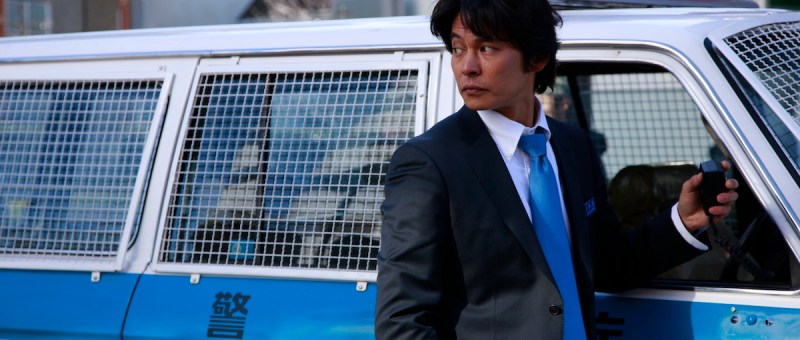
Bayside Shakedown 3: Set the Guys Loose (踊る大捜査線 THE MOVIE 3 ヤツらを解放せよ!, Katsuyuki Motohiro, 2010)

It’s all change at Wangan police station in the third instalment in the Bayside Shakedown series, Let the Guys Loose (踊る大捜査線 THE MOVIE 3 ヤツらを解放せよ!Doru Daisousasen the Movie 3: Yatsura wo Kaihou seyo!). Seven years on from the previous film, many things have changed. Aoshima (Yuji Oda) is now in charge of his team and the precinct is set to move to new purpose-built premises boasting the latest high-tech security systems which will aid them in combating potential terrorism and safeguarding local dignitaries. Even so, the gang will have to deal with some unfinished business from the past before they can fully move on as the circular tale takes us right back to the original film’s villain. 

Following the familiar formula, Motohiro opens with a gag sequence in which Aoshima prepares to give a briefing only it’s not about a case it’s about the logistics of moving offices of which he is in charge and characteristically vowing to do the best job possible. Hindering his progress, however, are two bizarre crimes, the first a bank robbery investigated by his colleague/long-term love interest Sumire (Eri Fukatsu) in which no money is stolen, and a bus hijacking he investigates himself in which the hijackers simply left the scene again without stealing anything. Ironically enough a theft does take place during the move involving three pistols which happen to belong to Aoshima, Sumire, and a new recruit from China, Wang (Kenichi Takito). Soon enough a body turns up on a boat along with Aoshima’s gun sending the gang on the chase for the mysterious thieves. 

The thing we’re constantly told about the new building is how secure it’s going to be, which makes the theft even more ironic, but the truth is that in true franchise style pretty much anyone and everyone is walking in and out carrying moving boxes so nothing is ever really “secure” even in the police station, harking back to the minor villain in the first film who was able to sneak in because he was wearing a fake cosplay police uniform and no one noticed him. Inevitably, this invisible vulnerability eventually comes back to haunt them when the criminals are simply able to steal the manual for the security system and replace it with one of their own to render it unusable to the police later trapped inside the building. Meanwhile approaches to public safety become a matter for debate when it arises that the criminals’ demand is that all of the villains we’ve seen Aoshima arrest so far including psychopathic serial killer Manami (Kyoko Koizumi) who still has a sizeable following online should be released. Counter-intuitively, the police bigwigs are in favour of acquiescing with only Muroi (Toshiro Yanagiba), who has now been promoted to sit at the table himself, objecting on the grounds that it simply isn’t safe to release such dangerous criminals back into society. 

Rather than simply bureaucracy and funding concerns, Bayside Shakedown’s third instalment is more directly critical of the interplay between politics and justice as it becomes clear that the majority of police chiefs care more about public opinion than the law while also mindful of the upcoming general election. Meanwhile the same problem arises with the local police being sidelined by the elites from HQ, a smooth liaison officer Torikai (Shun Oguri) arriving to solve any disputes insisting that the locals be fully respected and allowed to turn their jobs only to turn dark and authoritarian after suffering a catastrophic injury on the job. Once again, Aoshima is forced to consider if his work has real value not only because of the way he’s treated by the cops from HQ but subjected to a healthcare crisis which leads him and many others to assume he’s not long to live. It’s later discovered that he’s been misdiagnosed during his annual checkup, but his boss unethically decides to keep that from him noticing he’s become depressed and lost his mojo, hoping that he’ll be easier to manager but quite the reverse turns out to be true. Again mimicking their previous heart-to-hearts throughout the series, Aoshima perks up after some encouraging words from Sumire in addition to some words of wisdom from the late Waku presented by his rookie nephew and decides to live as if there’s no tomorrow going flat out for justice while caring nothing for his safety. 

Even more than ten years on from the TV series and first big-screen outing, the romance between Aoshima and Sumire still hasn’t quite blossomed despite their respective brushes with death. Many things seem set to change for the Wangan police, the new building acting as a kind of reset while Muroi prepares to move into a more political role and a new, somewhat surprising, local police chief is selected to lead them into a new future just as dedicated to compassionate local policing defined by fairness and justice as they have ever been. 

Trailer (no subtitles)

Laughing Under the Clouds (曇天に笑う, Katsuyuki Motohiro, 2018)

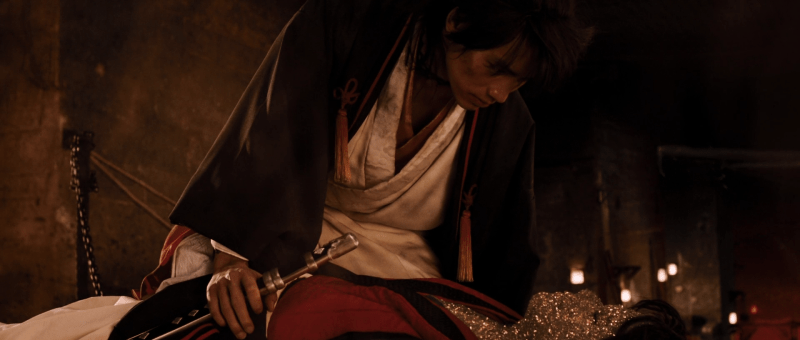
A cheerful former samurai chooses laughter as the best weapon against existential anxiety in Katsuyuki Motohiro’s big budget adaptation of the manga by Karakara-Kemuri, Laughing Under the Clouds (曇天に笑う, Donten ni Warau). Set amid the chaos of the late Meiji social revolution in which the samurai are no more, Motohiro’s supernatural drama is in some ways uncomfortably reactionary even as it takes as its heroes the defenders of a burgeoning new democracy who, our hero aside, seem to have a tendency towards authoritarianism in their insistence on the kind of order only they can bring. 

Indeed, prisoners brought to “prison island” are coldly informed that “hope, freedom and peace. These are things of the past” because “once you’re in here you’ll never get out”, “you have no rights in here”. Most of the prisoners are here it seems because of their opposition to the new regime including the mysterious Fuma Kotaro former leader of a ninja clan wiped out by imperial forces now held in solitary confinement. The man we first see dragged in is apparently a former samurai struggling to adjust to his loss of privilege and unable to find new ways of living in a world of superficial equality. 

Yet it’s not this destabilisation of the social order which presents the moment of chaos so much as a prophecy that Orochi, a vengeful snake spirit, is due to make his return to Earth and wreak even more havoc. As the legend goes, Orochi brought clouds and rain which provided humanity with a bountiful harvest yet humanity resented him for his ugliness and so Orochi took revenge for their ingratitude by creating chaos. Tenka (Sota Fukushi), a former member of the Nile imperial Wild Hound squad, sees his familial legacy as the duty to combat the vicious cycle of hate through the power of laughter. His decision to leave the Wild Hounds after his parents were murdered by ninjas in order to care for his orphaned brothers is another indication of his essential humanity as is his determination that he will protect not only his town but whoever it is that has been selected as a vessel for Orochi’s return. 

These humanitarian concerns stand in direct contrast with the unfeeling authoritarianism of the Wild Hounds or the innate cruelty of the existence of a place like prison island where those who threaten the new regime are exploited as slave labour. On the other hand, the anger of the disempowered ninja clans is perhaps understandable even if their opposition to the regime, intending to harness the power of Orochi to overthrow the government, is an attempt to hang on to their privilege as a path back to the way things used to be. As such it’s they rather than Orochi who become the central villain though one could also read Orochi as an expression of the intense anxiety of the age especially as it invades the body of a young man himself feeling resentful and confused while looking for a sense of direction in a rapidly changing society. 

Tenka’s opposition is rooted in cheerfulness, in learning to laugh even under the clouds and becoming stronger for it though his otherwise openhearted nature stands in direct contrast with his oft repeated catchphrase “I am the law” as he enforces order in his small provincial town willingly delivering criminals and fugitives to prison island but also making a point of befriending a former ninja, Shirasu (Ren Kiriyama), he rescued after the raid which killed his parents in acknowledging that Shirasu himself was not responsible for their deaths only the chaotic world in which they live. 

Boasting some impressive special effects as Tenka and the forces of order team up for some spiritual magic to send Orochi back where he came from, Laughing Under the Clouds ultimately sells a positive message casting Tenka’s revolution as an ideal world of love, laughter, and happiness while simultaneously ignoring the oppressive qualities of new social model such as its shady prisons, lack of tolerance for opposing political views, and failure to make good on the promises of a classless society. Nevertheless with its fantastical production design and inherent cheerfulness it does perhaps suggest that laughter may be the only real salve for internal darkness.  


Original trailer (no subtitles)

Ajin: Demi-Human (亜人, Katsuyuki Motohiro, 2017)

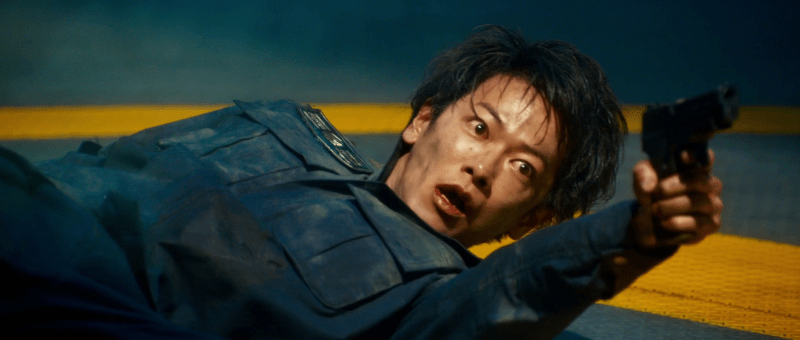
Katsuyuki Motohiro’s 2001social drama Transparent: Tribute to a Sad Genius had attempted to show the government acting with compassion having discovered humans with a potentially dangerous power, in that case the unfortunate ability to broadcast their every thought. Rather than locking them up in labs, the government had allowed the Transparents to live in the community under the caveat that they must never be told of their ability while continuing to monitor them secretly and in fact micromanaging their lives with less than ethical attention. 2017’s Ajin (亜人), adapted from the manga by Gamon Sakurai, is in many ways Transparent’s flip side in which the government has discovered the existence of a series of people known as Demi-Humans with super fast healing ability meaning that they cannot die from injury and has been conducting what is essentially vivisection on them justifying themselves that “the Ajin are the precious key to the evolution of mankind”. 

Nevertheless, they are mindful that the public would not accept it if they knew the government’s claims of “protecting” Ajins was a smokescreen to disguise the fact they’ve been experimenting on them, let alone selling the results to commercial companies for the production of chemical weapons among other things. Previously a regular medical student, Kei Nagano (Takeru Satoh) is the third Ajin to be unmasked in Japan after being hit by a bus only to heal rapidly and stumble away. After a brief period of torture, Kei is “rescued” by crazed terrorist revolutionary leader Sato (Go Ayano) and his underling Tanaka (Yu Shirota), escaped Ajins 1 and 2, but becomes their enemy after he refuses to turn against the scientists who had been torturing him pointing out that killing them would only make him feel worse and is therefore counterproductive. 

The implication is that 20 years of brutal torture at the hands of mad scientists has turned Sato into a crazed fascist hellbent on the extinction of the human race, seeking an “autonomous” space for Ajin along with full civil rights for Demi-Humans. Though we are told that only three Ajin have been unmasked so far in Japan, the implication is that there are many more living quietly some of whom Sato recruits after putting out a call for all disenfranchised Demi-Humans to join his revolution not for equality but domination. It’s this movement Kei can’t support, the classically “good” Ajin who disapproves of Sato’s actions and wants to leave peacefully alongside humanity. As such, there’s something a little uncomfortable in his inevitable decision to team up with the people who were just vivisecting him in order to stop Sato achieving his goal of guaranteed civil rights for people like him asking for nothing more than that his family be protected and he be left alone and given a new ID to live quietly in somewhere in Japan when all of this over. 

The unpalatable implication seems to be that minorities are only worthy of respect if they serve those in power, both Kei and another closeted Ajin benefiting directly and individually by siding with humanity though humanity may not honour the various promises it makes while they are partially complicit in the torture and exploitation of other Ajins. Sato’s basic request is only to given his full rights in the freedom from torture, but even this cannot be granted because of the threat he presents to humanity in that the inability to die means that he cannot be controlled through violence. Ironically enough Sato does seem to believe himself to be the next step in human evolution, after 20 years of brutal torture believing that humanity is a lesser being which those like him are intended to replace. 

Kei meanwhile encounters kind humans such as Mrs. Yamanaka (Kazuko Yoshiyuki) who kindly offers him a place to hideout because when you see someone is in trouble you just help them even if a baying mob later turn up at your door to ask why. There may be a minor allegory in the way the Ajins are treated, feared by and excluded from regular society, forced to keep their true natures secret in order to live a “quiet” life but than again Sato and his cohort of equally crazed young Demi-Humans who presumably have never been tortured are depicted as quasi-fascist radicals selling their own organs on the medical black market and eventually prepared to unleash a chemical weapon on Tokyo to make it unliveable for regular humans in order to claim their own space. Nevertheless, Motohiro’s drama is at its best during its high impact, well choreographed action sequences displaying some top quality visual effects as the Ajins produce their ghostly avatars or reassemble themselves after catastrophic injury even if the discomfort of the underlying messages cannot be entirely escaped. 


Original trailer (no subtitles)

Brave: Gunjo Senki (ブレイブ -群青戦記-, Katsuyuki Motohiro, 2021)

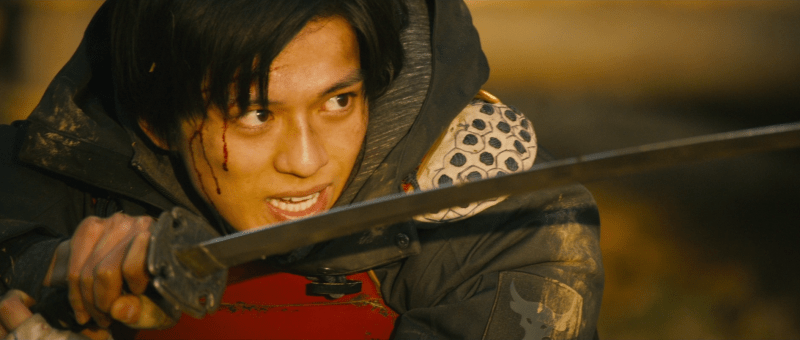
A young man with a total lack of confidence in himself begins discover his inner strength after being sent back to the Sengoku era in Katsuyuki Motohiro’s timeslip drama adapted from the manga by Masaki Kasahara, Brave: Gunjo Senki (ブレイブ -群青戦記-). Fighting a battle for the future, the kids finds themselves at a moment of historical change and caught between the titanic forces of clashing armies but paradoxically discover that they want the same thing, something the kids have always taken for granted, an age of peace in which all are free to live together happily. 

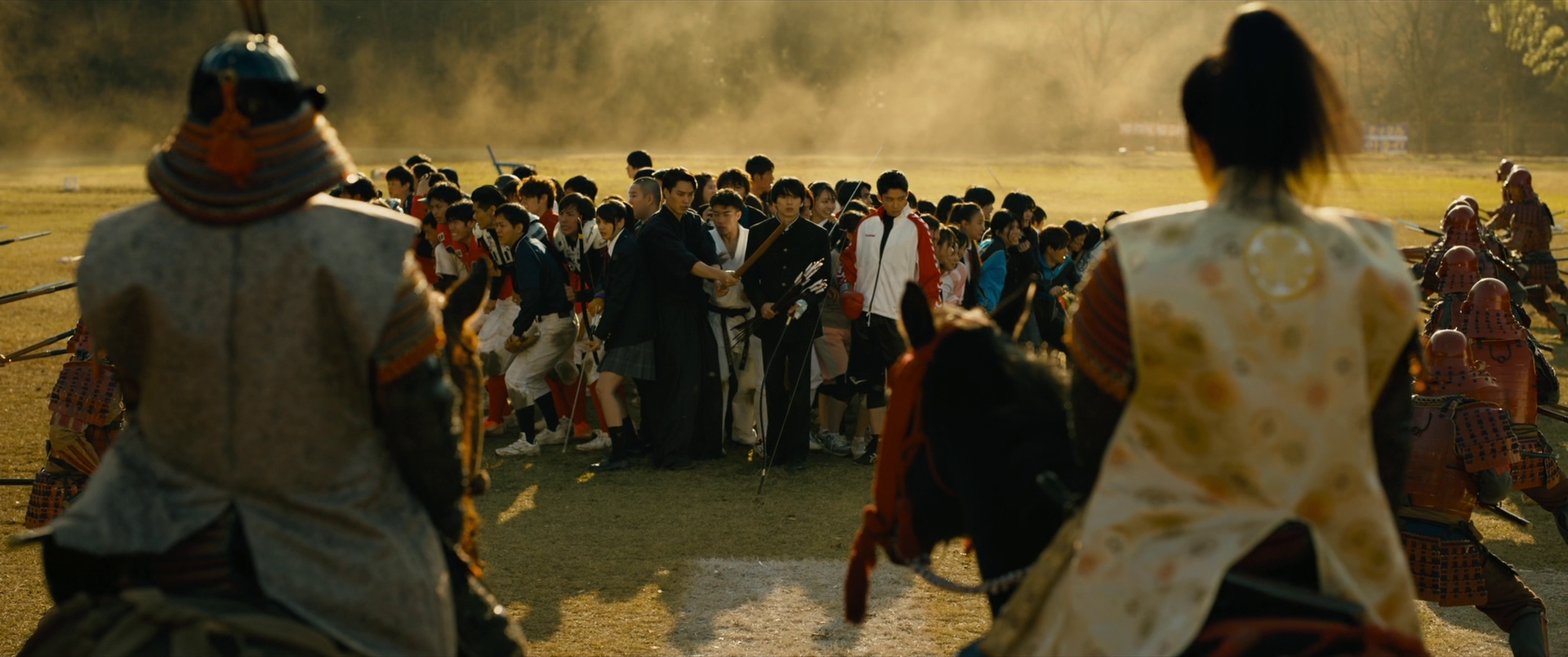
For all those reasons it’s a just as well that Aoi (Mackenyu), a diffident member of the archery club, is a keen history buff even if he declares himself uninterested in winning competitions or becoming a champion. When warriors in 16th century armour begin assaulting the school, he’s well placed to guess what might be going on inferring from some of the names involved that they must have been thrown back to the year 1560 which was something of a turning point in Japanese history marked by the battle of Okehazama in which the outnumbered forces of Oda Nobunaga (Kenichi Matsuyama) scored a significant victory against those of Imagawa Yoshimoto setting Nobunaga on a path towards the unification of Japan. 

Though armed with foreknowledge, the kids are obviously ill-equipped to cope with the demands of life in the Sengoku era having no combat experience yet this institution happens to be one of the most prominent sporting schools in the nation boasting a host of national champions all of whom discover that their athletic skills can easily be repurposed for warfare from the archers and kendo enthusiasts to the baseball and American football players while those in the various science clubs set about investigating how they got here and how they might get back. 

Despite being thrust into a leadership role after impressing warlord Motoyasu (Haruma Miura) who will one day become Tokugawa Ieyasu and oust Nobunaga as ruler of a unified Japan, Aoi remains diffident and fearful unable to fire his bow often walking away from the fight despite his friends’ encouragement. His problem, as is repeatedly pointed out, is that he has no self-confidence and cannot believe in himself sufficiently to act when the occasion calls. Yet through his gentle mentoring at the hands of Motoyasu, he begins to come into his own as a Sengoku era strategist realising that he has something to spur him on in the desire to protect those close to him.

This is not, however, a wholly positive thing. Despite introducing Aoi’s childhood friend Haruka (Hirona Yamazaki) as a talented archer who is much more willing to step up to the fight, the film quickly relegates her to the role of damsel in distress as it does the majority of female students many of whom are also top athletes with useful skills while the assault squad venturing to rescue students taken hostage by evil retainer Yanada Matsuna is, aside from Haruka, exclusively male. Conversely, the guys are given an opportunity to express their fear and sadness each thinking of their mothers as they prepare to risk their lives to save their friends. 

For Aoi, his friends become the light that show him the way while he remains preoccupied with history realising that nefarious forces are trying to manipulate it so that their age of peace will never arrive and Japan will exist in a state of darkness for all eternity. Though often depicted as cruel dictator this Nobunaga seems to want end the darkness by bringing about an age of peace through the unification of Japan taking solace in the idea that these strange people in their weird castle wearing bizarre clothes are from an age in which war is a distant memory meaning at least that his dream came to pass. At heart, it’s a battle between an emo teen who wants to paint the world with the darkness inside him, and a diffident young man turning away from hate and violence while finding strength in the presence and support of his friends. Boasting some impressive effects and high octane battle sequences imbued with a quirky humour as the kids use their sport skills, kicking footballs armed with bombs or throwing fiery baseballs at the confused retainers, Brave: Gunjo Senki sees its diffident hero not only taking charge of his personal destiny but the national in believing that the best way to support his friends is to make sure the world of peace they’ve always enjoyed will again come to pass. 


Original trailer (no subtitles)

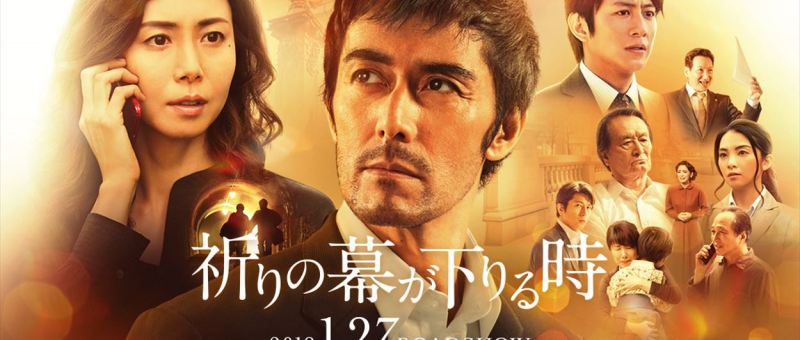
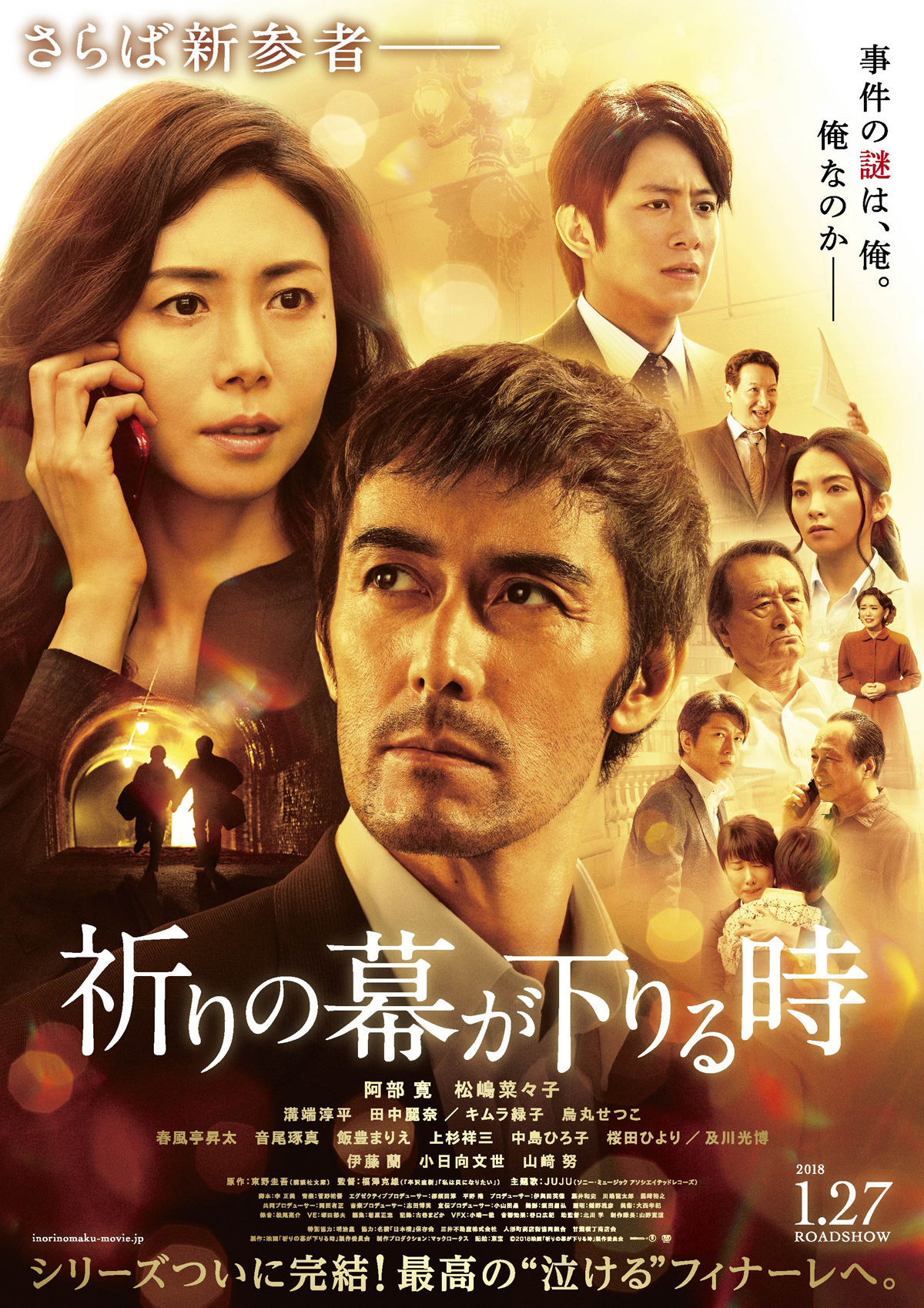
The Crimes That Bind (祈りの幕が下りる時, Katsuo Fukuzawa, 2018)

Crimes that bind posterDetective Kyoichiro Kaga has become a familiar screen presence over the last decade or so in a series of films and TV dramas starring popular actor Hiroshi Abe which might make it something of a surprise that The Crimes That Bind (祈りの幕が下りる時, Inori no Maku ga Oriru toki) is, after a fashion, a kind of origin story and touted as the culmination of the long running franchise. Another of prolific author Keigo Higashino’s key detectives, Kaga’s stalking ground has always been Nihonbashi where he has managed to make himself a friendly neighbourhood cop but, as it turns out, dedication is not the only reason he’s refused promotions and transfers to stay in what is, professionally at least, something of a backwater.

In fact, the film begins way back in 1983 when a young woman, Yuriko (Ran Ito), ran away from her husband and son to become a bar hostess in Sendai offering only the explanation that she felt herself unworthy of being a wife and mother. Some years later in 1997, she met a nice man – Watabe, but died of natural causes in 2001 at which point we discover that she is none other than the long lost mother of our master detective whom she abandoned when he was only eight years old. Being a compassionate man, Kyoichiro Kaga is not angry with his mother only sorry he did not get to see her before she passed and eager to meet the man who made her last years a little happier. Only, it appears, Watabe has also disappeared without trace. The only thing the Mama-san at the bar where Yuriko worked can remember about him is that he once said he often went to Nihonbashi. Kaga searches for the next 16 years with no leads, which is when the main case kicks into gear with the discovery of a badly decomposed body of a woman in a rundown Tokyo flat.

Of course, the two cases will turn out to be connected, giving Kaga an opportunity to investigate himself and come to terms with his difficult family circumstances including his strained relationship with his late father whose coldness he blames for driving his mother away. Parents and children will indeed develop into a theme as Kaga digs into why his mother might have done the things she did while also trying to reverse engineer his clues to figure out why he seems to be at the centre of an otherwise completely unrelated case.

Meanwhile, pieces of the puzzle seem to drop into place at random such as the fortuitous discovery of an old woman claiming to have lost her memory so that she can stay in hospital who may or may not be linked to one of the prime suspects – a top theatre director also known to Kaga thanks to a chance encounter some years earlier. In a neat twist, the theatre production she is currently trying to put on is Love Suicides at Sonezaki – a sad tale of young lovers, an adopted son of a merchant and a courtesan, who realise that they have no freedom to pursue their desires and so decide that their only solution is double suicide. The truth that Kaga uncovers leads him in much the same direction only the love at stake is familial rather than romantic and built on the strange filial interplay of the connection between a parent and a child.

It is quite literally “crimes that bind”, but Kaga’s repeated mantra that lies are the shadow of truth, illuminating as much as they conceal, does not quite fit with the incident he has been investigating which largely hinges on coincidences which place him, improbably, at the centre and tip him off to the hidden connections which will crack the case. Which is to say, the solution lies in the killer overplaying their hand (though for reasons unrelated to crime) and thereby undermining their carefully won subterfuge. Torn between solving the murder and exploring Kaga’s melancholy backstory, The Crimes That Bind finds itself falling between two stools even as its twin plot strands begin to dovetail as neatly as one assumes they eventually will, laying bare the central themes of parental sacrifice and belated filial gratitude. Playing best to those already invested in the Kaga franchise, Katsuo Fukuzawa’s adaptation may serve as a fitting conclusion (to this arc at least) but cannot quite overcome its over-reliance on confessional flashback as method of investigation or the improbable qualities of its admittedly twist filled central mystery.


International trailer (English subtitles)

Go Find a Psychic! (曲がれ!スプーン, Katsuyuki Motohiro, 2009)

go find a psychic posterHow old is too old to still believe in Santa? Yone Sakurai (Masami Nagasawa), the heroine of Katsuyuki Motohiro’s Go Find a Psychic! (曲がれ!スプーン, Magare! Spoon) longs to believe the truth is out there even if everyone else thinks she must be a bit touched in the head. If there really are people with psychic powers, however, they might not feel very comfortable coming forward. After all, who wants to be the go to sofa moving guy when everyone finds out you have telekinesis? That’s not even factoring in the fear of being abducted by the government and experimented on!

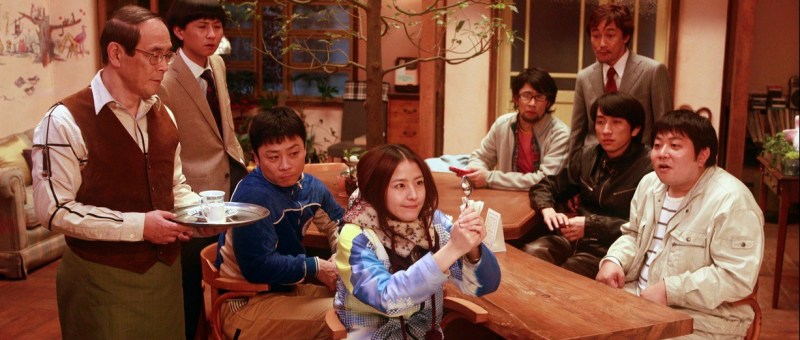
In any case, Yone has her work cut out for her when the TV variety show she works for which has a special focus on paranormal abilities sends her out out in search of “true” psychics after a series of on air disasters has their viewer credibility ratings plummeting. Ideally speaking, Yone needs to find some quality superhero action in time for the big Christmas Eve special, but her lengthy quest up and down Japan brings her only the disappointment of fake yetis and charlatan monks. That is until she unwittingly ends up at Cafe Kinesis which holds its very own psychics anonymous meeting every Christmas Eve so the paranormal community can come together in solidarity without fearing the consequences of revealing their abilities.

Based on a comic stage play, Go Find a Psychic! roots its humour in the everyday. The psychics of Cafe Kinesis are a bunch of ordinary middle-aged men of the kind you might find in any small town watering hole anywhere in Japan. The only difference is, they have a collection of almost useless superhuman abilities including the manipulation of electronic waves (useful for getting an extra item out of a vending machine), telekinesis (“useful” for throwing your annoying boss halfway across the room), X-ray vision (which has a number of obvious applications), and mind reading (or more like image transmission). The bar owner is not a psychic himself but was once helped by one which is why he set up the bar, hoping to meet and thank the person who frightened off an angry dog that was trying to bite him. Seeing as all the guests are psychic, no one is afraid to show off their talents but when a newcomer, Mr. Kanda (Hideto Iwai), suddenly shows up it creates a problem when the gang realise his “ability” of being “thin” is just the normal kind of skinniness. Seeing as he’s not a proper psychic, can they really let him leave and risk exposing the secrets of Cafe Kinesis?

Meanwhile, Yone’s quest continues – bringing her into contact with a strange man who claims he can withstand the bite of a poisonous African spider. Needless to say, the spider will be back later when the psychics become convinced Yone’s brought it with her presenting them with a conflict. They don’t want her to find out about their psychic powers and risk getting put on TV, but they can’t very well let her walk off with a poisonous spider trapped about her person. Despite small qualms about letting Kanda leave in one piece, the psychics aren’t bad guys and it is Christmas after all. Realising Yone just really loves all sort of psychic stuff and is becoming depressed after getting her illusions repeatedly shattered, the gang decide to put on a real Christmas show to rekindle her faith in the supernatural.

Just because you invite a UFO to your party and it doesn’t turn up it doesn’t mean it doesn’t exist. Some things can’t be explained by science. Maybe those old guys from the bar really can make miracles if only someone points them in the right direction. Like a good magic trick, perhaps it’s better to keep a few secrets and not ask too many questions about how things really work. For Yone the world is better with a little magic in it, even if you have to admit that people who want to go on TV aren’t usually going to be very “genuine”. That doesn’t mean that “genuine” isn’t out there, but if you find it you might be better to keep it to yourself or risk losing it entirely.


Original trailer (no subtitles)

BLAME! (ブラム!, Hiroyuki Seshita, 2017)

blame posterCities. The pinnacle of human achievement and an almost living monument to civilisation. Does the same principle of human collective settlement also relate to the digital realm or will increasing interconnectedness eventually destroy everything we’ve built? Following their landmark CGI adaptation of Tsutomu Nihei’s Knights of Sidonia, Polygon Pictures return to source by adapting the author’s debut work BLAME! into a feature length animated movie. Like Sidonia, BLAME! (ブラム!) takes place many years after a climactic event has led to the fall of human civilisation – an event so long in the past as to have become mere myth to the small number of humans still clinging on to life in a now inhospitable terrain, but BLAME!’s dystopia is very much one created by man, losing control of its technology in its ever advancing hubris.

As the young girl who offers the opening monologue tells us, no one knows how all of this happened. Once, a long time ago, humans lived in a city but a virus came and they lost the ability to communicate with the environment in which they lived. The city began to grow, and the “Safeguard” system decided that humans were “illegal immigrants” in their own land. The exterminators swooped in to wipe them out but a small band of humans has managed to survive a few hundred years in a kind of safe zone protected by a perimeter wall the city’s systems are prevented from monitoring.

The rapid expansion of the city has also meant a reduction in vegetation and the surviving humans are running low on food. An intrepid team of children ventures out into the wasteland in search of sustenance, but they’re spotted and targeted for elimination. A mysterious figure appears on the horizon and saves them. The man calls himself a “human” and is disappointed to realise none of the children are carriers of the “Net Terminal Gene” which he is seeking. Killy (Takahiro Sakurai) claims that the Net Terminal Gene will enable the humans to take back control of the city’s systems, halt the excessive building program and call off the Safeguard attack dogs.

Killy’s appearance brings new hope to the villagers, trapped within their perimeter stronghold but facing the prospect of staying and starving or taking their chances with Safeguard. Concentrating on action rather than philosophising little time is given over to considering how humanity lives though it’s certainly puzzling that there is so little reaction when the band of children returns home much depleted in numbers. Indeed, aside from Pops (Kazuhiro Yamaji), the de facto leader of the community, no other “adults” appear.

Using Killy as a kind of deflective shield, the gang press on until they find an abandoned robot, Cibo (Kana Hanazawa), who tells them about an “Automated Factory” in which she can generate both an abundant food source and a synthetic tablet which will allow them to get back into the city’s systems. What ensues is a deadly firefight as the system fights back. Cibo pleads with The Authority in the digital realm while Killy and the villagers hold back the forces of order with firepower from the outside.

Killy remains a man of few words, his language dulled through inactivity and his expression inscrutable, but the villagers, perhaps lulled into a false sense of security thanks to long years of isolation, never question his motives or reliability. Likewise, Cibo clearly knows more than she lets on but offers the only lead so far on a way back to a less precarious way of life. Killy’s sudden appearance becomes a mythic event, a point of transition in the history of the post-apocalyptic world, but also seems to be without resolution as the closing coda implies.

Like Sidonia, the animation quality is at times variable but often excels in its highly detailed backgrounds, allowing production design to smooth over any narrative gaps. What BLAME! lacks in terms of plot and character complexity it makes up for in world building though it is difficult to ignore the feeling of the loss born of condensing something far larger into an easily digestible whole. Nevertheless, BLAME! does what it sets out to do with quiet brilliance in detailing what might be the first of many adventures of the wanderer known as Killy as he explores a world ruined beyond repair looking for the key to unlock a brighter future.


Netflix trailer (Japanese with English subtitles/captions)

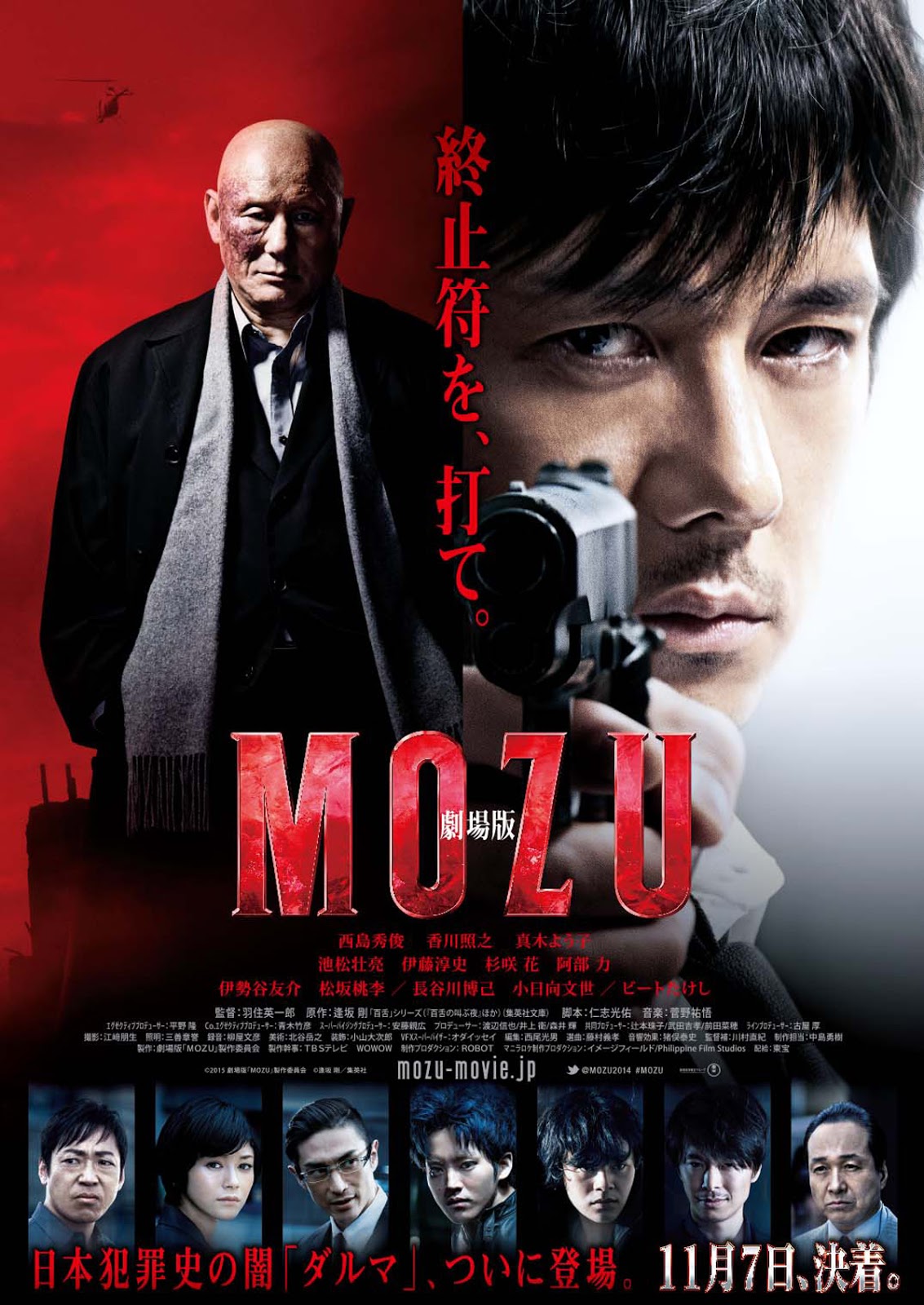
Mozu the Movie (劇場版MOZU, Eiichiro Hasumi, 2015)

mozu-posterThe criticism levelled most often against Japanese cinema is its readiness to send established franchises to the big screen. Manga adaptations make up a significant proportion of mainstream films, but most adaptations are constructed from scratch for maximum accessibility to a general audience – sometimes to the irritation of the franchise’s fans. When it comes to the cinematic instalments of popular TV shows the question is more difficult but most attempt to make some concession to those who are not familiar with the already established universe. Mozu (劇場版MOZU) does not do this. It makes no attempt to recap or explain itself, it simply continues from the end of the second series of the TV drama in which the “Mozu” or shrike of the title was resolved leaving the shady spectre of “Daruma” hanging for the inevitable conclusion.

Six months on from the climatic events at the end of season two, Kuraki (Hidetoshi Nishijima) has become a drunk, Ohsugi (Teruyuki Kagawa) has left the force for the private sector, while Akeboshi (Yoko Maki) is still preoccupied with the strange phone calls she sometimes receives and the fate of her long lost father last seen on the deck of a sinking submarine. The dreams of the citizens of Tokyo are being haunted by the mysterious face of “Daruma”, but this is quickly superseded by an explosion in an office building which turns out to be a diversionary exercise as the autistic daughter of a refugee with diplomatic immunity is kidnapped by terrorists.

At this point, Kuraki appears at the scene, beats the bad guys into submission and rescues the girl, Elena, and her mother who are then taken into protective custody. However, things go south when Ohsugi’s daughter and Akeboshi are taken by the bad guys in the hope of an exchange forcing the gang to take Elena to a neighbouring Asian nation.

Mozu the movie suffers from many of the same problems which plagued the generally impressive TV series in its wildly inconsistent tone and increasingly convoluted, often bizarre plot twists. Assuming the audience will be familiar with the TV series, the film provides no recap, leaving the casual viewer completely lost amongst the numerous numbers of subplots held together by Kuraki’s need to find the answers behind the death of his wife at the site of a suicide bombing and the drowning of his daughter a year or so before. Likewise, Akeboshi’s familial concerns – her absentee father whose dark past was hinted at in the previous series and her close relationship with her two neices, is glossed over, as is Ohsugi’s ongoing battle to win back the respect of his teenage daughter. When a key character suddenly and quite unexpectedly appears to save the day (and then disappears again), the casual viewer has a right to be utterly baffled.

Where the central tone is one of cool noir supported by occasionally poetic camera work, Nishijima’s laid back minimalism gives way to broad, over the top villainy from Hasegawa’s Higashi as well as the punkish Mozu copycat who kickstarts the action. Kuraki remains an unbeatable super agent, taking out bad guys with well placed kicks to the chest and enduring numerous acts of torture whilst remaining doggedly fixed on his quest to find out the truth about his wife and a possible conspiracy plaguing Japanese society. Ohsugi is still the bumbling cop but equally committed to protecting his daughter while Akeboshi is underused, her slow burn romance with Kuraki simmering away in the background.

What remains is a collection of impressive action scenes and mysterious conversations offered with portentous seriousness. The purpose of Elena’s kidnapping is predictably grim yet reduced to a single sentence shortly before Kuraki apparently saves the day once again through undisclosed means. The central conspiracy in this conspiracy thriller, that Japan has been manipulated by a shadowy figure literally cannibalising his own children, fades into the background as Kuraki is left to affirm that all that remains now is chaos. Mozu the movie is season three with all the important bit stripped out – strange, confusing, and ultimately hollow. Yet for those well versed in the Mozu universe, it may provide a degree of closure to its ongoing mysteries, even if ultimately unsatisfying.


Original trailer (no subtitles)

https://www.youtube.com/watch?v=3SiONhHX6o0