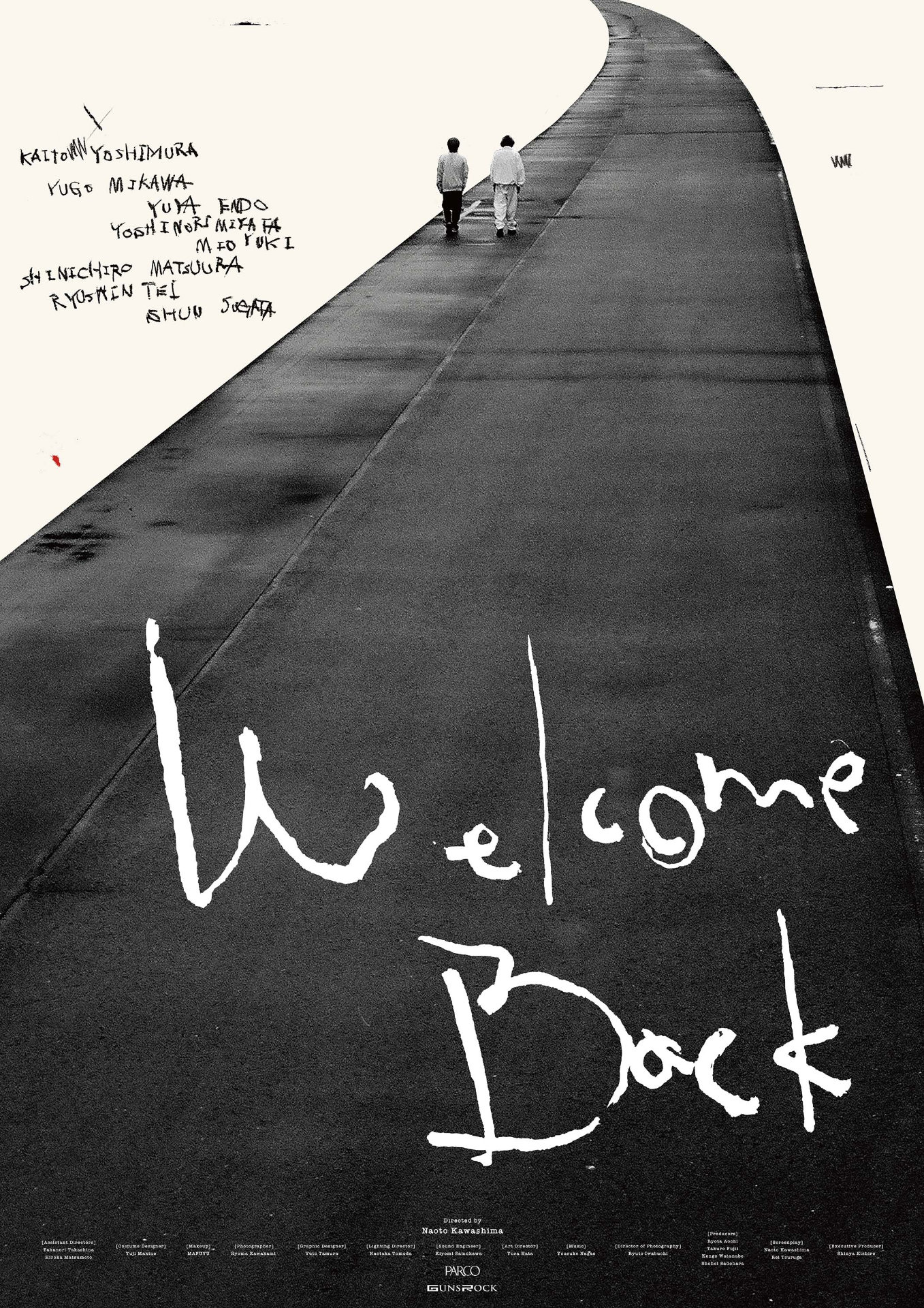
Welcome Back (Naoto Kawashima, 2024)

“Once you play the heel, you can’t go back,” according to up-and-coming boxer Teru’s (Kaito Yoshimura) coach, but it turns out to be truer than for most for the aspiring champion for whom getting up off the mat proves an act of impossibility. While he plays the hero for younger brother figure Ben (Yugo Mikawa) and talks a big game before stepping into the ring, in reality Teru is riddled with insecurity and using bluster to overcome the fear that he can’t live up to the image Ben has of him.

The terrible thing is, he might be right and Ben, a young man with learning difficulties who later gives his age as 10 though clearly in his 20s, may be beginning to see through him. “I lost because I looked at you,” he later says of a failed attempt to fight off their chief rival, but it might as well go for his life which he’s spent in Teru’s footsteps ever since his mother abandoned him with Teru’s family when they were just children on the same housing estate.

As such, Teru does genuinely care for Ben, but has also been hiding behind him in allowing him to become something like a mascot or cheerleader, someone over whom he feels superior but also looks up to him as the sort of person he wants to be but perhaps isn’t. In any case, his boxing career has been going well and he’s on track to become the Japanese champion, but at the same time he’s proud and arrogant. He thinks he knows better than his coach, and likes to make a big entrance trash talking his opponents in a larger-than-life manner that might be more suited to pro-wrestling than the comparatively more earnest world of boxing and earns him a degree of suspicion as a result. His opponent Kitazawa (Yoshinori Miyata) is his opposite number in that, as Teru points out, he’s deathly serious and certain in his abilities which is why he’s able to KO Teru mere seconds into their title match. No longer “undefeated”, Teru simply gives up and retires from boxing only to spiral downward while working as a supermarket mascot, eg. Ben’s old job from which he also gets him fired by messing it up for both of them because of his pride and temper.

But for Ben, the certain truth of his life has been that “Teru never loses”. Now that Teru lost, something’s very wrong with the universe and he has to put it right, which is why he decides to fight Kitazawa himself even if he has to walk to Osaka from Tokyo to do it because they’ve got no money for transport. What neither Teru nor Aoyama (Yuya Endo), a boxer Teru once defeated in another title fight but ends up helping him and Ben on their quest, is that after obsessively watching Teru all this time, Ben is actually quite a talented, if untrained, fighter. They were hoping they could get him to give up on his plan by finding someone weaker than Kitazawa to defeat him so he’d know he had no chance, but he basically fights his way all across Japan to prove that Teru really is the hero he always thought him to be. 

This turns out to be inconvenient for Teru because inside he feels himself to be a loser and since his single defeat has been running away from the fight. As he later begrudgingly realises, none of this would be happening if he’d knuckled down done the training so he’d be able to beat Kitazawa in the first place rather than being consumed by his pride and arrogance. He should be the one fighting Kitazawa, not Ben who is putting himself in danger because the world doesn’t make sense to him any more. Kitazawa, meanwhile, has his number and seems to look down on him for his lack of fighting spirit, correctly surmising he will walk away from the chance to fight him for real when he opts for a last resort of trying to bribe him to fake a sparring match so that Ben will see him win and be able to go on with his life. 

But nothing quite goes to plan, and it seems like Ben might be starting to see that Teru might actually be using him to bolster his own sense of low self-esteem which obviously means that he does and always has looked down on Ben. Having come to a realisation that he needed to play the role of the hero that Ben needed him to be, perhaps what he sees is that Ben has outgrown him and that despite his constant insistence that “Ben is a child” is capable of doing what he couldn’t in fighting back even when the odds seem impossible. Teru is defeated by life, but fighting back in his case might look like something a little less glamorous that starts with eating some humble pie and calling in a favour to get a shot at a regular job he’ll have to take a little more seriously. In one way or another, their accidental road trip clarifies the dynamics of their “brotherly” relationship, but at the same time leads them to a point of division in which moving forward might necessarily mean they’re going in different directions.


Welcome Back screened as part of this year’s Camera Japan.

Trailer (no subtitles)
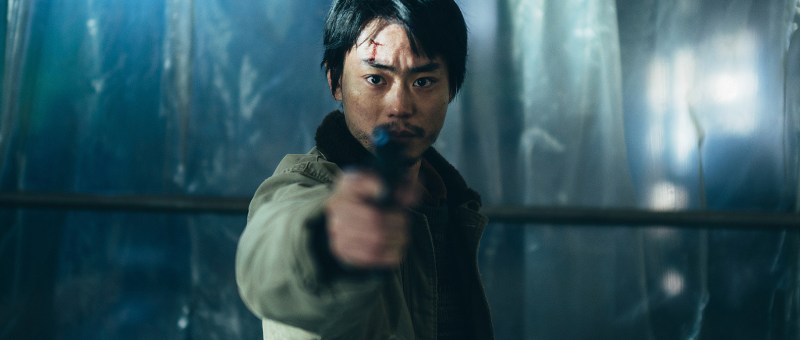
Cloud (Cloud クラウド, Kiyoshi Kurosawa, 2024)

“We wanted to make easy money,” a down-on-his luck reseller admits, “is life easy now?” Factory worker Ryosuke (Masaki Suda) rebels against capitalism by subverting it through buying low and selling high while repeatedly refusing promotions at his job in a textiles factory. Though it might seem that reselling is just a way to earn an income that seems almost passive but is actually fairly labour-intensive, it’s clear that Ryosuke is a young man dissatisfied with capitalistic realities and lacking direction in his life. 

Reselling has become a kind of game to him and like a gambler who plays to lose he’s hooked on the thrill of making a killing exploiting other people’s misery. He’s at once filled with pride and smugness over his apparent triumph over his society and consumed by self-loathing. His friend and fellow reseller Muraoka (Masataka Kubota) tells him that another acquaintance has been arrested for scalping concert tickets with both of them lamenting his foolishness in getting involved with something so risky. The implication is that their friend, Goto, must have been in real desperation to lower himself to such levels and they each fear they may someday end up in the same position. Muraoka laments that that kind of selling is a young man’s game and neither of them have the time or energy to spend all day queuing to buy stuff just to sell it on cheap. They are each, it seems, beginning to feel the increasing desperation of their age that they are running out of time and have little to show for their efforts nor any prospects for the future. 

But on the other hand, neither of them want to be locked into the grind or join the oppressive but secure world of the salaryman. In many ways, Ryosuke’s factory boss Takimoto (Yoshiyoshi Arakawa) represents the “correct” path of hard and honest work, though his own paternalistic conviction in meritocracy seems outdated in a man of his age whose formative years occurred during an era of economic stagnation. He talks to Ryosuke as if he’s a young man who wants to get on but lacks confidence, telling him that he has leadership potential and is wasted on the shop floor, but his language also has an edge of the uncanny as if he were trying to recruit Ryosuke into his own worker drone revolution. In any case, even if it might be true that Ryosuke lacks confidence and ambition, that isn’t the reason he refuses promotions, which seems to be another way of rebelling against capitalism. When he eventually quits, he suggests it’s because he’s sick of being told what to do and wants more autonomy over his life and finances.

He tells his girlfriend Akiko (Kotone Furukawa) that she should quit her job too, which she’s only too happy to do because, unlike him, she actively doesn’t want to work and only wants to spend money. When she said she was thinking of giving up her apartment, Ryosuke naturally asked her to officially move in but she refused because his place is too small and she has too much stuff. Akiko has already been corrupted by the same consumerist bug that’s driving Ryosuke’s reselling business, but neither of them can really afford this lifestyle in the city. Ryosuke’s bright idea is to move to the remote countryside where he’s able to rent a huge, though ominous-looking, property for a fraction of the price with the idea of also economically supporting Akiko who will revert to traditional gender roles as a housewife in charge of the domestic space and most especially the kitchen.

But freedom cannot be found simply by retreating from urbanity and the couple soon find themselves plagued by a pervasive sense of resentment. The locals are not particularly accepting of people from Tokyo and are also needled by their success which is something they feel they’ve been unfairly denied. When Ryosuke tries to report a smashed window, even the policeman hassles him and says he’s received a tip-off that Ryosuke is breaking trading standards regulations by selling counterfeit goods as the real thing. Reselling in itself is not illegal, if definitely dubious morally and incredibly cynical. Ryosuke doesn’t seem to like to think about that and tells his new assistant, Sano (Daiken Okudaira), that he tries to sell all the items as quickly as possible so he doesn’t have to worry too much about their authenticity. If they’re wanted they’ll sell, Ryosuke justifies but he might as well be talking about himself.

“Being real or fake doesn’t matter?” Sano asks him, just as Ryosuke’s online and offline personas start to blur. He’s unaware that there are people actively hunting him for selling them substandard goods and is later pursued by real life vigilantes acting like online trolls and planning to torture him to death during a livestream. Like many of Kurosawa’s heroes, Ryosuke is completely convinced that he’s the benchmark for normal and it’s everything around him that’s strange or unfair. As the internet once again invades the “real” world, or perhaps it’s more that Ryosuke’s living his online life offline, the increasing unreality of the situation makes us wonder if any of this is “really” happening or product of Ryosuke’s fractured identity as it finally collapses under the twin corruptions of capitalism and social media. “Please keep focusing only on making money,” his new guardian angel Sano tells him, “everything will be obtainable. Whatever you want. Even things that can end the world.” Flying through ironically heavenly clouds, Ryosuke reflects that the path to hell really is paved with gold and his Mephistophelian pact with hyper-capitalism may have damned him beyond all repair.  


Cloud is in cinemas from 25th April courtesy of Blue Finch Film Releasing 

UK trailer (English subtitles)

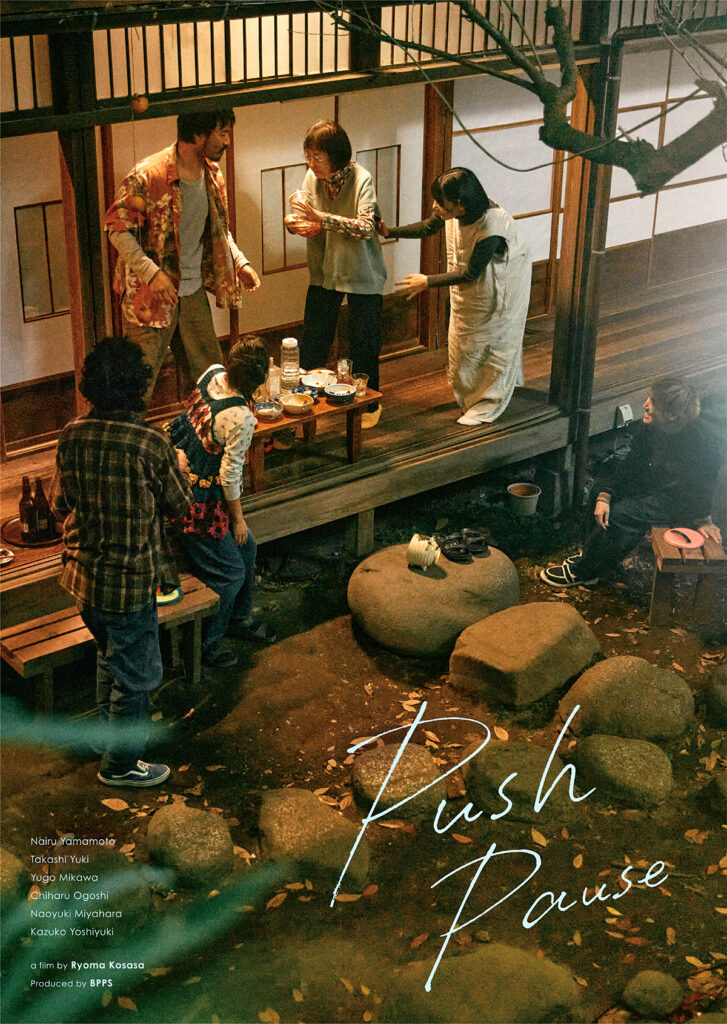
Push Pause (ココでのはなし, Ryoma Kosasa, 2023)

A small hotel becomes a refuge for those “struggling with the everyday” according to live-in helper Utako in Ryoma Kosasa’s heartwarming drama, Push Pause (ココでのはなし, Kokoro de no Hanashi). As she said, most of their customers are there because they’re uncertain of something and looking to take take some time out for reflection, much as she is while otherwise taking advantage of the tranquil and unjudgemental space of the inn along with the comfort it offers.

Guest House Coco is however suffering too amid the post-pandemic decline in custom. Th owner Hirofumi, attempts to sell his bike to pick up some extra cash only to discover it worth much less than he thought. The first of their guests, Tamotsu, is struggling for similar reasons seeing as the owner of the batting cages where he works is considering closing down as customers continue to stay away leaving him floundering for new direction. Helping an old friend move brings him into contact with someone he worked with for the Paralympics, but it only seems to fuel his sense of insecurity reflecting that unlike his friend he has no talents or ambitions and isn’t sure he wants to return to work for with him because it only makes him feel bad.

For Xiaolu, meanwhile, she’s dealing with issues as of a different order while house hunting in Tokyo ahead of a job transfer. Though her colleague had agreed to help her, he suddenly tells her he’d rather she didn’t come mostly it seems because he’s afraid she’ll expose him as an otaku thanks to their shared love of anime and people in the office will make fun of him. But then he also drops in that most of his colleagues are subtly racist, even insensitively adding that Xiaolu doesn’t “look Chinese” on first glance especially as her Japanese is so good unwittingly exposing his own latent prejudice. Her parents in China keep calling her to come home especially as her grandmother is in poor health leaving Xiaolu feeling guilty and now slightly unwanted unsure if it’s a good idea to accept the transfer or even remain in Japan at all.

Even Izumi, a permanet resident of the guest house, accidentally hurts her feelings in innocently asking if she’s from China on hearing her name though as it turns out Izumi was herself born in Manchuria and apparently a war orphan though in truth she seems nowhere near old enough to have been born in the 1940s. In any case, Izumi is the beating heart of Coco providing the warm and homely environment that sets people at their ease and makes them feel welcome and accepted. As she tells Xiaolu, fate has a way of bringing people together or at least getting them where they need to be so they can make an informed choice about their futures.

That’s why she echoes the title of the film in giving some advice to the young from a position of age in telling them that it’s alright to slow down, take a few moments to think things through rather than feeling as if they need to charge ahead. According to her, youth is just a part of your life that doesn’t even last very long so there’s no need to rush through it which seems like valuable advice to near middle-aged inn owner Hirofumi who is considering proposing to his girlfriend but is uncertain because she has children already and he isn’t sure they’ll accept him. Utako too has her own problems she’s in part been hiding from in leaving her home town to hole up in the inn. 

As if bearing out the sense of community that arises at there, Utako reveals that they stay in contact with their guests giving them the sense of a secure place to return to where they’ll always be accepted and cared for. Thanks to the support of the others at the Coco, each of them begin to find new directions in their lives and are able to proceed with more confidence and certainty. Warmhearted and empathetic Kosasa’s gentle drama is and ode to the quiet solidarity and unexpected connections that arise between people each struggling with the everyday but finding new strength in each other.


Mondays: See You “This” Week! (MONDAYS/このタイムループ、上司に気づかせないと終わらない, Ryo Takebayashi, 2022)

If you got stuck in a time loop at work reliving the same week several times over, how long would it take you to notice? For the harried employees at a small creative agency in Ryo Takebayashi’s Mondays: See you “This” Week! (MONDAYS/このタイムループ、上司に気づかせないと終わらない, MONDAYS / Kono Time Loop, Joshi ni Kizukasenaito Owaranai), sleep deprivation and the mind-numbing sameness of their lives prevent them from realising that events have begun to repeat themselves and if it weren’t for the sacrifice of a suicidal pigeon they never might never wake up at all. Waking up is in many ways the point as the heroine is forced to reflect on the unintended consequences of her corporate drive while conversely accepting that sometimes you do have to take care of yourself for the good of all. 

Yoshikawa (Wan Marui) is on the verge of landing her dream job at another firm, but is determined to see out a particularly problematic project trying to mount a campaign for a miso soup-flavoured soda tablet to please an incredibly picky client. When her colleagues try to explain that they’re stuck in a time loop, she thinks they’re just messing around and ignores them along with their warning not to take a taxi to her meeting because she’ll get into a car accident and hurt her head. After a series of failed attempts, they finally convince her using the smack of a poor pigeon into the office window as a device to snap her out of their collective delusion. 

Amusingly enough, the plan to bust out of the time loop can only be enacted by following office protocol. Yoshikawa understandably asks why they can’t talk to the boss directly to discuss the problem, but soon discovers he won’t listen to her so they have to “escalate” the issue through the proper channels by waking each of the team members in order of seniority so the highest can bring the matter to the boss’ attention. The boss, Nagahisa (Makita Sports), is always the last to arrive at the office, though that might be a moot point seeing as the team are forced to work through the night even at the weekend and in fact rarely get to go home anyway. This level of sleep deprivation might fuel their belief that they’re stuck in a time loop, but equally they soon become to convinced that the boss is more directly to blame in wearing a cursed bracelet and unwittingly stopping time because he’s about to turn 50 and is realising that he has nothing to show for his life. 

As some of the employees remark, it’s like time has been repeating for the last ten years. They find little fulfilment in their work and are often exploited, expected to work extreme overtime which damages both their health and relationships with others. Yoshikawa’s boyfriend is becoming very fed up with her workaholic lifestyle and is on the verge of breaking up with a girlfriend who never has time for him while she throws everything she has into getting her dream job working for someone who tells her success comes to those who put themselves first. 

Yet being forced to work as a team alongside the colleagues she previously looked down on, Yoshikawa comes to a better appreciation of the values of community and recommits herself to pursuing their common goal of escaping the time loop even if it means sacrificing her big job opportunity. Then again, the team have a difficult time getting through to their boss in part because he’s too meek and incapable of putting his own interests first which is why he’s feeling maudlin about turning 50 while filled with regret in having failed to chase his dreams. 

There may be a slight irony in the employees being trapped in their office while trying to vicariously fulfil the dreams of their dejected salaryman boss, but there’s also something quite poignant in the team’s genuine desire to help him out of an existential hole if only so they can climb out too. “There’s not much you can do alone” he admits simultaneously selling both the value of teamwork and the importance of fulfilling one’s personal desires for a healthy and harmonious life in the office and out. Slickly edited and perfectly plotted, Ryo Takebayashi’s quirky time loop comedy neatly satirises the mind numbing absurdities of contemporary corporate culture but ultimately makes the case that there are things more important than work and to find them you’ll need to find a way to escape the never-ending drudgery of life at the office. 


Mondays: See You “This” Week! screened as part of this year’s Nippon Connection. It will also be screening in New York Aug. 6 as part of this year’s JAPAN CUTS.

Original trailer (no subtitles)

POP! (Masashi Komura, 2021)

You’ve heard “turn that frown upside down”, but are you ready for turn that heart into a…well, perhaps that’s a sentence not worth finishing. The heroine of Masashi Komura’s MOOSIC LAB venture Pop! finds herself in a world of existential confusion on realising that what she assumed to be a heart symbolising love was in fact a giant bum intended to moon an indifferent society. Suddenly she doesn’t know up from down, her entire existence rocked as she contemplates life, love, and the pursuit of happiness on the eve of her 20th birthday. 

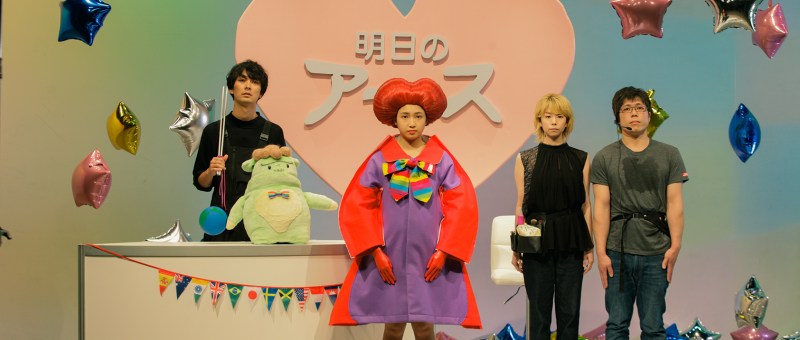
19-year-old Rin (Rina Ono) is currently the presenter/mascot character of local TV charity program “Tomorrow’s Earth Donation” which aims to collect money for the world’s disadvantaged children. Meanwhile, she also has a part-time job as a car park attendant which she takes incredibly seriously even though almost no one ever turns up (including her mysterious co-worker Mr. Numata). In fact, its Rin’s earnestness and youthful naivety which seem to set her apart from her colleagues, makeup artist Maiko later complaining that she makes others uncomfortable with her goody two-shoes act while her bashful present to puppeteer Shoji on his birthday of a framed portrait she’d drawn of him seems to elicit only confusion and mild embarrassment from her bantering co-workers. 

Nevertheless, she’s beginning to wonder about love, in her own way lonely and unfulfilled simultaneously confused and disappointed by the direction of her life. She dreamed of becoming an actress, but is now little more than a front for this strange enterprise in which she, characteristically, believes with her whole heart. Deep down, she just wants everyone to be happy and is sure that if people smiled more the world would be a brighter place. Wearing a giant red wig shaped like a heart, she reads out messages purporting to be from children outlining their dreams for the future even when they’re as banal and materialistic as wanting to become a race car driver. Unfortunately, however, she continually stumbles when asked to read a cue card featuring her own dream, fully scripted for the character she’s supposed to be playing. 

On her first audition, she was shouted out of the room by a director insisting her admittedly over the top improvised death scene was nothing more than attention seeking. The TV news attributes a similar motive to a mysterious bomber currently plaguing the city whom Rin accidentally witnesses one day fleeing the scene of his crime. For some reason struck by his strange presence, and perhaps disillusioned with her brief foray into online dating, Rin develops a fondness for him believing he is just like her because the pattern of his bombings corresponds to the shape of a giant heart enveloping the city. “We must get serious about saving the world!” she announces to her colleagues, “Let’s do it with a bang!” she ironically adds. She may, however, have slightly misunderstood his mission statement especially as when questioned as to his motives he tells her that he does it for the benefit of all because no one else will. 

In any case, she remains hopelessly naive, confused by a strange man who brings his van to the car park presumably for “privacy” and strangely unconcerned by an alarming message on an abandoned car left with its door open which states the driver won’t be needing it anymore. She role-plays direction and agency, but in the end goes nowhere until literally carried away by her “adult” realisation that it’s probably not possible for everyone to smile all the time and it’s not her job to make them. Caught up in the slightly duplicitous world of the cynical program makers who perhaps mean well but are hamstrung by the problems of contemporary Japan, desperate for pictures of smiling children only to realise that none are writing in and hardly any of them know any to ask, she maintains her desire for world peace even while privately conflicted in having lost sight of her own dream. Adopting a little of the bomber’s anarchist swagger, she allows herself to be swept up by a final flight of fancy towards a more cheerful world. Shot with a colourful “pop” aesthetic and a hearty slice of absurdist irony Komura’s strange fairytale is stuffed full of heart and has only infinite sympathy for its earnest heroine’s guileless goodness.


POP! screened as part of the 2021 Osaka Asian Film Festival.

Original trailer (no subtitles)

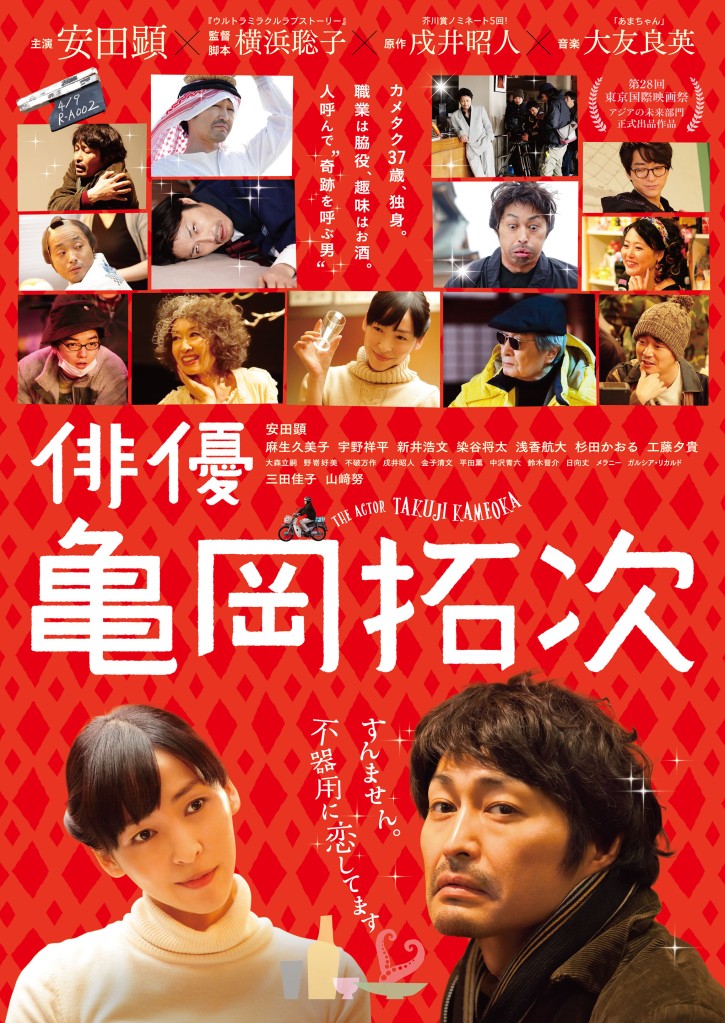
The Actor (俳優  亀岡拓次, Satoko Yokohama, 2016)

“There are no small parts, only small actors” according to the mantra of the bit part player, but perhaps deep down everyone wants to play the lead. Most jobbing actors will tell you that they’re happy to be working and if you work as much the dejected hero of Satoko Yokohama’s The Actor (俳優  亀岡拓次, Haiyu Kameoka Takuji), you can make a pretty decent living with a little more job security than a big name star whose career will inevitably hit the odd dry spell. Yet, who doesn’t want to at least feel that they’re the lead in their own life story? Spending all your time being other people can make you lose sight of who you really are and live your life with a sense of cinematic romanticism forever at odds with accepted reality. 

Takuji Kameoka (Ken Yasuda) is a classic background actor, turning up in small roles in TV dramas, often playing the villain of the week or appearing as a prominent extra. Meanwhile, his offscreen life seems to be lived in a booze-soaked haze, hanging out in his favourite bar surrounded by similarly dejected middle-aged men or occasionally meeting up with colleagues. Even his agent expects him to be sozzled when she rings to confirm new jobs though to be fair she doesn’t seem too bothered about it. 

Kameoka has perhaps made his peace with the kind of actor he is, but there’s also an inbuilt anxiety in waiting for people to ask what it is he does, knowing that it sounds glamorous and exciting when, to him at least, it’s anything but. Chatting with a pretty young woman, Azumi (Kumiko Aso), working behind a bar in a small town where he’s filming, Kameoka spins her a yarn about being a bowling ball salesman rather than be forced into a conversation about the life of a jobbing actor which might perhaps depress him more. Alone in the bar, the pair of them strike up a rapport over shared sake, but Kameoka forgets that in essence she’s just the same as him – acting, performing her role as the cheerful hostess, keeping him happy to sell more drinks. Later, she tells him that she’s switching roles, “recasting” herself as a good wife and mother, pointing again towards the unavoidable performative quality of conforming to socially defined labels such as “wife”, “mother”, “landlady”, “actor” or “man”. 

Everyone is, to some degree, acting, forced to perform a role in which they may privately feel miscast but are unable to reject. Kameoka is losing sight of who he is and so his life begins to feel increasingly like a movie, obeying narrative logic rather than that of “reality” while he often drifts off into flights of fancy in which he gets to play not the lead but a slightly bigger supporting part, recasts himself as the star of a favourite film, or finds himself momentarily in a film noir. Real or imagined, his directors have nothing but praise for him to the degree that it somehow feels ironic. He’s brought in to show the rookie leads how it’s done, an accidental master at dropping dead on camera, but as the landlady at his local says of another actor on TV, he just doesn’t have that leading man sparkle. Of course, not having that kind of presence is perfect for being a background player but a great shame when he has the talent to succeed, just without the burden of “star quality”. 

Then again, his talent is uncertain. Despite telling his agent that he doesn’t do stage, he agrees to work with a famous actress/director on an avant-garde theatre piece. Though she’s much harder on the young female star, Matsumura (Yoshiko Mita) rarely compliments his acting and eventually advises him that he’s unsuited to stage work because he has “film timing”. Privately, he might agree, but a job’s a job. Ironically enough, the performance that Matsumura failed to bring out in him is vividly brought to life during a very weird audition for a Spanish director who happens to be one of Kameoka’s favourites. He inhabits the role so strongly as to completely become it to the extent that its world rises all around him, but all too soon the audition is over with a simple “that’s great, thank you – we’ll be in touch”. Kameoka even suffers the indignity of crawling under the frozen shutters to exit the building while the next hopeful, a top TV actor he worked with on a previous job, makes his way inside. 

The woman in Kameoka’s audition fantasy is clearly Azumi, something that becomes clearer to him still during another flight of fancy that recasts him as a romantic hero making the grand gesture of a rain soaked dash, motorcycle filmed against rear projection, as he prepares for the inevitable “happy ending”. Reality, however, triumphs once again. Lovelorn, Kameoka declares himself lonely and indeed is always alone, not one of the “main cast” just a “bit player” hanging round until his scene and then moving on to the next project. He waves at women who weren’t waving at him, sympathises with a failed singer turned bar hostess, and celebrates the unexpected marriage of a friend but in a strange sense perhaps misses “himself”, gradually eclipsed by all the roles he plays onscreen and off. “Who are you?”, the Spanish director’s interpreter asks. “Takuji Kameoka, Japanese Actor”, is as good an answer as any. 


Screened as part of the Japan Foundation Touring Film Programme 2020.

Original trailer (English subtitles)

Under Your Bed (アンダー・ユア・ベッド, Mari Asato, 2019)

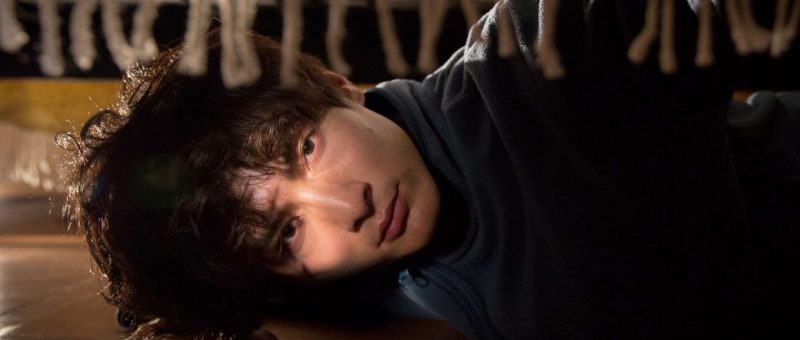
Under Your Bed poster 1Japanese cinema has something of a preoccupation with invisible men, but there’s rarely been as empathetic an exploration of benign alienation as Mari Asato’s Under Your Bed (アンダー・ユア・ベッド). Asato’s lonely stalker is a creep and a voyeur, but his problem is his innate passivity born of defeatism in which he has, despite his tendency to fantasise, already accepted that he lives in a kind of other world unable to touch his fellow humans from whom he remains painfully separated as if by a sheet of invisible glass.

Tropical fish enthusiast Mitsui (Kengo Kora) is one of those people who tend to be forgotten. He doesn’t feature in his high school graduation photo, and nobody, not even his parents, has ever noticed. Harbouring intense feelings of worthlessness linking back to a childhood memory of abandonment after almost dying when his father left him sitting in a hot car, Mitsui has no friends or much of a life to speak of and regards himself as a kind of non-person invisible to others. Longing to be seen, he treasures the precious memory of the only time he has ever heard someone else call his name which occurred 11 years previously when he was a university student.

Mitsui deeply believes that this memory is the only thing that gives his life meaning. Hiring a private eye to track down the woman in question, Chihiro (Kanako Nishikawa), he quits his job and opens a tropical fish store in the town where she lives, apparently now married with a baby. What he discovers, however, is that this Chihiro is quite different from the one of 11 years previously. Hoping to figure out why he begins watching her intensely, swiping a key to the house after she drops into the fish shop by chance and he offers to set her up with a tank full of colourful guppies. What Mitsui eventually discovers is that Chihiro is also living a somewhat invisible life as a victim of domestic violence unable to escape the tyrannical control of her respectable salaryman husband.

Facing a dilemma, Mitsui doesn’t so much want to rescue Chihiro as preserve his peculiar level of access to her even if seeing her subjected to such degrading and inhuman treatment quite obviously disturbs him. Mitsui can’t swoop in and save her because he’d blow his cover and lose the fragile connection to her life he’s convinced himself he has. Never daring to hope he could get her attention through an act of white knight salvation, he nevertheless fantasises about a different version of himself – one that is capable of providing comfort and protection rather than simply sitting and watching while others suffer.

Ironically enough, however, his passive presence seems to make a difference. Shifting to a brief voice over from Chihiro, we discover that the flowers Mitsui has been sending with a card wishing her happiness are the only thing that’s been keeping her going. What some might regard as a cause for concern has given Chihiro strength in proving that there’s someone else out there who cares about her. Yet this change or at least potential restoration also endangers Mitsui’s plan as Chihiro’s growing conviction that she can protect herself, spurred on by the invisible support of the flower sender and others, threatens to dissolve the fragile fantasy world he’s constructed.

Mitsui is forced to wonder if his obsession is equal parts delusion, that perhaps the very events which define his life are part fabrications. His intense conviction that he is a forgettable person is borne out when he realises that Chihiro not only does not recognise him, but apparently does not even remember anything that passed between them 11 years previously. To her, he is probably just a random guy she had coffee with one time, whereas to him she is the woman who changed his life by showing him what true happiness could feel like simply by saying his name. Spotting another invisible person like himself reminds Mitsui what he looks like from the outside and of the potential dangers of those like him when he finds out that the man later went out and stabbed his boss’ wife because she gave everyone except him a holiday souvenir. Yet there is a strange kind of positivity in Matsui’s gentle acceptance of his invisibility. Resenting nothing, it’s not revenge he wants but recognition and though he may eventually figure out that what he really desired was something more, all he needs is the possibility that Chihiro may one day say his name again.

An invisible man, Mitsui longs to “seen” but lives a bug-like existence, hiding in the places no one thinks to look. Proudly telling us that the guppies in his shop are the 34th generation of the guppies his mother once gave him, Mitsui reveals that he flushes the subpar males, with whom he inevitably groups himself, away in order to preserve the beauty of the whole rather than allow it to descend on a path towards mediocrity. Like his beloved fish, Mitsui remains trapped within an invisible tank unable to reach beyond the glass, resigned to looking but not touching. Nevertheless, his presence is eventually felt, unseen but recognised and finally rewarded with a single long-awaited word.


Under Your Bed was screened as part of the 2019 London East Asia Film Festival.

Original trailer (no subtitles)