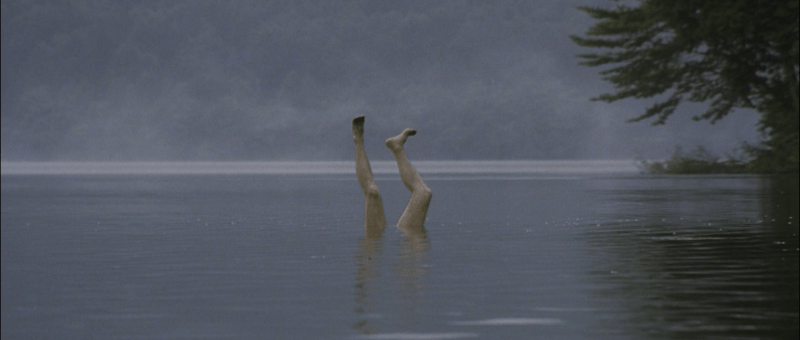
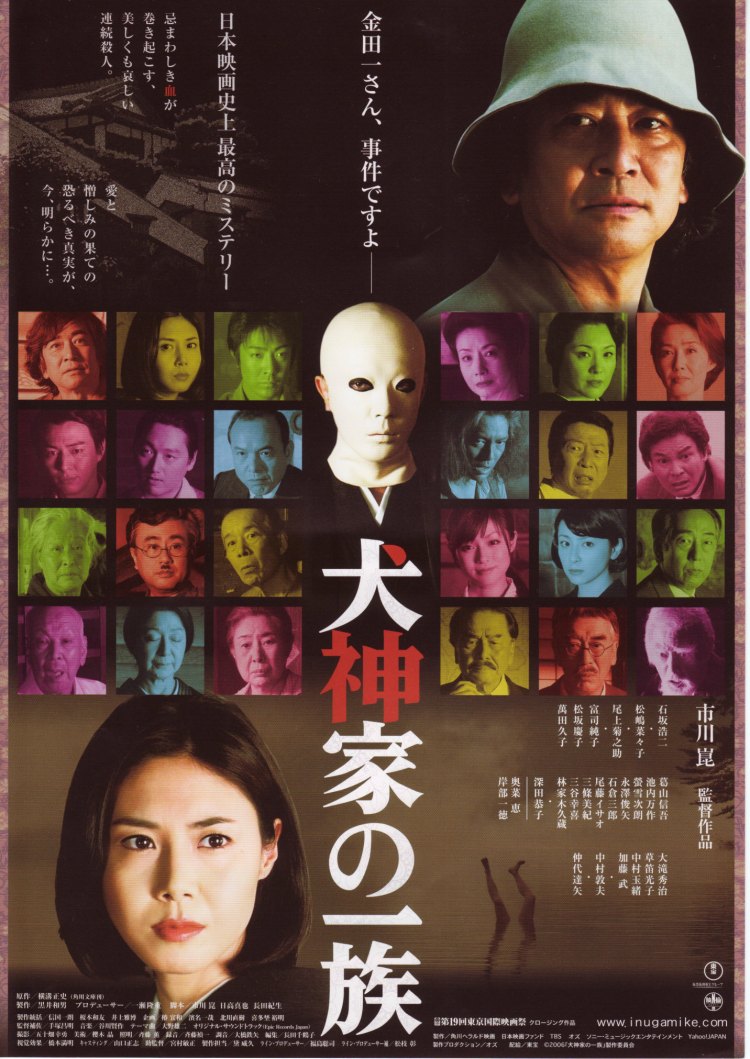
 Beginning his career in the late 1940s, Kon Ichikawa was a contemporary of the leading lights of Japanese cinema during the golden age though has never quite achieved the level of international acclaim awarded to studio mate Akira Kurosawa. Unlike Kurosawa however, whose career floundered the wake of the studio system’s collapse, Ichikawa was able to go on making films through the difficult years of the 70s and 80s precisely because he was willing to take on projects that were purely commercial in nature. His biggest box office hit was an adaptation of the Seishi Yokomizo novel The Inugami Family which led to a further four films starring the author’s eccentric detective Kosuke Kindaichi. 30 years later, in what would turn out to be his final film, Ichikawa took the unusual step of remaking his biggest commercial success and even more unusually decided to recast several of the same actors in their original roles.
The script remains almost identical to the 1976 version though slightly slimmer. In 1947, pharmaceuticals magnate Sahei Inugami (Tatsuya Nakadai) dies leaving a confusing will which upsets absolutely everyone – not least his three daughters whom he fathered with three different women none of whom he was legally married to. Sahei has elected to leave the bulk of his estate to a young lady, Tamayo (Nanako Matsushima), who is not part of the family, on the condition that she marry one of his grandsons though he stresses that she is free to choose. If she chooses to marry someone else, the estate will be split between the three grandsons and another illegitimate son fathered with a maid whose whereabouts are apparently unknown. With such a vast fortune at stake, it is not long before the first murder occurs.
The most major difference between the 1976 and 2006 versions is, perhaps counterintuitively, the budget. Whereas the 1976 version had been one of the “taisaku” prestige pictures which dominated the mainstream cinema of the era and had the marketing genius of a young Haruki Kadokawa behind it, the 2006 version is a much more modest affair with minimal production values and a noticeably unfussy approach. The 1976 version, like the other instalments in the ‘70s series, also boasted a starry cast including golden age star Mieko Takamine, even employing Kyoko Kishida in a tiny two scene role as a blind koto teacher. Perhaps the strangest and most experimental choice made by Ichikawa in terms of his “remake”, is the one to cast original star Koji Ishizaka as the eccentric detective, reprising his role from the earlier film 30 years later. In fact, many of the other characters whose ages are not important are also played by the original actors including the bumbling policeman (Takeshi Kato) and his sidekick who appear throughout the series (comedy director Koki Mitani makes a noted cameo in the spot occupied by Seishi Yokomizo in the original adaptation).
The recasting adds to the level of uncanniness created by the dissonance between the opulence of the 76 version, and the austerity of that from 2006. This time around, Ichikawa shoots in 16:9 rather than (the then) TV friendly 4:3, but in the scaled back hyperrealist style common to lower budget dramas from the 2000s. The flat digital cinematography only serves to add to the general lifelessness of the drama which features only the main players, the sole crowd scene occurring during a flashback to the repatriation shot to match the accompanying stock footage just as in the 1976 version. Whereas Ishizaka and the other veterans are mainly acting within the broader yet largely naturalistic style of 70s cinema, the younger members have adopted the decidedly theatrical tones common in contemporary indie drama which somewhat undercuts the strange mix of camp fun and serious drama which had defined the Kindaichi series.
In contrast to the ‘70s movies, Ichikawa plays it uncharacteristically safe – opting for many of the same techniques but reining them in, using plain black and white instead of negative, easing back on the gore, and lowering the level of violence. The results are decidedly mixed and though the central mystery has not changed, the 2006 edition proves a much less satisfactory experience that does not so much attempt to recapture the strange magic of the original as throw it into contrast through its absence. The story of the Inugami murders is, like many a Kindaichi mystery, one less of greed and selfishness than the lasting effects of repression, frustrated desires, and difficult loves and as such it is timeless, yet lightning doesn’t strike twice and Ichikawa’s second attempt at bottling it only goes to show that there’s little to gain in slavishly aping the past.
Original trailer (English subtitles)
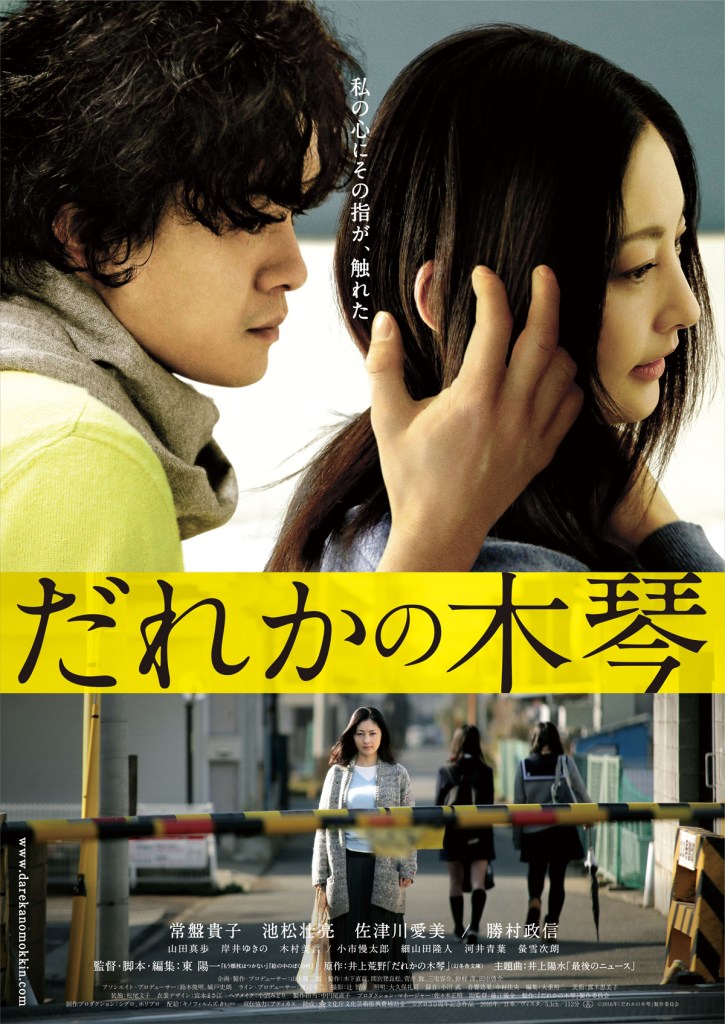 Yoichi Higashi has had a long and varied career, deliberately rejecting a particular style or home genre which is one reason he’s never become quite as well known internationally as some of his contemporaries. This slightly anonymous quality serves the veteran director well in his adaptation of Arane Inoue’s novel which takes a long hard look at those living lives of quiet desperation in modern Japan. Though sometimes filled with a strange sense of dread, the world of Someone’s Xylophone (だれかの木琴, Dareka no Mokkin) is a gentle and forgiving one in which people are basically good though driven to the brink by loneliness and disconnection.
 If there is a frequent criticism directed at the always bankable director Yoji Yamada, it’s that his approach is one which continues to value the past over the future. Recent years have seen him looking back, literally, in terms of both themes and style with remakes of films by two Japanese masters – Ozu in his Tokyo Story homage Tokyo Family, and Kon Ichikawa in Her Brother. While he chose to update both of those pieces for the modern day, 2008’s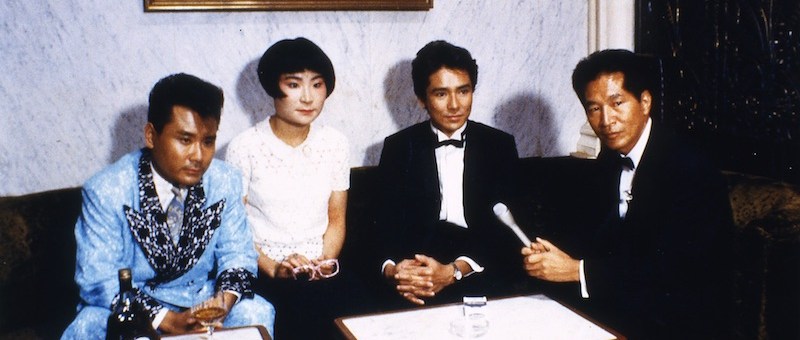
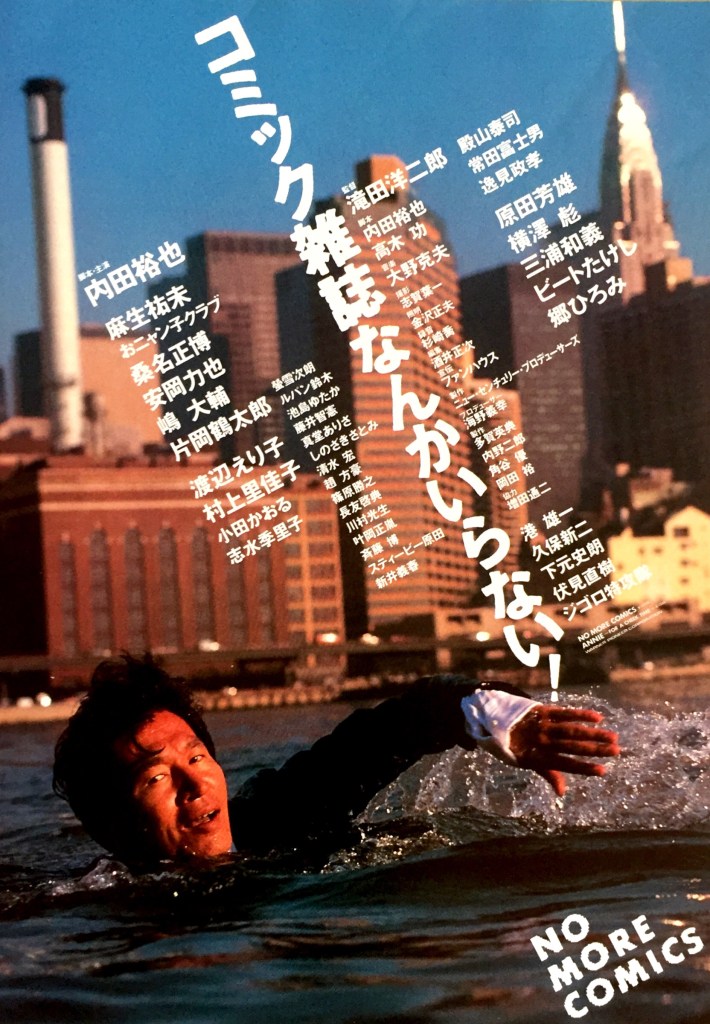 The word “paparazzo” might have been born with La Dolce Vita but the gossip hungry newshound has been with us since long before the invention of the camera. Yojiro Takita’s 1986 film No More Comics! (コミック雑誌なんかいらない, Komikku zasshi nanka iranai AKA Comic Magazine) proves that the media’s obsession with celebrity and “first on the scene” coverage is not a new phenomenon nor one which is likely to change any time soon.
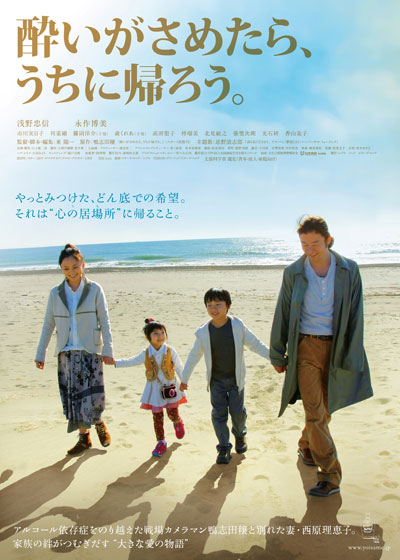 Alcoholism is not a theme which has exactly been absent from the history of cinema. From the booze drenched regret of Days of Wine and Roses to the melancholic inevitability of Leaving Las Vegas and the disdaining irony of Barfly, there has been no shortage of unsympathetic portrayals of drunkenness when it comes to the silver screen. Yoichi Higashi’s Wandering Home (酔いがさめたら、うちに帰ろう, Yoi Ga Sametara, Uchi Ni Kaerou) walks something of a middle road here as it embraces the classic “issue drama” mould but also aims for a naturalistic character study in adapting the true life memoirs of photojournalist Yutaka Kamoshida (husband of well known mangaka Reiko Saibara).
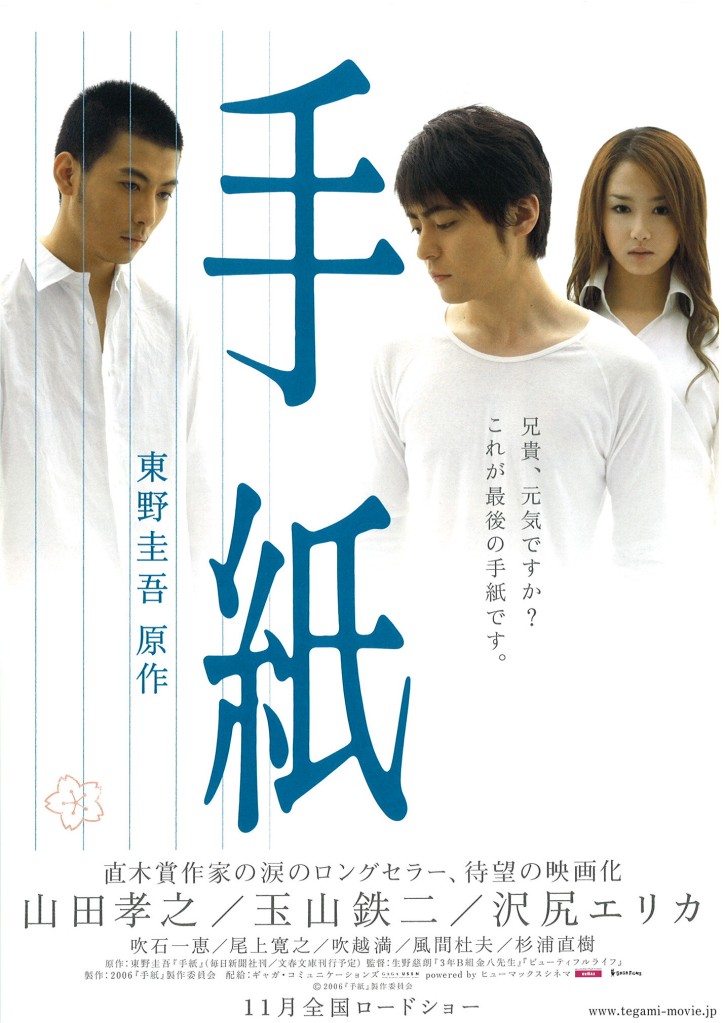 When it comes to cinematic adaptations of popular novelists, Keigo Higashino seems to have received more attention than most. Perhaps this is because he works in so many different genres from detective fiction (including his all powerful Galileo franchise) to family melodrama but it has to be said that his work manages to home in on the kind of films which have the potential to become a box office smash. The Letter (手紙, Tegami) finds him in the familiar territory of sentimental drama as its put upon protagonist battles unfairness and discrimination based on a set of rigid social codes.
 Windows on Worlds