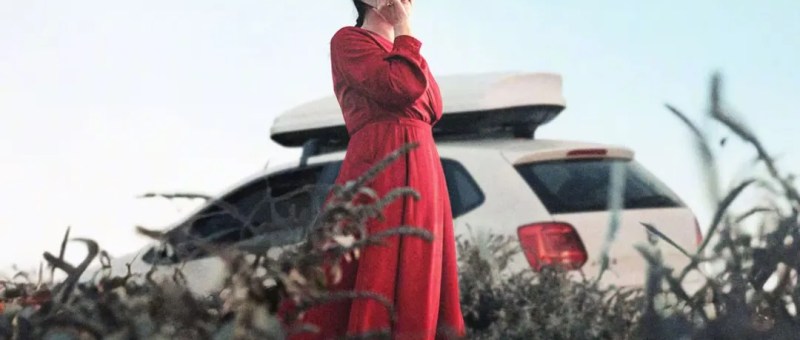
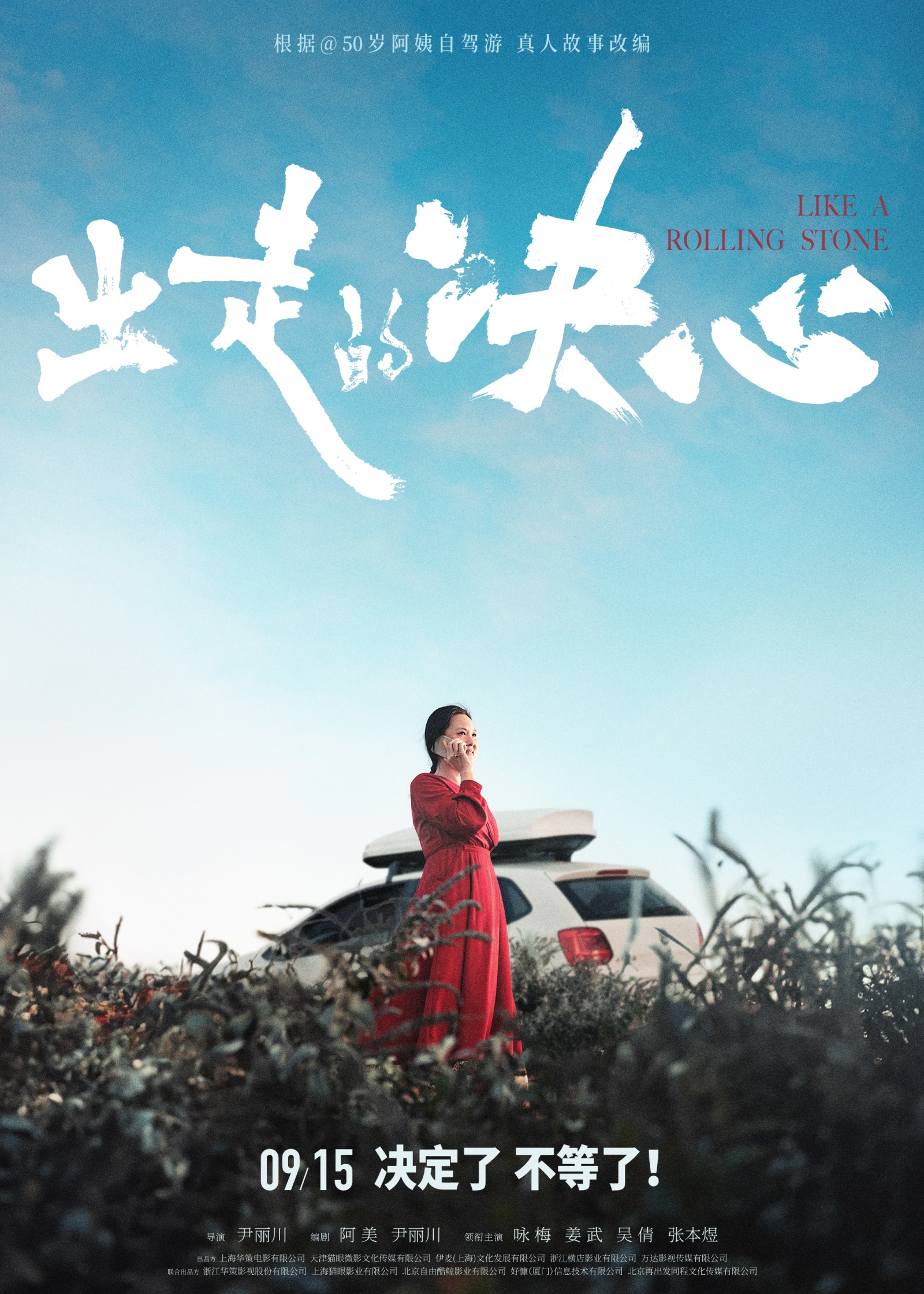
A middle-aged woman’s decision to walk out on her abusive marriage and pursue a life of ultimate freedom on the road went viral in 2022 making her an accidental feminist icon in an overwhelmingly traditionalist and patriarchal culture. Yin Lichuan’s dramatisation of Su Min’s life, Like a Rolling Stone (出走的决心, chūzǒu de juéxīn), makes plain the various ways in which her life has been shaped by patriarchal forces that also continue to shape that of her daughter who is sympathetic to her mother’s plight but also perhaps still feeling herself entitled to her mother’s sacrifice while wary of making such a sacrifice herself.
As she says, Hong (Yong Mei) has been waiting a long time. A flashback to 1982 finds her as a fresh-faced teenager with hopes and dreams who wanted to go to university and travel the world. But her father pulls her out of school and forces her to work in a factory to support the family while devoting all their resources to her brother. She marries Dayong (Jiang Wu) to get away from her father’s oppression, chasing another kind of freedom but soon finding herself disappointed. In the present day we can see that Dayong is cruel and abusive. He continually runs Hong down, calls her stupid and lazy, and becomes violent when challenged.
Hong has long wanted to leave but is prevented firstly by a sense of shame in going against conventional wisdom. When she’d tried to leave him before, her family refused to help her and in fact encouraged her to return to Dayong and put up with her mistreatment. Dayong had also frustrated her attempts to work so that she would have nowhere to go and no way of supporting herself if she left him while simultaneously taking advantage of her financially. The couple had separate finances since early in their marriage, but while Dayong doesn’t like Hong spending on things that make her happy, he often helps himself to her possessions declaring that everything belongs to the family.
But Hong bites her tongue and does as she’s told because that’s what she’s been taught she’s supposed to do. She’s sacrificed all of herself for her family and has even been working unpaid for her brother for over three years only to see him become surly when she eventually asks for her backpay. Her daughter, Xiaoxue (Wu Qian) resents her father for the way he’s treated Hong and is supportive of her liberation but at the same time she also over relies on her asking her to cancel a trip to see her old friends to be around during her pregnancy and then again when first loses and then gains a better job but is afraid to ask for time off in case it ruins her chances of being kept on.
Hong asks her own mother why she treats her the way she does and continues to prioritise her brother while telling her must allow herself to be exploited to serve the family but she doesn’t have an answer for her. There’s certainly a greater understanding between Hong and Xiaoxue about the patriarchal structures in which they are both trapped. When she loses her job, Xiaoxue’s husband encourages her to stay home with the children just as Dayong had discouraged Hong from looking for work. Xiaoxue wants a job to avoid her mother’s fate of becoming trapped within the domestic environment with no time for herself. While her husband seems nicer and treats her better than Dayong has treated Hong, he is not necessarily that much better and still operates on a patriarchal mindset. He praises women for being superhuman, but in doing so suggests that the domestic sphere is a woman’s concern alone. It does not seem to occur to him that he could do his fair share or that the division of their labour could be more equal.
Things may be better for Xiaoxue which was all that Hong wanted, but they are far from perfect and when push comes to shove she too just expects that her mother will sacrifice her own desires to suit Xiaoxue’s needs. Everyone keeps telling her to wait, but Hong waited to escape her father, to meet a “decent” man, for Xiaoxue to grow up, get married, and have children of her own, then for the children to start kindergarten. If she doesn’t leave now, there’ll be another reason why shouldn’t. There is something quite empowering about Hong’s gentle progression towards achieving her freedom beginning with getting her driving license in her 50s despite the misogynistic banter of the instructors. When she gets her car, Dayong immediately gets into the driver’s seat and it takes a little longer for her to assume her space, but as she says no one can stop her now. She won’t be bullied or belittled anymore, nor will she allow herself to be taken for granted or guilted into sacrificing herself for others who rarely sacrifice anything for her. One of a recent series of films addressing ongoing patriarchal oppression, Lin’s film is itself a way of fighting back against the idea that unhappiness is something you just have to accept as a woman as Hong begins living her best life out on the road, finally free and very much in the driving seat of her own life.
Like A Rolling Stone screened as part of the 19th edition of Asian Pop-Up Cinema.
Trailer (English subtitles)




 Windows on Worlds