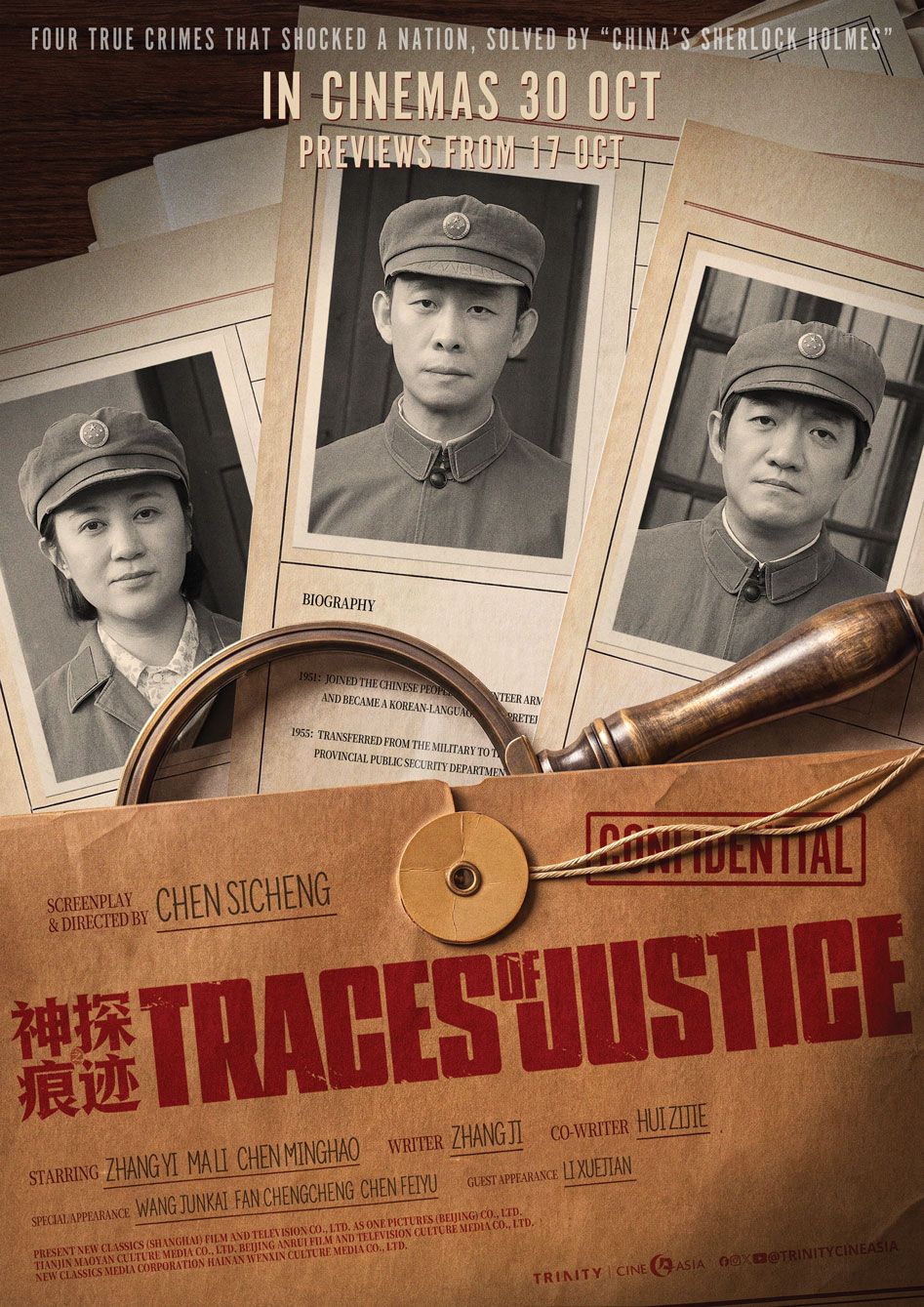
Traces of Justice (神探之痕迹, Chen Sicheng, 2026)

Best known for comedy including the incredibly popular Detective Chinatown series, actor/director Chen Sicheng has been in a more serious mood recently. Like 2024’s literary adaptation Decoded, Traces of Justice (神探之痕迹 shéntàn zhī hénjì) examines China’s 20th-century past but this time through the lens of forensics. Essentially a propaganda piece in praise of the scientific side of law enforcement, the film is in some ways surprising in its implications in hinting at the reasons why these crimes may have occurred along with difficulties of solving them which are often down to political realities.

In 2016, Cui Xun (Zhang Yi) prepares to accept a national honour for his contribution to police sciences while asked to consult on a serial killer case in which the police are struggling to find evidence to charge the suspect with the last remaining victim despite his confession. As evidence of law enforcement’s care for each and every citizen, the policeman in charge brushes off another’s insistence that they don’t need to charge him with the last case because the other 10 are watertight and enough to secure the death penalty. If they don’t officially link him to this case too, the little girl he killed and her family will not receive justice.

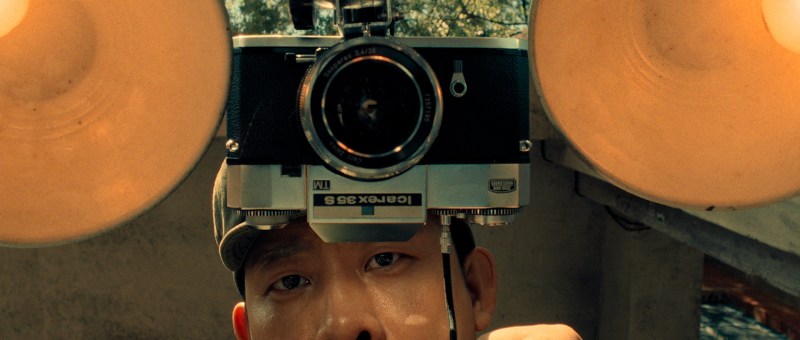
The serial killer case reminds Cui of one he investigated back in 1971 in which he pioneered dental indentations being used to identify suspects in the same way as fingerprints. 1971 is, of course, right in the middle of the Cultural Revolution and so Cui is hampered by persistent anti-intellectualism and distrust of science. The first thing he has to do is get his mentor out of a re-education camp, while a girl who narrowly escaped being caught by the killer was vulnerable in that she was currently living alone as both her parents had been “sent down”. The new local police squad leader, Wang (Chen Minghao), also gets in Cui’s way with his “old-fashioned” policing. His officers refuse to let forensics on site first and ruin the crime scene by stomping all over the evidence. One even triumphantly brings a nearby bicycle to dust for prints though his own hands have now been all over it, paying no heed to Cui’s rational response that they’ve no way of knowing if the bike even belonged to the killer.

By 1983, things are quite different. Wang no longer dresses in military uniform while Cui and his team have been given civilian outfits. Cui now has a sizeable team of assistants and students, while a school has been set up to teach modern forensics techniques. Wang secures the crime scene and grants access for the forensics team first. The issue this time around is the chaotic circumstances of the economic reforms. The prime suspect is a man with a rich and influential father who tries to frame a colleague as he had argued with the now murdered boss about black market profiteering. The suspect resents people mentioning the fact that he’s his father’s son, while simultaneously playing the rich kid card with the police by telling them they’re making a big mistake keeping him locked up. Cui is determined to use a broken fingernail found on one of the victims as an identification method, but again faces an uphill battle to have his ideas taken seriously.

One might think that these problems have then been resolved, but the 1998 sequence depicts much of the same anxiety as it begins to become clear that one of the men suspected of blowing up a bus was a disgruntled worker laid off amid the economic changes of the ’90s which saw many factories close. In an ironic touch, Cui’s investigation HQ is located in a disused factory. Like We’re Nothing At All which is inspired by the same incident, the film also suggests the two men involved were a romantic couple and that societal homophobia was a factor in their decision to end their lives.

Cui once again posits new methods of forensic investigation, but at the same time ends up alone with even his assistant leaving him to take up a position in Beijing. His dedication places a strain on his marriage as his wife, a doctor, is forced to pick up his slack given that he is often absent from the domestic space. Nevertheless, his contributions to science are well noted as is his legacy as “China’s Sherlock Holmes”. In some ways, the subtle implication is that the authorities will stop at nothing to catch wrongdoers, so the Chinese citizen is well protected, though this is, in other ways, a little oppressive in the “everything leaves a trace” messaging and may not reflect the reality of modern policing even if the film is surprisingly critical of law enforcement in places, depicting corruption and hinting at violence and forced confessions. Even so, it is at least keen to insist that the police force is a modern institution defined by science and rooted in forensics rather an irrational “gut feeling” or prejudice. Meanwhile, there is also something comforting in the idea that we all leave traces of ourselves in the world when we are gone that transcends a noirish sense of fatalism to become something richer and warmer in the positive impact our lives can have on those around us in whom we live on.


International Trailer (English subtitles)
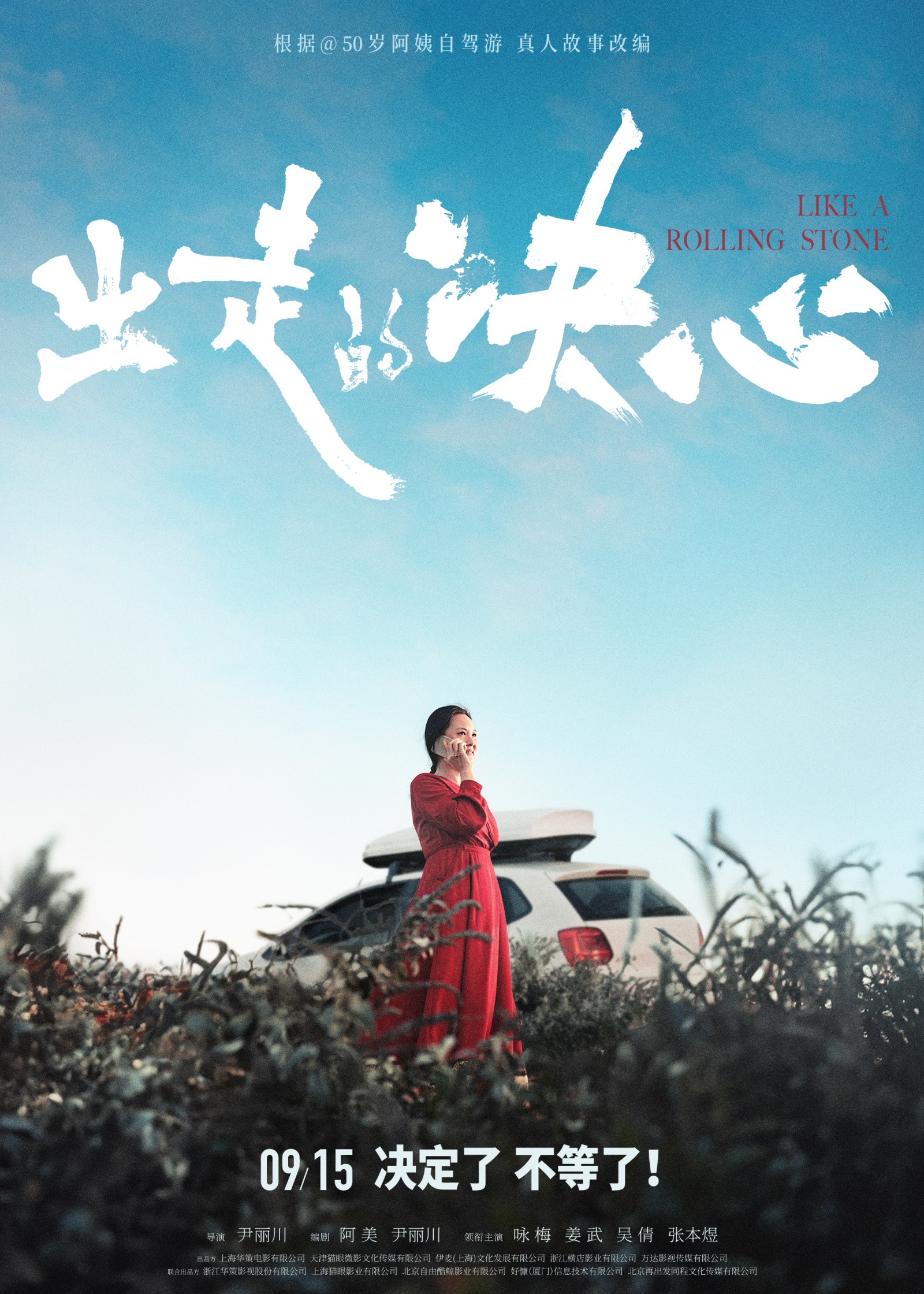
Like A Rolling Stone (出走的决心, Yin Lichuan, 2024)

A middle-aged woman’s decision to walk out on her abusive marriage and pursue a life of ultimate freedom on the road went viral in 2022 making her an accidental feminist icon in an overwhelmingly traditionalist and patriarchal culture. Yin Lichuan’s dramatisation of Su Min’s life, Like a Rolling Stone (出走的决心, chūzǒu de juéxīn), makes plain the various ways in which her life has been shaped by patriarchal forces that also continue to shape that of her daughter who is sympathetic to her mother’s plight but also perhaps still feeling herself entitled to her mother’s sacrifice while wary of making such a sacrifice herself.

As she says, Hong (Yong Mei) has been waiting a long time. A flashback to 1982 finds her as a fresh-faced teenager with hopes and dreams who wanted to go to university and travel the world. But her father pulls her out of school and forces her to work in a factory to support the family while devoting all their resources to her brother. She marries Dayong (Jiang Wu) to get away from her father’s oppression, chasing another kind of freedom but soon finding herself disappointed. In the present day we can see that Dayong is cruel and abusive. He continually runs Hong down, calls her stupid and lazy, and becomes violent when challenged. 

Hong has long wanted to leave but is prevented firstly by a sense of shame in going against conventional wisdom. When she’d tried to leave him before, her family refused to help her and in fact encouraged her to return to Dayong and put up with her mistreatment. Dayong had also frustrated her attempts to work so that she would have nowhere to go and no way of supporting herself if she left him while simultaneously taking advantage of her financially. The couple had separate finances since early in their marriage, but while Dayong doesn’t like Hong spending on things that make her happy, he often helps himself to her possessions declaring that everything belongs to the family. 

But Hong bites her tongue and does as she’s told because that’s what she’s been taught she’s supposed to do. She’s sacrificed all of herself for her family and has even been working unpaid for her brother for over three years only to see him become surly when she eventually asks for her backpay. Her daughter, Xiaoxue (Wu Qian) resents her father for the way he’s treated Hong and is supportive of her liberation but at the same time she also over relies on her asking her to cancel a trip to see her old friends to be around during her pregnancy and then again when first loses and then gains a better job but is afraid to ask for time off in case it ruins her chances of being kept on.

Hong asks her own mother why she treats her the way she does and continues to prioritise her brother while telling her must allow herself to be exploited to serve the family but she doesn’t have an answer for her. There’s certainly a greater understanding between Hong and Xiaoxue about the patriarchal structures in which they are both trapped. When she loses her job, Xiaoxue’s husband encourages her to stay home with the children just as Dayong had discouraged Hong from looking for work. Xiaoxue wants a job to avoid her mother’s fate of becoming trapped within the domestic environment with no time for herself. While her husband seems nicer and treats her better than Dayong has treated Hong, he is not necessarily that much better and still operates on a patriarchal mindset. He praises women for being superhuman, but in doing so suggests that the domestic sphere is a woman’s concern alone. It does not seem to occur to him that he could do his fair share or that the division of their labour could be more equal. 

Things may be better for Xiaoxue which was all that Hong wanted, but they are far from perfect and when push comes to shove she too just expects that her mother will sacrifice her own desires to suit Xiaoxue’s needs. Everyone keeps telling her to wait, but Hong waited to escape her father, to meet a “decent” man, for Xiaoxue to grow up, get married, and have children of her own, then for the children to start kindergarten. If she doesn’t leave now, there’ll be another reason why shouldn’t. There is something quite empowering about Hong’s gentle progression towards achieving her freedom beginning with getting her driving license in her 50s despite the misogynistic banter of the instructors. When she gets her car, Dayong immediately gets into the driver’s seat and it takes a little longer for her to assume her space, but as she says no one can stop her now. She won’t be bullied or belittled anymore, nor will she allow herself to be taken for granted or guilted into sacrificing herself for others who rarely sacrifice anything for her. One of a recent series of films addressing ongoing patriarchal oppression, Lin’s film is itself a way of fighting back against the idea that unhappiness is something you just have to accept as a woman as Hong begins living her best life out on the road, finally free and very much in the driving seat of her own life.


Like A Rolling Stone screened as part of the 19th edition of Asian Pop-Up Cinema.

Trailer (English subtitles)