The Little House (小さいおうち, Yoji Yamada, 2014)

the-little-houseIf there is a frequent criticism directed at the always bankable director Yoji Yamada, it’s that his approach is one which continues to value the past over the future. Recent years have seen him looking back, literally, in terms of both themes and style with remakes of films by two Japanese masters – Ozu in his Tokyo Story homage Tokyo Family, and Kon Ichikawa in Her Brother. While he chose to update both of those pieces for the modern day, 2008’s Kabei sent him back to the traumatic years of militarism and warfare for a story of maternal sacrifice and national tragedy. The Little House (小さいおうち, Chiisai Ouchi) brings this recent meandering around the past full circle with its deliberately Ozu-esque aesthetic and flashback tale of atonement as one woman leaves the truth she could never bear to speak on paper as a last dying confession.

After the death of his great-aunt Taki (Chieko Baisho), who never married and has no other family besides himself, his sister, and father, Takeshi (Satoshi Tsumabuki) discovers a biscuit box with his name on it filled with keepsakes and the conclusion of a kind of autobiography he’d been encouraging Taki to write in the last few months of her life. Cutting back and forth between the contemporary interactions of the older Taki and her great-nephew, and the younger Taki’s (Haru Kuroki) life as a Tokyo maid from the mid-1930s to the end of the war, The Little House takes its cues from The Go Between as an innocent bystander becomes the unwilling guardian of a secret the holding of which will prove to be a lifelong burden.

An 18 year old girl in 1935 from a poor family in Japan’s frozen North, Taki’s options are few – early marriage, geisha house, or maid. All things considered, maid is the best option and Taki is thrilled to be travelling to the big city with all of its untold excitements. After a spell working for a famous novelist, Taki becomes the housekeeper of the “Little House” – a curiously cute Western style cottage with a bright red roof out in the suburbs. Her mistress, Tokiko (Takako Matsu), is an oddly flighty woman, fiercely independent of spirit but living within the confines of her time. Crisis approaches the family not with the onset of war but with the arrival of Mr. Hirai’s sensitive, artistic, colleague, Shoji (Hidetaka Yoshioka), whose softly spoken ways quickly find their way into Tokiko’s heart.

In fact, The Little House, is not a million miles away from an expansion of a similar narrative device previously employed in Kabei but this time Tokiko is no pillar of strength, singlehandedly upholding the traditionally saintly virtues of the Japanese mother but a flesh and blood woman caught in the storm of a turbulent era. Taki becomes our passive observer as she sits, almost invisibly, in the corner of every scene, unwilling chaperone or accidental accomplice. As she witnesses the growing attraction between Tokiko and Shoji begin to spark into something more dangerous she finds herself conflicted, not knowing the best way to help her mistress. Should Tokiko be discovered, it wouldn’t just be a scandal leading to the end of a marriage, but considering the stringency of the times the outcome could be far more serious for all concerned.

When Takeshi eventually meets Tokiko’s son Kyoichi (Masakane Yonekura), he echoes many of the older Taki’s sentiments but adds that it was an era in which everyone was “forced to make an unwilling choice”. Taki finds herself forced to choose between action and inaction and does something she thinks is for the best, but is then forced to live with the suffering of wondering if she did the right thing.

The film does not seem entirely clear on her motives for her choice – it half commits to a possible love triangle between Taki, Tokiko, and Shoji by emphasising Taki and Shoji’s shared Northern roots and by Shoji’s subsequent inclusion of both women in his artwork. Taki, however, seems to be looking more to her mistress than her suitor, wanting nothing other than to stay in the Little House with Tokiko and Kyoichi for evermore. A later scene featuring a “mannish” university friend of Tokiko seems to reinforce the directions of Taki’s unspoken desire, though if her declaration of loyalty to the Little House following a disastrous marriage proposal was intended to voice it, it falls on deaf ears.

This being the case, Taki and Shoji become almost mirrors of each other – each somehow on pause, still living inside the Little House long after it ceased to exist. The loss of the Little House is not just the destruction of a building but the obliteration of everything it stood for, not only in terms of Taki’s investment in the family who live there, but in its evocation of early Showa dreams, individuality and innocence.

As the well educated Takeshi points out, Taki’s memories are often too rosy to tally with the history books, but even given the grimness of the times as they seem in hindsight, she has a right to the romanticism of her youth. The increasingly difficult political circumstances rarely impinge on the female centred domestic environment, but are made felt firstly through the husband’s toy business which begins by chasing the Chinese market and then is reduced to making wooden toys only and trying to marry off its eligible employees to woo more investment, and through the family’s excitement about the upcoming Tokyo Olympic games which are subsequently canceled. Tokiko’s later exclamation of “Isn’t it awful everything’s disappearing” does not just refer to the sudden absence of luxury from soaps to previously ordinary foodstuffs, but to her whole bourgeois way of life suddenly brought crashing down by a series of events she has no control over.

Yamada channels Ozu with initially distracting obviousness both in the contemporary and period sequences, matching his famous compositions from the straight to camera dialogue to the mid level tatami mat view and propensity for shooting through corridors and doorways. The world of the Little House is a curiously artificial one as Yamada shoots on an obvious stage set complete with tiny twinkling lights for stars which both looks forward to the artwork at the film’s conclusion and signals its nature as an unreal, constructed, environment existing only within Taki’s memory. Were it not that the Ozu compositions creep into the contemporary sequences, it could almost be read as a representation of Takeshi’s internal dramatisation of Taki’s memoirs as mediated through classic cinema.

The Little House is, indeed, resolutely old fashioned. Far too subtle for its own good, The Little House is an exercise in restraint in which the central love triangle never even hits the simmer, let alone the boil. Given the well trodden nature of the narrative, even the most inattentive viewer will have correctly guessed the big reveal well before Takeshi puts two and two together, rendering the final explanatory segment entirely redundant. Never quite as affecting as it would like to be, The Little House is a muted experience, perpetually pulling back each time it approaches doing something more interesting with its material. Nevertheless, it does provide an interesting perspective on its period setting as its collection of tragically romantic heroes march forward blindly into a maelstrom of oncoming destruction.


HK trailer (English/traditional Chinese subs)
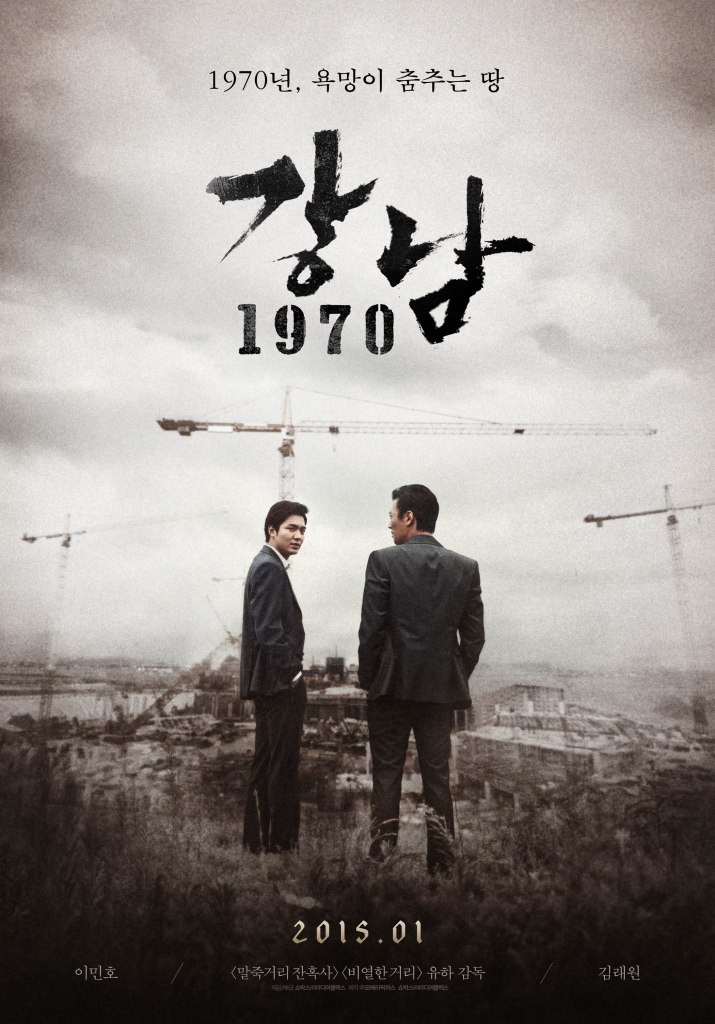
Gangnam Blues (강남 1970, Yoo Ha, 2015)

gangnam-bluesYoo ha takes us back to the 1970s for some Gangnam Blues (강남 1970, Gangnam 1970) in a sorry tale of fatherless men caught up in dangerous times of ambition and avarice, very much at the bottom of the heap and about to be eclipsed by the “new world” currently under construction. Back then, Gangnam really was all just fields, owned by farmers soon to be cheated out of their ancestral lands by enterprising gangsters engaged in a complicated series of land grab manoeuvres, anticipating the eventual expansion of the bursting at the seams capital. Far from the shining city of today, Gangnam was a wasteland frontier town, the sort of place where a man can make a name for himself trading on his wits and his fists alone.
In 1970, Jong-dae (Lee Min-ho) and Yong-ki (Kim Rae-won), sworn brothers from the same orphanage, are two street rats trying to survive in straightened times. When the shack they were squatting in is demolished and they come in to contact with a petty gangster, Kang (Jung Jin-young), the pair end up getting a one off job as thugs sent to smash up a political rally but get separated when the police arrive. Jong-dae finds himself taken in by Kang and his daughter Seon-hye (Kim Seol-hyun AKA Seolhyun) as a surrogate son and brother, repaying their affection by saving Kang’s life during an assassination attempt which later prompts his decision to retire from the criminal world altogether. Yong-ki joins the rival gang instead and seems to be making a success of himself but both find themselves at the mercy of an increasingly corrupt, dishonourable system hellbent on progress but only for the few.

Gangnam Blues has an overly complex, intricate narrative overlaying the generic brotherhood and betrayal theme that runs through the film. Dipping into a particularly dark period of history, Yoo is not afraid to step back into those difficult days marked by both rapid progress and increasing inequality furthered by complicated systems of interconnected corruption. The gangsters are at the service of the politicians but it’s always debatable who is running the show. Jong-dae’s participation in the land grab scheme is painted as amusing cleverness (at least at first) but little attention is paid to the farmers who are being “convinced” to sell their land off cheaply to gangsters who are each competing for the prime sections. Modern day Gangnam was built on blood and extortion, by men like Jong-dae and Yong-ki, even in the knowledge that they will be discarded as soon as their usefulness has been exhausted.

Jong-dae and Yong-ki are the bottom of the pile, orphaned and without family connections they have only each other to rely on yet their brotherly bond is repeatedly tested. The ‘70s Philippine folk song, Anak by Freddie Aguilar, which forms the film’s major musical motif has some very poignant lyrics about parents and their children but neither Jong-dae nor Yong-ki are able to find the kind of family they’re looking for. Both end up opting for the fraternal bond of a crime syndicate to replicate the kind of support usually offered by the family unit with Jong-dae finding a father figure in Kang who eventually takes him into his household as a son outside of the criminal world, and Yong-ki eventually marrying and soon to become a father himself. Forced into crime by their poverty, each becomes an outcast, permanently shut out from the thing they most want even whilst living a life of material comfort.

Yoo opts for a highly stylised approach filled with beautifully photographed, expertly choreographed scenes of violence including the traditional mass brawl in the rain, and a sequence of intercut killings each artfully sprayed with blood. Lee Min-ho acquits himself well enough in his first leading role as the noble hearted gangster Jong-dae with quality support from Kim Rae-won as the much less noble Yong-ki though the superfluity of secondary characters leads to an avoidable lack of depth. Relative newcomer Kim Seoul-hyun also does well with her underwritten role of the film’s most tragic character even if her domestic violence themed subplot seems like one too many. Another classic slice of gangster action from Korea, Gangnam Blues is an unflinching look back at a difficult era with uncanny echoes of the present day, and a suitably period tinged tale of melancholy ‘70s bleakness in which brotherhood and honour are merely words misused by men trying to justify their own ambitions.


International trailer (English subtitles)

Freddie Aguilar’s Anak as featured in the film:

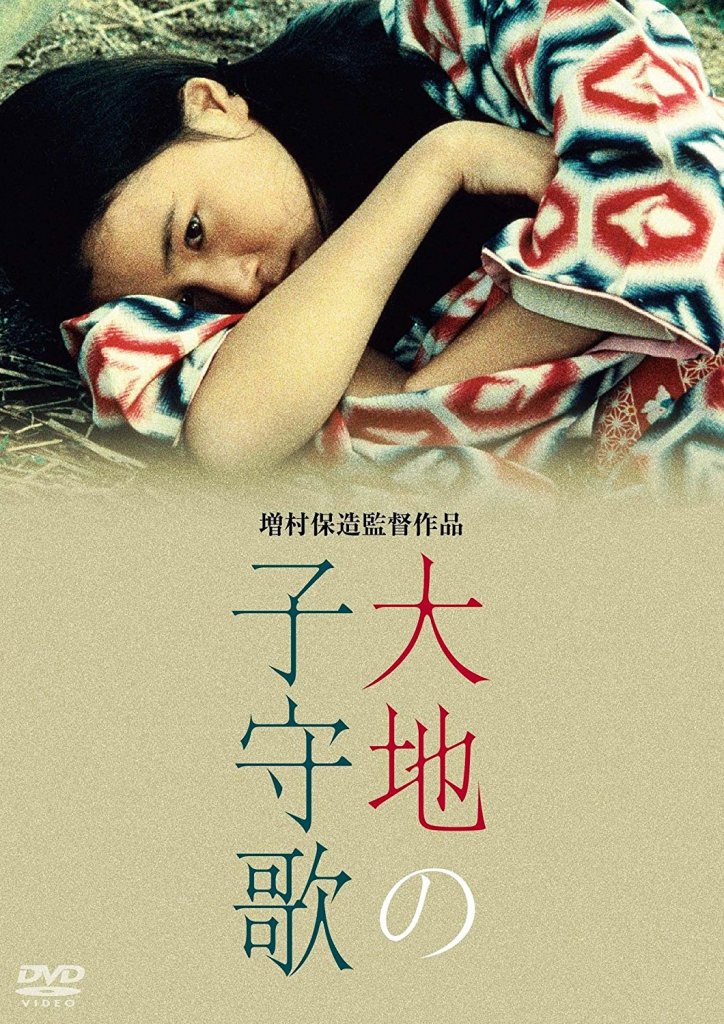
Lullaby of the Earth (大地の子守歌, Yasuzo Masumura, 1976)

lullaby-of-the-earthYasuzo Masumura is best remembered for his deliberately transgressive, often shockingly grotesque critiques of Japanese society and its conformist overtones. Lullaby of the Earth (大地の子守歌, Daichi no Komoriuta) is one of his few completely independent features, filmed after the bankruptcy of Daiei where Masumura had spent the bulk of his early years. As such, it is quite an exception in terms of his wider career both in terms of its production and in its earthy, spiritual themes. Adapted from the 1974 novel by Kukiko Moto, Lullaby of the Earth is the story of an abandoned and betrayed woman but one who also draws her strength from the Earth itself.
13 year old Rin (Mieko Harada) has been living with her adopted grandmother in a remote mountain community. Returning home one day triumphantly carrying a rabbit for dinner, Rin discovers that her grandmother has passed away. Being just a child and now alone and frightened, Rin does not know what to do and later receives harsh treatment from the villagers from whom she temporarily conceals her grandmother’s death. With no one to look after her, Rin is approached by a kind seeming man in Western dress who offers her a good job on a nearby island which, he says, pays well and offers a much better quality of life than Rin’s current survivalist setup in the mountains. Rin has heard tales of men like him before and is not taken in by his arguments, even when he suggests she could use the money to buy a proper grave for her grandmother. She is, however, caught when he mentions taking her to see the sea – something she has been longing for for most of her life.

However, Rin’s pure joy at the waves and endless horizons of the shoreline is short lived when reality hits home and she realises she has been sold to a brothel. The brothel owners are not a bad sort, considering, and intend on using her as a servant until she comes of age but Rin is not having any of it. Refusing to eat, work, or wear her new clothes, Rin is proving to be a very bad investment but changes her tune when she strikes up a friendship with a girl who works at a local store who convinces her that her rebellion is misplaced. Work hard and pay off your debt, she says, and they’ll let you go home. Rin decides to do just that, and with her characteristic energy, but her journey home is not to be such a straight forward experience.

Lullaby of the Earth maybe unusual in Masumura’s filmography due its period setting and gentler, more spiritually orientated progression but Rin is, in many ways, a typical Masumura heroine. A true child of nature, Rin is athletic, at home in the forests and woods trapping rabbits and building fires. Her downfall is brought about precisely because of her desire for total freedom. Longing to see the sea with all of the freedom and possibilities that it suggests, Rin allows herself to be taken in by the false promises of a procurer (presumably alerted by a less than helpful villager), little knowing that she’s damned herself for a period of at least three years.

Made to suffer numerous degradations from the humiliation of her servitude, to a beating that leaves her half dead and her final forced prostitution, Rin maintains her resistance in whichever way she can. Striving for control, Rin takes on a masculine quality defined by strength and agility rather than elegance and beauty. Once again longing for the sea, Rin begs to be allowed to row the boat that takes the girls out to find business from passing ships. “If you take my oar you’ll be in trouble” she later exclaims, clinging to her source of male power even whilst being forced into the gaudy brothel kimono. Displaying her own ability for active choice even within her controlled environment, Rin takes the scissors to her own hair, cutting it short like a man’s.

Given the chance to escape the brothel for a comfortable life as the mistress of a wealthy man, Rin refuses. A decision which seems bizarre to many of the other girls, but Rin will have her freedom back in its entirety – she will not swap one cage for another as the prized possession of a some other authority. Meeting a man who claims he may be able to help her, Rin starts working overtime to save the money to escape with the consequence that her health suffers, leading to almost total blindness followed by listless depression. Only at this point does her inner fire start to waver, but it is never extinguished allowing her to finally make a break for it even if she literally cannot see where she is headed.

Rin’s guiding voices come from the Earth itself as mediated by the kindly internal presence of her grandmother. The soil is sacred, as her grandmother told her. Rub soil into your wounds and you’ll soon be healed. In times of trouble, lie against the Earth’s surface and you will know what to do. Rin wants to find the way back to her mountain, but it may no longer exist for her. Nevertheless, the Earth itself is singing and will tell her where to go, so long as she can find the strength to listen.

Masumura begins the film with Rin at prayer, dressed in the white clothes of a pilgrim and dutifully following the temple paths around the island of Shikoku. Suffering a final PTSD flashback of all she’s suffered since her grandmother’s passing, Rin is once again comforted by the sounds of the Earth, beginning with her grandmother’s voice to which more are slowly added, cheering her on with chorus of support as she walks towards the end of her journey. A wonderful, early leading performance for Mieko Harada, Lullaby of the Earth is a far more new age exercise than Masumura’s generally cynical approach to human spirituality would usually allow but neatly tallies with his primary concerns in its heroine’s eternal quest for her own autonomy, body and soul, as she traverses a cold and unforgiving world.


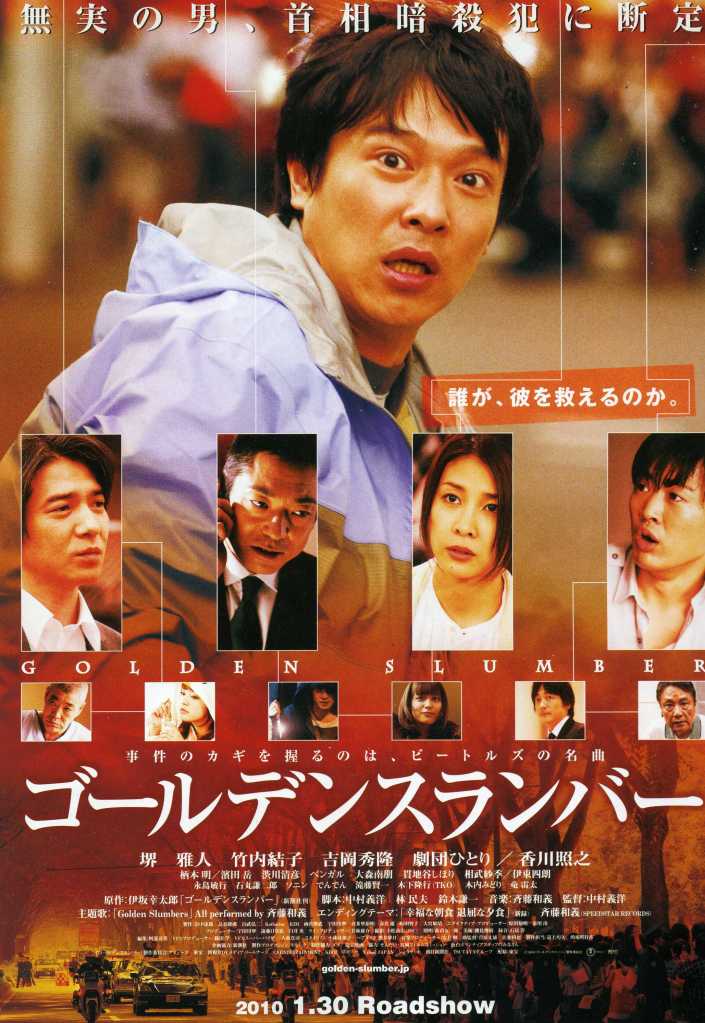
Golden Slumber (ゴールデンスランバー, Yoshihiro Nakamura, 2010)

golden-slumberYoshihiro Nakamura has made a name for himself as a master of fiendishly intricate, warm and quirky mysteries in which seemingly random events each radiate out from a single interconnected focus point. Golden Slumber (ゴールデンスランバー), like The Foreign Duck, the Native Duck and God in a Coin Locker, and Fish Story, is based on a novel by Kotaro Isaka and shares something of the same structure but is far less interested in the mystery itself rather than the man who finds himself caught up in it.

30 year old delivery driver Aoyagi (Masato Sakai) is all set for a nice day out fishing with an old college buddy, Morita (Hidetaka Yoshioka), but he’s about to discover that it’s he’s been hooked and reeled in as the patsy in someone else’s elaborate assassination plot. After grabbing some fast food, Morita takes Aoyagi to a parked car near the closed off area through which the Prime Minster is due to be paraded in an open topped car. Waking up after a brief period of drug induced sedation, Aoyagi is made aware that this has all been a trick – badly in debt thanks to his wife’s pachinko addiction, Morita has betrayed him to a set of undisclosed bad guys with unclear motives and is taking this brief opportunity to give him as much warning as he can. Sure enough, a bomb goes off at the parade and Aoyagi just manages to escape before Morita too is the victim of an explosion.

Aoyagi is now very confused and on the run. Inexplicably, the police seem to have CCTV footage of him in places he’s never been and doing things he’s never done. If he’s going to survive any of this, he’s going to need some help but caught between old friends and new, trust has just become his most valuable commodity.

At heart, Golden Slumber is a classic Wrong Man narrative yet it refuses to follow the well trodden formula in that it isn’t so much interested in restoring the protagonist to his former life unblemished as it is in giving him a new one. The well known Beatles song Golden Slumber which runs throughout the film plays into its neatly nostalgic atmosphere as each of the now 30 year old college friends find themselves looking back into those care free, joyous days before of the enormity of their adult responsibilities took hold. That is to say, aside from Aoyagi himself who seems to have been muddling along amiably before all of this happened to him, unmarried and working a dead end delivery job.

As Morita tells him in the car, it’s all about image. The nature of the conspiracy and the identity of the perpetrators is not the main the main thrust of the film, but the only possible motive suggested for why Aoyagi has been chosen stems back to his unexpected fifteen minutes of fame two years previously when he saved a pop idol from an intruder with a nifty judo move (taught to him by Morita in uni) after fortuitously arriving with a delivery. Those behind the conspiracy intend to harness his still vaguely current profile to grab even more media attention with a local hero turned national villain spin. The Prime Minister, it seems, was a constantly controversial, extreme right wing demagogue with a tendency for making off the cuff offensive statements so there are those who’d rather congratulate Aoyagi than bring him to justice, but anyone who’s ever met him knows none of this can really be true despite the overwhelming video evidence.

Throughout his long odyssey looking for “the way back home” as the song puts it, Aoyagi begins to remember relevant episodes from his life which may feed back into his current circumstances. Although it seems as if Aoyagi had not seen Morita in some time (he knew nothing of his family circumstances, for example) his college friends with whom he wasted time “reviewing” junk food restaurants and chatting about conspiracy theories are still the most important people in his life. Not least among them is former girlfriend Haruko (Yuko Takeuchi), now married and the mother of a little daughter, who seems to still be carrying a torch for her old flame and is willing to go to great lengths to help him in his current predicament.

The film seems mixed on whether these hazy college days are the “golden slumber”, a beautiful dream time enhanced by memory to which it is not possible to return, or whether it refers to Aoyagi’s post college life which impinges on the narrative only slightly when he asks an unreliable colleague for help, aside from an accidental moment of heroic celebrity. It could even refer to the film’s conclusion which, departing from the genre norms, resolves almost nothing save for the hero’s neat evasion of the trap (aided by the vexed conspirators who eventually opt for a plan B). Once there might have been a road home – a way back to the past and the renewing of old friendships, but this road seems closed now, severed by the new beginning promised to Aoyagi who has been robbed of his entire identity and all but the memory of his past. Whether this means that the golden slumber has ended and Aoyagi, along with each of the other nostalgia bound protagonists, must now wake up and start living the life he’s been given, or that the old Aoyagi has been consigned to the realm of golden slumbers, may be a matter for debate.

Though the resolution may appear ultimately unsatisfying, the preceding events provide just enough interconnected absurdity to guide it through. During his long journey, Aoyagi is aided not just by his old friends but new ones too including a very strange young serial killer (Gaku Hamada) and a hospital malingerer with one foot in the “underworld” (Akira Emoto). It speaks to Aoyagi’s character that all of those who know him trust him implicitly and are ready to help without even being asked (even if they occasionally waver under pressure), and even those who are meeting him for the first time are compelled to come to his defence.  An elliptical, roundabout tale of the weight of nostalgia and inescapability of regret, Golden Slumber is the story of a man on the run from his future which eventually becomes a net he cannot escape.


Original trailer (English subtitles – select via menu)