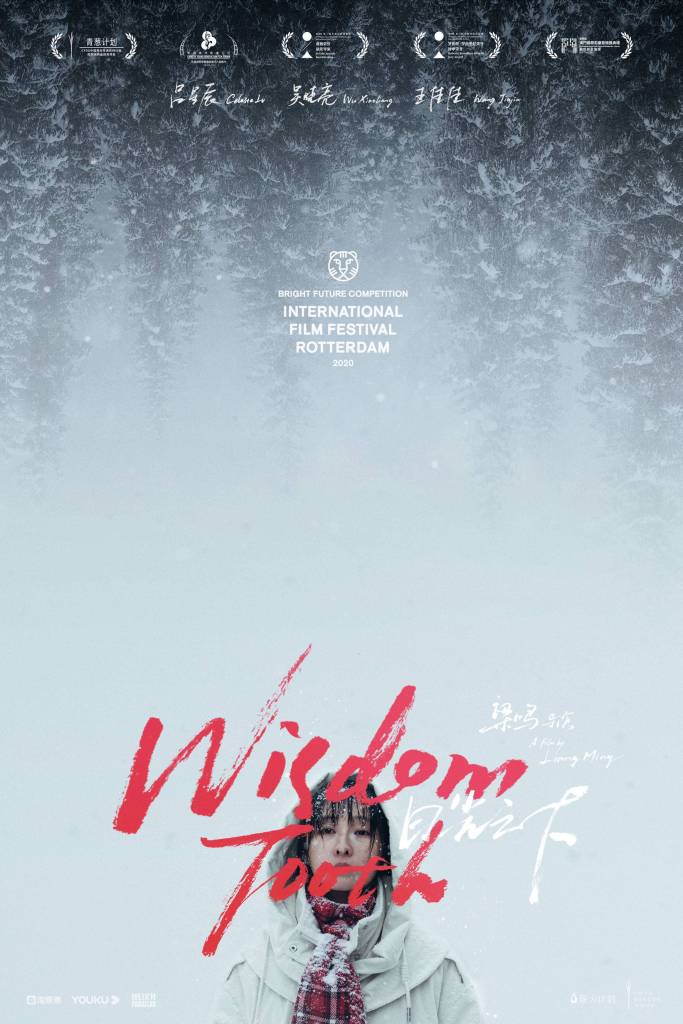
Wisdom Tooth (日光之下, Liang Ming, 2019)

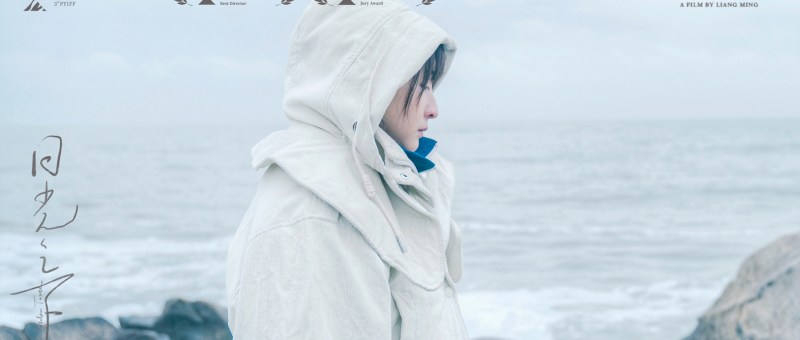
A young woman rides the waves of changing times in Liang Ming’s Wisdom Tooth (日光之下, Rìguāng Zhīxià). Perhaps innocence is something slightly painful you’re better off without, but awakening to life’s light and shade can be a difficult process. Gu Xi (Celeste Lv) is suffering with a dull ache in her jaw and the solution is, apparently, merely pain killers but you can only numb yourself so long before you have to make a choice of whether to go on living with the pain, or free yourself from it. 

A young, if slightly immature woman, Gu Xi has a job in a local hotel and lives alone with her half-brother, Gu Liang (Wu Xiaoliang), who, until recently, has eked out a living as a fisherman. A recent oil spill revealed to have occurred some time ago but covered up by the authorities has put paid to that, while Xi also finds her job under threat because she has an undocumented status and there is shortly to be some kind of inspection. Having grown up without a mother and entirely ignorant of who her father might have been, Xi feels acutely anxious about her circumstances and is dependent on Liang for a sense of security. It is therefore unsettling for her when he develops an interest in the sophisticated Qingchang (Wang Jiajia), daughter of local mob boss Zhou (Chen Yongzhong) and a recent returnee from South Korea where she had been living with her mother. 

A mirror image of Xi, Qingchang is everything she she’s not. Xi is well known for wearing her brother’s clothes, dressing like a tomboy for reasons that are a combination of poverty and affection, where Qingchang has wardrobes full of the latest fashions brought back with her from overseas including a beautifully crafted Hanbok featuring an elaborate embroidered design. As much as she’s resentful and intimidated, Xi can’t help admiring the slightly older woman, captivated by her sense of self assuredness, and eventually develops a sisterly bond with her even while fearing that she may steal her brother away. 

A further intrusion, however, disrupts their tentative familial bonding. A fisherman found dead and floating on the sea hints at a burgeoning turf war between local bosses Zhou, Qingchang’s father and Liang’s employer now that he’s taken a job as a security guard at the docks, and Jiang (Tao Hai), a melancholy Christian who owns the hotel where Xi had been working. Though warned by others that Jiang seemed “creepy”, Xi feels indebted to him because her job at the hotel was saved after she approached him to intervene. Her habit of recording the conversations around her to listen to later presents her with a problem when she discovers that Zhou may have bumped off the fisherman himself and is planning to frame Jiang for the crime. Jiang, it seems is also receiving protection money to ensure the fishermen’s safety, apparently a promise he wasn’t able to keep. Xi is pulled three ways. She loses confidence in Qingchang who is now both tainted by association and a figure of mild discomfort, while fearful that if she reveals what she knows, serves justice and repays a debt by clearing Jiang, she will ruin her brother’s happiness and risk his rejection. 

Trapped in he realms of childhood, what she most wants is to preserve her status quo. Liang is everything to her – brother, father, and somewhat uncomfortably a figure of romantic impossibility. Her feelings towards Qingchang are mired in complexity, a nascent attraction perhaps underlying her sense of jealousy either misdirected through her complicated feelings for her brother or simply finding its anchor for the first time. An angry speech at her brother’s birthday party during which she inappropriately reads out a semi-explicit passage from a lesbian novel hints at an attempt to resolve an attraction she feels is taboo, though it is unclear for whom it is directed. As with most young people, she must come to an accommodation with the fact that her world is changing. A childhood promise that she and her brother would never marry, preserving their family of two forevermore, was always unrealistic but she struggles to let go of the idea of permanence in a childish sense of familial security. Like the oil polluting the seas, her world is coloured by uncertainties but like anyone else she discovers that her agency is limited and whatever choice she makes others will make their choices too. That dull ache in her jaw is a reflection of the ills of the world around her, an inconvenient tooth that needs to be plucked out and discarded leaving only the cold comfort of adult wisdom behind in its place. 


Wisdom Tooth screens on March 11/14 as part of this year’s Osaka Asian Film Festival.
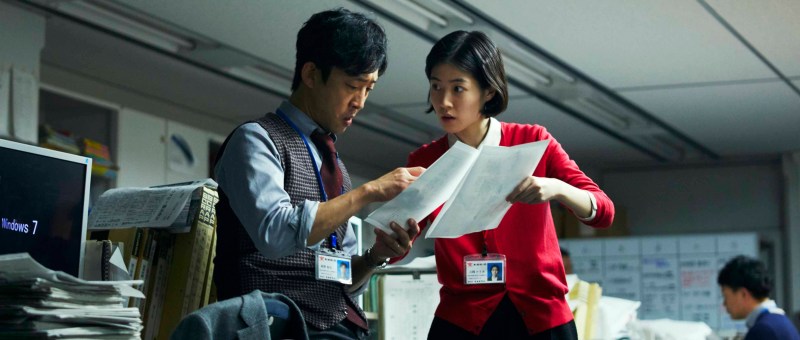
Japan Academy Prize Announces Winners for 43rd Edition

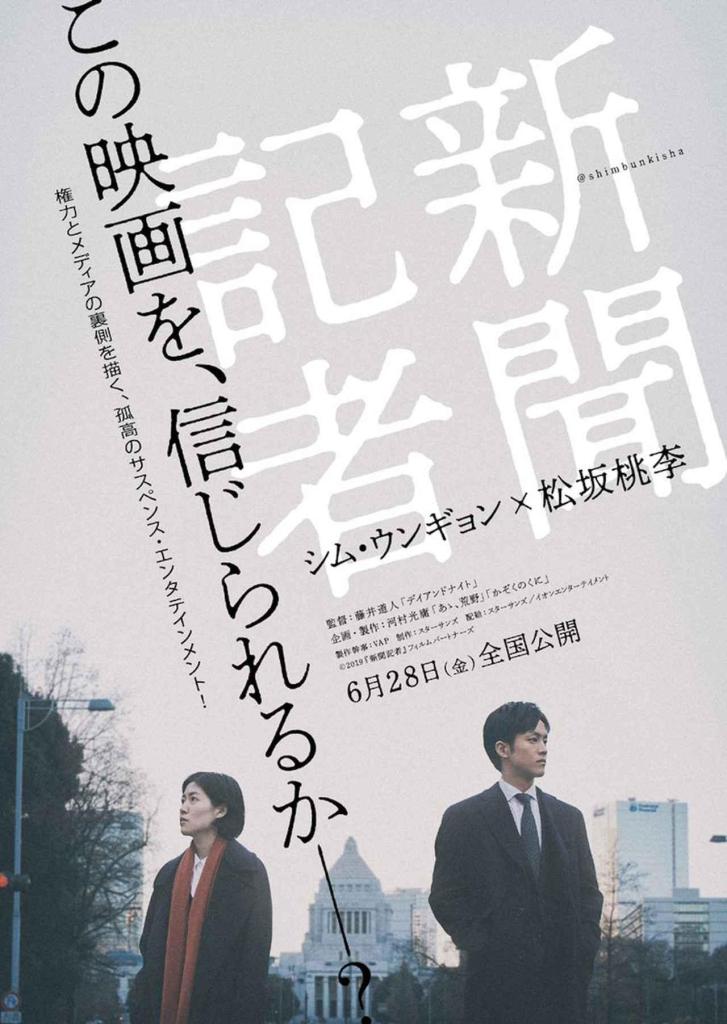
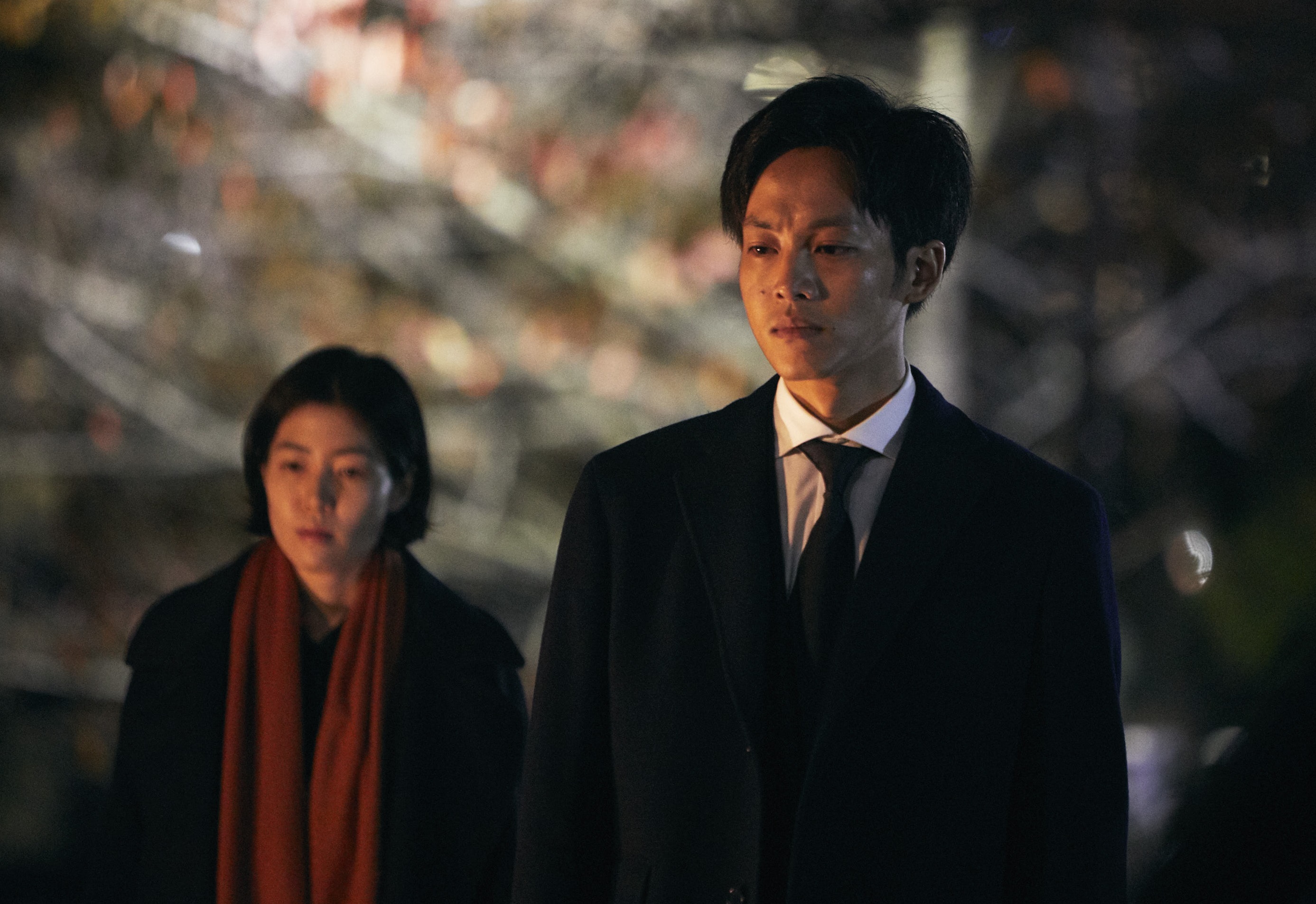
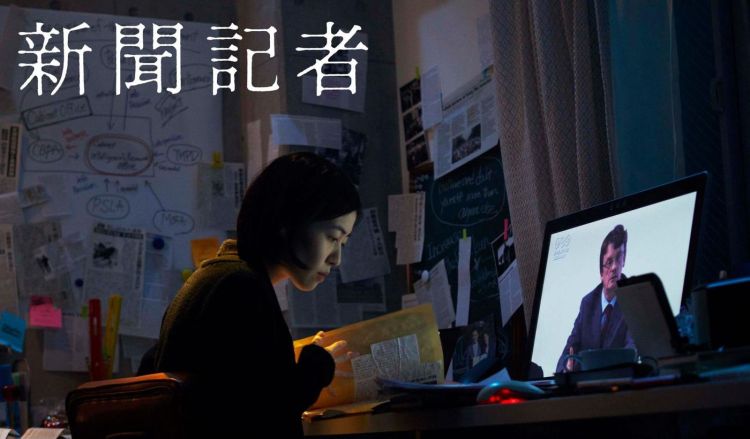
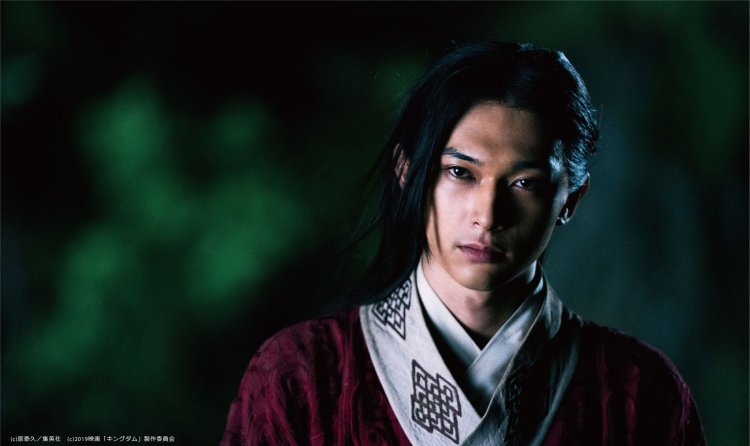
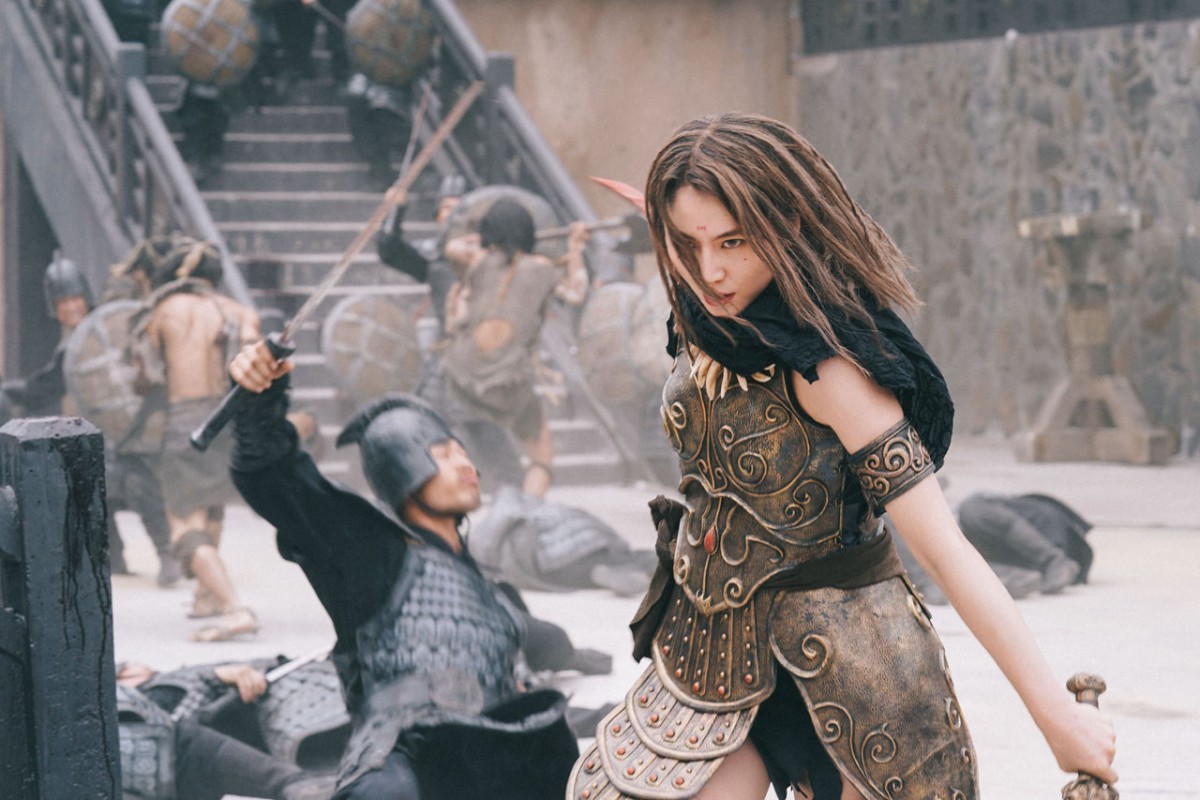
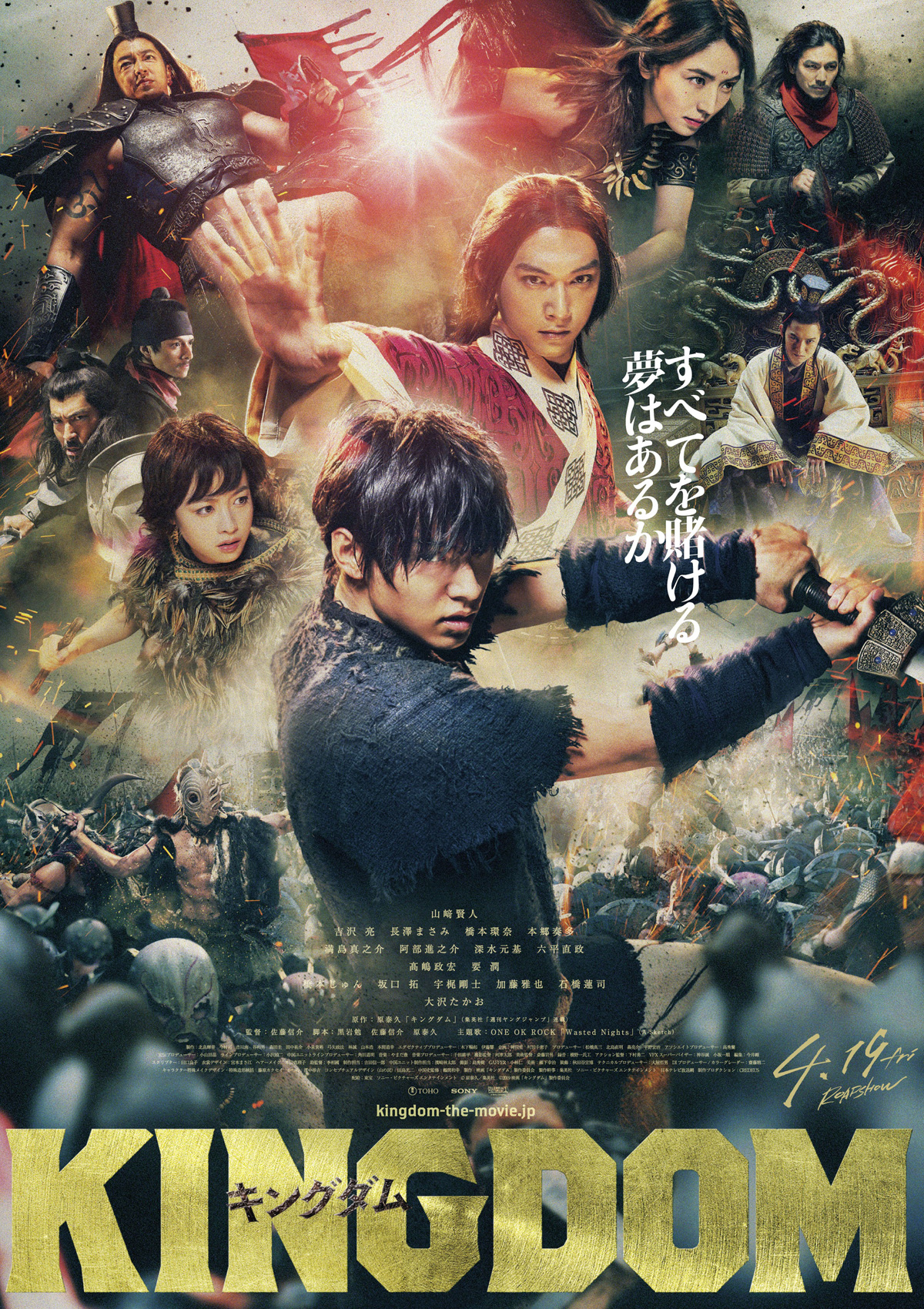
The Japan Academy Prize, Japan’s equivalent of the Oscars awarded by the Nippon Academy-sho Association of industry professionals, has announced the winners for its 43rd edition which honours films released between Dec. 16, 2018 and Dec. 15, 2019. Michihito Fujii’s political thriller The Journalist dominated the major categories taking Picture of the Year as well as Best Actor/Actress, while Kingdom also made a good showing taking both Supporting Actor and Actress. Despite its large number of nominations, Fly Me to the Saitama took only Director, Screenplay, and Editing.

Picture of the Year

Animation of the Year

  • Her Blue Sky
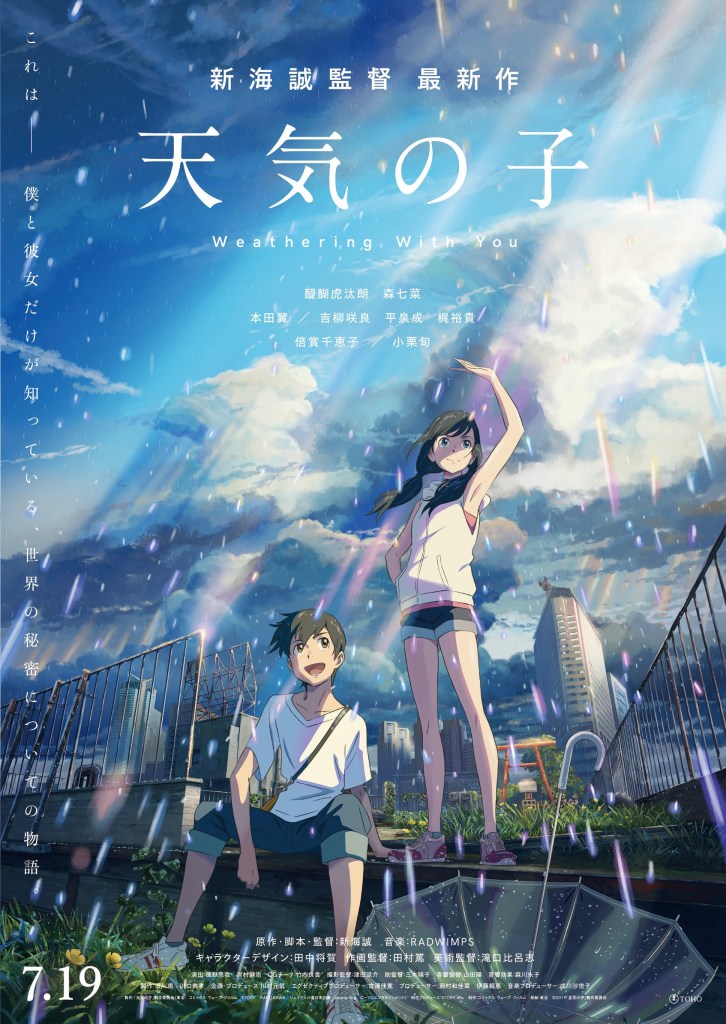
  • Weathering with You
  • Detective Conan: The Fist of Blue Sapphire
  • Lupin III: The First
  • One Piece: Stampede

Director of the Year

Screenplay of the Year

  • Shozo Katashima (Talking the Pictures)
  • Roba Shimori, Akihiko Takaishi, Michihito Fujii (The Journalist)
  • Yuichi Tokunaga (Fly Me to the Saitama)
  • Hideyuki Hirayama (Closed Ward)
  • Koki Mitani (Hit Me Anyone One More Time)

Outstanding Performance by an Actor in a Leading Role

  • Tsurube Shofukutei (Closed Ward)
  • Masaki Suda (The Great War of Archimedes)
  • Kiichi Nakai (Hit Me Anyone One More Time)
  • Tori Matsuzaka (The Journalist)
  • GACKT (Fly Me to the Saitama)

Outstanding Performance by an Actress in a Leading Role

Outstanding Performance by an Actor in a Supporting Role

  • Go Ayano (Closed Ward)
  • Yusuke Iseya (Fly Me to the Saitama)
  • Tasuku Emoto (The Great War of Archimedes)
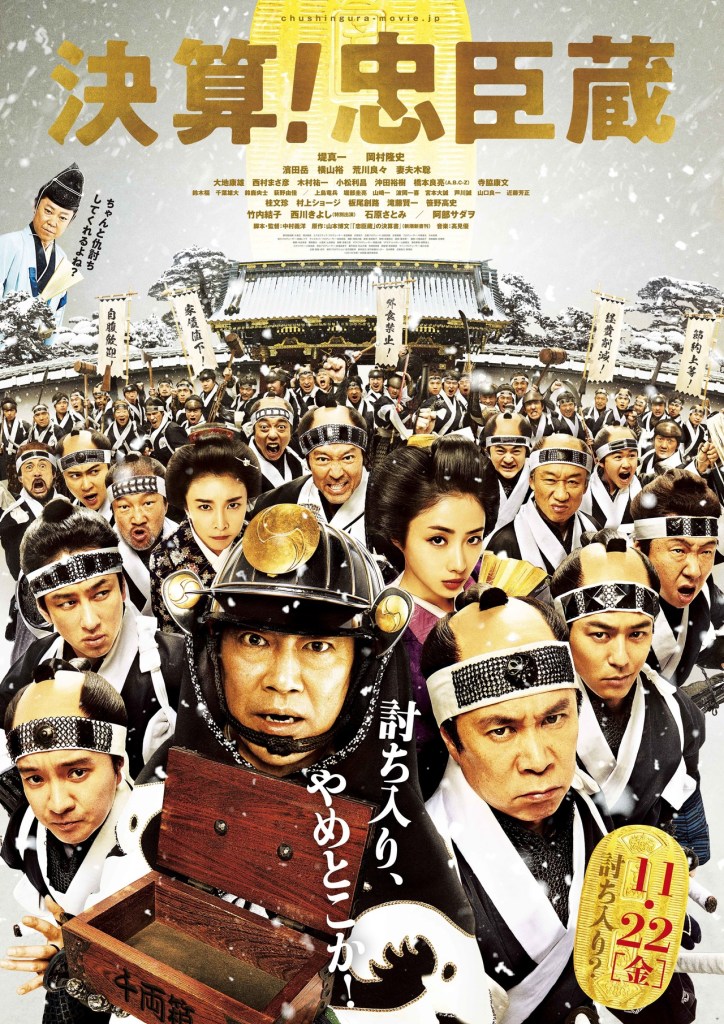
  • Takashi Okamura (The 47 Ronin in Debt)
  • Kuranosuke Sasaki (Kubo Ibuki)
  • Ryo Yoshizawa (Kingdom)

Outstanding Performance by an Actress in a Supporting Role

Outstanding Achievement in Music

Outstanding Achievement in Cinematography

  • Taro Kawazu (Kingdom)
  • Kozo Shibasaki (Closed Ward)
  • Shohei Tanigawa (Fly Me to the Saitama)
  • Piotr Niemyjski (Listen to the Universe)
  • Junichi Fujisawa (Talking the Pictures)

Outstanding Achievement in Lighting Direction

The lighting award is tied to cinematography which was awarded to Kingdom but unfortunately there was no eligible nominee so this year there is no winner in the lighting category.

  • Nariyuki Ueda (Closed Ward)
  • Shunri Rinoie (Fly Me to the Saitama)
  • Kenjiro So (Listen to the Universe)
  • Tatsuya Osada (Talking the Pictures)

Outstanding Achievement in Art Direction

  • Yoji Abeki (Fly Me to the Saitama)
  • Norihiro Isoda (Talking the Pictures)
  • Iwao Saito (Kingdom)
  • Anri Johjo (The Great War of Archimedes)
  • Katsumi Nakazawa (Closed Ward)

Outstanding Achievement in Sound Recording

  • Hirokazu Kato (Fly Me to the Saitama)
  • Yoshifumi Kureishi (Listen to the Universe)
  • Hiromichi Kori (Talking the Pictures)
  • Masato Komatsu (Closed Ward)
  • Kazushiko Yokono (Kingdom)

Outstanding Achievement in Film Editing

Outstanding Foreign Language Film

  • Yesterday
  • Green Book
  • Joker
  • The Mule
  • Once Upon a Time in Hollywood

Newcomer of the Year 

(awarded to all nominees equally)

  • Yukino Kishii (Just Only Love)
  • Yuina Kuroshima (Talking the Pictures)
  • Riho Yoshioka (Blind Witness, Parallel World Love Story)
  • Oji Suzuka (Listen to the Universe)
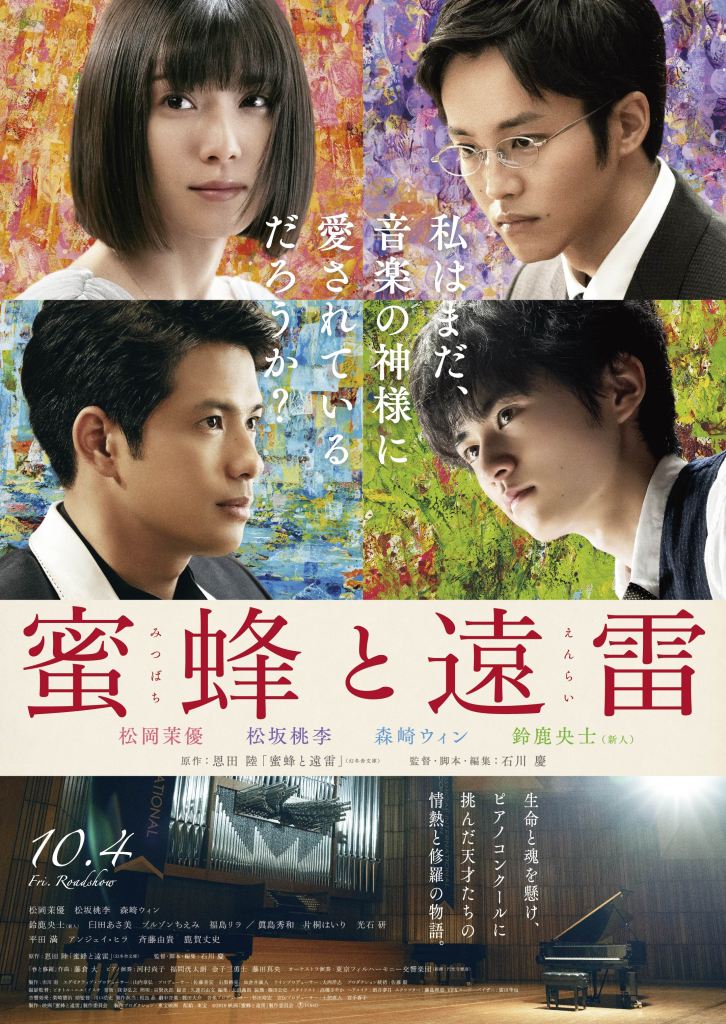
  • Win Morisaki (Listen to the Universe)
  • Ryusei Yokohama (Aiuta: My Promise To Nakuhito; Go Away, Ultramarine; Cheer Boys!)

Special Award from the Association

(Lifetime achievement awards, technical fields)

  • Tetsuo Kaneko (Opticals)
  • Yoichi Kotabe (Animator)
  • Kunio Niwa (Location Manager)
  • Yoshio Yamada (Production Designer)

Award for Distinguished Service from the Chairman

(Lifetime achievement awards, creatives)

  • Koji Takada (Screenwriter)
  • Akira Takarada (Actor)
  • Yoko Tsukasa (Actress)
  • Sadao Nakajima (Director)
  • Ayako Wakao (Actress)

Special Award from the Chairman

(Lifetime achievement award presented to members of the film industry who passed away during 2019)

  • Etsuko Ichihara (Actress)
  • Yasuo Furuhata (Director)
  • Tadao Takashima (Actor)
  • Makoto Wada (Director, Screenwriter, Illustrator)

In Memoriam 

(Special section honouring previous recipients of the Special Awards who passed away in 2019)

  • Junya Sato (Director/Screenwriter)
  • Machiko Kyo (Actress)
  • Takashi Kawamata (Cinematographer)
  • Yoshinobu Nishioka (Art Director)
  • Kaoru Yachigusa (Actress)
  • Takashi Matsuda (Costume Designer)
  • Sunao Sakagami (Producer)
  • Masashi Tara (Sound Designer)
  • Nobuo Yajima (Special Effects)

Popularity Awards

(Decided via an All Night Nippon listener poll)

Movie: The 47 Ronin in Debt

Actor: Gen Hoshino (Samurai Shifters)

Source: Japan Academy Prize official websiteEiga Natalie

My Prince Edward (金都, Norris Wong Yee Lam, 2019)

(C)My Prince Edward Film Production Limited

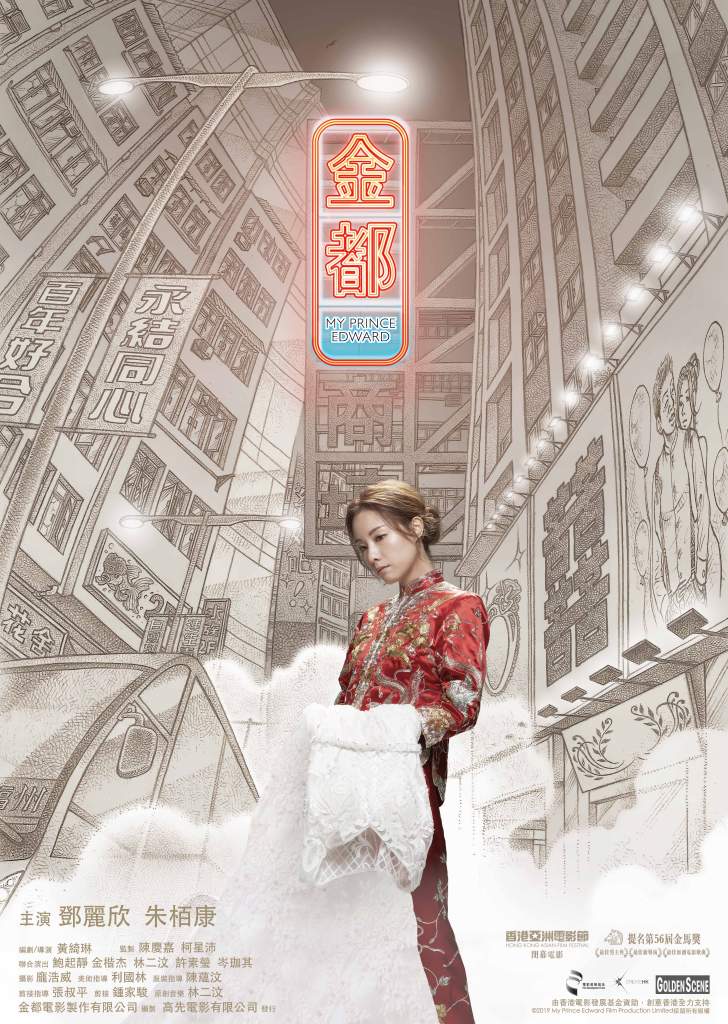
“Why do you all think that marriage means happily ever after?” A conflicted young woman asks the man attempting to railroad her into a life of conventional respectability. “It doesn’t mean that” he explains, “But there’s no happiness if you don’t get married”. In 21st century Hong Kong can it still really be that a woman’s success or failure is measured by her age at marriage? The debut film from Norris Wong Yee Lam, My Prince Edward finds its heroine asking if there isn’t more to life than marrying a man you don’t love because it’s what everyone seems to expect. 

31-year-old Fong (Stephy Tang Lai-yan) has been in a committed relationship with wedding photographer Edward (Chu Pak Hong) for the last seven years, but she’s been keeping a secret from him. 10 years previously, she and her friend Yee (Eman Lam Yee-man) underwent sham marriages to Mainlanders in return for cash so they could rent a flat with a third friend, Mabel. Fong believed that the agency would deal with her “husband” on their own, arranging his Hong Kong residency permit and thereafter a divorce but although Yee’s “marriage” went off without a hitch, Fong’s hit a snag in that the agent was arrested so her husband never got his ID card and she never got her divorce. The reason she’s worried now is that she overheard Edward tell his assistant to photoshop his client’s marriage certificate to redact any mention that he’s been married before to avoid potential embarrassment at the ceremony.

The fact is, Edward is a strangely conservative, patriarchal sort of man and she knows he might not be very understanding even if she sits him down and explains that she’s technically still married to someone else. Everything might have carried on as normal if Edward had not taken it upon himself to make an ostentatious public proposal that Fong could hardly have refused even if she’d wanted to. The public proposal is perhaps another manifestation of Edward’s manipulative tendencies, but is also mostly undertaken to please his conservative and equally possessive mother (Nina Paw Hee-ching) with whom he still shares a joint bank account at the age of 31. Too afraid to face the potential consequences of the pair finding out, Fong attempts to track down her “husband”, Yang Shuwei (Jin Kaijie), to convince him to co-sign the divorce papers so they can come through before her mother-in-law’s preferred wedding date in a few months’ time. 

The grand irony is that Fong only did the sham marriage because she felt trapped by her conservative parents who objected to a teenage romance. She moved out to find freedom, but now feels trapped within the claustrophobic district of Prince Edward and most particularly the Golden Plaza shopping centre which houses her apartment and the bridal shop where she works which is next-door to Edward’s photography studio. She wanted to move into a swanky new flat, but Edward’s mother is dead set on buying the place where they currently live so Edward won’t have to move, an arrangement which suits him fine. Edward, meanwhile, is prone to jealous rages and Fong can hardly leave the apartment without getting 30 messages asking where she is and when she’ll be back. 

It turns out that “freedom” was what Shuwei was looking for too. He wanted a Hong Kong ID card as a stepping stone to going to America, hoping to make worldwide travel easier than with a PRC passport. Ironically, he can’t understand why Fong puts up with Edward’s prehistoric attitude and encourages her to reconsider marrying a man who’s already borderline abusive. Fong doesn’t quite want to admit it to herself but she feels the same, only she doesn’t have the courage to resist. She’s been successfully keeping Edward at arm’s length all these years, but now that the subject of marriage has been raised she’ll have to make a firm a decision. 

Working in the bridal shop she sees enough stressed out, unhappy couples going through the motions to realise that it’s not all sunshine and flowers, while it sounds like her family life was not exactly a bed of roses growing up. What she can’t seem to do, however, is to give herself permission not to marry. Unexpectedly getting his wings clipped, Shuwei asks her what it is she wanted to do and where she wanted to go, questions that no one else has really asked and Fong doesn’t know the answers to. If she stays with Edward, she might never find out. Like the flipped over turtle she tried to rescue from a pet shop, Fong runs the risk of swapping one tank for another, ending up trapped inside the Golden Plaza for the rest of her life being bossed around by her mother-in-law and walking on egg shells around the fragile Edward which seems like a heavy price to pay simply to be accounted respectable. “You don’t know what freedom is” Shuwei scolds her, confused that she chooses to stay when she has the choice to be anywhere she wants. The real Prince Edward gave up his throne for love, choosing one kind of freedom at least or perhaps just swapping one tank for another. Fong doesn’t know where she wants to go, but is beginning to realise that she has a choice and choosing herself is no bad thing. 


My Prince Edward screens on March 8/12 as part of this year’s Osaka Asian Film Festival.
Original trailer (English / Traditional Chinese subtitles)

Yellow Ribbon (당신의 사월, Ju Hyun-sook, 2019)

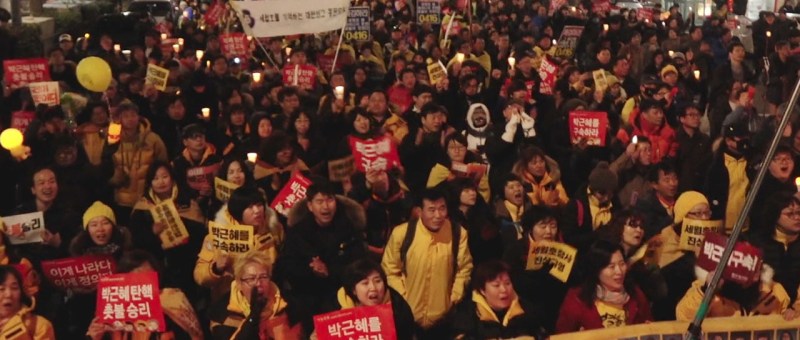
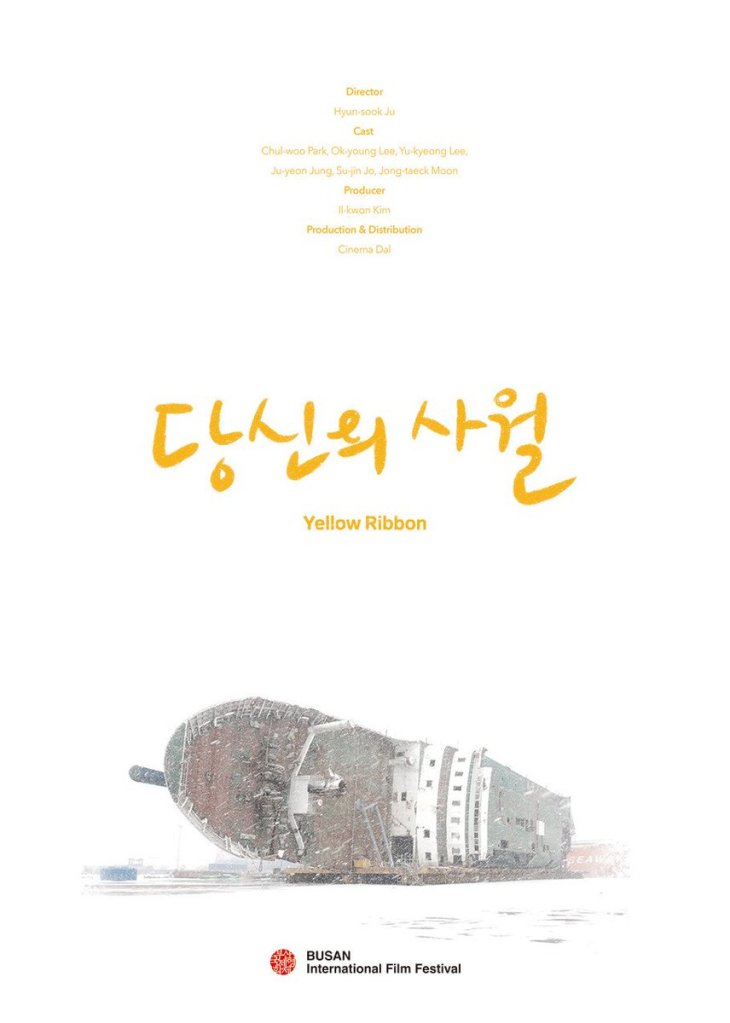
On 16th April, 2014, a ferry en route from Incheon to Jeju Island sank taking the lives of 304 passengers many of whom were high school students on a school trip. The Sewol Ferry Disaster went on to have wide-scale political ramifications, eventually feeding into the discontent with the government of Park Geun-hye who, it was discovered, had been uncontactable for seven hours during the height of the crisis, later refusing to account for her whereabouts. Ju Hyun-sook’s documentary Yellow Ribbon (당신의 사월, Dangsin-eui Sawol) is, in some senses, usual in that it follows not those directly bereaved by the tragedy but those caught on its edges, ordinary men and women who find themselves haunted by national trauma. 

What each so clearly recalls is the sense of helplessness that they felt as bystanders watching from the shore. All of them believed the passengers would be rescued, no one envisioned a tragedy unfolding, and so they were lulled into a false sense of security by the media’s mistaken reports that everyone had been saved. Fisherman Lee Ok-young was among the first to realise that the information being given out by the media was incorrect when he sailed out towards the ferry and saw the shadows of those trapped inside. In fact, many of those who were rescued from the wreck were saved by good samaritan boats who came to help, Korea’s coastguard didn’t show up until 40 minutes later. Ok-young is, however, among the most directly affected, later finding the body of one of the students caught on a rope he was using for seaweed farming. 

Ever present in the background, usually taking photos, is the young woman’s father – a constant reminder of the scale of the tragedy. It was dignity of the families which first struck Park Cheol-woo, the owner of a coffee shop in Korea’s political centre near the presidential residence of the Blue House. Hearing that the families were due to make a visit, he felt very strongly that they must be protected. Jung Ju-yeon, a woman in her 50s working in human rights education, felt something much the same and decided to participate in the protests alongside the bereaved parents in a show of solidarity. 

The government, meanwhile, continued to pursue its authoritarian line allowing pundits to brush off the disaster as no different from a traffic accident while trying the shame the protestors into silence. Hoping to blacken his name, the conservative press discredited a hunger striking father by bringing up the fact he was divorced, as if lying the tragedy at his own feet in an attempt to deflect the government’s responsibility for the failure to protect the children. The sense of abnegated responsibility is something which continues to weigh on teacher Jo Su-jin who finds herself meditating on the selfless teachers who sacrificed their lives trying to save their students. She wonders what she would have done in their position, reflecting on the choices which must have passed through their minds knowing that they too had family waiting for them.  

Park Cheol-woo wishes he could forget, but is haunted by the spectre of the tragedy, as is the husband of Jung Ju-yeon who was hired to create a series of illustrations and forced to relive the pain and suffering of all who were involved. The weight of indignation eventually fed into the Candlelight Protests which ultimately brought down the government of Park Geun-hye but the feelings of helplessness have not dissipated because justice has not been served and too many unanswered questions remain. There are no explanations for the confluence of circumstances which allowed the tragedy to happen, nor for the failure of authority which proved itself incapable of protecting its citizens.

Yet there are signs of hope. Lee Yu-kyeong was a high school student herself when the tragedy occurred, watching helplessly on a TV screen as hundreds of other kids just like her lost their lives. They trusted the authorities to protect them and they did as they were told, but the authorities let them down. Lee Yu-kyeong is now an archival studies student, hoping to contribute by honouring their memories, making sure they are never forgotten so that nothing like this ever happens again. Yellow Ribbon is a document of national trauma, but also perhaps of healing as those touched by tragedy attempt to look forward by building a safer society founded on a sense of mutual protection. 


Yellow Ribbon screens in Amsterdam on March 6/8 as part of this year’s CinemAsia Film Festival.

Trailer (English subtitles)

Introduction by director Ju Hyun-sook from the Busan International Film Festival (activate English subtitles by pressing subtitle button)

Princess Aya (프린세스 아야, Lee Sung-gang, 2019)

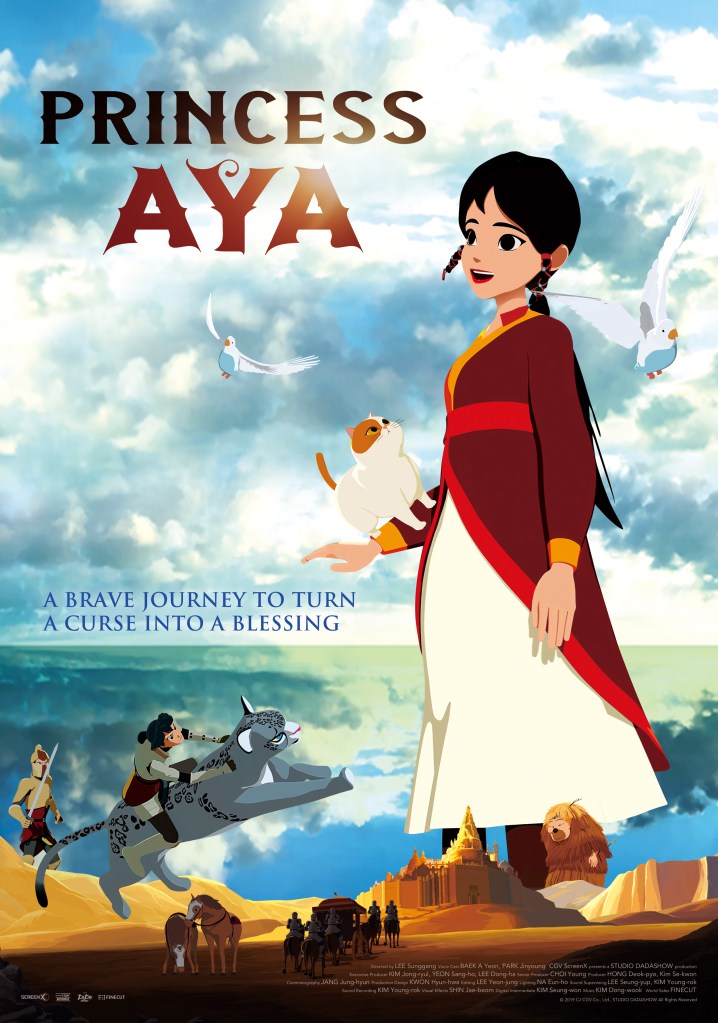
Animation made for children can often be a subversive affair, offering surprisingly progressive messages sometimes at odds with an otherwise conservative industry. Though quite obviously taking its cues from Frozen in terms of aesthetics and atmosphere despite its desert setting while drawing inspiration from classic fairytales, Princess Aya (프린세스 아야) is a sterling example, keen to sell the message that it’s OK to be different while emphasising that it’s prejudice and social exclusion which are the real enemy, creating only pain and resentment while those rejected by an intolerant society may eventually be consumed by their sense of betrayal. 

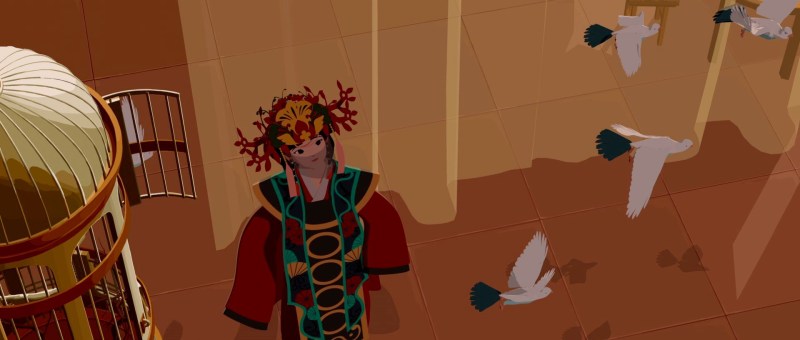
Long ago in a feudal society, a strange curse begins to affect children born in the small kingdom of Yeonliji which causes them to turn into animals after coming into contact with animal blood. Some believe that the curse is the revenge of animals hunted for sport, while the cursed children are, ironically enough, abandoned to live as beasts in the forest or perish. The Queen, however, cannot bear to part with her child, Princess Aya (Baek A-yeon), and sacrifices some of her own life force in return for a magical bracelet from a tree god that will prevent the curse from manifesting. Years later, Aya grows up into a feisty teenage girl, while the kingdom is threatened by an oncoming incursion from desert nation Vartar who want its water. The Vartan prince, Bari (Park Jin-young), has proposed a dynastic marriage with one of Aya’s younger sisters to broker peace, but Aya has no intention of letting her sisters face such an uncertain fate and insists on going herself. 

Of course, what she discovers, in true Korean period drama fashion, is that there’s intrigue in the court. Bari is not, as she feared, a hideous monster but a kind and handsome young man who is actively trying to prevent a war and protect Yeonliji (which is obviously what she wants too), but his treacherous uncle is ruling as a regent and secretly working against him. Meanwhile, attempts have been made on Aya’s life, and she’s lost the precious bracelet which allows her to keep her true nature hidden. 

The curse appears to be a punishment manifested on mankind for its cruel treatment of animals, forcing Aya to feel the suffering of living creatures in pain and close to death. While Aya does her best to fight the darkness, another creature known as the “Beast” has allowed it to consume him, feeding on sorrow and determined to take revenge on the society which has abandoned and rejected him. It’s rejection that Aya too fears, as perhaps does everyone and most especially young women, but hers is a deeper seated anxiety in that she’s uncertain what will happen if her true nature is discovered. 

Nevertheless, she moves towards an acceptance that her curse could also be a gift while beginning to believe that “no matter who I am I can be loved”. Yet she also feels a sense of guilt in using her amulet, knowing she is deceiving the prince, whom she’s come to admire, while fearing his reaction if she tells him the truth. Bari, meanwhile, is not so much hiding a secret as a lone figure of traditional nobility in a court filled with scheming intrigue. While his uncle plans to subjugate Yeonliji, Bari has been secretly drilling in the desert looking for water, admiring the flowers where they bloom even in adversity. 

Bari refuses to make his men slaves of war, while Aya insists that they need to rebuild their society with a greater sense of compassion. She is afraid of her “difference” and her destiny, longing to be free but afraid of being seen. Eventually she realises that connection can be a strength and not a weakness as can authenticity and mutual understanding. She refuses to abandon the Beast as her society had done despite his wickedness, still hoping to save and bring him into her hopefully kinder world. Princess Aya shows kids that being “different” is nothing to be ashamed of, that no one is unloveable (even evil Beasts), and that the Princess is perfectly capable of saving herself but it’s no weakness to accept help when you need it or to give it when others are in need. A charming musical fairytale, Princess Aya wears its progressive values on its sleeve, always allowing its heroine to chart her own destiny while finding self-acceptance along the way.


Princess Aya screens in Amsterdam on March 7/8 as part of this year’s CinemAsia Film Festival.
International trailer (English subtitles)

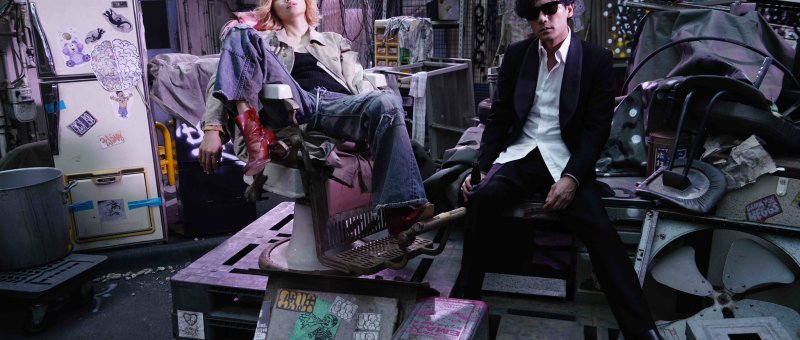
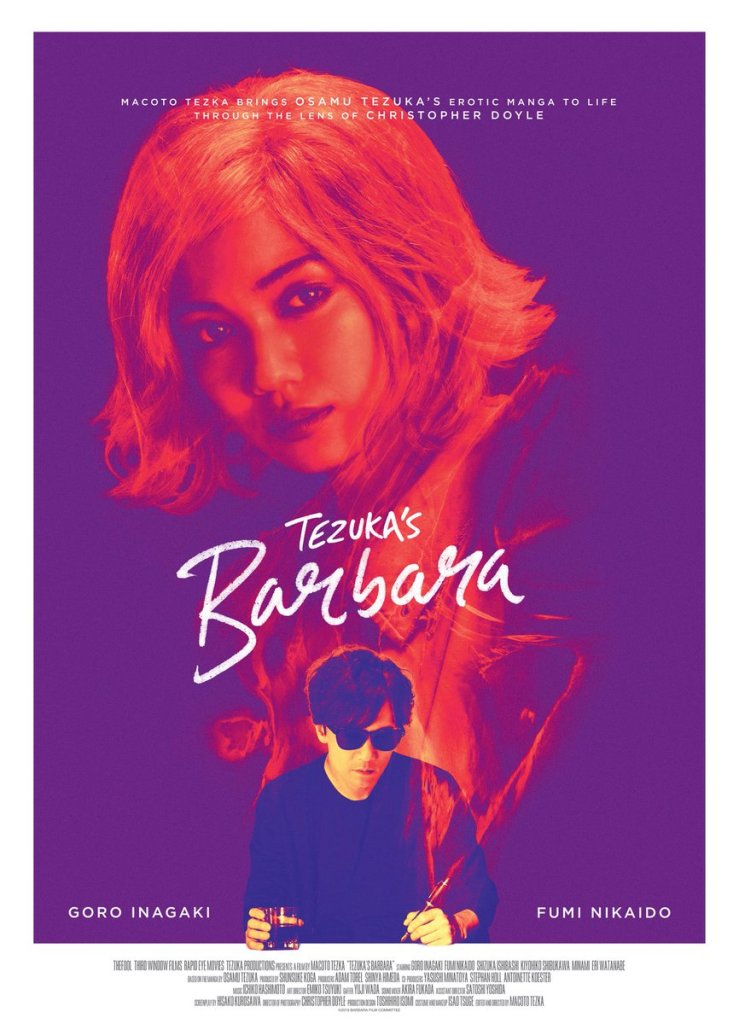
Tezuka’s Barbara (ばるぼら, Macoto Tezka, 2019)

The relationship between an artist and his muse (necessarily “his” in all but a few cases) is at the root of all drama, asking us if creation is necessarily a parasitical act of often unwilling transmutation. Osamu Tezuka’s Barbara (ばるぼら), brought to the screen by his son Macoto Tezka, takes this idea to its natural conclusion while painting the act of creation as a madness in itself. The hero, a blocked writer, describes art as a goddess far out of his reach, but also the cause of man’s downfall, framing his creative impotence in terms of sexual conquest that lend his ongoing crisis an increasingly troubling quality. 

Yousuke Mikura (Goro Inagaki) was once apparently a well regarded novelist but has hit a creative block. While his friends and contemporaries are winning awards and national acclaim, he’s become one of “those” writers busying himself with potboilers and eroticism to mask a creative decline. Passing a young woman collapsed drunk in a subway, something makes him stop and turn back. Surprisingly, she begins quoting romantic French poetry to him, and actually turns out to be, if not quite a “fan”, familiar with his work which she describes as too inoffensive for her taste. Mikura takes her home and invites her to have a shower, but later throws her out when she dares to criticise an embarrassingly bad sex scene he’s in the middle of writing. Nevertheless, he’s hooked. “Barbara” (Fumi Nikaido) becomes a fixture in his life, popping up whenever he needs a creative boost or perhaps saving from himself. 

Strangely, Barbara is in the habit of referring to herself using a first person pronoun almost exclusively used by men, which might invite us to think that perhaps she is just a manifestation of Mikura’s will to art and symbol of his destructive creative drive. He does indeed seem to be a walking cliché of the hardbitten writer, permanently sporting sunshades, drinking vintage whiskey, and listening to jazz while obsessing over the integrity of his art. We’re told that he’s a best-selling author and previously well regarded by the critics, but also that he has perhaps sold out, engaging in a casual relationship with a politician’s daughter and cosying up to a regime he may or may not actually support. He’s beginning to come to the conclusion that he’s a soulless hack and the sense of shame is driving him out of his mind. 

Mikura’s agent Kanako (Shizuka Ishibashi) certainly seems to think he’s having some kind of breakdown, though the jury’s out on whether her attentions towards him are professional, sisterly, or something more. There isn’t much we can be sure of in Mikura’s ever shifting reality, but it does seem a strange touch that even a rockstar writer of the kind he seems to think he is could inspire such popularity, recognised by giggling women wherever he goes yet seemingly sexually frustrated to quite an alarming degree. His world view is an inherently misogynistic one in which all women seem to want him, but he can’t have them. A weird encounter in a dress shop is a case in point, the assistant catching his eye from the window display turning out to be a devotee of his work because of its “mindlessness”, something which annoys Mikura but only causes him to pause as she abruptly strips off for a quickie in the fitting room. Tellingly, the woman turns out to be an inanimate mannequin, literally an empty vessel onto which Mikura can project his fears and desires, which is, perhaps, what all other women, including Barbara, are to him. 

Yet who, or what, is Barbara? Chasing his new “muse”, Mikura finds himself on a dark path through grungy subculture clubs right through to black magic cults, eventually arrested on suspicion of drug use. There is something essentially uncomfortable in his dependency, that he is both consuming and consumed by his creative impulses. Inside another delusion, he imagines himself bitten by potential love interest Shigako (Minami), as if she meant to suck him dry like some kind of vampire succubus, but finds himself doing something much the same to Barbara, stripping her bare, consuming her essence, and regurgitating it as “art”. Either an unwitting critique of the various ways in which women become mere fodder for a man’s creativity, or a meditation on art as madness, Barbara seems to suggest that true artistry is achieved only through masochistic laceration and the sublimation of desire culminating in a strange act of climax that stains the page with ink.  


Tezuka’s Barbara screens in Amsterdam on March 6/7 as part of this year’s CinemAsia Film Festival.
International trailer (English subtitles)

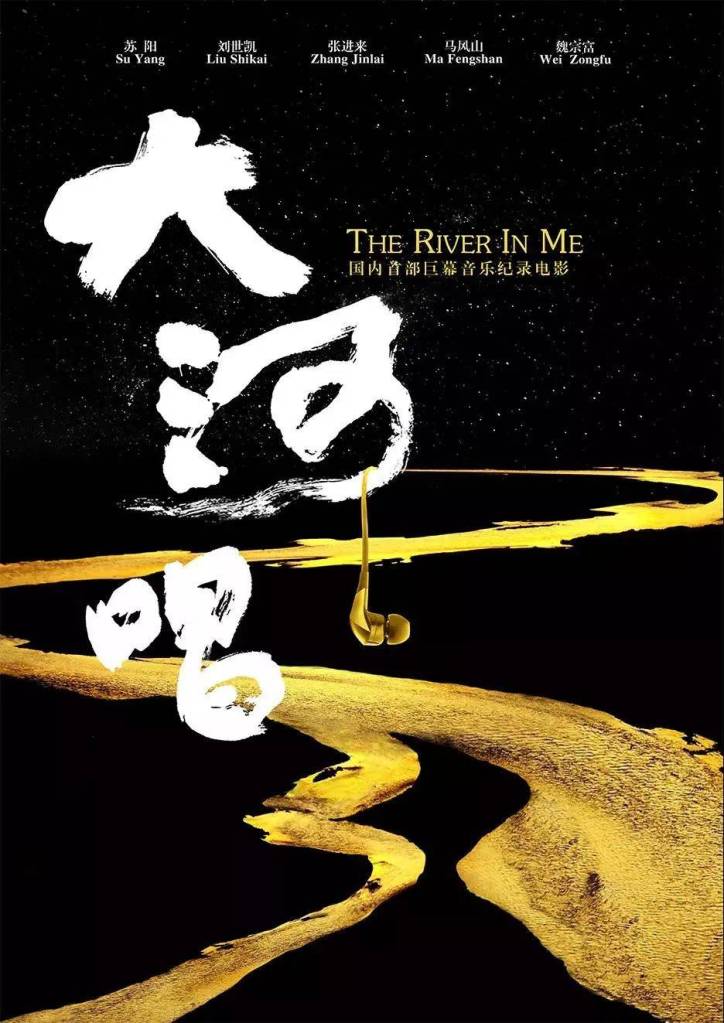
The River in Me (大河唱, Ke Yongquan, Yang Zhichun, He Yuan, 2019)

Can the old arts survive in the modern world or are they destined to fade away with the passing of time? Folk singer Su Yang is determined to preserve them, if only by assimilation, blending traditional folksong with Western rock to bring it into the modern era. While some complain that Su’s singing is inauthentic, he argues that authenticity, in that sense at least, isn’t the point. The only thing that matters is whether people like it and can feel something of themselves and of ages reflected in the ancient rhythms. 

Now a successful musician, Su is not originally from the country but moved to rural Yinchuan, Ningxia in Northwest China with his parents when he was seven. He later says it was the music of Yinchuan which touched him not because it is the greatest of cities but because it’s the one which most intersected with his life. Through his travels, Su meets up with a series of other practitioners of traditional arts mostly also from Ningxia and the surrounding area as he and they dwell on survival. 

Itinerant singer Liu Shikai makes a living playing the Sanxian, but fewer and fewer people are interested in listening while in private he feels himself lonely as a twice widowed father of three, especially as his youngest daughter has now married leaving him at home alone. Su laments something similar, reflecting that there’s no New Year for him. His festivities will consist of working and drinking, while his family can see him on TV from the comfort of their homes. Su’s brother complains endlessly about the annual Spring Gala (while watching it anyway), finding the show totally lacking in any kind of substance and becoming more boring by the year. His astute daughter, however, points out that his criticism is unfair or at least stating the obvious because the Spring Gala reflects “youth culture” which is perhaps flashy and superficial but equally is not intended to appeal to middle-aged men. Su appears on the program himself but might agree, seeing as it’s his mission statement to put a little soul back into the mainstream by bringing the rhythms of the Yellow River to contemporary society. 

Back in the country, meanwhile, folksongs are serving the same purpose they always have, expressing joy in the natural world and bringing communities together through choral solidarity. Then again, Hua’er singer Ma Fengshan, sometimes finds himself at odds with his. A member of the muslim minority, his house is filled with religious texts that he is unable to read because they are in Arabic which he doesn’t speak. Some have told him that he should spend more time on religious study, but all he wants to do is sing, while others actively oppose Hua’er for its “salacious” qualities, aware the songs can be used as a form of flirtation and convinced that they have the potential to cause marital breakdown and infidelity. In spite of everything, Ma keeps singing and is eventually joined by other members of his community wearing traditional dress to celebrate Hua’er music. 

For puppeteer Wei Zongfu, however, the future seems far less bright. Now ageing himself, he’s accepted that his descendants won’t want to succeed him and there are few people interested in learning shadowplay. The leather puppets crafted by his grandfather are so precious to Wei that he didn’t even want to take them to use in Su’s showcase of traditional arts in fear they might be damaged or stolen, opting for a safer paper play instead, but is now contemplating what’s best to do with them after he dies and if the art itself can survive when there is no one to perform it. 

That’s a problem also faced by Zhang Jinlai, the harangued head of a Qinqiang Opera troupe frequently at odds with his co-star wife who berates him for employing too many actors when they aren’t making any money. With economic factors to consider, he finds it hard to keep his troupe together and is pushed towards making “innovations” that might appeal to a younger audience but wishes to remain “authentic”. Su’s suggestion, by contrast, is that in the end you can only move forward, the old arts may have to adapt or die. Some may not approve of his modern take on the traditional, but in his own way he’s saving Hua’er song and helping to pass it on to future generations, in his own words extending the rhythms of the Yellow River to all corners of the world. 


The River in Me screens in Amsterdam on March 4/8 as part of this year’s CinemAsia Film Festival.
Original trailer (English subtitles)

Detention (返校, John Hsu, 2019)

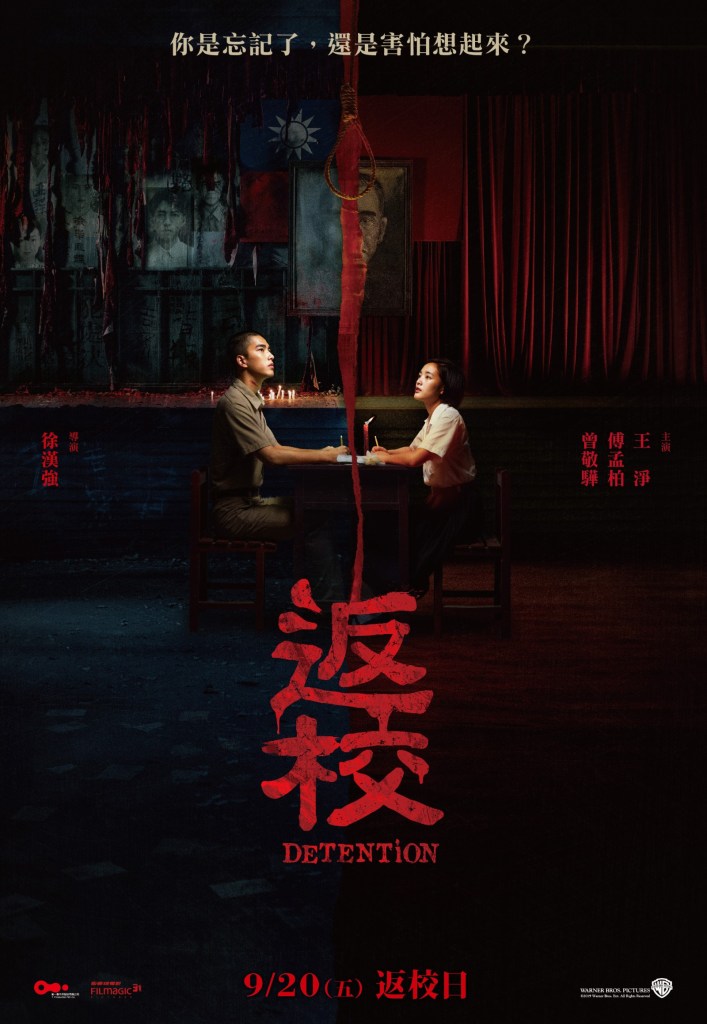
“Have you forgotten or are you scared of remembering?” a mysterious supernatural force seems to ask the heroine of John Hsu’s ironically named Detention (返校, Fǎn Xiào). In fact, the Chinese title means something close to “back to school”, hinting at its central message which uses the, it argues forgotten, tyranny of the “White Terror” to remind us that freedom is hard to win but harder still to keep. An unfortunately timely message given the assaults on democracy across the world but even more so given the recent protests in Hong Kong which have found support in Taiwan as it too looks back on its complicated history.

Based on a popular survival horror video game, Detention’s first hero is idealistic student Wei Zhong-ting (Tseng Ching-hua) who we quickly learn was picked up and tortured by the military police for reading books banned by the regime as part of an underground club run by two of his teachers – mild-mannered artist Zhang (Fu Meng-po) and stern musician Yin (Cecilia Choi Sze-wan). Set in 1962, the film finds itself at the height of the “White Terror”, a period of martial law which lasted for 38 years, during which any resistance real or perceived towards Chiang Kai-shek’s Kuomintang government was brutally suppressed with thousands tortured, imprisoned, or killed by the regime.

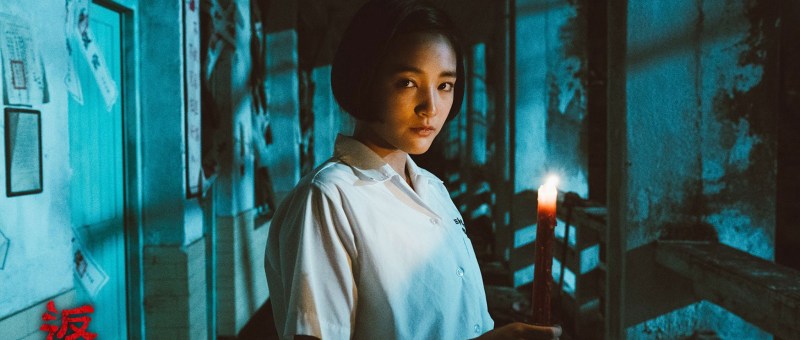
Wei finds himself in a lucid nightmare, trapped in his school building which has become derelict and seemingly abandoned while cut off by a raging flood. Gradually he starts to piece together memories of what must have happened, realising that his fellow club members seem to be absent and something must have happened with the military police. While in the school he runs into a fellow classmate, Fang Ray-shin (Gingle Wang Ching), though she doesn’t quite seem to remember him. Having apparently fallen asleep and woken up in this nightmare world, Fang seems even less clear about what’s going on than Wei but desperately wants to find their teacher, Zhang, with whom, we learn, she has fallen in love. 

Plagued by horrifying visions that maybe repressed memories or simple nightmares, the pair are chased by giant monsters dressed in KMT uniforms standing in for the terror of living under an authoritarian regime. Only, these particular nightmare soldiers are literally “faceless” in that their hollowed out skulls, which themselves sit on fetid, rotting corpses, are filled only by a mirror making plain that the faces of the “faceless” regime are our own. Fang and Wei become convinced that someone has betrayed them by giving one of the illicit books to arch militarist teacher Inspector Bai, but they can’t be sure who it was, finally doubting even themselves in their inability to remember the exact circumstances which brought them here. 

Flashing back to the “real” world, we discover that one sort of oppression cannot help but lead to others. Fang’s father is a respected soldier and supporter of the ruling regime, but he’s also abusive towards his wife, enforcing a rule of fear and violence even within his own home. Her mother has taken to religion in order resist him, regretting her marriage and furiously praying that he will soon be “gone for good”. “Gone for good” becomes a kind of mantra for others straining to free themselves from obstacles to their desires. Fang learns all the wrong lessons from her parents, allowing herself to be corrupted by their twin failures – her father’s in being a willing participant in the oppression of others, and her mother’s in subverting the world in which she lives in an attempt to free herself from violence. 

Yet, as Zhang later tells her, no one is really at fault because they are all victims of the oppressive rule of the KMT. The ruined schoolhouse becomes a kind of repository for the orphaned memories of a forgotten past. You can tear it down and build a fancy apartment complex over the top, but the ghost of authoritarianism is always lurking on the horizon, and capitalist success will not safeguard your freedom. Those left behind have to tell the story so  this never happens again because those who fail to learn from history are doomed to repeat it. Zhang imagined himself a narcissus, living in his own world without caring what other people thought and claiming that the solidarity of silent understanding is the best cure for loneliness, but he lived in times in which he had no freedom in which to live, sacrificing his own future to become the selfless roots of emancipation blooming only for those who will come later.


Detention screens in Amsterdam on March 5/7 as part of this year’s CinemAsia Film Festival. It will also screen in Chicago on March 26th as part of the 10th Season of Asian Pop-Up Cinema.
Original trailer (English subtitles)

Two Sisters (姐妹, James Lee, 2019)

The family home is supposed to be a place of safety, but what can you do when it’s also a source of trauma? The young women at the centre of James Lee’s psychological horror Two Sisters (姐妹, Jiěmèi) are each trying to put their houses back in order but find that their pasts are full of locked doors, crying women, and things which go bump in the night. In the end the past is the one thing you can’t protect yourself from, but not knowing can also be its own kind of hell, an inescapable puzzle that forever corrupts the image of the self. 

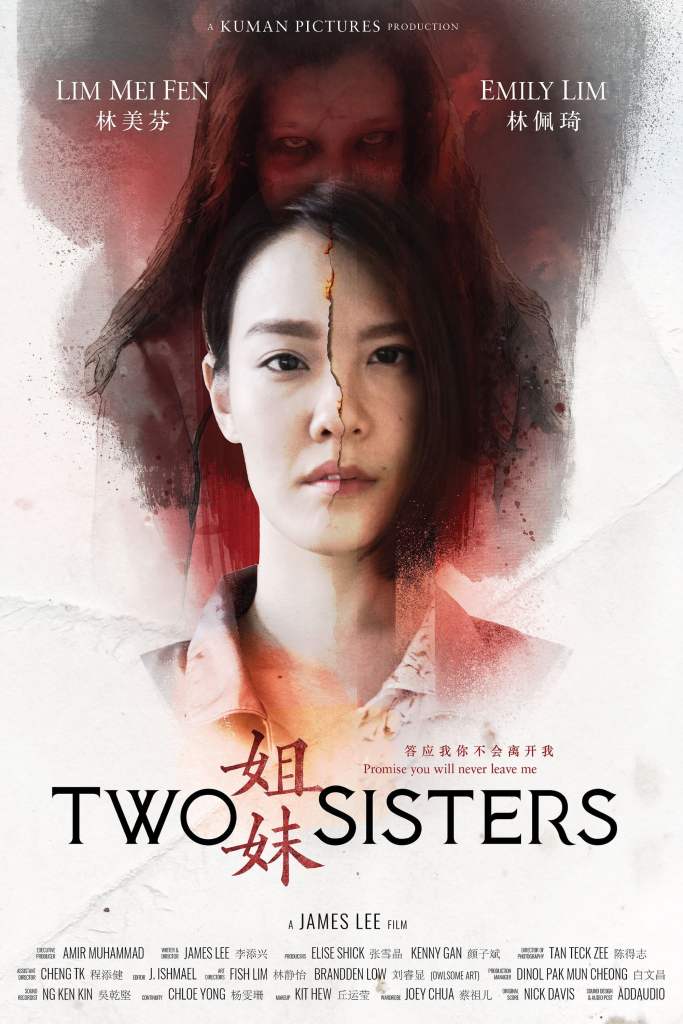
Elegant and successful, Mei Xi (Emily Lim) has just published her first book – a horror novel about a woman with multiple personality disorder which is, she tells her fans at a reading, a metaphor for the dual lives many women are forced to lead because of the pressures of living under the patriarchy. Meanwhile, her home life appears to be chaotic. We see her swallow a selection of pills before a one night stand cheerfully leaves her well-appointed apartment, only for her manager, John, to interrogate her after she’s late for an appointment wondering what she was doing the night before which prevented her from answering any of his calls. She reminds him that that’s none of his business. They may have slept together once but it meant nothing to her and anyway he’s a married man. Xi hopes they can keep their relationship “professional” going forward, attempting damage control on a possibly self-destructive business move. 

The main issue, however, is that her father has recently died and she’d like to sell the family home but needs the consent of her younger sister, Yue (Lim Mei Fen), who has been in a mental institution for over a decade. The doctors tell her that Yue has made good progress and they think it might be time to discharge her from the hospital so that she can start trying to reintegrate into mainstream society. Xi agrees to take custody of her, but there is an understandable distance between the two women. Yue is uncertain that Xi will be there when she needs her, partly because she neglected to visit her in the hospital on her last birthday and had apparently seen her only infrequently, Xi claims because she was busy with her book. Meanwhile, Yue is still unable to recall any of her childhood and is determined to move back into their family home in the hope of finally finding the truth behind whatever it was that happened to her. 

As expected, not everything is quite as it seems. A locked door is never a good sign, especially when there are multiple locks to unpick, but as soon as the women try to open it their shared reality begins to crumble. “What’s the point in knowing the truth?” Yue eventually asks an increasingly confused Xi, “it’s too late to change anything now”. The two women are each haunted, literally and metaphorically, by the ghost of their mother who died when they were small in circumstances neither of them are able to remember. 

The real horror lies in the family home. Badly let down by parental betrayal, the sisters attempt to rescue each other from shared trauma but are each trapped by the inescapability of the house. “I’ll always be by your side” Xi offers as words of protection, but is entirely unable to protect herself from the traumatic past. Yet Lee ends on a note of discomfort which sees Xi apologise to her mother for something that is in no way her fault, as if she had in some way betrayed her when quite the reverse is true. Xi’s words at the book reading prove truer than she knew them to be. She herself has her dualities, as did her mother, as a victim of patriarchal oppression which in this case has a sadly literal quality. The women of the Mei household struggle to free themselves from male violence and are perhaps destroyed by its memory which manifests itself in the ominous spectre of the family home which, rather than a place of love and mutual support, is a kind of prison filled with locked doors and dark secrets. 


Two Sisters screens in Amsterdam on March 6/7 as part of this year’s CinemAsia Film Festival.
Original trailer (English subtitles)

John Denver Trending (Arden Rod Condez, 2019)

We like to think that we live in a more enlightened age in which we’re able to react with compassion and understanding, striving to see both sides of every story rather than rushing to judgement. The truth is, however, that we’re often just as malicious and mean-spirited as we ever were. Social media has turned us all into thoughtless curtain twitchers, hungry for the next scandal and willing to take any hint of salacious gossip at face value. The online world has no place for fairness, and when everyone agrees on a collective “truth” facts are no defence in the court of public opinion. 

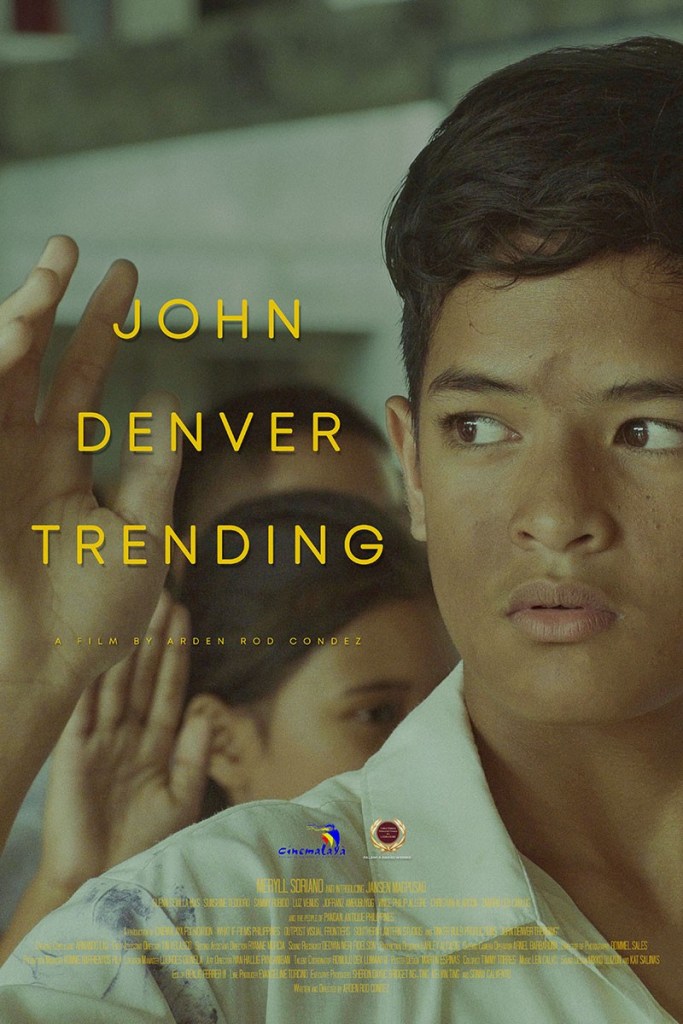
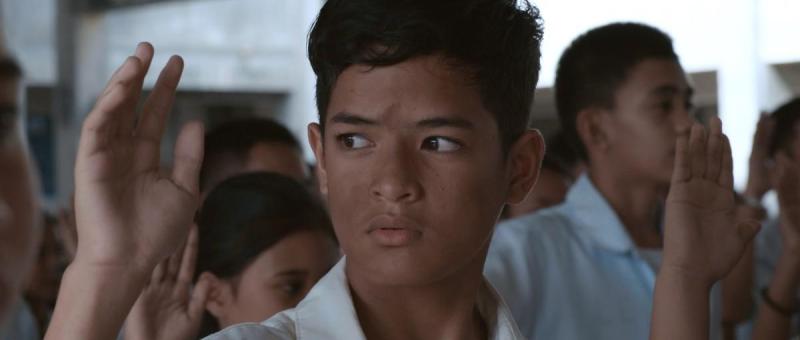
14-year-old John Denver Cabungcal (Jansen Magpusa) is the oldest son of a poor family. His father was in the military and has apparently passed away, while his mother, Marites (Meryll Soriano), now makes ends meet weaving bags and baskets while the family lives in a traditional village way out of town. A slight, angry boy John Denver is classically unlucky, mercilessly bullied just for being poor and getting punished when he dares to fight back. So it is when he’s humiliated during a dance rehearsal by having his trousers pulled down by another boy live on Facebook, after which they all laugh at him because his boxers are full of holes. When the rehearsal is over, one of the other boys accuses him of stealing his iPad, a situation compounded by the fact John Denver has apparently stolen before. The boy, Makoy (Vince Philip Alegre), snatches John Denver’s bag and demands to look inside. John Denver is innocent, but resents being forced to prove it and so refuses to let them see. He chases Makoy to the roof and wrestles the bag away from him, viciously beating him as he does so while another boy, Carlos, smirks from the sidelines as he records everything on his phone. Smug in the extreme, Carlos uploads the video to his Facebook with a hateful caption claiming to expose the “real” John Denver for the thieving little thug he is. 

The first of John Denver’s many problems is that he doesn’t have access to data on his phone and only limited connection to wi-fi while passing through his aunt’s place to pick up his siblings, so it’s hours before he knows anything’s wrong and then there’s nothing much he can do about it. He tries to ring Carlos, but he doesn’t answer. We don’t know who took the iPad, or even if it was stolen at all. Perhaps Makoy lost or broke it himself and needed someone to blame, or this is all an elaborate setup for cyberbullying, but events soon spiral out of control. John Denver tries to explain, he didn’t take the iPad and he was only defending himself after Makoy picked a fight, but the grownups don’t believe him. Everyone already seems to think John Denver is a bad boy, and nothing he says is going to change that. 

Trapped in this kafka-esque cycle of repeatedly stating his innocence, John Denver becomes the subject of a witch-hunt, a cursed figure despised by all. The village in which he lives is a hotbed of gossip and superstition where people still turn to the Village Chief for arbitration and the Shaman for advice. Even John Denver himself mutters a curse under his breath as he’s passed by a strange old woman (Estela Patino), herself the subject of local gossip for supposedly being a witch and having murdered a young man. Social media has, perhaps, merely turned us all into the gossiping old biddies in the square but amplified their nonsense tenfold and given it more weight through the authenticity of print. 

Soon enough, more witnesses start turning up to blacken John Denver’s name – a boy he hit with a stone during a fight, a girl he apparently stole food from. He denies neither of these crimes, but they now have new colour and intensity as the storm around him quickens. Meanwhile, a wealthier neighbour who seems to have a beef with his mother has been extorting money from them for supposedly causing the death of his water buffalo. He creates two versions of an online video. In the first he tells the truth with a mean-spirited spin, explaining that he’d seen John Denver looking for odd jobs in the market to make extra money to pay him compensation, once again using his poverty and “bad character” against him, while in the second he lies and says he saw him sell the iPad.

There is not, and perhaps has never been, any clear way to discern truth from fiction, supposition from malicious gossip. Everyone decides John Denver is guilty because John Denver is not liked. Makoy’s mother ropes in her neighbour, a policeman, who too insists John Denver is to blame and is being stubborn and unreasonable in refusing to conform to the majority view. The policeman takes his gun from his holster and hovers his hand over it on the desk, not quite pointing it but the effect is much the same. John Denver must accept his guilt, the mob must be appeased, the authorities have to be seen to act. The “truth” no longer matters, the semblance of it is all that counts. John Denver resists, he refuses to own a crime that is not his, but finds that innocence is an under appreciated quality when society itself refuses to admit its hate-fuelled hypocrisy. 


John Denver Trending screens in Amsterdam on March 5/6 as part of this year’s CinemAsia Film Festival.
Original trailer (English subtitles)