Three Adventures of Brooke (星溪的三次奇遇, Yuan Qing, 2018)

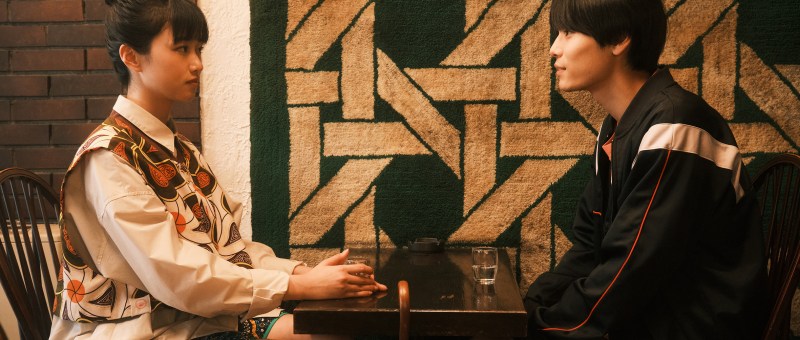
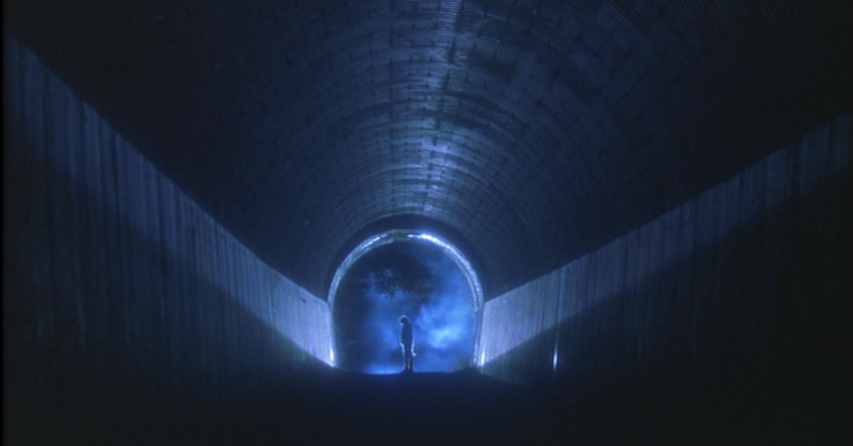
“The people you meet are only reflections of your own state of mind” according to a sympathetic tarot reader in Yuan Qing’s Three Adventures of Brooke (星溪的三次奇遇, xīng xī de sāncì qíyù). Perhaps that’s why she herself is slightly different each time we meet her, experiencing three sets of parallel encounters as she searches for meaning in a foreign land. Echoing Rohmer’s The Green Ray, Brooke’s three encounters allow her to examine more of herself until she learns to open her heart, no longer suspicious or afraid but ready to see the world’s beauty even in its sadness. 

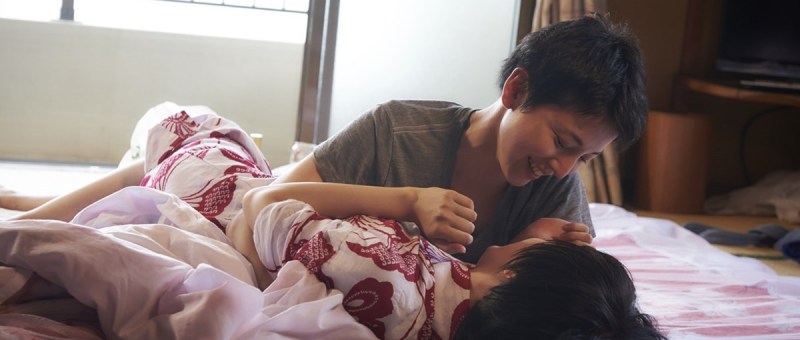
20-something Brooke (Xu Fangyi) has come to Alor Setar in Malaysia from Beijing. This appears to be a concrete fact, though many other things about her will change, at least in our perception of her. On June 30, her bicycle gets a puncture and she’s stuck, alone, in the middle of a country road without knowing who to ask for help. A series of strangers come to her rescue beginning with Ailing (Ribbon Ooi), a local girl who can speak Mandarin as well as Malaysian and Hokkien, who happens by Brooke looking distressed and takes her home where she shares some handy bicycle repair tips while explaining that her tyres were too pumped up for the head local climate and likely to explode. 

Brooke tells Ailing that she came to Alor Setar to visit her researcher father, but that he preferred to hang out with his colleagues, all geeky middle-aged men, playing mahjong and singing karaoke, so she got bored and decided to go travelling. The central crisis occurs when Brooke ventures into a shop selling crystals and is convinced to buy an extremely expensive one which is apparently something of a unique item. Brooke shows the crystal off to Ailing, but she’s quietly outraged, sure that Brooke has been taken advantage of by the unscrupulous salesman. Ailing takes it upon herself to try and get some of the money back, while Brooke assumes that Ailing has tricked her and made off with her “extremely valuable” piece of rock which the salesman assured her would help her find all the things she desires. In a strange way it does. Making her first enquiry with the tarot reader, she’s told that her own suspicious nature is to blame, the stone isn’t missing only in the wrong place and will be found again. She realises that she was wrong to suspect Ailing who has become a genuine friend, while regaining the stone for a much lower price only makes her question its value. 

It’s value and fear that concern her in second adventure which is taken with three chatty part-time council workers apparently working on a regeneration project designed to “accentuate” historical culture to make it more desirable to the young, though their intentions ma perhaps destroy the peculiar tranquillity of Alor Setar, turning it into just another anonymous town of glass and steel. This time around, Brooke tells them that she’s an anthropologist interested in the relationship between people and cities, but spends the day desperately trying to get away from the three guys who are both boring and perhaps mildly threatening in their determination to railroad her into doing as they please. 

The second encounter proving hugely satisfactory, on the third iteration of June 30, Brooke finds herself desperately pushing her bike towards somewhere that might be able to help her, eventually arriving at a garage where she meets melancholy blocked writer, Pierre (Pascal Greggory). This Brooke is a wounded widow, though unlike her previous two incarnations she already knows the secret of “Alor Setar” and has come because of it. Asked what “Alor Setar” meant, Ailing could only reply that it was just a place name and otherwise unimportant, while the guys had made a point of having a plaque made in English explaining that it means “starry brook” which happens to be the same as Brooke’s Chinese name. She’s come hoping to see this titular waterway, but is repeatedly told that it doesn’t exist before being guided towards it by a rather snarky “god”, only to be disappointed on its discovery. Pierre, meanwhile, is on a search for Blue Tears, on which she decides to accompany him, unburdening herself on her recent trauma to quiet, ironically fatherly older man on his own quest for meaning. “It’s a sad and beautiful world” he murmurs, accidentally or otherwise quoting Jarmusch’s Down By Law. The Blue Tears burn out bright, lighting the way as they go. Age has taught Pierre that it’s enough to live peacefully surrounded by the people you love, while Brooke is learning something similar in opening her heart to small moments of beauty and the fleeting joy of serendipitous meetings.


Trailer (English subtitles)
The Beast Hand (獣手, Taichiro Natsume, 2024)

This world makes monsters of us all in Taichiro Natsume’s low-budget indie body horror Beast Hand (獣手, Kemonote). In many ways, Osamu (Takahiro Fukuya) is pursued by his own left arm in his continual powerlessness and tendency towards self-destructive acts of crime and violence. But it’s also true that it isn’t just his hand that makes him monstrous to the world around him and that his “deformity” is also symbolic of the ways in which he is excluded from mainstream society.

Indeed, Osamu already lives a marginal existence in a cramped, reclaimed space on the edges of a town. Having served time in prison, he gets by doing casual labour and quite literally kicking the can down the road, while we also seem him shoplift a can beer after paying for his dinner. His life appears to be defined by futility even before Inui (Yota Kawase), a man with whom he seems to have shared a criminal past, arrives on his doorstep and barges his way back into his life. Technically on parole but having absconded from his probation office, Inui forces Osamu to give up the contact details for his old girlfriend, Koyuki (Misa Wada), who stopped visiting him in prison and was apparently so desperate to get away from him that she had “full body surgery” to essentially become someone else and start a new life.

Starting a new life is it seems something that they both want to do but are each unable to shake off the hold that Inui has over them. He, however, is in the same position and though he bullies and assaults them both, bows down before a man he met in prison who gave him extra food from the canteen. The old prison friend wants help on a job robbing the woman who still hands out physical pay-packets to workers at a local factory, but Inui turns him down stating that he’s still on parole and it’s too risky though secretly plotting to have Osamu do the job on his own. Predictably, it all goes wrong and Osamu ends up losing an arm only for Koyuki to drag him to a backstreet doctor who first refuses to help but then apparently experiments on him with a drug he’s researching into regenerative health with the consequence that Osamu’s arm grows back but as a monstrous lump of throbbing grey muscle that he is no longer able to fully control. At moments of high emotion, the arm takes him over and he’s transformed into a mindless, thrashing beast to the extent that Koyuki has to chain him to the wall to ensure her own safety.

Having bonded in their shared sense of subjugation, they once again attempt to change by living a more normal life in a small town by the sea. But even here, Osamu is rejected in part because of the arm itself, which he keeps disguised in bandages and a sling as if it were broken, and otherwise because of his secrecy about it which sees him fired by the kindly older gentleman running a factory where Osamu found temporary employment. Koyuki becomes pregnant, but financial pressures and the lingering anxiety about what kind of child this world might produce eats away at them. Osamu isn’t sure if the baby’s his or Inui’s nor which of those two options is better given that the child might inherit whatever’s infected his arm, while Koyuki is no longer certain about the viability of raising a child in their present circumstances. Both from single-parent families, they lamented that neither of them had the experience of being taken to the beach by their parents which seems to be the idyllic picture of a carefree childhood they’re trying to recapture.

But still they find themselves hounded and pursued, this time by a shady businessman who doesn’t want cure Osamu but to exploit him by ripping off his arm and using the technology for his own nefarious ends. The remorseful doctor also wants a tissue sample, but promises a salve in return that would at least subdue his violent impulses and allow him to live a more normal life. The implication is, however, that the only way Osamu can have the semblance of a happy family is by wilfully sacrificing himself and accepting that he has no place within in it. Condemned by his monstrousness to the edges of the frame, he accepts his liminality rather than railing against it and resigns himself to self-isolation as a permanent exile from a continually unforgiving society.


The Beast Hand is released in the US on DVD and blu-ray May 13 courtesy of Cleopatra Entertainment and available from MVD.

Trailer (English subtitles)
Peg O’ My Heart (贖夢, Nick Cheung Ka-Fai, 2024)

An insomniac taxi driver says he can’t sleep but he can’t wake up either. He finds himself plagued by bad dreams in an increasingly surreal Hong Kong that seems to exist more within the mind than the physical reality and populated by the orphaned ghosts of another era. Clearly inspired by the films of David Lynch with overt visual references to Lost Highway and Twin Peaks, Nick Cheung’s Peg O My Heart (贖夢) follows a maverick psychiatrist intent on actually treating his patients as he chases the taxi driver while in flight from his own trauma.

Dr. Man (Nicholas Cheung Ka-fai) is already in trouble for prying into the lives of his patients when his superiors, men in slick suits bickering in English, would rather he just get on with his job of prescribing pills. The first patient we see him treat is a teenage girl whose surreal dream sequence finds her on a swing in a room of blood while a giant baby doll looks on. Man notices an upturned doll’s head being used as a cup by one of her friends and begins to get a picture of what’s been going on. The apartment the girl lives in with her grandmother is cramped and grimy in the extreme despite the happiness banner on the door. The girl and her friends have taken to drugs to escape their own dissatisfying reality, but it led them to a dark place in which the boy abused the girl and left her with lasting trauma that blossomed into psychosis in much the same way’s Man’s own has. Nevertheless, in contrast to his bosses, he’s careful to remind her that she still has choices and it might not be the right time for her to have a child though he’ll help her whatever she decides.

In a strange way, it might be the taxi driver who’s responsible for her plight. In another life, Choi (Nicholas Cheung Ka-fai) was a high-flying financial analyst who could afford to give his wife a Mayfair flat on a whim, though you’d never guess it now. In those days, his hair was slicked back rather than long and wavy and his suit was finely buttoned rather than hanging loose. He wore glasses too, which he alarmingly no longer seems to do while driving. His eyes are red and puffy, his face pale like a ghost. On his return home, he and his wife have a number of strange rituals which make no kind of sense but hint at the extent that they have descended into a dream world, locked in by their guilt and the feeling that they are being tormented by a vengeful ghost. 

Then again, Choi’s heartless former colleagues describe him as being too sensitive for this line of work. They joke, a little misogynistically, that his wife was always the go-getter. Fiona (Fala Chen) was into stocks too, the pair of them playing a game of untold riches without any awareness of what it meant to gamble with other people’s money. His colleagues may have told him that’s exactly why it didn’t matter and it was silly to worry about it, but it seems Choi did worry, though the money distracted him from his moral quandary until the lack of it convinced him to betray an old friend with tragic and unforeseen consequences. 

Choi and Fiona are plagued by echoes of a single afternoon, one of sunlight and happiness that they unwittingly ruined with their insatiable greed. Dr. Man, meanwhile, says he has the same dream every night but can’t remember anything about it in the morning. That’s a contradictory statement in itself, though his loyal nurse Donna (Rebecca Zhu) doesn’t seem to have picked up on the holes in his story. In any case she introduces him to his previous boss, Vincent (Andy Lau Tak-wah), a former psychiatrist with an unexplained prosthetic arm, who has the power to enter other people’s dreams and seems to exist in more than one place at once, like the Mystery Man in Lost Highway. Exploring his dreamscape allows Man to reckon with his own trauma and subsequently learn to forgive and accept his father, though he may not, in fact, have faced himself fully or released his guilt even as he and Choi eventually share a similar fate. Are either of them awake, or still asleep? Did Man go through the mirror, or merely deeper inside it? The melancholy streets of contemporary Hong Kong take on a deathly hue trapping its traumatised denizens in an inescapable hell of guilt and regret from which they can never awake.


Trailer (English subtitles)
BON-UTA, A Song from Home (盆唄, Yuji Nakae, 2019)

Exiled from their homes, the residents of Futaba lost more than just their material possessions when the area was declared uninhabitable following the Fukushima nuclear disaster. With former residents scattered all over the country never knowing when or if they will be able to return, a community has been ruptured and its history is in danger of dying out. Yuji Nakae’s poignant documentary Bon-Uta (盆唄) explores this sense of loss through the prism of the Bon dance while meditating on the notion of exile in comparing the experiences of migrants and Hawaii and their descendants. 

A photographer, Ai, has been photographing Bon dances in Japan and Hawaii and was struck by the Hawaiian response to the 2011 earthquake, seeing as many of the Japanese-Americans living in Hawaii traced their ancestry back to the Fukushima area. Hisakatsu and Haruo, childhood friends from Futaba, travel to Hawaii and observe the Bon dance, reflecting that it is different from that in Japan but perhaps in some ways better. Seeing how they have incorporated many different styles of Bon dance gives them the idea that they could save the Futaba dance by teaching it to the Hawaiian dancers, placing it in a kind of depository so that in 50 or a 100 years if Futaba becomes habitable again, their descendants could relearn it. But what they quickly discover is that it’s difficult to teach something that each of them has spent their whole lives learning in a matter of days, while the fact is that the community itself is central to the dance which loses its meaning when performed by those who’ve never been there. 

Nakae begins to meditate on insiders and outsiders as an older woman returns to her family home in the exclusion zone and uncovers papers from the 19th century which recount the discrimination her own family faced on being encouraged to move to the village following a massive famine which had reduced its population by two thirds. Now outsiders in the areas in which they have resettled, the former Futaba residents lament that they can no longer practise their art because their homes are in much more urbanised locations where neighbours are in close proximity and they fear disturbing them with the noise. The film equates their yearning for their lost community to that felt by those who emigrated to Hawaii in the 19th century hoping to escape rural poverty but often found themselves trapped, unable to return because of the low pay and exploitative conditions of the island’s sugar plantations. 

The Hawaiian migrants sang songs of exile, of how they missed their homes and families and how hopeless felt in the false promises that had been made to them of better lives abroad. Even in this, their culture survived while another, now elderly, woman recounts singing for a Japanese orchestra during the war when such songs were technically forbidden as other young men keen to claim their identity as Japanese-Americans enlisted in the military. The former Futaba residents begin to see new hope that they too could find a way to preserve a sense of their hometown even if they can’t return to it, deciding to organise a Bon dance of their own in another town bringing together the unique dances of each district while honouring the spirits of those who have passed away. 

Hisakatsu writes a new Bon song of his own from the point of view of a cherry tree in Futaba to ward off the “ogres” which stand in for radiation as the tree looks forward to blossoming once again, hoping the people will eventually return. Featuring a lengthy animated sequence recalling the experiences of the 19th migrants to Futaba who found themselves rejected as outsiders while reflecting on the contemporary exile of the former residents, the film eventually discovers a note of positivity and hope that even now scattered and unable to return to their homes the community can survive through the practice of its culture in passing on the unique local Bon dance to successive generations just as the migrants in Hawaii passed theirs on to their children in the hope they too might one day be able to return home.


Trailer (English subtitles)
Red Flowers and Green Leaves (红花绿叶, Liu Miaomiao & Hu Weijie, 2018)

“They do things their way. We do ours our way” according to the rapidly maturing young husband at the centre of Liu Miaomiao & Hu Weijie’s touching marital romance, Red Flowers and Green Leaves (红花绿叶, hónghuā lǜyè). Shining a light on the under-explored culture of the Hui Muslim minority in China’s northwest, Liu and Hu’s heartfelt drama has some questions to ask about the potentially destructive effects of traditional culture, but ultimately allows its young couple to discover their own kind of happiness as they learn to understand each other while embracing their own senses of natural goodness.

The hero, Gubo, was diagnosed with a mysterious illness, apparently similar to epilepsy, some time in childhood, and has been written off by those around him ever since. Because of a deep sense of shame and inadequacy stemming from his condition which threatens but does not often interfere with the quality of his everyday life, he has long convinced himself that he will never marry or be very much of anything at all because he has “nothing to offer”. His well-meaning mother keeps trying to marry him off, but Gubo is convinced she does it to assuage her feelings of guilt in blaming herself for his illness (he does not blame her, but does harbour resentment towards the village’s irritating doctor, Li Feng). In a surprise development, Gubo’s aunt appears to have found the ideal match in an improbably beautiful young woman, Asheeyen, but his mother remains uncertain that Gubo can be talked into it. A conversation between the two older women makes plain that the reason the beautiful Asheeyen has not yet married has something to do with an incident in her past which has made her unsuitable in the eyes of some for marriage. Though the older generation are aware, they decide that it’s better the youngsters do not know of the other’s “issues” and that they rush the marriage through as soon as possible to prevent it potentially breaking down. 

Despite himself, Gubo is smitten and allows himself to be swept into marriage but their early relationship is indeed as awkward as one might expect. Gubo, a kind and sensitive person, is keen to stress that he means to put no pressure on the nervous Asheeyen who spends most of their wedding night crying, but the distance between the pair even as Asheeyen blends seamlessly into the household, arouses the suspicions of the nosy aunt whose gentle prodding (secretly removing the second duvet to force them to share) begins to have the desired effect. But the central problem remains that each remains ignorant of the other’s “secret” and worried what will happen when it is eventually revealed. For Gubo that occurs when he’s turned down for social support after being unfairly usurped by Doctor Li who swipes it for his own disabled wife by wielding his social status against the mild-mannered Gubo who’d rather not have to deal with him anyway. 

Doctor Li does indeed seem to do more harm than good, even if Gubo’s father later dismisses everything he says as “bullshit” not to be taken seriously. Li feels Gubo blames him for his condition because of some treatment he gave him as a child, while Gubo appears to resent him for constantly harping on about the limitations of his illness which seem to be far exaggerated. Doctor Li doesn’t quite think people like Gubo should marry at all, let alone have children. Even Gubo’s haughty brother Shuerbu, preparing to enter the military academy, writes him off a useless idiot while intensely jealous of his beautiful wife. When the couple eventually conceive a child, Doctor Li goes so far as to suggest that it shouldn’t be born because Gubo’s condition may be hereditary and he finds it distasteful for him to have a child, while Shuerbu thinks it’s unfair because Gubo will not be able to look after it and the burden will fall disproportionately on Asheeyen. 

Asheeyen, by contrast, is mildly ambivalent to her circumstances in view of the mysterious past but is also struck by Gubo’s goodness. Her sister-in-law, while openly criticising her brother as a husband, agrees that Gubo is a “decent” man, the criteria being a mix of the ability to provide material comfort with a genuine intention to care. Realising that they both have secrets the other was not aware of reawakens Gubo’s sense of inferiority, reminding him that they’ve been paired off together because they were each viewed as somehow “damaged”. Discovering Asheeyen’s past sends him into a petulant, depressive funk that threatens to ruin everything in a mistaken bout of destructive male pride, but eventually love wins out. Asheeyen and Gubo may have been railroaded into a traditionally arranged marriage not quite against their wills, but that doesn’t mean that they have to go on doing everything traditionally, taking their elders’ advice at face value and always falling victim to the unpleasant Doctor Li who reacts to Gubo’s grudging agreement to buy his scooter even though Doctor Li is always telling him he’s too disabled to ride one because Asheeyen could use it with a surprised “I suppose we even have women driving trains these days”. Coming together, the couple are resolved to do things in their own way and make their decisions together, no matter what the future might bring.


Trailer (English subtitles)
Laddaland (ลัดดาแลนด์, Sophon Sakdaphisit, 2011)

Laddaland (ลัดดาแลนด์) is a strangely haunted place. The people who live there are mainly ghosts, but also haunted by the spirits of financial anxiety and toxic masculinity amid the continual impossibility of an aspirational suburban existence and happy family life. In the opening scenes, a man patiently sets up the new home he’s bought for his family, painting a cherry blossom tree on his daughter’s wall and throwing a Ben 10 quit over his son’s bed. “I’m glad all four of us are finally together,” he sighs to an empty room while sitting alone at his dining table. 

But there are already cracks in the foundations of this family which probably can’t be repaired by simply moving into another life. They had already been separated by financial anxiety with eldest daughter Nan (Sutatta Udomsilp) living largely with her grandmother who seems to come from a much wealthier, class-conscious background. Her father Thee’s (Saharat Sangkapreecha) desire to reunite his family breaks that Nan had formed with her grandmother, to whom she is constantly on the phone, and it is unsurprising that she isn’t happy about being forced to leave her friends in Bangkok to live in this suburban paradise. Yet her attitude towards her father is in part motivated by his failure to give her this life, repeatedly reminding him that he essentially abandoned her and is incapable of doing what is expected of a man in providing for his family.

It’s this sense of toxic masculinity that may have prompted Thee to embark on this grand venture. The house he’s bought on an aspirational housing estate in a recently gentrified area is a large family home and as his wife Parn (Piyathida Woramusik) reminds him, the mortgage is bit of a stretch. But Thee is so focused on his dream that he can’t think of anything else. He’s given up his steady job and gone in with a friend on what is very obviously a dodgy pyramid scheme. The foundations of his new middle-class life are built on shaky ground, while every attempt at rapprochement with Nan seems destined to fail as he becomes an increasingly authoritarian father and she a resentful and contemptuous teen. 

But times are hard for everyone. The woman next door already lives like a ghost because her husband is violent and abusive. Parn tries to help her, but there isn’t much that can be done. We learn that the man is also, like Thee, under increasing strain from financial anxiety as his factory business flounders amid the turbulent Thai economy. He too is subject to the same sense of humiliation and insecurity as a man who is failing to live up to the codes of masculinity in being unable to provide his family with a comfortable life. Thee doesn’t exactly become violent, but he does later buy a gun after being burgled and fantasise about using it to free himself of his responsibility and the burden of this aspirational life that he can’t really afford.

In an odd way, the ultimate transgression may have been his attempt to hire a maid. A local Burmese woman, she is soon found dead in a house owned by a foreigner and thereafter becomes a more literal ghost haunting the local area and his family in particular due to their attempt to exploit her for cheap labour, perhaps hinting at Thailand’s relationship with Myanmar. Yet it’s also Thee who seems to have been possessed by a vengeful spirit, becoming increasingly cruel and irrational in his attempts to hold on to his home while simultaneously alienating Nan by refusing to listen to her or let her hang out with her new friends. Even Parn begins to turn against him, fed up with his financial fecklessness and pondering swallowing her pride and going back to her mother who loathes Thee for ruining Parn’s life by getting her pregnant in college. Parn suggests going back to work, but that doesn’t fit Thee’s old-fashioned vision of a patriarchal family while he also accuses her of having had an affair with her admittedly sleazy former boss and needles her about leaving him for someone with better financial means. Perhaps this the curse of Laddaland, a liminal space inhabited by hungry ghosts obsessed with fulfilling aspirational, if outdated, ideas of suburban bliss only to end up destroying the very house they were trying to build.


International trailer (English subtitles)
Sincerity (まごころ, Mikio Naruse, 1939)

When the daughter of a poor family leapfrogs that of a rich one to be named top of the class, it exposes a series of hypocrisies and contradictions within the militarist order in Mikio Naruse’s 1939 drama, Sincerity (まごころ, Magokoro). The film opens, however, with a parade led by the Patriotic Women’s Association seeing young men off war. The group is led by Mrs Asada (Sachiko Murase), the mother of the rich girl, Nobuko (Etchan), who is busy giving orders to the other women regarding the air defence watch and sweet potato market which seems very forward thinking for the time period.

But in other ways it’s Mrs Asada who comes in for the greatest criticism as her bossiness and involvement with patriotic activity is depicted as a kind of displacement activity to mitigate her sense of uselessness and unhappiness in her marriage to arch militarist Kei (Minoru Takada) whom she fears is still hung up on his old girlfriend, Tsuta (Takako Irie), who is also the mother of Tomiko (Teruko Kato), the poor girl and apparent model student who has just displaced Nobuko as the cleverest girl in the class. Through Mrs Asada is rightly concerned that Nobuko has dropped a whole 10 places, Kei is not bothered by it at all because she is physically robust and healthy, which are the two most important qualities from a militarist perspective, leaving aside the fact that many wouldn’t regard a woman’s academic success as particularly important. Indeed, Kei is dismissive of his wife. Mrs Asada suggests that he finds her “stupid” and that their daughter is “stupid” by extension while Tsuta’s is clever and earnest because Tsuta is the same. He tells her that a child’s education is the mother’s responsibility and it’s probably her fault for busying herself outside of the home with her wartime activities with the implication that she’s been neglecting her child and that’s why her grades have fallen.

This point seems contradictory seeing that even at this stage, the nation expects women to serve their country in ways other than dedicating themselves to their families which is a responsibility secondary to that they owe to the emperor. Nevertheless, the implication remains that she’s doing it for the wrong reasons because what she enjoys is the status it gives her and the power of being in charge. Unlike Tsuta who has no husband, Mrs Asada’s family is wealthy with servants to take care of the domestic work so has nothing to do all day, while it’s also clear that the marriage is more or less dead and Kei does not particularly care for her, which he later admits, though partly because he has already rededicated himself to the nation in eagerly anticipating his call-up letter. When he’s first introduced, Kei is admiring a sword he’s having made ready for when he gets his papers to enlist as an officer. 

It’s a remark about Kei’s call-up that first sets alarm bells off in Tomiko in noticing the sadness it provokes in her mother, itself a little transgressive from a propaganda perspective. The grades situation doesn’t affect the girls’ friendship in the slightest, though this sudden reckoning with the past does begin to place a wedge between them not only in a growing awareness of their class differences but an awkwardness about the complicated situation between their parents which they are not well equipped to fully understand. Tsuta first tries to tell Nobuko the truth, but it upsets her so much that she lies instead and says that it’s true she knew Kei in the past but only as an acquaintance not a romantic partner. Nevertheless, the fact that she called him “Kei” rather than “Keikichi” or whatever his surname was before he married into Mrs Asada’s family suggests a great degree of intimacy which is something Tomiko seems to pick up on. 

There’s a persistent implication that Kei may be the father of both girls, which further reinforces the idea that their contrasting characters are a product of the way their mothers have raised them. Nobuko is described as self-involved and lazy, characteristics which reflect her privileged upbringing and sense of entitlement. Mrs Asada tries to talk to her new teacher, Mr Iwata, but his opinion is that Nobuko was most likely coasting and is struggling now because the work is more difficult and she hasn’t learned how to study or developed a consciousness that results are born of what you put into them. She, and her mother, simply expect to come top because it’s what a girl of her status deserves. Her displacement is a discomforting inversion of the social order. In this, the film both undercuts and reinforces militarist ideology in stressing the importance of hard work for all while doing so at the expense of a reverence for feudalistic ideas of class hierarchy. 

It’s this class divide that is transgressed when Kei sends the present of an expensive French doll to Tomiko after she and her mother come to Nobuko’s rescue when she cuts her foot on some sharp rocks while the girls’ are playing together at the river. The gift seems rather extravagant for the relatively minor act of kindness Tomiko and her mother performed which accidentally reunited Tsuta and Kei though neither of them say very much and while Tsuta seems to look at him longingly, Kei appears indifferent. Nevertheless, the grandmother suggests the doll reflects Kei’s sincere heart with the implication that it reflects his continuing attachment to Tsuta. Tsuta wants to refuse it, but realises she can’t because Mrs Asada likely doesn’t know and her finding out would just cause more trouble, though it’s a painful reminder of her romantic disappointment. 

Tomiko ends up sending it back herself with a note for Nobuko explaining everything. Nobuko then limps off with her injured foot to return the doll to Tomiko and tell her none of that matters, she wants her to have the doll anyway. The doll then becomes a symbol of the sisterhood between the girls and the erasure of the class boundary between them. Tomiko can be seen holding the doll when they join the parade to send Kei off to war, while Tsuta and Mrs Asada also smooth out the misunderstandings between them to celebrate Kei’s mobilisation together. The message here is more that old differences must now be put aside so that everyone can serve the nation together rather than selfishly fixating on personal drama such as wounded pride or romantic heartbreak. Even so, Naruse slightly undercuts the patriotic conclusion with the hint of sadness on Tsuta’s face before she recomposes herself to smile at Mrs Asada and reinforce the sense of solidarity between them, while what we’re left with is the memories of the idyllic countryside setting and sense of pastoral serenity along with the sincerity of the relationship of the two girls which is rooted not in patriotism but genuine friendship that cares nothing for the divisions of social class or the rigidities of the adult world.


Sincerity screens at Japan Society New York May 10 as part of Mikio Naruse: The World Betrays Us – Part I.

Images: Collection of National Film Archive of Japan

The Dumpling Queen (水饺皇后, Andrew Lau, 2025)

There are a lot of ironies and contradictions at the heart of Andrew Lau’s Dumpling Queen (水饺皇后, shuǐjiǎo huánghòu) inspired by the life of Zang Jianhe who founded the international dumpling empire Wanchai Ferry, but there’s no getting away from the celebratory joy it finds in the heroine’s hard-won transition from jilted spouse to successful entrepreneur. Then again, there might be something uncomfortable in the film’s framing and the repeated claim that Jianhe’s dumplings are about the warmth of familial bonds and reunion. Zong’s desire to kick back at American imperialism as manifested in the ubiquity of hamburgers and US-style delivery pizza by making Chinese dumplings accessible across the world is also an advocation for the One China philosophy in which the greater Chinese diaspora is connected as a family through “the taste of home.”

Beginning in 1977, the film is noticeably quiet about why anyone would be risking their lives to escape from Mainland China to Hong Kong, though this is what Jianhe is doing in her quest to be reunited with her husband, Hanzhou, who has been away for four years. Unfortunately, when she reaches the station at the border, Hanzhou’s mother (Nina Paw Hee-ching) rudely explains that she had him marry another woman in Thailand who has since borne him a son. Branding Jianhe a failure for giving birth to only daughters, she tells her that she can come with them but that she will be the second wife subservient to the mother of the family heir. She repeatedly claims this does not make Hanzhou a bigamist because Thai law supposedly gives him the right to marry more than one woman, though it seems the mother-in-law may not be aware that the pair were legally married in Mainland China as Jianhe’s traditional wedding photos would otherwise suggest. 

The fact that Jianhe is discarded for giving birth to daughters contributes to the film’s feminist undertones and sense of female solidarity as Jianhe strives to pass on the dumpling recipe she learnt from her own mother to the next generation of women and beyond. Jianhe must now find a way to fend for herself, which she eventually does through a combination of hard work, excellent business sense, and the supportive community around her. Though Jianhe and her children face some instances of prejudice against Mainlanders when they first arrive, they are helped by various people including enigmatic landlady Hong Jie (Kara Wai Ying-hung) who makes her a part of her boarding house community and tries not to pressure her about the rent out of consideration for the children,

But times are sometimes hard and Jianhe is directly contrasted with the woman across the way whose husband has a gambling problem and beats her. Having been injured in a workplace accident that leaves her unable to work as she had been before, Jianhe begins to feel hopeless and considers taking her own life only to be saved by her children and a neighbour who sells dessert soups, but the other woman is not as lucky and eventually makes a fateful decision, blaming herself for the man her husband has become. Jianhe is also given another shot at romance with a sympathetic policeman (Zhu Yawen) who comes from the same area of Mainland China and is taken by her dumplings, but he also wants to move abroad and Jianhe has already followed one husband to another country and it didn’t work out so well. It’s not so much that she sacrifices love for career success, the policeman could after all simply chose not to go, but that she no longer needs to compromise herself for marriage because she’s fulfilling herself through her business enterprise.

Just as the film doesn’t mention why Mainlanders came to Hong Kong, it doesn’t really go into why some Hong Kongers choose to leave save for a brief onscreen text mention about the beginning of the negotiations for the Handover though Jianhe is repeatedly keen to emphasise the universal Chineseness of her dumplings. She makes a deal with a Japanese department store, but threatens to walk when they try to make her change her packaging to bring it into line with their house style and thereby erase its cultural identity. She also refuses to allow them a monopoly after they demonstrate their lack of trust in her as a businesswoman, quickly realising she’s better off making deals with every supermarket on the island as well international flour companies. Jianhe is pretty quick to cotton to new technologies such as household refrigerators and the possibilities for frozen foods. But at the end of the day, she’s earnest and hardworking, sharing her success with her many friends who helped her along the way and always repaying kindness when she can. It’s an oddly utopian vision at times in which everyone seems to recognise Jianhe’s greatness and get out of her way, including a triad boss who helps her because she reminded him of his mother when she threatened one of his men with a meat cleaver,) but it also reinforces a sense of the One China family with the dumplings, now refined to suit local tastes, as the glue binding it together in the face of an onslaught of hamburgers and pizzas as harbingers of a cultural apocalypse.


International trailer (Simplified Chinese / English subtitles)

My Sunshine (ぼくのお日さま, Hiroshi Okuyama, 2024)

A golden light seems to pour into the life of Takuya (Keitatsu Koshiyama), a nervous young man with a stammer, as he stands transfixed by the elegant movements of a figure skater. As the world around him literally brightens, he begins to discover another side of himself, though it’s never quite clear if it’s Sakura (Kiara Takanashi), a moody teenage girl whose attitude to figure skating seems ambivalent at best, with whom he’s fallen in love or the simple act of figure skating itself. 

Drawing on autobiographical experience, Okuyama studied figure skating himself while his older sister trained to be a champion, My Sunshine (ぼくのお日さま, Boku no Ohisama) otherwise roots itself in the small-town Japan of the late ‘90s and 2000s in which being different was not exactly welcomed. But in fact, most people seem accepting of Takuya, if in a sometimes patronising way, viewing him as a boy with his head in the clouds and cutting him off when he attempts to speak rather than give him the time to finish. When the teacher is going around the class asking the children to read out a stanza of a poem each, he picks on Takuya and tells him to take his time, though the boy’s anxiety is palpable. The teacher may be caught between two options and struggling to decide which is better, not asking him to read at all to spare him from his classmates’ mocking which would also be to exclude him and reinforce a sense of inferiority in his otherness, or to ask him deliberately and try to encourage patience to teach him and the other children that there’s nothing wrong with the way he speaks. 

But in any case, Takuya is already something of an outsider in that he has no aptitude for sports and it’s never clear if he actually enjoys them or just participates because it’s what you do in this town to be man. When a recent arrival to the town and former international pro-figure skater Hiroshi (Sosuke Ikematsu) catches sight of him clumsily trying to teach himself how to dance like Sakura, it enlivens something in him that reminds him of the passion he once felt for skating. He finds himself wanting to help the boy, gifting him his old figure skating skates and teaching him for free before hitting on the idea of training him alongside Sakura as a pair.

Sakura isn’t all that keen to begin with, though at times, it seems as though she may not even like figure skating and is only doing it because her mother makes her. She tells Hiroshi that she isn’t aiming to become the best ice dancer and is a little resentful of being forced to go back to basics to meet Takuya’s skill level but goes along with it because the coach says so. What she thinks of Takuya isn’t exactly clear, though she seems to look down on him a little like the other kids who also mock him giving up ice hockey to do a “girl’s” sport. For her part she seems to have a crush on the handsome and mysterious Hiroshi that, like Takuya, she is unable to articulate. For this reason, along with an insecurity in her talent, she resents the special attention Takuya seems to be getting when it’s her mother who’s paying for the lessons and comes to the conclusion that he’s just more interested in him than her.

She may not altogether be incorrect. In his early coaching sessions with Sakura, Hiroshi doesn’t seem all that invested and is distracted by Takuya in the same way Takuya is distracted by the sunlight or the snow. In trying to help Takuya, he’s trying to help himself and for a time succeeds as the three of them generate a joyful familial relationship, culminating in a day skating on a frozen lake. But he too is unable to be honest about the fact that he came to this rural town to be with his partner who decided to take over the family business when his father passed away. Kai (Ryuya Wakaba) laughs off questions about whether he’s married yet, and the two men seem to live together quietly otherwise isolated from the community around them. When Sakura catches sight of them together, she realises something she may not really be equipped to fully understand, only further deepening her sense of resentment in an unreasonable feeling of betrayal. It isn’t really homophobia that motivates her as much jealousy when she suddenly brands Hiroshi as “‘disgusting” and accuses him of getting a kick out of making a boy do a girl’s sport, excusing her conviction that he prefers Takuya over her and potentially giving herself an out to quit skating (though it seems her mother’s not taking the hint).

But like Sakura, Hiroshi is also uncertain if this is the right place for him or if he and his partner can really live together in this small town permanently. Though he answers “of course” when Kai asks if he’s glad he came, Hiroshi pointedly gives no answer when he’s asked if he really wants to be here. Kai says that he hasn’t talked about skating like this for ages nor seemed so happy, suggesting that there may have been something missing in his life that the relationship didn’t compensate for and may not survive without. How his professional career ended is never explained, though his telling Sakura that he only got to compete internationally because of the lack of male dancers speaks to a degree of insecurity that contributes to a lack of ambition in his personal and professional lives. All three of them are, for varying reasons, unable to say what they really want or how they really feel. Though they find temporary solace in their fragile bond, it is only, as Takuya’s brother cruelly puts it, meant to last until the snow melts. Nevertheless, now dressed in a new school uniform clearly far too big for him that suggests he has some more growing to do, Takuya may have found a means of self-expression in dance that might give him the courage to speak his mind.


My Sunshine screened as part of this year’s Queer East.

Trailer (English subtitles)
Silent Sparks (愛作歹, Chu Ping, 2024)

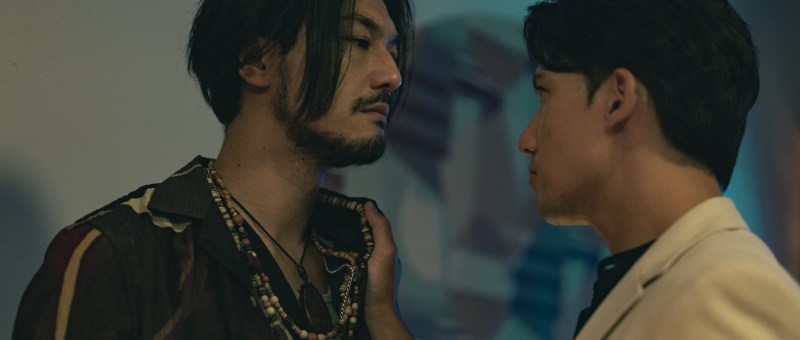
Recently released from prison, a young man discovers that it might be easier to be free behind bars than amid the incredibly homosocial world of urban gangsterdom in Chu Ping’s poignant LGBTQ+ drama, Silent Sparks (愛作歹, ài zuò dǎi). Pua (Akira Huang Guang-Zhi) is a kind of silent spark himself. As the gang boss describes him, he’s too rowdy and can’t keep his cool, which makes him a liability, but he’s also reticent and lonely, not to mention hurt by the seeming rejection when the man he fell in love with in prison ignores him on his release.

There is indeed a latent violence in Pua that hints at his frustration and inability to express himself. When we see him enter prison, he appears as a small boy lost in his own thoughts and silently crying, though he was sent there for breaking a man’s leg in a fight. Though he’s served his time, Pua is still paying off the monetary compensation he owes to the man whose leg he broke and otherwise struggles to get by, which leaves him almost dependent on the gang boss who agrees to take him under his wing as a favour to his mother. It seems that he once knew Pua’s long-absent father, presumably also a gangster, and plays a quasi-paternal role but only half-heartedly in seeing Pua more as a resource to be employed or otherwise an irritating burden he can’t quite seem to shake.

It was the gang boss who asked Mi-ji (Shih Ming-Shuai), his right-hand man, to “look after” Pua in prison. The boss sneers a little, and claims responsibility for saving him, adding that things could have ended up “real nasty” for him inside, by which he means “getting it up your ass”. The irony is that Mi-ji was Pua’s prison lover and Pua is excited about the idea of his release fully expecting to pick up where they left off. But the reunion between them is awkward. Mi-ji is not happy to see him. He speaks tersely and makes it clear he’s not exactly keen for a catch up while keeping one eye on the room in case anyone is getting the right idea. Though Pua continues to pursue him, Mi-ji is avoidant. Perhaps for him, it really was a prison thing that he’s embarrassed about on the outside, whereas Pua is more secure in his sexuality and less afraid of its exposure, only longing to resume the intimacy they once shared.

Mi-ji’s ambivalence hints at the toxic masculinity and entrenched homophobia of the world around them in which homosexuality is not really accepted and “getting it up your ass” is synonymous with defeat and humiliation. The irony is that Pua and Mi-ji were freer in prison where they could embrace their love without shame. Pua is imprisoned within the outside side world by virtue of being unable to be his authentic self, but is also trapped by his socio-economic prospects, which leave him dependent on the underworld and the dubious paternity of the gang boss. Expressing his frustration through violence damns him further in leaving him with mounting debts he can only hope to satisfy through acts of criminality. It is really on this side of the bars that the “real” prison lies, and it’s from this world that Pua longs to be released to return to the prison utopia of his love with Mi-ji.

Still, he cannot really escape his destiny, as his mother keeps reminding having read his tragic gangster fortune and trying to get him to eat rice noodles for 100 days to change his fate only to get her heart broken realising salvation for her son might mean something quite different than she had imagined and also take him away from her. Gritty in its gangland setting and hinting at the connections between political corruption and organised crime Chu’s slow-burn drama makes a hell of the contemporary society in which men like Pua find themselves trapped by toxic masculinities and hierarchal violence under an intensely patriarchal social order that permits them little sense of possibility or the ability to be their authentic selves and true freedom is to be found only within the homosocial world of a more literal “prison”.


Silent Sparks screens at Rio Cinema 5th May as part of this year’s Queer East.

Trailer (Traditional Chinese / English subtitles)