 Written by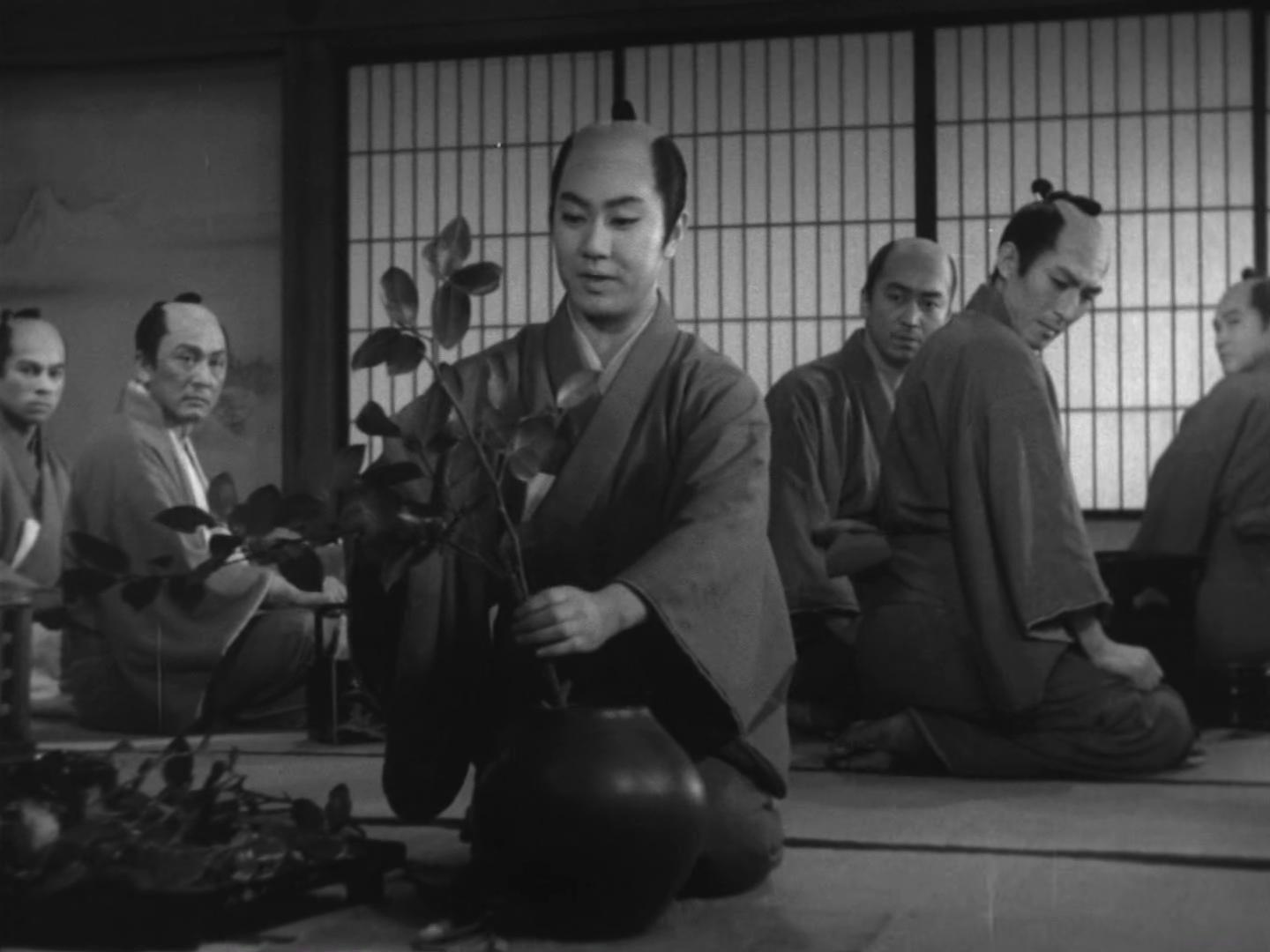
Adapted from the final part of Mayama Seika’s cycle of kabuki plays recounting the story of the 47 ronin, Hiromichi Horikawa’s Last Days of the Samurai (琴の爪, Koto no Tsume) follows the avengers in the days after the Ako raid as they await their fate knowing that they will likely be condemned to die. Essentially a romantic tragedy, the tale focuses on Jurozaemon Isogai (Senjaku Nakamura) whose samurai resolve seems a little too solid to the men’s leader, Kuronosuke Oishi (Matsumoto Hakuo I), who worries that it may be an all too vulnerable artifice.
Jurozaemon is the most dispassionate or perhaps pessimistic of the men. Though the ronin are held in high regard by the people, the opening scenes see street vendors cashing in by renaming their products such things as “Loyal Retainer Rice Cakes” along with a young man being arrested for committing a similar act of revenge, and the men are assured that the shogunate is urgently searching for an excuse to pardon or exile them, Jurozaemon is certain they will die. He thinks their jailor, a kind man named Den’emon, was only trying to boost their morale and that the fact they have been sent flowers by the powers that be is coded message designed to let them know that their death sentences have already been issued.
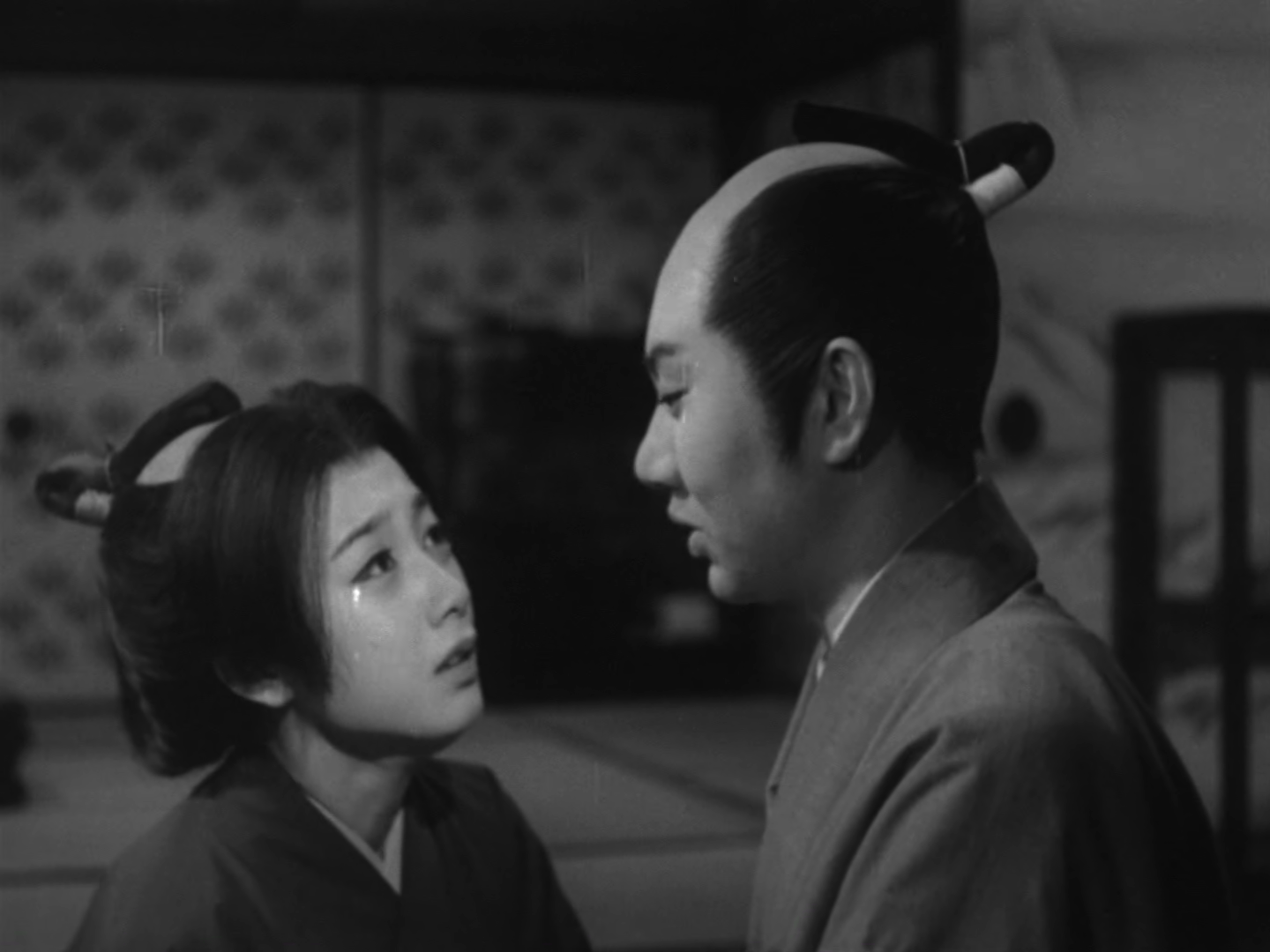
While the other men express their anxieties, Jurozaemon alone remains stoic, which is what worries Oishi. He fears this may be an act of bravado on Jurozaemon’s part designed to mask his internal conflict and that, therefore, if they are called on to commit ritual suicide, his resolve may crumble and embarrass them all in death. It’s the question of Jurozaemon’s resolve that is at the heart of the play as it faces a challenge from a young woman, Omino (Chikage Ogi), to whom he had once been engaged. Jurozaemon laughs off the affair and tells Oishi that Omino means nothing to him. He says that he only agreed to marry her for strategic reasons in service of their revenge plot and points out that Oishi did the same with several women himself. Oishi does not deny this, but does admit that even if his primary reason for associating with them was not romance, he did enjoy their company. He wonders if Jurozaemon is playing down his feelings for this woman and if they will eventually cause him to waver in reluctance to leave this mortal life behind.
In one sense, neither Oishi nor Jurozaemon express regret for using women in this way, but, at the same time, the almost crazed devotion of koto-player Omino forces them to reckon with the ethical dimensions of their actions. Unable to understand why Jurozaemon suddenly walked out on her, she demands to be let into the compound to see him. It’s imperative to her that she find out what his true feelings really were, if he ever really loved her or was only using her for his mission of revenge. Unable to gain entry, she eventually convinces her father’s friend Den’emon (Ganjiro Nakamura) to sneak her in dressed as a boy, but unfortunately, her disguise fools no one. Nevertheless, on learning that they are to die, Oishi relents and has Jurozaemon brought to her, perhaps hoping to answer the question for himself. Jurozaemon, however, treats her coldly and says that he was only using her. It seems that he does this as a means of protecting her, hoping that she will go on to lead a long and happy life with someone else rather than join him in his ritual suicide.
The question is therefore answered to the point of perfection in that Jurozaemon is unshaken in his samurai resolve while allowed the poetic expression of his human feelings in having kept one of Omino’s koto picks on his person until the moment of his death. Horikawa keeps the deaths off screen with only a retainer calling out the names of those who are to die, lending them an elegiac quality that restores their righteousness rather than condemning the absurdity of their deaths. One of Toho’s 60-minute “Diamond” B-movie series, the film mixes an ironic humour in the men’s consternation realising they don’t actually know how to commit seppuku because none of them have ever seen it, to the sudden emergence of 47 ronin merchandise, with the gentle melancholy of tragic romance and the effects of these men’s obsessive revenge on those they’ve left behind.

