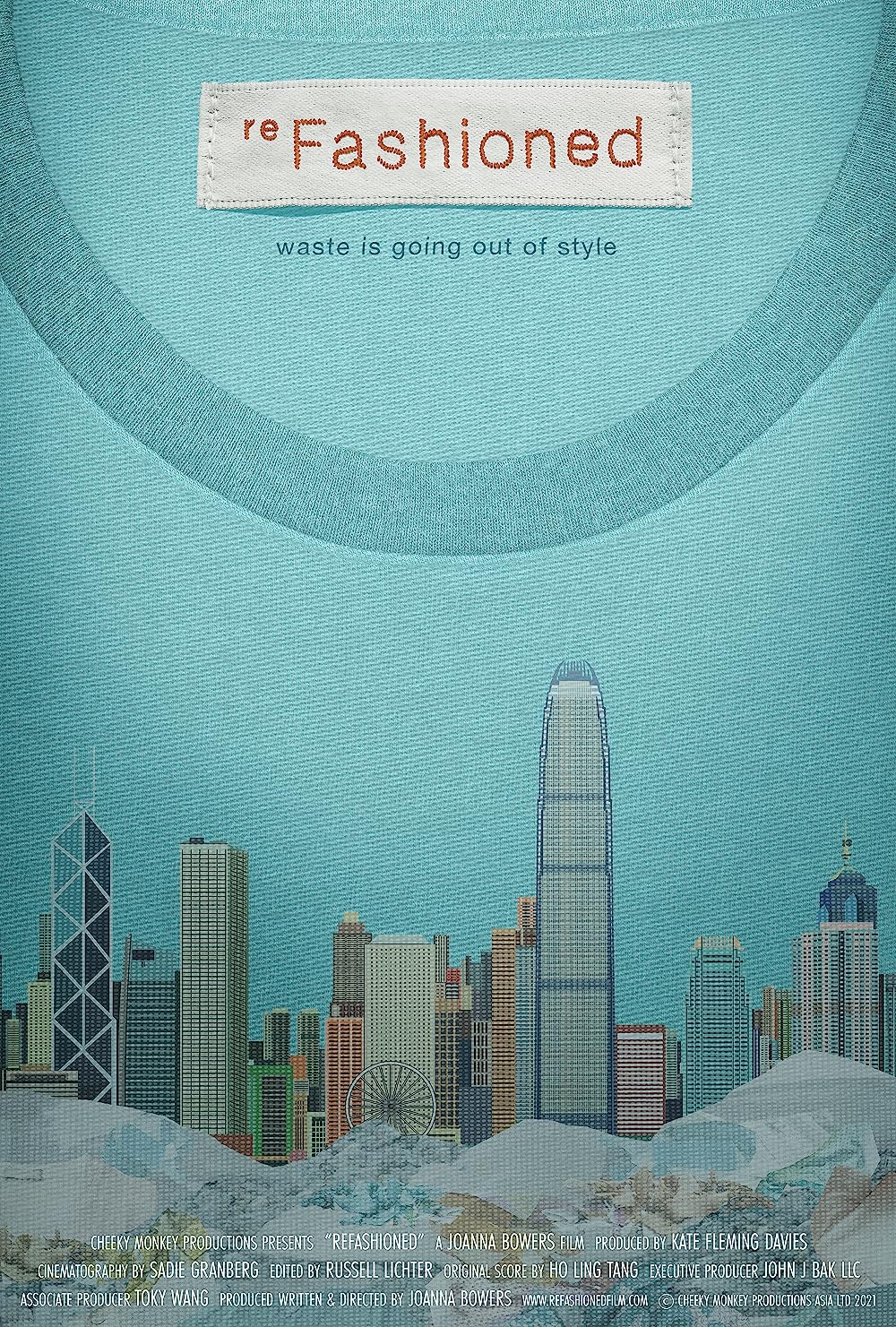
ReFashioned (Joanna Bowers, 2021)

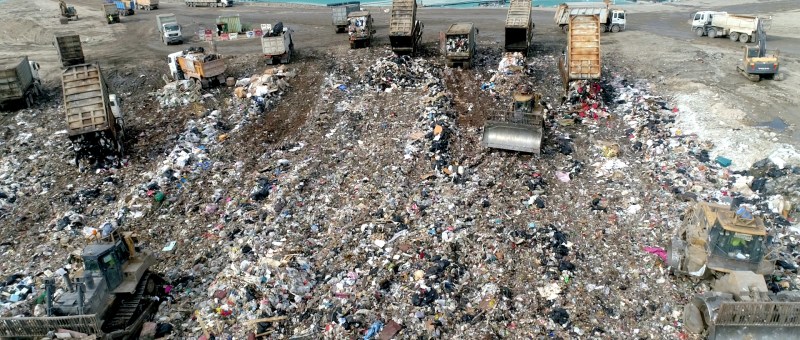
At the beginning of the consumerist era, our mentalities began to shift away from durability to disposability and we only desired that which we could throw away. But every time we throw something we don’t need anymore over our shoulder, the pile of discarded items grows higher and is already beginning to overshadow us. Joanna Bowers’ documentary ReFashioned examines the environmental impact of fast fashion and follows a series of Hong Kongers working towards initiatives to encourage recycling or reuse of textiles and plastic. 

The change in our mindset is most clearly reflected in the startup created by an American expat to sell secondhand children’s outfits in which the concept of pre-owned clothing is itself sold as something “new”. As she points out, in Chinese culture there has long been a resistance to the idea of buying secondhand born of the fear of inheriting the bad luck of the previous owner though there seems to be less class-based stigma as might be found in the West where there has often been a sense of shame connected to dressing one’s children in handmedowns. Similarly, where parents might once have given away clothing their children had outgrown to friends and relatives they may now be less likely to do so if think they still have monetary value. Donations to charity shops and thrift stores may suffer the same fate ironically depriving those who cannot afford to buy brand new of the opportunity to buy at all. 

Meanwhile, another interviewee remarks that the battle still lies in the mind of the consumer who remains unconvinced by the idea of recycling when they know that most of what they recycle ends up in landfill anyway. A government-backed initiative aims for a new approach in the recycling of textiles in which a robotised production line can sort by colour, respin thread, and produce new knitted garments while other less versatile fibres can be repurposed for carpets and upholstery. They have an end goal of creating a system in which the consumer would be able to bring their old clothes and have them deconstructed and remade by the machine into new designs allowing them to upcycle items they believed had simply gone out of style. Then again, the fashion show they put on to showcase their achievements is geared less towards the everyday than the catwalk which is admittedly designed to prove to brands that recycled material is just as good as brand new but perhaps also leans in to a fast fashion mentality if only more sustainably rather than returning to an age of well made garments designed for longterm use. 

It should also be noted that the documentary received funding from high street clothing store H&M whose efforts towards sustainability are given prominent mention which also suggests that sustainability must be made compatible with the consumerist mindset rather than undercutting it. The problem is largely of economics in that it simply does not make sense to recycle when the costs outweigh the benefits to the average business. Another young man has started a company planning to recycle plastic bottles and himself admits that his end goal would also be to reduce their usage in the first place and make himself irrelevant but in any case is told by prospective investors that the business has little viability because of its logistical costs and small scale. This would seem to be the barrier to the creation of the “circular economy” proposed by some of the other interviewees.

The earlier part of the documentary had reflected on the changing economic fortunes of Hong Kong in which textile magnates from Shanghai had set up factories in the city but once the Mainland began to open itself up in the 1980s moved there to take advantage of significantly reduced labour costs leaving many local people unemployed. There is then something quite remarkable in the decision to redevelop a former textile mill as an ultramodern recycling centre, the first of its kind in Hong Kong and perhaps the world, avoiding the additional energy costs of deconstruction and reconstruction while saving the unique architecture of a mid-20th century industrial building. This is perhaps the ultimate example of “refashioning” demonstrating how the old can be adapted for use by the new, even if sustainable solutions for our increasingly consumerist lifestyles still feel very far away. 


ReFashioned Dream Home streamed as part of this year’s Odyssey: A Chinese Cinema Season.

Original trailer (English dialogue)

Dream Home (維多利亞壹號, Pang Ho-cheung, 2010)

“In a crazy city, if one is to survive, he’s got to be more crazy.” according to the opening titles of Pang Ho-cheung’s surprisingly poignant slasher satire Dream Home (維多利亞壹號). In the 10 years since the handover, the average wage has increased by a measly 1% while house prices have risen by 15% in 2007 alone. Sheung’s (Josie Ho) one overriding mission in life is to buy a flat for her family to live in, but it’s clear that her struggles to become a homeowner aren’t the only pressure points in her life in an increasingly capitalistic society. 

As we later discover, Sheung is set on one particular flat because the building it’s in stands on the spot where she once lived as a child before her family was pushed out by rampant gentrification. In essence, she’s just trying to take back what’s hers and restore her family’s sense of dignity and security. A flashback to her childhood reveals her father’s own insecurity in having been unable to secure a larger living space in which she and her brother could have their own rooms while her grandfather, a sailor, longed for a sea view and the sense of an expanding horizon otherwise denied to the family in a cramped Hong Kong council flat. In a touch of irony, Sheung’s father himself worked in construction building apartment blocks he couldn’t afford to live in and in the end it killed it him through exposure to asbestos and other dangerous fibres. 

Sheung works at a bank but is conflicted about her job cold calling account holders to try to get them to buy into dodgy loans neatly echoing the film’s closing moments which hint at a coming economic crash precipitated by the subprime mortgage crisis which will threaten Sheung’s homeowning dream. Her friends think she’s crazy to buy a flat at all, but she’s completely fixated on repairing her broken childhood by taking back her family home and ending her displacement. Meanwhile, she’s in a dissatisfying dead end relationship with a married man which largely takes place in love hotels he sticks her with the bill for and turns up late to only to immediately fall asleep. When Sheung asks him for a loan to help pay for her father’s medical care after the insurance she got for him is voided because he never told her he’d been diagnosed with a lung complaint before she took it out, he tells her to use her deposit fund instead and give up on homeownership because only fools like her would buy in such a volatile market. 

Disappointment in both her personal and professional lives continues to place a strain on Sheung’s fragile mental state that eventually tips her over the edge. Hoping to bring the apartment’s price down, she goes on a murder spree in the building killing it seems partly out of resentment and otherwise pure practicality. There is irony here too, in that she kills her victims with the weapons of their privilege. A cheating husband who comes home unexpectedly after lying to his wife that he’s gone golfing but was actually with his mistress is whacked on the head with a golf club while an obnoxious stoner kid is stabbed in the neck with his bong. Sheung murders a Filipina helper, but also the snooty middle-class woman who employed her by using the vacuum pack machine the helper had been using on her behalf. One might ask if she really needed to kill the helper or the pair of Mainland sex workers in the next apartment, but when it comes to devaluing property prices “massacre” sounds much better than “killing” and so it’s the more the merrier. 

In the end, it’s this city that’s driven her out of her mind with its status-obsessed consumerism and constant sense of impossibility. After her killing spree, she doesn’t even seem very conflicted about selling dodgy loans to vulnerable people not so different from herself while she was so desperately trying to get approval on a mortgage there was no way she could afford despite working a series of other part-time jobs including one selling designer handbags to the kind of wealthy women she resents. Her dream apartment has a view quite literally to kill for, though there’s a sense that Sheung’s dream will always be futile with the same motivations that brought her here leading to the mortgage crisis and economic shock that could eventually take it from her. Bloody, gory, and at times sickeningly violent Pang’s satirical horror show paints contemporary capitalism as the real villain and even in its dark humour reserves its sympathies for the wounded Sheung pushed to breaking point by a pressure cooker society. 


Dream Home available to stream in the UK until 30th June as part of this year’s Odyssey: A Chinese Cinema Season.

International trailer (English subtitles)

Full Strike (全力扣殺, Derek Kwok & Henri Wong, 2015)

A former badminton champ begins to rediscover herself after being permanently banned for bullying behaviour when charged with coaching a bunch of former bank robbers in Derek Kwok & Henri Wong’s zany sports comedy Full Strike (全力扣殺). Dedicated to “all the beautiful losers”, the film is less about literal winning as it is about learning to turn one’s life around in moments of profound despair and draw strength from even non-literal victories in simply refusing to be looked down or belittled.

It’s ironic in a sense that Dan (Ekin Cheng Yee-Kin), Kun (Wilfred Lau Ho-Lung), and Chiu (Edmond Leung Hon-Man) became bank robbers because they didn’t want to be bullied having grown up as friendless orphans. Former badminton champ Kau Sau (Josie Ho Chiu-Yee), meanwhile, was such as tyrannical diva that she gained the nickname “The Beast” before being banned because of her unsportsmanlike behaviour and treatment of her long-suffering assistant. But cast out of the sports world, she’s become a dejected layabout not quite working in her brother’s restaurant and otherwise hiding out from the world. Her life changes when she’s publicly mocked after running into her former assistant who has since gone to take her position as a reigning champion. Running out into the night, she spots a shuttle-cock-shaped meteor and is chased to a badminton club by what she assumes is an “alien” but might have just been a frightened homeless man.

In any case, she takes it as a sign she should pick up a racket once again which as Dan later points out she probably wanted to do anyway and was just waiting for an excuse. He can’t explain why he chose the unlikely path of becoming a badminton player to help him turn over a new leaf after leaving prison but reflects that perhaps you don’t really need a reason only the desire to change. Dan, Kun, and Chiu all developed disabilities as a result of their life of crime but slowly discover that they can actually help them on the court in a literal process of making the most of their life experiences no matter how negative they might have assumed them to be while Kau Sau similarly regains her self esteem while acknowledging the destructive patterns of her previous behaviour careful never to bully her new teammates as they all square off against her bullying cousin “nipple sucking Cheung” (Ronald Cheng Chung-Kei) who tries to use his newfound wealth to cover up a lack of skill by hiring Kau Sau’s old teammate. 

Cheung is also trying to overcome low self-esteem and is later forced to realise that becoming a champion won’t really change that much about how he sees himself, though apparently still relying on an ever capable middle-aged woman to fight (literally) his battles for him. Meanwhile, the gang are coopted by a media mogul hoping to make an inspirational documentary about them but also manipulating their lives and hyper fixating on their criminal pasts to the point of staging a fake arrest as they enter the stadium for a competition. Doubting the chances of success in setting up new lives for themselves as badminton players, Chiu is drawn back towards a life of crime while feeling somewhat distanced from the team as a tentative romance between Kau Sau and Dan seems to fall otherwise flat.

A throwback to classic mou lei tau nonsense comedy, the zany gags come thick and fast but are at times over reliant on low humour while the central premise of staking everything on an “unexciting” game like badminton perhaps wears a little thin by the time it gets to the high stakes finale with the heroes fighting twin battles squaring off against their traumatic pasts rather than the literal opponents in front of them. Winning becomes a kind of irrelevance when the contest was within the self. Each rediscovering the spark of life, the players rediscover the will to live while bonding as a team and sticking to their training in pursuit of their goal. Kwok and Wong lay it on a little thick with the martial arts parody in the uphill battle to master badminton but otherwise lend a poignant sense of warmth and genuine goodwill in sympathy with the underdogs’ quest if not quite to win then to own their loserdom on their on terms in reclaiming their self-respect and dignity. 


Full Strike is available to stream in the UK until 30th June as part of this year’s Odyssey: A Chinese Cinema Season.

Original trailer (Traditional Chinese / English subtitles)

Odyssey 2023 Announces Stephen Chow in Focus

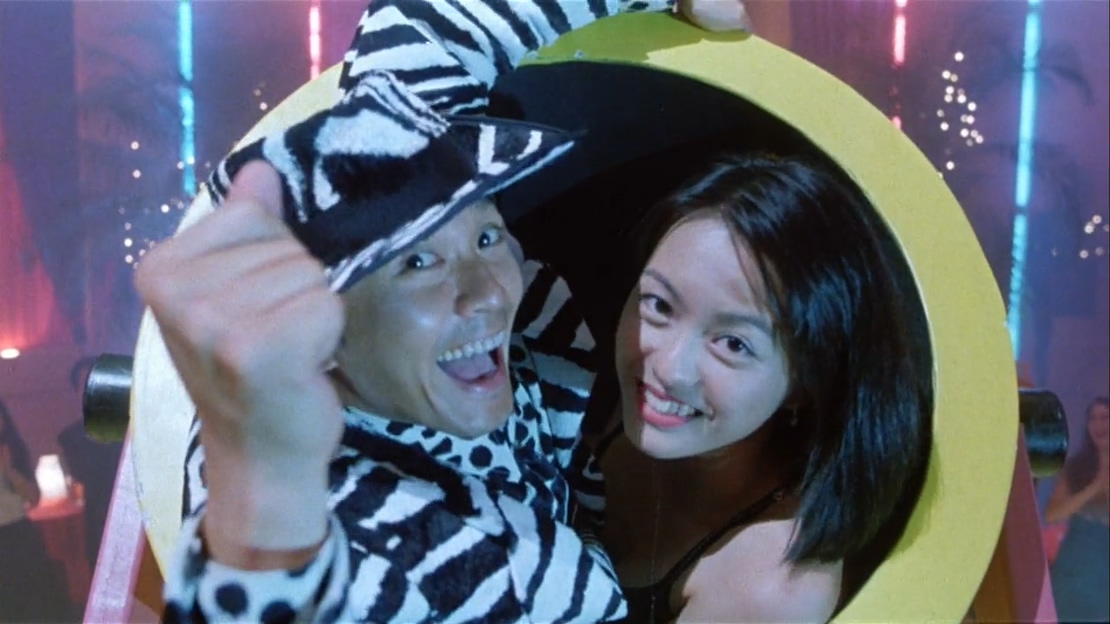
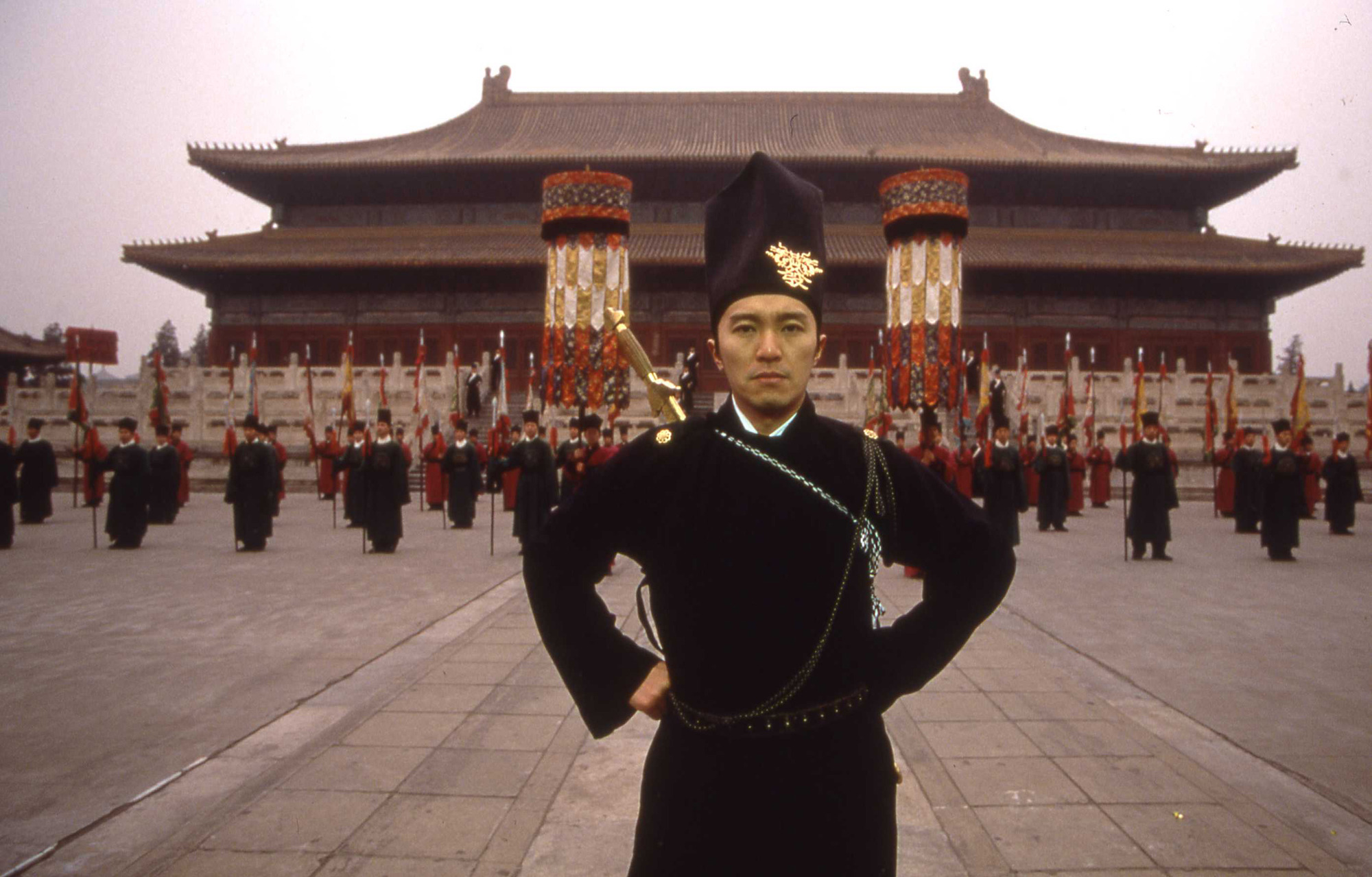
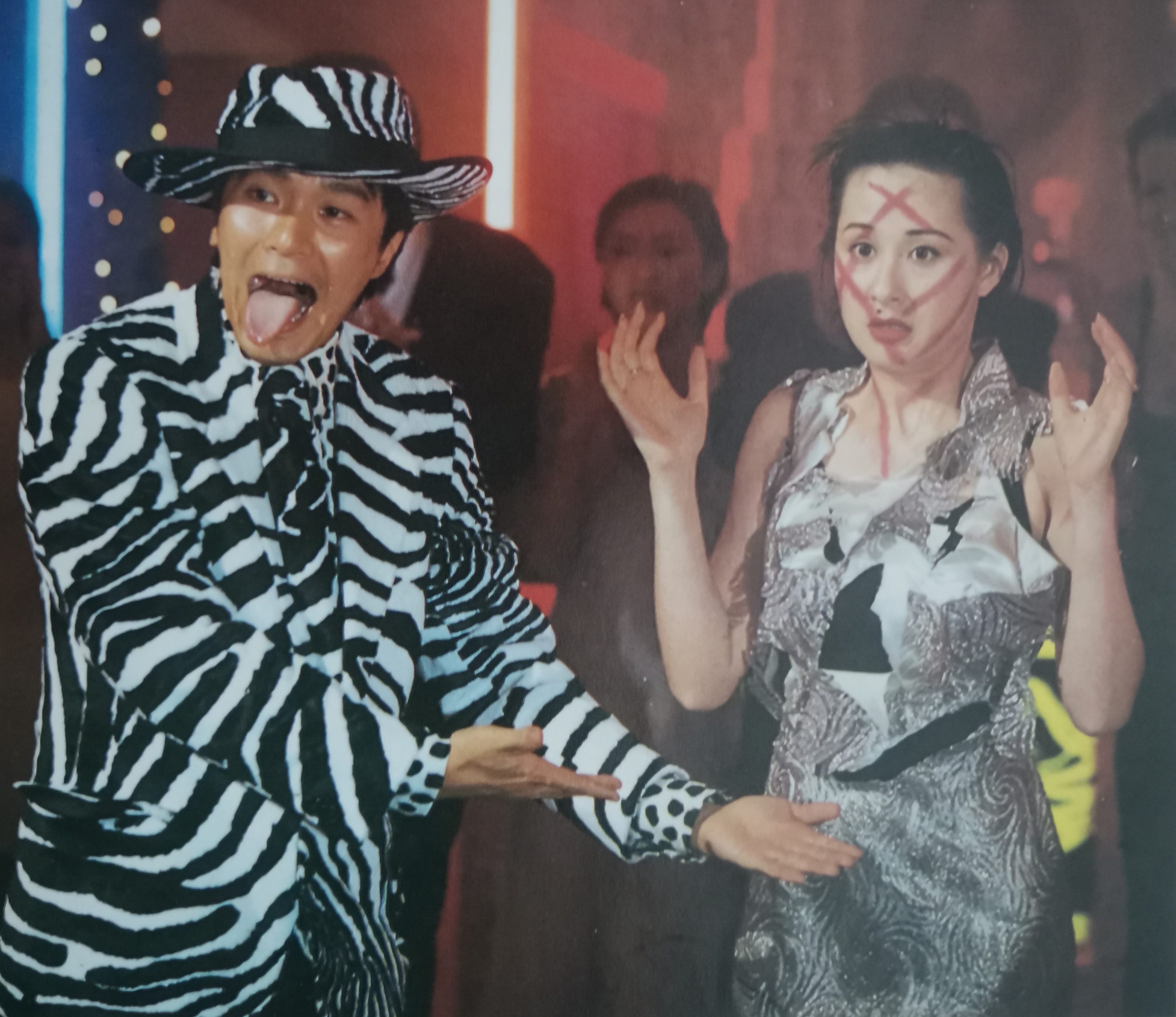
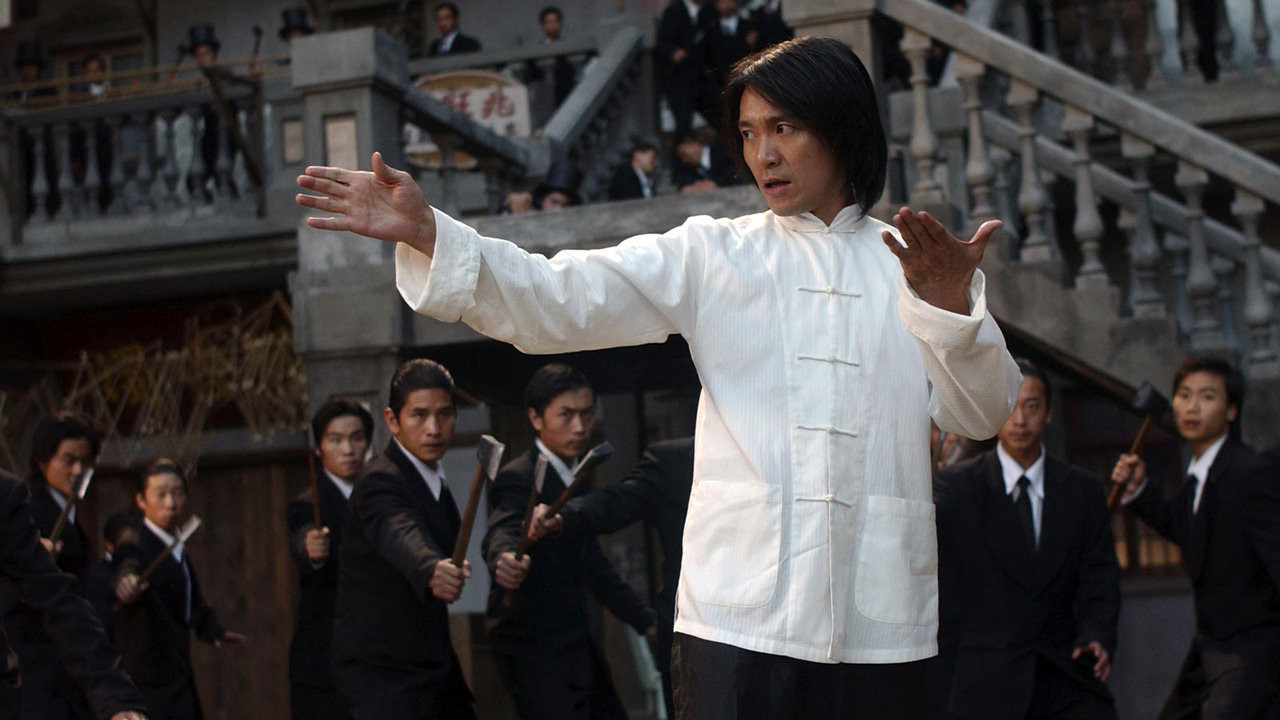
This year’s Odyssey: A Chinese Cinema Season will be hosting a four-film Stephen Chow retrospective at London’s Prince Charles Cinema on Thursdays throughout June.

Forbidden City Cop

Period spy/wuxia spoof starring Chow as an imperial agent with a knack for zany inventions which comes in handy when he attends a conference which turns out to be a trap to kill all the doctors who serve the emperor.

Sixty Million Dollar Man

Chow stars in a Wong Jing & Raymond Yip Wai-Man comedy in which a rich and arrogant playboy is brought back to life by a mad scientist after being blown up by the yakuza who now want to kill him again.

Kung Fu Hustle

2004 comedy starring Chow as a petty thief in 40s Shanghai who desperately wants to join the Axe gang which currently dominates the city except for the small enclave of the slums in Pigsty Alley.

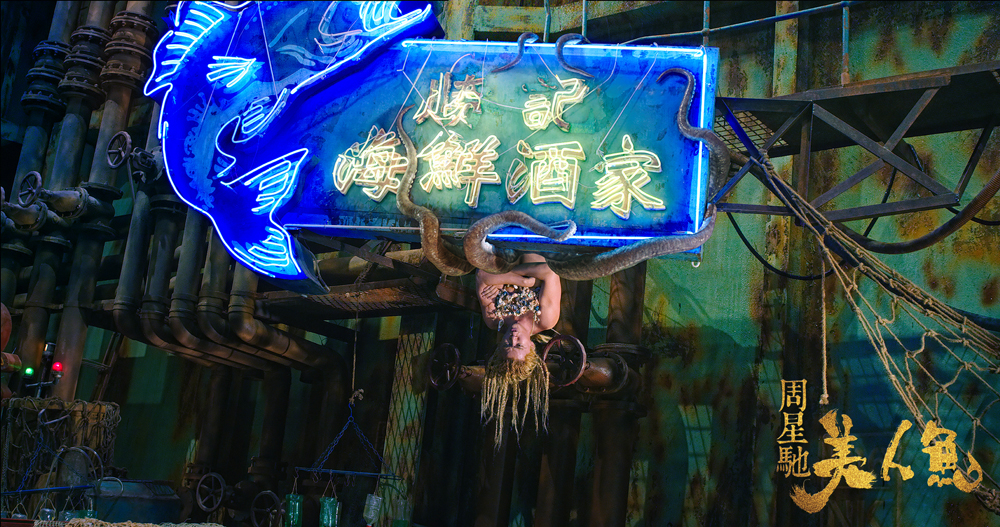
The Mermaid

2016 eco comedy starring Deng Chao as a heartless capitalist intent on bulldozing an area of outstanding natural beauty and Jelly Lin as a undercover mermaid sent to assassinate him only to fall in love instead. Review.

Stephen Chow in Focus screens at the Prince Charles Cinema, London, on Thursdays in June as part of Odyssey: A Chinese Cinema Season which runs 26th May to 30th June online and in-person. The full programme will be announced in due course and you can keep up with all the latest news by following the festival on Instagram and Twitter.

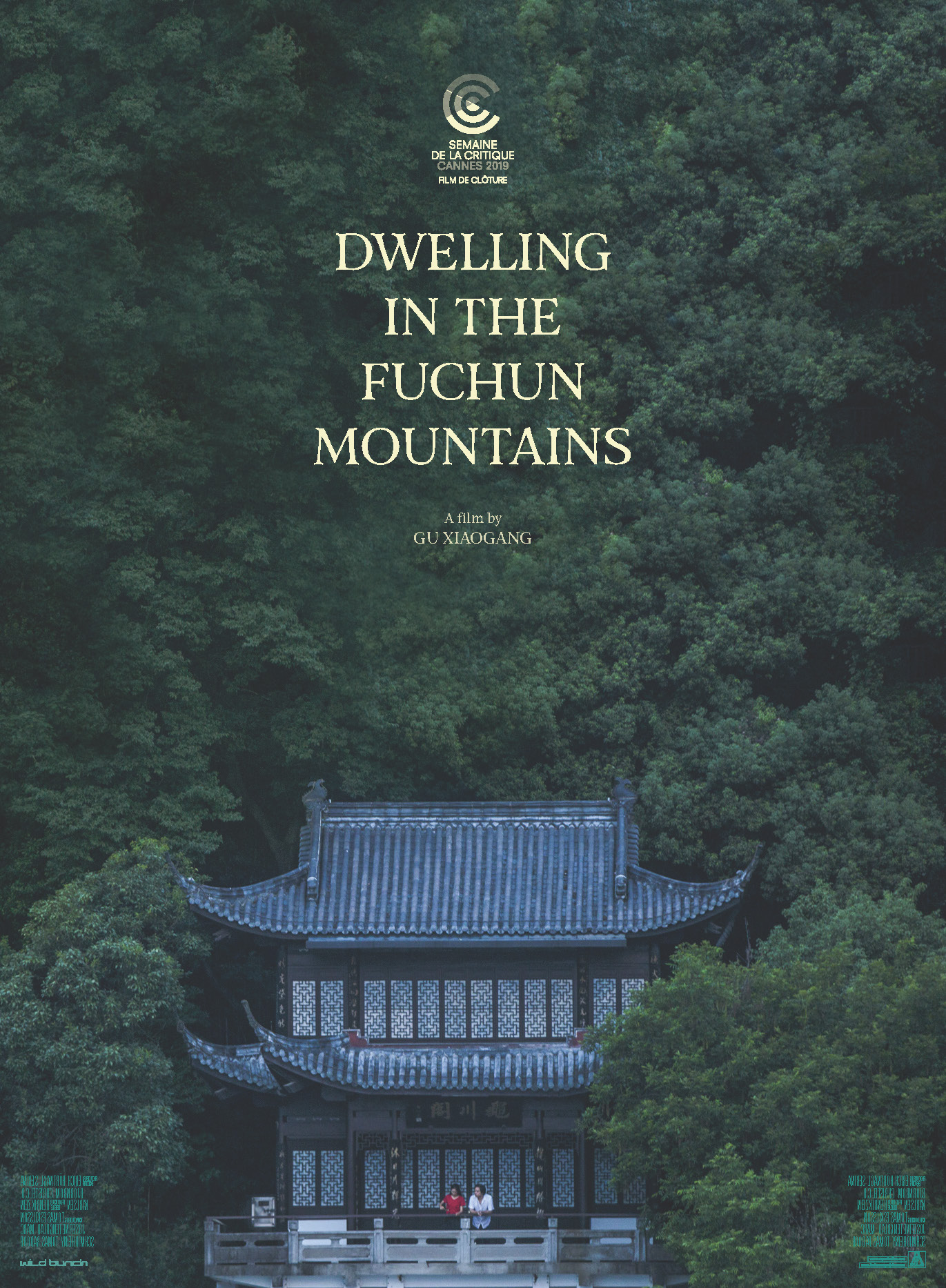
Dwelling in the Fuchun Mountains (春江水暖, Gu Xiaogang, 2019)

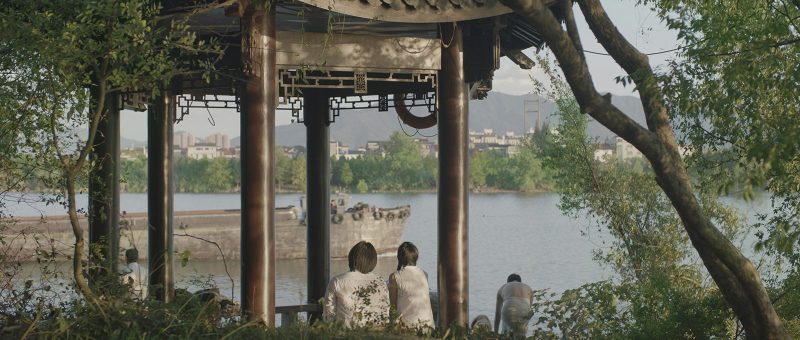
“The family should be peaceful and united” according to an exasperated aunt but then again “family is a pain”. Gu Xiaogang’s stunning debut feature Dwelling in the Fuchun Mountains (春江水暖, chūn jiāngshuǐ nuǎn) takes it name from a famous classical painting and unfurls a tale of familial strife born of intergenerational tension which is also a tension in the earth between new and old as this “traditional Chinese landscape” as someone describes it pointing at another painting is gradually eroded by a destructive modernity. 

This ambivalence is clear in the opening scene which takes place in the family restaurant where they are currently celebrating the 70th birthday of the family’s matriarch. What first seems atmospheric, even romantic as someone describes it, in the candlelit space is revealed to be simply a power cut and a symptom of the imperfect modernity visiting itself on the town. In any case, grandma later collapses in the process of handing a red envelope to her grandson and is taken to hospital where it is revealed that she has suffered a stroke which has accelerated the course of her dementia. The question then becomes who will accept the responsibility of caring for her with each of her four sons secretly hoping that someone else will volunteer. 

Grandma is in many ways the film’s moral authority, at one point quite literally adrift in the modern society. She no longer recognises her daughter-in-law Fengjuan (Wang Fengjuan) and avoids taking her medication believing that she’s being poisoned but pines for her youngest son whom she says spends the most time with her and is the most obedient but in fact appears the least interested of all the brothers. When he finally visits her to show off the fiancée everyone told him he had to get to put her mind at ease before it’s too late all she can do is stare at the moon. On the other hand, she is the one firmly on the side of the young, telling her granddaughter Guxi (Peng Luqi) to marry a man she chooses for herself rather than be swayed by the wishes of her parents and wind up miserable as she herself seems to have been. 

Guxi is in a relationship with local teacher Jiang (Zhuang Yi) who might otherwise be thought a catch in that he has a good job and stable income as well as access to a preferential mortgage programme for those in his profession, but Fengjuan envisions more insisting Guxi marry the son of an influential businessman in part to ease her own financial worries. As Guxi suggests, her mother’s idea of happiness is different from her own. Having suffered privation in their youth the older generation prioritise material comfort but in their old age may become lonely or resentful in the emptiness of their familial relationships. Yet to defy her parents’ wishes is emotionally difficult, her eventual decision to choose Jiang over them a minor revolution.

Meanwhile the lives of each of the brothers is overshadowed by debt both financial and moral in the continual horse trading of family life. Third brother Youjin (Sun Zhangjian) is a petty gambler in trouble with loansharks who eventually trash oldest brother Youfu’s (Qian Youfa) restaurant trying to get him to pay up, while second brother Youhong (Sun Zhangwei) and his wife are owed money from various parties but eventually come into some by making themselves homeless agreeing to sell their home to developers intending to cash buy a fancy apartment for their factory worker son and the bride which has been picked out for him. “We lived here for 30 years. It was demolished in three days” Youhong’s wife laments as the city is demolished and rebuilt all around them in preparation for the 2022 Asian Games. The promised new transport connections ironically emphasise how much they will add to the town by making it quicker and easier to go somewhere else but there is a genuine sense of poignancy in Gu’s slow panning motion through a derelict apartment across to the shiny new one about to be completed behind it. 

In one of the soon-to-be dismantled buildings, the youngest brother recovers a suitcase with a love letter inside it dated April 1989, a relic from another China though telling the same old story of young love thwarted by parental authority. Closest to her grandmother and third uncle Youjin who eventually reclaims her from the old person’s home where the other brothers had decided to send her while caring for his 19-year-old son with Down’s Syndrome, Guxi brands her family selfish and laments that they can’t get past all of these arcane rules and petty power games to love and support each other as a family should ironically taking grandma’s advice in refusing to perpetuate the cycle of resentment by marrying a man she doesn’t love just to please them. Gu films this unfolding tale with a series of breathtaking tracking shots along the river as if running one’s eyes over a scroll painting while giving in to the oneiric quality of the rolling mists that hang over this changing landscape. Apparently the first volume of a trilogy of films set along the Fuchun river, Gu’s minimalist epic is a poignant evocation of a hometown memory both transient and eternal.


Dwelling in the Fuchun Mountains streamed as part of Odyssey: a Chinese Cinema Season.

Original trailer (English subtitles)

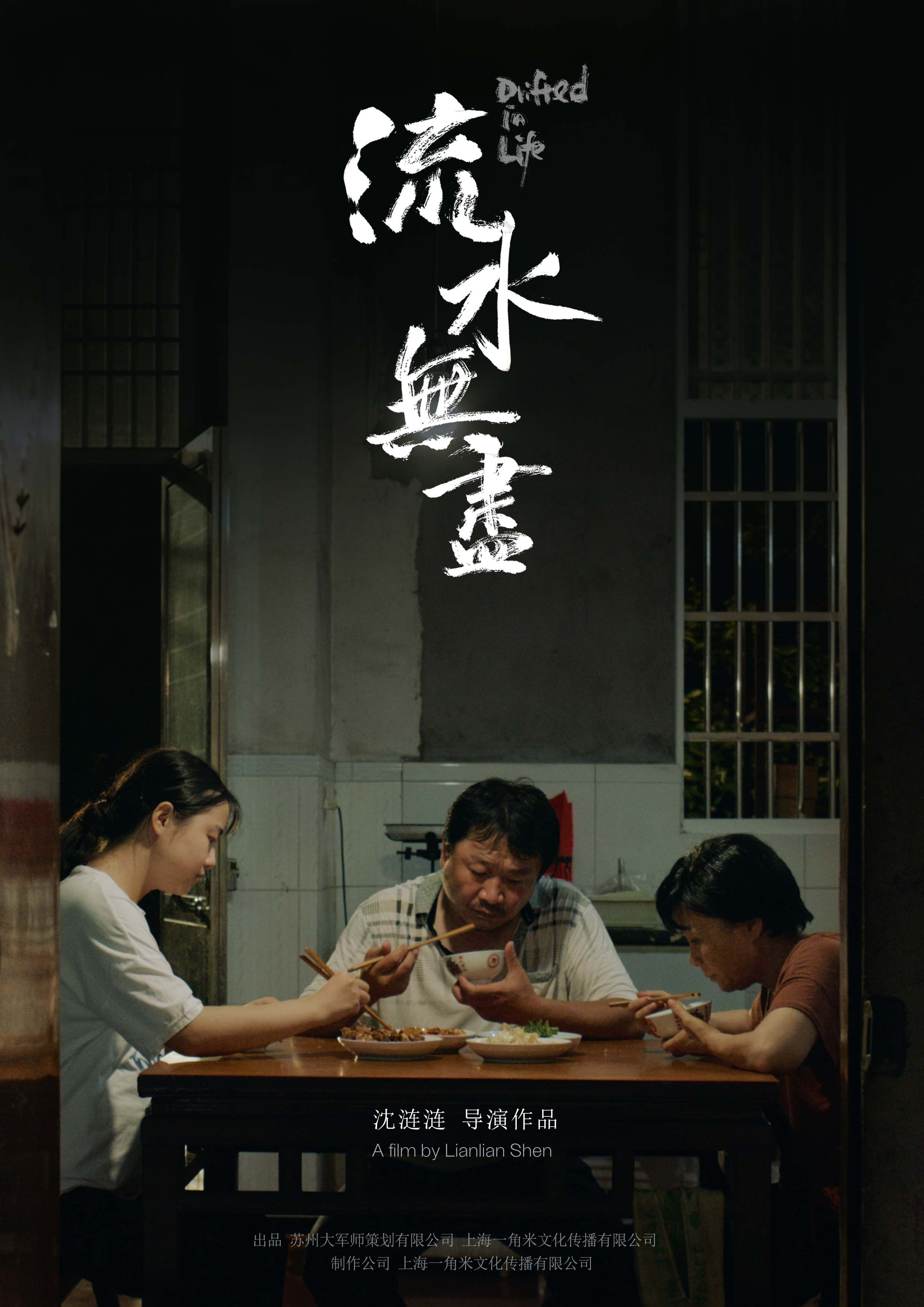
Drifted in Life (流水无尽, Shen Lianlian, 2021)

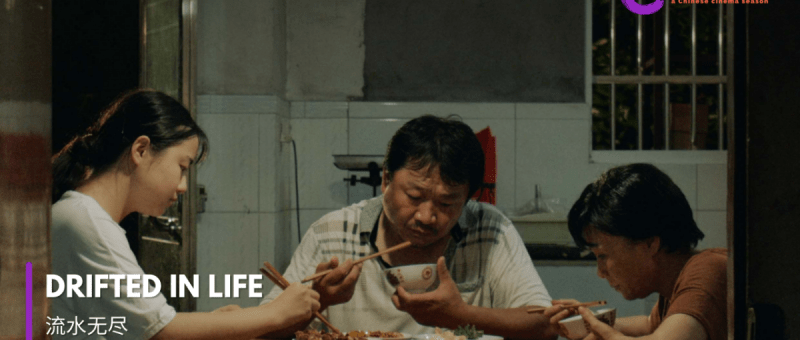
“People leave eventually. We’ve spent enough on him” the wife of a man drifting between life and death eventually concedes in Shen Lianlian’s indie drama Drifted in Life (流水无尽, liúshuǐ wújìn). In the modern China it seems everything has a price, not least a human life, but more than that it has a debt which must be satisfied at all costs. This is something with which the disparate members of a small family beset by lingering tragedy are each faced as they try to negotiate new paths forward while bound by ancient loyalties and traditions. 

This is certainly true for Keyu whose parents weren’t even going to call him when his grandfather is left in critical condition after a bathhouse accident lest they disrupt his working life. According to the incredibly offhand and somewhat insensitive doctors Renkai’s case is hopeless, his spine is severed at such a point that he has lost connection with his lower body and almost certainly will not be able to breathe without a ventilator. The family start planning the funeral on the car ride home, but the grandmother finds it impossible to let her husband go insisting that they leave him in the hospital just in case a miracle may happen while the rest of the family do what they can to sort out the bills, the originally unsympathetic doctor eventually warming to them in their devotion and agreeing to use an expensive drug to alleviate Renkai’s symptoms while reminding the grandmother that he will not recover.  

Kebo, Keyu’s bother, becomes indignant and enraged taking it out on the owner of the bathhouse for his apparently lax safety standards only for him to justify himself that he’s only a “small business” an excuse that becomes a refrain justifying commercial entities’ exploitation of employees and avoidance of complying with regulations. Keyu too is worried about “restructuring” at his company, while his wife’s is constantly laying people off and she fears for her own job while dealing with a temperamental diva artist who accuses her of being a sellout only interested in making money out of him. Meanwhile he ends up crushed between two conflicting loyalties seeking to make use of his relationship with an important client tasked by both the company that he works for and a desperate childhood friend with a “small business” of his own. Both Keyu and his wife opt for a kind of escape, he by betraying his company to put his friend forward for the contract and she starting a side hustle with the artist that seems like it will end up being more trouble than it’s worth but each of them wind up betrayed by their own choices. 

And then there’s the bad example their working culture seems to have been setting for their small daughter Weiwei who takes her new managerial responsibilities too seriously when made a monitor at kindergarten apparently hitting another child while collecting homework. Kebo meanwhile is also filled with resentment plunging his family, including his pregnant girlfriend to whom he is not yet technically married it seems for financial reasons, into even more debt after getting arrested for attacking the bathhouse owner and facing a lengthy sentence while his father ironically does something similar by getting into an altercation with a neighbouring stall owner after deciding to resume his butchery business to help pay grandpa’s medical bills. The matter is only resolved thanks to a neighbour who has a connection in the local police pressuring the bath house owner to back down and agree to a settlement out of court. 

Grandpa’s life becomes accidentally commodified as the family tot up how much it’s costing them to keep him in the hospital, even grandma eventually conceding that he has very little quality of life while coming to terms with her grief almost as if she were satisfying herself that they’d done “enough” to fulfil their obligation to him at least in monetary terms. “What’s the point of living like that?” Weiwei had tried to ask her dad, wondering why they’re keeping her grandfather alive while he drifts between life and death unable to communicate though she might as well be taking about herself or anyone else caught between the contradictions of the modern China and looking for release from its purgatorial grip. 


Drifted in Life streamed as part of Odyssey: a Chinese Cinema Season.

Original trailer (Simplified Chinese / English subtitles)

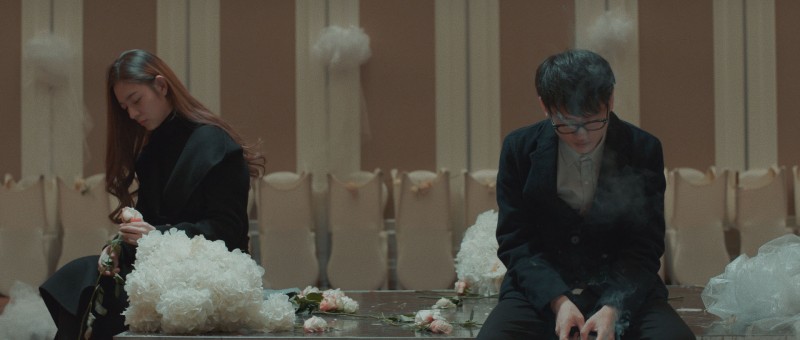
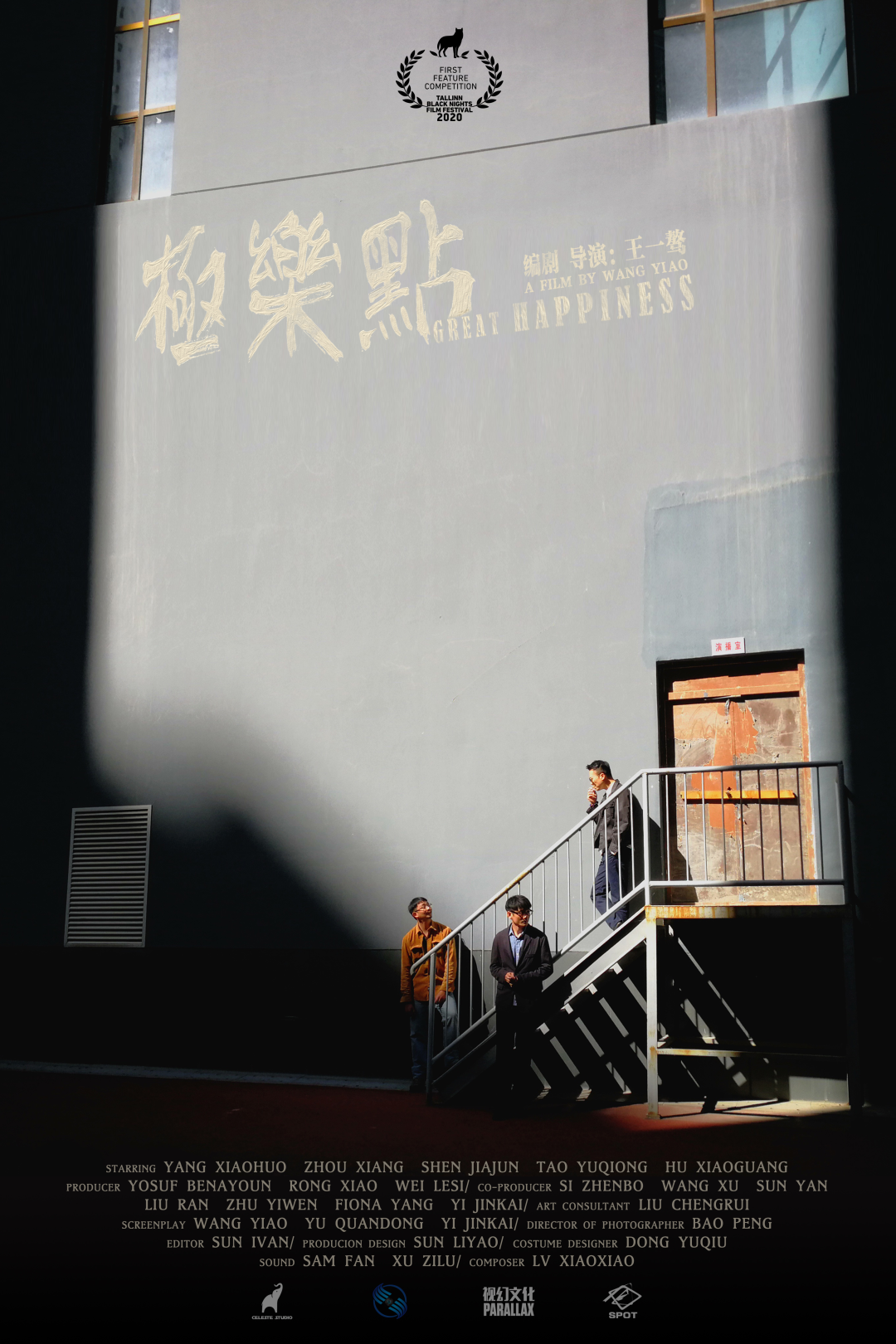
Great Happiness (极乐点, Wang Yiao, 2020)

Three young men find their paths to prosperity in the modern China abruptly severed in Wang Yiao’s ironically titled Great Happiness (极乐点, jílè diǎn). Great happiness is to them an ever elusive concept overburdened as they are as children of the One Child Policy caught in the midst of the rapid changes which transformed the nation into the capitalist powerhouse it is today. Each of them is in one way or another failed by that transformation, denied the sense of possibility they are continually promised while repeatedly exploited by a society in which everything really is about money. 

Childhood friends Wang, Sui, and Li are each trying to achieve independent success as “entrepreneurs” in the new society, but are also divided by their contradictory goals. For Li, a spoilt rich kid and ambitious fantasist, it’s not so much money that matters as the appearance of it. He buys BMWs on a whim, but has to run across town to ask his mother for money to invest in his “businesses” while it later transpires that his fiancée Xin with whose family he is in dispute over the financial arrangements of the marriage is actually paying their household bills. Unbeknownst to him his mother’s business is struggling, they’ve already sold the assets he was counting on to fund further business ventures, and while they’ll always support him his parents do not have the capability to bankroll his frequent failures. Needing everyone to see him as a big shot, he books a fancy hotel for the wedding despite Xin’s concerns, slapping down his credit card for the 50% deposit only to have it later declined when trying to pay for the ring. Hooked on another sure thing by dodgy friend Ma, he gets himself in trouble by making an unwise arrangement with a loanshark mortgaging something which might not strictly speaking be his. 

Architect Sui’s fiancée Lisa is wary of Li fearing he’s a bad influence and while she might be right Sui makes a few bad decisions of his own including taking a mistress when she travels to the UK to study abroad. Li is investing in his business which given the construction boom in the modern society ought to be a sure thing though Sui also has an artistic temperament and objects to the essential uniformity of the modern Chinese city. Li doesn’t get why he can’t just pull generic designs off the internet rather than coming up with his own while Sui isn’t convinced by his desire to invest in Wang’s burgeoning media business fearful that it will be just another boom and bust industry soon to be oversaturated by the similarly ambitious. 

Wang has been married four years but is yet to conceive a child much to his parents’ consternation. His burden is all the greater as a son of the One Child Policy meaning the responsibility for continuing the family name lies only with him as his grandfather continually points out. His parents who were once wealthy but lost everything in the late ‘90s industrial reforms are so concerned that they pledge all their savings to an IVF programme while granddad objects convinced that paternity cannot be guaranteed and like the factory boss Wang lies to in order curry favour believes they’d be better off with a shaman. Even in the modern society in which “superstition” is frowned upon such beliefs remain common, the factory boss obsessed with “wealth gods” and seeking to surround himself with men who have recently fathered children in order to increase his luck. 

As might be expected, the IVF programme is not entirely on the level, explaining to the family that they need to sign a confidentiality agreement because the treatment they offer is technically unlicensed. They don’t like to describe it as “illegal” because it’s more like the law just hasn’t been updated yet. Sui encounters something similar when his mother comes down with a mysterious illness that seems to be some kind of rare cancer potentially caused by the pesticides used to grow the apples which she had been fond of eating for the benefit of her health, poisoned by the modern industrial machine just like the polluted fish stocks Wang’s mother had been forcing her daughter-in-law to eat believing they’d help her conceive but may actually have been causing her infertility. The medicine Mrs Sui needs exists, but it’s prohibitively expensive and not covered by insurance leaving the family with little choice than to consider selling everything they own including the apartment purchased for Sui’s upcoming marriage. 

In the contemporary society a man’s worth is measured in square meters according to a jaded youngster but there is something of an economic hubris in the visions of these myriad, identical apartment blocks that no one can really afford to buy. While Li, the naive capitalist, and Sui the flawed intellectual whose disappointed father runs a moribund ping pong school in an old temple almost an embodiment of the ghosts of China’s past, Wang (who shares his first name with the city in which he lives) may actually come out on top flashing his hidden capitalistic fangs in his unexpected ruthlessness while simultaneously under increasing family pressure to have a second child now that the One Child Policy has become a Two Child Policy. “Everything he had was borrowed” the friends lament of Li having learned something of the truth he tried so hard to hide. “Who was he trying to impress?” perhaps missing the point in this ordinary tragedy of the modern China. 


Great Happiness streamed as part of Odyssey: a Chinese Cinema Season.

Original trailer (Simplified Chinese / English subtitles)

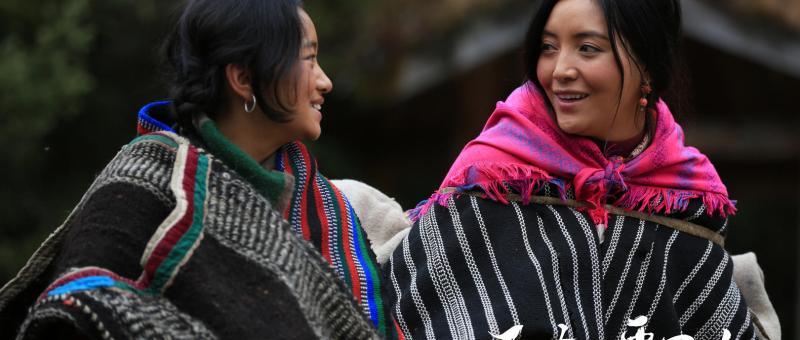
Wind (随风飘散, Dadren Wanggyal, 2020)

“Who made these rules?” an exasperated young woman asks, fed up with her constant stigmatisation for something that was in any case not her fault. Set in a small Tibetan village, Dadren Wanggyal’s Wind (随风飘散, suífēng piāosàn) takes aim at entrenched misogyny while suggesting that the traditional patriarchal social codes by which the village operates have caused nothing but misery not only for women but for their men too who all too often turn to drink and violence in order to escape their own sense of imprisonment. 

Only the wise old grandmother seems to know better. She is the only one to show kindness to Samdan (Sonam Wangmo), a young woman she discovers in her barn who has given birth to a child out of wedlock. Seven years later, Samdan and her daughter live in a small home on the outskirts of the village but are regarded as social pariahs shunned by the local women and often described as filthy witches in part because Samdan has had to resort to offering sexual favours to local men in exchange for food and assistance. Meanwhile, the old lady continues to support them sending her son Gonbo (Genden Phuntsok) to supply the pair with meat yet Gonbo is careful never to venture inside while his wife, Urgyen Tso (Wondrok Tso), remains intensely disapproving. Gonbo soon has a son, Tsering, who is sickly leading Urgyen Tso to blame Samdan and her daughter Gelak (Tsering Drolma) for his poor health. Seven years on from that, Samdan’s 14-year-old daughter becomes a surrogate sister to Gonbo’s son who is bullied by the other children because he is small and weak but is constantly misunderstood by the judgemental village society.

Both Gelak and Tsering are in various ways made to pay for their parents’ transgressions. It isn’t Gelak’s fault that she was born to a mother who was not married, though she is the one called “witch” and seemingly blamed for anything that might go wrong throughout the local area. Neither is it her fault that her mother has little other option than accept gifts from lecherous men in order to support them both in the absence of a husband in this wickedly patriarchal society. Tsering meanwhile becomes the victim of his mother’s unhappy marriage, knowing that Gonbo has someone else in his heart that he was forced to give up because a marriage was already arranged for him. It is really his moral cowardice which has led to all the subsequent problems in that he should not have begun a relationship he was not prepared to fight for nor agreed to marry another woman out of a sense of obligation and then gone on to resent her for it. For these reasons, Urgyen Tso has become a jealous woman and most of all for her sickly son while seemingly unaware of how he is treated by the other boys in the village. Gelak is the only one who stands up for him, stepping in to challenge the bullies and later carrying him home when he is seriously injured by one of their pranks yet is constantly blamed for making him ill despite Tsering’s assertions that she is not responsible and in fact helped him.   

In any case, it’s this sense of rejection and futility that eventually push Gelak towards a desire to take charge of her own destiny. The wise old lady had told her that her only option was to find a husband to care for herself and her mother, yet Gelak has had enough of unreliable men and chooses an opposing path. Using the loom the old lady had given her, she resolves to earn a living for herself ordering her mother never to accept a gift from any of the local men ever again while taking on all of the duties the man of the household would usually perform. That would include taking part in the ritual at the Holy Mountain on behalf of her family, somewhere that a woman would ordinarily not be allowed to go. Breaking with tradition she takes the men to task, asking who exactly made these rules and why while challenging the village’s essential misogyny to claim her full autonomy and right to head her own household in the absence of a man. 

Chastened they do not stop her, though as for what happens after that the answer may not be so easy. Interestingly enough, the protagonist of the story on which the film was based, The Bastard Child Gelak, was a boy, yet Gelak’s determination to claim her right to equality and liberate her mother from years of stigmatisation presents an existential challenge to the outdated social codes of the village in which women are forced to bear the brunt of male failure without recourse or remedy. Elegantly lensed amid the dramatic scenery of a Tibetan mountain village, Dadren Wanggyal’s impassioned drama paints an animated portrait of contemporary Tibetan life while arguing passionately for long-awaited social change. 


Wind streamed as part of Odyssey: a Chinese Cinema Season.

Original trailer (English subtitles)

Chang’e (常娥, Shen Lianlian, 2021)

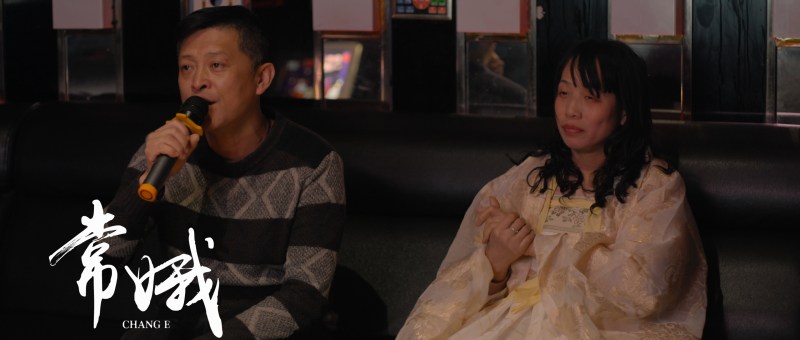
A middle-aged woman’s stultifying life in rural China is momentarily enlivened by the arrival of a man who organises ceremonies for the dead in Shen Lianlian’s naturalist drama, Chang’e (常娥, Cháng é). Named for the goddess of the moon in Chinese mythology, Shen’s film finds its embittered heroine lonely and resentful while also consumed with guilt over her desire to feel something more only to have her hopes of a new life dashed and like the goddess find herself alone as if marooned on a distant planet. 

Shen opens the scene with the noisy clanging of the factory where 55-year-old Xiaoxiang (Wang Xiaoxiang) works, its repetitive rhythms marking out her life with dull futility. Foul mouthed and angry, she snaps at those around her not least her 30-year old bachelor son who shows no desire to get married while repeatedly reminding her that there’s nothing he can do but wait until a new apartment he wants to buy becomes available for sale. Meanwhile they discuss the death of a neighbour living in very similar circumstances to Xiaoxiang who is later revealed to have taken her own life. 

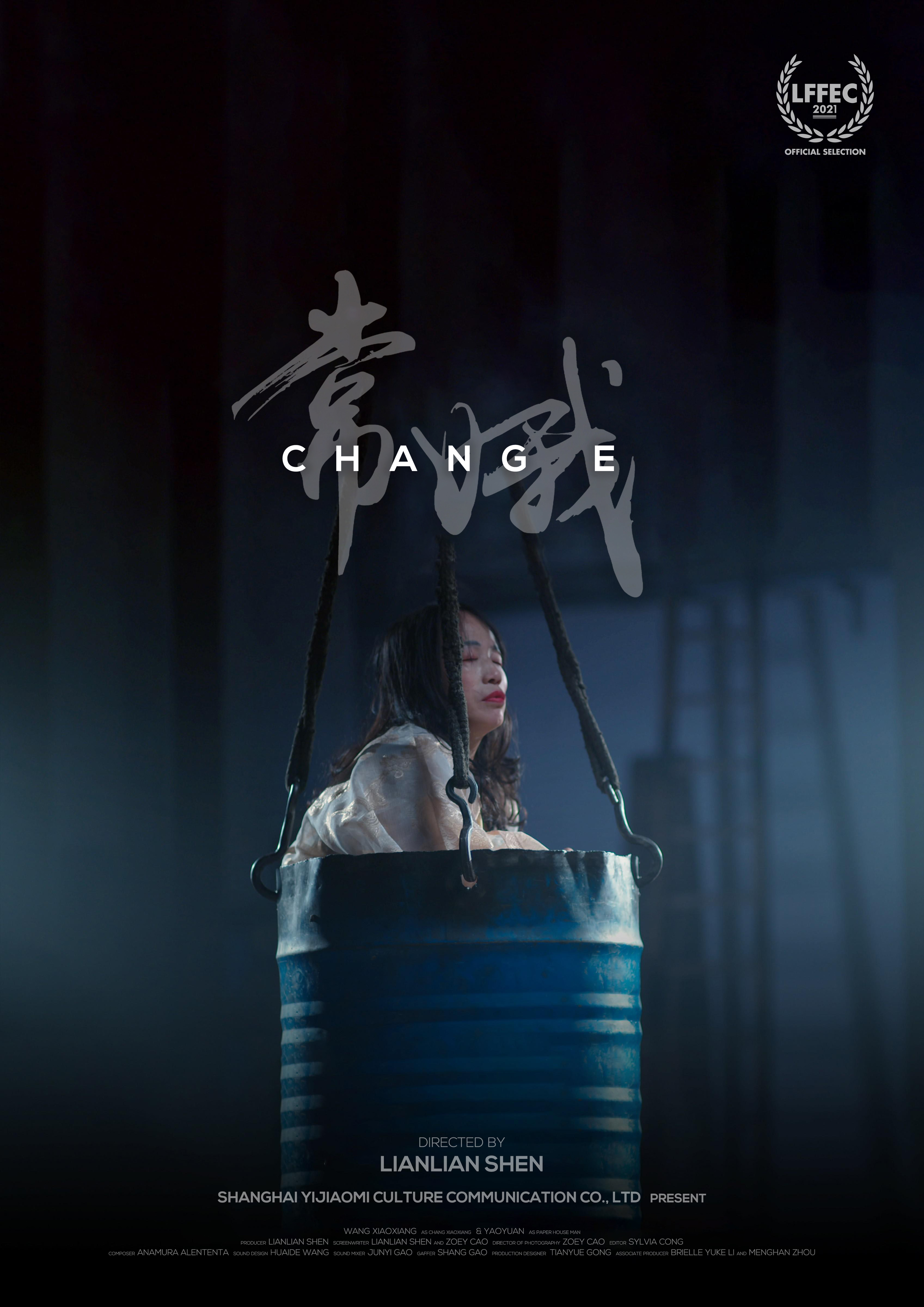
This ominous event, however, presents new possibilities to Xiaoxiang who takes a liking to the mysterious middle-aged man who arrives to help them conduct the local death rites despite having previously criticised her neighbours for being unable to carry them out themselves. Because of a lack of available accommodation, Xiaoxiang ends up hosting him in her apartment and enjoying a sense of domesticity long absent from her life as her husband works away and rarely returns home. It’s at this point that she begins having bad dreams finding herself trapped in a rising bucket while the machine hammers behind her or walking around a market where the chicken’s feet remind her of human hands and she notices an embroidered shoe floating in the water. 

Like the goddess Chang’e, Xiaoxiang has a pet rabbit she keeps in a cage with whom she closely identifies unable to escape the prison of her own existence yet her eventual parting with the creature is less liberation than resignation or even a kind of suicide. Meanwhile she watches a rocket, Chang’e 5, launch for the moon while seated firmly on her sofa. The mysterious man’s arrival may raise the sense of possibility, of a new more emotionally fulfilling life, but he is also of course a spectre of death hovering on the horizon. Along with the paper houses constructed for the ceremony, Xiaoxiang passes fires in front of graves confronting her with the ever present threat of mortality. She is told that the cause of her nightmares lies in having offended the dead for whom she must burn more sacrifices yet nothing seems to cure her anxiety or loneliness. 

In a sense Xiaoxiang is performing her own death rites while coming to an accommodation with the idea that her life will have no more changes, as certain and repetitive as the machine which she operates. Shen captures the crushing disappointment of her small-town existence where even small pleasures such as buying a new coat are guilt-inducing luxuries with an unforgiving naturalism. Xiaoxiang gossips with a colleague suspecting that one of the other workers is being harassed by their boss but otherwise does nothing, her friend reminding her she no longer needs to worry about things like that as she is “not as pretty” as the unfortunate young woman. Using a cast of non-professional actors, the lead actress is indeed a factory worker from the director’s hometown, Shen lends an air of futility to the lives of women like Xiaoxiang while likening her to the distant and melancholy figure of Chang’e who finds herself alone, marooned on a lonely planet solely for her transgressive desires for emotional fulfilment in a life of stultifying productivity. 


Chang’e streamed as part of Odyssey: a Chinese Cinema Season.

Original trailer (simplified Chinese / English subtitles)

Love Conquers All (爱情征服一切, Tan Chui Mui, 2006)

“Girls are mostly stupid” extols the dubious romantic lead of Tan Chui Mui’s debut feature, “they think their love can conquer all”. Ironically titled Love Conquers All (爱情征服一切, àiqíngzhēngfúyīqiè), Tan’s ‘90s drama wonders how true that might be or if in a sense love can at least triumph over reality as we watch the naive heroine falling wilfully or otherwise into a dangerous web of abuse and exploitation while torn between the innocent romance of a hometown boyfriend and the confusing compromises of seedy urbanity. 

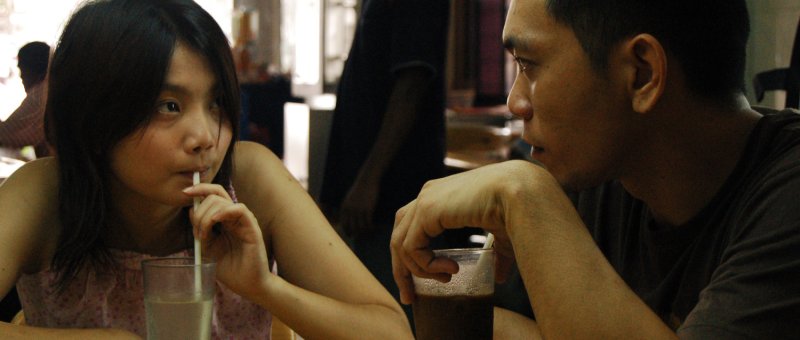
Innocent country girl Ping (Coral Ong Li Whei) travels from her home in Penang to work in a relative’s restaurant in Kuala Lumpur. While using a pay phone to keep in touch with her family, she comes to the attention of John (Stephen Chua), a somewhat rough local man who quickly begins stalking her bizarrely enough with the offer of a bunch of bananas to which Ping claims to be allergic. Nevertheless, lonely in her new life in the city rooming with her employer’s young daughter Mei, she eventually gives in and begins a relationship with him. While they’re at a hawker stand one evening, he introducers her to his friend, Gary, whom he claims is a pimp. Gary’s modus operandi is to pick up a new girl every three months, make her his girlfriend and then disappear sending a friend to say he’s in trouble with some shady types and needs money fast. Unable to pay, the young woman is drawn into sex work which Gary forces her to continue on his return before selling her off to people traffickers and starting the process over again. 

Ping seems fairly horrified by John’s story, but inevitably experiences something similar herself as John expresses fear for his future given the precarity of his underworld life, turns up with bruises, and then disappears sending Gary to tell her he needs money fast. She knows what’s happening but goes along with it anyway, perhaps out of a sense of fatalism or as John has suggested because she gives in to the romantic fallacy that her love can save him though he only means to use and discard her. Or perhaps, who knows, it is just a coincidence and he really does love her after all. A minor moment of potential exploitation mirroring their earliest date in which she suggests buying him a jacket but he prefers a different, possibly more expensive one, may imply something different. 

In any case, Ping’s view of romance may be overly idealised informed by the brand of TV drama so cheesy that little Mei and her mum can’t help giggling as they watch. Mei too is in the middle of an innocent romance with a penpal who calls himself only the “Mysterious Man” which is on one level worrying even if her explanation that he usually talks about stuff at school implies they may be of a similar age and she may even know him. At different stages, both Ping and Mei are seen drinking at the cafe staring into space thinking of their respective romantic interests though Ping’s situation is obviously not quite so innocent. On a fairly coercive date in which he idly raises the idea of marriage and children, John drags her to the beach and posits an ideal family life in small house like that of his aunt to whom he introduces her as his wife but may or may not actually mean to provide her. 

“You have no choice unless you jump” John uncomfortably repeats as he completes his romantic conquest even as Ping continues to call her hometown boyfriend on the phone telling him she loves him even in front of a mildly jealous John. Perhaps their romance is to her a kind of fantasy of romantic sacrifice set in contrast with the more prosaic sacrifice she has made to leave her family and travel to the city. While working in the cafe she’s approached by another creepy guy only a little older than John but just as persistent and taking much the same approach insistently asking for her name though she eventually manages to brush him off. Yet the question remains, is Ping merely a romantic fool, “stupid” as John had said, or a young woman attempting to take control of her romantic destiny as perhaps Mei is doing when she asks her mother to drive her to her pen pal’s address so she can figure out what he looks like? Shot digitally in a retro 4:3, Tan’s debut feature is replete with zeitgeisty detail of Kuala Lumpur in the ‘90s and filled with the lacuna of nostalgia, but offers no real answers for the duplicitous nature of love. 


Love Conquers All streamed as part of Odyssey: a Chinese Cinema Season.

Original trailer (English subtitles)