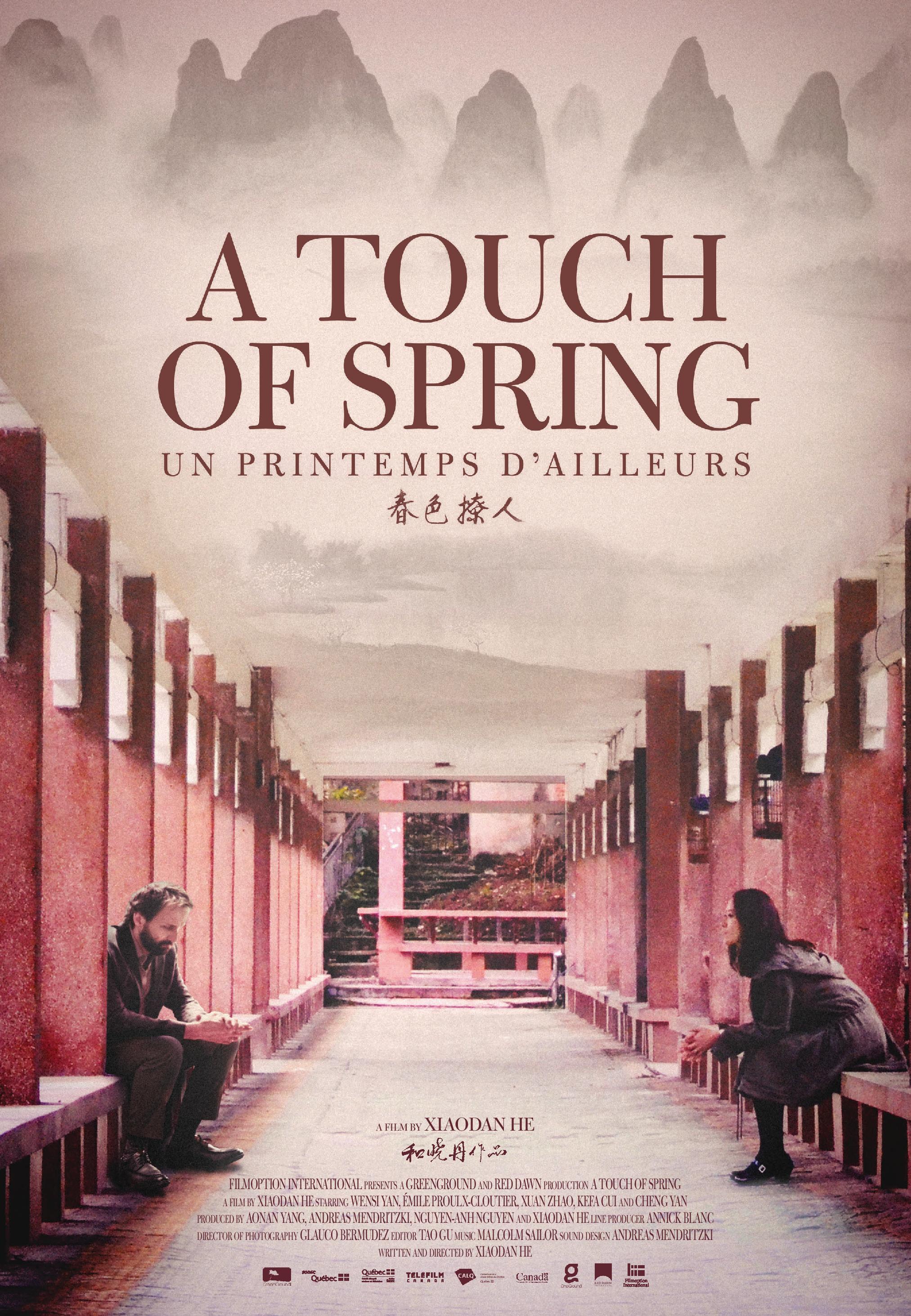
A Touch of Spring (Un printemps d’ailleurs / 春色撩人, He Xiao-Dan, 2017)

When you don’t know what to do, you go home, but what if home doesn’t quite exist for you anymore or trying to go back there only reminds you of all the reasons you chose to leave? Then again, perhaps “home” exists for just that purpose, a place you’re supposed to go to think things through before you ago back out into the world again. The heroine of He Xiao-Dan’s Chinese-Canadian co-production A Touch of Spring (Un printemps d’ailleurs / 春色撩人, Chūnsè Liáorén) is waiting for the thaw, trying to come to terms with the failure of her marriage and the unexpected directions her life may be about to take with or without her consent. 

Fang (Yan Wen-si) has been living in Montreal for the past 10 years, having married a French-Canadian man, Eric (Émile Proulx Cloutier). Her marriage, however, has become distant and she suspects Eric may be having an affair while a considerable strain has also been placed on the relationship because of their inability to conceive a child. When an attempt to confront Eric about his infidelity turns violent and counselling proves no help, it becomes obvious that the only option is divorce. Fang travels back to her hometown in Dazu which she hasn’t visited in the decade since she left and tries to figure things out while staying with her rather gruff grandfather (Cui Kefa). 

Immediately on her arrival, a taxi driver mistakes Fang for a tourist, but even on being told she’s a local quickly realises she’s been away a long time. Her home is not quite her home anymore. Fang’s grandmother has passed away and her grandfather has got married again to a cheerful, warmhearted woman who seems completely odds with the rest of Fang’s sad and grumpy family. The biggest issue is that Fang has not disclosed why she’s come back to China and so everyone is keen to ask about Eric, the lack of children, and her fancy ex-pat life in Canada. 

In fact, Fang is frequently described as the family’s most successful member precisely because she has moved abroad where she owns her own home and, they assume, lives a much higher standard of life. Meaning well, Fang’s new grandmother puts her foot right in it when she tells Fang that the highest success for a woman lies in marrying a good man. More in tune with modern Western values, Fang objects in part to the obvious sexism of her grandparents’ worldview, but it of course also touches a nerve as she finds herself trying to process the failure of her marriage while being too ashamed to admit that her “perfect” life in Canada wasn’t quite so perfect after all. Having separated from Eric, she’s determined to prove that she can make it on her own and doesn’t need a man to get by but is also lonely and feeling lost. Grandma provides some unexpected wisdom when she reveals that she lost her first husband in the Cultural Revolution and came to the same conclusion as Fang resolving never to rely on a man ever again, but is grateful to have met Fang’s grandfather who, despite his gruff appearance, is gentle and caring and has always looked after her. 

Meanwhile, in the therapist’s office, Eric struggled to come up with something good about his relationship with Fang other than that she loved him, supported his work, and took care of their relationship. Eric doesn’t seem to have been a very good husband, self-involved in the extreme, but the therapist is quick to ask somewhat insensitively if it wasn’t Fang’s inability to have children that has destroyed the marriage, a claim Fang rejects because she hasn’t yet accepted that she may be infertile. Despite her rejection of her grandmother’s patriarchal sexism, Fang craves motherhood, bonding with the lonely little girl of her cousin who has “abandoned” her with her parents to work alone in Chongqing. Fang has ambivalent feelings towards Hong who apparently “fell” into a life of drugs and backstreet gambling after a traumatic street attack and the rejection that followed it from her policeman father too embarrassed to report that his own daughter had been the victim of a crime. Something in Fang admires Hong’s subversive independence and wants to help her, especially if it helps her quit gambling, but she also resents that she has given up the thing Fang most wants in deciding not to raise her daughter but leave her with her parents. 

Reconnecting with an old friend who’s become a Buddhist and learned to respect simplicity in life begins to shift her perspective. “How can I stop this endless suffering?” she screams into a ravine. He tells her Buddha has a plan for that, but she might not like it. She repllies that she only believes in the reality right before her eyes. According to grandpa, young people suffer because they think relationships are all romance when the reality is “tolerance”. Grandma, by contrast, tells her that the secret of life is learning to see the beauty in every thing. “It’s good to be alive”, she sighs, “It’s a pity life is so short”. Spring finally comes to Fang’s life as she begins to clear up the literal mess of her failed relationship, no longer feeling like a powerless passenger on the great train of life but finally in charge of its direction. 


A Touch of Spring streams in the US Sept. 29 – Oct. 3 as part of the 11th season of Asian Pop-Up Cinema.

Original trailer (English subtitles)

Seven Days War (ぼくらの七日間戦争, Yuta Murano, 2019)

“Youth is the liberated zone of life” according to the voice of experience in Yuta Murano’s impassioned anime adaptation of the cult novel by Osamu Soda, Seven Days War (ぼくらの七日間戦争, Bokura no Nanoka-kan Senso). Featuring a number of meta references to the ‘80s original and live action movie, Murano’s stylistically conventional adaptation shifts the action to Hokkaido and the present day encompassing such themes as economic strife, systemic political corruption and small town nepotism, migration and exploitation, but is most of all a coming-of-age story as the rebellious teens meditate on the costs of adulthood, resolving not to become the vacuous and resentful adults they see all around them who have traded emotional authenticity for a mistaken ideal of civility. 

Obsessed with 19th century European military history, high schooler Mamoru (Takumi Kitamura) complains that no one takes any interest in him and remains too diffident to confess his feelings to the girl next door, Aya (Kyoko Yoshine), with whom he has been in love for the past six years. Hearing that Aya and her family will soon be moving away because her authoritarian politician father has been offered the opportunity to take over a relative’s seat in Tokyo gives him the boost he needs, nervously suggesting that he and Aya run away together so they can at least celebrate her upcoming birthday the following week. Aya surprises him by agreeing, but rather than a romantic getaway for two she decides to invite several not particularly close friends from school, holing up in a disused coal refinery on the edge of town. Once there, however, they realise someone has beaten them to it. Marret (Makoto Koichi), the child of undocumented migrant workers from Thailand, has been hiding in the building after being separated from their parents when the building they were living in was raided by immigration authorities. 

Though the group is not universally in favour, they quickly find themselves deciding to protect Marret while trying to help find the kid’s family using both their ingenuity in fortifying the coal refinery and their youthful know how in weaponising the internet and social media to win sympathy and fight back against the oppressive ideology of the authorities. Yet Marret finds it difficult to trust them because they occupy a liminal space between the idealism of childhood and the cynicism of maturity. Marret’s family came to Japan on the false promise of finding good employment only to be ruthlessly exploited, convincing the idealistic youngster that all adults lie and can never be trusted. Mamoru, whose name literally means “protect”, does his best to save everyone but temporarily gives in to despair, confessing that he is just an “optimistic child” lacking the power to do any real good, only later coming to a revelation that the problem with the duplicitous adults they’re rebelling against is that they continue to run from their emotions and the pain of not being able to be fully themselves for fear of not fitting in has made them cruel and cynical. 

Honda (Takahiro Sakurai), the conflicted assistant to Aya’s authoritarian father, tacitly approves of the teens, affirming that the young always fight for the things they believe in but then rebels against himself in doxxing them, exposing both their identities (sans Aya’s) and dark secrets online in an attempt both to intimidate and to drive them apart. But the kids run in another direction. They elect to share their truths and in the sharing neutralise the threat while gaining the confidence that comes with deciding not hide anything anymore. The sharing is it seems what matters, a collective unburdening which paves the way for emotional authenticity but sidesteps the need to consider the fallout from the concurrent revelations. A heavily telegraphed confession of same sex love, for example, is accepted by all though there is no explicit indication as to whether or not is reciprocated save that is in no way rejected. 

In any case, the kids decide that being their authentic selves is more important than conformity and make a mutual decision to respect the same in others, something which is eventually mirrored in those like Honda among the duplicitous adults touched by the kids’ pure hearted rebellion. Necessarily, that leaves the weightier themes such as the plight of undocumented migrants, the casual cruelty of the authorities, small-town corruption and persistent nepotism relegated to the background, perhaps superficially considered seen trough an adolescent lens, but nevertheless products of the inauthenticity of the cynical adult world the kids are rebelling against. A heartfelt advocation for the idealism and universal compassion of youth carried into a more open adulthood that comes with emotional authenticity, Seven Days War leaves its heroes with the spirit of resistance, defiantly themselves as they step into an adult world uncorrupted by cynicism or prejudice.


Seven Days War screened as part of Camera Japan 2020.

Original trailer (no subtitles)

When Love Comes (當愛來的時候, Chang Tso-Chi, 2010)

“I like the feeling of home” the conflicted heroine of Chang Tso-Chi’s When Love Comes (當愛來的時候, Dāng Ài lái de Shíhou) eventually admits, finally coming to an understanding of her admittedly unusual family even if not, it seems, fully aware of her place within it. A chronicle of displacements, cultural, familial, adolescent, and romantic, When Loves Comes is also in its own way an ode to female solidarity as well as a coming-of-age tale as its feisty young heroine gains the courage to step into herself while preparing for the role of matriarch in accepting her responsibility towards those around her. 

About to turn 16, Laichun (Lee Yi-chieh) is a rebellious teenager who enjoys scandalising her heavily pregnant mother by walking out in skimpy outfits and elaborate makeup. So displaced is she within her own family, that she is not invited to meet her new baby brother at the hospital but is asked to stay home looking after recently arrived uncle Jie (Kao Meng-chieh), her father’s younger brother who has learning difficulties and has come to live with them following the death of his grandmother. Laichun, however, goes out anyway, meeting her as we soon discover no good boyfriend Zongfu (Chris Wu Kang-ren) in a love hotel. Like any teenager, Laichun thinks she’s invincible but she’s also incredibly naive or perhaps merely in denial. By the time she realises she might be pregnant, it’s already too late for an abortion and Zongfu has vanished into thin air. 

“It’s because you’re a girl” a postman with whom Laichun had been engaged in an elaborate flirtation unironically tells her after her impassioned monologue railing against the unfairness of her situation, that Zongfu has vanished while she is blamed for everything, branded a “slut” simply for embracing her sexuality. Her pregnancy places a further strain on her familial relations, though she finds an unexpected ally in her emotionally austere second mother, her father’s first wife Xuefeng (Lu Hsueh-Feng). As we gradually come to understand, Laichun’s father “Dark Face” (Lin Yu-Shun) hailed from rural Kinmen and married into Xuefeng’s family. But Xuefeng was not able to have children of her own so she allowed Dark Face to take a second wife, accepting Laichun’s mother, former gangster Zihua (Ho Tzu-Hua), into their family. 

“I was scared to be responsible for him” Dark Face later admits of his brother, revealing that he left his island home in secret, abandoning Jie to their grandmother who cared for him until the day she died. Dark Face indeed struggles to understand Jie, often frustrated by quirks and frequent meltdowns, cruelly tearing up his drawings somehow incensed as if refusing his brother’s attempt to communicate with the world around him. Jie has been patiently filling a jar with pennies because his grandmother told him to save up for a wife, but like Laichun remains an outsider in the family with only Xuefeng willing to include him. Yet faced with her impending maternity it’s Laichun who eventually becomes his primary carer, patiently taking him to the bank to pay in all his pennies, embracing her responsibility as a member of a family. 

“I like the feeling of being protected”, Laichun had said, “so why is it that I end up looking after everyone else?” only figuring out later that perhaps that’s because they’re sometimes the same thing. Gaining a sense of confidence from her father who reassured her that “you can face whatever comes along” she begins to step into a maternal role, emerging with a new respect for each of her mothers and for the complicated yet functional unit which is her unconventional family. Chang both begins and ends with a birth, taking place on the same spot behind a screen in the family restaurant as the family is first destabilised and then repaired by its new additions. In the opening scene Laichun had been told off for flirting with a man in the family’s restaurant who told her he was unafraid of the “unlucky” table because he worked as a mortician only to get run over on his way out. At the conclusion she meets him again along with his wife who just happened to be the woman who was driving the car that hit him. Not so “unlucky” after all. Life is chaotic and unpredictable, sometimes it presents you with a problem that’s really a solution. “I really very much like the feeling of sunlight” Laichun affirms, no longer so worried about the dark skies, now more assured in herself and her family as she prepares to welcome a new life that anchors her to the old. 


When Love Comes streams in the UK until 27th September as part of the Taiwan Film Festival Edinburgh.

Original trailer (English subtitles)

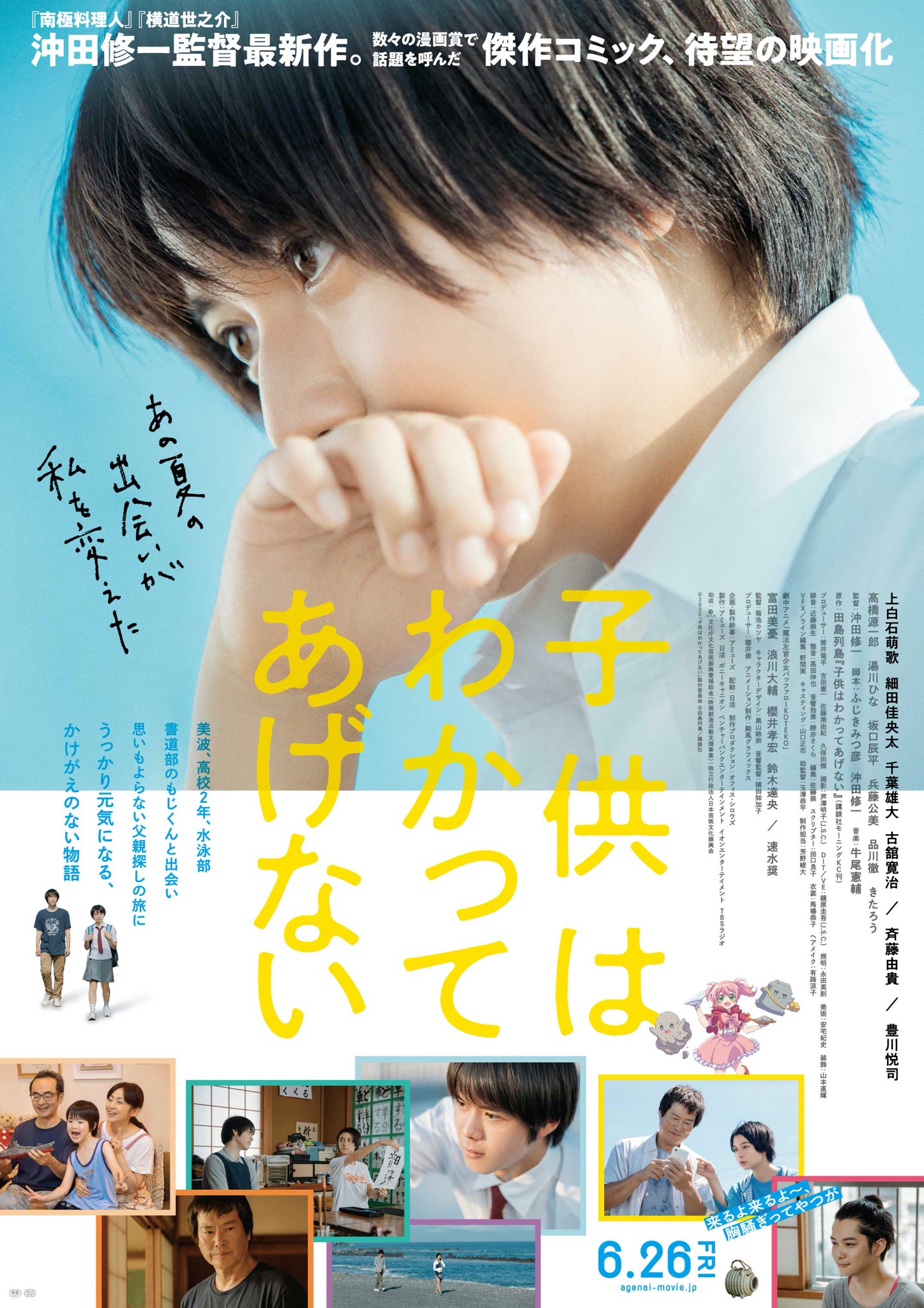
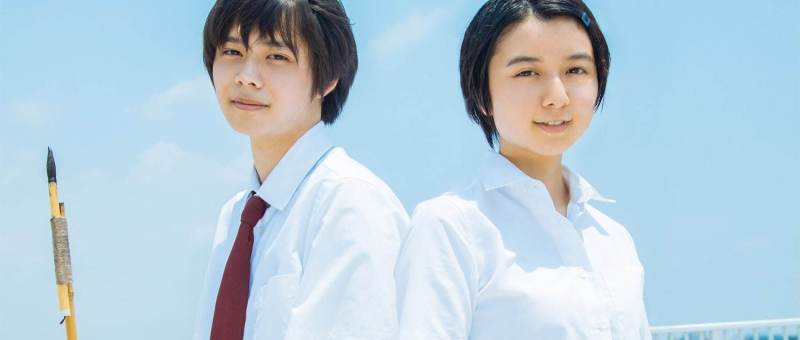
One Summer Story (子供はわかってあげない, Shuichi Okita, 2020)

“One man’s not enough to make a difference, you learn something and pass it on” the heroine of Shuichi Okita’s One Summer Story (子供はわかってあげない, Kodomo wa Wakatte Agenai) is told, learning about life from her philosophical, slightly defeated birth father. Adapted from the manga by Retto Tajima, Okita’s teen drama is in many ways a typical “summer story” in which a high schooler goes on a quietly life changing journey during one of the last summer breaks of their adolescent lives, but it’s also as much of his work is an empathetic plea for a kinder world built on mutual understanding and acceptance. 

Okita signals as much with his animated opening, taken from the heroine’s favourite show, Koteko, in which a magical girl plasterer helps “Count Cement” repair his relationships with his estranged children, Mortar and Concrete, from whom he had withdrawn in shame realising that without water he is nothing while his kids could still make something of themselves through becoming bridges and houses. Koteko is something of a touchstone for Minami (Moka Kamishiraishi), a regular high school girl and member of the swimming team moved to tears by the opening song which preaches that walls aren’t something to be overcome but a canvas on which you can plaster your dreams. At the pool one day, she spots a boy on the roof painting a picture she quickly recognises as Koteko, rushing up there to befriend him as a fellow fan. In addition to being a Koteko-lover, Moji (Kanata Hosoda) is the son of a prominent calligraphy family and it’s at his house that she finds a vital clue, a talisman which matches the one she got from her birth father for her last birthday. 

Immediately following the end of the opening anime sequence, Okita shows us a happy family scene in which Minami’s stepdad (Kanji Furutachi) hands her tissues while she cries to the ending theme, joining in with the dance while her mum (Yuki Saito) cooks in the background and her live-wire half-brother runs round in his pants. Her family setup might still be considered unusual in conservative Japan, in fact one of her friends even exclaims that they’d never have guessed that her stepdad isn’t her birth father on hearing her mother was married before, but they are clearly very close and loving, ordinary in the very best of ways. Minami isn’t unhappy or lonely at home, she isn’t really thinking too much about her birth father even if perhaps on some level curious but the talisman becomes a thread to tug on, sending her on a quest of self-discovery seeking some answers about her past as she begins to come of age. 

To do this, she enlists the help of Moji’s older sibling Akihiro (Yudai Chiba), a transgender woman disowned by the conservative, traditionalist family of calligraphers and now living above a bookshop while working as a “detective”. As the pair find out, it’s less high crime than missing moggies that are Akihiro’s stock in trade but she’s moved to have a go helping to find Minami’s dad after looking at her bankbook containing her life savings, not for the amount but because she remembers saving up herself at Minami’s age to fund her reassignment surgery. Invoicing her later, Akihiro bills her zero yen telling her merely to make sure she uses her money to help others when she grows up, echoing the film’s pay it forward philosophy as advanced by Moji who teaches kids calligraphy at his dad’s school, advising Minami that people can only pass on skills they’ve learned from others and so perhaps she could teach someone to swim. Her birth father Tomomitsu (Etsushi Toyokawa), a former cult leader who lost faith in himself for being unable to teach his innate mind reading ability to his followers, eventually tells her the same thing, that what’s important in life isn’t grandstanding, trying to change the world all on your own, but sharing what you know in a gentle process of continuity and change. 

Ironically enough and in true teenage fashion, Minami finds new security in family after lying to her mother about going on a school trip to find her dad, later realising her mother is only slightly hurt about the lying and not at all about her reconnecting her birth father. Through her extended stay with him at the seaside she begins to find the courage step into herself, accepting the position of teacher in helping a lonely little girl learn to swim, while also processing her growing feelings for the equally shy Moji who leaves her space to complete her quest on her own but chases after her when he thinks she really might be in danger. A gentle summer story Okita’s breezy drama has a pleasingly timeless, occasionally retro feel, full of summer warmth in its spirit of acceptance and mutual support as its surprisingly carefree youngsters come to an appreciation of themselves and each other as they push forward into a more adult world with confidence and compassion. 


One Summer Story screened as part of Camera Japan 2020.

Teaser trailer (English subtitles)

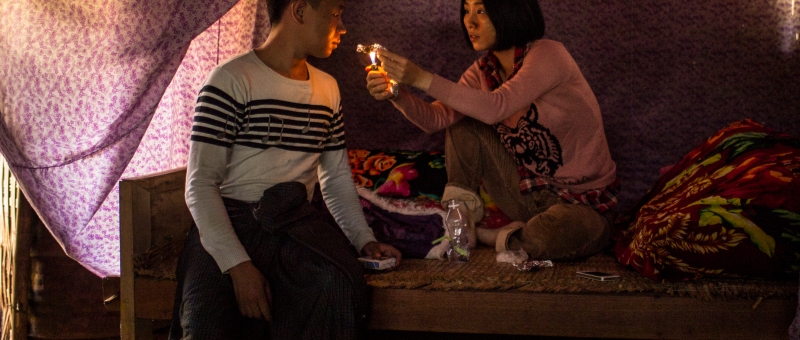
Ice Poison (冰毒, Midi Z, 2014)

“You know only too well that in Burma if we want to make money you either go to work in jade mines, but you can’t afford the trip, or you sell drugs” according to the cynical heroine of Midi Z’s Ice Poison (冰毒, Bīngdú) seducing an equally desperate farmer in an effort free herself from patriarchal oppression and reclaim her son from the family who bought her and refuse to let her go. 

In an ironic touch, the film begins and ends in fire as an unnamed young farmer (Wang Shin-hong) and his father (Zhou Cai Chang) burn their fields and harvest their crop only to lament their slender pickings. This year’s harvest has been poor and, according to the young man “everything is getting more expensive except the vegetables we grow”. Left with few options the old man and his son walk towards the town, calling in at various houses along the way gingerly asking for a loan to help make ends meet but everyone is in a similar position. The men of working age have all gone away to find employment, an older woman explaining that her husband is on a construction site while her son who returned from abroad has only been able to find work on a poppy farm and he won’t be paid until after the harvest is finished. Another woman explains that her son, unlike others, wanted to do things properly by applying for a work visa for Malaysia but was cheated by the broker, who then bribed the police when they reported him. Her son now intends to stay and get married which, perhaps surprisingly, she thinks is irresponsible when there’s no money and his older brother is still a bachelor. The last man relates the sorry tale of his son who was apparently poisoned in Thailand after spurning the advances of two local ladies and has since lost his mind. 

Shifting to his plan B, the old man plans to pawn his cow to borrow a scooter so his son can earn some money with a bike taxi, first asking the scooter’s owner for a loan but once again informed he’s strapped himself because one of his employees ran off and his China deal fell through. Rather than the scooter, he offers the young farmer a job, but they ultimately opt for a bloody bargain, placing the cow as a deposit under the agreement that if they can’t pay back the money for the scooter in a few months’ time the oil merchant may have it slaughtered though it breaks the old man’s heart. 

The young farmer had wanted to go and work in the jade mines, but his father discourages him not just because there’s war in the north but because everyone in the mines takes drugs and if he goes and gets himself hooked on meth where will they be then? The bike taxi business, however, does not exactly take off. The young man finds himself at the back of a crowd of pushier drivers literally blocking the exits of the buses that roll into town mobbing those attempting to disembark, but with such crushing poverty all around him it’s perhaps incongruous to assume many want to spend money on speedy transport. He finally manages to get a passenger, Sanmei (Wu Ke-xi), after realising she is also from the Chinese minority, driving her to a village where, it transpires, her grandfather lies dying, apparently waiting for her arrival and the burying clothes she brings with her from their ancestral home in China. The rites completed, she should go home but Sanmei doesn’t want to. As she tells her mother, she was tricked into a marriage to a much older man whose family are oppressively possessive, unwilling to let her bring her son to meet his grandmother for fear she wouldn’t come back. 

Hinting both at the crushing despair and the patriarchal strictures of their society, Sanmei’s mother tells her that she’s better off in China especially as her husband apparently treats her well enough when there are women who marry for love only to suffer domestic violence. But Sanmei keeps repeating that he’s not the man she loves and so she does not want to stay with him. What she wants is to reclaim her child and live an independent life in Burma where, she feels, there are better opportunities for making money. She’s determined to talk to her shady cousin, ignoring her mother’s advice not to get involved with him because he’s a notorious drug dealer. Her cousin indeed tells her that there’s money to be made for those who are bold in peddling “ice”, apparently the only the remaining marketable commodity. Before long she’s smoking it herself, roping in the young farmer who’s taken to making courier deliveries in the absence of passengers, telling him he’s simply ferrying her around and can claim plausible deniability of what it is she herself is transporting. 

Is Sanmei merely manipulating him, seducing the farmer to claim her new life in exploiting his boredom and despair, or was there perhaps a genuine connection born of mutual hopelessness that their poverty and impotence eventually destroys? Shooting in his own hometown, Midi Z paints a bleak picture of contemporary Burma as a scorched paradise in which the only sense of possibility lies in escape, employment abroad or drug-fuelled oblivion at home. Captured with documentary realism, Ice Poison eventually consumes our two heroes but its ultimate victim is a forgotten and unexpected one, nature dismembered at the hands of cruel and indifferent humanity. 


Ice Poison streams in the UK until 27th September as part of the Taiwan Film Festival Edinburgh.

International trailer (English subtitles)

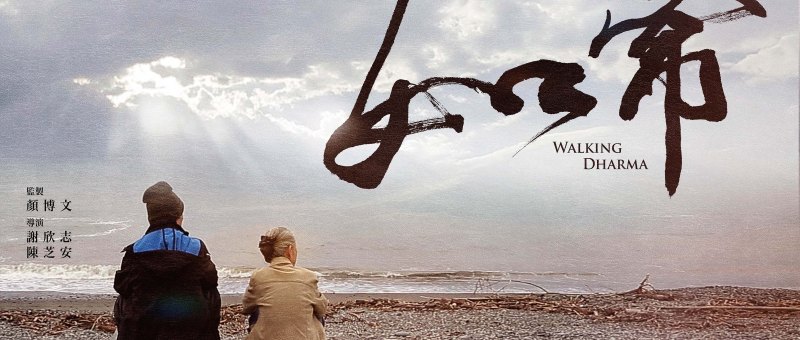
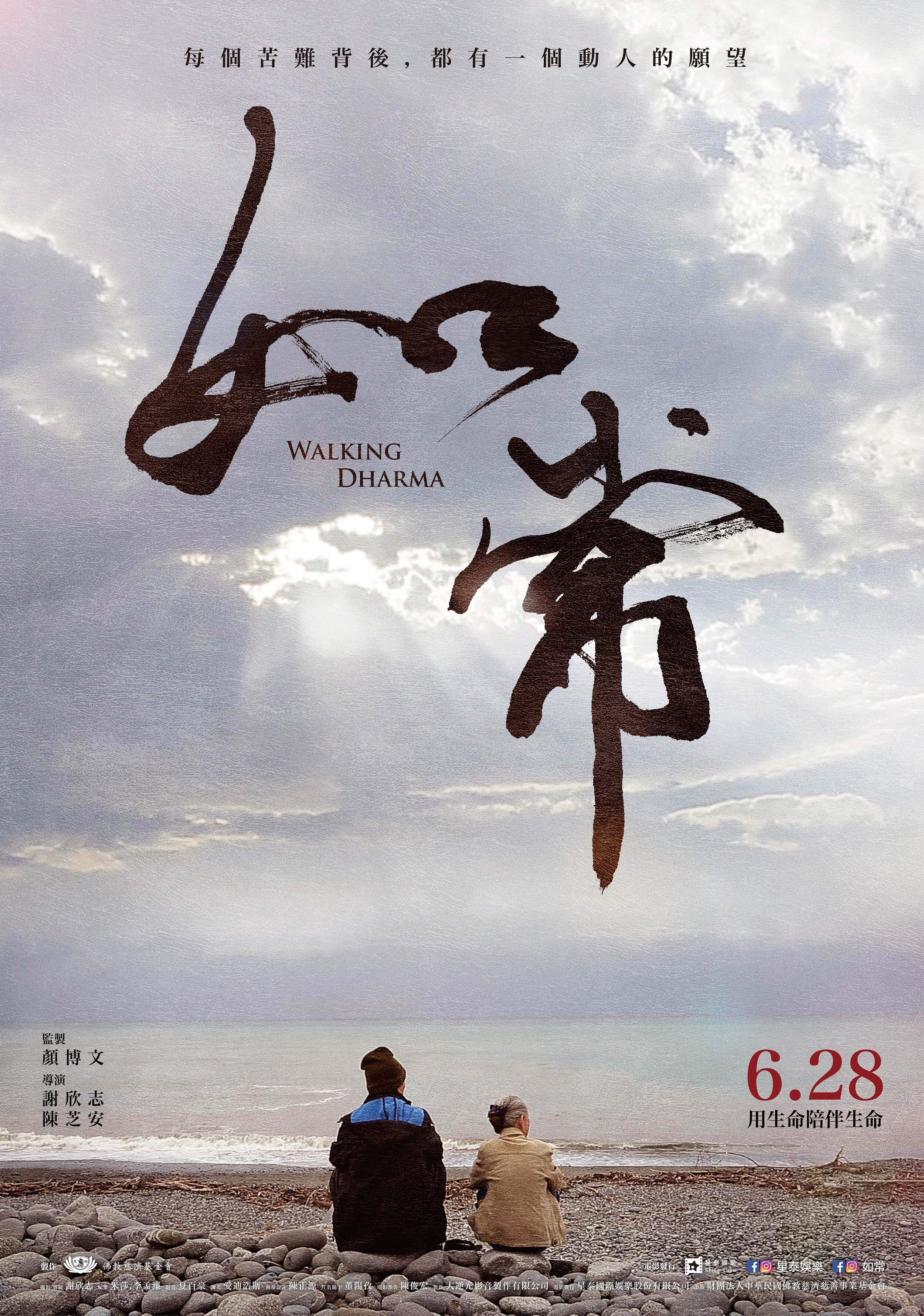
Walking Dharma (如常, Hsieh Hsih-Chih & Chen Chih-An, 2019)

The image we hold of Taiwan is of a prosperous nation among the most liberal in Asia, yet behind the shining cities there are still those experiencing hardship who might perhaps have fallen through the cracks if it were not for the efforts of the volunteers from the Tzu Chi Foundation. In Walking Dharma (如常, Rú Cháng) documentarians Chen Chih-An and Hsieh Hsin-Chih spent 18 months shadowing some of the organisation’s members many of whom are themselves elderly and have experienced their own share of suffering but equally of mutual support which they have committed to passing on through helping others. 

Testament to changing times, the first recipient of the volunteers’ care is an elderly woman who has had a nasty fall. She later thanks them for all their help in Japanese, a reminder that she was born in another world, raised in the colonial era. She is also one of many isolated older people in the nation’s ageing population, living all alone either with no surviving family around to care for them or perhaps with children who for whatever reason are not able to leaving them entirely dependent on the kindness of the volunteers. The foundation organises a crew to come round and clear the large amount of debris in front of the woman’s home to make it safer for her so she won’t fall again while trying to sort out her medication and make sure she’s safe during an upcoming typhoon. 

Meanwhile, they are also there for children and families who find themselves in difficult circumstances particularly those in which a parent has passed away unexpectedly or is suffering with a chronic illness which both renders them economically vulnerable and places an undue burden on the children whose academic prospects are then reduced while they are needed to care for their parent and siblings. The organisation provides educational assistance to cover school fees for children who find themselves in difficulty, emphasising that education is their best path out of poverty. One young woman later makes a heartfelt visit to one of the elderly volunteers to thank him for all his support over the years which has helped her to gain a place at a prestigious university. Not everyone is convinced, however, including one elderly grandmother who is reluctant to allow her granddaughters to pursue education at high school and beyond, partly because she fears they will go off the rails like the mother who abandoned them to her, and partly for more selfish reasons in that she too will be left alone with no one to look after her in her old age. Thanks to the gentle advice of the volunteers, the grandmother eventually relents and allows the young women the freedom to pursue their dreams. 

Though the members are all obviously adherents of Buddhism and committed to the teachings of the Tzu Chi Foundation which is admittedly cast in an extremely uncritical light, they are prohibited from preaching while offering help as the organisation has a strict policy in place to pursue a secular outlook. The assistance they provide is offered without seeking anything in return save the greater happiness of those they help, gaining a sense of joy in human solidarity as they witness the difference their intervention can make in the lives of others. There are some who might not want what they’re offering, or at least all of it, including one young man and his hearing impaired father who insist that they’re fine with heating up water the old fashioned way and don’t see the point in getting it piped in with a modern heating system, but the volunteers take it all in their stride always respecting the wishes of those they’ve come to help while continuing to offer advice and companionship. 

Yet it takes its toll on them too, a doctor confessing that they often see members of the Tzu Chi Foundation coming in after pushing themselves too hard, failing to look after themselves in their commitment to helping others. All of the volunteers we meet are retirees, one elderly gentlemen later heartbroken when the decline of his own health prevents him from continuing to volunteer. Nevertheless, they all emphasise that helping others is what gives their life meaning, enriching their experience as they find joy in alleviating suffering. A gentle and heartwarming reminder that we’re all in this together, Walking Dharma is testament to the existence of goodness in an all too often indifferent world.


Walking Dharma streams in the US until Sept. 26 as part of the 11th Season of Asian Pop-Up Cinema.

Original trailer (English subtitles)
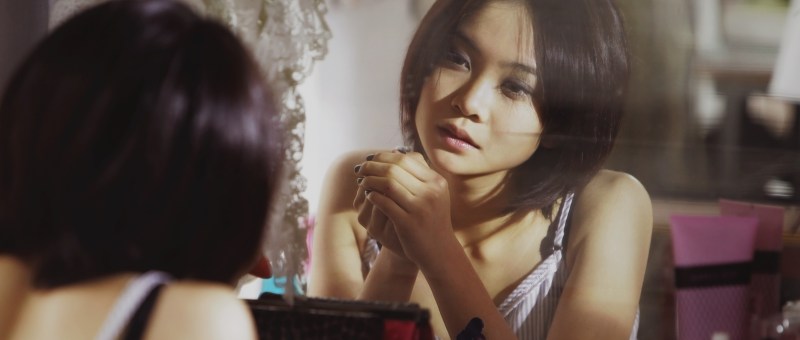
Four Moods (喜怒哀樂, Pai Ching-Jui, King Hu, Li Hsing, Li Han-Hsiang, 1970)

A key figure in the history of Sinophone cinema, Li Han-Hsiang migrated to Hong Kong from the Mainland in 1948, studying originally as an actor at the Yong Hwa Film Company under the director Zhu Shilun before performing various roles in the industry working as a set painter and graphic artist as well as in voice acting. After his directorial debut Red Bloom in the Snow proved a critical hit, he joined Shaw Brothers in the mid-1950s where he became instrumental in the success of the studio’s hugely popular period musicals inspired by Huangmei opera including the classics The Kingdom And the Beauty (1959) and The Love Eterne (1963). In 1963 he left Shaw Brothers to found Grand Motion Picture Company in Taiwan, helping to further the burgeoning Taiwanese film industry where the Huangmei musicals had proved so popular. Unfortunately, however, the Grand Motion Picture Company ran into financial trouble in the late 1960s and Four Moods (喜怒哀樂, Xǐnù’āilè), a four-part historical portmanteau piece featuring instalments from the most prominent directors of the day including Li himself, was in part intended to improve its flagging fortunes. Unfortunately it was not in that regard successful and Li eventually returned to Hong Kong, founding another production house before rejoining Shaw Brothers in 1972. 

The first of the Four Moods, Joy, is directed by Pai Ching-Jui who studied filmmaking in Italy in the early ‘60s and was heavily influenced by Italian neo-realism but perhaps counterintuitively his contribution is an entirely wordless piece of expressionist psychedelica in which a man trying to stay awake (Yueh Yang) receives a visitation from a beautiful female spirit (Chen Chen) who seems to be the incarnation of a woman whose resting place he repaired after frightening off a disfigured grave robber, planting a pretty flower he found into the earth. The man eventually beds the demure young woman but is disappointed to find her disappeared the next morning, running out into the forest and trying the same thing again, scouring headstones looking for a woman’s name and then planting his flower only to be much less enthused with his next visitor. A visually arresting fever dream of sex and death playing out in a gothic dilapidated cottage in the middle of a foggy forest and set to a primal beat of traditional instrumentation, Pai’s eerie ghost story is feast for the senses. 

King Hu’s Anger, meanwhile, sees the legendary director return to Dragon Inn territory as the destabilising forces of the age meet in a nihilistic battle for survival at remote outpost. The main thrust of the drama follows retainer Tang-hui (Chang Fu-Geng) who is despatched by General Yang to follow one of their men, Tsun, who has been sent into exile after killing the son-in-law of rival general Wang in a fight, but it’s believed that Wang has bribed his guards to kill him before they reach the border. They do indeed try to assassinate Tsun but he seems to fend them off and no longer thinks of them as dangerous when they arrive the inn which turns out to be staffed by duplicitous innkeepers who make a habit of robbing and murdering their guests. Tang-hui, when he turns up, is next on their list because they believe he’s a wealthy businessman weighed down with silver. Soon enough all hell breaks loose as Tang-hui takes on the innkeepers while the mercenary guards debate which side it’s best to be on, culminating in an extraordinarily well choreographed battle set to the rhythms of Peking opera. 

Anger then gives way to Sadness, directed by “godfather of Taiwanese cinema” Li Hsing who migrated from the Mainland in 1949 and began his career in Taiyupian Taiwanese language cinema in 1958 with Brother Liu and Brother Wang on the Road in Taiwan. One again a ghost story, Sadness meditates on the fallacy of vengeance as a man (Ou Wei) returns home after 10 years in prison on a trumped up charge looking for revenge against the men who murdered his family but inconviently discovers that they were all murdered themselves some years previously so there’s no one left to take revenge against. Retaking his family home, he finds a beautiful young woman (Chang Mei-yao) living there who claims to be a refugee making use of the empty house. She tries to talk him out of his revenge fantasies which involve pointlessly desecrating the graves of the Lan family so they’ll never rest in peace, but he doesn’t listen. Thrashing around angrily with his sword, the man eventually softens as he falls for the woman, but ruins his chance of happiness in his inability to let go of his grief and rage. 

The final segment, Happiness, is directed by Li Han-Hsiang himself and is a comparatively subdued tale revolving around a cheerful miller (Ko Hsiang-Ting) who enjoys a drink while fishing in the river by the millhouse. It’s there that he encounters a strange young man (Peter Yang Kwan) who charms the fish into his basket through the beautiful music of his flute. The miller learns that the mysterious man, Liu Lon, is the ghost of one who fell into the river drunk sometime previously and is looking for his replacement so he can move on. Problematically for the miller that involves the death of a young local woman (Chiang Ching) he knows well who considers drowning herself because her father doesn’t approve of her marriage to a man she loves. He saves her, offering to intercede with her father to make him see sense, which means he gets to spend more time with his ghost friend but also that Liu Lon will be in purgatory for another few years. Liu Lon later gets another chance but takes pity on a lost soul and is rewarded for his selfless act of kindness, as he tells the miller will he be for all his earthly goodness. If we haven’t learned already from all the terrible tales of fruitless human greed and violence presented in the other three segments, the path to happiness lies in temperate kindness which is sure to receive at least celestial reward in its proper time. 


Four Moods streams in the UK until 27th September as part of the Taiwan Film Festival Edinburgh.

Original trailer (English subtitles)

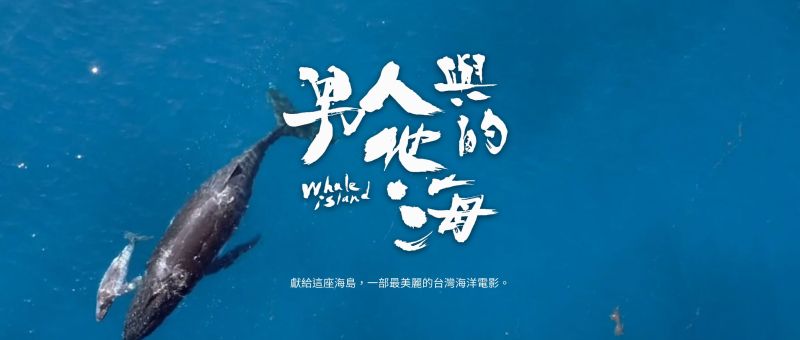
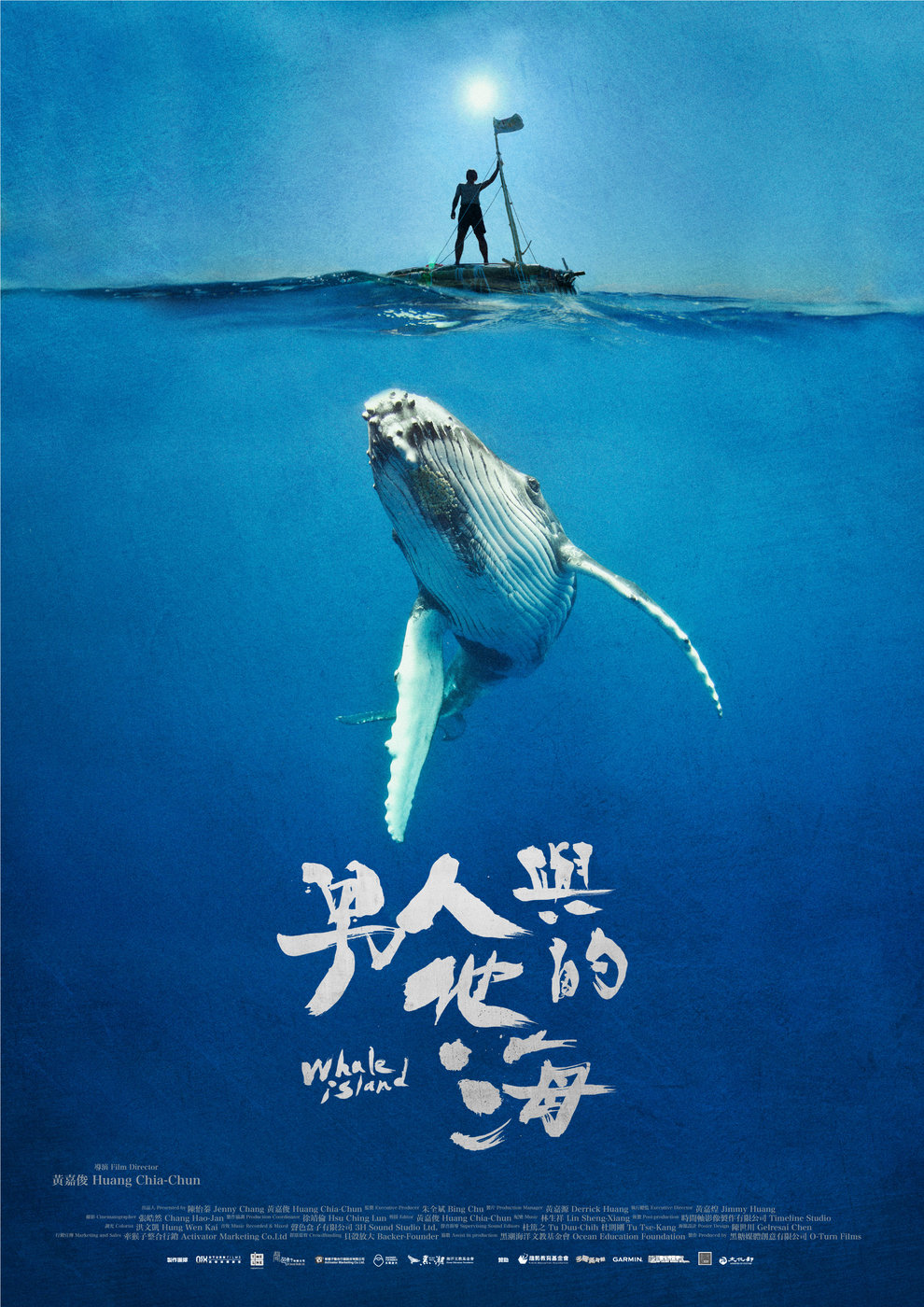
Whale Island (男人與他的海, Huang Chia-chun, 2020)

Taiwan is an island, but its people have lost touch with the sea according to one of the protagonists of Huang Chia-chun’s contemplative documentary. Whale Island (男人與他的海, Nánrén Yú Tā de Hǎi) argues that fear has blinded the populace to the beauty which surrounds it, robbing them of their natural freedoms in a symbolic act of repression, but love of the ocean has also cost both of Huang’s protagonists dearly as they find themselves having to prioritise leaving those they love behind on land while they immerse themselves in the solitude of the sea. 

Oceanoggrapher Liao refuses to be constrained. “During your lifetime it’s inevitable for you to be restricted.” he admits, “restricted by society, restricted by reality, restricted by age, restricted by body.” Liao laments that if only people could learn to lose their fear of the water, something he feels has been deliberately cultivated as a means of oppression, everything would be better. For his own part, he fell in love with the sea for the sense solitude. As a young man with language difficulties he longed to escape other people, dreaming of becoming a lighthouse keeper or perhaps a forest ranger before getting to know some captains of fishing boats and getting a job as a fisherman. These days he acts as a tour guide, running scenic trips for tourists showcasing the wonder that exists just off shore with its spinning dolphins and visiting whales. 

Ray, meanwhile, is a wildlife photographer specialising in underwater shots of marine animals. As a father to two young sons, however, he finds himself conflicted, putting his work on the back burner knowing that to do it all out would mean being away from his family for long stretches of time but watching other photographers push further ahead by hopping the planet chasing the seasons. A few weeks a year he travels to Tonga where, unlike Taiwan, it’s permissible to swim alongside the whales but the work is not without danger as he proves after getting whacked on the leg by a curious whale’s tail and being stuck on the shore while he recuperates. Ironically, his boys fear the water, not because its destructive capacity but because of the very real anxiety that that will swallow him whole, that one day he’ll disappear beneath the waves and never resurface. 

Like Ray, Liao also found himself with a kind of choice only in his case it was no choice at all. His marriage eventually broke down because of his obsession with the sea, damaging his relationship with his young daughter which was not repaired until she was a grown woman suffering a health crisis. Yet the sea was not something he could sacrifice, dedicating his life to unlocking its mysteries while insisting on his own freedom, refusing to be constrained by conventional social codes or the will of others. 

Liao is convinced that if people turned to face the sea, lost their fear of it, then many things would change. Perhaps they would feel less oppressed, better able to express themselves and better equipped to live in freedom as he has learned to. According to the life philosophy communicated to him by a friend and mentor, the only way to survive a storm is to sail straight into it, turn the prow towards the source of the problem instead of trying to outrun it. Liao has done just that, attempting to raise awareness of the joys of the sea while fully aware of its concurrent dangers. Huang captures both the majesty of the Taiwanese landscape with its rolling seas, rocky inlets, and remote islands while marvelling at the prevalence of sea life found not so far off shore, neatly contrasting dolphins frolicking in the open seas with those forced to do tricks for tourists in nearby theme parks. A picturesque voyage along the island’s idyllic coastlines, Whale Island is a poignant reminder of the beauty that lies just over the horizon, constantly at the mercy of an ever changing world.


Whale Island streams in the US until Sept. 26 as part of the 11th Season of Asian Pop-Up Cinema.

Original trailer (English subtitles)
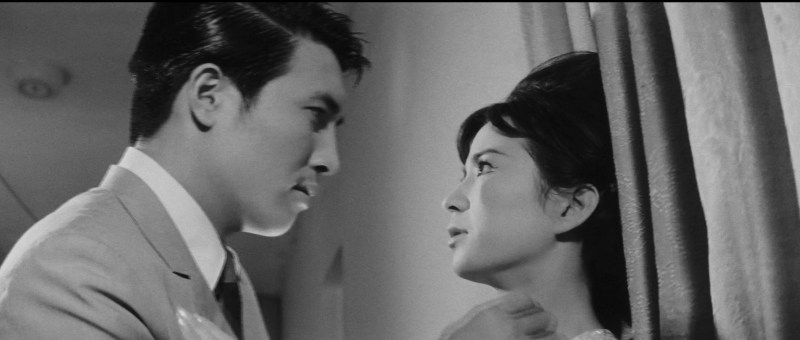
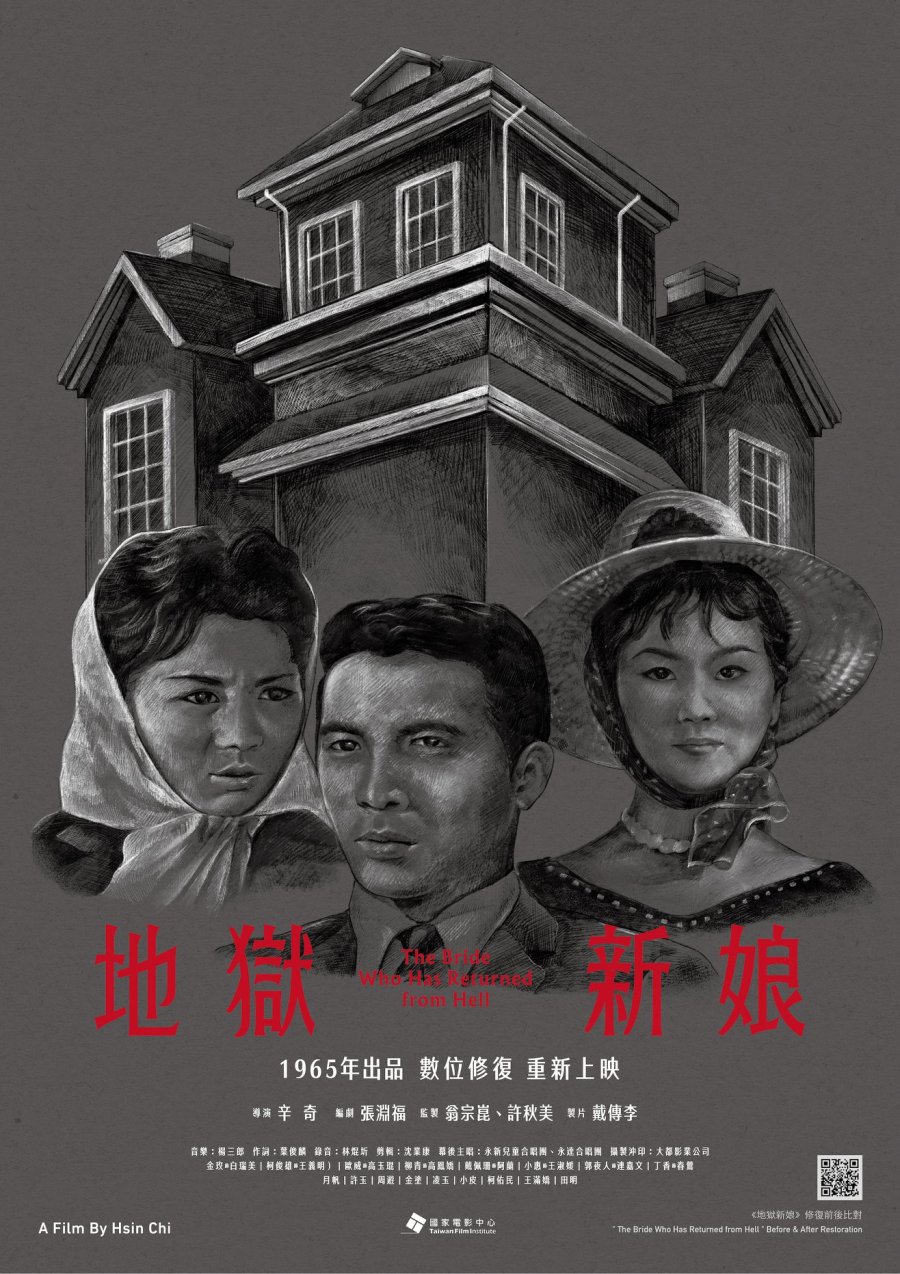
The Bride Who Has Returned From Hell (地獄新娘, Hsin Chi, 1965)

“That place is filled with horror and mystery” a creepily persistent man on a train claiming to be a clairvoyant warns the new governess to a home that does indeed turn out to be tinged with tragedy, though in true gothic melodrama fashion that was something of which she was already well aware. Inspired by the Victoria Holt novel Mistress of Mellyn, Taiyupian The Bride Who Has Returned From Hell (地獄新娘) is less supernatural mystery than eerie romance which sees frustrated desire collide with outdated social mores to destabilise the social order in the otherwise tranquil world of the new elite. 

Echoing the novel’s Cornish atmospherics, the opening title sequence pans over the rugged coastal landscape with its rocky outcrops and crashing waves before homing in on a policeman picking up a handbag while his colleagues investigate the body of a man drowned at sea. Meanwhile, wealthy entrepreneur Yi-Ming (Ko Chun-Hsiung) is worried because his wife Sui-Han is not at home despite the fact they’re supposed to be going to a friend’s birthday party. The man’s body is identified as Guo Jing-Min, Yi-Ming’s cousin and the older brother of the woman living next-door, Feng-Jiao (Liu Ching). Jing-Min and Sui-Han were once lovers, and given that the handbag appears to have been hers, it’s assumed that the pair attempted to elope but got into trouble and drowned with Sui-Han’s body possibly lost at sea. 

Perhaps tellingly, Yi-Ming’s reaction to his wife’s disappearance is irritation and suspicion. He asks the housekeeper if Sui-Han has ever stayed out all night while he’s away from home and on learning that she may have come to harm focuses solely on the embarrassment of being a man whose wife has betrayed him. “How am I supposed to face people?” he angrily asks Feng-Jiao who apologises on her brother’s behalf (but seems equally unperturbed at his demise). He more or less gives up on finding out what’s happened to Sui-Han and begins to reject his daughter, Su-Luan, solely because she reminds him of his wife while taking up with another woman, Mrs Lian (Kuo Yeh-Jen), who married a much older man presumably for his money. 

Meanwhile, Sui-Mi (Chin Mei), Sui-Han’s sister who has recently returned to Taiwan after many years living abroad in Singapore, has secretly taken a job as a governess in the Wang household under an assumed name in order to investigate her sister’s disappearance. The man on the train who warned her about the house’s dark mystery, the lonely little girl, and the man with a bad reputation turns out to be none other than the other brother of Feng-Jiao who lives with her in a neighbouring mansion. Apparently employed partly because of her physical similarity to the (presumed) late Sui-Han in an effort to provide comfort to the highly strung Su-Luan, Sui-Mi is only one of several doubles in play which include the decidedly creepy little girl Lan (Dai Pei-shan), the housekeeper’s granddaughter, who insists that Sui-Han is still alive while more or less spying on everyone making full use of her invisibility as a member of the servant class. 

Like any heroine of a gothic romance, Sui-Mi’s role is not just to solve the mystery but to restore order by unifying the various forces of destabilisation currently threatening the Wang family which is one reason we see her actively include Lan, treating her the same as she does Su-Luan, teaching the two girls to be friends and equals as she educates them both together. The other threat to social harmony is in Yi-Ming’s moodiness and womanising, most particularly his possibly immoral relationship with Mrs. Lian and inability to embrace his role as a father by showing love to his daughter who is already becoming strange and neurotic in the wake of her mother’s death, believing that she has been abandoned by both parents. Thus, partly thanks to her physical similarity to Sui-Han as her sister, Sui-Mi assumes the maternal role assuring Su-Luan that she will love her forever in her mother’s place while Yi-Ming’s growing attraction to her precisely because of these maternal qualities, in its own way also problematic, draws him back towards the proper path of home and family. 

Pursued by Feng-Jiao’s creepy brother and conflicted in her attraction to her brother-in-law while still harbouring the suspicion he may be involved in her sister’s disappearance, Sui-Mi finds herself drifting away from the idea of solving the mystery even while inhabiting the creepy mansion which is in its own way both literally and figuratively haunted. A dream apparition of her sister in an ethereal use of double exposure effectively gives her permission to pursue her romantic destiny by instructing her to stay in Taiwan and look after Su-Luan because, she fears, no one else will which doesn’t speak highly of Yi-Ming, while reminding Sui-Mi that she came to the Wangs’ for a reason.  

“You can’t get true love by manipulation” the villain is later told, revealing to us that the motive in this case really was romantic jealousy, a typically gothic sense of repression born of oppressive patriarchal social codes which prevent the proper expression of desire and eventually lead to violence. Sui-Mi restores order by solving the mystery and then healing the rifts by, ironically, submitting herself to those same oppressive social codes in assuming her “natural” role as wife and mother. Using a series of unexpected music cues from ominous Japanese folksong Moon over Ruined Castle as Sui-Mi surveys the rugged mansion to the more upbeat Hana as she plays with the children, moody jazz, Danny Boy, and even the James Bond theme playing over the climax (not to mention the many instances of child star and producer’s daughter Dai Pei-shan singing her gloomy lullaby), Hsin goes all in on the gothic imagery even having Sui-Mi almost fall victim to a suspicious rock fall just as she becomes a credible romantic heroine, before ending on a cheerful note with another song celebrating the simple joys of the traditional family.


The Bride Who Has Returned From Hell streams in the UK until 27th September as part of the Taiwan Film Festival Edinburgh.

Restoration trailer (English subtitles)

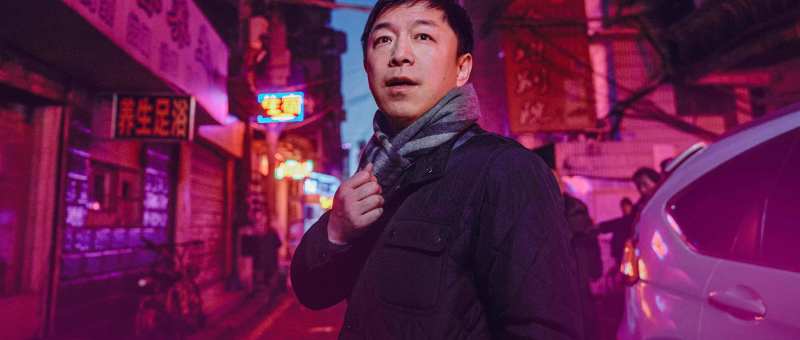
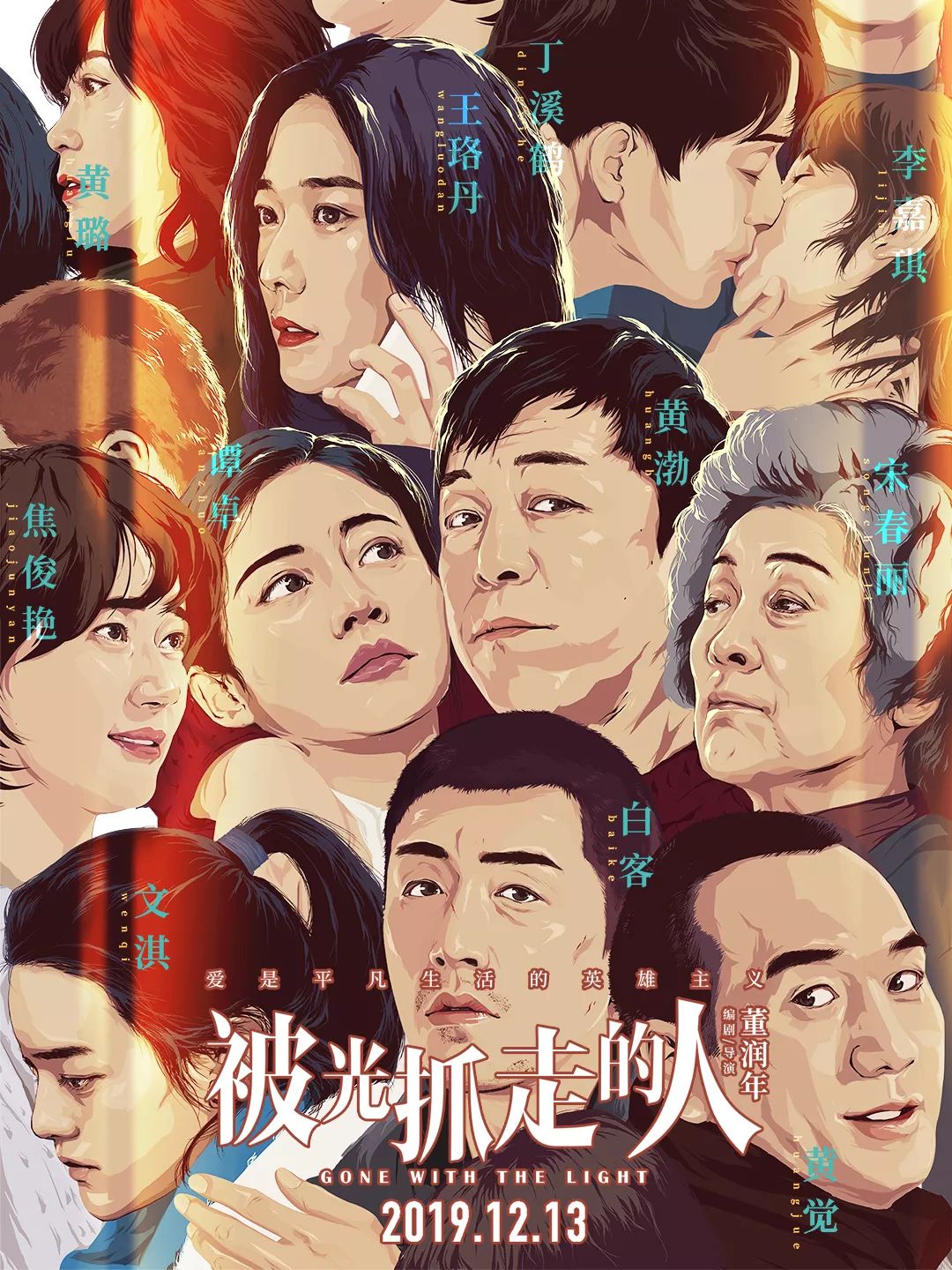
Gone with the Light (被光抓走的人, Dong Runnian, 2019)

What is love, and in the end does it really matter? It’s a question the mostly middle-aged couples of Gone with the Light (被光抓走的人, Bèi Guāng Zhuāzǒu de Rén) who perhaps assumed they were past such existential questioning find themselves contemplating after an unprecedented event causes the disappearance of seemingly random people from all over the world giving rise to the rumour that those taken were those truly in love. But if that’s so, what does it mean for the overwhelming majority left behind, suddenly lonely and uncertain wondering if they’ve been spared or judged and found wanting for their lack of emotional fulfilment. 

At 10am one spring morning, a brief flash of light creates a slight temporal disturbance causing a small percentage of the population to simply vanish. No one knows what happened or where they’ve gone, but the connection is later made that many seem to have been taken in pairs giving rise to the theory that the disappeared are the only true lovers. This is a minor problem for some of the left behind who have lost spouses twice over, not only literally but emotionally in realising that their loved one was in real, deep love with someone else. Meanwhile, those not taken begin to wonder why, questioning the validity of their relationships, doubting that their loved ones really love them but not quite daring to ask the same question in reverse. 

Dong opens the film with a vox pop session questioning several people about the nature of love, some of whom we’ll get to know better and others not. Our hero, school teacher, Wenxue (Huang Bo), unconvincingly claims that he does not put any stock in the admittedly unscientific theory that only true lovers were taken and that the rumours have not affected him or his wife but as we later see they have profoundly unsettled his unexceptional, middle-class family life which was at least superficially happy or perhaps merely unhappy in the most ordinary of ways. Before the light, we see him annoy his wife by waking her up smoking in bed before they have perfunctory, routine sex over which they discuss Wenxue’s hopes for promotion and whether or not it’s appropriate to schmooze with the headmaster to smooth the path. The fact they weren’t chosen eventually becomes a kind of embarrassment, the promotion going to a man whose wife disappeared on him for the slightly strange reason that being betrayed in love somehow grants him the moral high ground. Wenxue, like many, goes to great lengths to excuse himself, getting a fixer to photoshop pictures of his wife along with train tickets to make out she was in another town when the light descended.

Meanwhile, Li Nan (Wang Luodan), a woman who was in the middle of trying to divorce her husband when the light struck finds herself accosted by his mistress (Huang Lu) demanding to know where he is seeing as he did not ascend with her. The obvious conclusion is that he had another woman, but the quest forces each of them to reassess their true feelings towards the missing man, the mistress desperate to prove she wasn’t just an “adulteress” but a woman in love, and the wife that she really is ready to let him go. A young woman (Li Jiaqi) who threatened to commit suicide by jumping off a roof when her parents tried to stop her marrying her boyfriend (Ding Xihe) suddenly doubts her feelings when her parents disappear together while she and the man she thought she loved are left behind. A petty thug (Bai-ke), in the only subtle implication of a same sex love, becomes obsessed with the idea that his friend has been murdered by a TV presenter who had been bothering him and his death has been covered up to look like one of the disappearances, perhaps again hoping to find evidence against a romantic rejection. 

Talking to another man in a similar situation Wenxue is given a dressing-down, reminded that he’s been extremely self-involved and that the problems he’s now able to see in his marriage thanks to the light were there all along, only now he’s refusing to face them in a much more direct way. He couldn’t or chose not to see that his wife was lonely and filled with despair while flirting with an equally lonely woman at work. His confrontation with her provokes his only real moment of emotional reckoning as they each reflect on the fantasy of romance and its capacity to dissipate when realised. Walking in on his teenage daughter getting dumped for the first time he’s perhaps in the best position to offer advice, even if it’s of the fairly prosaic kind to the effect that she’ll get over it in time. “Your lies make me ashamed” she’d fired back at her parents’ middle-aged hypocrisy, a very ordinary marriage in which perhaps the “love” has gone, in one sense, but equally might be succeeded by something else. “It’s alright, you will know it in the future” Wenxue tells his heartbroken daughter but might as well be talking to himself, beginning to feel the love after love in conceding that perhaps this is what “love” is rather than any kind of “rapture” literal or otherwise. A beautifully pitched meditation on the consequences of love, the madness, violence, and loss, Gone with the Light finds its release in stillness and a gentle contemplation of that which remains when everything else is burned away. 


Gone with the Light streamed as part of this year’s New York Asian Film Festival.

Original trailer (Simplified Chinese subtitles only)