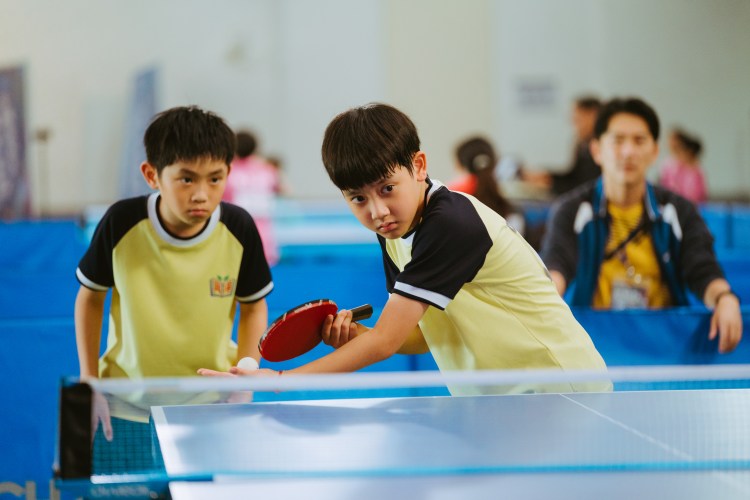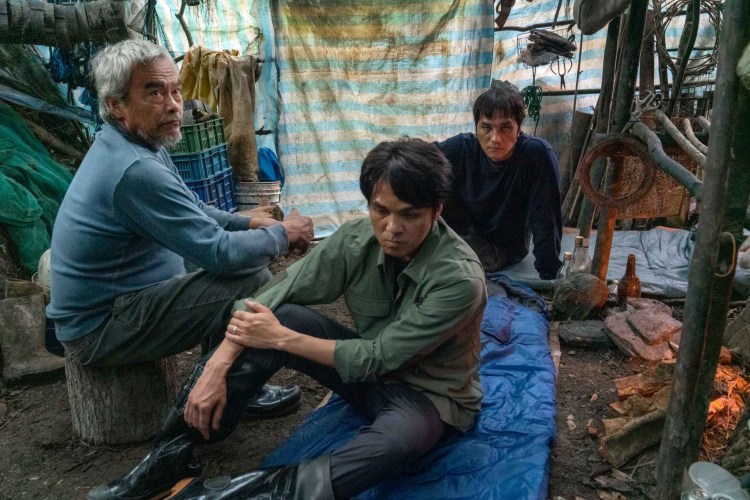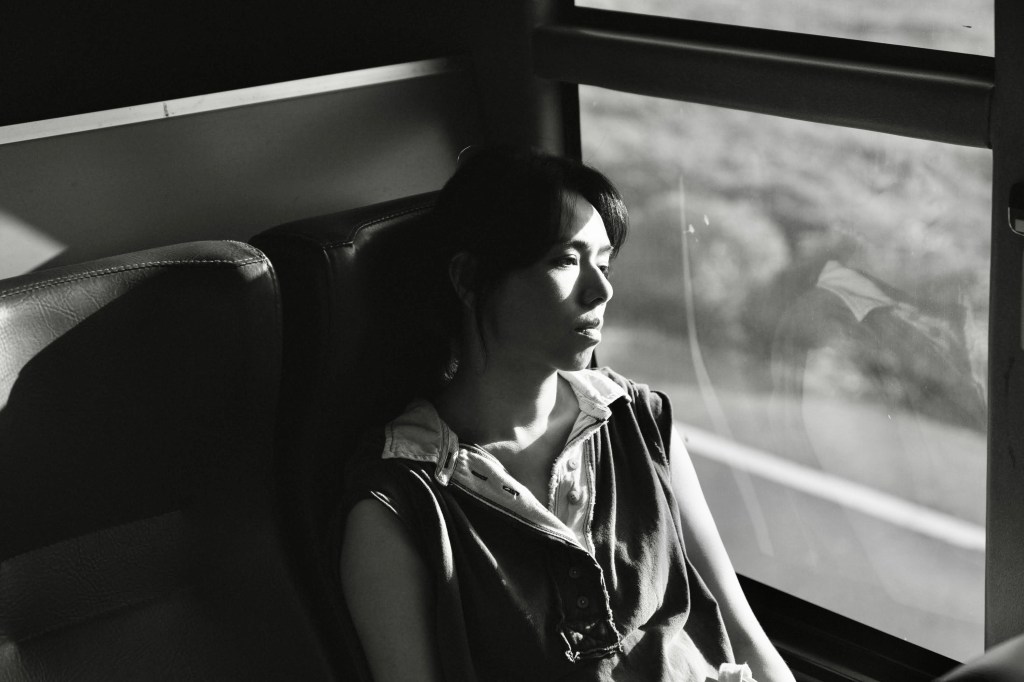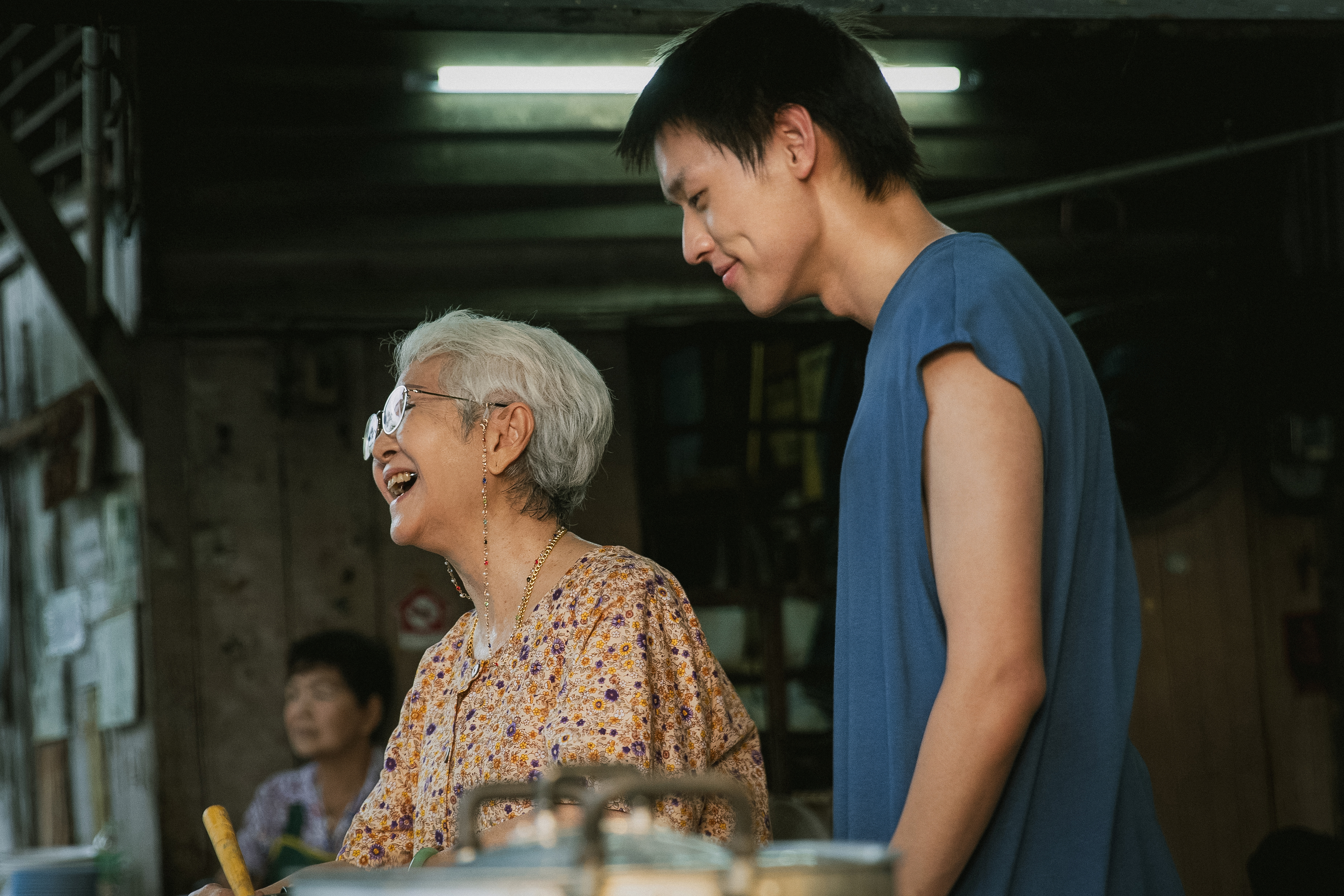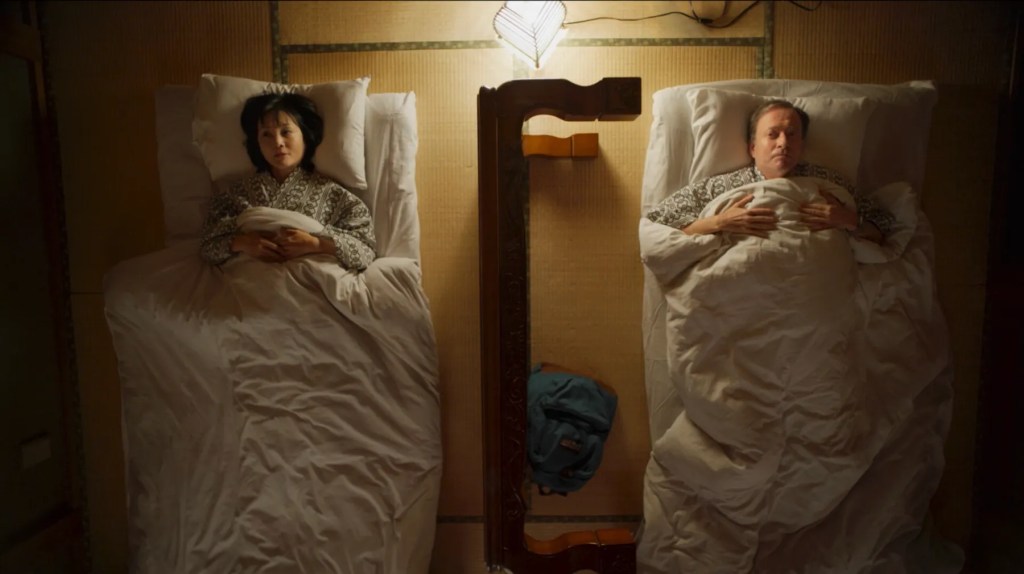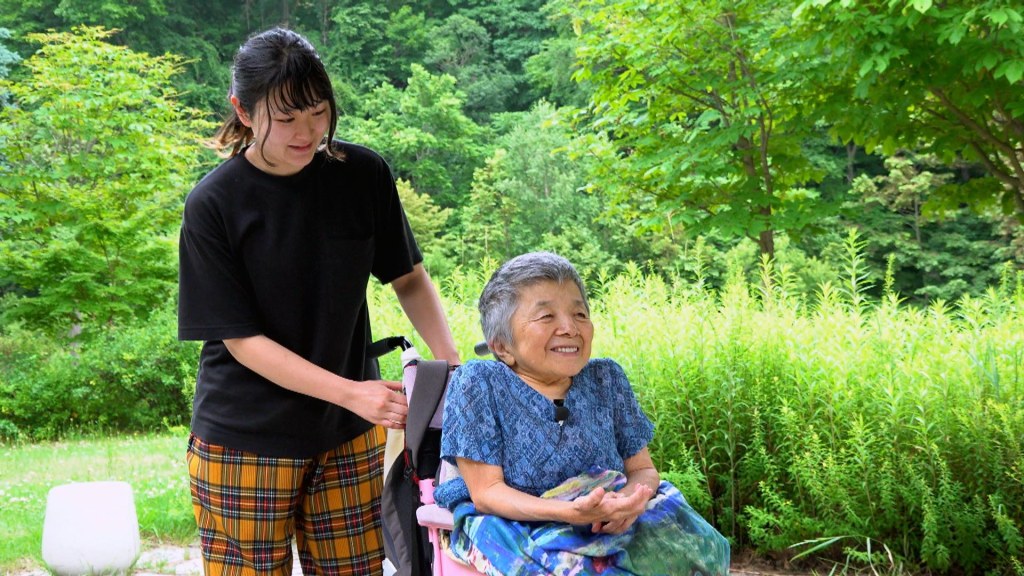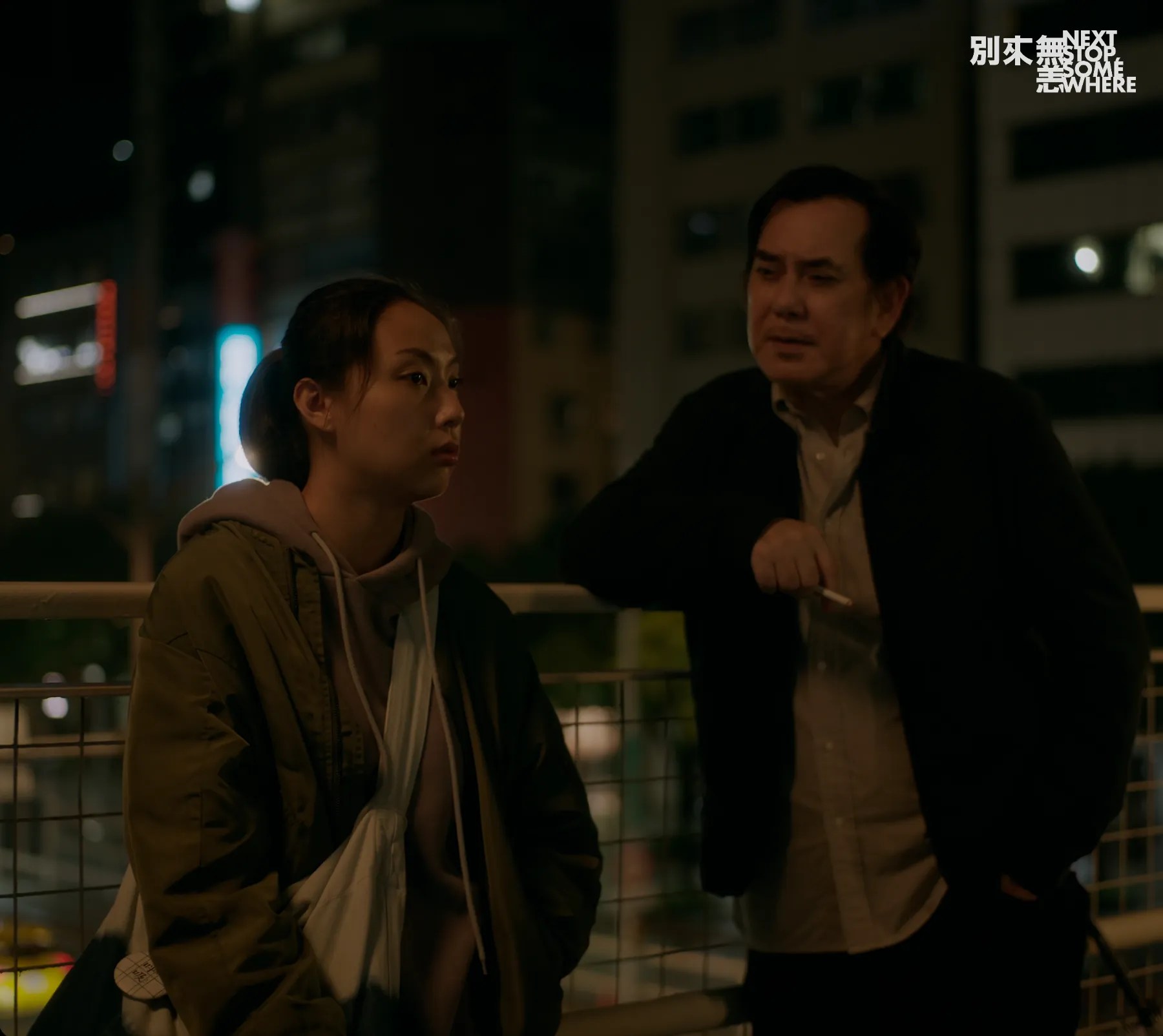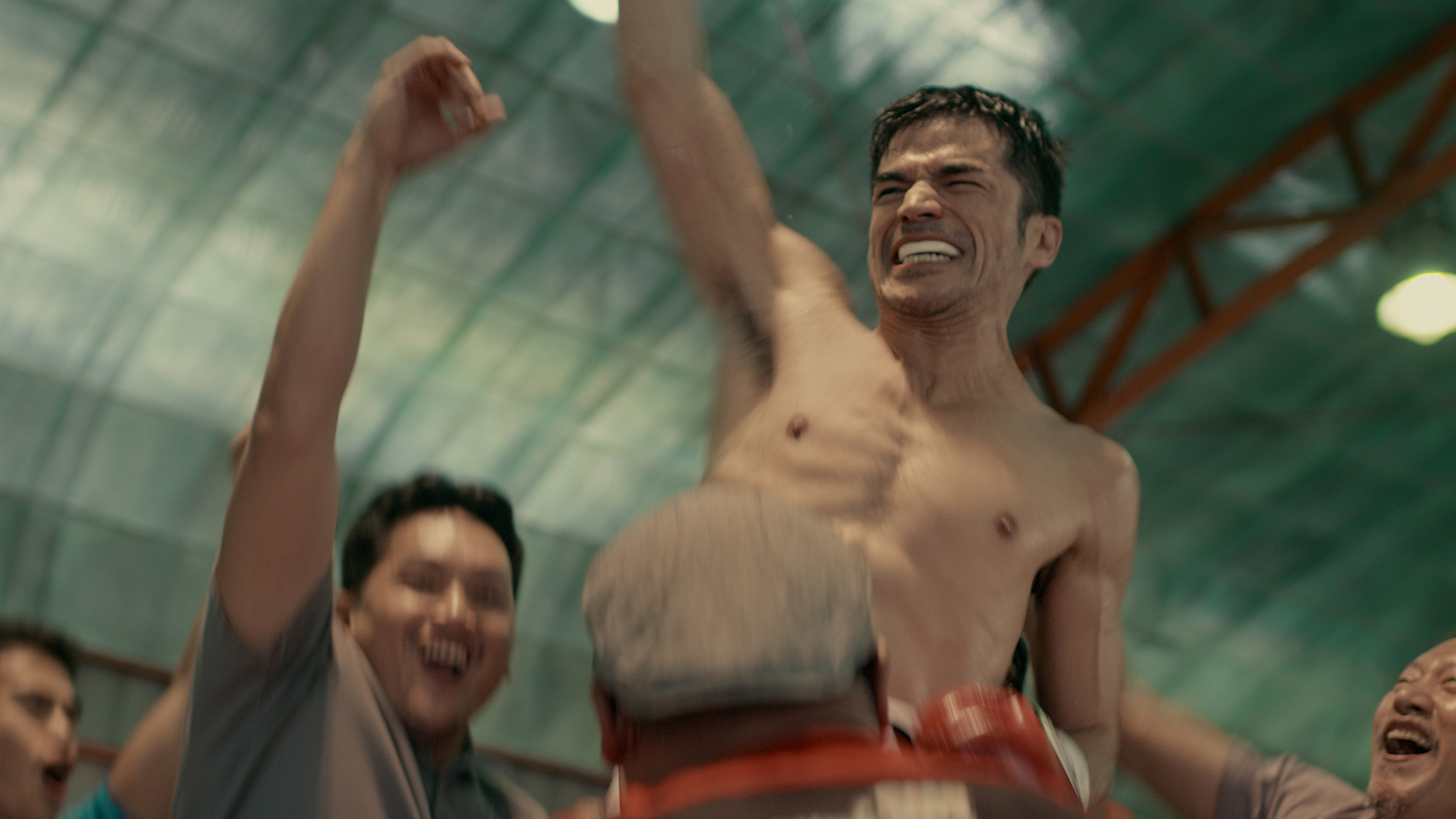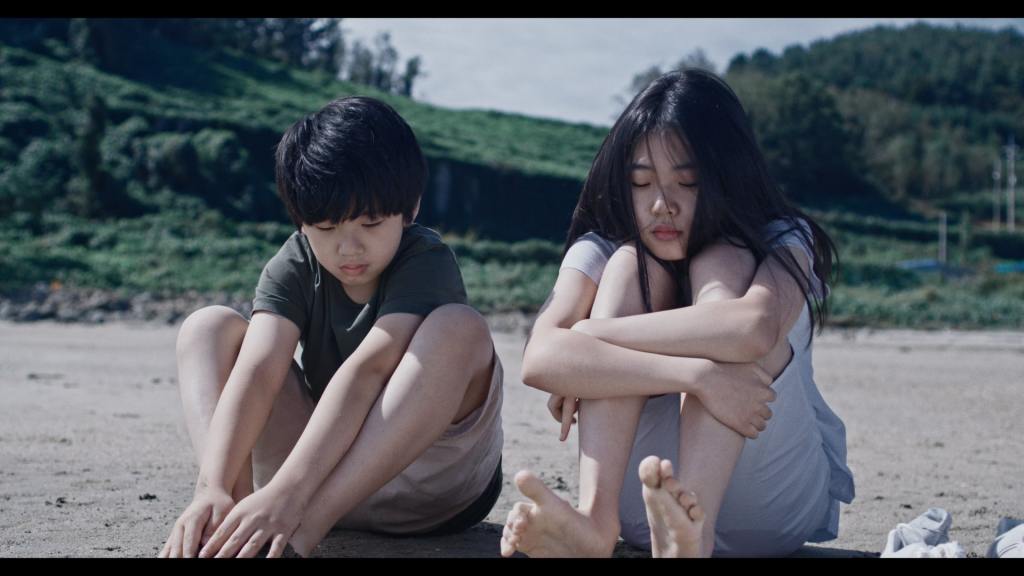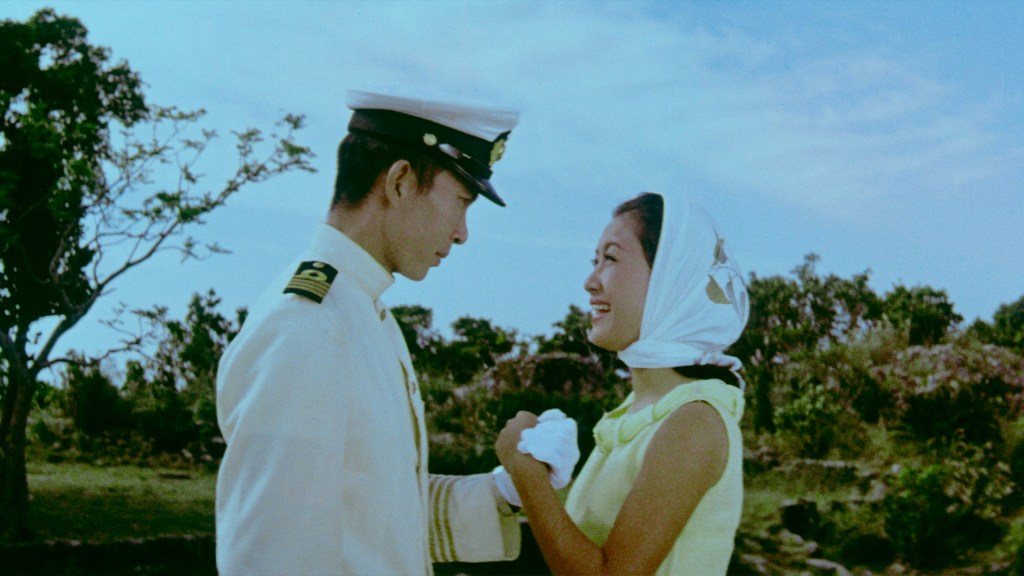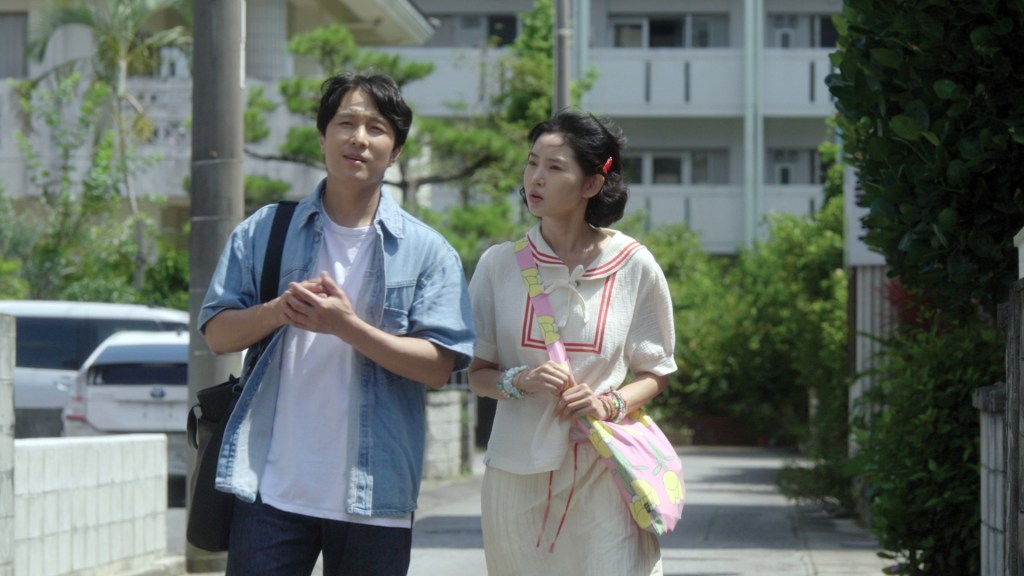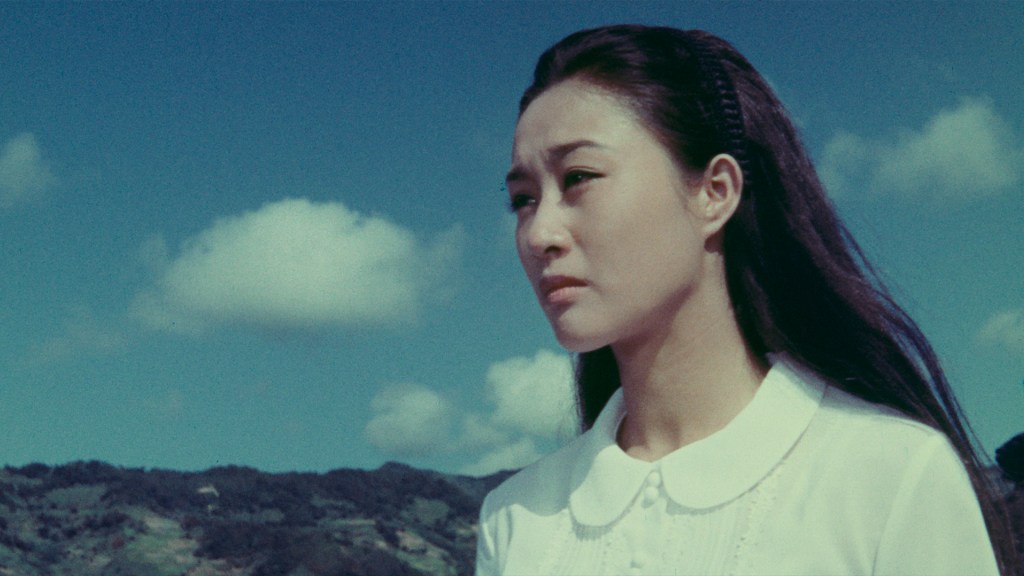
Love in the Big City (대도시의 사랑법, E.oni, 2024)

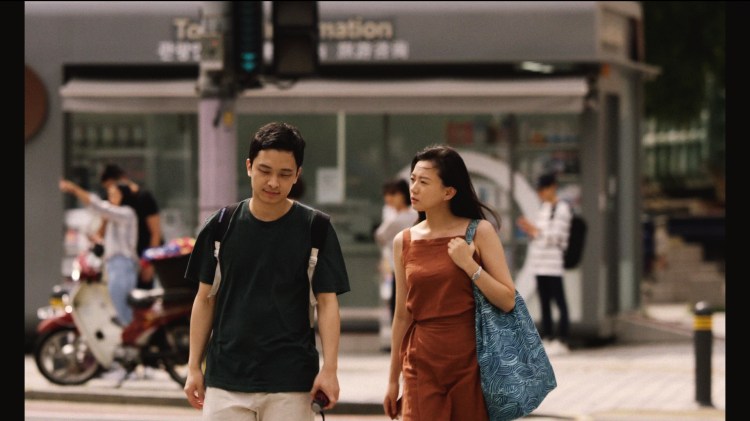
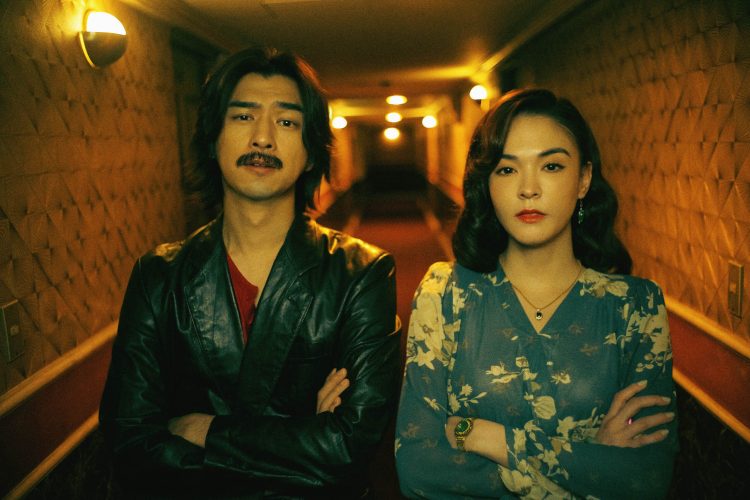
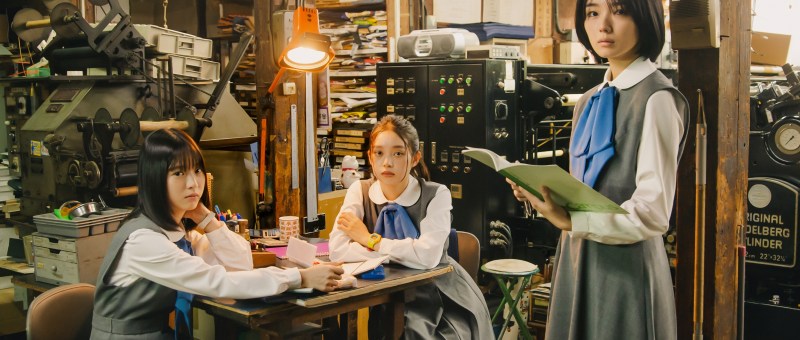
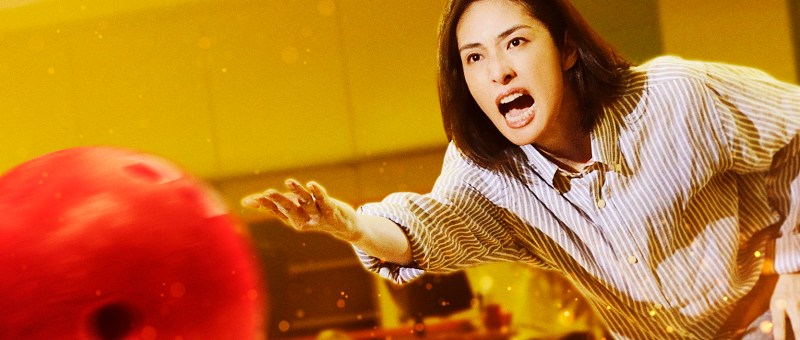
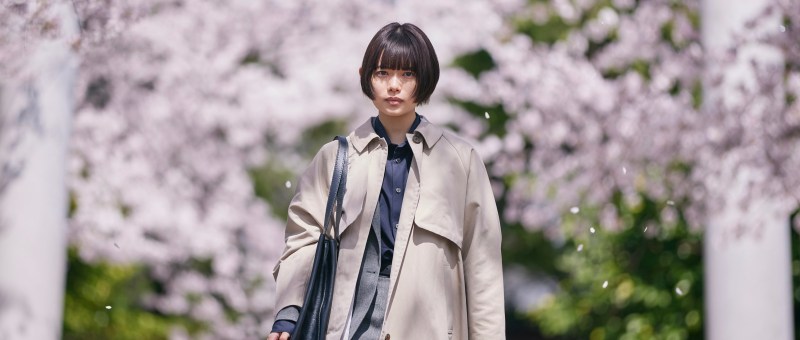
“How can being yourself be your weakness?” asks a young woman who, more than anything else, is defiantly herself, to a young man who indeed is anything but. The heroes of E.oni’s Love in the Big City (대도시의 사랑법, Daedosiui sarangbeop), adapted from the acclaimed novel by Park Sang-young, are in some ways on parallel journeys that somehow weave through and around each other as they each try to navigate an often hostile society that has no place either of them.

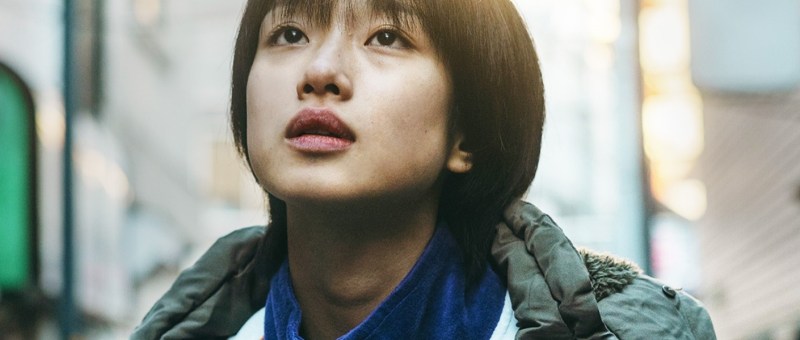
For aspiring writer and in the film’s early stretches student of French literature Heung-soo (Noh Sang-hyun), his “weakness” is that he’s gay and though he seems to have accepted this about himself is firmly in the closet. Free spirited Jae-hee (Kim Go-eun) who spent her teenage years abroad in France catches him making out with their professor but couldn’t care less though Heung-soo rebuffs her attempts at friendship fearing they’re akin to a kind of blackmail or that she plans to out him to their fellow students. It’s not until Jae-hee is publicly shamed when it’s rumoured a topless photo being shared online is of her that the pair finally become friends. Sick of the curious stares and covert giggles, she lifts her shirt in front of the class to prove it isn’t her, earning the nickname “crazy bitch”.

Her response is the exact opposite of Heung-soo. She claims her freedom by baring all, being defiantly herself and outwardly at least little caring for what others think of her while Heung-soo makes himself invisible and says nothing harbouring intense fear of being exposed. They are each in their way pariahs. Heung-soo because of his sexuality which is still unacceptable to many in the fiercely conformist society of South Korea in which Christian religious bodies still have huge influence and loudly oppose LGBTQ+ rights and freedoms. Heung-soo’s widowed mother is also intensely religious and having stumbled on one of his stories about a crush on a classmate is aware that he is gay but does not speak of it and continues to believe he will be “cured”. This is perhaps why she keeps urging him to do his military service believing it will make a man out of him.

For all of these reasons, it’s not surprising that Heung-soo is unwilling to live his life openly as a gay man because of the prejudice he knows he will face from those around him. Jae-hee, by contrast, refuses to hide and lives the way she wants to but is shamed by those who feel a woman should live in a certain way which is to say quietly, politely, and obediently. A man she thought was a boyfriend while he thought of her as a bit on the side publicly slut shames her and asks what sort of idiot would want to date a woman like her. Though we first meet her as a confident, rebellious student we see her gradually beaten down by the world around her and the demands of corporate culture. Considering marrying a man she may not actually like because it’s what you do, she stares sadly at a middle-aged woman opposite her on the train dressed in a near identical outfit and the comfortable shoes that are psychologically at least uncomfortable for Jae-hee in representing her capitulation to the properness of mainstream society. 

Her degradation continues to the extent that she finds herself in a relationship with a domineering, intensely patriarchal man who later turns violent when she tries to leave him. E often cross cuts and juxtaposes Heung-soo’s and Jae-hee’s experiences as they each suffer similar blows and indeed violence from a macho society if in different ways and for different reasons while having only their intense bond as fellow outsiders to rely on. This really is the love in the big city, a deeply felt platonic and unconditional love between two people who essentially have no one else. It’s through this love that each comes to love and accept themselves, Heung-soo eventually gaining the courage to fully embrace his authentic self while Jae-hee finally regains her independent spirit and refuses to let others shame her while standing up both for the LGBTQ+ community and the young woman she once was at the mercy of a male-dominated corporate culture. Warm and often funny, the film paints contemporary Seoul as an outwardly oppressive city of enforced conformity but equally discovers small pockets of freedom and joy along with the wholesome comfort of true friendship and self-acceptance.


Love in the Big City screened as part of this year’s London Korean Film Festival.

International trailer (English subtitles)

The Noisy Mansion (백수아파트, Lee Lu-da, 2024)

Could the neighbourhood busybody actually be a force for good? The Noisy Mansion (백수아파트, Baeksu Apateu) at the centre of Lee Lu-da’s goodhearted comedy is a metaphor for the nation itself and also a kind of purgatorial space inhabited by the heroine as she attempts to repair herself by enforcing justice and improving the lives of others though it brings her no other real benefits. Some may brand her an inconvenient troublemaker, a nosy parker poking her nose where it doesn’t belong, but Geo-ul is really trying to do good if in an unconventional way.

It’s this tendency to rock the boat that’s finally started to annoy her brother Duon who fears her problematic do-gooding is going to have an adverse effect on his children while he is also fed up with fending off animosity from the neighbours regarding Geo-ul’s frequent attempts to police them. In many ways, this is a society in which minding your own business is considered a virtue and speaking up is a breach of social etiquette but then if nobody says anything, then nothing will ever change and those who abuse their power will be able to go on doing so unchallanged. 

Of course, Geo-ul’s determination to enforce justice it also her way of overcoming her sense of guilt and resentment towards a world in which a small mistake, the overlooking of something that should have been important, can have tragic consequences. She is quite literally haunted by what she feels was a lapse of responsibility, something she will never allow to happen again. Yet the apartment complex she moves into after her brother kicks her out assuming it will only be a matter of days before he asks her back is also a haunted space inhabited by lonely souls like herself who are being driven slowly mad by ominous banging noises at 4am. Geo-ul becomes determined to discover the culprit behind the maddening noise if only to vindicate herself in the eyes of her brother that she really can accomplish something through her busy-bodying.

But she finds herself at the nexus of the nation’s problematic capitalism as it becomes clear the banging is likely a tactic employed by gangsters trying to get people to move out so the building can be demolished. In fact, most of the units are empty and the building itself is in a possibly wilful state of disrepair which is why Geo-ul was able to move in so easily despite the discouragement of the estate agent who introduced her to it. The people she meets there are also all struggling with their own problems aside from those exacerbated by their exhaustion and while previous attempts to unite to oppose the plans for redevelopment had largely failed, her quest to unmask the noisy neighbour does indeed provoke a sense of solidarity in the community and the conviction that they really could change their circumstances if they work together.

As some say, the most dangerous person is one with too much time on their hands. What some might call nosy, Geo-ul might term taking an interest in her community. Though some may originally be irritated by her desire to root out injustice, they later come to respect her when she starts getting results. Aside from a sense of vindication, her actions have a positive effect on the community liberating the apartment block from the oppressive shadows haunting it which in this case would be corruption, organised crime, violence, and ultimately hopelessness. Above all else, Geo-ul’s dedication proves that it is possible to change the world, to restore peace, order and self-respect by exorcising the evil spirits of contemporary capitalism. The residents even get over Geo-ul’s status as a “renter” who has no place in their struggle as homeowners and affectionally refer to her as “captain” as she leads their accidental revolution. Filled with a cast zany characters and undercut with a sense of tragic melancholy, the film is an advocation for the power of community but also for the concerned citizen standing up for fairness and justice even when it has no real relevance or benefit to them personally and may actually do them harm but less so than living in an unfair society which allows tragedy to occur simply through indifference.


The Noisy Mansion screened as part of this year’s London Korean Film Festival.

It’s Okay! (괜찮아 괜찮아 괜찮아!, Kim Hye-young, 2023)

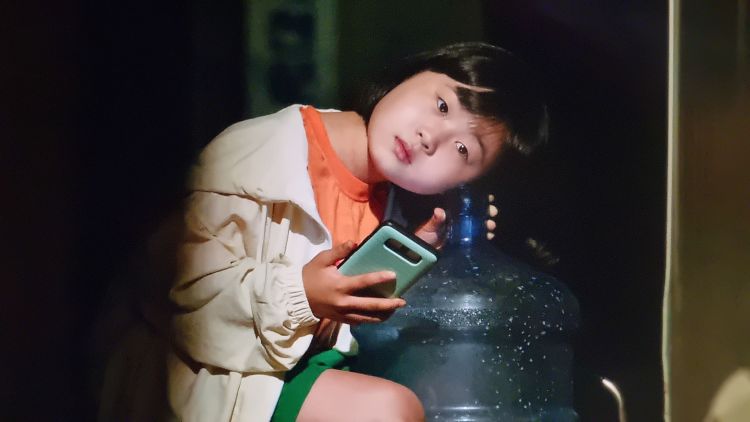
The ironic thing about the title of Kim Hye-young’s debut feature It’s Okay (괜찮아 괜찮아 괜찮아!, Gwaenchanh-a Gwaenchanh-a Gwaenchanh-a!) is that for the most part it really isn’t but the ever cheerful heroine In-young (Lee Re) manages to face her hardship and loneliness with down-to earth-practicality and good grace. It’s her infectious happiness that begins to improve the lives of those around her, many of whom have their own issues often stemming from entrenched patriarchy, classism, and a conformist culture that railroads the young into futures they may not want and will not make them happy.

At least that’s how it is for Na-ri (Chung Su-bin), the star of Il-young’s traditional dance troupe who has developed bulimia partly to adhere to contemporary codes of feminine perfection but also as a means of asserting control over her life which is otherwise micromanaged by her mother, once a dancer herself but now a wealthy housewife who uses her privilege to ensure her daughter is always centrestage. For these reasons she crassly remarks that she envies Il-young whose mother was killed in a car accident leaving her orphaned and entirely alone but in Na-ri’s eyes free and independent. 

It’s Na-ri’s mother who later refers to Il-young as a “worthless” person who does not deserve and will not have the opportunity to steal Na-ri’s spotlight even if she were good enough to seize it. The other girls in the troupe resent Il-young because her fees are paid by a scheme set up to help children of single-parent families, though technically she isn’t one anymore. They think it’s unfair she doesn’t have to pay when they do and also look down on her for being poor and an orphan when the rest of them come from wealthy backgrounds and are serious enough about traditional dance to consider going on to study it at university. Il-young isn’t a particularly good dancer nor does she put a lot of effort into it, but unlike Na-ri whose dancing is technically proficient but cold Il-young dances with a palpable sense of joy.

That might be why she catches the attention of otherwise stern choreographer Seol-ah (Jin Seo-yeon) who harbours resentment towards Na-ri’s snooty mother but lives a life that seems very repressed, tightly controlled and devoid of the kind of exuberance that comes naturally to Il-young. Her palatial apartment is cold, neutrally decorated, and spotlessly clean while, contrary to Na-ri, she forgoes the pleasures of eating subsisting entirely on green health drinks. Her decision to take in Il-young after finding her secretly living at the studio after her landlord evicted her from the home her mother had rented, may also reflect her own desire for a less constrained life and the familial warmth which seems otherwise lacking in her overly ordered existence. Gradually nibbling at the fried spam Il-young has a habit of cooking in the morning, she begins to open herself to the idea of a less regimented, happier life.

The same is true for Na-ri who is fed up with being forced to live out her mother’s vicarious dreams, literally letting her hair down and abandoning her need for control and dominance to embrace more genuine friendships with the other girls including Il-young. The lesson seems to be that there’s too much pressure placed on these young women in a society that dictates to them who and what they should be while shunning those like Il-young who are defiantly who they are and all the more cheerful for it even in the face of their hidden loneliness. Yet as Seol-ah eventually tells her, you’re the centre of wherever you are and Il-young’s life is her own to live in the way she chooses.

What emerges is a sense of female solidarity in the various ways Il-young is also parenting Seol-ah as she at first perhaps grudgingly offers her support and acceptance while taking on a maternal role that allows her to break free of the rigidity which had left her so unhappy. Told with a true sense of warmth that belies an inner melancholia, the film advocates for laughing through the tears and meeting with the world with an openhearted goodness that in itself allows others to break free of their own grief and pain and discover a happiness of their own bolstered by a sense of friendship and community rather than live their lives isolated and alone to conform to someone else’s ideal.


It’s Okay! screened as part of this year’s London Korean Film Festival.

Trailer (English subtitles)

Güle-Güle (귤레귤레, Ko Bong-soo, 2024)

A man and woman saddled with problematic companions find themselves pushed into a space of introspection while on an inescapable Turkish holiday in Ko Bong-soo’s sophisticated comedy, Güle-Güle (귤레귤레). Each of them is perhaps burdened with regrets and wistful for what might have been but for opposing reasons, he facing the realisation that he often runs away from his problems and she that despite her sharp tongue and haughty attitude she lacks the courage to break with a situation that obviously isn’t working and become fully independent.

Dae-sik is there with his bumbling middle-manger boss Won-chang, a nepotism hire who repeatedly calls him a moron and blames him for his mistakes. Jung-hwa, meanwhile, is with her (ex?) husband Byung-sun who continually embarrasses her with his crass attempts to haggle the price down for anything and everything as means of asserting his masculinity through winning a price war. Byung-sun’s drinking and the problematic behaviour that arises from it had evidently strained their relationship with Byung-sun pledging to abstain from alcohol only to immediately break that promise claiming that he assumed drinking with Jung-hwa wouldn’t count. The issues Dae-sik and Jung-hwa face are in some ways the same in dealing with partners that attempt to dominate and overrule them without ever considering what they might actually want. Dae-sik hadn’t even planned on taking a holiday but assumed they’d be heading back to Korea right after closing the deal only to be browbeaten by Won-chang into extending their stay.

Jung-hwa isn’t sure why they’re in Turkey either, while the middle-aged woman and her daughters who are also on their tour drink in all the drama alternately fascinated and irritated that Byung-sun in particular is messing up their holiday. From the way he skirts around her, it seems that Dae-sik and Jung-hwa may have met before or have some unspoken history with each other. They are each dealing with past regrets and the frustrated dreams of the youth even if in differing ways. Dae-sik once had a promising future as a champion snowboarder but gave it up because he needed a paying job to contribute to his father’s medical fees. After a heart-to-heart with Jung-hwa he’s forced to ask himself if in reality he gave up in fear of it not working out and his father’s illness was just a convenient excuse not to have to risk failure. 

Jung-hwa, meanwhile, is irritated to learn that in college her fellow students nicknamed her “the viper” because of her sharp tongue and poisonous looks. She admits that she often says things thoughtlessly and hurts people by accident, pushing them away when she doesn’t mean to though this doesn’t seem to be the case with Byung-sun who she otherwise seems incapable of shaking off despite his treatment of her and repeated broken promises. Unlike Dae-sik who admits that he suppresses everything and approaches life with a fear of failure, Jung-hwa charged ahead doing what she thought she wanted and ended up divorced though with a husband that won’t leave her alone.

The holiday with its myriad challenges both interpersonal and physical, along with their impromptu meeting, affords each of them a new perspective and the clarity they each may be looking for to move on from their dissatisfying circumstances in search of greater personal happiness. Meanwhile, the other guests seem to carry on obliviously, Won-chang otherwise continuing to railroad Dae-sik into dangerous situations he feels unable to resist though perhaps he too is only reacting against his own sense of inadequacy as a nepotism hire promoted well beyond his abilities. Byung-sun’s problems seem less easy to solve and his selfish obnoxiousness is annoying not only to Jung-hwa who may finally be losing patience with him, but the entire group.

Like many similarly themed films from Korea, Ko structures the drama around a series of conversations many of which take place on a rooftop bar or walking through the streets of the city which as Dae-sik remarks become brighter and less intimidating thanks to his interactions with Jung-hwa as if his horizons were literally expanding. Yet what each of them is here to do is in a sense to say “gule gule” or goodbye to their old selves and old lives by gaining the courage to risk failure in breaking with the dissatisfying present for a hopefully more fulfilling future.


Güle-Güle screened as part of this year’s San Diego Asian Film Festival.

Trailer (English subtitles)

Following (그녀가 죽었다, Kim Se-hwi, 2024)

“None of this would have happened if you didn’t follow me,” the hero of Following (그녀가 죽었다, Geunyeoga jug-eossda) is told by his opposite number though he himself doesn’t see anything untoward about his voyeuristic hobby and justifies his habit of “peeping” into the lives of others on the grounds that it does no harm. Of course, he’s not very well placed to make that decision and too narcissistic to consider that while he watches someone may be watching him. 

In any case, what Jung-tae (Byun Yo-han) claims to want to see is “the real you” rather than the persona created for public consumption which is why he’s drawn to duplicitous influencer Sora (Shin Hye-sun) whom he spots simultaneously munching on a sausage and posting about eating a vegan salad. Of course, as an influencer “followers” are what most she most craves though not of the kind Jung-tae becomes nor does she want this particular kind of attention not least because it threatens the facade she’s created for herself as a “good person” posting about her altruistic deeds such as rescuing dogs and cats for which her followers send her monetary gifts and donations for various funds and charities. 

As for himself, Jung-tae thinks he remains a fairly anonymous person. As an estate agent, he projects an image of himself as being kind and trustworthy, while he runs a popular online blog under a pseudonym. He gives little of himself away and later acknowledges that part of the thrill of his voyeurism is a sense of superiority, that he is privy to privileged information about strangers that others do not have. Misusing his position, he sneaks into people’s houses and takes something insignificant as a trophy while also performing small household tasks in recompense. Perhaps it should have seemed like a red flag to him that Sora suddenly wanted to sell her apartment (on her landlord’s behalf), let alone that she didn’t make any attempt to tidy up before giving him a key, but he is so assured of himself that the possibility he has been discovered doesn’t really occur to him until he sneaks into Sora’s place and finds her dead, covered in blood on her living room sofa. Predictably, he does not call the police because he’d have to admit he let himself into her apartment when he shouldn’t have. 

Receiving a threatening letter, Jung-tae then becomes a classic wrong man in the firing line for Sora’s murder and in his mind unfairly persecuted for his “harmless” hobby. The irony is that the person who’s targeting him is doing so because they had something they did not wish others to see and fear Jung-tae may have done so which would give him power over them, while what Jung-tae wants to keep hidden is his own voyeurism. “It’s all about reputation,” he explains and his would be ruined if his clients knew he’d been misusing the keys they entrusted to him for professional purposes let alone the embarrassment of being exposed as a peeping tom even if in this case his peeping isn’t sexual but intimate on another level. 

The power dynamics between the seer and the seen are always shifting, not least because Jung-tae believed himself invisible and in fact continues to think that he is the victim as does the person targeting him. He later comes to realise that what he did was wrong and that he invaded these people’s privacy, but continues to centre himself and despite the glasses he now wears at the film’s conclusion he may not see anything any more clearly than before. What unites him with his own stalker is a sense of frustrated loneliness and longing for connection if also a kind of acceptance even if mediated through a “fake” persona to paper over the cracks in their identity. Yet ironically, even the killer’s words that none of this would have happened if he hadn’t been following them further bolsters his narcissistic sense of importance as much as it reflects the words of an abuser deflecting responsibility for their own actions. Jung-tae has met his mirror image and may not like what he sees (or perhaps does not see at all) while they equally struggle to understand why others cannot see that they are the victim. Told with a touch of humour and a degree of B-movie silliness, Kim Se-hwi’s taut psychological thriller nevertheless suggests that even as we obsess over the image we project to others and that they project to us, we remain largely blind to ourselves and all too keen to justify our actions to maintain a carefully constructed self-hood that is otherwise unlikely to stand up to scrutiny.


Following screened as part of this year’s London Korean Film Festival.

Original trailer (no subtitles)

Bona (Lino Brocka, 1980)

Towards the end of Lino Brocka’s Bona (Nora Aunor), the heroine recounts a dream she had in which she tries to escape a fire but finds herself met only by more flames. The inferno she attempts to outrun is that of the oppressive patriarchy of a fiercely Catholic society in which men can do as they please, but women are held to a different standard and in the end have little freedom or independence. 

Brocka opens with a lengthy sequence of a religious festival in which the suffering Mary is carried through the streets on the shoulders of men. Teenager Bona looks on but worships at a different altar, that of Gardo (Phillip Salvador), a struggling bit-player trying to make it in the Philippine film industry. What becomes apparent is that her fascination with Gardo is borne of her desire to escape her family home and the tyrannical reign of her authoritarian father (Venchito Galvez) who berates her for not helping her mother out enough with her business and later whips her with his belt because she stayed out too late. 

Though her family is quite middle class, Bona instals herself in Gardo’s home in the slums in search of greater freedom but ends up becoming his skivvy or perhaps even a kind of maternal figure patiently taking care of him while he continues to bring other women home and even charges her with taking another teenage girl he’s got pregnant to the doctor (who charges him “the same as before”) for an abortion. It’s possible that in Gardo she sees a different kind of masculinity, a performance of manliness, but gradually comes to realise he’s nothing more than an opportunistic lothario with no emotional interest in women let alone her. 

But by then, it’s too late. She’s stuck in a kind of limbo barred from returning home to her family because of her status as a fallen woman who has shamed them by living with a man she is not married to. Even once her father dies, her mother warns her to avoid her brother because his rage is indescribable and he does indeed drag her out of the funeral by her hair while issuing threats of violence. Perhaps what she was looking for was greater independence or an accelerated adulthood with the illusion of freedom, but she can only find it by relying on Gardo rather than attempting to chart her future alone. We can see that other women in the slum are in much the same position, loudly arguing with their husbands who cheat, laze around drinking, and permit them little possibility for any kind of individual fulfilment. 

Yet there is a moment where Bona seems free, ironically dancing at the wedding of a young man, Nilo (Nanding Josef), who she’d turned down but now perhaps regrets it comparing the conventional married life she might have had with him to the prison she’s designed for herself in her life with Gardo. Nilo may be the film’s nicest man, but at the same time he’s still a part of the system that Bona can’t escape. In fact, the only woman fully in charge of herself is a wealthy widow who later buys Gardo’s, not exactly affections, but perhaps loyalty. “She’ll do,” he less than romantically explains after admitting to marrying her for the convenience of her money oblivious of the effect the news may have on the by now thoroughly humiliated Bona whose rage is just about to boil over. 

Unable to free herself from this fanatical devotion or to find possibility outside it, Bona is trapped by her desires and marooned in a kind of no man’s land in which she cannot exist as an independent person but only as servant to a man. “I’ll just serve you,” she explains on moving in and thereafter slavishly catering to all of Gardo’s whims while he largely ignores her. She hasn’t so much escaped her father’s house, but built a prison for herself from which she cannot escape despite her oncoming displacement. A creeping character study, the film finds the titular heroine searching for a way out of the fire only to find herself engulfed by flames with no real prospect of salvation amid the ingrained misogyny of a fiercely patriarchal society.


Bona screens Nov. 14 as part of this year’s San Diego Asian Film Festival.

Trailer (English subtitles)

Shanghai Blues (上海之夜, Tsui Hark, 1984)

There’s a strange kind of melancholy optimism born of false courage and desperation that colours Tsui Hark’s Shanghai Blues (上海之夜). A clown soon to become a soldier tells a woman he meets in the dark under a bridge as the city burns and Shanghai falls to the Japanese to remember that they will win. 10 years later the wounded of that same war reassure each other that their time will come, they didn’t survive just to die here now seemingly cast out by the society they risked their lives to save.

The Shanghai Stool (Sally Yeh Chian-Wen) arrives in is in a moment of euphoric liberation caught between cataclysmic revolutions with the civil war and eventual coming of the communists hovering on the horizon. A wide-eyed country girl, she’s almost lost amid the hustle and bustle of the city in which the motion never stops. Like many, she is immediately displaced on her arrival, discovering that the relatives with whom she hoped to stay are no longer at their address and she is therefore homeless and alone. The clown, Do-re-mi (Kenny Bee), now a member of a marching band unable to play his instrument, thinks she’s the girl from the bridge in part because she’s wearing the same outfit but mainly because she has the same short hair cut and so he follows but loses her. Meanwhile, she has a kind of meet cute with Shushu (Sylvia Chang Ai-Chia), now a jaded nightclub showgirl still pining for the clown, in which they each believe the other is trying to take their own life but end up becoming best friends and roommates unwittingly living directly below Do-re-mi. 

In this 30s-style screwball world, identities are always uncertain and often obscured by darkness or else the continual march of the crowd. Yet there’s a kind of romanticism in this act of seeing and not seeing. Only in darkness do Shushu and Do-re-mi finally recognise each other and when their romantic moment is interrupted by the end of a power cut, they smash the neon lights opposite to reclaim it as if to reject the intrusion of this glaring modernity. To that extent, the implication may be that this innocent kind of romantic connection can’t survive the bright lights of the big city or that light blinds as much as it illuminates. In several sequences, the characters inhabit the same space but cannot see each other while a nefarious thief lurks on the edges of the frame unseen by all. On realising that Do-re-mi is the clown/soldier for whom she’s been waiting for the last 10 years, Shushu knows that she will have to break her friend’s heart or her own and that Stool’s dream of a family of three is unrealisable amid the constant rootlessness of this transient city. 

To that extent, Stool is an echo of herself as the innocent young woman she was on meeting Do-re-mi under the bridge rather than the more cynical figure she’s become due to her experiences in the wartime city. In the film’s closing moments, Stool meets another version of herself in the form of a wide-eyed young woman in a plain dress who asks her if this is Shanghai but the only reply she can give is that she wishes her luck because for her Shanghai is now a city of heartbreak just it has been one of sadness and futility for Shushu. “I have one hope, if I give it to you I won’t have any,” Shushu tells her lovelorn boss as an expression of the despair that colours her existence in which the distant possibility of romantic fulfilment is all she has to live for. 

The fact that the lovers later flee Shanghai for Hong Kong seems to take on additional import as those in Hong Kong consider a similar trajectory with their own revolution looming while adding to the sense of continual displacement, disrupted communities, and worlds on the brink of eclipse. This Shanghai is a bleak place too with its lecherous gangsters and seedy businessmen but has a sense of warmth even amid its constant motion in its serendipitous meetings and friendships born of the desire for comfort and company in the face of so much hopelessness. In the end, perhaps romanticism is the only cure for futility just as the only thing to do in a world of chaos is to become a clown.


Shanghai Blues screens Nov. 13 as part of this year’s San Diego Asian Film Festival.

Victory (빅토리, Park Beom-su, 2024)

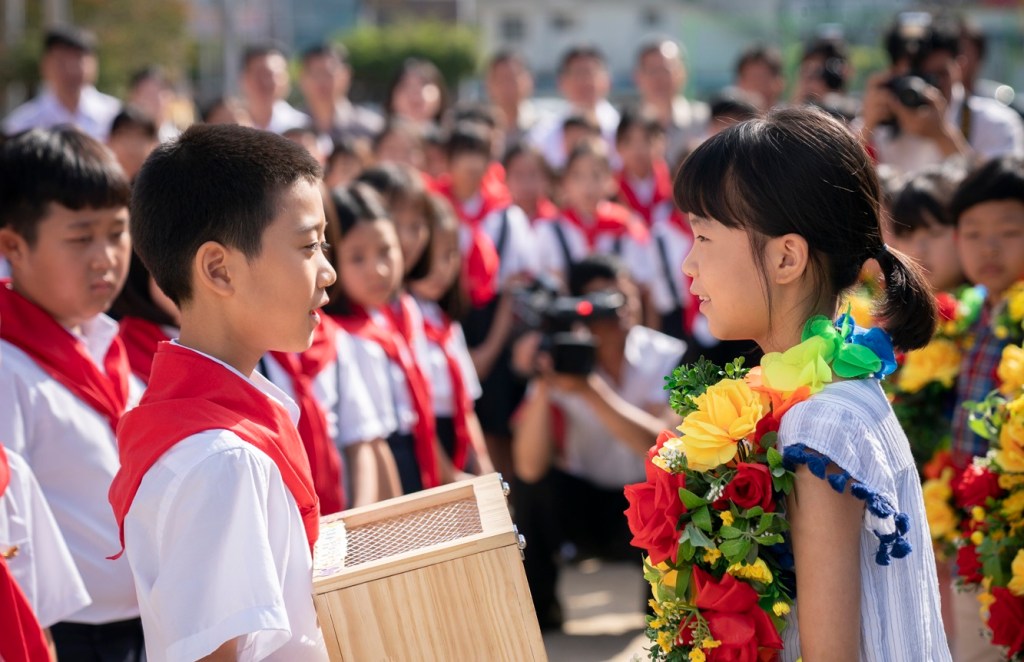
At the end of Park Beom-su’s millennial coming-of-age drama Victory (빅토리) there’s a title card quoting scientific data that people perform better with encouragement. In order to get the headmaster to agree to their starting a cheerleading squad so they can use the clubroom for dance practice, the heroine comes up with a ruse that the moribund football team will play 50% better with the cheerleaders encouraging the crowd to shout their support. But of course it’s really the girls who prosper through a process of mutual encouragement and solidarity.

Set in a small town in 1999, the film’s heroines dream of becoming K-pop dancers in glamorous Seoul. Feisty Pin-sun (Lee Hye-ri) doesn’t see much of a future for herself in Geoje much to her father’s consternation and is forever asking to transfer to a high school in the capital though in truth all she wants to do is dance. The deputy-head seems to have it in for her, taking the clubroom away from them and belittling their dancing while Pil-sun and her best friend Mi-na (Park Se-wan) are older than the other kids having been forced to repeat a year after getting into a fight with a rival school at a disco. Cheerleading’s not something they had much interest in until meeting snooty new student Se-hyun (Jo Ah-ram) who’s moved to their rural backwater with her brother who has been lured their as a top scorer for the school’s football team by the football-crazy headmaster. 

The fortunes of the makeshift team are directly contrasted with the protestors at the shipyard where Pil-sun’s father works. Pil-sun’s father seems to be a man beaten down by life. He’s taken a managerial position but finds himself conflicted in the midst of a labour dispute with his bosses pressuring him to name the ringleaders of the strike so they can shut the protests down. Faced with unfair and exploitative conditions, the men are protesting for basic rights such as not being forced to work overtime  and weekends and having a right to time off. Pil-sun’s father may agree with them, but doesn’t want to risk his job and tries to placate both sides with a spinelessness that later appears cowardly to his daughter Pil-sun. Perhaps as a single-father, he’s mindful of the necessity of keeping his job but otherwise appears obsequious and willing to debase himself in the service of a quiet life. When Pil-sun is once again in trouble in school, her father drops to his knees and apologises much to Pil-sun’s embarrassment.

Yet like the shipyard workers, the girls fight in unity if in this case for cheerleading success. This is after all a synchronised sport that requires the team to act as one. Though they may not universally get on initially, interactions with the team help each to realise their special talents and give them additional confidence to dance their way into a future of their choosing. Meanwhile, they’re each faced with a millennial dread that now seems nostalgic in its references to Y2K and the end of the world. There may not be very much for them in this small town, but there is at least each other along with their burning desire to succeed. 

It’s this  infectious sense of determination that really does seem to improve the atmosphere in this gloomy environment, the protestors also joining in their routine while Pil-sun’s father eventually gains the courage to reassess his loyalties. They are each sustained by the community around them, supported and encouraged by their friends and comrades. The point is rammed home by the fact that Se-hyun’s striker brother Dong-hyun (Lee Chan-hyeong) turns out to be something of a disappointment, while goofy goalie Chi-hyung (Lee Jung-ha) proves unexpectedly reliable telling Pil-sun that he prefers to be the last line of defence rather than the pre-emptive strike as he proves by defending her when the gang is hassled by older kids from another school. With a series of knowing meta jokes (“Girls’ Generation.” “That sounds so dumb.”), Park piles on the sense of nostalgia for a perhaps more innocent turn-of-the century world but equally for the gentle days of youth as the teens dance their way through hardship and heartbreak bolstered by their unbreakable bonds and sense of hopeful determination for brighter futures that are theirs for the taking.


Victory screens Nov. 12 as part of this year’s San Diego Asian Film Festival.

Original trailer (English subtitles)

Concerning My Daughter (딸에 대하여, Lee Mi-rang, 2023)

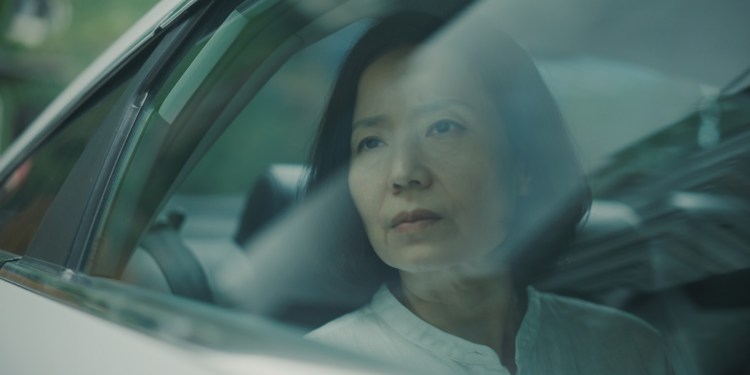
The unnamed mother (Oh Min-ae) at the centre of Lee Mi-rang’s Concerning My Daughter (딸에 대하여) has only one wish, that her daughter will find a nice man to marry and have a few grandchildren. But Green (Im Se-mi) is gay and has been in a relationship with her partner Rain (Ha Yoon-kyung) for the last seven years though her mother doesn’t seem to accept that what they have together is “real” believing it to be some kind of delusion that’s holding Green back from her happy maternal future. 

When she suggests Green move back in with her after her attempt to secure a loan to help her out with the rising cost of housing is denied, it doesn’t seem to have occurred to her that Rain would be coming too while it perhaps seemed so natural to Green that it didn’t occur to spell it out. Green can at times be obtuse and insensitive, unfair both to her mother and to Rain who bears the unpleasant atmosphere with grace and tries her best to get along with her new mother-in-law who is openly hostile towards her and makes no secret of the fact she would prefer her to leave. Of course, some of these issues may be the same were it a heterosexual relationship as the mother-in-law struggles to accept the presence of the new spouse in the family home and the changing dynamics that involves, but Green’s mother’s resentment is so acute precisely because her daughter’s partner is a woman. She cannot understand the nature of their relationship because it will produce no children and to her therefore seems pointless. 

While her attitude is in part determined by prejudice and a sense of embarrassment that her daughter is different, it’s the question of children which seems to be foremost in her mind. Another woman of a similar age at her job at a care home remarks on her maternal success having raised her daughter to become a professor, but she also says that only by leaving children and grandchildren behind you can die with honour. Green’s mother is the primary carer for an elderly lady, Mrs Lee (Heo Jin), who had no children of her own though sponsored several orphans none of whom appear to have remained in touch with her. Now ironically orphaned herself in her old age, Green’s mother is the only one who cares for her while the manager berates her for using too many resources and eventually degrades Mrs Lee’s access to care Green’s mother suspects precisely because she has no family and therefore no one to advocate for her. 

It’s this fate that she fears for her daughter, that without biological children she will become a kind of non-person whose existence is rendered meaningless. Of course, it’s also a fear that she has for herself and her tenderness towards Mrs Lee is also a salve for her own loneliness and increasing awareness of mortality. Green is her only child, and she may also fear that she will not want to look after her as she might traditionally be expected to because her life is so much more modern as exemplified by the bread and pasta the girls bring into her otherwise fairly traditional Korean-style home. On some level she is probably aware that if she continues to pressure Green to accept a traditional marriage they may end up becoming estranged and she will be in the same position as Mrs Lee, wilfully misused by a cost-cutting care industry because they know there’s no one to kick up a fuss about her standard of care.

Even so, it doesn’t seem to occur to her that Rain could care for her daughter into their old age. Resentfully asking her why they “have to” to live together, Rain patiently explains that in a society which rejects their existence, in which they are unable to marry or adopt children, togetherness is all that they have. Green is currently engaged in a battle with her institution which has fired her colleague on spurious grounds but really because of her sexuality with claims that some students are “uncomfortable” with her classes. The violence with which the women are attacked is emblematic of that they endure from their society while even colleagues interviewing her invalidate Green’s concerns because she too is “one of them,” in their prejudicial way of speaking. 

Green’s mother had also, rather oddly, said that her daughter wasn’t like that when Rain reluctantly explained her difficulties at work and again resents that she’s making waves rather than keeping her head down and getting on with her career. Her decision to jump in a car with boxes of biscuits intending to smooth things over with Green’s boss by apologising on her behalf bares out her old-fashioned attitudes, though she too is shocked by the violence directed at Green and her colleague. When her lodgers ask about Rain, she tells them she’s her daughter’s friend, while she avoids the question when her colleagues ask, still embarrassed that her daughter has not followed the conventional path as if it reflected badly on her parenting. 

Yet through her experiences with Mrs Lee and Rain’s constant, caring patience she perhaps comes to understand that her daughter won’t be alone when she’s old and that she too does not need to be so lonely now. There’s something a little a sad in the various ways Green’s mother is told that her attachment to Mrs Lee is somehow inappropriate as if taking an interest in the lives of those not related to us by blood were taboo even if it’s also sadly true that it’s also in Mrs Lee’s best interests to ask those questions to protect her from those who might not have her best interests at heart. What the film seems to say in the end is that we should all take better care of each other, something which Green’s mother too may come to realise in coming to a gradual, belated acceptance of her daughter-in-law if in part through recognising that they aren’t alone and that it’s a blessing that her daughter is loved and will be cared for until the end of her days.


Concerning My Daughter screened as part of this year’s London Korean Film Festival.

Trailer (English subtitles)

Dead Talents Society (鬼才之道, John Hsu, 2024)

“Why is it more tiring to be dead than alive?” A fed up ghost asks themselves and with good reason. If you thought you’d be able to rest easy in the afterlife, you’ve got another thing coming because it’s just as much of a capitalist hellscape on the other side as it is here. The central conceit of John Hsu’s Dead Talents Society (鬼才之道, guǐcái zhī dào) is that a ghost must must earn their keep by haunting the living in order to provoke large-scale appeasement rituals and the burning of vast amounts of ghost money or risk disintegration and finally disappearing from this world.

In a certain way, this is the paradox of the ghost. They fear being forgotten and only want to be seen mostly by the living but also by the dead in order to feel the validation that they exist and are appreciated. For Rookie (Gingle Wang) , a teenage girl who it later turns out was almost literally crushed by the weight of parental expectation, this was something she was never able to feel in life partly because of her father’s well-meaning attempts to boost her confidence by telling her she was “special”.  He even went so far as to mock up a fake certificate for her while leaving her to feel inadequate that her sister’s trophy shelves were full while hers were empty. It’s this certificate that’s gone missing during her family’s literal attempt to move on from her death and start again leaving her behind. With no place to return to, Rookie will disintegrate in 30 days if she can’t win a haunting licence which is a problem given her mousey personality and the lack of talent that left her feeling so inadequate in life.

Yet many of the pro ghosts are in the same position. Cathy (Sandrine Pinna) used to be the reigning queen, but her thunder was stolen by a former prodigy, Jessica (Eleven Yao), a very modern ghost who’s figured out how to haunt the internet and go viral for scaring influencers to death. In some ways, the living too are ghosts online haunting an alternate plane of reality while it’s through these online personas that we make ourselves seen. After all, in the modern world, there’s no better way to be “remembered” than by achieving internet fame. By contrast, all Cathy has is her decades old trick of backflipping on guests staying in the hotel room where she died in a lover’s suicide over a man who cared little for her. In a hilarious twist, the gang set up the trick on a harried businessman but he’s so busy he doesn’t even really notice any of their ghost stuff and remains entirely focussed on his work. 

Taken in by the gang, the realisation that rookie begins to come to is that she never really needed to be “special” but only herself and for someone to see her as she really was. Her anxieties are those of contemporary youth burdened by the weight of parental expectation and fearing they can’t live up to it. Manager Makoto (Chen Bolin) experienced something similar in life, struck by anxiety while struggling to make it as a early ‘90s popstar while unable to make his mark in the ghost world by virtue of being unable to scare anyone because he’s too good looking. As he tells it, the best thing about being dead is that you no longer need to worry about what other people think and Rookie is therefore free to become herself or else disappear forever. 

Even so, the irony is that the finale sees the central gangs take on unified appearances as if becoming one with one side doing better than the other in their genuine sense of mutual solidarity as a ghost world family. They watch J-horror-esque movies for tips and muse of the contradictions of fame that perhaps we accord those talented that are merely the most visible while these ghosts struggle to be seen in an increasingly haunted world of hollow influencers and illusionary online avatars. Rookie still doesn’t know what being seen means but has perhaps learned to see and accept herself thanks to her experiences in the afterlife. Charming and somehow warm in its lived-in universe of celebrity ghosts and professional hauntings, Hsu’s zany horror comedy may suggest there’s no escape from the living hell of capitalism but that dead or alive you might as well enjoy the ride as best you can before it all suddenly blinks out.


Dead Talents Society screens Nov. 9/10 as part of this year’s San Diego Asian Film Festival.

Original trailer (English subtitles)