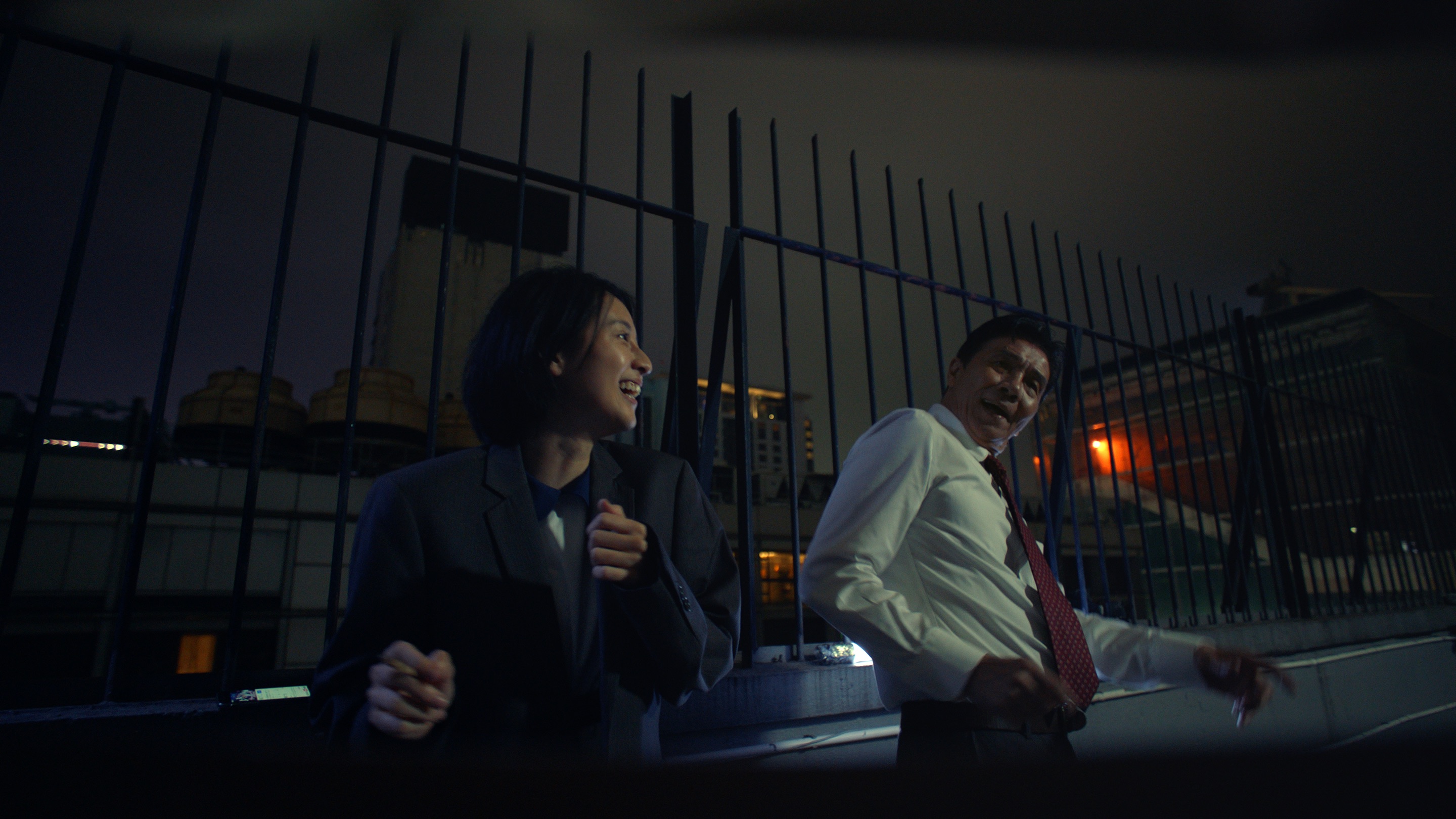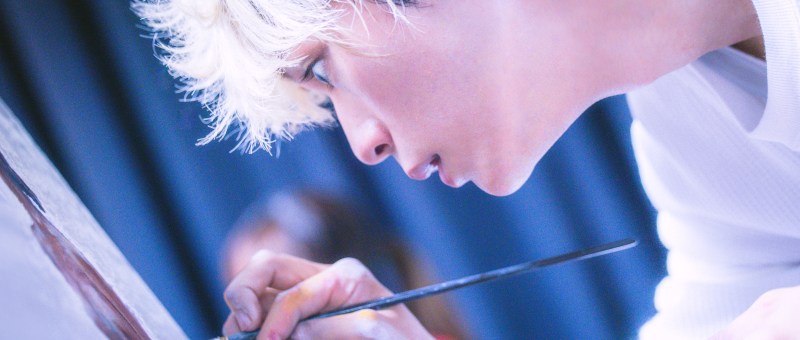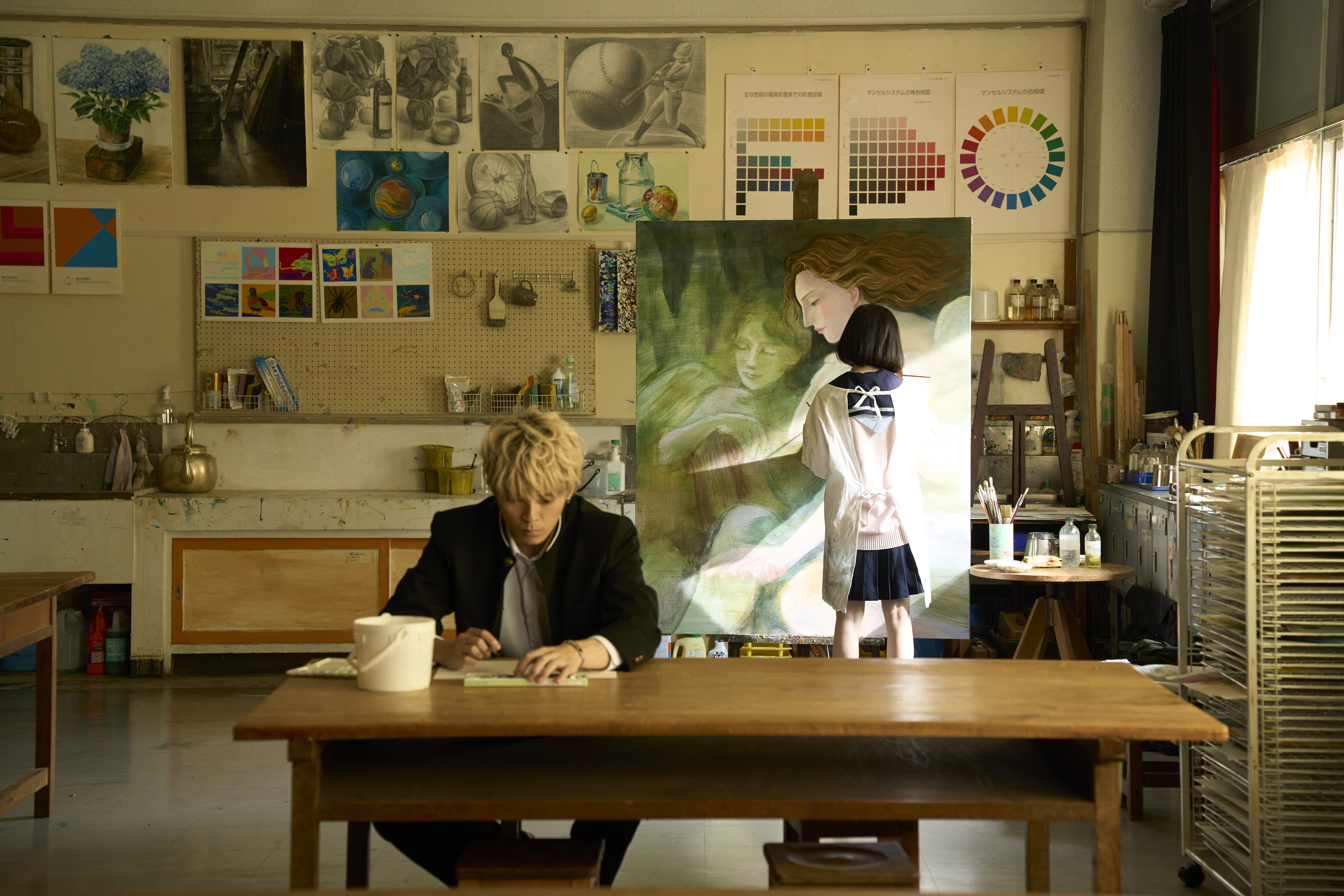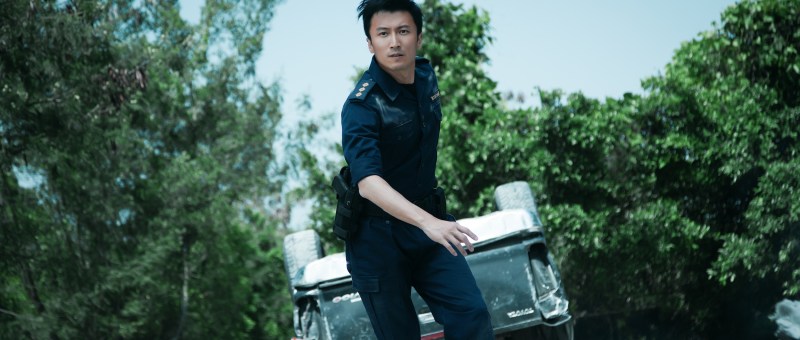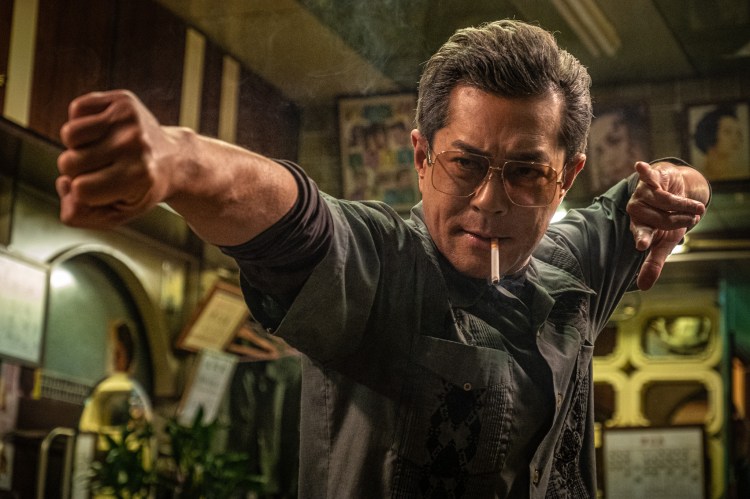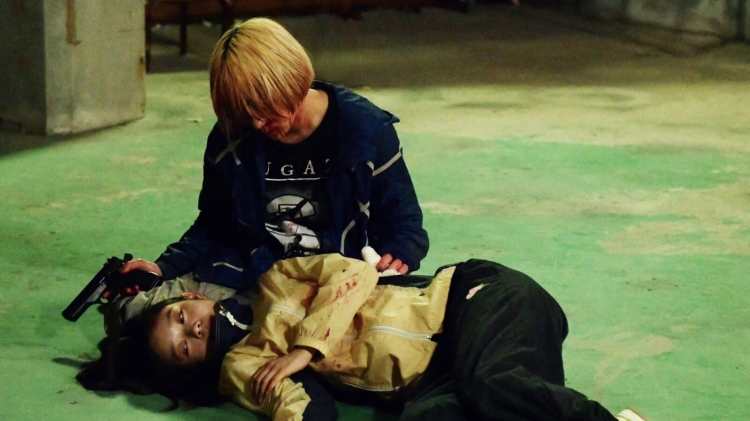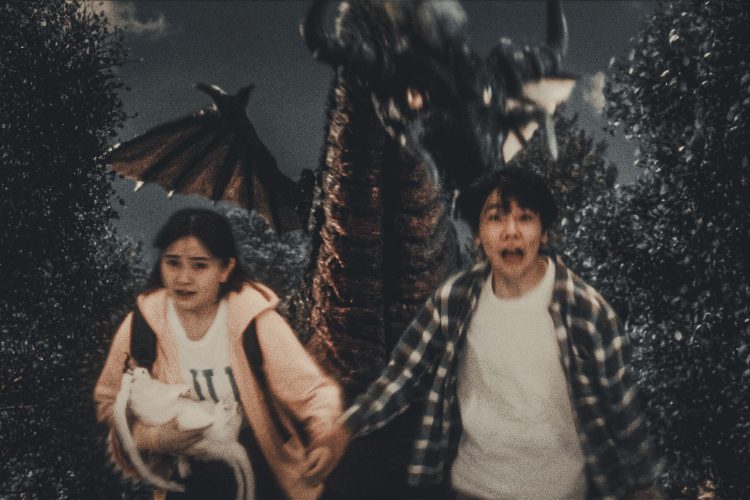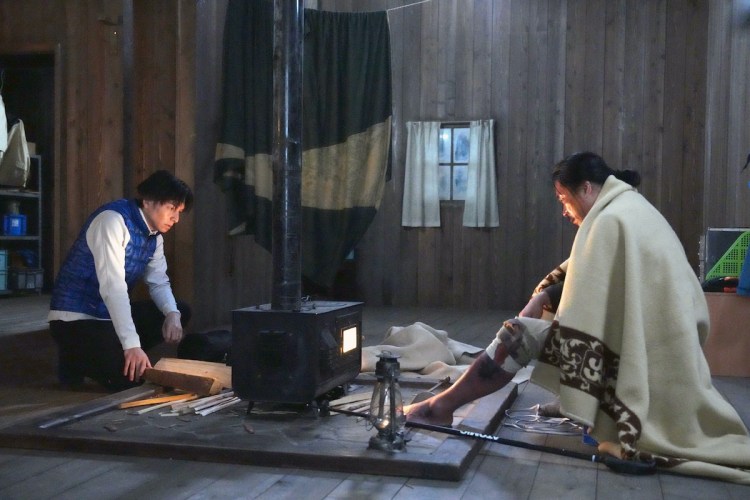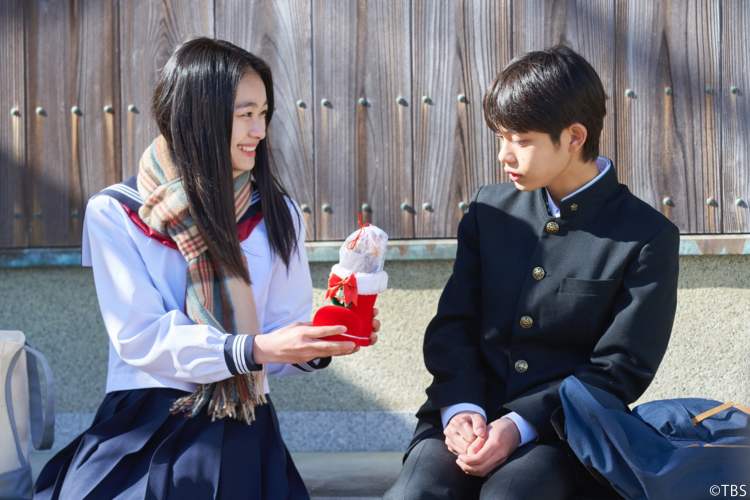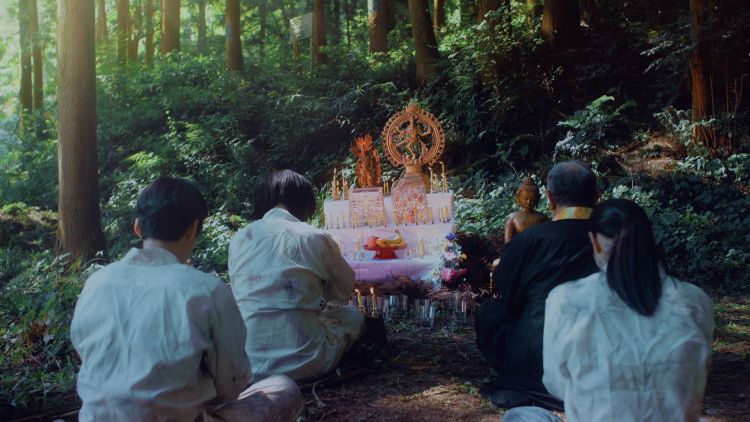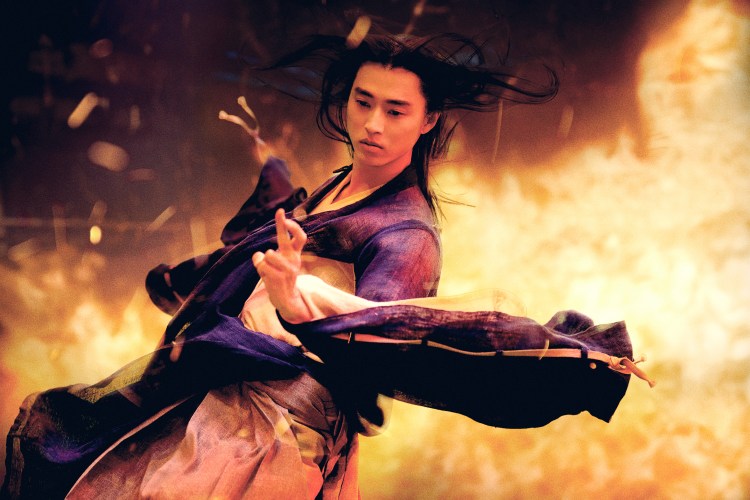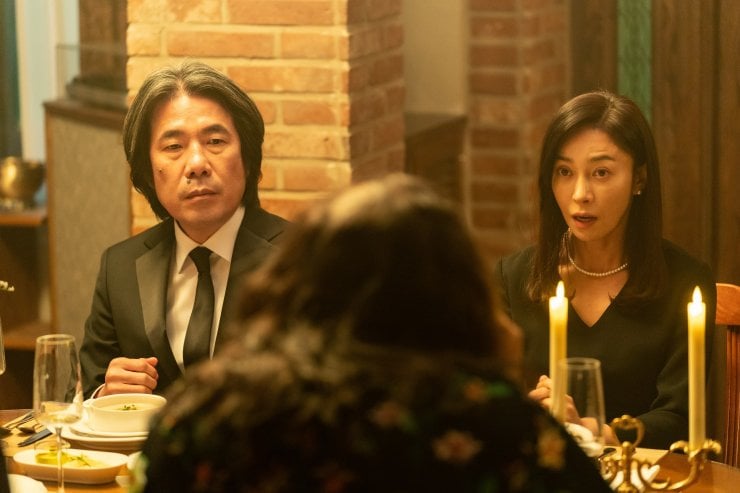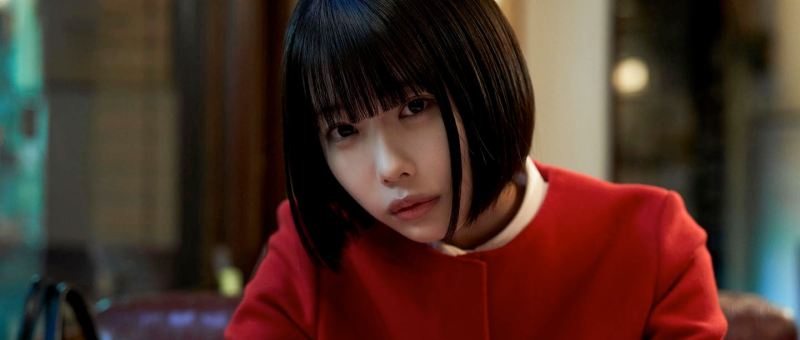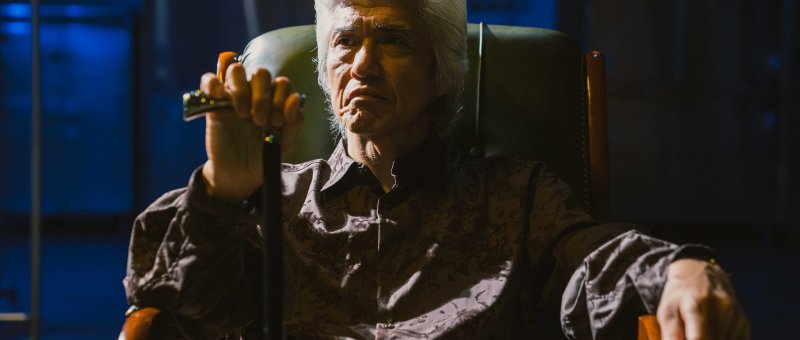
Great Absence (大いなる不在, Kei Chikaura, 2023)

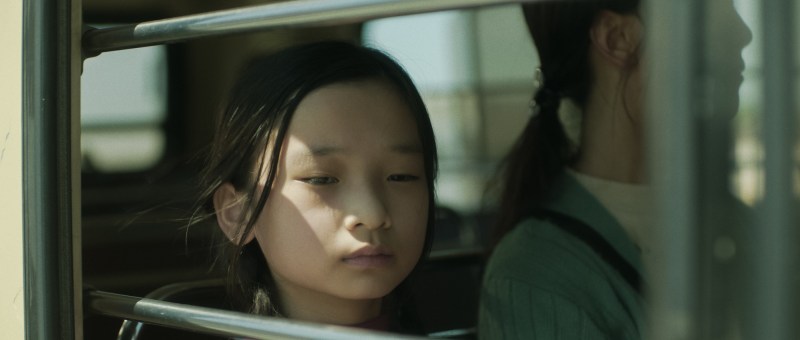
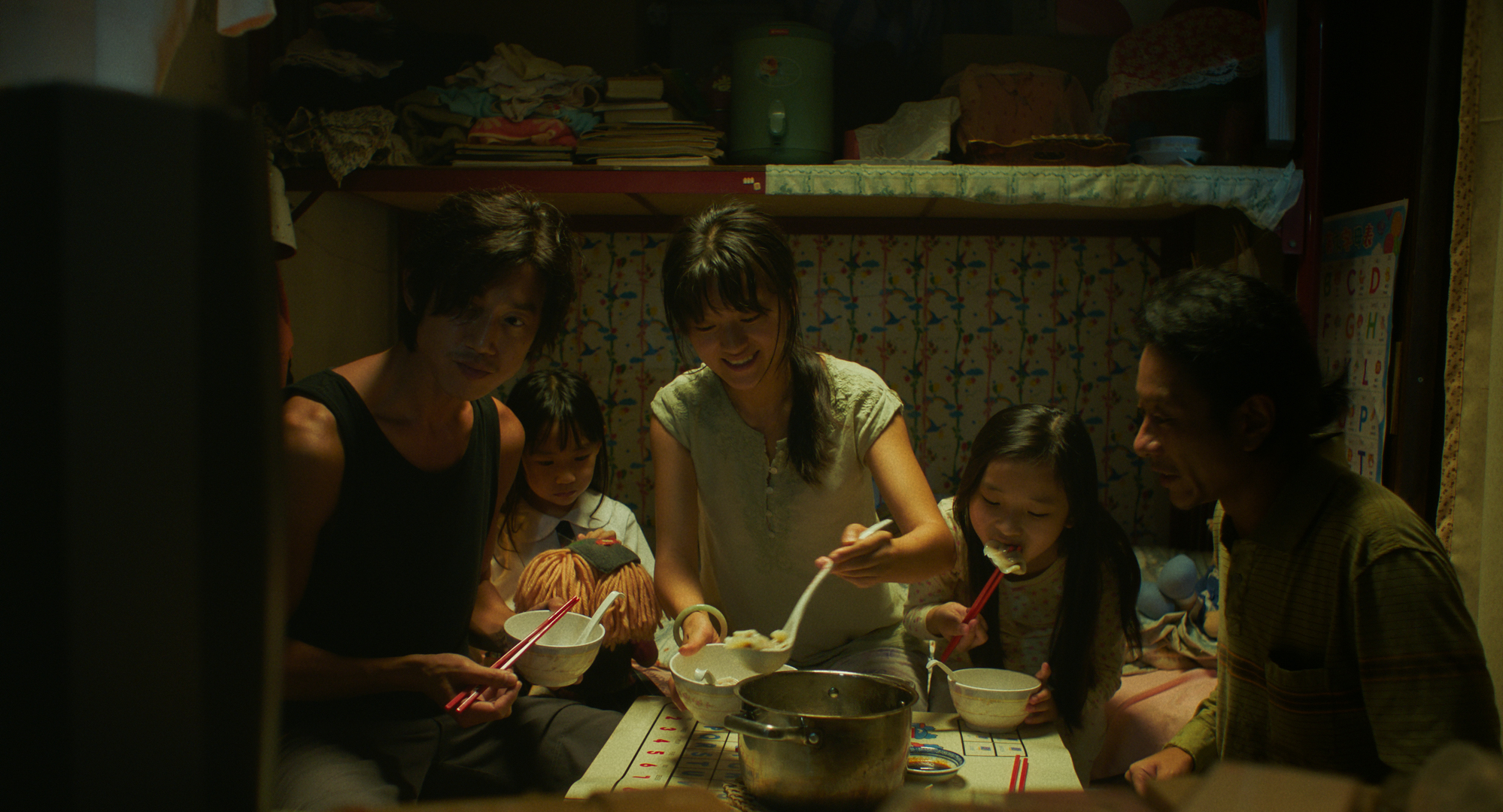
“She’s not here. That’s everything,” is what the hero of Kei Chikaura’s poetic drama A Great Absence (大いなる不在, Oinaru Fuzai) is told when enquiring about the whereabouts of his missing stepmother and in the end is forced to accept it. That’s all there is, she isn’t here. The ways that Naomi (Hideko Hara) is there and at the same time not become central to the narrative in which absence is also of course a deeply felt presence.

That might also describe Takashi’s (Mirai Moriyama) relationship with his estranged father whom he’s barely seen since his parents divorced when he was 12. Yohji (Tatsuya Fuji) was evidently a difficult man, fussy and superior. Every line that comes out of his mouth is delivered as a mini lecture and generally filled with barbed criticism even if that might not really be what he meant to say. That might be why Takashi has stayed out of contact with him, though he has little choice but to respond after being contacted by the police who tell him that Yohji called them claiming he and his wife were being held hostage. Apparently suffering with advanced dementia, Yohji has now been placed in an eldercare facility though no one seems to know what’s happened to Naomi with a vague idea that she had been hospitalised sometime after falling ill and that living alone exacerbated Yohji’s cognitive decline.

Someone later asks Takashi why he came given that with the long years of estrangement no one would have blamed him for saying it was no longer any of his business, but there does seem to be latent desire for some kind of connection albeit one frustrated by awkwardness and the unhealed wounds of the past. Yohji had been a ham radio enthusiast which suggests that he was trying to reach out to people though struggled with communication and only ever found the words in writing as evidenced by the unexpectedly poetic love letters Takashi finds stapled into the diary which once belonged to Naomi but now somehow rests with him. 

Takashi spends much of the rest of the film wanting to return the diary as if he would be abdicating responsibility for it, refusing this particular inheritance along with any curiosity about the man his father is both then and now. In the care home, Yohji believes he is being held prisoner by a foreign power and offers only bizarre and disturbing explanations for what might have happened to Naomi, while attempts to communicate with the sons from her previous marriage are frustrated by longstanding resentment. Takashi’s stepbrother informs them that Yohji refused to contribute to her medical fees claiming he didn’t see why he should though it seems that he is trying to enact some kind of revenge or is seeking compensation for what he feels Yohji took from him. He also blames Yohji for the decline of his mother’s health convinced that the strain of living someone so casually cruel even before the intensification of his dementia eventually caused her to become ill.

He might in a way have a point, though it seems it was absence that also ate away at Naomi as the man who wrote her all those long and profound letters began to slip away, becoming aggressive and irritable. He may not have forgotten her, but also did not quite recognise the woman she was. It may be that it became impossible for her go on living with someone who was no longer there just as Yohji feels the ache of her absence and is mired in the regret and longing of the young man he once was who first let her slip through his fingers. 

This sense of absence may also have crept into Takashi’s own marriage with his wife (Yoko Maki) complaining that he may not have told her what had happened with his father if he had not needed to cancel another family event, nor did he want her to accompany him though eventually she insisted and perhaps succeeds in closing a gap through their shared attempts to unravel the secrets of Yohji and mysteries of the past. The sequences from the play which Takashi is performing that bookend the film, he speaks of a broken king who may not even be a king at all and echoes the sense in which Yohji has finally become absent from himself. At times profound and elegiac, the crisp 35mm photography adds to the sense of ongoing melancholy and irresolvable loss if tempered by an elusive serenity.


Great Absence screened as part of this year’s Toronto Japanese Film Festival. It will also be making its New York Premiere as part of this year’s Japan Cuts on July 18 ahead of its theatrical opening in the US on July 19.

Matched (マッチング, Eiji Uchida, 2023)

The dangers of online dating are, as Eiji Uchida’s Matched (マッチング) suggests, a blurring of the lines between romantic fantasy and “real” organic love that threatens to spiral into dangerous obsession. Part stalking drama, part technophobic thriller, the film seems certain that dating apps are bad but perhaps also critiques another kind of romantic mania that leads people to believe there’s something wrong with not being coupled up and maybe it’s worth the risk of encountering someone dangerously unhinged in the desperation to find Mr. or Mrs. Right.

Rinka (Tao Tsuchiya) originally had no interest in dating apps, though she’s beginning to feel awkward about still being single at 29 and spending her free time drinking with her father (Tetta Sugimoto). His advice that romance isn’t really her thing and that’s alright doesn’t really go down all that well with her, yet the fact remains that on a baseline level it’s not really something she actively wants for herself. This is in part ironic as she works as a wedding planner running around satisfying her clients every whim to give them the big day they’ve always dreamed of only to see the man she’s long been carrying a torch for, her old high school teacher, marry a woman he met through an app.

Rinka’s intense resentment might cause us to wonder if she has something to do with the spate of serial killings targeting newly wed couples who got together through the Will Will dating app only after her friend signs her up on in, she too becomes a kind of victim after matching the decidedly creepy Tom (Daisuke Sakuma) who lurks around in the shadows declaring that he was born under bad star and abandoned in a coin locker as an infant. When the school teacher is murdered and she’s somehow linked to the case by a tabloid media article, Rinka’s life begins to spiral out of control while she can only believe that it must be Tom, who continues to stalk her relentlessly with ominous messages, that’s behind it with only the support of Will Will engineer Tsuyoshi (Nobuaki Kaneko) to rely on.

The really mystery is why Will Will doesn’t seem to have a block function or at least why Rinka wouldn’t use it unless she genuinely fears for her safety and thinks their message history will be good evidence. Her friend Naomi’s (Moemi Katayama) constant swiping hints at the superficiality of app-based dating, judging only by a photograph on gut feeling alone. To that extent, Rinka’s offline connection with Tsuyoshi should then be the rightful path to love but he’s a little odd too. Even given Rinka’s situation and his theoretical ability to help her because of his access to the app, he comes across as somewhat possessive and over eager announcing to Rinka in a record store after a single date that she need never fear anything again because he will protect her. 

It’s men that may be the problem, along with the inherent temptations presented by technology as evidenced by the legacy of a romance that bloomed during the chatroom boom and eventually turned about as toxic as it’s possible to get. The other problem with dating apps is that they’re full of people who are already attached and looking for romantic fantasy to escape from the monotony of their everyday relationships along with the stress and burden of responsibility that comes with having a family. These are sins that have quite literally been visited the children, but to come full circle the film may eventually suggest that you can’t really trust anyone and that people can often be callous and indifferent such as the young man inspecting the room where his uncle hanged himself and dismissively tossing away a photo of happier times. 

We never really find out the motives behind the serial killings beyond a suggestion of resentment that these people have supposedly found “love” online in a way others couldn’t having been rejected for what they see as superficial reasons. Meanwhile, the line between a devoted boyfriend and a controlling stalker already seems quite thin, and there are times when Rinka may think the stalker is the lesser of two evils no matter how creepy he might otherwise seem. In any case, love is serious business and you’ll pay a heavy price for betraying it. Ideally, it’s the fantasy and reality that have to match but Rinka at least seems a little lost between the two despite the increasing surreality of the events which have engulfed her.


Matching screened as part of this year’s Toronto Japanese Film Festival

Original trailer (English subtitles)
Stay Mum (かくしごと, Kosai Sekine, 2024)

Late into Kosai Sekine’s maternal mystery Stay Mum (かくしごと. Kakushigoto), a doctor describes the behaviour of an old man living with dementia as a “convenient delusion” and later remarks forgetting is a kind of salvation that liberates him from what was apparently a very stressful life of repression and properness. Yet to the heroine there’s something very unfair about someone who has hurt her so deeply being allowed to just forget all about it while she has to go on carrying the legacy of his unkindness along with her own grief and pain.

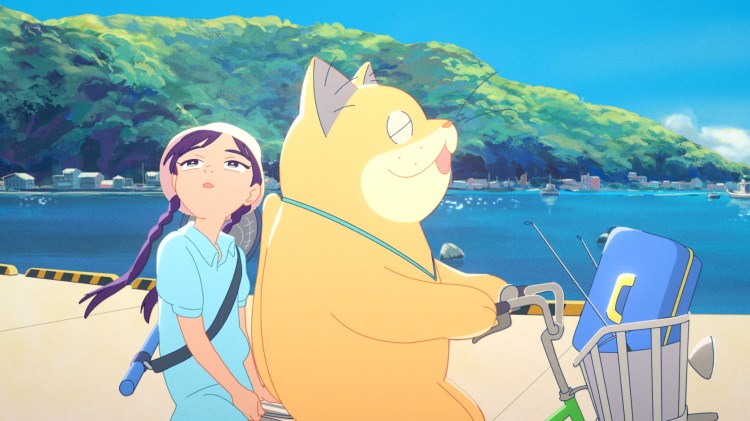
Ironically enough, she finds herself caught in the middle as a mother and a daughter after taking in a little boy her friend accidentally ran over who appears to have extensive scars and bruising that suggest he has been mistreated by his birth family for some time. The boy also claims to have lost his memory, leading Chisako (Anne Watanabe) to fill in the blanks for him. She gives him a name, Takumi, and tells him that he is her son intending to raise the boy covertly while temporarily staying in her rural hometown to care for her estranged father after he was found wandering around in a state of undress.

Even Takumi realises the irony of Chisako’s father Ko (Eiji Okada) falling further into a state of forgetting just as he is learning to “remember” thanks to the memories Chisako imparts to him in their fictional shared history. The film’s English title is a kind pun playing the fact that everyone involved must “stay mum” in order to maintain this delusion of family life while also hinting Chisako’s desire to reclaim her maternity having lost a child of her own. The Japanese title more literally translates as “that which is hidden” while the novel that it’s based on is titled the more direct “lie” though of course it leaves ambiguous to which lie it is referring. But as the doctor had said, it becomes a “convenient delusion” for everyone which grants them a kind of peace and serenity that allows them to reclaim exactly what they wanted out of life but perhaps could not get in any other way.

But of course, it can’t last and at the same time also delays a final confrontation with the reality that would truly allow them to move forward. Someone later accuses Chisako of brainwashing Takumi, essentially kidnapping him while forcing him to play the role of her son as if she were simply mentally disturbed and desperate to overcome her grief rather than genuinely concerned and morally outraged by the idea of allowing a boy who shows clear signs of abuse to return to a home in which he will continue to be mistreated. But at the same time, she struggles to relate to her father and behaves towards him in ways which to Takumi may seem abusive, shouting at and at one point slapping him after a particularly unkind remark. Her inability to control herself further compounds her sense of failure as both mother and daughter, still carrying an internalised sense of inadequacy because of her father’s toxic parenting while in the midst of forgetting he is perhaps still able to perceive the mistakes he made that cost him a functioning relationship with his daughter.

Ko spends his days crafting statues of the goddess of mercy as if begging for atonement all while unable to recall the face he wished to give her. The irony is that as the doctor said, forgetting allows him to drop his guard and to remember the costs of the way he lived his life. As Chisako counters there are also things which shouldn’t be forgotten no matter how painful they may be to remember, along with those which cannot really be forgiven, though the act of wilful forgetfulness does perhaps provide a salve for the wounds of the past. Though at times overly contrived and strikingly predictable, Sekine’s empathetic contemplation of the emotional truths behind the bonds of parents and their children ends in a violent confrontation with corrupted parenthood but equally in a gesture of mutual salvation which ironically depends entirely on the willingness to speak the truth both emotional and literal. 


Stay Mum screened as part of this year’s Toronto Japanese Film Festival

Original trailer (no subtitles)

All the Long Nights (夜明けのすべて, Sho Miyake, 2024)

The latest in a recent series of films critical of Japan’s contemporary employment culture, Sho Miyake’s All the Long Nights (夜明けのすべて, Yoake no Subete) presents a more compassionate working environment as key to a happy and fulling life brokered by small acts of attentive kindness in the knowledge that we are all carrying heavy burdens. Based on a novel by Maiko Seo, the film captures a sense of serenity that can be found in the wonder of life itself and the discovery of the “infinite vastness beyond the darkness” that a starry sky presents.

A lack of compassion in the generalised society is signalled early on in the fact that the heroine, Misa (Mone Kamishiraishi), struggles with a condition that is little understood and belittled by those around her. On bonding with workplace colleague Takatoshi (Hokuto Matsumura) who is experiencing panic disorder, he dismisses her issues as “that female thing” and suggests it doesn’t compare to the effects his condition is having on his life. She counters him that she didn’t know there was a ranking, but is obviously rankled by the refusal of the world around her to take her PMS seriously even though it causes her to lash out at others and often ruins employment opportunities because it’s impossible for her to regulate her emotions in the way that is generally expected in contemporary working culture. 

Each of them have ended up working at a small company that manufactures scientific instruments for children after originally working in larger corporate structures with very clear hierarchical systems and rigid modes of behaviour. Yet we can see right away that Misa’s colleagues are aware of her condition and seem to have accepted it. When she blows up at Takatoshi over his habit of drinking carbonated water the sound of which gets on her nerves, they gently steer her away while explaining to him not to pay it any mind. In any case, Misa is still embarrassed by her behaviour and regularly buys pastries at a nearby bakery in an act of continual atonement even though her boss tells her not to get into the habit of it.

Takatoshi’s rather rude refusal of her pastries, clumsily explaining that he dislikes raw cream, is another symptom of his aloofness and unwillingness to be a part of the office community. He is continually looking to get his old job back and looks down on this kind of work as being lower in status than a regular office job at a big company, something perhaps reinforced by his well-meaning girlfriend who seems to want him not only to get better but to reassume his former position despite the implication that it’s what made him ill in the first place. Tsujimoto (Kiyohiko Shibukawa), his former boss, however remains compassionate and supportive perhaps in part because his older sister took her own life due to workplace pressures which has made him more sensitive to the troubles of those around him. That’s also true of the boss of the science company, Kurita (Ken Mitsuishi), whose younger brother also took his own life for unclear reasons leaving him acutely aware of the importance of paying attention to the feelings of others.

It’s in this compassionate environment that Misa and Takatoshi each begin to rediscover a new sense of confidence in their mutual solidarity regarding their personal struggles along with a better idea of what kind of life suits them rather than focusing on how they’re seen by others or living up to a societal notion of what defines conventional success. As they’re tasked with creating a voiceover script for the company’s mobile planetarium, they come to an appreciation of the beauty found in darkness along with the light that shines within it in. As Misa reflects, there is nothing in life that does not change, not even the stars, but amid all that anxiety we can still help each other and live peaceful, quietly profound lives finding fulfilment in the mundane. Shot in a hazy, slightly detached naturalism the film eventually finds a joy in life’s simplicity and the warmth of human connection that exists outside of the corporate superstructures that have come to define most of our lives while otherwise robbing us of the ability to fully embrace it or ourselves.


All the Long Nights screened as part of this year’s Toronto Japanese Film Festival

Original trailer (English subtitles)
Kanasando (かなさんどー, Toshiyuki Teruya, 2024)

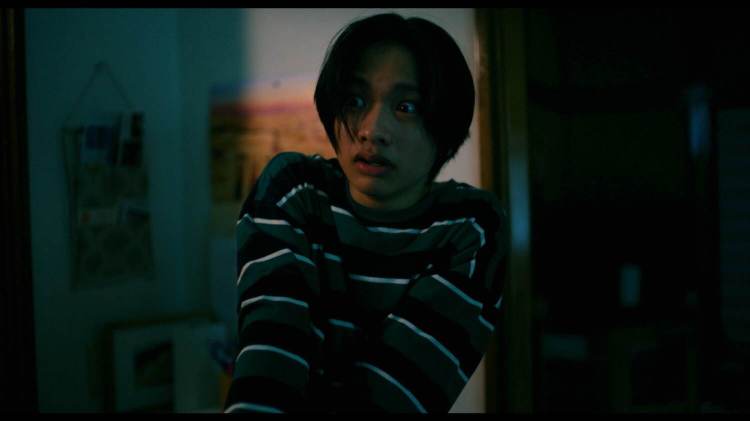
“Don’t forget I’m thinking of you” run the lyrics of the classic Okinawan folk song Kanasando (かなさんどー), but the theme of forgetting, and also of rediscovery, is central to Toshiyuki Teruya’s charming island dramedy in which a young woman begins to reclaim her memories of her parents on returning home after being informed her estranged father has been placed on palliative care and is not expected to last much longer.

Mika (Ruka Matsuda) had left the island seven years previously following the death of her mother, Machiko (Keiko Horiuchi), from a longterm illness severing ties with her father, Satoru (Tadanobu Asano), whose philandering and insensitivity she believes made her mother’s life a misery. In addition to his his illness, Satoru is now suffering with dementia and has obviously forgotten many things including his wife but seeing Mika, who is the spitting image of her mother at her age, begins to spark his memories. 

Yet in many ways it’s really Mika who has forgotten, displaced from her island home and filled with intense resentment towards her father. Having placed her own interpretation on her parents’ relationship, she begins to reevaluate on recalling conversations with her mother and reading her diary. Though she had felt miserable for Machiko, seeing her as belittled and humiliated by Satoru’s inconstancy, she failed to consider that staying was a choice her mother made or that though she may not have understood the relationship they had with each other it may have worked for them.

Then again, perhaps there is a surprising generational conflict between the youngish Mika now living in Tokyo and her mother whose traditional values seem overly strong and a little outdated for the time in which she lived. Burderned by her illness and unable to work, Machiko devotes herself entirely Satoru’s happiness. She dresses well every day, wears full makeup, and is constantly making Satoru’s favourite food while he stays out late drinking and seeing other women. Mika never really considers that her mother wears makeup because she likes it, but it does indeed seem as if it was in part a desire to compete with her husband’s philandering. Insecure in her illness she tells Mika that she just wanted to be seen as a woman even at the end of her life.

Satoru can no longer offer much of an explanation but as the song says, may have been thinking of his family even while an imperfect father and insensitive husband. In what she learns of him from his coworkers and friends, Mika comes to realise that her father had cared for her mother is and wracked with guilt over his behaviour even if he was thinking about her as he still may be despite the erasure of all his other memories. The folk song becomes a conduit that helps Mika reconnect with her island culture and understand the relationship of her parents just as it acts as a plaintive call of longing for each of them. In an effort to help her father not to forget, she ends up becoming her mother, dressing in her clothes and reenacting scenes from her diary hoping to break through her father’s forgetfulness and restore his wife in a gentle process of healing the family unit. 

Through this act of role play Mika comes to a new understanding of her parents’ relationship along with the things which meant something to them but which she had not really understood including the importance of flowers as a symbol of their love, something that is embodied in Mika’s own name which is written with the characters for “beautiful” and “flowers”. Heartrending poignancy of its final sequence aside, Teruya undercuts the potential for gloominess with quirky island humour and captures a real sense of warmth between between Mika and the mother she may not really have understood or at least forgotten the reality of in the midst of her own grief and resentment. The folksong of the title both reunites her parents and also enables Mika to begin processing the secondary loss of her father’s imminent passing with a fuller understanding of the couple and the realisation that Satoru may have been always thinking of them after all in a constant desire to protect the flower of their love along with its island home.


Kanasando screened as part of this year’s Toronto Japanese Film Festival

International trailer (English subtitles)
18×2 Beyond Youthful Days (青春18×2 君へと続く道, Michihito Fujii, 2024)

Screenshot

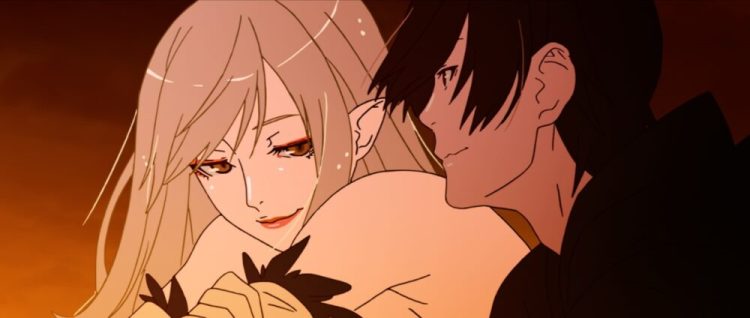
Apparently inspired by a real life viral blog, the latest from the prolific Michihito Fujii, 18×2 Beyond Youthful Days (青春18×2 君へと続く道, Seishun 18×2 Kimi e to Tsudzuku Michi) is in many ways in dialogue with Shunji Iwai’s Lover Letter which itself makes an appearance in the film in a allusion to a love that as the hero says never quite even began. Even so, the he, as the heroine had, undertakes a journey not so much to find himself as to recover the young man he once was before romantic heartbreak and professional strife left him emotionally numb and filled with despair.

Jimmy (Greg Hsu Kuang-han) says he’s on a journey with no destination, and perhaps, he is though it’s clear there is an end point in sight only one he’s reluctant to go to. It’s never quite clear to what extent the film intends its big reveal to be quite so obvious, though it seems clear enough that this is a tale of lost love and a circular journey towards a new beginning. After being kicked off the board at the games company he started, Jimmy catches sight of an old postcard soaked in the perfume of a girl he once new perhaps ironically called the flow of time. It does indeed call him back to the past, sending him on a trip to Japan where he too encounters various people who help him to reaffirm himself during a solo trip towards the nexus of his emotional pain.

Back in Tainan 18 years previously, he developed a crush on a young Japanese woman, Ami (Kaya Kiyohara), who rocked up at the karaoke bar he was working at the summer before uni and asked for a job having lost her wallet. Ami is four years older than him and perhaps sees his clumsy attempts at courtship as childish even as he earnestly brushes up his Japanese to be able to converse with her but otherwise treats him warmly if keeping him at arms length. In his own recollections, Jimmy was a clueless teenager who never really picked up on the pregnant hints Ami was leaving him in her sometimes cryptic comments and confusing behaviour but nevertheless went into a massive sulk on hearing she planned to return to Japan wasting precious time with her and almost ruining the memories of their tentative relationship by allowing it to end on a sour note.

The 36-year-old Jimmy is only a little wiser, a lonely, melancholy man who appeared to have little aside from the work that been taken away from him. This apparent mid-point of his life, a double 18 split in the middle, affords him the opportunity for self-reflection as many of those he meets along his way remind him. What he’s doing in a way is travelling on the flow of time, heading back into the past in order to travel through it and out the other side as he later says leaving this moment of youth behind to move into a more settled adulthood and an end to his frustrated inertia. 

As in Love Letter, he ends up deep in frosty snow country reflecting the emotional coolness of his adult self in contrast with the tropical temperatures of Tainan and sunniness of his memories of the summer with Ami. What he discovers is also a kind of love letter as yet undelivered but waiting for him at the destination he was afraid to approach as a kind of closure that will allow him to begin moving forward while carrying his memories with him rather than remaining trapped inside them. Reflecting that the people we meet along the way each leave something of themselves behind in our hearts, Jimmy is finally able to recognise himself and discover a way forward in reaccepting the memories of his summer that never quite blossomed into love as warm and comforting rather than the chilly sadness of the pure white vistas of snow country on Ami’s postcard. Travel doesn’t as much broaden his horizons as remove them, leaving him with an endless, meandering journey open to the possibilities of life and a spirit of adventure born of a lost but not forgotten love.


18×2 Beyond Youthful Days screened as part of this year’s Nippon Connection

Trailer (English subtitles)
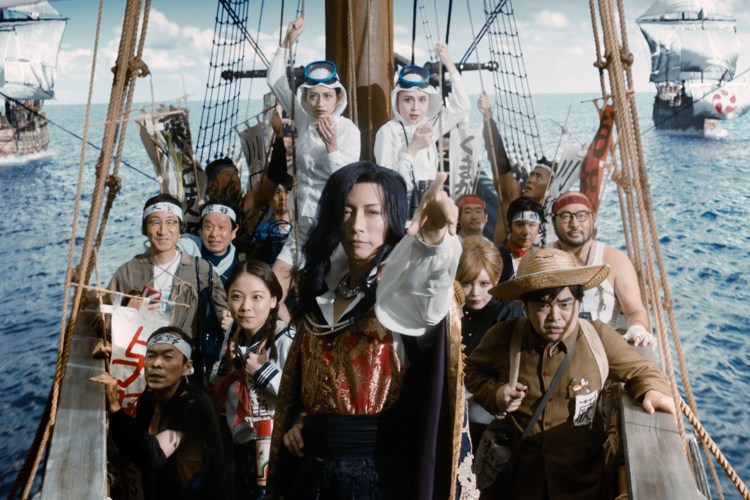
Fly Me To The Saitama -FROM BIWA LAKE WITH LOVE- (翔んで埼玉 ~琵琶湖より愛をこめて~, Hideki Takeuchi, 2023)

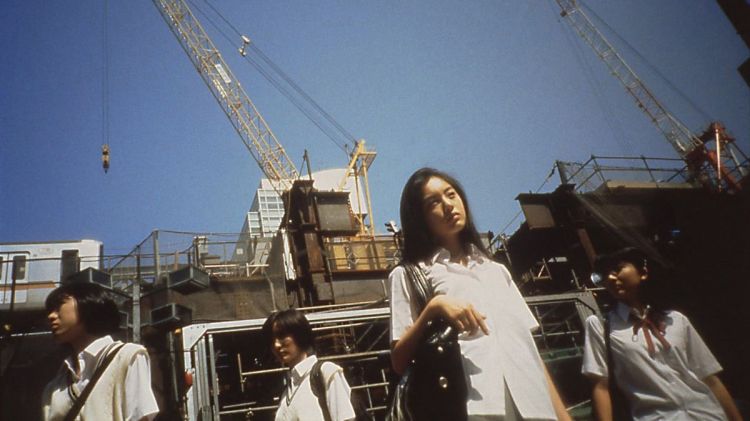
The Saitamafication of Japan continues in the long-awaited sequel to the hit 2019 comedy Fly Me to the Saitama. Though the visa system has been abolished and the citizens of Saitama are new free to enter the capital, that does not mean to say everyone is on the same page and the prefecture still faces internal divisions and increasing factionalism. Revolutionary Rei (Gackt) proposes a solution which involves connecting the series of train lines to make it easier to get around and building a beach resort to lesson their sense of inferiority over having no access to the sea.

Once again it has to be said that humour is very local and largely built around regional stereotypes, though it is perhaps curious that the ordinary citizens are often seen in clothing reminiscent of the 1930s something which is also echoed in scenes of trains arriving at stations greeted by crowds of well-wishers seeing soldiers off to war. This may in a sense echo the film’s central theme in the encroachment of Osaka imperialism in which Japan’s second city has launched a not so secret campaign to Osakify the rest of the nation, if not the world, using white powder manifesting as sand from Koshien Baseball Stadium which is a holy place to many as it is where the high school baseball championship takes place. 

They have a visa system in Osaka too, or more strictly the Kansai area, with Kyoto and Kobe apparently in on the plot and intent on looking down on suburban areas such as Wakayama and Shiga which is where Rei was planning on getting his sand. Shiga is set up as a the Saitama of the south west, a pleasant if dull sort of place with a lake its only claim to fame. Like Saitama it has a liberation front, led by Kikyo (Anne Watanabe) who known as the Oscar of Shiga because she went to France to study revolutions and is is dressed like Oscar from the Rose of Versailles. 

The citizens of Kyoto come in for a bit of a kicking for their stereotypically snobbish attitude, the natural politeness of the local dialect undone by a social gadget that reveals what they’re “really” thinking which is that their definition of Kyoite is very narrow. The stereotypical view of Osaka, as voiced towards the end of the film, is that the people are cheerful and warmhearted. The city is associated with comedy and particularly manzai double acts like the one which appears during the opening credits, which perhaps adds to the sense of despair and confusion that the normally nice Osakans could suddenly be hellbent on world domination aided by the already strong love for takoyaki throughout the nation.

As before, we also have a “real world” subplot in which members of a family listen to the radio broadcast outing the urban legend of Rei and his BL love story with Momomi, the Tokyo-raised governor of Saitama. These regional rivalries are tearing up the real world too with a tug of war match that threats to go incredibly wrong if the two areas with an existing beef are allowed to face each other in the final. In contrast, the fantasy world is a riot of zany 18th-century influenced design that sees Rei set off on a pirate ship to get his sand for the fake beach though the mayor of Kobe turns up dressed like Audrey Hepburn in Breakfast at Tiffany’s, and the Kyoto-ite has Taisho-esque straw hat. When the gang are caught by the fascisitic Osakans they’re relegated to a dungeon under Koshien Stadium and enslaved because of Saitama’s low ranking amid the other prefectures of Japan.

It’s all very silly, and somewhat impenetrable to non-Japanese speakers who can’t pick up on the dialect switching or zany wordplay while a certain degree of familiarity with regional stereotypes is certainly helpful. In any case, while the Osakafication of Japan undoubtedly sounded quite bad, the same cannot be said for its Saitamaification and Rei’s desire to create a land without discrimination free of the oppression and inequality born of pointless regional snobbery where everyone is free to go wherever they please without let or hinderance. 


Fly Me To The Saitama -FROM BIWA LAKE WITH LOVE- screened as part of this year’s Nippon Connection

Original trailer (English subtitles)
Hijacked Youth – Dare to Stop Us 2 (青春ジャック 止められるか、俺たちを2,  Junichi Inoue, 2024)

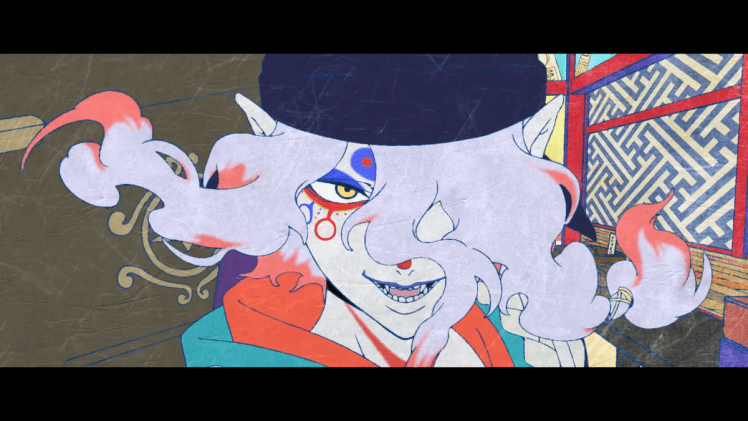
A loose sequel to 2018’s Dare to Stop Us, Hijacked Youth (青春ジャック 止められるか、俺たちを2, Seishun Hijack Tomerareruka, Oretachi wo 2) picks up a decade later with an autobiographically inspired tale from writer director Junichi Inouchi but in its way also becomes the latest in a series of indie films to offer a celebration of Japan’s mini theatres still struggling with the fallout from the COVID-19 pandemic while exploring the origins of the contemporary independent film scene. 

The allusion seems clear even from the film’s opening in which cinephile and former programmer Kimita (Masahiro Higashide) fears for the future of cinema amid the arrival of the VCR. Having quit his job to support a young family, he is puzzled but eventually won over when unexpectedly contacted by notorious film director Koji Wakamastu (Arata Iura) who has apparently decided to open a cinema in provinciail Nagoya after the screening of Ecstasy of the Angels was restricted because someone bombed a police box for real. Kimita wants to run it as a rep cinema, but Wakamatsu sees it partly as a vanity project and a side business so has his eye on the bottom line. Making the mistake of programming films he thinks are good rather than ones people want to see quickly puts them in the red with Wakamatsu pressuring Kimita to give in and agree to screen pink films even though he himself had admitted that pink cinema had had its day. 

Wakamatsu is forever taking Kimita to task for having a prejudice against these kinds of films which are after all the kind that Wakamatsu makes though he does concede that there are talented directors working in pink film who may someday become the leading lights of the Japanese cinema industry. Some of that is hindsight, but what the film is working towards is a link between pink film, which was independently produced in contrast to something like Roman Porno which was made by a studio with much higher budgets and production values, and the rise of independent cinema which is largely dependent on the mini cinema ecosystem to it keep going. 

But then the film is also a nostalgic memoir revolving around the director’s teenage dreams and his eventual meeting of Wakamatsu thanks to the cinema in Nagoya. The irony is that the first film had been titled “Dare to Stop Us,” focussing on Wakamatsu Pro during the turbulent days before Asama-sanso as an anarchic force in a sometimes staid film industry. But the through line here is that everyone gives up far too easily. Kimita abandoned his dreams to sell video recorders, while the young woman who works for him believes she has three strikes against her, the first being her gender, the second a lack of talent, and the third which she does not disclose that she’s a member of the Zainichi community of ethnic Koreans often discriminated against even the Japan of the 1980s and in fact today. 

Junichi gives up a bit easily too after making a twit of himself on Wakamatsu’s film set, though the picture he paints of him is larger than life. Fatherly and compassionate, he gives him solid advice to go to a proper uni and learn filmmaking with him while otherwise taking him under his wing, but also pretty much takes over after giving him his first opportunity to make a film and has a tendency to take no prisoners when it comes to his crew members. At least as far as the film would have it, he’s become a rather lonely figure now that his more politically minded friends have scattered following he decline of the student movement in Japan. As much as anything else, the film is a sort of hagiography as evidenced by the surreal coda which seems to reference the director’s early death in traffic accident in 2012, jumping forward 30 years to find the cinema still open and celebrating his legacy more literally yet also in its existence in supporting the indie scene Wakamatsu helped to birth. According to Wakamatsu, the most important thing is finding your own angle and sticking to it, something his rebellious spirit at least may have fostered in the many directors who started their careers at Wakamatsu Pro and not least Inoue himself.

Hijacked Youth – Dare to Stop Us 2  screened as part of this year’s Nippon Connection

Original trailer (English subtitles)
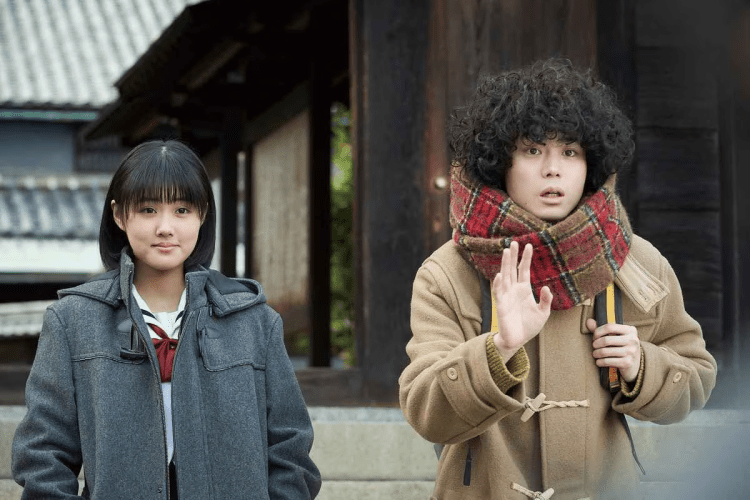
Let’s Go Karaoke! (カラオケ行こ!, Nobuhiro Yamashita, 2023)

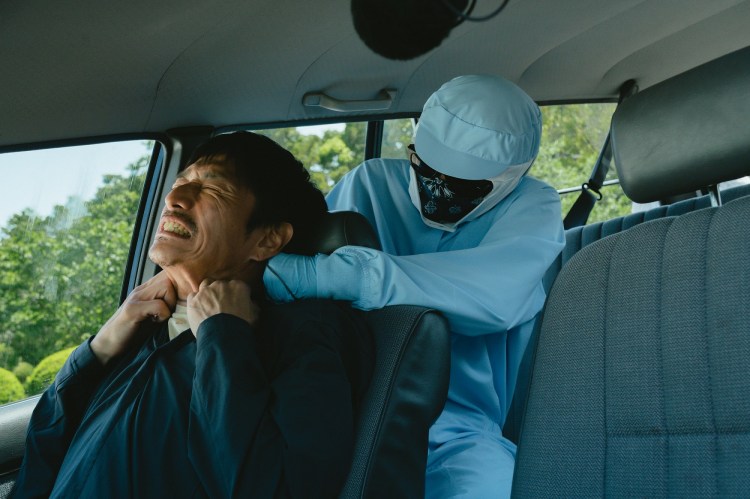
Singing is serious business. In Nobuhiro Yamashita’s adaptation of the manga by Yama Wayama Let’s Go Karaoke! (カラオケ行こ!Karaoke Ikou!), it’s matter of life and death, metaphorically at least, for a young man confronting adolescence and a zany gangster who seems kind of lonely but is desperate to learn how not to embarrass himself at the boss’ big sing off so he won’t be subjected to a homemade tattoo of his most hated motif.

The irony is perhaps that this kind of yakuza at least doesn’t really exist anymore and “Crazy Kid” Kyoji (Go Ayano) is in many ways a ghost of bygone days inhabiting a Showa-era shopping arcade soon to be torn down and replaced by a luxury hotel. Meanwhile, high schooler Satomi (Jun Saito) is also facing a kind of apocalypse in that he’s a boy a soprano whose voice has begun to change. His encroaching puberty leads him to blame himself when the school choir only places third during the nationals not making it to finals. But it’s at this concert that Kyoji first hears his “angelic” voice and decides he’s the perfect person to teach him how sing, intimidating him into an impromptu karaoke session.

As Satomi later points out, adults don’t invite kids to karaoke and this arrangement would be odd even if Kyoji were not an old school yakuza with a severed finger in his glove compartment. Of course, Satomi’s frightened but cannot really say no offering a few words of advice by daring to tell Kyoji that his falsetto is  “sickening” and he should stop waving his hands around if he wants to master the art of singing. It is also doesn’t help that his choice of song, Kurenai by X Japan, a hair rock epic mostly written in broken English, is a song of manly melodrama which requires a good deal of screaming. Despite having enlisted Satomi, Kyoji talks about one of his fellow footsoldiers as if he’s died when he’s only decided to get some professional singing lessons in an effort not to come last and end up with a lame tattoo.

Yamashita frames both their challenges as the same, Satomi fearing a social death and the death of his youth if he takes to the stage at what he’s sure would be his final concert and his voice cracks while Kyoji, ironically enough, does not really fear a literal death but the pain and humiliation of being branded by the boss for being bad at karaoke. Despite their differences a genuine a sense of friendship does arise between them, if also a possibly inappropriate homoerotic tension, as they support each other towards their shared goals and learn to sing from the heart which was apparently the real problem with Satomi’s school choir seemingly more obsessed with technique and correctness than the simple joy of singing. 

Hovering on a precipice, Satomi exists in a liminal space in his own way as ghostly as Kyoji surrounded by the obsolete. In his school film club, of which he is an honorary member, they watch VHS tapes of classics such as White Heat, Casablanca, and Bicycle Thieves which can only be watched once because the player’s broken and you can’t rewind anymore. His world’s on the brink of eclipse, and his friendship with Kyoji is a harbinger of a darker, more adult world but also one that’s less frightening than it ought to be with its admittedly scary gangsters obsessed with karaoke and bad tattoos. He starts to wonder if Kyoji was even real or some kind of imaginary friend appearing to help him deal with his impending adolescence and what it means for his singing career, but is finally reassured by a piece of concrete evidence confirming at least that it did really happen if leaving him with a sense of loneliness once their quests have come to an end. Surreal in its cheerful darkness, Yamashita’s heartfelt drama is an advocation for the for the healing powers of karaoke and the importance of singing from from the heart no matter how it might sound to those you who may themselves shed a few manly tears over a song about lost love and absent friends.


Let’s Go Karaoke! screened as part of this year’s Nippon Connection

Original trailer (English subtitles)
Secret: A Hidden Score (言えない秘密, Hayato Kawai, 2024)

The shojo manga vibes are so strong with Hayato Kawai’s Secret: A Hidden Score (言えない秘密, Ienai Himitsu) that it’s difficult to believe it’s actually a remake of a Taiwanese film from 2007. Anyone remotely familiar with the genre will have figured the mystery fairly early on though Kawai does his best to build on the gothic overtones in what is actually a story about the hero’s recovery of his love for music having had it beaten out of him while studying abroad in the UK. 

To that extent, Minato’s (Taiga Kyomoto) disillusionment with the piano is akin to a loss of the self. He’s come back from London earlier than expected and is quickly humiliated during his friends’ hazing ritual of making him participate in a piano duel with another student which he gives up on half way through. Having experienced a truly terrible teacher who shouted and bullied him into feeling as if he should give up on music if not life Minato is left listless and lonely with no sense of direction.

This might be why he’s drawn to Yukino (Kotone Furukawa), a mysterious presence he first encounters after being struck by the sound of her playing piano in an abandoned music room soon to be torn down. He asks her what the name of the song is, but she only tells him that it’s a secret like many other things about her. Minato is fascinated but also resentful, captivated by the mystery that surrounds Yukino while frustrated by the playful distance she keeps from him. In many ways she represents life, not only romantic love but restoring his love of music and a sense of confidence in it born of his rediscovery of the simple joy of playing as symbolised by the toy piano which his father (Toshinori Omi) is also trying to repair for him.

Yet it’s also clear something’s not quite right. Yukino’s clothes are slightly old-fashioned and she doesn’t own any kind of mobile phone. No one else on campus seems to know her and she often disappears without warning only to reappear just as unexpectedly. A minor love triangle develops between Minato, Yukino, and his childhood friend Hikari (Mayu Yokota) which later provokes a secondary emotional crisis though it’s clear this slippery duet that Minato is playing gradually allows him to open himself back up emotionally so that he can re-embrace his love of music and once again play the piano which is all he’d lived for until the cruel worlds of sadistic teacher caused him to want to give up on life.

Kawai certainly ups the romance with the gothic aesthetics of the disused music room along with the drafty corridors leading to it, though when the secret is eventually revealed it’s something of an anti-climax given its obviousness and the lack of effect it has on Minato who seems to be left with another unfinished symphony of longing and loneliness destined to echo through his music for years to come. There is however a poignancy in Yukino’s declaration that she just wanted to be an ordinary girl and in the shattering of her romantic illusions when she sees that Hikaru is in love with Minato and subject to none of the barriers that cause her to think her romance has no longterm possibilities. 

More than the Taiwanese original, the film leans into the tropes of shojo manga along with the junai classics of the early 2000s in its supernaturally-tinged tale of tragic romance and impossible love. As such, the film has a nostalgic quality though its retro touchstones seem somewhat out of sync in its polaroid cameras and ‘50s-themed disco even if that itself may equally be a kind of reference to Back to the Future, though more than anything else it’s a tale of a miracle created by music bringing two lonely souls together. It may seem as if Minato is drawn towards death or something dark, but is in reality chasing himself and the melody of a life that’s lost to him, perhaps finally catching it and learning to play again only to find that the dance ends much too soon leaving only the barest echo of itself behind.


Secret: A Hidden Score screened as part of this year’s Nippon Connection

Original trailer (English subtitles)