How to Have an American Baby (Leslie Tai, 2023)

“Mama, why wasn’t I born in America?” a salesman promoting a programme bringing women from China to give birth in the US so that their child will have citizenship rather manipulatively states in an almost certainly made-up quote from a child jealous of another’s life of baseball playing freedom abroad. The never quite explained mystery at the centre of Leslie Tai’s documentary How to Have an American Baby is why exactly so many families find US citizenship so desirable given that they have no immediate intention of living there themselves.

A father later suggests that he was looking for “security”, perhaps implying a sense of anxiety regarding the future direction of China while others insist they want their kids educated in the US presumably to take advantage of more global opportunities (additional press materials also suggest a desire for a legal security not afforded to children born out of wedlock). But it’s also true that the US has shockingly high maternal mortality rates in comparison to the rest of the developed world and that, though it seems they may not have realised it, these women are risking their lives and the lives of their unborn children undergoing an incredibly stressful and difficult period of confinement and later medical procedure usually alone and unable to speak the language. Most of the women appear to be under the care of Mandarin-speaking doctors, yet their manner is often rough and unkind while at least one woman seems to suspect that the advice she’s being given may not be impartial. As non-residents who do not have medical insurance, the parents assume that the hospitals are taking advantage of the Chinese patients and charging whatever they like with rates far higher than locals would typically pay.

One could therefore say that this is a very circular business. The hospitals make their money and they’re happy, while a small industry seems to have arisen with Chinese migrants running maternity hospitals to facilititate this practice. However, largely unable to speak English themselves, they can offer little help in a crisis and as they are operating in a legal grey area are not keen to get involved in any disputes. One woman, Lele, who unfortunately loses her baby she suspects as a result of medical malpractice is kept isolated from the other mothers and given almost no support. In the lengthy birth scene in which one mother undergoes a difficult labour lasting more than a day, the director is called away to translate for Lele with alarming warnings about a baby “coding” and that there is something wrong with their heartbeat all of which only places further stress on the mother giving birth who worries that her own anxiety is the reason the delivery is taking so long.  

Meanwhile, alarm is being raised by residents of the local area in which many of these “maternity hotels” are situated. They complain about increased traffic and noise due to the fact that ordinary family homes are now being used for a commercial purpose though one woman’s suggestion that they report such an innocuous sound as a baby crying (incorrectly assuming the women are also giving birth at the hotel) could obviously have unintended consequences and speaks to a greater degree of ingrained prejudice. A local government representative suggests that beyond instituting checks to ensure building safety there isn’t much they can do as the hotels aren’t breaking any laws or occupancy rules and even if they were they’d just pay someone to lease another property under a different name and set up somewhere else. 

As the salesman had suggested, for some of the women US citizenship is a status symbol and something they’re made to feel they’re denying their children if they chose to give birth to them at home. This process is expensive, and many of the families lead lives far more materially comfortable in China than they likely would in the US yet they see US citizenship as something that will be extremely beneficial to their children and so naturally want to give them the best if also securing their own status in being able to give it to them. Perhaps as one man at the neighbourhood meeting suggests, it’s only “smart” to take advantage of this obvious business opportunity but it’s also true that it’s the families who are perhaps being exploited in being missold a safe and easy path to engineering future possibility for their as yet unborn children. 


How to Have an American Baby screens Nov. 14 as part of DOC NYC and will be available to stream in the US until Nov. 26 before making its broadcast premiere on Dec. 11th on POV.

Original trailer (English subtitles)

Elegies (詩, Ann Hui, 2023)

Many of the poets featured in Ann Hui’s documentary Elegies (詩) are keen to emphasise that poetry is rarely about what it says it’s about and often as much about what doesn’t say. The documentary is much the same, making a point about the power of poetry in an age resistance, an elegy for the disappearing Hong Kong the poets lament two of them no longer living in the city but somehow still defined by it. 

The tables reversed by one of her subjects, Hui explains that the documentary is a labour of love. She admits that it’s not a mainstream movie and that no one would fund it, but she decided to do it anyway despite or perhaps because of the ongoing coronavirus pandemic which is itself makes frequent appearances in the film. In any case, Hui splits her time mainly between veteran poet Huang Canran who now lives in Mainland China and his younger disciple Liu Wai Tong who lives in Taiwan. 

As Canran says, the poems prove his love for Hong Kong but he also feels as if it was Hong Kong that forced him to leave. Joking that he’s an economic exile, he explains that he mainly moved after being forced out by the rapid cost of living in the city. He cheerfully explains that being a poet means embracing destitution and is embarrassed about the other kinds of writing such as penning a newspaper column that he did solely for the money. Canran’s main source of income comes from translation though his personal motto is to work hard to not earn money while practicing his art. His daughter doesn’t really get it and is confused about why Ann Hui wants to make a documentary about her father, though as Canran admits prophets are rarely appreciated in their hometowns. The Hong Kong he writes about is another place, perhaps somewhere that never really existed or any rate exists no longer. 

A photographer and lecturer in poetry, Liu Wai Tong heads in a more philosophical direction while also living as an exile in Taipei, never quite explaining the reasons he left Hong Kong though perhaps because it would awkward to do so directly. He quotes Brecht and asks what the point of poetry is in an age of protest, how their voices can resonate among a thousand other horrors crying out for speech. Yet as other poets had said, poems about nature are not always about nature just as political poems are not always about politics. By saying one thing and not another they can make a message felt but then there’s nothing really wrong with talking about beauty amid myriad horrors. 

Another poet writes about the everyday, causing others to ask if you can really call it a poem if it’s just about the unexpected appearance of a cockroach. The words should be simple, they insist, their meaning at least clear even if the message is ambiguous. Obscurity for obscurity’s sake is always doomed to failure. Many of the poets write from their direct experience detailing their ordinary lives in the city while others rejoice in wordplay or metaphor, but Hong Kong colours all of their work. Echoing the other poets, Hui too admits that it’s poetry that sustained her in her darkest hours. The poems that she learned as a child gave her strength when she needed it. A woman who has been writing to a friend in prison is moved to tears on recalling his reaction to a poem she had sent him, feeling that poem if can touch someone years after it was written than it must have intrinsic meaning.

Thus poetry in itself becomes an act of resistance if solely in defiance and the determination to endure even the most difficult circumstances from the anxiety of a global pandemic to the spectre of political unrest and lingering oppression. At once an elegy for the Hong Kong the poets speak of and its many rueful exiles, the film makes a passionate defence of poetry as a lifeline thrown by one lonely soul to another across often turbulent seas and carrying with it a message most powerful in its silence. 


Elegies screened as part of this year’s San Diego Asian Film Festival.

Original trailer (English subtitles)
The Contestant (Clair Titley, 2023)

“All humans are entertaining,” or perhaps “interesting” at least to the producer of a variety TV programme who later admits that he may have a kind of detachment that allows him to bypass normal ethical concerns or responsibilities towards others. His words may at first seem egalitarian or humanistic, but they also point to a commodification of the human spirit in which the everyman is merely a figure liable for exploitation by a puppet master like the later remorseful Tsuchiya. 

Clair Titley’s documentary character study The Contestant explores the birth of reality television in a Japan still mired in malaise following the collapse of the bubble economy asking both why someone would put themself through so much degradation and indeed why others would find their humiliation entertaining. From an audience perspective, there may be an assumption that Nasubi, the titular contestant, conceived this idea himself and is entirely consenting to the way he’s being treated but as he explains Nasubi had simply attended an audition to appear on popular variety programme Denpa Shonen and had no idea what was going on. Selected by lottery, he was led away by Tsuchiya and installed in a studio apartment where he was told to strip and that he was now taking part in a skit to see if someone could live solely on prizes won from magazine giveaways. He knew that he was being filmed, but was given the impression the footage would not air on television and was presumably intended for another purpose once the project was over. His ordeal would last more than a year.

As is repeatedly stated, Nasubi was never a prisoner. The door was always open and he could have chosen to leave at any time but did not do so. Asked why this is, why despite malnutrition and the possibility of starvation, the humiliation of being forced to eat dog food, the loneliness and isolation, an older Nasubi reflects that when you become so mentally and physically broken leaving no longer occurs to you. He considered suicide many times, but never simply walking out the door. 

The irony is that audience satisfaction is largely derived from Nasubi’s “happiness” in his overjoyed reactions to finally winning something. Edited down to a weekly digest, the programme includes only such happy moments rather than the crushing sense of futility and loneliness Nasubi recounts in his diaries which also become, unbeknownst to him, best sellers. A British BBC correspondent explains that the show was popular with younger people and less so with the older generation who remembered post-war privation and simply did not find the idea of a man facing starvation alone, naked, in a tiny apartment very funny nor did those who were suffering economically themselves.

Equally, some perhaps feel that as it’s only a TV show it isn’t really “real” and so it can’t really be affecting Nasubi in a negative or long-lasting way even if what’s really happening is more like torture at the hands of an out of control media puppet master who admits he didn’t really know what he was doing and was simply trying to push things as far as they would go without actually killing their subject. The film presents Tsuchiya and Nasubi as two sides of the same coin, both sons of policemen who were forced to move around a lot as children because of a common practice in Japan to rotate law enforcement officials and other civil servants to different areas every few years as a means of preventing corruption. Nasubi reveals that he got his nickname, “aubergine”, from the kids who bullied him at every new school objecting to his long face. Gradually, he developed the defence mechanism of making people laugh so they wouldn’t bully him. This might explain why he responds to what extends to sustained harassment from Tsuchiya by increased mugging for the camera, while Tsuchiya by contrast agrees that his childhood experiences have left him “detached” and unable to make deeper connections with other people. 

In some senses, it’s possible to think of reality television as frustrated bid for connection and that like his childhood self Nasubi is trying to gain control by owning the joke only to later feel damaged and traumatised by his experiences, insisting that the way Tsuchiya in particular treated him caused him to lose faith in humanity and left an unfillable void in his heart. The surprising thing is that unlike Tsuchiya, who later seems to accept that his actions were unethical and exploitative, Nasubi does not become cruel or embittered but finally finds a way to heal himself in helping others especially the people of his hometown, Fukushima, after the devastating earthquake in 2011. Though he admits it would be impossible not to harbour resentment towards Tsuchiya for everything he put him through, he also believes that the experience gave him something very special in showing him that no one can survive alone and granting him a better understanding of the importance of humanity and the spirit of supporting each other. 

Titley captures the sense of anarchism in late ‘90s variety with brief clips of the extreme onscreen graphics which have informed modern meme culture, even suggesting ironic use of an aubergine to cover Nasubi’s modesty may have given rise to the current use of the emoji. To dampen the sense of overstimulation which can often occur with these kinds of programmes, she dubs some of the original voiceover and replaces text with English in the same kinds of crazy fonts often employed in variety shows but is always very careful not to exoticise the content or imply these are things that only happen in “wacky Japan” but instead sensitively explores how Nasubi was able to find something positive in the midst of an incredibly traumatising situation and use that to lead a more fulfilling life despite those who may still try to mock or belittle him.


The Contestant screened as part of this year’s DOC NYC.

A Wild Roomer (괴인, Lee Jeong-hong, 2022)

“Separation and connection” is apparently the architectural theme of the well-appointed home where not completely qualified carpenter Gi-hong (Park Gil-hong) takes up residence in Lee Jeong-hong’s quirky drama, A Wild Roomer (괴인, Goein). It’s not quite clear if Gi-hong is the strange person of the Korean title or if it refers to the young woman he subsequently encounters, to all of us, or someone else entirely but what does seem to be true is that Gi-hong lives a kind of separated life from those around him.

Ironically enough, Gi-hong’s job is as a joiner though as a conversation with a friend he’s hoping to recruit for his moribund business makes clear he may not actually have finished his apprenticeship and has jumped the gun setting up on his own. The way he tells it, people these days don’t hire interior design firms for small jobs but entrust them to a carpenter, such as himself, who can subcontract the other services involved. But it seems Gi-hong is not a particularly considerate boss, looking down on his employees while complaining that labourers are money grubbers and it’s alright for him to be rude to them because that’s how working men talk to each other. He criticises an elderly electrician who asked about his pay because he has medical expenses for not having planned better for his old age but appears to be doing little to plan for his own while keen to give everyone the impression that his struggling business is actually doing big numbers. He also doesn’t appear to care very much about finesse either, using the cheapest materials possible and doing a slapdash job that even loyal colleague Kyoung-jun (Choi Kyung-june) thinks is not really up to scratch. 

What’s also clear is that Gi-hong has an inappropriate crush on the piano teacher whose studio he’s refitting and a lack of understanding about personal boundaries. At several points he encounters doors that don’t open for him, while ironically his landlord doesn’t seem to believe in them. Though he rents the annex which has a separate entrance, Jung-hwan is keen for Gi-hong to treat the main house as his own entering and exiting through the front door which is all very well but also means that Jung-hwan (Ahn Ju-min) could presumably also wander into Gi-hong’s space whenever he feels like it. Jung-hwan is also living a “separate but connected” life with his enigmatic wife Hyun-jun (Jeon Gil) who he says doesn’t actually like him and never has. For reasons not entirely explained, Jung-hwan is home all day and seemingly lonely hoping he can adopt Gi-hong, who is also home a lot because there’s no work coming in, as a kind of surrogate little brother. 

Yet for all that Gi-hong seems, as his friend describes him, “irresponsible” and self-interested, there’s childlike vulnerability in him that finds an outlet when he unexpectedly encounters a young woman he assumes is responsible for the sizeable dent in the roof of his van. Skittish in nature, Hana (Lee So-jung) is in someways earnest and others helpless. She has no home or family and is in that sense separate and in search of connection while Gi-hong seems to feel guilty about asking her to take responsibility for what happened to his van considering she has no means to do so though is doing her best. She assumes that Gi-hong, Jun-hwan, and Hyun-jun must be “family” considering that they share the same space and seems to want to join them in a separate but connected existence. 

The mechanic they contact about fixing the van goes off on a minor rant about the younger generation, or more accurately those now approaching middle age in their 30s or early 40s, who he claims have been given false expectations because of Korea’s unexpected success in the 2002 world cup which has led them to assume that dreams come true on their own and things will just work out without the need to really do anything to make them. The irony is that he’s pretty much describing Gi-hong who seems to have an insecurity and baseless hope that his business will pick up while terrified it won’t. But then everyone seems to be living a life of quiet separation, privately anxious and dependent upon the loose connections that have replaced the certainties of a blood family. Gi-hong, whose attempts to construct pleasant spaces for others are often imperfect, may have found himself a home of separate connection. “It feels so weird” a woman exclaims on looking at a precariously balanced rock, but like so many things in Lee’s strange world it seems to work even if you think it shouldn’t.


A Wild Roomer screens 11th November as part of this year’s London Korean Film Festival.

Origina trailer (English subtitles)

Small Fry (잔챙이, Park Joong-ha, 2023)

A dejected actor begins to feel like a fish caught on a hook only to be cast back in Park Joong-ha’s tense chamber drama, Small Fry (잔챙이, Janchaengi). Small fry is how Ho-joon sees himself, at least in comparison to Hee-jin, an up and coming actress recently the star of a Netflix show though equally insecure in her career while each of them find themselves at the mercy of a director with a fragile sense of masculinity and a tendency to bully that masks his insecurity. 

Indeed, the tale opens as masculinity drama as former actor Ho-joon turns up at a fishing lake intending to record an episode for his YouTube fishing channel only there’s a weird guy hanging around that immediately tries to oust him from his position on hearing his patter about a tip off about the best seat from the guy in the shop. The man later revealed to be a film director, Nam, is obnoxious and prickly. Not content with having forced Ho-joon to move, he loudly complains about the noise from his live-streaming using it as an excuse for not having caught any fish. 

You’d think it would be an unwritten rule that touching another guy’s rod is inappropriate, yet a third man soon turns up while Ho-joon is taking a break and messes with his equipment apparently resentful of his status as a top YouTuber insisting that he’s “cheating” by using Japanese techniques and his success is entirely down to the Japanese-style paste he uses for bait. The same man turns up later but obsequiously plays the devoted fan, asking for an autograph much to the consternation of the all but ignored director and his star who has also tagged along. 

Nam evidently feels threatened by Ho-joon’s relative fame along with genuine fishing skills, petulantly rejecting his hints like a man who won’t ask for directions while Hee-jin, the actress, grows ever more exasperated wanting to keep Ho-joon around if only as a buffer between herself and Nam who she realises had ulterior motives for this trip. Then again as it turns out each of these three people is connected in unexpected ways that play into the drama between them as well as into that of the screenplay for the film Hee-jin has all but been promised the lead for. 

Repeated fishing metaphors suggest that both Ho-joon and Hee-jin are just waiting to reel in their big break while at the mercy of the dupliciotous Nam who never catches anything. Gradually He-jin realises that he may already have given the part to another, more famous, actress while continuing to string her along. He later makes a kind of promise to Ho-joon to consider him for the male lead, but as expected blames the drink and feigns ignorance once the sun has risen. Yet even Nam claims he’s at the mercy of others, insisting that there are times when you just need to tell the producers to “fuck off” while secretly placating them in preparing to cast an actress with a profile over one with the skills to do the job. 

They’re all small fry, just waiting around trying chomp on a hook and get reeled into something good but finding that they move too quickly or that even if they’re caught they’re soon thrown back in favour of bigger fish. At 40, Ho-joon is beginning to feel as if he’s missed his chance and his fishing-themed YouTube channel may be all he’s got left even as he’s forced to play another kind of role humiliating himself filming sponsored ads for bait manufacturers to earn his keep. “There are too many ordinary people like you,” Nam cruelly tells him affecting an authority he doesn’t really have to suggest he has no future as an actor. Hee-jin, meanwhile, is wondering if it’s worth putting up with Nam’s false promises in the hope of finally getting her big break even if her management still won’t let her do the films she really wants to do. 

Yet in some senses, Ho-joon is still on the hook hoping he can reel something in while Hee-jin may have decided that her big break’s not worth all this bullshit and there will other opportunities or perhaps it doesn’t really matter even if there aren’t. Maybe it really is all about the paste after all and a poor fisherman like Nam is likely to end up with nothing in the end while at least Ho-joon and Hee-jin though small fry they may be have a better idea of which lines to cast. 


Small Fry screened as part of this year’s San Diego Asian Film Festival.

Original trailer (English subtitles)
A Wing and a Prayer (동에 번쩍 서에 번쩍, Lee Kwang-kuk, 2022)

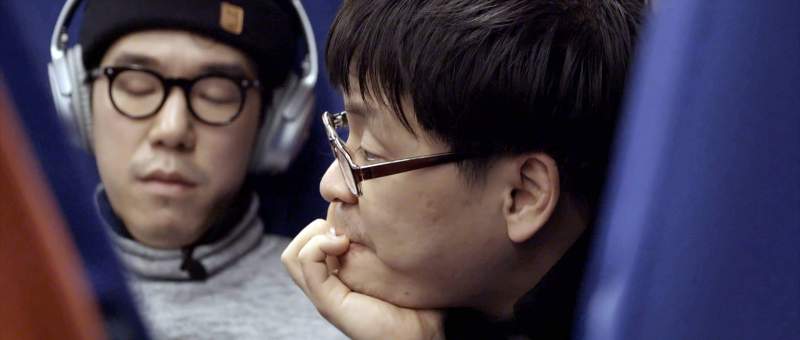
A pair of 25 year olds find themselves marooned in adolescence thanks to the precarious socio-economic conditions of contemporary Korea in Lee Kwang-kuk’s indie dramedy A Wing and a Prayer (동에 번쩍 서에 번쩍, Dong-e Beonjjeog Seo-e Beonjjeog). Not quite as quirky as Lee’s previous work, the film nevertheless finds its twin protagonists undergoing parallel journeys while each preoccupied with the progression to adulthood and what that might actually mean in real terms while perhaps guilty of a childish naivety in their vision of what it is to be grown up.

Seol-hee (Yeo Seo-hee) and Hwa-jeong (Woo Hwa-jeong) are best friends and roommates each currently without jobs and feeling lost without clear direction for their future. Seol-hee was on track to be an athlete but was forced to give up following injury. At an interview for a job in a coffee shop she’s asked a series of questions which seem to her somewhat unnecessary. “Do I need a dream in order to work here?” she asks, “Can’t I just make good coffee and try my best at everything?” Predictably, her answer does not go down well with the interviewer and it seems unlikely she’s going to get this job though Seol-hee remains cheerful and upbeat unable to understand why everyone keeps pressing her about her hopes and dreams when she’s just trying to live. By contrast, Hwa-jeong has reached the final stages for a job at a company and feels her interview went well so she’s optimistic that this time it really might work out.

Though in quite different places, the pair decide to take an impromptu trip to the seaside to wish on the sunrise only to fall asleep and completely miss the moment. The mismatch in their circumstances comes to the fore when Hwa-jeong reveals that with their lease about to come to an end she’d like to try living on her own, “like a real adult”. Of course, that’s quite destabilising and hurtful for Seol-hee who has no real expectation of being able to get the kind of job that would let her find an apartment she could rent on her own. After a small argument, the pair end up separated and on parallel adventures as Seol-hee bonds with a slightly older woman, Ji-an (Seo Ji-an), whose life has been ruined by unresolved trauma caused by high school bullying while Hwang-jeong meets a high schooler, also bullied, who is looking for her missing parrot. 

When Hwang-jeong comes to the rescue of the high school girl after she’s lured by bullies who claimed to have info on her parrot, it’s obvious that they immediately recognise her as an “adult” though she holds little sway over them. Hwang-jeong is fond of saying that she isn’t a kid anymore, but it’s also clear that getting a job is central to her definition of adulthood. When the high school girl asks what she does for a living, Hwang-jeong answers pre-emptively that she’s a “respectable company employee” to which the high school girl replies “an adult” but then goes on to ask at exactly what age one becomes one. Hwang-jeong has no answer, because perhaps it’s not an age after all but a state of being. 

She also accuses Seol-hee of behaving like a child as they continue to argue about Hwang-jeong’s plans for solo adulting. Seol-hee meanwhile finds herself trying to help another lost woman who is herself arrested but trying to break of the “jail” she feels she’s been placed in by an overprotective mother she nevertheless feels may be ashamed of her for her own “failure” to progress into a more conventional adulthood. Like the high school girl Seol-hee claims she has no friends and tries to make one of Ji-an only she refuses. On seeing the flyers for the lost parrot, which Seol-hee herself at times resembles, she wonders if recapturing it is the right thing to do or if it wouldn’t be happier flying free rather than trapped within a cage that to Seol-hee represents conventionality and socially accepted ideals of success.

They’re all lonely, wounded, and insecure, afraid of talking to each other about their worries because of the internalised shame of feeling to meet the demands of “adulthood” despite, in all but the case of the high school girl, being well over the age of majority. The high school girl herself may represent Hwang-jeong’s refusal to confront her past while throwing herself into an adulthood she hasn’t quite earned just as the parrot represents both her friendship with Seol-hee and the elusiveness of their future, but it also returns to her the sense of positivity she may have been missing just as Seol-hee’s care of Ji-an also allows her to take care of herself. They might not quite be adults, but then who really is and at least they have a little more clarity about that means and what they want out of life in the realisation that they aren’t alone and not least in their worries.


A Wing and a Prayer screens 10th November as part of this year’s London Korean Film Festival.

Original trailer (English subtitles)
I Haven’t Done Anything (좋.댓.구, Park Sang-min, 2022)

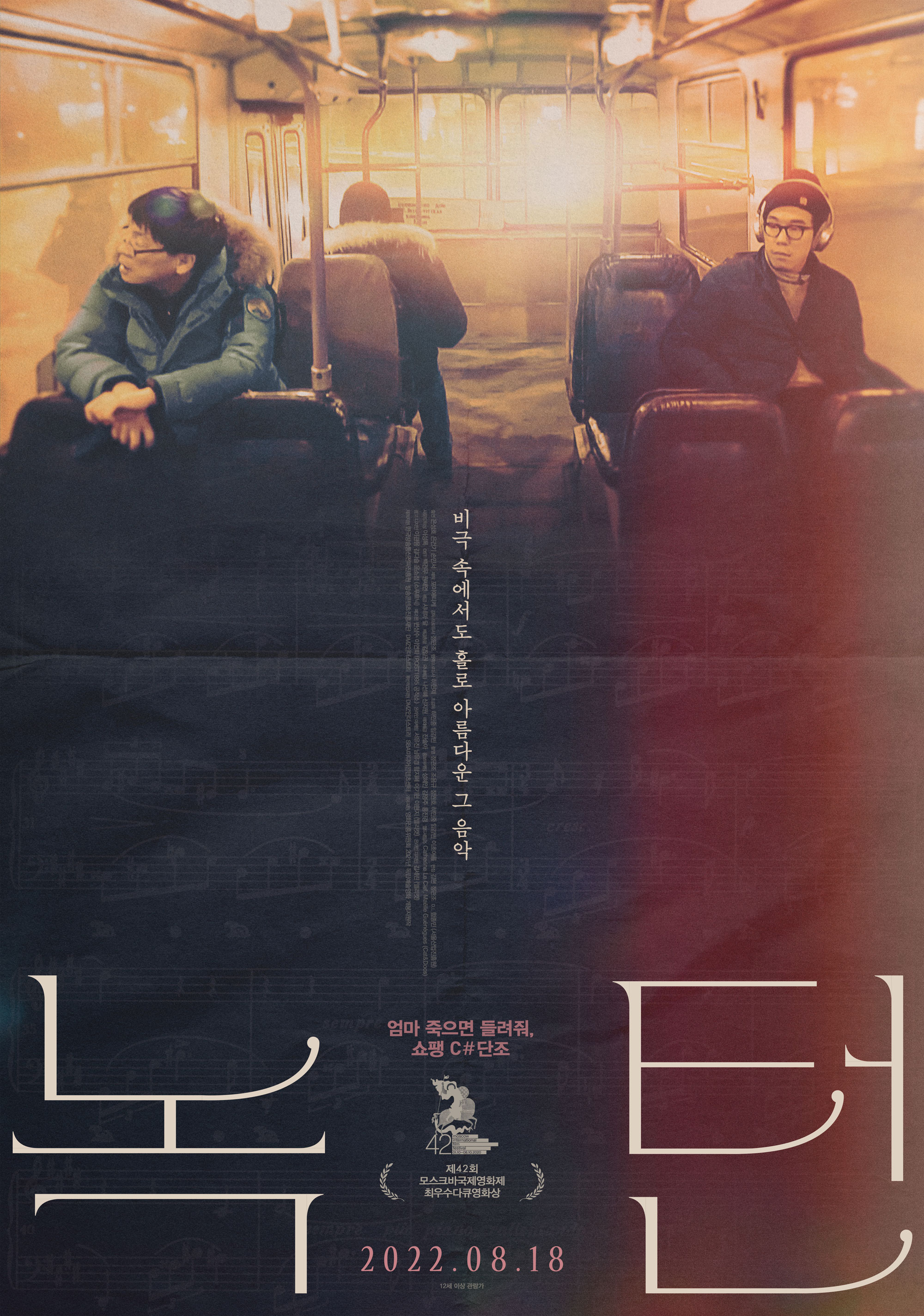
The central irony of Park Sang-min’s meta comedy I Haven’t Done Anything (좋.댓.구, Joh.Daes.Gu) is that a man who remains defiantly silent generates much more interest than the one desperately chasing YouTube success. Adopting a “screen life” aesthetic in which much of the action is told through social media and video screens, the film asks a series of questions about our petty obsessions, online authenticity, media manipulation, and the impossibility of escaping a predetermined image as its embattled hero strives to reinvent himself by his inhabiting most famous role.

Actor Oh Tae-kyung plays a version of himself who is struggling to maintain his career as an actor having begun as a child star with his most high profile roles including that of the younger Oh Dae-su in Park Chan-wook’s Oldboy. With work thin on the ground, he turns to YouTube but fails to make an impact with content that commenters describe as old hat such as “mukbang” eating videos and unboxings. It’s then that he comes up with the idea of rebranding as “Li’l Oh Dae-su”, dressing up as the protagonist of Old Boy and accepting viewers’ challenges which at one point include him taking revenge on a gang of class bullies by hitting them on the head with a plastic mallet while mimicking the famous corridor fight scene from the landmark drama.

But then, someone else has already shared their screen with us. Going under the name “Bulldog”, a viewer asks Tae-Kyung to solve the mystery behind a man who’s been standing silently in the square with a large sign reading “I Haven’t Done Anything”. Tae-kyung reasonably wonders why Bulldog didn’t just ask the guy himself, but as he explains “Picket Man” refused to answer him. Given the large amount of money Bulldog has pledged for this seemingly simple request, Tae-kyung accepts the challenge but Picket Man continues to ignore him no matter the silly stunts he pulls an attempt to break his concentration. 

Bulldog’s apparently strong desire to know the truth, willing to offer up vast sums of money just to satisfy his curiosity, hints at our own petty obsessions. After all, the cryptic quality of the sign is intriguing. What exactly is Picket Man trying to say, what didn’t he do and who says he did it? Of course, in another way, Tae-kyung also feels he hasn’t done “anything” with his life and stuck in a career morass unable to shed the image of himself as a child actor and young Dae-su in particular. Every time someone offers him another role, he worries that the baggage of his early career follows him and he’s simply not credible as a hardened gangster, for example, if everyone only sees him as the eldest of six siblings in a much loved TV drama or the little boy who grow up to become the schlubby captive Oh Dae-su. 

When the skit becomes an accidental viral hit, Tae-kyung begins to worry that perhaps he’s doing Picket Man a disservice and this kind of publicity isn’t really what he was after though it’s puzzling that he himself refuses to speak about what it is he hasn’t done. What he realises is that Picket Man is much like himself and he’s done to him what others have done to Tae-kyung in reducing him to a single image. How will anyone ever see this otherwise anonymous person as anything other than “Picket Man” now? Tae-kyung has unwittingly exploited him for his own ends and possibly ruined his life in the same way that anyone who becomes a meme is robbed of an identity. 

Then again, in this very meta tale not everything is as we think it is and we ourselves, like the YouTube commenters, are being manipulated by unseen forces. As Picket Man becomes the latest social media phenomenon, other content creators start arbitrarily jumping on the hashtag, randomly mentioning Picket Man to boost their own views while unscrupulous forces also exploit the meme potential to run scams featuring Picket Man’s image. Park carries the meta quality through to interrupting the film with fake YouTube ads and product placement from sponsors that remind us we are being sold something whether we realise it or not and that we might not even realise what the product is or who’s selling to us as the final reveal implies. Nevertheless, there’s a sense of triumph in the success of this heist that’s been pulled on us in the winning self-deprecation of dejected former child star Tae-kyung and his great master plan to shed himself of an otherwise inescapable image. 


I Haven’t Done Anything screens 5th November as part of this year’s London Korean Film Festival.

Original trailer (English subtitles)
One Second Ahead, One Second Behind (1秒先の彼, Nobuhiro Yamashita, 2023)

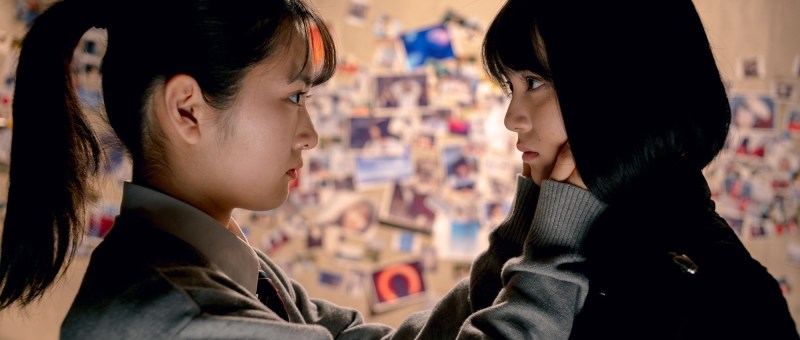
If you’re a step ahead and someone else is a step behind, then the gap between you ought to be twice as big but in an odd kind of way it can bring you closer. At least, that’s how it is for the protagonists of Nobuhiro Yamashita’s One Second Behind, One Second Ahead (1秒先の彼, Ichibyo Saki no Kare), a remake of the Taiwanese rom-com My Missing Valentine scripted by Kankuro Kudo. 

Kudo wisely avoids some of the awkwardness of the original by reversing the genders of the misaligned romantics so that it’s now male post office worker Hajime (Masaki Okada) who wakes up to realise that he’s lost an entire day while having no recollection of how he got sunburnt or why there’s sand in his trousers. The host of a radio show he’s fond of listening to asks him about something he’s lost, causing him to remember his father who went out one evening for ginger and then never came back. Hajime’s problem is that he’s always a little ahead of himself, in too much of a hurry to fully grasp the situation around him. That might be one reason that he falls so hard for singer-songwriter Sakura (Rion Fukumuro) and becomes far more invested in the relationship than might be wise for someone you’ve only just met. 

Reika (Kaya Kiyohara), meanwhile, is always a little bit behind. Shy and somewhat reserved she struggles to get her words out and while Hajime has often left before the end of a conversation she is usually left hanging by an inattentive or impatient partner. Out of sync with the world around them, they have each lost something precious besides the obvious and are looking for a way to get it back. Kudo’s script largely drops the magical realism of the Taiwanese original with its strange world of talking lizards and opts for something a little less surreal if just as sweet while maintaining the borrowed time motif that suggests the universe is fair and willingly adjusts itself so that those who find themselves missing out will get that time back though there’s not a lot they can do with it other than reflect. 

Even so within this miraculous dream space regrets can in a sense be cured and anxieties worked out. Those awake to stopped time have the opportunity to set things right, or at least to say their piece even if no one else can hear. There’s something more than time that they can recover, though it may be only small comfort and offer little more than one-sided closure. Rather than the Valentine’s Day setting of the Taiwanese original Kudo and Yamashita shift the action to the summer which with its many fireworks displays has a rather poignant quality focussed more on the loss than the rediscovery while emphasising the short-lived quality of human relationships which can nevertheless leave a warm afterglow even if the memory itself has been lost. 

Setting the film in the historical city of Kyoto also adds to the magical feel, the emerging sunlight at one point appearing almost like a halo around the head of a frozen Hajime while he perhaps comes to accept his mother’s rationale that his father did not leave him but ran away from reality and ironically a world he felt he could not keep up with. In a repeated gag, Hajime calls up a requests show and pours his heart out to the host only for his mother to dial in and dispute everything he’s says especially reminding him that he’s not a loser but should slow down a bit and at least listen to the end of the conversation. Reika meanwhile might have to work herself up to speedier means of communication than the good old fashioned letter but can at least see that she gets there in the end even if it might take a little longer than for others. 

Despite the differences between them, they are in fact perfectly in sync and just waiting for the times to align to bring them back together. Kudo and Yamashita lend their quirky romance a melancholy and heartwarming quality, steering clear of the awkwardness of the otherwise sweet and wholesome Taiwanese original in suggesting that the “date” at the film’s centre is the fulfilment of long forgotten promise rather than the momentary whim of a lovelorn romantic. Suggesting that the things you lose cycle back to you and that the universe itself is fair and kind, the film’s pure-hearted romanticism offers a hopeful reassurance that in the end it all really will work out for the best if only you give it time.


One Second Ahead, One Second Behind screens Nov. 4/5 as part of this year’s San Diego Asian Film Festival.

Original trailer (no subtitles)

As If It’s True (John Rogers, 2023)

An influencer enters into a mutually exploitative relationship with a vulnerable musician only to find herself falling for him for real, or perhaps not, in John Rogers’ non-rom-com As if It’s True. Taking aim at the wilful inauthenticity of influencer culture, Rogers explores the ways in which romance is really just performance while mutually beneficial relationships can nevertheless contain a power imbalance that adds to their emotional volatility. 

It could be said that Gem (Ashley Ortega) is permanently on the rebound. A subject of a viral meme after an ex filmed her having a mental breakdown after being fired from her job, Gem went on to harness her fame becoming a popular YouTube vlogger. But then fame seems to have got the better of her. Gem’s girlfriend Yara left amid rumours of her toxic behaviour and her feeds are now full of trolls berating her. Hoping to recapture the magic, Gem recruits Anthony to be her “boyfriend” though he soon tires of the arrangement, taking up with Gem’s friend Cielo.

Anthony resents the limitations placed on his romantic freedom by his empty relationship with Gem, though it seems that she may at least have harboured some “genuine” feelings for him. At a Halloween party, Gem meets melancholy musician James (Khalil Ramos) who is wearing the same Harry Potter costume as she is and undergoes a moment of romance that is equal parts flirtation and role play. A photographer asks them if they’re a couple and they don’t quite know how to respond but then each accept the label. It’s here that things start to get weird as Gem asks James to punch Anthony. He jokingly agrees but didn’t think she was serious, until she offered to compensate him for his efforts. 

The original meeting is then consumed in confusion and contradiction in which neither party is entirely sure what was really going on between them aside from a genuine sense of attraction. Gem wants James to get back at Anthony and also boost her ratings, while James seems like he’s interested in a more genuine romance but captivated by Gem’s wealth and illusionary power. The pair find themselves playacting romance for the cameras, coming up with a fake story of how they met while filming a series of couples moments to prove how in love they are. 

But the flaw in the plan is that the fans don’t take to James, seeing him as bland and taking an instant dislike to his coffee-shop style music. James begins to worry that Gem won’t like him if the fans don’t, while she becomes fed up with what she sees as his lack of drive. A climactic dinner tables fight provokes a series of harsh words on both sides as James complains he’s nothing but a pawn in Gem’s game and she accuses him of being a golddigger yet the rawness of the fight suggests two people who can’t be honest with themselves about how they feel let alone with each other.

Rogers plays with our own ability to discern the reality, leaving us unsure which scenes might be “real” and which are simply part of the skit. Trapped in Gem’s confusing world of inauthenticity, James begins to lose grip on himself, lost in a kind of dream world while Gem exploits his insecurity to prank him by suggesting she may leave him for another woman. They each at times claim that the relationship is now “real” and they’ve developed genuine feelings for each other but seemingly can’t quite accept them or escape from the performative quality of their romance.

As much becomes plain when Anthony and Ceilo get engaged, Cielo looking a little sheepish showing off the ring while implying that James must have something up his sleeve to one-up Anthony in the romance stakes, further fuelling his sense of jealous resentment and fragile masculinity. Even a “real” relationship is also performative in its empty gestures such as random flowers and cheerful selfies. Gem puts on act to meet James’ mother, but then who isn’t on their best behaviour to meet a potential in-law? She ends up liking her, finding something in her that her own parental figures may have lacked in the childhood trauma she shares only with James (or so she claims) that explains why she is the way she is. 

James has also had his fair share of mental health issues, something Gem recklessly exploits in getting him to make a video in which he “opens up”, while otherwise growing tired of feeling like Gem’s pet just trotted out to look cute on the internet while his attempts to use her to further his music career largely flounder. Then again, we have to wonder about the authenticity of what we’re seeing as Gem once again seems primed to put something together in the great highlight real of their “relationship”. Perhaps this is all a bit too, Gem “coming clean” about her real fake romance with James seemingly nowhere to be seen. Raw and embittered, Rogers’ anti-rom-com resents the digitalisation of love in which romance has become a public act defined by deed rather than feeling and the fake affirmation of social media clout has itself begun to trump human connection.


As If It’s True screens Nov. 3 as part of this year’s San Diego Asian Film Festival.

Original trailer (English subtitles)
Ma, I Love You (真爱好妈, Chiu Keng Guan, 2023)

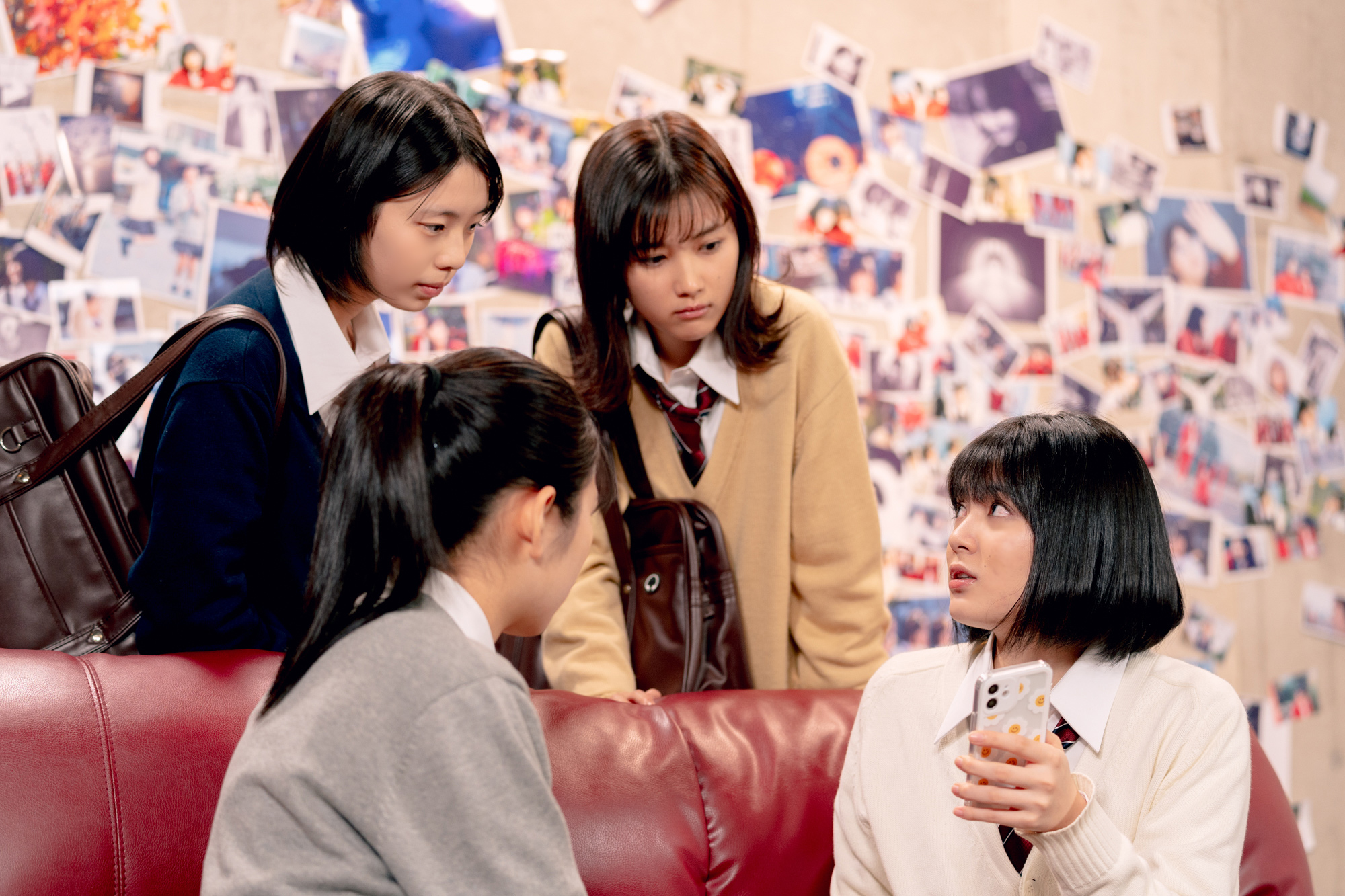
A single mother experiences separation anxiety when she discovers her teenage daughter plans to study abroad in Chiu Keng Guan’s heartwarming drama, Ma, I Love You (真爱好妈). While the daughter yearns for freedom, she is also understandably wary of heading out into the world alone and as much as she fears her mother’s sometimes worryingly obsessive love also recognises that it’s costing her own freedom in her inability to rediscover something to live for outside her daughter.

The bond between the pair is unusually strong in part because of the father’s early death in an accident at the beach which has left Bee Ling clingy and over protective. Now 18, Qi Qi is acutely embarrassed by her mother’s habit of turning up unannounced when she’s out with her friends while insisting on driving her everywhere rather than letting her drive herself or take public transport. That’s one reason that she hasn’t told her she’s given up her part-time job to take French lessons and has applied to study at a university in France. 

It’s obviously a big adjustment for Bee Ling who has devoted her entire life to raising her daughter. Even her job as an insurance agent for which she has won countless awards as a top employee is something she’s only worked hard at to provide for Qi Qi with the end goal of buying a home where they can live together. As her friends and family try to point out to her, children aren’t meant to live with their parents forever and Qi Qi isn’t a child anymore. She wants her own life and the freedom to explore, while Bee Ling should also have the freedom to find new interests and ways to fulfil herself. 

While her friend Li Yan is excited about the idea of her son Zi Hao studying overseas, Bee Ling tries to do whetever she can to prevent Qi Qi going including visiting a shrine to pray that she fails the interview before boldly stating that she will simply go to France with her which is the opposite of what Qi Qi wanted. “I want to go to a place without you” she rather bluntly states, trying to get through to her mother that she wants to be free of her helicopter parenting. 

But then Qi Qi is perhaps a little more anxious than she makes out and afraid to head out on her own without her mother to look out for her. Following a series of setbacks, she appears to have given up walking blankly through an apartment Bee Ling wanted to buy vacantly replying that she’s happy to go with whatever her mother decides. Even Bee Ling is by this point a little less controlling, looking for a place with similar sized rooms and keen that Qi Qi decide how she wants to decorate her space but is also still quite dependent on her daughter not really knowing what she’d do with herself without her.

Ironically, through her campaign to frustrate Qi Qi’s plans to study abroad, Bee Ling begins to develop new interests and make new friends. An older French woman living in their building explains to her that life began again for her at 70. Her children are grown up with lives of their own, so why shouldn’t she be free to live as she pleases? Meanwhile, Bee Ling’s mother also begins to reflect that perhaps she made the same mistake coloured by the times in which they lived thinking that a girl should stay at home. She now regrets what might have been and sees that Bee Ling’s mistaken attempts to stop Qi Qi going abroad will only bring harm to them both.

In any case, as the title implies the pair eventually discover a way to rebalance their relationship with Qi Qi reflecting on the difficulties her mother faced raising her alone and Bee Ling discovering a new sense of possibility for the future in setting her daughter free. Together they begin to move past the shared trauma of the sudden loss of Qi Qi’s father while ready to embrace new challenges. “Life is elsewhere,” Bee Ling is told by a French teacher, suddenly finding herself ready to look for it while allowing her daughter to do the same.


Ma, I Love You screens Nov. 3/4th as part of this year’s San Diego Asian Film Festival.

Original trailer (English subtitles)