12 Weeks (Anna Isabelle Matutina, 2022)

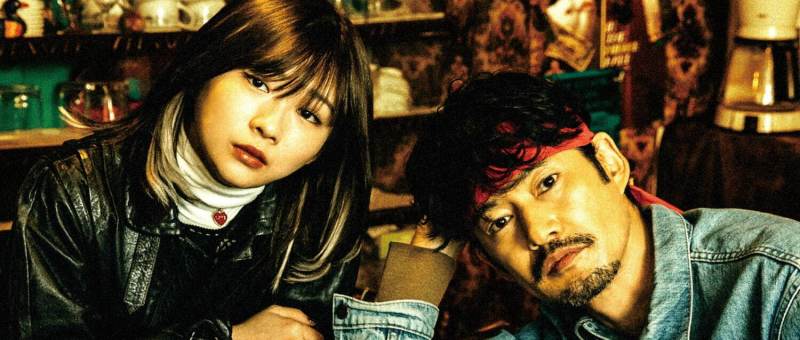
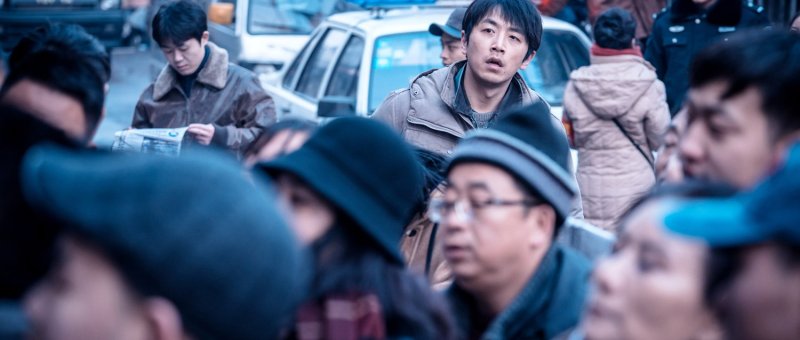
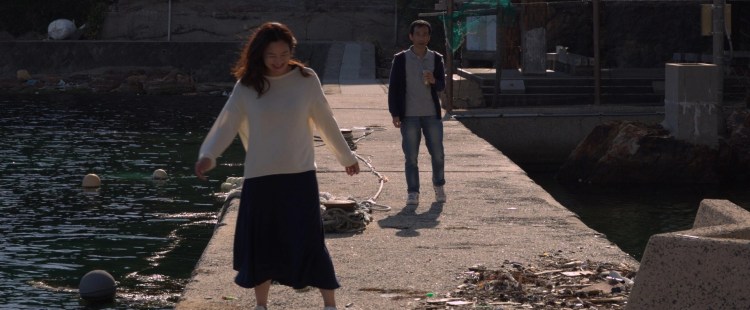
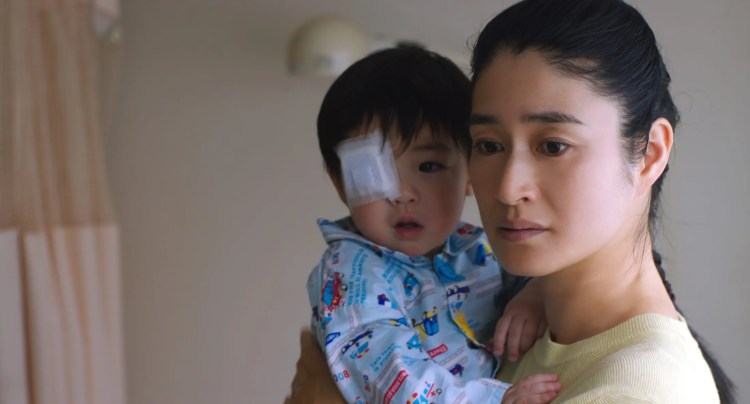
“Not all women want to be mothers” according to the heroine of Anna Isabelle Matutina’s 12 Weeks, yet this is apparently largely what society expects of them. Faced with an unexpected pregnancy at 40, Alice decides on abortion though it is technically illegal in the fiercely Catholic Philippines and she finds herself having to offer justification for her choices while trying to process her complicated relationship with her own mother who often tells her that she too wanted an abortion but obviously did not go through with it and left shortly after Alice was born to become a domestic worker in Hong Kong. 

The irony is that Alice (Max Eigenmann) works for an NGO supporting people displaced by natural disaster or civil unrest but is to an extent displaced herself in her estrangement from her mother, Grace (Bing Pimentel). In a poignant moment after having been made aware of the pregnancy by Alice’s violet ex Ben (Vance Larena), Grace brings out a box of baby clothes that once belonged to Alice only she never got to wear them because her grandmother who was raising her told Grace not to send anything but money because she had no way of knowing what size her daughter was. Grace is excited about the prospect of becoming a grandmother because it gives her a second chance at the motherhood she was denied by economic circumstance especially as the implication is she could play a larger role in their upbringing while Alice continues with her career. 

But even considering the strained relationship between them, Grace is far from supportive more or less taking over booking doctor’s appointments on her daughter’s behalf without really consulting her. Aside from the awkwardness and upset of the situation, Alice cannot discuss the abortion with her mother because of its illegality and the risks it might cause to herself and those otherwise involved in it. To be able to access an abortion safely, she has to undergo a counselling session and is then told that her operation will take place at 11pm hinting at its illicitness that it must take place under cover of darkness. The counsellor is sympathetic and clear that she isn’t trying to change her mind even if some of the questions seem invasive or patriarchal. Asking if Alice has been subject to domestic violence she offers help making sure that she’s not being pressured into an abortion she might not want by violent partner or the necessity of escaping them. 

Ben is indeed violent and it’s a fact that if she changes her mind and keeps the baby it will become much more difficult to keep him out of her life. Slightly younger than she is, he is moody and insecure while financially supported by Alice and living in a home she owns. He is not a responsible person with whom to raise a child though places extreme pressure on her to have the baby and manipulatively leaks the pregnancy news to Grace knowing she’ll do the same. Alice discovers that in reality everyone else is making her decisions for her, including a colleague who suddenly cancels a trip she was supposed to make to a disaster area on the grounds that his own wife has recently had a miscarriage and in his opinion it’s not safe for her to go. 

Set during the imposition of martial law on Mindanao in 2017, the film implies that a kind of martial law already exists for women who are unable to make their own decisions about their reproductive health or exercise their own autonomy. Alice is repeatedly told that she should have the baby because she is already 40 and the chance won’t come again though little thought is given to whether she wanted the chance or not while her own thoughts surrounding motherhood are clouded by the relationship she has with Grace which was largely affected by the economic realities that forced her to become a migrant worker. In part she rejects becoming a mother out of anxiety worrying that she is not suited to it, but is also conflicted in its inextricable ties to Ben and with wider patriarchal violence in general depriving her of the ability to choose from all angles. In the end a choice is made for her in the cruellest of ways leaving her more or less powerless with only the small comfort of female solidarity. 


12 Weeks screened as part of this year’s New York Asian Film Festival

Kitty the Killer (อีหนูอันตราย, Lee Thongkham, 2023)

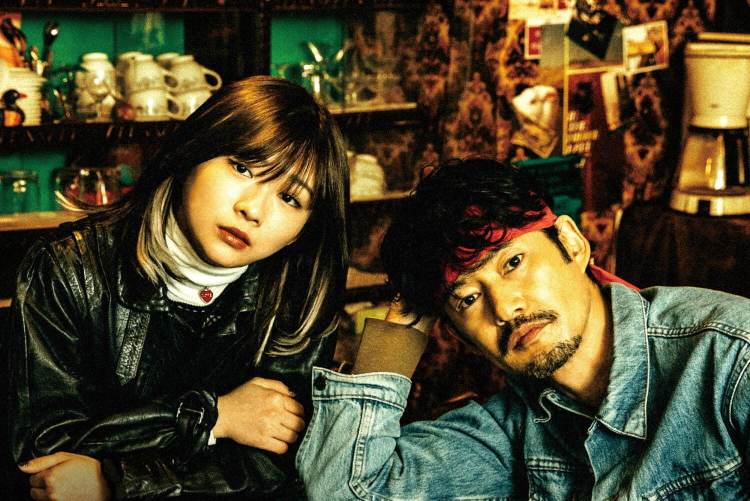
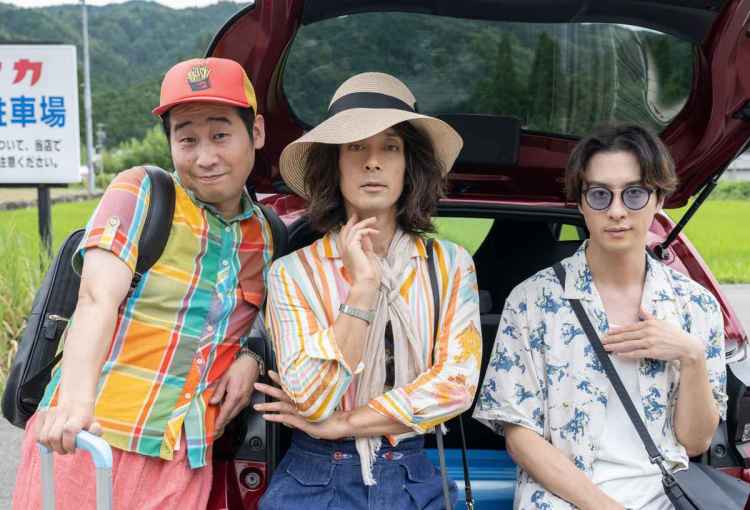
“You might be the stupidest killer I ever met” an ice cool assassin says of the bumbling hero at the centre of Lee Thongkham’s comic book action comedy Kitty the Killer (อีหนูอันตราย). She might indeed have a point, though as Charlie (Denkhun Ngamnet) points out killing is not strictly part of his job description which is more akin to a baby sitter for the “high school girl from hell” under his care, Dina (Ploypailin Thangprapaporn). In part a story of self-transformation, the film ironically plays with a series of genre tropes while providing a point of origin for an ongoing universe. 

As the film opens, Charlie is a feckless young man who can’t seem to get it together and is struggling to make a mark in his job as an “accounts manager” where he is semi-aware that everyone thinks of him as a bit useless. He muses on the difficulties of changing the way that others see him, but never quite takes the first step towards realising that what he needs to change is himself. Nevertheless, his life is changed for him when he runs into top assassin Grey Wolf shortly after The Agency tried to off him when he told them he wanted out of the game. Fearing he’s not long to live, Grey Wolf hands Charlie his trademark ring and tells him that he’s taken out a contract on his mum so if he doesn’t manage to rescue his associate Dina his whole family will be killed. 

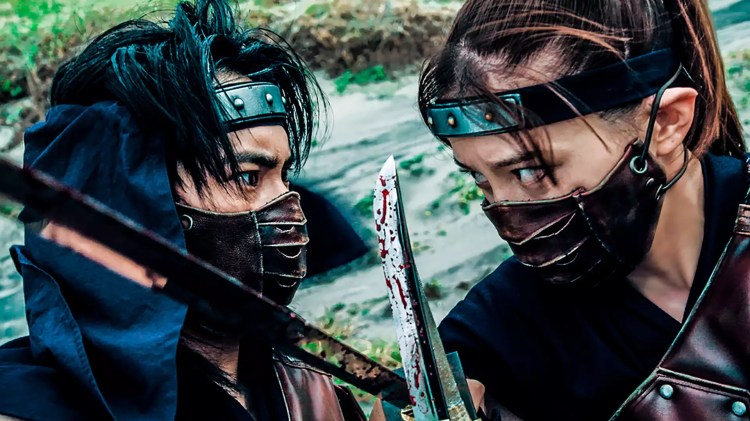
Dragged into a world of assassins and conspiracy, Charlie has little option than to rise to the occasion shaking off his boring office boy persona to become a stylish handler perfectly equipped to face off against vicious killers as the gang chase vengeance for Grey Wolf and battle another faction of their own organisation which has apparently cut a deal with the Japanese which is why they all wear masks and carry katana. Lee Thongkham plays with a kind of re-imported orientalism in clear references to Kill Bill, even echoing a famous line in the film when assassin Nina the Faceless says to Charlie, “silly boy like you likes to play with swords.”

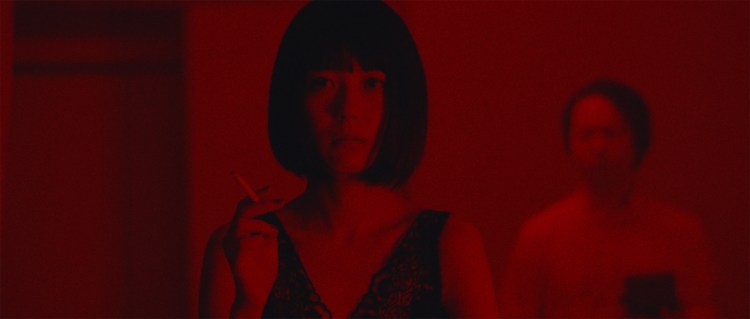
The line also hints at the subversion of traditional roles in play as Charlie becomes a male intruder in what in an otherwise a female space. Known as “Kitties” all the assassins are female though aside from villainess Violent all the handlers are men who are otherwise placed in a paternal role yet sidelined as nannies to the super-powered killers over whom they have almost total control. As Violet says, The Agency also has its rules and they are nothing if they do not obey. Charlie is to a degree raised by the four assassins under boss Makin (Vithaya Pansringarm) who train him to become to a capable handler allowing him to transform himself as he said he wanted to do in his opening voiceover while his mother otherwise pampers him at home. 

Nevertheless, the film also sympathises with the constrained lives of the Kitties who are told to have no emotions and that they must eliminate anyone who gets too close to them or witnesses them going about their business. As one of Dina’s “sisters” Tina remarks, she’s “just tired” of her emotionless life and lack of freedom, while Nina who already turned to the dark side tries to seduce them with false promises of greater autonomy under female boss Violet if simultaneously telling them they’d have to kill their friends and “family” in order to win it. In any case, it’s the sense of solidarity between the Kitties and the deeper than expected bond with their handlers that becomes the best weapon against Violet’s hostile take over of The Agency. Well, that and a magic stone that has the power to grant immortality, anyway. Filled with a good deal of deliberately silly dialogue and zany humour, the film also features a number of innovatively choreographed action sequences along with elaborate production design and the occasional use of onscreen graphics and animation. The depth of the world building hints at the potential for an ongoing series with a post-credits epilogue teasing a sequel offering further intrigue for the Kitties and their distinctly goofy handler in an expanding comic universe of retro charm. 


Kitty the Killer screened as part of this year’s New York Asian Film Festival

Original trailer (English subtitles)

Hail to Hell (지옥만세, Lim Oh-jeong, 2022)

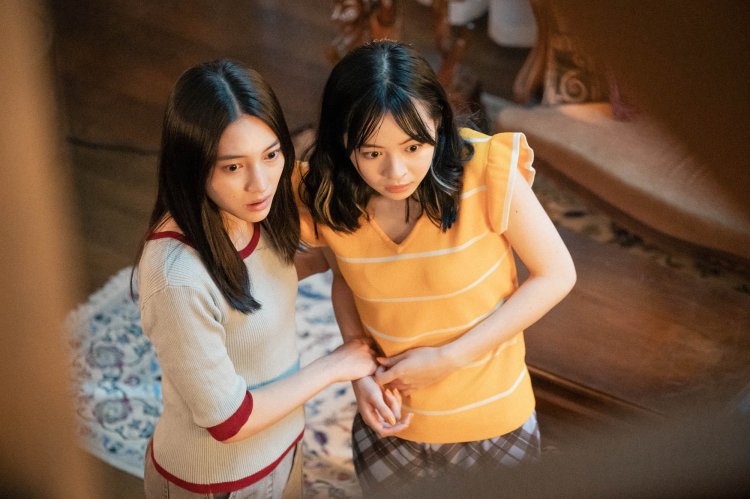
Two teenage girls swap thoughts of suicide for revenge on learning that their former tormentor is living well in Seoul but find their plans frustrated on discovering she has joined a religious organisation and apparently reformed in Lim Oh-jeong’s bullying drama, Hail to Hell (지옥만세, Jiogmanse). “Hell” is what the two girls, and a fair few others, believe their lives to be while seeing little way out other than taking their own lives but are confronted with questions of redemption and forgiveness not to mention death and paradise while plotting vengeance in the capital. 

The surprising thing about high school girls Na-mi (Oh Woo-ri) and Sun-woo (Bang Hyo-rin) is that Na-mi was once part of popular girl Chae-lin’s (Jung Yi-Ju) gang and only left it when they turned on her. Nevertheless, the two young women have bonded in their shared victimisation and desire for an end to their suffering. After several failed attempts at taking their own lives, they change tack on coming across Chae-lin’s Instagram posts which imply that she is living the high life in Seoul and even planning to study abroad which the girls regard as a cruel irony given the extent to which the bullying orchestrated by Chae-lin has disrupted their lives. Unsure exactly what they plan to do, they board a bus to the capital and make their way towards Chae-lin only to discover she’s joined a weird cult in which the members are expected to earn points through doing service in order to qualify for a ticket to “paradise”.

The language itself is quite sinister even if the “paradise” that’s on offer otherwise sounds fairly conventional. Then again, there is no real evidence that “paradise” actually exists while Chae-lin claims that her mother is already there which is why she’s so desperate to go. When the girls first arrive, her expression is strange to the extent that it’s impossible to tell if she’s “happy” to see them or merely excited by the prospect of tormenting them all over again. She says that she’s already confessed all her sins and views the girls’ appearance as a miracle sent by god so that she could atone and earn their forgiveness. Then again, being forgiven for one of your sins is worth the most amount of points and Chae-lin would definitely win if Na-mi and Sun-woo could be talked in to publicly forgiving her. 

Whether Chae-lin has changed or not the girls are divided on the prospect of forgiveness and whether the way they’ve been treated is something that even should be forgiven. Na-mi begins to concede that Chae-lin may have changed “a bit”, but is later forced to reflect on the ways she herself hasn’t changed or faced her complicity with Chae-lin’s bullying when she was a member of the gang while still apparently susceptible to her manipulation. Then again, it’s impossible to tell if Chae-lin is only in the religion for cynical reasons or genuinely believes in its teachings. The church itself has a distinctly eerie quality only deepened by talk of a possibly problematic article, onerous demands on members to buy “offerings”, and a points-based system of spiritual redemption. 

Meanwhile, it seems there is bullying even here with a young woman abruptly silenced, threatened with both a loss of points and “punishment”, for even making the suggestion that someone may be bullying her. Though Sun-woo sympathises with her plight, she does not know how to help her or to change the culture within the church. “No matter how long you wait, no one will help you,” Sun-woo advises another trapped young woman as she in turn attempts to shake off the feeling of powerlessness she had experienced as a victim of bullying and harassment. Neither girl had found any help from those around them, Sun-woo’s family apparently preoccupied with her disabled sister and Na-mi’s mother blaming her for being bullied insisting it was her own fault for being “weak” rather than fighting back but if their experiences have taught them anything, it’s that they can rely on each other and that they don’t really want to die so much as live without fear which might be more possible than they’d previously assumed it to be. “Welcome back to hell” Na-mi somewhat cheerfully calls out, countering a sign on the bus which had ironically claimed that wherever we are is “paradise” but perhaps finding something in it as she and Sun-woo prepare to move forward together having exorcised a few demons and reclaimed a sense of their own agency. 


Hail to Hell screened as part of this year’s New York Asian Film Festival

Trailer (English subtitles)

BFI London Film Festival Confirms Complete Programme for 2023

The BFI London Film Festival returns to cinemas across the city 4th to 15th October. East Asian highlights this year include stupendous Chinese animation Deep Sea, tense Korean drama Cobweb, and the latest from Ryusuke Hamaguchi and Hirokazu Koreeda. Here’s a look at the East Asian features on offer:

China

Hong Kong

  • Expats – feature-length fifth episode of the Amazon TV series revolving around the lives of three American expats against the backdrop of the 2014 Hong Kong protests.

Japan

  • The Boy and the Heron – semi-autobiographical fantasy animation from Studio Ghibli & Hayao Miyazaki.
  • Evil Does Not Exist – latest from Ryusuke Hamaguchi (Drive My Car) focussing on a construction project in a peaceful rural village.
  • Monster – latest from Hirokazu Koreeda starring Sakura Ando as a mother who confronts a teacher after noticing changes in her son’s behaviour.
  • Perfect Days – Tokyo-set tale from Wim Wenders starring Koji Yakusho as cleaner living a simple but soulful life.

Malaysia

  • Tiger Stripes – femininst pre-teen body horror in which a young woman begins to change in unexpected ways.

Mongolia

Philippines

  • Asog – road movie docudrama following a non-binary schoolteacher on the way to compete in a drag competition soon after surviving a typhoon.

South Korea

  • Cobweb – meta drama from Kim Jee-woon set in the authoritarian 70s in which a director becomes obsessed with the idea of reshooting the ending of his completed film despite the interference of the censors.

Vietnam

  • Inside the Yellow Cocoon Shell – 178-minute slow cinema epic in which a man reconnects with his estranged family following the sudden death of his sister.

The BFI London Film Festival takes place at various venues across the city from 4th to 15th October 2023. Full details for all the films as well as screening times and ticketing information are available via the official website. Priority booking opens for Patrons on 4th September, for Champions on 5th September, and Members 6th September, with general ticket sales available from 12th September. You can also keep up to date with all the latest news via the festival’s Facebook page, Twitter account, Instagram, and YouTube channels.

In Broad Daylight (白日之下, Lawrence Kan, 2023)

A jaded investigative reporter rediscovers a sense of purpose even as her industry flounders while exposing systematised abuse and neglect in privately run care homes in Lawrence Kan’s hard-hitting drama, In Broad Daylight (白日之下). The film’s title hints at its pervasive sense of despair, the problem isn’t so much that no one knew the state of affairs but that no one cared enough to do anything about it while the journalists too find themselves at the mercy of a hyper-capitalistic society. 

A whistleblower close to the end of the film reveals that they’d been anonymously sending photos from the care home where they work because they wanted “to feel human again” and “treat others as humans” only until now no one had taken any notice. They weren’t really expecting that anyone ever would. Top investigative reporter Kay (Jennifer Yu Heung-Ying) is one of only a handful of reporters left on her paper which is threatening to shut down the investigative department altogether if they can’t bring in a big scoop. Kay’s boss is similarly conflicted, not wanting to crush the idealism of rookie recruit Jess in insisting that their work has value in telling the stories that should be told while privately reminding Kay that the care home scandal might not be “explosive” enough to earn them a reprieve from their boss. 

For her own part, Kay is already jaded explaining to Jess that nothing really matters and nothing they write makes any difference when wrongdoers generally get off scot-free. Her desire to pursue the care home story is partly personal in that she’s dealing with a degree of guilt and grief over the death of her grandfather who took his own life in a privately run facility. To investigate one she’s been tipped off is particuarly bad, she poses as the granddaughter of a patient with dementia, Kin-tong, explaining that she’s not visited before because her family moved to Canada when she was a child, and thereafter making an offer to volunteer on seeing how bad things really are there witnessing not only a dead rat in Kin-tong’s room but physical abuse of the residents. 

It would be easy enough to assume that the faults are “isolated incidents” as the regulatory body likes to describe them and mostly down to the presence of the head nurse, Mrs Fong, who is clearly not someone who should be working in a care facillity, but the truth is that these are systemic problems largely born of governmental indifference. A government source tells her that the waiting list for a publicly funded homes stands at 15 years leaving many families little choice but to take what they can afford in the private sector. They are often unable to take care of elderly relatives themselves because they cannot take time off work to do so, or are simply not equipped to respond to their loved ones’ needs. 

But neither are the care homes. The manager, Chief Cheung who is blind himself, in part justifies the existence of his facility on the grounds that it is difficiult for people with disabilities to find homes to take them, painting the community as a happy family home doing its best rather than a callous attempt to exploit the vulnerable run by a dodgy businessman who admits that even if they’re exposed they’ll just change their name and start again somewhere else. Kay asks Kin-tong why he stays but he tells her that they’re all the same anyway. Even when she uncovers evidence of sexual abuse of a resident with learning difficulties she discovers that it’s almost impossible to prosecute because no one wants to put a vulnerable person on the stand opposite their abuser which allows them the confidence to think they can do whatever they want because they’ll never face dismissal let alone criminal proceedings. 

Kay begins to wonder what the point is if, as people are fond of telling her, no one really cares, but also is also forced to reflect on the moral difficulties of the situation. If the home is closed down, it will leave many of the residents with nowhere else to go. Mostly likely they will end up on the streets or in another equally bad private care home while she at least might earn herself a temporary reprieve in achieving the kind of scoop her money-minded editor was looking for. Her boss insists that she can’t change the world, the system won’t change overnight even if people are temporarily outraged. The truth is that these are people who’ve been abandoned by their society and often by their families especially with so many younger people emigrating leaving relatives behind with no one to watch over them. Though somewhat jaded, Kay comes to empathise with the people she meets at the care home and rediscovers a sense of purpose in her work that reminds her it’s worth the fight even if in the end nothing really changes. In many ways bleak, Kan’s empathetic drama is otherwise undespairing in its gentle advocation for mutual compassion and world in which we can truly take care of each other.


In Broad Daylight screened as part of this year’s New York Asian Film Festival. It will also be screening in Chicago on Sept. 16 as part of the 17th season of Asian Pop-Up Cinema.

Original trailer (English subtitles)

The Legend & Butterfly (レジェンド&バタフライ, Keishi Otomo, 2023)

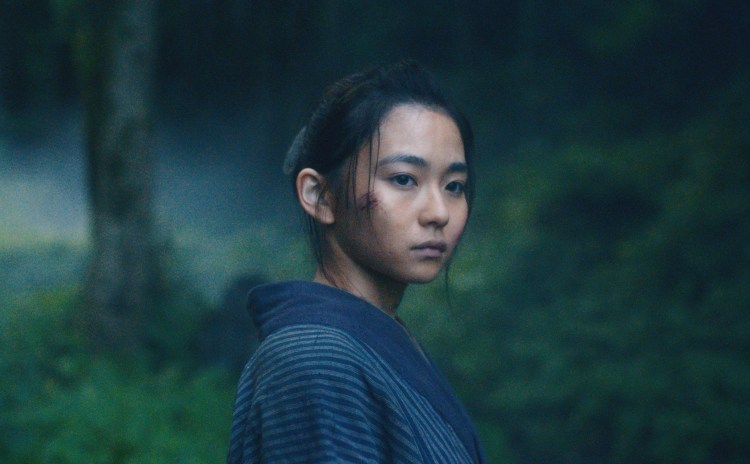
“What was everything for?” an ageing Nobunaga (Takuya Kimura) asks his attendant Ranmaru (Somegoro Ichikawa) towards the conclusion of Keishi Otomo’s historical epic, The Legend & Butterfly (レジェンド&バタフライ, Legend & Butterfly) produced in celebration of Toei’s 70th anniversary. Oda Nobunaga is such a prominent historical figure that his story has been told countless times to the extent that his legend eclipses the reality, but rarely has been he depicted so sympathetically as in Otomo’s history retold as romantic melodrama in which he and his wife, Lady No (Haruka Ayase), are mere puppets of the times in which they live dreaming only of a place beyond the waves where they might be free of name or family. 

Tellingly, Otomo opens in the spring of 1549 in which the dynastic marriage was arranged to broker peace between unstable neighbouring nations Owari and Mino. Nobunaga’s father’s health is failing and he fears in the chaos of his death Mino may attack, while No’s father fears that her brother will soon revolt against him plunging the fiefdom into disarray and therefore vulnerable to an attack by Owari. At this point, Nobunaga is known as “the biggest idiot in Owari,” a foppish dandy who cares only about appearances. As he prepares to meet No, his courtiers apply his makeup and do his hair while dressing him in a rather outlandish outfit No immediately insults as “foolish”. He treats her with chauvinistic disdain, barely speaking save to order her to pour the drinks and give him a massage only for her to point out that she’s been travelling all day and a “thoughtful” considerate husband would be giving her a massage instead. “I detest women who do not know their place,” he snaps. “I detest men who are ignorant,” she counters. The wedding night ends in humiliating failure as No demonstrates her martial arts skills and Nobunaga is forced to call his guards to rescue him. 

Little is known of Lady No in historical record, but here she is bold and defiant, as her father had said too free with her opinions for a woman of the feudal era. She claims to have been married twice before and assassinated both husbands on her father’s orders, implying that she is essentially sleeper agent more than hostage and will kill Nobunaga without a moment’s thought as soon as the word is given. Yet she also begins to guide her husband towards his destiny, mocking him as a fool but giving him useful strategic advice that wins him glory on the battlefield along with the political advancement that led him to become the first great unifier of Japan. For all that they “hate” each other, they are well matched and have a similar sensibility that allows them first to become allies and then friends before frustrated lovers.

But their love is enabled only when they escape the feudal world, shaking off their retainers to go on a “normal” date in Kyoto where they dance to Western musicians and taste foreign candy only to end up accidentally massacring some peasants when No’s martial arts training kicks in trying to stop a man beating his son. Even so, they are forever linked by their time in Kyoto in the romantic talisman’s of a carved wooden frog and a European lute even if the blood-spattered jizo and buddhist statue watching their eventual connection imply there will be a reckoning for all the blood that is spent. Jumping on a few years, the film does not elaborate on what caused Nobunaga to become a man without a heart and lose the love of his most trusted ally but positions his transformation into the “Demon King” as the kernel of his undoing just as his dream of unifying Japan and bringing about an age of peace (if one ruled by fear) is about to become a reality. 

In any case, the one thing that everybody knows about Nobunaga is how he died though then again his remains were never recovered giving rise to a happier ending in which he and Lady No were finally able to escape the feudal world to chase a freer future beyond the sea which is perhaps what they do in the film’s poetic final sequence in which they might in a sense share a dream connected by frog and lute. It might not be very historically accurate, but that is perhaps the point in hinting at the lives they might have led if the world had been different. Otomo films with a painterly eye that lends an air of poignant gravitas to a tale of romantic tragedy in which love is both salvation and destruction amid the flames of a collapsing temple. 


The Legend & Butterfly screened as part of this year’s JAPAN CUTS.

Original trailer (English subtitles)

Asian Pop-Up Cinema Returns for Season 17!

Chicago’s Asian Pop-Up Cinema returns for its 17th Season Sept. 8 to Oct. 7. Opening with bathhouse dramedy Yudo, the season will close with surreal Korean comedy Killing Romance with actor Lee Sun-Kyun in attendance to receive the Excellent Achievement in Film Award. Veteran Hong Kong actor Ben Yuen will receive this season’s Pinnacle Career Achievement award while Ng Siu Hin and Rachel Leung will receive the Bright Star Award and Mongolian actor/director Amarsaikhan Baljinnyham will also be recognised as a Pinnacle Career Achievement Honoree.

Japan Cinema Showcase

AMC NEWCITY 14 (1500 N Clybourn Ave, Chicago, IL 60610) 

Opening Night Film

Friday, September 8, 7PM: Yudo (湯道, Masayuki Suzuki, 2022)

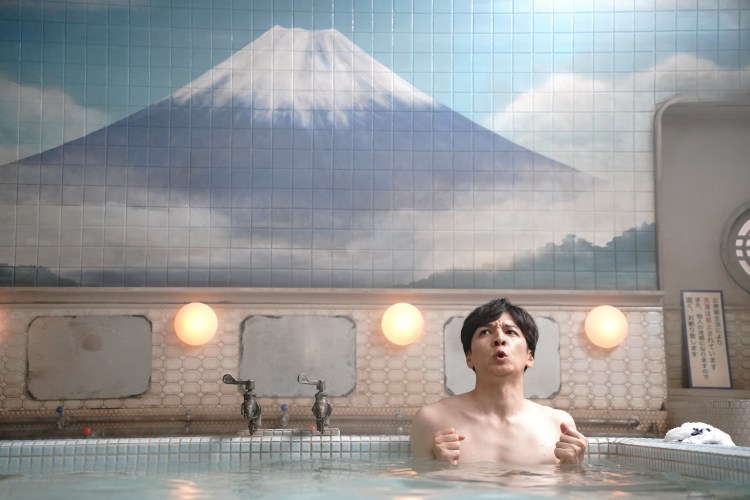
Toma Ikuta stars as a failed Tokyo architect returning to his home town with the intention of getting control of the family bathhouse currently run by his brother (Gaku Hamada) to tear it down and build an apartment block in this warmhearted celebration of traditional bathhouse culture.

Friday, September 8, 9:30 PM: Hoarder on the Border (断捨離パラダイス Takayuki Kayano, 2023) Special Encore 

A former concert pianist begins to see the world from a different angle after taking a job cleaning houses in Takayuki Kayano’s humanistic dramedy. Review.

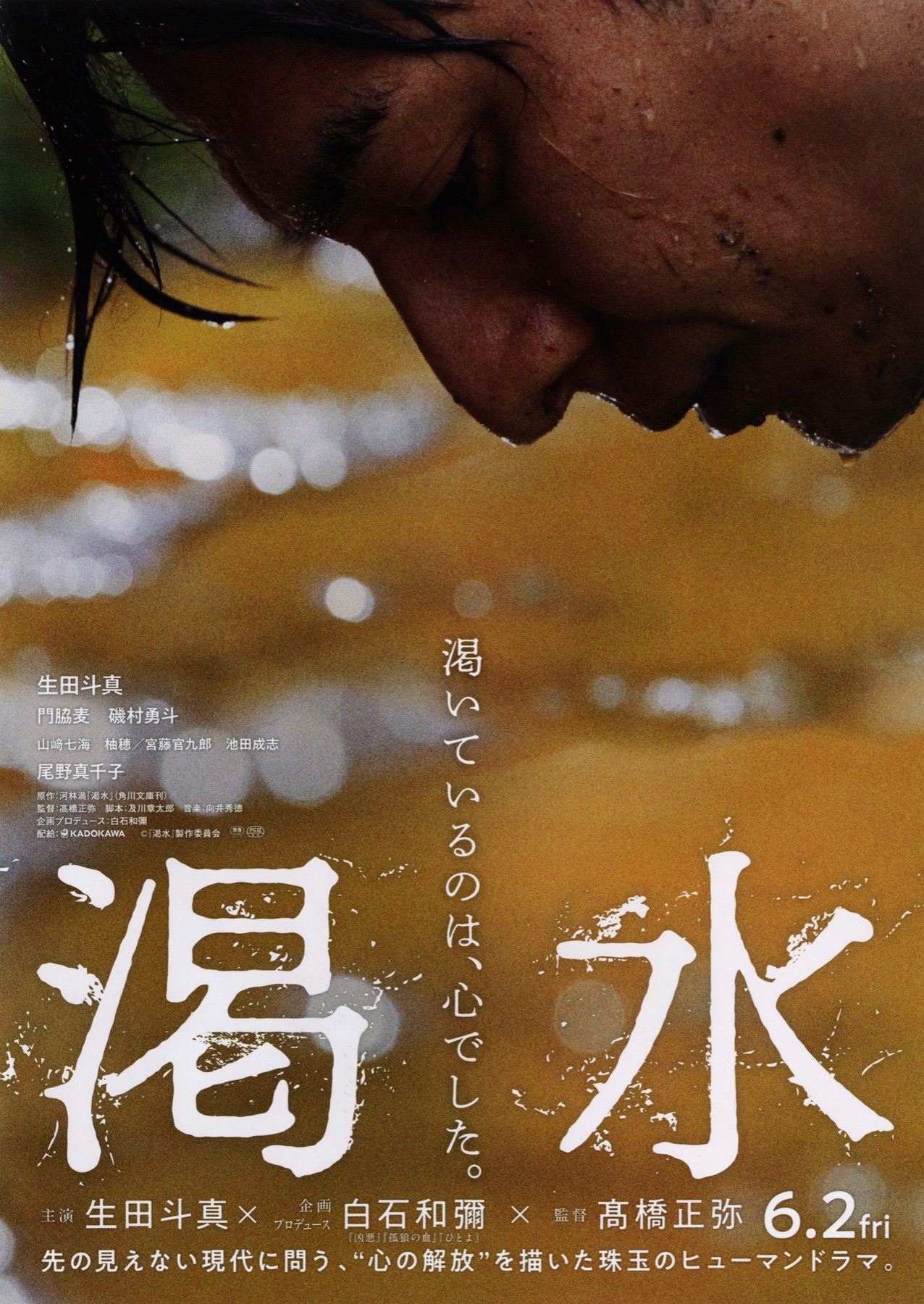
Saturday, September 9, 2:00 PM: The Dry Spell (渇水, Masaya Takahashi, 2023)

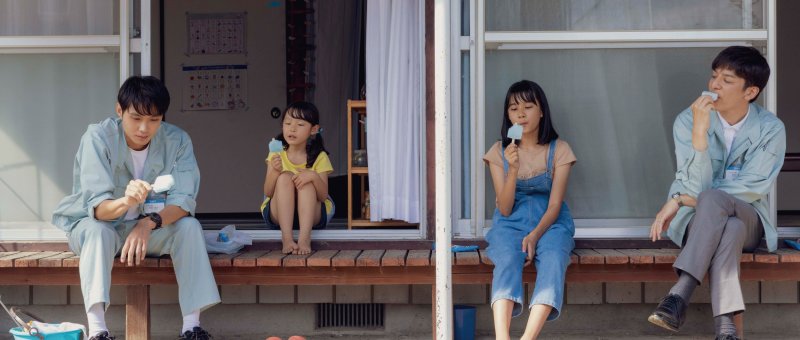
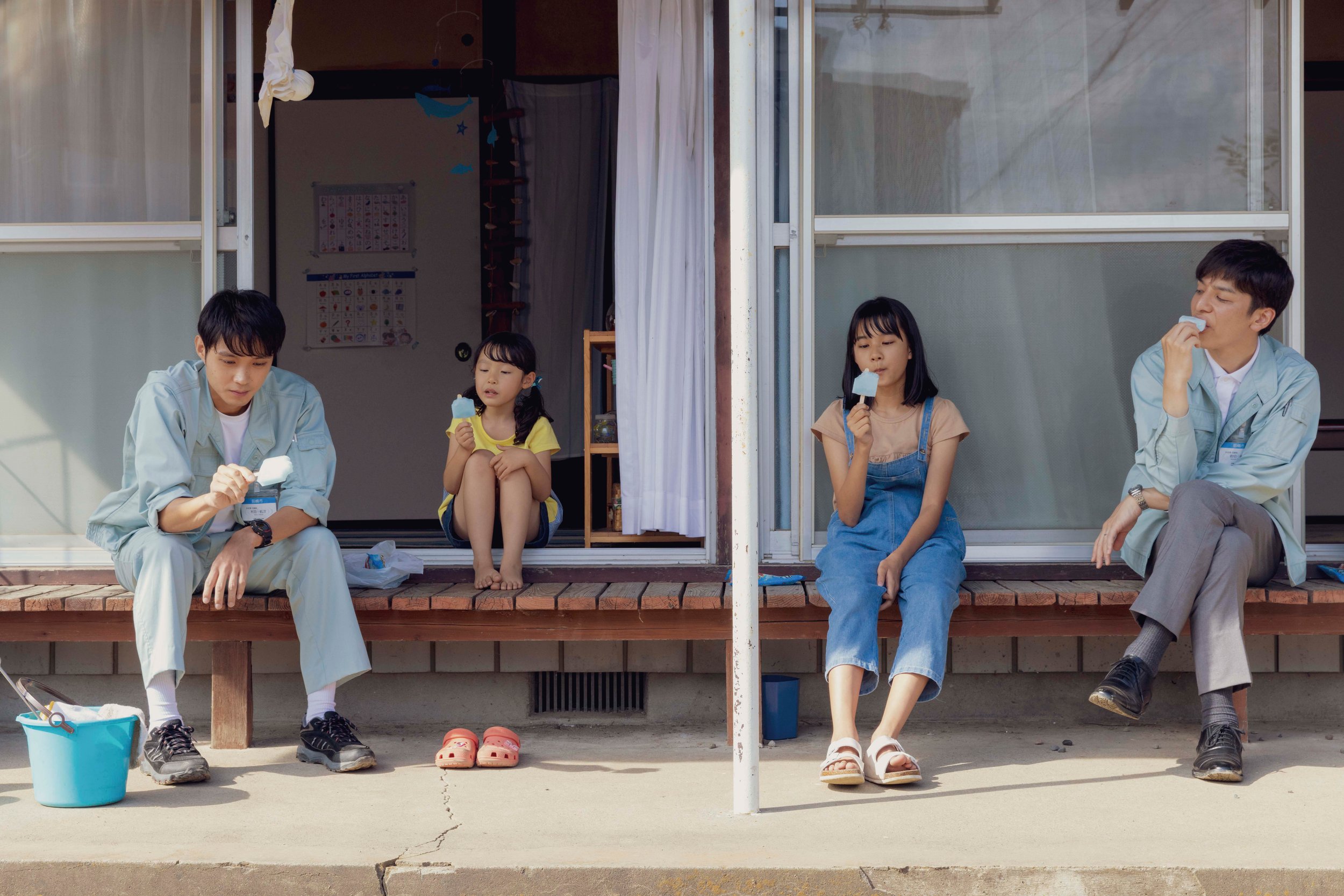
Toma Ikuta stars as a municipal worker in charge of turning off the water supply at houses that are behind with their bills but finds himself conflicted on discovering two neglected children living alone in a home which is already without electric and gas.

Saturday, September 9, 4:00 PM: Remembering Every Night (すべての夜を思いだす, Yui Kiyohara, 2022)

A series of women wander around Tama New Town each searching for something in Yui Kiyohara’s wistful drama. Review.

Saturday, September 9, 7:00 PM: Insomniacs After School (君は放課後インソムニア, Chihiro Ikeda, 2023)

Two teens begin to overcome their fears and anxieties after bonding over their shared insomnia in Chihiro Ikeda’s adaptation of the Makoto Ojiro manga. Review.

Come & Go (カム・アンド・ゴー, Kah Wai Lim, 2020) Special Encore 

September 8 – 15, 2023 Streaming available for U.S. views at: https://comeandgo.eventbrite.com

A detective investigates the connection between the discovery of an old woman’s skeleton and a series of real estate scams by interviewing the local residents many of whom are migrant workers from other areas of Asia.

Hong Kong Cinema Showcase

AMC NEWCITY 14 (1500 N Clybourn Ave, Chicago, IL 60610) 

Saturday, September 16, 2:00 PM: READY O/R ROT (不日成婚2, Anselm Chan, 2023) World Premiere 

Actress Rachel Leung is scheduled to do the introduction of the film.  

Sequel to the 2021 film Ready O/R NOT starring much of the same cast and revolving around three couples each facing concurrent crises from dealing with an unplanned pregnancy to infidelity and trying plan a wedding with a meddling mother-in-law.

Saturday, September 16, 5:00 PM: In Broad Daylight (白日之下, Lawrence Kan, 2023)

Director Lawrence Kan and Actress Rachel Leung are scheduled to attend to do the introduction of the film and Q&A after. 

Jennifer Yu stars in this ripped from the headlines drama in which an investigative journalist goes undercover to expose the dire situation in Hong Kong’s care homes for the elderly and disabled.

Saturday, September 16, 8:00 PM: Stand Up Story (說笑之人 Au Cheuk Man, 2023)

Pinnacle Career Achievement honoree Ben Yuen, and two Bright Star Award recipients Ng Siu Hin and Rachel Leung (IN BROAD DAYLIGHT) are scheduled to attend the award ceremony before the film and Q&A after.   

Veteran Hong Kong actor Ben Yuen, who will also be receiving this season’s Pinnacle Career Achievement Award, stars as an intellectually disabled father.

Sunday, September 17, 2:00 PM: Over My Dead Body (死屍死時四十四, Ho Cheuk Tin, 2023)

Residents of a swanky apartment block must band together to get rid of a random corpse and protect their property values in Ho Cheuk-Tin’s dark-hearted farce. Review.

Sunday, September 17, 5:00 PM: Wish Comes True (把幸福拉近一點, Ling Chi-Man, 2023) World Premiere

Actress Rachel Leung is scheduled to attend and do the introduction for the film.

Abandoned by her mother, Xiaofei discovers a “Wish Come True” machine and bonds with a young man, Wai, who is living with a rare disease.

Centerpiece

AMC NEWCITY 14 (1500 N Clybourn Ave, Chicago, IL 60610) 

Saturday, September 23, 2:00 PM: Harvest Moon (Amarsaikhan Baljinnyam, 2023)

Pinnacle Career Achievement honoree Amarsaikhan Baljinnyam is scheduled to attend the award ceremony before the film and Q&A after.   

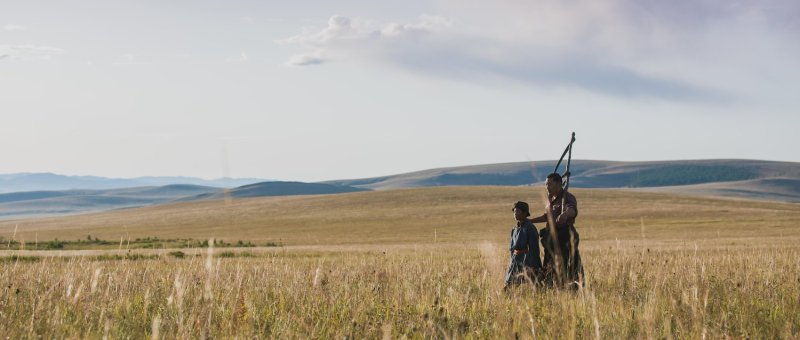
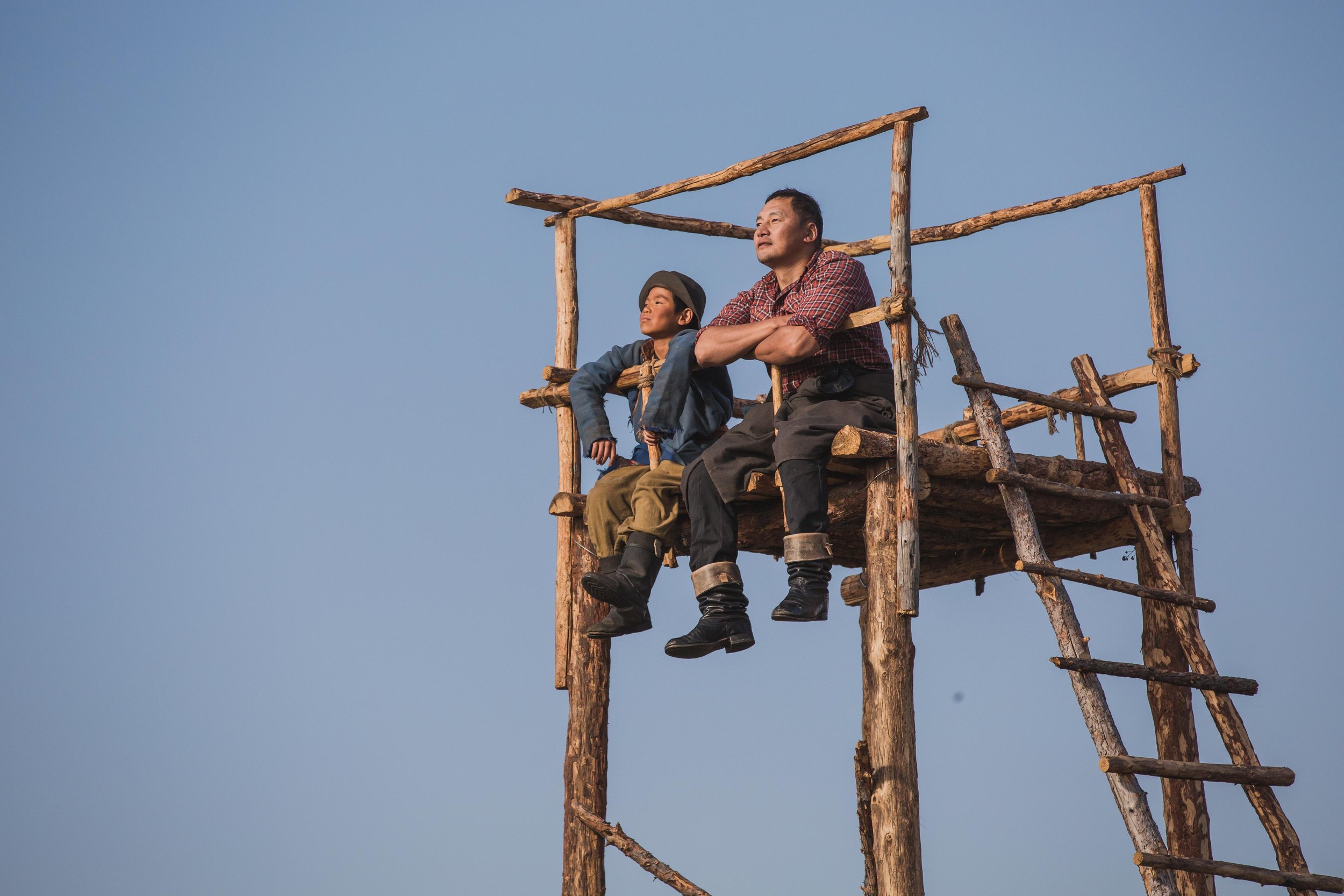
Debut directorial feature from Mongolian actor Amarsaikhan Baljinnyam adapted from a novel by T. Bum-Erden in which a chef must return from the city to take care of the harvest after his father dies.

Saturday, September 23, 5:30 PM: A Letter to the President (Roya Sadat, 2017)

Director Roya Sadat is scheduled to attend for the introduction before the film and the Q&A after.

Drama from Afghanistan following a public official who is arrested and put on death row after defending a woman accused of adultery.

Saturday, September 23, 7:30 PM: Like a Fish on the Moon (Dornaz Hajiha, 2022)

Director Dornaz Hajiha is scheduled to attend for the introduction before the film and the Q&A after. 

Iranian drama in which parents search for answers when their four-year-old son stops speaking.

Chinese Cinema Showcase

Illinois Institute of Technology (10 W 35th St, Chicago, IL 60616) Admission Free.  RSVP is required.  

Saturday, September 30, 2:00 PM: Ripples of Life (永安镇故事集, Wei Shujun, 2021)

Wei Shujun’s meta odyssey follows a Beijing film crew to a small town in rural China where everyone it seems is longing for escape. Review.

Saturday, September 30, 4:30 PM: The Best is Yet to Come (不止不休, Wang Jing, 2020)

Social drama based on the life of journalist Han Fudong who exposed the stigma against people with Hepatitis B in China.

Sunday, October 1, 2:30 PM at Claudia Cassidy Theatre: Hachiko (忠犬八公, Xu Ang, 2023) Special Encore

78 E. Washington St. Chicago, IL 60602. Admission Free. RSVP is required. Celebrating the Mid-Autumn Festival, all the attendees will receive an individually wrapped moon cake after the screening, courtesy of the Consulate-General of the People’s Republic of China in Chicago.   

The heartrending tale of a faithful dog who continued to wait for his owner at a cable car station becomes a poignant symbol for a left behind China in Xu’s Ang’s reimagining of the 1987 Japanese film. Review.

Seven Days in Heaven (父后七日, Essay Liu, Wang Yu-lin, 2010) Special Encore

Director Wang will give a pre-recorded virtual introduction to the film.

September 25 – October 1, 2023 Streaming available for U.S. views at: https://seven-days-in-heaven.eventbrite.com

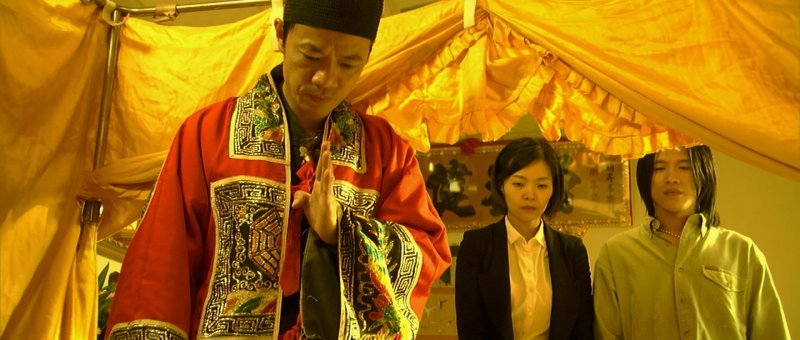
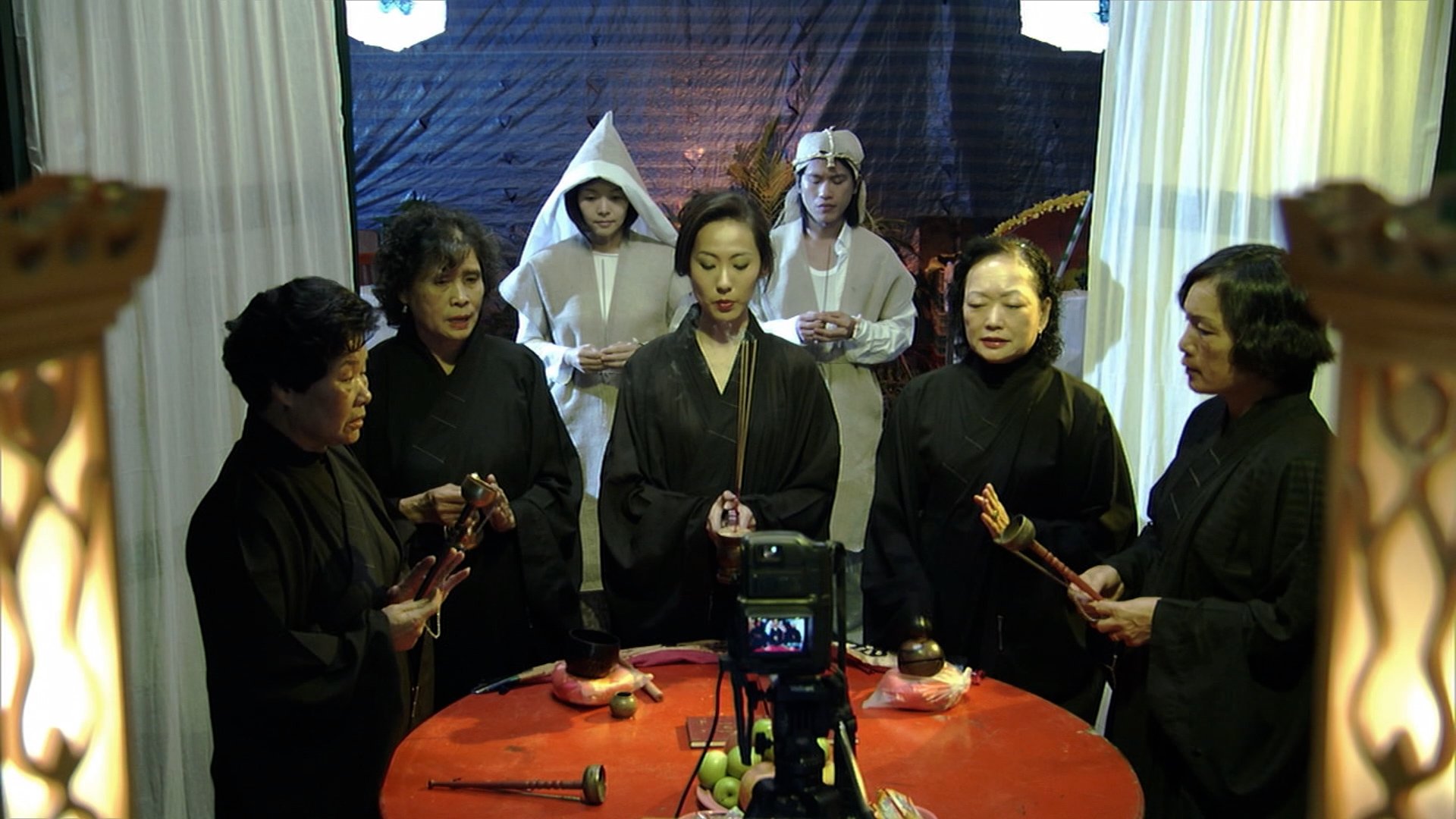
Comedy in which a young woman experiences culture shock on returning from the city for her father’s Taoist funeral.

South Korea Cinema Showcase

AMC NEWCITY 14 (1500 N Clybourn Ave, Chicago, IL 60610) 

Friday, October 6, 7:00 PM: New Normal (뉴 노멀, Jung Bum-Shik, 2023)

Anthology film featuring six interconnected tales of love and violence in post-pandemic Seoul from the director of Gonjiam: Haunted Asylum.

Friday, October 6, 9:15 PM: The Childe (귀공자, Park Hoon-Jung, 2023) Special Encore

A boxer finds himself in a precarious position after travelling to Korea in search of the father who abandoned him in Park Hoon-jung’s bloody thriller. Review.

Saturday, October 7, 2:30 PM: Drive (드라이브, Park Dong-hee, 2023)

Director Park Dong-Hee is scheduled to attend and introduce the film and do the Q&A after. 

Intense drama in which a snooty influencer falls asleep in a taxi after attending a brand launch and wakes up to discover she is trapped in the boot of a car. The driver wants a ransom, but not only that he wants her to live stream her kidnapping!

Closing Night Film

Saturday, October 7, 7:15 PM: Killing Romance (킬링로맨스, Lee Won Suk, 2023)

Lead actor Lee Sun-kyun is scheduled to attend for the award ceremony and together with director Lee Won Suk, they are doing the INTRO and the Q&A of the film. 

A once famous actress sets out to reclaim her autonomy from an abusive, controlling, billionaire husband in Lee Won-suk’s hilariously off the wall comedy. Review.

Asian Pop-Up Cinema Season 17 runs in Chicago Sept. 8 to Oct. 7. Further details are available via the official website and you can also keep up with all the latest news by following Asian Pop-up Cinema on FacebookX (formerly known as Twitter),  Instagram, and Vimeo.

In Her Room (ひとりぼっちじゃない, Chihiro Ito, 2022)

The hero of Chihiro Ito’s debut feature In Her Room ( ひとりぼっちじゃない, Hitori Bocchi ja nai) is so pathologically shy that he has become almost invisible, a ghost-like presence not fully of this world. Colleagues ignore him, taxis never stop, and restaurant staff continue their conversations as if he wasn’t even there. At one point he’s run over by a car and tells the police that the person probably didn’t see him or realise they’d hit someone. Only a mysterious woman he later describes as showing him a side of himself that even to him was unfamiliar pays him any attention but then there’s something a little bit sinister in her otherworldliness that causes us to wonder what it is she wants from him. 

Dr. Susume (Satoru Iguchi) is so awkward that he’s taken to practicing small talk with the skull he uses as a training tool at the dentist surgery where he works. He seems almost abstracted from himself, unable to relate to others because his emotions are distant from him. His mother keeps calling and asking him to come visit her because there’s something she wants to talk to him about but he brushes her off, telling her she should do whatever she likes as if disinterested in whatever it might be that she wants to say. In fact, she is the only person who seems to be able to see him, calling out to him from a car to offer him some homemade bread, but he still doesn’t really engage with her. We start to wonder if he has a problem with the other person in the car, Tomoko, a middle-aged woman who may be his mother’s partner though she too greets him warmly and is understanding of his reluctance to spend time with them.

Miyako (Fumika Baba), the mysterious woman who lives in a fantastic flat entirely covered in indoor greenery, asks Susume if he loves his mother but he deflects her question and simply says that he wants her to be happy for the rest of her life. For a time, we can’t be sure if Miyako and her wonderful apartment actually exist or are simply the manifestation of Susume’s headspace as he tries to talk through his loneliness and lack of self, only it later seems that other people see her too and in fact frequent her home much in the same way Susume does which causes him a degree of obsessive jealousy. He is particularly bothered by the presence of Yuko (Yuumi Kawai), a woman who works in a nearby grocery store and is also friendly with Miyako and similarly possessive. He later tells her that Miyako is guiding him towards the person he’s supposed to be, though Yuko isn’t so sure and suggests her existence is a little more sinister. Apparently she keeps a giant ball of hair taken from everyone she’s ever known in a hidden drawer, and then a man apparently took his own life in her apartment though Yuko refuses to share the contents of his note with him. 

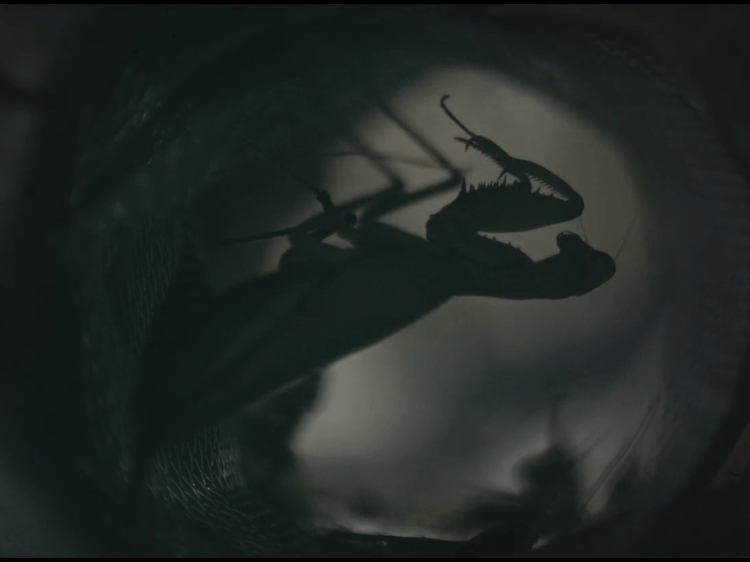
Yuko’s words contribute to a growing sense of unease exacerbated by a video Susume watches from a man who sounds like a cult leader who suggests that misfortune may be caused by magic or sorcery, leading credence to the idea that Miyako is some kind of forest-dwelling witch gently luring Susume into her trap. Soon after their relationship becomes physical, a praying mantis is seen climbing on her plants. Susume’s uncertainty is reflected in the carving he is making of Miyako’s face which gradually starts to take shape though is also in its way a self-reflection in much the same way he said that Miyako was showing him a side of himself that only she could see. When he finally delivers it to her, it’s just as blank as her expression, a smooth sphere with a vague outline of personality. She places it quietly in a shed where her various friends sometimes hide to spy on each other. 

The trio attend a weird play together in which a giraffe-man allows his community to eat him because he is a terminal people pleaser of the kind we might assume Susume to be only the play seems to arouse a flash of resentment. He tells Miyako that he thought the giraffe-man’s actions were duplicitous, that he must have been secretly confident that he would taste good and was in a sense showing off. He isn’t sure who he’s most angry with, the people that decided to satiate not their hunger but their curiosity by eating him or the giraffe-man himself for letting them do it. But Miyako replies that to her it’s quite the opposite. The giraffe-man simply wanted to be of use to those around him. A grim image of the dismembered giraffe is later echoed in that of a squashed bug, suggesting that this is what Miyako is doing to her various callers, feeding on their insecurities and leaving nothing more than a bloody carcass behind. 

Even so, Susume begins to realise that he’s being presented with a choice and decides on change, finally facing his mother and embracing her happiness along with Tomoko while expressing a desire to uproot himself to see if he’s capable of change in a different place. Adapting her own novel, Ito allows an eerie sense of mystery to remain never quite explaining the true nature of Miyako or the surreal nightmare sequence in which Susume is chased by a glowing orange entity, but instead ends on an ambivalent note at once hopeful and maybe not as Miyako carefully stores her effigy perhaps just one more trophy in a treasure trove of lost souls. 


In Her Room screened as part of this year’s New York Asian Film Festival.

Original trailer (no subtitles)

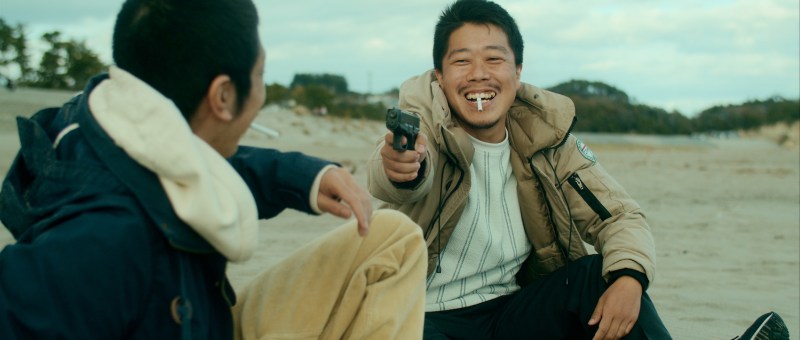
J005311 (Hiroki Kono, 2022)

If a stranger offers you a large amount of money to drive to an undisclosed location, what would you say? Hiroki Kono’s J005311 is so named for a bright new star born when two stars already dead collided which goes some way to explaining the central relationship between the two men at the film’s centre. Though they rarely speak, a kind of connection arises between them that changes them both in unexpected and unexplained ways but perhaps gives each a new sense of hope and possibility. 

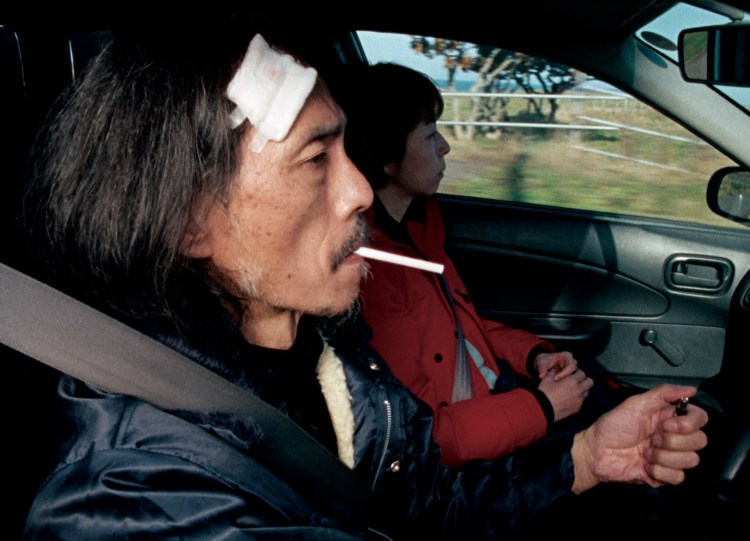
After some kind of alarming phone call, Kanzaki (Kazuaki Nomura) throws away various things in his apartment and leaves as if not expecting to return. He goes out and tries to hail a cab, but it seems as if the driver refuses to take him where he wants to go. Kanzaki slowly walks away and sits down wondering what to do next before catching sight of a young man running furiously across the road after snatching a woman’s handbag. Kanzaki wouldn’t usually be the sort to chase a thief, but tears off after the man and makes him a rather unexpected offer. He will pay him a million yen if only he’ll agree to drive him to a location near Mount Fuji around two hours away. The man is understandably suspicious and in fact tries to snatch the bag Kanzaki had the money in but is ultimately unsuccessful and agrees to the drive.

No real explanation is given for why Kanzaki is prepared to pay this large sum of money to get someone to drive him rather than taking public transport at least part of the way or booking a car through some kind of chauffeuring firm where long fares are more usual. It may be because he’s afraid whoever called him will find him on a train or bus, which would also explain why he leaves his phone behind at a service station, or perhaps he just wants company and companionship on what is looking increasingly like a final journey. Kanzaki tells the man, Yamamoto (Hiroki Kono), that he’s going to meet “a friend” which is a fairly unimaginative lie he doesn’t believe for a second though he for the moment he lets it go. Later Yamamoto notices he has a rope in his bag while we also see Kanzaki loop its strap around his neck and try to strangle himself all of which adds grim import to his final destination. 

For his part, Yamamoto is wary of the arrangement and also of Kanzaki who is awkward in the extreme. He tells Kanzaki that he can buy whatever he likes with the million yen yet when he asks what he’ll use it for he says he doesn’t know. He says he likes work that’s “easy” like construction or deliveries while evidently supplementing his income with the purse snatching which he remarks gets easier each time you do it. Several times it seems as if Yamamoto may run off with the money, or just run off leaving Kanzaki stranded, but eventually comes back if for unclear reasons that nevertheless suggest he’s begun to care Kanzaki and feels to an extent responsible for him while fearing what awaits him at his destination. 

Kanzaki too feels responsible for Yamamoto, eventually asking him to give up bag snatching as if implying that he’s better than that and ought to respect himself more. After tipping copious amounts of sugar onto his food at a rest stop, Kanzaki shoves a whole pastry into his mouth and seems as if he’s about to cry perhaps feeling rejected or that he overstepped the mark with Yamamoto before suggesting that he might want to walk the last part alone only for Yamamoto to once again return and follow him. In a sense they begin to save each other, bonding in a shared sense of despair if exchanging few words and emerging with a new sense of possibility forged by their unexpected sense of connection. Kono follows the two men with restless intensity, the camera swooping POV style or clinging tightly to them in the confines of the rented car while eventually seeming to vibrate in the poignant closing scenes. At times obscure, the film nevertheless has a wintery poetry and melancholic soul and ends on a note of silent serenity as the two men prepare to move on though who knows where to. 


J005311 screened as part of this year’s JAPAN CUTS.

You & Me & Me (เธอกับฉันกับฉัน, Weawwan Hongvivatana & Wanweaw Hongvivatana, 2023)

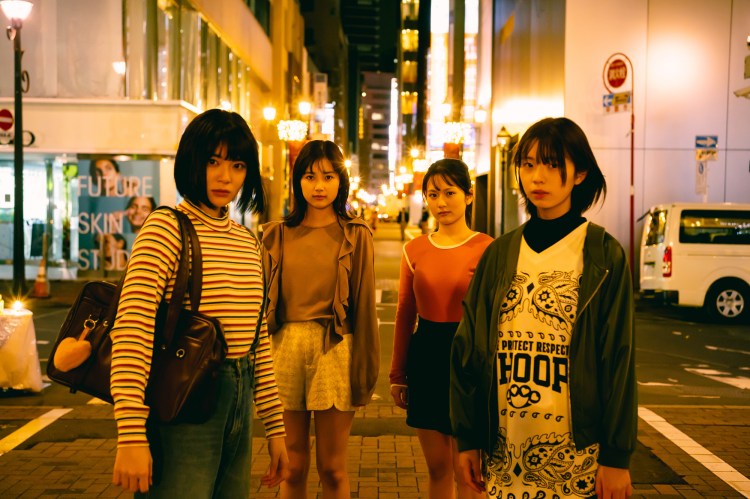
A pair of identical twins come to consider an inevitable separation on the eve of the Millennium in twin directors Wanweaw Hongvivatana and Weawwan Hongvivatana’s quirky Thai comedy You & Me & Me (เธอกับฉันกับฉัน). Set in 1999 and apparently autobiographically inspired, the film follows the two young women as they face the coming end of the world in Y2K anxiety, but for all that their world really is ending as they find themselves shipped off to the country with their mother as their parents embark on a trial separation with the looming threat of divorce. 

Amusingly named “You” and “Me”, the girls (both played by Thitiya Jirapornsilp) are all but inseparable and reflect that they are glad never to feel lonely and always to have someone to share things with. They rejoice in their sameness rather than resenting it and often use it to trick the world around them so they can get two dinners for the price of one or sneak each other into cinemas on a single ticket. They swap places all the time and occasionally sit exams for each other to maximise their individual strengths. But then, when Me sits a maths exam for You she ends up meeting fellow student Mark (Anthony Buisseret) who “shares” his pencil with her by breaking it in two. Mark then abruptly disappears, but the girls reencounter him once they go to stay with their grandmother in the country (Karuna Looktumthong) where he has also relocated following his parents’ divorce only he thinks the girl he gave his pencil to was You, not Me. 

Mark may be the first thing they can’t really “share” though in a way that’s what they end up doing. Me never tells her sister she likes Mark, and You doesn’t realise it was Me he liked at the maths exam, but gradually he starts to come between them if only in disrupting their dynamic as You starts to want more time away from her sister and Me feels as if she’s being abandoned. Half a melting ice lolly lying untouched in a glass seems to neatly sum up her views about the changing nature of their relationship as sisters. But then they’re also at the age in which their sameness might start to bother them. Me abruptly goes out and gets a different haircut, as if she wanted to play her sister at her own game and assert her individuality even if it ends their childish games of place swapping and trickery. 

The millennial apocalypse is also a symptom of their adolescent anxiety as they try to come to terms with impending adulthood and the changes that will inevitably take place in their lives meaning they too will need to split and necessarily head in different directions though it doesn’t mean they’ll be less close or connected, especially with the “Y2K safe” mobile phones their dad tragically thinks are his next big business opportunity. The film takes them from Bangkok to the country where their grandmother still speaks in dialect and in all honesty Y2K might not matter all that much even if the girls run up grandma’s tab in the local shop trying to prepare for the end of the world. The television news is full of tales of mass suicides and Nostradamus, but their problems are both bigger and smaller as they ponder fresh starts in a new century which is only really the entrance to the next stage of their lives. 

Millennial nostalgia and the laidback atmosphere of the Thai countryside lend the film a peaceful air of serenity as the girls begin shift towards acknowledging their individual identities over their bond as sisters, not exactly rejecting their sameness but adjusting it in considering the future paths of their lives. Playing both sisters, Thitiya Jirapornsilp captures a sense of what make Me Me and You You but also what they are together and the anxieties they each face as twins, something of which the directors have first hand knowledge in repeatedly insisting that in the end twins are just the same as everyone else even if the girls sometimes have trouble separating themselves from each other. Strangely poignant in its Millennial conclusion, the film nevertheless ends on a note of warmth and solidarity in which the two sisters prepare to step into the new century independently and together no longer so afraid of whatever it might bring. 


You & Me & Me screened as part of this year’s New York Asian Film Festival.

International trailer (English subtitles)
Images: ©2023 GDH 559 Co., Ltd.