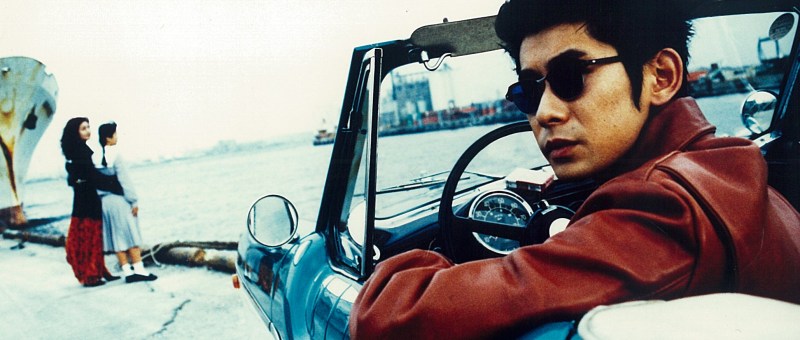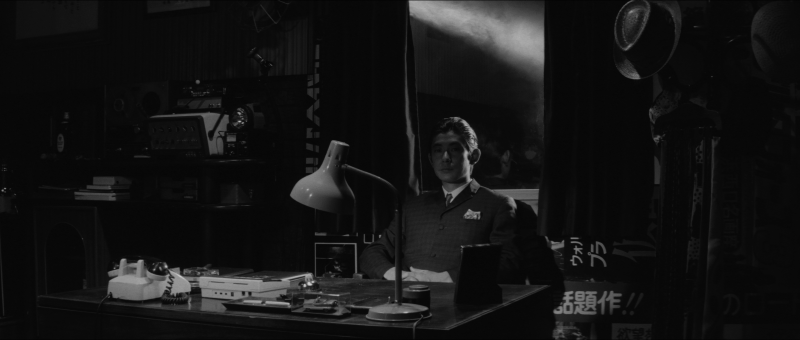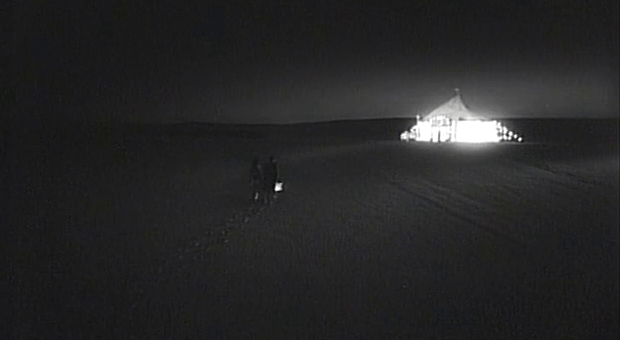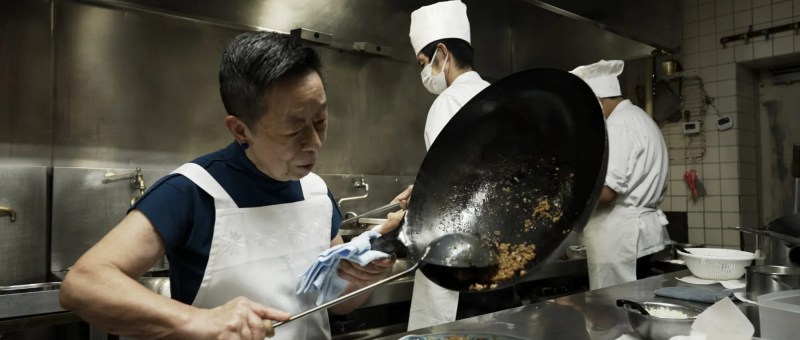
Alien’s Daydream (地球星人(エイリアン)は空想する, Yoshiki Matsumoto, 2023)

Who can really say what’s real and what’s not, who gets to decide what’s right and what’s wrong? The journalistic hero of Yoshiki Matsumoto’s Alien’s Daydream (地球星人(エイリアン)は空想する, Chikyu Seijin (Alien) wa Kusosuru) is asked each of these questions when railing against the absurdities of his latest assignment, a possible UFO hotspot in an otherwise remote area of Japan. In addition to the question of whether there is life on other planets, Ito is confronted by questions of press ethics as he begins to wonder if telling the truth is really the right thing to do.

In many ways, Uto’s (Yukichi Tanaka) problem is his rigidity. He doesn’t like injustice, so he stands up to some people bullying a homeless man but then also threatens to report him to the police pointing at the no loitering sign behind him. He something similar while visiting the space museum in the UFO town, abruptly breaking off his interview to confront a young woman and ask her if she has a ticket even though it’s not his responsibility seeing as he doesn’t work there and in fact it’s none of his business. Uto likes to think of himself as a serious journalist and and wants to do real investigations into the things he thinks matter, but is employed by a sleazy tabloid mainly interested in celebrity sex scandals and bits of weird news like the UFO town. 

That’s one reason Uto had little interest in going, but in the end doesn’t have much choice and is surprised to find there actually might be a story in it after all even if not quite the one his boss might be looking for. A local man is claiming to have been abducted by aliens and dumped in a random place some distance from where he was taken, while the girl he interrogated about her ticket, Noa, keeps making cryptic statements about “earthlings”, refers to aliens as her “people” and is fascinated by crop circles.

What he eventually discovers is that Noa may really have been kidnapped a few years ago if by a more terrestrial presence and subsequently brainwashed by a UFO worshipping cult. He realises that to some, including the girl’s mother, the stuff about aliens is a harmless delusion and blessing in disguise that prevents her from remembering what “really” happened. Uto want to write an article stating what how thinks it was, but if he does so there’a chance Noa may find out the “truth” and have her illusions shattered. He goes ahead and publishes anyway, but then realises his central hypothesis may have been incorrect and he’s fingered the wrong man. He then has another dilemma of whether or not to correct his article with Noa’s mother and friends each saying it’s better if he just lets it stand as the truth so that at least Noa won’t be branded a crazy cultist.

It turns out the local UFO lore has a surprisingly long history dating back to the Edo era which has given rise to a series of folk legends. The space museum itself is designed to resemble the pre-modern UFO and is a decidedly strange place where the manager is constantly shadowed by a man in a green alien mask.Yet what Uto is later learns is that we are all perhaps lonely aliens, each from different planets which is why we’re so different from each other. Uto himself often seems somehow alien in his rigidity and black of white way of thinking, a quality perfectly brought out by Yukichi Tanaka’s stiffness and often vacant stare. Noa asks him if he isn’t tire of living his life like that, so needlessly uptight and unimaginative and perhaps in a way he is though he soon turns the equation around on her. Dividing the film into 10 chapters each with a strange and childlike illustration, Matsumoto adds a touch of whimsical absurdity to what could otherwise be quite a dark tale. Uto may have to learn that he isn’t the arbiter of the truth, selling believable lies to a readership looking for something to make life more interesting, but is free to find the truth for himself because it is of course out there for those want to believe. 


Alien’s Daydream screened as part of this year’s Camera Japan.

Original trailer (no subtitles)

Camera Japan Announces Complete Programme for 2024

Camera Japan returns for its 19th edition in Rotterdam 26th to 29th September and in Amsterdam 3rd to 6th October bringing with it another fantastic selection of the best in recent and not so recent Japanese cinema.

Feature Films

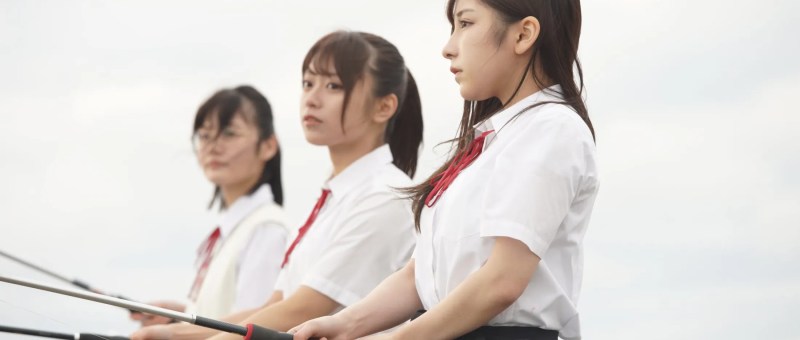
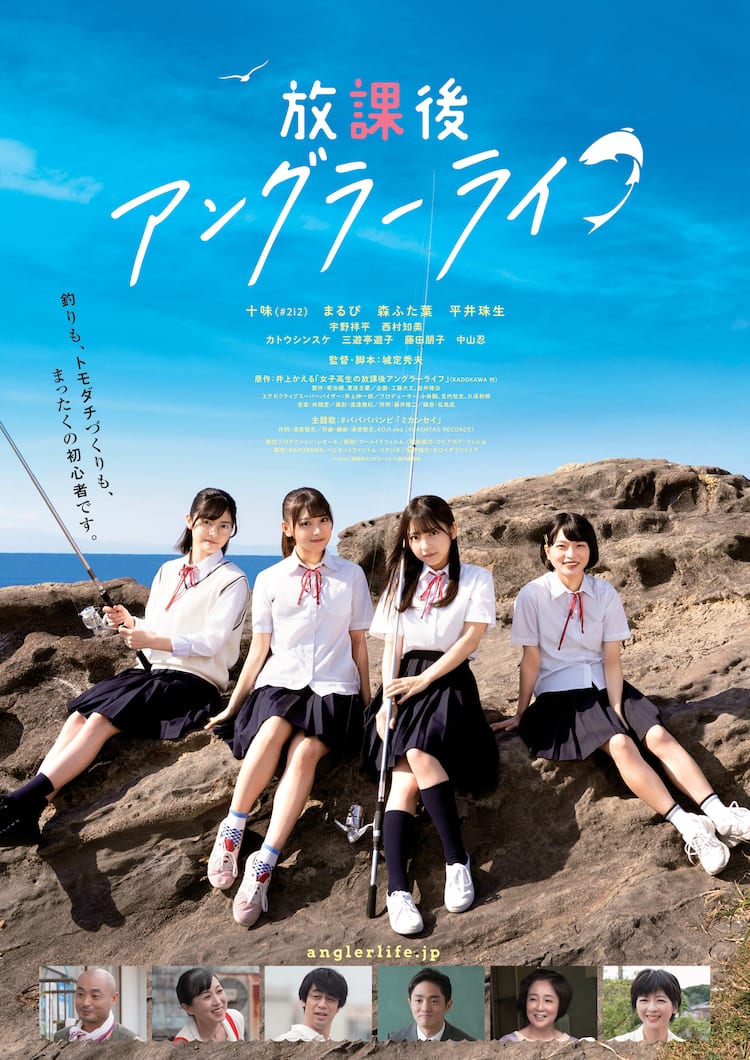
  • Afterschool Anglers Club – a bullied teen makes new friends through fishing in Hideo Jojo’s laidback drama.
  • Alien’s Daydream – surreal drama in which a jaded reporter investigates reports of alien activity.
  • All the Long Nights – mismatched colleagues struggling amid contemporary corporate culture find unexpected solidarity in Sho Miyake’s gentle human drama. Review.
  • All the Songs We Never Sang – a young woman finds herself diving into the past after receiving a less than enthusiastic welcome on visiting her mother’s island home in Chris Rudz’s gentle indie drama. Review.
  • Baby Assassins: Nice Days – the Baby Assassins try to have a nice holiday but instead find themslves facing off against a rogue hitman. Review.
  • The Box Man – those who obsess over the Box Man, become the Box Man, in Gakuryu Ishii’s adaptation of the Kobo Abe novel. Review.
  • Bushido – a stoical ronin’s peaceful life is disrupted by a face from the past in Kazuya Shiraishi’s elegantly lensed period drama. Review.
  • Confession – latest from Nobuhiro Yamashita starring Toma Ikuta and Yang Ik-june as two men hiking in memory of a late friend.
  • Desert of Namibia – a young woman struggles with the conditions of modern living.
  • Fly Me to the Saitama – From Biwa Lake with Love – Osaka is on the March in the sequel to the popular comedy. Review.
  • Great Absence – a forced reconnection with his estranged father forces a young man to contemplate the great absences of life in Kei Chikaura’s poetic drama.
  • Hoyaman – the tranquil island life of a pair of brothers is interrupted by the arrival of a mysterious woman in Teruaki Shoji’s quirky comedy. Review.
  • Ichiko – when a young woman disappears, it transpires that she never existed in the first place in Akihiro Toda’s twisty psychological mystery. Review.
  • Kyrie – musical drama from Shunji Iwai told over 10 years and starring AiNA THE END as a street musician who can only communicate through song.
  • Let’s Go Karaoke! – an old school yakuza and high school boy find themselves fighting similar battles through the medium of Karaoke in Nobuhiro Yamashita’s zany comedy. Review.
  • The Moon – a formerly successful author struggling with personal tragedy takes a job at a care home and is shocked by what she finds in Yuya Ishii’s hard-hitting drama.
  • One Second Ahead, One Second Behind – misaligned romantics eventually rediscover a long forgotten connection in Nobuhiro Yamashita’s take on Taiwanese rom-com My Missing Valentine. Review.
  • Penalty Loop – a man trapped in a timeloop of vengeance begins to realise the fallacy of revenge in Shinji Araki’s absurdist drama. Review.
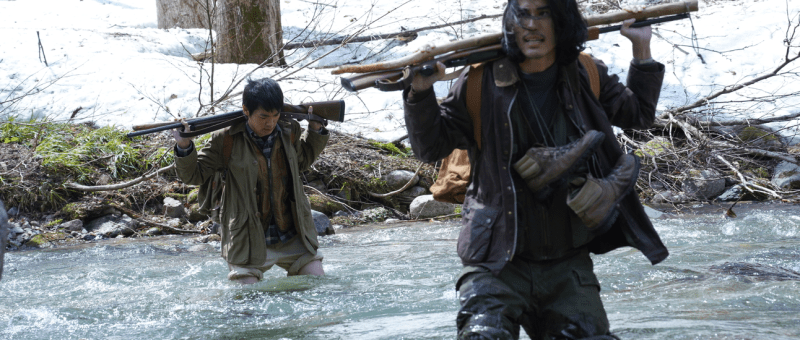
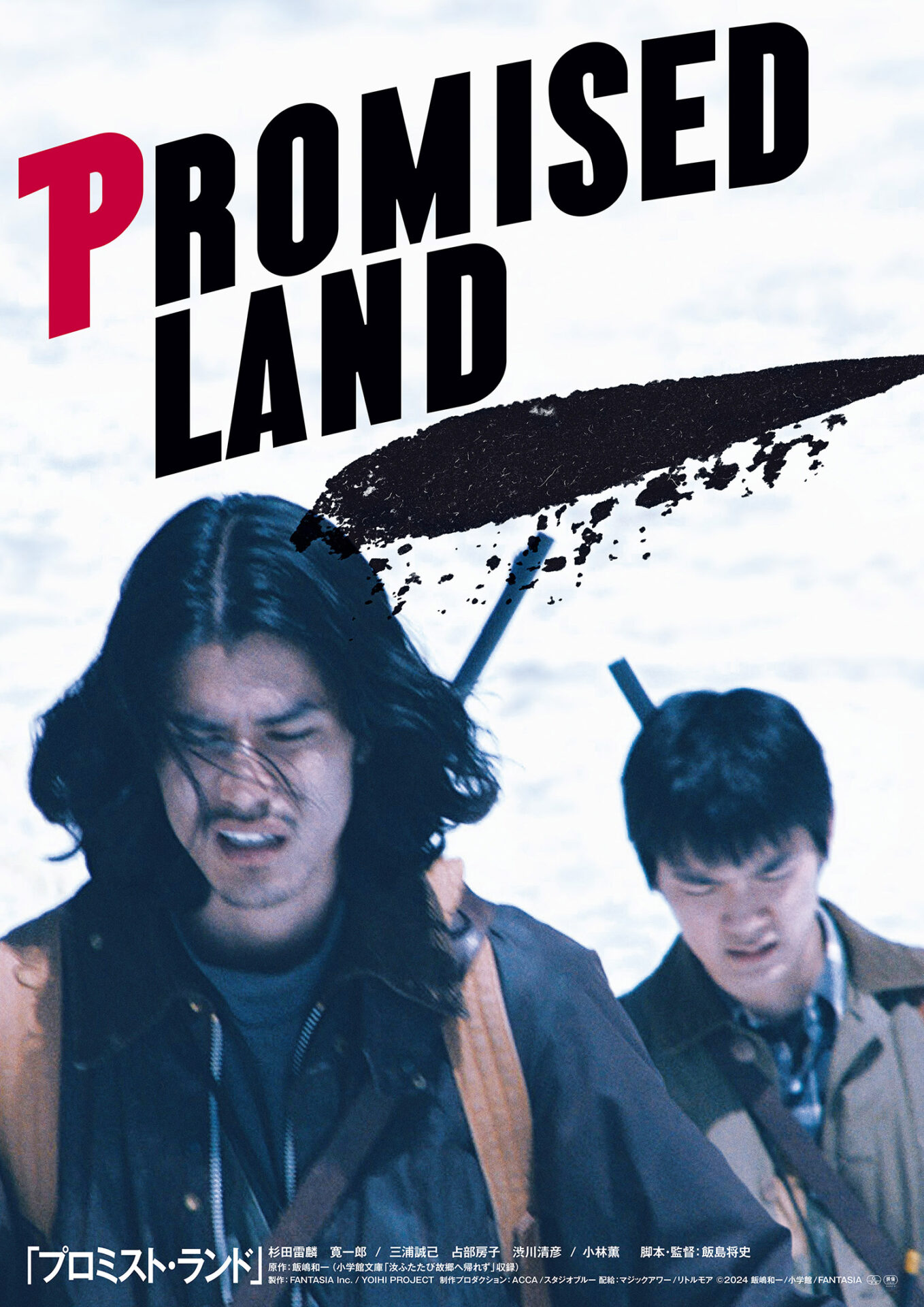
  • Promised Land – a young man takes drastic action when traditional bear hunting is called off.
  • Qualia – a timid poultry farmer’s wife begins to feel her coop’s a little cramped after unwittingly inviting her husband’s mistress to live with them in Ryo Ushimaru’s quirky family dramedy. Review.
  • Retake – a diffident teenage boy finds himself editing in real time in Kota Nakano’s movie-making summer holiday movie. Review.
  • Shin Masked Rider – Hideaki Anno’s take on the classic tokusatsu series.
  • Sin and Evil – when their friend is murdered, three teenage boys end up killing a man they assume to be responsible and then carry on with their lives only for the case to echo 20 years later.
  • Six Singing Women – a man finds himself trapped in a strange place after travelling to the mountains in the wake of his estranged father’s death in Yoshimasa Ishibashi’s surreal drama. Review.
  • Stay Mum – on returning to care for estranged father, a woman finds herself taking care of a neglected little boy in Kosai Sekine’s maternal melodrama. Review.
  • Swimming in a Sand Pool – a group of high school girls ponder the role of gender in their lives while shovelling the sand in Nobuhiro Yamashita’s charming teen comedy. Review.
  • Tatsumi – a fisherman/cleaner for a drug gang teams up with his ex-girlfriend’s sister to avenge her death.
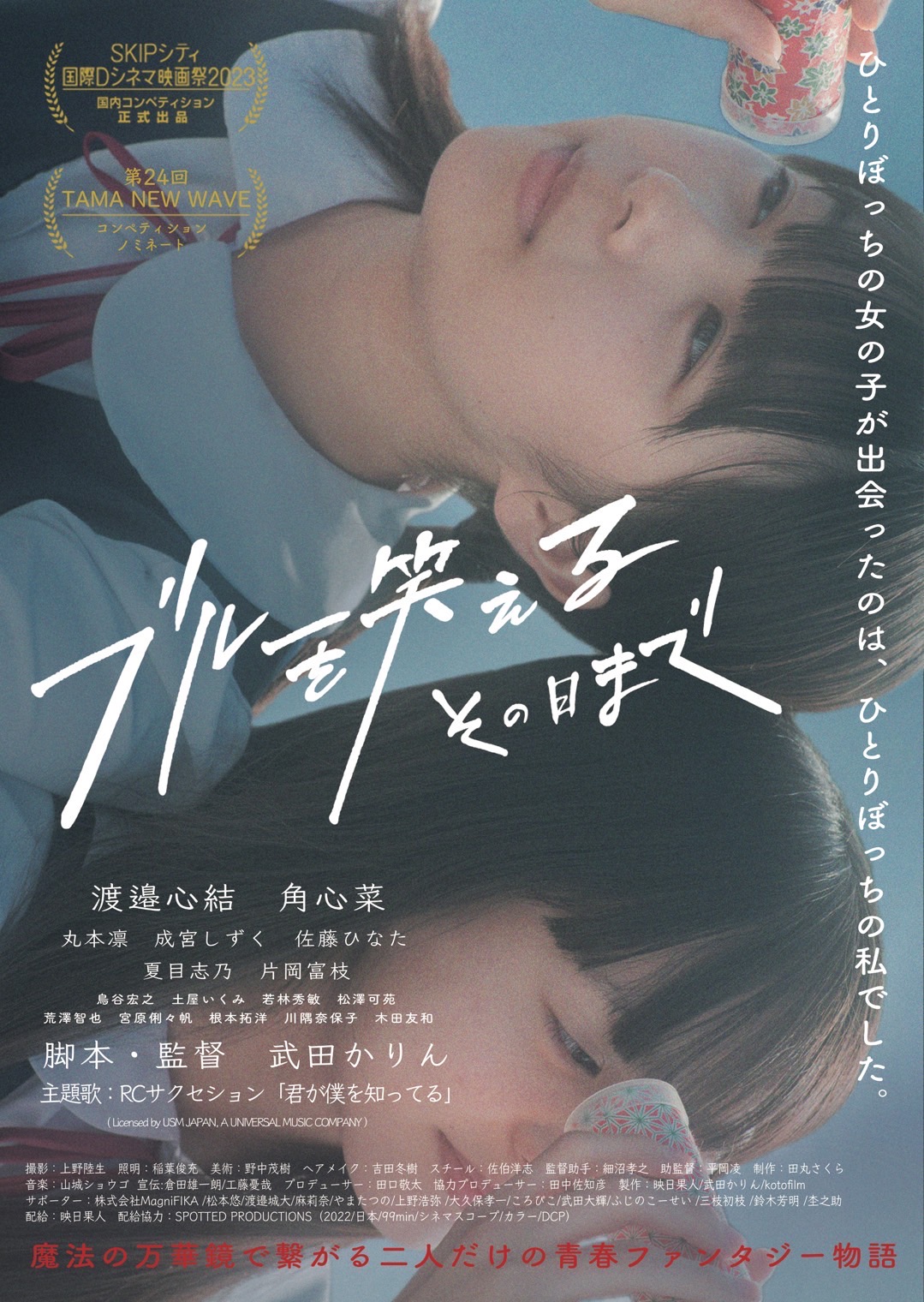
  • Till the Day I Can Laugh about My Blues – lonely young woman bonds with a mysterious girl after being given a magic kaleidoscope.
  • Worlds Apart – a young woman goes to live with her eccentric aunt after her parents are killed in an accident in a gentle drama from Natsuki Seta.
  • Yoko – an isolated woman begins to rediscover herself while hitchhiking to her estranged father’s funeral in Kazuyoshi Kumakiri’s quietly moving road movie. Review.

Animation

Documentary

Special Screenings

  • All Mixed Up – new restoration of Yasuzo Masumura’s adaptation of the Tanizaki novel Quicksand.
  • Hoodlum Soldier – first in the series of films featuring Shintaro Katsu.
  • Kisses – Masumura’s debut feature subverts the Sun Tribe narrative for sweet and charming youth romance.
  • Nakano Spy School – drama starring Raizo Ichikawa as a recruit at Japan’s famous espionage academy.
  • The Wife’s Confession – searing drama starring Ayako Wakao as a wife accused of killing her husband. Review.

Camera Japan 2024 takes place in Rotterdam 26th to 29th September and Amsterdam 3rd to 6th October. Full information on all the films as well as ticketing links can be found on the official website and you can also keep up to date with all the latest news via Camera Japan’s official Facebook pageX (formerly known as Twitter) account, and Instagram channel.

Vendetta of a Samurai (荒木又右衛門 決闘鍵屋の辻, Kazuo Mori, 1952)

During the American Occupation, period dramas were frowned upon, the occupation forces apparently fearing that they might encourage the latent feudalism in Japanese society. Released immediately before the Occupation’s end, Kazuo Mori’s Vendetta of a Samurai (荒木又右衛門 決闘鍵屋の辻, Araki Mataemon: Ketto Kagiya no Tsuji), not to be confused with the director’s similarly titled Samurai Vendetta from a few years later, is a suitably revisionist piece interrogating the legacy not only of the samurai but the samurai movie in demonstrating, quite poignantly for the contemporary audience, that the rigid and austere codes of a warrior class did nothing but create sadness which forced good men to sacrifice true friendship in service not even of an ideal but simply an agreement. 

To signal his intent, Mori opens with a bombastic sequence shot in the fashion of pre-war jidaigeki, all booming speeches and clashing swords before a voiceover cuts in to tell us everything we know of the events in play is wrong. The legends surrounding the battle at Kagiya Corner tell us that Jinza (Takashi Shimura) was a bad man, and that Mataemon (Toshiro Mifune) killed 36 that day, but in reality Jinza was kind and noble and in fact the two men were good friends while Mataemon in reality struck down only two enemies which is in any case much more plausible if perhaps less exciting. As the classic chanbara scene fades, we return to the modern city of Ueno in Iga which in some respects remains unchanged further emphasising the “reality” of the brief 17th century conflict. As we learn, a man called Matagoro (Minoru Chiaki) has poked a hole through the samurai order in killing the brother of a young man called Kazuma (Akihiko Katayama), and so a lot of people have to die to eradicate the corruption of his transgression.

Boasting a script by Akira Kurosawa, the action flips between Mataemon, brother-in-law of Kazuma, and his men waiting for the arrival of Jinza and Matagoro inside a small inn, and the circumstances which brought them to this point. Mataemon is duty bound to support Kazuma who is really just a boy forced to seek revenge because they are family though there does not seem to be much heat in his desire for justice against Matagoro. Jinza, by contrast, is positioned on the opposite side solely because he is affiliated with a high ranking Hatamoto who is protecting Matagoro. Yet the two men are good friends each resigned to their fates and in full knowledge of how the samurai world works. The have no quarrel with each other, but are forced into mortal combat because of a complex network of loyalties and obligations that can only be satisfied with blood. 

“What is the meaning of this violence?” an imperious official asks, receiving no answer only a mild plea for a little more time. “Being a samurai, what a funny thing,” Mataemon laments to himself reflecting on the fact he must now kill or be killed by his friend for no real reason but simply because things are the way they are. Jinza meanwhile agrees, “Being warriors, what a misfortune,” as the pair calmly discuss the inherent hypocrisies which define their lives wherein all that really matters is one’s proximity to the shogun. That’s one reason the nervous Mago (Daisuke Kato) has joined the mission for revenge, his loyalist father a former tutor to the lord and keen to show their fealty but also hoping to advance their fortunes through a successful vendetta. 

Mago isn’t the only one who’s scared. The inn keeper is visibly shaking. He didn’t really want to be ground zero for a samurai duel today and is presumably worried not just for his safety but for the repercussions of offending his guests and damage to his property. A crowd gathering around the fighting, which includes the wealthy merchant brother-in-law of Matagoro who declared himself unafraid of a few rural bumpkin samurai, remarks on the smell of blood in the air seemingly both horrified and excited by the spectacle though even that is thin on the ground. No grand duel, Mataemon merely strikes his friend down before the battle begins, thereafter coaching the young Kazuma to overcome his fear and claim his revenge despite the bloody ugliness of the task. Yet in the end all there is is fear and futility, along with still more duty and the promise of more blood to come.  


Detective Conan: The Million-Dollar Pentagram (名探偵コナン 100万ドルの五稜星, Chika Nagaoka, 2024)

Now a sprawling multi-media franchise, Detective Conan began with Gosho Aoyama’s manga which published its first instalment in 1994 and is still going strong 30 years later. The series was released in the US in the 2000s under the name Case Closed and in a decision which was perhaps more common then than today anglicised all of the character’s names and settings (the Japanese publisher then began releasing its own English language translation of the manga maintaining all the original Japanese names and plot details). Meanwhile Detective Conan remains hugely popular across Asia and regularly tops the Japanese box office with the annual release of a feature film revolving around a major case for Conan in addition to the ongoing anime and manga.

Which is all to say it has a very well developed universe and vast cast of characters which weave in and out of Conan’s various adventures. The main thing to note about Conan himself, which is explained very briefly in a short introductory sequence to the movie, is that he’s actually a 17-year-old high school detective but his body was shrunk to the size of a small child when he was drugged by the mysterious Black Organisation after witnessing to of their agents getting up to something shady in a park. Only a handful of people know his true identity while he often works with the police solving crimes, and is common with Japanese crime fiction more often than not locked room mysteries.

The Million-Dollar Pentagram (名探偵コナン 100万ドルの五稜星, Meitantei Conan 100-man Dollar Michishirube), the 27th Conan movie, is somewhat different in this regard as it’s more of a treasure hunt in which Conan (voiced by Minami Takayama) and his associate Heiji (Ryo Horikawa) must attempt to figure out the mystery of some missing treasure which might have something to do with a pair of swords stolen by one of Conan’s arch nemeses, Kid the Phantom Thief (Kappei Yamaguchi). Like many of these kinds of stories, the mystery turns on historical detail in this case stemming back to the Meiji Restoration and legendary Shinsengumi boss Hijikata Toshizo, if by way of a long-dead industrialist who got rich quick during the pre-war goldrush in Hokkaido. Some of his estate apparently went missing after his death and now his grandson, who’s messed up the family business, wants to find it and so does Conan but for slightly different reasons. In any case, no one even knows what the treasure is and they may be disappointed when they find out especially as it might not show grandpa Onoe in a particularly good light. 

There is undoubtedly quite a lot going on with a prominent subplot focusing on Heiji’s crush on love interest Kazuha (Yuko Miyamura) and his rivalry with Kid the Phantom Thief with his big plan to finally confess his feelings aligning with the climax of the mystery taking place on Mount Hakodate. A port town in Hokkaido, Hakodate has not often been well served by cinema often appearing in indie films such as And Your Bird Can Sing, Sketches of Kaitan City, and Over the Fence as a moribund post-industrial centre the protagonists can’t escape, but here seems pleasant and relaxed as a kind of Northern Kyoto rich in period history. The film’s success has apparently spiked a mini tourist boom in the area.  

The filmmakers apparently did not want to destroy any of the town’s architecture even in animation, hoping to make the most of the city’s famous night scenes and beautiful scenery. Nevertheless, there are the usual series of impressive action sequences including one of Conan riding a jet-powered skateboard not to mention taking out a suspect with a football while Heiji fights another on the wings of a biplane. As for the mystery itself, it’s not the kind where the audience will be able to work it out seeing as it depends on very specific cultural knowledge that even Conan needs a hint to key into but eventually broadens into something more international involving arms dealers and corrupt businessmen. Long-standing fans of the franchise will want to stay put for a very interesting post-credits sequence and even newcomers will get a kick out of an unexpected punchline to the film’s closing moments. All in all another classic case for the Conan team peppering its key mystery with the humour and warmth the franchise is known for.


Detective Conan: The Million-Dollar Pentagram opens in UK cinemas 27th September courtesy of CineAsia.

Original trailer (Traditional Chinese & English subtitles)

The Wind Blows Twice (風ふたゝび, Shiro Toyoda, 1952)

Struggling with the end of her marriage, a young woman finds herself listless yet considering new possibilities in Shiro Toyoda’s The Wind Blows Twice (風ふたゝび, Kaze Futatabi). Adapted from a serialised novel by Tatsuo Nagai, the title is echoed in a remark from one of two potential suitors that youth is something that can come two or even three times so as long as you remain young at heart. They are each, however, each currently frozen and unable to move forward in the wake of their personal traumas. 

Kanae (Setsuko Hara), it seems, married for love but her husband has apparently been arrested for some kind of corruption. She has severed all ties with him and returned to the house of the uncle and aunt who raised her after her mother’s death where she helps out in their shop. Meanwhile, she learns that her semi-estranged father Seijiro (Ken Mitsuda), a university professor who lives in Sendai and hasn’t been in contact despite his daughter’s difficult circumstances, collapsed on the steps of the local station and is being cared for by a former student, Miyashita (Ryo Ikebe). She travels to look after him and becomes closer to Miyashita, who currently works as an auctioneer and has dreams of becoming a greengrocer, but is perturbed to learn that her father is a suspect in the theft of 10,000 yen from the wallet of a wealthy man, Michihara (So Yamamura), who carelessly left in the toilet and discovered the money missing when he went back to pick it up. Worried that the rumour may damage her father’s career, Kanae goes to apologise and find out what’s going on but Michihara tells her not to worry and it was his own fault anyway but his sudden magnanimity seems suspicious. In any case, Kanae later tells her friend Yoko that Michihara frightened her, also remarking to Miyashita that she felt as if she managed to slip away from him as she made her escape.

Though he later turns out to be sympathetic, Michihara appears as the villain of the piece. He thinks Kanae reminds him of his late wife and intends to ask her to marry him one the seventh anniversary memorial service is concluded. He starts using his wealth and power to gently interfere in her life, setting up a job for her on hearing that she’d been looking for employment and later approaching her father with the idea of investing in his research into the use of fluorides in the production of resin. Despite her initial dislike of him, Kanae goes along with everything and is soon sucked into Michihara’s world while otherwise wilfully oblivious of his feelings for her (which she does not share) and hoping he’ll help her convince Miyashita that he ought to return to science and help her father with his research which would obviously pave the way for them be together romantically.

The problem is that like Kanae Miyashita has become frozen inside, scarred by his wartime experiences and soured on science. Yet just as staying with him restores Kanae’s spirit and encourages her to want to look for work and find purpose in her life, her influence on him reawakens his passion for scientific research only he is less happy about it than she was. The interest that’s sparked in him ironically lies in the frozen north, travelling to Hokkaido to see an old friend and researching how to prevent potatoes from freezing in order to improve people’s quality of life. In essence it seems as if the futures they may want are too different. Now much more cheerful and energetic, Kanae genuinely enjoys her work in broadcasting and is less than keen to give it up and move to rural Hokkaido to help Miyashita study potatoes while secretly hoping she can convince him, with Michihara’s help, to become a respectable academic like her father and live a nice middle class life researching things that are more useful to industry and big business than to regular people.

Miyashita is disinclined to do so. He bounds straight off a train to see her with three day stubble from the journey, only to be disappointed witnessing in her in an elaborate kimono with her hair constrained in traditional style while Michihara is there waiting to see him to discuss a job offer from Seijiro. It’s at this point that he seems to decide his romantic desire for Kanae is most likely futile and she has chosen the rarified world of Michihara rather a rustic and homely life with a man like himself. Of course, this makes it sound as if Kanae doesn’t have much choice at all herself and to an extent she doesn’t or at least she feels backed into a corner while her aunt pressures her to remarry, unbothered to which man but excited about the proposal from Michihara because it means she will enjoy a life of uninterrupted financial comfort.

Having chosen her own suitor and seen things go drastically wrong also increases her aunt’s conviction that she shouldn’t make the same mistake again while she too is perhaps wary of remarrying. In any case. Kanae seems to want work and enjoys her job in broadcasting as much as she’s naturally drawn to Miyashita who brings out in her a greater desire to live while Michihara only seems to want her to be a shadow of his late wife suggesting that to marry a man like that may itself be a kind of death sentence. To that extent, the choice Kanae makes involves a predicable sacrifice, but still in any case it is a choice that she makes for herself to strike out for happiness and fulfilment of her own choosing rather than allow herself to be railroaded by conventionality unable to express her own desires.


Kalanchoe (カランコエの花, Shun Nakagawa, 2017)

The truth is, most people genuinely mean well but they often make mistakes. They make them because they don’t think things through, fail to consider perspectives outside of their own, or act on assumptions that they later realise were incorrect (or tragically do not). Most people will come to understand where they went wrong and resolve to do better in future, but you don’t always get a second chance and a momentary lapse in judgement can do untold and sometimes irreparable harm.

Perhaps that’s just a lesson you learn as a part of growing up, but it doesn’t make it any less painful or indeed shocking at least for the heroine of Shun Nakagawa’s 40-minute mid-length film Kalanchoe (カランコエの花, Kalanchoe no Hana). The film’s title refers to a bright red plant that in the language of flowers means “I will protect you.” But protection can be a double-edged sword, and Tsuki’s (Mio Imada) later attempt to do just that for her friend seriously backfires well meaning though it may have been. The same is true of an ill thought out decision by the school nurse to give a mini lecture on LGBTQ+ issues to Tsuki’s class when their English teacher’s off sick. Because it was only their class that received this talk, some of the students assume it must mean that one of them is gay and begin a kind of witch-hunt trying to figure out who it might be which is completely the opposite of the reaction the talk was supposed to provoke.

Of course, the nurse meant well but it probably should have occurred to her to make sure the class wasn’t singled out and support was available for any students who might be experiencing anxiety surrounding their sexuality or gender identity rather than doing something essentially superficial to make herself feel better. Though most of the students are indifferent to the talk, the class clown bears out the latent homophobia of the current society in badgering the nurse to find out if there are any gay people “or other creeps” in their class while vowing to root them out and making it a kind of game to catch one. The girls, meanwhile, engage in some aggressive heteronormativity talking about boys and pretty much making it impossible for any of them to declare themselves for whatever reason uninterested. 

As it turns out, one student overheard the conversation in the nurse’s office that provoked the talk and knows that one of the students is indeed gay, perhaps inappropriately telling Tsuki who it is in an effort to relieve the burden on herself of carrying this explosive information. When Sakura (Arisa), the student in question, begins to tell Tsuki that she’s gay, Tsuki firstly reacts well patiently waiting rather than admit she already knows though in the end Sakura cannot go through with it despite having said that Tsuki was the person she most wanted to understand. Sakura had admired Tsuki’s red scrunchie that she herself had worried was too bold, prompting her to turn over in her hands and consider it as if thinking over how she intends to react to this information and how she herself may or may not feel.

But on her second opportunity she missteps. Fearing Sakura has been outed, she loudly and clearly says it isn’t true even though she knows it is in a mistaken attempt at “protection” as if she were clearing her name which is also an expression of her own latent belief that it being true is in someway bad. In its way, it echoes the fateful moment in William Wyler’s The Children’s Hour in which Shirley MacLaine tells Audrey Hepburn there’s some truth in the rumour, but Audrey Hepburn tells her she’s lost her mind and though the outcome may not be quite as devastating it’s still a crushing blow with the brutal conclusion implying nothing more than Tsuki will have to live with her bad decision and the pain it caused for the rest of her life. Nakagawa skips between idyllic scenes of the girls on a bike, head gently resting on a shoulder, and scenes of regular high school life but ends on a note of quiet tragedy that feels somehow casually cruel.


Kalanchoe is available to stream via SAKKA from 20th September.

A Family (ヤクザと家族 The Family, Michihito Fujii, 2020)

“No one can survive as a yakuza in this world” according to another orphaned son playing the long game of a crime adjacent existence in Michihito Fujii’s melancholy gangster drama, A Family (ヤクザと家族 The Family, Yakuza to Kazoku The Family). The yakuza, or at least yakuza in the movies, has long been a relic of the Showa era rendered increasingly irrelevant in a society no longer in need of its dubious claims of protection. In truth, it’s hard to mourn the passing of organised crime, but Fujii at least finds a kind of pathos and infinite sympathy for these men for whom the gangster brotherhood took the place of a family even if one with a self-destructive legacy. 

To begin with, petty street punk “Li’l Ken” (Go Ayano) wants nothing to do with the yakuza, seemingly the only guest at the funeral of the drug dealer father he resented other than a corrupt cop from the organised crime squad, Osako (Ryo Iwamatsu), who expresses regret that had he simply arrested him perhaps Ken’s father would be still be alive. Visiting another “familial” environment, a Korean barbecue run by the maternal Aiko (Shinobu Terajima) herself the widow of a gangster currently with a baby on her back, Ken gets himself noticed by local mobster Shibasaki (Hiroshi Tachi) by taking on some punks who stormed into the restaurant and attacked his guys. Explaining that his guys don’t associate with drugs, Shibasaki offers him a job which he refuses but having his card in his pocket literally saves his life when he’s pickup by rival gang leader Kato (Kosuke Toyohara) after having stolen and then destroyed some of their stash after stumbling across a drug deal. The course of Ken’s life is set, he joins the Shibasaki gang along with his two delinquent friends and accepts Shibasaki as his “oyabun” or “father”. 

In Shibasaki, Ken finds a father figure more palatable than the one he lost. As in many a yakuza movie, the Shibasaki clan is positioned as “good yakuza” of the old school kind who believe in things like duty and honour and are apparently pursuing the path towards becoming “true men”. The rival Kyoyo, by contrast, are “bad” new yakuza who no longer play by the old rules and make their money through destructive vices such as drugs. The expected turf war does exactly materialise though the uneasy truce between the rival gangs becomes increasingly strained as the economic situation of millennial Japan begins to shift, the local town council apparently set on demolishing the red light district as part of their plans for redeveloping the city. Kyoyo would rather take over its entirety, pushing Shibasaki to retreat in exchange for a small amount of monetary compensation while shady cop Osako tries to play the situation to his own advantage. 

Yet it’s also clear that the yakuza as an institution is on its way out. After a 14-year prison term, Ken emerges into a very different world in which organised crime has been hounded further into the margins thanks to effective, though the film would also argue inherently vindictive, legislation. No one can make any money anymore, and the slightest slip up can lead to arrest. The Shibasaki gang is now a handful of old men, most of the guys having moved on only moving on from the yakuza life is not easy as Ken’s old friend Hosono (Hayato Ichihara) explains. In order to rejoin regular society, a former yakuza must endure five years in the wilderness unable to open a bank account or get a regular job leaving them with few possibilities for basic survival that enable them to leave a life of crime. Now with a young daughter and job in waste disposal, Hosono is nervous and reticent, reluctant to be seen in public with Ken lest he be tarred with the criminal brush and lose access to the new life he’s managed to build for himself as a responsible husband and father. 

Urged by Shibasaki, Ken eventually leaves one family for another in reuniting with a woman he loved before prison who has since made a respectable life for herself as a low level civil servant but once his life of crime is exposed by a thoughtless colleague at his new job in deconstruction, he discovers that there is no place for a “reformed” yakuza in the contemporary society because in a sense there can be no such thing. Once gangster always a gangster, there is no path forward. Complaining that Osako has stolen his right to life, Ken is told only that the yakuza lost human rights long ago. 

“They’re my family. No reasons are needed” Ken replied when asked why he became a yakuza, but he continues to find himself torn between the various concepts of family and the inheritances of his two very different father figures. “Your time is over old man”, Aiko’s fatherless son Tsubasa (Hayato Isomura) tells an unrepentant Kato attempting to hang on to his territory in the face of a younger generation operating on an entirely different level, rejecting the codification of gangsterdom but seemingly embracing its romance. Tsubasa too is later sucked in by the hyper masculine revenge drama of the yakuza way, seeking vengeance for the death of his father and apparently prepared to ruin his life in order to gain it. It’s for this surrogate son, now a kind of father figure himself, that Ken will eventually make a sacrifice. A sad tale of dubious paternal legacies, frustrated fatherhood, life’s persistent unfairness, and a perhaps uncomfortable lament for a bygone Japan defined by giri/ninjo conflict ruled by manly men, the ironically titled A Family has only sympathy for those trapped by an inescapable spiral of manly violence but also reserves its respect for those who know their time has passed and elect to end the cycle in order to set their “sons” free. 


Original trailer (no subtitles)

Tokyo Sweetheart (東京の恋人, Yasuki Chiba, 1952)

It appears that even as early as 1952, some people were doing “very well, thank you” despite the suffering going on all around them. Then again, the heroes of Yasuki Chiba’s charming ensemble rom-com Tokyo Sweetheart (東京の恋人, Tokyo no Koibito) are relentlessly cheerful and likely wouldn’t use the word “suffering” to describe themselves, preferring instead to laugh at the foolishness of wealthy men and their petty squabbles while continuing to value what is honest and genuine above greed and insincerity.

At least, there’s a minor irony in the fact that Akazawa (Hisaya Morishige) makes his living selling pachinko balls, a a source of elusive hope that’s brought ruin to millions. His mistress, Konatsu (Murasaki Fujima), exclaims that when you’re doing well a ring or two is nothing, trying to manipulate Akazawa into buying a 500,000 yen diamond from the jewellers’ downstairs. Akazawa can afford to buy it, but he doesn’t really want to because he’s cheap and greedy. Later we’re introduced to a friend of portrait artist Yuki (Setsuko Hara) who does caricatures on the street corner below the office and hangs out with the three shoeshine boys opposite. Harumi (Yoko Sugi), a sex worker, has fallen ill presumably from tuberculosis. They only need 500 yen daily for her living expenses and medicine, but the only way they can hope to come up with it is by getting a large amount of people to part with a small amount of money which they are all willing to do as an act of solidarity. 

In rather farcical turn of events, the jeweller’s has commissioned a fake ring to display in the window for security purposes while they keep the real one in the safe. Konatsu suggests a complex plan to the jewellers of getting Akazawa to buy the diamond but giving him the fake which she will then return and pocket difference. Only Akazawa has the same idea, or rather he only wants to buy the fake one because Konatsu won’t know the difference and he doesn’t think she’s worth the expense of the real one. When he ends up with both rings, Akazawa’s wife, Tsuruko (Nijiko Kiyokawa), makes him give the fake one, which is actually real, to the tea girl, Tama, who wants to sell it, even if it is fake, to help Harumi not only with her illness but to escape sex work. The boys tell her she’s being selfish and naive. If Harumi had any way of escaping sex work she would have done so years ago, there’s no real hope for her now. “A shoe can be repaired,” one of the boys sighs, “but I’m not so sure about her.”

In some ways, it seems as if the genuineness of the ring is unimportant. The two are often mistaken for each other and few can tell the difference. After all, if you like it, what does its supposed authenticity matter and what does that really mean anyway? It does, however, seem to matter to Yuki who later says that she thought the film’s most genuine person, Kurokawa (Toshiro Mifune), was “gaudy and slick” when they first met because he was wearing a tacky tie pin and ring which stand out a mile to her as “fake”. Kurokawa in fact makes the replica jewellery displayed in front windows and dresses in that way as a kind lived brand though he does not necessarily approve of his own occupation. He exceeds expectations when he tracks the gang down in order to pay back some money Yuki had lent him when the conductor couldn’t give him change for his bus fare, as well as treating the shoeshine kids to ice creams and warning off the creepy yakuza type who keeps trying to bother Yuki for dates.

But the contradictions are brought to the fore when Harumi’s health declines and Yuki decides she ought to call the estranged mother to whom Harumi had written a comforting letter stating that she’d married and was living happily in Tokyo, enclosing a photo of herself and Kurokawa one of the shoeshine boys had taken on his toy camera. Yuki wants Kurokawa to pose as the husband so the mother won’t be so upset, only for him to point out that she now asks him adopt a fake persona after taking him to task for confusing people with his “fakes”. Again, this false comfort does seem to bring genuine relief to the mother even if as Kurokawa suspects she’s seen right through their ruse suggesting that authenticity of feeling is the only kind that matters.

Akazawa and his wife, meanwhile, bankrupt themselves trawling the river looking for the lost “genuine” ring sinking to all new depths of absurdity as even Tsuruko dons a diving suit and goes in to look herself. Unfortunately, all they find is a single pachinko ball. There is something quite abrupt about the sudden tonal shift from Harumi’s death bed to the gang laughing away at the foolishness of Akazawa and his wife, the boys convinced that Yuki and Kurokawa are now a couple though they never really enjoy much of a romantic resolution. Kurokawa lives a long way out of town and his home is surrounded by rubble and empty lots, signs of post-war devastation still not fully cleared away though Yuki and the boys, presumably war orphans, remain endlessly cheerful even as the extreme irony of Kurokawa’s rendition of Moon Over Ruined Castle washes over them. They do at least have each other and the strength of their community, living honest and genuine lives every day in contrast to men like Akazawa chasing pointless yet shiny trinkets and falling straight down the plughole themselves.


Luminous Moss (ひかりごけ, Kei Kumai, 1992)

At the end of the increasing surreal trial which concludes the play within a play in Kei Kumai’s Luminous Moss (ひかりごけ, Hikarigoke), the protagonist turns to the people of the court and asks them to look at him. He wants to know if they see the ring of light around his head that looks like the luminescent plants inside the cave where he spent three months or so after being shipwrecked in the middle of the war. His plea is as much to ask what would you have done and if we can ever really judge him when we ourselves have never been faced with his dilemma.

It is however a dilemma many were faced with, and one tacitly suggested in other earlier films such as Kon Ichikawa’s Fires on the Plain though at that point too taboo and painful to address openly. In the framing sequence which bookends the film, an author visits a town in Northern Hokkaido in search of inspiration and is guided to a cave, now reachable by a roadway built after the war, where luminous moss grows. The man who takes him, a headmaster (Rentaro Mikuni), also tells him of an incident which took place there in which four shipwrecked men swam to shore and took refuge within the cave. Only the captain (also played by Rentaro Mikuni) survived, making a perilous trek across the ice a few months later when his food source depleted and he was left with no other choice.

The middle of the film is presented as a flashback, but actually the play the author is writing based on the investigations of the headmaster who says that he increasingly came to sympathise with the captain because of his own experiences as a prisoner of war in Siberia. Hachizo (Kunie Tanaka), a middle-aged father to a large family who refuses to eat the corpse of the first man to die, Gosuke (Tetta Sugimoto), because he promised him he wouldn’t, describes the captain as a “resourceful man” in both positive and negative senses of the word. He assumes the captain is already calculating when the current supply will run out, and when his own body will have consumed, leaving him with a dilemma about what to do next. The captain is in no real doubt about the necessity of eating Gosuke’s flesh and feels no guilt about it, after all he died of natural causes after consuming seawater and is now, in the captain’s view, simply meat so not eating him is just a pointless waste. Perhaps the situation would be different if he had killed him deliberately in order to eat him, but on the other hand it would not really be advantageous to do so given that the captain’s end goal is surviving until the end of the winter when it will be possible to return to the mainland. Thus he waits for his men to die and leaves the rest up to fate. 

The situation only comes to light when a wooden box is washed to shore containing the bones of Private Nishikawa (Eiji Okuda), whom the captain did actually kill but accidentally while he was trying to commit suicide so that the captain would not be able to eat him. Nishikawa is originally a thorn in the side to the stranded men, a brainwashed militarist who insists they must survive out of loyalty to the emperor. He refuses to eat Gosuke’s corpse on moral grounds, but is eventually unable to resist unconsoled by Hachizo’s well-meaning advice that he should tell himself he did it for the emperor. Knowing that he did it solely for his own survival shatters his illusions of himself as a loyal subject and fractures his sense of identity. He cannot live with himself having eaten human flesh, while as the captain says those who were going to die were always going to while those who must survive must to everything to do so. 

Thus at his trial, in which he appears to have lost his mind, he stresses that though he does not object to the legal process or its consequences he will not feel himself to have been judged by the prosecutor (Hisashi Igawa) as he has never eaten human flesh nor had his own flesh eaten. While in the cave, Hachizo had claimed to see a glowing ring around Nishikawa’s face which he attributed to a folk belief that such a ring resembling the green glow of luminescent moss was a signifier of his guilt visible only from a certain angle and for a short time only to those who look for it. It’s this ring that captain asks others to look for at his trial, to show him the signifier of his own guilt so that he may himself accept it. But then he may actually have a point that those who have never experienced what he has experienced are incapable of judging him. At the critical moment, the trial is interrupted by an air raid, there after becoming increasingly surreal as the location is shifted back to the cave as if it were all taking place within the captain’s mind. 

The prosecutor tries to attack him for attempting to blame it all on nation and society, suggesting that his actions have disgraced all of Japan and brought shame on the emperor about whom the captain makes an inappropriate remark suggesting that the emperor too is human and merely “enduring” his circumstances. Pressed to explain himself, the captain only says that he is “enduring” many things and that during his time in the cave he simply “endured”, doing what seemed to him the only thing he could do. The prosector points out that Hachizo refused and chose death, while Nishikawa attempted suicide to atone for his actions, asking what right the captain had choose survival but the only ones who can really judge him the three men he cannibalised each of whom appear as (almost) silent ghosts whose judgement cannot be interpreted. 

Though the film is not as visually striking as others in Kumai’s earlier career, he succeeds in conjuring a sense of primeval eeriness in the swirling mists and oddly shaped icicles of the cave while avoiding any sense of gore in the act of cannibalism itself which might otherwise unbalance the ethical dimensions he wishes to address. In the closing sequence, both the writer and the headmaster are positioned behind the bars which now protect the moss as if this kind of primal impulse could really be restrained or tempered by our civility. After the death of Gosuke and given the objections of the other two men, the captain suggests waiting a day or two to see how long their “human feelings” could hold in the face of their survival, the answer perhaps being less than you’d hope and about as long as you’d expect.


In the Distance (距ててて, Saki Kato, 2022)

Can two people who have completely different outlooks and ways of living learn to get along and eventually become friends? A pandemic-era dramedy, Saki Kato’s In the Distance (距ててて, Hedatetete) asks just this question when two women are unexpectedly forced to co-exist on a greater level after their roommate is suddenly stuck abroad. A series of surreal adventures might leave them with no option other than to confront their differences, but also shows them that difference can be complementary rather than disharmonious. 

The main issues between Ako and San are those which are common to any house sharing arrangement particularly if the people involved did know each other well previously. Ako is an aspiring photographer who sees part-time work as a necessary evil but continues to struggle amid the vagaries of the covid-era economy. She is neat and tidy and likes the house to be in order. San, meanwhile, is picking up most of the rent and has a job which has not been too badly affected by the pandemic. But she’s also a total mess when it comes to her share of the housework and has an annoying habit of picking up everyone’s post and stuffing it somewhere in her room without letting her roommates know a letter has come for them. Obviously, this is also an invasion of privacy on top of simply being annoying so Ako’s irritation is understandable but she has a kind of animosity towards San simply for being what she sees as a boring wage slave while she’s just slumming it until she gets a break with her photography.

But then again, San is “artistic” if in a problematic way in that her accordion playing has caused complaints from neighbours but when their property manager comes to have a word with them he ends up bringing his ocarina to join in the fun. San vents her frustrations to a friend, Tomoe, who has a similar problem of her own in that she’s in the process of breaking up with her boyfriend because they keep disagreeing over trivial things like brands of rice or misaligned printing on greetings cards. They only talk to each other in terms of metaphor with Tomoe apparently sick of their mismatched pairing and hoping to find a new partner with more common interests while the boyfriend seems near distraught by the thought of the relationship ending. 

Ironically it’s San who points out their relationship may be fairly complementary and it’s more the case that they can get along together because they are different yet she still struggles with her relationship with Ako whom she finds uptight and pretentious. Ako, meanwhile, is having a strange encounter of her own with a teenage girl looking for a misdirected letter presumably spirited away by San. She claims not to have a phone or use a computer and implies that her mother is very strict, though when she actually arrives at the house she’s incredibly nice and even cooks a hearty meal though there is something a little sinister in her manner lending the pair a kind of supernatural quality like something out of a fairytale. 

In any case, a misplaced keepsake eventually prompts a confrontation between the two women that allows them to clear the air and find a way to work together. Turning somewhat surreal in its final section, the film hints at a transportational quality of their new alliance that drops them in a new and unfamiliar place with only each other to rely on. The lesson seems to be that sharing an environment necessarily gives rise to various interpersonal issues which can be dissolved while outside of it, and that even if two people seem completely incompatible they can still find common ground and learn to get along especially against the stressful backdrop of a global pandemic in which enforced isolation can exert additional pressure on an already strained relationship just when mutual cooperation becomes an absolute necessity. Filmed with everyday naturalism and a surrealist, deadpan humour Kato’s indie dramedy hints at the strangeness of the ordinary but also discovers the small moments of unexpected connection often brokered by casual misunderstanding.


Original trailer (no subtitles)