Cobweb (거미집, Kim Jee-woon, 2023)

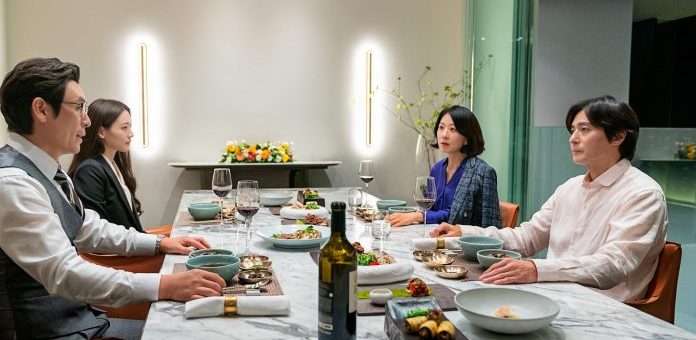
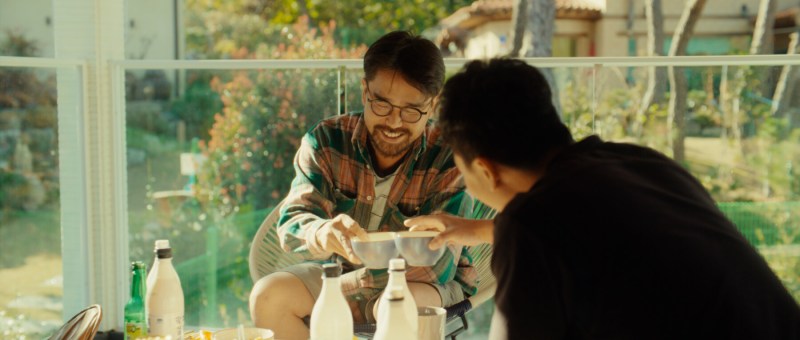
An insecure filmmaker becomes entangled within the movie in his mind in Kim Jee-woon’s homage to golden age Korean cinema, Cobweb (거미집, Geomijip). The film has caused some controversy with the family of director Kim Ki-Young attempting to file an injunction to prevent its release complaining that it shows him in a bad light, which is one reason earlier prints of the film listed the protagonist’s name as “Kim Ki-yeol” while it has now been changed to simply “Kim Yeol”. Kim Jee-woon argues that the character is not intended to represent Kim Ki-Young but is an amalgam of various directors of that time, yet it is true that his filmmaking has more than a little in common with that of the late director of The Housemaid.

Another reason they may have been upset is that the film turns on a tragic studio fire that cost the life of a director while Kim Ki-Young himself really did die in a house fire though 20 years later at the age of 78. Meanwhile, the director who dies in the studio is clearly modelled on Shin Sang-ok. The actor who plays him (Jung Woo-sung) is styled to look exactly like Shin who often appeared wearing sunglasses. The film’s Shin Sang-ho (Song Kang-ho) is an example of an artist who gave all of himself for his art and then was quite literally consumed by it, stepping into the flames to get the perfect shot while burning with artistic passion. 

Kim Yeol (Song Kang-ho) by contrast can only watch. He’s hassled by some film critics in a diner who call him a “trash” director while suggesting that only his debut was any good and that was probably because it was Shin Sang-ho’s script though Kim Yeol is forever telling everyone that he really did write it himself. They ask him if he is still a servant in Shin’s house, a question that deeply wounds him not least because he has become the inheritor of Shin’s production company but struggles to emerge from his shadow. 

These themes of servitude and oppressive hierarchies are expressed through the film that Kim Yeol is making, itself titled Cobweb, which he has a sudden urge to reshoot in order to make it a “masterpiece” and prove that he is more than just a hack director of “trashy” genre films. The problem is that in the authoritarian 70s in which the film takes place, Korean cinema was constrained by an ever tightening censorship regime which prohibited any criticism of the government and required that films push conservative moral messages. Kim Yeol wants to take his conventional melodrama in which a young woman takes her own life in sacrifice for her family, and turn it into a story about a “modern woman” who refuses to do so. The wife, Mi-ja (Im Soo-jung), will now be a woman plotting a slow-burn revenge against the wealthy family who callously cast out her pregnant mother who had been their maid eventually teaming up with a Housemaid-esque factory girl who had given birth to her husband’s child, along with a former servant turned forest-dwelling hunter. 

Getting that past the censors might be difficult, even if they weren’t already on high alert after finding out about Kim Yeol’s unauthorised changes to the script which had already been passed. Kim Yeol is confident he can get it all shot within two days, but his cast aren’t very happy about being brought back or about the new direction of the film. “Why is it all so corny and overblown?” an exasperated veteran actress sighs unconvinced by Kim Yeol’s “vision”. Fiction and reality are increasingly blurred. The leading man really is having an affair with the woman who plays the factory girl who is secretly pregnant, a huge scandal in the waiting in the stringent 70s society where adultery is a criminal offence. A method acting policeman claims he has a prison cell in his home and spies on the illicit couple in noir fashion making little notes in his notebook. Kim Yeol meanwhile is so wrapped up in the film that he answers the phone on set rather than the one on the lot which is actually ringing. At a climatic real life moment, it’s the music cue from the melodrama which finally breaks in.

There’s a striking contrast between the full colour set design as we see it and the way it appears in the high contrast black and white of the film within the film which is full of gothic touches such as driving rain and thunderstorms not to mention film noir lighting and eerie composition. Kim Jee-woon includes a series of homages to golden age directors from the obvious nods to The Housemaid to echoes of The Devils Stairway while director Lee Man-Hee gets a name check as, perhaps ironically, a more established figure whom Kim Yeol fears his AD will leave him for.

Lee Man-Hee also had a fair amount of trouble with the censors and was actually arrested for breaking the National Security Law due to his overly sympathetic depiction of North Korean soldiers. In an attempt to get the censors off his back, Kim Yeol lies that the film is “anti-communist” while the head of the censor’s board relents because he’s just so excited about seeing North Korean spies get burned to death in Kim Yeol’s incendiary long shot. In a running gag, no one but Kim Yeol really understands the ending of the film though calling it anti-communist might be a stretch even if it might satisfy the censor’s moral concerns. In any case it remains uncertain if Kim Yeol, who has a hallucination of Shin Sang-ho giving him a fiery pep talk while hopped up on anxiety mediicine that might be destabilising his sense of reality, is really happy with his work and has finally managed to overcome his insecurity or is still entangled in Shin’s web and in the end slowly consumed by it.


Cobweb screens 13/14th October as part of this year’s BFI London Film Festival.

International trailer (English subtitles)
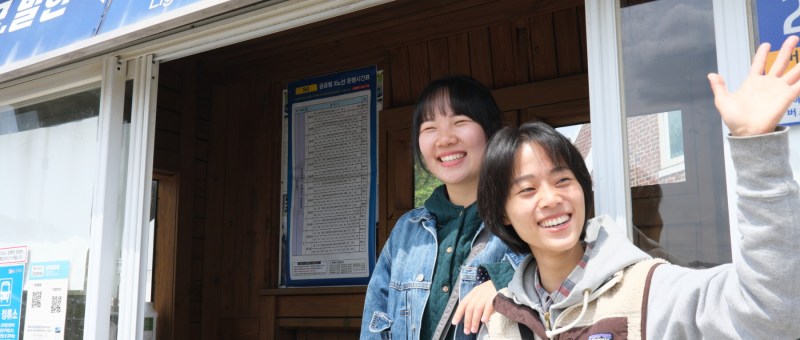
Drive (드라이브, Park Dong-hee, 2023)

“Be sincere if you want other people’s money” an influencer is told during a contract negotiation, but as she’s forced to admit in Park Dong-hee’s tense kidnap thriller Drive (드라이브) her whole world is hollow. Even so, sincerity was it seems something people wanted from her and tragically did not get, though for others what undoubtedly sells is a fantasy life of “easy” money and total independence free from an oppressive work culture if not quite from the patriarchal society. 

An opening sequence charts the gradual evolution of Yuna (Park Ju-Hyun) from shy young woman venturing into streaming to rising star of the online world. As someone points out she’s good at negotiating though is prepared to screw over even those closest to her in the hope of advancement while indulging in underhanded tactics such as encouraging companies to break contracts with other streamers with the promise of covering their damages. She’s also secretly plotting to throw over her long time manager and join a large media conglomerate even if, as it turns out, the boss is about to make her an indecent proposal. 

Yet the truth she’s confronted with after being kidnapped is that none of it’s quite real. She doesn’t actually have vast wealth, nothing really belongs to her but is merely on loan to use as endorsements. Stuffing her in the boot of her own car, the kidnapper asks for a million won which Yuna can’t pay leading them to force her to livestream her own kidnapping and hopefully earn the remainder of the money from her adoring fans. The problem is that no one really believes she has actually been kidnapped. Everyone assumes it’s a publicity stunt while the kidnapper tells her if she doesn’t get the money she’ll be driven into a scrapyard and never seen again. 

Now dependent on her “fans” whom she had previously described as “creeps”, Yuna is repeatedly told to reveal her real self. The boot of the car becomes a kind of purgatorial space, Yuna later coming to the realisation that the reason she’s not been able to escape is that she has not yet succeeded embracing herself as she is. Her YouTube persona is constructed as much for herself as others, to protect herself from unpleasantness or the stigma of being unsuccessful. She invents a life for herself as the daughter of a businessman who took his own life after his business failed, but prides herself on being a good businesswoman even if that means some underhanded tactics but then she’s not the only one playing dirty in the influencer game.

Yuna certainly has a “drive” to succeed, but the paradox lies in the enigma of the degree to which people, including herself, expect or deflect sincerity. Some obviously crave it, desperate to believe that Yuna really is their friend who cares for them deeply while others want the exact opposite, a hollow figure onto which they can project their image of contemporary success and fantasy of living the high life. It seems that success has made Yuna less forgiving, adopting a haughty attitude and frequently dismissing those around her. If she wants to get out of the boot, she’s going to have to face her authentic self finally looking at her own reflection in the blank screen of a tablet long after the stream has ended. 

The kidnapper challenges her to debase herself, asking how far she’ll go to save her life but equally if her “fans” are willing to pay to save her while other streamers later get in on the action too, mainly getting in the way and willing to endanger Yuna’s survival for their own livelihood. In someways exposing the hollow artifice of influencer culture, the film eventually pulls back to ask if it isn’t a frustrated desire for connection fuelled by those who long to be seen and are in effect attempting to fill an emotional void with the quantifiable love of an online following. At the peak of her success, Yuna realises her time may be ending as young stars creep up behind her and she has to run to stay in the game but in the end can no longer run from herself or the hollowness of her life whether she really does end up on the scrap heap of contemporary culture or not. 


Drive screens in Chicago Oct.7 as part of the 17th season of Asian Pop-Up Cinema 

International trailer (English subtitles)
Gangnam Zombie (강남좀비, Lee Soo-sung, 2023)

A struggling YouTuber takes on sexism, classism and the zombie apocalypse in Lee Soo-sung’s office-bound horror Gangnam Zombie (강남좀비). Lee apparently chose the title to appeal to international audiences hoping to cash in on the cachet of Gangnam Style and the film does have a made for export aesthetic, but even so it tackles some of the ills of contemporary Korea from work-based sexual harassment to the difficulties of getting a foot in the door in media and calls from your mother asking you to go home and farm melons with her rather than hang around failing to make it Seoul. 

For all that, however, Hyun-seok (Ji Il-joo) is a fairly cheerful man actually quite excited about asking his colleague Min-jeong (Park Ji-yeon ) out to a Christmas concert even if voices on the radio warn that we’re not so much living in a post-pandemic world as with a virus that could easily mutate again and there’s no telling when the next great pathogen may arise to kill us all off for good. This is essentially what the film suggests the zombie virus is, though the implication that it was shipped in from China may be in fairly poor taste along with the immediate allusion to the first cases of COVID-19 in Wuhan in 2019. In any case, patient zero acquires the virus from a zombie cat apparently trapped inside a container vessel he was in the middle of robbing and then goes on to kill his accomplice. 

Meanwhile the film devotes much of its time to the travails of Hyun-seok who is accosted by the landlady of the building where his office is because his boss is way behind on their rent while Hyun-seok counters he hasn’t been paid for three months either. The boss is also sexually harassing Min-jeong but she feels she can’t say anything because it was difficult for her to get this job and she’s worried about being blacklisted if people find out she reported her harassment. Hyun-seok had run into her outside work standing up for two women against to two chauvinistic men who’d apparently tried to use a date rape drug on one only her friend had noticed and saved her. Min-jeong feels confident standing up to them, citing the law to prove her point, but has mixed feelings when Hyun-seok intervenes pointing out that if they get lawyers it could be him going to jail not them. 

But then again, the law’s not much use in a zombie apocalypse. Hyun-seok is also a reserve member of the national Taekwondo team which is certainly a handy skill to have, but it’s also true that he sometimes ironically falls into a sexist hero mode in his desire to protect Min-jeong even if he does teach her a few moves she can use against both zombies and sleazy bosses allowing her to hold her own and in fact save him on more than one occasion. Meanwhile they are both saddled with the snooty landlady who is forever complaining that “the poor” have no manners, sense of responsibility, or inclination to save up for things while insisting no one call the police because it’ll lower the property prices and she’s trying to sell the building. It might be tempting to see her as an embodiment of a rabidly capitalist society consuming its workers and turning them into mindless, flesh-hungry drones if it weren’t perhaps also true that the film is not all that sympathetic about Hyun-seok’s failure to make it as a YouTuber. Perhaps he ought to listen to his mother and go home to farm melons after all. 

Lee does his best with a limited budget, as Hyun-seok and Min-jeong desperately try to escape the corporate prison of the office building to seek freedom and safety outside but largely saves the zombie action for the climactic final sequences in returning to the film’s opening while otherwise focussing on Hyun-seok’s romantic diffidence and the problematic atmosphere in his moribund live-streaming office. But then again it seems to say that just because you got away once doesn’t mean you’re safe or the aggressors of a dog eat dog society won’t necessarily wake back up when you least expect it to embody the city once again consuming those who cannot escape it with increasingly bloody violence. 


Gangnam Zombie is released in the US on Digital, DVD, and blu-ray on Sept. 26 courtesy of Well Go USA.

International trailer (English subtitles)
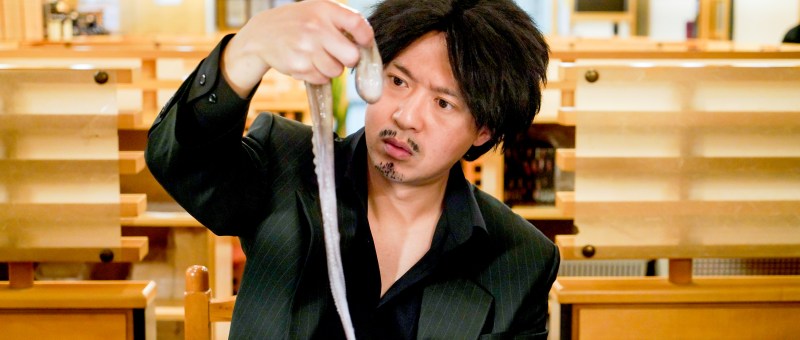
Bear Man (웅남이, Park Sung-kwang, 2023)

According to an ancient legend, bears who eat garlic and mugwort can become human though it’s not exactly clear why they’d want to. The debut film from Park Sung-kwang, Bear Man (웅남이, Woongnami) as its name suggests follows a pair of bear cubs who decide to give things a go in the human world but with wildly differing results as one is adopted by the researcher who allowed them to escape and the other by a vicious gangster who exploits him for his violent capabilities and shows him little love. 

Love is something Woongnam (Park Sung-woong) got a lot of thanks to his devoted mother and though not exactly the sharpest knife in the drawer had forged a promising career as a local policeman before he was let go after falling into a kind of funk on overhearing his father on the phone suggesting that the life expectancy for a regular bear is only 25 so he might not have much time left. Thanks to his nature as a bear man, Woongnam ages much faster than everyone else and already appears to be middle-aged though he is also blessed with immense strength and agility. After agreeing to bend the law by helping his feckless friend Malbong (Lee Yi-kyung) win in at illegal gambling Woognam comes to the attention of a group of police detectives investigating a shady gangster who notice a man looking just like Woongnam taking out a host of bad guys at the harbour. 

There is something quite poignant in the puppy-like existence of Woongbok (also Park Sung-woong) who keeps looking up to his boss as a father figure with a mixture of fear and longing. He gazes enviously at a family crossing the road in front of him and later visits Woognam’s home where Woongnam’s mother thinks that he’s Woognam and tries to feed him his favourite foods while he just looks on silently without expression. Where Woongnam is basically good, not too bright but heart in the right place, Woongbok has been raised as creature of violence by his intimidating father figure and carries a threatening aura with his slick haircut and tailored suit. 

The police want Woongnam to pose as Woongbok so they can take down the gangsters who have not only been trafficking drugs but also dabble in scientific research into viruses and their cures apparently about to unleash an epidemic in China to profit off the drug sales. It’s not all that clear what the scientists who released the bears were actually researching though there is a kind of parallel in the fact the other pair seemingly settled down, adjusted to their new environment and had a few cubs while Woongnam and Woongbok ended up becoming humans with bear-like abilities. Woongnam has to be prevented from entering hibernation and sleeps flat out like a bear but otherwise keeps his true nature secret even while covertly helping the townspeople out getting rid of beehives and freeing trucks stuck in the mud. 

That would be about the extent of “policing” in this kind of small-town where there’s nothing much to do but catch fish in the river and chat to wild boar. Park builds on the surreality of everyday rural life with mounting absurdities such as the parade of teenagers who troop through the convenience store where Woongnam’s live-streaming friend Malbong works each of whom he is largely able to unmask thanks to his keen sense of smell, and the polytunnel that doubles as a gambling den for down on their luck farmers. Woongnam’s biggest regret is losing his position as a police officer and it’s his desire to get it back to make things up to the people who raised him that encourages him to go along with the detectives’ crazy plan even if means he has to undergo weird martial arts training inspired by Drunken Master and take lessons from a strange movement coach in how to walk like a gangster. Yet in the end it’s Woongbok’s innocent desire for familial love that becomes a source of salvation, turning against his gangster brethren to protect the warmth of Woongnam’s family home. Quirky in the extreme and defiantly absurd, the film nevertheless has genuine heart in otherwise strange tale of wandering sons and bears of men.


Bear Man screened as part of this year’s New York Asian Film Festival

Images: © 2023 KIMCHI PICTURES PRODUCTION. ALL Rights Reserved.

Extreme Festival (익스트림 페스티벌, Kim Hong-ki, 2023)

Just about everything that could go wrong does go wrong for an embattled CEO of an events planning startup organising a local cultural event on short notice in Kim Hong-ki’s provincial comedy Extreme Festival (익스트림 페스티벌). Then again, according to one unexpectedly happy customer it’s the mess that makes them fun and it’s the very fact that’s not everything has gone to plan that has accidentally led to a pair of festival enthusiasts apparently having the best day of their lives. 

The first problem Hye-soo (Kim Jae-hwa) has is one that will largely be lost on international audiences. One week before the festival’s opening, the mayor decided to change its name from Jeongjong festival to Yeonsan-gun festival on the grounds that Jeongjong, the second ruler of the Joseon dynasty, is so little known that not even Hye-soo can correctly recall his full name. Yeonsan-gun is a lot more famous but largely because he was a tyrant remembered by history for all the terrible things he did during his reign like having his own mother executed and forcing huge numbers of women from across the country to serve as palace entertainers. As he does not share the same local connections as Jeongjong, the festival has to create a series of diagrams giving exact travel distances in an attempt to claim that Yeonsan-gun is “local” after all. In any case, Hye-soo has only agreed to handle the event to curry favour with the mayor in the hope of landing the contract for the much more lucrative salted sardine festival, which might go some way to explaining just how “local” all of this really is. 

Another problem is that Hye-soo was hired in part because of her business partner/boyfriend’s fame as a literary figure which is fast fading anyway because he’s been repeatedly publishing the same book in different editions for years. The relationship is on the rocks and Sang-min (Jo Min-jae) barely shows up leaving her embarrassed in front of their clients while he later rehires screenwriter Leo (Park Kang-sup) who had previously been let go under circumstances he finds confusing. Sang-min also goes ahead and hires the festival’s only volunteer, Eunchae (Jang Se-rim), as an intern without clearing it with Hye-soo first despite knowing the company has no money to pay her because its survival is dependent on landing the salted sardine contract. 

Eunchae represents a certain kind of small-town youth longing for escape and not least from her oppressive family environment where her brother appears to be king. Willing to do just about anything to be able to move out even if it’s not to the capital, Eunchae is excited about the new job opportunity but tragically thinks that Hye-soo’s company must be an established and successful place rather than a one woman operation with an “office space” full of boxes and electrical equipment. 

Meanwhile, Hye-soo is also affected by the vagaries of local politics in being subject to the whims of the mayor who suddenly demands that her performance artist son be added to the bill and that a group of actors hired to perform a historical piece inspired by the Literati purges which occurred under Yeonsan-gun’s reign should instead incorporate a bit about the end of the pandemic and “execute” the omicron virus instead before the king declares that herd immunity has been achieved. As expected, this doesn’t go down well with the actors who later stage a protest boycotting the festival on learning that their application for a grant from the local council has been turned down. 

It is all, as Hye-soo admits, a mess and one not helped by an ongoing clash of personalities not to mention goals between the mayor’s office and Hye-soo’s staff. A sub-plot revolving around a washed up Japanese popstar apparently trying to escape his sense of failure by hiding out in a random Korean village only adds to the crushing sense of defeat that marks the festival. Even the “celebrity” MC admits the reason he’s not been on TV for ages is that he’s not getting hired which is why he’s here, slumming it in the provinces as a virtual has been ringing the death knell on his career. But in the end it’s personal relationships and people learning to get over themselves that save the day. Hyesoo gains some much needed clarity on the directions of her personal life and business, willing to make a fool of herself to get back on track while others too readjust their expectations. A kind of warmhearted take down of the absurdities of local government events, the film is really a celebration of perseverance and the spirit of never giving up even if nothing seems to be going your way.


Extreme Festival screened as part of this year’s New York Asian Film Festival

Original trailer (Korean subtitles only)

Hail to Hell (지옥만세, Lim Oh-jeong, 2022)

Two teenage girls swap thoughts of suicide for revenge on learning that their former tormentor is living well in Seoul but find their plans frustrated on discovering she has joined a religious organisation and apparently reformed in Lim Oh-jeong’s bullying drama, Hail to Hell (지옥만세, Jiogmanse). “Hell” is what the two girls, and a fair few others, believe their lives to be while seeing little way out other than taking their own lives but are confronted with questions of redemption and forgiveness not to mention death and paradise while plotting vengeance in the capital. 

The surprising thing about high school girls Na-mi (Oh Woo-ri) and Sun-woo (Bang Hyo-rin) is that Na-mi was once part of popular girl Chae-lin’s (Jung Yi-Ju) gang and only left it when they turned on her. Nevertheless, the two young women have bonded in their shared victimisation and desire for an end to their suffering. After several failed attempts at taking their own lives, they change tack on coming across Chae-lin’s Instagram posts which imply that she is living the high life in Seoul and even planning to study abroad which the girls regard as a cruel irony given the extent to which the bullying orchestrated by Chae-lin has disrupted their lives. Unsure exactly what they plan to do, they board a bus to the capital and make their way towards Chae-lin only to discover she’s joined a weird cult in which the members are expected to earn points through doing service in order to qualify for a ticket to “paradise”.

The language itself is quite sinister even if the “paradise” that’s on offer otherwise sounds fairly conventional. Then again, there is no real evidence that “paradise” actually exists while Chae-lin claims that her mother is already there which is why she’s so desperate to go. When the girls first arrive, her expression is strange to the extent that it’s impossible to tell if she’s “happy” to see them or merely excited by the prospect of tormenting them all over again. She says that she’s already confessed all her sins and views the girls’ appearance as a miracle sent by god so that she could atone and earn their forgiveness. Then again, being forgiven for one of your sins is worth the most amount of points and Chae-lin would definitely win if Na-mi and Sun-woo could be talked in to publicly forgiving her. 

Whether Chae-lin has changed or not the girls are divided on the prospect of forgiveness and whether the way they’ve been treated is something that even should be forgiven. Na-mi begins to concede that Chae-lin may have changed “a bit”, but is later forced to reflect on the ways she herself hasn’t changed or faced her complicity with Chae-lin’s bullying when she was a member of the gang while still apparently susceptible to her manipulation. Then again, it’s impossible to tell if Chae-lin is only in the religion for cynical reasons or genuinely believes in its teachings. The church itself has a distinctly eerie quality only deepened by talk of a possibly problematic article, onerous demands on members to buy “offerings”, and a points-based system of spiritual redemption. 

Meanwhile, it seems there is bullying even here with a young woman abruptly silenced, threatened with both a loss of points and “punishment”, for even making the suggestion that someone may be bullying her. Though Sun-woo sympathises with her plight, she does not know how to help her or to change the culture within the church. “No matter how long you wait, no one will help you,” Sun-woo advises another trapped young woman as she in turn attempts to shake off the feeling of powerlessness she had experienced as a victim of bullying and harassment. Neither girl had found any help from those around them, Sun-woo’s family apparently preoccupied with her disabled sister and Na-mi’s mother blaming her for being bullied insisting it was her own fault for being “weak” rather than fighting back but if their experiences have taught them anything, it’s that they can rely on each other and that they don’t really want to die so much as live without fear which might be more possible than they’d previously assumed it to be. “Welcome back to hell” Na-mi somewhat cheerfully calls out, countering a sign on the bus which had ironically claimed that wherever we are is “paradise” but perhaps finding something in it as she and Sun-woo prepare to move forward together having exorcised a few demons and reclaimed a sense of their own agency. 


Hail to Hell screened as part of this year’s New York Asian Film Festival

Trailer (English subtitles)

Rebound (리바운드, Jang Hang-jun, 2023)

A collection of underdog teens learn a few valuable lessons in perseverance and determination while taking their moribund high school basketball team all the way to the national championships in Jang Hang-jun’s sporting drama, Rebound (리바운드). Inspired by the real life tale of Busan Jungang High School’s meteoric rise from obscurity to top rated team, the film quietly touches on inter-city rivalry and social inequality while otherwise spinning an inspirational tale of the power of solidarity and a never say die spirit. 

They are all in their way rebounding from something, and not least the team itself which is threatened with closure after being judged a bad investment by the penny pinching headmaster given its “embarrassing” series of total losses across a series of years. The team is given a brief reprieve but only as a token of its former reputation, the plan being to have one just for show but not actually enter any competitions while the school let it gradually fall into obscurity. Accordingly, they begins looking for “cheap” coaches who might be prepared to manage a phantom team and eventually land on 25-year-old social worker Kang Yang-hyun (Ahn Jae-hong) who is a former minor leaguer and alumnus of the school looking to reclaim his own failed hoop dreams vicariously through a new generation of new players. 

There are however only four left on the team, two of whom immediately quit leaving Kang scrambling around the city looking for tall boys who might be good with a ball and can be convinced to switch schools. The problem they have is that talented players are quickly snapped up by more prestigious institutions in Seoul which can after all offer more opportunities to ambitious youngsters aware that they probably won’t be playing basketball for the rest of their lives. No one really envisages a future for themselves in Busan which remains a kind of underdog in itself as it struggles against the the allure of Seoul as place of greater sophistication and possibility. Keen basketballer Ki-bum (Ahn Jae-hong) turns down Kang’s offer for just this reason insisting that his career is dead if he stays in Busban even while his parents seems to be turning down good offers on his behalf. He only agrees to join the team on learning that ace player Jun-yung (Lee Dae-hee) will be playing for them. 

Jun-yung is valued mainly for his height which sort of runs against the messages of the game in that it’s not something the players can control and no matter how hard they train they will always be at a disadvantage to those who are simply bigger. Kang’s first mistake is that he builds everything around the pillar of Jun-yung, barely letting the other players play while instructing them to pass every ball to him so he can shoot. In any case, Jun-yung too is eventually poached by a better team apparently forced to betray his teammates by his ambitious parents who are after all merely making what they see as a smart decision on his behalf. A disastrous fight between two players with unfinished business from middle school also results in a lengthy suspension ending the team’s hopes of competition success for the current season. 

But as Kang later says, it’s only really a “fake failure” in that it gave him a rebound he could use to realise his mistakes and start over prioritising their shared love of the game over his own insecurity now more willing to take a risk while concentrating on making the team as good as it can be rather than the external validation of championship wins. As he later tells them in an inspirational locker room speech, not all of your shots go in but that’s OK because they come back to you on the rebound and what matters is what you do with them then. Whatever happens, life goes on and fear of failure is not a reason to give up on something you love.

Jang does his best to avoid underdog sports movie cliches while subtly hinting at the pressures of social inequality as moody player Gang-ho (Jung Gun-joo) struggles with an old injury he couldn’t afford to have treated properly while trying to make extra cash betting on basketball games with other wayward neighbourhood kids. Capturing a real sense of energy in the various basketball games along with a wholesome sense of possibility as the team begin to bond and “improve” each other, Jang is careful not to be blinded by a false narrative of inspirational success but rather doubles down on the rebound mentality of seizing opportunities as they come and continuing to chase your dreams in your own way no matter how hopeless they may seem. 


Rebound screened as part of this year’s New York Asian Film Festival.

International trailer (English subtitles)
Images: ⓒ 2023 NEXON Korea Corporation, B.A. ENTERTAINMENT, WALKHOUSECOMPANY ALL RIGHTS RESERVED

The Childe (귀공자, Park Hoon-jung, 2023) [Fantasia 2023]

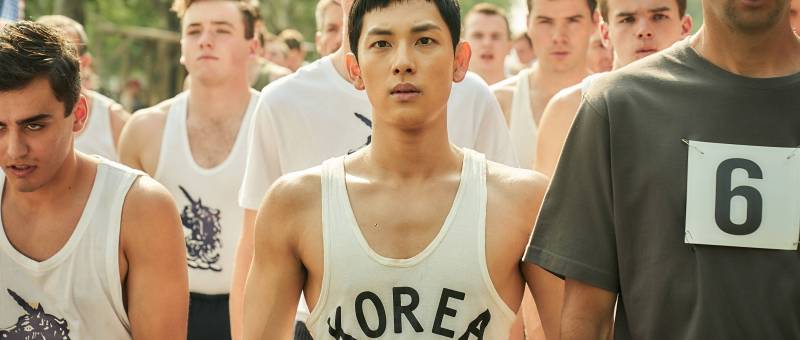
“Isn’t money great? Everything is solvable with it” according to a lawyer working for an ailing chaebol CEO, but for the man he’s talking to money is at the root of all his problems because he doesn’t have any and is therefore powerless not least to save his equally ailing mother who needs an expensive operation to survive. The latest action drama from Park Hoon-jung, The Childe (귀공자, Gwigongja) implies an apparent focus switch in that the korean title, Nobleman, is also that of its absurdly cheerful assassin. “Childe” in its medieval spelling may simply be an attempt to lend a eerie mythical quality similar to the way the word “witch” is used in Park’s previous films, but in its original meaning also hints at the ostensible protagonist’s liminal status as a “nobleman” who has not yet come of age. 

That’s in part because Marco (Kang Tae-joo) has no idea of his parentage, only that his father was Korean and returned home alone leaving him and his mother behind in the Philippines. Referred to by a derogatory term for children fathered by Korean men as a result of sex tourism, Marco is an embittered young man filled with resentment and little hope for the future whose literal fatherlessness is an allusion to his cultural orphanhood. His mother sent him to Korean schools and raised him only to speak English and Korean, either feeling some affection for his absent father or more practically deciding he might have a better life as a Korean even if in the end neither culture fully accepts him. He would never have attempted to look for his father were it not for his mother’s illness hoping in some way to make him accept responsibility for his actions and the family he abandoned. 

In essence, Park uses the ailing chaebol patriarch’s familial irresponsibility as a wider metaphor for corporatising colonialism and exploitation while emphasising the corrupting influence of chaebol culture in which money really can solve pretty much everything even, it’s implied, imminent death. Picked up by a slick lawyer, Marco is told his father is looking for him too because, ironically enough, he is also ill and near death so simply wants to see the son he abandoned. Chairman Han will fly him to Korea and also cover his mother’s medical bills if he agrees to come but once he arrives Marco realises he’s in a very precarious position caught in the middle of a succession battle between his two half-siblings who each see him only as a pawn and ultimately want him dead. A mysterious assassin billed as The Nobleman (Kim Seon-ho) but introducing himself only as a “friend”, possibly the last you’ll ever make, is hot on his tail though his motivations remain unclear. 

As in some of his other films, Park hints at a mysterious shadow world filled with conspiracy and dominated by chaebol interests though in this case the figure of the corrupted patriarch takes on a poignant sensibility in which he too has become little more than a pawn. It appears he may disapprove of his children’s actions and actually has a genuine interest in meeting the son he abandoned who is like the hero of a fairytale the most just, deprived of his birthright by the greedy machinations of others. The abiding mystery may be why the chairman is kept alive though it seems that oldest son Yi-sa (Kim Kang-woo) is otherwise unable to maintain control of the corporate empire without recourse to his father’s identity for he has little power of his own. 

That might go some way to explaining the absurdity of his sociopathic violence, wandering around in a bathrobe carrying a shot gun and executing newspaper editors who’ve tried to expose their dodgy dealings in the midst of a vast estate bordered by forests. Even the school girl half-sister roams around with a pistol taking pot shots at Marco and The Nobleman but interestingly not at Yi-sa or the Chairman which hints at an odd kind of familial solidarity even in this incredibly dysfunctional and corrupt environment along with a wilful determination to deprive Marco of what may be his birthright. As with his previous films, Park loads up on gore delivered with more than a little absurdity in a series of high impact action scenes, but finally returns again to an unconventional friendship and unexpected brotherhood between the powerless and dispossessed in a sense at least reclaiming something that was theirs by right with the only means at their disposal. 


The Childe screened as part of this year’s Fantasia International Film Festival and is released in the US courtesy of Well Go USA.

International trailer (English subtitles)
Mother Land (엄마의 땅: 그리샤와 숲의 주인, Park Jae-beom, 2022) [Fantasia 2023]

A little girl becomes the spiritual defender of her traditional culture in her quest to cure her mother’s mysterious illness in Park Jae-beom’s stop motion fairytale, Mother Land (엄마의 땅: 그리샤와 숲의 주인, Eommaui Ttang: Geulisyawa Sup-ui Ju-in). Taking place seemingly in mid-20th century Siberia, the film focusses on the Yates people, nomads who live on the tundra raising reindeer in much the say way they have for centuries even as their existence is threatened by the militant modernity of Soviet Russia.

Krisha is a young woman who has begun having strange dreams believing she can see a huge red bear with shining eyes. Distracted, she is almost hurt when wind threatens to blow their half-built yurt down during a move but is saved by her mother, Shura. Shortly after they are visited by Captain Vladimir and Bazak, a member of the Yates who has betrayed his people to team up with the government in an effort to kill the “Master of the Forest” in order to claim the tundra and bring it into a fully modern society. When Krisha’s father Tokcha tells him it’s not a good idea and he’ll be punished for desecrating their sacred land, Vladimir counters that they too should join the collective farm threatening the very survival of their traditional culture. After insisting that the tundra is their home and they won’t leave it, Shura is taken ill with a mystery condition a shamaness says she has only seen in a Western village which no longer exists. 

It could be said that Shura’s sickness is born of the threat that modernity poses though her family is faced with a choice over what to do about it. The shamaness says she knows no cure and their only hope lies in visiting The Master of Forest to ask for his help but Tokcha balks that no one’s ever seen him and he’s not convinced that he exists let alone that he could help. While Krisha wants to follows the Shamaness’ advice, her father instead decides to ride into the city in search of modern Western medicine. Once he’s gone she secretly steals away with her little brother Kolya and their trusty reindeer steed Serodeto to look for the Master of the Forest whom she thinks may be the big red bear that’s been haunting her dreams. 

When she eventually finds him, the bear tells her that it is not his place to save her mother though he has been waiting for her for he believes she has come to save him. Bazak, who is in search of vengeance for his wife and daughter, asks what the point is of a god who only watches while others suffer but Krisha comes to see him as a manifestation of the healing power of the land he tells her is being lost because of its mistreatment by those like Captain Vladimir who describes Tokcha as an “arrogant barbarian” and has no respect for his culture or even for nature itself. 

Vladimir isn’t wrong when he calls the tundra the hope of the country though obviously not in the way that he means it. Krisha’s quest to save her mother is also a quest to save her land, the bear and her mother becoming symbolically linked while Krisha develops a maternal sense of herself as a guardian of her culture insisting that she will remain on the tundra practicing what she’s learnt as a link between heaven and earth. 

Even so, Park captures a sense of nature red in tooth and claw in the opening scenes in which a deer is butchered and some of its blood returned to the land in a ritual of gratitude to mark its sacrifice. The icy emptiness of the tundra is broken only by the appearance of Vladimir’s military van spewing black smoke into the otherwise pure landscape, while Park’s designs have a kind of warmth in their tactile quality from the powdery snow to the fabric covering the yurt and the tunic made for Krisha by her mother out of deer pelt and fur. Impressive scenes of wolves running are tempered by quiet moments of self-reflection as Krisha goes about her quest and begins to accept her destiny as a guardian of her culture. A quietly powerful fable, the film mediates on gods and nature along with the costs of modernity but ends on a note of comfort and relief in a longed for reunion and a restoration of normality.


Mother Land screened as part of this year’s Fantasia International Film Festival.

International trailer (English subtitles)
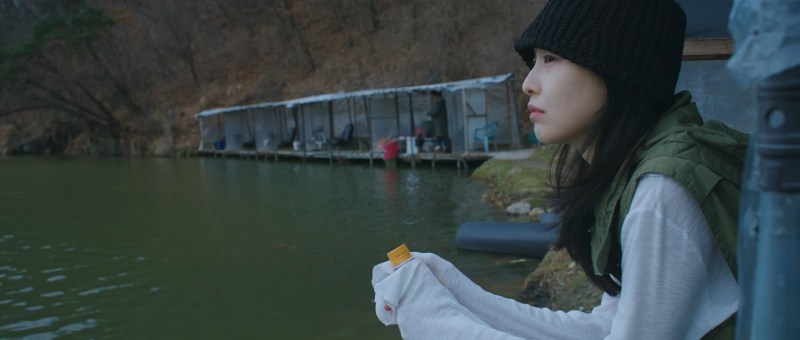
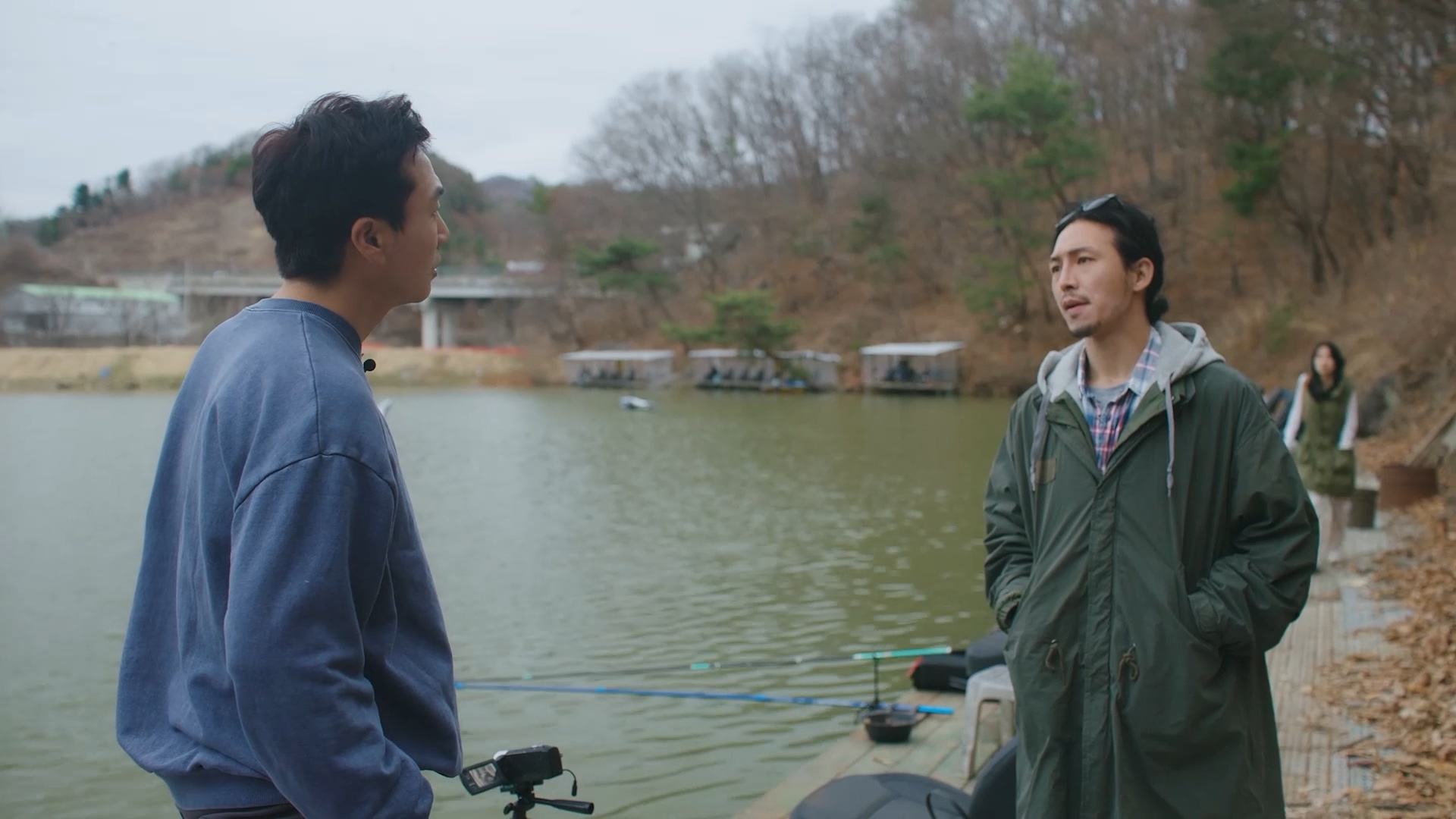
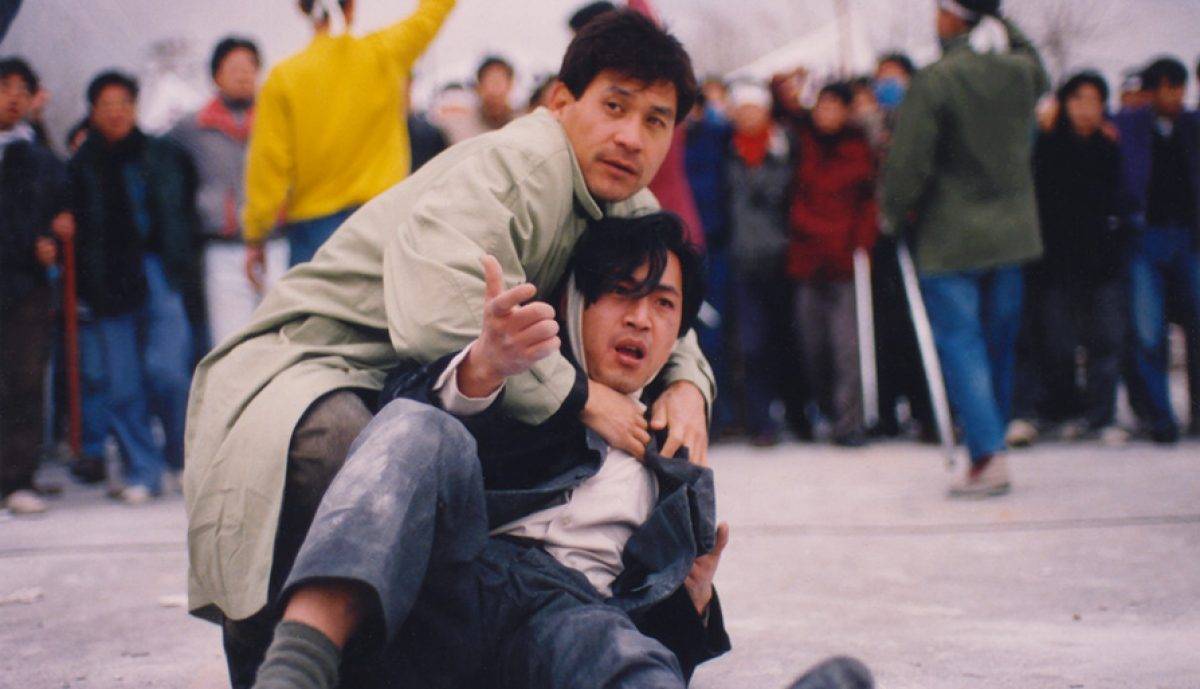
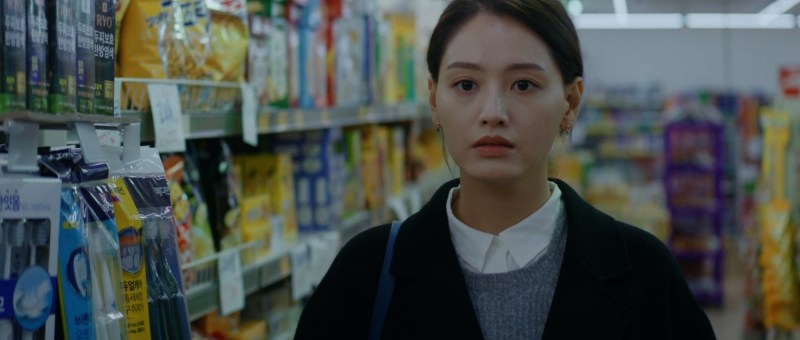
Greenhouse (비닐하우스, Lee Sol-hui, 2022)

A middle-aged woman makes a series of questionable choices while pursuing her dream of a stable home with her teenage son in Lee Sol-hui’s downbeat tale of life on the margins of contemporary Korea, Greenhouse (비닐하우스). The Korean title of “Vinyl House” might be a little more accurate, in that the heroine lives in a disused polytunnel on an allotment her son later says the family used to go to every weekend before his parents’ divorce while eagerly waiting for his return after which she hopes to start again.

The son, however, first says that he has no desire to live with her and intends to stay with an uncle after leaving juvenile detention. The film never directly states what led him there, but he later mentions he and some friends all seemingly released at the same time used to break into houses owing to having “nowhere to drink.” One of his chief objections seems to be his mother’s lack of a more traditional home and the embarrassment it causes him with his delinquent friends which is one reason why Moon-jung (Kim Seo-hyung) is desperately saving her money for a deposit on a modern flat and a life of comfort she can otherwise only dream of. She has a job as a housekeeper for a wealthy older couple, the wife has dementia and is paranoid Moon-jung is trying to kill her, and the husband has all but completely lost his sight, but faces the implosion of her dreams with the announcement that they are considering moving into a nursing home.

In a repeated motif, Moon-jung often violently slaps herself on the side of the head in an apparent act of self-harm. Explaining that she used to see a psychiatrist but can no longer afford it, she joins a support group for people in a similar position and encounters a vulnerable young woman, Soo-nam (Ahn Ji-hye), with whom she later develops a sisterly connection after realising that she may be trapped in an abusive relationship she is unable to escape because of her learning difficulties. 

They are each in their way pushed out of mainstream society by virtue of their age, poverty, or disability and largely reliant on the kindness of strangers that rarely comes their way. The film only ever hints at the hard life Moon-jung may have lived but suggests that her past trauma may help to explain some of her otherwise incomprehensible decisions after the old lady hits her head and presumably dies in a domestic accident. While she cares for a wealthy older couple who remain independent in their own home, Moon-jung’s mother lives a miserable life in an inexpensive nursing home. A woman visiting her roommate soothes and strokes her mother encouraging her to keep on living as long as possible even if it’s “like this” while Moon-jung seems to have mixed emotions, on one level guilty not to be able to care for her mother herself and perhaps wanting to be relieved of any responsibility towards her. 

In some ways, Moon-jung’s tragedy may be that she is at heart just an ordinary, decent person and is torn between a genuine desire to help and care for others and a cynicism that tells her she is foolish for doing so. She wants to help Soon-nam perhaps identifying with her suffering, but is also resentful of her sudden attempt to latch on to her and fearful her presence may disrupt the new life she dreams of with her son which is the only ray of hope in an otherwise miserable existence. When that dream is threatened she decides to anything she can to save it even if it seems obvious that her series of bad decisions will not pay off because her subterfuge will quickly be exposed. 

What she doesn’t bank on is the sheer magnitude of cosmic ironies the film throws at her in which every avenue of her life is somehow undermined by another from her relationship with the elderly couple to her friendship with Soon-nam, and a romance with a man who may have been in someway abusive. Exploring the hopelessness experienced by an abandoned generation whose children have mostly moved abroad and outsourced their care, the plight of women like Moon-jung trying to do their best but frustrated by extreme bad luck, and vulnerable young people like Soon-nam who has no one to defend her as an orphan with learning difficulties, the film may suggest that they are each trapped in the hothouse of the modern society baked alive by hopelessness and indifference while struggling to find a place for themselves in an increasingly unforgiving city. 


Greenhouse screened as part of this year’s New York Asian Film Festival.

Original trailer (Korean subtitles only)