Gull (갈매기, Kim Mi-jo, 2020)

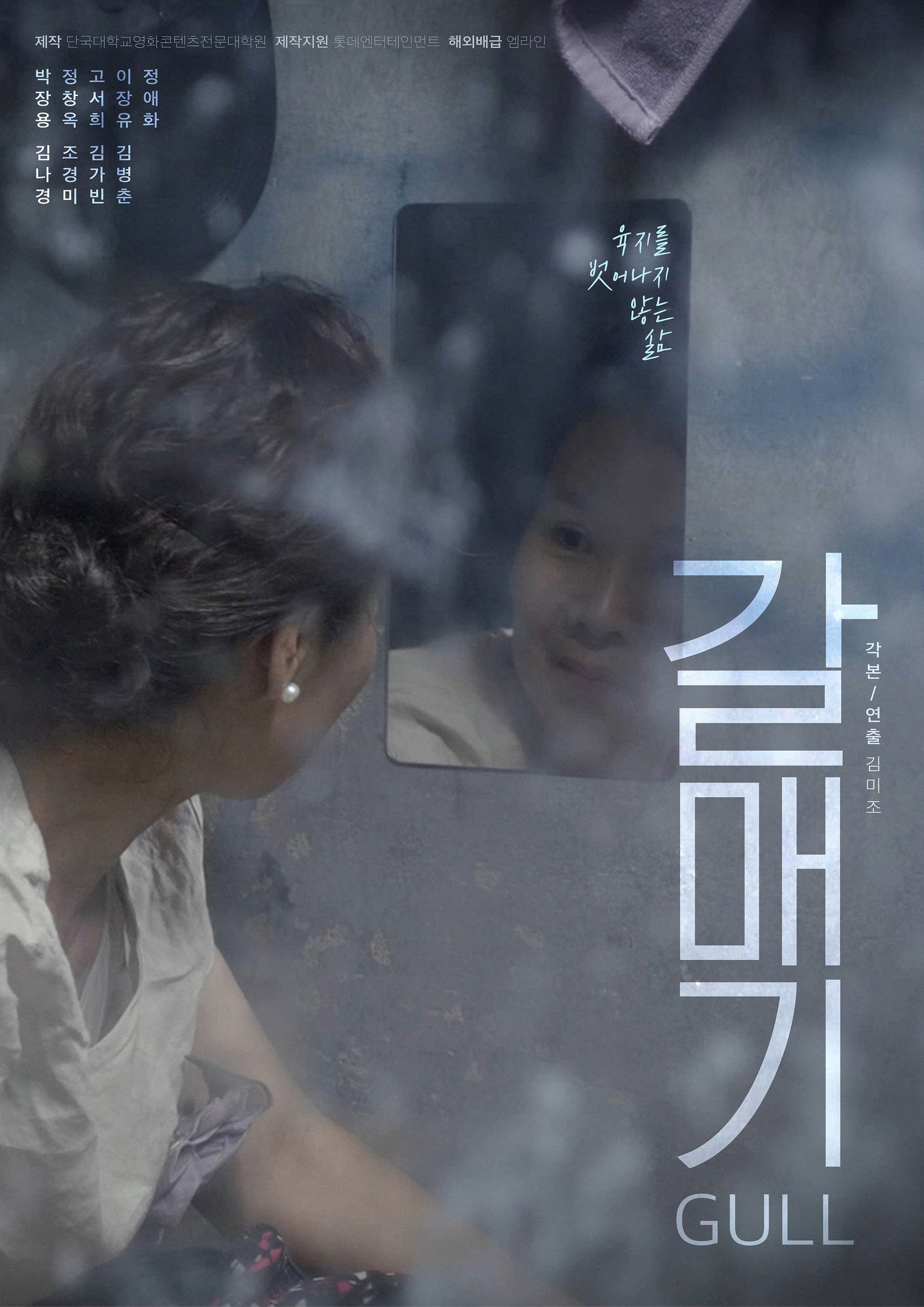
“Equality before the law must be enjoyed not only by the rich but by everyone. We must not let them get away with trampling on our human rights and right to life”, the leader of a protest against the forced relocation of his fish market intones over a loudspeaker in Kim Mi-jo’s incendiary Gull (갈매기, Galmaegi), but his words have a very different connotation to a middle-aged woman quietly seething in her protest gear as she watches from an upper window. She knows when he says “everyone”, it’s not quite what he means and that to that extent he does not truly believe what he’s saying because to be a woman in this society is to know that your human rights and right to life have been trampled on daily since the day you were born and if you try to resist someone will tell you you’re making a scene. 

30 years running a stall selling raw fish, O-bok (Jeong Aehwa) is excited about the marriage of her oldest daughter, In-ae (Go Seo-hui), though also a little anxious seeing as she’s marrying up, her fiancé’s family are educated people with good government jobs. In-ae jokes that her mother has an inferiority complex, but it is in a sense true in a half-realised acceptance of her marginalised position as a working class woman along with the frustrated dreams of her youth. Chatting on the phone with her mother who has dementia, O-bok reveals she’s proud that despite having missed out on an education herself as was the thinking for girls in those days, she managed to send each of her three daughters to college. She wonders why her mother didn’t do the same, and mourns all the things she could have done with her life if only she hadn’t been bound by societal expectations. 

Staying behind one evening to have a drink with her colleagues, she is assaulted by Gi-taek (Kim Byeong-choon), the man with the loudspeaker and the de facto leader of the protest and solidarity movement trying to ensure they cannot be pressured into accepting less than they’re owed in compensation when the market is closed. Stumbling home the following morning clearly in pain and having difficulty walking, O-bok is alerted to blood on the back of her skirt by a fellow female pedestrian, stopping into a bath house to rinse out her underwear. Aside from visiting a doctor for “bleeding”, she tells no one and does not return to the market for several days. Gi-taek, meanwhile, has the audacity to turn up at her door with premium seafood to ask after her health. 

Eventually O-bok explains what’s happened to In-ae, laying bare a generation gap as the younger woman tries to persuade her mother that she should it report it to the police. O-bok, however, is reluctant to make herself the subject of gossip, mindful of the effect it may have on her daughter’s marriage, and tries the old-fashioned way first in asking Gi-taek for an apology through an intermediary, complicating the situation in obviously being unwilling to say what it’s for. When he refuses, she takes her daughter up on the offer and files a complaint though perhaps knowing it’s unlikely to go anywhere seeing as she no longer has access to any material evidence.  

What she could not have expected is the extent to which her simple desire to see justice done would make her a social pariah. Of course, the situation is complicated by the economic precariousness of the fish market workers who cannot afford to lose out on the compensation money and are depending on Gi-taek to help them get it. The men find the whole thing embarrassing, making muted comments about O-bok’s drinking as if she brought this on herself, something her daughter later echoes in a moment of anger only to be disappointed in herself for saying it. Not knowing who made the accusation, her husband chuckles that rape is all a big joke because you “can’t rape a girl who doesn’t want to”, while the women are largely no better reminding her that this is the sort of thing you keep to yourself and try to forget as if they don’t know how that feels. 

“I’m so sick of people mouthing off about rights and all” a genial female shopkeeper confesses to O-bok, admitting that she has no idea why the man on the roof across the way with the sign is protesting, “He says things are unfair or something. I don’t even care.” “He’s just torturing himself” she adds, O-bok perhaps wondering too if that’s all she’s really doing, if her quest for justice is really worth it when no one seems to care. She wonders if they’d care more if she weren’t a 61-year-old market fishmonger but an educated woman with a good government job. Maybe we’re not all so equal under the law after all, but she can’t let them get away with trampling on her dignity. Shot with naturalistic detachment shifting to a rattled handheld, Gull is a crushing condemnation of a misogynistic, classist society but one that finds strength in its heroine’s resilience and newfound determination make herself seen if only by those ought to feel ashamed. 


Gull streams in the UK until 11th November as part of this year’s London Korean Film Festival.

Original trailer (English subtitles)

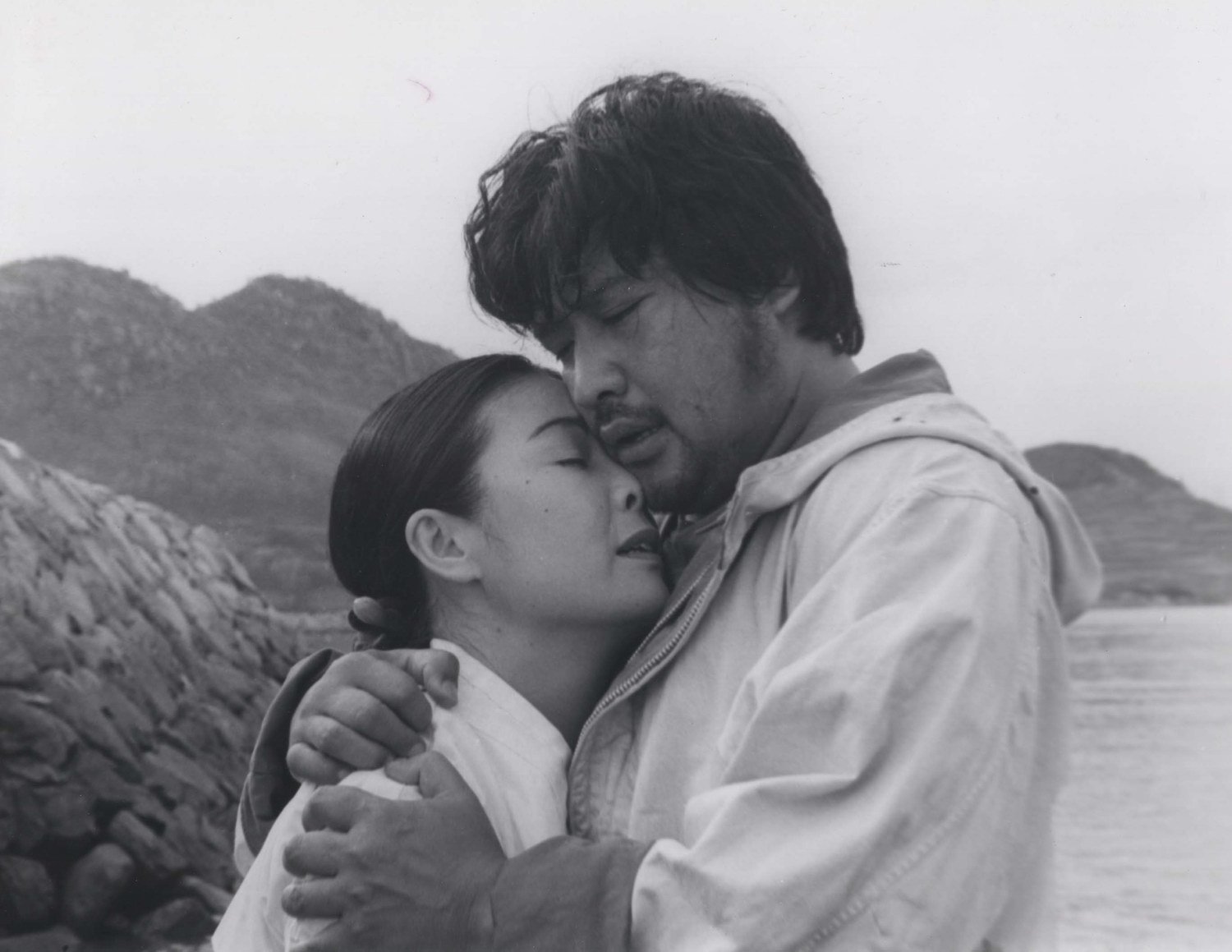
Daughter of Fire (불의 딸, Im Kwon-taek, 1983)

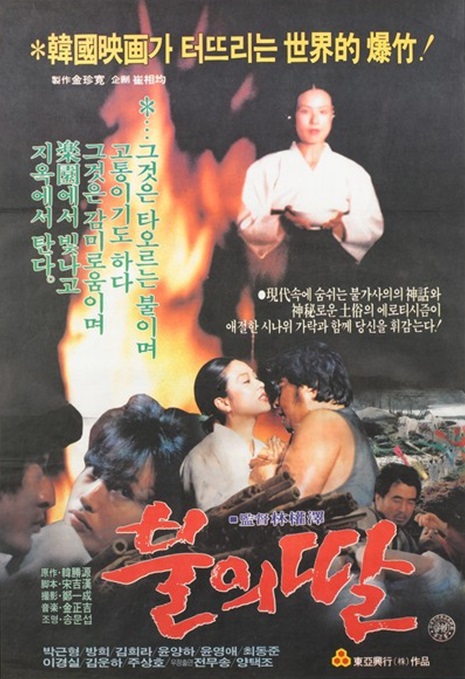
“Doctor, is it possible in our modern society for someone to suffer from that kind of illness?” the conflicted hero of Im Kwon-taek’s Daughter of Fire (불의 딸, Bul-ui ttal) asks his psychologist, plagued by nightmares of the mother who abandoned him at 11 and suffering what seems to him to be the call to shamanism, only what place could such a backward and superstitious practice have in “our modern society?”. In many ways, it’s exactly that question which Im seems to find so essential, implying in a sense that even in the politically repressive but increasingly prosperous Korea of the late ‘70s that they have perhaps lost something of their essential Koreanness in their abandonment of their ancestral beliefs in favour of modern “sophistication”.

Listening to his troubles, the disinterested psychiatrist reassures Hae-joon that it’s just a “minor neurosis” caused by “frustration” which can easily be cured. On his way home, however, Hae-joon is accosted by an older woman dressed in shaman’s clothing who addresses him as a son, reminding him that he has the blood of shamans running in his veins and try as he might he’ll never be able to escape it. Her intervention perhaps links back to an earlier encounter with the pastor at his wife’s church who explained to him that his wife is at the end of her tether, embarrassed by his lack of faith believing that it reflects badly on her as a religious woman hoping to lead others towards the lord if she cannot at least count her husband among the saved. So great is her distress that she has apparently even considered divorce. This is perhaps one reason Hae-joon is so keen to exorcise his shamanistic desires, though it’s also clear that his presence in his home is intensely resented, his wife later only warmly greeting him by hoping that he’ll be able to let go of his “dark and diabolical life” for something brighter and more cheerful, ie her religion though the grey uniformity and intense oppression of her practice only make her words seem more ironic. 

The pressing problem in his family is that his daughter is also sickly, seemingly with whatever it is which afflicts Hae-joon. She has begun sleepwalking and later suffers with fits and seizures which to a certain way of thinking imply the onset of her shamanistic consciousness. Hae-joon’s Christian family, in a touch of extreme irony, are convinced that an exorcism in the form of a laying on of hands will cure her, yet they like many others view the ritualised religious practice of the shaman as a backward relic of the superstitious past. The ironic juxtaposition is rammed home when Hae-joon is sent to cover a supposed miracle for his newspaper that his wife and her friends from church regard as the second act of Moses, standing ramrod straight and singing hymns while a noisy festival of shamanic song and dance occurs further along the beach apparently a rite to appease both the sea god and the vengeful spirit of an old woman accidentally left behind when her community migrated to another island to escape an onslaught of tigers. Stuck in the middle, Hae-joon exasperatedly explains to his photographer that this parting of the seas isn’t any kind of miracle at all, merely a natural result of low tide revealing that which would normally be hidden. 

Yet despite his unsatisfactory visit with the psychologist, Hae-joon becomes increasingly convinced that only by finding his mother can he come to understand what it is that afflicts him. Speaking to the various men who knew her from the step-father he later ran away from to escape his abuse after his mother disappeared, to a blacksmith who cared for him as an infant, and the men she knew after, Hae-joon begins to understand something of her elemental rage. Driven “mad” by the murder of her lover by the Japanese under the occupation, she wandered the land looking for fire to exorcise her suffering only later to lose that too when the oppressive Park Chung-hee regime outlawed shamanism entirely in his push towards modernity. Consumed by the fires of the times in which she lived, there was no place in which she could be at peace and nor will there be for Hae-joon or for his daughter until they embrace the legacy of shamanism within. 

“Shamanism will not disappear and die” Hae-joon later adds, now able to see that there is or at least could be a place for it in “our modern society” or perhaps that it’s the modern society which must change in order to accommodate it. Despite his long association with depictions of Buddhism, it is the shaman which Im considered the foundation of Korean culture, something he evidently thinks in danger to the perils of a false “modernity”, Hae-joon eventually professing his concerns that without it Korea will forever be oppressed by foreign influence. Only by accepting the shaman within himself can he hope to find freedom in an oppressive society. 


Daughter of Fire streams in the UK until 11th November as part of this year’s London Korean Film Festival.

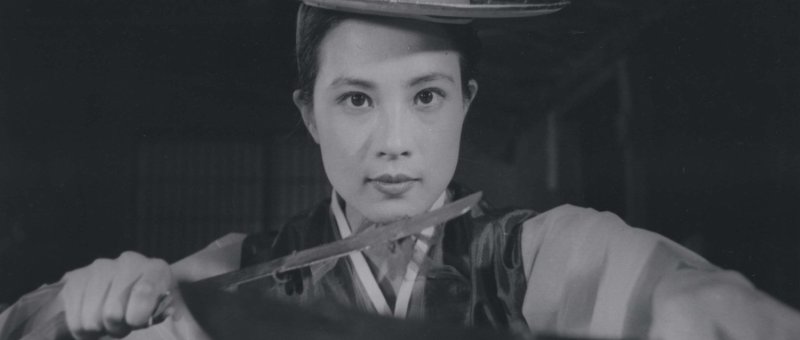
Divine Bow (神弓 / 신궁, Im Kwon-taek, 1979)

“From now on we need think only of our children. We can’t pass on shamanism to them. Our children at least should have a bright future” insists a man whose horizons have in one sense been broadened but perhaps in another narrowed following forced immersion in the modern world. A classic “island” film, Im Kwon-taek’s Divine Bow (神弓 / 신궁, Singung) finds a conflicted modern day shamaness reassessing her place in a community which has systemically betrayed her while trying to find a path through the intensity of her grief and sorrow. 

Set almost entirely on the small fishing island of Naro, the film opens with a series of short, static shots of the rainy harbour where an old man sits and strokes his beard wearing traditional Korean dress while a group of seemingly unemployed young men look on listlessly from the boats. It seems the community is in crisis for a number of reasons, the most pressing being a non-existent harvest of fish which they are choosing to attribute to the local shamaness’ refusal to perform the customary rituals. Unmoved by their petitioning, Wangnyeon (Yoon Jeong-hee) advises them to hire her daughter-in-law instead, but for unexplained reasons they only want her, threatening to hire a shaman from a neighbouring island if she continues her policy of non-cooperation. As we will discover, Wangnyeon has her reasons beyond a simple desire for retirement from what is a fairly strenuous job for an ageing woman, but the return of her long absent son Yongban prompts her into a reconsideration of her past and future as well as her place in this community. 

Though the tale is set in the present day, the fishermen are convinced that Wangnyeon’s refusal to conduct the ritual is the reason their harvest has failed, apparently for the first time in 30 years ever since she “retired”. But then they also tell us themselves of more rational reasons they may no longer be able to fish including an oil leak in the surrounding seas and the corrupting influence of larger corporations for which many of them are now reluctantly working. It is precisely this incursion of modernity that has led to all the trouble. Taken off the island, presumably to fulfil his military service, Wangnyeon’s husband Oksu (Kim Hee-ra) observes the modern world during his time in the army and comes to the conclusion that his home culture is backward and superstitious. Hired to perform an important ritual on a neighbouring island for the first time, Wangneyon repeatedly delays the contract to align with her husband’s discharge so he can play drums for her as he always had before. His newfound sophisistication, however, has robbed him of the ability to play. He no longer believes in shamanism and eventually leaves once again to work on a ship in order to one day own a fishing boat of his own. 

“What does a shaman do if not rituals?” Wangnyeon irritatedly asks her husband, in her case the answer apparently being a defiant nothing. Her refusal is part of her resistance to a world that has repeatedly betrayed her. Yet suffering economically temporarily loses her her son who, perhaps unlike his father, returns after a year of travelling more convinced than ever by shamanism if resentful that his mother has not yet relented and resumed her ritual duties. What we realise is that Wangnyeon has grown weary of her complicated place in the island hierarchy, existing to one side of the rest of the community who view her both with mild disdain and fearful awe. A victim of petty island politics, she takes literal aim at the corruption in her society and purifies it with her “divine bow”, mindful of Yongban’s pleas that her rituals are not just for her but for the many people who need to see them performed. 

“Everything, everything, everything is a dream” Wangyeon sings, living perhaps in her own ethereal purgatory, her jagged life story revealed to us in a series of fragmentary flashbacks as she reflects on her present predicament while finally understanding what it is she must do, determining to pick up the divine bow once again and reassume her rightful role as the shamanness. Marking Im’s first collaboration with cinematographer Jung Il-sung, Divine Bow is rich with ethnographic detail exploring this small rock pool of traditional culture on an otherwise moribund island subject to the same petty authoritarian corruptions and ravages of an increasingly capitalistic society as anywhere else. 


Divine Bow streams in the UK until 11th November as part of this year’s London Korean Film Festival.

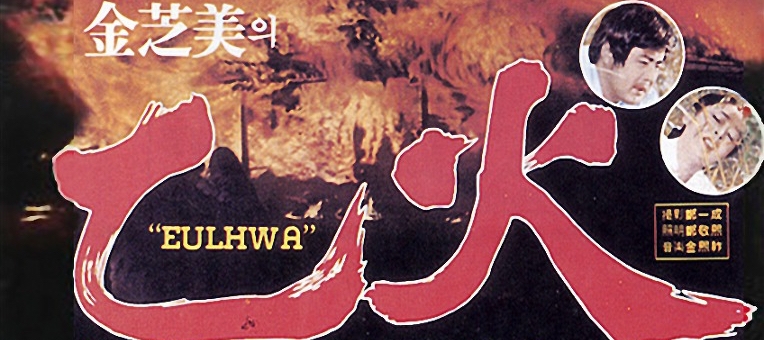
Eul-hwa (乙火 / 을화, Byun Jang-ho, 1979)

Changing times and karmic retribution conspire against a venal shamaness in Byun Jang-ho’s expressionist take on the often adapted story by conservative writer Kim Dong-ni, Eul-hwa (乙火 / 을화). Finding Korea at a moment of transition, Byun’s adaptation is a tale of tradition vs modernity, indigenous religion vs Western Christianity, nature vs civilisation, and the young vs the old, but it’s also an old-fashioned morality tale in which the sins of greed and arrogance can never be forgiven because there can be no peace or happiness for those who seek to prosper through betrayal. 

During an intense storm, Ok-sun (Kim Ji-mee) is woken by an order from a dream instructing her to dig up the cairn outside her home to free a trapped spirit. Fearful as her young son Young-sul is ill, Ok-sun dutifully does what she’s told and discovers a chest containing what appear to be the instruments of a shaman. Leaving Young-sul alone for the moment, she seeks advice from the local shamaness, Mother Pak-ji (Jeong Ae-ran), who reveals that a well known shaman once lived in her home and that she has been selected by the Holy Mother of Sun-do Mountain to serve her as a shamaness. Though some might find this an imposition at best, Ok-sun is not unwilling but is unable to afford the money involved to mount an initiation ceremony. Luckily, Mother Pak-ji agrees to help, taking her on as a pupil and renaming her “Eul-hwa” after the house in which she lives. Young-sul recovers, and Eul-hwa is fully converted to the life of a “mudang”. 

Eul-hwa is less reluctant than some might be to become a shamaness because she is in a sense already an outcast as the unmarried mother to an illegitimate son, forced out of her home village and living in a small, rundown home on the outskirts of a neighbouring settlement where she struggles to support herself and her child. As someone with supernatural powers she earns herself a degree of freedom otherwise rare as a lone woman from an ordinary family, able to earn good money and in fact be fairly wealthy while maintaining her independence even if that independence might come at a price as it may have done for Mother Pak-ji who remains single and is now in a vulnerable position as she enters old age alone with only her fellow shamans for support.  

As Eul-hwa explains to Bang-dol (Baek Il-seob), a male shaman musician who will later become her husband, she once chose to become the second wife of a wealthy man, perhaps the only means available to her feed her young son and though not unhappy with the arrangement chose independence rather than to stay with his family once he died. In one sense she retains the upper hand in her marriage as the star draw and higher earner, but is also manipulated by her husband towards the taboo transgression of betraying her mentor Mother Pak-ji through the very modern crime of stealing all her business and destroying her ability to support herself. Having become a talented shamaness drunk on her own sense of power and success she becomes cold to those who have been good to her when she was otherwise rejected, cruelly refusing Mother Pak-ji’s pleas to consider her position and thereafter earning her enmity. 

The female solidarity which had enabled the two women to prosper together has been corrupted by male greed, Bang-dol’s ambition mediated through his wife as he convinces her to betray her own “mother” without ever considering that she too may one day be betrayed. In this way it is Mother Pak-ji’s “curse” that overshadows her life and success, but Eul-hwa also finds herself a victim of changing times as modernity begins to encroach on the village. A passing Buddhist monk issues a prophecy to the effect that Young-sul will become a great man, but only if he is not raised by his mother in whose care he will otherwise die. Eul-hwa makes a maternal sacrifice and sends her son away to be educated at the temple, intending to train her daughter Wol-hee to become a “great shaman” though she is mute, only to see him return a decade later having converted to Christianity in the city. “The Jesus demon” is an existential threat to the mudang, one she’s so far managed to mediate by performing exorcisms outside the newly erected church that have convinced most of the villagers to stay away. 

The tragedy is that mother and son are intent on “saving” each other from their respective “demons”, Young-sul now convinced his mother is at the mercy of false idols while she believes him possessed by an evil spirit of the West. As representatives of past and future they cannot co-exist and are incapable of accepting that they each hold differing beliefs. Yet even aside from the church we can see modernity already encroaching on the village, uniformed police officers arriving to make an arrest, representatives of an urban authority dressed much like Young-sul in his Westernised student uniform complete with cap and cape. The mudang’s days are numbered, even if she were not about to face the same fate as Mother Pak-ji in being betrayed by her child. 

Cutting to the rhythms of ritual, Byun conjures an atmosphere of fatalistic dread from the expressionist opening with its crashing waves and flashes of lightning to the repeated fire motifs which foreshadow the famous ending and the ominous sound of gloomy church bells clashing with the angry cries of birds. In the clash of cultures, however, modernity will always triumph in the end leaving the present alone to wander in the wreckage of a world consumed by violent conflagration. 


Eul-hwa streams in the UK until 11th November as part of this year’s London Korean Film Festival.

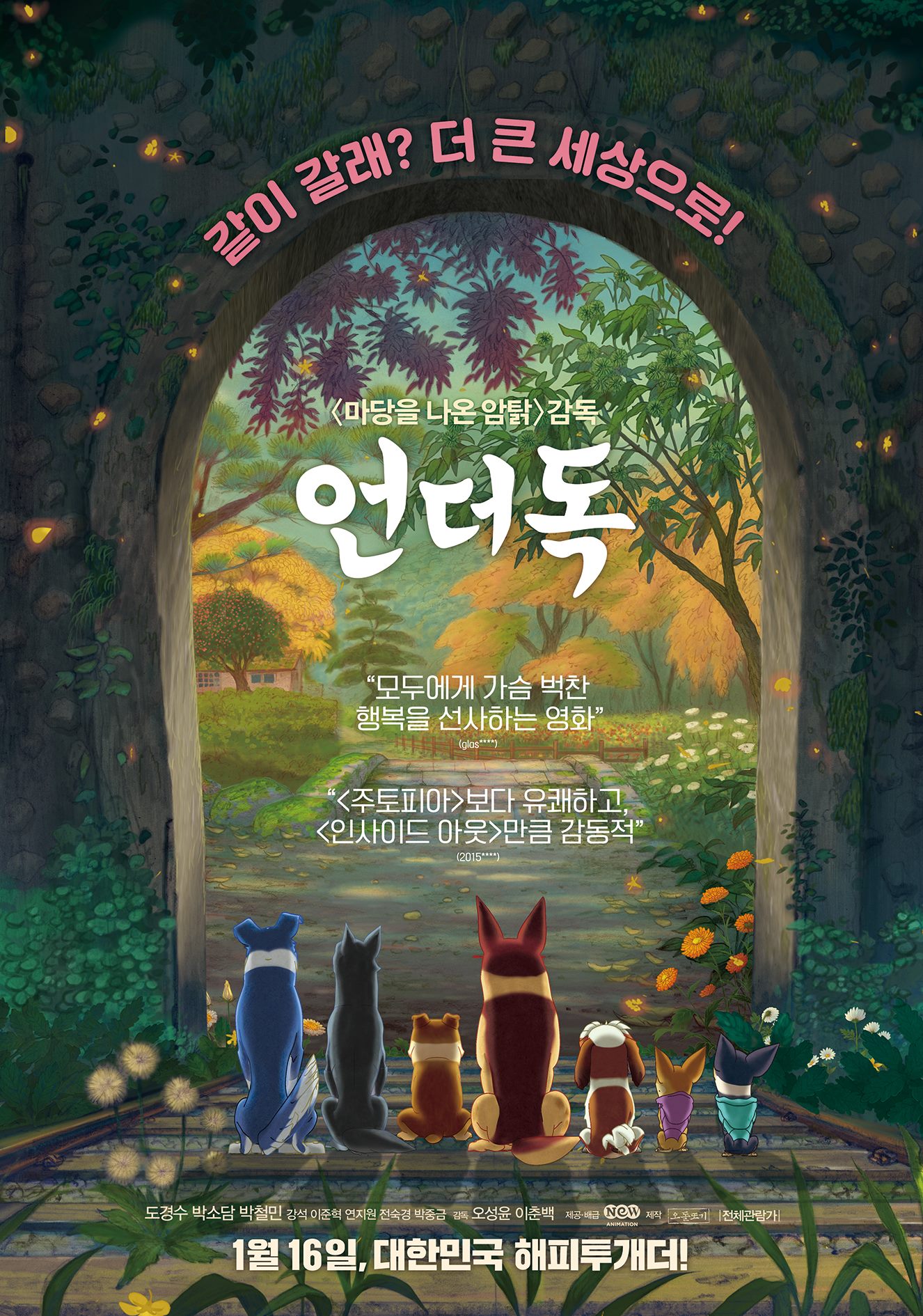
Underdog (언더독, Oh Sung-yoon & Lee Choon-baek, 2018)

“If you want freedom, you need to know how to survive” according to a wise old hound in Korean animation Underdog (언더독), produced by the team behind Leafie: A Hen into the Wild. A somewhat subversive tale of an individualistic desire for total freedom outside the walls of an indifferent society, Underdog also celebrates the power of friendship and family while following our oppressed canines all the way into the ironic paradise of the DMZ, a literal cage but one guarded on either side and guaranteed free of human cruelty. 

Our hero, Moong-chi (Do Kyung-soo), is a loyal family dog who has been raised as a domestic pet and knows nothing of life outside his apartment. Unfortunately, however, his owners bought a cute and tiny puppy without considering that he would eventually grow into a sizeable dog and so they no longer want to look after him. Heartless and irresponsible, Moong-chi’s owner drives him out into the forrest and leaves him there with a bag of kibble, seemingly aware that a domestic dog lacks the knowledge to survive in the wild. Pining and naive, Moong-chi fully expects his owner will be back to fetch him but eventually realises he’s been abandoned after meeting up with a small pack of other dogs in the same position and witnessing another car pull up and push a sick dog out of the passenger side before driving off. 

Trying to survive together while taking refuge in a derelict house in an abandoned part of town, the dogs lament their dependency on humans who have after all broken their hearts and then betrayed them. As they weren’t born wild, they’ve been deprived of their natural way of life, corrupted by a false civility that leaves them totally at the mercy of humans for the sustenance they need to survive while lacking the skills to hunt or forage for food other than that already discarded by the townspeople. Opinions within the group are divided with some fully accepting that they have no other option than to depend on humans despite the danger and duplicity they present, and others longing to find a place that’s free of humankind where they can truly be free to live as nature intended. 

For a children’s film, Underdog is entirely unafraid to be explicit in exploring exactly what “as nature intended” means, the ultimate goal of the dogs being to shift away from anonymous kibble towards tearing apart other kinds of wildlife with their bare teeth including cute bunnies and strangely scary deer. An early conflict arises between the abandoned domestic strays from the town and the true wild dogs from the mountain who complain that their hunting grounds and living environment are forever shrinking thanks to urban encroachment of which the strays are a minor symptom. The strays fear the mountain dogs for their ferocity, while the mountain dogs resent the strays for their neutered domesticity. Yet if they want to find freedom and a place free from human cruelty they’ll need to work together to get there. 

Meanwhile, the gang find themselves continually stalked by a psychotic dog catcher (Lee Jun-hyuk) who, paradoxically, relies on the exploitation of dogs for his livelihood yet vows to wipe them all out, particularly keen on bagging Moong-chi’s potential love interest mountain dog Ba-mi (Park So-dam) with whom he has a history. Bringing in the full horror of puppy farms and questionable ethics of a commercialised pet industry, not to mention dog fights and the meat trade, Underdog asks some uncomfortable questions about the unequal co-dependencies of animals and humans which will probably fly over the heads of the younger audience, but in any case insists on the right of wild animals to run free while simultaneously acknowledging the ability to choose to remain at the side of humans when the gang run into a kindly couple running a small animal sanctuary way out in the country living a more “natural” way of life free of the petty oppressions which mark urbanity. 

Nevertheless, the gang have an extremely ironic destination in mind in heading for the one place on Earth where human violence is not permitted, a buffer zone against the folly of war. Apparently seven years in the making Underdog boasts beautifully drawn backgrounds and an unusual 2D aesthetic that falls somewhere between cute and realistic while featuring scenes and themes that will undoubtedly prove distressing to sensitive younger viewers. Nevertheless, it presents a universal message of freedom and independence as well as solidarity among the oppressed as the abandoned dogs band together to find their path to paradise where they can live the lives they want to live free of human interference. 


Underdog streams in the UK 6th – 9th November as part of this year’s London Korean Film Festival.

International trailer (Korean with English subtitles)

Jesters: The Game Changers (광대들: 풍문조작단, Kim Joo-ho, 2019)

“Even with swords to our necks we say what we must!” a stage actor insists, though somewhat duplicitously as he wilfully says what he must to survive while simultaneously defending his artistic integrity. Oddly timely, Jesters: The Game Changers (광대들: 풍문조작단, Gwangdaedeul: Pungmunjojakdan) is an ironic exploration of the importance of art in engendering narrative proving once and for all that it really can remake the world. Our hero finds himself less torn than you’d expect him to be, only too keen to parrot the words of a regime he does not respect in return not only for his life but for material gain. 

Our heroes are a band of “jesters”, itinerant street entertainers who belong to a kind of underclass and earn their living through their ability to change “reputations”. Petitioned by an ageing wife discarded in favour of a young and beautiful concubine, the gang blacken the other woman’s reputation by literally putting on a show with storyteller Ma Deok-ho (Cho Jin-woong) as the romantic hero sweeping her off her feet. The illusion is broken by a sudden spell of rain, but in any case the gang soon find themselves falling foul of prime minister Han Myeong-hoe (Son Hyun-joo) who makes them an offer they can’t refuse – counter the disadvantageous narrative that the king is a cruel tyrant who usurped the throne through murdering his brothers and nephew with tales of his magnificence, or die. Deok-ho points out that a good way of raising his reputation would be cutting taxes and getting rid of corrupt nobles but unsurprisingly as is rapidly becoming evident, he isn’t being hired to speak the truth. 

On the one hand, Jesters is the tale of Deok-ho’s slow path towards realising his responsibility as an artist to tell the “truth” even when it is inconvenient. His mentor Mal-bo (Choi Gwi-hwa) had come by a banned book, The Six Loyal Subjects, which recounted the real story of how the king came to the throne and was determined to promulgate it, merely changing the name of the king to that of Ming to protect himself against a censorious crack down on street entertainers spreading “fake news”. Deok-ho claims to believe only what he sees, rejecting the evidence of the book, cynically determined to do whatever it takes to escape his poverty. He’d rather not be threatened, but he has no particular objection to Han’s request, only using it to increase his social status by ensuring the gang are re-registered as “middle class” rather than lowly entertainers, later even angling for a position at court. For Han, he engineers miracles from a tree which bends to clear the way for the passing monarch to visitations from the Buddha and floral rain falling from golden skies, tales of which spread quickly through the gossip-hungry nation embellished as they go. 

As Han puts it “history is made by those with power” and to that extent he who controls the past controls the future. Han executes three street performers for spreading “fake news”, men who were literally prepared to die for their artistic integrity in the way Deok-ho was not, while employing Deok-ho to spread “propaganda” that glorifies a weakened king. Enjoying his new status Deok-ho does not really consider the implications of what he’s doing until he realises that Han is playing his own angle, improving his stunts for additional leverage, razing a village so that the nearby temple where one of Deok-ho’s “miracles” occurred might be expanded. Han claimed to be mounting an egalitarian revolution, deposing a “mad” king to hand power back to the people but of course only meant to manipulate regal power for himself. 

Power, as we see, belongs more or less to the storytellers who literally write the narrative. In old Joseon that’s those like Deok-ho, or in other times newspapers, TV shows, or social media feeds. Deok is only just realising he had power all along, if only he had listed to Mal-bo and used it more wisely rather than “rolling his tongue for fame and cheers”. A somewhat flippant satire on fake news/propaganda synchronicity, Jesters makes a passionate plea not only for the power of art to remake the world but for the responsibility of the artist to tell the truth even when it is not popular.


Jesters: The Game Changers screens at the Rio on 31st October as part of this year’s London Korean Film Festival.

International teaser trailer (English subtitles)

Sesang (세상, Jules Suo, 2019)

“Our life’s journey consists of both positive and negative. It teaches us to move forward and fulfil your dreams” according to Han-chul (Han Jong-hoon), a digital nomad waxing philosophical about the benefits of the unencumbered life. “Sesang” (세상) in one sense just means the world, but it can also mean “a life” or even a life’s journey, a passage through the world both a part of it and not. Han-chul, however, by the film’s conclusion is perhaps beginning to wonder if there are also costs involved in a life without connection, unanchored by his floating existence and imbued with a sense of existential loneliness as the world changes around him while he changes with it but perhaps not quite in step. 

The film opens in New York with aspiring actress Nari (Kim Jin-young) travelling to the airport to meet Han-chul, her long-distance boyfriend, at the airport. Han-chul has been working on a documentary in Japan about a divorcee who relocated there and is seemingly visiting Nari while waiting for another opportunity. Nari’s barbed comment that she isn’t sure they “share the same dreams” when Han-chul remarks on the similarity of her upcoming project about a long-distance couple to their real lives perhaps signals that she’s not entirely satisfied with their relationship, eventually sparking an argument that leads to a break-up when Han-chul reveals he’s been offered a job in Berlin annoyed with him for once again abruptly changing his plans, both in his abandonment of her and of his complete lack of consideration for the inconvenience he may cause her through breezing in and out of her life. 

Then again both Nari and Han-chul appear to be fairly self-contained. Each of them find themselves spending a lot of time home alone while living with roommates who are generally out. Nari’s New York life is spent largely within the Korean ex-pat community, often working on Korean productions, eating in Korean restaurants and going to noraebang with Korean friends. She is offended when her mother tries to send her money, resentful at the implication that she’s struggling but also finding herself at the mercy of a sometimes cruel industry that limits the kind of work available to her while normalising an abusive working environment. The one job we see her do which is presented in such a way as to mimic real life is also problematic in playing into several different unpleasant and racially charged stereotypes at once. Later she is invited to rejoin a production she apparently left because of the behaviour of a Korean producer who, she is assured, has since been fired. Her break-up with Han-chul is followed by a job offer back in Korea which sees her pursuing parallel careers, travelling back and forth working at “home” but living “abroad”. 

Staying on in New York, Han-chul too takes a room with someone who’s never in but takes the opportunity to rid himself of most of his possessions. In fact, even his hair becomes progressively shorter as time moves on to the point at which it doesn’t quite suit him, an old friend somewhat derisively commenting on his “edgy” new style. He tells a mutual friend, Eun-hye (Jina Nam), who is definitively settled in New York by virtue of owning a restaurant, that there are many things he may still want but attaining them cannot compare with the lightness of having nothing. Han-Chul’s philosophy may even extend to people as well as things. Perhaps he wanted Nari, or still wants her, but not enough to give up his life of freedom or indeed to deny her hers. He is happy to hear that she too is travelling the world, gaining new experiences and growing as a person, at this point at least convinced that life is about forward motion and the expansion of borders internal and external. 

Yet on his eventual return to Korea after experiencing a degree of disappointment, he seems lost rather than free, a man without a plan adrift without direction. His aloneness seems all the more obvious among the throng of travellers at the airport each heading somewhere or nowhere only they can know. He sees movies in empty theatres, lives in bare rooms, and wanders down empty streets. Often returning to transitory spaces such as airports and train stations, Suo’s preference for long takes with a degree of detachment hints at a cinema of loneliness asking us if this increasingly migratory existence has disrupted the natural rhythms of human relationships such as that of Nari and Han-chul who were, at least according to Eun-hye, once “so close” but now very far apart both physically and emotionally. Han-chul may be searching for the very thing that he has rejected in his floating life, but nevertheless remains on the move chasing his dreams if perhaps not quite sure what exactly they may be. 


Sesang streams in the US Oct. 23 to 31 as part of this year’s Korean American Film Festival New York.

Original trailer (English subtitles)

Between the Seasons (계절과 계절 사이, Kim Jun-sik, 2018)

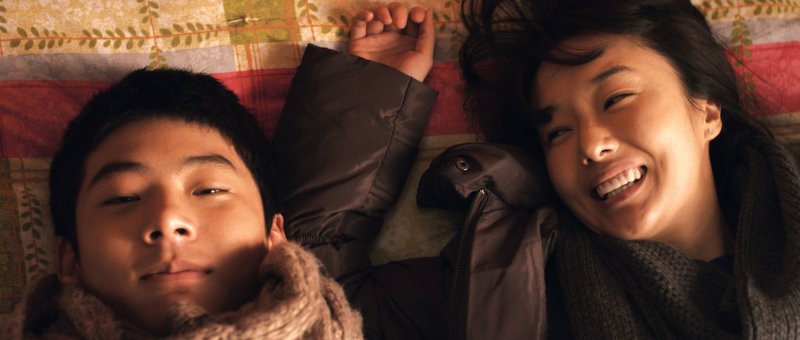
“To live the way I am” replies the reserved heroine of Kim Jun-sik’s Between the Seasons (계절과 계절 사이, Kyejeolkwa Kyejeol Sai Kaebongyejeong) when questioned about her dream, not quite able to answer when asked if she isn’t living that way now. An anti-romance and gentle meditation on the costs of authenticity, Between the Seasons finds two women at different stages of life unknowingly fighting a similar battle, perhaps identifying something in each other but unable to voice themselves fully though in fear and insecurity rather than shame even if they each internalise something of that too as they struggle to push past the barriers that prevent them from fully becoming themselves. 

In her mid-30s, Hae-soo (Rie Young-zin) has just moved from Seoul to a small town to open a bare bones coffee shop. She spends her spare time alone, and we quickly get the impression that she’s making an attempt to move on from something, eventually visiting a mobile phone shop to buy a new handset and instructing the salesman to delete all of her previous contacts and photos. Despite her attempts to discourage her, however, Hae-soo ends up forming an awkward friendship with bubbly high schooler Ye-jin (Yoon Hye-ri) who came into the coffee shop with an unusual order and then became a regular customer. Further bonding on a rainy night after the movies where Ye-jin was stood up by her boyfriend, the young woman starts randomly helping out just because she can see Hae-soo is overstretched eventually becoming an official part-timer spending most of her spare time with Hae-soo much to the consternation of her overbearing, grades-obsessed mother. 

Ye-jin quite literally begins to bring spring into Hae-soo’s life decorating the cafe with pretty cherry blossoms and floral motifs, lending it a cosier, more domestic atmosphere than the rather frosty, utilitarian vibe of Hae-soo’s original non-design. Questioned by Hae-soo about her dream she says she’d like to make things by hand, a dream that is perhaps in direct contrast with her mother’s obvious ambition for her. There’s not much money in paper cherry blossoms after all. That’s two reasons she might prefer being in the cafe rather than at home or studying somewhere else, Hae-soo both mysterious older sister and quasi-maternal figure, only the relationship is further complicated by Ye-jin’s growing romantic attraction to the older woman, becoming jealous as Hae-soo begins a tentative relationship with the sweet and goofy guy from the phone shop (Kim Young-min). 

For her part, Hae-soo remains either wilfully oblivious or simply unwilling to acknowledge Ye-jin’s obvious crush, awkwardly failing her as a friend and as a quasi-parental figure in refusing to engage with her complicated feelings in fear of having to reveal her true self. Instead she pushes the younger woman away without explanation, rejects her, and leaves her with only more shame and awkwardness despite having insisted that that there is nothing wrong in being different and that only by embracing your difference can you improve your life. Ye-jin continues to struggle with her feelings, observing her homophobic friends making fun of the supposed lesbian only to find herself semi-stalking the young woman confessing that if the rumours are true she too is the same. Despite eventually approving of her, the other girl tells her to keep her distance at school, lest they each fall victim to guilt by association. Eventually she gets all dolled up and heads to a gay bar where she furiously makes out with the bartender, mostly one assumes because she reminds her of Hae-soo doubly confirming her feelings. 

Hae-soo, however, is still conflicted, afraid to reveal her true self to anyone. The realisation she eventually comes to, symbolically removing the scarf from around her neck, is that she wanted to shine by herself, finding the confidence in authenticity rather than reflecting the light cast by the approval of others. Ironically that’s something she tried to encourage Ye-jin to do too but accidentally crushed in her brutal rejection of her feelings, costing her perhaps more than she realised in the process. Ye-jin had coyly asked her if she wasn’t making a rash decision, that so far she’d only shown her spring in her cheerful coffeeshop interior design, perhaps she’d like to take in the summer, even see her in winter too, truly thinking long term but the two women remain caught between the seasons, trapped by a sense of internalised anxiety that prevents forward motion. A gentle meditation on connection, authenticity, and self-acceptance Between the Seasons offers no easy answers for its conflicted heroines but motions towards a season of openness in which all are free to be who they are.


Between the Seasons streams in the UK until Oct. 11 as part of the Iris Prize Film Festival in collaboration with Queer East.

Original trailer (Korean subtitles only)

Lucky Chan-sil (찬실이는 복도 많지, Kim Cho-hee, 2019)

Life can be cruel and unpredictable. The titular heroine of Lucky Chan-sil (찬실이는 복도 많지, Chansilineun Bokdo Manji) thought she’d go on making movies with the same group of like minded people until the day she died only to have the rug pulled from under her by an ironic twist of fate that leaves her feeling worthless and exiled as if she’s wasted her youth on a one-sided love affair with cinema. What are you to do when your whole world collapses and you aren’t even sure who you are anymore? The answer, apparently, is to “dig deep”, maybe make a few mistakes, but figure out what it is you really want and then do that. 

The trouble is, all Chan-sil (Kang Mal-geum) had ever thought of doing was making movies. She’d been a long term producer to a notable indie auteur, but when he suddenly dies at the launch party for their latest film it leaves her without a career. Though a top industry figure had previously described her as the hidden gem of Korean cinema, a statement that seemed too effusive to be sincere even in the moment, she later tells her she doesn’t see the point in giving her a staff job because she’d only ever worked with the same director and for auteurs the producer is irrelevant. He would have made the same film without her or with literally anyone else. Even Chan-sil’s new landlady (Youn Yuh-jung) seems intent to put the boot in asking a genuine question as to what it is a producer actually does. Chan-sil tries to explain, but only ends up talking herself into another spiral of despair in wondering what exactly it was she was doing all these years. 

To ends meet she moves into room in a house lodging with an elderly woman who keeps a locked room Chan-sil is instructed not to enter. She also ends up becoming a cleaning woman/assistant to an eccentric actress friend with problems and insecurities of her own of which her timekeeping is only one. Sophie (Yoon Seung-ah) is also taking French lessons from secret indie filmmaker Young (Bae Yoo-ram), on whom Chan-sil gradually develops an awkward crush unsure in herself if she’s actually interested in him, in romance in general, or simply lonely and losing faith in cinema which she realises she had always used to fill the void of the emotional intimacy otherwise missing in her life. 

She is indeed a keen cinephile, going off Young when she tells him of her favourite filmmaker Ozu, only for him to admit he found Tokyo Story boring because “nothing happens” while expressing a preference for “entertaining” films like those of Christopher Nolan and retro hits from Hong Kong. That might be one reason Chan-sil finds herself haunted by a strange ghost (Kim Young-min) claiming to be Leslie Cheung and dressed in the white singlet and boxers he wore in an iconic scene from Days of Being Wild. Nevertheless, Leslie ends up being a sympathetic sounding board, giving her little bits of life advice and encouragement that finally allow her to rediscover her pure love of cinema aside from her industry betrayal. 

Director Kim Cho-hee draws on her own experience as a former producer who worked with the prolific Hong Sang-soo from 2008 to 2015 though her film is perhaps both a winking homage and rejection of Hongism. She opens with a Hongian title sequence featuring stark names against rattan, in itself a reference back to the Ozu Chan-sil claims to favour, before ironically expanding from 4:3 to a more comfortable widescreen as Chan-sil’s world implodes, killing of the indie auteur at a trademark Hong soju session. She also plays with doubling and symmetry, Chan-sil’s attempts to help her landlady learn to read cut against those of Young struggling to teach Sophie French while we learn that the landlady once had a daughter who loved movies and Chan-sil had a grandma who never learned to read or write. But unlike one of Hong’s self-obsessed directors, Chan-sil’s introspection has a more open quality, deciding that she wants to know what it is to really live while accepting that for her cinema is a part of that. Kim ends, literally, with the light at the end of the tunnel while a ghost applauds in a standing ovation, perhaps joining in with the audience as they celebrate Chan-sil’s success in finding her way out of a mid-life crisis and into a more positive future.


Lucky Chan-sil streamed as part of this year’s New York Asian Film Festival.

Original trailer (English subtitles)

Leslie Cheung in Days of Being Wild

Baseball Girl (야구소녀, Choi Yun-tae, 2019)

According to the title card which opens Choi Yun-tae’s Baseball Girl (야구소녀, Yagoosonyeo), an obscure regulation in the founding principles of the Korean Baseball League placed a bar on players who were “biologically non-male”, a ban which was struck down in 1996 allowing women to play professionally though attitudes it seems are much harder to change than regulations. In contrast to the grand tradition of Korean sports dramas, the contest is not a game but the right to play in one and the opposing team not talented rivals but sneering sexism and a conformist society. 

Joo Soo-in (Lee Joo-young) made the papers as the first girl to play in her high school team in over 20 years. Casting an eye around her room we see her trophies and discover that she is a talented pitcher known for top speed fastballs, but then as others seem to put it her balls are only fast “for a girl”. All she’s ever dreamed of is playing professionally and, after all, there’s nothing in the rulebook to say she can’t but that’s all anyone ever tells her. Why can’t I? she asks them, but the only answer they have for her is that it simply isn’t done. Lined up with her teammates following a meeting with a scout from the big leagues, Soo-in watches as only one of her friends, Jeong-ho (Kwak Dong-yeon), is picked. The others all walk off with resignation, accepting that they’ll need to find alternate careers but Soo-in doesn’t back down. 

Soo-in’s determination places her at odds with her working class family, her harried mother (Yum Hye-ran) continually insisting that she’s being childish and unreasonable and should give up her dreams to do something more practical with her life or risk becoming like her father (Song Young-Kyu) who is perpetually unemployed, unable to provide for the family while repeatedly failing the exam to become a licensed estate agent. There’s no shame in giving up when there’s no chance of success, her mother tells her, aligning her quest with her father’s as an egotistical act of prideful selfishness. As a teenage girl, however, Soo-in cannot help but feel the slight of her parents’ lack of support, resenting her mother’s understandable prioritisation of the ability to earn as she pushes Soo-in towards taking an office job in the factory where she works right out of high school in the belief that she’s helping her towards an economically stable life. 

Meanwhile, the new coach on the team, Jin-tae (Lee Joon-Hyuk), is quick to sideline her, viewing her as ridiculous and deluded. It’s not because you’re a girl, he tells her, it’s that you aren’t good enough, paradoxically insisting that she never could be because of the “limitations” of her female body which make it impossible for her to compete with men who also, as he points out, are extremely unlikely to make it as professional players. She tells him that he’s wrong, vowing to pitch at a speed unheard of, certain that if achieved the leagues would have to take her. Jin-tae has problems of his own, a never was player who wasted his youth trying to turn pro, became an alcoholic, and ruined his marriage. It’s understandable that his experiences have turned him cynical and mean, but something about Jin-soo’s determination, along with her strong skillset, begins to move him. Maybe he thinks it’s hopeless too, but it would be wrong to deny her the right to try. 

The biggest battle Soo-in faces, however, is from other players. Jeong-ho relates how in their little league days she was the only girl on the team and the kids mercilessly bullied her in part because the coach told them having a woman around was bad luck and made them all do intensive training to encourage her to quit. Jin-tae tries to get his scout friend to get her a tryout for a professional team, but he makes no secret of his distaste for the idea, exasperatedly complaining that Soo-in doesn’t look like a ball player (i.e., not a man, small and slight) only to later offer her an insulting token job as a figurehead for a “Woman’s Baseball Project” designed to make his big league team look more progressive than it really is. At her big try out, the guys in the dug out snigger and laugh, making fun of the batter who was struck out by “a girl” while the other coach congratulates her suggesting that she must have “trained with the boys” before giving her some unsolicited advice. 

As she tells the director of the big league team, baseball is for everyone. Her femininity is not a strength or a weakness, it simply is. She might not be as fast or as strong, but she’s smart, and brute force is not the point of the game. Some tell to her give up, that she should just play in the women’s leagues as a “hobby”, and perhaps at times Soo-in doubts herself but as Jin-tae tells her, other girls can dream because she showed them it was possible when she overcame huge prejudice to play on her high school team. Yet for Soo-in with every success it will only get harder. Even so she won’t give in, playing hardball with a relentlessly patriarchal society as she insists on the right to follow her dreams wherever they may take her.


Baseball Girl streams in the US via the Smart Cinema app until Sept.12 as part of this year’s New York Asian Film Festival.

Original trailer (English subtitles)