Ashfall (백두산, Lee Hae-jun & Kim Byung-seo, 2019)

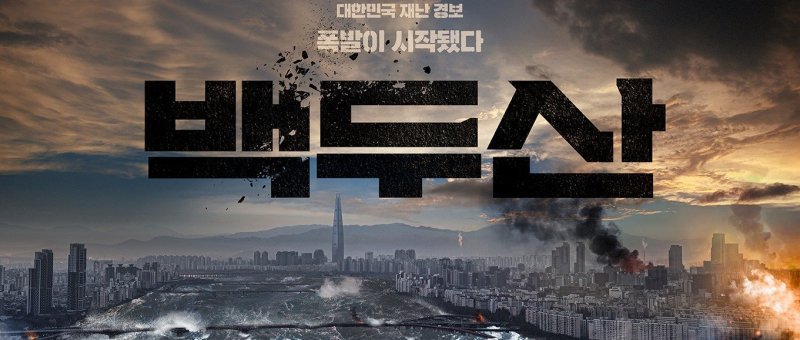
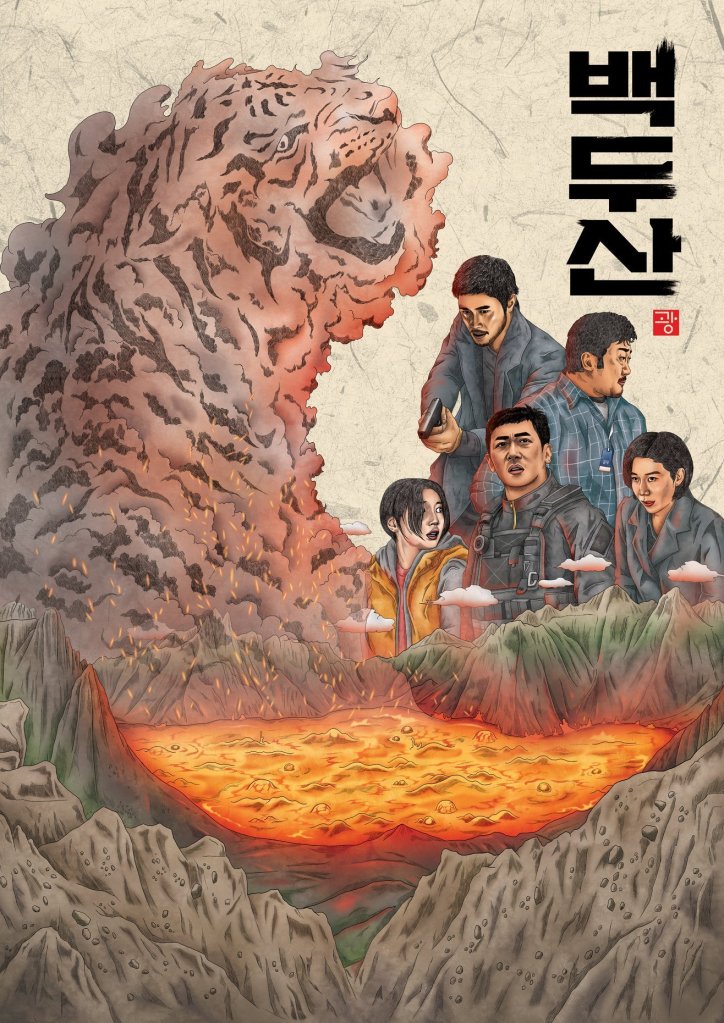
The Korean Peninsula once again faces existential threat though this time of a natural genesis, and ironically the only way to save it might be nukes from the North. Ashfall (백두산, Baekdusan) is the latest and the largest of Korea’s big budget disaster movies featuring a veritable host of A-list talent and action sequences on an epic scale, but also doubles down on the less palatable sides of the genre in an overt and sometimes uncomfortable nationalism which nevertheless has its positive sides in its temporary elision of the North/South divide as the heroes pursue their cross-border mission to save the people of Korea not only from volcanic threat but from becoming mere pawns in geopolitical brinksmanship. 

The most obvious problem, however, is that long dormant volcano and pregnant national symbol Mt. Baekdu has erupted, provoking massive earthquakes which quickly reduce most of the high tech capital to mere rubble. This is particularly bad news for heroic army bomb disposal expert Captain Cho (Ha Jung-woo) because, in true disaster movie fashion, today was supposed to be his last day. Cho’s wife (Bae Suzy) is heavily pregnant, and it seems he’s opted for a safer occupation in the light of his impending fatherhood. According to the predictions of previously derided Korean-American scientist “Robert” Kang Bong-rae (Ma Dong-seok, cast brilliantly against type), Mt. Baekdu will continue erupting with the third and most powerful wave taking out most of the peninsula, but he has a plan to stop it. He wants to use nuclear weapons to blow a hole in the side of the chamber, relieving the pressure. To do that, they need to hijack some of the uranium from very recently decommissioned North Korean missiles, which means sending a small military expedition over the border in secret to track down a possible double agent who knows where all the nuclear material is before loading up their own detonators and driving them into a mine under the volcano. 

All of this takes place against the backdrop of North Korea’s long awaited denuclearisation which is in the process of being witnessed by American forces who are very much not in favour of Kang’s plan seeing as it effectively means detonating a nuclear bomb right on the Chinese border. Once again, the film suggests, Korea finds itself the battleground in a proxy war, its sovereignty denied as it attempts to use whatever means it has to save itself but is actively prevented by various kinds of outside forces. Kang, who idolises America to the point that he rejects his Korean name and tries to leave the country as soon as possible on his US passport, eventually makes the ironic statement that the ensuing chaos is all down to this “incompetant government that can’t decide its own fate” as the American army shutdown a Korean operation to put his plan in action while Cho and his guys also find themselves actively targeted by US military acting covertly in North Korea. 

Somewhat unexpectedly, Cho is not quite the heroic action hero one would expect. He’s anxious and inexperienced, out of his depth as a man unused to being in the field, trained to defuse bombs not launch them and unfamiliar with standard weaponry. Because his guys are the good guys, the North Korean mission is supposed to be “non-lethal”, so they’re wading into this with tasers and rubber bullets while his opposing numbers have no such scruples. Ri (Lee Byung-hun), the North Korean double agent, runs rings around them, playing every advantage while his motives remain unclear until finally sitting comfortably within the realms of action movie melodrama as he and Cho develop an awkward mismatched buddy dynamic, bonding over paternal worries and North/South pop-cultural exchange. 

The familiar message is that all things are possible when working together for a common cause, making a possibly subversive argument that North/South solidarity is the most powerful weapon against entrenched American imperialism and a resurgent China while advocating strongly for a greater national sovereignty less beholden to foreign powers for military support. It comes as little surprise that Kang eventually decides to go back to his original name and stay in Korea for good rather than return to a discredited US, having rediscovered his Koreaness thanks to his role in saving the nation. Subtle this is not, but then who ever asked for subtlety from a big budget disaster movie?


Ashfall is available to stream in Europe until July 4 as part of this year’s Udine Far East Film Festival.

International trailer (English subtitles)
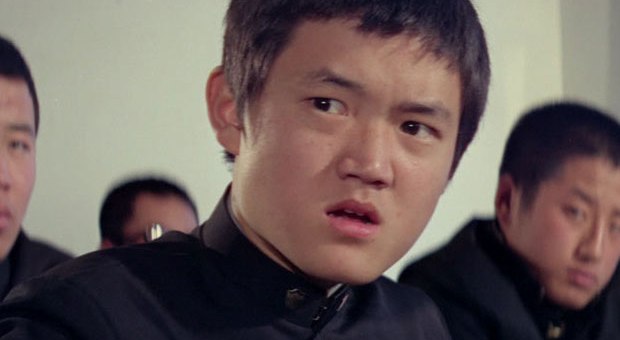
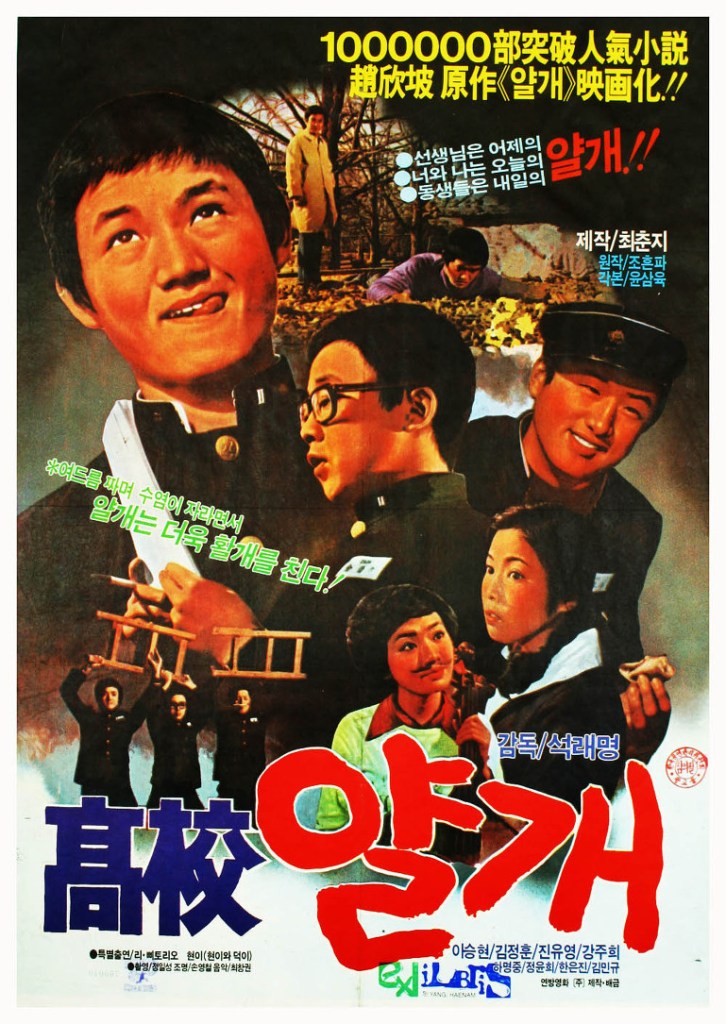
Yalkae, a Joker in High School (高校 얄개 / 고교얄개, Seok Rae-myeong, 1976)

The mid-70s saw a small youth movie craze in South Korea as the boomers came of age and teenagers became a key demographic. It was also a time of increasing prosperity as the economic policies of the repressive Park Chung-hee regime began to bear fruit, but at the same time such films perhaps had a certain responsibility in addition to conforming to the era’s strict censorship requirements. Yalkae, A Joker in High School (高校 얄개 / 고교얄개, Gogyo-yalgae) is a remake of Jeong Seung-moon’s A Legend of Urchins from 1965 which was itself adapted from a serialised novel published in 1954. As such it presents a kind of awakening in a goofy privileged teen after he realises that the prank he played on another boy for fun has had much more serious consequences than he could have imagined partly because he had no idea that his classmate lived in such different conditions to himself. 

We first meet the “yalkae” or joker of the title during a religious assembly at his strict missionary school. While his friend Yong-ho (Jin Yoo-young) snatches crunchy snacks from another boy and sneakily chomps them down, Doo-soo (Lee Seung-hyeon) is caught napping and tries to talk his way out of it by claiming he was merely at prayer before reciting bits of the bible only forget all the names and replace them with those of his own family members. A montage sequence sees him play tricks on his friend in chemistry and set off an alarm clock in class to make the teacher think the lesson’s over. Like many young boys Doo-soo is a class clown. His pranks may be mildly disruptive, but they are never malicious and meant only in fun. 

Nevertheless, he’s got himself a reputation as a troublemaker. Doo-soo’s dad is also a teacher at the school, which is mildly embarrassing for him, and perhaps why he’s given a job to a sympathetic young man, Mr. Baek (Ha Myeong-joong), who was once his own student and will now be teaching Doo-soo. Doo-soo finds this all a bit awkward, especially as it’s quite obvious to him that Mr. Baek has a crush on his grown-up sister Doo-joo (Jeong Yoon-Hee). Meanwhile, Mr. Baek’s errand to fetch something from his room above a greengrocer’s introduces him to the earnest In-sook (Kang Joo-hee), a student at the girls’ high school who works in her family’s shop, with whom he is instantly smitten. 

The major antagonist in his school life, however, is Ho-cheol (Kim Jeong-hoon), a bit of a swot with a tendency to tell tales to teachers. To teach him a lesson, Doo-soo pulls one of his elaborate pranks, colouring the lenses in his glasses red while he sleeps and then waking him up shouting “fire”. Ho-cheol inevitably panics and his glasses get broken in the chaos. Doo-soo pulls another prank on the headmaster which loses him Mr. Baek’s sympathy and nearly gets him expelled, which might be why he ignores Ho-cheol’s small apology for being a tattletale and plea for him to pay for the broken specs. Ho-cheol stops coming to school and a guilty Doo-soo eventually finds out that he’s broken his leg after coming off his bike during his part-time job delivering milk because he didn’t have his glasses and wasn’t able to see. 

Tracking Ho-cheol down takes Dal-soo to an unfamiliar environment on the outskirts of the city where the boy lives in a tiny rooftop room with his older sister who has a job in the factory. To pay for school and help with expenses, Ho-cheol gets up early to deliver milk every morning before classes. A strange but cheerful sort of boy he isn’t afraid of Doo-soo and is actually quite excited to receive a visit, blaming himself for talking too much and apologising for his habit of tattling to the teachers. Up til now, everyone has been trying to “reform” Doo-soo by instilling in him the urge for order and discipline, which he has always resisted. Discovering how Ho-cheol lives and how his silly prank has affected him brings about a real humbling, finally encouraging Doo-soo to start growing up and accepting responsibility which he does by taking over Ho-cheol’s part-time job to raise money for his medical treatment while diligently taking notes in class to bring back to him so he won’t fall too far behind. 

Grateful for the notes, Ho-cheol is perplexed when he tries to ask Dal-soo a question about the lesson only for him to reply that he only wrote down what he heard. Ho-cheol’s confusion prompts him into a reconsideration of his schooling as he asks sensible questions on behalf of his friend and accidentally becomes an earnest student more out of kindness than curiosity. Mr. Baek, with whom he’d fallen out, had asked In-sook to ignore Doo-soo because his crush was getting in the way of his studies so she ended up telling him she didn’t want to hang out with someone who’d been held back, further fuelling his sense of embarrassment in being an educational slacker when education is, according to Ho-cheol who dreams of a top job in one of the many gleaming spires now lining the city, the way forward. 

The “yalkae” is reformed, not quite as serious as the slightly ridiculous pastor, but returned to religion in furiously praying for Ho-cheol’s recovery and pushed towards earnestness in his pure hearted determination to help his friend by working hard in his place. Everyone suddenly sees his goodness rather than his mischief, In-sook starts talking to him again, and the family is repaired with Doo-soo now recognised as a “good son” rather than a problem child. The message is less that being a goof off in class is bad than it is that studying hard for a better future is part of being a good guy, as is being kind and developing an awareness of your social responsibility in acknowledging the consequences of your actions on those around you while remaining aware that not everyone is quite as fortunate as oneself.


Yalkae, a Joker in High School is available on DVD from the Korean Film Archive in a set which also includes a bilingual booklet featuring essays by film critics Kim Jong-won and Park Yoo-hee.

Snowpiercer (설국열차, Bong Joon-ho, 2013)

“Control the engine, control the world” insists the revolutionary mastermind at the centre of Bong Joon-ho’s first English language feature Snowpiercer (설국열차, Seolgungnyeolcha), quite literally meaning to seize the means of production. Adapted from the French graphic novel Le Transperceneige by Jacques Lob, Benjamin Legrand and Jean-Marc Rochette, Bong’s near future dystopia locates itself in a world both ruined and perhaps saved by human hubris, but salvation is a prize offered only to those who can pay, or at least make themselves “useful” to its mysterious and invisible creator, here an engineer both mechanical and social who controls the engine which moves the world yet insists on an order which is far from divine. 

In the near future, humanity’s attempts to repair the damage it has done through manmade climate change by releasing a manmade gas into the atmosphere have backfired to such a degree that the surface of the Earth has become a frozen wasteland no longer able to support life. The only remaining living creatures survive aboard a high tech, ironically eco-friendly train designed for luxurious cruising which cheerfully connects all the world’s railways as one, looping the globe in international solidarity. As such, the train is a self sustaining eco system, a world entire filled with orchards and aquariums where the rich can enjoy all the pleasures of the Earth, but far in the back, segregated from those whose place on the train is assured, is an underclass of stowaways who are denied such luxuries and are largely controlled through fear and starvation with gelatinous protein bars their only form of sustenance. 

“Know your place” the sinister Minister Mason (Tilda Swinton) insists, explaining that they owe their lives only to the “order” the train provides and that therefore they must each serve it by embracing the role they have been assigned. This last instruction is becoming increasingly hard to bear for those trapped in the back of the train with little to no prospect of improving their lot. There have been rebellions before but all have failed. Curtis (Chris Evans), a reluctant leader, his friend Edgar (Jamie Bell), and their mentor Gilliam (John Hurt) are planning another insurrection, certain that the power of the men who guard them is now illusionary because the weapons they carry have been rendered purely decorative. When a child is taken from the rear for unclear reasons, the plan is put into action with Curtis leading a charge towards the front, encouraged by mysterious messages from a secret collaborator somewhere further up the train, and assisted by a Korean tech expert (Song Kang-ho) responsible for designing the train’s security systems and his psychic daughter Yona (Go Ah-sung). 

Later we discover that failed revolution is another means of maintaining “balance” as synonymous with the order that the mysterious engineer Wilford (Ed Harris) provides. Rebellion keeps the population numbers in the back down and engenders the kind of despair that ensures docility at least for a time. There is something distinctly dust bowl in the train’s design from its art deco aesthetics to its wholesome brand of political indoctrination as neatly dressed children sit around the harmonium and are told of Wilford’s greatness by a prim schoolteacher while taught to fear and hate those from the rear. Curtis and his compatriots aren’t merely fighting for freedom and equality but to regain the humanity they fear the system has stolen from them. Recounting a grim tale of how Gilliam lost his limbs, Curtis laments that he too wanted to sacrifice an arm for his fellow man but he couldn’t do it. He never wanted to lead a revolution and is insecure in his vision. Tempted by Wilford, he is no longer sure if he came here to destroy “order” or merely to own it. 

Wilford’s ’30s-style ultracapitalist fascism justifies itself under the rationale that without “leadership” the people devour each other, which is disingenuous seeing as, as in Parasite, Snowpiercer’s true horror is the insidiousness of the system which forces one oppressed person to oppress another through enforced inequality. Wilford insists on “balance”, on everything having its place, but there can be no balance in a world in which a chosen few enjoy untold riches while the masses starve. The chosen few don’t even seem to be very happy, mindlessly swallowing sushi and burying themselves in hedonistic pleasures to escape the fear and emptiness of their lives. Curtis is presented with a choice, become a part of the system which, quite literally, eats its young, or make the sacrifice he couldn’t make before and become the spanner in the works. Yet the choice is only partly his, the means to reshape the world comes from an unexpected direction and is as dependent on faith as Wilford’s insistence on the divinity of industry, but when the great machine grinds to a halt those who walk free of it may find that faith repaid.


Snowpiercer is available on UK blu-ray courtesy of Lionsgate.

UK Release trailer

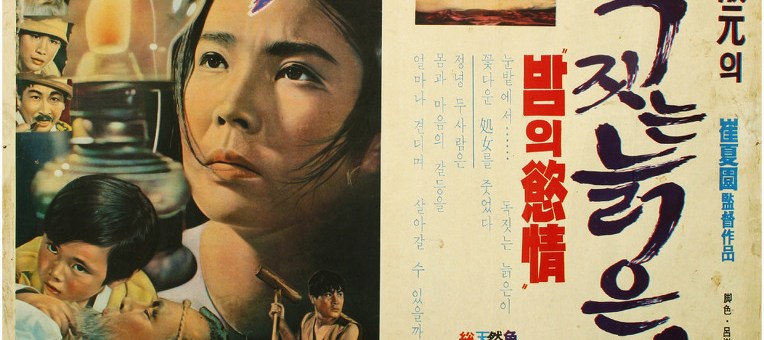
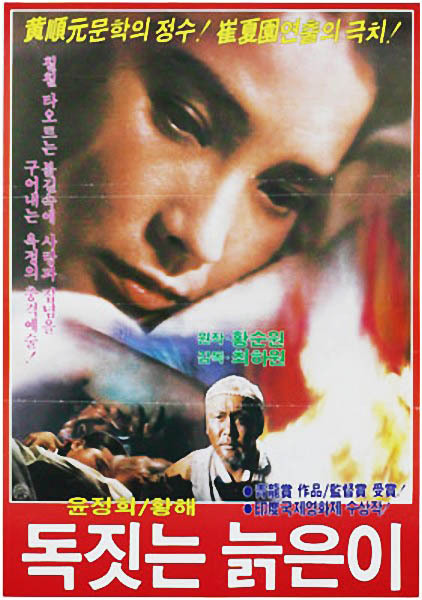
The Old Potter (독짓는 늙은이, Choi Ha-won, 1969)

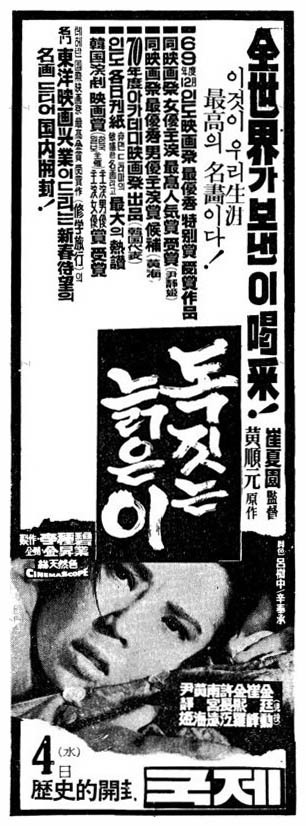
“The man of the house shouldn’t covet and touch what belongs to others even if he is starving to death” laments an old potter admonishing his well-meaning son but also commenting on the folly of his life. A melancholy tale of illusionary futures, Choi Ha-won’s The Old Potter (독짓는 늙은이, Dokjitneun Neulgeuni) is a deeply felt meditation on loneliness and regret as a wandering son finally comes “home” to look for himself in the ruins of his family which seems to have existed as briefly as a dream. 

The young man (Kim Hee-ra), apparently from a nearby village, is a wandering soul struck by the familiar sight of traditional pots which he has not seen in some years seeing as he has just returned from the war. Stepping into a house he finds it not quite as empty as he thought and strikes up a conversation with an elderly gentleman (Heo Jang-gang) who invites him to stay the night among a small community of beggars congregating around a disused kiln. The old man tells him that he comes here every 15th day to spend time with a late friend of his, Song (Hwang Hae), to whom he seems to feel some sort of debt. 

Back in the 1920s, Song, the old potter, joked that he was married to his pots, living a lonely life devoted to his craft. One winter he happened upon a young woman collapsed in the snow, rescuing her and nursing her back to health in his shack. The young woman, Ok-soo (Yoon Jeong-hee), does not exactly fall in love with him but is grateful and, it turns out, has nowhere else to go and so the pair marry. The potter becomes a father to a son, Dang-son, at the age of 61. For seven years, the family is perfectly happy. Old Song truly loves the young Ok-soo and takes good care of her. He is a kind man and patient father keen to pass on his skills to his young son. 

And then, a strong and handsome young man arrives. He is is Sok-hyun (Nam Gung-won), Ok-soo’s first love for whom she left her family, heading off to look for him but fainting in the snow where she was rescued by Song. When Song’s friend made fun of him for washing Ok-soo’s clothes in a nearby stream and prompted him to ask her to stay, he said he’d let her go if that was what she chose, and to that extent he’s true to his word. Having overheard the couple talking and realised their past relationship, he says nothing but silently hopes that Ok-soo will choose to stay with them. 

Ok-soo meanwhile is torn. Her old lover has returned, the man she’d been searching for, but he’s come at an inconvenient time when she is now a wife and a mother with a settled home. She is not unhappy with the potter who, though elderly, is kind and has always taken care of her and their son, but she’s drawn back towards passion and romance with Sok-hyun who is young and strong, able to split logs with a single blow. Song hears the sound of the axe echoing in his mind as a grim reminder that Sok-hyun is everything he is not – young and handsome and full of life. He can offer only the warmth of their home and the feeling of duty towards family as reasons for Ok-soo to stay, but knows in his heart that she will choose the love of her youth over the security they have built together. 

Song’s late life happiness is shattered like one of his imperfect pots. He cautions his son that one should not covet things which belong to others as if blaming himself for daring to “borrow” Ok-soo all these years when she “belonged” to someone else. He gives Dang-son another pottery lesson which is really life philosophy, explaining that it’s fire that makes the pot, not the man. A man is made by the fires he endures, and perhaps, Song starts to think, he should give in and allow Dang-son to be adopted by a noble family so that he might live an easier life as a gentleman rather than struggle here with him with no real hope for the future seeing as all his pots are cracked. 

Of course, as we already know, the sad young man who returned from the war is Dang-son, so perhaps Song’s choice did not buy him the easy life that he hoped it would. Meanwhile, the old man explains that Ok-soo later returned and bitterly regretted her choice, begging to be told where Dang-son had been taken, but the old man turned her away which is why he feels so guilty. “I deserve the severest punishment as a woman who deserted her husband and son” Ok-soo laments, having spent the last 20 years trying to atone for her decision to choose passion over her maternal responsibility. Song’s brief moment of happiness left him unable to return to his cold and lonely life as the master potter, his hopes shattered by life’s imperfections. Fire has shaped them all, but after it’s cooled all that remains is bitter regret for the frustrated desires of youth and a painful longing for forgiveness. 


The Old Potter is available on English subtitled DVD courtesy of the Korean Film Archive in a set which also includes a bilingual booklet featuring an essay by director Choi Ha-won on the making of the film as well as writing by film critic Kim Jong-won. It is also available to stream online via the Korean Film Archive’s YouTube Channel.

Black Money (블랙머니, Chung Ji-young, 2019)

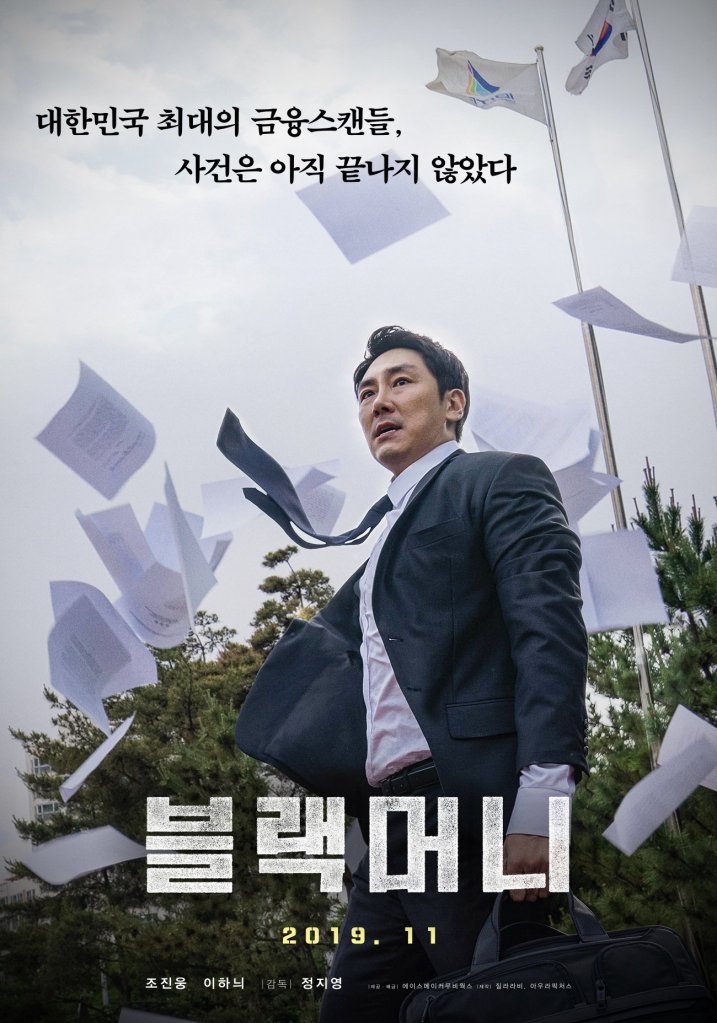
Following hot on the heels of Default, Chung Ji-young’s financial thriller Black Money (블랙머니) once again has some questions to ask about the nature of capitalism in South Korea. Loosely based on a real life incident concerning the sale of the Korea Exchange Bank (KEB) to American private equity firm Lone Star Funds, Chung’s film points the finger at systematised corruption as its collection of greedy financial elites peddle national interest as a reason for keeping the public in the dark when it comes to their dodgy dealings.

The trouble starts in 2011 when an illicit couple, one working for Daehan bank and the other for the Financial Supervisory Service, are bumped off after being called in by the Supreme Prosectors’ Office in connection with an ongoing corruption investigation into the sale of the bank at rock bottom prices. The male bank employee is killed when the couple is run off the road by a truck but the FSS woman, Su-gyeong (Lee Na-ra), manages to escape. Fully aware that her life is at threat, she tries to get herself arrested by the police for protection but fails and is later discovered dead in her car next to a charcoal briquette. A “suicide note” in the form of a text message to her sister suggests that she has chosen to take her own life because of the aggressive tactics of prosecutors one of whom sexually harassed her after which she felt too humiliated to go on living. 

The mention of sexual harassment is intended to act as a tiny bomb by the shady forces in play, fully aware that just mentioning those words makes the entire case toxic ensuring it will be shut down never to be mentioned again. They have, however, picked the wrong man for their patsy in “bulldozer” Yang Min-hyuk (Cho Jin-woong) who is outraged to have been unfairly labelled a sex offender and will stop at nothing to clear his name, eventually uncovering the entire conspiracy after realising that Su-gyeong’s death was almost certainly a murder.

In this, Yang is obviously acting in self interest, which isn’t to say that he doesn’t care about the conspiracy, but it’s not his primary motivation. His opposing number, Kim Na-ri (Lee Honey), is perhaps much the same, a victim of her upbringing but increasingly conflicted. Brought up by a right-wing, ultra-capitalist professor who is good friends with former prime minister Lee Gwang-ju (Lee Kyoung-young) now working on the Daehan bank sale, Na-ri tells herself she’s acting in the national interest in her desire to set up her own international trade law firm to prevent Korea being taken advantage of by bigger foreign economic powers and in particular the Americans. Despite her law background, what Na-ri has mainly found herself doing is more like PR, finding palatable ways forward to make sure the deal goes through on favourable terms despite the already widespread public outcry.

Surprisingly, Na-ri and Yang end up bonding over the course of the investigation, discovering they have more in common than either might have assumed. Given the kind of evidence that Yang is digging up which points to a wide scale conspiracy involving complex fraud and murder, Na-ri finds herself conflicted. Maybe she isn’t quite as committed to ultra-capitalism as her father is, giving Lee’s speech at the Davos conference the heart-warming title of “free trade with a human face” which apparently went down very well with the audience. Whatever else she is, she’s a lawyer, and the kind of lawyer who doesn’t really like it when people break the law, so she’d rather not think that she’s been party to criminality without ever realising. Lee, meanwhile, uses their familial closeness against her, adopting a sleazy kind of sexist paternalism as he brushes off her concerns as if telling her not to worry her pretty little head about it while tacitly admitting what he’s up to isn’t quite right but is justifiable because the economy must be protected at all costs. 

Only, that’s a difficult claim to square when Na-ri’s restructuring plans for Daehan involve hundreds of workers being laid off and some of them are currently on a hunger strike in the public square to protest. Na-ri is used to thinking in big numbers, she’s not usually confronted by the human face of their results and the weight of her responsibility does perhaps shake her. Yang too is used to being equivocal, declaring himself a neutral force because his job is to enforce the law equally, but he got into this after his dad was involved in a traffic accident where the other driver turned out to be a chaebol kid, so he knows all about systemic inequality and entrenched corruption. Nevertheless, self interest continues to play its part. The sympathetic chief prosecutor who put his career on the line to take the case forward is ousted through a trumped up charge while his replacement offers to shelve it in return for a promotion. A combination of bribery and violence conspires to keep the financial elites doing what they’re doing because no one is secure enough to stop them. 

Trying to discourage her from her newfound sense of responsibility, Na-ri’s father reminds her that Lee is like family to them, which is one reason he’s put her forward for a top job as a financial commissioner, explaining that “that’s how we live through capitalism. Just accept it. It’s not something you can change on your own”. Chung ends the film with a sense of triumph as the common man, Yang, makes an impassioned speech in front of an angry mob, but according to the on screen text his was an empty victory because no one was ever brought to justice over the “illegal” bank sale which put a lot of ordinary citizens out of work while already wealthy elites lined their pockets aided by the financial authorities and a rotten judiciary. An attack on rampant capitalism, Black Money is not afraid to announce where its allegiances lie but seemingly has few answers other than indignation towards an inherently corrupt society ruled by greed and indifferent to the suffering of ordinary people.


Original trailer (no subtitles)

A Bonanza (노다지, Chung Chang-wha, 1961)

Chung Chang-wha is best remembered as a pioneer of Korean action cinema, eventually travelling to Hong Kong to direct martial arts movies with Shaw Brothers. 1961’s A Bonanza (노다지, Nodaji) arrives at a moment in which melodrama was the predominant genre and does in a certain way conform to contemporary tastes in its strong message of familial responsibility and reconciliation, but is also influenced by European and American crime cinema adding a touch of noir to its clearly delineated worlds of rich and poor which the hero has, perhaps incorrectly, attempted to cross through abandoning his social responsibilities to chase fortune in the wilderness. 

First on the scene, however, is lonely sailor Dong-il (Hwang Hae) who has returned to Busan after a six month voyage. He tries to visit his mother who is working in a restaurant, but finds her cold and unreceptive. We learn that prior to becoming a sailor, he’d been unemployed and embarrassed not to be able to support his ageing mother as a son should. Dong-il’s father apparently went off to the mountains to look for gold 20 years ago and hasn’t been heard from since. His mother has remarried and his step-father appears not to like him very much, so Dong-il’s longed for familial reconciliation seems unlikely to take place. Angrily leaving the restaurant, he punches an old hobo in the street in frustration. 

Unbeknownst to him, the man, Wun-chil (Kim Seung-ho), is like his father a prospector only apparently a lucky one. After 20 years living “like an animal” in the mountains, he’s struck gold and a lot of it. Wun-chil sells some of the gold to an unscrupulous dealer who immediately cheats him and turns out to be partly responsible for the marriage of the woman he loved to a much wealthier man, and thereafter sets about living as a member of the elite, taking a room at a plush hotel the staff didn’t even want to let him into after taking one look at his mountain man attire. A lengthy flashback informs us that after getting his heart broken, Wun-chil married a woman who was fond of him on the rebound but he never loved her and so the marriage floundered while he became a drunk dependent on his wife’s labour picking coal at the railway. Eventually he decided to leave for the mountains with Dong-il’s dad Dal-su (Heo Jang-gang), leaving his wife and baby daughter Yeong-ok (Yun In-ja) behind. Dal-su passed away shortly after they found the gold together and so Wun-chil is keen to track down Dong-il to ensure he gets his dad’s share of the money while also hoping to reunite with Yeong-ok. 

The gold becomes a corrupting influence in Wun-chil’s life. He has been away 20 years and no longer has any friends while those he makes after becoming rich cannot exactly be trusted. The unscrupulous jeweller has him splashed all over the papers where he talks about his desire to find Dong-il and Yeong-ok, causing a series of imposters to appear claiming to be the long lost children as well as one fake detective offering to find them. When Dong-il eventually finds Wun-chil himself, Wun-chil has all but given up and chosen to self isolate to protect himself from the virus of greed and so doesn’t believe Dong-il is who he says he is. 

Meanwhile, he’s consumed by a sense of guilt and regret in his abandonment of his family and failure as a man to behave honourably towards the woman that he married. We discover that the motivation for Dal-su and Wun-chil to go into the mountains was less economic than romantic. Dal-su’s wife had apparently left him and he hoped to win her back after getting rich, while Wun-chil was still smarting from the loss of the woman he loved to a wealthier man and thought he could gazump him by happening on a gold mine. On his deathbed, Dal-su is sure his fate is payback for the abandonment of his family, while Wun-chil’s guilt runs still deeper. His wife was eventually killed in a rail accident while he was away, leaving Yeong-ok all alone, eventually taken in as a servant and exploited by a wealthy family. Wun-chil came and got her back, but was unable to care for her, eventually tying her to a tree and walking off which is why he has no idea if she is alive or dead. 

Yeong-ok (Um Aing-ran) appears to have survived but has been further corrupted as a member of a vicious street gang, seducing men in the street and then mugging them at knife point but beholden to her boss, Hwang Hog (Park No-sik), who more or less owns her in return for the investment he has made in feeding her. In the course of her activities she encounters Dong-il who heroically fends off her attempt to rob him and prompts her into a reconsideration of her way of life. The youngsters hit it off and begin to fall in love, especially once they discover their shared trauma as children essentially abandoned by irresponsible fathers who ran off to look for gold and never came back. 

Of course, their tripartite destinies eventually converge as the gang sets its sites on Wun-chil’s millions while he starts to reflect on the meaninglessness of wealth when you actually have it. He finds himself wandering down to the railway tracks and observing the other women working there in memory of his late wife, slipping a bundle of notes inside the blanket of a baby on its mother’s back and handing more cash to those he passes on his way. That does not mean, however, that he’s willing to surrender his gold which is why he kicks off when he discovers the map to the mine and all his money has been stolen from the hotel. Culminating in a tense shootout between the righteous forces of Dong-il picking up his father’s gun, a regretful Wun-chil hoping to reunite with Yeong-ok, and the gang he hopes to free her from, the battle is not so much over the money but for Wun-chil’s frustrated paternity. Vanquishing the greedy, the family is in a sense restored as Wun-chil vows to become a “good father” to Yeong-ok, embracing Dong-il as a potential son-in-law as the kids support the wounded patriarch back towards civilisation and a presumably happier future. 


A Bonanza is available on DVD courtesy of the Korean Film Archive in a set which also includes a bilingual booklet featuring writing by Park Sun-young (Research professor, Center for Korean History at Korea University). It is also available to stream online via the Korean Film Archive’s YouTube Channel.

Time to Hunt (사냥의 시간, Yoon Sung-hyun, 2020)

A little over 20 years ago, the Korean economy faced an existential threat in the face of the Asian Financial Crisis during which it defaulted on its loans, ran out of ready cash, and was forced to accept concessions some regarded as humiliating not to mention politically regressive as part of the bailout package it negotiated with the IMF. Returning nine years after his indie debut Bleak Night, Yoon Sung-hyun brings these events very much to the fore with Time to Hunt (사냥의 시간, Sanyangui Sigan) while blending them with a painfully contemporary take on “Hell Joseon” pushed into a literal dystopia in which Korea has somehow become a lawless police state in which the Won is now worthless as the government once again defaults and is forced to negotiate with the IMF while workers protest in the streets against mass layoffs and forced “restructuring”. 

It’s into this world that Jun-seok (Lee Je-hoon) emerges after spending three years in prison for a robbery which was supposed to be his first and last job. Unfortunately, the loot he got sent away for stealing turns out to be worthless, the Won being so unreliable that most shops no longer accept it and insist on trading with the American Dollar though currency exchange is also illegal. Jun-seok finds this out from his two sheepish friends who’ve come to pick him up but didn’t quite have the heart to explain just how much has changed. Previously civilised Korea is now awash with drugs and guns, and crime, it seems, is the only viable economy. While inside, Jun-seok received an invitation to a better place, a paradise waiting for him in Taiwan where it’s always warm and the water is a beautifully clear shade of emerald. The only problem is he has to buy in, and without the loot he’s stuck. Which is why he talks his friends, plus a guy who owes him money, into helping him rob an underground casino operated by gangsters. 

The force which binds the men together is futility. On their way to collect Jun-seok, Ki-hoon (Choi Woo-shik) and Jang-ho (Ahn Jae-hong) joke about trying to sell vintage clothes abroad. “This isn’t the time for pride”, they remark, “we’re penniless”. Ki-hoon isn’t keen on Jun-seok’s scheme, reminding Jang-ho that after the last time they swore they’d never do anything like that again. Jang-ho, however,  has decided to go for it, partly out of loyalty to Jun-seok who took the fall for them and went to prison alone, and partly because, well, what else is there? While Jun-seok was inside, they lived quiet, honest lives but it’s got them nowhere and all that’s waiting for them is more of the same. “We’ll just be bottom dwellers,” he sighs, “when we pull this off we can live like human beings”. 

Yet even between bottom dwellers there are further class divisions. Jang-ho is an orphan with no family to fall back on, while Jun-seok’s mother has passed away leaving him only with a vague dream of an island paradise, a 1950s-style postcard from Hawaii sitting next to her photo on a makeshift altar. Jang-ho also has asthma which means he was exempted from military service, something that leaves him at a disadvantage in the world in which he now lives as the only member of the group without weapons training. Ki-hoon meanwhile has two loving parents, but that also means additional responsibilities in exchange for a permanent safety net. 

Ki-hoon’s family is also evidence of rapid social change. His parents own a modest Korean-style home complete with a well which is a source of amusement to city-raised Jang-ho, while the boys are about to be kicked out of their tiny flat for failing to pay the rent. Ki-hoon’s dad is also one of the protestors outside the factory, loudly calling for the government to “secure laborers’ right to live”. Perhaps to his generation, protest has possibility, to Ki-hoon it seems not only “pointless” but potentially dangerous even as his dad grins ear to ear while shouting out slogans in the hope of social change. 

The boys take a desperate chance because they know nothing other than desperation. “We don’t have anything to lose now” Jun-seok points out, but immediately contradicts himself in claiming that he never wants to lose the “dream” of his Taiwanese paradise. Dreams are however also something which plague him, visions of accidentally causing the deaths of those close to him or scenes of blood and ghosts followed by the melancholy image of a friend finally returning. The tragedy is that the heist comes off without a hitch, they do everything right, but they’ve made a fatally naive mistake. In trying to cover their tracks, they swipe the CCTV footage, little knowing that the hard drives also host extremely valuable information regarding the casino’s police-backed VIP money laundering operation which is why they find themselves “hunted” by a cruel and relentless gunman. In over their heads, the guys think this is about the money and maybe they can just give it back, never knowing that they’re sitting on something much more valuable or why it is they’re really being chased. 

“This isn’t the world you used to live,” Jun-seok is warned once again, “no matter where you are, you cannot escape”. Han (Park Hae-soo), the relentless hunter, becomes an omnipresent threat fused with the shadows as a representative of the societal corruption which cannot it seems be overcome. Shiny LCD screens pepper the landscape as a grim reminder of a possible future, the tech giant of the world now a lawless wasteland filled with derelict buildings and shuttered businesses, a corrupt police state in which the police is the biggest gang and the man owns the streets. Jun-seok dreams of an island paradise where everything is calm and airy, he owns a small shop repairing bicycles, and goes fishing on the beach. Such a wholesome future is more than he could ever expect to gain, but eventually he realises that you can’t escape the spectre of control by refusing to face it and the only way to be free in your own personal paradise is to exorcise your demons so you need not fear the darkness.  


Time to Hunt is currently available to stream worldwide via Netflix.

International trailer (English subtitles)

Tosuni: The Birth of Happiness (또순이, Park Sang-ho, 1963)

Korean Cinema had enjoyed a small window of freedom following the April Revolution that brought down the government of Rhee Syngman, but that window was closed all too soon by the Motion Picture Law brought in under Park Chung-hee which reformed the film industry and instituted an increasingly stringent censorship regime. Despite that, however, 1963 was something of a banner year which saw the release of such enduring classics as The Marines Who Never Returned, Bloodline, and Goryeojang. In comparison, Park Sang-ho’s Tosuni: The Birth of Happiness (또순이) seems like a much smaller film but was the fourth highest grossing that year, possibly because it was inspired by a hugely popular radio serial. Standing in direct contrast to contemporary melodrama, Tosuni puts a positive spin on go getting capitalistic individualism as its salt of the earth working class heroine defiantly makes her dream come true on her own despite the parade of useless men that attempt to drag her down. 

The cheerful Tosun (Do Kum-bong) is the daughter of Choi Jang-dae (Choi Nam-hyeon) who came from the North with nothing but the shirt on his back and now owns a bus company. A difficult, miserly old man, Jang-dae has a loathing for people who depend on others which is why he sends a young hopeful, Jae-gu (Lee Dae-yeop), packing when he turns up with a letter of recommendation and asks for a job as a temporary driver. Unbeknowst to Jang-dae, Tosun had already encountered Jae-gu on the bus where her father had sent her on an errand only to complain she’s not come back with as much money as he hoped. Tosun asks her father for a 50 won payment for her work but he refuses, leading to a blazing row during which Tosun points out that while both her parents were out working she was basically their housekeeper so he owes her around 15 years in back pay and is also in contravention of the child labour laws. Seeing as she was looking after them all these years, she feels she’s already well acquainted with the “independence” her father always seems so keen on. Eventually she storms out, vowing to become a success on her own. Jang-dae is annoyed to have lost the argument but also oddly proud, realising that he brought Tosun up right and impressed that she actually stood up to him and can obviously take care of herself. 

Tosun certainly is a very capable woman, working hard, taking every job going, and making money wherever she goes. Jae-gu, meanwhile, turns out to be something of a layabout, never really looking for a job but spending all his money drinking with the madam, Su-wol (Na Ae-sim), in a local cafe. Tosun carries on doing her own thing but also wants to help Jae-gu, not least because they pledged to try and achieve their dream of owning a modern motor car together. Jae-gu knows that Tosun is perfectly capable of getting the car on her own and is mildly put out by it, sore over wounded male pride despite her assurances that even if she’s the one who gets the money together he’s the one who’ll be driving. That’s perhaps why he’s so easily suckered by an obvious scam when he gets together with a friend who’s met a guy who needs to shift some tyres, but only after dark when there’s no one around. Tosun thinks it’s fishy, especially if they can’t take the tyres right away, but goes along with it to make Jae-gu feel better. 

Like Jae-gu, most of the other young men are also selfish and feckless, dependent on and exploitative of female labour to get them out of trouble. Tosun’s brother-in-law (Yang Il-min) is forever lying to his in-laws to get loans for spurious business opportunities which never work out, complaining that he can’t “slave away as a temporary driver forever” but taking no proactive steps to change his circumstances despite the responsibilities of being a husband and father. Jae-gu’s friend, meanwhile, takes the opportunity of his wife being in hospital waiting to give birth to their child to try it on with Tosun who manages to fend him off but has a major loss of confidence because of the shock of his betrayal. 

Tosun’s mother hadn’t wanted her to move out not only because that means she’s alone in the house with the difficult Jang-dae, but because being an “independent” woman was somewhat unheard of and she’s worried her daughter will lose her virtue, or at least be assumed to be a loose woman, after leaving home before marriage. Tosun might be a little naive and extremely good hearted, she keeps unwisely lending money to people who obviously aren’t going to pay her back, but as she keeps pointing out she didn’t move out for fun she wants her independence. That’s one reason she keeps Jae-gu at arms length even though she’s fallen in love with him despite her constant exasperation. 

Tosun is in many ways the embodiment of a capitalistic work ethic, proving that you really can make it if you just knuckle down. The car represents both independence itself and a sense of modernity, as demonstrated by the excited commotion among Tosun’s friends and neighbours when she finally gets one and arrives to take her parents for a drive. Even the brother-in-law suddenly realises he might be better off working for Jang-dae rather than living a feckless existence of constant and humiliating failures trying to get rich quick. That’s the problem with the younger men, apparently, they want everything right away, like Jae-gu and his tyre deal, and aren’t really prepared to work at it. Tosun sorted the tyre problem in her own cooly handled fashion, outwitting the unscrupulous vendor but doing it without malice and only showing him she won’t be had. Is the motor car and everything it represents the birth of happiness? Maybe not, but it doesn’t hurt, and Tosun unlike her father seems to have retained her good heart, setting off into an admittedly consumerist but hopefully comfortable future, a back seat driver but behind her own wheel. 


Tosuni: The Birth of Happiness is available on English subtitled DVD from the Korean Film Archive in a set which also includes a digital restoration before/after comparison and stills gallery plus a bilingual booklet featuring essays by Kim Jong-won (film critic & professor), and Park Yu-hee (film critic & research professor). It is also available stream online via the Korean Film Archive’s YouTube Channel.

Svaha: The Sixth Finger (사바하, Jang Jae-hyun, 2019)

The thing about prophesies and the prophets who proclaim them, is that they only have power if people choose to believe in them. “Faith” can become a convenient cover for those who’d rather not explain themselves, a mechanism for manipulating sometimes vulnerable people looking for a greater truth or a purpose in their lives. Svaha: The Sixth Finger’s (사바하) dogged pastor is intent on investigating religious crimes and exploiting spiritual charlatans but he of course has his own agenda, that mostly being that he’s keen to get money off his clients who are in turn hoping to bolster their authority by rooting out “heresies”.

Leader of the Far Eastern Religious Research Institute, a kind of religious detective agency employing only himself, an undercover assistant, and a “deaconess” secretary, Pastor Park (Lee Jung-jae) makes his money flagging up dodgy and/or exploitative practices connected with organised religion. According to him, freedom of religion is “overly” protected, and he is alone on the frontlines of a spiritual war against unscrupulous cultists. Though some kind of protestant, he often works for/against the Catholic Church and is good friends with a Buddhist monk who gives him a tip off about a weird sect he can’t get a handle on, Deer Hill. 

Meanwhile, a young girl, Geum-hwa (Lee Jae-in), explains to us that she was born with an “evil” twin clamped to her leg. The twin wasn’t expected to survive, but is still living with Geum-hwa and her family who keep her locked up in a shed like a beast. Rightly or wrongly, Geum-hwa connects her sister with the deaths of her parents which occurred fairly soon after the children were born. Her grandfather, with whom Geum-hwa now lives, never even registered the birth of a second child out of fear and shame, never expecting her to survive this long. When a truck hits a bridge and exposes the hidden body of a murdered teenager, the police start investigating too, eventually leading them to two young men loosely connected with the shady Buddhist cult. 

“This world is one big muddy mess”, according to the cultists at Deer Hill. It’s not difficult to see why people might be looking for spiritual reassurance in such a chaotic world, but it’s exactly that need that places like Deer Hill may be seeking to exploit. Nevertheless, the only thing that Park’s undercover agent turns up is that there doesn’t appear to be anything untoward. Deer Hill doesn’t accept offerings from its members and even gives money away to the needy. Tellingly, the real nitty gritty to Park’s clients is in doctrinal deviation, they only really want to know what kind of Buddhism it is that they do and if it’s in line with broader teachings of the faith. 

A further tip off leads them to the mysterious Je-seok (Jung Dong-hwan), a legendary Buddhist priest who studied in Japan but apparently devoted himself to the Independence movement and is said to have achieved enlightenment. Je-seok’s teachings are dark in the extreme, “Pain is the fruit of faith” goes his mantra, “pain purifies your blood”. He believes that he is the “light” that will conquer the “darkness” by snuffing out “snakes”. One of his disciples, brainwashed as a vulnerable young man and encouraged to do terrible things in the name of good, begins to doubt his teachings when confronted with a possible hole in his logic and the very real human cost of his strategy. 

Not quite as cynical as he seems, Park retains his faith. It’s ironic that all this is taking place at Christmas and centres on the prophesied birth of a child that threatens someone’s sense of personal power. Unlike most, Park has always regarded Christmas as a “sad” holiday, unable to forget that Jesus’ birth was accompanied by the mass murder of innocent baby boys. He wonders where God is now and why he permits these things to happen. Park has faith that God sent Jesus into the world for the greater good, but Je-seok has convinced his followers that the same is true of him, that he has come to banish the darkness and that all their pain and suffering is fuel in a holy war. Their faith has been redirected and misused for the benefit of a false prophet, while his opposite number has been made to live a life of bestial misery solely because of superstitious prejudice. The police is a fairly irrelevant presence in this series of spiritual transgressions, but there is much less clarity to be had in “truth” than one might hope with “faith” the only solution in an increasingly uncertain world.


Svaha: The Sixth Finger is currently available to stream on Netflix in the UK (and possibly other territories).

International trailer (English subtitles)
A Sister’s Garden (姉妹의 花園 / 자매의 화원, Shin Sang-ok, 1959)

In melodramas of the post-war era, the good suffer nobly but often find their goodness ill rewarded by an increasingly amoral society. Shin Sang-ok’s A Sister’s Garden (姉妹의 花園 / 자매의 화원, Jamaeui Hwawon) is, perhaps, a little different despite its rather mild critique of a society preparing to head into rampant capitalism, allowing a magnanimous entrepreneur to become the pure hearted saviour of an equally pure woman while her weak willed lover remains petulantly on the sidelines unable to defy outdated social codes to claim his right to happiness. 

In fact, this is in many ways Mr. Bang’s (Kim Seung-ho) story. It’s him we first meet getting off a swanky Korean Air plane signalling his position as a member of a new class of jet-setting elitists. He is, however, kindhearted which is why his first thought is to pay a visit to Dr. Nam (You Chun) who cured him of a serious illness. Unfortunately, Dr. Nam has now been laid low by the same illness himself. His business has suffered, he’s sold his clinic, taken a job at the hospital, and even mortgaged his house to a persistent loanshark. Unfortunately, all the stress has got to him and soon after Bang is able to meet with Dr. Nam he collapses and dies, breathing his last words to his assistant, Sun-cheol (Kim Seok-hun) who had been like a son to him, to the the effect that he has already arranged a marriage for eldest daughter Jeong-hui (Choi Eun-hee) to an artist named Dong-su (Nam Gung-won) and hopes that Sun-cheol will watch over his younger daughter Myeong-hui (Choe Ji-hui) and much younger son Chang-sik (Ahn Sung-ki). 

This last request will cause a series of problems among the young, the first of them being that it’s extraordinarily insensitive because Sun-cheol is himself in love with Jeong-hui who is also in love with him. Both of them are, however, good people which is why Sun-cheol wastes no time telling Jeong-hui about her father’s last words while she is minded to obey them even if her primary concern is the family finances seeing as she is now the sole provider for her siblings and there will be no more money coming in. With the loanshark still breathing down their necks, Jeong-hui is in danger of losing the family home. 

The other major problem is Myeong-hui who unlike her sister is a thoroughly modern woman, thoughtless and selfish in a childish sort of way. Unaware of the family’s financial situation, she hoped to use some of the money from selling the clinic to open a dress shop and is put out to realise there isn’t any because the clinic was only sold to pay off debts. Meanwhile, it’s also quite obvious that Dong-su, an equally naive son of a wealthy family, prefers Myeong-hui and almost certainly intends to marry her not her sister. Dong-su thinks he’s hot stuff in the art world and is going to make a lot of money selling paintings, which is optimistic whichever way you look at it. 

This awkward love square creates a series of problems of its own as Myeong-hui convinces herself that her sister is jealous of her relationship with Dong-su while also knowing that she has been silently in love with Sun-cheol for many years. Sun-cheol, for his part, feels himself indebted to the Nams and allows the debt to come between himself and true entrance to the family through marrying Jeong-hui. He saves their house through selling his own, but times being as they are Jeong-hui still needs to find a job which is another problem because she is an upper middle-class woman raised for marriage. She gave up school to keep house after her mother died and has no qualifications, even if qualifications could help a woman in need find a good job in 1950s Seoul. She asks Bang for help, and he offers her a frankly insulting opportunity as the head hostess at a sleazy bar he owns where businessmen go to have discreet fun without their wives. 

Jeong-hui wasn’t going to take it, but in the end she has little choice, allowing the married Myeong-hui and Dong-su to move into the house to look after Chang-sik while she lives at the bar. Sun-cheol, still afraid to speak his heart, is judgemental and filled with resentment, entirely unsupportive of Jeong-hui’s position or her proactive decision to try and change it even if changing it means hovering on the fringes of the sex trade. Myeong-hui also, perhaps because of her selfishness and naivety, fails to understand the sacrifices her sister has made on her behalf. Worried that Myeong-hui and Dong-su may have re-mortgaged the family home that she is actively debasing herself to save, Jeong-hui asks her sister to reassure her that the deed to the house is safe. Myeong-hui had been thinking of doing just that so she fires back cruelly that Jeong-hui has everything “easy” and can’t understand how hard it is for her, which is a strange thing to say given that Jeong-hui has become a bar girl solely to keep a roof over her sister’s head. 

Myeong-hui and Dong-su continue to make mistakes, Dong-su convincing his friend to embezzle money from his company to plough into the dress shop even though it’s a loan they can’t repay and threatens to get them all in hot water. Jeong-hui has to sort everything out again, but that puts her in further debt to Bang to whom she is already substantially indebted because he convinced her to take a loan to pay back Sun-cheol who didn’t even really want paying back. Uncharitably, Bang’s behaviour looks suspect. He makes a prim upperclass woman degrade herself by plunging her into the sleazy underbelly of a burgeoning economy and then burdens her with debt to be able to manipulate her better. Perhaps he gets a kick out of that, but soon feels guilty seeing someone who so obviously does not belong in one of his bars forced to drink with clients and play nice with the customers. On the other hand, perhaps there really were no better jobs available for a woman without qualifications and he only wanted to help. 

Ultimately, Bang turns out to be the good guy, falling in altruistic, selfless love with the innocent Jeong-hui who always does the right thing and acts with absolute integrity. Debt, once again messes everything up. Bang decides to propose to Jeong-hui, which practically speaking is a good option in the situation, but makes it clear that he is not forcing her and will continue to help and support her whatever she decides. But how is Jeong-hui to refuse someone who has been so “kind” to her without a sense of betrayal? Sun-cheol, meanwhile, is prevented from declaring his feelings because of the “debt” he feels he owes to the Nam family, not quite good enough for Jeong-hui but also the custodian of her father’s last words which were that she should marry Dong-su. Myeong-hui and Dong-su meanwhile think only of themselves, acting with selfish recklessness. Only when Jeong-hui comes through for Myeong-hui and tells her of Bang’s proposal does she begin to grow up and realise that her sister may throw away her own happiness for the sake of her family’s in marrying a rich old man out of a sense of hopelessness and obligation. 

Contrary to other melodramas, the solution is Bang’s and Bang’s alone. He makes the decision to release the youngsters from patriarchal control by essentially canceling out Dr. Nam’s last wishes by telling Jeong-hui that she should try to be happy with Sun-cheol while giving her the financial means to do so by gifting her the bar to run as her own, making her both business owner and career woman as well as wife. He absents himself in recognition that age has to give way to youth, pushing the youngsters to pursue personal happiness rather than serve outdated ideas of duty or filial obligation. Jeong-hui’s goodness wins out, but only because it was recognised by Bang who decides to set her free by cancelling not only her literal debt, but the entire idea of indebtedness in giving her permission to seek her own happiness rather than feeling obliged to prioritise that of others. 


A Sister’s Garden is the third of three films included in the Korean Film Archive’s Shin Sang-ok’s Melodramas from the 1950s box set. It is also available to stream via the Korean Film Archive’s YouTube Channel.