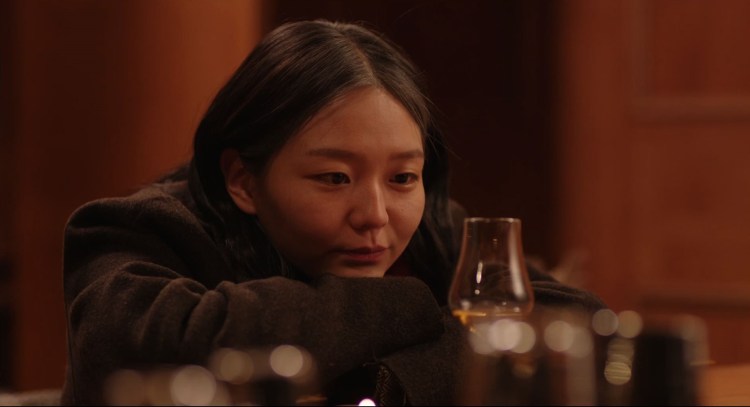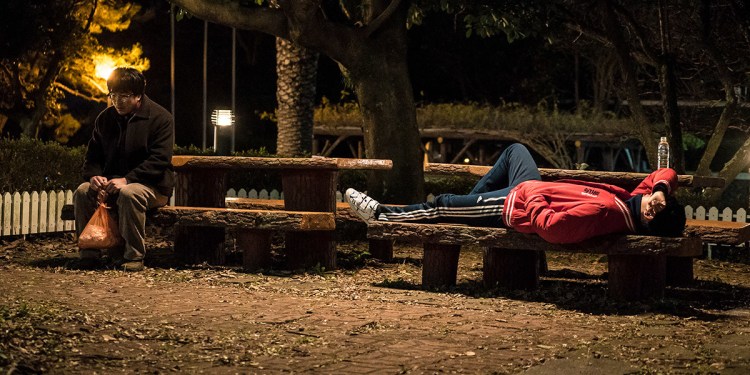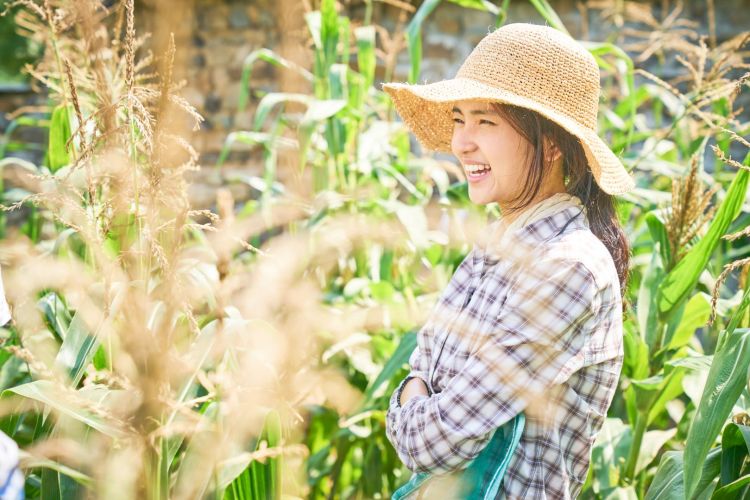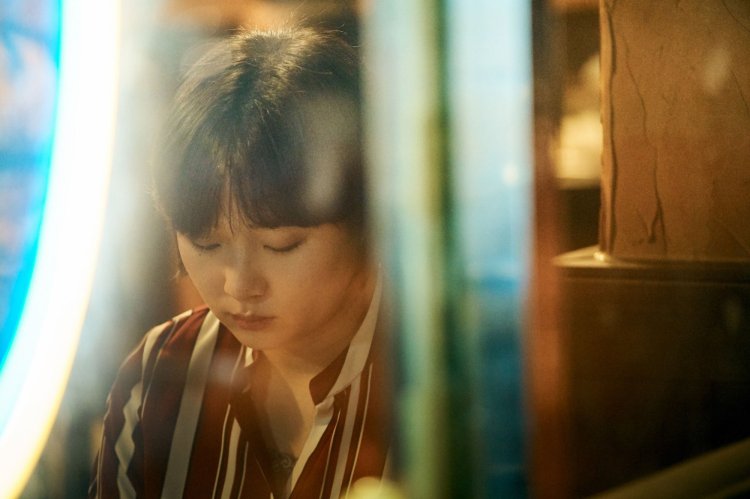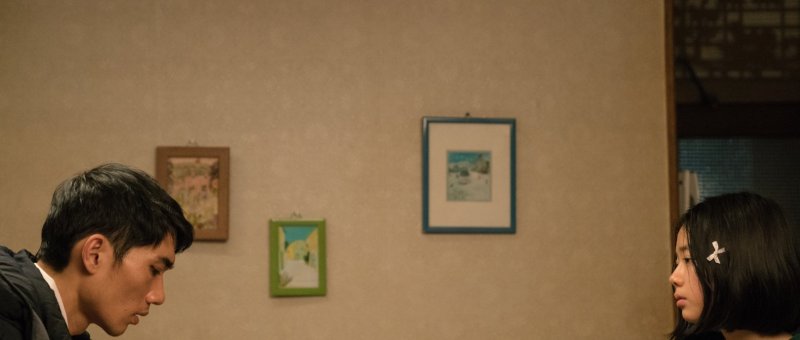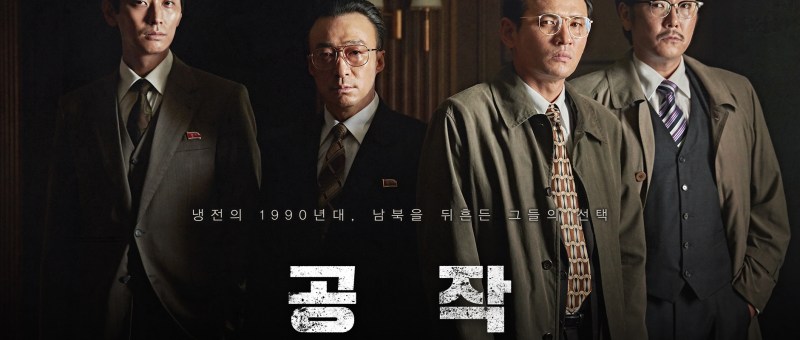
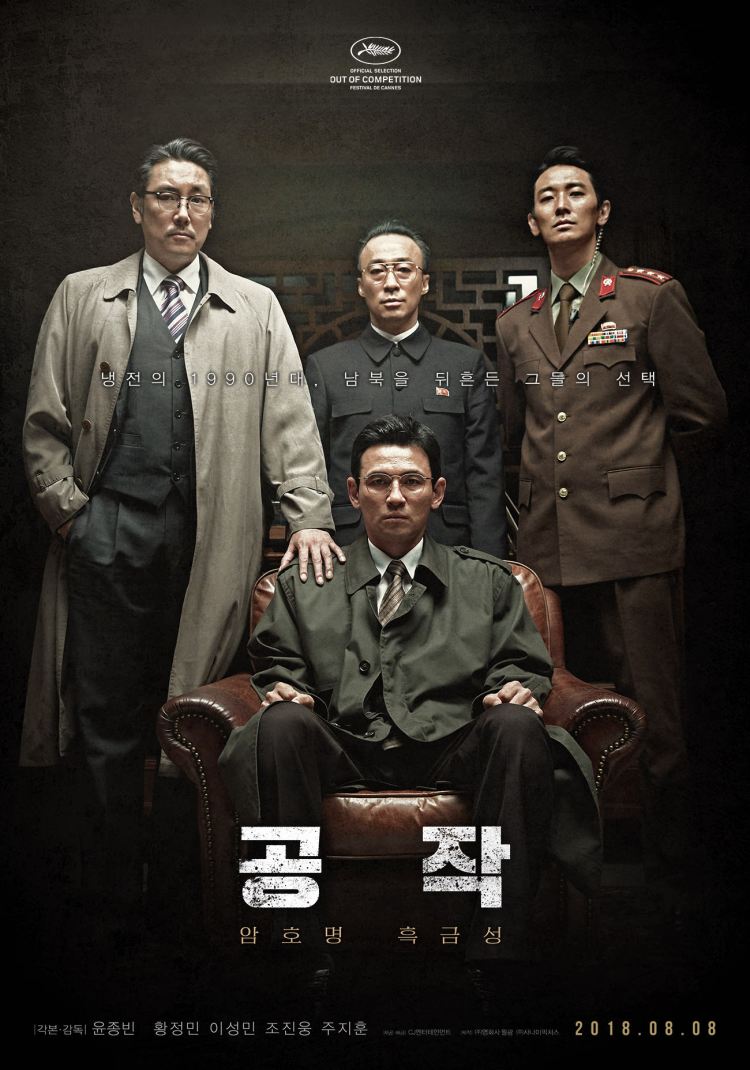
The Spy Gone North (공작, Yoon Jong-bin, 2018)

Spy gone north posterSome might say the first lesson of spying is not too ask too many questions. The hero of Yoon Jong-bin’s Spy Gone North (공작, Gongjak) may wish he’d heeded this advice as his ongoing mission to gain access to North Korea’s nuclear secrets by way of an unlikely advertising scheme sets him on a dark path towards the realisation that he might not be working for the good guys after all. In geopolitical terms, an enemy is sometimes more helpful than a friend – especially if your “enemy” is working on the same system and can be relied upon to play along when the occasion calls.

By the early ‘90s, South Korea has emerged from a lengthy period of military dictatorships into a fledgling democracy. Tensions with the North are running high as the nation has announced an intention to withdraw with from the Nuclear Proliferation Treaty on grounds of national security. Fearing that the North has already successfully developed nuclear weapons, the South decides to ramp up intelligence gathering activity which is where “Black Venus” comes in. Shedding his old identity by appearing to lose himself in drink and gambling, intelligence officer Park Suk-young (Hwang Jung-min) poses as a sleazy businessman with the intention of gaining access to the North Korean elite through their external trade commission operating out of Beijing.

Improbable though it seems, Park manages to engineer a genuine friendship with the cold and austere North Korean trade official Ri Myong-un (Lee Sung-min) with whom he eventually shares unexpected common ground. Strapped for cash after the South sets them up by getting them in hock to China over a mislabelled walnut scandal, the North needs money fast, which is why they’re prepared to talk to someone as shady as Park’s cover. Park sells them an unlikely solution which runs contrary to their core philosophies in exploiting the exoticism of the forgotten North to sell capitalistic decadence in the South through selling licenses to shoot commercials on North Korean soil (which also allows him to travel about the country with a camera), but he doesn’t quite see the added value of his mission even while almost forgetting about the need to get close to the site of the supposed nuclear research facility.

While Park finds himself an “honoured guest” of the Dear Leader (Gi Ju-bong) whose presence evokes both fear and awe, he is also faced with a pressing political crisis at home as the nation prepares for an upcoming presidential collection. Despite the democratic revolution, the same party has been in power for the last 30 years and the recent swing towards the liberal opposition party has many running scared, especially as taking a softer line towards the North is a prominent manifesto pledge – alongside a reform of the security services, which is obviously distressing news for Park’s bosses. In order to maintain the sense of fear which keeps the right-wingers in power, the security services have been secretly communicating with the North and bribing them to create disturbances at politically advantageous times to manipulate the outcome of elections. Park is not exactly a liberal, but he has to admit this is not a good look and if you’re just going to parrot the “for the people” line perhaps you’re not much better than the thing you claim to hate.

Meanwhile, Park is also witness to a side of North Korea outsiders don’t generally see filled with the starving and the destitute. Loyalists all, there are those among the North Korean elite who want to see conditions improve and worry that thanks to the intense stranglehold of the ruling regime they never will. As in everything, business interests trump all. Park and Ri are fighting for the same thing, aware their fledging enterprise is a subterfuge but also that it’s a huge and dangerous first step towards a happier future. After 40 years of mutual manipulations, however, not everyone is keen on abandoning the status quo especially as the two nations have developed an intensely symbiotic relationship founded on mutual demonisation and a friendly willingness to conspire in ensuring the survival of a useful evil. Still, the strangely fraternal relationship between Park and Ri – two fiercely patriotic men from opposing sides who each identify goodness in the other becomes the heart of the film, holding out hope for empathy and compromise when most prefer enmity and chaos.


Screened as part of the 2018 BFI London Film Festival.

International trailer (English subtitles)
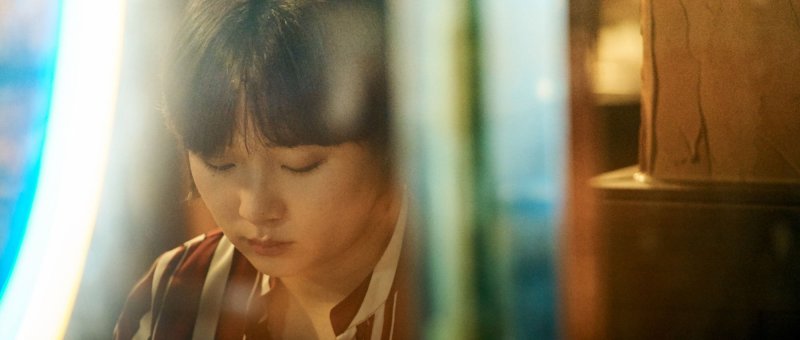
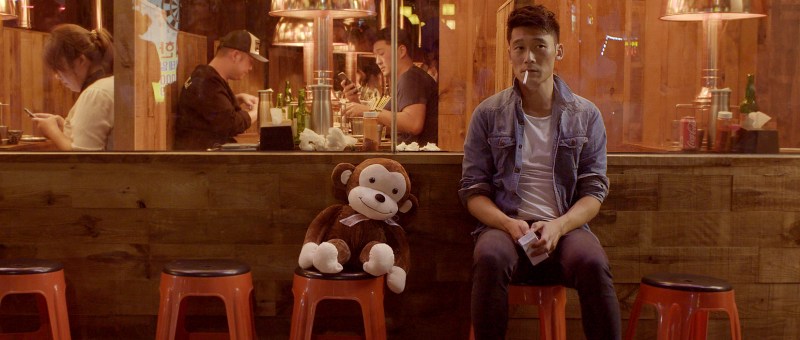
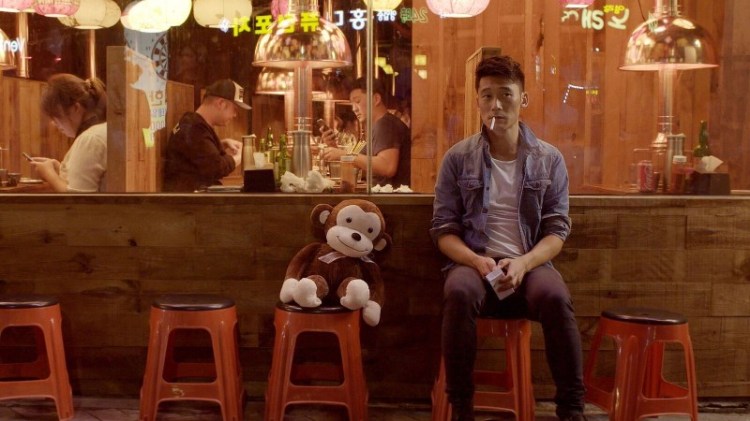
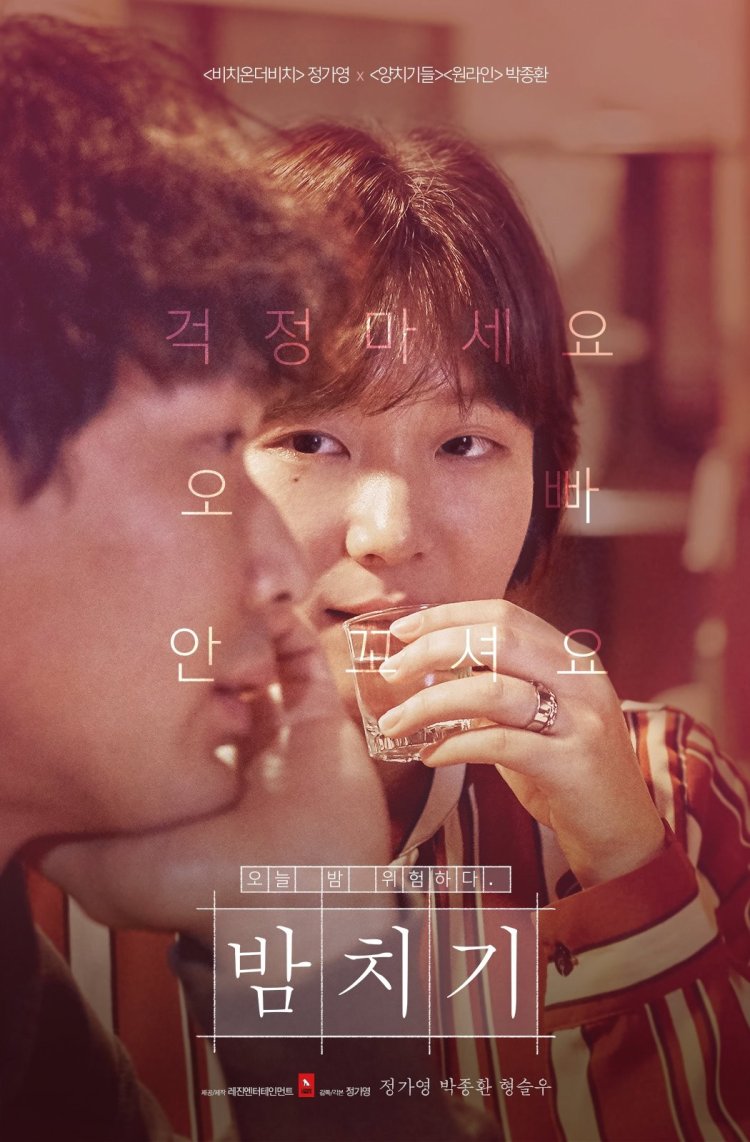
Hit the Night (밤치기, Jeong Ga-young, 2017)

Hit the Night posterFollowing her impressive, Hong Sang-soo inspired debut Bitch on the Beach, Jeong Ga-young returns with a similarly structured exploration of modern relationships though now in a suitably fuzzy colour rather than Bitch’s artful black and white. Once again, Jeong plays a meta version of herself – this time a writer/director ostensibly researching a screenplay but perhaps obfuscating her true motives even as she makes visible her innermost anxieties for her invisible audience.

Hit the Night (밤치기, bam-chi-gi) follows Ga-young (Jeong Ga-young) as she takes a young man, Jin-hyeok (Park Jong-hwan), out on the town. The pair have dinner together, but they aren’t a couple, or even really friends – Ga-young has bought Jin-hyeok’s time on the pretext of interviewing him to get background information for a screenplay she is writing. Jin-hyeok wants to be helpful and has committed to answering Ga-young’s questions as frankly as possible. Her questions are, however, extremely personal from the outset as she begins asking him about his masturbation habits almost before they’ve even sat down. As the night wears on and the drinks keep flowing, Jin-hyeok begins to smell a rat, wondering why it is Ga-young is so interested in his sex life when it doesn’t seem to have much to do with the various screenplays she outlines to him. Ga-young is indeed trying it on, her pretext of “research” a mere ruse and means towards seduction.

It has to be said that the situation is indeed creepy and Jin-hyeok has every right to be upset and offended, especially as he has repeatedly made clear to Ga-young that he has a girlfriend and is not interested in her. If Ga-young were a man taking a young woman out for dinner, plying her with drinks, asking increasingly suggestive and inappropriate questions and all on false pretences she would not be looking very good at all (much, indeed, like a classic Hong Sang-soo hero), not to mention the fact that money has already changed hands.

Nevertheless, despite his irritation Jin-hyeok decides to stay, progressing to a karaoke box rather than simply going home only to leave abruptly after palming Ga-young off on a lonely friend. Despite Jin-hyeok’s slightly underhanded machinations, there is less calculation and a clear possibility for genuine feeling between Ga-young and the other man, but she remains too fixated on her failed conquest and the idealised, unattainable fantasy romance to take a chance on an organic connection with a cheerful guy who likes movies and has his own well developed life philosophy.

Jeong’s approach is meta in the extreme – she repeatedly tells us the ongoing arc of the movie by referencing other movies while also reinforcing her intentions by foregrounding the various ideas for screenplays which Ga-young describes to Jin-hyeok. Her movie titled “Best Ending Ever” ironically has no ending while its hero aims to make a film in which all the characters speak their own fates in a conclusion that “won’t leave you hanging”, but real life is never quite so neat and there are no clean cut, narratively satisfying conclusions to be had in a “film” which is still ongoing.

Ironically enough, unlike the heroine of Bitch on the Beach, Jeong’s screenwriter makes a performance of control she never quite possesses, ceding ground to the earnest Jin-hyeok as he picks her up on her unethical practices and makes frequent attempts to reflect the inappropriate questioning back on her. Ga-young finds herself on the back foot, trying to manipulate Jin-hyeok into abandoning his principles and betraying his girlfriend even as her mask of unflappable frankness begins to slip. Yet Jin-hyeok, even if remaining steadfast in his moral goodness, finds himself captivated by Ga-young’s surprising candour while perhaps more ambivalent about her unusually predatory behaviour. With her short hair and plain, boyish clothes Ga-young adopts an aggressive, “male” persona, pursuing rather than being pursued, and using all of the same tactics that would generally be used against her only for Jin-hyeok to punch a hole through her artifice and expose the very insecurities it was designed to mask.

Not done with her meta messaging, Jeong “ends” on a Days of Being Wild inspired epilogue in which she meticulously dons her chosen persona before setting off to meet Jin-hyeok. This is a film without an ending because in its end is its beginning. Ga-young finds herself running in circles pursuing unrealistic ideals destined to end in frustrated defeat while ignoring the various “realities” which present themselves to her as she sets her sights on the “best ending ever” rather than the emotionally satisfying conclusion.


Hit the Night was screened as part of the 2018 New York Asian Film Festival and will also be screened as part of the London Korean Film Festival on 6th November 2018, 6.30pm at the ICA where director Jeong Ga-young will be present for a Q&A.

International trailer (English subtitles)
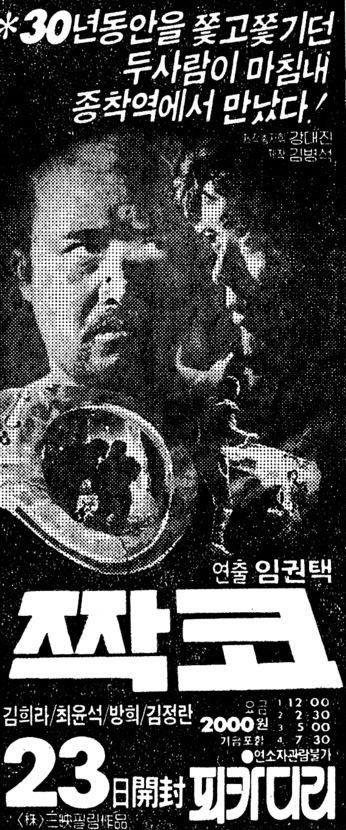
Jagko (짝코, AKA Pursuit of Death, Im Kwon-taek, 1980)

Jagko poster

During the dark days of the dictatorships, the “anti-communist film” was a mainstay of the Korean film industry. Though it wasn’t exactly possible to make a pro-communist film and that therefore any and all films were at least implicitly anti-communist, the authorities had been especially keen on films which took a hardline on anything remotely leftwing. By the late ‘70s however times were changing and a more nuanced view of recent history began to become possible. Im Kwon-taek is thought to be among the first directors whose work precipitated a shift from the “anti-communist” to the “division” film in which the tragedy of the division itself takes precedence over the demonisation of the North (though such views were perhaps not as uncommon as might be assumed in films from the late ‘50s and early ‘60s before the passing of the Motion Picture Law). Jagko’s (짝코) two haunted protagonists are both flawed men betrayed by their country and changing times realising they have wasted their youth on a cat and mouse game over an outdated ideological disagreement when the conflict that defined their lives was merely a proxy war fought by two super powers on Korean soil.

Song (Choi Yoon-seok), a former policeman, is picked up by a vagrancy patrol and taken to a “rehabilitation centre”. Despite the name the centre is more like a debtors’ prison and Song is now a prisoner of poverty who will not be allowed to leave unless redeemed by a family member (of which he has none or he might not be here). Nevertheless, the men are treated well, fed three meals a day, and only asked for a couple of hours of non-strenuous work with the rest of the time marked “free”. Once Song has begun to calm down, he makes a shocking discovery. He is convinced that a man lying ill a few beds over is none other than Jagko (Kim Hee-ra) – a former North Korean partisan and the man he holds responsible for ruining his life.

Im lets us in on the stories of both men via a series of flashbacks. Though he pretends not to know him, the other man, calling himself Kim, is indeed “Jagko” though his life has been just as miserable as Song’s. Back on Mount Jiri at the end of the Korean war, Song was a respected policeman – he left school at 12 and made a name for himself catching partisans. When he catches the legendary Jagko, wanted for a series of atrocities and terrorist acts, all Song can do is boast and talk of his imminent promotion after which he will enjoy a life of comfort. Unsurprisingly, Jagko is not exactly happy for him but allows his captor to prattle on in order to buy time for his escape. It is Song’s own arrogance which permits him to do so. Claiming to need the bathroom, Jagko offers Song a gold ring hidden in his shoe which Song scoffs at, but he does loosen his cuffs to facilitate Jagko’s relief at which point he manages to headbutt him and run away. Song is accused of taking bribes and dismissed. He is humiliated and loses his status, job, and family all in one go. Fixated on Jagko, Song gives up everything to chase him in order to turn him in to his former commander and have him clear his name by confirming that he was not bribed and did not sell out his country for gold.

Almost thirty years later both men are older than their years, broken and defeated. As one of the rehabilitation centre residents puts it, they’re all about to die – what does it matter now if someone was a communist or a partisan, what good could it possibly do to drag the past up all these years later? For Song it’s almost as if there is no “past”, the last few decades have been spent in a relentless pursuit of the man who holds the key to his good name. He wants to undo the folly of his hubris by overwriting it, but time has passed and what he’s lost cannot be reclaimed. Meanwhile, Jagko is not an ideologically crazed leftist, but a lonely old man who is now in poor health and has nothing but regrets. The two men bond in their mutual suffering and work together to escape, but the world they emerge into is not that of their youth. Song was disempowered when he entered the facility – they took his arrest rope away from him, but when he tackles the weakened Jagko to the ground and tries to call two policemen on patrol over to arrest him as an “escaped communist guerrilla” the young officers of the law have no idea what he’s talking about. Those words no longer mean anything. The bemused policemen conclude the old men must be escaped mental patients before spotting the rehabilitation centre uniform and jogging off to phone someone to come and take them back.

The old men’s quarrel is exposed as ridiculous. Jagko, less angry more soulful, remarks that men like he and Song are the most pitiful souls on Earth as he watches America sit down with Russia on the TV and realises he is merely a victim of ongoing global geopolitical manoeuvring. It’s no longer a question of left and right, both men are victims of their times, neither “good” nor “bad” but flawed and human. We do not know if Jagko did the things Song says he did but he has paid a heavy price all the same. Song, by contrast, has shifted all the blame for his fate onto Jagko, believing that if he can catch him he can somehow make it all right, but of course he can’t and is trapped in a spiral of denial in refusing to accept his own responsibility for the tragedies of his life. What is to blame is the folly of war and particularly of an internecine fraternal conflict which remains unresolved and may well be unresolvable unless an attempt is made to address the past with empathy and understanding in place of enmity and rancour.


Jagko is available on blu-ray courtesy of the Korean Film Archive. The set includes subtitles in English, Japanese, and Korean with the audio commentary by Kim Dae-seung and editor of Cine21 Ju Sung-chul also subtitled in English. The audio commentaries from the DVD edition included with the Im Kwon-taek boxset, one by director Im Kwon-taek and film critic Huh Moon-yung, and the other by screenwriter Song Gil-han and film critic and director Kim Hong-joon, unfortunately do not carry over the English subtitles. The set also comes with a bi-lingual Korean/English booklet featuring an essay by film critic and professor Park Yuhee. Not currently available to stream via the Korean Film Archive’s YouTube channel.

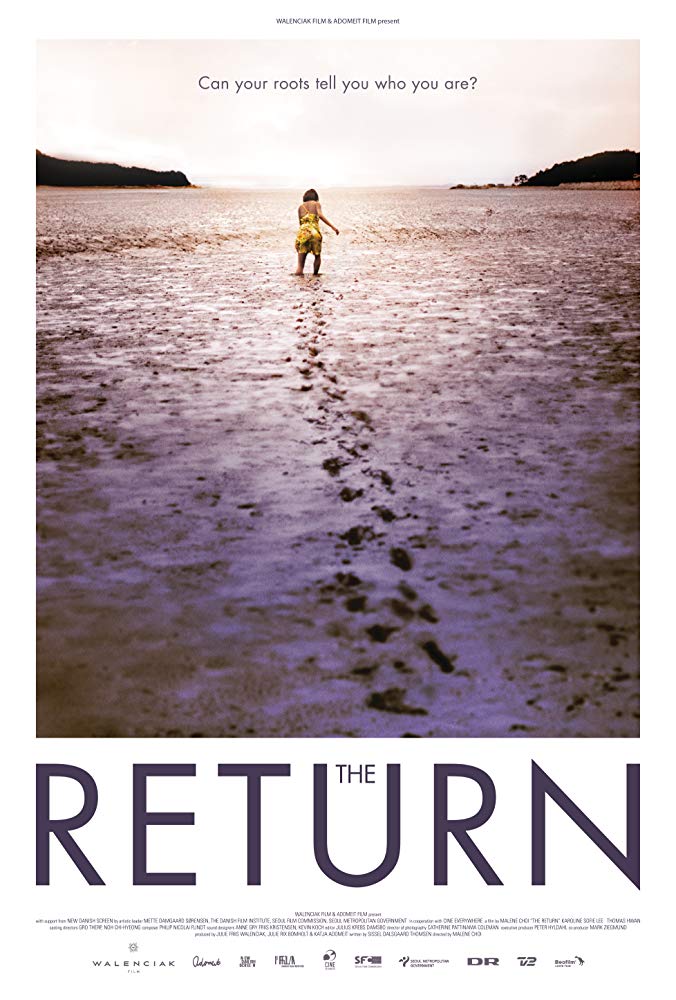
The Return (Malene Choi, 2018)

the returm posterIn today’s sometimes hostile political environment, the question of transnational adoption has become a hot button issue with adoptees raised abroad in sometimes difficult circumstances where paper work was never correctly filed finding themselves exiled to the land of their birth despite having no knowledge of the culture and no means to support themselves. Documentarian Malene Choi, a Korean-Danish adoptee herself, frames her first narrative feature around this very thorny issue, taking inspiration from her own experiences and from those of fellow adoptees from around the world she encountered during her own attempts to find her birth parents and unlock the secrets of her history.

The central narrative revolves around two Korean-Danish adoptees, Karoline (Karoline Sofie Lee) and Thomas (Thomas Hwan), who meet for the first time at a hostel exclusively for “returnees” traveling to Korea to find their birth parents. Karoline, nervous and conflicted, talks to some of the other guests hoping to find strength in their stories of successful reunion but the stories she gathers are generally less conclusive than she perhaps expected them to be. Choi, originally planning to make a documentary focussing on the hostel itself, often found the same things – that guests would appear and disappear after only a few weeks, returning perhaps years later either to visit their birth families or to try pressing the adoption agencies again in the hope of finding more information.

Karoline’s own visit to the adoption agency turns out to less positive than she’d envisaged. The “excessively polite” employee managing her case explains that although there is actually “quite a lot” of information attached to Karoline’s file – her mother’s full name (only without her Chinese characters to help narrow it down further), a verified date and place of birth, and a reason the adoption was sought, none of it is much use in trying to find her birth mother. Later discussing the meeting with Thomas who seems a little more experienced, Karoline begins to doubt she was told the whole story and is convinced that the adoption agency is either wilfully holding information back or is simply disinterested in helping her.

Given the various circumstances surrounding international adoption from Korea from the end of the Korean War through the pre-democratic period, the government and adoption agencies might have reasons to avoid revealing the entirety of the truth. In an interview talking about the genesis of her film, Choi mentions meeting a British researcher who described the process of adoptions in this period as akin to “human trafficking”. Children, not only infants but those old enough to have memories of Korea and of their birth families, were sometimes taken without it being fully understood that they were being adopted and sent abroad, never to be returned to their parents or relatives.

A fictionalised scene of a child reuniting with a mother tells a common yet tragic story of a young girl taken advantage of by an older boy, falling pregnant, and then being disowned by her family. Talked into signing adoption papers she tries to change her mind once the child is born, but it’s whisked away from her after only seconds and she is powerless to resist. A combination of oppressive social forces from an unforgiving conformist society which looks down on “immoral” women pregnant out of wedlock to economic impossibilities and bureaucratic concerns all conspire to remove children from their birth families without proper scrutiny or much thought for where exactly they might be going.

Though Karoline and Thomas appear to have been raised well in loving families, they have each experienced other difficulties which have left them feeling adrift, caught between two cultures an unsure where exactly they fit. Karoline’s socially conservative parents were ill equipped to support her when she experienced racial bullying from the other children. They saw her as their daughter and a Dane and therefore could not understand why others didn’t because to them she “doesn’t even look Korean” – well meaning though they might have been, their solution to her suffering was an attempt to erase her ethnicity rather than embrace it. Though Thomas’ experiences were different he too experienced typically xenophobic micro aggressions, but it was the aggressors’ constant taunts of “go back to where you came from” that most hurt him. His persecutors seemed to have such a clear idea of where he “belonged” when he himself did not.

This sense of dislocation is further brought out by Thomas and Karoline’s experiences in Korea where they find themselves supposedly “at home” yet unable to communicate as neither of them speak Korean or have the necessary cultural knowledge to easily navigate the city. It also puts them at a disadvantage in their respective quests, leaving them reliant on the kindness of the hosts at the hostel to help explain some of the information they’ve been able to find as well as interpreting for them when they need to ask further questions.

Yet for others, a return Korea has become a kind of answer in itself. Another American adoptee Thomas meets at the hostel first came to Korea for only a few days but felt an instant connection, as if he’d finally found what it was he’d been looking for. His adopted family, however, were far from happy with his desire to explore his Korean roots and made him an ultimatum (something which might explain why he had previously felt so unhappy) which convinced him to move “back” to Korea on a more permanent basis, certain it was the place he was “truly” supposed to be. The hostel becomes a kind of community base in itself, connecting Korean adoptees from across the world who have each had very different experiences but share something otherwise unique. Thomas, however, remains conflicted, unsure if the connection to his fellow adoptees is real or illusionary, created out of his own desire to find in them what he sought in himself.

Making use of her documentary background, Choi mixes the real and the fictional, blending unscripted sequences and interactions with non-actors with a fiercely hyper naturalist approach only to undercut it with the artifice of strange and unexpected cuts to remind us we are watching a construction. Rather than an attempt to undermine the idea of adoption itself transnational or otherwise, Choi’s aims to look at the complicated, often uncomfortable, ideas of identity, belonging, and family through her protagonists’ continuing struggle to find resolution. Feeling as if they’ve been robbed of their histories, Karoline and Thomas’ quest is an attempt to come to terms with the loss of something which perhaps cannot be returned, but only eased through the restoration of a severed connection.


The Return was screened as part of the New York Asian Film Festival 2018 and will also be screened plus Q&A with actress Karoline Sofie Lee in London on 14th November as the closing night gala of the London Korean Film Festival.

Original trailer (English language dialogue/subtitles)

London Korean Film Festival Announces Full Programme for 2018

LKFF2018 The ReturnThe London Korean Film Festival returns for its 13th year kicking off in London on 1st November before touring to Glasgow, Edinburgh, Manchester, Sheffield, Nottingham, and Belfast. Opening with indie drama Microhabitat, the theme for this year’s edition is “a slice of everyday life” while the festival will also offer a selection of current hits, independent features, shorts, animation, and a few classics before bringing the London leg to a close on 14th November with Malene Choi’s The Return.

Opening

Microhabitat still 1

  • Microhabitat – A young woman living hand-to-mouth decides rent is an unnecessary expense in the debut feature from Jeon Go-woon who will also be present for a Q&A. Review.

Closing

The Return still 2

  • The Return – A Danish Korean adoptee returns to Korea looking for her history in a semi-autobiographical fiction debut from documentarian Malene Choi. Actress Karoline Sofie Lee will be present for a Q&A. Review.

Special Focus: A Slice of Everyday Life

poet and the boy still

  • The Power of Kangwon Province – a woman goes on holiday and ends up spending the night with a married policeman while an adulterous professor decides to visit the same area in the second film from Hong Sang-soo.
  • Christmas in August – 1998 romantic drama from genre master Hur Jin-ho in which a photographer falls in love with a terminally ill woman.
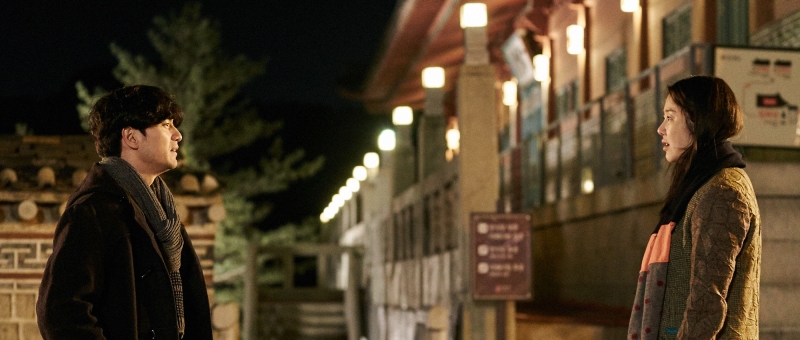
  • This Charming Girl – an isolated young woman develops a fondness for a shy writer but struggles to overcome past trauma.
  • Grain in Ear – second feature from A Quiet Dream‘s  Zhang Lu in which a woman of Korean ethnicity in North East China makes a living illegally selling kimchee.
  • Treeless Mountain – two little girls have to learn to look after themselves when their mum leaves them with relatives to go and look for their long absent dad.
  • The Journals of Musan – Park Jung-bum’s 2011 film in which he also stars as one of two North Korean defectors trying to adjust to life in the South.
  • Bleak Night – a father investigates the death of his son.
  • Alive – Park Jung-bum directs himself in his 2014 drama about a worker in a soybean paste factory.
  • The Bacchus Lady – Youn Yuh-jung stars as an elderly prostitute in E J-yong’s exploration of life on the margins. Review
  • The Running Actress – actress Moon So-ri steps behind the camera for three connected shorts each inspired by her real life and shot through with self deprecating humour. Review.
  • The Poet and the Boy – a middle-aged, unhappily married poet (Yang Ik-june) is suddenly struck by the beauty of a handsome young man.
  • Possible Faces – a young couple take different paths after splitting up in Lee Kang-hyun’s gentle drama.
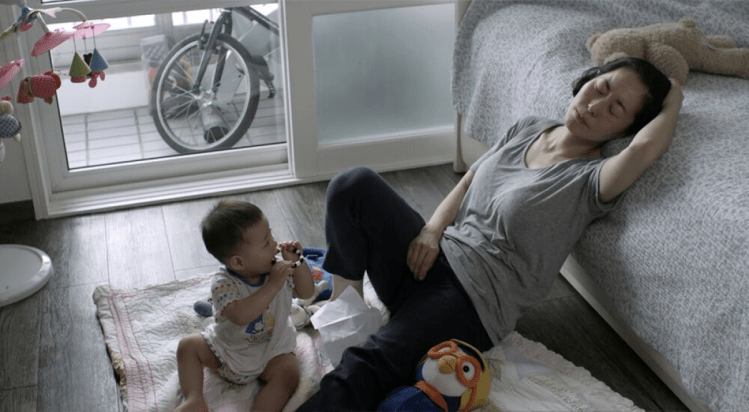
  • Mothers – a woman becomes the guardian of the illegtimate son of her late husband in the second film from Lee Dong-eun (In Between Seasons)
  • The Land of Seonghye – Seonghye falls from the corporate ladder in Jung Hyung-suk’s indie drama.

Cinema Now

korean little forest 1

  • Heart Blackened – Jung Ji-woo remakes Fei Xing’s Silent Witness in which a wealthy CEO hires a fancy lawyer to defend his daughter who has been charged with the murder of her step-mother, a famous pop-star.
  • Love+Sling – father and son wrestlers face off when the girl next door turns down the son’s confession because she likes the dad…
  • The Princess and the Matchmaker – thematic sequel to The Face Reader starring Shim Eun-kyung as a princess who prefers the astronomer brought in to find the perfect match to anyone he suggests.
  • Seven Years of Night – thriller taking place over seven years beginning with the death of an innocent girl. Q&A chaired by Anton Bitel.
  • Little Forest – a lost young woman retreats to her country home in Yim Soon-rye’s take on the much loved Japanese manga. Review.
  • The Witness – a middle-aged salaryman witnesses a murder but selfishly keeps quiet even as the death toll rises.
  • Hotel by the River – the latest (?) from Hong Sang-soo in which a poet and his two estranged sons chat about death .

Woman’s Voices

hit the night still 1

  • Hit the Night – Bitch on the Beach‘s Jeong Ga-young once again stars as an extremely forward screenwriter “interviewing” her crush on the pretext of research. Jeong Ga-young will be present for a Q&A moderated by Sophie Brown as well as for a director talk at Kingston University at 11.30am on 7th November. Review.
  • For Vagina’s Sake – documentary in which director Kim Bo-ram travels around the world exploring attitudes to menstruation.
  • Grown Up – filmmaker Jang Hye-yeong chronicles the process of bringing her disabled sister home to live with her in Seoul.
  • Women’s Voices Shorts Programme

Indie Firepower

adulthood still 2

  • Motel Cactus – a series of encounters take place at a love hotel in Seoul. Introduction by Tony Rayns.
  • Camel(s) – a middle-aged couple have a lengthy one night stand in Park Ki-yong’s indie drama. Park Ki-yong will be present for a Q&A.
  • Old Love – Park Ki-yong’s most recent film in which old lovers reconnect at Incheon airport. Park Ki-yong will be present for a Q&A.
  • Adulthood  – a 14-year-old girl’s life is turned upside-down when her long lost uncle shows up at her father’s funeral and cheats her out of her inheritance. In order to get the money back she has to pose as his daughter so he can scam a lonely pharmacist. Review.
  • Back From The Beat – an aspiring DJ’s life is disrupted when he makes an unwise remark about employment rights. Introduction by Tony Rayns.

Contemporary Classics: Lee Myung-se & The 1990s

My Love, My Bride 1990 still 1

The subject for this year’s classic film special focus is director Lee Myung-se who began his career with Gagman back in 1988.  Lee will be present at each of the screenings for a Q&A. 

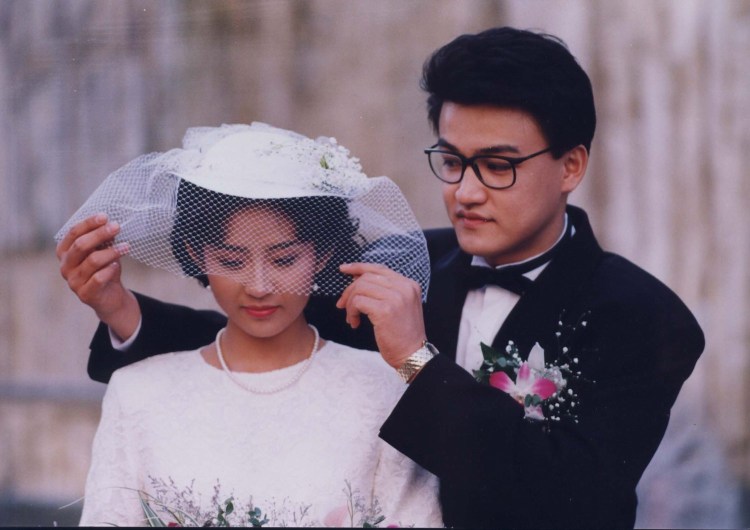
  • My Love, My Bride – Park Joong-hoon and Choi Jin-sil star as a mismatched couple in Lee’s romantic comedy.
  • First Love – an aspiring actress falls head over heels for a chain smoking writer from Seoul.
  • Their Last Love Affair – a married poet falls for a journalist who said some nice things about his work… screening with Short Can’t Live Without You

Animation

the shower (korean animation) still 1

  • The Shower – animation based on a short story by Hwang Sun-won in which a young boy becomes fascinated by a girl who plays by the stream.
  • Pororo, Dinosaur Island Adventure – Cute penguin Pororo returns for another adventure in which he travels to a tropical island to save some dinosaurs from a greedy alien and his robot minions.

Mise-en-scene Shorts

The-Monologue

Artist Video

Grace-Period

The London Korean Film Festival runs 1st – 14th November in London before touring the country until 25th November. Full details for all the films as well as screening times and ticketing information are available via the official website and you can keep up with all the latest news by following the festival on Facebook, Twitter, and Instagram.

A Tiger in Winter (호랑이보다 무서운 겨울손님, Lee Kwang-kuk, 2018)

Tiger in Winter poster“Life just keeps getting harder” sighs a weary policeman charged with extracting a coherent statement from an accidental hero who only wants to talk about a tiger. Lee Kwang-kuk’s third feature, A Tiger in Winter (호랑이보다 무서운 겨울손님, Horangiboda Museoun Gyeoulsonnim), is in some ways a more conventional exercise in comparison with the time bending reflexivity of his earlier work, but the journey he takes us on is similarly circular as a melancholy young man finds himself chased out of his natural habitat and cast adrift, outside of his comfort zone too resentful to crawl back into a familiar cage but too afraid to embrace his freedom. 

On the day a tiger escapes from the zoo, Gyeong-yu (Lee Jin-wook), a failed writer, “loses” his day job and has to temporarily vacate his apartment because his girlfriend’s parents are coming to visit and she evidently hasn’t told them she is “living in sin”. Gyeong-yu offers to stay and meet them, but bristles when his girlfriend wonders if he’s ready to make a firm a commitment. He packs and leaves, planning to return in a few days’ time when the coast is clear. Decamping to a friend’s place, Gyeong-yu continues his night “job” as a designated driver which brings him into contact with an old girlfriend – Yoo-jung (Ko Hyun-jung), who is also a writer and apparently successful but suffering from an extended bout of writer’s block and has descended into a self destructive spiral of alcohol fuelled existential desperation.

After reconnecting with Gyeong-yu, Yoo-jung pulls down a book he once gave her from her well stocked bookcase – a Korean translation of Hemingway’s The Old Man and the Sea. Hemingway’s hero fights his age as manifested in a powerful marlin and dreams of youth in the lions of Africa. The film’s English title, “A Tiger in Winter”, is perhaps a mild pun on “The Lion in Winter” which again tells of a once proud old man struggling to deal with his bodily decline, only Gyeong-yu is still young even if he feels himself diminished and brought low by life. Unlike the old man, he has stopped fighting and accepted his defeat. He no longer writes and flounders aimlessly, running away from the things that frighten him without aim or purpose. The loosed tiger is a manifestation of the fears Gyeong-yu refuses to fight which render him both physically and artistically impotent.

Writing, or perhaps art of any kind, becomes its own kind of vice – a dangerous addition, a need which must be sated or displaced without which the rest of life remains hollow. Unable to satisfy her need for creation, Yoo-jung has crumbled under the pressure of her own expectations and retreated into the comforting world of the permanently tipsy even whilst knowing that the alcohol itself inhibits her ability to create and forever separates her from that which would make her whole. She wants to stop, throws away her soju, but can’t move past her inability to face herself and resolve her creative doubts. Yoo-jung wants the quick fix, and like any addict, she is past caring about the harm she might do to herself and others in the pursuit of it.

Gyeong-yu, meanwhile, almost wallows in his degradation as he allows himself to be belittled by the customers who call for his services and insist on treating him like a servant. Designated driving doesn’t seem like a particularly safe arrangement for either party – many of Gyeong-yu’s customers are extremely drunk and willingly allowing a man they don’t know to drive them somewhere in their own car while they are barely conscious, while conversely many refuse to pay or accuse Gyeong-yu of damaging the car while berating him for acting in an insufficiently humble manner. Yet it’s not humiliation that knocks Gyeong-yu out of his stupor but trauma and a direct confrontation with someone else’s despair.

Tigers lurk everywhere, though when Gyeong-yu finally learns to look his in the eye it’s a very cute and non-threatening sort of tiger which perhaps makes him feel foolish for having evaded it for so long. Lee may not be playing with time in his usual fashion, but he sends Gyeong-yu retreating into the past all the same in an attempt to hide from his fears only to discover you can’t walk backwards into the future. An exploration of the destructive power of the creative urge, the soul crushing inertia of artistic block, and the continuing rootlessness of a life lived in flight, A Tiger in Winter is another beautifully poetic character drama from Lee whose world weary optimism loses nothing in its seeming simplicity.


A Tiger in Winter was screened as the final teaser for the London Korean Film Festival which will open on 1st November with Microhabitat. The full programme for this year’s event is now available on the official website – tickets on sale soon!

International trailer (English subtitles)

A Female Boss (女社長 / 여사장, Han Hyung-mo, 1959)

Female Boss poster

Romantic comedies, most essentially, are made to reflect the anxieties of their times. They are not, and never have been, at the forefront of progressive thought and are, generally speaking, intended to reinforce typical notions of social conservatism. Even so, the messages of Han Hyung-mo’s A Female Boss (女社長 / 여사장, Yeosajang) are extremely jarring for the modern viewer though they proved popular enough at the time and most audiences were apparently able to find something funny in the crushing victory of the patriarchy.

Joanna (Jo Mi-ryeong) is the editor of a magazine entitled “The Modern Woman” and apparently successful enough to live a life of selfish entitlement. She has a message board above her desk which reads “women are superior to men” and most of her senior employees are also female. However, she is also extremely jaded when it comes to love and has instituted an office-wide ban on romance. Despite her previous successes, Joanna’s magazine has hit a rough patch and has been on hiatus for the last three editions. Urged on by a relative, she’s currently engaged in a form of long form flirting with the easily flattered “Golf Pants”, or Mr. Oh (Joo Sun-tae) to call him by his more dignified name, whom she intends to manipulate into propping up The Modern Woman.

Meanwhile, selfishly hogging a public telephone brings her into contact with Yong-ho (Lee Su-ryeon) who angrily kicks her little dog Mario in an effort to get her to hang up. What Yong-ho doesn’t know is that the job interview he wanted to chase a recommendation for is with Joanna’s company. Joanna, infuriated by Yong-ho’s manly insolence, decides to give him the job but only so that she can make his life a misery as a form of revenge. However, despite her “feminist” leanings, Joanna falls for Yong-ho’s brash masculinity and begins a campaign of sexual harassment that threatens to implode both her personal and professional lives.

“Joanna” has obviously taken a Western name and the title of her magazine, “The Modern Woman” is also a clue as to her “progressive” attitude towards women’s liberation. Within the context of the film, these are not “good” things to pursue or “right” opinions to hold. Joanna’s women first policy is largely held up for ridicule – not only is her magazine in trouble, but her employees are portrayed as harridans who only exist to belittle and undermine their male colleagues whose jobs they have, by implication, usurped. Joanna is not married and has no interest in men until she meets Yong-ho and is overcome by his masculine confidence and conservative attitude towards the separation of the sexes, effectively inhabiting the role of the sleazy CEO salivating over the new girl only this time it’s a new boy whose “gentlemanly” resistance to Joanna’s atypically assertive romantic pursuit only makes her want him more while also upholding his moral rectitude.

Yong-ho’s original problem with Joanna also stems from her sense of entitlement – something he is personally offended by, not just by her lack of feminine deference but in her callous flaunting of her economic superiority. Making use of the public phone to conduct her business, Joanna feeds luxury cakes to her little dog, Mario. Given than many of the other people in the queue can barely afford rice to feed their families let alone luxury foreign pastries, idly feeding one to a pet dog right in front of them is an extremely insensitive act though it’s hardly poor Mario’s fault and Yong-ho’s kick is firmly aimed at Joanna. Confronting him later, Yong-ho sees nothing wrong in his violence towards an innocent dog but even more worryingly Joanna starts to complain about damage to her “property” rather than a genuine worry that Yong-ho had caused physical pain to a creature she “loved”.

What Female Boss sets out to do is to paint the very idea of a female business leader as a ridiculous nonsense, an unwelcome subversion of the proper order which must be rectified before the whole thing comes crashing down. This does perhaps reflect a male anxiety of the growing agency of women in the post-war world where they are no longer resigned to being shuffled into arranged marriages and thence into motherhood with no other possibilities or paths to fulfilment. Worried that women won’t go back in their boxes again, men reassert their masculinity to put them back in their place. Thus, at the end of Female Boss, Joanna is made to realise the “error” of her ways by ceding her business interests to Yong-ho (by her own volition) who becomes the magazine’s editor while she, now his wife, stays home to cook fish and knit baby clothes. The other senior women are demoted and the older man they’d constantly found fault with put in their place, intent on revenge. Yong-ho does, however, promote another woman he’d become friends with to a more senior position, a woman with a young child no less, proving that perhaps it’s not all about gender, but also makes sure to take down Joanna’s sign and replace it with one which reads “men are superior to women” which is quite something to see above the editor’s desk at a magazine still calling itself The Modern Woman.

That is not to say Han doesn’t also stick the boot in to hollow masculinity as seen in the dismal collection of men who turn up to interview for Yong-ho’s position. Running from the independently wealthy who apparently just want to meet women, to scary looking silent types, and in a notably subversive touch an ultra-nationalist just demobbed from the army who breaks into an impassioned patriotic rant about how everyone should be bravely dying for the nation, these are a sorry collection of modern Korean men whom, Han seems to imply, have been emasculated by female empowerment. Poor Mr. Kim, a middle-aged man with 12 children, is apparently so incompetent at his job as to be constantly threatened with termination, only to regain his “rightful” place under the new Yong-ho regime, suddenly standing a little taller now all those “nasty women” have been robbed of their power to “oppress” him.

Unlike many other romantic comedies of the time, Female Boss’ humour is subtler and meaner, had entirely at the expense of its “ridiculous” heroine. Han does however make sure to add in a fair few club scenes and musical numbers to lighten the mood while Joanna makes her way through predatory, unwomanly, unKorean, modern girl to hanbok-wearing housewife all in a few easy steps. Female Boss is distinctly unfunny to anyone born into a society where the idea of sexual equality, if not the reality, is at least regarded as an ideal but it does perhaps betray the anxieties of a society still in flux, afraid of both the future and the past.


A Female Boss is the third of three films included in the Korean Film Archive’s Romantic Comedy Collection of the 1950s box set. It is also available to stream online from the Korean Film Archive‘s YouTube Channel.

The Love Marriage (自由結婚 / 자유결혼, Lee Byung-il, 1958)

The love marriage posteA hot button issue at the centre of the tradition vs modernity debate – who knows best when it comes to love, a bevvy of relatives with lifetimes of experience behind them or the youngsters themselves still filled with youthful idealism? Then again, as the wise father of Lee Byung-il’s The Love Marriage (自由結婚 / 자유결혼, Ja-yugyeolhon) points out, perhaps both options are bad. An arranged marriage may not work out for a variety of reasons, and a love match may only result in heartbreak, but perhaps there is a third way after all – something which he intends to figure out through gentle manipulations of his lovelorn daughters and feisty conservative wife.

Inverting the normal pattern, Lee opens with the wedding. Dr. Ko’s (Choi Nam-Hyun) eldest daughter, Suk-hee (Choi Eun-hee), has scandalised her family by marrying for love, making a modern future in a modernising world. However, her new husband, Seung-il (Seong So-min), is pensive. He has something he feels he needs to get off his chest to start married life on the right foot. Seung-il confesses that he was once in love before, somehow believing this is a terrible secret which his new wife needs to know. Suk-hee is of course sympathetic and understanding, she never assumed herself to be marrying someone without a past. In an effort to console him she makes a confession of her own. She too was once in love with someone else – the older brother of a school friend who died tragically years ago never knowing of her deeply held affection. Despite his earlier plea, Seung-il is horrified, abruptly walks out on his new wife on their wedding night, and sails to America to make a new life for himself alone.

Flashforward four years and Suk-hee, humiliated, has retreated to her bedroom, seldom leaving the house and only then to walk along the paths she used to take with Seung-il when she does. Dr. Ko has two more daughters – Moon-hee (Lee Min-ja) and college student Myeong-hee (Jo Mi-ryeong), as well as a young son, Gwang-sik (Park Gwang-su), still in school. Ko’s wife, Mrs. Ahn (Seok Geum-seong), is convinced all Suk-hee’s problems are down to getting married for love – after all, Mrs. Ahn was always against it. To prevent the same thing happening again she plans to find good matches for her other two daughters, hoping to set Moon-hee up with the son of one of her best friends, Wan-seop (Lee Ryong), who has recently returned from studying abroad. Moon-hee, however, has taken a liking to the timid college student who has been tutoring Gwang-sik, Jun-cheol (Choe Hyeon). Meanwhile, Myeong-hee has also developed a fondness for Ko’s assistant, Yeong-su (Park Am).

The times are changing, but only to an extent. Mrs. Ahn doesn’t like it that they’re changing at all. The romantic destiny of her daughters was, perhaps, one of the few things over which she exercised complete control and control seems to be something she is reluctant to give up. Suk-hee’s decision to get married for love is a new one – a rejection of the oppressive pre-war system of total deference to one’s elders in favour of exercising her individual right to choice. Her choice, however, did not work out, in part at least because of some very old fashioned ideas embedded in the head of Seung-il who is unable to cope with the idea of his wife as a real flesh and blood woman rather than the idealised picture of passive femininity he had conjured for himself.

Love and marriage enter a conflict with each other. Ko and Mrs. Ahn have extremely different temperaments but seem to have built a happy and harmonious home for their four children, raising love between them as they go. Yet not all arranged marriages work out, especially when relatives might not have their children’s future happiness as a priority. Meanwhile, young people in love might not be best placed to make serious decisions about a long term future whilst caught in the throws of passion. Ko, otherwise sympathetic, has his doubts about Moon-hee and Jun-cheol, not because of Jun-cheol’s “weak” character which is his wife’s chief complaint, but because he worries that though they are in “love” they have not yet reached an understanding of each other. Rejecting both ideas – the hyperrationality of the “arranged” marriage, and the emotional volatility of the “love” match, Ko wonders if there isn’t a way to meet in the middle, that if the older generation could perhaps guide the youngsters towards a series of likely candidates they believe to be well suited, love might blossom in a place it can take root.

Ko, quiet yet wise and permanently amused, tries out his idea on his youngest daughter, Myeong-hee, who might be the most like him and also the most modern among her sisters. Spotting the obvious attraction between Myeong-hee and his assitant Yeong-su, Ko tries to set them up and then puts a wedge between them through using Wan-Seop who is at a loose end while Moon-hee pines after Jun-cheol and refuses to meet any other suitor. Wan-seop, despite Mrs. Ahn’s obvious esteem for him, is the very example of the new Korean man who tries to make a virtue of his modernity but only exposes his old fashioned conservatism. Caught in a small debate with Yeong-su and Myeong-hee, Wan-seop who has recently returned from study in America sings the praises of life overseas and declares himself a feminist – he hates the way women are treated in Korea which is why, when he’s married, he plans to 100% obey the housekeeper and not make waves in the domestic domain. Yeong-su, quite fairly, finds this ridiculous and even if his ideas are perhaps no more “progressive” he is at least transparent in his constant verbal sparring with the confident Myeong-hee.

For all its inherent comedy, love is still a painful business and parental rigidity has a potential dark side as we see in an attempted suicide brought about by heartbreak and frustration at not being listened to by parents who insist they know best. Yet in the end love conquers all. Ko’s gentle manipulations eventually work their magic, guiding each of his daughters towards their most hopeful path but leaving the decision to take it entirely up to them. Even Mrs. Ahn begins to see the beauty of young love rather than its destabilising qualities and cannot help being touched by the happiness each of the sisters seems to have found in their chosen men even if they’ve suffered quite a lot along the way. Love is never easy, but it doesn’t need to be so hard and it only takes a little bit of understanding to set it on its way.


The Love Marriage is the second of three films included in the Korean Film Archive’s Romantic Comedy Collection of the 1950s box set. It is also available to stream online from the Korean Film Archive‘s YouTube Channel.

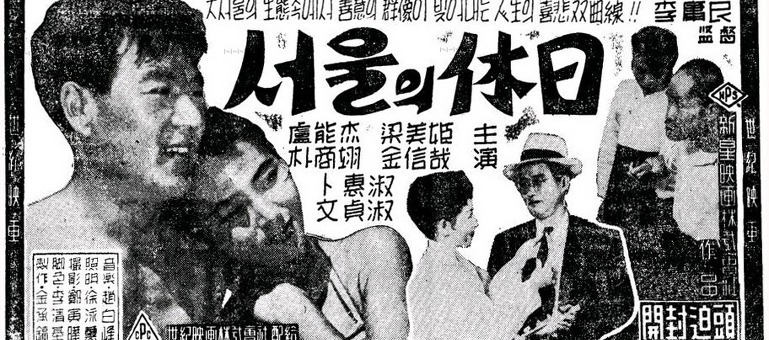
Holiday in Seoul (서울의 休日 / 서울의 휴일, Lee Yong-min, 1956)

Holiday in Seoul title cardUnlike many “golden age” directors, Lee Yong-min was not especially prolific and left behind him only 23 films when he abruptly disappeared without trace. Perhaps a fitting legacy for a director so strongly associated with the horror genre, but Lee had begun his career as a documentarian working for a Japanese company during the Colonial era. It’s Lee’s documentary background rather than his taste for genre which is most strongly in evidence in his second film, Holiday in Seoul (서울의 休日 / 서울의 휴일, Seoul-ui Hyuil), which, while containing a fair few genre elements, is an anarchic romantic comedy set entirely in a small residential area of the capital over the course one day – a public holiday, in which a series of couples are separated by accident or design on this very day which has been specifically set aside for them to spend together.

Lee opens with a series of location shots of various Seoul landmarks, elegantly composed and somewhat romanticised as if to recast the burgeoning city as a capital of love with all the promise and mystery of Roman Holiday’s Italy which even gets a brief namecheck later on. Again unconventionally, he then breaks into a lengthy POV shot with additional voice over from a narrator who locates a drunk snoozing on a bench and follows him home hoping something more interesting is happening over in the residential quarter. The narrator settles on the house opposite which belongs to a young couple recently married – she an obstetrician running a clinic out of the house, and he a hotshot reporter who’s just made a big splash with a story about a violent murder.

This is, however, a public holiday so work should be strictly off limits. Hee-won (Yang Mi-hee) has designed a packed itinerary, while her husband Jae-kwan (No Neung-geol) would rather have just lazed around at home, but as it turns out neither of them is going to get what they wanted. Minor disagreements about how to spend a rare day off aside, Hee-won and Jae-kwan are a happy young couple who have apparently married for love, are each professionally successful, and are living a comfortable middle-class life in a period of increasing economic prosperity. Their marriage is directly contrasted with the families around them which include that of the drunk we first met on the bench whose daughter Ok-i eventually descends on Hee-won for help in fear she may have fallen pregnant out of wedlock to a man who won’t take responsibility, and a middle-aged couple who have the opposite problem to that of Hee-won and Jae-kwan. Mr. Ju, a regular salaryman, is excited about spending the day with his wife but she skips out on him to go to the beauty parlour and spends most of the day with a wealthy friend and her opera loving toyboys on a well appointed yacht.

Nevertheless, marital bliss is indeed tested by the demands of the day. Though Jae-kwan had promised to go along with Hee-won’s carefully crafted plan, he gets a phone call he thinks is an important tip off about the murder case but is actually a trick set up by his colleagues who were hoping to get him to buy them a few drinks. Unfortunately, due to an odd coincidence, Jae-kwan thinks he witnesses a kidnapping that might be related to the killings and takes off in hot pursuit only to find himself dealing with another sad case of a woman brought low by love. While Hee-won is busy trying to help Ok-i sort out her predicament with both her sad/angry father and the boyfriend that’s thrown her over, Jae-kwan finds himself locked in a room with a poor young girl (Moon Jeong-suk) who is apparently also pregnant by a man who’s disappeared and has gone out of her mind with heartbreak, actively adopting the role of Ophelia and reciting potent lines from Hamlet while absolutely convinced that Jae-kwan is her long absent lover.

While the new freedoms of the post-Colonial era have enabled Hee-won not only to find love and an elected marriage but also a successful professional career as the head of her own clinic, other women have not been so lucky and have suffered doubly at the hands of men who feel bolder in their casual pursuits but also know they cannot be held to account for their actions in the same way they might have been before. Ok-i’s story does at least have a happy ending but is symptomatic of the times in which she lives as she recounts going for a job at a factory only to be molested by the foreman who thought she was a “prostitute” because he found out she had a boyfriend, while the boyfriend sort of thought the same in assuming she had been taken advantage of by the foreman. At least Ok-i has her father who might be have been enraged to begin with but later comes to her defence as does the warmhearted Hee-won, while Jae-kwan’s young woman is all alone save for her mother who is worried sick over her daughter’s mental health and has no real way to help her.

Hee-won is indeed a force for good. Despite her worry about her husband’s whereabouts (she ends up going drinking with his work buddies who, along with her other married female friends, have half convinced her he’s gone off with another woman), Hee-won comes to the aid of a crying little girl who’s desperately looking for help because her heavily pregnant mother is in a very bad way at home while dad went out a few days ago and hasn’t come back. Needless to say, Hee-won’s emergency dovetails into Jae-kwan’s dogged pursuit of crime which eventually sees him arrest a murderer after accidentally getting into a cab with him. The killer, perhaps annoyed about the previous article, makes a point of explaining to Jae-kwan that his job isn’t quite as morally upright as he’d like to believe. You can’t just go printing things in papers, he tells him, it ruins people’s lives. Jae-kwan thinks it’s murdering people that ruins lives so anything after that is fair game but his heartless rationality brings him into conflict with Hee-won when he wants to photograph and interview one of her patients who is seriously ill and might not survive if she finds out the unpleasant truth Jae-kwan wants to get her reaction to on camera. To Jae-kwan, people are just his “subjects”, mere materials for his essays, but to Hee-won they are literally flesh and blood – less fortunate than herself, they are her responsibility and she will do all she can to help them even at great personal cost.

Yet in the end the conflicts resolve themselves satisfactorily and the couples are each reunited in time to spend the last of the holiday gazing up at the moon glowing above the twinkling lights of Seoul. Having spent the day apart, each spouse emerges with a greater understanding of their partner (or in Mr. Ju’s case perhaps just a greater talent for (self)deception) and remains committed to working on their relationship. Mostly shooting on location, Lee’s camera is as sophisticated as they come shifting effortlessly from documentary-style naturalism to a silent movie aesthetic while maintaining a high level of cinematic wit throughout. Cheerfully romantic and carefree even considering its darker themes, Holiday in Seoul is an oddly anarchic romantic comedy though one with total faith in true connection and emotional honesty.


Holiday in Seoul is the first of three films included in the Korean Film Archive’s Romantic Comedy Collection of the 1950s box set. It is also available to stream online from the Korean Film Archive‘s YouTube Channel.

Adulthood (어른도감, Kim In-seon, 2018)

Adulthood poster 2Growing up is a funny thing, most of us are content to let it run as a background task while we get on with our daily lives but some of us are forced to contemplate the nature of “adulthood” from a transitionary perspective when confronted with independence delivered at an unexpected juncture. The debut feature from Kim In-seon, Adulthood (어른도감, Eoreundogam) is a coming of age tale but it’s also one about family, responsibility, integrity, and the social fabric as a teenage girl’s attempts to adjust to life alone are frustrated by the arrival of an irresponsible uncle with issues of his own.

14-year-old Kyung-un’s (Lee Jae-in) father (Choi Duk-moon) has just passed away following a lengthy illness. Her mother left when she was small, and now Kyung-un is all alone. The funeral is lonely, and Kyung-un is otherwise unaccompanied, without friends or relatives to assist in the business of mourning. That is, until a good-looking young man suddenly jumps on the bus to the crematorium and bursts into tears. Jae-min (Um Tae-Goo) claims to be the younger brother of Kyung-un’s father whom she has never met. Sceptical, Kyung-un has no other option than to allow Jae-min to invade her life even though she felt as if she was managing fine on her own.

However, Jae-min’s intentions turn out to be less than honourable. He’s a conman and a gigalo who’s forever failing in various scams and deceptions, and despite Kyung-un’s prudent caution towards him, he manages to trick her out of her dad’s life insurance money thanks to making himself her legal guardian on a pretext of saving her from a foster home. Being the clever little girl she is, Kyung-un manages to track her errant uncle down to a shady part of town, but the only way she’s getting her money back is if she consents to become Jae-min’s accomplice and pose as his daughter in order to win over his latest mark, lonely pharmacist Jum-hee (Seo Jung-yeon).

Forced to care for herself from an early age thanks to her father’s illness, Kyung-un is a mature little girl who can manage perfectly fine on her own, even dealing with complicated formalities like submitting death certificates and dealing with insurance companies. At 14 she probably shouldn’t have to do any of this alone but doesn’t want to lose her independence or have her life further disrupted by being forced out of her home and into foster care. Despite her natural caution there is perhaps a part of her that wants to believe Jae-min’s story, even if the other part of her is cloning his mobile phone and going through his bag to try and figure out what it is he’s after.

Jae-min, however, is a selfish man child perpetually chasing quick fixes and conveniently deciding to ignore whoever might end up getting hurt in the process, though it’s also true that he’s not completely unaffected by the pain he causes to others. His moral scruples do not extend to cheating his niece out of her father’s money which is all she has to live on and probably means she will also become homeless seeing as her landlord (who hasn’t even noticed her dad has died) is pushing the rent up. Eyes always on the prize, Jae-min’s dream of opening a Japanese restaurant is real enough and he doesn’t much care what he has to do to make it a reality.

However, when Jae-min and Kyung-un are forced to start playacting family for the lonely Jum-hee, a genuine connection is set in motion. As it turns out, there’s a reason for Jum-hee’s continued aloofness and fear to engage and her interactions with the “widowed” father and daughter do indeed begin to shift something inside her too. Despite all the lying and the natural mistrust, something true bubbles to the surface even if the continued deceptions threaten to push it all back down again.

In the end perhaps that’s what adulthood means, understanding that sometimes people tell the truth when they lie. Kyung-un and Jae-min, both orphans, both lonely, both doing “fine” on their own, nevertheless come to realise that perhaps it’s not so bad to be doing fine on your own with someone else. It’s not perfect, and perhaps it’s not what you wanted, but then that’s “adulthood” for you. A promising debut from Kim In-seon, Adulthood is a warm and empathetic look at different paths to maturity as a little girl and a hollow man bond in their shared sense of aloneness and come to realise that independence does not necessarily require solitude.


Adulthood gets its North American premiere as the opening night gala of the seventh season of Asian Pop-up Cinema which takes place in Chicago from 12th September to 14th November 2018. Director Kim In-seon and actress Lee Jae-in will be in attendance for the opening night screening at AMC River East 21 on 12th September for an introduction and Q&A. Tickets are already on sale via the official website.

Original trailer (no subtitles)