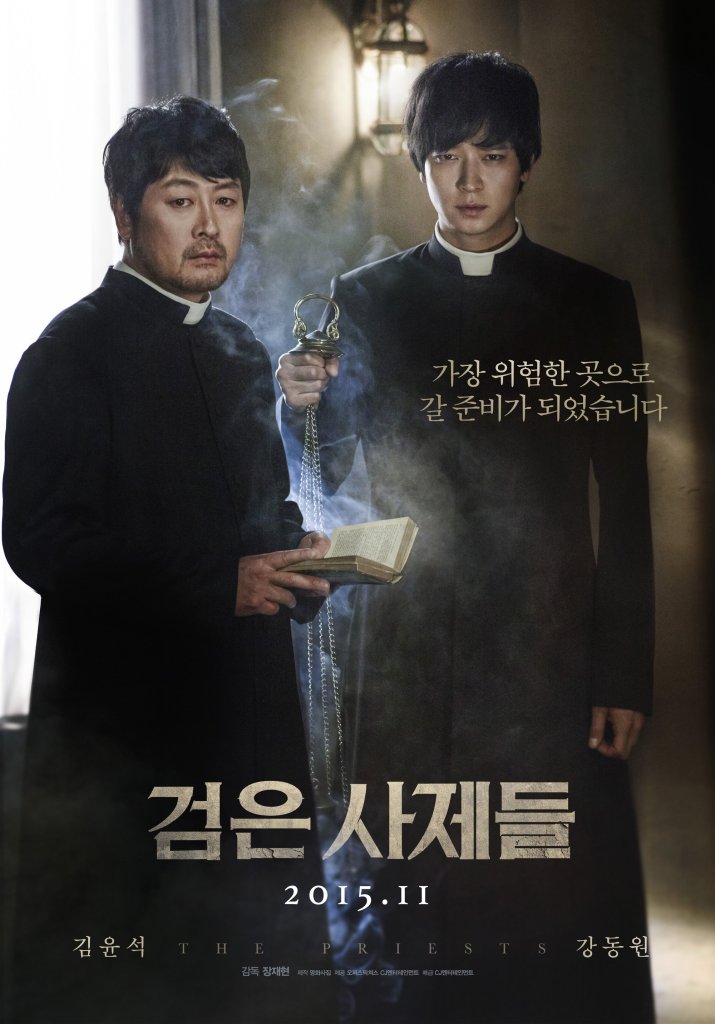
The Priests (검은 사제들, Jang Jae-Hyun, 2015)

The Priests PosterThe era of hero priests might be well and truly behind us but at least when it comes to the exorcism movie, the warrior monk resurfaces as the valiant men of God face off against pure evil itself risking both body and soul in an attempt to free the unfortunate victim of a possession from their torment. To many, the very idea sounds as if it belongs in the medieval era – what need have we for demons now that we posses such certain, scientific knowledge? There are, however, things far more ancient than man which are far more terrifying than our ordinary villainy.

The Priests (검은 사제들, geom-eun sa-je-deul) begins with two Italian clerics in the Vatican discussing the somewhat taboo subject of exorcism and demonic possession. They have been made aware of a serious case in Korea and, as they can’t get in touch with the Korean exorcism department, head out there themselves for a little pest control of their own. However, the enemy they were facing proves too strong for them as they become involved in a multi-car pileup allowing the demon they’ve trapped inside a small dog to escape and migrate to a better humanoid host.

Now we turn to the Korean church authorities who are also worried about a young girl who appears to be displaying the symptoms of demonic possession. Their leader repeatedly tells them he will not “officially” sanction any kind of action whilst making it clear he wants them to go ahead and deal with it. No one knows much about exorcism so they reluctantly turn to the maverick preacher Father Kim who, as it also turns out, is a friend of the girl, Young-sin. Matters have reached an impasse as the demon inside Young-sin tries to make her commit suicide by jumping from her hospital room window in order to migrate to a more robust host, leaving her in a comatose state.

Anyone with any basic knowledge of exorcism in the movies knows that you need a young priest and an old priest so Kim gets a sidekick in the form of the equally unusual Deacon, Choi, who is not exactly a model student at the seminary. Choi is initially quite excited to be assisting in such an arcane ritual even if his chief job title is “pig sitter” and his new “boss” is a gruff and world weary man who he has also been asked to spy on just in case this is all down to Kim acting “inappropriately” with an underage girl rather than a visitation from an even more ancient evil. Needlessly to say, Choi quickly discovers Father Kim has been speaking nothing but the truth and he is in way over his head.

Though this is a Catholic crisis bound up with Christian cosmology and centuries old rites, this is still Korea and so Eastern concerns seep into the Western religiosity. The night Kim has chosen for his final assault coincides with the Buddhist feast of the Hungry Ghost when the dead return to visit the living and one of the criteria that made Choi a prime choice for the role of the assistant is that he was born in the year of the Tiger and therefore supposedly more spiritually sensitive. In a quest to help the girl, all avenues are being explored so shamanistic rites are also performed (though with little success) and Kim seems to have a kind of professional respect for his shamanic counterpart even if the two obviously disagree on some quite fundamental things.

Thanks to its double layer of exoticised mysticism, The Priests quickly works up a supernaturally charged atmosphere though its eyes are strictly on entertainment rather than exposing any deep seated social concerns.The possessed girl calls forth animals, speaks in tongues offering bizarre and disturbing prophesies, and eventually projectile vomits blood and snakes all over a painting of the Virgin Mary yet the film never aims for the shock factor that defined Friedkin’s The Exorcist. Though tagged as horror, The Priests is not particularly frightening (jump scares aside) but does manage to evoke a kind of ever present dread in the face of this unfaceable threat.

Despite the heavy atmosphere, Jang is careful to allow the occasional comic episode providing a welcome break from the seriousness of the war against ancient evil. Impressive action sequences including the early serial car crash and later chase sequence add to the urgency of the situation whilst also alleviating some of the ever increasing tension. Though he visits some dark places, Jang’s world view is not as bleak as Friedkin’s as we’re left with a feeling of restitution, once the original threat removed, though we obviously know that other such threats remain. The heroic ending allows us to forget this for a moment as we enjoy the right and proper victory of good over evil, neglecting that this is but one of many battles in an eternal, celestial war.


Reviewed at a Teaser Screening for the upcoming London Korean Film Festival to take place in November 2016.

US trailer with English subs:

Failan (파이란, Song Hae-sung, 2001)

FailanSometimes God’s comic timing is impeccable. You might hear it said that love transcends death, becomes an eternal force all of its own, but the “love story”, if you can call it that, of the two characters at the centre of Song Hae-sung’s Failan (파이란, Pairan), who, by the way, never actually meet, occurs entirely in the wrong order. It’s one thing to fall in love in a whirlwind only to have that love cruelly snatched away by death what feels like only moments later, but to fall in love with a woman already dead? Fate can be a cruel master.
The titular Failan (Cecilia Cheung) is a migrant from mainland China who’s travelled to Korea in search of her last remaining relatives following the death of her family. Unfortunately, they moved abroad some time ago and no one knows how to contact them. Stuck in Korea, Failan is running out of options but a “kindly” woman suggests a phoney visa marriage so she can legally stay in the country and earn her keep at the same time.

So, she ends up married to the feckless petty gangster-cum-video-store-proprietor Kang-jae (Choi Min-sik). We meet him around a year later and it’s his story we follow for the first half of the film as he gets out of jail after being arrested for selling adult videos to horny teenagers. Kang-jae quickly gets into an argument with his gangster boss, Young-sik (Son Byung-ho), but as they’re also old friends they patch things up over a drink only for the evening to go way south when Young-sik spots a rival gang member and ends up beating him to a bloody pulp whilst in a trance-like rage.

Young-sik is young and ambitious so when the crime is discovered he pleads with Kang-jae to take the rap for him, promising that he’ll buy him that fishing boat he’s always wanted so he can go back to his home town when he gets out. Kang-jae goes home to think it over and gets a knock on the door, two policemen are standing outside only they haven’t come to arrest him – the wife he’d forgotten all about has died. Kang-jae has hit a fork in the road both literal and metaphorical and takes a road trip with his best friend to finally meet his bride in a cold and lonely place.

Failan is almost a plot device in the film that bears her name, but her story is a sad and a hard one. Orphaned and alone she finds scant kindness in her adopted country but the woman who runs the laundry where she ends up working does at least develop an almost maternal feeling for her. Failan feels great gratitude to Kang-jae for agreeing to marry her so she could stay in Korea and is convinced he must be a very good, very kind person. She thinks this largely because she never meets him.

Kang-jae is rubbish at being a gangster. Young-Sik may have a point when he says he doesn’t have the heart for it. Early on, some of the youngsters try and rope him into an extortion scheme where they’re trying to get an old granny to pay back some of her loan. Apparently the granny had once been kind to Kang-jae when he was young and hungry so he doesn’t really put a lot of effort into being menacing towards her which makes him lose face with the young toughs who think of him as a joke anyway. Reading Failan’s letter, it’s the first time that anyone has ever said anything nice about him. The first woman who ever thought he was worth anything at all and she’s already lost to him before he even knew her.

Kang-jae is not a good man, he’s an underling just muddling through without thinking. He leaps from one thing to another always thrashing around landing where falls. He has a vague ambition to get the money together to buy a fishing boat and go home, but he’s not seriously pursing it. Even the group of gangsters he’s involved with are so laughably low rent that they can’t hold on to their completely worthless territory and have to put pressure on old ladies just to get by. After reading Failan’s letter and hearing that someone believed he was better than this, Kang-jae finally wakes up and starts thinking about his life with the ultimate realisation that he doesn’t have to live like this. Unfortunately, he might have just picked the wrong day to start living the rest of his life.

In many ways Failan is a typical melodrama filled with the pain of unrealised love and Fate’s ironic sense of timing. Based on a novel by the modern Japanese master of the tearjerker Jiro Asada (Poppoya), Failan seems engineered to rend hearts with its tale of true love frustrated by time and circumstance where every ounce of hope and goodness is well and truly trodden into the ground by the time the credits roll. Nevertheless, Song keeps things on the right side of schmaltzy, never racking up the misery and heartbreak beyond the threshold of plausibility. Like all the best melodramas, Failan’s sentimentality is sincere and, ultimately, moving. Another sad story of salvation arriving too late, Failan’s tale of tragic, unrealised love is an all too familiar one but effectively told it can’t fail to tear the heart.


You can currently stream Failan via Amazon Video in the US courtesy of Asian Crush, but the Korean R3 DVD and Region A blu-ray both contain English subtitles!

Unsubbed trailer:

Tuition (수업료 , Choi In-gyu & Bang Han-joon, 1940)

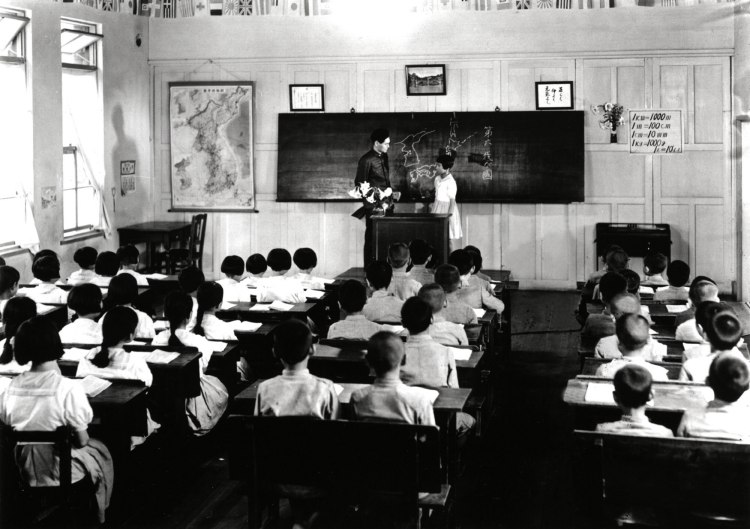
tuition largeLong thought lost, Tuition (수업료, Su-eop-ryo) is an unusual example of Korean film made during the Japanese colonial period. Released in 1940, the film depicts the lives of ordinary people facing hardship during difficult economic conditions though there is no reference made to the ongoing military situation. The story itself is inspired by a prize winning effort by a real life school boy who was doubtless experiencing something similar to the trials of Yeong-dal, however, directors Choi In-gyu and Bang Han-joon made several subversive changes to the script at the filming stage in an attempt to get around the censorship regulations.
Schoolboy Yeong-dal lives alone with his grandmother after his parents have left to try and make more money. The pair are struggling to get by already and the grandmother is so exhausted that she’s beginning to become too ill to continue working. Yeong-dal’s biggest preoccupation is the money for his school fees, they’re already a few months behind and besides it being embarrassing in front of his friends, he’s worried he’ll be kicked out altogether. They’ve also got the landlord breathing down their necks and the threat of eviction hanging over them too. When the worst comes to the worst, Yeong-dal sets off on a long and arduous journey walking to his aunt’s house in a distant village in the hope that she will lend him the money for his school fees.

The original script for Tuition was written entirely in Japanese as was common for the era. However, at the shooting stage, the directors put most of the dialogue back into Korean other than that which would naturally occur in Japanese. The kids are taught in Japanese at school – their Japanese tutor doesn’t even really understand Korean as can be seen when he decides to visit Yeong-dal’s home to see why he hasn’t been coming to class and struggles to converse with his grandmother. At home and in the streets everyone speaks Korean to each other, Japanese is reserved for official occasions only.

That said, the tuition the children are receiving is entirely geared to turning them into loyal Japanese citizens. They read about mainland Japanese history with an unusual amount of passion for school kids reciting from a text book, enjoying exciting stories of ancient battles somehow separated from the real political context of the time. Likewise, as Yeong-dal makes his arduous solo road trip, it’s a Japanese military song he sings to raise his spirits rather than a Korean folk tune or familiar lullaby.

Aside from the political ramifications, the reasons the film proved so popular at the time were more likely to do with the feel  good story of a small boy so committed to his studying, and to the honesty of being able to pay for it, that he’d walk miles and miles all alone solely for the promise of being able to ask a family member to borrow the money. Actually, his aunt seems to be extremely well off when he gets there and gives him a huge bag of rice as well as the tuition fees so one has to wonder why Yeong-dal and grandma haven’t upped sticks and gone to stay with her ages ago rather than endure this life of extreme hardship and near starvation. It is, however, a happy ending for little Yeong-dal who finds his perseverance and determination rewarded and not only that, his struggles have also inspired his schoolmates to start a charity collection to help other pupils who find themselves unable to pay the school fees.

Tuition isn’t particularly notable in terms of its directing style which remains relatively simple though typical of the time, but does offer an interesting window into the cinema of the late colonial period which has often been difficult to see. The film’s child’s eye view of economic hardship which is filled more with shame and worry than it is with fear, also make it an interesting addition to the world of depression era children’s cinema inviting comparisons with the films of Hiroshi Shimizu which appear to have influenced Tuition to some degree. Only recently rediscovered, Tuition is an invaluable resource for the history of Korean cinema but is also the heartwarming tale of an earnest little boy winning through despite almost insurmountable odds.


Tuition is the fifth film in the Korean Film Archives The Past Unearthed Project which is attempting to recover some of these lost and hidden films from the 1930s and 40s. Like the majority of releases from the Korean Film Archive, Tuition includes English subtitles and comes packaged in an elegant slipcase. The set also includes a beautifully designed booklet which resembles an old fashioned school excercise book and as usual also contains an English translation of the original Korean text. The DVD itself is region free!

A Midsummer’s Fantasia (한여름의 판타지아, Jang Kun-jae, 2014)

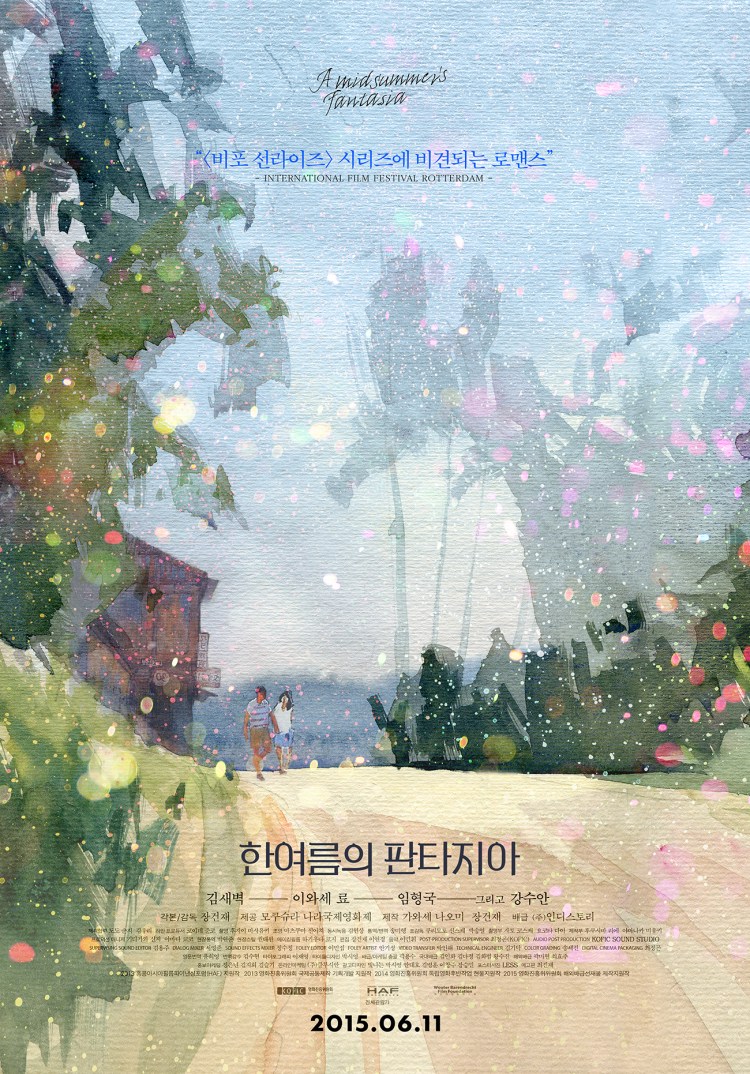
Midsummer FantasiaFollowing his “sleeper” hit, Sleepless Night, Korean indie director Jang Kun-jae gets a touch of the Hong Sang-soos in the bifurcated tale of artistic inspiration found in a foreign land with the Korean/Japanese co-production A Midsummer’s Fantasia (한여름의 판타지아, Hanyeoreumui Pantajia). Mixing naturalism with hyperreality, Jang’s exploration of cross cultural pollination is one which offers both fireworks and quiet contemplation.

Neatly split into two parts, the film begins with a black and white sequence titled First Love in which a Korean director travels to a tiny Japanese town on a location shoot accompanied only by his assistant playing the role of interpreter. A beautiful country idyll, the village is also dying as the population ages leaving the local school abandoned for over 25 years with only the elderly left behind by their children who’ve fled to the cities. After talking with some of the residents, the director is captivated by the romantic tales of a local civil servant who acted as a guide for a young Korean girl some years previously and that of a slightly older man who once worked in the big city of Osaka and took a liking to a Korean bargirl who reminded him of his first love but tragically lost touch with her after deciding to return home.

Inspired by these twin tales of frustrated cross cultural romance, part two switches to colour for a story titled The Well of Sakura in which a Korean woman pays a visit to the same small town before heading home. A local man from the tourist office helps her out by showing her around a little and is, in truth, disappointed that she will be leaving soon never to be seen again.

The first half is shot entirely in black and white with a documentary style approach filled with ugly jump cuts and direct to camera speeches from the local residents about their daily lives in the town. Wandering around the picturesque settlement and listening to the stories of its lonely older population, what the director is most taken with is the wistfulness of the place – the sense of unresolved longing, faded promise and missed opportunities the abandoned village seems to evoke.

Part two is his response, a constructed tale of unresolved romantic connection between a Japanese man and a Korean tourist who’s ventured somewhat off the beaten path both physically and spiritually in visiting this quiet backwater before returning to the various problems which seem to be proving disruptive in her everyday life in Korea. Picking up elements from part one such as the abandoned school and its mysterious photograph, it weaves an ordinary tale of love as two people begin a dialogue they may never have the opportunity to end.

However, part one is not quite as naturalistic as it first seems with its wandering ghosts and strange symbolism. Even if the bright colours of the film’s second half are intended to feel more “cinematic” and therefore less “real” than the black and white, talking heads doc meets indie movie feel of part one it’s clear that both segments are involved in a dialogue, or perhaps even a romance, with each other – a case of call and response which begins and ends with fireworks.

It’s difficult to unsee Hong Sang-soo in Jang’s dual structure and straightforward if occasionally whimsical approach, yet he’s a little less flippant than Hong’s often ironic tone and is content to let even his imagined tale of a failure to launch romance say something more meaningful if only through simple conversation. Filled with cross cultural detail, A Midsummer’s Fantasia is both about place and not as it, like the director of the first half, is keen to point us to the who and not the where – people rather than place are the name of the day. Filled with an oddly melancholy warmth, A Midsummer’s Fantasia is another excellently produced character piece from Jang which explores larger themes with a poetic economy and heart filled with “romance” in much a larger sense.


A Midsummer’s Fantasia is available on English subtitled Region 3 DVD from Korea.

The Throne (사도, Lee Joon-Ik, 2015)

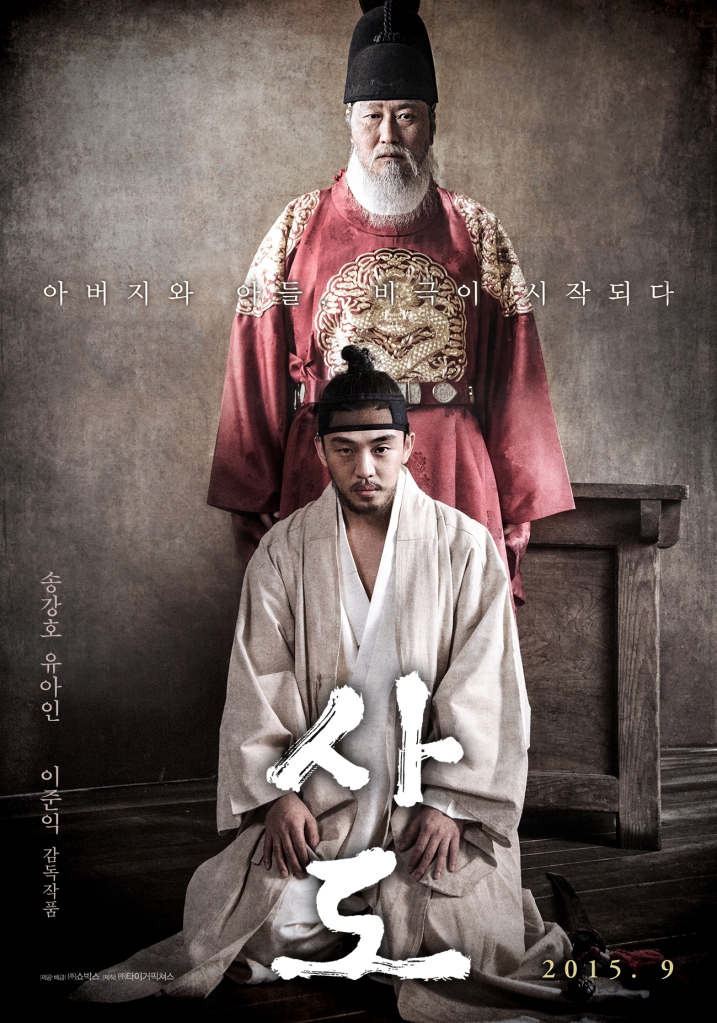
the throneWhich one is worse, the son who tries to kill his tyrannical father, or the tyrannical father who executes his own son and heir? A collection of sad stories all round, Lee Joon-ik’s The Throne (사도, Sado) is a historically inspired tale of familial conflict played out on a national stage. Where another nation might have entered into a bloody civil war, this very private tragedy keeps its bloodshed within the palace walls but still does not lack for cruelty.
Told in a non-linear fashion, The Throne takes inspiration from the 1762 incident in which the ageing King Yeongjo has the Crown Prince, his son later named Sado, executed in the most brutal of ways – confinement inside a heavy wooden rice chest placed inside the castle courtyard where he will be denied food and water until events take their natural course. In flashbacks we see that the king did love his son once but as the boy grew older and became something other than what his father desired of him, his love turned to disappointment and then to fear and disgust. The legends say that Sado was a madman – a murderer or deviant who needed to be eliminated, or just the victim of a conspiracy, but his anger with his father is easily understandable even if it hadn’t been for a seemingly crucial episode where he was forced to endure a feat of painful endurance which almost cost him his life and, perhaps, provoked something akin to madness.

Yeongjo is an austere man, devoted to scholarship. He began Sado’s kingly tutelage at just two years old but even if he was a bright little boy he eventually grew bored with his father’s educational regime of dull rote learning and constant tests preferring the relative freedom of outdoor life with swords and arrows and far less judgement. Sado likes to paint too, but this also falls under his father’s definition of pointless frivolity and so is just another thing which earns him nothing but disdain from the man who would make him king.

Things come to a head when Yeongjo suddenly declares he wants to retire as a ruler and abdicate in favour of his son who is anything but ready. Settling on a regency agreement sounds like the ideal compromise but turns out to be quite the reverse as Sado is merely a stooge for his father who only uses the situation to perpetually humiliate him in front of his courtiers. Sado himself has different ideas to his father about how things should be done in that his father’s emphasis on keeping peace at court had largely resulted in deferring to the more powerful lords at the expense of the poor which is one way to rule country, but perhaps also the most selfish.

When Sado has a son who seems to be everything his father isn’t, tension only rises as Yeongjo first rejects the boy as an infant only to later seek deposing his son in favour of his grandson. Simply put, Sado is now surplus to requirements and despised by his father who also happens to be the king so things are not looking good for him even if he hadn’t descended into a kind of madness which, like Hamlet, briefly cleared and allowed him to stay his hand rather than kill a king where compassion proved his weakness.

Added to the historical intrigue and the tragic misunderstandings between fathers and sons, The Throne adds in a comment on the vagaries of rigid social systems which set out correct and incorrect ways of living, even down to the the ties on the hem of a pair of trousers. Sado wasn’t cut out for his father’s life of dry book learning and calculated appeasement. He was an artist and an athlete – a man of action who might have made a fine king at any other time but could never have been what his father wanted him to be (which was essentially just another version of himself). Yet no deviation can be permitted in this extremely regimented kingly court where a single misspoken word or misplaced action can be enough to seal your fate.

When prompted for a kind of explanation at the end of the film, Sado repeats one of the teachings from his father’s books – that in the end laws and decorum are less important than the men that stand in front of them. He placed the man before the idea but was not rewarded with the same degree of feeling – only a cold and dispassionate application of the law. In part an exploration of a historical event which is both personal and national tragedy, Sado is the time old story of a father and son who are unable to understand each other, snatching only a few brief moments of connection before the inevitable separation. A partial posthumous pardon only serves to deepen the tragedy of a son driven mad by his father’s unpredictable cruelty and even if the film ends on a note of melancholy reconciliation with the past, the central message of fathers attempting to force their own world on their unwilling sons is one that rewrites itself with each passing generation.


Reviewed at a “teaser” screening for the London Korean Film Festival.

The Yellow Sea (황해, Na Hong-Jin, 2010)

yellow sea korean posterReview of Na Hong-Jin’s The Yellow Sea (황해, Hwang Hae, AKA The Murderer) – revised form of a piece first published by UK Anime Network in March 2012.


Gu-Nam (Ha Jung-Woo) is a taxi driver with a gambling problem. If the gambling wasn’t enough to get him into trouble, he’s also in debt to some gangsters over the money for his wife’s passage to South Korea. His wife was meant to be sending the money she’d make there back to him and their daughter to help pay off the debt, but no one’s heard from her in months. The obvious assumption is that she’s made a new life for herself and doesn’t want to be found, but Gu-Nam can’t quite bring himself to believe it. As a Joseonjok – a Chinese Korean from the Yanbian Korean Autonomous Prefecture, Gu-Nam had little chance of living an honest and prosperous life. Disowned by both China and Korea, many Joseonjoks are forced to resort to criminality in order to survive.

Just as it seems things are about to hit a crisis point, Gu-Nam receives an interesting job opportunity. Myung-ga (Kim Yun-Seok), the dog seller at the market, suggests Gu-Nam go to South Korea, kill a prominent businessman, look for his wife and return back to China (with the businessman’s thumb for proof). Assuming all goes well, Gu-nam will receive the pin number for an account with 57,000 Yuan, maybe return with his wife in tow or at least find out once and for all what the situation is between them, and finally get these gangsters off his back.

Still, sneaking into South Korea and committing a murder – it’s a big ask, and first off Gu-Nam rejects the idea out of hand but one conversation with his decidedly tough mother later and Gu-Nam has accepted. However, when he gets to Korea he finds things aren’t as simple as Myung-Ga made out. There seems to be a much bigger game in play than Gu-nam bargained for and it’s not long before he’s running from the police, gangsters, and just about everyone else.

If there’s one thing there’s a lot of in this film, it’s running. It’s difficult to think of another film that manages to make a good old fashioned foot chase quite so exciting. The set pieces are astonishing – multi-car pile-ups, police driving into and over each other, an extended chase sequence through a cargo boat – the list goes on, all with Gu-nam running desperately towards the camera. Propelled by pure survival instinct and later an intense need for revenge and an explanation, Gu-nam keeps running no matter what is coming for him.

One of those things is, of course, Myung-ga who’s now got a total mess on his hands that’s threatening to derail all of his current business arrangements (well, except the dog selling – something to fall back on). If there’s another thing there’s a lot of in this film, it’s stabbing (and later axing). Luckily for him, it seems Myung-ga is something of an expert at this as we find out in one scene where we see him, badly wounded, enter a room full of angry gangsters – the camera cuts away and we return to find all of the gangsters seemingly dead with very little fuss. He even tries to kill someone with a lamb bone at one point! Myung-ga is certainly not someone one would want to be meeting on a dark night (or ever buy a dog from). He is though, one of the most compelling film villains of recent years.

Speaking of stabbings, The Yellow Sea is a very violent and extremely bloody film. If you’re well versed in Korean crime dramas, you might be aware that South Korea has very tight gun laws, so much so that not even the toughest gangsters carry guns. Consequently what you have here is a lot of people sneaking around trying to get the drop on each other to stick the knife (or occasionally, hatchet) in. Obviously, it’s much quieter than gunfire but also much messier and much more physical. The only guns in the film are those which belong to the police, who are largely depicted as bumbling idiots who can’t tell one end of a gun from the other.

This Bounty Films release (distributed by Eureka in the UK) is the shorter 140 minute ‘Director’s Cut’. There is, however, some controversy about whether it really is a director’s cut or an international version prepared by the film’s co-producers Fox International. For the record, it runs about sixteen minutes shorter than the version seen in Korea. Despite being the shorter version, The Yellow River does still feel a little long at times and really pushes the ideal running time for a thriller of this kind. Nevertheless it does manage to keep the momentum going throughout and even has a streak of morbid humour running right through it.

A sad meditation on the futility of life, particularly for those who find themselves at the bottom of the pile and are forced to scrap like dogs for the little other people have left behind, The Yellow Sea is an exciting addition to the recent wave of Korean crime thrillers. Following on from his impressive debut The Chaser, The Yellow Sea certainly catapults director Na Hong-jin right into the top tier of Korean cinema.


The Yellow Sea is available on DVD and blu-ray from Eureka in the UK and on DVD from 20th Century Fox in the US.

Chilsu and Mansu (칠수와 만수, Park Kwang-su, 1988)

Chilsu MansuThough not a big box office hit at the time of its release, Park Kwang-su’s Chilsu and Mansu (칠수와 만수, Chil-su wa Man-su) is not only fondly remembered by its contemporary audience chiefly because of the amusing performances of its still popular leading actors, but is also credited with kicking off what would become known as Korean New Wave. Released in 1988 and set sometime in 1987, this is the new Seoul emerging into democracy after decades of military rule and looking ahead to the glory of the 1988 Seoul olympics. However, as ever, the future has not been evenly distributed and there are those who find themselves unable to climb its ladder through no fault of their own.

Based on a story by (banned at the time) Taiwanese writer Huang Chunming, the film begins with the blaring sirens which denote a “civil defence drill” is about to take place. Chilsu is forced off the bus he’d been travelling on and takes refuge in a video arcade where he encounters college student Jina. After the drill ends Chilsu continues to pursue her at her job working part-time in a Burger King. When he gets back to work, Chilsu finds that his boss has paid someone else to cover the time he was missing. Chilsu argues with him and quits but pesters the man he’s just met, Mansu, to take him on as an assistant and help him find work. The pair become friends and begin working together as billboard painters but one fateful outburst seems fit to change both of their lives forever.

Chilsu is an animated fellow who’s constantly wandering off to do his own thing to the consternation of everyone else. He’s a chancer and an opportunist and, as it turns out, a compulsive liar. Almost everything he says is untrue. In order to get closer Jina, he tells her he’s an art student and tries to impress her by speaking English with stories of going to America to study where his brother has a house in Miami. He dresses like Bruce Springsteen and has Stars and Stripes patterned T-shirts but his taste for Americana is merely aspirational, he has no education or connections and his stories about going to America to study are a fantasy. He does have an older sister who has apparently been disowned by their father for fraternising with Americans and may have have gone to America with a man, but no one even knows if she’s alive or dead.

Mansu, by contrast is sullen and standoffish. He drinks too much and says little though his anger is of the subdued kind. His problem is that his father had, and continues to have, communist sympathies which he refuses to renounce. This causes a problem for Mansu because each time he receives a background check he gets flagged up and in one notable instance he’s refused a passport that would enable him to take an overseas job precisely because of his father’s record. He’s trapped in poorly paid menial work through no fault of his own simply because of something that his father did that is nothing at all to do with him.

Chilsu is also resentful of his father who worked as a “houseboy” for the American military but now does nothing much of anything at all. After Chilsu’s mother died, his father remarried and lives off his second wife’s earnings. A drunk and a layabout, Chilsu’s father sets a poor example for his son who is terrified of becoming just as feckless and miserable as his deadbeat dad. Both men are paying the price for the actions of the previous generation who have left them with nothing but barriers preventing them from escaping the years of difficulty for the bright and shining future that men like themselves are building for other people’s sons to prosper in.

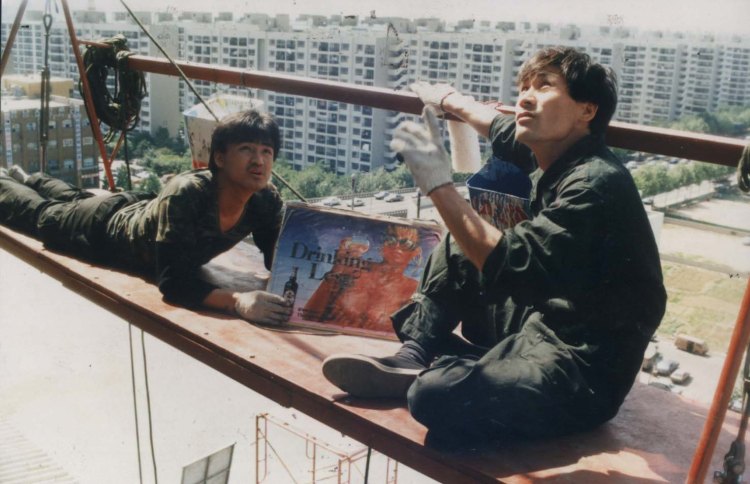
The climax of the film occurs as the pair are just finishing a giant billboard for an alcoholic drink and are taking a break. Chilsu climbs up on top of the billboard and Mansu goes up to join him. The pair get chatting and Chilsu eventually confesses his lies as he realises all of his dreams have been shattered. He has no hope left, no possible future to consider. Mansu is now angry for both of them and takes this opportunity to scream in rage into the uncaring void that is the expanding city below. Obviously, they can’t be heard or understood but the pair’s wild gesticulations create quite a show for the people down below and a crowd starts to gather. This results in the police being called and a further agressive motion by Chilsu makes them think the pair have petrol bombs. Neither of the two quite realises the fuss they’ve caused by unwittingly making a “political protest”, possible suicide bid or perhaps both. This absurd misunderstanding will have profound consequences for both of them.

This final scene continues the tragicomical tone that has characterised the film so far which adds to its absurdist quality rather than pushing it into a harder political statement. Chilsu and Mansu was the first film of Park Kwang-su who had already been politically active during the dark years of the dictatorship and was committed to socially-conscious filmmaking. Kicking off a similar trend for years to come, Chilsu and Mansu is an early example of commercial realist cinema that although not a big hit on original release has gone on to be regarded as an enormously important step in the history of modern Korean cinema.


Chilsu and Mansu is the fourth in the Korean Film Archive’s series of remastered blu-ray releases and like the others in the series includes English subtitles on not only the main feature but also the commentary track with director Park Kwang-su and film critic Kim Young-jin. The discs also boast an image gallery and the set comes with a 42 page booklet in both English and Korean plus a 20 page photo booklet.

You can also watch the entirety of Chilsu and Mansu (pre-restoration version) with English subtitles for free via the Korean Film Archive’s YouTube channel

No trailer but here’s a prominent song from the film’s soundtrack which includes some early Korean rap:

The March of Fools (바보들의 행진, Ha Kil-Jong, 1975)

March of FoolsAside from the original 1960 version of The Housemaid (and this perhaps only because of its modern “remake”), mid 20th century Korean Cinema has been severely neglected overseas. Ha Kil-jong’s The March of Fools (바보들의 행진, Babodeul-ui haengjin) is almost unknown abroad but consistently tops Korean lists of the country’s best cinema and has been both enormously influential on later filmmakers and fondly remembered by audiences.
The story centres around two philosophy students, Byeong-tae and Yeong-cheol who are making the most of their youthful freedom. Beginning as a camp comedy, the film follows the pair as they rub up against oppressive squares who take issue with their longish hair (as in one comical sequence where they amusingly escape from a policeman who could do with a trim himself) or berate them for smoking on campus. They’re pretty broke most of the time but they each pay a couple of bucks to go to a mixer to meet girls and they both spend the rest of the movie chasing their respective ladies. Byeong-tae ends up leaving the party to meet his date, Young-ja, outside but she makes him wait for her at a snack stand before flirting with her professor to try and get a better grade. Only partially succeeding, she then asks Byeong-tae to write the paper for her in return for a proper date. Yeong-cheol has much less luck with Young-sook who declares him “boring” and walks out, but the pair meet again a few times later.

Yes, there are drinking parties and sports – the authentic “college” experience, but these are turbulent times and though Ha Kil-jong is prevented from including as much political action as he’d have liked, the subtext of student rebellion hangs in the background. The film caused trouble with the censors at the scripting stage and even once completed was subject to a number of cuts which removed all references to student protests or so called “immoral behaviour”.

The cheerfulness of the early part of the film is there to deepen the despair present in its later moments, though this same despair and desperation were the things the censorship office sought to dampen with their frighteningly effective yet often minimal cuts and changes to the innovative editing structure. All of these young people talk about their dreams for the future and mostly these are small personal things, no one talks about changing the world or getting into politics. However, all are also facing the fact that the dreams they’re chasing are unattainable. They have no positive future or freedom to change their own path – a job, a marriage, children, death. All mapped out already, but if you fall from one of the branches, there’s nowhere to go but down.

Young-ja sort of knows this, she jokes around by saying she wouldn’t marry Byeong-tae because they’re the same age. He’ll be drafted into the army, then have to finish university, so she’ll be “an old maid” before their lives can even get started. She would be better off to find an older man who’s already been through the army, finished his education and has a steady a job. Byeong-tae is also a philosophy student which doesn’t exactly scream employment potential either. Yet, when the couple are to be separated at the end of the film in a scene which has become a landmark in Korean cinema history, she shows her true feelings for the first time as, perhaps, she is about to watch her dream pull away from her.

Yeong-cheol keeps repeating the same strange dream of going whale hunting after he becomes rich. He also always rides a bicycle but every time someone asks him about it he looks confused and says “this is my car”. Yeong-cheol is the weedier of the pair and has failed the military examination which takes place at the beginning of the film because of his poor eye sight. He couldn’t go into the military even if he wanted to and is much less equipt in terms of his personality to cope with the quite turbulent environment of 1970s student radicalism with the constant university shutdowns and pressure from above to conform to the standards of the time.

The “Fools” of the title are the young people like Byeong-tae and Yeong-cheol who know everything is pointless but somehow persist with their ideals and maintain the idea, at least, of a brighter future even if not actively pursuing any kind of “revolution”. Ha Kil-jong was educated in America alongside such contemporaries as Francis Ford Coppola and brought some of that mid 1960s radicalism back with him when he returned to Korea in 1970. Because of the effects of the censorship placed on the film which not only required dialogue to be erased or scenes to be cut entirely but even disrupted the sequence of the editing, the finished film is not necessarily the one which Ha was trying make but does place him among one of the most innovative directors working in the comparatively difficult 1970s Korean Cinema environment. Sadly, after making two sequels to this film Ha Kil-jong died of a stroke at the tragically young age of only 38 robbing us of the masterpieces which would surely have followed. At least with the stunning restoration completed by the Korean film archive which presents the film in the “most complete” form possible, his vision might be more clearly seen by viewers around the world.


The March of Fools is the second film in the Korean Film Archive’s series of blu-ray releases and like the other films in the collection includes English subtitles for the main feature as well as for the commentary track but also features an English language commentary from Korean film expert Darcy Paquet as well as some of the censored footage and comes with a 42 page booklet in both Korean and English.

Unsubtitled extract from towards the end of the film:


Heavenly Homecoming to Stars (별들의 고향, Lee Jang-ho, 1974)

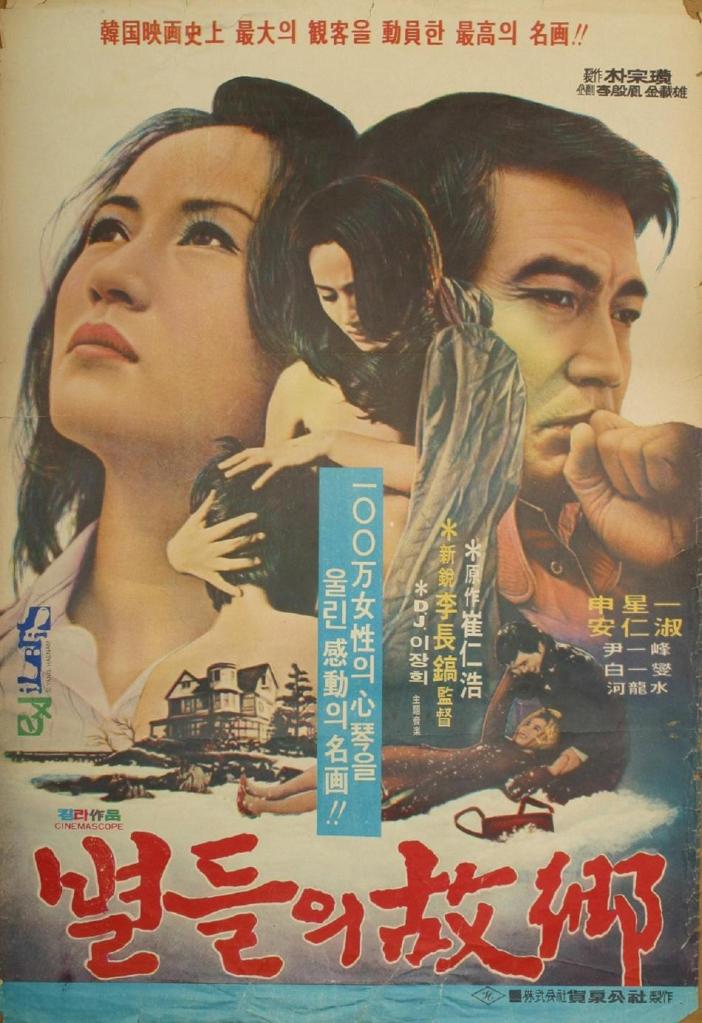
%EB%B3%84%EB%93%A4%EC%9D%98_%EA%B3%A0%ED%96%A52In writing the original novel which inspired Heavenly Homecoming to Stars, Choi In-ho stated that he wanted to tell the story of “a woman whom a city killed”. The novel itself was first serialised in a newspaper where it quickly became a must read and popular discussion point among readers of all ages. It’s perhaps less surprising then that this completely radical film adaptation by first time director Lee Jang-ho proved to be the big cinema hit of 1974. A new “youth culture” movement was beginning inspired by social and political developments from overseas and there was a growing appetite for films and novels which were equally revolutionary. Heavenly Homecoming to Stars managed to provide this but also, crucially, was able to appeal to older age ranges too thanks to its re-imagining of classical melodrama.

In essence, Heavenly Homecoming to Stars is a traditional “fallen woman” narrative. Told in non-linear fashion, the film follows the sorry tale of Gyeong-a and her relationships with four different men each of whom contributes to her downfall. At the earliest point we see her she’s a cheerful young woman like any other working in an office in the city. She finds first love with her co-worker and the pair plan to marry but before they do Yeon-seok pressures her into sex. It’s at this point that everything goes wrong for her as in order to acquiesce to his desires, she begins drinking.

Later she winds up marrying a middle-aged widower with a young daughter but Man-jun is not the man she thought he was and is still nursing a wound from having driven his first wife to suicide through his jealous and increasingly erratic behaviour. After finding out about Gyeong-a’s past, he too leaves her.

Man three is Dong-heok, a rough and violent pimp who turns her into a bar hostess which only increases her reliance on alcohol. Before we meet the quasi-hero of our story, melancholy artist Mun-ho, Gyeong-a is already an alcoholic and well on the way to her own ruin.

Truthfully, Mun-ho may have been able to save Gyeong-a, but he doesn’t. We already know that things don’t end well for her – the film begins with its epilogue as Mun-ho carries a little white box full of ashes across a frozen forest. Hers is a sorry tale though one that’s been told hundreds of times over the course of history and, sadly, will likely continue to be told for centuries to come. Choi In-ho says the city killed her, but it’s only partly “the city” – what it really is is a cruel and patriarchal society which permits men to use and discard women relegating them to a kind of underclass from which it is impossible to escape. Gyeong-a is a woman among hundreds who came to the city in search of a better life and contributed to Korea’s modernisation but found herself sacrificed its name.

Having said that the tone is one of sadness much more than anger. The strict censorship practices of the time placed severe limitations on what could be expressed in a film such as this though, sadly, the ballad of Gyeong-a is one audiences of all ages could identify with. Though it condemns the behaviour of the men in Gyeong-a’s life it does not so much call for change as for lament. Gyeong-a was young, naive and in need of protection which she was denied at every turn – first from the anonymous and unfeeling city and then by its self centred men who took what they wanted from her and callously discarded her afterwards when she no longer fulfilled their standards of a “pure woman”.

Yet, Gyeong-a remains a “pure woman” at heart. Innocent and true, she dies alone in the snow, a woman still young yet ruined by drink, dreaming of her first lover who was also the cause of all of her later misfortune. We’ll be singing the ballads of a hundred Gyeong-as until the sun goes out, but that doesn’t make her story any less sad. Lee Jong-ho’s directorial technique is something of a revelation for the time period neatly allaying standard melodrama tropes with a new brand of Korean realism mixed with European arthouse style. Former child actress Ah In-suk (still only 22 at the time of making this picture) gives a beautifully nuanced performance as the tragic Gyeong-a though apparently retired from acting due to her marriage soon after completing Heavenly Homecoming. An extremely important film in terms of the history of modern Korean cinema kicking off a youth culture movement which would extend into the turbulent 1980s, A Heavenly Homecoming to Stars succeeds both as a conventional melodrama but also as a symbol of a culture in flux.


Heavenly Homecoming to Stars was recently re-released on blu-ray in a beautiful new restored edition which also includes English subtitles on not only the main feature but also the commentary track as well as coming packaged with a booklet in both Korean and English.

However, you can also watch the (considerably less pretty looking) unrestored version with English subtitles and for free (legally) via the Korean Film Archive YouTube channel.

Can’t seem to find a trailer but here’s a poignant (unsubtitled) scene from towards the end of the film:

Twenty (스물, Lee Byeong-heon, 2015)

Twenty Movie PosterReview of Lee Byeong-heon’s Twenty (스물, Seumool) up at UK Anime Network. I really felt so old watching this film.


The age at which you become “an adult” varies according to your culture but in Korea, as in Japan, at 20 you become fully grown up with all the rights and responsibilities that carries. The three guys at the centre of the Korean film Twenty are just walking through this magic doorway which marks the end of their childhoods and the beginning of their adult lives. The road has forked for them and they have to decide which path to take. However, they’ll have to take their minds off the opposite sex long enough to make a decision.

To state the obvious, Twenty is aimed at a very specific audience and is likely to please a certain group of people very well whilst leaving others a little lost and bemused. It stars a collection of popular and very good looking younger Korean actors and actresses and is largely about what it’s like to be on the cusp of adulthood in contemporary Korea. What it’s not is a hard hitting drama. The target audience for this movie is people who are in their teens or early twenties, so they know what it is to be young, now. They just want to laugh along or sympathise with others in a similar position.

We meet the three guys, Chi-ho (popular rich kid), Dong-woo (put upon poor boy), and Gyung-Jae (doing OK middle class guy) towards the end of their high school years. The boys became friends after falling for the same girl who eventually picked Chi-ho but being boys they had a fist fight about it and are now bonded for their rest of their lives. In many ways they’re quite different, Chi-ho is rich, good looking and only interested in girls whereas Dong-woo comes from quite an impoverished background which means he’ll find it difficult to pursue his studies past high school because he needs to be supporting his mother and siblings. Gyung-Jae is almost the protagonist and is a typical middle class boy who’ll go to college and probably do alright for himself. He’s also a typical “nice guy” with a selection of fairly ordinary romantic issues (bar one interesting aspect which is raised but never followed up on) but being pretty level headed he’ll almost certainly get over it.

At twenty they have the whole of their lives ahead of them – or they kind of do given the fairly restrictive nature of Korean society. Chi-ho just thinks about sex. His parents are rich so he just lives in a perpetual adolescence where he hasn’t applied for university but hasn’t decided on a job either. He watches lots of movies and mopes but honestly he’s just a bit lost and afraid to admit it. Dong-woo wants to be a manga artist and decides to repeat the last year of high school whilst continuing to work all the other hours to support his family all the while feeling guilty about trying to pursue his dream rather than accepting the offer of a steady office job at his uncle’s company. Gyung-Jae actually has it pretty easy as his problems are just the normal sort of romantic growing pains everybody goes through and realising that makes them a little easier for him.

The film is not really a serious examination of the problems young people face. Even the eventual looming of military service is treated in quite a matter of fact way. Twenty is more of a celebration of being young and that it’s OK to be a bit lost and stupid when you’ve just left school. It gets surprisingly crude given that it’s aimed at a comparatively conservative Korean audience but generally gets away with it thanks to its cheeky tone. Undoubtedly hilarious in places (the “fist fight” finale in a Chinese restaurant being a late highlight) Twenty is a film that will play best to those around the same age as its protagonists in real terms and truthfully doesn’t offer so much for those who are already little older but it is nevertheless very funny and likely to entertain Korean idol fans of any age.


Reviewed at the London Korean Film Festival 2015.