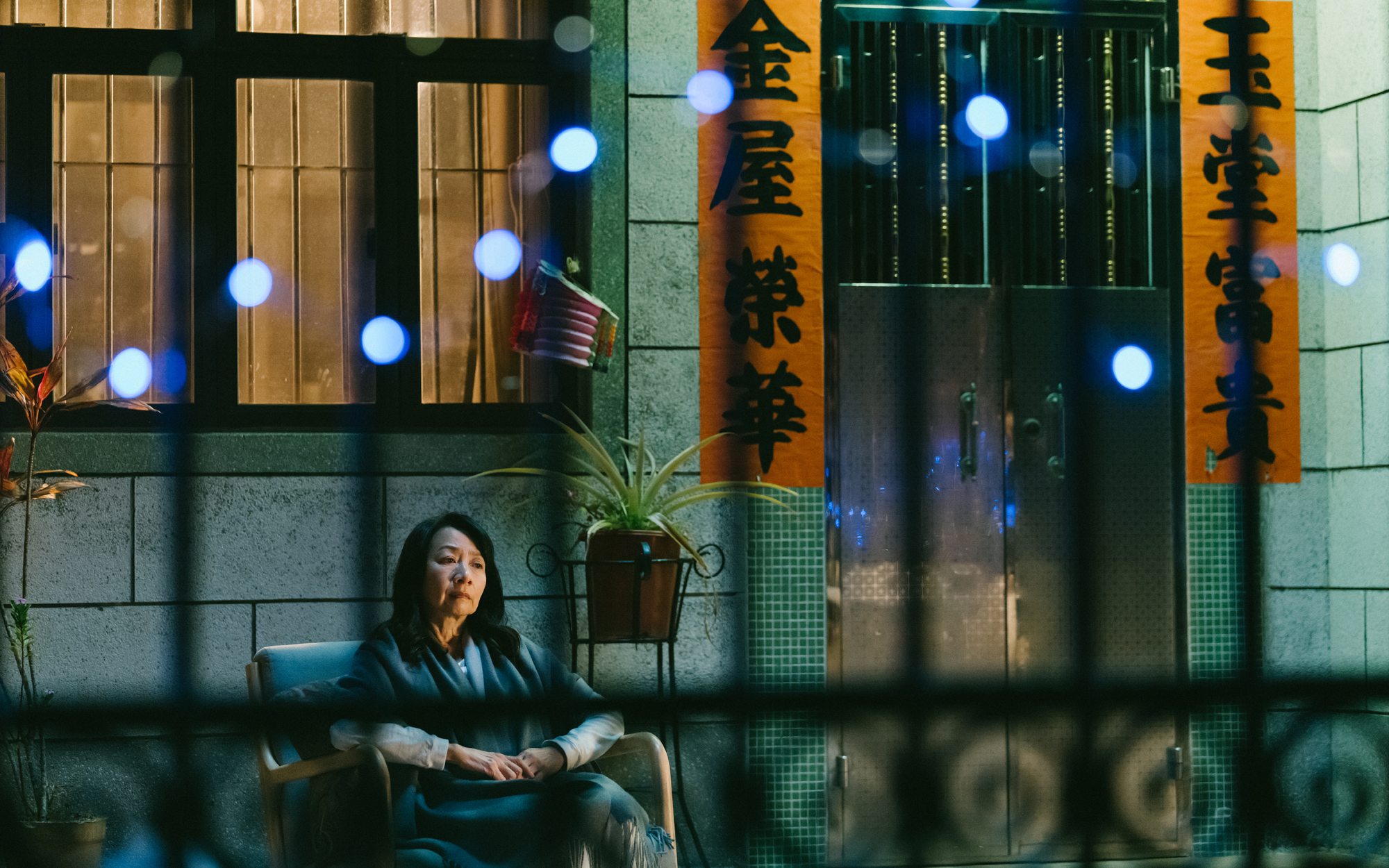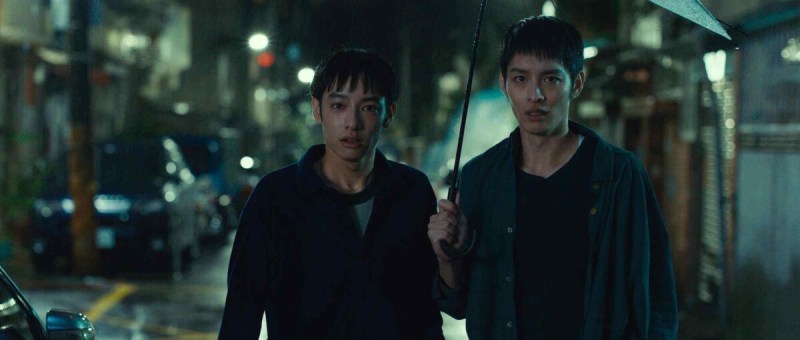
Kalanchoe (カランコエの花, Shun Nakagawa, 2017)

The truth is, most people genuinely mean well but they often make mistakes. They make them because they don’t think things through, fail to consider perspectives outside of their own, or act on assumptions that they later realise were incorrect (or tragically do not). Most people will come to understand where they went wrong and resolve to do better in future, but you don’t always get a second chance and a momentary lapse in judgement can do untold and sometimes irreparable harm.

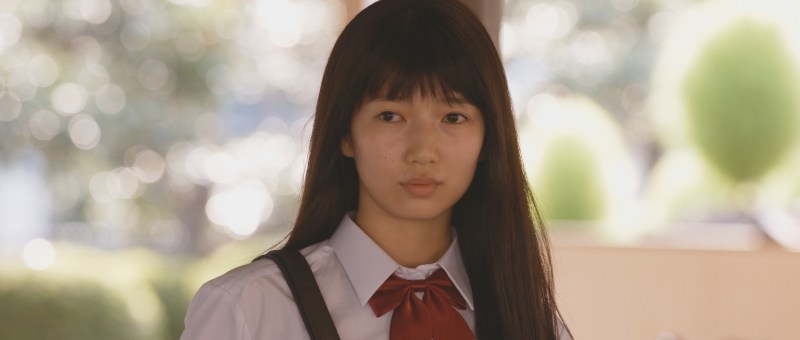
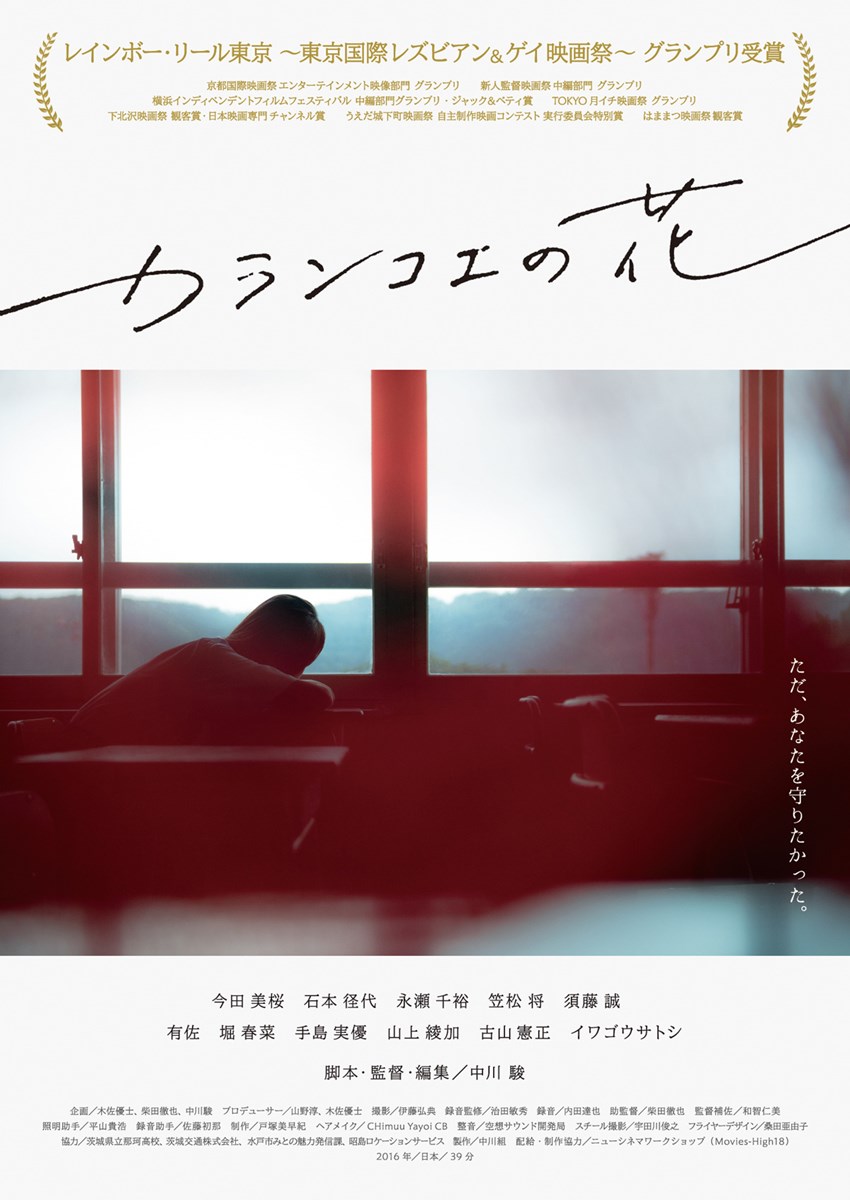
Perhaps that’s just a lesson you learn as a part of growing up, but it doesn’t make it any less painful or indeed shocking at least for the heroine of Shun Nakagawa’s 40-minute mid-length film Kalanchoe (カランコエの花, Kalanchoe no Hana). The film’s title refers to a bright red plant that in the language of flowers means “I will protect you.” But protection can be a double-edged sword, and Tsuki’s (Mio Imada) later attempt to do just that for her friend seriously backfires well meaning though it may have been. The same is true of an ill thought out decision by the school nurse to give a mini lecture on LGBTQ+ issues to Tsuki’s class when their English teacher’s off sick. Because it was only their class that received this talk, some of the students assume it must mean that one of them is gay and begin a kind of witch-hunt trying to figure out who it might be which is completely the opposite of the reaction the talk was supposed to provoke.

Of course, the nurse meant well but it probably should have occurred to her to make sure the class wasn’t singled out and support was available for any students who might be experiencing anxiety surrounding their sexuality or gender identity rather than doing something essentially superficial to make herself feel better. Though most of the students are indifferent to the talk, the class clown bears out the latent homophobia of the current society in badgering the nurse to find out if there are any gay people “or other creeps” in their class while vowing to root them out and making it a kind of game to catch one. The girls, meanwhile, engage in some aggressive heteronormativity talking about boys and pretty much making it impossible for any of them to declare themselves for whatever reason uninterested. 

As it turns out, one student overheard the conversation in the nurse’s office that provoked the talk and knows that one of the students is indeed gay, perhaps inappropriately telling Tsuki who it is in an effort to relieve the burden on herself of carrying this explosive information. When Sakura (Arisa), the student in question, begins to tell Tsuki that she’s gay, Tsuki firstly reacts well patiently waiting rather than admit she already knows though in the end Sakura cannot go through with it despite having said that Tsuki was the person she most wanted to understand. Sakura had admired Tsuki’s red scrunchie that she herself had worried was too bold, prompting her to turn over in her hands and consider it as if thinking over how she intends to react to this information and how she herself may or may not feel.

But on her second opportunity she missteps. Fearing Sakura has been outed, she loudly and clearly says it isn’t true even though she knows it is in a mistaken attempt at “protection” as if she were clearing her name which is also an expression of her own latent belief that it being true is in someway bad. In its way, it echoes the fateful moment in William Wyler’s The Children’s Hour in which Shirley MacLaine tells Audrey Hepburn there’s some truth in the rumour, but Audrey Hepburn tells her she’s lost her mind and though the outcome may not be quite as devastating it’s still a crushing blow with the brutal conclusion implying nothing more than Tsuki will have to live with her bad decision and the pain it caused for the rest of her life. Nakagawa skips between idyllic scenes of the girls on a bike, head gently resting on a shoulder, and scenes of regular high school life but ends on a note of quiet tragedy that feels somehow casually cruel.


Kalanchoe is available to stream via SAKKA from 20th September.

Fish Memories ((真)新的一天, Chen Hung-i, 2023)

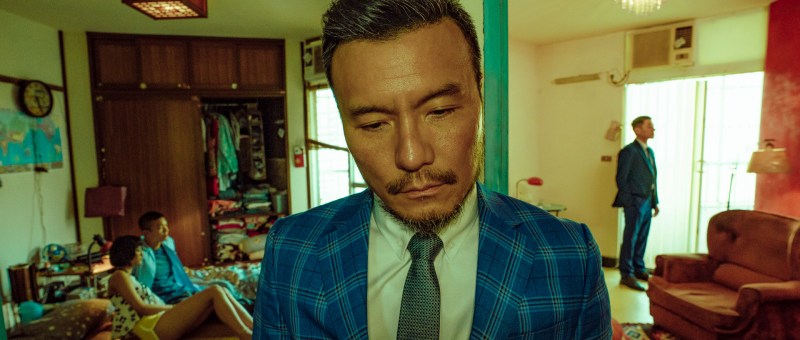
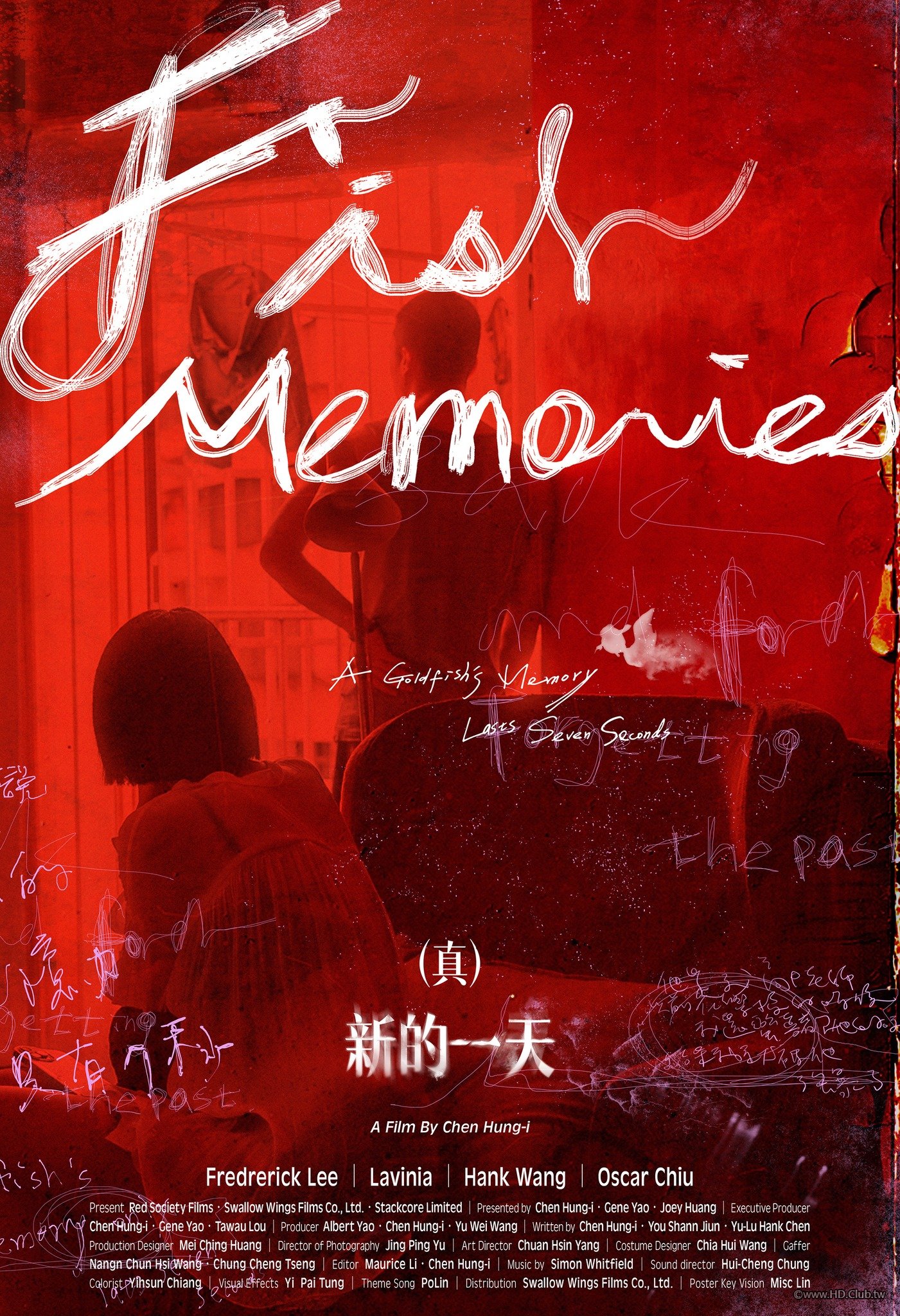
The sometime narrator at the heart of Fish Memories ((真)新的一天, (zhēn) Xīn de tiān) says that she wishes her memory were like that of a fish, no longer than seven seconds, and that she were able to be free of her traumatic past by forgetting it. But of course, she is unable to forget and like her boyfriend, Shang, and the middle-aged man with whom the pair eventually form a twisted relationship, a kind of orphan drifting in the wake of parental failure.

Businessman Zi Jie (Frederick Lee) also seems to drifting, seemingly dissatisfied with his financially comfortable but emotionally empty existence. He later says that his own parents only cared about about money and sent him away to Singapore when he was a teenager only for their business to then fail. He feels as if he’s done better than them, at least, but when asked how to avoid loneliness he answers only “earning money, spending money, earning money”. He has a girlfriend of around his own age, but bristles when she expresses a desire for greater intimacy and ends up pushing her away while beginning to bond with Shang (Hank Wang), a teenager he meets in a convenience store while picking up a parcel. He runs into the boy a few more times and ends up developing a friendship with him and also his same age girlfriend Zhen Zhen (Lavinia) who is still in high school and claims to have been sexually assaulted by one of her teachers who’s apparently done the same thing to several other girls with no apparent consequences.

Zi Jie’s relationship with the teens straddles an awkward divide, partly parental and partly friendly. He seems to partially regresses in their company, drinking incredibly expensive wine but also sitting around playing video games and agreeing to childish dares such as the one in which he ends up swapping places with Shang, waking up in his walkup apartment and dressing in his clothes. Shang’s living environment is not ideal, Zi Jie balks at the stairs while the place is cramped and filled with junk and Shang evidently rarely does no laundry but to Zi Jie it represents a kind of freedom. Of course, he can always return to his luxury apartment which still has power even during an outage which is an option not open to Shang who nevertheless seems to increase in confidence while wearing Zi Jie’s fancy tailored suit. Several times he approaches his rundown apartment block and looks to the sky as if echoing his sense of aspiration though that turns out not to be the reason he’s interested in Zi Jie. 

When he first gave him a car ride, Shang blunts told Zi Jie he wouldn’t sleep with him because he liked girls, remarking that Zi Jie looked “a bit gay”, but a sexual relationship does eventually evolve between the trio even as they also form an unconventional family unit. When they sit down to breakfast together with the doors onto the courtyard open and the sun drifting in with idyllic view behind, Zhen Zhen remarks that it’s the kind of moment she’s been waiting for all her life despite the awkwardness of this quasi-incestous and definitely inappropriate relationship given that the teens are underage and Zi Jie is a wealthy middle-aged man keeping them in his apartment.

But it’s perhaps when the streams start to cross that things begin to go wrong, Zi Jie making a huge miscalcutation while in the teens’ world that provokes a tragic event biding each of them together though only in the darkest of ways. The three of them are each in their way trapped in a tank, no more free than the fish they place inside it and in the end able to find freedom, of one kind or another, by remembering and acknowledging the truth. Repressing his sexuality and chasing only empty financial success has evidently left Zi Jie a hollow, broken man seeking to reconnect with his younger self through his relationship with Shang which in its way also prevents him from acknowledging the vast gulf that exists between them in their differing circumstances but also unites them in a shared feeling of irresolvable loneliness and the legacy of parental abandonment in a sometimes indifferent society defined by economic success.


Fish Memories screens 8th September in Melbourne as part of this year’s Taiwan Film Festival in Australia.

Original trailer (Traditional Chinese / English subtitles)

Successor (抓娃娃, Yan Fei & Peng Damo, 2024)

Embodying the contradictions of the modern China, Successor (抓娃娃, zhuā wáwa), the latest from the FunAge team sees a billionaire father recreate a utopian vision of crushing poverty amid the socialist values of China pre the 90s reforms but only so that his son can develop a desire to become a capitalist fat cat. For all that, however, it’s also a reaction against micromanaging parents, life under oppressive state control, and a high pressure, conformist society obsessed with very narrowly defined visions of success that are increasingly at odds with what a younger generation might want.

The surprising thing is how easily the young boy, Jiye, is able to straddle these two worlds while only gradually beginning to realise that it’s odd his neighbours keep asking him complex maths questions and he’s always running into foreigners who conveniently want to know the way to the local post office. Ostensibly, the Ma family live in an old-fashioned courtyard that according to the sign over the front entrance was constructed in 1958. As the film opens, Jiye’s teacher has brought a wealthy man to their home, in fact the father of one of Jiye’s classmates, who offers to sponsor his education while each of them look mystified around the flat which seems to exist in a kind of time warp. Jiye’s father, Chenggang (Shen Teng), sends them the packing explaining that they live exactly as they want to and don’t need anyone’s help. 

Yet Jiye is fascinated by his friend’s iPad and aware of the world outside works even as his parents try live like it’s the 1960s, sitting round reading good socialist literature which is also recommend to Jiye by the man who owns the bookshop downstairs and is actually one of Changgang’s many hidden “teachers”. But unbeknownst to him, there’s a lift behind his parents’ closet door that leads to a huge control centre where his every move is being monitored. Chenggang is actually a fantastically wealthy businessman who wants Jiye to develop good character so that he can take over his business after getting into a prestigious university.

In a very high tech and invasive way, it’s a reflection of the confused ideology being forced on Jiye by unseen external forces. Once he’s a little older and able to see that his world is definitely not normal, he begins to feel as if some mysterious force is indeed controlling his life but attributes it to vague notions of fate or cosmos rather than wider authoritarianism or parental manipulation. Chenggang is convinced this is the proper way to educate his son, to give him both old-fashioned socialist values and a heathy desire to overcome his poverty and live in a fancy mansion. He feels this way in part due to his dissatisfaction with a grown-up son from a previous relationship who failed his exams and was sent to America in disgrace. Somewhat uncomfortably, one of the reasons Chenggang is so disappointed in Dajun (Zhang Zidong) who continues to crave his approval is that he’s gay and in a committed relationship with an American man who probably should have given more thought to his Chinese name. 

In order to keep up the pretence, Chenggang never tells Jiye that he has a half-brother though he does allow him to see his maternal grandparents on occasion though they, evidently very wealthy themselves, do not approve of Chenngang’s parenting and resent being unable to spoil their grandson in the way they’d like. Chenngang may have a point here, though his chief objection being that the little Jiye was already quite chubby from being relentlessly pampered lands in the realms of fat shaming rather than a serious questioning of indulgent parenting in the wake of the One Child Policy.. He didn’t want him to grow up to be selfish and entitled or to have a distorted sense of the value of money but also seems to have a conviction that the boy will just laugh and say thank you when he finds out his entire life has been a lie and his parents made him suffer needlessly when they were in reality vastly wealthy. 

But what Jiye emerges with is, perhaps surprisingly, a more wholesome sense of rebellion, stepping out from the cosseted false reality his parents had given him and prepared to chart his own course. In an undercutting of the apparent homophobia which surrounds Dajun, the film also refreshingly, and perhaps subversively given the usual treatment of LGBTQ+ themes in mainstream Chinese cinema, suggests that he has done the same and was right to do so validating his relationship with Peter while a kind of solidarity emerges between the brothers in the shared defiance of the path their parents had set down for them. Often hilarious in its surreal humour and penetrating in its satire, the film echoes a sense of dissatisfaction amid contemporary youth no longer so hung up on outdated ideology and craving more individual freedom in a society in which lives can ultimately feel oppressively micromanaged by shady, unseen forces.


International trailer (Simplified Chinese / English subtitles)

All Shall Be Well (從今以後, Ray Yeung, 2024)

There’s nothing that breaks a family apart as quickly as an inheritance. As a cynical lawyer points out, even mothers and sons fall out when it comes to money, so there’s nothing like it to to focus minds with an us and them mentality to clearly define who is and isn’t included under the umbrella of family. But why is it that meaningless pieces of paper hold so much sway over us when we ought to by be governed by the emotional truths that until a moment earlier ruled our lives?

Angie (Patra Au Ga Man) had been fond of saying “because we’re family.” She never doubted her place in that of her partner who all appear, at least outwardly, to love her and accept her relationship with Pat in the way they’d accept any other marriage. But when Pat (Maggie Li Lin Lin) suddenly passes away in her sleep after one last family celebration the situation changes. Well-meaning family members step in to help with the work that must be done when someone dies, but perhaps unwittingly begin to take over slowly erasing Angie from their lives as not really one of them after all.

Her problems are two-fold. The biggest being that Pat never got round to making a will, nor did she think to put Angie on the deeds to the apartment they shared together or leave her financially provided for seeing as she’d managed all the money they’d made when they owned a factory and ran it together. The secondary problem is that Hong Kong does not recognise same sex marriage and so their relationship was not legally recognised. Had Angie been legally married to Pat, she should have inherited everything anyway because she was her spouse even without a will but with things the way they are she’s at the mercy of Pat’s brother Shing (Tai Bo). She never thought this would be a problem, because they’re family, but slowly realises that perhaps they don’t actually see her that way and with Pat gone no longer feel the need to include her.

Her sister-in-law Mei (Hui So Ying) insists on using a feng shui expert to plan the funeral who quickly puts the kibosh on Angie’s desire to have Pat buried at sea as she’d requested. Leaving aside the possibility that the feng shui master is conning them and receiving financial incentives from the people who run the columbarium, the family quickly begin to ignore Angie’s concerns swayed by the claims that interring her ashes will be more beneficial for her descendants which are Mei and Shing’s children seeing as Angie and Pat had none of their own.

A little disappointed in her kids, Mei at one point insensitively remarks that Angie is lucky not to have any though we’re also told that she almost gave in to parental pressure to marry a man in order to become a mother. Daughter Fanny (Fish Liew) makes lowkey racist remarks about her Indian neighbours as a way of expressing her frustration with her moribund marriage and unsatisfying living arrangements, while son Vincent (Leung Chung Hang) struggled to find employment and now works as an Uber driver thanks to the gift of a car from Angie and Pat which allows him to earn a living. He’s originally upset with his family’s suggestion of kicking Angie out of the apartment, but is also in a difficult position himself when his girlfriend becomes pregnant and they can’t find anywhere habitable to live on the kind of salary an Uber driver can earn. Though in her 60s, Mei is still doing a physically strenuous job as a hotel maid while Shing has taken a position he finds degrading as a nightwatchman at a carpark following the closure of his restaurant some years previously. 

The implication is these socio-economic pressures encourage them the abandon their responsibility to Angie as the beloved aunt they’ve known all their lives. But then there’s also the mild homophobia that rears its head, introducing Angie as Pat’s “best friend” and not allowing her to stand in the front with family at Pat’s funeral as if their relationship wasn’t really real because they were both women. Of course they may have behaved the same way had Pat been a man, squeezing Angie out because she had no legal claim as a common-law spouse, but it certainly seems to make it easier for them to abandon her and take everything she worked so hard to build with Pat as if they were really entitled to it. Shing justifies himself that he has to look after “his” family, which doesn’t include Angie, while cruelly implying that it’s what Pat would have wanted. 

In the end, Angie is left with no other option than to sue for her “rightful” share as a ”dependent” in an effort to force the family to recognise the legitimacy of her relationship with Pat. Thankfully she has another family in her community, though her own still living parents only partially accepted her relationship with Pat again referring to her as a “best friend” and making cracks about how she never married. But her family was Pat, and Pat is gone. Yeung paints a touching picture of grief as Angie reacts all the things she did with Pat but now alone, accompanied only by a sense of absence and comforted by her memories while otherwise exiled from a world that had seemed until then filled with familial love.


All Shall Be Well screened as part of this year’s New York Asian Film Festival.

Trailer (English subtitles)

Pierce (刺心切骨, Nelicia Low, 2023)

What are the limits of unconditional love and is it always a good thing? The hero of Nelica Low’s intense fraternal drama Pierce (刺心切骨, cì xīnqiè gǔ) is desperate to believe that his older brother is innocent of a crime he’s been imprisoned for for the last seven years, but in another sense it seems like the fact itself doesn’t matter to him. What he wants is the emotional intimacy of authenticity which is something he doesn’t seem to get from his steely mother intent on crafting a protective bubble of fantasy that may be as much for herself as her son.

In any case, Ai Ling (Ding Ning) is convinced that Zihan (Tsao Yu-ning) was born bad. She needs no convincing that when he stabbed his opponent with a broken blade during a fencing competition he did so knowingly and it was an act of murder rather than an accident as he claims. Zijie (Liu Hsui-fu), her sensitive younger son, is not so sure and feels that his mother’s total rejection of his brother is unfair. He needs to believe in part that Zihan is innocent because he once saved him from drowning though according to his mother if she had not arrived when she did Zihan would happily have watched him die. Ai Ling also says that she suspected Zihan had harmed Zijie during their childhood, but if this is true then Zijie appears not to remember it or perhaps willingly suppresses his memories of cruelty because it would be too difficult for him to accept that his own brother tried to kill him. 

But objectively speaking, there is something not quite right about Zihan who seems to be a charmer with manipulative tendencies. He was once a three time national fencing champion, and as he says fencing is all about figuring out your opponent’s intentions without letting them see your own. Of course, the way he behaves could equally be because of the way his mother behaves towards him. In some senses he too is a broken blade, apparently craving his mother’s approval and affection and perhaps becoming what she believed him to be out of frustration and resentment. He lies all too easily, crashing a dinner party with Ai Ling’s wealthy suitor Zhuang and his family and leaning into her cover story that he had been away studying medicine in the US while adding a touch of his own in a tearful story of wanting to specialise in radiology having watched his father painfully pass away of cancer. 

Of course, even if he is a raging sociopath, that doesn’t necessarily mean he committed an apparently motiveless murder or that he has no feelings at all for his brother who dotes on and idolises him with almost incestuous intensity. Zihan instantly picks up on the fact his brother is gay and that a boy in the fencing club has a crush on him, offering nothing other than support and reassurance of the kind he’d never get from Ai Ling. When Zhuang tries to set Zijie up with a girl and he declines, he broaches the idea he might not be straight but Ai Ling immediately changes the subject implying that probably she already knows but it’s another thing she’s papered over perhaps afraid that it might damage her relationship with Zhuang who appears to come from a wealthy family though they may not be as conservative as she fears them to be. 

In contract to the intimacy Zijie craves, beginning to confess himself, Ai Ling protects and distances herself from others through deliberate misrepresentation. Zhuang seems at least that he would be more upset about the deceit than that Ai Ling has a son who involved in a high profile, violent crime and also appears not to care that Zijie maybe gay while otherwise attempting to bond with him and be a sincere father figure. His love may in fact be unconditional in a way Ai Ling’s clearly is not whereas Zijie finds himself wavering, confronted by contradictory evidence that suggests his brother may not be so innocent after all. Deciding into a Grand Guignol fantasy in its final stretches, Low fills the screen with an ominous red, the billowing curtains creating an artificial dreamscape of ambiguous reality in which the brothers, each of them, discover at least their own truth and the answers they were seeking which may in its way be all they really needed.


Pierce screened as part of this year’s New York Asian Film Festival

Original trailer (English subtitles)
A Balloon’s Landing (我在這裡等你, Angel Teng I-Han, 2024)

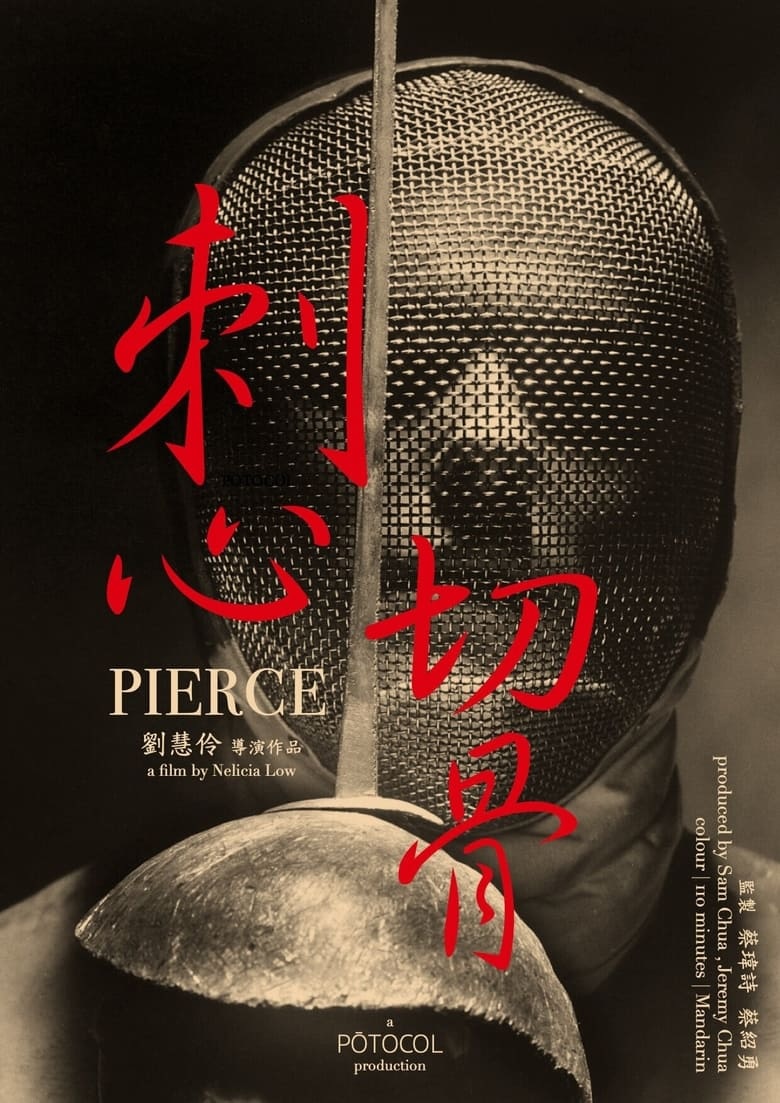
A dejected Hong Kong writer longs to find the path back to paradise if in the most ironic of ways, but finds something quite different after accidentally being befriended by a young street tough in Teng I-Han’s lowkey queer romance A Balloon’s Landing (我在這裡等你, wǒ zài zhèlǐ děng nǐ). Seemingly inspired by the boy’s love genre, the film is chaste in the extreme and overly subtle in its central love story which seems to borrow heavily from other similarly themed East Asian romances such as Il Mare and Comrades, Almost a Love Story.

Director Peter Chan is in fact name checked several times, while Taipei street tough A-Xiang (Fandy Fan) has a poster of Patrick Tam’s Nomad on his wall which of course features the face of Leslie Cheung who occupies a similar space to that of Teresa Teng in Comrades in connecting the would-be lovers. Cheung tragically took his own life in 2003, the same year writer Tian Yu’s (Terrance Lau) parents were killed, while Tian Yu himself seems to have suicidal thoughts and intends to end his life at a place called The Bay of Vanishing Whales he thought he’d made up for his novel but is informed is real in a letter from a little boy in Taiwan he continues writing to as a kind of pen pal older brother. 

In a way, A-Xiang represents his desire for life, fond saying that there’s “always a solution” and begging him not to die just like one of the letters he received urging him to carry on living because the sender would be waiting for him at the Bay of Vanishing Whales. A-Xiang is also his literal saviour in that they meet when he rescues him from a group of conmen after he got very drunk bar but though their first meeting is sexually charged with both men wandering round in their pants their romance is slow-burn to the point of non-existence. While on road trip to find the mythical bay, the pair grow closer with Tian Yu slowly giving up on the idea of finding it along with the death it represents only for fate to intervene.

At this point the film changes direction in allowing Tian Yu to rewrite his present, no longer in search of death but of love and a way to save A-Xiang in the same way A-Xiang has saved him. At least, A-Xiang becomes a kind of symbolic other self as hinted at in his stories of men as lonely islands casting messages in bottles out into the sea in longing for connection. This sense of isolation may stem from a feeling of otherness born of his sexuality, though the film never clearly defines it, along with the more literal orphanhood and existential loneliness he shares with A-Xiang. 

As expected there is a fated connection between the two men which is more than a little contrived if perfectly in keeping with the genre of romantic melodrama as Tian Yu begins to chase a future rather than the past even while actively rewriting it to engineer a better outcome. It might be tempting to read something more into the connections between these two men each orphaned, floating islands seeking new futures together though the central theme seems to be less romance than desire for life in which Tian Yu is able to overcome his depression and desire for death through his connection with A-Xiang who gives him a new reason for living. 

A-Xiang’s symbolic value as Tian Yu’s desire for life might explain why the relationship between them never sufficiently ignites in what is at least billed as a queer romance though could easily be taken for simple friendship or platonic brotherhood with the only expression of desire longing looks and tentative motions from A-Xiang. In any case, Teng lends the beautiful Taiwanese landscape a note of wistful melancholy, a place of infinite nostalgia in Tian Yu’s mind and an evocation of the paradise he’s seeking that’s simultaneously past and future waiting for parallel lines to cross. The lyricism cannot however overcome the coyness of the central romance that for its potential poeticism remains somewhat obscure, an unrealised desire awaiting its season but also a shift in the times born of a new desire for life rather than the melancholy loneliness of past emptiness.


A Balloon’s Landing screened as part of this year’s New York Asian Film Festival.

Original trailer (Traditional Chinese / English subtitles)

Ice Cream Fever (アイスクリームフィーバー, Tetsuya Chihara, 2023)

“Cold and sweet” is the way a customer to Million Ice Cream describes their produce, but it might also be an odd way to describe its comforts echoing the melancholy of the series of women who pass through its doors in Tetsuya Chihara’s adaptation of a short story by Mieko Kawakami, Ice Cream Fever (アイスクリームフィーバー). For each of the heroines it represents a kind of purgatorial space as they find themselves torn between past and future while seeking new directions.

For Natsumi (Riho Yoshioka), who took the job working part-time at the ice cream shop after experiencing burn out in her career as a designer, that new direction appears in the form of Saho (Serena Motola), an alluring yet sullen woman dressed all in black who turns out to be a formerly successful novelist plagued by writer’s block. A series of flirtatious encounters seem to rejuvenate the creative impulses of both women with Natsumi returning to doodling new signs for the shop and Saho beginning to write again, though there remains something distant and elusive between them. Saho later describes herself as like a summer storm destined to pass by in an instant and soon forgotten though in an ironic way her aloofness and enduring mystery may in fact be a way to ensure she is not forgotten while she at least seems unable to embrace her romantic desires instead sublimating them into her literature.

This inability to forget has also marred the life of Yu (Marika Matsumoto), a similarly lost woman approaching middle age who is suddenly approached by a niece she’s never met because she cut ties with her sister after she stole her boyfriend. Her mother having now passed away, Miwa (Kotona Minami) has come to Tokyo in search of her father and though seemingly aware of the circumstances of her familial estrangement enlists her aunt to help find him thereby forcing Yu to confront the past and reassess her life. Like Natsumi she is also becoming disillusioned with contemporary working culture and contemplating making a change. While she is a devotee of ice cream, it’s the local bathhouse, “an oasis for working women” as she describes it, that her been her refuge. When it suddenly closes due to the elderly owner’s (Hairi Katagiri) own decision to pursue a different kind of life, Yu wonders if she might be happier giving up her high powered corporate job to take it over. 

The dilemma both women face is reflective of a generational shift away from a desire for conventional success achieved by hitting each of life’s landmark events to that for immediate individual happiness derived from small comforts such as an ice cream cone or a soak in a large bath. The irony is that Miwa comes to Tokyo in search of an absent father and finds her aunt, while Yu is able to make peace with her past and accept the new gift life has given her in accepting a maternal role in her niece’s life. What both women choose are pleasant lives rooted in community and giving pleasure to others rather ones of consumerist desire or external validation.

Still, that doesn’t necessarily mean romantic resolution. While one woman’s decision may reflect a desire to move on, the other’s may not but rather an intention to wait if also to do so in a happier and more fulfilling environment that unlike the Mexican salamanders in Saho’s tank she has chosen for herself. Gradually we come to understand these events are unfolding at differing time intervals though weaving through around each other, pursuing a logic of memory rather a more literal reality while driven by the natural rhythms of a life which continues onward around them in continual oscillation. Gradually spinning outward it ropes in the unfulfilled romantic desires of Natsumi’s punkish co-worker choosing to move on in the realisation that her feelings have not been acknowledged and are unlikely to be returned, along with the cruel irony of the happy life seemingly being lived by Miwa’s long absent father. With its gentle framing and pastel colours, the film has an atmosphere of calm and serenity that belies its underlying melancholy in the frosty sweetness of a dormant love kept in the deep chill waiting for summer’s return.


Ice Cream Fever screens in New York July 20 as part of this year’s JAPAN CUTS.

Original trailer (English subtitles)

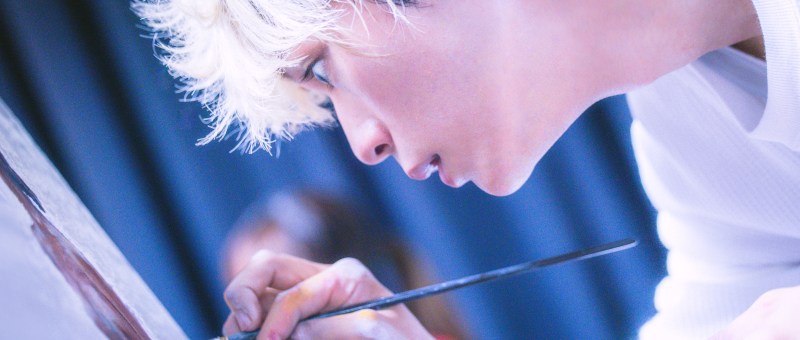
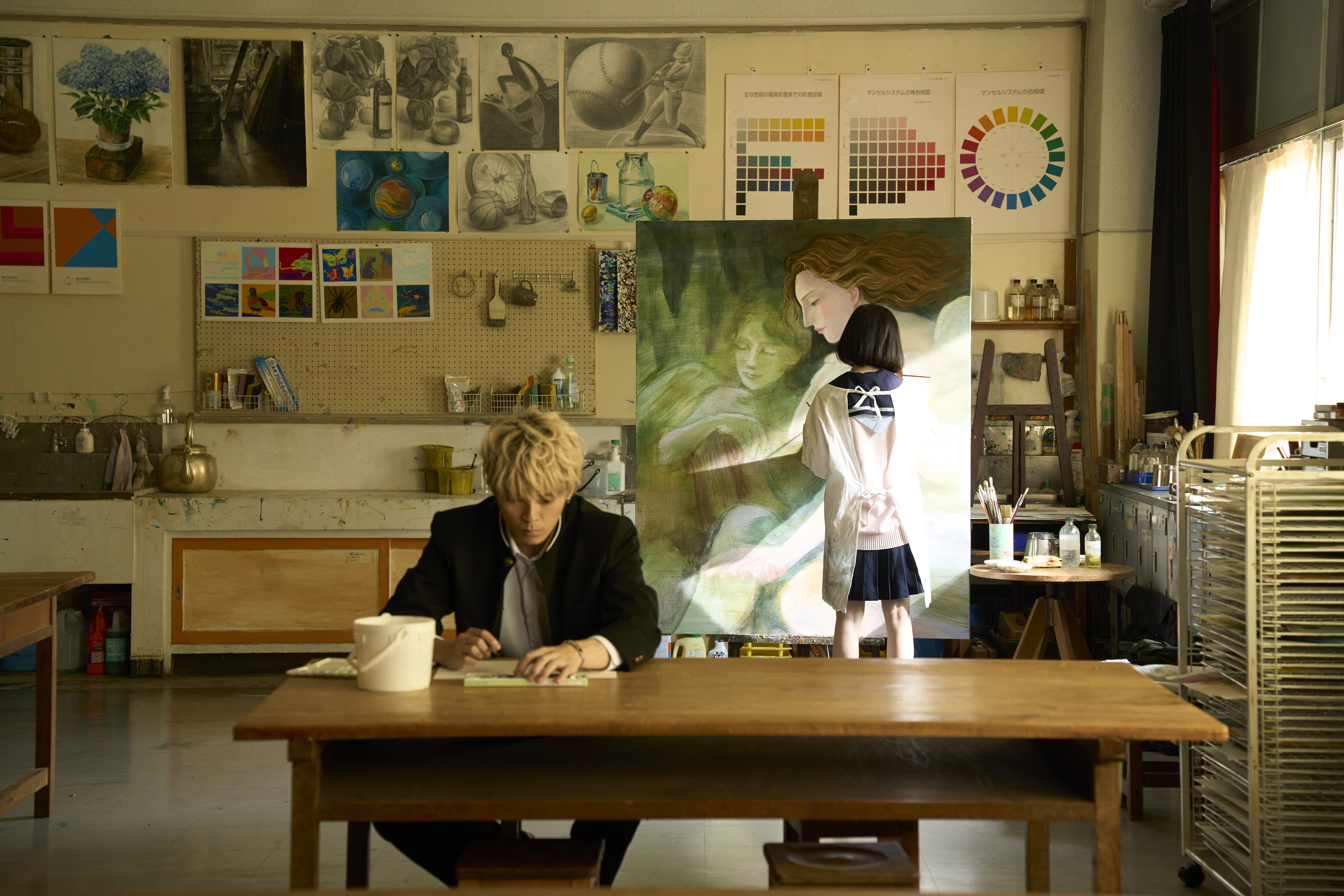
Blue Period (ブルーピリオド, Kentaro Hagiwara, 2024)

An ennui-ridden teen finds the world opening up to him after he discovers the power of art yet fears he can’t live up to his new epiphany in Kentaro Hagiwara’s adaptation of the manga by Tsubasa Yamaguchi, Blue Period (ブルーピリオド). Less about art itself, the film presents its hero with the cowardice of conformity, challenging him above all to know himself and wield his selfhood like a weapon in a world that can at times be unforgiving.

Even so, Yatora (Gordon Maeda) is a model student who gets good grades and is known for being well-mannered but secretly he’s filled with emptiness and has largely been just going through the motions. In his opening voice over, he relates that he does what he has to do, but declares himself unfulfilled and directionless. Unexpectedly captivated by a fellow student’s painting, he’s confronted by the power of art and the freedom it offers vowing to get into prestigious art school Tokyo University of the Arts.

The constraints he feels are partly economic in that his parents can’t afford a private university so he has to do his best to get into a public arts school while his mother seems dead against the idea of him going into the arts because it doesn’t put food on the table. Yatora parrots back similar lines describing art school as a pointless waste of time but is quickly taken to task by fellow student Yuka (Fumiya Takahashi) who challenges his tendency towards conformity and needles him into independent thoughts and action.

Yuka is also contrained by conservative social codes in that she dresses in a female uniform though many still call her by her male name, Ryuji. Though the pair have a rather spiky relationship, it’s Yuka’s attempts to challenge him that bounce Yatora towards discovering his true self which as it happens is done through embracing his least palatable elements. As Yuki correctly observes, his good boy persona and tendency towards hard work are just masks for his inner insecurity.

Yet as he’s also told, art isn’t just about talent but requires passion and tenacity which in its way makes it a perfect fit for Yatora’s hard-working nature as he buckles down to become a promising artist in the run up to his high school exams. As he later reflects, others may be more talented than him but they can’t make the things that he makes because the point is they come from himself. His early pieces are criticied for their superficiality, that he only sees what’s directly in front him rather than learning to see the world in other, more unique ways and engage with it on an individual level but through his artistic journey he discovers new ways of seeing along with his true self in all its complexity. 

His newfound desire to follow his heart places him at odds with prevailing social codes which favour the sensible though it also spurs others on to do the same, one of his best friends deciding to become a pastry chef rather than get a regular salaryman job hinting at a greater desire for personal fulfilment among the young. Often poetic in his imagery such the sparks that fly from Yatora’s nascent artwork or the comforting blue of the Shibuya twilight that becomes his safe space, Hagiwara sometimes paints Yatora’s quest like a shonen manga with a series of bosses to beat in Yatora’s various rivals and challenges most which teach him something about himself that spurs him on to continue chasing his artistic dreams while the exams themselves are also mental exercises of strategy and thinking outside the box to unlock a particular kind of self-expression. There is something quite refreshing, however, in the fact that Yatora’s only real rival is himself in his ongoing quest for skills and self-knowledge, earnestly applying himself to master his craft eager only for the places his artistry will take him both mentally and physically and no longer so dissatisfied with the world around him but filled with a new curiosity and the confidence in himself to continue exploring it.


Blue Period screened in New York as part of this year’s JAPAN CUTS.

Original trailer (English subtitles)
Kubi (首, Takeshi Kitano, 2023)

Apparently in gestation for a couple of decades, it’s unsurprising that Takeshi Kitano gave himself the role of Hideyoshi in a long-awaited historical drama adapted from his own novel, Kubi (首). Played as an irascible but wily old man, Hideyoshi is the second of Japan’s great unifiers and, unlike his predecessor, died as a result of an illness rather than intrigue. He was also a peasant who rose through the ranks and is perhaps witness to the tumultuous class conflict and social divisions of a hierarchal society.

Even so, in this version of events, Oda Nobunaga (Ryo Kase) too speaks in a thick rural dialect that sets him apart from his retainers and seems to hint at his uncouthness. This Nobugana is an unhinged despot who threatens and humiliates his subordinates, not to mention sexually assaulting them. In short, there’s no real mystery why his men have begun to turn against him and there is intrigue in the court. The film opens with Murashige’s (Kenichi Endo) quickly quelled rebellion which floundered when his reinforcements failed to arrive. Murashige is on the run and Nobunaga has heavily suggested whoever brings in his head will be first in line for the succession, but Murashige is also in a relationship with Mitsuhide (Hidetoshi Nishijima) another courtier vying for favour in more ways than one from the capricious Nobunaga. 

The striking thing about the staging is how like a yakuza drama this intrigue really is with each of the main factions manoeuvring for control, forming temporary or duplicitous alliances forged in the mutual desire of ousting a ruler whose increasing instability presents only the likelihood of a return to chaos. Nobunaga’s flamboyant speech and threatening manner are reminiscent of a yakuza boss on his way out, as is his obvious tactic of setting his rivals against each other while secretly planning to hand the reins to his son anyway. The film takes place in a largely homosocial world, the only women on screen are sex workers and peasants about to be murdered, only this time defined by romantic intrigue in which the various relationships between the men are inescapably linked with power and duplicity.

Mitsuhide’s relationship with Murashige is originally framed as a giri/ninjo conflict, Mitsuhide torn between the exercise of his duty as a samurai and his love for Murashige, only to later be set wondering if Murashige isn’t also playing him in urging him too towards rebellion, while Murashige accuses him of harbouring desires for Nobunaga which would also necessarily be desire for advancement. Advancement is something sought by all and in particular Mosuke (Shido Nakamura), a peasant who is taken on as a foot soldier after looting a battlefield for amour and killing his friend to get his hands on the prize only to realise just at the critical moment how pointless the constant desire for heads really is. The absurdity is rammed home in the closing scene in which Hideyoshi declares himself uninterested in the severed head he asked for, rendering the quest entirely pointless.

This absurdity extends to introducing the character of a comedian who is later killed for talking too much, while Kitano wise cracks his way along as the affable Hideyoshi. Kitano is in his way in dialogue with other samurai epics, using Akira Kurosawa’s horizontal wipes and introducing a pair of bumbling comic relief peasants only to suddenly kill one of them off because at the end of the day this world isn’t very funny. It’s cruel, and mean, and meaningless, so you might as well laugh like Hideyoshi. Residents of a ninja village conduct a festival in which they pray for death and to be released from this earthly torment as soon as possible, while farmers still dream of becoming samurai little knowing the reality of samurai life.

It’s this cycle of futility that is echoed in the opening image of a severed neck into which crabs in a river are crawling. Kitano stages lavish battle scenes, but ones that are often horrifying and absurd, a visceral struggle in mud and blood fought for no real reason. These samurai live their lives on the point of a sword, but they move and behave like yakuza fighting pointless turf wars and games of petty intrigue until someone finally comes for their heads. In the end, the victor is the one who doesn’t play the game at all, but sits and laughs at the absurd cruelty all around them in which the only stable force is ambition accompanied by a nihilistic lust for blood in an already bloody world.


Kubi  screens in New York July 16 as part of this year’s JAPAN CUTS.

Trailer (English subtitles)

Summer Vacation 1999 (1999年の夏休み, Shusuke Kaneko, 1988)

The curious thing, or perhaps a curious thing among many, about Shusuke Kaneko’s loose adaptation of Moto Hagio’s The Heart of Thomas Summer Vacation 1999 (1999年の夏休み, 1999 Toshi no Natsuyasumi) is that it takes place in a theoretical future that is also quite clearly an imaginary past. In a second introductory sequence, the voice of an adult man tells us that his is his memory, a fragment of the past kept alive by the clarity with which he remembers it. We don’t know who this voice belongs to, though the images encourage to think it must be the man the boy on screen, like the others played by a girl, will one day become but in another sense this boy doesn’t really exist either or at least is the bearer of several different identities.

The fact he travels to this remote mansion in the countryside on an otherwise empty train signal’s the place’s unreality and detachment from the regular world. We’re told it’s 1999, a year that was still to come on the film’s release in 1988, and inevitably hints at a millennial dread along with the new dawn the writer describes himself having in experienced in what is otherwise a summer holiday movie. However, in the opening sequence we witnessed a boy who looked very like this one slip what is later assumed to be a suicide note under another boy’s door before walking through the gothic space of the country mansion and out to a rugged cliff where he takes his own life by jumping into a nearby lake. The name of the boy who died, apparently brokenhearted and filled with despair after his romantic overtures to another boy were rebuffed, was named Yu (Eri Miyajima). This one claims his name is Kaoru (also Eri Miyajima) and is different in temperament in character to the boy who may have died, his body has not been found, though to the others staying at the school over the summer holiday he seems somehow like a vengeful ghost arriving to take them to task for Yu’s death. 

Kaneko specifically frames the school as haunted through the gothic photography of its billowing curtains and 19th century European aesthetics but also through its emptiness. The sound of children laughing, the boys who have left and returned somewhere else, echo through empty corridors further framing it as a place of memory and it seems true enough that the other boys who remain are trapped here in the same way they are trapped within themselves in their inability to express their emotions. The youngest of the boys, the sensitive Norio, (Eri Fukatsu) intensely resents Kazuhiko (Tomoko Otakara) who is as he describes beloved by all but himself cannot bear to be loved and may have contributed to Yu’s suicide through the abruptness of his romantic rejection. 

Later Kazuhiko recalls a memory of himself watching the sunset as a child in which he felt so terribly alone, as if he were the only person left on earth and there was no one with whom he could share this beauty. This sense of loneliness and isolation is further symbolised by the remote nature of the boarding school which seems to exist outside of time itself. Inspired by the setting of the novel, the boys dress in a fashion more associated with 19th century aristocracy than the late 1980s yet they are surrounded by machines and makeshift, retro futuristic technology in which they spend their days programming some kind of computer system. The leap into the lake is also into memory, but otherwise a kind of rebirth or rebaptism which allows Kazuhiko to make sense of himself and the other boys to come to an acceptance of Yu, Kaoru, and everything he embodies in relation to themselves. 

Even so, the elliptical nature of the film’s ending hints that this is a continually looping story replaying endlessly in the memory of a now much older man recalling the journey into adolescence in which he ruptured the shell of his ignorance much as the caterpillar becomes a butterfly even if that butterfly was something that Kaoru wanted to kill without harming its beauty. Perhaps in away that’s what the man has done in preserving this memory with its all of its gothic shades of billowing curtains and shadowy corridors amid the ethereality of the twilight of youth.


Summer Vacation 1999 screened as part of this year’s Queer East.