Suffocating Love (愛的噩夢, Liao Ming-yi, 2024)

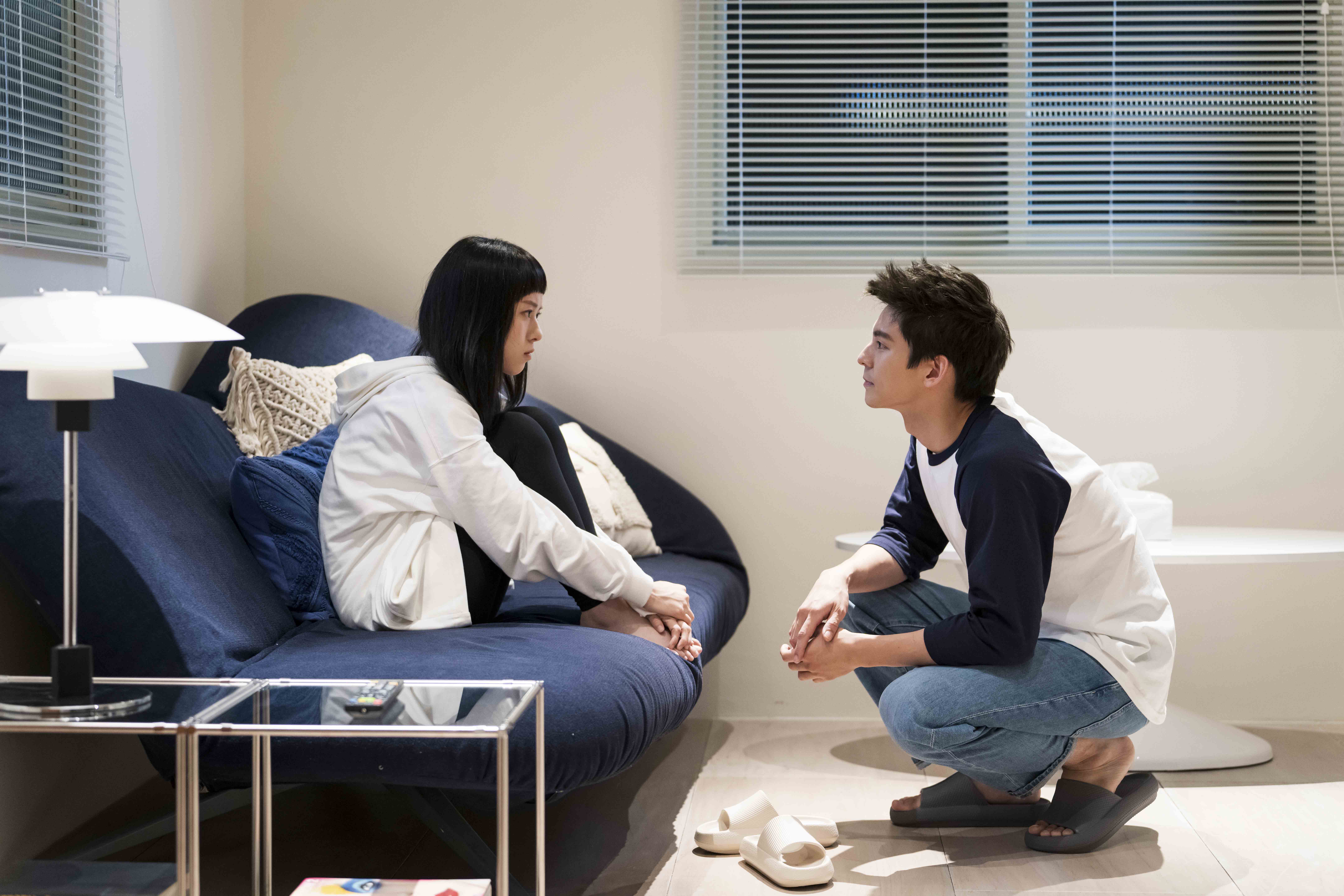
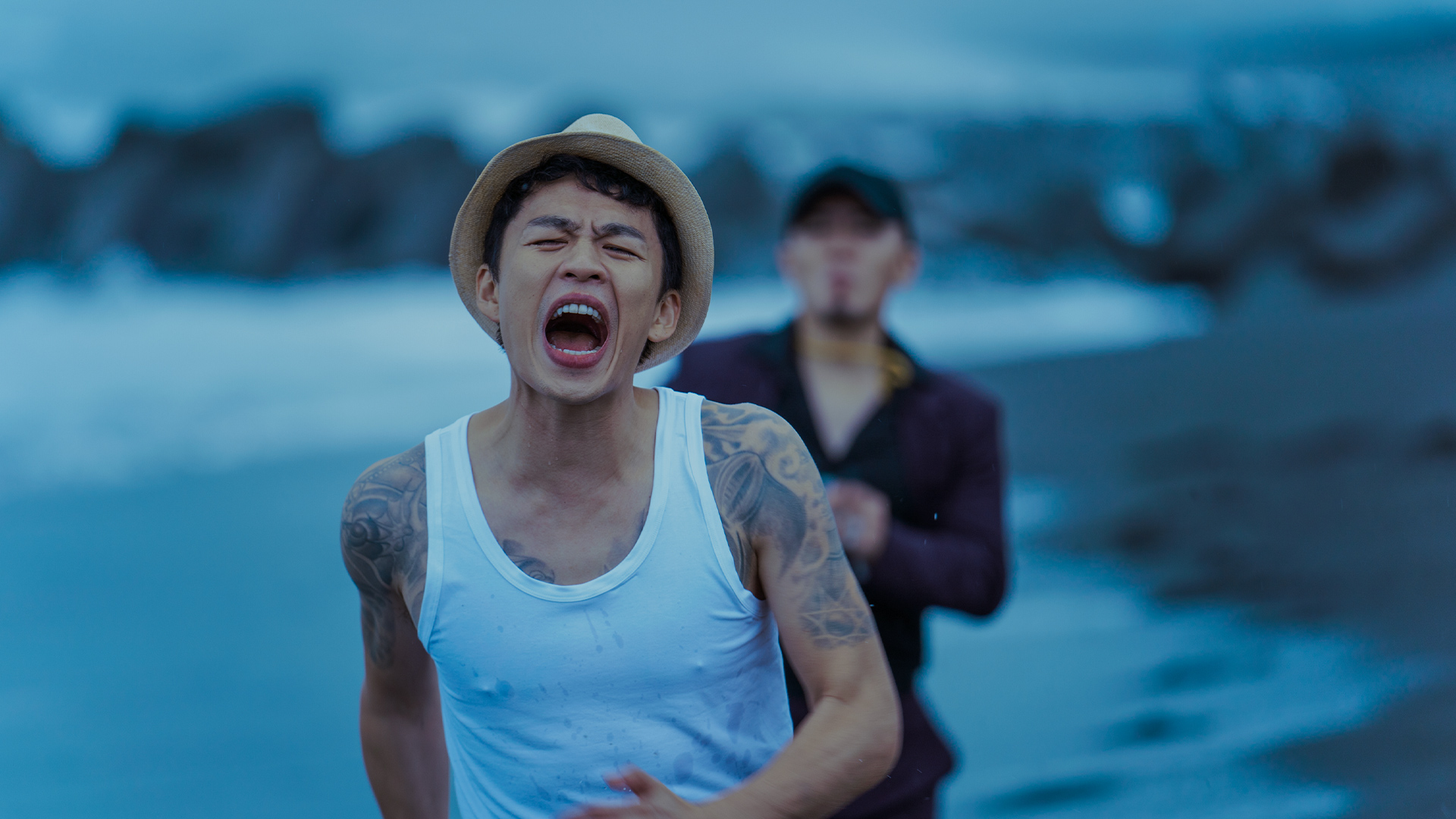
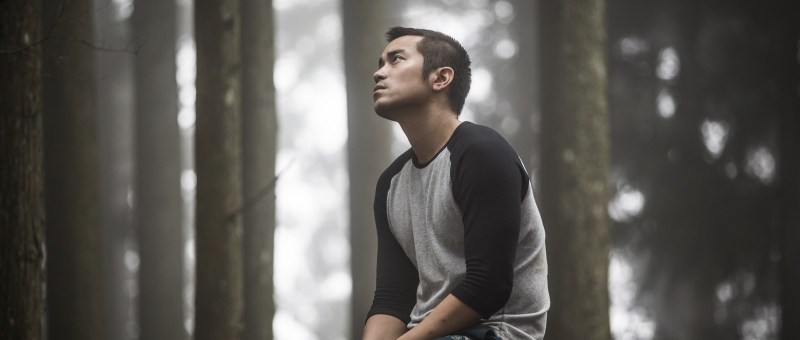
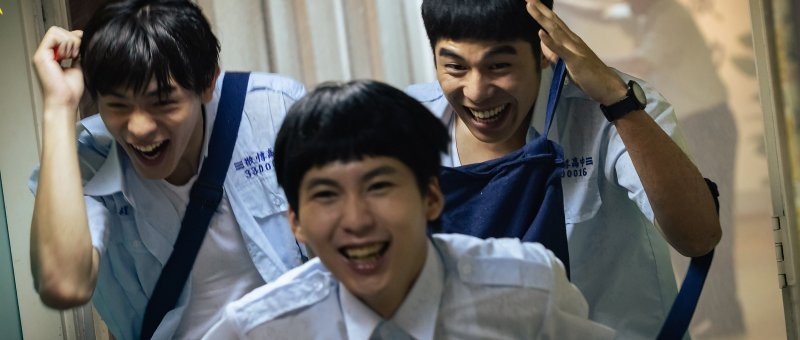
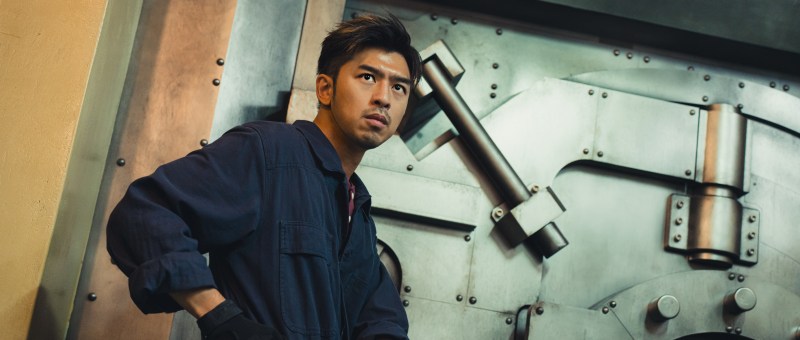
Everything seems to put pressure on M, the cavalier hero of Liao Ming-Yi’s quirky exploration of confused male desire Suffocating Love (愛的噩夢, ài de èmèng). At heart, the problem might be that he doesn’t know what he wants, or he’s just someone who chases the dream of romance and is unsatisfied by its reality. Then again, the Chinese title of the film means something like “nightmare of love”, and it maybe that M (Austin Lin) is simply ill-equipped to deal the pressure of grown-up romance.

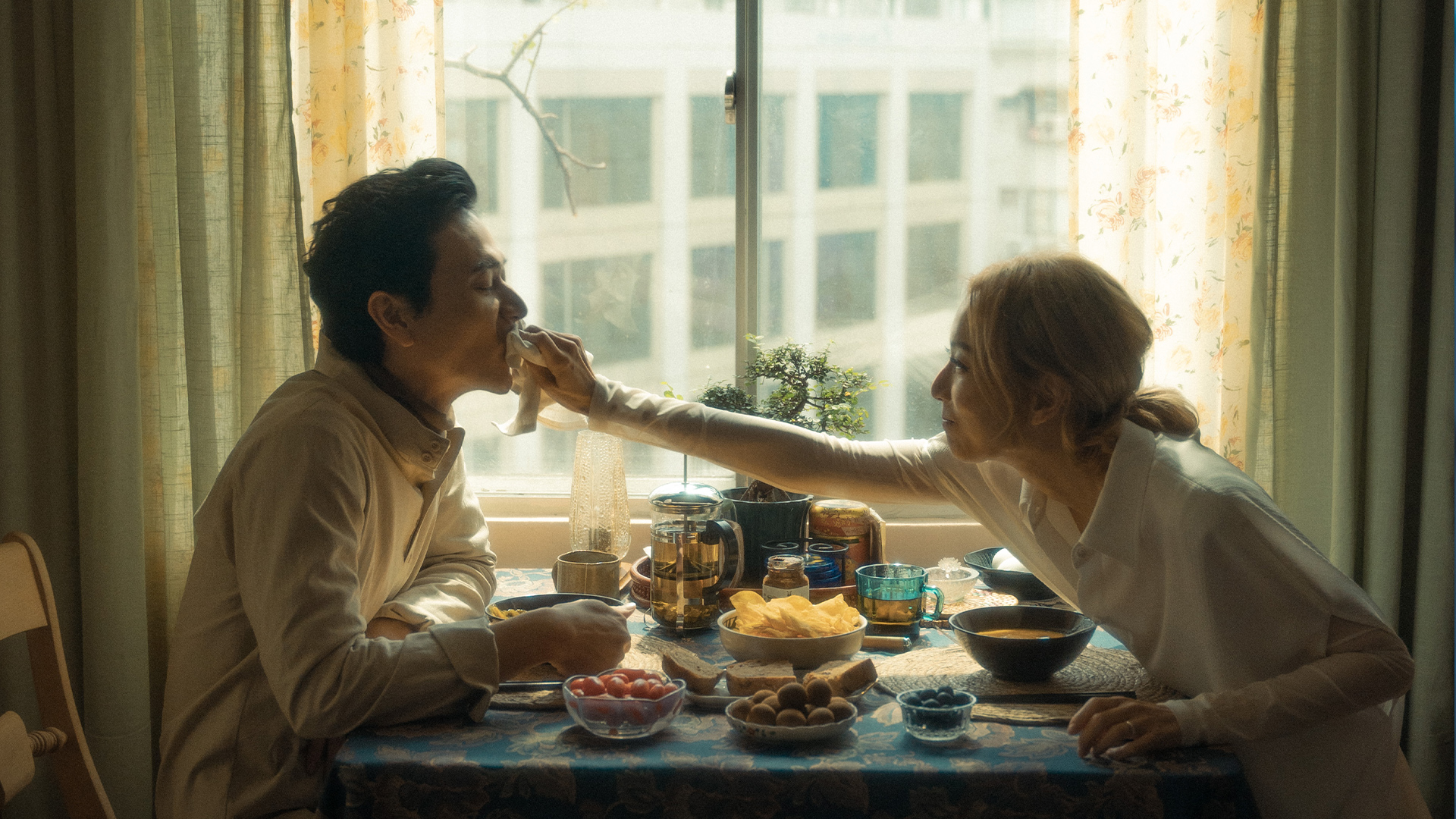
Conversely, the pressure he feels might be understandable given the nature of his relationship with Chia-chi, a manic pixie dream girl he falls for after meeting her through a book exchange app. Chia-chi describes herself as having “quirks” though at first they don’t seem to extend much past her vegetarianism, issues connected to a longstanding health condition, and her religiosity. But after dating for a year, M moves into her apartment and is confronted by a series of “rules” he must follow which make it clear that Chia-chi is controlling and possessive in the extreme. M must agree to send her updates every two hours to prove where he is with photographic evidence and reply to her messages right away. To begin with, M thinks it’s a small price to pay in the name of love, but eventually begins to feel the “pressure” of Chia-chi’s ever watchful gaze especially once another woman arrives on the scene. 

If these gender roles were reversed, we would be certain M should leave this abusive relationship though he seems to view it with a kind of nonchalance and only mild but increasing irritation. Ai-hsuan, a high school crush serendipitously turning up at work, offers the fantasy of escape to a more liberating kind of romance that’s tinged with teenage innocence even if Ai-hsuan’s problem is that she has cold feet about an impending marriage to a man she feels she’s grown apart from during their seven year relationship. Of course, this affair doesn’t place much pressure on him because for the moment it’s casual, an illicit bubble of freedom from Chia-Chi’s control in which he can be himself again. 

But is that what he really wants? After being transported to a strange dream realm, a bunny man harking back to the Alice in Wonderland reference that brought M together with Chia-Chi puts a gun to his head and forces him to make a wish at which point he wakes up with an other woman entirely, Kurosawa Yumi, a half-Japanese photographer and social media influencer who was his celebrity crush. The pair don’t live together, but Yumi seems to pop round to change his sheets and cook his dinner which is perhaps more reflective of a male fantasy than M realises even as he describes as her at the woman every man wants, What he wants is a woman who takes care of him domestically, and sexually, but demands nothing from him so that he doesn’t feel “pressured” by emotionally interacting with her or having to accept that she’s a whole, real person (which this Yumi at least obviously is not). 

At this point, events take a rather strange turn with implications of black magic and manipulation beyond the weird dream realm and its Alice-esque butler forcing M to play Russian roulette with his romantic desires. With a gun to his head, can he really say what he wants or will he always be chasing romantic fantasy? In truth, M’s tunnel vision has its share of latent misogyny and a fear of being “controlled” by women if in a less literal way than he wilfully submits to in his relationship with Chia-chi, a generalised conviction that each of his potential matches is manipulating him while it’s clear that his view of them is blinkered by his selfish desires so he’s incapable of seeing them as whole people or really giving much thought to their thoughts and feelings. Is he suffocated by love, or does he himself suffocate it in his reluctance to engage with the reality? In any case, the jury seems to the out on whether or not M is awakening from his nightmare of love or perpetually trapped inside it by external pressures he is ill equipped to bear.


Suffocating Love screened as part of this year’s New York Asian Film Festival.

Original trailer (English subtitles)

A Balloon’s Landing (我在這裡等你, Angel Teng I-Han, 2024)

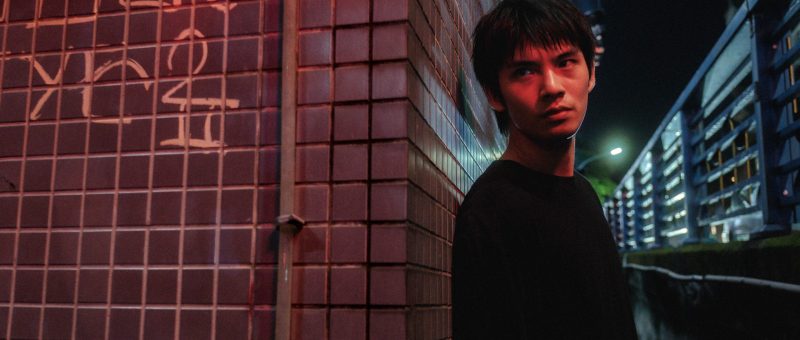
A dejected Hong Kong writer longs to find the path back to paradise if in the most ironic of ways, but finds something quite different after accidentally being befriended by a young street tough in Teng I-Han’s lowkey queer romance A Balloon’s Landing (我在這裡等你, wǒ zài zhèlǐ děng nǐ). Seemingly inspired by the boy’s love genre, the film is chaste in the extreme and overly subtle in its central love story which seems to borrow heavily from other similarly themed East Asian romances such as Il Mare and Comrades, Almost a Love Story.

Director Peter Chan is in fact name checked several times, while Taipei street tough A-Xiang (Fandy Fan) has a poster of Patrick Tam’s Nomad on his wall which of course features the face of Leslie Cheung who occupies a similar space to that of Teresa Teng in Comrades in connecting the would-be lovers. Cheung tragically took his own life in 2003, the same year writer Tian Yu’s (Terrance Lau) parents were killed, while Tian Yu himself seems to have suicidal thoughts and intends to end his life at a place called The Bay of Vanishing Whales he thought he’d made up for his novel but is informed is real in a letter from a little boy in Taiwan he continues writing to as a kind of pen pal older brother. 

In a way, A-Xiang represents his desire for life, fond saying that there’s “always a solution” and begging him not to die just like one of the letters he received urging him to carry on living because the sender would be waiting for him at the Bay of Vanishing Whales. A-Xiang is also his literal saviour in that they meet when he rescues him from a group of conmen after he got very drunk bar but though their first meeting is sexually charged with both men wandering round in their pants their romance is slow-burn to the point of non-existence. While on road trip to find the mythical bay, the pair grow closer with Tian Yu slowly giving up on the idea of finding it along with the death it represents only for fate to intervene.

At this point the film changes direction in allowing Tian Yu to rewrite his present, no longer in search of death but of love and a way to save A-Xiang in the same way A-Xiang has saved him. At least, A-Xiang becomes a kind of symbolic other self as hinted at in his stories of men as lonely islands casting messages in bottles out into the sea in longing for connection. This sense of isolation may stem from a feeling of otherness born of his sexuality, though the film never clearly defines it, along with the more literal orphanhood and existential loneliness he shares with A-Xiang. 

As expected there is a fated connection between the two men which is more than a little contrived if perfectly in keeping with the genre of romantic melodrama as Tian Yu begins to chase a future rather than the past even while actively rewriting it to engineer a better outcome. It might be tempting to read something more into the connections between these two men each orphaned, floating islands seeking new futures together though the central theme seems to be less romance than desire for life in which Tian Yu is able to overcome his depression and desire for death through his connection with A-Xiang who gives him a new reason for living. 

A-Xiang’s symbolic value as Tian Yu’s desire for life might explain why the relationship between them never sufficiently ignites in what is at least billed as a queer romance though could easily be taken for simple friendship or platonic brotherhood with the only expression of desire longing looks and tentative motions from A-Xiang. In any case, Teng lends the beautiful Taiwanese landscape a note of wistful melancholy, a place of infinite nostalgia in Tian Yu’s mind and an evocation of the paradise he’s seeking that’s simultaneously past and future waiting for parallel lines to cross. The lyricism cannot however overcome the coyness of the central romance that for its potential poeticism remains somewhat obscure, an unrealised desire awaiting its season but also a shift in the times born of a new desire for life rather than the melancholy loneliness of past emptiness.


A Balloon’s Landing screened as part of this year’s New York Asian Film Festival.

Original trailer (Traditional Chinese / English subtitles)

Taiwan Film Festival in Australia Returns for 2024

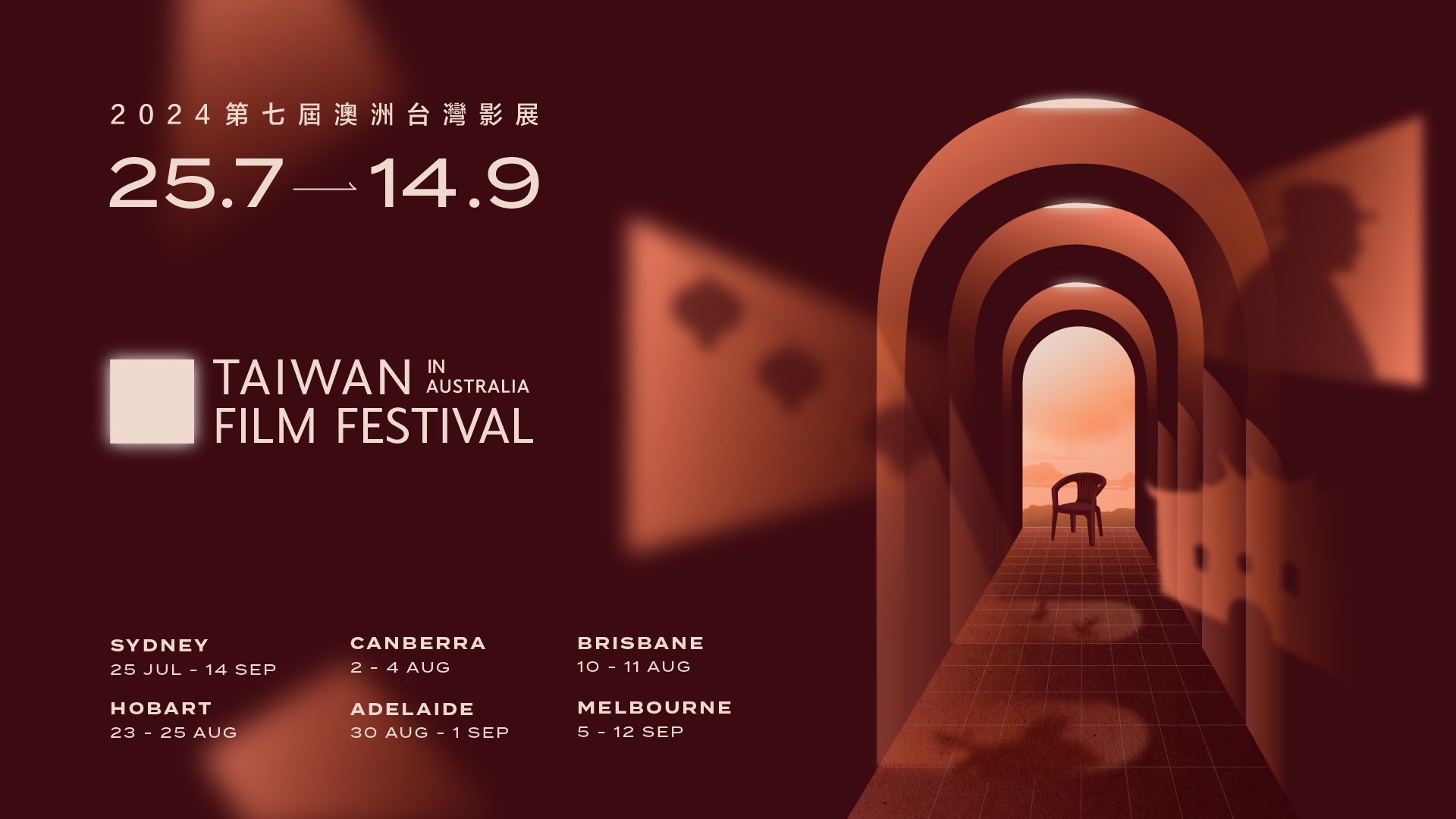
The Taiwan Film Festival in Australia returns for its 7th edition 25th July to 14th September 2024 travelling to six cities across the country. The festival will also host a pitching competition on 13th September which aims to promote Taiwanese literature in translation by adapting books into screenplays, in addition to its Taiwanese Bookshelves event which welcomes Hsiao Ya-Chuan in conversation at Kinokuniya Sydney on 26th July.

Old Fox

A young boy begins to absorb all the wrong lessons while drawn to his enigmatic landlord in Hsiao Ya-chuan’s 80-set coming-of-age drama. Review.

And Miles to Go Before I Sleep

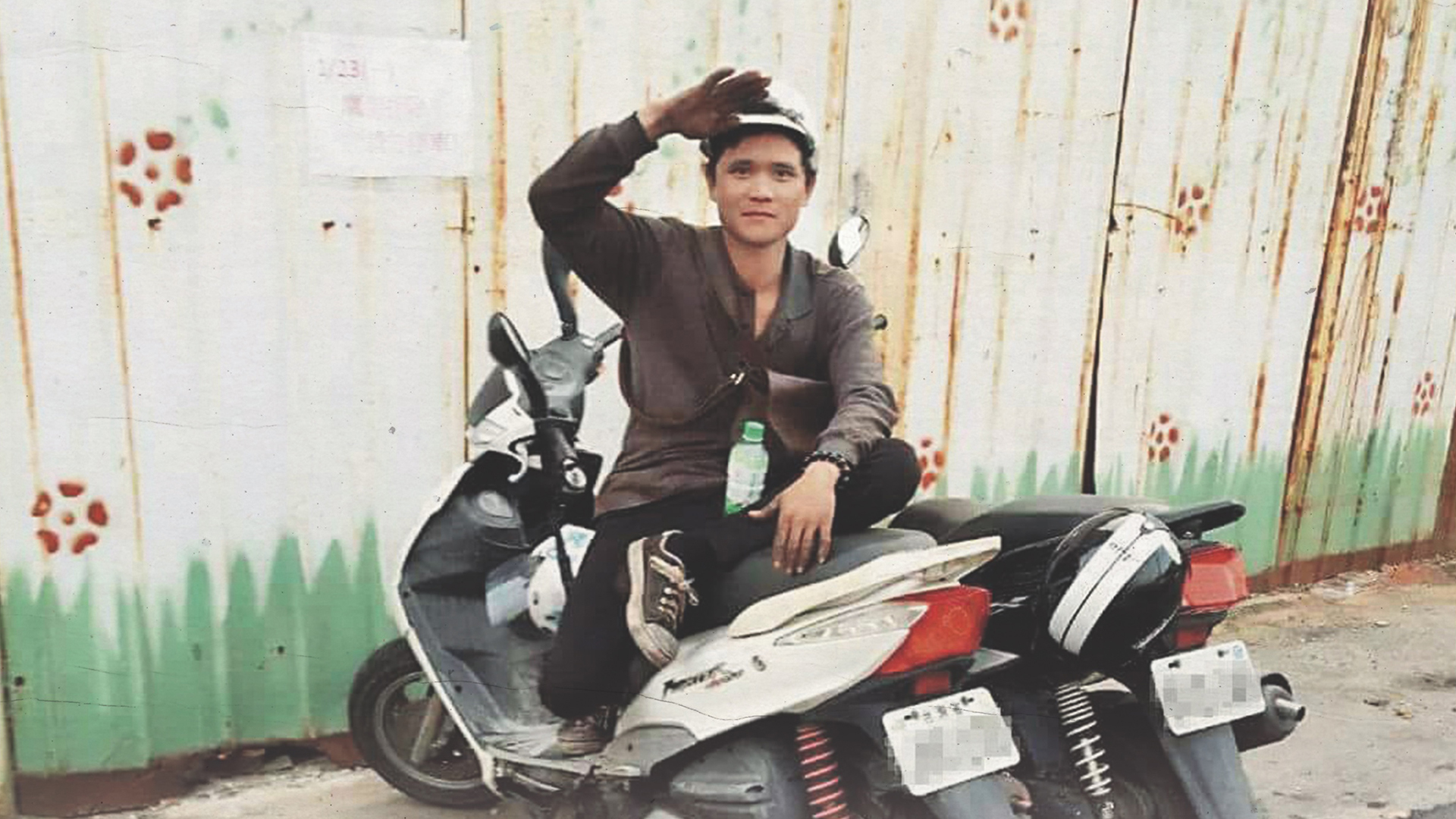
Documentary reconstructed from police body camera footage, media reports, and first-hand interviews exploring the death of a migrant worker killed by police.

Love is a Gun

Noirish directorial debut from actor Lee Hong-Chi as a man recently released from prison tries to make an honest living renting out umbrellas by the sea but is soon pulled back towards a life of crime.

Tales of Taipei

10 tales of love in Taipei directed Yin Chen-Hao (Man in Love, 2021), Joseph Hsu (Little Big Women, 2020), Chong Keat-Aun (Snow in Midsummer, 2023), Wong Yee-Lam (My Prince Edward, 2019), Pawo Choyning Dorji (The Monk and The Gun, 2023), Rachid Hami (For My Country, 2021), and Remii Huang (Let’s Talk About Chu, 2023), Lee Sin-Je (Abang Adik, 2023) and Liu Chuan-Hui (Jump Ashin!, 2011).

Snow in Midsummer

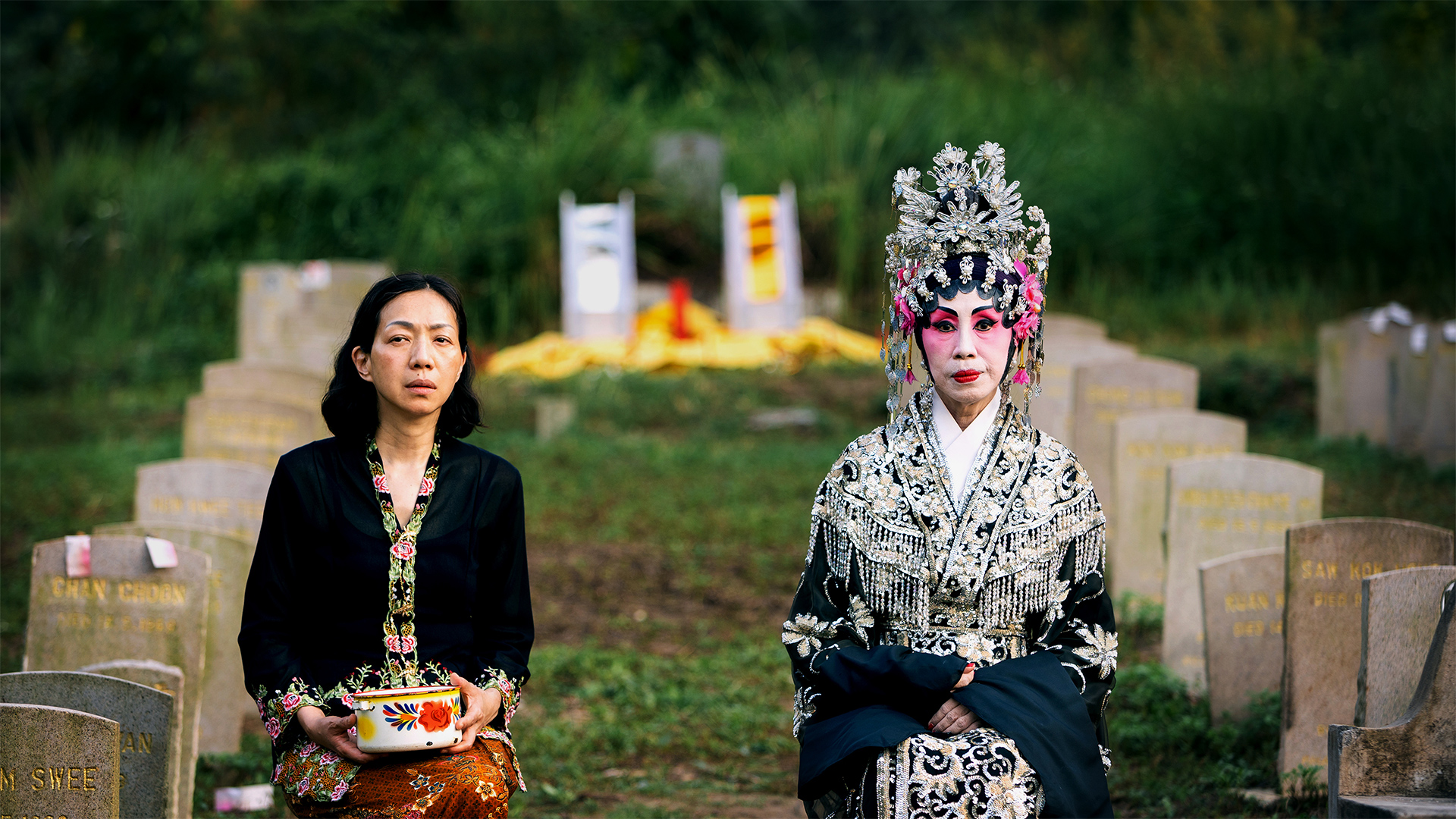
Emotional drama revolving around the 13 May Incident which took place in Malaysia in 1969.

18×2 Beyond Youthful Days

Poignant romantic drama in which a lost 36-year-old man travels to Japan chasing the trail of a young woman he once knew from a heady summer working in a karaoke bar in rural Taiwan. Review.

Free beats: The Musical Journey of Chen Ming Chang

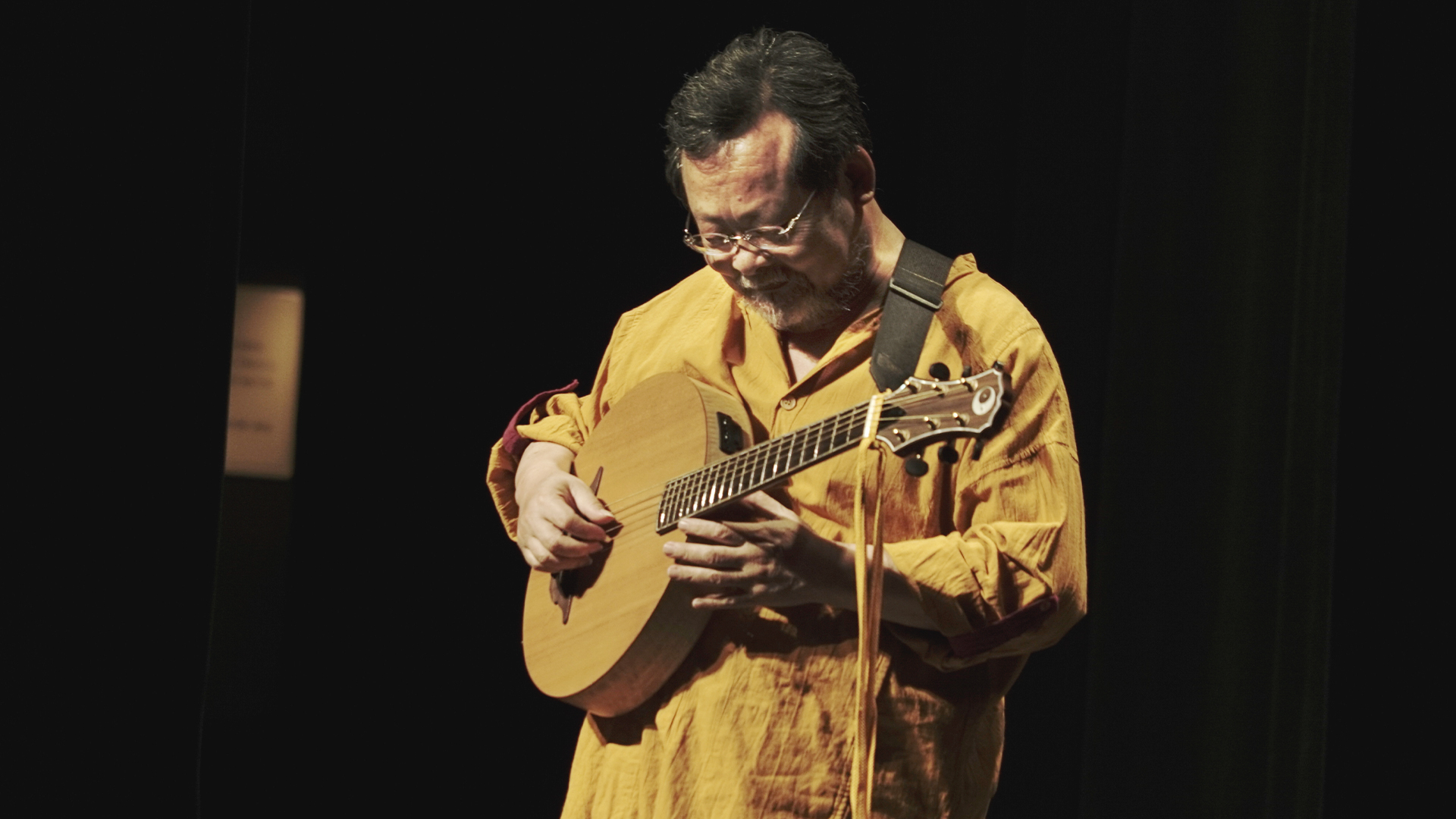
Documentary focussing on renowned folk musician Chen Ming Chang who is well known for playing the yueqin and has contributed film scores to such masterpieces as Hou Hsiao-Hsien’s Dust in the Wind and The Puppet Master as well as Hirokazu Koreeda’s Maborosi.

Braving the Peak

Documentary following a pair of extreme sports enthusiasts as they attempt to break the record for traversing the Central Mountain Range in under 10 days.

Salli

Romance and tradition collide when a middle-aged chicken farmer is unwittingly duped by an online dating scam in Lien Chien-Hung’s gentle dramedy. Review.

Breaking and Re-entering

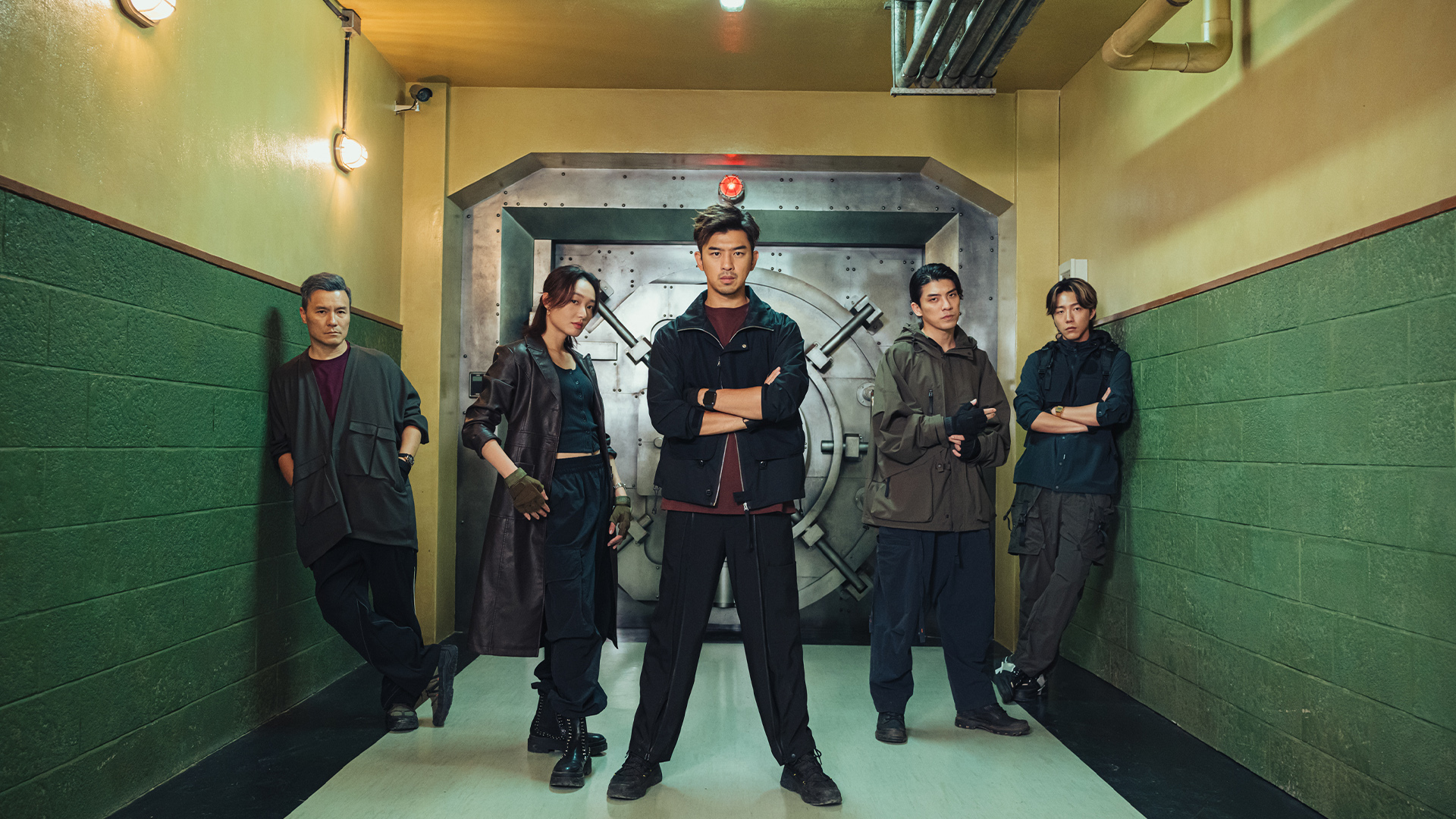
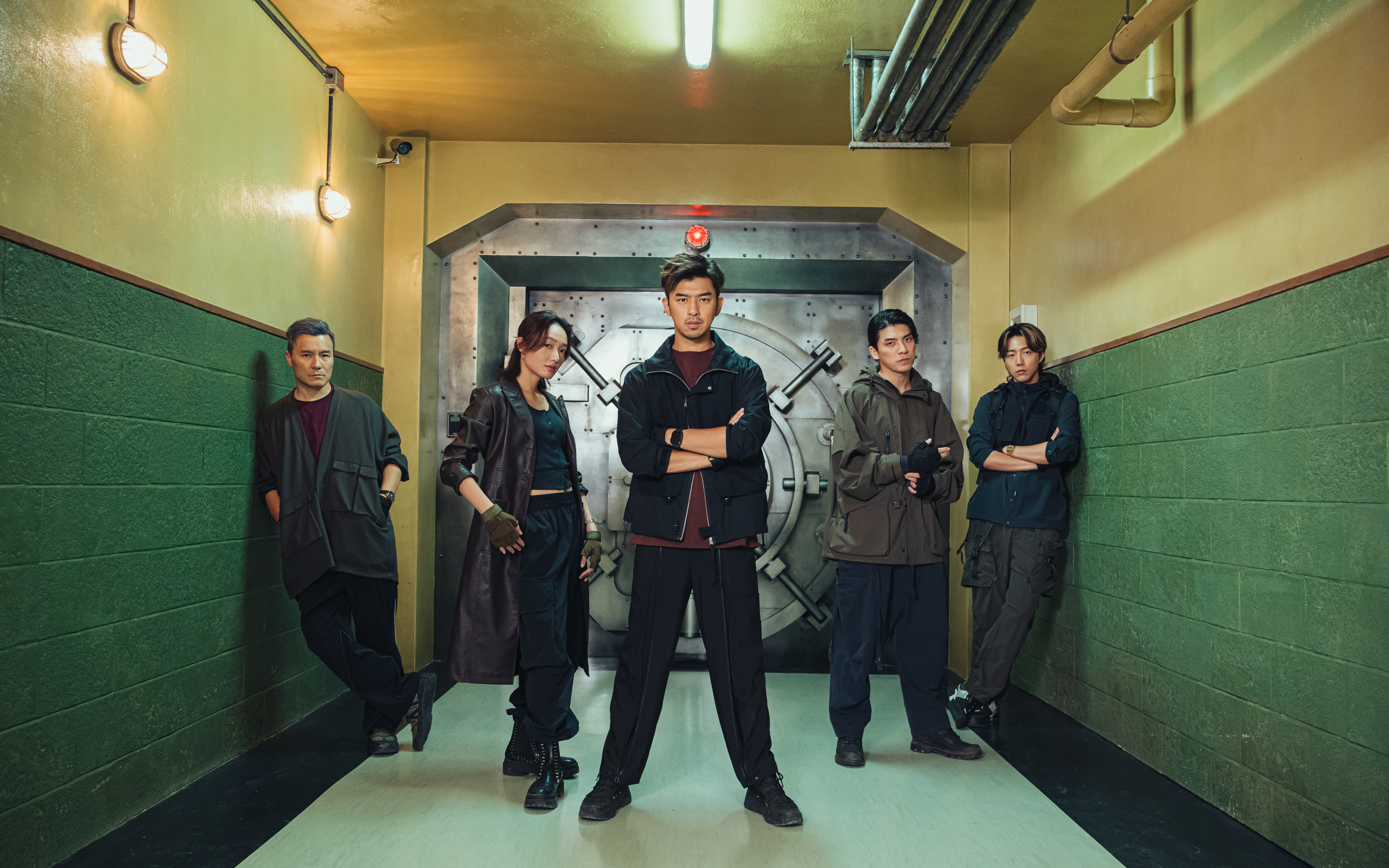
Crime-themed comedy in which a gang of thieves find themselves in the awkward position of having to return all the money they stole in one of the largest heists in history.

Fish Memories

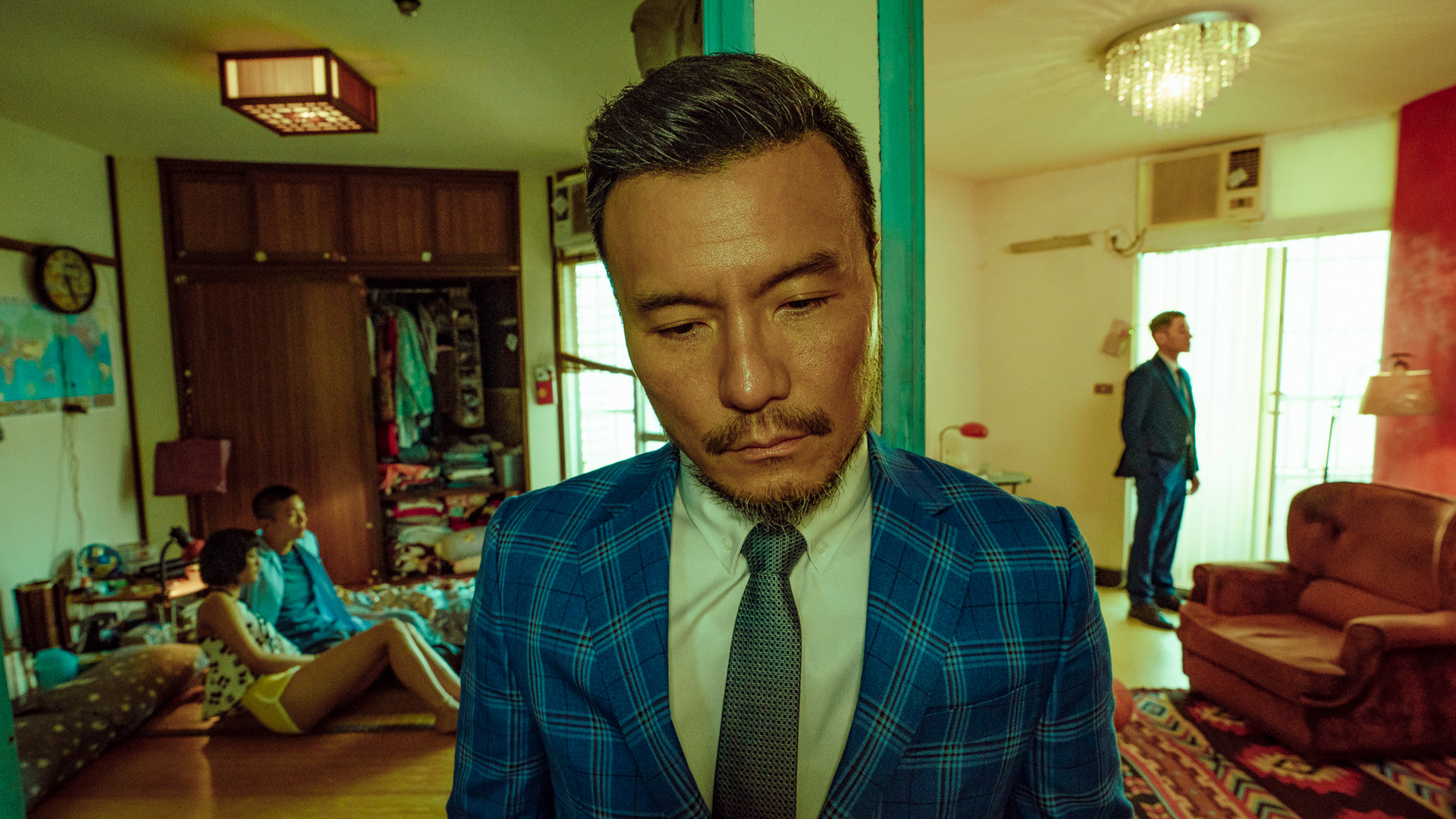
Poetic drama in which a middle-aged businessman dissatisfied with his financially successful yet empty life is drawn to young man he meets in a convenience store.

The Woman Carrying the Prey

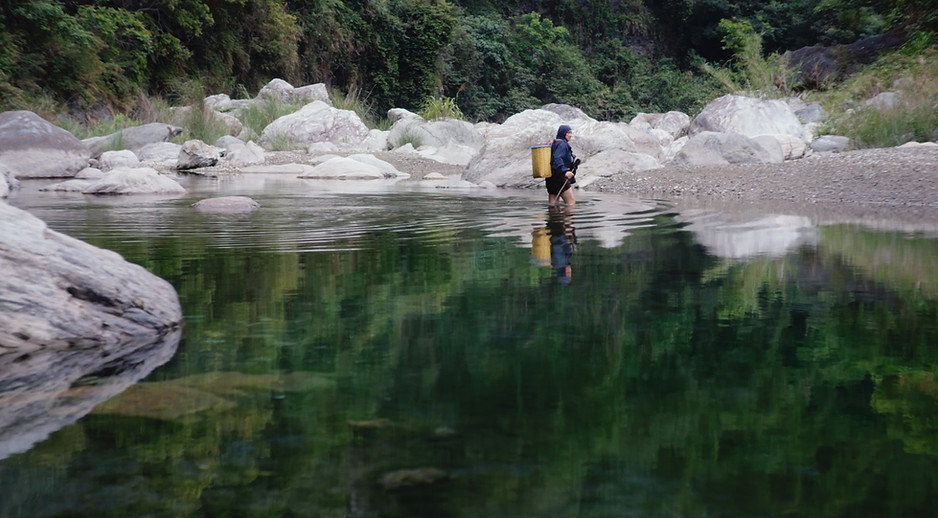
Documentary following Heydi Mijung, an indigenous Truku woman and the only female hunter in her community as she maintains Gaya traditions and uses traditional hunting skills.

The Taiwan Film Festival in Australia runs 25th July to 14th September in Sydney, Canberra, Brisbane, Hobart, Melbourne, and Adelaide. Full details for all the films as well as ticketing links can be found on the official website while you can also follow the festival on Facebook, X, Instagram, and YouTube for all the latest news.

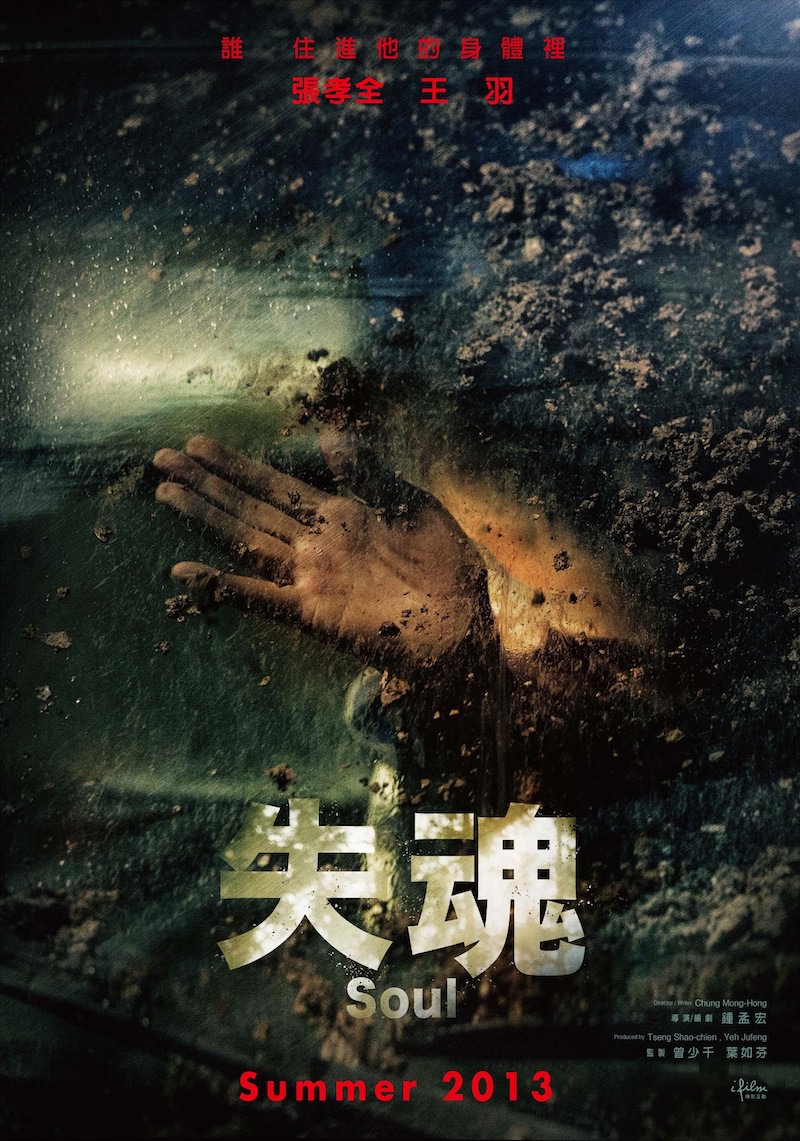
Soul (失魂, Chung Mong-Hong, 2013)

“Sometimes the things you see aren’t what they seem” the stoical father at the centre of Chung Mong-Hong’s supernatural psycho-drama Soul (失魂, Shī hún) later advises, for the moment creating a new, more convenient reality but also hinting at the mutability of memory and perception. Distinctly eerie and beautifully shot amidst the gothic atmosphere of the misty Taiwan mountain forests, Chung’s ethereal drama is at heart a tale of fathers and sons and the griefs and traumas which exist between them. 

When sushi chef Ah-Chuan (Joseph Chang) collapses at work, no one can figure out what’s wrong with him, finally suggesting perhaps it may be depression. His boss instructs three of his colleagues to take him back to his apparently estranged family to recuperate for reasons perhaps not altogether altruistic. In a near catatonic state, Ah-chuan is barely present offering no response to his name and staring vacantly in no particular direction. When he finally does begin talking, it’s to insist he’s no longer Ah-Chuan explaining that this body happened to be vacant and so he’s moved in while Ah-Chuan will apparently be off wandering for some time. Ah-Chuan, however, then abruptly stabs his sister Yun (Chen Shiang-chyi), who had travelled from Taipei to look after him, to death and is discovered covered in blood sitting calmly over her body offering only the justification that she was intending to harm him. 

Wang (Jimmy Wang), Ah-Chuan’s father barely reacts to finding his daughter’s corpse, merely rolling her under a bench and attempting to mop up the blood when a family friend, Wu (Chen Yu-hsun), who happens to be a policeman suddenly comes calling. Wang is either infinitely pragmatic instantly deciding there’s nothing he can do for his daughter so he’ll try his best to save his son, or else near sociopathic appearing to care nothing at all that Yun is dead. Nevertheless, realising that Ah-Chuan may be dangerous he takes him up to his remote cabin near the orchid garden and locks him inside while trying to figure out what or who this presence that has his son’s appearance might or might not be. As he later says, this brief time together is the most he’s spoken to his “son” if that’s who he is in years even if acknowledging that this Ah-Chuan is quite different from the old. Yet if it were not for the obvious fact that others see and interact with him we might wonder if Wang had simply conjured Ah-Chuan, projecting his own latent violence, guilt, and regret onto the figure of his son who is also in a way himself. 

Yet whatever Ah-Chuan now is he finds himself growing closer to the old man, feeling a filial responsibility towards him that he otherwise would not own. He contacts a “messenger” from “across the woods” to help his find Ah-Chuan’s wandering soul to tell him that his dad’s not doing so well, entering a space of dream and memory that reveals the trauma at the heart of their relationship that might in part help explain Wang’s apparent coldness. Just as the two Ah-Chuans begin to blur into each other, so perhaps to father and son, Wang prepared to go to great lengths to protect his only remaining child while, ironically, offering some harsh words to his son-in-law for not better protecting “the only daughter I have”. 

Chung hints at a kind fluidity of consciousness, each episode of “death” or “possession” accompanied by that of another creature, fish gasping and flapping around, a tired bug trying desperately to cling onto a leaf but failing, or a pair of snakes twisting themselves into a knot. Is Ah-Chuan merely experiencing a protracted dissociative episode under the delusion he is “possessed” while his essential selves “wander” the recesses of his consciousness or has someone else, a second soul, taken up residence in a body left vacant by a man who was in a way already “dead”. Wang in fact hints at this, telling the doctor that he had sometimes thought of Ah-Chuan as dead, or at least wondered if he might be seeing as they had long been estranged, suggesting that the Ah-Chuan of his heart and memory was already gone Wang believing himself to have killed something in him through his own violence when he was only a child. 

The two men mirror each other, growing closer yet also further apart as they make their way back towards the truth that might set them, metaphorically at least, free. Often viscerally violent not least in its jagged, abrupt cuts to black that feel almost like dropping out of consciousness or else waking fitfully with brief flickers of other realities, Chung’s eerie, ethereal drama ventures into the metaphysical but in its strangely surreal final scenes returns us to a more concrete “reality” in which the way home is found it seems only in dreams. 


Original trailer (Traditional Chinese / English subtitles)

Locust (蟲, KEFF, 2024)

“Taiwan is doomed,” according to a middle-aged man taking the chance to emigrate in Keff’s debut feature Locust (蟲, chóng). A damning indictment of the island nation seemingly mired in economic disparity, political corruption, and generalised despair the film positions its mute hero as one who has been rendered silent but is caught between a life of subjugation and violent rebellion that may also in its way be a kind of conformity with the world around him.

Zhong-han (Liu Wei Chen) is not deaf but was left mute after a childhood injury and now works in a mom and pop noodle cafe which has seen better days. By nights, he supplements his income working as an enforcer for local gangster Boss Wang collecting debts on his behalf. But as his friend Kobe (Devin Pan) says, what’s the point of collecting money from people who don’t have any? Originally proclaiming himself a kind of Robin Hood, Kobe suggests they simply take it off people who do have the cash instead and particularly if they got it (in his view) unjustifiably such as through generational wealth or influencing. Zhong-han can sympathise with these goals, especially as it was a gang of influencers who made fun of his dancing at a local disco, but as time goes on it becomes clear Kobe is intent on a kind of class warfare that’s more about revenge against a classist society than sharing the wealth. 

You might think Boss Wang would have a problem with Kobe’s apparent freelancing, but he later rises through the ranks to become his right hand man in a pattern that gets repeated in which those who once opposed those in power acquiesce when they’re given the illusion of sharing it. Something similar happens to bumbling local political candidate Jia-bao who tries to stand up for Rong (Yu An Shun) when his noodle restaurant is threatened but is later seen drinking in a hostess bar with Boss Wang and slimy businessman Bruce.

Bruce’s Western name might immediately mark him as the villain, a globalising entrepreneur who sees a noodle shop like Rong’s as an embarrassment, a symbol of an older, less sophisticated Taiwan that no longer belongs in the current society. It’s to Bruce that Rong’s childhood friend and sometime landlord Wen sells the building in which he lives and works and it doesn’t take a genius to realise he probably hasn’t bought it to maintain old-fashioned local community charm. In the news item playing in the opening scene, the reporters discuss the opening of a new French bakery with a brand new pastry christened the Taiwan Eclair which has become the latest must eat item with the queues around the block symbolising both an aspirant internationalism and the vacuity of consumerist desires. Yet it seems that Zhong-han’s greatest wish is to be able to take his girlfriend out for fancy cake only neither she nor he can afford it as they are each locked out of the cake-eating classes. 

Immediately before the item about the French bakery, the news had discussed the protests in Hong Kong which continue to reverberate through Taiwan as it processes its own difficult relationship with Mainland China amid constant fears of military incursion. Wen points to the land he once owned and suggests it won’t be worth anything if they end up going to war. In a slightly awkward way, the film aligns Rong’s struggle with that of the protestors though less towards authoritarian oppression than the tyrrany of amoral capitalism and men like Bruce who wear fancy suits but behave like thugs. The film paints both struggles as futile, though noble, and suggests that there is really no way that Rong can win against a man like Bruce and might have been better to take what he could get when he could get it.

Zhong-han’s situation is equally hopeless. Though he tries to move away from his destructive gangster past, the world won’t let him forget and his options will always be limited by his disability, lack of education, and socio-economic status. Rong tells him that he’d always thought of him as a son and intended to leave the noodle shop to him when the time came, but like so many other things in his life that future seems lost to him now and no other presents itself. The film seems to offer a similar prognosis for Taiwan itself, a land of despair and futility in which “it won’t make any difference” has seemingly become a way of life. 


Locust screened as part of this year’s Cannes Film Festival.

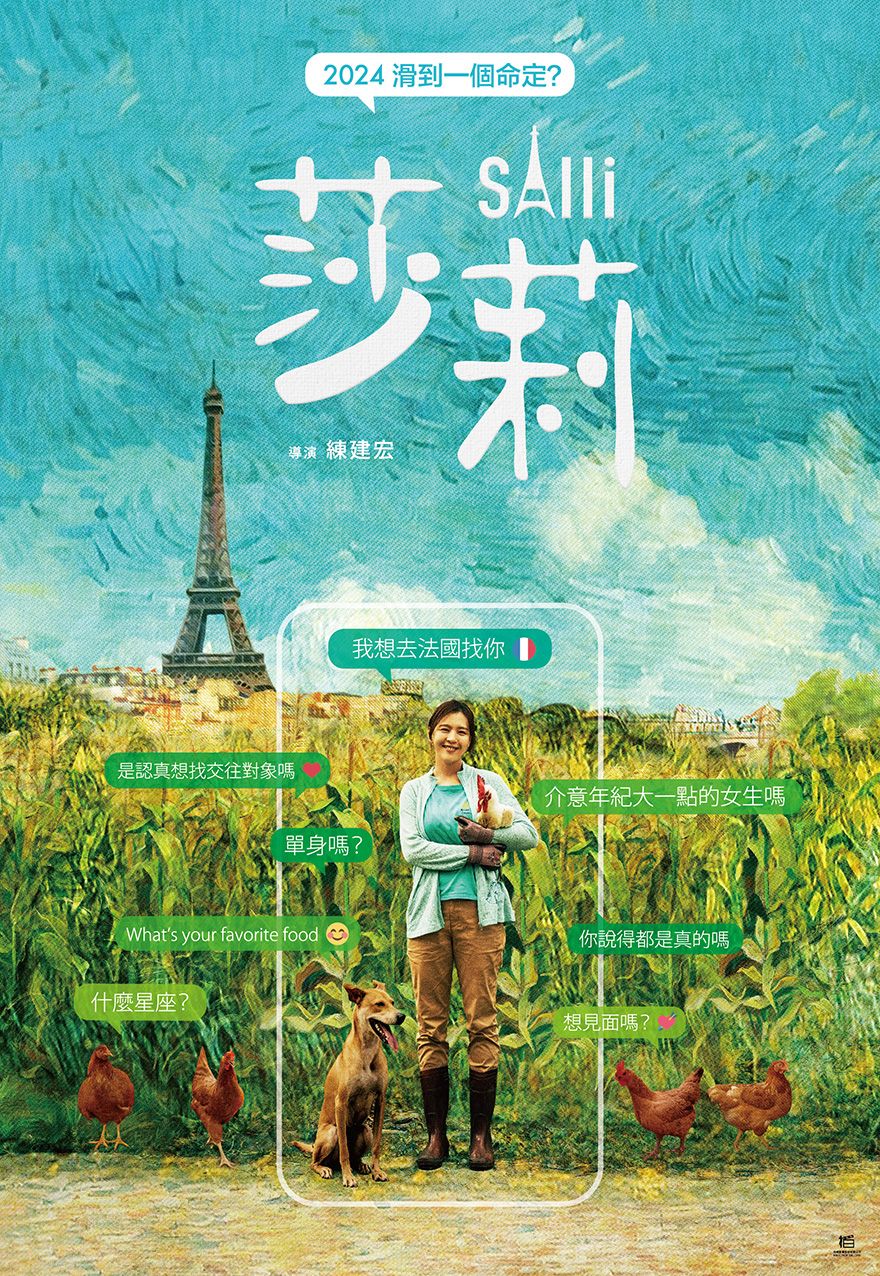
Salli (莎莉,  Lien Chien-Hung, 2023)

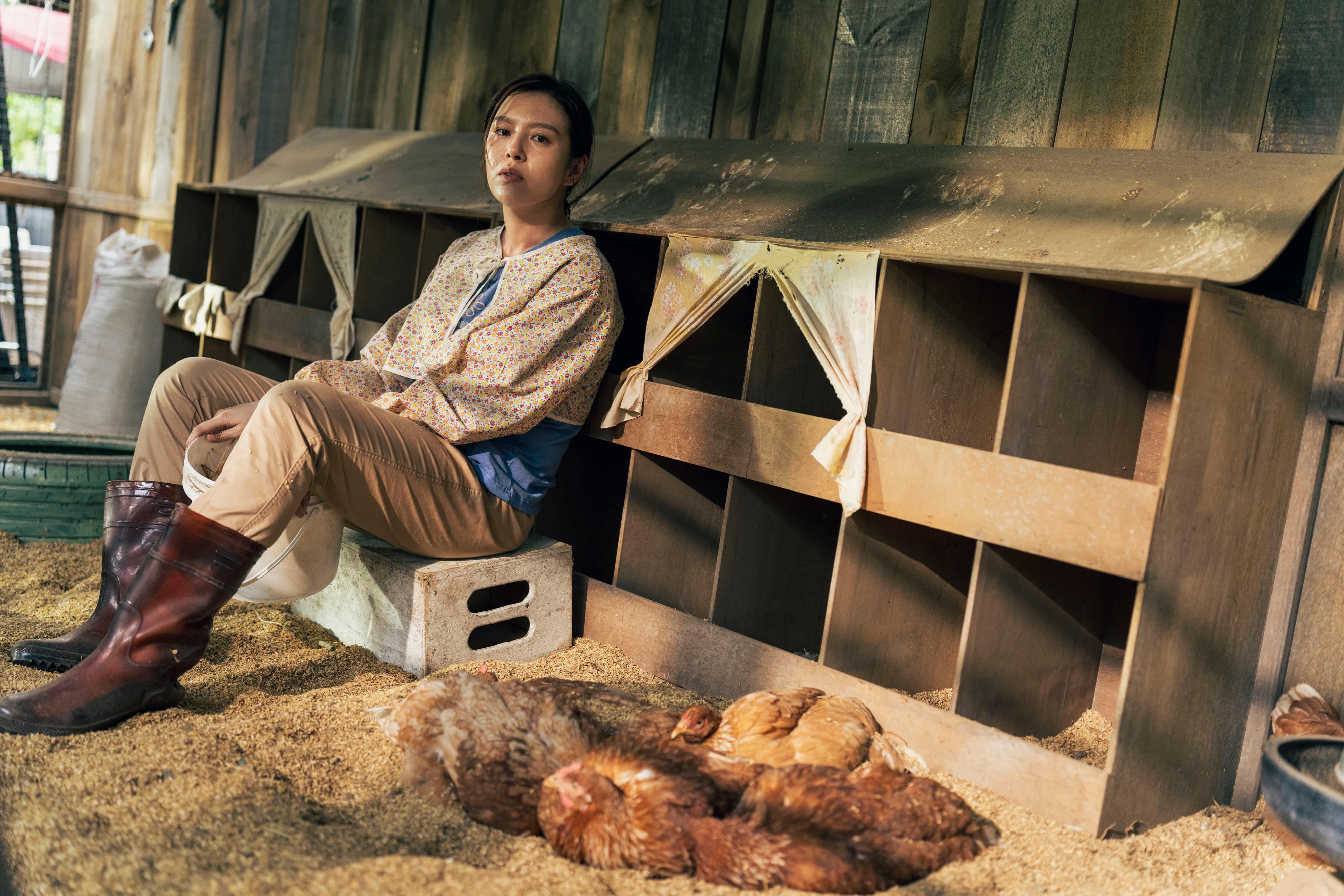
Romance and tradition collide when a middle-aged chicken farmer is unwittingly duped by an online dating scam in Lien Chien-Hung’s gentle dramedy Salli (莎莉). Though everyone tells her the man she thinks she’s talking to on the internet probably isn’t real, Hui-jun (Esther Liu) continues to believe in the possibility of love and a more sophisticated world than that she knows from her rural small-town where everyone knows everyone’s business and she’s looked on as something of a pariah for being unmarried at 38.

Her busybody aunt (Yang Li-yin) in particular is keen that she get married as soon as possible and keeps bringing photos of eligible bachelors most of whom are more than 20 years older than her or just a bit strange. The aunt has also somewhat taken over in the upcoming wedding of Hui-jun’s younger brother Wei-hong (Austin Lin) to the daughter of a local pineapple farmer. She’s had a fengshui master come round and declare that Hui-jun’s bedroom is the best one for the new couple to sleep in so she’s been turfed out, while another fortune teller suggests that as she is unmarried herself Hui-jun shouldn’t even attend the ceremony otherwise the couple will end up arguing for the rest of their lives. Though Wei-hong tells her he doesn’t care about any of that and it’s important to him she attend his wedding, Hui-jun can’t help feeling a little guilty and in the way.

What the aunt doesn’t seem to consider is that after their parents died in an accident, Hui-jun in effect became everyone’s mother which made it impossible for her to have the kind of experiences one needs to get married. She even ended up caring for the daughter of her older brother who abandoned the family after the end of his marriage, though he later took her back to Shanghai where he lives with a much younger Mainland fiancée. Xin-ru has returned home in search of maternal comfort, but Hui-jun knows she will soon have to leave again and she’ll be on her own. It’s Xin-ru who sets her up on an internet dating app explaining that she uses them for “fun” though once Hui-jun starts chatting to “Martin”, a Parisian gallery owner, she can’t help but succumb to romantic fantasy. 

There are those who pity Hui-jin or mock her for being taken in by such an obvious scam, even considering giving Martin her life savings for the downpayment on a flat where they could live together in Paris when he proposes to her after a short period of text-based communication facilitated by AI translation. But Hui-jun is lonely and is just wants to feel loved and valued in a way she obviously doesn’t by her family members who are obsessed with her marital status. In any case, it’s through her imaginary romance with Martin that she begins to come into herself, to think about what it is she wants out of life including whether to not she actually wants to get married, and embrace a new sense of confidence as a person in her own right.

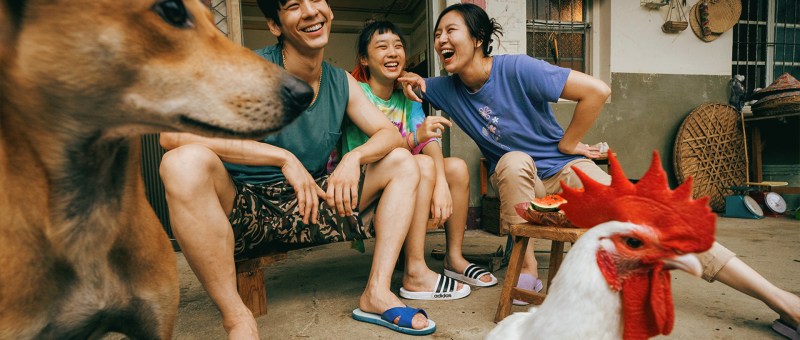
A disaster at home sends her to Paris, alone, hoping to clarify her situation which she eventually does though not in the way anyone might have expected. An elderly woman gives her a piece of life advice that after a divorce and several years of unsatisfying dating experiences, she realised that she just do things on her own and that was okay. What the opportunity affords her is the chance to rediscover herself as distinct from her roles as a sister, aunt, and surrogate mother and wonder if she might be happy enough with her chickens and the dog for company. Filled with a gentle humour and an affection for small-town, rural life in Taiwan if also a yearning for a little sophistication, the film has boundless sympathy for its put upon middle-aged heroine as trapped as some of the chickens in her coop by outdated patriarchal thinking and longing to strut free like the white cockerel she seems to treat almost as a friend. Taichung may not have the Eiffel Tower, but it has its charms and as Hui-jun is discovering the freedom to decide on her own future.


Salli screened as part of this year’s Osaka Asian Film Festival.

Original trailer (Traditional Chinese / English subtitles)

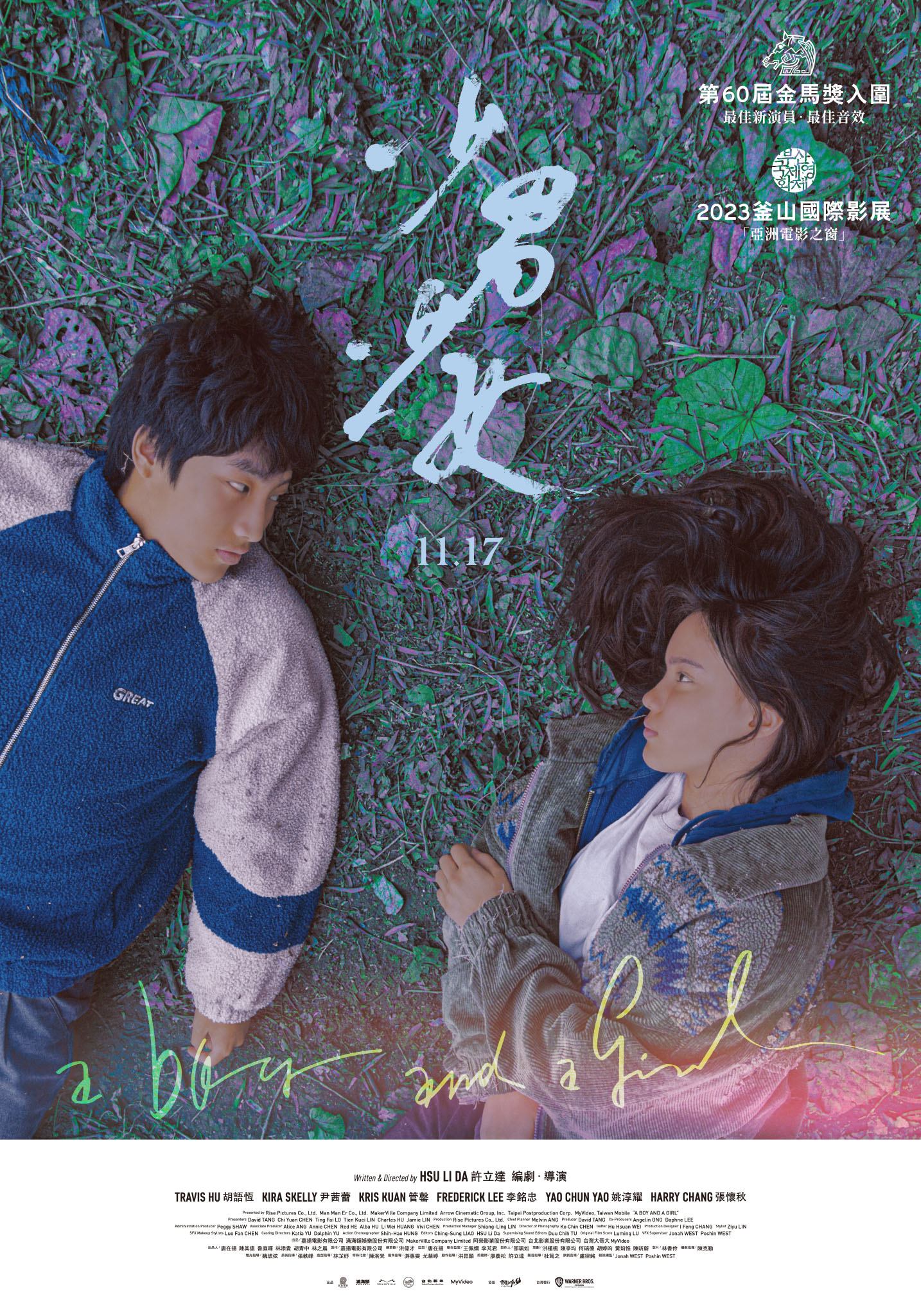
A Boy and a Girl (少男少女, Hsu Li-Da, 2023)

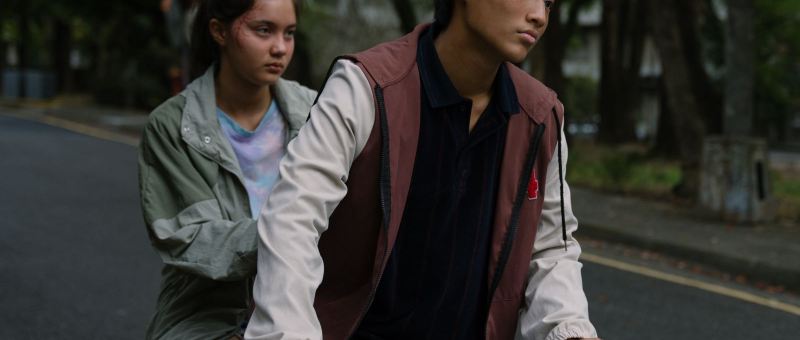
A young man on the cusp of adolescence longs to escape his miserable circumstances but gradually finds himself succumbing to the corruption all around him in Hsu Li-Da’s bleak coming of age drama, A Boy and a Girl (少男少女, shàonánshàonǚ). Though the title may sound like a cheerful rom-com, Hsu’s film is closer to anti-romance as the ill-defined relationship between the two provokes unforeseen changes and eventually dangerous situations. 

In any case, all the Boy’s trouble’s start when his phone gets broken in the middle of a deal to sell in game points signalling an abrupt end to his escapist dreams. He’s desperate to get another one, but his mother can’t afford it and has problems of her own in that the hostess bar she runs is in financial trouble and she’s had to enter a sexual relationship with a local thug just to keep it running. The Boy catches them at it, and looks on voyeuristically laying bare his oedipal desires coupled with a moralistic objection to the act and resentment towards the gangster.

For these reasons he becomes determined to escape his moribund small town along with the hostess bar where his mother works by fighting back against adult duplicity. After meeting the Girl and gaining access to her phone, he discovers that she had been involved in a sexual relationship with their PE teacher which had resulted in a pregnancy. The pair of them attempt to blackmail the teacher with screen caps of his incriminating messages to her, but the plan backfires. The teacher doesn’t feel under threat and gets two of his underlings to beat the Boy up rather than pay. The Boy is morally outraged by the teacher’s behaviour and thinks someone ought to do something, but doesn’t know what to do so lands on blackmail as a form of punishment though as it turns out the Girl was less interested in vengeance or money than whether the teacher really loved her. Like the Boy, the Girl is mostly alone. She claims not to know who her mother is, while her father is suffering with an illness.

As expected they plot their escape together, but events soon overtake them. With the blackmail scheme ruined, the girl settles on sex work and the Boy becomes a kind of pimp if a conflicted one frustrated by the Girl’s whimsical businesses sense which sees her tell a potential client to forget about the money because he’s not quite as hideous as all the others. Meanwhile, she starts giving the boy a drug called Little Devil which causes those who take it to laugh manically and commit acts of extreme violence. Left without a moral arbiter the boy has nowhere to turn. Not only can he not talk to his mother’s boyfriend, but eventually encounters a corrupt cop whose immediate reaction is to tout for a bribe or, as he would have it, protection money. 

In this very messed up environment, all relationships have become transactional. Gradually the Boy begins to behave like those around him and takes on the codes of the masculinity with which he is presented, posturing and squaring up to his mother’s boyfriend in contest over ownership of her. His mother wants escape too, but is afraid and constrained by the persistent misogyny of the present society even if, ironically, her work her also leans into it in running a karaoke bar where the some of the hostesses are encouraged to undress. The more they try to escape, the tighter the noose seems to grow refusing to let any of them leave and denying them even the hope of better life.

Already cynical, the Girl is resigned to her fate and in fact no longer really resisting it save for interactions with the Boy. Told that her father is much sicker than they thought and needs an expensive operation, the Girl suggests that she doesn’t intend to pay while the Boy tries his best to get cash to pay off the ganger, free his mother, and keep the bar only to be confronted with his naivety. The picture Hsu paints of contemporary Taiwan is bleak and unforgiving, refusing either of the pair the prospect of a happier future and guaranteeing only misery for all in a land of cheats and gangsters in which a good heart is weakness few can afford.


A Boy and a Girl screened as part of the 18th Season of Asian Pop-Up Cinema.

Original trailer (English subtitles)
After School (成功補習班, Lan Cheng-lung, 2023)

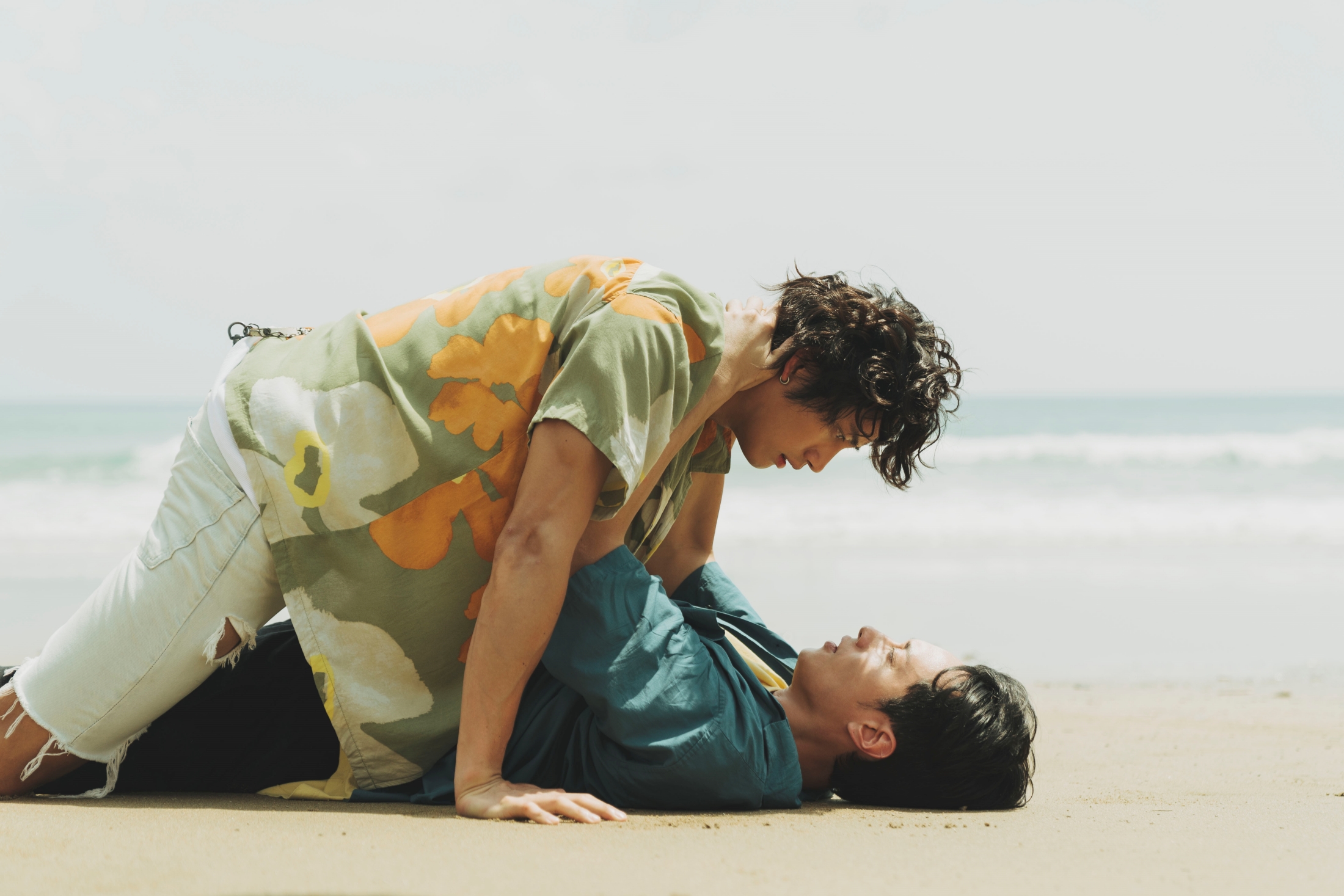
In an odd kind of way, Lan Cheng-lung’s autobiographically inspired coming-age drama After School (成功補習班) charts how far Taiwan has come since the mid-90s while pivoting around the figure of Mickey Chen, a hugely influential LGBTQ+ filmmaker who passed away 2018. Chen was in fact Lan’s own cram school teacher and in terms of the film a voice for the future giving the children the permission to be themselves in the post-martial law society even as they struggle to break free of the authoritarian and fiercely patriarchal past. 

In a sense, cram school itself is the manifestation of that culture in that most of the kids have been forced to go there by their parents to pursue futures not of their choosing. The hero Cheng Heng (Zhan Huai-Yun), Lan’s stand in, wants to be a filmmaker but his dad wants him to be a maths teacher. That might be one reason he and his friend Cheng Hsiang (Chui Yi-tai), who lives with his family because problems with his own, spend most of their time messing around and playing childish pranks on the teachers and admin staff. Meanwhile, they’re far mare interested in potential romance than studying with Cheng Hsiang a bit of a ladies man and Cheng Heng nursing a crush on the school’s most popular girl Chen Si (Charlize Lamb). 

Nevertheless, the closeness between the boys gives rise to a few rumours that they may be gay. The idea is only further cemented by an ironic incident in which Cheng Heng sustains an embarrassing injury to his groin while watching a pornographic video he swiped from a cousin little realising that it was actually gay porn. His parents, or really more his father, do not take well to this and see it perhaps as just more evidence of his rebelliousness and lack of respect for his family in his desire to follow his own path rather than the one they’ve set down for him of getting a steady, respectable job as a teacher. 

That’s one reason that the arrival of Mickey (Hou Yan-xi), a recent graduate taking a temporary teaching job to save for studying abroad, is thought so disruptive because he encourages the kids to be who they are not who they’re taught to be. Mickey holds progressive sessions on sex and sexual identity, explaining concepts such sexual orientation and safe sex which is surprising not least because this is a cram school which exists solely to help kids do well on standardised tests rather than give them any broader kind of education. The headmaster, who is also the father of the boys’ friend Ho Shang (Wu Chien-Ho), is by contrast an authoritarian remnant of the martial law era who can’t permit any kind of liberalisation or individualisation and often inflicts corporate punishment on pupils deemed to have transgressed the rules of a polite society. 

But it’s Mickey who tries to help the boys accept and become comfortable with their sexuality and that of others, taking them to a gay bar where he interviews several of the regulars for his documentary. The barman once entered a marriage of convenience and had a child to please his parents but feels deep guilt and regret for the way he treated his wife and his since been disowned by his family. Now he hosts a New Year dinner for others like him who have nowhere else to go because their families have rejected them. The boys too are rejected by their fathers solely on the suspicion of homosexuality while the mothers remain broadly supportive of their children but trapped by those same patriarchal social codes caught between their authoritarian husbands and love for their sons.

Yet even with these more distressing themes, Lan’s film is at times a little too rosy, sticking to its lighthearted tone rather than fully address the implications of society’s attitude to the LGBTQ+ community in the mid-1990s as opposed to that of today in which Taiwan became the first Asian nation to legalise same sex marriage. Nevertheless, it presents a warm-hearted firsthand account of the effect Mickey had on those around him as the teens rebel against the authoritarian past to embrace their freedom and identities, no longer afraid to speak their feelings but determined to be themselves and accept the selves of others rather than live under the constraints of oppressive patriarchy and traditions.


After School screened as part of the 18th Season of Asian Pop-Up Cinema.

Trailer (Traditional Chinese / English subtitles)

Who’ll Stop the Rain (青春並不溫柔, Su I-Hsuan, 2023)

What does “freedom” actually mean? Su I-Hsuan’s post-martial law drama Who’ll Stop the Rain? (青春並不溫柔) sees a younger generation struggle to shake off the authoritarian yoke meanwhile it seems clear that freedom has its limits and has not been granted equally to or by all. Set in 1994 it takes place against the longest student strike in the nation’s history and ultimately pits the forces of protest and complicity against each other in the constant struggle for individual freedom. 

Free-spirited Chi-wei (Lily Lee) might be something of an outlier in this age, later expressing confusion to the comparatively repressed Ching that she doesn’t understand why they’re fighting for freedom when freedom was something they had always possessed. Yet at the university she finds herself constrained in what is supposed to be an artist’s school, denied creative freedom by stuffy professors who mark their students not by the quality of their work but their obedience and willingness to accept the lessons the professors see fit to give them. Chi-wei’s professor gives her telling off because he says her hair’s too messy, then humiliates her in front of the class by throwing her work on the floor and telling her to start again. Chi-wei, however, remains defiant and continues to work her own way regardless of what the teachers may say. 

It’s after a chance encounter with Ching (Yeh Hsiao-Fei) that she’s drawn into the student movement which opposes the authoritarian rule of the professors and demands greater creative freedoms for the students and society at large as this generation who came of age after martial law considers the kind of future they envision for themselves. But like any student movement, there are innate tensions within the group with some suggesting that its leader, Kuang (Roy Chang), is merely trying to relive the White Lily movement and is in fact less committed to the cause than he seems as evidenced by his willingness to enter dialogue with the staff against the wishes of his girlfriend, Ching. 

Unlike the others, Ching is a law student and not and artist. She’s also the daughter of a prominent, conservative and patriarchal politician and the group is somewhat ironically often dependent on her familial wealth. Her background perhaps makes it harder for her to emerge into a new, ostensibly freer age as bound by a set of ideas otherwise alien to Chi-wei who is at any rate absolutely herself and unafraid to be so. Ching tells her that she longs to be part of a group, which is presumably why she’s joined the artists in their protest even if others accuse her of simply rebelling against her privilege, which is something Chi-wei has little need for as she has already discovered the power of freeing her mind. 

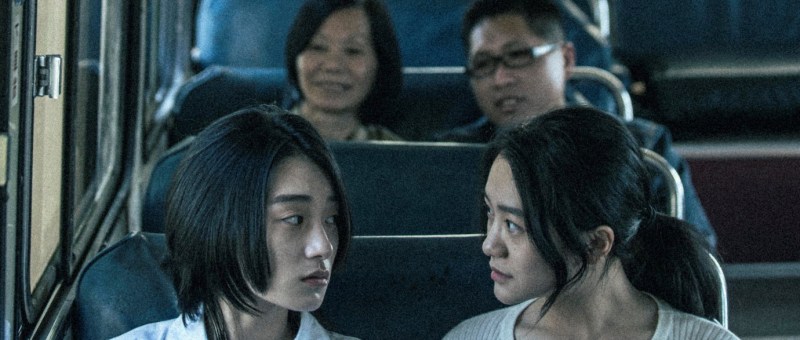
It’s these forces that generate the push and pull between the two women as Chi-wei is eventually awakened to her sexuality by Ching only to experience her pulling away in her deeply internalised shame. Even so, she takes an approach that largely avoids direct confrontation but allows her to stay by Ching’s side, patient yet confused in attempting to create a safe space that Ching can accept as her own. Both women are also constrained by forces of traditional patriarchy with even Kuang stating that perhaps women shouldn’t be too independent after all or else they wouldn’t need him in an ironic moment foreshadowing his total redundancy. Meanwhile, Chi-wei is aggressively pursued by a fellow student who won’t be deterred by her frequent rejections and general lack of interest in men while ironically trying to convince her she’s been “brainwashed” by the strikers and is really a good girl, like him willing to bend to the authoritarian yoke. 

Perhaps it’s telling that it’s only once the strike is over and following a confrontation with her authoritarian father that Ching is able to overcome the barriers that prevent her from embracing her true desires and authentic self. In her opening voiceover, Chi-wei reflects that back then they still believed a tiny flame could burn down the forest implying at least that she was mistaken but even if a wider revolution ends if not exactly in failure than in compromise, disappointment, and rancour, it is true enough that the spark between these women was enough to burn through the forces that kept them apart to find a more individual kind of freedom that exists outside of oppressive superstructures even if as Ching says protest never ends.


Who’ll Stop the Rain screened as part of this year’s BFI Flare.

Trailer (English subtitles)

The Young Hoodlum (壞男孩, Yu Jhi-Han, 2023)

Seemingly abandoned by their society, the four young men at the centre of Yu Jhi-han’s The Young Hoodlum (壞男孩, huài nánhái) survive on petty crime and brotherhood yet their bond is soon disrupted by the presence of a privileged young woman. Contrasting the circumstances of these boys who find themselves without parental support and the girl who resents her parents for micromanaging her life the film makes a point of criticising the inequalities of the contemporary society if succumbing to a potentially unintended misogyny.

With no family to rely on, the boys are largely dependent on a local gangster, Xiao-hei, for whom they’ve become runners withdrawing cash with stolen cards then putting it in a locker for another of his men to pick up. Having left home after his father, who has issues with alcohol, almost set the house on fire, Cheng-han is also caring for his younger sister who comes to view each of the other boys as additional brothers with the five of them forming a close, quasi-familial unit. 

But that unit is disrupted by the arrival of Pin-Ran, an aspiring influencer from a background of extreme wealth who appears to be living in a luxury hotel while hiding out from her parents who, she says, arranged everything in her life so far including a place at a foreign college. Cheng-han is captivated by her and struck the kindness she showed his sister but also uncomfortable in her upperclass world while she, by contrast, is just really a tourist in his having fun experiencing poverty and the transgressive acts the boys must perform just to survive. She gets a thrill out of conning a young woman out a small amount of money at a bus station and convinces the guys to help her exploit one of her fans in a badger scam but she could of course walk away at any point and return to her privileged life which is not an option open to any of the boys. 

Even so, when her parents finally cut her off she decides on drastic action to get back at them and help the boys out of a jam after a questionable decision that puts them on Xiao-hei’s hit list. From the first, she creates discord within the group with it’s old leader, Shi, resentful both of the way she seems to have taken charge and of the way Pin-ran chose to distribute the loot taking the bulk herself and then splitting their cut between the four of them. Shi feels he’s not getting his proper due either from Xiao-hei or Pin-ran and is quickly getting fed up with the futility of his situation. He feels he needs the money to support the other guys and Cheng-han’s sister, while another of the boys has an additional motive in needing to pay for medical treatment for his grandmother all of which makes them desperate and reckless. 

The opening voiceover reveals that one of Cheng-han’s friends was killed in the summer with Yu drip feeding information trying to explain how the brotherhood of the boys imploded to the extent that one of them died, but ultimately returns to the themes of rich and poor as we can see Pin-ran getting advice from a fancy lawyer while each of the boys some of whom are still below the age of majority are questioned alone with no legal representative present. Shi had asked Cheng-han if he was more afraid of being dead or being poor, explaining his desperation in his intense fear of poverty insisting that he would rather not live at all than continue to suffer. The irony is that the boys find themselves in this position because of parental neglect or abandonment while Pin-ran has rejected her parents for being overly attentive and railroading her into a life she may not want. Her position within the gang necessarily disrupts its dynamic with Cheng-han trying to keep the peace while Shi in particular is pushed to extremes by increasing desperation. Yu’s bleak friendship drama in the end suggests that the innocent will end up paying for the poor decisions of those around them and that ultimately the borders of class and gender cannot be overcome for rich girls like Pin-ran can always count on parental support while boys like Cheng-han will have to fend for themselves.


 The Young Hoodlum screened as part of the 18th Season of Asian Pop-Up Cinema.

Original trailer (English subtitles)