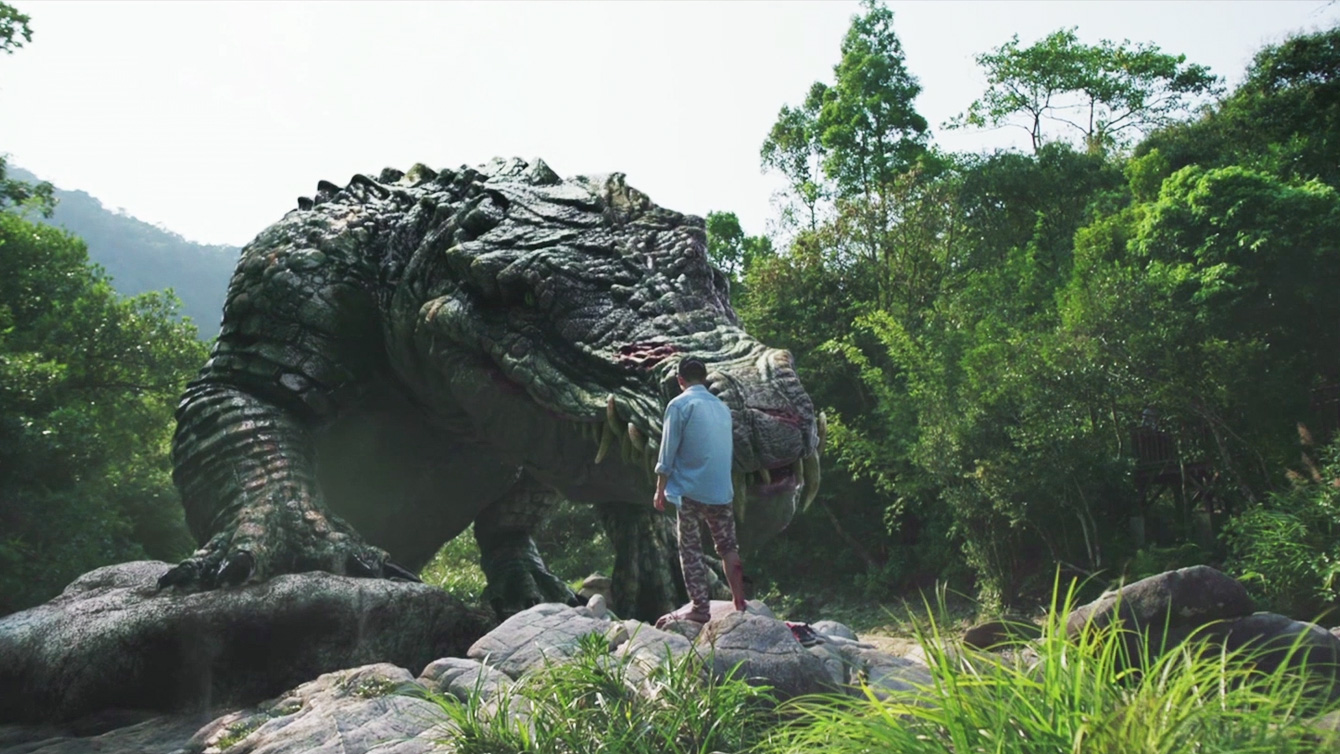
Monster movie streamer Crocodile Island (巨鳄岛, jù è dǎo) became a surprise hit in the early days of the pandemic as people increasingly preferred to entertain themselves at home, though of course in a way it may be somehow comforting to see people battle more obvious threats that they can actually see and physically resist. In any case, the film never promises much more than its nature as fodder for online streaming would suggest while admittedly pinching plot elements from other similarly themed movies such Train to Busan and positioning the central conflict as effective paternity rather than the monster itself.
A brief prologue finds American pilots flying through the Dragon Triangle during the Second World War while ominously carrying cargo labeled as containing dangerous radiation though the reason they later crash on an uncharted island is that they are suddenly attacked by what appear to be pterodactyls. Nevertheless, the radiation is later given as an explanation as to why all the creatures on the island have evolved into huge and terrifying monsters including the titular crocodile.
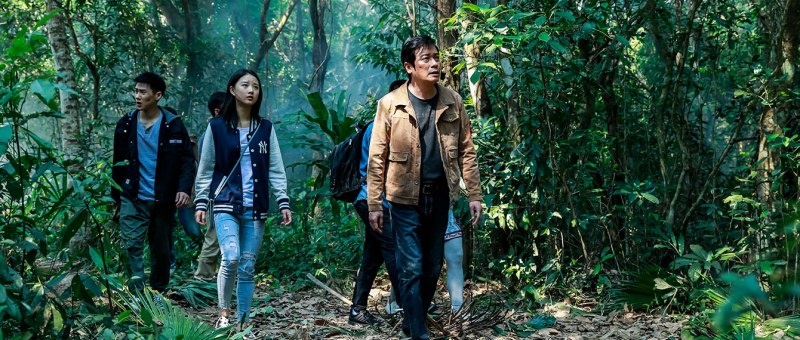
Flash forward to the present day and grumpy middle-aged man Lin Hao (Gallen Lo Ka-leung) is escorting his estranged 19-year-old daughter Yiyi (Liao Yinyue) home to China following the sudden death of her mother in Australia where the pair had been living. Yiyi has secretly been accompanied by her university student boyfriend Cheng Jie (Wang Bingxiang) of whom Lin clearly does not approve, not yet able to shift his perspective on the daughter he hadn’t seen in five years to realise she is no longer a little girl. Family bonding will however have to wait as the plane they’re travelling on alongside a pregnant lady and her husband, an influencer, and an obnoxious man travelling home for a heart transplant, is pulled into Dragon’s Triangle by magnetic interference and crash lands on the island where several of the survivors are quickly swallowed by the crocodile.
Those who remain are therefore faced with a series of dilemmas as to whether to help each other or prioritise their own survival with Cao Fang (He Qiwei), the heart transplant candidate, actively pushing several of his fellow passengers towards the crocodile so that he can get away. Lin meanwhile quickly takes charge and is more or less unchallenged as they try to explore the island in search of clues hoping that the radio equipment in the ‘40s plane they read about in a diary one of the pilots left behind will allow them to make contact through the outdated tech of radio waves.
This is might be something of a plot hole seeing as it obviously didn’t work for the American pilot though perhaps there just weren’t any ships in range given the circumstances, and it seems he too might have come to a sticky end. But thanks to his sudden promotion to father of the group, Lin begins to reassess his role as a father to Yiyi in beginning to cede ground and actually listen to some of her ideas along with accepting support from Cheng Jie to help him protect her not lease because he realises he may not survive. There are also a few other giant and very hungry monsters on the island who in this case turn out to be more of a threat than other people who with the exception of Cao Fang are more community minded than individualistic.
A mild social message is conveyed through Yiyi’s eventual discarding of the cigarettes she secretly smoked, symbolising the end of her rebellion and the re-acceptance of her father along with his patriarchal authority as if shifting back onto the right path thanks to the experience of fighting a giant crocodile together and realising that he really did stay to protect her instead of just going off on his own. Some undeniably ropey special effects and a general lack of coherence in the film’s internal logic frustrate its ability to maintain momentum though English-speakers aside, the performances are strong even if the plot developments at times feel unoriginal. Even so the film sells its message of family reunion and perhaps less palatably patriarchal social conventions as Lin Hao steps up to protect his daughter and community from the threats that surround them be they giant crocodiles or otherwise.
Crocodile Island is out now in the US on Digital & DVD courtesy of Well Go USA.
US release trailer (English trailer)

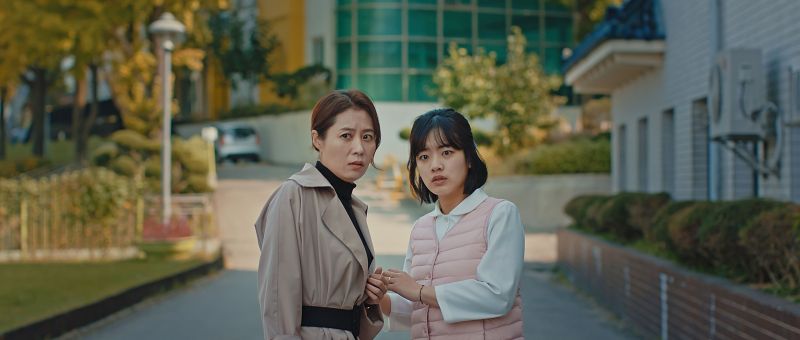

 Cho Sun-ho’s time-loop drama A Day (하루,
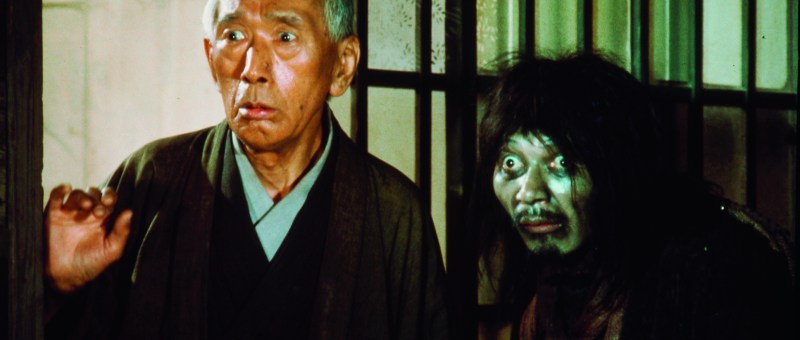
  Jun-young, a successful surgeon but less than successful father, witnesses a car accident involving his daughter only to wake up as if it were just a dream. Realising that the events of his dream are proceeding as he saw them, Jun-young tries to save his daughter only to fail and have the exact same events repeat themselves over and over again until he meets another man in the same position who has been trying to save the life of the other victim. Together, the two men unite to save the lives of their loved ones and escape the nightmarish temporal loop in which they are both trapped.
 Tag screens on 14th October at 12pm. Check out our review of the film
  Now in its 21st year, Montreal’s

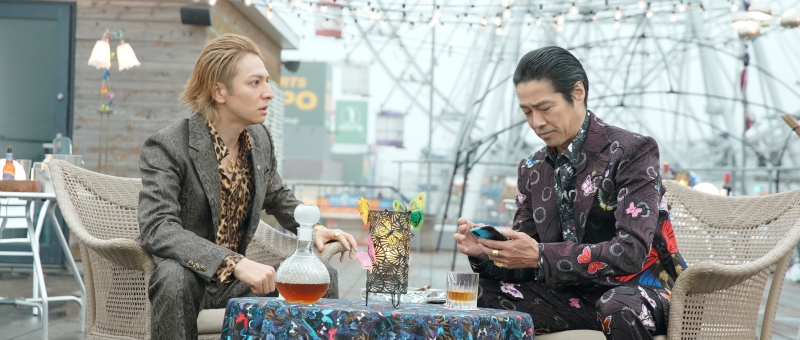
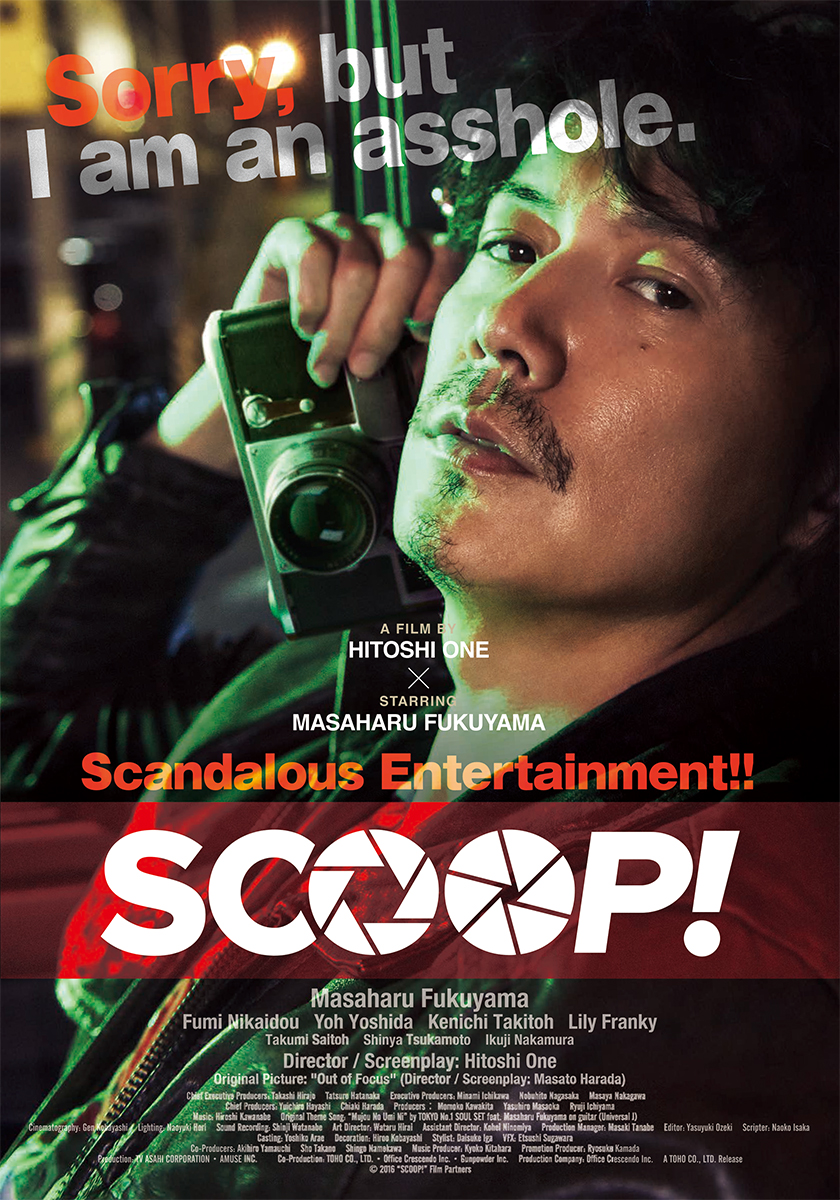 Hitoshi One has a history of trying to find the humour in an old fashioned sleazy guy but the hero of his latest film, Scoop!, is an appropriately ‘80s throwback complete with loud shirt, leather jacket, and a mop of curly hair. Inspired by a 1985 TV movie written and directed by Masato Harada, Scoop! is equal parts satire, exposé and tragic character study as it attempts to capture the image of a photographer desperately trying to pretend he cares about nothing whilst caring too much about everything.
 Placed between
  The history of LGBT cinema in Korea is admittedly thin though recent years have seen an increase in big screen representation with an interest in exploring the reality rather than indulging in stereotypes. The debut feature from Lee Hyun-ju, Our Love Story (연애담, Yeonaedam), is among the first to chart the course of an ordinary romance between two women with all of the everyday drama that modern love entails. A beautiful, bittersweet tale of frustrated connection, Our Love Story is a realistic look at messy first love taking place under the snowy skies of Seoul.
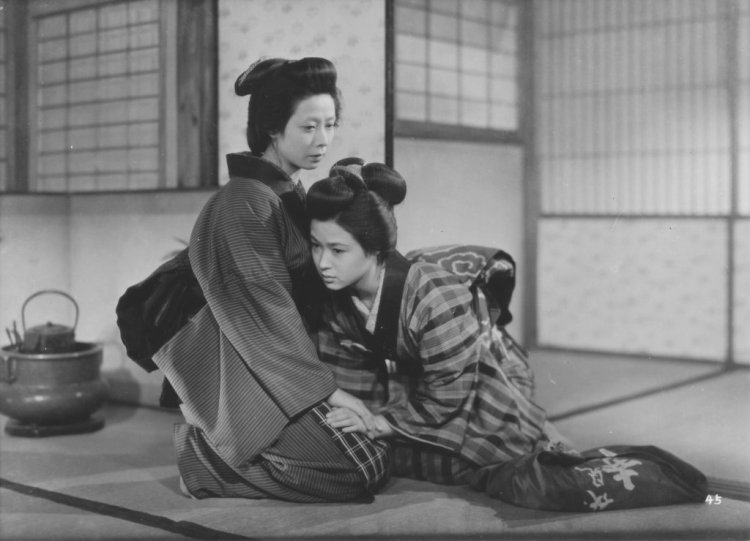 History marches on, and humanity keeps pace with it. Life on the periphery is no less important than at the centre, but those on the edges are often eclipsed when “great” men and women come along. So it is for the long suffering Tose (Chikage Awashima), the put upon heroine of Heinosuke Gosho’s jidaigeki The Fireflies (螢火, Hotarubi). An inn keeper in the turbulent period marking the end of the Tokugawa shogunate and with it centuries of self imposed isolation, Tose is just one of the ordinary people living through extraordinary times but unlike most her independent spirit sparks brightly even through her continuing strife.
 Windows on Worlds