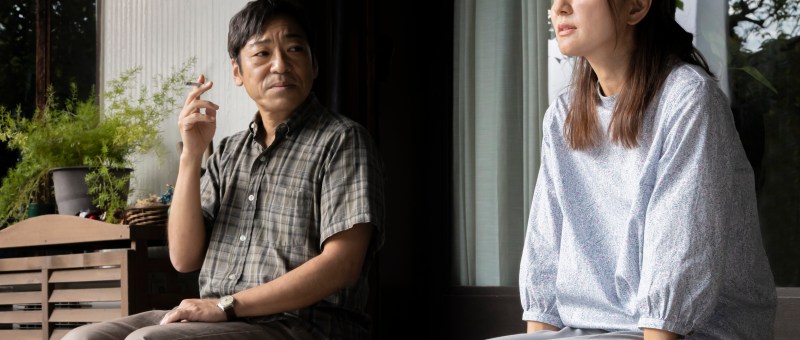
Hoarder On The Border (断捨離パラダイス, Takayuki Kayano, 2023)

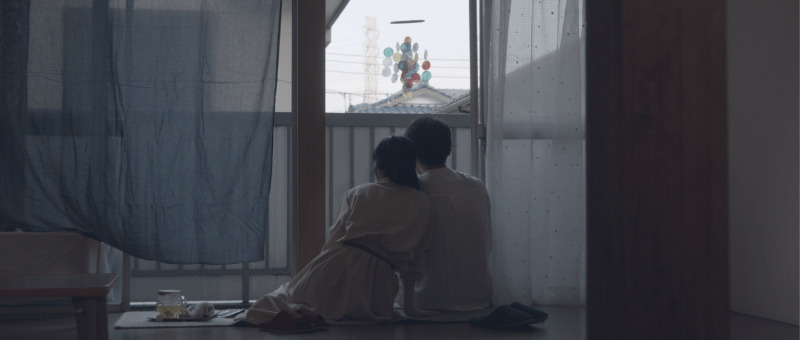
A former concert pianist begins to see the world from a different angle after taking a job cleaning houses in Takayuki Kayano’s humanistic dramedy, Hoader on the Border (断捨離パラダイス, Danshari Paradaisu). Ritsuki (Ryo Shinoda) describes the path that took him to his new line of work as mere coincidence, but there is something satisfying to him in helping people get rid of all the rubbish in their lives both literal and metaphorical and doing so in a broadly sympathetic way that encourages the customer to think hard about what it really is they want and don’t want cluttering their existences. 

Ritsuki doesn’t seem to have that much literal clutter, only it also appears that he is more than a little conflicted with his way of life. Seemingly coming from a rather upper middle class family, Ritsuki had trained since childhood to become a concert pianist only to give up a promising future due to a hand tremor which may be psychosomatic. It may be no coincidence that in contrast to the upbeat dance music his boss plays while cleaning, Ritsuki prefers jazz rather than classical and may be looking for something with a little more freedom than the life of a concert pianist. 

Even so he quickly discovers how many of his relationships were based on his status as classical musician. His girlfriend of 11 years abruptly breaks up with him apparently no longer interested now that he is a mere piano teacher with a sideline as a house cleaner. His experiences place him well to empathise with some of his clients who are each in someway overwhelmed to the extent that it has prevented them getting rid of literal rubbish from their lives which continues to clog up their homes only further deepening their sense of internalised shame. Then again, one of his first clients, Asuka (Yumiko Nakamura), is in her own way “shameless”, unembarrassed when Rituski discovers a box of DVDs she describes as “precious” featuring herself in her previous career as a porn star. 

The film doesn’t go into what led to her home becoming a “trash house”, but perhaps does suggest there is a degree of shame involved in the proposed solution of welcoming more visitors to encourage her to keep the place presentable. The reason she needed it cleaned is that her son’s teacher has become fed up with her attempts to dodge a home visit while his usual behaviour has them thinking there may be something wrong in his family circumstances. As is later revealed, the teacher, Mariko (Tomu Muto), also lives in a trash home for unclear reasons but that seem to reflect her generalised anxiety in her inability to make decisions or take care of the rubbish in her life. She’s recently become engaged to a man who seems a little domineering but is also becoming suspicious of her reluctance to let him into her flat worried that it’s because she lives with another man while also hurt and confused by her rejection of intimacy.

Similarly, a care worker preparing to move back to the Philippines (Mac Sekioka) found himself living in a trash home after falling into depression following the death of his mother. The thing he didn’t want to get rid of was a Tupperware container containing a stew his mother had made for him he’d been keeping in the freezer for the last eight years and eventually shares with Ritsuki as a final ritual before moving on. Another old man meanwhile needs a little more persuading with the situation complicated seeing as the main reason his son wants them to intervene is that he suspects there may be valuable antiques trapped under all that trash. What led to Shigeo becoming a local pariah remains obscure save that he too seems to be suffering with guilt and grief, haunted by the figure of a tiny woman who claims he threw her away. In some cases, it seems like at some point it all became too much and what each of the clients needed was a helping hand to get them started, Ritsuki and his eccentric boss gradually freeing them of the burdens of their lives while restoring both peace and order as he too learns to move forward bonding with his new work family no longer quite so constrained but living in the freedom and happiness of an uncluttered existence.


Hoarder On The Border screened as part of this year’s Nippon Connection.

Original trailer (no subtitles)

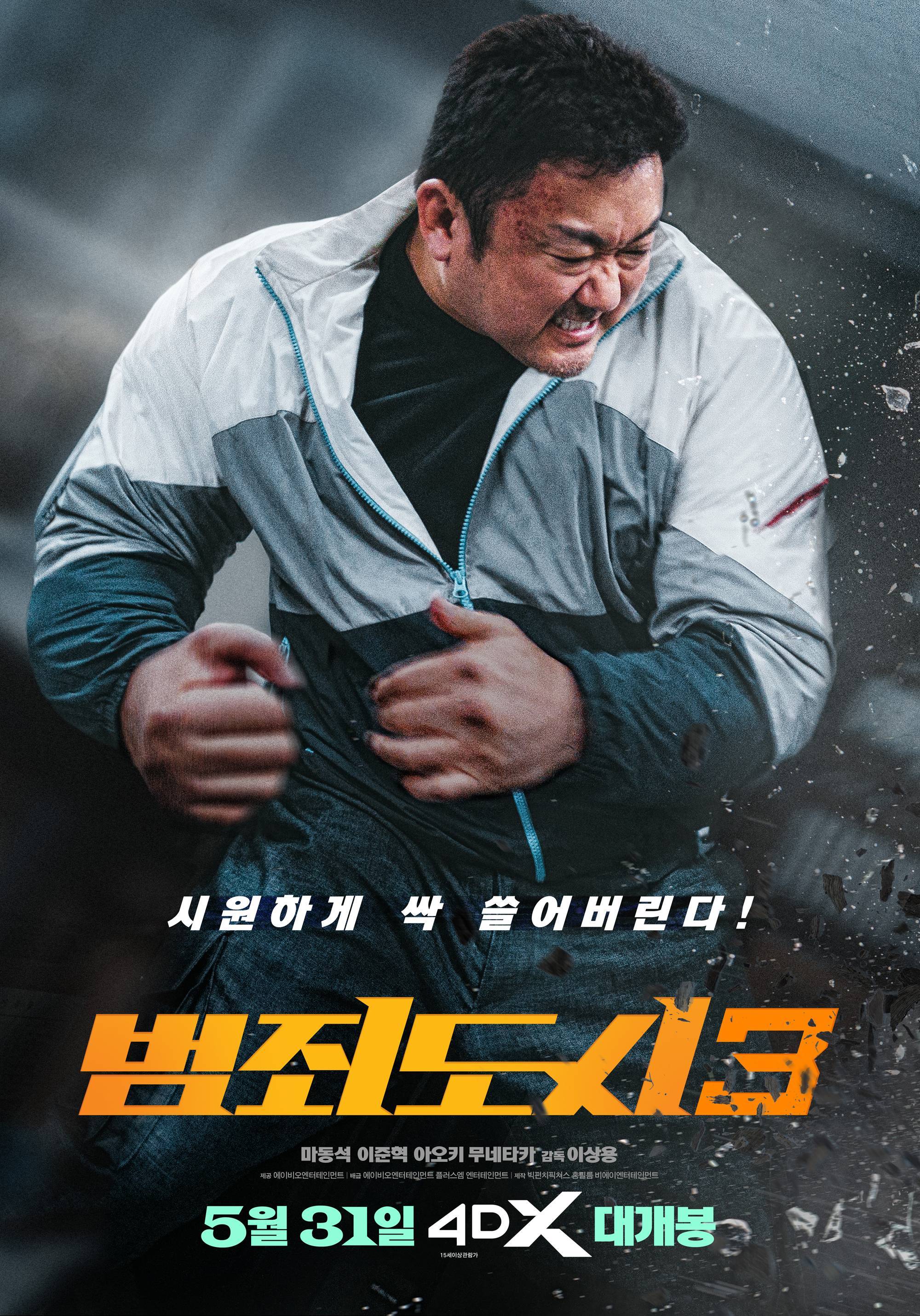
The Roundup: No Way Out (범죄도시 3, Lee Sang-yong, 2023)

Ma Dong-seok has been cultivating an image of himself as an action star for quite some time. The kind of marquee name who generally plays the hero, Ma looks back to the genre’s heyday presenting an uncomplicated vision of righteous masculinity, a bruiser with a heart of gold. The Roundup: No Way Out (범죄도시 3, Beomjoedosi 3) is the third in a series of films that began with The Outlaws and is projected to total at least eight instalments each starring Ma as the maverick detective his superiors hate to love. 

It’s true enough that you can’t get away from the more problematic elements of his unreconstructed good bad cop persona. We often see Seok-do (Ma Dong-seok) beat information out of suspects which the film treats as a cheeky joke in an otherwise tacit endorsement of police brutality that suggests red tape is the reason the guilty often evade justice. Meanwhile, in a step back from other Ma vehicles there are almost no women in the film and none in the police force. The heart of the case is the death of a 28-year-old woman who “fell” from a hotel room window and is later discovered to have died of a heart attack after being drugged in a club and dragged off by a random man who then literally threw her away to distance himself from the crime. The murder which Seok-do is supposed to be investigating is totally forgotten in his all encompassing drive to find out where the drugs are coming from which eventually descends into a battle of wits with a corrupt police officer who’s teamed up with a Korean-Japanese yakuza to skim his boss’ supply of new designer drug Hiper. 

There is a distinctly uncomfortable thread of xenophobia that runs through the series even if in this case the villainy is discovered closer to home in the form of police corruption. This time around, the threat is once again Japan which is apparently where Hiper originated though petty yakuza Tomo (An Se-ho) now manufactures it in Korea where he’s cut a freelance deal with dodgy cop Joo (Lee Joon-hyuk) to distribute it in the local night life scene without the knowledge of his boss back in Japan, Ichijo (Jun Kunimura). Joo has also cut a deal to sell the drugs to a Chinese gang, so it’s quite bad news for him when Ichijo gets wind of the situation and Tomo takes off with a suitcase full of pills for his own protection. Unluckily for him, Ichijo has already sent his most intimidating assassin, Riki (Munetaka Aoki), to find out what’s been going on behind his back. 

Problematic as it may be, Ma’s retro take on the action star is undeniably entertaining with his frequent hero moments and penchant for one liners. The first time he appears, we see him break up a street fight but mostly interested in finding out if the guy on the ground started it the implication being that perhaps if he did it’s none of his business but otherwise he’s going to have to intervene. Then again as he tells his exasperated boss, his personal motto is “punish and serve” and he’s here to get the job done even if that means wading in all fists blazing without much thought for regulations or procedure. At one point Seok-do and his guys stumble on a crime scene and walk around it touching everything in sight without bothering to even put on so much as gloves. 

In any case, Lee makes every punch land and quite literally as the screen seems to vibrate on contact almost as if the camera itself were taking a blow. Ma’s thunderous fists clash with the sound of justice as he all too easily disables hardened gangsters with one well placed slap. At times, his invincibility borders on the ridiculous but he does eventually allow himself be “defeated” if only temporarily as in his miraculous recovery from being run over by a gangster’s car. In many ways, Joo is Seok-do’s mirror, a bad bad cop with crazy eyes who kills without a second thought and behaves with narcissistic recklessness, overconfident in his abilities to sort his problems through his status as a law enforcement officer. Bruiser he may be, but Seok-do likes arresting people and never uses lethal force even when the opportunity is presented to him, symbolically snapping Riki’s katana and then proceeding to slap him seven ways to Sunday leaving the ice cool assassin collapsed amid a display of Japanese parasols. An end credits scene set three years later in 2018 sets up a fourth instalment and the return of a familiar face besides that of Seok-do himself who continues to charm as the world weary bruiser slapping down crime wherever it rears its ugly head. 


The Roundup: No Way Out is in UK cinemas now.

International trailer (English subtitles)

Gold Kingdom and Water Kingdom (金の国 水の国, Kotono Watanabe, 2022)

After centuries of conflict, two feuding countries finally begin to put the past behind them to work for a common future in Kotono Watanabe’s animated fantasy romance, Gold Kingdom and Water Kingdom (金の国 水の国, Kin no Kuni Mizu no Kuni). Adapted from the manga by Nao Iwamoto, this is very much a story of coming together to create a better future for all in which it’s always better to follow the most difficult path if it leads to longterm peace rather than opting for a quick fix like a dynastic marriage that won’t take place for another fifty years. 

In this case, the dynastic marriage actually works out but only because romantic heroes Sara (Minami Hamabe) and Naranbayar (Kento Kaku) end up meeting by chance and falling in love organically despite the class disparity and cultural differences between them. The kingdoms of Alhamit and Balkari had been feuding in part for the petty reasons of a dog and cat respectively doing their business on the wrong side of the border wall erected after previous war. Neither nation being very much interested in the dynastic marriage proposed by the previous generation in which Alhamit would give its most beautiful woman as a wife to Balkari’s cleverest man, Alhamit sent a cat instead while Balkari sent a dog. Poor Balkari engineer Naranbayar simply laughed off his new “bride” while Princess Sara of Alhamit decided to go along with the ruse knowing that to kick up a fuss would likely send both nations back to war. 

They happen to meet when Sara transgressively ventures beyond the wall in search of her dog, Lukman, who has fallen in a hole in the forest. With her pretty sisters needling her, Sara asks Naranbayar to pretend to be her new husband, little realising that he is the man she is intended to marry. The youngest of four sisters, Sara has always felt inferior and fears that she cannot live up to the title of Alhamit’s most beautiful woman but begins to fall for Naranbayar who is in fact very clever but also kind in the way most of her family aren’t. Naranbayar genuinely cares about the people of Alhamit and quickly works out that in this incredibly wealthy, “golden” desert city they will run out of water within 50 years while water is something the poor nation of Balkari has in abundance. 

An alliance will save the lives of people in Alhamit, but also also benefit those of Balkari in boosting its economy but not everyone is motivated towards a diplomatic solution with many in the court clearly agitating for war in which they would simply conquer Balkari to capture its resources. The King is under pressure in thinking of his historical legacy, not wanting to be seen as a weak monarch as his namesake earlier was in having restored with relations with Balkari rather than seeking to dominate it militarily. Under the sway of potentially corrupt shaman Piripappa (Chafurin) he rules with an authoritarian fist, while his haughty daughter Leopoldine (Keiko Toda) has appointed a handsome actor as an advisor to signal her opposition. 

Only through the genuine love which emerges between Sara and Naranbayar can the country be saved in turning away from pointless acrimony towards a more open future marked by mutual cooperation and friendship between two equal nations. Through falling in love with Naranbayar, Sara grows in confidence and learns to see herself as beautiful no longer inferior to her sisters but playing a full part in the life of the court as they work together to solve the water issue and return life to their arid land. Beautifully designed with its Middle-Eastern aesthetics and strong contrast between the desert kingdom of Alhamit and the beautiful forests of Balkari, the film also features charming paper art bookends and a watercolour credits sequence depicting a happier future for both nations as they forge a new society together. Heartfelt in its central romance, Watanabe’s charming love story positions cross cultural connection as the best means of overcoming centuries of pointless conflict along with allowing each of its heroes to become more of themselves as they work together to create a new world of love and peace in which all can prosper and live in happy harmony. 


Gold Kingdom and Water Kingdom screened as part of this year’s Nippon Connection.

International trailer (English subtitles)

Double Life (ダブル・ライフ, Enen Yo, 2022)

The heroine of Enen Yo’s Double Life (ダブル・ライフ) has a recurring dream of being trapped in an endless tunnel. No matter how long she walks, she can never see an exit, but she also claims that she is always awake to her true self. It is in a way her true self that seems to have gotten away from her as she struggles to overcome career disappointment and a moribund marriage to a passive aggressive salaryman who barely speaks to her and seems to resent her presence in his life. 

After giving up her dance career following an injury, Shiori (Atsuko Kikuchi) has been working as an assistant to movement coach Kumiko whose practice is closer to performance art than contemporary dance. Shiori had wanted to take part in one of Kumiko’s “Communicating Love” couples sessions and though her husband Ryo had originally agreed he cancels at the last minute with an abrupt text message he refuses to explain over the phone. He refuses to explain at home too, later giving an excuse that would have seemed reasonable if he’d offered it in a less abrasive manner but given his behaviour makes him seem guilty and evasive. Smelling another woman’s perfume on his shirt only deepens Shiori’s suspicions that he’s been having an affair. It’s for these reasons that she takes up the recommendations of a friend, Misaki, to contact a man who rents himself out for role play assignments to pose as her husband so that she can participate in the workshop even without Ryo’s cooperation. 

This might in someways seem perverse given that the workshop is about exploring intimacy as a couple, but as Kumiko explains it’s as much about coming to understand your own feelings as it is your partner’s. Shiori has in a sense hired Junnosuke to mirror her, conforming to her image of an idealised Ryo as the tender and loving husband he does not otherwise seem to be. Perhaps just incredibly good at his job, Junnosuke is a perfect fit for the exercise and is able to effectively pick up on Shiori’s buried anxieties echoing her dream of the tunnel but envisioning her as a beautiful butterfly dancing its way towards the exit. Shiori decides to hire him for an extended period and even rents a small flat to role play a happier marriage but also begins to lose sight of the boundaries of their “fake” relationship.

As Junnosuke says, once he’s in character it’s his lived “reality” until it’s not, but one also has to wonder what toll this lifestyle takes on the core “Junnosuke”, whether he can be said to exist at all and is able to have “authentic” personal relationships or whether not having them affects his life if he is able to derive emotional satisfaction through his various role playing activities. In any case as he later reminds Shiori he is a creature of her creation who only ever mirrored her desires and in doing so showed her who she is and what she wants along with the way out of the dark tunnel towards a more satisfying existence. 

Kumiko, who is herself dealing with a sense of loss, tells her something similar in explaining that she must rediscover her centre of gravity which is also a means of spiritual reorientation in recalibrating herself to her present physicality and learning move in tune with the rhythms of the body she has now not the one she used to have before the injury which she must fully accept as a part of herself. It’s rediscovering her love of dance that grants her mastery over her body and soul and allows her to find a way through her despair in accepting that she must change to meet the new future rather than remaining trapped in a disatfying present defined by a longing for an immutable past. 

Shot with a breezy poeticism that is at once lyrical and naturalistic, Yo’s gentle drama explores a process of healing conducted through theoretical role play that suggests that in certain cases literal authenticity is less important than the emotional in making an essential truth fully visible. In any case through living her “double life”, Shiori gains a new perspective on herself and others that finally allows her to see the light at the end of a tunnel she feared would never appear.


Double Life screens in Frankfurt 11th June as part of this year’s Nippon Connection.

International trailer (English subtitles)

Baby Assassins 2 Babies (ベイビーわるきゅーれ2ベイビー, Yugo Sakamoto, 2023)

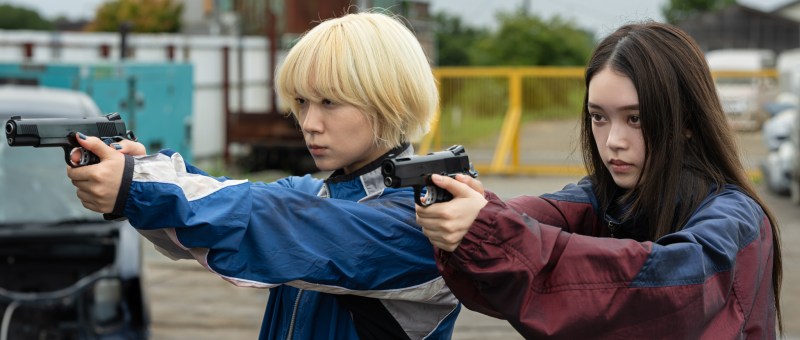
Chisato (Akari Takaishi) and Mahiro (Saori Izawa) continue to struggle with everyday life in Yugo Sakamoto’s sequel to the hugely popular slacker comedy action fest, Baby Assassins, Baby Assassins 2 Babies (ベイビーわるきゅーれ2ベイビー, Baby Valkyrie 2 Baby). A deadpan satire on institutional bureaucracy in the underground hitman society, the film sees the girls targeted by a pair of rivals that in any other film may be the heroes of the story only this time around they’re hapless challengers whose attempt game the system only results in more chaos and misery. 

Beginning to get their act together, the girls are still it seems completely hopeless at managing their money and are suddenly faced not only with a hugely expensive bill for a gym membership they took out five years previously and forgot to cancel, but also reminded that they were upgraded from the “Jolly” insurance scheme to the “Merry” insurance scheme when they graduated high school so their payment information has expired and needs updating. It’s this extreme set of circumstances that lead to them being in a bank at the moment it is robbed by a pair of fugitive thieves. The terms of their assassins contract forbid them from using their skills outside of the job, but they can’t afford to wait any longer and decide to tackle the robbers so they can send their transfer through before the deadline but end up getting suspended for their pains. While suspended they’re forbidden from killing anyone and get no salary so they’re back where they started looking for part-time jobs to help make ends meet. 

Their predicament is mirrored by antagonists Yuri (Joey Iwanaga) and Makoto (Tatsuomi Hamada) who as the film opens end up killing completely the wrong gangsters because of a logistical mixup. The problem is that Yuri and Makoto are subcontractors not yet admitted to the Assassins Guild which means they don’t get access to the best jobs and have no workplace protections. Essentially what they want is to join the union, but they aren’t qualified so their boss, Akagi (Junpei Hashino), comes up with the neat idea of knocking off Chisato and Mahiro to free up their spots in the Guild. 

Sakamoto has great fun satirising Assassin’s Guild bureaucracy as the girls are constantly forced to reference their contract through Mr Susano (Tsubasa Tobinaga) and his little blue book to figure out what is and isn’t allowed in their lives as top hit women. Meanwhile, they’re once again forced to try and live “normally” and find they aren’t very good it at it while having to take quite literally odd jobs as shopping arcade mascots managed by a weird old man (Tetsu Watanabe) obsessed with Masaki Suda and the film We Made a Beautiful Bouquet which becomes something of a running gag. Both Chisato and Mahiro and Yuki and Makoto reflect on the strange cafe hierarchy of being offered a selection of tiered menu sets at escalating prices all the way from basic chicken to barbecued meats as reflective of a wealth-based social system while the boys continue to vacillate over asking out the pretty waitress. 

It’s kill or be killed but the girls know on some level that the guys are just like them and even quite good hitmen for “amateurs” so it’s a shame they have to die for having attacked and nearly killed one of their friends. After sorting out who’s won through a high octane series of shootouts and one on one fights, the four sit down on the ground and share snacks while waiting for the inevitable like they’d just been having a violent picnic while hanging out in a disused warehouse. Even the losers seem to accept their fates, acknowledging that they’ve lost in a fair fight and making no further attempt to resist. 

In any case, adulting is hard even when you’re not a top assassin struggling with when it’s appropriate to put your training to use. As the girls point out, it’s hard to get by on part time work when it would take a hundred days dressed in a humiliating panda outfit to earn what they’d get for one kill while freelancing is strictly forbidden along with strike action and taking one’s grievances to Twitter. Turns out the assassin life is more complicated that you’d think and just as filled with annoying bureaucracy as any salaryman job. Thankfully the friendship between Chisato and Mahiro has only grown stronger as they face off against the twin threats of red tape and adulting in their lives as “contract” killers.


Baby Assassins 2 Babies screens in Frankfurt 10/11th June as part of this year’s Nippon Connection.

Original trailer (English subtitles)

Images: ©2023 “BABY ASSASSINS 2” Film Partners

Egoist (エゴイスト, Daishi Matsunaga, 2022)

If love is unselfish, is it really love at all? Based on a semi-autobiographical novel by Makoto Takayama, Daishi Matsunaga’s deeply moving romantic drama Egoist (エゴイスト) asks if all love is in the end transactional and if to deny its “selfishness” is akin to denying love itself because it would mean denying a basic human need for connection and reciprocity. In the end, perhaps selfish is what we should be with love because we are always running out of time and if we aren’t careful it will slip away from us unnoticed.

An “extreme realist”, fashion editor Kosuke (Ryohei Suzuki) is already full of regrets and many of them linking back to the early death of his mother from illness when he was only 14. It’s clear that his financial wealth helps to fill an emotional void but also that he’s lonely and longs for a sense of family that’s long been absent from his life. He rarely visits the conservative hometown where he was bullied for being different, and seems to have a strained relationship with his widowed father (Akira Emoto) who doesn’t know that Kosuke is gay and continues to ask him about getting married and settling down. Early on in his courtship with Ryuta (Hio Miyazawa), a personal trainer he met through a friend, Kosuke remarks that he’s never met a lover’s mother before hinting at the landmarks of a relationship such as marriage that LGBTQ+ people often miss out on in a conservative culture in which such things cannot always be discussed openly.

Later, Ryuta’s mother Taeko (Sawako Agawa) tells Kosuke that knew from that first meeting that they were more than just friends and was happy that her son had someone he loved who loved him regardless if they were a man or a woman. But just when the relationship had seemed to be blossoming, Ryuta had abruptly tried to break up with Kosuke explaining that he had been involved in sex work since his early teens in order to support his mother who was unable to work due to illness. Now that he’s experienced real romantic love he finds sex work “painful” but has no other means of supporting himself and so gives up love for economic necessity. “I’ll buy you,” Kosuke unironically counters adding a note of literal transactionality to their relationship which is already fraught with disparity in the respective differences in their ages along with Kosuke’s wealth and Ryuta’s poverty. 

Kosuke later describes his gesture as “pure”, something he’d previously called Ryuta while also remarking that he found him too “polite” in bed and would rather he be a little more “selfish”. In a way it’s altruistic, he isn’t really trying to trap Ryuta into a compensated relationship only to help him while simultaneously ensuring that he stays in his life. His wealth fills a void, but it’s by giving pieces of it away that he feels that void decreasing. Kosuke first gives Ryuta gifts for his mother, knowing that it’s easier for him to accept them because doing so is unselfish when the gift is for someone else. Even so as he later acknowledges sometimes the gift is more for himself than the recipient, a means not of manipulation but of healing. Kosuke claims not to know what love is and largely mediates it through money along with additional acts of care, but as Taeko later tells him it doesn’t really matter if he doesn’t know because they felt his love anyway. 

Matsunaga frequently cuts backs to visual motifs such as door numbers, envelopes, and dropped coins to hint at the transactionality of love but eventually reflects that love is an act of exchange in which the desire to be loved is an essential component. Kosuke eventually asks his father how it was for him when his mother was dying and he recalls a conversation in which she said she wanted to leave him because she couldn’t bear to see him suffering for her, a request which could in itself be read as “selfish” even in its “selflessness” with his reply implying that it’s alright to be selfish in love because in way it might be its ultimate expression. Filming with handheld realism, Matsunaga captures the rhythms of contemporary gay life along with the easy giddiness of burgeoning romance and the poignancy of profound loss tempered only by a fleeting feeling of warmth and the jealous memory of a “selfish” love. 


Egoist screens in Frankfurt 9th June as part of this year’s Nippon Connection.

International trailer (English subtitles)

Amiko (こちらあみ子, Yusuke Morii, 2022)

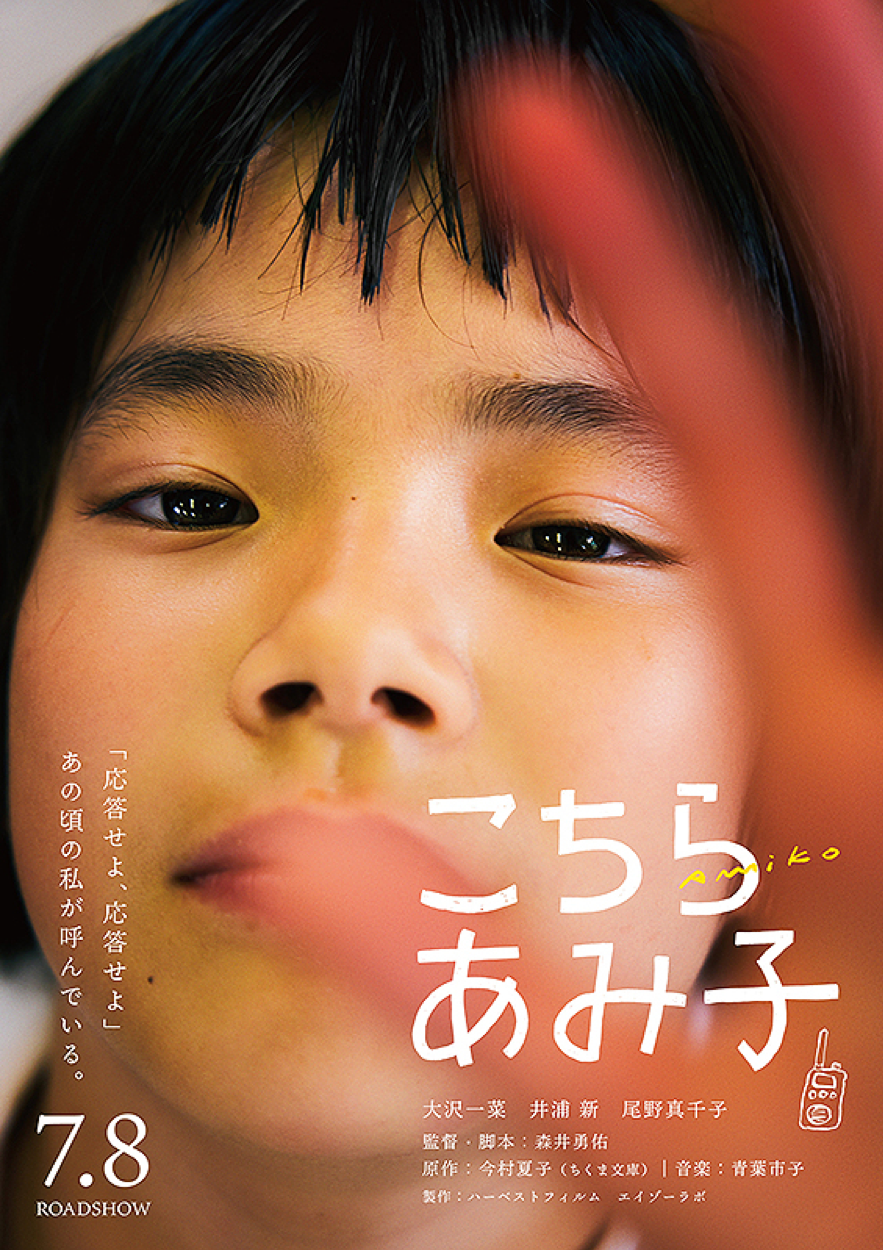
Is there a sadder thing than a solo walkie talkie? The heroine of Yusuke Morii’s quirky dramedy Amiko (こちらあみ子, Kochira Amiko) is given a pair of retro presents for her birthday, a set of toy radios and a disposable camera each intended to help her bond with the baby brother expected to join the family in the immediate future, but the sad fact is that Amiko has no one else to communicate with and largely lives in her own little world like a ghost in her own home. 

Even so, she doesn’t seem to be particularly lonely and is only just beginning to realise that she’s a little different from the other kids. Living in a nice house in tranquil seaside town in Hiroshima, Amiko appears to be a happy little girl with a loving family around her even if her relationship with step-mother Sayuri (Machiko Ono) who teaches calligraphy in a back room may be a little strained. Sayuri disapproves of Amiko’s unusual behaviour and for some reason does not allow her to join the other children at the classes leading Amiko to peer in from a crack in the door until one of the other kids inevitably notices her. 

In an odd way, Amiko’s situation improves when the family encounters a tragedy, losing the baby they’d all been so excited about welcoming. Touched by her attempts to look after her as she recovers at home, Sayuri warms to Amiko and embraces her as a daughter finally inviting her to take part in the calligraphy classes once they resume. But a well-meaning gesture on Amiko’s part that from an adult perspective is insensitive and inappropriate throws Sayuri into a depressive spiral from which she never recovers. The rest of the family describe Amiko’s gesture as a “prank” as if she did it with malicious intent when really it was just her way of dealing with her grief. Of course, everyone else is trying to deal with their grief too and each going about it in their own way so they don’t have time or really the inclination to sit down with Amiko and help process what’s just happened to their family. 

Amiko becomes convinced that there’s a ghost haunting her balcony and it must be that of her younger brother who hasn’t made it to Heaven yet and is trying to come home, though her attempts to ask her father about it see her literally pushed away while he can’t see her confusion as anything other than a hurtful fantasy. There is indeed a ghost haunting her family, but it’s the grief they cannot share with each other or bear to explain. Amiko’s older brother Kota (Kensei Okumura) begins to go off the rails and then leaves the family entirely to join a biker gang instead. Amiko’s father (Arata Iura) doesn’t even bother to look for him, expressing only mild confusion when Amiko points out that Kota doesn’t come home anymore answering only that he’s sure he saw him “the other day”. 

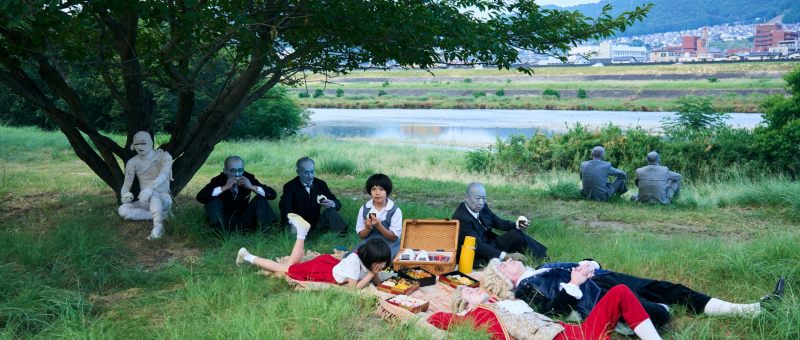
It’s no wonder then that Amiko retreats into a fantasy world, singing a song to herself to ward off ghosts while followed around by several of them including for some reason mummies and people from 18th century Europe. She in turn follows a boy she likes seemingly oblivious to the various ways he attempts to avoid her, while otherwise ignoring a loudmouth kid who is the only other person willing to talk to her despite her classmates’ conviction that she is simply “weird”. Amiko maybe beginning to realise this herself, wondering if her forced courtship may have strayed into the “creepy” and asking directly for advice wanting to know what about her seems to make others uncomfortable or embarrassed. After a period of mild neglect, Amiko even starts walking around school in bare feet because she doesn’t have indoor shoes or clean socks but most seem to just regard it as another expression of her oddness. As the other kid points out, it’s both a symbol of her “freedom” and one of the reasons she gets bullied. Amiko’s story is sad, but Amiko doesn’t know that and simply goes on living in her own little world with its strange logic simply waving to the departing boats of the floating dead with a cheerful “I’m fine” while otherwise abandoned on an unfamiliar shore with only herself to rely on.


Amiko screens in Frankfurt 8th June as part of this year’s Nippon Connection.

Original trailer (no subtitles)
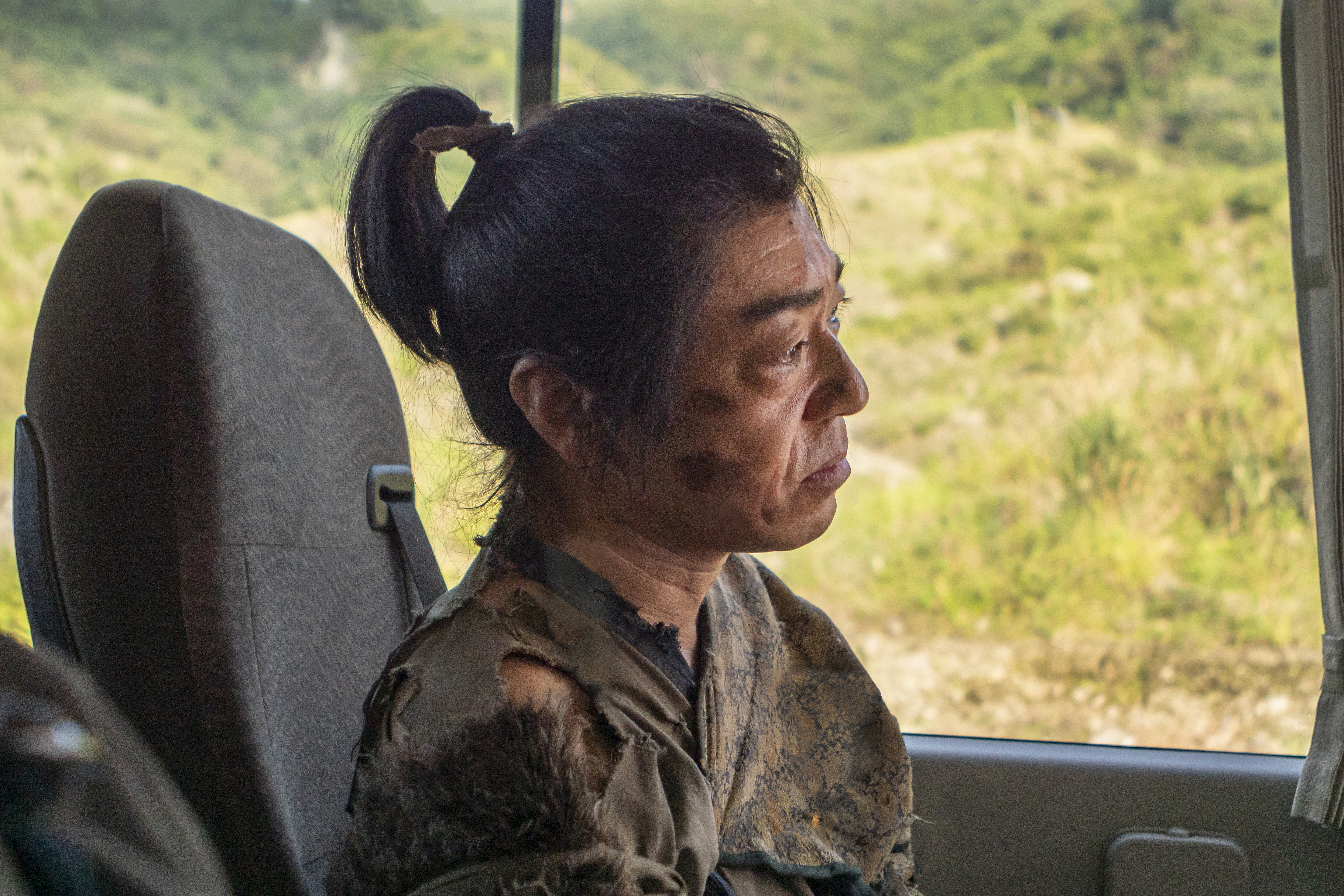
Roleless (宮松と山下, Masahiko Sato, Yutaro Seki, Kentaro Hirase, 2022)

Ever felt like a bit player in your own life? For the hero of Masahiko Sato, Yutaro Seki and Kentaro Hirose’s Roleless (宮松と山下, Miyamatsu to Yamashita), it’s more like he lives ten thousand lives if only for an instant in his life as an extra and may have, in a way, cultivated an image of himself as a blank canvas who no longer exists in an absolute form. In a way you could call it multiverse living, but when confronted with a possible point of origin, a lost selfhood he may have forgotten or wilfully rejected, it presents him with an existential question not so much of who he wants to be but if he wants to be at all. 

We first encounter him as an unlucky retainer in a jidaigeki who is quickly cut down only to rise again and run around the back to give his name as “Miyamatsu, a samurai” to the prop girl who gives him a different hat so can he go back out there and die a second time. Miyamatsu has an air of perpetual blankness in his often vacant expression as if he were both there and not. The film often wrong foots us and we can never be sure what is “real” and what part of a movie, except that it all obviously part of the movie we ourselves are watching. We see what we think are moments from Miyamatsu’s private life only to realise that the camera was rolling all along when someone shouts “Cut!” and it becomes apparent that Miyamatsu was not its main focus. 

Along the way he gives hints of his loss of selfhood, earnestly replying that he doesn’t know when a fellow extra quizzes him on the watch he’s wearing and how he got it but his discomfort could stem from several places and it’s never quite clear how much of an interior life Miyamatsu creates for his various roles, whether he really does just see them as performers of an action, is playing “himself” as he peers over a police cordon at a crime scene, or is a fully fledged person with an individual history. Later he tells a colleague who admires the way he fills in forms at his part time job working at a cable car that he’s always enjoyed the process of filling in a predetermined frame but also that he likes the floating sensation the cable cars give him. 

All of which might explain why he’s so destabilised when a man (Toshinori Omi) approaches him claiming that they worked together as taxi drivers more than a decade earlier and that his name is Yamashita. He apparently “disappeared” after sustaining a head injury and has been “missing” ever since. The man takes him back to the home of his much younger sister, Ai (Noriko Nakagoshi), who has since married and appears to be incredibly relived to see him even if it seems she might also be hiding something. He wonders if it’s suspicious that there are no photos of him in their family home, but is reminded that with the age difference he hadn’t lived there while she was a child and only came back after their parents died to take care of her because she was still in high school. Her husband, Kenichiro (Kanji Tsuda), seems to be constantly needling him though again, it isn’t always clear whether he actually wants him to remember or suspects that he already does and is choosing to pretend not to. 

Even so, Miyamatsu slides into the life of Yoji Yamashita as easily as any other role finding his way back into the character with unexpected moments of connection such as the muscle memory that grants him a perfect baseball swing, or the strangely familiar taste of cigarettes to a non-smoker. Then again, there’s obviously something sinister going on, a darkness underlying his “personal” history that might have made him want to absent himself from himself or else an oppressive sense of bullying that is reflected in Ai’s hesitant answer when Yamashita remarks on what a good husband Kenichiro seems to be. Miyamatsu claims that he’s ever only played one “real” role, and in a way this is it as he begins to claim something like a backstory even if it’s one he may not ultimately want that nevertheless renders him a little less vacant. Mysterious and unsettling, the film asks some probing questions about the nature of identity, whether it is self-defined or gifted, but also discovers a kind of serenity in Miyamatsu’s free floating life of transient realities.


Roleless screened as part of this year’s Nippon Connection

Clip (no subtitles)

Sakra (天龍八部之喬峰傳, Donnie Yen & Kam Ka-Wai, 2023)

Donnie Yen returns to the (co-)director’s chair in an adaptation of Jin Yong’s classic wuxia Demi-Gods and Semi-Devils, Sakra (天龍八部之喬峰傳, Tiānlóng Bā Bù zhī Qiáo Fēng Zhuàn). 59-year-old Yen also stars as the tragic wuxia hero Qiao Feng who is repeatedly stated to be around 30, though he also appears in a handful of scenes as Qiao’s father which might help to explain the casting choice. Even so, Yen mostly pulls it off while striking an authoritative figure fighting for justice in an unjust world. 

As the opening titles reveal, this was a fairly tragic age in which “those who had feelings were all caught in it”. The Northern Song Dynasty faces invasion by the Khitan-led Liao, while the Yan are also vying to restore their lost power. Discovered as a foundling and raised by a Song couple, Qiao Feng joins the notorious Beggar Gang and becomes a powerful martial artist often defending their territory against Khitan raiders. After rescuing a young man held captive by a monk who describes him as a human sacrifice, Qiao returns to be accused of treachery by the Beggars. His leader, Ma, has been murdered, and Ma’s wife Min (Grace Wong Kwan-hing) claims she saw Qiao do it. Ma had apparently told her that he feared Qiao would kill him because he had come into an incriminating letter which suggests that Qiao’s biological parents were in fact Khitans and he is some kind of treacherous sleeper agent. 

Qiao realises there’s nothing he can really do to counter their suspicion except leave and discover the truth about his origins for himself. Unfortunately, however, everyone he could have asked ends up dead with him framed as the killer. Meanwhile, he wrestles with questions of identity asking himself if he can be both a “good” person and a “Khitan” but later coming to doubt his allegiance to Song after witnessing some soldiers massacre a group a of Khitan peasants out on the road. While investigating he ends up saving the life of mysterious spy Azhu (Chen Yuqi) who like him is looking for her origins, having been told by Yan warlord Murong Fu (Wu Yue) for whom she is working that he would tell her if she stole a scroll from the Shaolin temple. Azhu is the only one continues to believe in him, reassuring Qiao that regardless of his identity he is still a “good person”, and the pair soon fall in love vowing to leave the martial arts world behind to raise cattle in the country once their respective quests are concluded successfully. 

Even so, he later claims not to fight only for his land but for a righteous world against the amoral machinations of the villainous Murong Fu and all those who conspired with him. The Beggar Gang is not entirely innocent either, subject to a struggle for succession that made Liao’s existence inconvenient to some while Qiao is later confronted by the realities of a situation he may have misunderstood. Qiao may learn the secret of his origins, but is also left with a new mission in the necessity of stopping Yan’s despotic bid to reclaim Song, riding straight into battle with only a loyal companion at his side. 

Though struggling under the sheer complexity of Jin Yong’s sprawling novel, Yen and Kam showcase the key incidents such as the opening rescue of Duan Zhengchun’s son, and Liao’s epic battle against the Beggars after wading straight into a meeting knowing he’d likely be killed but looking for a doctor for Azhu. The action scenes are visceral and impressive, making the most of the movie’s high production values with a mixture of CGI and practical effects as Qiao faces off against hundreds of men at once or makes daring wire-assisted leaps from under a dome of enemy shields. There is also a genuine poignancy in the tragic romance between Azhi and Qiao who just want to be free of their legacies and the machinations of the martial arts world to live quiet lives as innocent farmers but are reminded there is no real escape from the political reality. Having covered half of Liao’s arc in Jin Yong’s text, a door is left open for a sequel in which Qiao continues to pursue justice and clear his name while hinting at a battle still to come in world in which “those who have feelings are all caught”.


Sakra is released in the US on DVD & Blu-ray June 13 courtesy of Well Go USA.

Original trailer (English subtitles)

Father of the Kamikaze (ゝ決戦航空隊, Kosaku Yamashita, 1974)

By the mid-1970s, Japanese cinema at least had become much more comfortable with critiquing the wartime past, considering it from a greater distance than the often raw depictions of war in the films from the previous two decades. 1974’s Father of the Kamikaze (ゝ決戦航空隊, A Kessen Kokutai), however, is among the few to skew towards the nationalist rather than the ambivalence or simple anti-war messages of other similarly themed films of its era. 

Starring ninkyo icon Koji Tsuruta who served in the air force himself, the film is a kind of biopic dedicated to Admiral Onishi who oversaw the kamikaze operations at the end of the war. As is pointed out, Onishi had been against the war in general terms even before its inception and is originally against the philosophy behind the kamikaze squadrons but as Japan’s fortunes continue to decline he becomes its biggest advocate citing a kind of sunk cost fallacy that it would be in someway unfair to the men that have already died to surrender while insisting that suicide missions are the only feasible way to turn the tide because one kamikaze could take out a hundred men by destroying battleships singlehandedly. 

The film in part attributes this extreme solution to the prevailing with your shield or on it philosophy of the contemporary society which placed extreme shame on the act of being taken prisoner. In the prologue that opens the film, a squadron of downed pilots whose heroic deaths have already been recorded is discovered alive in an American prisoner of war camp but as being a prisoner of war is so shameful and would reflect badly on the military, the decision is taken to fix the books by sending the men on a mission from which they are not intended to return. Onishi is opposed to the plan, he asks why they can’t find a way for the men to live, but the decision is already made. In any case, he describes the action of a suicide mission as a “beautiful ideal” even when insisting that a war cannot be fought in that way not least for purely practical reasons in that they do not have the resources to be wilfully sacrificing skilled pilots and their planes. 

Having come round to the idea, however, Onishi is a crazed zealot who cannot accept the idea of surrender and even goes so far as to barge into a cabinet meeting to urge ministers against a truce even though the war is clearly lost. To his mind, the only way to honour the sacrifices of those who’ve died is to fight to the last man. Kozono (Bunta Sugawara), another officer opposed to the kamikaze, eventually meets a similar fate in refusing to obey the order to lay down his arms and ending up in a psychiatric hospital. His objection had partly been that it’s wrong to turn men into ammunition, but also that the kamikaze project is itself defeatist and self-defeating when there are men such as himself who are committed to fighting on.  

In this the film leans into the image of militarism as a death cult in which dying for the emperor is the only noble goal of the whole imperial expansion. In its eventual lionising of Onishi’s image, his bloody suicide atop a white cloth resembling the flag of Japan while his parting words scroll across the screen in text, it does not shy away from his more problematic aspects in which he fails to object to a request from a junior officer that soldiers should be allowed to test their swords on American prisoners of war, roundly telling a subordinate who breaks protocol to insist that such a thing is not only morally wrong but will ruin their international reputation that he has no need to think of consequences because Japan will win this war. He claims to want to find a way of defeat that will satisfy the living and the dead, but in reality cannot accept it not least in that it would entail admitting that he sent 2600 young men to their deaths for nothing. 

Tsuruta brings the same level of pathos to his performance as he did in playing conflicted yakuza stoically committed to a destructive code, but there’s no getting away from the fact that the film focuses mainly on Onishi’s personal suffering as a man who sent other men to die for a mistaken ideal and then could not admit his mistake offering an apology only in his death in which he urged the young people of Japan to work to rebuild the nation in the name of peace. In switching to the present day and showing us Onishi’s dilapidated former residence and in fact the room in which he died with its tattered shoji and peeling paintwork, he veers towards the nationalistic in uncomfortably reinforcing the nobility of his death rather than the folly of war or absurdist tragedy of the kamikaze programme. Adopting a quasi-jitsuroku approach with frequent use of onscreen text, a narratorial voiceover, and stock footage of kamikaze in action Yamashita may portray war as madness in Onishi’s crazed devotion but cannot help depicting it as a “beautiful ideal” even in the undignified violence of Onishi’s ritual suicide.