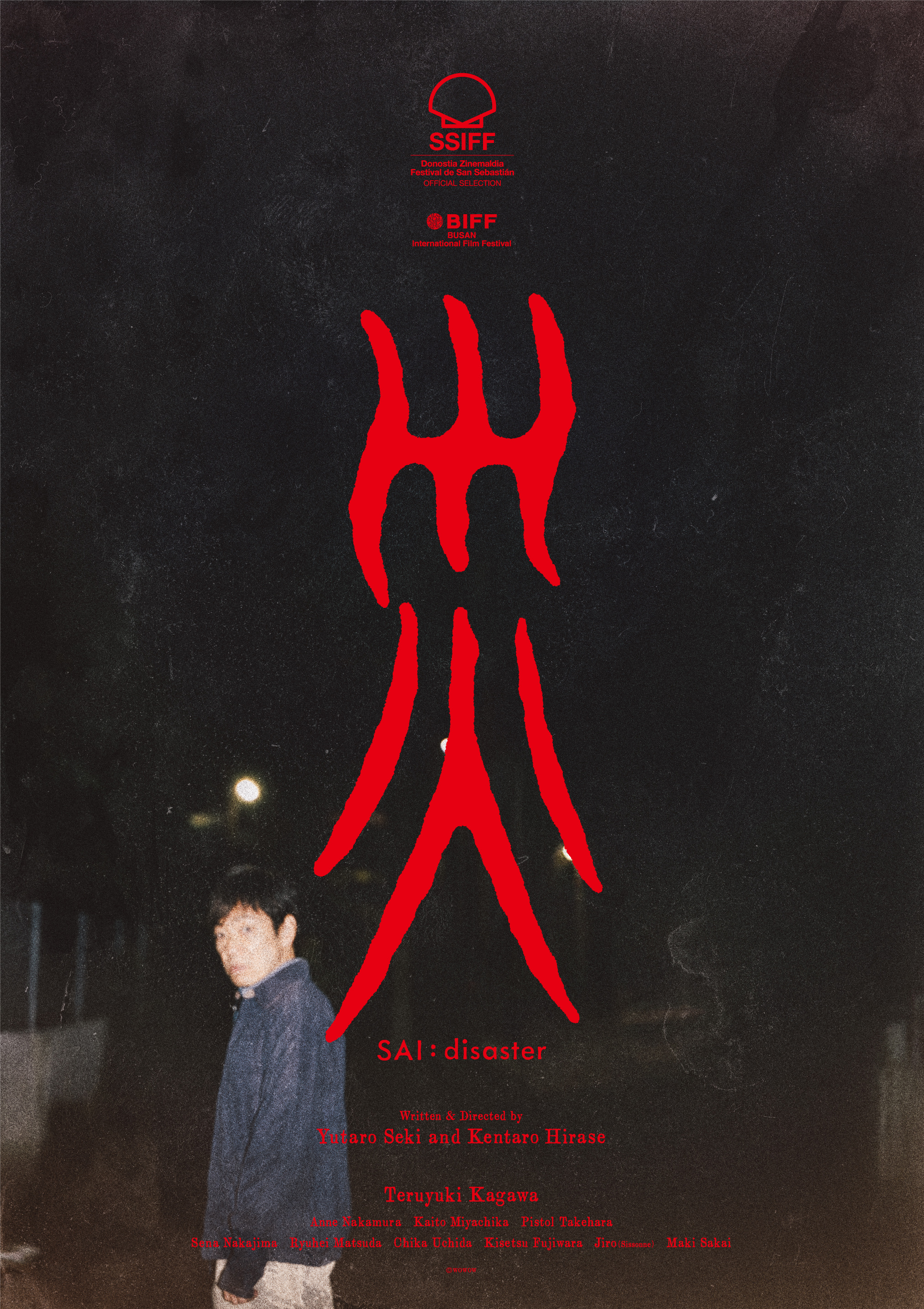
Sai: Disaster (災 劇場版, Yutaro Seki & Kentaro Hirase, 2025)

We like to tell ourselves that if we do everything right and follow all the rules then everything will be okay. But the reality is that life is chaotic and you have no control. No one knows when, where, or who, will suffer a disaster, as one man puts it. But then again, in Yutaro Seki and Kentaro Hirase’s Sai (災 劇場版, Sai Gekijoban), there may be someone who does know and acts as some kind of harbinger of doom guiding the unlucky towards their unhappy fates.

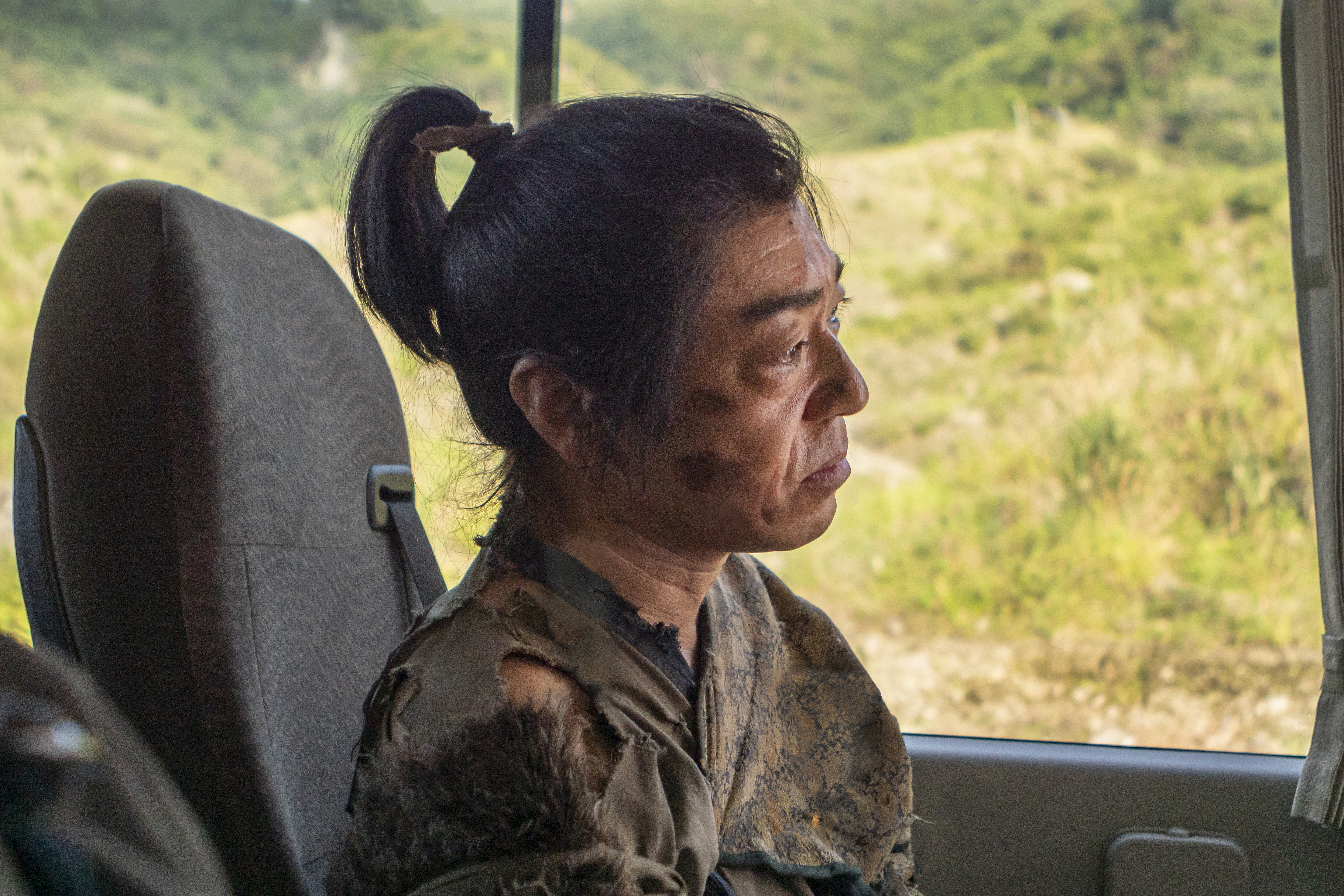
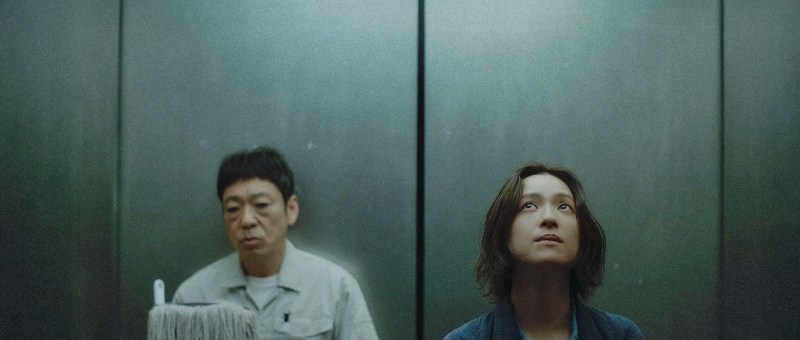
The mysterious man (Teruyuki Kagawa) appears in different guises to different people and apparently disappears not long after they do. A policewoman, Domoto (Anne Nakamura), is becoming convinced that a series of unexplained deaths in which the bodies were missing a small piece of their hair is the work of a serial killer, though others tell her it’s a just coincidence. It remains unexplained whether the mysterious man is, as Domoto suspects, a very human serial killer travelling all over Japan and inserting himself into people’s lives before engineering their deaths, or else a more supernatural creature and embodiment of the very nature of “disaster”.

In any case, a bereaved husband says he’d rather think of his wife’s death that way. Just something that happened for no rhyme or reason, like a landslide or an earthquake. It doesn’t matter to him whether she killed herself or was murdered, because the net result is that she’s dead. People don’t die for no reason, Domoto insists, but there is a kind of crushing inevitability to each of the stories as the mysterious man works his magic often offering a listening ear or a shoulder to cry on. Other times he seems oddly impish, encouraging one’s worst instincts as he does with recovering alcoholic Kuramoto (Ryuhei Matsuda) by constantly tempting him with drink.

The lives of the victims paint a particularly bleak vision of contemporary Japan as a place ruled by loneliness and fear. No one can get what it is they want, and they don’t even want that much. Kuramoto seems to want to rebuild his life after killing someone drunk driving by giving up drink and working hard to be reaccepted by his community, but his wife doesn’t want to see him and according to her mother at least, his problems were more serious than he first suggests. Schoolgirl Yuri (Sena Nakajima) just wants to continue with her education and eventually become an architect but is saddled with toxic parents who couldn’t care less about her future. The first victim that we see, a young woman running a restaurant for fishermen (Yumi Adachi), seems to be caught between loneliness and humiliation following the sudden disappearance of her husband. A cleaner working at the shopping centre (Chika Uchida) is the only one to take her job seriously, but has no luck with men. An inn keeper (Jiro Ohkawara) takes to smoking marijuana after his wife leaves him for another man while struggling to maintain his family business.

When his wife left him, the inn keeper assumed the worst had already happened and he’s survived his disaster, but it doesn’t really occur to him there could be another one waiting. The sense of dread that Seki and Kentaro Hirase conjure is the manifestation of this anxiety that something bad is lingering on the horizon just out of sight but ready to strike at any moment. In editing down the original six-part TV drama into a feature film, Seki and Hirase intercut each of the stories rather than letting them play out in linear fashion. It’s only later that we get dates, making it clear that all of these stories are taking place at different times and happening in sequence rather than parallel meaning that they could, perhaps, all be motivated by the same person and the mysterious man is just that rather than a malevolent supernatural entity or walking disaster in human form. Perhaps that’s all he really is anyway, no different from an earthquake or a landslide, just something that happens to you if you’re unlucky enough to stray into his path. As much as Domoto might try to create some kind of order by pinning a narrative onto the unexplained deaths or trying to solve the mystery, the truth is that some things cannot be explained. Disaster lurks at every turn and strikes when least expected.


Sai: Disaster screens as part of this year’s Nippon Connection.

Trailer (English subtitles)
Roleless (宮松と山下, Masahiko Sato, Yutaro Seki, Kentaro Hirase, 2022)

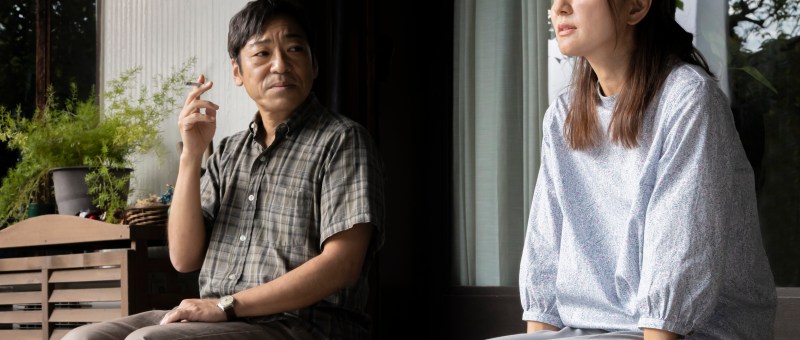
Ever felt like a bit player in your own life? For the hero of Masahiko Sato, Yutaro Seki and Kentaro Hirose’s Roleless (宮松と山下, Miyamatsu to Yamashita), it’s more like he lives ten thousand lives if only for an instant in his life as an extra and may have, in a way, cultivated an image of himself as a blank canvas who no longer exists in an absolute form. In a way you could call it multiverse living, but when confronted with a possible point of origin, a lost selfhood he may have forgotten or wilfully rejected, it presents him with an existential question not so much of who he wants to be but if he wants to be at all. 

We first encounter him as an unlucky retainer in a jidaigeki who is quickly cut down only to rise again and run around the back to give his name as “Miyamatsu, a samurai” to the prop girl who gives him a different hat so can he go back out there and die a second time. Miyamatsu has an air of perpetual blankness in his often vacant expression as if he were both there and not. The film often wrong foots us and we can never be sure what is “real” and what part of a movie, except that it all obviously part of the movie we ourselves are watching. We see what we think are moments from Miyamatsu’s private life only to realise that the camera was rolling all along when someone shouts “Cut!” and it becomes apparent that Miyamatsu was not its main focus. 

Along the way he gives hints of his loss of selfhood, earnestly replying that he doesn’t know when a fellow extra quizzes him on the watch he’s wearing and how he got it but his discomfort could stem from several places and it’s never quite clear how much of an interior life Miyamatsu creates for his various roles, whether he really does just see them as performers of an action, is playing “himself” as he peers over a police cordon at a crime scene, or is a fully fledged person with an individual history. Later he tells a colleague who admires the way he fills in forms at his part time job working at a cable car that he’s always enjoyed the process of filling in a predetermined frame but also that he likes the floating sensation the cable cars give him. 

All of which might explain why he’s so destabilised when a man (Toshinori Omi) approaches him claiming that they worked together as taxi drivers more than a decade earlier and that his name is Yamashita. He apparently “disappeared” after sustaining a head injury and has been “missing” ever since. The man takes him back to the home of his much younger sister, Ai (Noriko Nakagoshi), who has since married and appears to be incredibly relived to see him even if it seems she might also be hiding something. He wonders if it’s suspicious that there are no photos of him in their family home, but is reminded that with the age difference he hadn’t lived there while she was a child and only came back after their parents died to take care of her because she was still in high school. Her husband, Kenichiro (Kanji Tsuda), seems to be constantly needling him though again, it isn’t always clear whether he actually wants him to remember or suspects that he already does and is choosing to pretend not to. 

Even so, Miyamatsu slides into the life of Yoji Yamashita as easily as any other role finding his way back into the character with unexpected moments of connection such as the muscle memory that grants him a perfect baseball swing, or the strangely familiar taste of cigarettes to a non-smoker. Then again, there’s obviously something sinister going on, a darkness underlying his “personal” history that might have made him want to absent himself from himself or else an oppressive sense of bullying that is reflected in Ai’s hesitant answer when Yamashita remarks on what a good husband Kenichiro seems to be. Miyamatsu claims that he’s ever only played one “real” role, and in a way this is it as he begins to claim something like a backstory even if it’s one he may not ultimately want that nevertheless renders him a little less vacant. Mysterious and unsettling, the film asks some probing questions about the nature of identity, whether it is self-defined or gifted, but also discovers a kind of serenity in Miyamatsu’s free floating life of transient realities.


Roleless screened as part of this year’s Nippon Connection

Clip (no subtitles)