The Moon Represents My Heart (La luna representa mi corazón, Juan Martín Hsu, 2021)

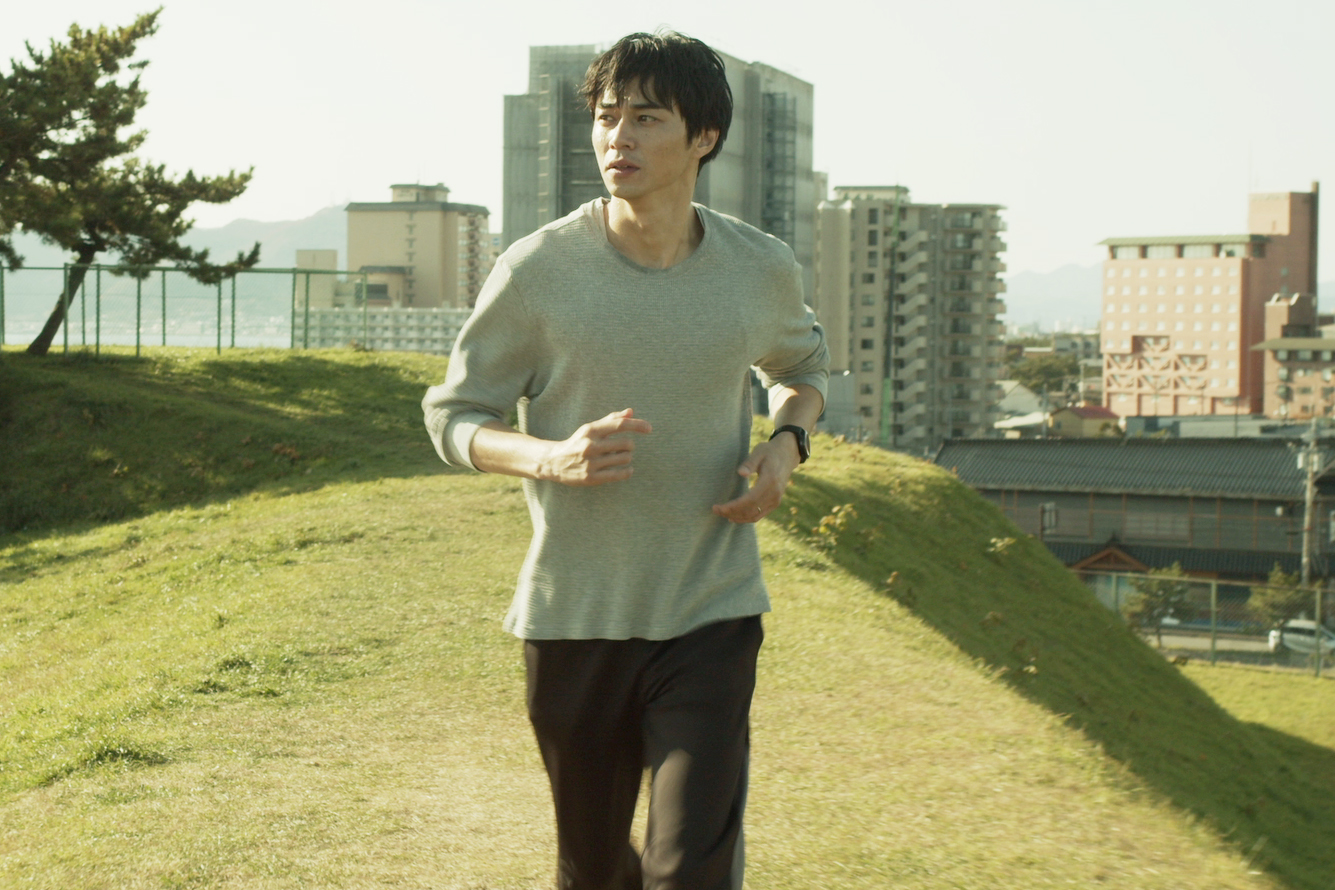
Named for the classic song by Teresa Teng that connects the mother and son at its centre, Juan Martín Hsu’s documentary/fiction hybrid The Moon Represents My Heart (La luna representa mi corazón) sees the director himself making two trips from his home in Argentina seven years apart to see his mother in Taipei in part in order to investigate the circumstances surrounding the death of his father when he was six years old. It may be a minor spoiler to reveal that the truth remains frustratingly out of reach though he perhaps discovers other, equally hidden, familial traumas in the complicated history of post-war Taiwan. 

Martín and his brother Marcelo were born in Argentina where their parents ran a restaurant but his mother later elected to return to Taiwan while they stayed behind. The earlier visit in 2012 is apparently the first in the 10 years since his mother left, the difficulty of obtaining visas and the expense being the reasons he gives for leaving it so long. His next trip, however, is not for another seven years, he and his brother instantly remarking on the various ways his mother may or may not have aged. Martín seems to want to talk about his father, but his mother would rather not drag up the past. In fact so averse is she that she’s developed a habit of cutting the faces of those she doesn’t like or want to remember out of her photos which is why the boys complain they don’t have any of their father. While chatting about that, she advances that their father was murdered because of an extramarital affair he’d been having with a local woman, later claiming that he may have had a drug problem or been involved with organised crime. 

Mostly what she tells her son is that she was unhappy, having left a previous marriage because her husband was intensely patriarchal refusing to allow her go on working after becoming his wife. She met Martín’s dad after persuading her first husband to allow her to work at a restaurant and left with him for Argentina pregnant with her first husband’s child, Diego. But in Argentina her new husband was little different, actively preventing her from learning Spanish while also discouraging her from associating with other Chinese-speaking migrants, especially men. The boys speak to her in awkward Mandarin with the assistance of smartphone dictionaries while she complains that her Spanish was never good enough even after she began running the restaurant on her own. “You two wouldn’t be able to spend “la vida” in Taiwan” she explains, “just like your mum couldn’t spend “la vida” in Argentina”. 

Martín’s mother keeps telling him to leave it alone, that he might not like what he finds he if keeps poking into his father’s death though as we find out later he has own traumatic memories of the night his father died along with a burning desire to understand why as if hoping to unlock the secrets of his history. In a raw hotel room exchange, his brother complains that he doesn’t feel part of this extended Taiwan family and is upset that Martín threatened to disown him if he refused to take part in the documentary, feeling a little tricked in having agreed to come only to be forced to participate while his brother seemingly ignores his discomfort. Yet while looking for his father Martín discovers a darker history of his grandfather’s suffering during the White Terror adding new layers to a legacy of familial trauma in the buried history of his maternal family as complicated as it already seemed to be. 

In between each of these difficult conversations and meetings with family members, Hsu splices brief fiction shorts along the theme of exile, the first featuring a returnee who emigrated as a young man leaving a lover behind who is now it seems about to marry someone else but carrying regrets, while another sequence follows a young woman preparing to go abroad but feeling terribly guilty about abandoning her mother. At times the sense of cultural dislocation seems unbreachable as the brothers accompany their mother and her partner to karaoke sessions and tourist excursions but then there’s the song and its universal ability to connect, Martín’s mother singing it firstly with a guitar and later a microphone almost like a long forgotten lullaby. Martín may not unlock the secrets of his father’s death, but does perhaps gain a new understanding of his mother, a resilient woman but also a perpetual victim of a patriarchal society, an oppressive regime, and finally of distance in the separations emotional and physical between herself and her sons. 


The Moon Represents My Heart screens in San Diego on Nov. 1 as part of this year’s San Diego Asian Film Festival

Trailer (English subtitles)

Teresa Teng – The Moon Represents My Heart

Hill of No Return (無言的山丘, Wang Tung, 1992)

Two orphaned brothers set out to find a literal goldmine, but discover only relentless exploitation and defeat in Wang Tung’s meditation on oppression and colonialism, Hill of No Return (無言的山丘, Wúyán de Shānqiū). The third in a trilogy of films exploring Taiwanese history, Wang’s tragic melodrama finds commonality if not solidarity among a collection of villagers living in a small town sustained entirely by the mine which produces riches only for the Japanese while those who risk their lives underground deprived of the light of the sun delude themselves that if they work hard they too can become rich only to discover each of their attempts to escape the constraints placed against them leading to nothing other than despair. 

As the film opens, brothers Chu (Peng Chia-Chia) and Wei (Huang Pin-Yuan) who have signed long-term five year contracts as farm labourers, are listening to an old man’s story about the grandfather of a local man who followed a frog to a mountain noticing its skin glowing gold and thereafter filling his pockets with gold dust he later used to buy up land and become rich. Chu thinks the man was foolish for not going back and becoming even richer, but the old man explains that he was reminded in a dream that excessive greed would only anger the gods and lead to his downfall. Fed up with their lives as labourers, the brothers take the story to heart and decide to look for their own mountain of gold, their backs too bathed in the light of the sun as they rest while looking for the goldmine town of Jiou-fen, later coming across a grisly and ominous scene shortly before they arrive. 

Both illiterate and speaking only Taiwanese, the brothers are each intent on becoming landowners partly in order to give their late parents, apparently killed by TB, a fitting resting place, but soon find themselves once again exploited, Wei becoming increasingly disillusioned with being trapped underground whereas in the fields at least he’d had the sun. The mine is of course a Japanese concern and its operators care little for the local Taiwanese workforce even if their treatment may not be as deliberately brutal as it might have been elsewhere. The new director is convinced that the miners are pocketing gold before it reaches the surface, instituting several new controls which threaten the local economy and especially that of the Japanese-style brothel which depends entirely on the mine for its survival. 

Like many, Hong-mu (Jen Chang-bin), a young man raised in the brothel by its madam following the death of his mother, looks up to the Japanese colonisers seeing them as innately “better” than the Taiwanese all around him. “People will respect me if I wear Japanese clothes” he tells the madam disappointed on receiving a new outfit in the local fashion. Having been told that his father, whom he has never met and was presumably a client of the brothel, was Japanese he speaks the language fluently and believes himself to be slightly superior by virtue of his birth but only too late learns his mistake in collaborating with the mine owners believing they would help him marry a young Japanese woman working at the brothel as a maid, Fumiko (Mayko Chen Hsien-Mei), and finding himself betrayed. As Fumiko is from the Ryukyu islands (Okinawa), the mine owner doesn’t quite see her as fully “Japanese” either and thinks nothing of using and abusing her in the course of his activities. 

The wily madam quips that you can’t call yourself Taiwanese if you haven’t figured out how to do illegal things legally finding ways of getting around the prohibition on accepting gold from the miners as payment, but that doesn’t stop the military police later raiding the brothel and brutally taking back “their” gold even though it has already changed hands albeit not entirely in good faith. The sex workers too are victims of this same vicious cycle, dependent on the custom of the miners for their livelihood while deprived any real possibility of escaping their desperate circumstances. Meanwhile, the brothers’ grumpy landlady, Ro (Yang Kuei-mei), is a twice-widowed single mother of numerous children left with no choice other than to engage in independent sex work, advertising herself as the more economical, local alternative to the Japanese-style “opulence” of the traditional teahouse. While Wei falls for the melancholy innocence of Fumiko singing Okinawan folksongs in a field of golden flowers, Chu takes a liking to Ro and her many children but though they both dream of the same thing, saving enough money to buy a farm, their tempestuous romance is later frustrated by Chu’s reckless decision to take advantage of chaos at the mine in an attempt to get rich quick by harvesting a mega load of gold while no one’s looking. 

He has perhaps been too greedy, ignoring the lessons from the old man’s story. The brothers are continually forced to pay for their transgressions, Chu cutting off his own fingers when cornered by thugs sent out by his previous employer to satisfy their literal demand for an arm and a leg in satisfaction of the broken contract, while Wei’s foot is later injured in a partial cave in when caught underground during an earthquake. Ro calls Chu foolish in his delusion that hard work will bring him a comfortable life, watching him slaving away to make the Japanese rich but what other choice do either of them really have? Only later does Wei begin to reflect on the possibility that the treasure of the mountain was the bright yellow flowers which covered it, a natural beauty soon destroyed by industrial exploitation. A melancholy chronicle of life in a small mountain town in the colonial era, Hill of No Return finds only despair and impossibility for its orphaned brothers whose eternal quest for ownership of their own land leads to nothing but continual disappointment. 


Hill of No Return streams in the UK until 31st October as part of this year’s Taiwan Film Festival Edinburgh.

Trailer (Traditional Chinese / English Subtitles)

In Front of Your Face (당신얼굴 앞에서, Hong Sang-soo, 2021)

“There’s so much we don’t know about each other” a sister exclaims as if only just realising precisely how estranged they may have become this current visit home itself overshadowed by a kind of awkwardness that she doesn’t yet quite understand. Sangok (Lee Hye-young), the heroine of Hong Sang-soo’s latest meditation on existential dread In Front of Your Face (당신얼굴 앞에서, Dangsineolgul apeseo), is determined to live defiantly in the moment, shedding both past and future for the intensity of the now while learning to rejoice in the beauty of life if perhaps also burdened by ancient regrets, broken connections, and the ironic promise of an unobtainable future. 

After many years living alone in the US, former actress Sangok has returned to stay with her sister Jeongok (Jo Yoon-hee) and meet with a director who is interested in casting her in his latest film. According to her sister, Sangok ran off with a man she barely knew and followed him to America where she worked as a travel agent though more lately it seems barely getting by with a job in a liquor store. Jeongok waxes on about a swanky new apartment complex in a tranquil area of natural beauty, suggesting her sister move back to Korea but surprised and alarmed when she confesses she has no savings or property. “That’s how everyone lives there” she explains, “but it seems a lot of people here have money” noticing perhaps how much the city has changed since she’s been away while hinting that her life in America may have been in its own way disappointing. 

Sangok seems lonely, tired, a little distracted and perhaps anxious in the way she ties and reties the belt on her mac often placing a hand on her stomach for comfort. The sisters teeter on the brink of an argument about distance, unreturned letters, and whose fault it is they aren’t as close as they might have been but pull back from it wisely avoiding unnecessary confrontation in favour of maintaining the pleasant atmosphere. Yet there are also parts of Sangok’s story that don’t quite add up. A pair of women (Seo Young-hwa & Lee Eun-mi), appearing eerily like the cottage core cat-lovers from The Woman Who Ran, stop the sisters in a park recognising Sangok from her previous life as an actress decades ago. Jeongok is puzzled, sure that Sangok only appeared on TV once though the director, Song Jaewon (Kwon Hae-hyo), later descends into a reverie recalling the effect her early performances had on him as a young student in the early ‘90s. 

Hong pulls one of his usual tricks on us, repeating his opening scene with Sangok dressed in an identical outfit on her sister’s sofa if this time covered with a blanket leading us to wonder if everything we’ve just seen is only a dream. As it happens she soon gets a phone call to let us know it’s not, one which elicits from her an ironic laugh as the new hope she might have been given is suddenly crushed by another Hongian unreliable man talking too big a game even if this time the culprit is baiju rather than the familiar little green bottles of despair. Taking advantage of his selfishly postponing their lunch date, Sangok pays a visit back to her childhood home which has since become a boutique only the garden remaining the same if now dwarfed by the surrounding buildings of an ever developing city. “The memories in my heart are so heavy” she sighs, “I don’t know why I came here”, later embracing a little girl who may or may not live there now as if embracing the ghost of her childhood self. 

The meeting with the director turns out to be depressingly predictable, he having “borrowed” a cafe named “novel” from female “friend” while sending his assistant away periodically Sangok assumes because he wants to get her alone. Ironically enough she describes his films as like short stories, bemused as to why he’s so keen to hire a middle-aged former actress but finally bares her soul explaining what it is that she carries around with her on this rare trip to Seoul. Reciting small mantras to herself in the form of tiny prayers she tries to stay in the moment, reminded that every day is “grace” and that life itself is beautiful, claiming that as long as she can see whatever’s in front of her face then she’s not scared of anything. Reminders of the pandemic hover in the background with vague references to the way things are “especially now”, the atmosphere of dread and anxiety throwing Sangok’s philosophy into stark relief as she vows to live defiantly in the moment, rejoicing in life’s absurdities but also in its small comforts as she wonders what her sleeping sister dreams, shaking off her her existential vertigo to gaze out of a high-rise window.  


In Front of Your Face screens in San Diego on Oct. 30 & Nov. 1 as part of this year’s San Diego Asian Film Festival. Readers in London will also have the opportunity to see the film as part of this year’s London Korean Film Festival at Picturehouse Central on 13th November.

Original trailer (English subtitles)

Seven Samurai (七人の侍, Akira Kurosawa, 1954)

An eclipse of the accepted order allows a temporary truce in the ongoing class conflict that defines feudal society in Akira Kurosawa’s seminal post-war historical epic, Seven Samurai (七人の侍, Shichinin no Samurai). Set in the late 16th century, the action takes place in a world on the brink of collapse. The Sengoku era is drawing to a close but is also in a moment of intense crisis which has left large numbers of highly skilled warriors essentially orphaned, wandering the land torn between their basic needs for food and shelter and their dignity as members of a theoretic aristocracy. 

Plagued by bandits, many of whom may be these orphaned swordsmen, a small village contemplates the unthinkable in hiring samurai, otherwise their oppressors and uniquely responsible for the chaos which surrounds them, for protection. “Land tax, forced labour, drought…and now bandits!” one woman exclaims shortly before suggesting they simply surrender all their grain and then hang themselves. As they can offer only expenses in the form of rice, the only samurai they can hope to recruit are already desperate, so hungry that they may be willing to deign to defending their social inferiors with whom they would not usually mix unwilling to accept that they are both victims of the inherently corrupt social order. This explains why the villagers’ early entreaties are met with such scorn and cynicism, either rudely rejected out of hand or ending only in deception. 

In this there is an echo of the world of 1954 which was beginning edge away from the chaos and privation of the immediate post-war society, bandits standing in for thieves and profiteers themselves a product of intense food insecurity. Yet here it’s desperation that allows a temporary merging of the world of lord and peasant, brokered finally by unexpected compassion on the part of a noble samurai who, in an act of extreme transgression, symbolically erases his elite status by shaving his head in order to save a child taken as a hostage by another desperate man. Kambei (Takashi Shimura) may be somewhat reduced in circumstances but refuses to give in to the immorality of the world around him, finally agreeing to help the villagers essentially out of a sense of pity willing to accept only the gift of sustenance moved by the villagers’ sacrifice in discovering that they give him the last of their white rice while subsisting only on millet. 

Yet having taken this step, the villagers remain uncertain they can really trust the men they’ve hired to protect them who are after all each trained in death. Later we discover that they have, like many of the time, occasionally finished off the odd lone samurai fleeing the battlefield in order to loot the bodies as a large stockpile of samurai armour later discovered by the samurai-pretender Kikuchiyo (Toshiro Mifune) testifies. On being confronted with this uncomfortable reality, the samurai fall silent knowing this armour was stripped from men much like themselves, but can ultimately offer little by way of defence when presented with an angry rant from Kikuchiyo who points out that they are themselves responsible in having created this world of chaos through their internecine quests for power. “In war you burn their villages, trample their fields, steal their food, work them like slaves, rape their women, and kill ‘em if they resist. What to you expect ‘em to do?”

When Kambei and the others first arrive in the village, there is no welcoming committee. The villagers all hide, frightened to leave their homes partly because of paranoia spread by widowed father Manzo (Kamatari Fujiwara) convinced that randy samurai are going ravish all of their daughters who will, doubtless, be overcome with awe by these sophisticated men of the elite. In an echo of Kambei’s transgression, Manzo forces something similar on his teenage daughter Shino (Keiko Tsushima), roughly cutting her hair while she cries and resists before dressing her up as a boy so that she’ll be safe from lusty samurai. The plan, however, backfires in that she later engages in a doomed romance with the young Katsuhiro (Isao Kimura). Their eventual union is the symbolic merging of the two worlds, a moment of eclipse in the usual hierarchy, but it’s born of the same impulses than brought Kambei and the others to the village. In fear and desperation, they behave as if there’s no tomorrow, only tomorrow must come and just as sun and moon must eventually move apart and resume their regular orbits so the relationship between Katsuhiro and Shino is an impossibility. 

Like Kambei, Katsuhiro had occupied a slightly liminal position because of his relative youth, neither boy nor man. He first encounters Shino while marvelling at the natural beauty of the forest, only to berate her for doing the same. “Is this any time for an able-bodied man to be picking flowers?”, he ironically asks her, yet he is repeatedly forced back towards conventional masculinity as marker of adulthood virtually ignoring her when tasked with carrying a dummy to the ridge, while she later returns the same gesture reassuming her femininity in joining the rice planting, a peasant woman once again. “What’s wrong with two people in love?” the wounded Rikichi (Yoshio Tsuchiya) asks Manzo, trying to smooth over this moment of cross-class crisis, only for Monzo to ask what he’s supposed to now his only daughter has become “damaged goods”, unfit for marriage in a fiercely patriarchal society in which it is impossible to survive without a husband. 

Katsuhiro cannot marry her, this sense of solidarity if not quite equality can be only temporary. Kambei himself admits as much as he reflects that the battle has been won but the victory belongs not to them but to the peasants, anticipating his a sense his own obsolescence the end of the Sengoku era bringing about a change in the nature of the samurai that two centuries later will lead to its abolition. Our sympathies might shift, witnessing Kambei’s obvious disapproval of the peasants’ relish in taking revenge on the bandits who have caused them so much misery in their own way perhaps perpetuating the cycle of violence and resentment that drives the feudal engine. One cannot help but pity him, displaced once again returning to a life of ceaseless wandering, his presence in the village now no longer necessary and in fact inappropriate. 

Returning to the world of 1954, there might be something a little uncomfortable in this lament for the death of the samurai who can have no place either in the modern society or in a peasant village in 1587, as there may be in the implication that the peasants are savage and vindictive while Kambei alone is good and kind even if the roots of his compassion lie in his willingness to literally sever himself from his elite status. The roles had in a sense been reversed, the samurai hired hands to peasant bosses, but the inversion can be only temporary. In insisting that only by protecting others can one hope to protect oneself, Kambei may be advocating for a more compassionate society but as much as he has attempted to remove himself from the class system he can not in the end overcome it. Nevertheless, in the gruelling battle scene that closes the film, all rain, mud, death and misery, Kurosawa himself deals the final blow to the samurai in the nihilistic futility of violence manifesting itself once again in the lingering feudalism of the mid-century society. 


Seven Samurai is re-released in UK cinemas in its recent 4K restoration as part of BFI Japan on 29th October.

BFI re-release trailer (English subtitles)

Splendid Float (豔光四射歌舞團, Zero Chou, 2004)

A lonely taoist priest with a sideline as a drag artist falls for the siren song of a drifting fisherman in Zero Chou’s mystical vision of love and loss, Splendid Float (豔光四射歌舞團, Yàn Guāng Sìshè Gēwǔtuán). One of very few out lesbian filmmakers currently working in East Asia, Chou’s films more often deal with love between women but her second narrative feature is a melancholy meditation on grief and impossibility revolving around a performer with an itinerant drag act as she struggles to understand why the man she loved couldn’t stay with her forever. 

A taoist priest performing death rituals by day, by night Roy (James Chen Yu-Ming) becomes Rose a drag performer singing sad songs of lost love from the makeshift stage of converted pickup truck with a rainbow roof. It’s one evening when the van breaks down that she first meets Sunny (Chung Yi-Ching), a handsome swimmer who soon becomes her lover only to disappear the next morning leaving behind only a note saying goodbye and a yellow flower. Heartbroken, Rose tries to find him and begins to suspect the worst later discovering that Sunny has apparently drowned at sea. 

The minor irony is that Rose’s day job is as a taoist priest which to say bound up with the rituals of death and grieving yet she struggles to come to terms with Sunny’s absence and is unable to let go of a tragic, fleeting love. Following the rather lengthy opening sex scene, Rose asks Sunny to stay with her longing for a place to settle down together looking for conventional domesticity as a couple, something about which Sunny appears unsure not it seems because of societal pressure but because he is not made for a settled life. Often seen swimming, Sunny is a kind of mermaid happiest in the water which lends his death by drowning an additionally poetic quality but also perhaps aligns his sexuality with a sense of impossibility suggesting Rose will never be able to achieve the fulfilling romance of which she dreams. 

This is further brought home in her frustrated attempts to make contact with Sunny’s spirit, often seeing his ghost but refusing to let him go. Ironically brought in to conduct a death ritual on behalf of Sunny’s mother and sister, she unwittingly hints at their relationship by using the t-shirt he left behind to summon him and thereafter determines to split his soul taking a funeral tablet with her after tossing coins to try and gain his consent only to ignore the result when it implies Sunny chose to leave her and does not want to be possessed by her in death. “We live amongst tradition but still there’s no place for people like us” one of Rose’s fellow performers laments, “look at you and Sunny, together for so long but what are you, just ordinary friends? It’s not like you can just go and tell everyone you’re his widow and take his icon with you.”

Even Roy’s family members are apparently ambivalent, suspecting he might be gay but unsure how to respond to it. They avoid sending him to funerals because he has a reputation for being overly emotional earning the nickname of “the wailing girl “and feel bad about him being teased while also confused that seems so “effeminate”, “not like a man at all”. His aunt, however, a fairly butch older woman asks if she doesn’t look “like a man” while in her full taoist priest outfit, suggesting perhaps that gender is an irrelevance at least in the course of their work. 

Rose, meanwhile, struggles to come to terms with loss while unable to voice her grief. In this quasi-musical, Rose’s songs are the only way she can express her suffering. “No one knows the pain I must face” she sings in a repeated refrain, “smiling and swallowing my tears secretly casting my sorrows to the sea.” Exploring both the vibrancy of traditional taoist practice, the soul guiding ritual described as the last dance of life, along with the precarious existence of the itinerant drag queens, Chou crafts an etherial fairytale of love and loss in which Rose herself becomes a kind of wandering ghost trapped in a rootless existence while yearning to settle down in perpetual search for safe harbour amid stormy seas. 


Splendid Float streams in the UK until 31st October as part of this year’s Taiwan Film Festival Edinburgh.

Original trailer (no subtitles)

SUMODO ~The Successors Of Samurai~ (相撲道~サムライを継ぐ者たち~, Eiji Sakata, 2020)

“Every day is a traffic accident” according to a sumo wrestler describing the motion of two men colliding each trying to shove the other out of a protected area. Often regarded as a quintessentially Japanese combat sport, sumo has also come in for its share of misconceptions sometimes mocked or dismissed as a pastime popular mainly among the elderly or else a source of comedy in which in two large men clumsily grapple with each other. It’s precisely these unfair stereotypes that Eiji Sakata’s documentary SUMODO ~The Successors Of Samurai~ (相撲道~サムライを継ぐ者たち~, Sumodo ~Samurai o tsugu monotachi~) hopes to correct in gaining unprecedented access to the usually secretive world of professional sumo. 

He does this largely through focussing on two very different sumo stables and two key tournaments, one at New Year and the other in May. Though he interviews several of the rikishi at each, he adopts two main subjects who eventually clash in the ring but otherwise avoids clear narrative for an overview of what it’s like to live as a professional sumo wrestler in the present day which is to say a lifestyle that is largely unchanged over hundreds of years. Perhaps surprisingly, he even stops to appreciate the way in which a sumo tournament has also become something of a fashion show in which an audience comes expressly to appreciate the traditional kimono modelled by the rikishi as they make their way towards the auditorium. Living communally at the stable where they train, sumo wrestlers are expected to dress in traditional clothing at all times and wear their hair in a traditional style. 

Their diet is of course strictly monitored in order to help them maintain their weight. At the second of the stables, Takadagawa, food is a particular issue one rikishi stating that the high quality of the cuisine is one reason he chose to train there and while the chef explains that he keeps the vegetable content high and is keen to encourage healthy, nutritious eating the stable master is also determined that the meals be tasty rather than an austere exercise in body building. Sumo wrestlers do nevertheless eat quite a lot, the director perhaps regretting his decision to take the rikishi from the first stable Sakaigawa out for Korean barbecue when they literally eat the place out of its entire stock of meat generating a bill for US$8000 for under 50 people. 

Even so, despite their size the sumo wrestlers are necessarily extremely fit and spend much of their time deliberately building muscle. Whereas Sakaigawa is more traditional in its rather austere outlook, the master at Takadagawa, a former rikishi himself, explains that the sport has in a sense changed in keeping with the modern society in that he’s moved away from an aggressive coaching style that some might regard as bullying or harassment towards something kinder that values endurance and perseverance. The contrast is also visible in the choice of the two protagonists, Goeido being much more the traditional image of a sumo wrestler with his rather intense demeanour and emphasis on manly stoicism, whereas Ryuden is a surprisingly cheerful man with a joyful laugh and aura of serenity. 

Yet even Goeido describes the tournament process as mentally and physically exhausting despite fighting only one bout a day. At one particular tournament he tears a muscle in his upper arm but refuses to have it strapped unwilling to expose his area of weakness to an opponent later criticising younger wrestlers for making too much fuss over injury advising them that they should remain stoical without complaint like “true men”. Despite his more progressive coaching style, the master of Takadagawa says something similar in regarding injuries as tests from god or else a clear sign that more training is necessary. Ryuden himself suffered recurrent problems from a broken pelvis that saw him temporarily demoted but worked his way back to health by concentrating on “the basics”, later advising younger rikishi that there’s no hurry what’s important is to keep pushing through and avoid giving up too easily. The spirit of sumo, however, never changes at least according to the closing text. Illuminating the sport’s ancient history and ties to shinto ritual through a brief animated sequence, Sakata is most interested in the everyday lives of sumo wrestlers and the physical, emotional toll the sport can take on their lives as they push their bodies to the absolute limit of their capabilities. 


SUMODO ~The Successors Of Samurai~ screens in Canberra (Oct. 31), Perth (Nov. 7), Brisbane (Nov. 14), Melbourne (Nov. 20/23) and Sydney (Nov. 26/28) as part of this year’s Japanese Film Festival Australia.

Original trailer (English subtitles)

Listen Before You Sing (聽見歌 再唱, Yang Chih-lin, 2021)

A remote mountain school facing closure pins its hopes on showcasing the singing ability of the local indigenous community in Yang Chih-lin’s gentle social drama Listen Before You Sing (聽見歌 再唱, Tīngjiàn Gē Zài Chàng). Set almost entirely within its mountain village, Yang’s cheerful tale is as much about embracing an indigenous identity as it is about the consequences of rural depopulation, economic inequality, and the importance of community while also prioritising the necessity of giving children the confidence of external approval as they learn to discover their own voices. 

There are however only about 50 children left in the small rural village inhabited by the Bunun indigenous community which is why the local school is under threat of closure even though the nearest alternative is over two hours away. The headmaster laments that the reason this school in particular will be merged with another is that they have “nothing special” to offer as reason to save it. Where other schools boast professional sports players among their alumni, the best they can do is that their volleyball team is considered above average for the area. Seeing as the indigenous community is famed for its beautiful polyphonic singing, someone suggests starting a choir hoping that they may be able to gain a reprieve if they demonstrate some kind of success on a national level. Luckily, they’ve just been sent a new substitute music teacher, Yunfan (Ella Chen Chia-hwa), who agrees to provide accompaniment but they also need a conductor and no one it seems is very keen to take on the role until PE teacher Bukut (Umin Boya) reveals an unexpected musical talent. 

Just arrived from the city for a new job at a school which may be about to close, Yunfan is less than impressed with the early preparations for the choir fearing first of all they don’t have enough kids and that there aren’t enough strong singers in the group. Bukut even ropes in his volleyball team to bulk out the numbers but tells them to remain quiet and just mime rather than actually sing lest they disrupt the harmony. The other problem they face is that each of these children has their own particular circumstances with many needing to return home after school either to help with farm work or to care for elderly relatives. Many of them are living either with grandparents or more or less alone while their parents are in the city for work. Of the ones that remain, the father of two boys from the volleyball team is unhappy with them participating in the choir in the first place, viewing it as a waste of time and possibly not as a suitable activity for his sons. 

Even so, the reason for their failure in an early concert is attributed to their attempt to conform to the standard singing style of the other schools rather than embracing the uniqueness of their traditional culture leaving them as the judge puts it failing to stand out from the city kids. Though the indigenous community maintains its traditions, many of the children do not really speak Bunun, communicating with each other in Mandarin if understanding when the elders talk to them in the indigenous language, and perhaps feel insecure in their cultural identity. Only by embracing their Bunun heritage does the choir start come together, reminded that it’s important sing with your ears, picking up the harmony from those around you rather than each singing independently as a collection of individuals. 

While Bukut deals with some personal trauma concerning his musical ability and a bullying teacher, and Yunfan does her best to integrate into the indigenous community which is extremely warm and welcoming eager to share their culture with her, they eventually learn to put themselves and their fears over their job insecurity to one side while doing their best to help the children shine as they learn to find their voices through reconnecting with their indigenous roots. The school may still have to close, there may be no real answer as to how to mitigate the effects of rural depopulation or as to how to preserve traditional culture in an increasingly capitalistic society, but rather than simply giving up the children learn to embrace and be proud of their difference while learning to sing in harmony as part of a community founded on love and mutual respect.


Listen Before You Sing screens in San Diego on Oct. 29 as part of this year’s San Diego Asian Film Festival.

Original trailer (English subtitles)

Dangerous Youth (危險的青春, Hsin Chi, 1969)

Increasing consumerism has begun to corrupt the minds of the young in Hsin Chi’s ultra contemporary Taiwanese-language drama Dangerous Youth (危險的青春). Unlike similarly themed youth movies from elsewhere such as Kim Ki-duk’s Barefooted Youth (1964, inspired by Ko Nakahira’s Doro Darake no Junjo) or Nagisa Oshima’s Cruel Story of Youth (1960), Hsin’s film is nowhere near as nihilistic as its title might suggest nor are its heroes as delinquent merely morally compromised as they attempt to navigate the changing society around them while feeling as if the things they want have been deliberately placed out of reach. 

As the film opens, Khue-guan (Shih Ying) is cheerfully riding on his motorcycle with his current girlfriend on the back behind him, only the trip comes to an abrupt halt when the bike, a symbol of his freedom and independence, gets a flat tire. The pair pull over to a roadside garage to get it fixed and wait in a nearby cafe where they’re served by waitress Tsing-bi (Cheng Hsiao-Fen) who happens to be the owner’s daughter. While they’re waiting, Khue-guan’s girlfriend contemptuously dumps him, complaining that his bike is always breaking down and she’s decided to marry a financially secure engineer while attempting to palm Khue-guan off on Tsing-bi who ironically has a haircut quite like hers and is dressed almost identically. Khue-guan tries to change her mind, but she reminds him that marriage is “a woman’s meal ticket” so why would she or anyone else for that matter marry a poor delivery boy if a better offer came along? 

Khue-guan innocently insists that if they stay together and work hard they’ll be rich someday too, but his girlfriend has no desire to wait and no inclination to strive. It’s this ideology of working class aspiration that if you just buckle down and play by the rules you can one day have a comfortable life that is at the centre of the film’s ideological conflict, Khue-guan himself later hearing the same words from Tsing-bi when she refuses to become the mistress of the wealthy widower Mr. Tshi (Chen Tsai-Hsing) but having become so jaded that he no longer believes them only to be apparently converted when a work colleague gives him the same advice that he should give up on the boss’ sexually liberated daughter and find someone who loves him with whom he can work together to build a happy family home. 

The happy family home, a conventional middle-class success story, was Khue-guan’s small dream at the beginning of the film before his girlfriend’s slight caused him to lose his way. His crisis is also one of threatened masculinity, feeling himself inferior by virtue of a poverty he does not know how to escape lamenting to an old friend that only college men like him can find good jobs in the changing, increasingly white collar society. In a minor role reversal, it’s clear that women have gained increasing freedom and agency and in fact here hold the power as reflected in the masculinised figure of boss’ daughter Giok-Sian (Kao Hsing-Chih) who runs a hostess bar and refuses to get married instead living a sexually liberated life without romantic attachment. Part of Tsing-bi’s resentment towards her mother (Su Chu) stems from her sexually active love life in which it seems she too has the upper hand. In a repeated motif, we see Tsing-bi’s mother hand money to her lover so he can take time off work, something Tsing-bi later does to Khue-guan who without quite thinking about it has begun to live through her exploitation only objecting when offered money by Giok-Sian who rejects his romantic overtures interested only in bodily satisfaction. 

This gender imbalance is later “corrected” towards patriarchal norms as Giok-Sion is finally forced to accept that she is in love with Khue-guan just at the moment he receives his epiphany that the way he’s been living is wrong, love is more important than money, and he needs to get back on the straight and narrow to earn success by working hard rather than exploiting others. Nevertheless, there is plenty of toxic masculinity in the air, the friends of the ageing Mr. Tshi apparently mocking him for his literal impotence, his masculinity questioned in the absence of a female sexual partner. Though as we discover Mr. Tshi is simply lonely having lost his wife and seemingly having no children, asking Tsing-bi only for cuddles and companionship. There is something distinctly uncomfortable in the way that Tsing-bi is thrown at Mr. Tshi like a like live chicken into a pit of crocodiles by Giok-Sian, her father, and his friends each of whom are trying to curry favour for business advantage by exploiting her. With her short hair and tendency to wear pinafore dresses, not to mention often carrying around teddy bears and oversize dolls, the 20-year-old and extremely naive Tsing-bi seems even younger than she is, an innocent little girl misused by an increasingly corrupt society. 

Even so Tsing-bi remains the least corrupted of the youngsters, clinging to her love for Khue-guen never realising he too is just using her for easy money even as she ironically throws his own words back at him in suggesting they marry, work hard, and raise a happy family together. Though it was her consumerist desires that originally set her against her mother in her yearning for current fashions and sophisticated city life, she never really wanted the money only Khue-guan while ironically mimicking her mother’s behaviour in accidentally making him a kept man. The reset which occurs at the film’s conclusion at once restores traditional gender roles but also perhaps shifts them in stressing the need of the couple to work “together” even if that sentiment might imply a greater equality than is in reality in play. Nevertheless, perhaps for reasons of censorship (which might also explain why despite the film’s obvious Taiwan setting frequent references are made to Hong Kong landmarks) the conclusion is not as bleak as one might assume from the rather nihilistic, moral panic implications of the title as the young couple are finally placed back onto the “correct” path of honest hard work which is also in its own way a capitulation to their own exploitation at the centre of an expanding, increasingly capitalistic society. 


Dangerous Youth streams in the UK until 31st October as part of this year’s Taiwan Film Festival Edinburgh.

Trailer (Traditional Chinese / English subtitles)

Five Flavours Confirms Complete Programme for 2021 Hybrid Edition

Five Flavours Film Festival returns for its 15th edition in a hybrid format streaming across Poland Nov. 17 – 29 with cinema screenings taking place in Warsaw Nov. 17 – 24. This year’s festival will include the recent Wong Kar-Wai touring retrospective as well as specialist strands themed around The Olympics and Taiwanese queer cinema.

China

  • Cliff Walkers – taut 30s spy movie from Zhang Yimou following Communist Party agents as they attempt to extract a former prisoner who can blow the whistle on Japanese war crimes committed by Unit 731.
  • Spring Tide – an alienated investigative journalist struggles to free herself and her 9-year old daughter from the legacy of toxic parenting both personal and national in Yang Lina’s powerful family drama. Review.

Hong Kong

  • No.7 Cherry Lane – animation from Yonfan set in the Hong Kong of the 1960s.
  • The Empty Hands – a jaded young woman rediscovers a sense confidence through reconnecting with karate in Chapman To’s soulful character piece. Review.
  • The Way We Keep Dancing – a collective of artists finds itself torn between complicity and resistance in the face of rising gentrification in Adam Wong’s musical dance drama. Review.
  • Weeds on Fire – true life sporting drama following baseball team Shatin Martins.

Indonesia

  • Death Knot – Siblings enter a dark world of supernatural dread when unwisely returning for their estranged mother’s funeral in Cornelio Sunny’s eerie folk horror. Review.
  • We Are Moluccans – a motorbike taxi driver attempts to tackle religious division through an integrated children’s football team.
  • Vengeance is Mine, All Others Pay Cash – an impotent hitman living for nothing but violence falls for a female bodyguard after she effortlessly defeats him in Edwin’s genre hopping adventure romance.

Japan

  • The 12 Day Tale of the Monster That Died in 8 – Takumi Saitoh plays a version of himself raising “capsule kaiju” as means of combatting Covid helplessness in Shunji Iwai’s whimsical pandemic drama. Review.
  • A Balance – an idealistic documentarian’s journalistic ethics are strained when she uncovers scandal close to home in Yujiro Harumoto’s probing social drama. Review.
  • Blue – a trio of dejected boxers contemplate their place inside and outside of the ring in Keisuke Yoshida’s unconventional boxing drama. Review.
  • Last of the Wolves – sequel to Kazuya Shiraishi’s Blood of Wolves set in 1991 in which a rogue cop attempts to keep the peace between yakuza gangs.
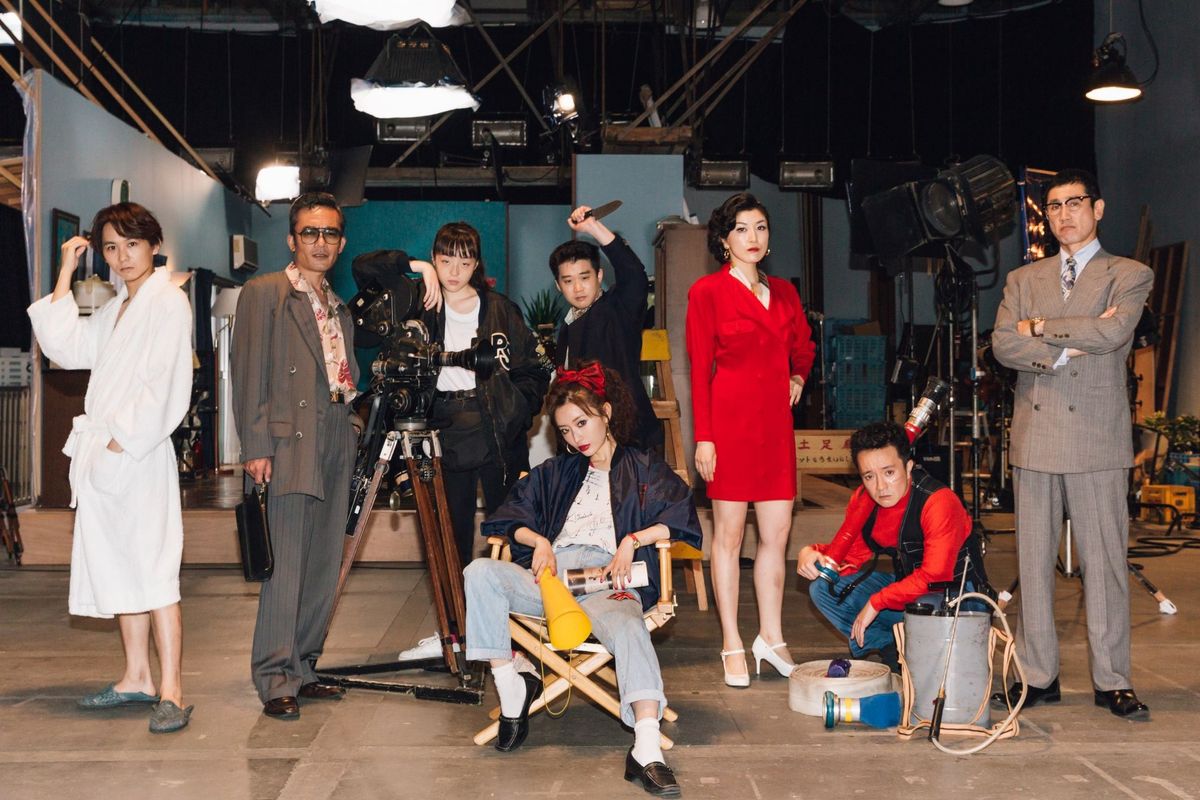
  • Red Post on Escher Street – the extras reclaim the frame in Sion Sono’s anarchic advocation for the jishu life. Review.
  • The Wife of a Spy – an upperclass housewife finds herself pulled into a deadly game of espionage in Kiyoshi Kurosawa’s dark exploration of the consequences of love. Review.

Korea

  • Fighter – a young woman from North Korea finds both purpose and a new sense of security in found family in the boxing ring in Jéro Yun’s gritty drama. Review.
  • The Foul King – dramedy by Kim Jee-woon starring Song Kang-ho as banker entering the wrestling ring.
  • Not in This World – gritty drama from Park Jung-bum in which a mountain recluse attempts to save a drop out teen.

Malaysia

Myanmar

  • Money Has Four Legs – an ambitious filmmaker turns to crime in order to escape his desperate circumstances in Maung Sun’s meta satire. Review.

Singapore

  • Number 1 – a straight-laced executive discovers a new sense of freedom after losing his job and taking up drag in Ong Kuo Sin’s cheerful Singaporean dramedy. Review.

Taiwan

  • The Silent Forest – an idealistic student is caught between justice and complicity when he uncovers a culture of bullying and abuse at a school for deaf children in Ko Chen-Nien’s hard-hitting drama. Review.
  • We are Champions – two brothers find themselves on opposite sides of an ideological divide as they chase their dreams of basketball glory in Chang Jung-Chi’s family-themed sports drama. Review.

Taiwanese Queer Cinema

  • Alifu, the prince/ss – empathetic drama in which a transgender woman from an indigenous community finds herself caught between conflicting cultural mores. Review.
  • As We Like It – a romantic exile meanders through an internet free corner of Taipei in Chen Hung-i & Muni Wei’s all-female adaptation of the Shakespeare play. Review.
  • Born to Be Human – a teenager’s life is upended when they discover they are intersex but have almost no rights over their bodily autonomy in Lily Ni’s elegantly designed social drama. Review.
  • Dear Tenant – a grief-stricken man lovingly takes care of his late partner’s family but finds himself continually othered in Cheng Yu-Chieh’s melancholy familial drama. Review.
  • Eternal Summer – 2006 classic in which the intense friendship between two boys is disrupted by a transfer student from Hong Kong.
  • Spider Lilies – two women connected by childhood tragedy struggle to overcome their respective anxieties in Zero Chou’s ethereal reflection on love and the legacy of trauma. Review.
  • The Teacher – a politically engaged teacher’s worldview is challenged when he starts dating a man who is HIV+ in Chen Ming-Lang’s sensitive drama set in the run-up to marriage equality. Review.

Thailand

  • Anatomy of Time – drama set in a rural village in the 1960s and present day Bangkok as a young woman finds herself torn between a calculating soldier and kindhearted local man.
  • The Medium – a shamaness suspects her niece’s shamanistic consciousness is awakening but soon discovers something far more sinister in play in this atmospheric Thai folk horror. Review.

Wong Kai-Wai Retrospective

  • As Tears Go By – Wong Kar-Wai’s moody triad debut stars a young Andy Lau as a lovelorn petty gangster who is forced to host a distant cousin (Maggie Cheung) when she comes to the city to seek medical treatment for a respiratory illness. Review.
  • Days of Being Wild – a rootless playboy breaks hearts all over Hong Kong in Wong’s ’60s tale of irresolvable longing and existential displacement. Review.
  • Chungking Express – lovelorn policemen seek new directions in Wong Kar-Wai’s frenetic journey through pre-Handover Hong Kong. Review.
  • Fallen Angels – lovelorn denizens of a purgatorial Hong Kong fail to connect in a world of alienation in Wong Kar-Wai’s chronicle of pre-Millennial loneliness. Review.
  • Happy Together – lovers on the run flee pre-Handover Hong Kong for Argentina to “start over” but discover only more loneliness and heartache in Wong’s melancholy romance. Review.
  • In the Mood for Love – betrayed spouses accidentally fall in love but are unable to act on their desires in an atmosphere of social repression in Wong Kar-Wai’s heady ’60s romance. Review.
  • 2046 – a quasi-sequel to In the Mood for Love and Days of Being of Wild, 2046 follows Tony Leung Chiu Wai’s Chow Mo-wan as he struggles to overcome his longing for Maggie Cheung.

Five Flavours takes place in Warsaw Nov. 17 – 24 and online throughout Poland Nov. 17 – 29. More information on all the films as well as screening times and ticketing links can be found on the official website, and you can keep up to date with all the latest news via the festival’s Facebook PageTwitter Account, Instagram, and YouTube Channels.

Not Out (낫아웃, Lee Jung-gon, 2021)

“I just wanted to keep playing baseball” the hero of Lee Jung-gon’s Not Out (낫아웃) eventually wails on finally being confronted with the consequences of his actions. Not so much a baseball movie as a gentle character study Lee’s unexpectedly dark drama sees its singleminded hero descending to depths of sociopathic manipulation in his determination to make his sporting dreams come true but less perhaps out of pure hearted yearning than a sense of embarrassment and fragile masculinity. 

“You won, then it’s over isn’t it?” someone asks Shin Gwang-ho (Jeong Jae-Kwang), the hero of his high school baseball team having just carried them to a miraculous victory. No, he corrects them, it’s only just beginning. Approaching graduation, all Gwang-ho’s ever wanted to do is play baseball, and everyone’s always telling him how good he is at it so much so that he’s internalised a puffed-up sense of himself as a sporting prodigy. That’s one reason why when his coach (Kim Hee-chang) tells him he’s been offered a trainee position with a professional team he arrogantly turns it down, sure that he’s going to be drafted. But his decision backfires, he’s not picked while another boy is leaving him confused, somewhat humiliated, and completely lost as to what to do now. Regretting having thrown away the trainee opportunity he makes the knee-jerk decision to apply to colleges to play in the uni leagues and get another shot at being drafted by the pros, but his decision negatively impacts the life plan of another player whose request not to apply to the same uni falls on deaf ears. Gwang-ho doesn’t really get why it’s a big deal, surely he has the right to try out and let the best player win but his friend, knowing he isn’t talented as Gwang-ho, doesn’t see it that way and intensely resents his insensitivity. 

There is a peculiarly childish component to Gwang-ho’s unthinking determination as he makes a series of increasingly bad decisions in order to pursue his goal little caring who might get hurt in the process. His problem is compounded by the fact that his family is poor, resenting his friend for being wealthy enough to make uni his main plan as if he thinks he can simply do without baseball while to Gwang-ho it’s the only thing that matters. “You think you can play baseball all on your own?” his exasperated coach asks him, fed up with his tendency to alienate his teammates but himself exploiting him in asking for money from his father to improve his chances of being able to continue playing. Gwang-ho, meanwhile, also resents his dad, going so far as to try to guilt him into selling his restaurant to get him the money to go to college.

Gwang-ho continues to do whatever he wants without really thinking about the consequences which is how he ends up trading stolen/illegal homemade petrol with old middle school friend Min-chul (Lee Kyu-Sung). Min-chul and the teenage girl working with him So-hyun (Song Yi-jae) seem to be more aware of the implications of their life of crime while Gwang-ho resolutely refuses to realise that this all very likely to blow up in his face, which it eventually does and quite literally. Pushed to breaking point he hatches a plan to rob the old man running the petrol racket even though despite his obvious criminality he’s actually been quite good to this gang of troubled teens. Min-chul used to play baseball himself but gave up because of an injury, telling Gwang-ho that he thought it would hurt more than it did finally realising “you can just give up if it’s shitty” but Gwang-ho can’t let go of his baseball dreams and is prepared to do pretty much anything to prove he’s “not out” of the game. 

Earlier, the other players had lamented that for them there are no second chances. They’ve invested all their hopes in baseball without studying for the college entrance exams, if they fail to get drafted there’s no obvious way forward. For Gwang-ho who cannot rely on family money, has no connections, other skills or talents, baseball really is all he has which might be why he can’t admit the thought that it’s just not meant to be while his initial failure proves such a huge humiliation that it shatters his sense of self. Only through finally accepting responsibility for his actions, realising the way he’s treated those around him, does he begin move forward apparently getting another shot, still in the game, but perhaps humbled. 


Not Out screened as part of this year’s London East Asia Film Festival.

International trailer (English subtitles)