
Forever Young (栀子花开, He Jiong, 2015)

“As long as you don’t give up, it’s never too late to follow your dream” according to a sympathetic teacher perhaps incongruously advising a conflicted student who might in one sense be facing an ending but also has his whole life in front of him. Apparently inspired by a song from 2004, Gardenia in Blossom, Forever Young (栀子花开, Zhīzihuā Kāi) ironically concerns itself with the lives of a collection of youngsters facing their first roadblock as they approach the end of university while their dreams seem further away than ever. 

Popular girl Yanxi (Zhang Huiwen) has her heart set on joining the Paris Opera Ballet along with her three roommates with whom she dances the Dance of the Four Swans. Yanxi’s boyfriend Xunuo (Li Yifeng), meanwhile, dreams of making it as a rockstar with his three bandmates. The combined group of friends, cheerful and excited about celebrating Yanxi’s upcoming 21st birthday, are upbeat about the future and looking forward to their graduation concert “Dream Night” at which they hope to catch the eye of influential people. When tragedy strikes however and it seems the girls will not be able to perform, Xunuo makes a surprising decision, roping his bandmates in to take their place and dance the Dance of the Four Swans in their stead. 

Mirrors of each other, Yanxi and Xunuo can each be blinkered and self-centred. Yanxi takes it for granted that the group all want the same thing and are determined to go to Paris with her but apparently hasn’t noticed that her friends have their own problems and at least one may not be able to afford to go abroad because she’s already subsidising her brother’s education. Stubborn and unsympathetic, Yanxi later comes to regret having been so unforgiving as she faces the prospect of continuing alone only to encounter yet another setback. Xunuo meanwhile does something similar in convincing his bandmates to join him in the Four Swans project at the expense of their own dream in taking time away from their band practice while forcing them to don tutus and possibly make fools of themselves in front of all their friends. 

Asked why she chose ballet, Yanxi replies that standing on tiptoes allowed her to see further, but now she worries she’s been suffering with a particular kind of myopia in having seen nothing at all while still clinging on to a vain hope for her Paris dream. The idealised relationship between the pair is marred only by Xunuo’s petulant decision not to get on the bus with everyone else after their night out when Yanxi reminded him she was bound overseas, and her later despondency as they’re temporarily forced apart by Xunuo’s secret plan even while his strange rivalry with a former friend with whom he wrote a plaintive love song takes on an overtly homoerotic quality.  

Nevertheless, there’s something of an incongruity in such young people being constantly reminded that as long as you don’t give up there’s always time to achieve your dreams though it’s true enough that they’re each at a crisis point, about to lose the student safety net and faced with the choice of whether to keep trying to make it or go for the “safe” option of heading into the workforce. Xunuo declares that he just wants “all the sadness and troubles to go away”, only for his teacher to point out that if you’ve nothing to overcome then you’ll never grow. The presence of tragedy never seems to touch them as deeply as one would think, though at least through Xunuo’s vicarious dancing dream the guys are able to renew their friendships, acknowledging their own strengths and weaknesses as they work together in memory of absent friends and perhaps their own fading youth. 

A strangely cheerful campus drama despite its darkness and the foreboding of the title, Forever Young allows its heroes to be just that as they promise themselves that as long as they refuse to give up it’s never too late for their dreams to come true while also subtly hinting at a new ideal of masculinity in the infinitely sensitive Xunuo who is selfless and kind and just wants everyone to be happy. An overly idealised conclusion perhaps as the youngsters bid goodbye to their adolescent lives for the stormy seas of adulthood, but also a reassuring one as they emerge from their respective traumas and hardships with renewed hope for the future.


Forever Young streams in the US Feb. 12 to 18 as part of Asian Pop-Up Cinema’s “Happy Lunar New Year!”

Original trailer (English subtitles)

Kinema Junpo Announces 94th Best 10 for 2020

Prestigious cinema magazine Kinema Junpo has released its always anticipated “Best 10” list for films released in 2020, the 94th edition. Top prize goes to Kiyoshi Kurosawa’s Silver Lion-winning Wife of a Spy while the late Nobuhiko Obayashi takes the Best Director award for his final film Labyrinth of Cinema which comes in second on the Best 10 list.

Best 10

1. Wife of a Spy (スパイの妻<劇場版>)

Originally commissioned for 8K TV, Kiyoshi Kurosawa’s wartime drama stars Yu Aoi as the titular wife who finds herself working against her husband, Issey Takahashi, when she discovers that he intends to blow the whistle after observing something he shouldn’t have while working in Manchuria. An awards season favourite, the film also picked up the Silver Lion at the 77th Venice International Film Festival.

2. Labyrinth of Cinema (海辺の映画館-キネマの玉手箱)

A poetic advocation for the transformative power of art, Nobuhiko Obayashi’s final film takes a surrealist odyssey through the history of warfare as three youngsters chase the image of Japan in the labyrinths of cinema. Review.

3. True Mothers (朝が来る)

Festival darling Naomi Kawase adapts Mizuki Tsujimura’s novel in which a childless couple adopt the baby of a teenage mother only for her to return some years later and attempt to reclaim her child.

4. Underdog (アンダードッグ)

Two-part boxing drama from Masaharu Take (100 Yen Love) starring Best Actor winner Mirai Moriyama as a dejected featherweight fighter who’s never made it to champion finding himself faced with a TV comedian (Ryo Katsuji) giving it a go in the ring and a cocky up-and-comer (Takumi Kitamura) who can’t shake his violent past.

5. The Real Thing (本気のしるし<劇場版>)

First aired as a 10-part TV drama then edited down to 233 minutes for theatrical exhibition, the latest from Koji Fukada (Hospitalité, Harmonium, A Girl Missing) adapts the manga of the same name and stars Win Morisaki as a bored salaryman whose life changes after he saves a mysterious woman, Kaho Tsuchimura, from an oncoming train.

6. 37 Seconds (37セカンズ)

Written and directed by the single-named Hikari, vibrant drama 37 Seconds stars Mei Kayama as an aspiring mangaka with cerebral palsy striving to escape the overbearing caring of her well-meaning mother while trying to gain experience to make it in the world of erotic comics. Review. Streaming via Netflix in many territories!

7. The Voice of Sin (罪の声)

Mystery drama adapted from the novel by Takeshi Shiota starring Shun Oguri and Gen Hoshino as a reporter and tailor respectively who each find themselves investigating an unsolved murder from 30 years previously.

8. A Beloved Wife (喜劇 愛妻物語)

Semi-autobiographical comedy drama from screenwriter/director Shin Adachi exploring the toxic marriage between an unsuccessful screenwriter and his resentful, dipsomaniac wife (Best Actress winner Asami Mizukawa). Review.

9. Living in Your Sky (空に住む)

Shinji Aoyama returns to cinema screens for the first time in seven years following 2013’s Backwater adapting the novel by Masato Odake. Mikako Tabe stars as an editor at a publishing house who loses her parents suddenly and moves into a luxury apartment block managed by her uncle where she strikes up a romance with a movie star (Takanori Iwata) living a few floors above.

10. On the Edge of Their Seats (アルプススタンドのはしの方)

Indie drama adapting a popular play first performed by a high school theatre group and set on the bleachers of a high school baseball game.

Best 10 International

  1. Parasite
  2. House of Hummingbird
  3. Portrait of a Lady on Fire
  4. Little Women
  5. The Painted Bird 
  6. Dead Souls
  7. Ford v Ferrari (Le Mans ’66)
  8. Pain and Glory
  9. 1917
  10. Tenet

Best 10 Documentaries

  1. Why You Can’t Be Prime Minister (なぜ君は総理大臣になれないのか)
  2. Prison Circle (プリズン・サークル)
  3. Hana no Atosaki: Mutsu Baasan no Aruita Michi (花のあとさき ムツばあさんの歩いた道)
  4. Mishima: The Last Debate (三島由紀夫vs東大全共闘 50年目の真実)
  5. Ongaku House Melody-Go-Round (音響ハウス Melody-Go-Round)
  6. Jose Mujica: Sekai de Ichiban Mazushii Daitoryo kara Nihonjin e (ムヒカ 世界でいちばん貧しい大統領から日本人へ)
  7. Tane wa Dare no Mono (タネは誰のもの)
  8. An Ant Strikes Back (アリ地獄天国)
  9. Reiwa Uprising (れいわ一揆)
  10. Montage of Hong Kong (香港画)

Individual Awards

Best Director: Nobuhiko Obayashi (Labyrinth of Cinema)

Best Screenplay: Ryusuke Hamaguchi / Tadashi Nohara / Kiyoshi Kurosawa (Wife of a Spy)

Best Director (international): Bong Joon-ho (Parasite)

Best Actress: Asami Mizukawa (A Beloved Wife / Runway)

Best Actor: Mirai Moriyama (Underdog)

Best Supporting Actress: Aju Makita (True Mothers)

Best Supporting Actor: Shohei Uno (The Voice of Sin / The Real Thing / A Beast in Love / 37 Seconds / Child of the Stars)

Best Newcomer (actress): Serena Motola (Voices in the Wind / Life: Untitled)

Best Newcomer (actor): Daiken Okudaira (Mother)

Readers’ Choice Best Director: Mitsutoshi Tanaka (Tengaramon)

Readers’ Choice Best Director (international): Bong Joon-ho (Parasite)

Readers’ Choice Award: Saburo Kawamoto – Eiga wo Mireba Wakaru Koto (映画を見ればわかること)

Special Award: Teruyo Nogami (producer)

Source: Kinema Junpo official website.

The Unity of Heroes (黄飞鸿之南北英雄, Lin Zhenzhao, 2018)

“All Chinese martial artists must stick together” affirms Wong Fei-hung, justifying himself to a dejected disciple for supposedly having appeased a local rival in Lin Zhenzhao’s The Unity of Heroes (黄飞鸿之南北英雄, Huáng Fēihóng zhī Nánběi Yīngxióng). Returning to the role he first took over from Jet Li closing out Tsui Hark’s Once Upon a Time in China series, Vincent Zhao stars in and produces this VOD outing for the legendary folk hero in which he once again valiantly defends the values of traditionalism while contending with an ever changing society. 

Twin arrivals, one expected the other not, spell change for Fei-hung and his trio of assistants, the first being the return of 13th Aunt Shaojun (Wei Na) who had been studying abroad, and the other being a crazed, zombie-like figure who wanders into the temple after escaping from a fire at the docks. If that weren’t enough to contend with, a new master, Wu (Michael Tong Man-Lung), has also arrived in town to teach his brand of martial arts with the Northern Fist Club, immediately entering a conflict with Fei-hung’s guys when Kuan (Li Lu-Bing) comes to the rescue of a mysterious woman who started a fight with them. Meanwhile, Fei-hung is suspicious of a new Western-style hospital which has been set up in order to treat victims of the opium crisis which he feels is ironic as he holds the Westerners responsible for getting the Chinese hooked on opium and then forcing them to pay to be cured of it. Of course, it turns out that the hospital, apparently backed by the British East India Company, is very definitely up to no good, led by the rather vampirically named “Vlad”. 

Finding himself faced with the threat of a superpowered opium which turns those who use it into rage-fulled killing machines, Fei-hung remains preoccupied with the erosion of Chinese traditions in the face of increasing Westernisation. Indeed, Shaojun who has been studying Western medicine in Europe has apparently even forgotten how to use chopsticks and asks for a knife and fork instead which it seems Fei-hung would not have denied her only well-meaning underling Qi decides to bring her something not quite as suitable for the dinner table. Likewise, seeing Fei-hung running a needle over a flame, Shaojun immediately runs for her alcohol bottle only for him to protest that he’s always been taught fire is enough. Nevertheless, he’s not totally against Western learning, eventually conceding that he could not have cured his patient on his own, it took one of Shaojun’s injections to clear his acupuncture points so he could eliminate the “poison” though moxibustion. 

Even so, Fei-hung is at the mercy of the evil Vlad who, as he feared, uses the rivalry between the martial arts masters to divide and conquer, seducing the apparently equally anti-Western henchmen of Wu by hopping them up on his new wonder drug as a means to take out Fei-hung and become the town number one. Allegories abound, but the lines drawn between covert capitalist colonialism and the drugs trade are anything but subtle as Vlad sells his super soldier drugs plan as a remedy to the supposed weakness of the Chinese physique that will allow them to escape subjugation, something which is of particular interest to his conflicted underling Xiaoyue (Wei Xiao-Huan) whose mother was apparently worked to death in a labour camp. “Your lives are worthless” Vlad reveals as the mask slips, “nothing is cheaper than you” justifying his decision to test his drugs on Chinese subjects with vaguely eugenicist overtones. 

All of that aside, however, first time feature director Lin Zhenzhao makes sure to include all the Wong Fei-hung staples from the training montage which opens the film to an innovative set piece involving Fei-hung’s trademark umbrella coupled with his obvious confusion with Shaojun’s “upgraded” European model, its steel spokes, and “improved” opening and closing mechanism. Given the film’s destination for the online streaming market as opposed to cinema screens, production values are surprisingly high with well populated crowd scenes, convincing production design, and nicely choreographed fight sequences including that all important shadowless kick. While not perhaps a return to the Once Upon a Time in China highs, Unity of Heroes nevertheless holds its own as another entertaining entry in the Wong Fei-hung saga.


The Unity of Heroes streams in the US Feb. 12 to 18 as part of Asian Pop-Up Cinema’s “Happy Lunar New Year!”

Original trailer (English subtitles)

Till We Meet Again (生前约死后, Steven Ma, 2019)

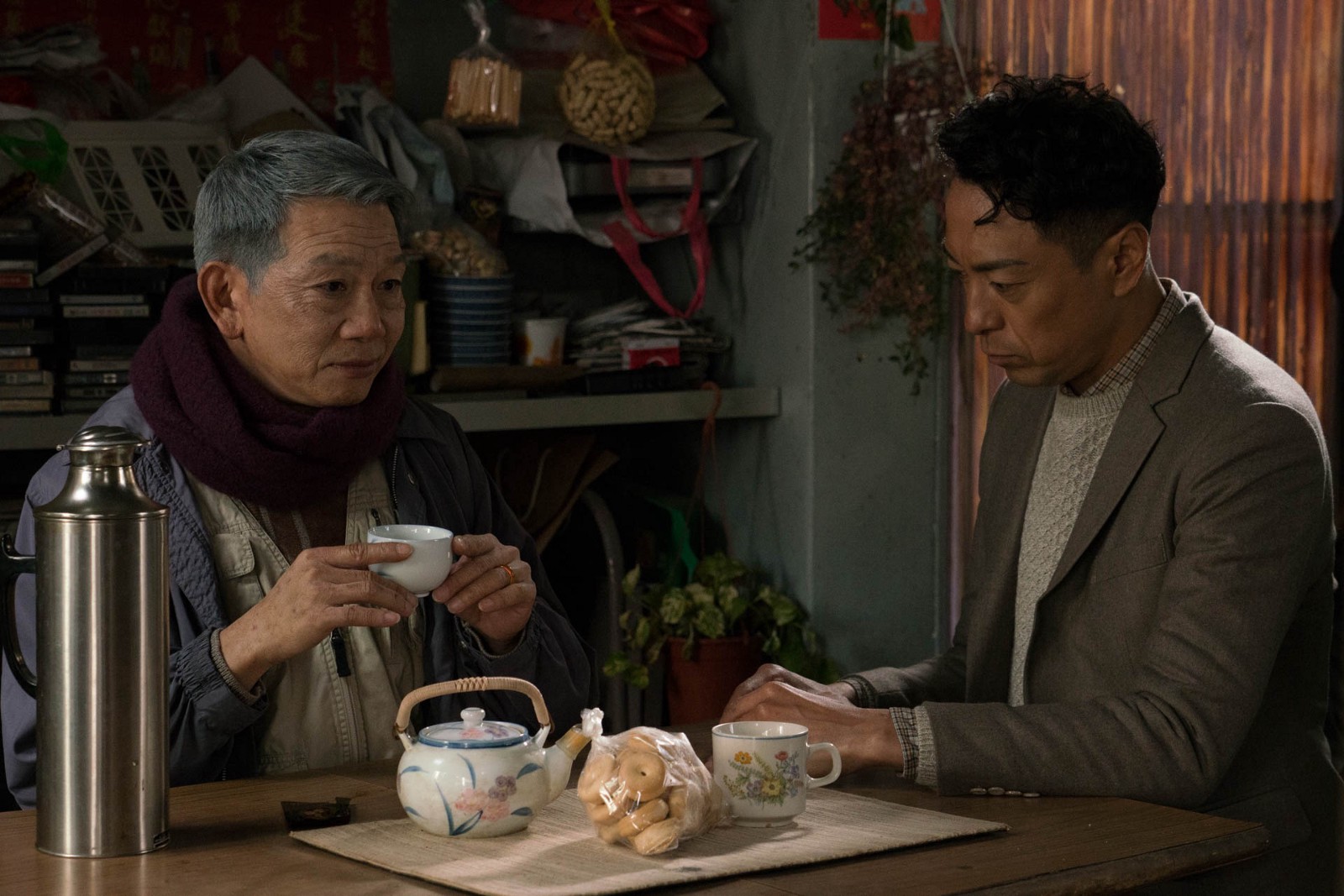
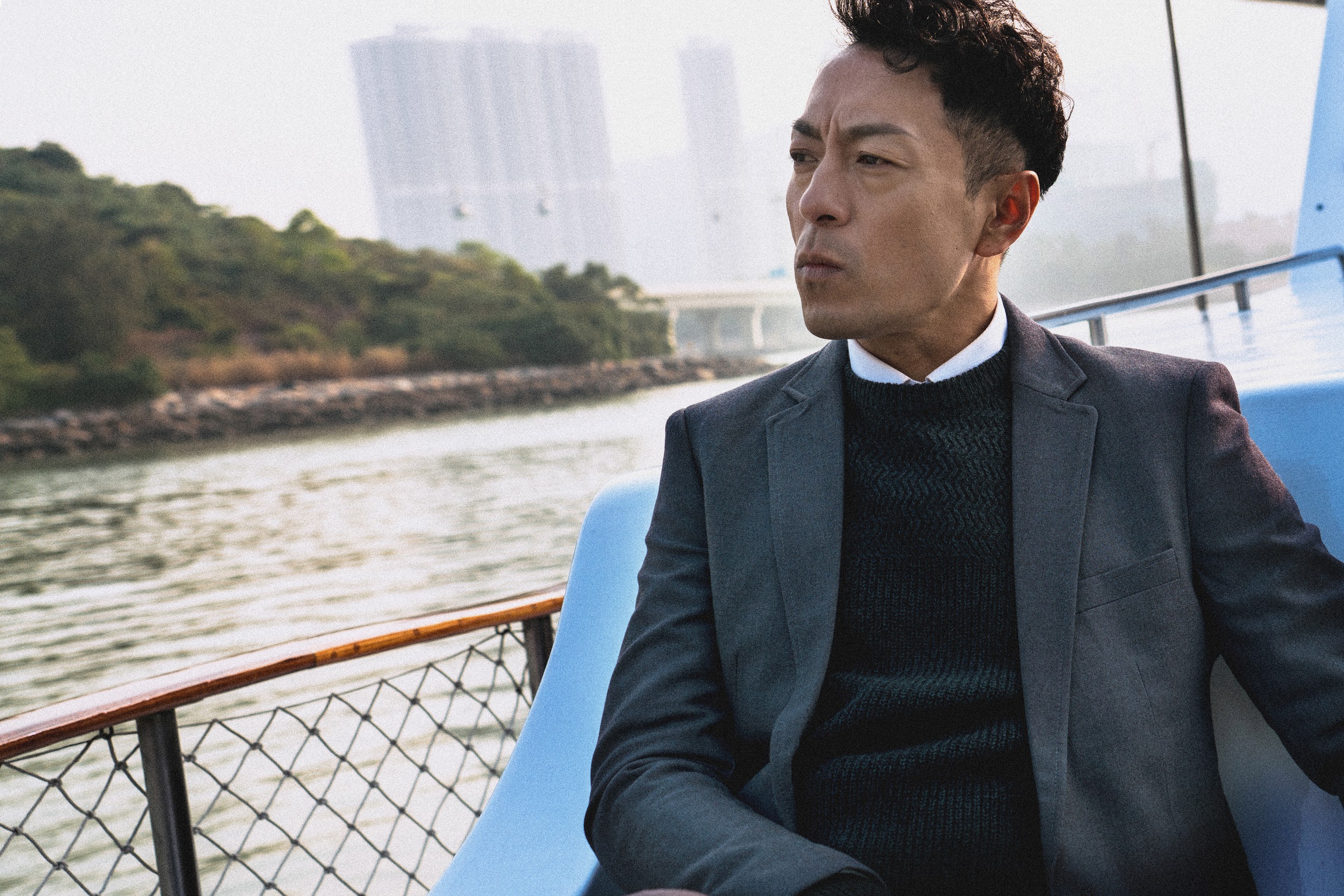
“What if you let go of my hand and I get lost?” an over anxious little boy asks his mother. “Then you should stay where you are,” she tells him, “Mum will definitely come back for you.” It’s an instruction the now adult Wai (Steven Ma Chun-Wai) has perhaps taken too literally, struggling under the weight of grief and filial guilt while standing still waiting for his mother to find him again in the hope of earning her forgiveness for a sin he does not quite want to remember. Semi-autobiographical, Steven Ma’s Till We Meet (生前约死后) again is at once a dark psychodrama of man undone by loss but also a deeply touching evocation of an unbreakable mother son bond. 

Now a solitary salesman, 30-something Wai has only one wish – to reunite with his mother whom he hasn’t seen in over 10 years fearing that she bears some kind of grudge against him. We in fact see Mui (Josephine Koo Mei-Wah), his mother, angrily telling another woman, Lai (Bee Wong Chiu-Yam), that she refuses to see her son though the scene is not quite as it first seems. After abruptly quitting his job, Wai wanders out into the street and endures some kind of mental breakdown after which he visits his psychiatrist who reminds him that his mother is dead and has been for some time. 

Wai avows that he doesn’t like taking his medication because it makes him feel “sluggish” but increasingly finds his mental universe fracturing, shifting between sepia-tinted memories of his early childhood during which his mother first became ill and his life as a young man during which she suffered a relapse and later passed away. We begin to doubt Wai’s perception, uncertain if people and events he encounters are “real” or a product of his psychosis. His mother, ghost or merely spectre of memory, hovers on the sidelines apparently unwilling to see him though perhaps for his own good in hoping he will finally be able to move on and learn to be happy in acceptance of his loss. 

Tracey (Jennifer Yu Heung-Ying), his perhaps unrealistically invested psychiatrist, reminds Wai that he isn’t the only person who’s ever been bereaved or felt abandoned, left behind by those who have gone far away. She herself lost her mother young and was then abandoned by her father who left her in the care of an uncle who too abandoned her and ran off with all her father’s money. Another ghostly, perhaps imagined, conversation with Mui reveals that again Tracey may not have the full story and may never get it but unlike Wai may still have the chance to achieve a kind of closure with the traumatic past. He meanwhile carries the burden of his repressed guilt as it slowly works its way to the surface, cutting through his fragile psyche like a knife. 

While Mui’s conversations with third parties presumably taking place entirely within Wai’s mind may hint at a deeper psychological crisis they are essentially attempts to work out his guilt and shame, one-sided dialogues that eventually guide him back towards an acceptance of the truth he was intent on forgetting beginning with the traumatic fact of his mother’s death. Perhaps to some Wai’s maternal attachment may seem extreme, as the psychiatrist echoes in reminding him he’s not the only son to suffer such catastrophic loss, but it’s underpinned by a sense of filial guilt that lies at the heart of their bond in his worry that his own distress pushed Mui into pursuing a path she may otherwise have rejected on the grounds it would only cause her more pain for an additional few weeks of life. 

Trapped in his grief and guilt, Wai staggers through a nightmarish existence elegantly manifested in Ma’s abrupt tonal shifts as Wai finds himself staggering along a darkened corridor complete with faulty lighting and a single exit, while the sky itself seems to brighten to more romantic tones as he embraces a fantasy of a happier time drawing closer either to a kind of closure or the victory of his delusion whichever way you wish to read it. A painful journey through guilt and grieving, Ma’s unsparing drama provides few easy answers for living with loss but does perhaps allow its hero a degree of escape if only in unreality. 


Till We Meet Again streams in the UK until 15th February as part of Focus Hong Kong

Original trailer (English / Traditional Chinese subtitles)

Big Shots Die at Dawn (顔役暁に死す, Kihachi Okamoto, 1961)

“Assassins make the world an unfit place to live in” according to a random gas station attendant clueing our errant hero in to the fact his small-town home is now a “den of yakuza” and unlikely tourist hotspot. An early, delightfully absurdist yakuza romp from Kichachi Okamoto, Big Shots Die at Dawn (顔役暁に死す, Kaoyaku Akatsukini Shisu) is part Nikkatsu parody, part ironic western, and all cartoonish fun as a prodigal son returns to find his father murdered and his uncle on the throne. Sound familiar? 

Jiro (Yuzo Kayama) has been working for the forestry commission in Alaska and has not returned to his small-town home of Kuraoka in some time which is why he didn’t even know his father, the mayor, was dead let alone that he was apparently assassinated in a manner which strongly anticipates the Kennedy assassination though the film was released in 1961. He also had no idea his father, a widower, had remarried and his family home is now occupied by his stepmother Hisako (Yukiko Shimazaki), a former secretary who scandalously lounges around in her underwear all day. His uncle Imamura (Eijiro Yanagi) is now the mayor, and as he explains to him, the town is a hotbed of gangster activity apparently a consequence of his attempt to turn it into a tourist hotspot. In trying to find out who killed his father, Jiro finds himself quite literally in the middle of a petty yakuza gang war aided and abetted by corrupt police. 

Quite clearly influenced by American cinema, Big Shots Die at Dawn situates itself in the new frontier of small-town Japan in which a war is being fought over the spoils of the post-war era. Uncle Imamura’s legacy is apparently a children’s theme park with the distinctly pregnant name Dreamland. Apparently a man who just loves the children but was unable to have any of his own, he’s also opened a pre-school for the local kids. Meanwhile, in the yakuza-backed casino, obsessive gamblers brush their teeth at the tables while local kingpin Goto (Akihiko Hirata) attempts to fend off the incursion of the rival Handa gang. Jiro’s return puts the cat among the pigeons as both sides attempt to use him as a way to take out the other.

The dark heart of small-town Japan is however present in the greed and double dealing which extends even to the police, a corrupt officer offering to sell Jiro a key piece of evidence he had concealed in the hope of profit. Just about everyone tries to sell the evidence to someone else at one time or another, leveraging an idea of justice alongside greed and self-interest. Meanwhile, Yoshiko (Kumi Mizuno), a quasi-love interest and former girlfriend of a fallen foot soldier, reports that she gave the police valuable evidence that her fiancé’s death wasn’t a suicide but they ignored her.

Jiro’s come to clean up the town, but the showdown takes place incongruously in the children’s theme park complete with its cutesy mascot characters and adverts for chocolate in the background making plain that these venal gangsters are really just boys playing war, taking pot shots at each other from tiny trains. What could be a dark comment on a loss of innocence is more cartoonish irony from Okamoto who shoots in extreme closeup with intentionally humorous composition and slapstick choreography. Nevertheless the message is unmistakable as we piece together the connections between small-town government and organised crime underpinned with a rather creepy all for the kids justification. 

Then again, the world has its share of misogyny, everything coming down to the incursion of transgressive femininity as one duplicitous woman manipulating her feminine wiles becomes the common link between each of the warring factions, as if this is all her fault and Jiro’s return is a way of clearing up the pollution her arrival provoked. Nevertheless as even he says, his father, and implicitly his father’s generation, must share some of the blame. Filled with stylish action sequences, car chases, self-consciously cool dialogue, and scored with a mix of moody jazz and dreamy childlike melodies, Okamoto’s cartoonish takedown of the zeitgeisty youth movie is very much in keeping with Toho’s spoofier side but chock full of charm even if its hero’s particular brand of smugness occasionally borders on the insufferable. 


Zu: Warriors from the Magic Mountain (新蜀山劍俠, Tsui Hark, 1983)

“I never imagined that the righteous would not only refuse to unite, but also be incapable of action” laments a reluctant soldier realising there are no heroes coming to the rescue in Tsui Hark’s SFX-laden fantasy wuxia, Zu: Warriors from the Magic Mountain (新蜀山劍俠). Inspired by the work of Huanzhulouzhu (Li Shoumin), Tsui’s feudal fable marked a departure from the more “realistic” swordplay movies which were popular at the time harking back to an earlier era of fantastic adventures which drew inspiration from traditional Chinese folklore. It was also, however, an attempt to prove that Hong Kong could rival Hollywood in the post-Star Wars world, blending what might now be viewed as fairly camp but then cutting-edge special effects with classic wuxia action. 

Accordingly, after a brief voice over, Tsui opens with a world in chaos in which several factions are currently vying for hegemony over the hotly contested, mystical and mountainous terrain of Shu. Lowly retainer Ti Ming-Chi (Yuen Biao) has been tasked with delivering a message regarding troop movements to his superiors, but there is a difference of opinion in the chain of command as to whether to attack by land or sea. Placed in an impossible position, Ming-Chi eventually sees himself pledge to obey both captains, only for infighting to emerge within the group forcing him to flee for his life which is how he encounters “Fatty” (Sammo Hung Kam-Bo), a soldier from a rival faction and discovers, quite ironically, that they are from neighbouring villages which makes their rivalry all the more ridiculous. In the course of his attempt to escape, Ming-Chi falls into a mountain crevasse and finds himself entering a mysterious cave which takes him to another world in which he becomes similarly embroiled in a war against the evil Demon Cult which apparently practices child sacrifice and then uses the bones as a kind of magical armour. 

A reluctant soldier, Ming-Chi finds himself captivated by the “Great Hero” Ting Yin (Adam Cheng Siu-Chow) and determines to become his disciple while the pair form an uneasy alliance with a pair of similarly matched Buddhist monks, master Hsiao Yu (Damian Lau Chung-Yan) and his assistant I-Chen (Mang Hoi), also hot on the trail of the Demon Cult. Finding this world also confusing, he is nevertheless reassured by I-Chen’s simple explanation “they’re bad, we’re good” as the two masters face off against the Demon Lord, but comes to discover it’s not quite all as black and white as it seems and this world too is torn apart by chaos and disorder because “the hearts of men are so corrupt.” Ming-Chi begs Ting Yin to use his “peerless martial arts skills” to “save mankind”, but Ting Yin cynically tells him his best course of action is to retreat into the mountains and avoid human society because “neither you nor I have the ability to bring about change”. 

Yet Ming-Chi remains pure of heart, certain that “as long as everyone puts in the effort, peace can be restored under heaven”. “Teach me martial arts and once I’ve mastered it, I can fight oppression, help the weak, and save the masses” he pleads, but Ting Yin once again refuses him. In fact, in one of the later SFX sequences, Ting Yin will “transfer” his martial arts knowledge near instantly via a laying on of hands assisted by some elaborate prosthetics which see Ming-Chi’s body warp and bubble to accept it. Nevertheless, the lesson that Ming-Chi begins to learn, bonding with fellow assistant I-Chen who ignored his master’s petty parting words to bid him goodbye to hope they meet again along the way, is that the masters care only for themselves and are no better than the warring nobles from his own lands, obsessed with their rival sects and ideologies. If they want to save the world they’ll have to save themselves through mutual solidarity in pursuit of their goal, tracking down a pair of mystical swords which are the only way to end the demonic threat for good. 

There might of course be an added dimension to this allegory in the Hong Kong of 1983 which is perhaps also beginning to feel like disputed territory coveted by duplicitous elites who fight amongst themselves while ordinary people suffer, but Tsui is in any case more interested in zany action and excuses to employ zeitgeisty special effects making full use of the technology of the day from lasers to animation along with in-camera stunts to recreate his epic fantasy world in which old men can keep evil at bay for as long as 49 days using nothing but their powerfully hairy eyebrows and a fancy mirror. With small roles for Brigitte Lin and Moon Lee as an ice queen with a warm heart presiding over an all female palace and her spiky guard respectively, Tsui’s bonkers fairytale moves on at a glorious, confusing pace but is nevertheless filled with warmth and humanity as the goodhearted heroes attempt to head off the folly of war with human solidarity. 


Zu: Warriors from the Magic Mountain streams in the UK 9th to 15th February as part of Focus Hong Kong

Eureka release trailer (english subtitles)

The World of Wong Kar Wai Comes to BFI Player & ICA Cinema 3

4K

Wong Kar Wai’s long-awaited if controversial restorations are making their way to the UK streaming throughout February 2021 with physical screenings planned for such time as cinemas are able to reopen. After launching via ICA’s Cinema 3, seven of the newly restored classics will be available to stream via BFI Player from 8th February.

As Tears Go By


Hong Kong. 1988. Dir Wong Kar Wai. With Andy Lau, Maggie Cheung, Jacky Cheung. 102min. Digital 4K. 18
This 4K digital restoration was undertaken from the 35mm original camera negative by the Criterion Collection in collaboration with L’Immagine Ritrovata and One Cool. A Janus Films release.

4K

Wong Kar-Wai’s moody triad debut stars a young Andy Lau as a lovelorn petty gangster who is forced to host a distant cousin (Maggie Cheung) when she comes to the city to seek medical treatment for a respiratory illness. It is worth noting that the new restoration streams in the original Cantonese language track rather than the Mandarin dub previously released in the UK and therefore features the iconic Cantopop cover of Take My Breath Away. If nothing else, the film deserves an accolade for the most oblique cinematic I Love You in the unforgettable line “I found that glass”. Review.

(Clip from previous release)

Days of Being Wild

Hong Kong. 1990. Dir Wong Kar Wai. With Leslie Cheung, Carina Lau, Maggie Cheung, Andy Lau. 94min. Digital 4K. 12A
This 4K digital restoration was undertaken from the 35mm original camera negative by the Criterion Collection in collaboration with L’Immagine Ritrovata and One Cool. A Janus Films release.

Leslie Cheung stars as a restless Casanova unable to reconcile himself to his sense of rootlessness in maternal confusion while breaking hearts all over Hong Kong from the sweet and innocent Maggie Cheung who later falls for sad policeman Andy Lau to vivacious cabaret dancer Carina Lau who falls into a self-destructive spiral following the end of their affair.

Chungking Express

Hong Kong. 1994. Dir Wong Kar Wai. With Brigitte Lin Ching Hsia, Tony Leung Chiu Wai, Faye Wong, Takeshi Kaneshiro. 102min. Digital 4K. 12A
This 4K digital restoration was undertaken from the 35mm original camera negative by the Criterion Collection in collaboration with L’Immagine Ritrovata, Jet Tone, One Cool, and 3H Sound Studio. It was supervised and approved by Wong Kar Wai. A Janus Films release.

4K

A snapshot of ’90s Hong Kong, elliptical romance Chungking Express follows two lovelorn policemen each confronted by heartbreak as Takeshi Kaneshiro accidentally becomes involved with jaded assassin Brigitte Lin while Tony Leung Chiu-wai is semi-stalked by pixieish fast food stall counter-girl Faye Wong.

Fallen Angels

Hong Kong. 1995. Dir Wong Kar Wai. With Leon Lai Ming, Michelle Reis, Takeshi Kaneshiro, Charlie Young Choi Nei, Karen Mok Man Wai. 99min. Digital 4K. 15
This 4K digital restoration was undertaken from the 35mm original camera negative by the Criterion Collection in collaboration with L’Immagine Ritrovata, Jet Tone, and One Cool. It was supervised and approved by Wong Kar Wai. A Janus Films release.

4K

A quasi-sequel to Chungking Express, Fallen Angels features two intersecting stories one again featuring Kaneshiro but this time as a crazed criminal recently escaped from prison who falls for a mysterious woman whose boyfriend left her for a woman called “Blondie” who is also a point of tension between hitman Leon Lai and his partner who lives in Kaneshiro’s building.

Happy Together

Hong Kong. 1997. Dir Wong Kar Wai. With Leslie Cheung, Tony Leung Chiu Wai, Chang Chen. 96min. Digital 4K. 15
This 4K digital restoration was undertaken from the 35mm original camera negative by the Criterion Collection in collaboration with L’Immagine Ritrovata, Jet Tone, and One Cool. It was supervised and approved by Wong Kar Wai. A Janus Films release.

4K

A landmark for LGBTQ+ representation, Wong’s 1997 tragic romance stars Tony Leung Chiu Wai and Leslie Cheung as melancholy lovers who move to Argentina in an attempt to save their relationship only to break up and sporadically return to one another.

In the Mood for Love

Hong Kong. 2000. Dir Wong Kar Wai. With Tony Leung Chiu Wai, Maggie Cheung Man Yuk. 98min. Digital 4K. PG
This 4K digital restoration was undertaken from the 35mm original camera negative by the Criterion Collection in collaboration with Jet Tone Films, L’Immagine Ritrovata, One Cool, and Robert Mackenzie Sound. Supervised and approved by Wong Kar Wai. A Janus Films release.

Wong’s undoubted masterpiece and international breakthrough once again stars Tony Leung Chiu Wai and Maggie Cheung, this time as betrayed spouses in ’60s Hong Kong who begin to fall in love despite themselves as they bond in shared loneliness but are unable to act on their desires.

2046

Hong Kong. 2004. Dir Wong Kar Wai. With Tony Leung, Gong Li, Faye Wong, Takuya Kimura, Ziyi Zhang, Carina Lau, Chang Chen, Dong Jie, Maggie Cheung, Bird Thongchai McIntyre. 129min. Digital 4K. 12A
The 4K digital restoration was undertaken from the original 35mm elements by Sony Pictures Classics, in collaboration with Jet Tone Films,
L’Immagine Ritrovata, One Cool, and Robert Mackenzie Sound. The restoration was approved by Wong Kar Wai. A Sony Pictures Classics release.

A quasi-sequel to In the Mood for Love and Days of Being of Wild, 2046 follows Tony Leung Chiu Wai’s Chow Mo-wan as he struggles to overcome his longing for Maggie Cheung, romancing Days of Being Wild’s Carina Lau, observing the lovelorn landlord’s daughter Faye Wong as she struggles in her romance with Japanese tourist Takuya Kimura, entering a complicated relationship with 2046 resident Zhang Ziyi, and continuing to chase the past with gambler Gong Li who has the same name as the woman he can’t forget.

Screening at BFI Southbank (once reopened)

Ashes of Time Redux

Hong Kong. 2008. Dir Wong Kar Wai. With Leslie Cheung, Brigitte Lin, Tony Leung Chiu Wai, Carina Lau, Tony Leung Ka Fai, Charlie Young, Jacky Cheung, Maggie Cheung. 93min. 35mm. 15

This notoriously troubled production finds Wong in wuxia territory in the company of his frequent collaborators Leslie Cheung, Brigitte Lin, Tony Leung Chiu Wai, Carina Lau, Tony Leung Ka Fai, Charlie Young, Jacky Cheung, and Maggie Cheung for a prequel to the well-known tale The Legend of the Condor Heroes. With the original negatives of the film apparently lost, the 2008 “Redux” edition was re-edited and rescored from existing prints.

The Hand (Extended Cut)

Hong Kong. 2004. Dir Wong Kar Wai. With Gong Li, Chang Chen. 56min. Digital. 15

The director’s cut of Wong’s contribution to the 2004 anthology Eros stars Chang Chen (Happy Together, 2046, The Grandmaster) as a diffident tailor’s assistant who is sent to measure up high end call girl Gong Li in heady ’60s Hong Kong.

My Blueberry Nights

China/France/USA/Hong Kong. 2007. Dir Wong Kar Wai. With Norah Jones, Jude Law, Rachel Weisz, Natalie Portman. 90min. 35mm. 12A

Despite an A-list roster of Hollywood talent, Wong’s international feature debut failed to live up to his homegrown reputation with critics often remarking that his attempt to reconfigure his key concerns for an American milieu inauthentic at best as he follows a Norah Jones on a US road trip through heartbreak and despair.

The Grandmaster

Hong Kong/China. 2013. Dir Wong Kar Wai. With Tony Leung, Ziyi Zhang, Chang Chen, Zhao Benshan, Xiao Shenyang, Song Hye Kyo. 108min. Digital. 15

Starring Tony Leung Chiu Wai, Wong’s long-awaited take on the Ip Man legend finds the grandmaster reflecting on the nature of kung fu while sparring with the daughter of an old rival played by Zhang Ziyi. On its domestic premiere, the film ran to 130 minutes and was then cut down to 123 for Berlin. The “international” cut screening here, however, runs to 108 minutes and is so extensively re-edited as to constitute an entirely different film leaning heavier on action and on onscreen explanatory text. Still, Wong’s breathtaking fight sequences are present in the all their glory as is his melancholy romanticism. While not among the new restorations, The Grandmaster will also be available to stream via BFI Player.

The seven new restorations will be available to stream in the UK via BFI Player from 8th February and on ICA Cinema 3 for 14 days following the first screening.

That Night’s Wife (その夜の妻, Yasujiro Ozu, 1930)

Most closely associated with his late career family dramas, Yasujiro Ozu has acquired a reputation for geniality which may in a sense be slightly unfair. He was always an astute chronicler of his times, often choosing to view them through the frame of family, and was never as blind to the issues of the day as some would have it. Ozu’s ‘30s work, that which survives at least, is in a sense fiercely political in its critique of the inequalities of the depression-era society. One of his early crime movies, the silent That Night’s Wife (その夜の妻, Sono yo no Tsuma) insists that justice must be done but does so with compassion in its full and total empathy for a man driven to extremes by the depth of his paternal love. 

Indeed, the early part of the film is tense noir chase as the hero, desperate father Shuji (Tokihiko Okada), attempts to evade a police dragnet to make his way home after robbing a bank to get money to pay for his sick daughter Michiko’s (Mitsuko Ichimura) medical care. Meanwhile, loyal wife Mayumi (Emiko Yagumo) has been patiently waiting at home tending to the child who refuses to sleep because she only wants her father and constantly asks where he is. Shuji eventually makes it back and tells his horrified wife what he has done, agreeing that he will turn himself in to the police once Michiko is well, but he’s already out of luck. The taxi he darted into was being driven by an undercover cop (Chishu Ryu) who installs himself in the apartment but agrees to wait until the doctor comes in the morning before taking Shuji in. 

Out of keeping with the rest of Ozu’s career but very much in the vein of his depression-era silents, That Night’s Wife concerns a poor but happy family mustering what little resources they have in the face of despair. Filled with tension as the policeman waits impatiently, the camera pans around the one room apartment where the family live and finds it to be a homely, bohemian space, apparently an artist’s studio with foreign film posters and travel souvenirs hanging from the walls. By all indications a starving painter, Shuji is a poor man brought to ruin by accidental tragedy. His daughter is deathly ill and doctors cost money. We can see that, by the standards of the time, he is a very hands on father beloved by his little girl and is obviously willing to sacrifice himself and his future to ensure her survival

It’s Mayumi, however, to whom the film’s title refers and in her role as wife rather than mother. The doctor (Tatsuo Saito) worries that she has not slept in the last few days, how could she when her child is so ill, but it’s she who eventually picks up the gun to protect the family by disarming the policeman and, essentially, keeping him hostage until the morning when, she claims, Shuji will willingly go with him after confirming Michiko’s survival. The world is turned upside down, no one quite plays the role they’ve been assigned. The loving father, an effete artist, turns unconvincing master criminal, the loyal wife gangster’s moll, and the policeman a calm and compassionate guardian deeply moved by the family’s predicament but also knowing that the law must be served. 

In a typically Ozu touch, the policeman pretends to be asleep with the intention of letting Shuji escape, but he once again makes an atypical choice. He refuses to run, swearing off “crazy ideas” but unrepentant in his crime. Shuji determines to pay his debt to society so that he can return home as a redeemed father and hold his daughter as a man unburned by his transgression. The message isn’t so much that crime doesn’t pay as that crime must be paid for. Shuji is acquitted in the moral courts of the audience’s hearts and not even the policeman blames him for what he has done which is all he could do as a father in an oppressive and indifferent society. A strange complicity develops between the two men who are restored to their original roles, both acknowledging that of the other and sorry for what they each know must happen next but already resigned. The father saves his family only through accepting his exile from it, but unlike Ozu’s wandering fathers of the 1930s, seems destined to return after redeeming himself in the eyes of a society which had long since abandoned him. 


Currently streaming in the UK via BFI Player as part of Japan 2020. Also available to stream in the US via Criterion Channel.

The Empty Hands (空手道, Chapman To, 2017)

“You have to remember. You’ll always meet someone stronger than you. They might beat you down, but no matter what you need to have the courage to face it.” the defeated heroine of Chapman To’s second feature The Empty Hands (空手道) is reminded by her rediscovered mentor pushing her towards a literal reclaiming of her space in accepting her father’s legacy. The title, a literal translation of the characters which form the word “karate”, is perhaps also an allusion to the heroine’s sense of powerlessness and displacement even as she learns to rediscover a source of strength in that which she had previously dismissed as a worthless burden. 

30-something Mari Hirakawa (Stephy Tang Lai-Yan) is the daughter of a Japanese émigré, Akira (Yasuaki Kurata), who came to Hong Kong in 1972 on a work transfer and later married a local woman. Teaching karate as a hobby in his spare time, he eventually discovered that in the Hong Kong of the late 70s and 80s, martial arts was a valuable commodity and so he sunk all his savings into buying a sizeable flat in Causeway Bay, converting the living area into a Dojo with the family relegated to neighbouring rooms. The business did well but the family floundered and when Mari’s mother asked Akira to mortgage the dojo to help out her brother who ran into financial trouble during the 89 crisis his refusal and the uncle’s subsequent suicide led her to leave the family. A lonely child, Mari complains that her overly strict father forced her to practice karate against her will, something which she gave up as a brown belt after an unexpected tournament defeat swearing off the practice ever since.

When Akira dies suddenly, however, Mari is forced into a reconsideration of her life choices on discovering that he has left only 49% of the apartment/dojo to her with the controlling share entrusted to a former pupil, Chan Keung (Chapman To Man-Chat). Prior to this discovery, she had been cynically planning to subdivide the apartment into seven units, renting out six and living in the seventh solely on her proceeds from exploiting Hong Kong’s notoriously difficult housing market. Mari is, it has to be said, often difficult to like, defiantly aloof and with a healthy contempt for other people even throwing back a racial slur, albeit with a pinch of irony, at a little boy who’s been frequenting the dojo expressly in order to fight back against the discrimination he faces in everyday life as a member of the Indian community. This might be something you’d expect Mari to show a little more empathy for but she seems ambivalent in her sense of identity immediately introducing herself as Japanese on giving her name to man who works at the radio station where she gets a job as a security guard and with whom she drifts into a doomed affair. 

Mari’s affair with a married man is another thing of which she believes her father disapproved, but it’s also a reflection of her low self-esteem and awkward relationship with paternal authority in that she continues to seek but is afraid to ask for approval from emotionally distant men. She claims to have only one friend, Peggy (Dada Chan Ching), whom she somewhat cruelly dismisses as “all boobs and no brain”, explaining to her that what she likes about Ka Chun (Ryan Lau Chun-Kong) is his “loyalty” ironically admiring his refusal to leave his childhood sweetheart wife but also confident that he will one day choose her. Beaten down by life, Mari has perhaps backed away from the fight passively retreating while refusing to deal with her conflicted sense of identity and desire. She resents the implication that she petulantly jacked in karate after a single defeat destroyed her sense of confidence, but as we discover it is indeed her fear of failure which has been holding her back. Chan Keung’s bet that he will sign over his share of the apartment if she can remain standing, even if she loses, after three rounds in an upcoming competition is then a subtle way of getting her stand up again and rediscover a sense of confidence to fight for herself in the arena of life. 

Ironically enough, Chan Keung had been kicked out of the dojo for doing just that, told off for using karate to prove himself when its true purpose should be in the defence of others in need of help. He rediscovers the true spirit of karate after rescuing a little girl from a predatory triad, but Akira’s mission is also one of redemption for Chan Keung as he patiently mentors the originally reluctant Mari back towards an acceptance both of her father and of her relationship with karate along with the confidence that counters defeat. A meditative mood piece from the hitherto comedian To anchored by a stand out performance from Tang (who apparently spent six months training for the role) pushing back against glossy rom-com typecasting, The Empty Hands is less martial arts movie than gentle life lesson as its beaten-down heroine learns to fight her way out of existential malaise towards a more forgiving future. 


The Empty Hands streams in the UK 9th to 15th February as part of Focus Hong Kong

Original trailer (English subtitles)

Lady Sen and Hideyori (千姫と秀頼, Masahiro Makino, 1962)

Son of cinema pioneer Shozo Makino, Masahiro Makino is most closely associated with the jidaigeki though he also had a reputation for highly entertaining, innovatively choreographed musicals some of which starred post-war marquee singing star Hibari Misora. The somewhat misleadingly titled Lady Sen and Hideyori (千姫と秀頼, Sen-hime to Hideyori), however, is pure historical melodrama playing fast and loose with the accepted narrative and acting as a star vehicle for Misora to showcase her acting talent in a rare dramatic role in which she neither sings nor engages in the feisty swordplay for which her otherwise generally lighthearted work at Toei was usually known. 

Lady Sen (Hibari Misora) is herself a well-known historical figure though Hideyori (Kinnosuke Nakamura) will not feature in the film beyond his presumed demise (his body was never found leading to various rumours that he had actually survived and gone into hiding) during the siege of Osaka in 1615. Born the granddaughter of Tokugawa Ieyasu (Eijiro Tono) who would later defeat the Toyotomi to bring Japan’s Warring States era to an end, Sen was sent to the Toyotomi as Hideyori’s future wife at seven years old (he was only four years older than she was and 21 at the presumed date of his death) and therefore perhaps far more Toyotomi that Tokugawa. In contrast to other portrayals of Sen’s life which centre on her understandable identity conflict and lack of agency in the fiercely patriarchal feudal society, Misora’s Lady Sen is clear in her loyalty to her husband whom she dearly loved and feels her father and grandfather who were directly responsible for his death are her natural enemies.  

Old Ieyasu and his son meanwhile do at least appear to care about Sen’s welfare, loudly crying out for a retainer to save her during their assault on the castle offering unrealistic rewards to any who manage a rescue. Unfortunately, however, having retrieved his granddaughter Ieyasu immediately marries her off to someone else demonstrating just how little control Sen has over her own destiny and how ridiculous it might be that she should have any loyalty to the family of her birth. His decision backfires on two levels, the first being that Dewa (Tetsunosuke Tsukigata), a lowly retainer responsible for Sen’s rescue from the falling castle, has taken a liking to her himself and fully expected to become her husband as a reward. While originally annoyed and hurt to think that perhaps she has rejected him because of the prominent facial scarring sustained while he was rescuing her, Dewa finally realises he just wants her to be happy only to be offended on realising that they’ve rerouted her bridal procession past his home which he takes as a personal slight. Nevertheless, in contrast with real life (Sen’s marriage to Honda Tadatoki was apparently amicable and produced two children though only one survived to adulthood) Sen’s relationship with her new husband is not a success, in part because she resents being used as a dynastic tool and in part because she remains loyal to Hideyori. In consequence, she makes full use of her only tool of resistance in refusing to consummate the marriage with the result that her new husband, Heihachi (Kantaro Suga), slowly drinks himself to death. 

Her other act of rebellion is however darker, striking down an old man who made the mistake of telling her with pride how he informed on retreating Toyotomi soldiers after the siege. Determining to become an “evil woman” she deliberately blackens the Tokugawa name by killing random commoners, chastened when confronted by a grieving widow but banking on the fact her relatives will not move against her and will therefore gradually lose public sympathy for failing to enforce the law against one of their own. The spell is only broken by the arrival of a former Toyotomi retainer (played by Misora’s frequent co-star in her contemporary films Ken Takakura) who reminds her of her loyalty to her husband’s legacy and prompts her retreat into religious life as a Buddhist nun mirroring the real Lady Sen who entered a convent after her second husband died of tuberculosis. Like most of Misora’s film’s Lady Sen ends with a softening, a rebuke to her transgressive femininity which in this case has admittedly turned worryingly dark her murder spree apparently a form of resistance to the entrenched patriarchy of the world around her and most particularly to her continued misuse at the hands of her father and grandfather. Despite the absence of large-scale musical numbers, Makino makes space for a fair few dance sequences along with festival parades and well-populated battle scenes but makes sure to place Misora centre stage as if countering the continual marginalisation of Lady Sen and all the women of feudal Japan. 


Clip (English subtitles)