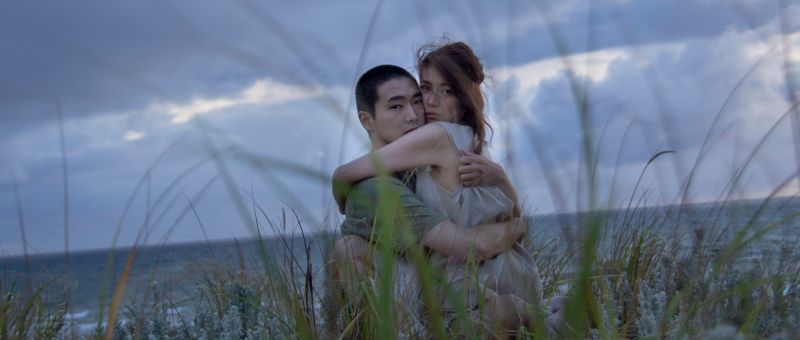
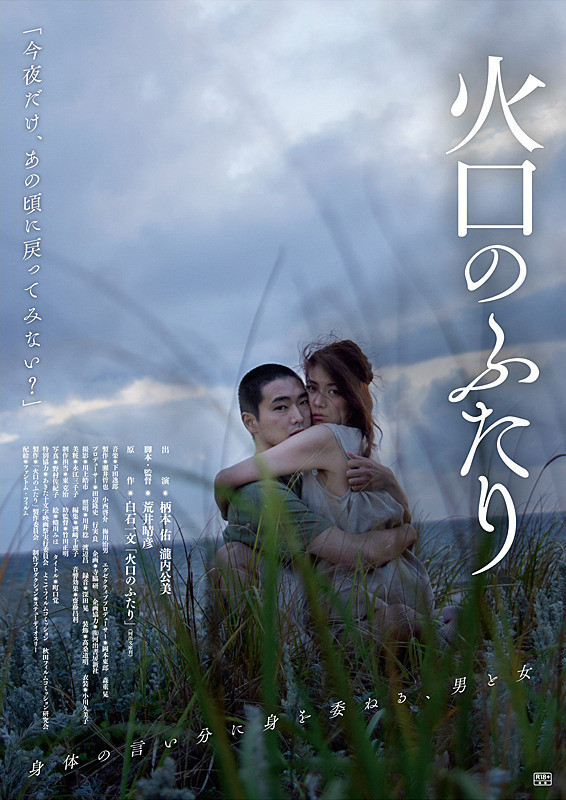
It Feels So Good (火口のふたり, Haruhiko Arai, 2019)

“It’s kind of erotic” a young man remarks watching the local bon odori, “Like dancing on the border between this world and the next”, the woman adds, “people who have died and are stuck in limbo”, “kind of like us”. In limbo is indeed where the lovers of It Feels So Good (火口のふたり, Kako No Futari) seem to be, perpetually awaiting the end of the world while wilfully retreating into the romantic past as they reheat their adolescent love affair from a perspective of experience.

Now approaching middle age, Kenji (Tasuku Emoto) is a dejected divorcee living an aimless life in Tokyo when he gets a call from his father (Akira Emoto) to let him know that his cousin, Naoko (Kumi Takiuchi), is getting married and would like to invite him to the wedding. He spins a yarn about needing to ask for time off from a job he doesn’t have, but packs up and leaves right away, staying in the old family home vacant since his mother died and his father remarried. Naoko visits him almost immediately, enlisting his help transporting a large TV set to the house she will be sharing with her fiancé, a major in the SDF currently engaged in disaster relief. Apparently still not over their aborted romance of more than a decade earlier, she determines to seduce her former lover for a one night stand, but the night of passion reawakens Kenji’s desire and eventually leads to a five-day holiday in which the couple cocoon themselves in intimacy awaiting the return of the absent major. 

Adapted from the novel by Kazufumi Shiraishi which was published in the immediate aftermath of the 2011 earthquake and tsunami, It Feels So Good finds itself in a moment of acute anxiety and existential threat. The lovers feel themselves in various ways already dead, in part because of the poetic affectation of a lovers’ suicide in which they imagined themselves swallowed by the crater of a dormant mount Fuji. The inactive volcano motif perhaps hints at the untapped potential of their still simmering passion, but also at their mutual emptiness as they attempt to find meaning in the aftermath of disaster. Naoko confides that she decided to get married, in part, because she wanted to become a mother after witnessing so much death, but later adds that she is also suffering from a kind of survivor’s guilt as a resident of Akita, in the disaster area but itself relatively untouched by death or destruction. Kenji, meanwhile, struggles to emerge from the ashes of his failed marriage which seems to have sent him into a self-destructive, alcoholic spiral, that cost him his career and left him living aimlessly in the city. 

Naoko spins their “temporary” affair as a return to the past, not really cheating just temporally displaced, as they hole up together in her marital home making the most of their time alternating between the bed and the dinner table engaging in two kinds of dialogue, that of the body and the other of the mind. Returning to a previous intimacy they marvel at the ease of their connection while edging their way towards a frank discussion of how and why their original affair came to an end, reflecting on shame and fear as they meditate on past choices and their future implications always aware that their present connection has an expiry date. That sense of an ending takes on existential connotations not only for the couple but for the wider world as they contemplate a coming disaster, refocussing their minds and desires on the here and now. “I should have listened to my body” Kenji laments, refusing to think of the future in favour of the present moment, “it’s now or never”.

It Feels So Good topped the Kinema Junpo Best 10 list for 2019, a feat doubly notable because it is directed by Haruhiko Arai who is, among other things, editor of rival publication Eiga Geijutsu (ethical concerns aside it took the top spot in their poll too). Arai began his career in pink film writing scripts for Koji Wakamatsu and there is something distinctly ‘70s in It Feels So Good’s nostalgic sensibility besides its plaintive retro folk score and theatrical dialogue. Nevertheless what he charts is two people learning how to live in a world of constant anxiety, sitting atop a volcano but choosing heat over ash, retreating into private passion as a protective bubble against existential uncertainty.


It Feels So Good is available to stream in the US until July 30 as part of this year’s Japan Cuts.

Original trailer (English subtitles)
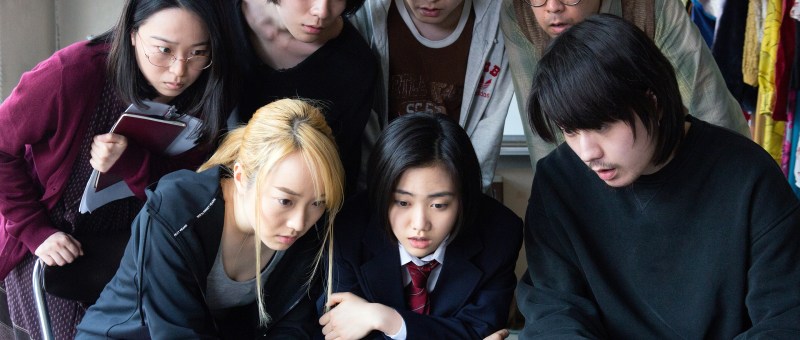
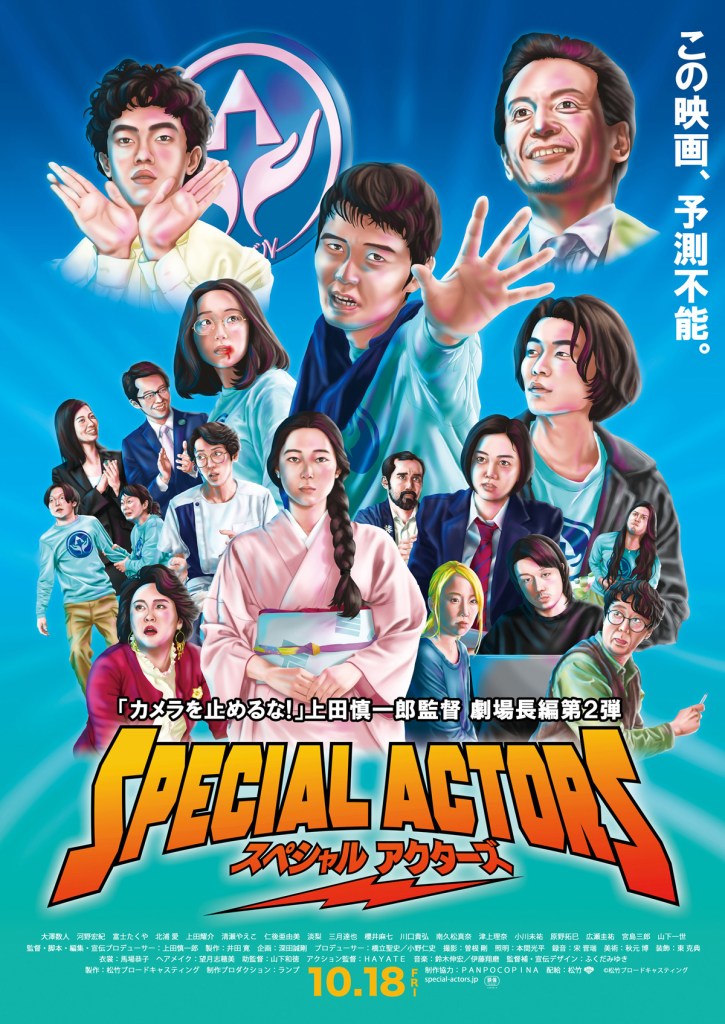
Special Actors (スペシャル アクターズ, Shinichiro Ueda, 2019)

When your made on a shoestring indie debut becomes an accidental international phenomenon, no one could really blame you for succumbing to imposter syndrome. Shinichiro Ueda’s One Cut of the Dead, a meta comedy with high concept conceit, delighted fans around the world but rather than slide into summer tentpole territory Ueda remains true to his roots with follow up feature Special Actors (スペシャル アクターズ) once again developed through actors’ workshops and owing a significant debt to contemporary stage comedy.

Our dejected hero, Kazuto (Kazuto Osawa), is an anxious young man burdened with PTSD from childhood trauma that causes him to faint when he becomes overly stressed or is confronted by an overbearing, if not actually violent, male authority figure. He dreams of becoming a hero who can protect people like Rescue Man, the star of an American tokusatsu-style show he’s obsessively watched dubbed into Japanese since childhood, and is determined to become an actor only his habit of fainting mid-audition constantly frustrates his ambitions. Already behind on his rent and about to be fired from his part-time job as a security guard on the grounds that he didn’t disclose his “illness” when he applied, Kazuto is reunited with his estranged younger brother Hiroki (Hiroki Kono), also an actor, who offers to introduce him to his agency, “Special Actors”. In addition to the usual TV and advertising work, Special Actors speciality is renting out talent for “real” as in providing professional mourners, bulking out theatre audiences with laughing stooges, and engineering long queues outside previously empty restaurants. 

Kazuto isn’t quite convinced, not only because it seems like anxiety central, but because it’s more than a little bit shady. The lead “scenario” writer was once a conman, and you can’t get away from the fact this is all quite manipulative and essentially unethical. Forced to take the job because of his financial predicament, he finds himself involved in various plots to change problematic behaviour at the request of well-meaning relatives such as a mother desperate to rescue her daughter from frittering all her money away at host bars. But are the Special Actors really any different than a host at a host bar who is after all only playing a role, as the young woman must know even if she has for some reason been taken in by it? Perhaps they’d be better to find out what is fuelling her obsession rather than coming up with some hokum involving a fake shaman to convince her that her behaviour is dangerous on a cosmic level. 

The moral ambiguity only deepens when the team take on their biggest challenge yet, taking down a shady cult at the request of an orphaned teenage girl whose sister seems primed to give away the family inn. Abruptly shifting into the realms of the espionage thriller reimagined as theatre, Ueda concocts an elaborate heist as the Special Actors infiltrate with the intention to expose. The central irony is of course that in practical terms there isn’t so much difference between them. They are both “lying”, manipulating vulnerable people and doing it for financial gain. “Acting is a big lie” the irate director had screamed in Kazuto’s face, “you have to mean it”. Is the shady cult merely “theatre” taken to an extreme, and if so who if anyone should be held responsible?

Ueda isn’t so much interested in these themes as the ironic potential of their latent comedy, stitching together a series of theatre skit set pieces working towards the epic finale in which the hero, Kazuto, learns to put on his cape and save the day by overcoming his internal “villain” in the shape of his abusive father. Like the cult, the Special Actors are also promising salvation or at least liberation from behaviours which others find problematic regardless of the target’s own wishes or desires even if in the case of some it may be for their own good, a more elaborate form of role play than that enacted in a therapy session. We are indeed all “acting” to one extent or another and you can never be sure that anyone is who they say they are because life itself is theatre. Shot with a perhaps thematically appropriate TV drama aesthetic, Kazuto’s zero to hero journey is pure wish fulfilment fantasy, but even if never reaching the perfectly constructed heights of One Cut of the Dead is undeniably entertaining. 


Special Actors is available to stream in the US until July 30 as part of this year’s Japan Cuts. Tune in for the live Q&A (available worldwide) after the movie on July 17 (also available afterwards on demand)!

Original trailer (English subtitles)
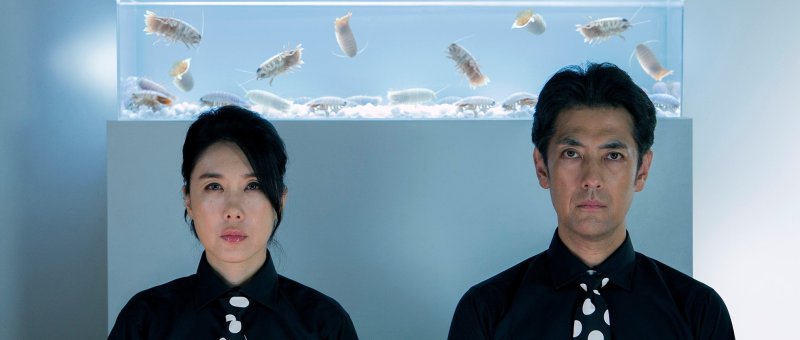
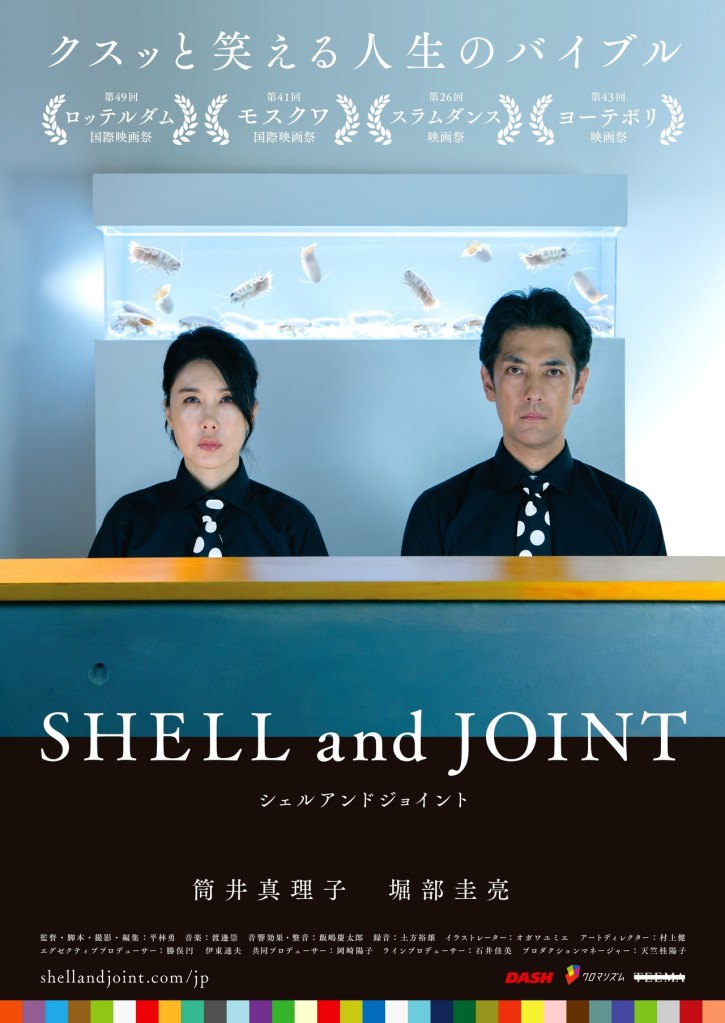
Shell and Joint (Isamu Hirabayashi, 2019)

A capsule hotel is a contradictory space, a hub for compartmentalised pods which are nevertheless joined to form one greater whole. The people who frequent them are usually looking for confined private spaces as if cocooning themselves before emerging as something new, or at least renewed, yet the hotel at the centre of Isamu Hirabayashi’s Shell and Joint is slightly different, a noticeably upscale take on convenience with its stylishly modernist design and well appointed spaces from showering facilities to saunas. It is also, it seems, at the nexus of life and death as its bored receptionists, childhood friends, debate what it is to live and what it is to die. 

Sakamoto (Mariko Tsutsui), the female receptionist, has considered suicide many times but continues to survive. She attributes her death urge not to existential despair but to brain-altering bacteria and is certain that a vaccine will eventually be found for suicidal impulses. While her deskmate Nitobe (Keisuke Horibe) is struck by the miracle of existence, Sakamoto thinks his tendency to adopt a cosmic perspective is a just a way of dealing with his fear of death in rejecting its immediacy. Her suicide attempts are not a way of affirming her existence and she has no desire to become something just to prove she exists, nor does she see the point in needing to achieve. Just as in her bacterial theory, she rejects her own agency and represents a kind of continuous passivity that is, ironically, the quality Nitobe had admired in the accidentally acquired beauty of the pseudoscorpion. 

This essential divide is mirrored in the various conversations between women which recur throughout the film and mostly revolve around their exasperation with the often selfish immediacy of the male sex drive. The creepy “mad scientist” starts inappropriate conversations about sperm counts and his colleague’s impending marriage, offering to loan him some of his apparently prime stock to vicariously father a child with the man’s “cute” fiancée who, in a later conversation with another female researcher, expresses her ambivalence towards the marriage, like Sakamoto passively going with the flow, because men are like caterpillars permanently stuck in the malting phase. Her colleague agrees and offers her “men are idiots” theory which is immediately proved by the male scientists failing to move a box through a doorway. 

A middle-aged woman, meanwhile, recounts the process of breaking up with her five boyfriends who span the acceptable age range from vital, inexperienced teenager to passionate old age through the solipsistic, insecure self-obsessed middle-aged man but her greatest thrill lies in the negation of the physical, remarking that “ultimately eroticism is all mental” while suggesting the ephiphany has made her life worth living. On the other hand, a young man is terrorised in a sauna by a strange guy claiming that he is actually a cicada and simultaneously confiding in him about the strength of his erection along with the obsession it provokes to find a suitable hole in which to insert it. 

“What’s the deal with leaving offspring?” another of the women asks, seemingly over the idea of reproduction. The constant obsession with crustacea culminates in a butoh dance sequence in which lobsters spill their eggs down the stairs of an empty building (much to the consternation of an OL sitting below and, eventually, the security team) while other strange guests tell stories of women who underwent immaculate conception only to be drawn to the water where hundreds of tiny crab-like creatures made a temporary exit. The urge to reproduce, however, necessarily returns us to death and the idea of composition. The melancholy story of a Finnish woman drawn to the hotel because of its similarity to a beehive meditates on the sorrow of those left behind while a fly and a mite mourn their cockroach friend by wondering what happens to his dream now that he has died only to realise that because he told them about it, it now lives on with them. Nitobe wonders what the corruption of the body in death means for the soul and for human dignity, while the images Hirabayashi leaves us with are of a corpse slowly suppurating until only a scattered skeleton remains. Such is life, he seems to say. Life is itself surreal, something which Hirabayashi captures in his absurdist skits of the variously living as they pass through the strange hotel and then, presumably, make their exits towards who knows what in the great cycle of existence.


Shell and Joint streamed as part of this year’s online Nippon Connection Film Festival. Viewers in the US will also be able to catch it streaming as part of this year’s Japan Cuts!

International trailer (dialogue free)

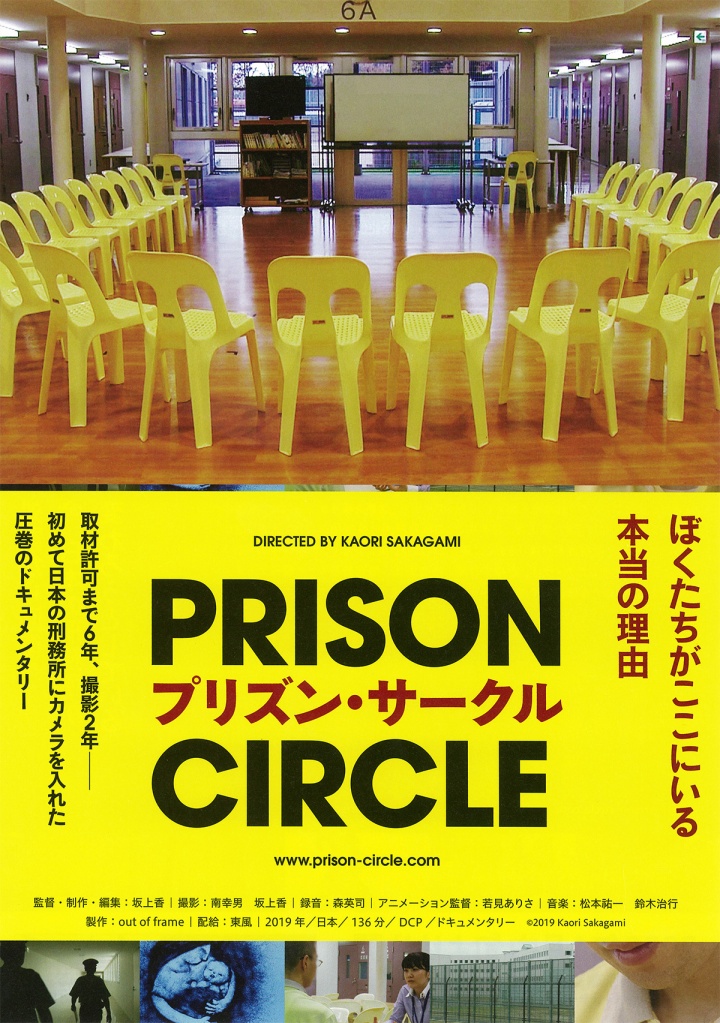
Prison Circle (プリズン・サークル, Kaori Sakagami, 2019)

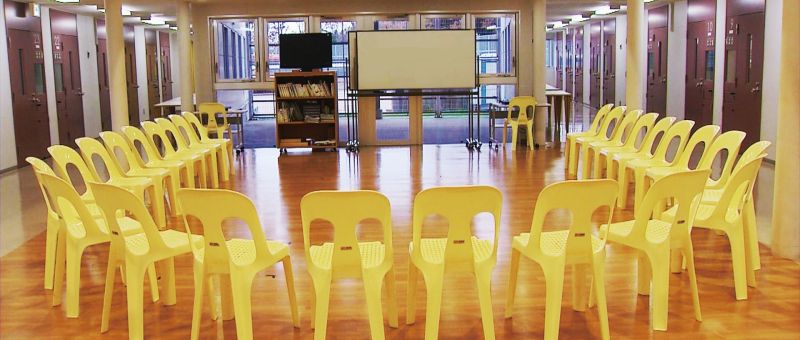
“A scar may recover but trauma never goes away” according to one of the inmates in Kaori Sakagami’s heartfelt documentary Prison Circle (プリズン・サークル). Neatly encapsulating the doc’s themes, the title refers both to the circle of chairs which represents the open group therapy sessions at the centre of the experimental rehabilitation programme on which the film is focussed, and the cycle of violence to which it alludes. Long interested in justice issues, Sakagami follows her two previous documentaries dealing with the US penal system with that of Japan, but concerns herself less with life in prison than the wider social issues which led to these men being convicted of crimes along with their future possibilities for reintegration into mainstream society. 

Sakagami apparently spent six years trying to acquire permission to shoot inside a Japanese prison before coming to an agreement with Shimane Asahi Rehabilitation Program Center which nevertheless has its limitations in that the faces of all the inmates are understandably blurred, she is always accompanied by two guards, and is not permitted to interact with prisoners or anyone working in the prison outside of a few direct interview sessions. Apparently inspired by Sakagami’s US documentary Lifers: Reaching for Life Beyond the Walls, the Shimane programme is the first and only of its kind in Japan shifting the focus away from punishment towards rehabilitation supporting around 40 men through a therapeutic treatment centre (TC) which attempts to help the prisoners understand the reasons for their crimes, empathise with their victims, and eventually return to mainstream society. According to the closing text the programme has been successful in reducing the rate of recidivism among its graduates in comparison with those released from a regular prison. 

In order to qualify, inmates must have the will to change, have no underlying mental health conditions, and be serving at least six months. The prisoners are also described as low risk though many of those we meet have been convicted of violent crimes including those which involved a death. Operating as a small bubble within a larger facility, the TC shares many of the rules and regulations with the wider population in that inmates are expected to raise their hand to ask permission of the guards any time they want to do something, but unlike other blocks are permitted to walk around unsupervised and sleep in “rooms” rather than “cells”. Prisoners engaging in the programme are also partially exempted from mandatory labour requirements while required to participate in the group sessions that are at the core of the TC. 

Following four men over two years, Sakagami finds a fatalistic similarity among their stories despite the differences in their offences, painting their crimes as a cry for help and direct result of childhood trauma. Each of the men who are now in their 20s comes from a difficult family background and experienced abuse, neglect, and bullying which is, the film seems to suggest, the root cause of their lawbreaking. The first of the men, Taku, was abandoned by his abusive father into a children’s home and thereafter left without support as a young man leaving care with nothing to fall back on. Encouraged to be open, he relates his embarrassment in revealing that even as a grown man he often longs to be hugged he feels because his parents never held him when he was a child. The other prisoner reveals he feels something similar, and other of the men admit they fell into crime in part because they wanted to stay connected to something even if it was delinquent kids in place of a family that had already failed them. The last of the men, Ken, also explains that he ended up getting into debt in part because he was buying expensive presents for his mother and girlfriend because he feared they’d abandon him and he didn’t know how else to keep them. 

Yet the prisoners also admit to feeling little remorse, seeing themselves as victims rather than perpetrators and struggling to draw the lines between their trauma and the crimes they have committed along with the hurt they’ve caused to those around them. Through therapy and role play sessions, the prisoners learn to empathise with each other as well as themselves as they begin to process their trauma in an essentially safe space. Sakagami shifts into gentle, storybook-style sand animation in order to dramatise their often horrific childhood memories linking back directly to a fairy tale written by one of the men about a boy who cried wolf because of a mysterious curse which forced him to lie, insisting that he was fine even in his loneliness as he pushed away those who had not rejected him. The boy in the fairy tale is eventually given the power to free himself after being approached by a benevolent god who gives him permission to speak his truth, emerging from his darkness into the light. Though limited by the conditions of filming and over reliant on onscreen text, Sakagami’s compassion for these men and faith in the project is never is doubt as the closing dedication “For everyone who wishes to stop the cycle of violence” makes plain. 


Prison Circle streamed as part of this year’s online Nippon Connection Film Festival. Viewers in the US will also be able to catch it streaming as part of this year’s Japan Cuts!

International trailer (English subtitles)

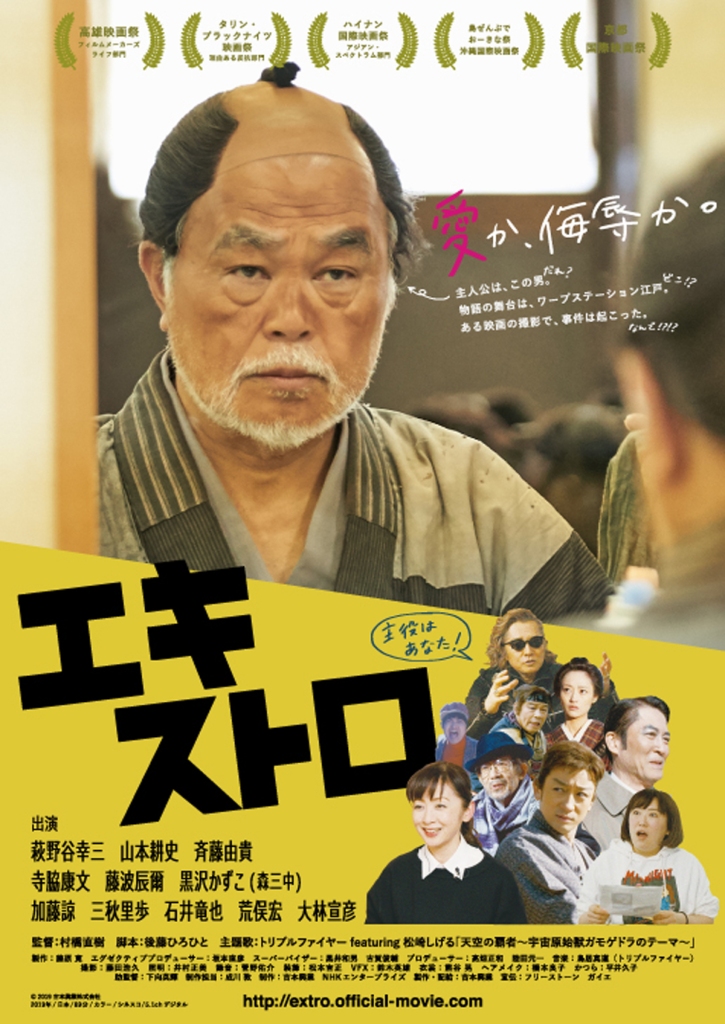
Extro (エキストロ, Naoki Murahashi, 2019)

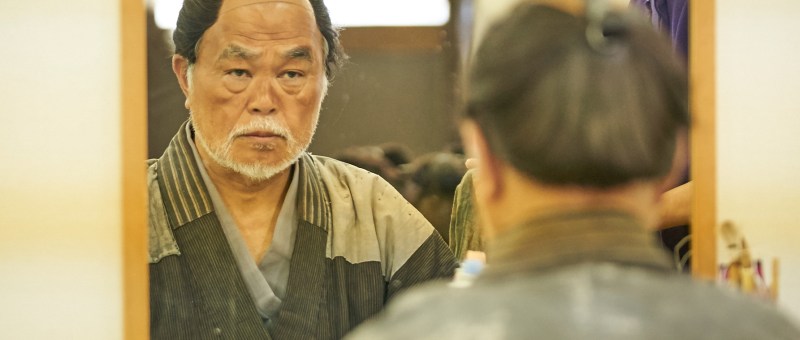
Extras are the unsung heroes of the movies. Getting up in the middle of the night, prepared to spend hours in makeup, and enduring not only the discomfort but also the boredom of standing around all day waiting for something to happen. Naoki Murahashi’s affectionate mockmentary Extro (エキストロ) is dedicated to those whose names do not appear in the credits and are, according to the characteristically warm onscreen interview from the late Nobuhiko Obayashi, the very force that brings life to the otherwise artificial world of the film set. 

The set in this case being “Warp Station Edo”, an artificial replica of a historically accurate samurai-era town used for the production of jidaigeki TV serials. Murahashi’s first subject is a retired dental technician, Haginoya (Kozo Haginoya), fulfilling a lifelong dream as a background performer, but as we quickly see the life of an extra is not an especially glamorous one. Having got up at the crack of dawn to be there at the time listed on his call sheet, he’s nearly sent away because he doesn’t want to shave his beard and back in old Edo facial hair was prohibited for civilised people. The only solution is to switch his role from townsman to farmer, which causes a costuming delay and gets the AD into trouble. Haginoya then goes on to cause yet more problems by bigging up his part before being taken ill, complaining that his intestines hurt right in the middle of a take. Unsurprisingly, he sits the rest of the day out. 

Meanwhile, the other extras are mostly forced to stand around in the cold waiting for the cameras to start rolling. The agency which provides the background actors laments that extra work is only suitable for flexible people with a lot of free time, i.e. pensioners like Haginoya, but that it also requires physical stamina which they often lack. It also transpires most of the agency’s employees are working on a volunteer basis and earning their money through a separate main job, which really begs the question why they bother especially when the agency itself becomes liable for the extras’ mistakes such as those repeatedly made by one “problem child” including making sneaky peace signs, smiling at the camera, and posting strange on-set photos to social media. 

Not quite content with satirising the production environment and its tendencies towards exploitative employment practices, Murahashi adds a second surreal plot strand introducing two bumbling policemen who are seconded to go undercover as extras after a suspected drug dealer is spotted on camera, somewhat incomprehensibly stepping out of hiding and into living rooms across the country. Predictably, the policemen aren’t very good at the acting business and quickly forget all about the case while becoming overly invested in their cover identities, even attending an acting workshop in an effort to blend in with the background stars. 

While the hero of the jidaigeki TV drama earnestly insists that the extras are what give the fake town “life” and it is in a sense he who is being allowed to perform in their world, not everyone is so forgiving. A pro-wrestler brought in to star in a low budget movie titled Dragon Samurai gets so fed up with the antics of the two policeman that he eventually quits, presumably costing another production company somewhere a lot more money, while a repeated gag sees most of the projects go unreleased because someone involved with the production had too much to drink and engaged in acts of public indecency. One such project is the amazingly titled “Prehistoric Space Monster Gamogedorah”, apparently inspired by a local legend about a giant evil duck.

From the self-obsessed stars who turn up when the money’s right to the embattled agency staff and the stressed out ADs, Murahashi doesn’t quite so much sing the praises of the extras as satirise the low level production industry, but does eventually cycle back to the unironic intro from Obayashi who affirms that the extras, or “extros” as he likes to call them short for “extraneous maestros”, are a part of what gives film its beauty and power. As if to prove that sometimes dreams really do come true, even Haginoya gets his moment in the spotlight mimicking his screen hero Steve McQueen as an Edo-era fireman but disrupting the filming once again by laughing maniacally in joy as he rings his bell while Gamogedorah looms ominously on the horizon.


Extro was streamed as part of this year’s online Nippon Connection Film Festival. Viewers in the US will also be able to catch it streaming as part of this year’s Japan Cuts!

Original trailer (no subtitles)

Mulberry Child (Susan Morgan Cooper, 2011)

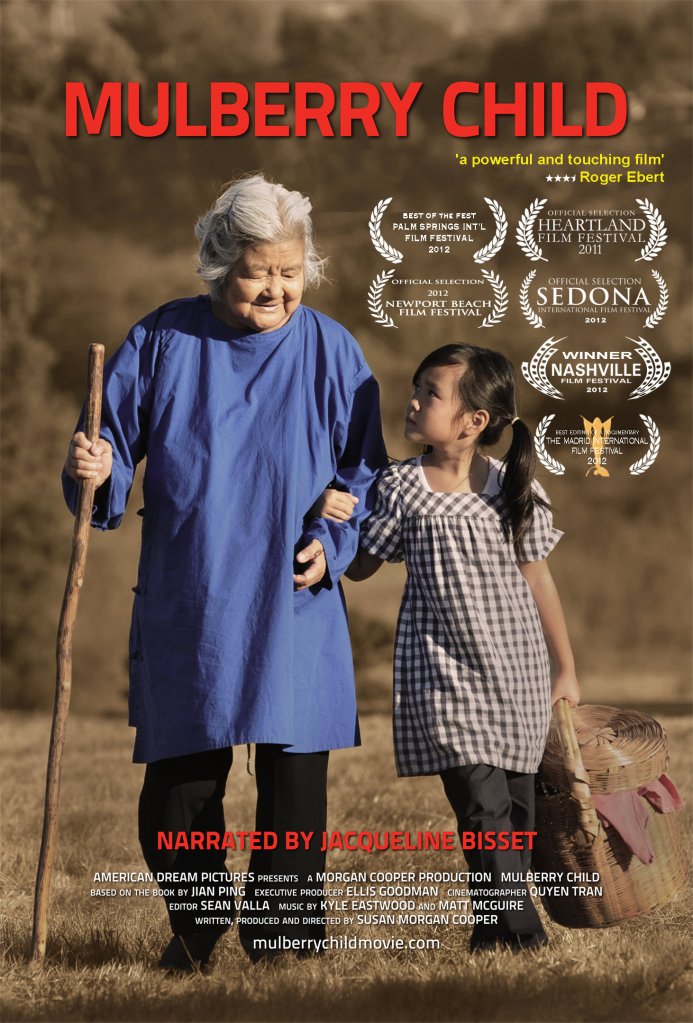
Unavoidably, it can be difficult for parents and children to understand each other. They come from different times and places, and the relationship will always be strained by the weight of conflicting expectations. All these things are true no matter where each of you were born or raised, but they are perhaps exacerbated by a degree of cultural dislocation. Author Jian Ping, the subject of Susan Morgan Cooper’s documentary/drama hybrid inspired by Ping’s memoir Mulberry Child, attributes the distance between herself and her Westernised daughter Lisa to just this fact, worried that in bringing her to America for a better life she may have made a mistake. At once silently proud of everything she has achieved, she also fears that Lisa takes her easy life for granted and has “forgotten” the hardships her family once faced during China’s Cultural Revolution. 

It’s telling in some ways that Jian asks Lisa to read her book rather talking to her directly, hoping that by learning about the brutalisation of the Mao years and the echo of its affects in her family alone might help to explain something to her about why she is the way she is. There’s no getting away from the fact the relationship between the two women is strained beyond the normal degree, Lisa keen to defend her Americanised way of life and apparently unable to understand her mother’s attitude to money which she sees merely as a means to an end rather than something to be accumulated for its own sake. That might in part be less culture than class, in that Lisa at least appears to have enjoyed a high standard of life and it’s difficult to appreciate the powerful desire for material security if you’ve never been without it, but also leads back to a conflict between the two women’s ideals of a “good” life and the disconnect in the their essential ideals. 

Born in China but living in America since she was 4 1/2, Lisa claims not to feel resentful towards her mother for having temporarily left her behind in China with her grandparents while studying abroad. Nevertheless, she is very frank in voicing hostility, devastatingly stating that she feels like a guest in her mother’s home while later recalling a solitary childhood, leaving at 15 for boarding school. She feels as if she was raised to be self-sufficient and finds her mother’s “sudden” desire for closeness odd, declaring the 1.5 mile journey to her mother’s apartment too inconvenient to make with any regularity. Lisa also feels very little connection to her family in China whom she views as quasi-strangers, while Jian perhaps feels that the fact they are family is enough to bind them no matter what. 

What Lisa comes to understand through her journey to China is less a grasp of cultural history than that there are different ways of showing love and some of them are easier to understand than others. Jian too wrestles with the same thing, recalling her childhood with her own mother whom she regarded as cold and distant, preferring her warm and kindly grandmother whose feet were bound, knowing that her grandmother too was shaped by the times in which she lived in that she was raised to be loving and affectionate but mainly in order to serve men. Jian’s mother came of age during turbulent times and saw freedom in Mao’s promises of an end to feudalism which also included an end to cruel traditions such as foot binding and the promise at least of sexual equality. But the Party demanded total loyalty, and in times such as these emotion was a liability. Jian internalised the lessons of her mother and grandmother and learned to bear her sorrow in silence with grace and fortitude. Her grandmother told her to be strong like the mulberry tree so as never to break, emotional repression as a tactic for survival. She made sacrifices for a better life for her daughter, but her daughter resents her for a perceived emotional absence and for always expecting “better” in her maternal pride which, ironically, only fuels her sense of inadequacy. 

The film closes with an emotive moment of mother and daughter bonding over shared enthusiasm for the 2008 Beijing Olympic Games with Lisa suddenly declaring that China is the future as she begins to embrace her dual heritage, but does not stop to ponder how Jian’s parents, apparently also excited about the Games, felt about the modern China as those who had been among the more fervent supporters of a now abandoned Maoism. Nevertheless, Mulberry Child proves that greater intimacy can be forged only through a process of mutual understanding. Still sounding unconvinced, Lisa closes with the affirmation that they are at least “starting the process” as mother and daughter reflect on the legacies of trauma national, historical, and personal.


Mulberry Child is available to stream via Amazon Prime in the US and UK.

Trailer

Sunod (Carlo Ledesma, 2019)

A mother goes to great lengths to be with her daughter in twisty Philippine horror Sunod. In a tense tale of supernatural dread, Sunod’s heroine contends not only with mysterious curse and psychological disturbance but with social inequalities, conservative social codes, and a health crisis while trying to protect her young daughter but soon finds herself dragged into a web of black magic intrigue, her calm, rational and compassionate response to becoming the target of a demonic scam only used against her by her unscrupulous aggressors. 

Never married single-mother Olivia (Carmina Villaroel) is wearing herself to the bone with worry over her teenage daughter Annelle (Krystal Brimner), a long-term hospital patient with a dangerous congenital heart defect that apparently requires expensive medical treatments Oliver can ill afford. Reluctant to be away from her daughter, she knows she needs to find another job but draws a blank in the currently difficult employment environment. At her wits’ end, she steps into a recruitment fair intended for students in search of part-time work but manages to impress the recruiter with her top English skills and spiky attitude. Her new job sees her working nights at a call centre where she struggles to adjust to the intense office atmosphere while bonding with “professional trainee” Mimi (Kate Alejandrino) and sympathetic boss Lance (JC Santos). 

Even on her first day, however, Olivia begins to notice something strange about the building where her new job is located which apparently once housed a hospital and is kitted out in gothic style complete with statues of angels and sweeping staircases. During a power cut one day after work, Olivia is approached by a strange little girl, Nerisa (Rhed Bustamante), and unwisely takes her by the hand, guiding her out of the building. Ominous events intensify, she begins hearing things and getting strange calls while Annelle’s heart condition appears to have been miraculously healed only she’s also had a complete transplant of personality. 

Of course, much of this could be down to Olivia’s fraying nerves. We’re told she’s not slept well in months and is already on various kinds of medication while obviously under extreme stress working overtime to try and pay for her daughter’s medical care. Trapped at the bottom of the economic ladder, she also faces a degree of social stigma as an unmarried mother, as she reveals nervously confessing to Mimi that she’s raised her daughter alone and so might not be the best person to ask for dating advice. Mimi, meanwhile, is an ultra modern freeter, flitting between a series of temporary jobs uncertain whether to get married for convenience’s sake or make a go of independence by committing to a career. After listening to Olivia’s story, she decides to give things a go at the call centre and the two women generate an easy friendship despite the difference in age and experience. 

Olivia meanwhile finds herself in a difficult position, propositioned by the previously “nice” Lance who hands her a fat check to help cover Annelle’s medical bills but then tries to get his money’s worth by trying it on in the employees’ rest room. She manages to fend him off, but is conflicted in her decision to keep the money out of a sense of desperation. Plagued by strange nightmares in which she sees herself bury her daughter alive, she begins to lose her sense of reality, half convinced that Annelle has been possessed by the spirit of Nerisa who, she has discovered, may have some connection with the building’s dark history as a World War II hospital. 

“When you have a child, there’s always a constant feeling of fear because her life is in your hands” Olivia tries to explain to Mimi, illuminating a more general kind of maternal anxiety than her acute worry over her daughter’s health. A compassionate soul, she tries to help Nerisa settle her unfinished business by helping her find her mum in the hope that she can then “move on” leaving her and Annelle in peace, but finds herself entangled by dark maternity and under threat from a motherly entity that quite literally cannot let go. Driven half out of her mind by an unforgiving, patriarchal society, Olivia tries to do the best for her daughter but struggles to escape her sense of futility in being unable to protect her either from her illness or the society in which they live. Rich and gothic in atmosphere with its creepy disused hospital setting replete with empty corridors and malfunctioning lifts, Sunod’s quietly mounting sense of dread leaves its heroine at the mercy of forces beyond her control, bound by inescapable anxiety. 


Sunod streamed as part of this year’s Udine Far East Film Festival.

Original trailer (no subtitles)

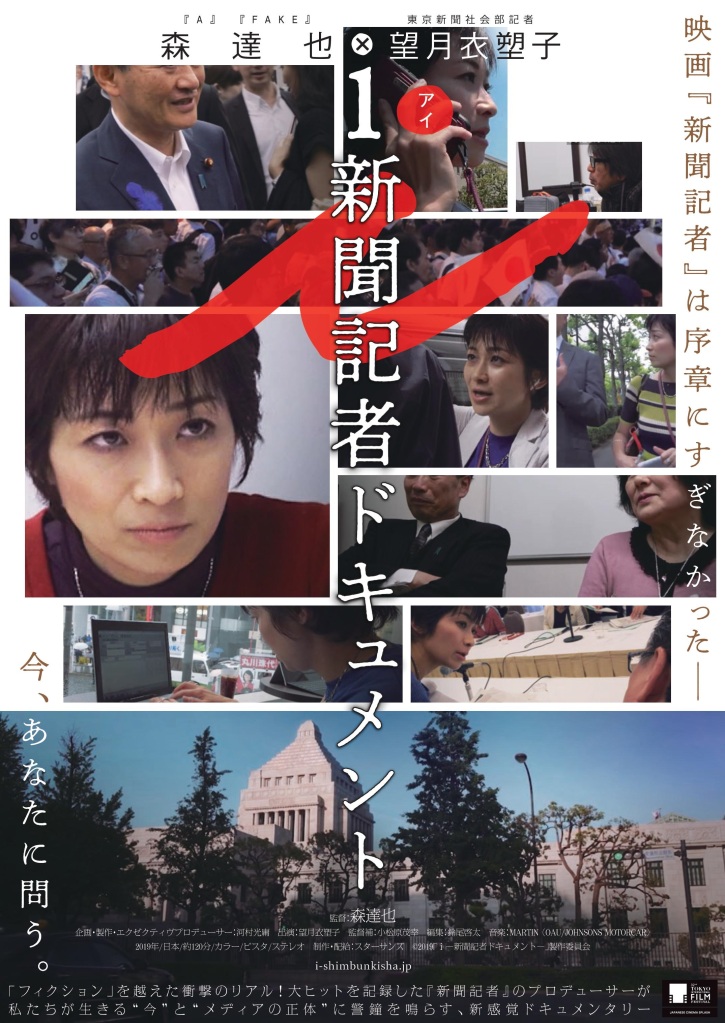
i -Documentary of the Journalist- (i-新聞記者ドキュメント-, Tatsuya Mori, 2019)

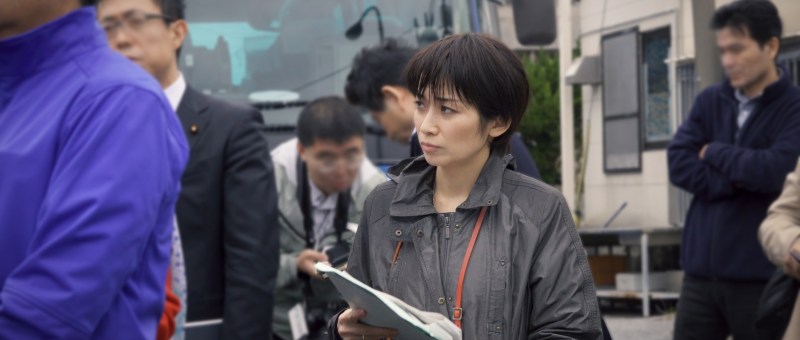
“I’m not obliged to answer you” Chief Cabinet Secretary Yoshihide Suga irritably tells a journalist part way through a press briefing. It begs the question, if you’re not willing to be interrogated then what are the briefings really for? Something which unflappable reporter Isoko Mochizuki, subject of Tatsuya Mori’s documentary i -Documentary of the Journalist- (i-新聞記者ドキュメント-, i -Shimbun Kisha Document-) makes a point of asking but of course receives no reply. Reporting for Tokyo Shimbun, Mochizuki has earned a reputation for being “troublesome”, refusing to let politicians off the hook without getting a proper answer. This is of course what a reporter is supposed to do, she’s only doing her job in holding those in power to account in the name of the people, but Japanese politicians are used to deference from journalists who pull in their punches in fear of losing access. She is also the author of the book which inspired last year’s box office smash political thriller The Journalist in which a dogged reporter finds herself an unlikely ally of a conflicted bureaucrat who is minded to blow the whistle on a governmental land scandal. 

As we see, Mochizuki’s everyday life is nowhere near as glamorous or sensational. In fact, Mori struggles to keep up with her as she finds herself constantly on the move dragging a small suitcase and large tote bag all around town while displaying an ironic tendency to get lost trying to exit official buildings. Meanwhile, none of the people she attempts to visit for comment on the relocation of an SDF facility in Okinawa is in when she calls and, again, she has trouble gaining access to the building in order to leave them a note. 

Access, as we soon realise, is the pressing issue. Mochizuki is a well known reporter for a major paper so it would not be politically expedient to have her removed from the room, but even so the powers that be do their best to obstruct her ability to gain answers, firstly by having an usher loudly instruct her to get to the question while she patiently tries to make her point. It amounts to a kind of game. Mochizuki knows Suga will issue a non-reply, insist that the government is acting in accordance with regulations while refusing further comment, and so is using the question to raise awareness of the issue which necessarily takes time in providing context. They then introduce an unofficial policy restricting Mochizuki, but no other reporter, to two questions only to prevent her pressing her point, before escalating matters by crudely issuing an open directive to journalists to avoid basing their comments on “fake” information, attempting to invalidate her line of questioning by implying it is partisan and offered in bad faith. 

The problem is partly that, as Mori is keen to suggest, the system is rigged because of press complicity with government. We learn that the Abe administration, which has long been beset by scandal, has been keeping a stranglehold on the official press club since it took office in 2012. Mori himself tries to get access to briefings to film Mochizuki but is told that it is almost impossible for freelance journalists to gain approval, while a visit to the Foreign Correspondents’ Club reveals that it is no easier for international journalists who may gain access but are not generally given the opportunity to ask questions nor can they speak directly to members of government whom, it is said, are not terribly interested in Japan’s overseas reputation. Papers afraid of losing their spot in the room avoid directly criticising the government, while the rightwing press is content to do the government’s bidding such as in its vilification of the Kagoikes, the couple at the centre of the Moritomo Gakuen scandal in which Prime Minister Abe’s wife was herself implicated, or its attempt to smear a whistleblower on a possibly corrupt sale of land for a veterinary school to an old friend of Abe’s. 

For those reasons while other journalists and politicians may be sympathetic to Mochizuki’s cause in private she receives little support in the room. An increased profile and persistent harassment campaign also brings out the cranks including a death threat from a man who uses a word many would regard as a racial slur to brand her a North Korean spy. The people, however, approve organising a demo in support outside the Diet building insisting on press freedom and government accountability. The title may take things too far in its emphatic “I”, the reporter is not the story, but advocates for an end to the conformist culture of deference to power in which journalists willing to ask difficult questions will no longer be a “troublesome” aberration but the welcomed norm. 


i -Documentary of the Journalist- streamed as part of this year’s Udine Far East Film Festival. Viewers in America will also have the opportunity to catch the film when it streams as part of this year’s Japan Cuts.

Original trailer (no subtitles)

Chasing Dream (我的拳王男友, Johnnie To, 2019)

“You gotta give everything to get everything” according to an intense rocker in Johnnie To’s musical boxing romance, Chasing Dream (我的拳王男友). What turns out to be most important however is not physical endurance but emotional authenticity, if you want to be taken seriously then you have to take yourself seriously first and that means learning to find the courage to embrace your authentic self. A tale of two crazy kids chasing the Chinese Dream, To’s colourful fantasy world is not without its bite as he leans in hard to what it costs to succeed and not in what is often a merciless society.

Our hero Tiger (Jacky Heung Cho), “The Gluttonous Boxer”, is a young man who broke with his boxing master to step into the MMA ring but is also an enforcer for a shady local loansharking gang run by his manager. Aware he is approaching the end of his career – a doctor later tells him he’s in danger of going blind, rupturing his liver, and getting Parkinson’s – Tiger’s life changes one day when he recognises one of the ring girls, Cuckoo (Wang Keru), as the granddaughter of an old woman who used to sell noodles back when he studied boxing in his rural hometown. Unfortunately, Tiger’s boss has also recognised her because she is in deep debt with the mob. Some of the guys want to cut their losses and sell her on to the sex trade but Tiger, seemingly indifferent, claims he can find her a way to work off her debt and thereby kickstarts his rescue not only of her but of himself from the increasingly empty life of an ageing prize fighter. 

What he discovers is that Cuckoo is harbouring intense resentment over being seduced and betrayed by one of China’s biggest pop stars who made himself a name as the “king of originality” after stealing all of her songs and leaving her in the lurch. Qu Fengfeng (Ma Xiaohui) is now a judge on China’s biggest TV singing competition Perfect Diva and Cuckoo has a plan to confront him by getting on the show, the only snag being that she is extremely unpolished as a performer. Tiger, meanwhile, wants to get out of the ring and has a plan to start his own hotpot empire essentially by copying all the best bits of the major chains and bringing them together. He vows to help Cuckoo train by having her mimic the performance styles of major stars, but what she quickly discovers is that there is no substitute for emotional authenticity. A fellow constant decides to switch her routine at the last minute after catching sight of Cuckoo rehearsing, but is unceremoniously voted off by judges who’d rather she “performed a tacky fan dance” (as she was originally planning to do) than simply copycatting famous artists. Challenged that her songs are too similar to Qu Fengfeng’s Cuckoo snaps back that it’s his style that’s close to hers, earning the admiration of astute female judge Zhao Ying (Wu Yitong) who can perhaps detect the artist inside her beginning to free itself from her sense of insecurity. 

Achieving your dreams can however come at a heavy cost. Pearl “the kick ass rocker” (Kelly Yu Wenwen) has an intense, aggressive performance style but in a running gag turns up at each consecutive audition with a new incapacity, eventually using a wheelchair and wearing a back brace only able to move her arms. “Totally worth it in the name of music!” she cheerfully explains, literally destroying herself to get to the top. Tiger does something much the same exploited as he is by his unscrupulous gangster manager, shouting out “it doesn’t hurt” as he trains by having people jump on his belly, but the battering he takes is not so much for himself as for others, stepping back into the ring in defence first of Cuckoo and then of his dejected master, Ma Qing (Shao Bing), whose attempt to defend the dignity of the noble art of boxing against the modern upstart MMA goes horribly wrong. But Tiger cannot fight others’ battles for them, and the only way he can win is by being himself while honouring their legacy. 

Finally finding how to bare their souls for all to see and “have someone share the fatigue of loneliness”, the pair learn to recalibrate their dreams while falling in love discovering that mutual support is their guiding light as they give each other the strength to be all they can be. Ostensibly somewhere in Mainland China, To’s make believe, retro future city has a colourful comic book intensity that adds a mythic quality to the saga of Tiger and Cuckoo that is perfectly in tune with his dreamy romanticism in which sudden flights of fancy including a full-blown Bollywood-style dance sequence seem entirely natural. A surprisingly moving, wilfully absurd musical love story between wildly grinning pugilist and a young woman learning to sing from the the heart, Chasing Dream is a delightful sugar pop confection in which two crazy kids find love in the ring and with it the power to believe in themselves and a better future.


Chasing Dream streamed as part of this year’s Udine Far East Film Festival.

Original trailer (Cantonese, no subtitles)

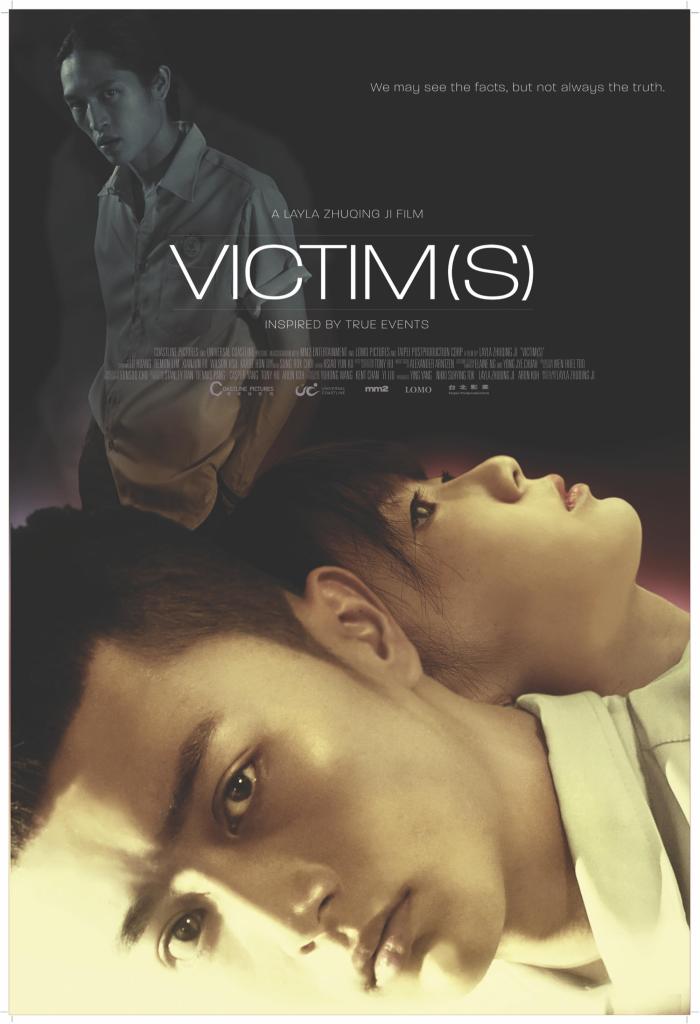
Victim(s) (加害者、被害人, Layla Zhuqing Ji, 2020)

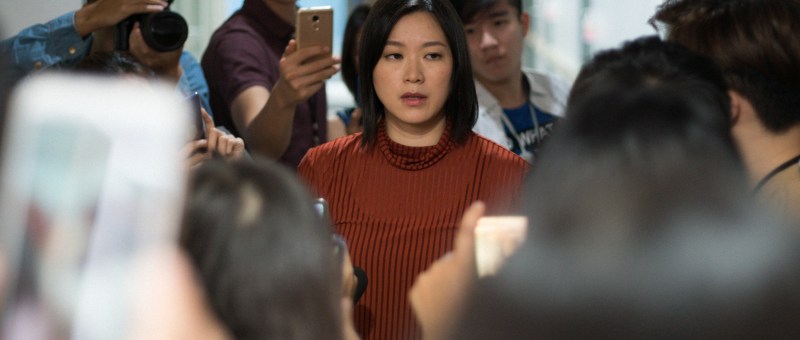
“People don’t care about the truth, they just need someone to blame because that’s the easy thing to do” according to a secondary victim caught up in the complicated events which led to the killing at the centre of Layla Zhuqing Ji’s empathetic debut feature, Victim(s) (加害者、被害人, Jiāhàizhě, Bèihàirén). A tale of two mothers, Victim(s) does its best not to apportion blame to any one individual but points the finger at a rigid and austere conformist society in which conservative social codes and a culture of victim blaming conspire to restrict freedom and breed unhappiness. 

Cast in the roles of victim and killer are high school students Gangzi (Kahoe Hon), the son of a poor masseuse (Remon Lim) stabbed to death beside an ATM, and Chen (Fu Xianjun) son of a wealthy single-mother (Huang Lu) who some say made her money in questionable ways. Students at the school speak of discord between the two boys, describing Chen as strange, a bit of a loner with an unpleasant superiority complex that, coupled with his status as top of the class, led him to look down on those around him. They say he viewed Gangzi with disdain because of his working class background and was upset because they both liked the same girl, transfer student Qianmo (Wilson Hsu), but she turned him down in favour of Gangzi. After a few days on the run, Chen turns himself in and confesses to the crime but has a slightly different story, claiming that, in fact, he was bullied by the other kids including Gangzi partly because he was wealthy, they were roughing him up for money, and partly because he was an outsider at school widely disliked as a swot. 

Of course, both mothers are convinced their sons are perfect angels but are eventually led to discover that perhaps they didn’t know their children as well as they thought they did. The technological divide between the generations trumps that of social class with the kids largely living in an online world where the traditional prejudices are only magnified through teenage gossip. Rather than swapping notes like in the old days, they group chat during in lessons and reinforce social hierarchy through shame and bullying. Transfer student Qianmo quickly finds this out to her cost, becoming a target for the ruling group of popular girls after she declines to join their dance troupe, while the boys are determined to hit on her despite her obvious lack of interest. 

Qianmo was forced to give up dancing and leave her previous school which specialised in the arts because, it’s implied, her dance teacher was molesting her, yet she’s already been branded a “teenage slut” online for supposedly seducing him. The other girls are remarkably unsympathetic, engaging in sexualised bullying they proudly film and share amongst themselves. The boys are doing something similar, yet even though the point of these videos is that the kids share them widely to humiliate each other, they are never a part of the official investigation and the adults have no idea they exist. Qianmo is too afraid to report her bullying because she fears they’ll ask why it is she’s being bullied and then say it’s her own fault, while Chen who finds himself scapegoated after a homoerotic porn magazine is discovered in the dorm, simply fears reprisals. Questioned by the police the other kids all toe the line, afraid that they’ll become targets too for speaking the truth, all too happy to let Chen take the blame while allowing the awful status quo to continue but resentful that he will most likely wield his privilege to escape justice. 

Chen meanwhile blames himself, repeatedly asking if he’s the the cause of others’ suffering while Gangzi works out his frustrations with his abusive father and repressed sexuality through delinquency. Both mothers desperately try to save their sons, but find themselves struggling to comprehend the gap between the image they had of the young men their children were becoming and the unpleasant truths they are beginning to discover. Meanwhile, external bullying from a media mob further obfuscates the truth, baying for blood and creating only more victims in the process as it insists its brand of socially conservative, compassionless justice be served at all costs. Yet against the odds, the women eventually come to a kind of understanding, choosing to accept the reality while protecting other victims, refusing the “easy” option of a prepackaged “truth” that neatly fits the needs the needs of a bullying society. Ji’s hard-hitting debut too refuses easy answers, finding that in the cycle of violence and abuse perpetrators and victims are often one and the same but each subject to the same petty oppressions contributing to an atmosphere of rigid social conformity which breeds nothing but misery.


Victim(s) streamed as part of this year’s Udine Far East Film Festival.

Original trailer (English subtitles)