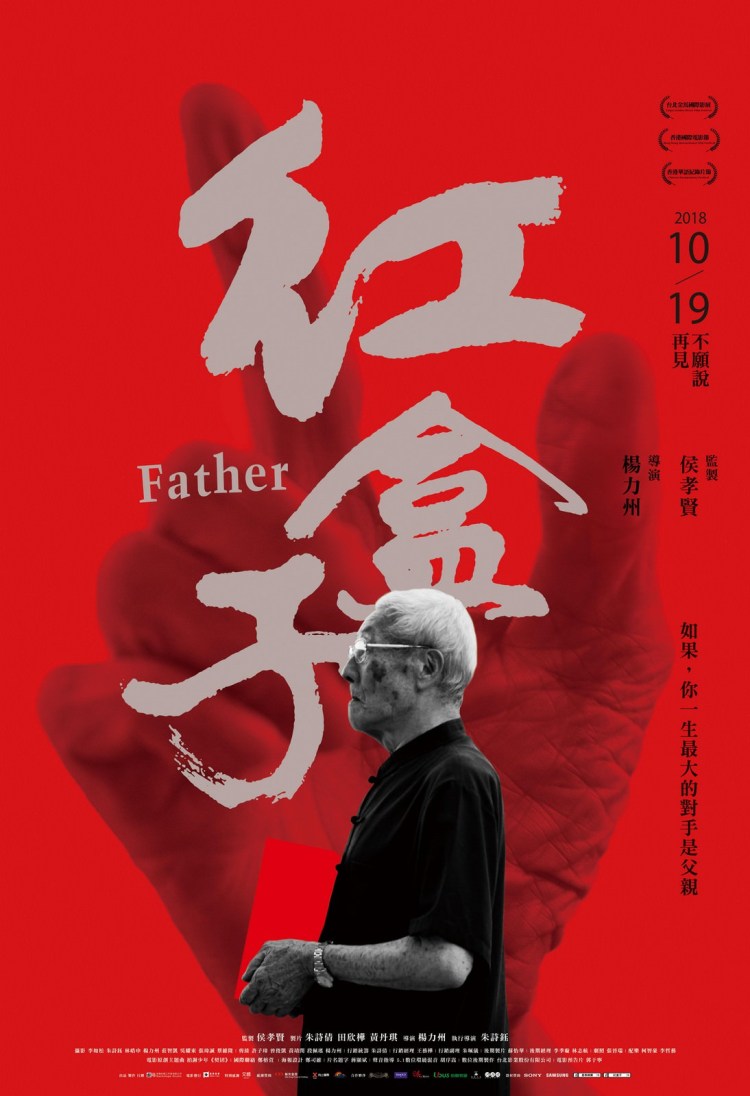
Father (紅盒子, Yang Li-Chou, 2018)

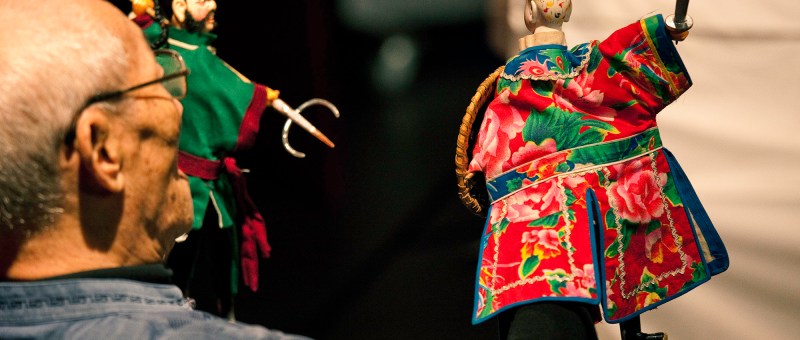
Father posterBudaixi, the art of traditional Taiwanese puppet theatre, is a form that’s fast dying out – not least because of the persistent erosion of the native Taiwanese dialect with which it is most closely associated, but there are those desperately trying to save it despite the relative lack of interest from audiences and the cultural sector. The “father” of the art, Li Tien-Lu, will be familiar to many as the inspiration behind Hou Hsiao-Hsien’s The Puppetmaster, as well as several appearances in Hou’s films including his memorable role as the grandfather in Dust in the Wind. It is not Li, however, who is the subject of Yang Lichou’s documentary but his son – Chen Hsi-huang.

Chen Hsi-huang, now very elderly, is an exiled master of the art who has dedicated his remaining time to ensure its survival by attempting to teach the next generation. Chen is not fussy – he will teach anyone who wants to learn including those from abroad and frequently tours his shows around the world often pairing them with local examples of puppet theatre. His standards are, however, high and he does not entirely approve of the “modernisation” of the art believing that while innovation is one thing technique is another and what he sees in the next generation often disappoints him.

Yang opens with a hypnotic sequence of Chen’s naked hand rehearsing doll movements against a black screen, showcasing his now gnarled fingers bearing the effects of a lifetime’s experiences. Yet despite his various successes, Chen still feels himself slighted and as if he has something left to prove – perhaps ironically, he cannot seem to emerge from the shadow of his late father even now himself in advanced old age. Yang’s subtle suggestion lays the blame for Chen’s internalised resentment on the confucian society and its patriarchal obsession with the “father”. Li had married into his wife’s family and so, as is the custom, his first son took his mother’s surname – Chen, something which seems to have placed a wedge between parent and child leaving Chen more or less rejected by his father simply for having the wrong name. For this reason, he was prevented from inheriting Li’s puppetry company (that honour went to his younger brother surnamed Li) which might, in a way, have been a blessing in giving him the opportunity to remove himself and start again with his own company under his own name were it not for the fact that he is almost always introduced as the son of Li Tien-Lu.

In the traditional arts, it is not uncommon to think of a master as a “father” to his pupils and this does seem to be something Chen took to heart for good or ill. His own father had been extremely strict, often beating him with the head of a doll when he made a mistake. Chen is careful not to make the same mistake with his pupils, but is demanding none the less and often disappointed. His fatherly fixation is perhaps mirrored in his mild rejection of his own first pupil, standing in for a son (his own child did not follow him into the profession), whom he declined to name as a successor despite knowing that he is the most skilled member of the troupe. Somewhat embittered, Chen struggles to escape from the traps set by his father both in terms of his life and of his art.

Chen’s story feeds into that of Budaixi, set against 50 turbulent years of political history which saw it banned by the Japanese for being too nationalist, then defacto banned because of a prohibition on native dialects only to be resurrected in Mandarin to be used for anti-communist propaganda and then the same but pro-China. Chen just wants to be a craftsman perfecting his technique and serving the patron god of puppeteers as best he can. As one of his pupils suggests, regarding Budaixi as an “art” and its practitioners “artists” may perhaps have been a mistake in encouraging the wrong kind of competition and thereby weakening the industry as a whole just when it should be uniting in a shared mission to save Budaixi from disappearing completely.

Chen too struggles to emerge from his father’s shadow, perhaps gripping on too tightly to traditional Budaixi while rejecting its progeny in the burgeoning world of contemporary puppet theatre. Nevertheless, he was able to become a master of the art and to pass his knowledge on to a new generation committed to preserving it even in the face of mild opposition to a supposedly difficult, if infinitely beautiful, art form.


Father (紅盒子, Hóng Héziwas screened as part of the Taiwan Film Festival UK 2019.

Original trailer (English subtitles)
Long Time No Sea (只有大海知道, Heather Tsui, 2018)

Long time no sea posterWhile Taiwanese cinema has not been an exclusively urban affair, Taipei stories have tended to loom large, perhaps presenting an unfairly uniform view of what is in reality an extremely diverse cultural landscape. The debut film from Heather Tsui (Tsui Yung-hui), Long Time No Sea (只有大海知道, Zhǐ Yǒu Dàhǎi Zdào) is set on one of Taiwan’s many islands and among the indigenous Tao whose culture is perhaps being gradually erased thanks to the increasing demands of the modern society and its constant pulls towards the city. A coming of age tale in more ways than one, Tsui’s debut is also a heartrending exploration of learning to cope with parental disappointment while also learning to reappreciate the beauty of island life which might before have seemed unexciting in contrast to city glamour.

The hero, Manawei (Pangoyod Si / Zhong Jia-jin), lives alone with his grandmother (Feng Ying-li) and uncle while his father works as a taxi driver in Kaohsiung. The family is not hungry, but they live humbly and rely on money sent by Manawei’s father whose visits are becoming ever more rare. Missing his dad terribly, Manawei is sometimes resentful towards his grandmother, rejecting her home cooked island fare while longing for junk food and jealous of his friend whose mother, also working in the city, is doing much better and can afford to send him expensive toys as a kind of recompense for rarely being able to come home. Manawei, meanwhile, has been badgering his dad to buy him new shoes for the past few years (his own are so worn out he can no longer even glue the soles back together), and has been reduced to wearing flip flops to school.

The flip flops eventually get him into trouble with authoritarian schoolteacher Chung-hsun (Shang He-huang) who he first met rescuing his sunglasses from the harbour after Chung-hsun lost them in a bout of violent sea sickness. A middle-class city guy, ending up on Orchid Island isn’t something Chung-hsun was looking for and he’s intensely resentful of his new posting, particularly as it’s taken him away from a girlfriend he fears is losing interest. This is perhaps why he’s so hard on his new pupils, roughly berating Manawei for turning up late and in flip flops with no attempt to find out if there might be a reason for his behaviour. Needless to say, his approach backfires in making the boy reluctant to come to school at all in reinforcing his embarrassment over not being able to afford proper shoes.

Long Time No Sea is as much a coming of age tale for Chung-hsun as it is for Manawei as he begins to accept his position as a surrogate parent for his pupils, many of whom are living with relatives (or even alone, at least partially) while their mothers and fathers are away working in the city. This is perhaps why there are relatively few young adults on the island which is home mostly to children and the elderly as well as middle-aged returnees and the few who’ve decided they like the island life best such as radio host Chin-yi (Zhang Ling) who is currently supplementing her income by helping out pretty much anywhere else she’s needed. Chung-hsun only decides to help out with a school entry into a national “traditional dance” competition because he thinks it might improve his prospects of getting off the island faster, but, partly thanks to Chin-yi, gradually begins to embrace the rich cultural history of the Tao while bonding with the kids and coming to the conclusion that perhaps the simple life is indeed best.

Meanwhile, Manawei comes to learn a similar lesson in an ordinary, if heartbreaking, way as he gradually begins to wonder if his father has emotionally abandoned him to make a new life in the city. While his grandmother speaks to him in the local dialect, which he obviously understands, he replies to her mostly in Mandarin and knows he will one day leave the island if only to pursue his education. Longing for his father, he idolises the city with its 24hr junk food and bright flashing lights but most of all for the river of love his father told him flows through it. Finally visiting Kaohsiung he is abruptly confronted with its reality and finds himself warming to his island home with its taro root and longan fruit, no longer tempted by superficial modernity. While Chung-hsun’s assertion that “it’s better with just one road” might be somewhat restrictive if not didactic, it is also a tribute to a simpler, more honest way of life in contrast to city duplicity and empty ambition. Beautifully photographed and evocatively scored, Long Time no Sea is an important window into the little seen indigenous culture of the Tao as well as into the economic realities of modern living and the painful processes of growing up no matter how old you are.


Long Time no Sea was screened as part of the Taiwan Film Festival UK 2019.

Original trailer (English subtitles)
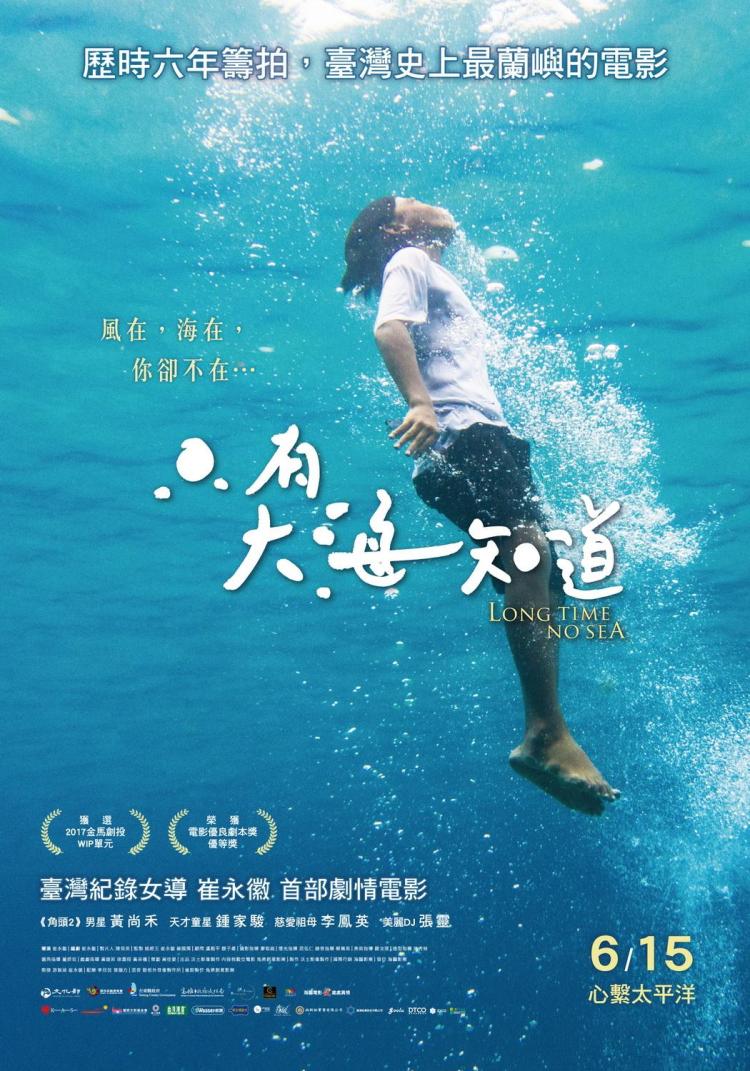
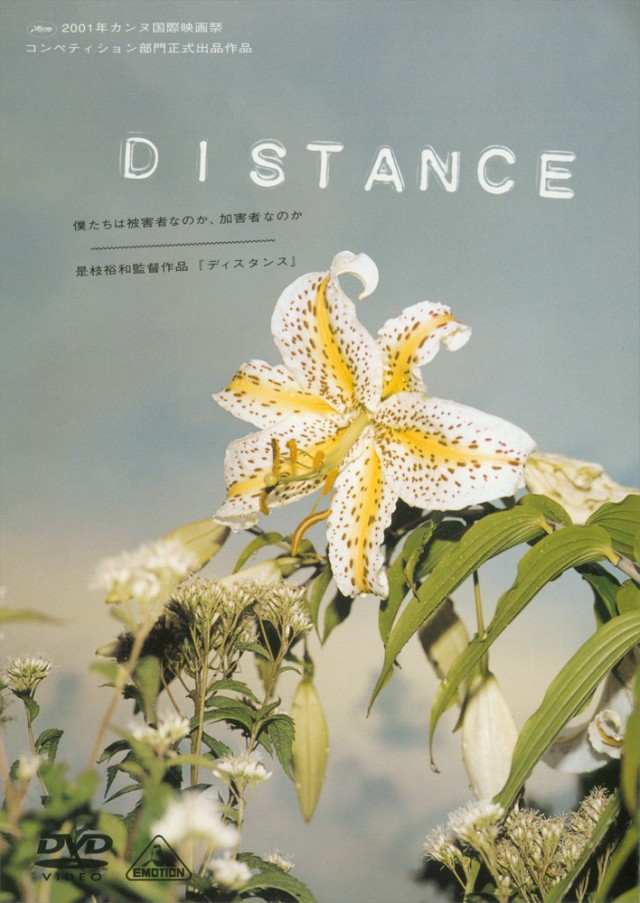
Distance (ディスタンス, Hirokazu Koreeda, 2001)

Distance DVDHirokazu Koreeda has become known predominantly for his nation’s representative genre – the family drama. He has, however, maintained a somewhat ambivalent attitude to the idea of family and more specifically what it means in the contemporary society. Koreeda’s later work might have found more faith in the healing power of familial bonds, but his third film, Distance (ディスタンス), is among his bleakest and finds little cause for hope when relations between people remain necessarily oblique. Another of the post-Aum films from the 2000s, Distance does not concern itself primarily with the immediacy of terrorist cult violence but its wider causes and implications.

As the opening news report informs us, three years previously the Ark of Truth cult released a genetically engineered virus into the Tokyo water system leading to the deaths of 128 people with thousands poisoned. In quick succession we meet four ordinary Tokyoites variously affected by the disaster but trying to go about their everyday lives. Schoolteacher Kiyoka (Yui Natsukawa), salaryman Kai (Susumu Terajima), punkish student Masaru (Yusuke Iseya), and sensitive florist, Atsushi (Arata). Eventually each of them, somewhat reluctantly, prepares for a trip. Ending up in a small rural town, they’ve gathered to commemorate the attack but, crucially, they are not relatives of those who were poisoned but of the cultists who committed the atrocity.

The relatives are, in a sense, secondary victims – they have all lost loved ones and are forced to bear the vicarious stigma the conformist society heaps on them simply for being related to someone who has committed a crime. When the group’s car is randomly stolen in the middle of nowhere, they are “rescued” by the mysterious Sakata (Tadanobu Asano) who is the only surviving member of the cult cell which carried out the terrorist attack and was subsequently wiped out by fellow cultists presumably horrified by what they had done to discredit the movement. Holing up in the remote mountain lodge where the cult had lived, the relatives are forced to confront their complicated emotions towards their late loved ones and the various ways their lives continue to be influenced by their loss.

The “distance” to which the title refers, is that between the relatives and the cultists to whose eventual slide into fanaticism they were largely blind. There are secrets, things left unsaid, a growing gap between a perception of a person and the “reality”. Most joined a cult because they were frustrated with the modern world and bought into its dubious messages from spiritual healing to saving the environment, but they were also each lonely and looking for a replacement for the traditional family which they had failed to find in their ordinary lives. Now remarried with a small daughter, Kai thinks back on the disastrous dinner during which his then wife told him she was leaving with another man to join a cult because Kai was never willing to fully face her. Only in the cult where there is full and total trust, did she finally find a reason for living – something which did not exist within her (presumably unhappy) marriage.

Yet even these flashbacks cannot be taken at face value. Our former cultist, Sakata, appears meek and apologetic among the relatives, once again describing the cult as “family” (perhaps insensitively) with fathers, sisters, and brothers who all loved him “unconditionally” though he eventually betrayed them. His description to a policeman immediately after the event is somewhat different, as is his attitude towards “quiet” sister Yuko (Ryo) who follows her brother’s lead in describing herself as an inhabitant of “Silent Blue” and subsequently views herself as part of a revolution – an engineer of the systemic crash which will reset the world.

With varying degrees of truth and self-deception, the relatives interrogate themselves and their place within the actions taken by the cultists while attempting to process the future with greater clarity. The divisions, however remain – in the strained relationship between in Kai and his wife, and that between Masaru and his suspicious girlfriend. Lonely souls look for forgiveness through reparation, but ultimately decide that perhaps the only solution really is to burn the whole thing down. A formal experiment for the increasingly formalist director, Distance is an unusually bleak negation of the concept of family which refuses the possibility of genuine connection in a world so often built on guile and subterfuge.


Distance screened as part of an ongoing Koreeda retrospective currently running at BFI Southbank.

Original trailer (no subtitles)

Goodbye, Dragon Inn (不散, Tsai Ming-Liang, 2003)

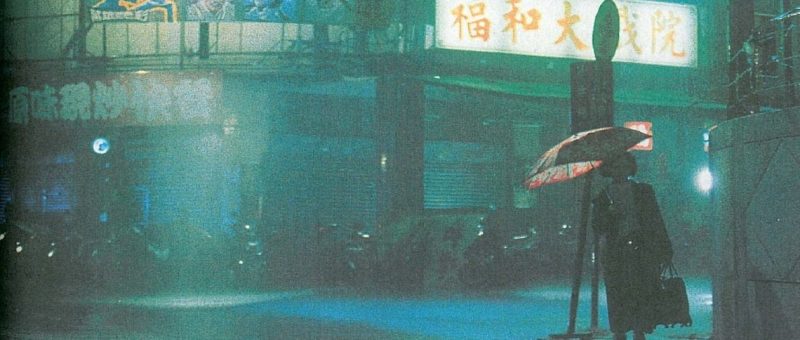
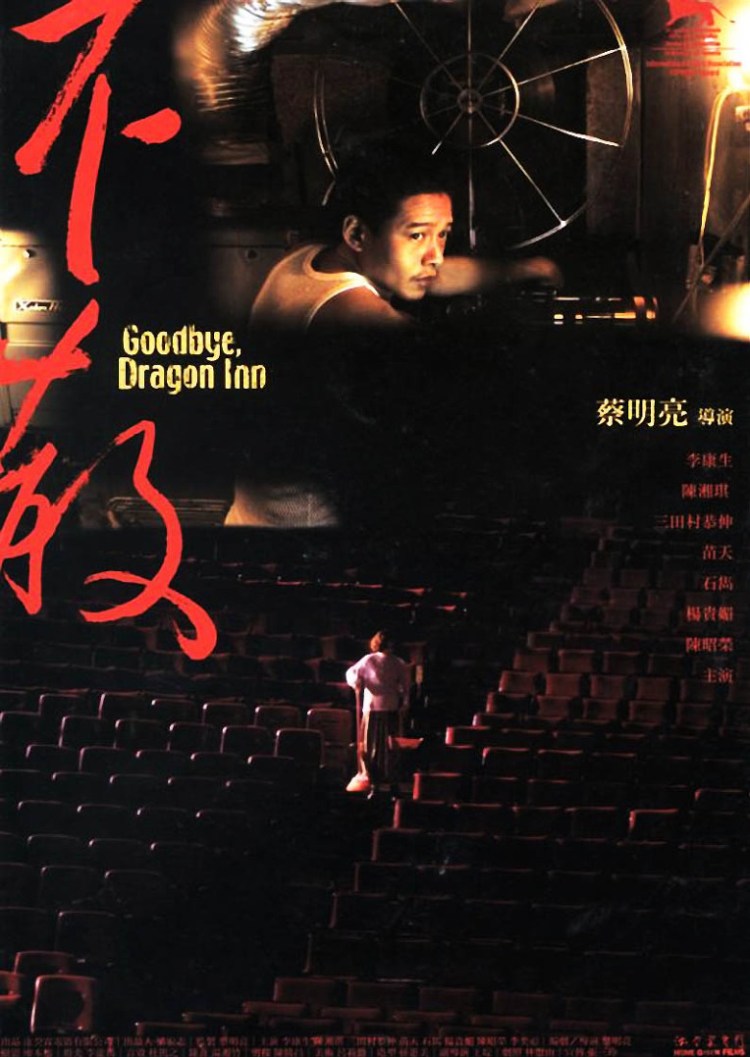
Goodbye, Dragon Inn poster“So much of the past lingers in my heart” laments the melancholy song which closes Tsai Ming-Liang’s Goodbye, Dragon Inn, (不散, sǎn) “I’ll remember with longing forever”. What is cinema if not an expression of irresolvable nostalgia, a kind of visual hiraeth for something that probably never quite existed but is so painfully missed. Everything in here stayed the same, but everything outside changed and now the present seems to be literally raining in leaving the last few fugitives from reality lost in halls of memory like lonely ghosts trapped on the wrong side of the screen.

On the wrong side of the screen is where we find ourselves. We begin in darkness with the opening narration from King Hu’s 1967 wuxia masterpiece Dragon Inn before the curtain in front of us begins to flicker and reveal an entire theatre filled with people. We pull back, and eventually the people are gone leaving just a few desperate souls returning to watch this now classic picture on what could be its very last evening as this theatre – now so unsuitable for the modern cinema environment, will be closing “temporarily” as soon as the reels stop turning.

Truth be told, no one much is even very interested in the movie. Some have merely come in to shelter from the rain, but unfortunately for them not even here is safe thanks to a leaky roof. The dazzling labyrinths of the backstage environment seem to have been co-opted by the local cruising community, men brushing past each other looking for another like them but needing to be sure their desires will be returned. Meanwhile they gaze at each other in the dim half light of the cinema screen, aching with unspeakable longing.

Longing is also something on the mind of an older gentlemen, seemingly the only one actually watching the film, who turns out to be one of its actors shedding a silent, solitary tear for time passed. Running into a friend much like himself outside he laments that “No one comes to the movies anymore”. Everyone has forgotten them, turning them into ghosts of cinema, immortal but unremembered. They have, in a sense, been attending their own funeral, entombed inside a moribund building lit only by spectres of the past.

All this is, however, secondary to the backstage drama of the lonely box office cashier (Chen Shiang-chyi) and her inexpressible crush on the projectionist (Lee Kang-sheng) who never seems to be around when she needs him. Sadly cutting into a celebratory bun, she saves half of it for him – the least ambiguous expression of love which seems to be possible within this space. Slowly climbing the stairs with a lame leg, she gazes fondly at the screen while the heroine fearlessly dispatches a series of bad guys, but the light cast on her face seems only to emphasise her lack of courage before she sadly retreats back to the ticket booth where no customers require her services.

Meanwhile, in the auditorium, a young woman (Yang Kuei-mei) munches peanuts and throws her legs over the backs of the seats in front much to the chagrin of the confused tourist whose confusion seems only to deepen when the crushing noise stops and the woman disappears (unbeknownst to him she’s on a mission to retrieve a lost shoe, or perhaps has evaporated into thin air). The first words spoken, which occur at the 45 minute mark, are to state that this theatre is haunted. Departed spirits all, the lonely denizens are indeed haunting the room and themselves as they attempt to escape the relentless march of the modern world through self-internment in a damp and crumbling mausoleum of cinema.

A lament for a dying world stripped bare by the passage of time, Tsai’s exploration of urban loneliness is a nostalgic elegy for a simpler age, filled with unresolvable longing and the ironic misconnection of an individualised communal activity. Stillness and solitude define all for these lonely, disconnected souls chasing oblivion. The past can never return, nor can the missed opportunities and brief moments spent bathed in celluloid splendour, but then perhaps you wouldn’t want it to anyway because then you couldn’t miss it. “I’ll remember with longing forever” – romanticism at its finest, but it’s a trap that’s difficult to resist.


Goodbye, Dragon Inn screened at Tate Modern as part of the Taiwan Film Festival UK 2019 and The Deserted film series.

International trailer (dialogue free)

Liu Lian by Yao Lee – the poignant song playing over the end credits.

Your Face (你的臉, Tsai Ming-Liang, 2018)

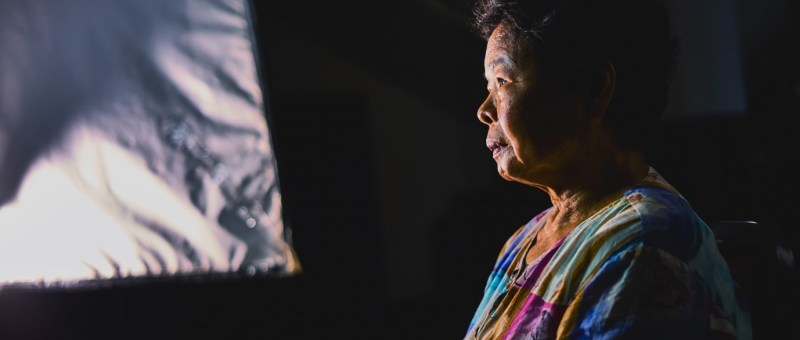
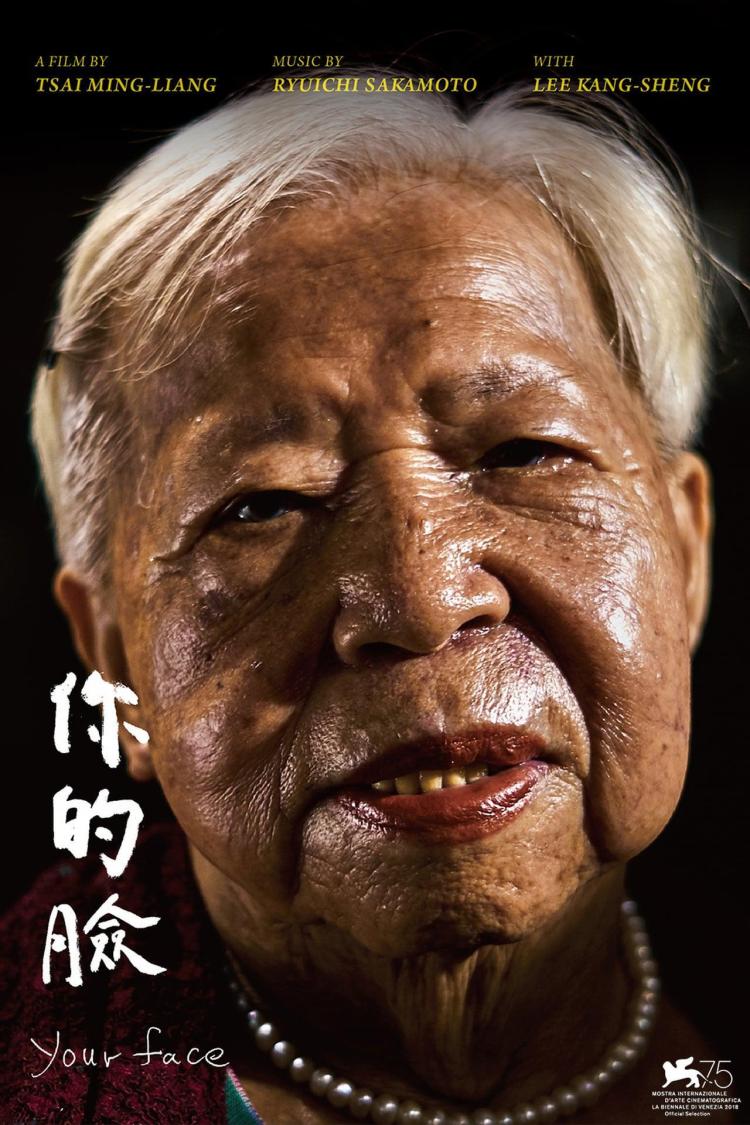
Your Face posterThe act of looking is an oddly intimate experience, which is perhaps why it becomes so uncomfortable to be looked at. The 13 souls who brave the camera for director Tsai Ming-Liang’s Your Face (你的臉, Nǐ de Liǎn) have all, obviously, given their consent to to become a subject for contemplation and are fully aware of being observed but still suffer the self-conscious embarrassment of being on show. That embarrassment is perhaps the point, pointing to a different kind of truth than the one we might have thought ourselves to be looking for but it’s also true that the camera becomes a kind of veil shielding us from our own anxiety safe in the knowledge that we can look all we please because we will never be seen.

Tsai’s subjects, aside from one or two, are mostly elderly residents of Taipei spotted by chance in the street and selected for their interesting faces. These faces, perhaps in contrast to those most often seen in cinema, are lined and worn. They wear their stories rather than tell them. Tsai gave few instructions, solely asking for an hour of time – 30 minutes spent in silence and 30 in conversation. The results are varied. Old men fall asleep, one plays a harmonica, a woman boils her life philosophy down to a love of making money, and a man laments a life wasted on pachinko and romantic disappointment.

Flickers of a smile erupt around a woman’s lips until she can’t contain her amusement any longer, finally breaking into a laugh in noting the strange incongruity of her position. It all looks so different on the screen than it looks at the scene. Tsai shoots in the same location as his earlier short Light, Zhongshan Hall – a public auditorium completed in 1936 when Taiwan was under Japanese rule (and therefore coincidentally close in age to many of Tsai’s subjects), but from different angles which almost obscure a sense of space until the hall itself gains its own portrait in the final shot, empty of life but somehow no longer passive.

Tsai encourages us to look deeply into the faces of others in manner which would be inappropriate in any other context. Yet the faces themselves react to Tsai’s camera and the people standing behind it. They do not and cannot react to us, except in an abstract sense, while we lurk behind a two way mirror protecting our own fragile senses of self from the same kind of scrutiny. Yet there is a kind of commonality in the way in which those on each side of the screen reach a point of mutual vacancy during which something else begins to emerge. The subjects fall into a kind of reverie, be it a literal sleep or motion towards activity such that of as one lady who decides to show off some of her “exercises” designed to stave off the effects of old age.

Those moments of activity, however, in breaking the stillness rupture the sense of contemplation in simply beholding an unfamiliar face. The ordinary had become uncanny, but now we have other concerns, narrative concerns with which to engage on an intellectual rather than instinctive level. On hearing the story, we forget about the face and concentrate on words while also forgetting that these stories are not really being told to us but to whoever is behind the camera and that the subject may also have lost consciousness of the camera itself while concentrating on relating their truth.

Then again, Tsai rejects the medium of documentary and we have only our own assumption that what we’re told is authentic and offered in the natural feeling of the moment. This is particularly true of the final subject who happens to be Tsai’s longterm muse Lee Kang-sheng (whose mother also appears in the film). Lee too muses on his family history, offering a meta comment on his face and its transitory likeness to that of his father, lamenting that though they say Lee’s father looked like him when he was young Lee knows that in “reality” he no longer is. Tsai’s camera turns its lens on ageing, on changes superficial and spiritual while remaining rooted to the spot as if fighting for an impossible objectivity. Closing in an empty room, Tsai nevertheless finds the light and the soul in the stonework as if to suggest that perhaps it wasn’t faces that were so important after all.


Your Face screened at Tate Modern as part of the Taiwan Film Festival UK 2019 and The Deserted film series.

Festival trailer (English captions)

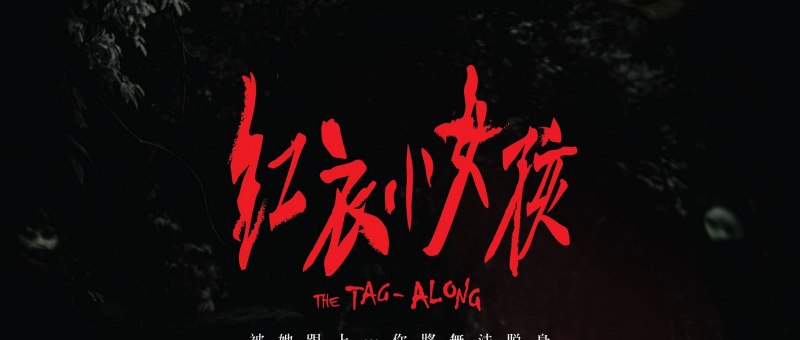
The Tag-Along (紅衣小女孩, Cheng Wei-hao, 2015)

The Tag-Along posterWhy are little girls in red dresses such a frequent figure for fear? From the cheerfully naive little red riding hood and her unavoidable association with unscrupulous wolves to the murderous spectres of Don’t Look Now, we don’t seem to be able to abandon our strange anxiety on seeing little girls incongruously alone and distinctively dressed. A little girl in red became a national meme in Taiwan in 1998 after accidentally photobombing an ordinary family out on a mountain hike, notably appearing behind a family member who later passed away though no one was able to remember having seen the little girl on the day. Truth be told, our little girl in red does not actually feature as much as you’d expect in Cheng Wei-hao’s The Tag-Along (紅衣小女孩, Hóng yī Nǚhái), but she does become the embodiment of the “mosien” – an ancient monster appearing in the form of a child or a monkey who bewitches and feeds on guilt.

Cheng opens in the mountains with an old woman, Shui (Pai Ming-hua), wandering. Shui is subsequently reported missing and much missed by her friend, grumpy grandma Shu-fang (Liu Yin-shang). Everyone seems to be worried that ancient spirits may have dragged her off to the mountains, but Shui does eventually return, albeit not quite as she left. Meanwhile, Shu-fang’s grandson Wei (River Huang) is an overworked real estate agent in a committed five year relationship with radio DJ Yi-chun (Hsu Wei-ning). While Wei is keen to get married and start a family, Yi-chun is not convinced partially for financial reasons but also perhaps because she simply is not ready to give up her individual freedom to become a member of Wei’s family.

Indeed, Yi-chun asks her radio listeners if marriage isn’t “the tomb of love”, but shows no other signs of wanting to break up with Wei only emphasising that she does not envisage marriage as part of her life plan – something later contradicted by a message she scrawled on the back of a photo five years previously. In a touch of disappointing conservatism, The Tag-Along makes Yi-chun its ostensible hero who alone battles against  preternatural horror to reclaim her rightful relationships, but frames her mission as a gradual process towards conforming to conventional social norms in which she learns that her qualms over marrying Wei are nothing more than commitment phobic selfishness and pointless guilty self obsession – something which she needs to abandon in order to fulfil her proper role as a woman by marrying and making a home even if she is also allowed to continue her radio career.

Meanwhile Wei, who has a strong desire to start a family of his own precisely in order to forge his own identity, treats his loving granny with contempt and irritation, eventually mortgaging the family home in order to buy a fancy apartment he hopes will help convince Yi-chun that he has the means to marry. Yi-chun, again, is not convinced partially because she fears Shu-fang may think it was all her idea and use it as evidence of her gold digging. The rot has already set in at home. Shu-fang feels sad for Wei who seems to have lost his parents young but also for the burden he feels himself under because the family lost their money, while Wei resents being shackled to an old woman who still cares for him as if he were a child, nagging him about getting married when she herself is one of the obstacles in its way.

Yet “civilisation” is perhaps the force that each of them are fighting, living as they do in ultramodern, always aspirant Taipei. The mountains represent something older and earthier, filled with atavistic passions and the dark fear of the unknown. One of the more supernaturally inclined elderly residents of Wei’s apartment block speculates that the forest spirits are angry with the encroachment of modernity, that persistent tree cutting has destroyed their natural habitat and sent them into the cities in search of souls to devour like foxes hungry for human suffering. Another forest dweller adds that every time a tree is removed, the spirits steal a body to “plant” in its place in an ironic act of restitution. An encounter with dark nature however sends each of our conflicted souls reeling back to the comforts of urbanity, suddenly no longer quite as afraid of the things which frighten them and now convinced that their salvation lies in each other and in repairing the bonds of the traditional family. Socially conservative as it may be, The Tag-Along’s spectres of moral decay are all too real in the increasingly indifferent city plagued by greed and selfishness where competition is key and human feeling merely an afterthought in a rabidly acquisitive society.


The Tag-Along screened as part of the Taiwan Film Festival UK 2019.

Original trailer (English subtitles)
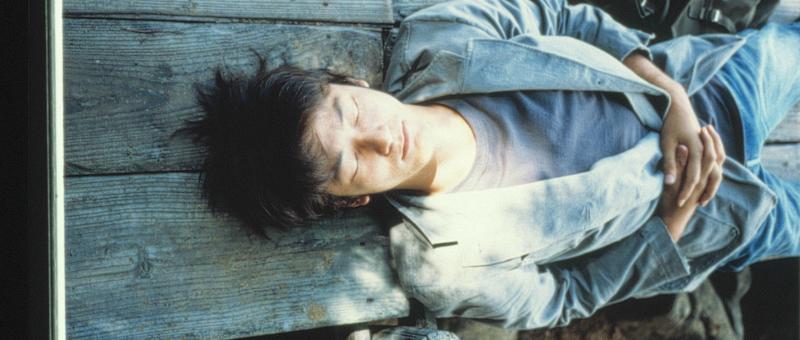
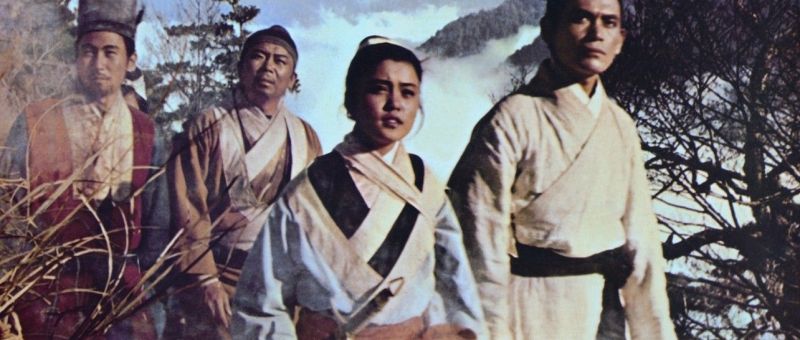
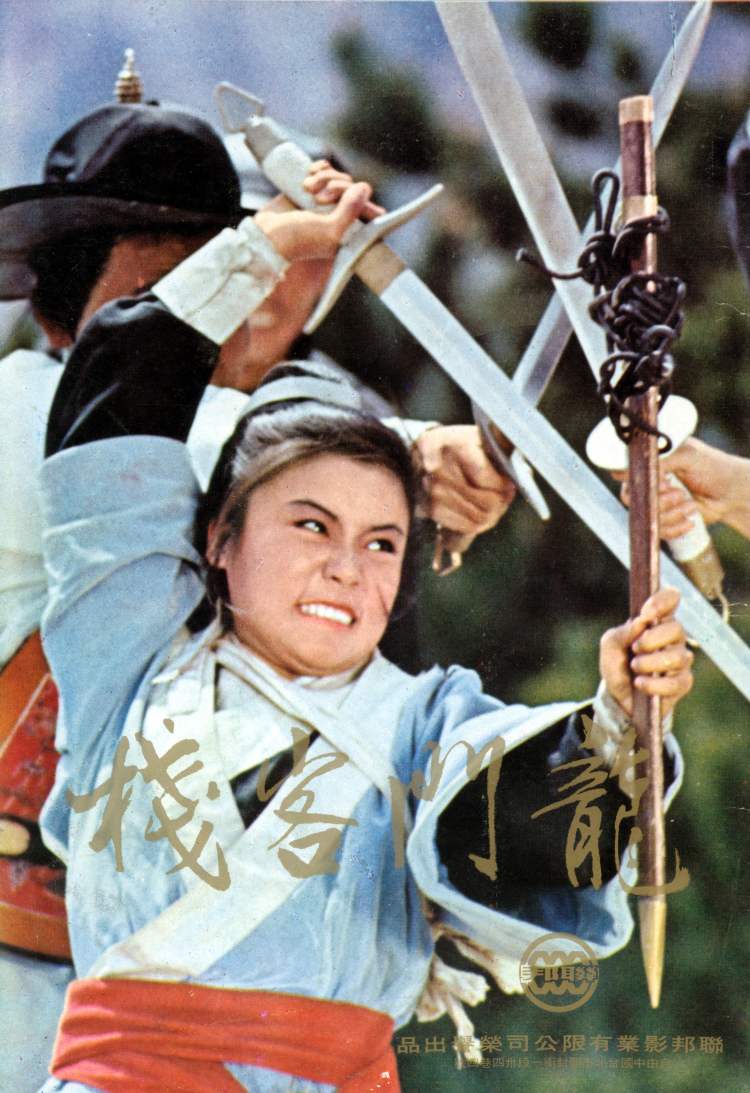
Dragon Inn (龍門客棧, King Hu, 1967)

Goodbye Dragon inn posterCorruption invades the court, the innocent flee the city but are pursued. Able to run no more, they take refuge at a point of hospitality where they encounter the jaded forces of justice who eventually offer themselves as a human shield, protecting the precious seed of a new world while beating back the evil of the old. It is the archetypical wuxia plot, but never better told than in King Hu’s (Hu Jinquan) seminal Dragon Inn (龍門客棧, Lóng Mén Kè Zhàn).

The first Taiwanese production from Mainlander Hu who began his career at Shaw Brothers in Hong Kong, Dragon Inn is set in feudal China. A weak emperor has enabled the rise of an ambitious underclass of eunuchs – once trusted servants whose forced celibacy supposedly ensured loyalty because, having no children, they would have no interest in dynasty. A loyalist scholar is about to pay the price for the eunuchs’ rise when they have him executed for treason as a means of silencing his rebellion. Fearing reprisals from his still young children, they exile them to the far frontiers as a ruse to disguise their murders on the road. Fortunately, however, the Yu children are saved by the heroic intervention of wandering swordsmen. Hoping to head them off at the next pass, the villainous Cao (Bai Ying) sends his best men to Dragon Inn where they will lie in wait.

Obviously, Cao’s plan is not to work out quite as he intended. Firstly because of the arrival of ultra cool swordsman for hire Xiao (Shi Jun), who happens to be a friend of the temporarily absent innkeeper Wu, and then because of the wandering bandit Zhu Ji and his sister (currently dressed as a man) Hui (Shang Kuan Ling‐Feng), who are determined to cause trouble with the East Espionage Chamber who are currently occupying the inn by means of force. In order to minimise the possibility of resistance, EEC have also wiped out a local company of Tartar soldiers, seemingly indifferent to any diplomatic incident which might ensue. Xiao, Wu, Ji, and Hui, are eventually joined by a pair of Tartar defectors who were pressed into the EEC after pledging their loyalty to Yu, and thereafter commit themselves to ensuring the safety of Yu’s offspring as a means of protecting his legacy while facing off against the corrupt forces of Cao.

Like all wandering heroes, Xiao and the others are mainly concerned with the problem at hand, saving the Yus, rather than acknowledging that their present predicament is a product of the society in which they live. They do not challenge “authority”, but only minor corruption as embodied in the upstart Cao who has attempted to step beyond his station. Cao is, however, himself a victim of his society as Xiao almost seems to admit in his cruel taunting of him over his complicated liminal status as a castrated man. Xiao repeatedly mocks his lack of appendage and his (presumed) lack of sexual experience coupled with his inability to father children which places him well outside the demands of regular society in being unable to carry on his family line. Cao’s usurping ambition is then a kind of revenge born of frustration and resentment against a society which has placed a deliberate limit on his progress.

Still, his villainy knows no bounds – not only did he have a “good”, innocent man sent to his death, but he also dared to call for the murder of his still small children solely to secure his own position. Of course, this inevitably means that the fault lies with the “weak” emperor whose softness has enabled the wicked ambition of men like Cao who have simply stepped into a vacuum created by insufficiently robust government (an idea perhaps born of the same kind of social values which have corrupted Cao). Nevertheless, our heroes are nominally loyalists rising in support of the fallen Yu in an attempt to rescue his legacy in the form of his children. Outlaws all, they have their wanderers code and even if their first meeting may be strained, they are quick to recognise each other as fighters for justice even if by virtue of being among those who’ve chosen to live outside of the systems of corruption which define their world. The tale ends as they always do, but it does so with an ambivalent sense of triumph in acknowledgement of the hollowness of moral victory in a world still defined by corruption and injustice.


Dragon Inn screened as part of the Taiwan Film Festival UK 2019.

Restoration trailer (English subtitles)

After Life (ワンダフルライフ, Hirokazu Koreeda, 1998)

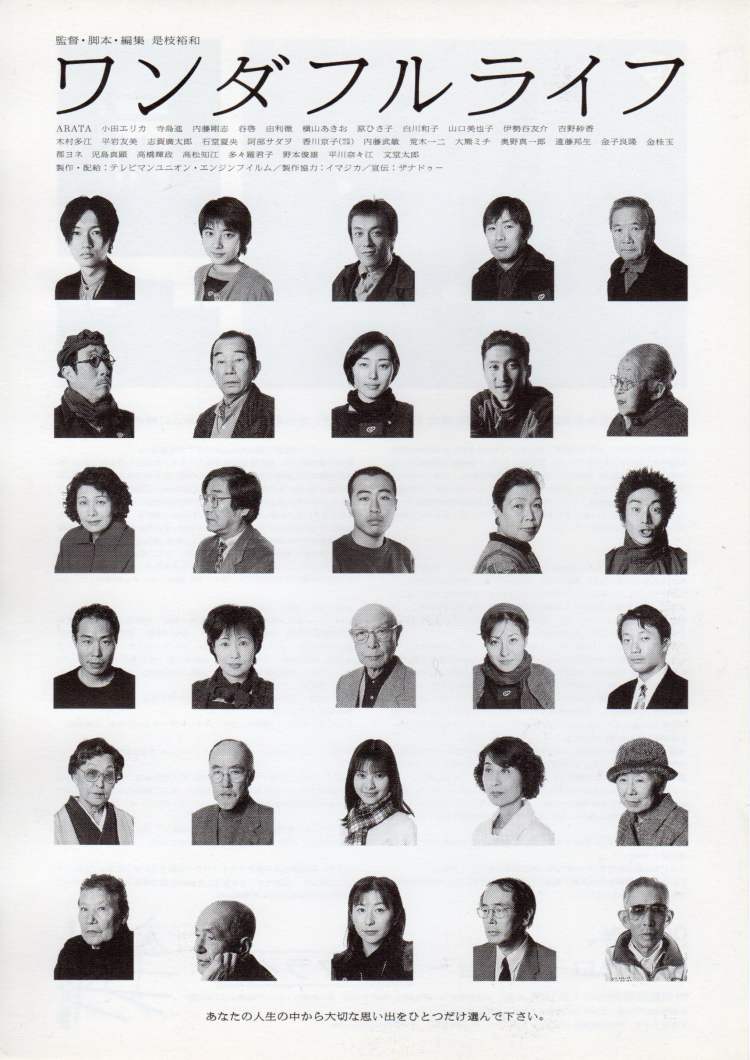
Afterlife posterAt the end of your life, if someone asks you what it all meant, what will you say? It’s a question that can’t be answered until after you’ve turned the final page, but there is an idea at least that death brings clarity, rendering all things simple from a strange perspective of subjective objectivity. This is the central idea behind Hirokazu Koreeda’s meta existential fantasy After Life (ワンダフルライフ, Wonderful Life) in which the recently deceased are given seven days’ grace in order to decide on their most precious memory so that a small collection of clerks working in an old-fashioned government building can “recreate” it through the medium of cinema, allowing a departing soul to take refuge in a single memory preserved in eternity.

Heaven’s waiting room, as it turns out, is apparently located inside the ghost of the Japanese studio system. The recently deceased give their names at the door and patiently wait for their turn with their allotted case manager whose job it is to offer after life counselling designed to bring them to the point of boiling their existence down to the single moment which defines it within the arbitrary three day time limit which gives the crew the time to put their memories into pre-production complete with old-fashioned stage sets and studio-era special effects.

The purpose of all of this is not is exactly clear, though a clue is perhaps offered when we discover that the clerks are able to order VHS tapes of the entirety of their subjects’ lives in the event that they are struggling to think of relevant moments in an existence which seems to have disappointed them. The point is not so much the literal truth of the memory, be it accurate or not, but its sensation and the transience of feeling which is then re-experienced through the medium of cinema, captured in celluloid as momentary permanence.

Consequently, the chosen moments are necessarily often ones of stillness which promise the kind of peace and serenity one is supposed to find in death. The moments are ones of silent togetherness, of natural beauty, of childish innocence, or unbridled joy but is each is perhaps the key to unlocking the enigma of a life and as such is a solution which points towards a question. One older gentleman, Watanabe (Taketoshi Naito), finds himself unable to choose. He views his life as the epitome of mediocrity and can find nothing in it that seems worthy of “eternity”. Watching the videotapes of his life, he sees himself as a young man vowing to make a mark and is desperate to find some evidence that he lived but like many does not find it. His life was happy by virtue of being not unhappy for all that it was perhaps unfulfilled but only through communing with himself after death is he able to reclaim the memory of his late wife (Kyoko Kagawa) with whom he never quite bonded in mild jealousy of her lingering attachment to her first love who fell in war.

This being a film from 1998 and mostly featuring those in their 70s and above, the war looms large from painful battlefield memories of fear and starvation to unexpected reunions and the joy of simple pleasures found even in the midst of hardship. The clerks who died young may look on in envy of Watanabe’s “ordinary” life in the knowledge of all they were denied, while others mourn for a future they will never see. Yet there are shorter sad stories here too from a high school girl (Sayaka Yoshino) whose original choice of a day out at Disneyland is deemed too prosaic, to a middle-aged bar hostess (Kazuko Shirakawa) reminiscing about an old lover who let her down, and a rebellious young punk (Yusuke Iseya) who flat out refuses to choose because he feels that is the best way to accept responsibility. Forced into a reconsideration of his own life, even a clerk is eventually moved by the realisation that even if he had previously believed his existence devoid of meaningful moments he has achieved something by featuring in those of others and is therefore also a meaningful part of a considered whole.

Making the most of his documentary background, interspersing “genuine” memories among the imagined, Koreeda’s heavenly fantasy is one firmly tied to the ground where seasons still pass, time still flows, and the relentlessly efficient march of bureaucracy continues on apace undaunted by the presence of death. Death may give life meaning, but it’s living that’s the prize in all of its glorious complexity filled with both beauty and sadness but always with light even in the darkest corners.


After Life screened as part of an ongoing Koreeda retrospective currently running at BFI Southbank.

Original trailer (no subtitles)

Four Springs (四个春天, Lu Qingyi, 2018)

Four Springs poster“Time flies. Life is so short, isn’t it?” a cheerful relative remarks lamenting that the family only comes back together once a year during the first of Lu Qingyi’s Four Springs (四个春天, Sì gè Chūntiān). Rather than follow his family through four seasons for one year, Lu Qingyi observes his ageing parents at yearly intervals as time both moves on and doesn’t delivering joy and sadness in equal measure.

Beginning in the spring of 2013, Lu Qingyi returns home to the remote small town of Dushan where his parents have lived for decades. The family comes together again, if only briefly, to ring in the New Year much as they always have. During the second New Year, Qingyi is joined by his sister Qingwei but there is sadness on the horizon as we discover she is coping with serious illness though the family once again celebrate joyously recalling the past more than dwelling on the future. Subsequent reunions are born both of joy and sorrow as family illnesses take hold, bringing people back together again if only to unite them in sadness and anxiety. Yet life, as always, rolls on just the same.

Briefly including shots of himself, Qingwei focusses on the figures of his parents – retired teacher Yunkun and mother Guixian. Though they must have lived through some turbulent times, the couple are blissfully happy in each other’s company and used to taking pleasure in the simple things such as the swallows which occasionally nest in their roof, or making a new hive for some migratory bees come to visit. The natural world is very much a part of their existence as they make time for hiking out in the mountains, tending graves and enjoying the scenery singing always as they go.

Music, indeed, seems to be an important part of life in Dushan and song is never far away from the lips of of Qingwei’s parents who find themselves humming folk tunes or stretches of traditional opera. Yunkun makes use of his computer to listen to and edit tracks while the rattling of his wife’s manual sewing machine echoes from the next room. Though many things here are “traditional”, the couple are not so much trapped in the past as happy with what they have. Yunkun has embraced his computer, but a later attempt to introduce the couple to smartphones and teach them to use the WeChat app ends in hilarity as they attempt to process the extreme modernity of instant communication.

Technology is both a privilege and a curse, as the family discover one New Year in being deprived of watching the spring gala thanks to an ill timed power cut which also leaves them inside in the cold but perhaps makes the fireworks a little brighter. As the New Year becomes marked by its absences – the empty chairs and increasing silences, technology also provides a path back to happier times through the home videos filmed in previous years by Qingyi and his father which provide a record of ordinary family life both happy and sad in recalling past springs never to come again.

Time itself becomes a theme as it marches on invisibly. Qingyi’s cheerful parents are thankfully in good health, though his mother wishes they could dance again like they did in the old days and worries what will become of the one left behind when the inevitable happens. Nevertheless, the New Year arrives as it always does, preparations are made, too much food is cooked, the family eats, and sings, and remembers. Lu Qingyi’s Four Springs is a touching evocation of the joys and sorrows of being alive in his loving tribute to his goodhearted parents who have learned to find the tiny happinesses in the every day even in the midst of unbearable sadness.


Four Springs screens as part of the eighth season of Chicago’s Asian Pop-Up Cinema on April 7, 2pm & 5pm, at Heritage Museum of Asian Art, 218 West 26th Street.

Original trailer (English subtitles)
Up the Mountain (火山, Zhang Yang, 2018)

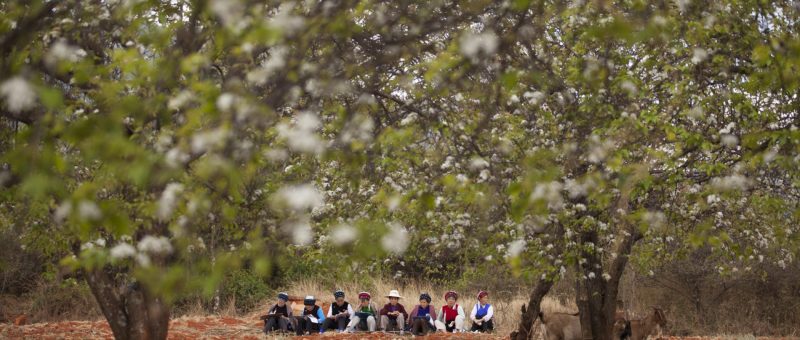
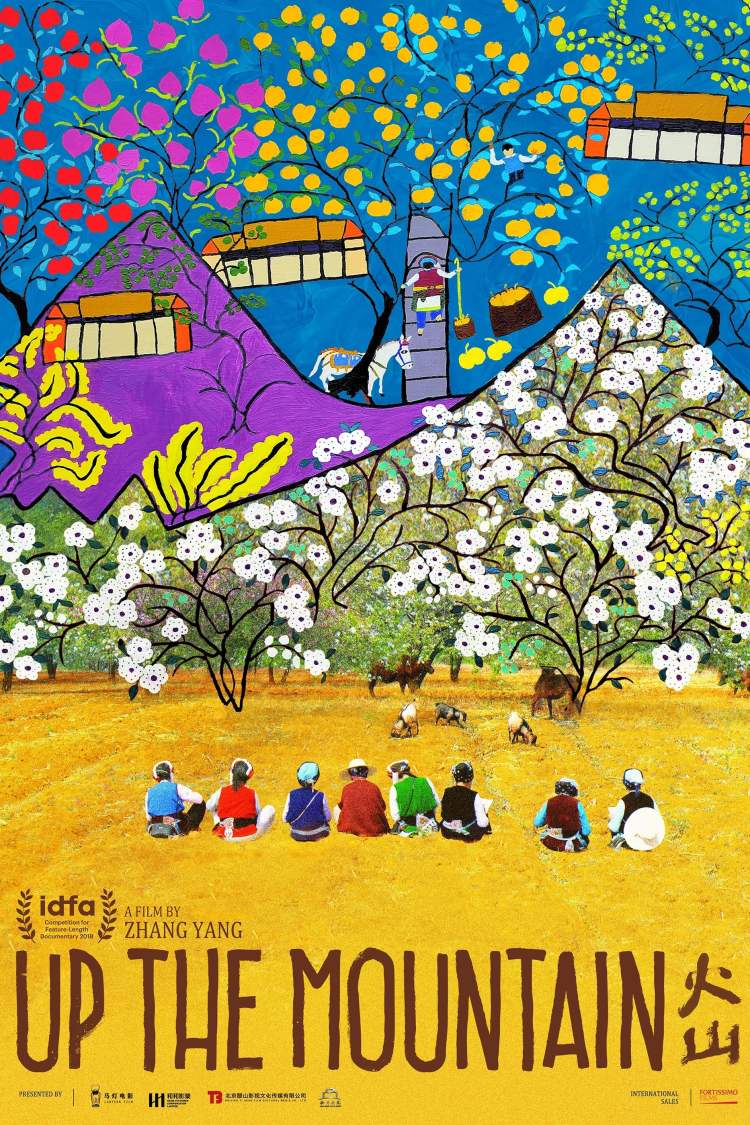
Up the Mountain posterThe story of modern China has often been one of migration as the young find themselves pulled towards the cities, sending their children back to the countryside to be raised by relatives while they earn what they can away from home. As the economic situation improves, however, there may be motion the other way. Successful artist Shen Jianhua moved from the bustling metropolis of Shanghai to a remote mountain village where he practices his art and opens his home to all who have an interest in learning from him.

Shen’s mountain home is an interesting exemplification of a blend of old and new. Though he seems to prefer the simple life, the renovated property is decorated in a modern, though fairly minimalist, style and the family do not appear to want for anything. Their living is not austere and Shen does not object to the idea of modernity, as the toys bought for his baby son seem to testify while his apprentice chats on an iPhone and his teenage daughter listens to music while she runs.

Nevertheless, life in the mountains is lived slowly and there are things which must be done which is why we see apprentice Dinglong continually chopping firewood while the gaggle of old ladies who make up the majority of Shen’s pupils come back and forth with vegetables preparing tasty food to be shared communally by the small family that has grown up around Shen’s art practice. It does not appear that the ladies pay anything for Shen’s instruction or that he draws much of an income for it, but all seem to benefit from a shared sense of creative community. One old lady describes her life before art as “stagnant, like old water”, but now she feels reenergised and happily gives away her finished paintings to her bemused children as something to remember her by when she’s not around.

Not everyone is as happy for the old women as they seem to be for each other, however, as we notice in the persistent discord between one older bickering couple. Dinglong too remains conflicted. Still young, his parents are beginning to pressure him to give up painting and the mountains to settle down. Dinglong, like many young men, doesn’t really want to and so is surprised and dismayed when Shen’s advice is more conservative than he might have expected, encouraging him to obey his parents’ wishes and reminding him that good art is founded on a wealth of life experience. Truth be told, Dinglong has a girlfriend already and is perhaps edging towards marriage but the snag is that her parents are from a nearby city. They’d rather their daughter marry nearby and would worry about her living in a remote village they perhaps assume is much more rustic than it really is. The other problem is that artists don’t earn much and Dinglong admits he only paints one picture a year with no guarantee it will sell. As a son-in-law, he’s not a particularly good catch.

Dinglong’s dilemma is perhaps unusual, most of the other youngsters are desperate to leave the country for a better life in the cities no matter how illusionary it might turn out to be. Then again, his resistance is perhaps more understandable as he complains to Shen that he is being given almost no choice in his future as everything is being sorted out by his fiancée and the parents with him the only one in favour of his staying in the mountains. His future wife has a point, however, when she objects to raising children in the village without access to a good school. Shen and his wife are educated people and they’ve been able to teach their teenage daughter at home but Dinglong is a rural boy and they won’t have the resources to give their children the best start in life unless they travel to a place those resources might be found.

Reluctantly, Dinglong is forced away from the simple, traditional life which seems to suit him best while his wife remains unsympathetic to his attachment to the village and its guardian god. Meanwhile, Shen’s life carries on much as before even after the birth of his baby son who put in an appearance a month early to be born in the middle of New Year. Zhang captures the ancient rhythms of the traditional village through its rowdy, colourful festivals filled with joy and excitement but also sees the ways in which it is changing. One older lady enlists Shen’s help to build a bathroom on her property because her daughter was too embarrassed to bring a prospective husband home to a house without one (and a daughter getting married is after all the most important thing), creating a beautiful space dedicated to modern ideas of relaxation and serenity rather than the efficient austerity usually associated with rural life. The young might not be able to stay, but given time they may return and the mountain will be waiting for them with patient warmth.


Up the Mountain (火山, Hshān) screens as part of the eighth season of Chicago’s Asian Pop-Up Cinema on April 6, 2pm, at Heritage Museum of Asian Art, 218 West 26th Street.

Original trailer (dialogue free)