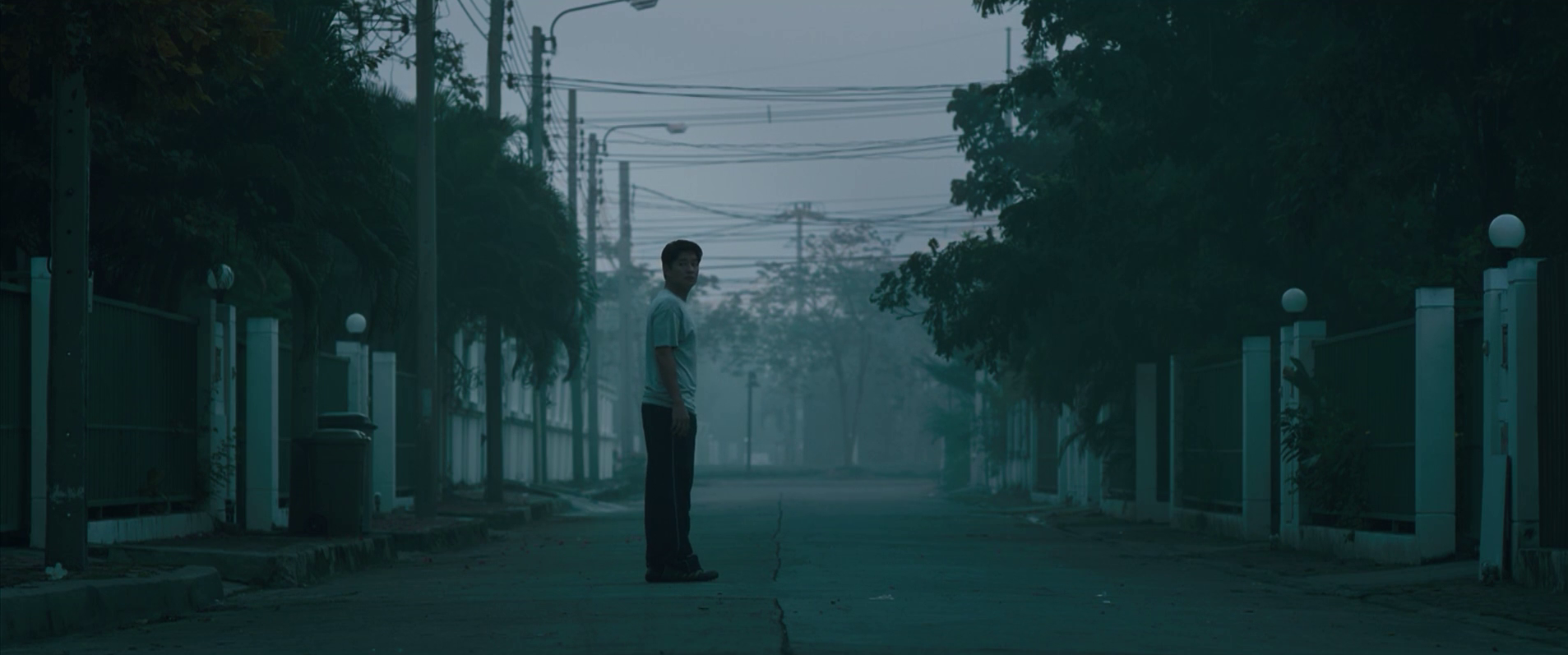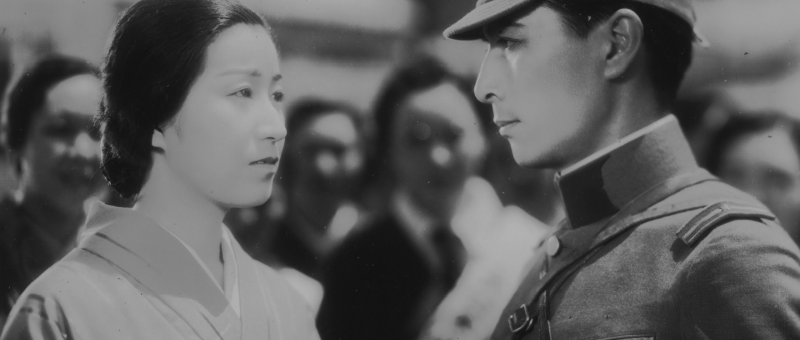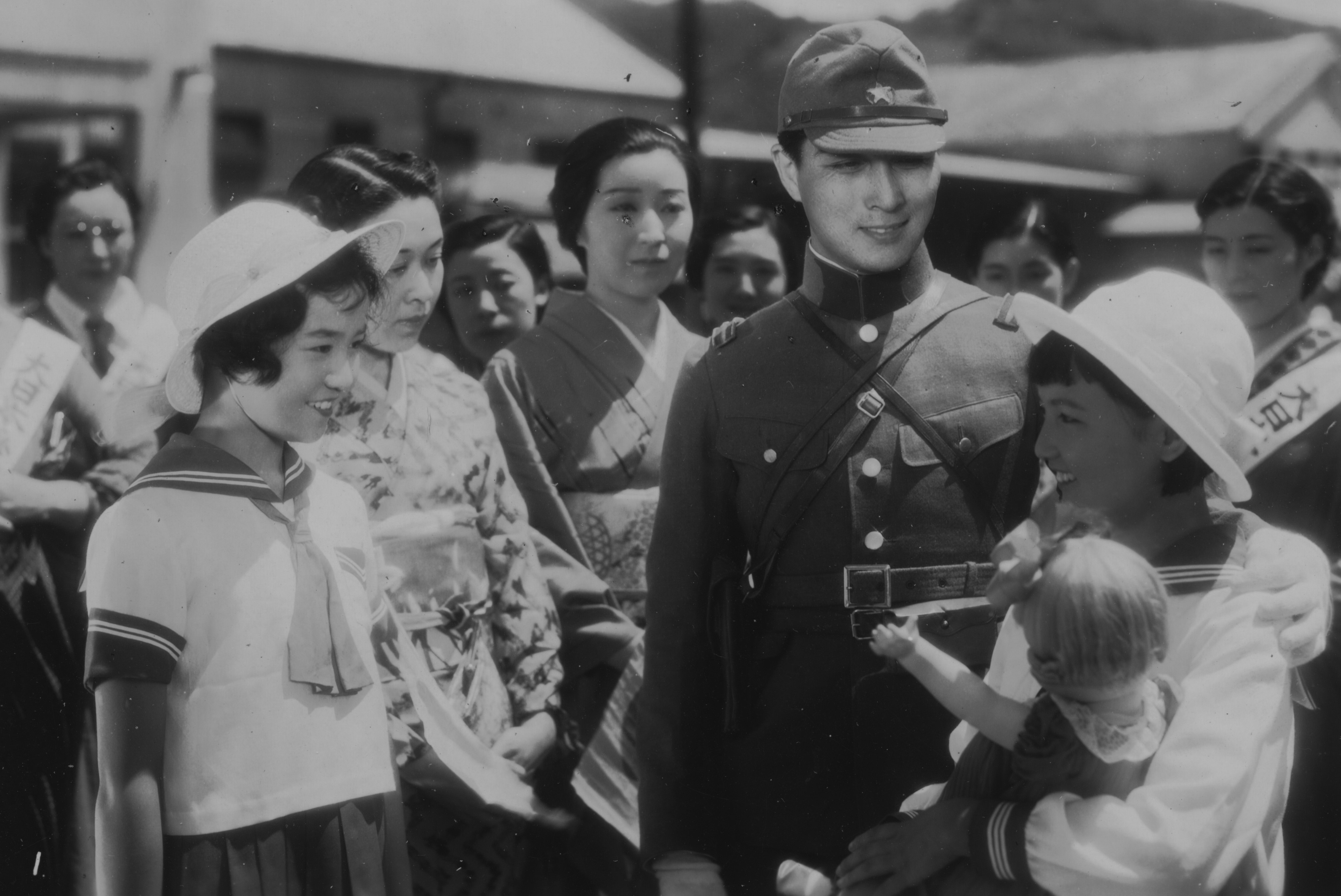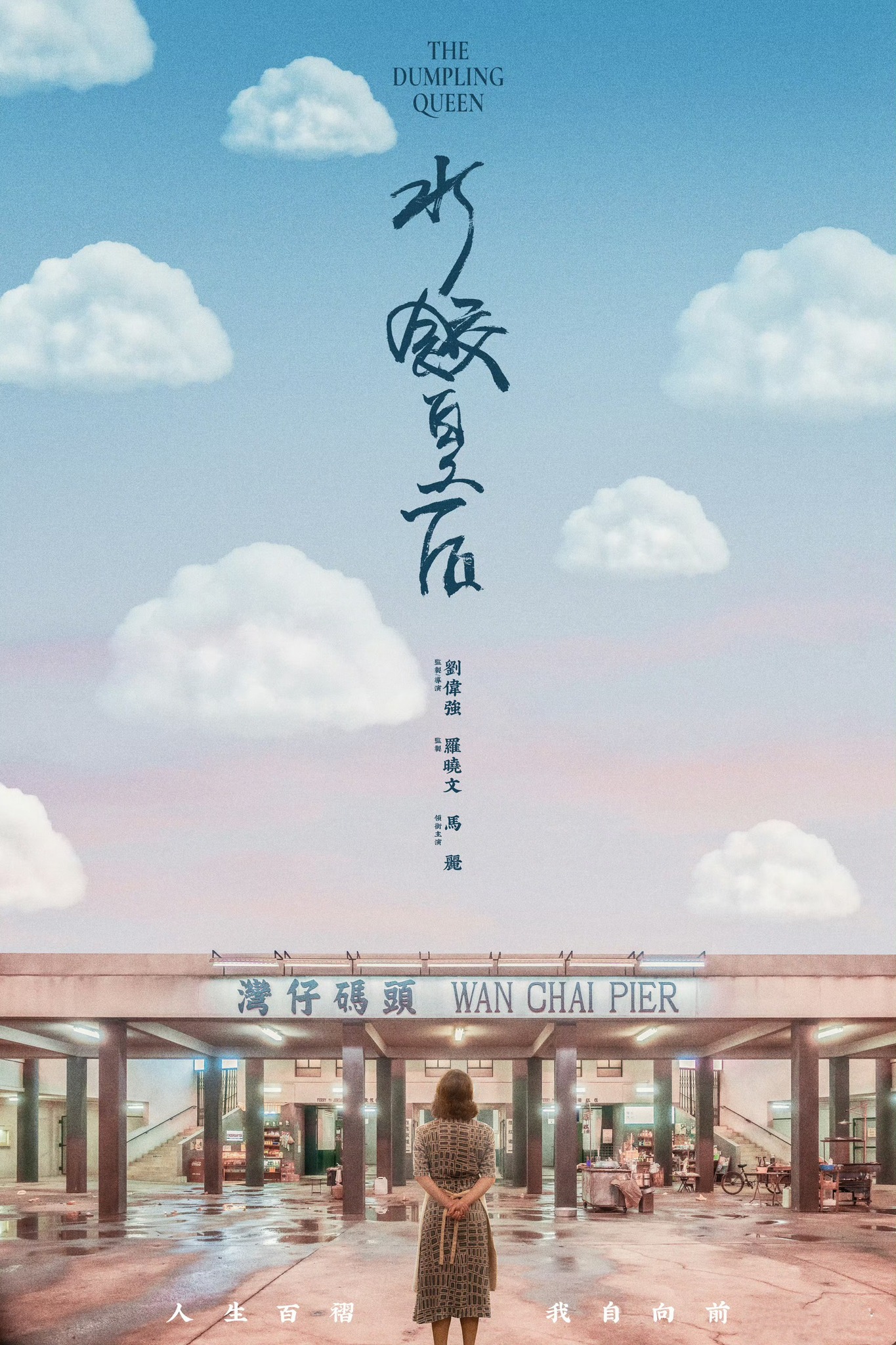
A Good Man, A Good Day (好人好日, Minoru Shibuya, 1961)

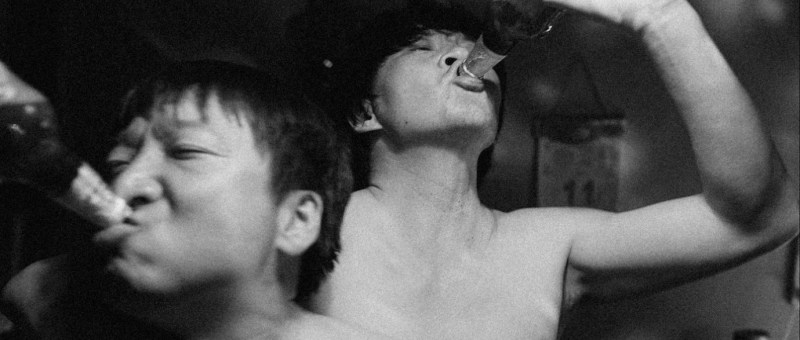
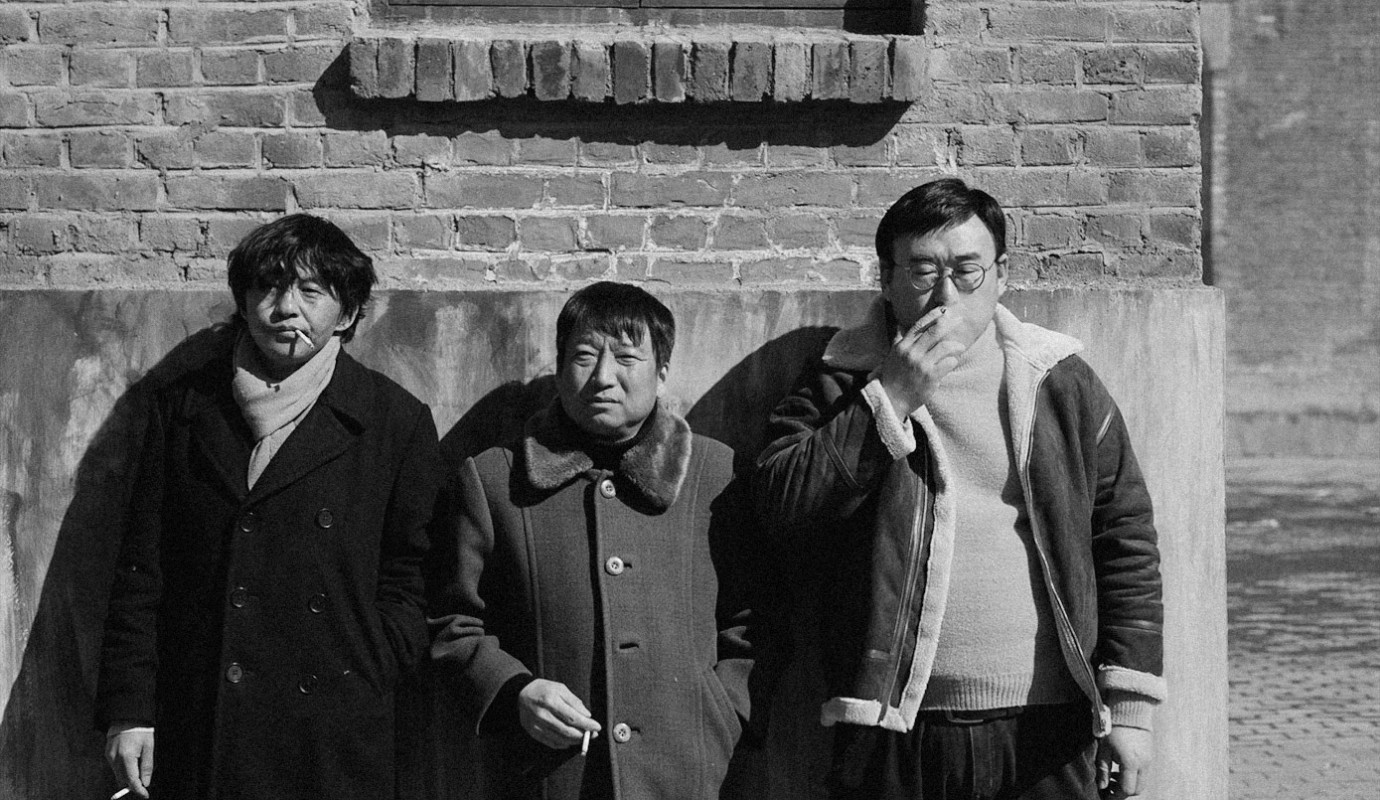
It’s funny, in a way, that life can hold so much goodness in it even with an underlying, barely visible melancholy. Goodness does indeed breed goodness for the sometimes misunderstood heroes of A Good Man, a Good Day (好人好日, Kojin Kojitsu) who struggle to adjust themselves to changing times but at the end of the day just want each other to be happy and for life to be blissfully dull and free of complication.

The obvious point of friction is that 20-something daughter Tokiko (Shima Iwashita) has had a proposal. She behaves as if it’s an arranged marriage, but in reality Ryuji (Yusuke Kawazu) is actually her boyfriend and the two of them have mutually decided to formalise their union but are doing things the “proper” way perhaps in part because Ryuji’s family run a 200-year-old ink shop and are intensely conservative. Though it’s Tokiko’s fuddy-duddy professor father Hitoshi (Chishu Ryu) who is often regarded as the sticking point, it’s equally Ryuji’s family and particularly his traditionalist grandmother (Tanie Kitabayashi) who isn’t sure that Tokiko is really good enough. She is however the only member of the family who thinks it’s not a big deal after discovering that Tokiko is adopted while others regard her with an increased suspicion and the prejudice often held towards orphans that they don’t want to let someone into their family whose familial lineage they don’t know.

It’s most likely for their benefit that Tokiko and Ryuji are intent on compromising by doing everything the “proper” way rather than as her mother Setsuko (Chikage Awashima) tells her just get married on their own without worrying about what anyone thinks. But in this awkward mix of tradition and modernity we can see that times have changed and Ryuji and Tokiko have decided their future for themselves. They firmly believe it will work out so they’re remaining patient, but should that patience run out they will decide to prioritise their own happiness. 

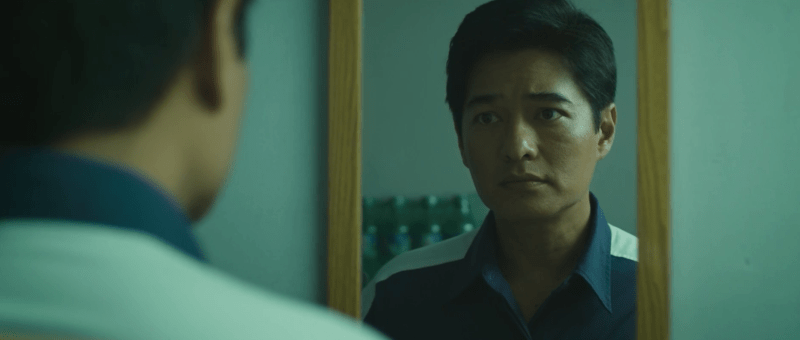
For his part, Hitoshi later says that he never actually objected to the marriage but just hates the idea of big weddings which he regards, not without reason, as stupid and pointless. In any case he warms to Ryuji when he loses his temper and calls him an “old fart,” realising that he’s a young man with a backbone and possibly worthy of Tokiko. A professor of mathematics, Hitoshi is an awkward man who doesn’t quite fit into polite society but has a good heart even if he has a funny way of showing it. When he wins an important medal from the government for his contribution to scholarship and it gets stolen, he won’t let the hotel owner report it because of his embarrassment but when the chastened thief brings it back he sends Tokiko after him with money for his train fare and a little more as a thank you. 

Still, he was probably not an easy man to live with and Setsuko’s not so secret sake habit is likely a result of the strain of dealing with him and his constant faux pas in the boredom of a rural life in which she says all she does is make pickles. But despite that, she still tells Tokiko that marriage is essential to a woman’s happiness if also encouraging her to fight for what she really wants. Tokiko is already doing just that, but has lingering doubts over her parentage and wants to know who her birth parents may have been partly out of curiosity but also a mild fear of the implications it may have. But what Hitoshi eventually tells her is that she is a war orphan which makes her a kind of everywoman and a symbol of the young, post-war generation which is making a break with the past. 

The film in fact includes a small satirical, anti-war sequence in which Hitoshi is accosted by a snooty nationalist who shouts out that he lacks “patriotism” for allowing the medal the emperor so generously gave him to be stolen. The man tells him he should face the direction of the Imperial Palace and apologise all which makes him look quite mad and paints Hitoshi as the figure of exasperated sanity. He also rejects contemporary consumerist culture in continuing to live like a student counting every last yen and rejecting the TV set Ryuji buys him because it would deprive him of going to the coffee shop to watch baseball games instead (though he does regret it later). In any case, Hitoshi’s guileless goodness does seem to ameliorate the world around him in making others, like the thief, want to live up to it as he, like Tokiko, defiantly does what he wants and though at times perhaps insensitive generally has his heart in the right place.


Japan Academy Film Prize Announces Winners for 48th Edition

The Japan Academy Film Prize, Japan’s equivalent of the Oscars awarded by the Nippon Academy-Sho Association of industry professionals, has announced the winners for its 48th edition which honours films released Jan. 1 – Dec. 31, 2024 that played in a Tokyo cinema at least three times a day for more than two weeks. Surprise indie hit A Samurai in Time takes the top prize with Michihito Fujii nabbing Best Director for Faceless. Ryusei Yokohama also took best actor for his role in Fujii’s film alongside Yuumi Kawai for A Girl Named Ann.

Picture of the Year

Animation of the Year

Director of the Year

Screenplay of the Year

Outstanding Performance by an Actor in a Leading Role

Outstanding Performance by an Actress in a Leading Role

Outstanding Performance by an Actor in a Supporting Role

  • Seiyo Uchino (Hakkenden)
  • Takao Osawa (Kingdom 4: Return of the Great General)
  • Masaki Okada (Last Mile)
  • Jiro Sato (A Girl Named Ann)
  • Takayuki Yamada (Faceless)

Outstanding Performance by an Actress in a Supporting Role

  • Mana Ashida (Cells at Work!)
  • Kaya Kiyohara (Bushido)
  • Tao Tsuchiya (Hakkenden)
  • Anna Yamada (Faceless)
  • Riho Yoshioka (Faceless)

Outstanding Achievement in Cinematography

  • Tomoyuki Kawakami (Faceless)
  • Akira Sako (Kingdom 4: Return of the Great General)
  • Takeshi Seki (Last Mile)
  • Daisuke Soma (Golden Kamuy)
  • Junichi Yasuda (A Samurai in Time)

Outstanding Achievement in Lighting Direction

  • Koshiro Ueno (Faceless)
  • Hiroyuki Kase (Kingdom 4: Return of the Great General)
  • Kazuyuki Kawasato (Last Mile)
  • Kota Sato (Golden Kamuy)
  • Kinya Doi, Hiroshi Hano, Junichi Yasuda (A Samurai in Time)

Outstanding Achievement in Music

  • Takashi Ohmama (Faceless)
  • Hiroko Sebu (Let’s Go Karaoke!)
  • Masahiro Tokuda (Last Mile)
  • Yutaka Yamada (Kingdom 4: Return of the Great General)
  • Face 2 fAKE (Cells at Work!)

Theme Song of the Year

  • Mrs. GREEN APPLE, “Dear”, (Dear Family)

Outstanding Achievement in Art Direction

  • Toshihiro Isomi & Emiko Tsuyuki (Golden Kamuy)
  • Masazumi Okihara (11 Rebels)
  • Hidetaka Ozawa (Kingdom 4: Return of the Great General)
  • Shintaro Matsumoto (Faceless)
  • Masumi Miura (Cells at Work!)

Outstanding Achievement in Sound Recording

  • Tomohara Urata (11 Rebels)
  • Takashi Kanasugi (Cells at Work)
  • Hiroyuki Saijo (Last Mile)
  • Kazushiko Yokono (Kingdom 4: Return of the Great General)
  • Toru Yonezawa (recording) / Yosuke Hamada (post-production) (Faceless)

Outstanding Achievement in Film Editing

  • Hiroaki Itabe (Last Mile)
  • Tsuyoshi Imai (Kingdom 4: Return of the Great General)
  • Tatsuma Furukawa (Faceless)
  • Hiroshi Matsuo (Cells at Work)
  • Junichi Yasuda (A Samurai in Time)

Outstanding Foreign Language Film

  • Poor Things
  • Oppenheimer
  • The Zone of Interest
  • Civil War
  • Laapataa Ladies

Newcomer of the Year 

  • Asuka Saito (Oshi No Ko – The Final Act)
  • Nagisa Shibuya (Sana: Let Me Hear)
  • Anna Yamada (Golden Kamuy, Faceless)
  • Eiji Akaso (6 Lying University Students, What If Shogun Ieyasu Tokugawa Was to Become the Prime Minister)
  • Rihito Itagaki (Hakkenden, Cells at Work!, The Ying Yang Master 0)
  • Keitatsu Koshiyama (My Sunshine)
  • Jun Saito (Let’s Go Karaoke!)
  • Shintaro Morimoto (Faceless)

Creative Contribution Awards

  • Golden Kamuy
    • Production Design: Nobumasa Oba, Yoshimasa Matsumoto, Takeshi Yanagisawa
  • Look Back
    • Key and in-between animation staff

48th Film Prize Special Award

  • Kingdom 4: Return of the Great General:VFX Team

Special Award from the Association

  • Hiroshi Ichimaru (set decoration & props)
  • Tsutomu Kawahigashi (Dolby Sound consultant)
  • Tatsuo Momose (painting & ageing)
  • Kensei Mori (line producer)

Award for Distinguished Service from the Chairman

  • So Kuramoto (screenwriter)
  • Daisaku Kimura (director & cinematographer)
  • Kotaro Satomi (actor)
  • Misako Watanabe (actress)

Special Award from the Chairman

  • Noriko Ohara (voice actress)
  • Nobuyo Oyama (voice actress)

Special Award of Honour from the Association

  • Toshiyuki Nishida

Popularity Awards

(Decided via public vote)


Picture: Abudeka Is Back

Star: Shintaro Morimoto (Faceless)

Sources: Japan Academy Film Prize official websiteEiga Natalie

Devils Stay (사흘, Hyun Moon-seop, 2024)

Unable to accept his daughter’s death, a father refuses to let her soul rest in Hyun Moon-seop’s possession thriller, Devil’s Stay (사흘, Saheul). The film’s Korean title “the Third Day” hints at its inverted religious overtones as a priest explains that she will indeed rise again like the Lord himself three days after her death, but as a destroyer of worlds in the incarnation of powerful demon. Heart surgeon Seung-do (Park Shin-Yang) isn’t sure that’s such a bad thing if only his daughter survives.

Then again, there’s a sense that Seung-do himself may share that So-mi’s (Lee Re) plight was partly down to his hubristic conviction in his skills as a surgeon that he alone could save her. So-mi evidently had some kind of serious medical condition that could only be cured by a heart transplant, but the obvious implication of that is if So-mi is to survive then another child must die. There is a kind of equivalent exchange in play and a wager that Seung-do is making with the universe. He may not think of it that way, but he is in fact making a deal with the Devil in his willingness to commit a human sacrifice to save his own child at the expense of someone else’s that in turn would colour the rest of So-mi’s life even if she had not become possessed by a demon.

Father Ban (Lee Min-Ki), a young and intense priest very committed to exorcisms and demon hunting, presses Seung-do as to how he came by this heart that he gave to his daughter, already sensing that this is how the demon crept in. Seung-do must in effect wrestle with the decision he made that has both damned and saved his daughter in equal measure along with the reality that whatever has survived is not So-mi, or at least, not So-mi alone. Father Ban tells him that when the demon rises on the third day, it will immediately turn on those closest to its host. He must then place another wager, deciding whether saving So-mi is worth risking the lives of his wife and son in addition to his own rather than letting her go gracefully and attempting to go on with his life while carrying the burden of paternal failure. 

But to all around him, it appears as if Seung-do has lost his mind. He rants and raves, insisting that his daughter isn’t really dead and even at times interfering with the funeral process to take charge of her body. Like him, Father Ban is also considered an outsider by other members of his church who think he’s too invested in demonology and possibly also blame him for the death of another exorcist priest who saved him when he was demonically possessed himself while serving in the army. Perhaps subversively, the film heavily implies that there was more than friendship to Father Ban’s relationship with the other priest and that his desire to vanquish the demon is also one of vengeance. In this, he may be Seung-do’s enemy as he is gradually seduced by the demon and considers appeasing it to save So-mi, encouraged to make another equivalent exchange and in a sense enact his own funeral to take her place.

In this way, the religiosity is undercut by the implication that the “light” that guided So-mi belonged to father rather than to God as he fulfilled his role as a her polestar and his promise that he’d come find her if she made sure to stay where she was. Even so, it amounts to an awkward advocation that father knows best in that So-mi’s salvation lies in her obedience to Seung-do, rejecting her autonomy to place her faith in her earthly father to save her as he promised he would. In many ways, it’s a story of paternal redemption in which Seung-do must reckon with the transgressive choice he made, no longer able to run or hide from it to but forced to accept his weakness and failure along with the morality of what he did. Essentially a character study, Hyun Moon-seop’s conjures a palpable sense of evil and eeriness but also hope as Father Ban’s mentor had reminded him, that demons too can be beaten though the worst of all dwells in the human heart. 


Devils Stay is released in the US on Blu-ray, DVD and Digital March 18 courtesy of Well Go USA.

International trailer (English subtitles)

Park (Taman-taman) (公園, So Yo-hen, 2024)

“Maybe they don’t want to make a film that conveys a message,” one of the men at the centre of So Yo-hen’s poetic documentary hybrid Park (Taman Taman) remarks, “they want the audience to find and seek the message themselves”. Admitting that he’s already quite tired of the process and wondering what the point of it is, Asri is likely right in his assumption that So’s film does not necessarily intend to convey a message but perhaps hopes that one will gradually emerge as the men make an elliptical journey through a park in Taiwan while each of them revealing that they likely can’t stay long enough to actually finish this film. 

This in itself may reflect their liminal status as mature students from Indonesia who have recently concluded their studies and are thinking about the future. Asri intends to go back to Indonesia to become an academic, while Hanan has responsibilities to his family as the only boy. But both of them are mindful of the irony that they were given this opportunity to study because of a reciprocal agreement between Taiwan and Indonesia that allowed them to come as students in recompense for an exchange of labour. They are also migrants, but position themselves as slightly to the side of those who come to work while reflecting on the precarious position of their countrymen and more to the point countrywomen who are often expected to sacrifice their own lives to earn money abroad. 

“This labour, this body, this mind, is no longer mine,” a “40-year-old woman from Jakarta” reveals in a poem titled “For the Sake of Money”. “They call me “a forge in exchange hero,” she explains with a note of bitterness as if her body and her labour had become a tool for the state or else converted into money to be “enjoyed” by others leaving little for herself. The body in this story seems to belong to no one, Hanan remarks to the woman who has now replaced Asri. A cue of other migrant workers extends behind her from the police box the men had co-opted for their imaginary radio show while Hanan contemplates the story of a woman named Listi who came to Taiwan to care for an elderly woman with dementia and doesn’t have many friends, spending her breaks in the park watching the woman on her phone screen. 

Asri tells the story of another migrant worker whose shame father was picked up by an authoritarian regime and later came to Taiwan to care for a soldier’s mother leaving her own children behind. The woman has a degree of pride rather than just bitterness and is proud of the way she raised her children and the life she led in Taiwan after marrying the soldier. There are, however, lingering reminders of Taiwan’s own authoritarian regime including the guard post the men shelter under. They wonder at a speaker disguised as a stone which now broadcasts music into the night air. As the woman from Jakarta said, the night can be endless, and so is the odyssey of Asri and Hainan walking laps of the park in an endless cycle while reading poetry and reflecting on their lives. 

Asri comes to the conclusion that the filmmakers are trying “to capture slow things in a fast-paced world,” which again seems to be fairly on point as the park slowly becomes a kind of mythical space that exists on this night only or perhaps one night is all nights in the park. It becomes a place of refuge and community as the migrant workers gather to talk and sing or exchange poetry. Asri and Hanan become like ghostly narrators, leaving their mark on this place though they are both shortly to depart as they wander around through the endless night. Though the night may indeed be endless, still the migrant workers must return to work even as their scooters light up the darkness and their song drifts through and around them. A slow thing in a fast-paced world, the park itself takes on an elegiac quality as a place of sadness and boredom but also a warmth and community as Asri reflects of the “depth of idealism” of the young filmmakers he once worked with on this strange and hypnotic project.


Park (Taman-taman) screens at Museum of the Moving Image 13th March as part of this year’s First Look

Trailer (Traditional Chinese & English subtites)

My Wonderful Yellow Car (吹けよ春風, Senkichi Taniguchi, 1953)

A kind-hearted taxi driver becomes our guide to the post-war society in a cheerful omnibus movie co-scripted by Akira Kurosawa and directed by Senkichi Taniguchi, My Wonderful Yellow Car (吹けよ春風, Fukeyo, Haru Kaze). Inspired by a Reader’s Digest column titled “human nature as seen in the rearview mirror”, the film follows cheerful cabbie Matsumura (Toshiro Mifune) as he drives around Tokyo in 1953 picking up various fares and sometimes adding commentary or trying to help with whatever kind of problem seems to be bothering them.

Then again, he stays well out of the first fare’s business as a young couple have obviously had some kind of falling out. Bursting into tears, the girl (Mariko Okada) announces that she wants to postpone the wedding and maybe even rethink this whole thing, while the boy reiterates with slight irritation that he’s said he’s sorry with the implication that that should be the end of it though we have no idea what (if anything) he’s actually done. In any case, they eventually patch things up over some canoodling in the back seat and ask to be dropped off so they can get something to eat. In some ways, the young couple represent a more hopeful vision of post-war youth who have no apparent worries besides their tiff and are financially comfortably enough not only to be getting married but can afford to travel by taxi and pay for a meal on the same occasion. 

Their situation is later contrasted with that of an older couple who’ve moved from Osaka to Tokyo in their old age and have bought a box of live lobsters to celebrate their silver wedding anniversary but as Matsumura notes though they appear to be quite well off they also seem somehow sad. That turns out to be because they lost their only son the previous summer and have moved into his old apartment. The old lady also cries in the back seat, but for a completely different reason. As they’ve only just moved here, they don’t have friends or anything to do and are completely lost in the wake of their son’s death. Matsumura’s kindness is demonstrated when he borrows three flowers from a bouquet delivered to a girl at the petrol station and presents them as an anniversary gift. The couple are so touched they invite him to enjoy their anniversary dinner with them and by the end of it have made the decision that they should go back to Osaka and restart their lives by re-opening their old business.

Throughout all this, Matsumura is very conscious of the meter. Every second he spent in the old couple’s apartment cost him money, but as he’s fond of saying you can’t always think of things like that. Even so, he reminds himself he has a wife and child so should be mindful of the clock but still turns down a fare to go back to the station and check on a young girl he’s pretty sure is trying to run away from home. A weird guy was sniffing around her and was in fact just about to lead her off when Matsumura gets back and announces he’s come to pick her up. Matsumura spends the rest of the ride trying to convince her to go home, repeatedly reminding her that most of the “panpans”, or streetwalking sex workers catering to US servicemen, were also once runaway girls. To more modern eyes we might wonder if sending her home is what’s best without knowing the reasons she wanted to leave. He goes so far as to buy her ramen which costs him more money on top of the lost fare which doesn’t collect from her either when he, a little less responsibly, abandons her when she refuses to tell him where she lives. Thankfully, it all seems to work out. The girl made a sensible decision to go home after all and is later seen happily doing her Christmas shopping with her mother who also thanks him for looking out for her.

Perhaps these kinds of altruistic acts of kindness explain why Matsumura’s own clothes are quite ragged with a hole in his jumper and a tear to the shoulder of his jacket. He’s driving the cab in straw sandals which apart from anything else is probably quite cold in the winter. He spends another afternoon giving a free ride to some children, about 15 of them, who’ve crowdfunded 100 yen because they’ve never been in a car before and want to go as far it’ll take them having no idea that 100 yen is actually the initial charge so you can’t go anywhere on it all. Of course, Matsumura ends up taking them a bit further, and then realises he’ll have to take them back to where they were because they won’t have any other way of getting there or of knowing where they are now.

On the other hand, sometimes he ends up with nuisance fares such as two drunk guys who keep singing their university song. One of them even climbs out of the window and up onto the roof, causing Matsumura to assume he’s fallen off somewhere and he’ll have to go back and look for him to make sure he’s not hurt only to find him burbling in the footwell. He also ends up getting hijacked by a crook with a gun on his way back from Yokohama but getting a telling off from the police rather than a thank you for catching him after unwisely taking hold of the gun himself and messing up all the fingerprints. 

One might think the time he had a famous actress in the back of his cab who even sang along with the jingle he’d written for the cheerful yellow vehicle might make up for all that, but he says the story that best exemplifies why he loves driving a taxi is that of a middle-aged couple he picked up at the harbour shortly after a boat had docked repatriating people from China. Even in 1953, some had not yet returned after becoming trapped by the Chinese Civil War and eventual Communist victory. The man is dressed in military uniform and says he’s just been demobbed when Matsumura asks him, trying to lighten the mood while there’s obviously some degree of tension between the man and his wife. But as we gradually come to understand, it’s all just a ruse and he has in fact been in prison in Japan for the last seven years for an unspecified crime.

His wife asks Matsumura to drive around the city and attempts to show him how much things have recovered, suggesting that they can now put the past behind them and start over. But the man remains sullen and grumpy. He’s afraid to go home, afraid to face the neighbours worrying if they know what he did and that he’s been in prison. But most of all he’s afraid to face his children, the youngest of which he’s never met. The kids have been teaching themselves to say “Welcome home, Daddy,” in Mandarin believing he’s been in China all this time which the wife has to explain before they get there. The man tells his wife he understands if she doesn’t want him back, but she assures him that the children are excited as is she to start their new life together. Nevertheless, though they’ve been eagerly practicing, the older two children simply freeze when confronted by this anxious stranger who turns around to leave again feeling as if he doesn’t have the right to come back here after all only for the youngest one to suddenly pipe up with the phrase note perfect. It’s this kind of scene, getting people to where they need to be physically and emotionally, that seems to make Matsumura’s job worthwhile. In essence, he’s ferrying people towards the cheerful post-war future his cute yellow cab represents while driving round the rapidly changing city wondering who it is that’s going to end up in the rearview mirror today.


Title song (no subtitles)

The Periphery of the Base (基地之侧, Zhou Tao, 2024)

Periphery is a strange word. It automatically suggests a border and that the speaker is on one side of it, yet unlike a horizon it implies an end point beyond which there is something or perhaps nothing. The periphery is where one kind of authority begins to fade out, a place where you can no longer quite say you are proximate to another place but now definitively at a distance from it and within a liminal space between one place and another. In the vast emptiness of the Gobi Desert, where and how could anyone really draw this line?

Distance and abstraction are at the centre of Zhou Tao’s experimental documentary Periphery of the Base (基地之侧, jīdì zhī zhāi) as his camera roams around the edges of a construction site somewhere in the desert. We don’t know what they’re building or why they’re building it, only that industry continues mindlessly as if it were almost automatic. The people, fractionally seen, are like worker ants busily beavering away on an unknown purpose. We observe two workmen on a break chatting idly about a dissatisfying work environment, swapping stories about the hatching of a baby goose and the supernatural powers of snakes which one of the men blames for the death of his mother after he killed one and abandoned it at a crossroads. They become excited about such an ordinary thing as cucumber to enliven their working day while sitting alone in a concrete trench as trucks rocket by in front of them and disrupt our ability to overhear their conversation.

Zhou captures other people talking about various ordinary things like the price of sheep, but otherwise follows figures in the landscape often obscured from view like shadows on the horizon. Some of them wear military uniforms, though the vastness of this environment and the dehumanising nature of the construction project seem to rob them all of identity. As the film continues, the sandstorms intensify and it becomes increasingly difficult to see through the mists and darkness. The figures lose their form. We only discern their general outlines as if this landscape had swallowed them or we were standing on the periphery of some other world gazing across a hazy horizon almost impenetrable to us.. We catch their voices on the breeze, but cannot quite discern their language while the camera remains at a distance in the permanent periphery of photography.

But the camera is also part of this world too. The images become hazier, as if the camera itself had sand in its eye, its gait less steady as if it stumbled against the wind. Having begun in documentary realism,  Zhou soon descends into abstraction. The darkness is broken by the flashing red beacons of the construction machine and we are blinded by its light to enter almost another world of dust and shadows that takes on a dreamlike and hypnotic sensibility until we once again discover a figure to lead us out of the darkness and step back from the periphery. What we see now is only blue skies and white birds, a vision of peace and serenity in which the eerie sounds of construction are absent. The camera turns and looks in another direction. We exist on the periphery of destruction, a vast human machine busily undermining its foundations for no clear purpose while wandering through the desert alone beaten by wind and sand in search of the blue sky on which we in our foolishness willingly turned our backs.


The Periphery of the Base screens at Museum of the Moving Image 15th March as part of this year’s First Look

Trailer

Museum of the Moving Image Announces Complete Lineup for First Look 2025

New York’s Museum of the Moving Image has announced the complete programme for this year’s First Look which takes place March 12 – 16. As usual there are a number of East Asian films on offer including an experimental documentary from mixed media artist Zhou Tao, docufiction in which two Indonesian men spend an evening in a park in Taiwan, and a quietly enraged character study from Yoko Yamanaka.

Park (Taman-taman)

Enchanting improvised docufiction in which two Indonesian men meet in a park in Taiwan to talk about their lives along with poetry and the awkward transactionality that exists between the two nations.

Desert of Namibia

An aimless young woman struggles to understand herself or the world around her while finding release only in watching videos of the Namibian desert in Yoko Yamanaka’s quietly enraged drama. Review.

The Periphery of the Base

Experimental documentary from mixed media artist Zhou Tao exploring the area around a large construction site in the Gobi Desert.

First Look runs March 12 – 16 at New York’s Museum of the Moving Image. Full details for all the films as well as the complete programme can be found on the official website where tickets are already on sale. You can also keep up with all the latest news by following the Museum on X (Formerly Twitter)Instagram, and Facebook.

Don’t Buy the Seller (타겟, Park Hee-kon, 2023)

“Why do you always overreact?” a petulant craftsman eventually asks Soo-hyun, though Soo-hyun hasn’t overreacted so much as dared to assert herself in a world that often doesn’t listen to women. The irony at the centre of Park Hee-kon’s cybercrime thriller Don’t Buy the Seller (타겟, Target) is that it seemingly all unfolds because of a faulty washing machine, but like similarly themed films such as Door Lock, it soon becomes clear that Soo-hyun (Shin Hye-sun) isn’t really safe anywhere and there’s nothing this world objects to more than a woman who answers back.

In any case, it’s clear that Soo-hyun is not safe at work as her relentlessly creepy boss (Im Chul-soo) continues to sexually harass her while telling her off for taking things too personally when she finally complains. All he ever seems to do is yell at her for failing to enact his ludicrous demands while the guys at the construction site obviously don’t pay attention to her even though she’s the one managing this project. “Think he wants to work after being yelled at by a young lady?” one of the guys asks when one of the others doesn’t show up for his shift though Soo-hyun hadn’t actually yelled at him so much as asked him to please do his job and follow her instructions rather than ignore her in favour of his own judgement. 

She encounters a similar dismissiveness at the police station where she’s initially fobbed off as just another silly woman despite the younger policeman’s more sympathetic attempts to address her complaints even as his colleague leans over and explains there’s a four month backlog of fraud cases and they won’t even start to look for the guy who scammed her until then. Maybe he has a point, there are lots of victims of crime, but that only means they have lost the ability to enforce the law because the scammers know the police won’t catch them until they’re among the small number of unlucky criminals they do manage to get a lock on. Realising the police won’t help her, Soo-hyun vents her anger by tracking down the scammer on the reselling platform she tried to buy a washing machine from and leaving warnings not to buy on all his listings. Of course, this earns the stalker’s wrath because he too is another man who doesn’t like it when a woman answers back. 

But Soo-hyun has bitten off more than she can chew. This guy is seriously dangerous and into way more than just scamming people online by selling them broken appliances. We can see he has some kind of cyber lair and offers similar services to other men in which he agrees to provide a woman’s phone number, passwords, social media accounts and social security details to any man that wants them, for the right price. If he wants porn or videos posted, that’s extra. But it’s clear that a man with money can ruin a woman who says no with relative ease. Deep into his campaign, the stalker offers Soo-hyun the opportunity to end all this by paying him a large amount of money though as Soo-hyun knows there’s no guarantee he’ll keep his promise. Still after months of terror and constant harassment, she’s on the brink of giving in.

In this way, the stalker becomes an avatar of patriarchal male violence that slaps Soo-hyun right down in her place. She begins to feel insecure in the domestic environment as the stalker sends her nuisance deliveries of fast food at all hours of the day and night along with strange men who’ve been told to visit her for a good time and have evidently been given the code for the door lock. She’d only moved in here a week ago and moving out will incur a financial penalty she’s not well equipped to pay having been scammed in the first place. But the police seemingly can’t do anything while Soo-hyun is plagued by a sense of threat and unease that this person has so much control over her life and could turn up to cause her harm at any moment. Suddenly, she’s not a woman who answers back anymore but a timid and nervous zombie who can barely speak at all. 

Of course, this is exactly what the stalker wanted and what many of the men around Soo-hyun want too. They tell her to stop overreacting or that she brought this on herself by goading the scammer. They imply that she’s made herself an easy target by living alone and that buying goods second hand through apps which involve any kind of personal handover is inherently dangerous, but really they mean that like her friend Dal-ja (Lee Joo-young) she should have got married, chalked up getting scammed to experience, and above all kept quiet about it. Which is to say let her sleazy boss get away with making her feel uncomfortable as a kind of appeasement rather than challenge his behaviour or remind him that he does not have the right to make her feel this way, to abuse his position to interfere with her career, or otherwise oppress her. The message is, you don’t have to buy what they’re selling, faulty goods are after all not worth all this hassle.


International trailer (English subtitles)

Ninja’s Mark (忍びの卍, Norifumi Suzuki, 1968)

Many have tried to end the Tokugawa line. Few have done so by covering a courtesan’s legs in fish scales to put the Shogun off his stride. Based on a book by Futaro Yamada, Norifumi Suzuki’s Ninja’s Mark (忍びの卍, Shinobi no Manji) is at heart a romantic tale in which love is “part of the game” but also apparently the one trick a ninja can’t escape. Perhaps that’s why Shogun Iemitsu at the comparatively late age of 30 has failed to produce an heir with any of the beautiful yet emotionally distant courtesans of the inner palace many of whom also seem to be ninjas, therefore provoking a constitutional crisis.

Aside from that, it seems the ninja plot is a kind of revenge against the Tokugawa carried out by the last remnants of a house that was dissolved by the Toyotomi. There are in fact three ninja clans all clustering around the palace, Iga, Koga, and Negoro, each of whom have different kinds of skills. Technically, some of them are in the employ of the Shogun’s disinherited younger brother Tadanaga (Shingo Yamashiro), but others of them are working strictly for themselves and their revenge. In any case, their plan is to prevent Iemitsu from fathering an heir by putting him off sex essentially by making it freaky (in a bad way). Thus one of the ninjas uses his ability to transform objects so that the courtesan’s legs are covered in fish scales. Another plan sees a ninja body swap with one of the women so that Iemitsu’s sperm ends up inside him where it obviously has nowhere to go. Meanwhile others hatch a plan to steal some of Tadanaga’s seed to use on the women in the inner palace to cover up Iemitsu’s potential infertility seeing as it is after just as good being of the Tokugawa line. 

This particular ruse is suggested by Toma (Isao Natsuyagi), the disenfranchised former member of the Yagyu school turned ninja ronin they bring in to solve the problem. He quickly homes in on Kageroi (Hiroko Sakuramachi), a female ninja, as the villainess whose special power is poisoning men with love and desire by means of the spider lily plant. But as Toma points out to her, she is also a prisoner of her skill in that if she were to fall in love she would inevitably kill her lover. Of course, he survives her first attempt to kill him, leading her to fall in love with Toma and become conflicted in her mission while he plays on her emotions to escape but eventually realises they may be more genuine than he first realised. 

In this, Suzuki brings some of his trademark romanticism particularly in the colourful art nouveau aesthetics and frequent use of rose imagery. Though the film is clearly designed to lean into the erotic with frequent use of nudity and salacious scenes including a brief moment of lesbian seduction, it eventually heads towards romantic tragedy in which the debauched and nihilistic Toma and the wronged Kageroi discover a love made impossible by their ninja code and the times in which they live. Having been ordered to kill her, Toma declares that he will marry Kageroi in the next life and returns to her the Buddhist Manji that is the “ninja mark” of the title. 

Nevertheless, the dialogue is often suggestive as in Kageroi’s curse that Toma’s “sword” will rot, while it’s also Toma’s “sword” that alerts him to the danger she presents. Toma too claims to derive his ninja powers from his “sword” having apparently concentrated them by repressing his sexual desire and swearing off women. He says that he seals all his “distracting” thoughts into a virgin, closing off all her senses and placing her into a coma until he breaks the spell. Even so, he admits that without his “sword” he is just a man, and as a man claims to love Kageroi, but as long as he has his “sword”, and she her “lily”, their love is impossible. 

But this repressed love seems to pose less threat to the social order than the lack of it in Iemitsu who is bored with his courtesans and cannot conceive an heir. Constitutional crisis is averted only through a little ninja trickery and a convenient ruse to overcome Iemitsu’s infertility so that in time he produces five sons and a daughter, which honestly seems like it might just present another set of problems in about 30 years’ time. Like similarly themed ninja pictures, Suzuki makes good use of surrealist imagery and colour play alongside the kind of onscreen text later used in jitsuroku yakuza films to name each of the ninja’s key skills and which clan they belong to. What he always returns to, however, is the sense of romantic tragedy in a world seemingly poisoned by ambition in which love itself is rendered an impossibility. 


*Norifumi Suzuki’s name is actually “Noribumi” but he has become known as “Norifumi” to English-speaking audiences.

Papa (爸爸, Philip Yung Chi-kwong, 2024)

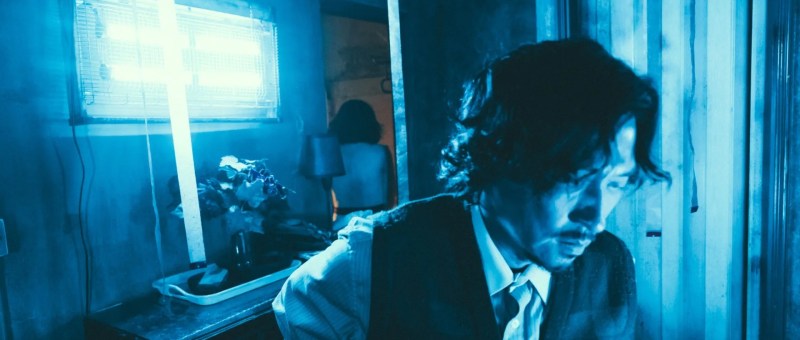
A man struggles with conflicted emotions after learning that his teenage son has killed his mother and sister in a bloody attack in Philip Yung Chi-kwong’s empathic character drama, Papa (爸爸). As much as he’s responsible for the deaths of those dearest to him, Ming (Dylan So) is still Nin’s (Sean Lau Ching-wan) son and he has a real desire to love and care for him while at the same time wondering why and continuing to blame himself as if this tragedy were really provoked by his failures as a father. 

Weaving back and forth through the last 30 years, Yung meditates on a theme of loss while linking Nin’s life with key moments in history. In 1997, the year of Hong Kong’s handover to China and also the beginning of the Asian financial crisis, Nin buys a newfangled digital camera hoping to record the birth of his daughter, Grace. Nin isn’t convinced by this technological advance and wonders if it will just lead to people wasting their time taking endless photos now they don’t have to worry about running out of film, but it’s also the means by which he is eventually able to preserve his family by making use of the temporary pause provided by its timer function so that they can all occupy the same space for a moment but also for eternity.

Otherwise, he worries that the family’s business concerns put too much strain on their relationships. He and his wife Yin (Jo Koo Cho-lam) worked opposing shifts at a 24hr eatery meaning they rarely got to spend time together and the children grew up with each of their parents never fully there. Though Nin had wanted to stop opening overnight so they could have a more conventional family life, Yin, from Guangdong on the Mainland, was against it and wanted to keep going until the children were a bit older. There’s an implication that this 24hr culture is also something of an older Hong Kong that’s gradually being erased in the post-Handover society and that Nin and his family are living in an age of decline.

Though Ming won’t give a reason for what he did, in his court testimony he claims to have heard voices telling him that there were too many people and it was making everyone angry so he needed to kill a few and bring the population down. Nin again blames himself, reflecting that the family live in a typically cramped flat where the children have to share a room and everyone is piled on top of each other even if he and his wife are rarely there at the same time. In flashbacks to happier times when Ming was small, there’s a suggestion that Ming resented his sister and that he always had to share not only his possessions, his mother suggesting that they buy a smaller bike for his birthday so Grace can use it too, but his parents’ attention. In a particularly cruel moment, Ming tells Grace that none of her favourite characters from Doraemon are actually “real” but merely imaginary friends Nobita made up in his head because he is autistic. 

But along with his aloofness, poor social skills and lack of empathy, Nin remembers Ming caring for the stray kitten Grace adopted but then grew tired of though he had not originally been in favour of taking it in. He seems to have been living with undiagnosed schizophrenia, something else Nin blames himself for wondering if there was something he could have done. “If I’d been there it wouldn’t have happened,” he tells the press in the incident’s aftermath, but even if he was ill it’s hard to believe the little boy he taught to ride a bike and took on trips to the beach could have done something so violent and hateful and then show such little remorse. Even so, he’s still his son and the only thing he can still rescue from the wreckage of his life while meditating on all he’s lost. As such, it’s another recent film from Hong Kong about how to live on in a ruined world. Yung’s camera has an elegiac quality aided by a retro synth score and the neon lighting of an older Hong Kong drenched in melancholy, but also weary resignation and a determination to keep going if only in memory of a long absent past that were it not for a photograph “to prove that we were here” would go unremembered.  


Trailer (Traditional Chinese / English subtitles)