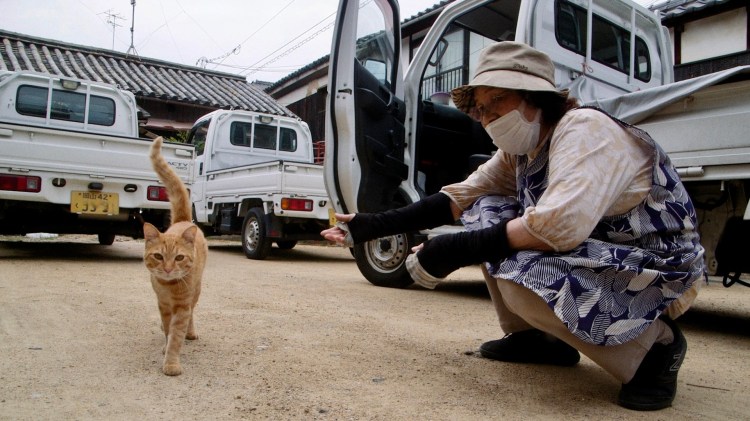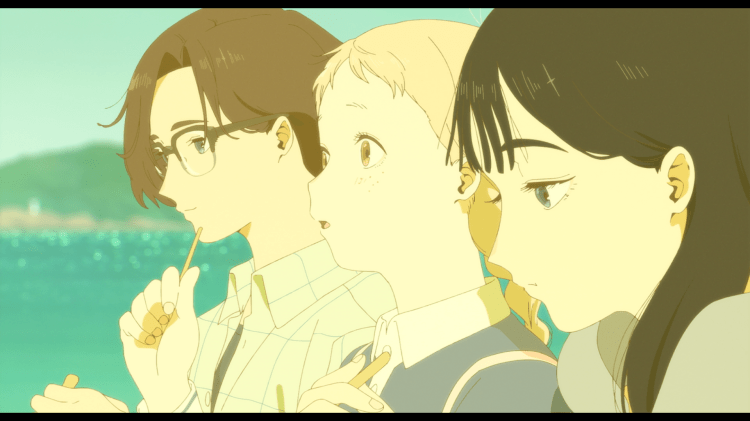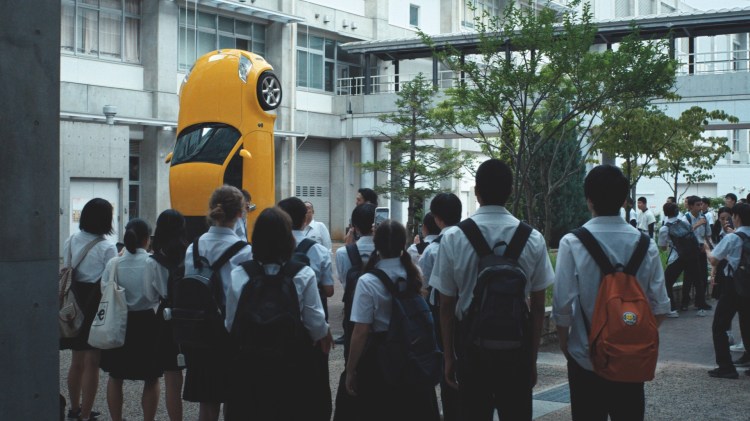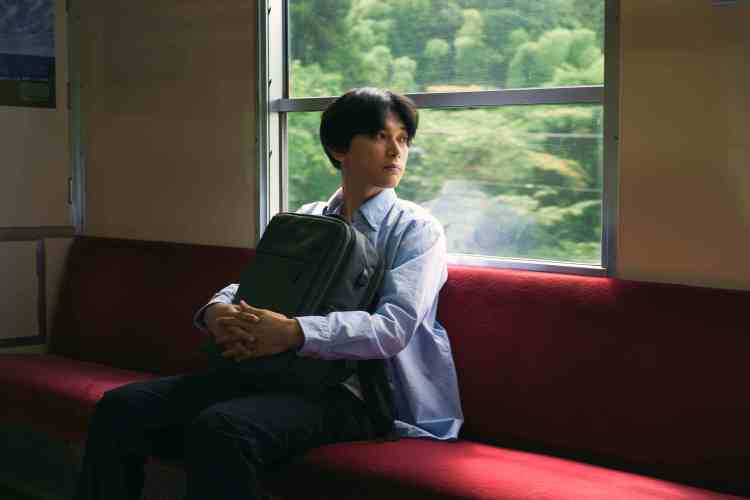
General’s Son 3 (將軍의 아들 3 / 장군의 아들 3, Im Kwon-taek, 1992)

The third and final instalment in the General’s Son trilogy picks up some time after the events of the previous film, not with Doo-han (Park Sang-min) being released from prison but emerging from hiding. After his showdown with Kunimoto, he’d been lying low in a temple but is now on the run, heroically jumping off a train to avoid the police and thereafter making his way to Wonsan and seeking asylum with an affiliated gang. By this time, Doo-han’s role as the son of a legendary general who was murdered by communist traitors while fighting bravely for independence seems to have been forgotten as he wanders around trying to evade the colonial net. 

In Wonsan, he immediately starts causing trouble by objecting to gang leader Shirai’s treatment of an aspiring singer, Eun-sil (Oh Yeon-soo), whom he has more or less imprisoned until she agrees to sleep with him. Doo-han helps her to escape and encourages her to continue pursuing her dreams of stardom, but motions toward romance create an ongoing instability which indirectly echoes throughout the rest of the film as he tries to balance his desire for Eun-sil with the ongoing battle for Jongno and resistance against the Japanese. 

For her part, Eun-sil falls for Doo-han as the man who saved her from Shirai and restored her freedom but still finds herself at the mercy of the Japanese as otherwise sympathetic lieutenant Gondo (Dokgo Young-jae) takes a liking to her after being struck by her singing talent which he apparently did not expect seeing as she is a mere Korean. Later Gondo and Doo-han become accidental rivals when Eun-sil is arrested because of her associations with Doo-han and they have to work together to get her out. Gondo is fiercely critical of their relationship, not only out of romantic jealously but because he finds the Korean approach to romance vulgar. Despite her later agency which sees her primed to reject both men in order to pursue her career, Eun-sil is also a mere device to emphasise Doo-han’s virility as the entire neighbourhood is kept awake by her moans of ecstasy even after Doo-han has been badly injured in a fight, is covered in bandages, and has been told he will need to stay in bed for the next month to recover. 

Gondo meanwhile, in a slightly symbolic gesture, tries to force Eun-sil to marry him by laying his sword on the table and making it plain that if she refuses he will kill her and then himself. Perhaps in a more romantic tale, he might have threatened Doo-han and asked her to make a sacrifice, but in any case Doo-han tries something much the same on hearing the news, having a kitchen knife brought to him and thrusting it into the table. Eun-sil merely seems amused, or perhaps worryingly pleased at open show of romantic jealousy as proof of love, knowing that it is quite unlikely Doo-han is actually going to hurt her (the same cannot be said for Gondo). He still however tries to command her to stay and marry him, refusing to let her leave because she is “his”, but in the end of course it’s bluster and if she chooses to leave he cannot stop her because he is not a man like Shirai or Gondo who would willingly restrict another’s freedom. He is still “fighting for our liberty” after all. 

Meanwhile, he undergoes a parallel “romance” with Dong-hae (Lee Il-jae) who left alone for Manchuria after renouncing the gangster life but has apparently left the Independence Movement because it was too socialist when what he seems to want is individual capitalist prosperity which is why he’s got mixed up in the opium trade. Still on the run, Doo-han seeks out Double Blade, the street thug mentor who brought him into the gang all those years ago. Unfortunately he makes a lot of trouble for Double Blade in annoying one of his underlings who runs a local Chinese gang and then starting a turf war after getting himself into trouble with the bandits who run the drugs trade. He and Dong-hae are eventually separated in the escape from the bandits but reunite when Hayashi (Shin Hyun-joon), who is still nominally running the yakuza but has delegated Jongno to his sadistic brother-in-law Uda, tries to use him in a plot to take out Doo-han once and for all. 

Throughout the series, Doo-han has been a mythic, comic book-style hero who is respected for the integrity of his fists, refusing to use weapons and leaving his opponents beaten but breathing so that they can verbally concede the victory. The previous film had seen him enact a more serious kind of violence, but even so his rival apparently survived only permanently changed. His final confrontation with Hayashi, by contrast, sees him kill for the first time by picking up a blade and then a gun. Nevertheless, he is perhaps the General’s Son after all. According to his gang members, scattered after he left, he is the only force with can keep Jongno free, without him they fell apart and let the Japanese take their streets from them. The final instalment in Doo-han’s story ends on a moment of tempered victory which avenges his gangster honour but places him firmly in the arms of his brother Dong-hae as they temporarily retreat from the battlefield towards an increasingly unstable future. 


General’s Son 2 (將軍의 아들 2 / 장군의 아들 2, Im Kwon-taek, 1991)

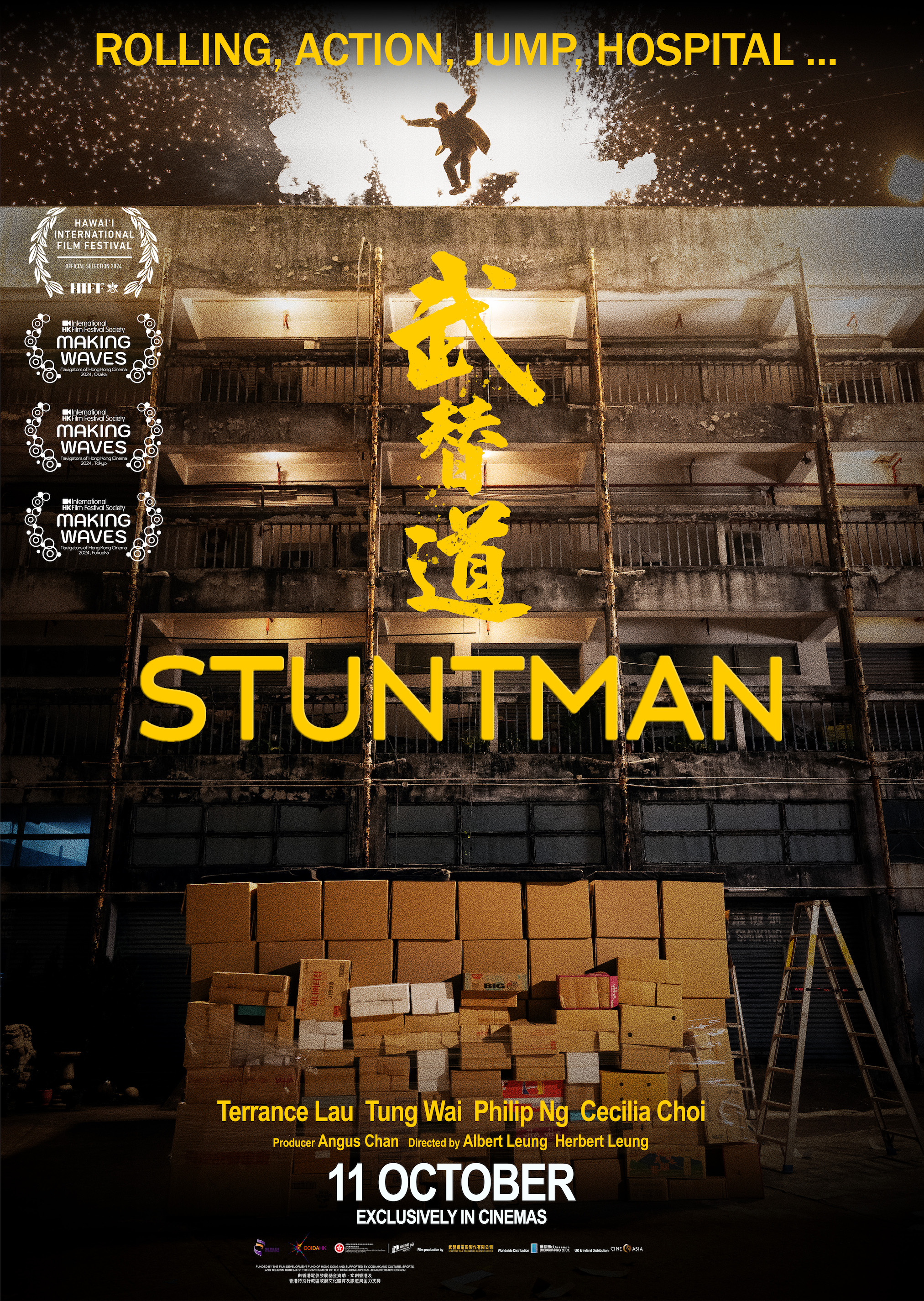
A year after General’s Son struck box office gold, Im Kwon-taek returns to colonial Korea picking up pretty much where he left off with Doo-han (Park Sang-min) once again getting released from prison only this time to a hero’s welcome. Pushing deeper into the colonial era, The General’s Son 2 (將軍의 아들 2 / 장군의 아들 2, Janggunui adeul 2) takes place in increasingly straitened times in which the Japanese are both in control and on the offensive, using the colonial base to strike further into Manchuria while Doo-han discovers a little more about his legendary father and the fate of the Independence Movement in exile. 

Like the first film, the sequel largely consists of a series of episodes in which Doo-han fights and defeats his various rivals. The major change this time is that he begins in defeat as the early celebrations of his return give way to a dawn raid by Hayashi’s yakuza after which Doo-han is dragged into the town square and forced into submission. When Doo-han’s mentor Ki-hwan (Min Eung-shik) is also released from prison, the gang opts for a truce, but Ki-hwan then absents himself after realising Hayashi has tricked him leaving Doo-han in charge. 

During the first film Doo-han’s Korean gangsters had been presented as unambiguously good, standing between the ordinary people and Japanese oppression. While Doo-han was away, however, things have changed. The Japanese have infiltrated Jongno and the Jongno gang has lost the support of the merchants through pressing them too hard for collection money. Doo-han’s first task is then to get the smaller Korean gangs back on side, fighting the local Mokpo kingpin to ensure he resumes sending taxation payments back to Jongno. His main source conflict, however, is still with Dong-hae (Lee Il-jae), the Korean fighter working for the yakuza whom he defeated at the end of the previous film but who got his own back by getting the jump on him at the beginning of this one. 

As a defender of Korean liberty, Doo-han’s side mission is to win back Dong-hae to the side of right, reminded of their childhood meeting by a repeat of the flashback in which he helps a starving Dong-hae cadge a meal by teaching him how to dine and dash. The Dong-hae dilemma is compounded by Doo-han’s increasingly complicated love life which begins with a brief flirtation with Setsuko, a half-Korean Japanese woman working at a gangster-friendly bar who seems to have taken a liking to him, but then later transfers to Chae-hwan (Song Chae-Hwan), a new gisaeng at his regular hangout who is sweet on Dong-hae and is also carrying baggage because her late husband was stoned to death as a traitor when the Japanese discarded him. 

Through Chae-hwan, Doo-han gets to know a dissident author, Park Gye-ju, whose novel Pure Love he pays two high school students to read aloud to him because he is still illiterate. According to Gye-ju, Doo-han’s general father is dead, assassinated by communist traitors among his men including such esteemed names as Kim Il-sung, placing Doo-han at a peculiar intersection of anti-communist and anti-Japanese ideology. Despite that however, Doo-han is warned off associating with Gye-ju because of his “suspicious ideology” by his arch nemesis, Kunimoto, formerly “Lee” the Korean detective working for the Japanese who arrested him all the way back at the beginning of his journey in the first movie.

Traitorous Koreans rather than the Japanese are the main antagonists with Kunimoto first among them, but then as Chae-hwan puts it it’s not the fault of the world only the Japanese whose continuing oppression has placed them all into these perilous positions. Dong-hae weighs up his options, persuaded to end his problematic associations with Hayashi despite his previous assertion that he didn’t care where the money came from he only wanted to survive. The world abandoned us first, he explains, what else was there to do? Chae-hwan criticises Doo-han, suggesting that he’s using his fists not for the people of Korea but for himself, convincing Dong-hae that he can be “saved” if he leaves the gangster world behind. Like his nation, he decides he wants “independence”, eating his own food bought with his own money, rather than remaining at the mercy of a higher authority be that Hayashi or Doo-han. 

The Japanese army, however, believe themselves above the law and answer only to the emperor. Dong-hae’s decision brings him further into conflict with Doo-han, rejecting not just the law of the street but provoking romantic jealousy. As Chae-hwan points out love isn’t a fight you win or lose, but it’s still at the mercy of the various political forces in play and in not in any way helped by Doo-han’s childish provocation of Japanese soldiers at Setsuko’s bar. In any case, Doo-han remains a folk hero, concluding his final showdown with his first show of real violence with active consequences, but in the end protected by the people of Jongno as they offer themselves as human shields holding back the forces of oppression while Doo-han remains trapped in a world of pointless gangster violence. 


General’s Son (將軍의 아들 / 장군의 아들, Im Kwon-taek, 1990)

Im Kwon-taek may have been among the first Korean film directors to secure a spot on the international festival circuit, but his long and meandering career began with action cinema which is where his early ‘90s blockbuster trilogy General’s Son (將軍의 아들 / 장군의 아들, Jangguneui Adeul) returns him. Quite clearly influenced by recent Hong Kong martial arts movies, ninkyo eiga yakuza dramas from Japan, and episodic fighting comics, General’s Son creates legend from recent history in further mythologising a real life street king who eventually shifted into politics in the 1950s which might be one shift too far in terms of the film’s complicated politics. 

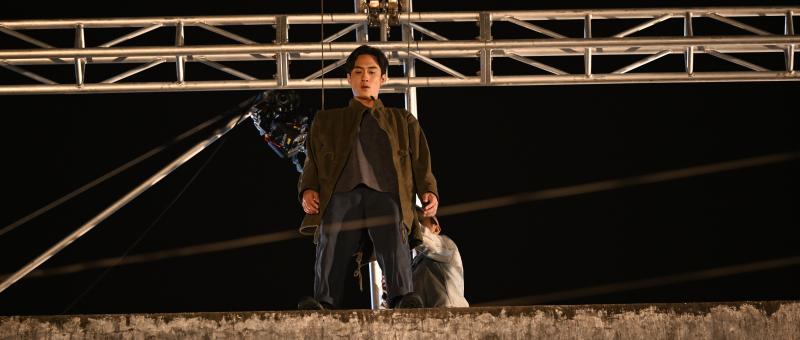
This first instalment in the trilogy opens with Doo-han (Park Sang-min) being released from prison after apparently having been picked up for sneaking into a Japanese cinema and getting into some kind of fight. An orphan, Doo-han has spent his life on the streets as a beggar but also has a deep love of the movies and is determined to get a job at the cinema, eventually landing one as a sandwich board/announcements guy parading through the streets shouting about what’s currently on for which he gets two tickets on top of his pay. The tickets become a bone of contention when some lowlife punks try to cheat him out of them, but Doo-han is a handy boy and so he manages to beat the guys up and get the tickets back despite being stabbed in the thigh. The altercation brings him to the attention of a local gang boss who decides to recruit him because he’s in need of street muscle and even helps him get a job at the cinema which turns out to be a hub for the local organised crime community. 

The complication is that this small area of Jongno which is ruled by the gangs is also the last remaining outpost of a “free” Korea where Japanese interference is apparently minimal. There is, however, a Japanese gang presence in the form of traditional yakuza led by the youthful and handsome Hayashi (Shin Hyun-joon), who becomes the central if not direct villain. In typical gangster origin fashion, Doo-han climbs the ranks by using his fists, taking down one big boss after another but, crucially, only while his own guys collectively decide to make way for him. As one after the other is killed or arrested, they each affirm that their era has passed, they’ve been beaten, and it’s all up to Doo-han now. In fact, in this highly ritualised setting, most fights ends with the defeated party solemnly admitting that they have lost and will politely leave Jongno at their earliest opportunity. 

As for Doo-han himself, he belongs to the noble brand of gangster and becomes something of a folk hero for his spirited defence of the ordinary man in the face of “Japanese tyranny”. Of course, that ignores all the ways in which the gangsters themselves could be quite oppressive and the film does indeed resist any mention of how they make their money other than a veiled allusion to collecting protection from the market traders in order to keep them safe from harassment by the Japanese.

At the end of the film, Doo-han receives an explanation for all the crytic hints to the film’s title to the effect that he is the son of a legendary general in the Independence Movement. His role is, in effect, to be the general in Jongno holding back the Japanese incursion and saving the soul of Korea from being despoiled by colonisers intent on erasing its essential culture. Just as his father is fighting in Manchuria, Doo-han is “fighting for our liberty” on the streets of Jongno while standing up for the oppressed wherever he finds them, including the gisaeng one of whom he saves from being sold into a Chinese brothel by her father by robbing wealthy Japanese officials to pay her debt. What he’s mostly doing, however, is fighting with fellow gangsters, proving himself in tests of strength which leave his opponents breathing but humiliated and thereafter removing themselves from the game in graceful defeat. It’s unlikely the Japanese will do the same, but Doo-han will be monitoring the streets until they do.


Luminous Moss (ひかりごけ, Kei Kumai, 1992)

At the end of the increasing surreal trial which concludes the play within a play in Kei Kumai’s Luminous Moss (ひかりごけ, Hikarigoke), the protagonist turns to the people of the court and asks them to look at him. He wants to know if they see the ring of light around his head that looks like the luminescent plants inside the cave where he spent three months or so after being shipwrecked in the middle of the war. His plea is as much to ask what would you have done and if we can ever really judge him when we ourselves have never been faced with his dilemma.

It is however a dilemma many were faced with, and one tacitly suggested in other earlier films such as Kon Ichikawa’s Fires on the Plain though at that point too taboo and painful to address openly. In the framing sequence which bookends the film, an author visits a town in Northern Hokkaido in search of inspiration and is guided to a cave, now reachable by a roadway built after the war, where luminous moss grows. The man who takes him, a headmaster (Rentaro Mikuni), also tells him of an incident which took place there in which four shipwrecked men swam to shore and took refuge within the cave. Only the captain (also played by Rentaro Mikuni) survived, making a perilous trek across the ice a few months later when his food source depleted and he was left with no other choice.

The middle of the film is presented as a flashback, but actually the play the author is writing based on the investigations of the headmaster who says that he increasingly came to sympathise with the captain because of his own experiences as a prisoner of war in Siberia. Hachizo (Kunie Tanaka), a middle-aged father to a large family who refuses to eat the corpse of the first man to die, Gosuke (Tetta Sugimoto), because he promised him he wouldn’t, describes the captain as a “resourceful man” in both positive and negative senses of the word. He assumes the captain is already calculating when the current supply will run out, and when his own body will have consumed, leaving him with a dilemma about what to do next. The captain is in no real doubt about the necessity of eating Gosuke’s flesh and feels no guilt about it, after all he died of natural causes after consuming seawater and is now, in the captain’s view, simply meat so not eating him is just a pointless waste. Perhaps the situation would be different if he had killed him deliberately in order to eat him, but on the other hand it would not really be advantageous to do so given that the captain’s end goal is surviving until the end of the winter when it will be possible to return to the mainland. Thus he waits for his men to die and leaves the rest up to fate. 

The situation only comes to light when a wooden box is washed to shore containing the bones of Private Nishikawa (Eiji Okuda), whom the captain did actually kill but accidentally while he was trying to commit suicide so that the captain would not be able to eat him. Nishikawa is originally a thorn in the side to the stranded men, a brainwashed militarist who insists they must survive out of loyalty to the emperor. He refuses to eat Gosuke’s corpse on moral grounds, but is eventually unable to resist unconsoled by Hachizo’s well-meaning advice that he should tell himself he did it for the emperor. Knowing that he did it solely for his own survival shatters his illusions of himself as a loyal subject and fractures his sense of identity. He cannot live with himself having eaten human flesh, while as the captain says those who were going to die were always going to while those who must survive must to everything to do so. 

Thus at his trial, in which he appears to have lost his mind, he stresses that though he does not object to the legal process or its consequences he will not feel himself to have been judged by the prosecutor (Hisashi Igawa) as he has never eaten human flesh nor had his own flesh eaten. While in the cave, Hachizo had claimed to see a glowing ring around Nishikawa’s face which he attributed to a folk belief that such a ring resembling the green glow of luminescent moss was a signifier of his guilt visible only from a certain angle and for a short time only to those who look for it. It’s this ring that captain asks others to look for at his trial, to show him the signifier of his own guilt so that he may himself accept it. But then he may actually have a point that those who have never experienced what he has experienced are incapable of judging him. At the critical moment, the trial is interrupted by an air raid, there after becoming increasingly surreal as the location is shifted back to the cave as if it were all taking place within the captain’s mind. 

The prosecutor tries to attack him for attempting to blame it all on nation and society, suggesting that his actions have disgraced all of Japan and brought shame on the emperor about whom the captain makes an inappropriate remark suggesting that the emperor too is human and merely “enduring” his circumstances. Pressed to explain himself, the captain only says that he is “enduring” many things and that during his time in the cave he simply “endured”, doing what seemed to him the only thing he could do. The prosector points out that Hachizo refused and chose death, while Nishikawa attempted suicide to atone for his actions, asking what right the captain had choose survival but the only ones who can really judge him the three men he cannibalised each of whom appear as (almost) silent ghosts whose judgement cannot be interpreted. 

Though the film is not as visually striking as others in Kumai’s earlier career, he succeeds in conjuring a sense of primeval eeriness in the swirling mists and oddly shaped icicles of the cave while avoiding any sense of gore in the act of cannibalism itself which might otherwise unbalance the ethical dimensions he wishes to address. In the closing sequence, both the writer and the headmaster are positioned behind the bars which now protect the moss as if this kind of primal impulse could really be restrained or tempered by our civility. After the death of Gosuke and given the objections of the other two men, the captain suggests waiting a day or two to see how long their “human feelings” could hold in the face of their survival, the answer perhaps being less than you’d hope and about as long as you’d expect.


In the Distance (距ててて, Saki Kato, 2022)

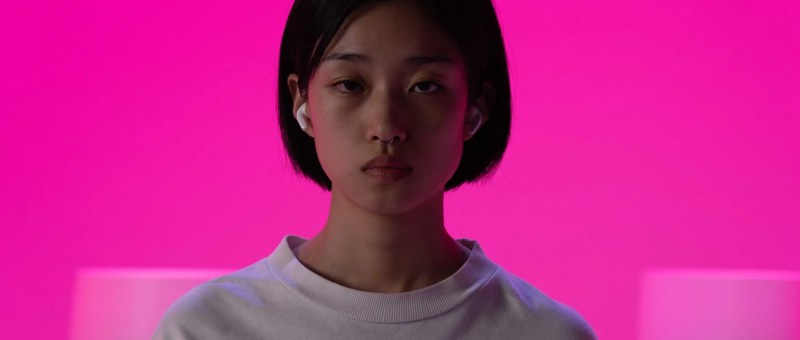
Can two people who have completely different outlooks and ways of living learn to get along and eventually become friends? A pandemic-era dramedy, Saki Kato’s In the Distance (距ててて, Hedatetete) asks just this question when two women are unexpectedly forced to co-exist on a greater level after their roommate is suddenly stuck abroad. A series of surreal adventures might leave them with no option other than to confront their differences, but also shows them that difference can be complementary rather than disharmonious. 

The main issues between Ako and San are those which are common to any house sharing arrangement particularly if the people involved did know each other well previously. Ako is an aspiring photographer who sees part-time work as a necessary evil but continues to struggle amid the vagaries of the covid-era economy. She is neat and tidy and likes the house to be in order. San, meanwhile, is picking up most of the rent and has a job which has not been too badly affected by the pandemic. But she’s also a total mess when it comes to her share of the housework and has an annoying habit of picking up everyone’s post and stuffing it somewhere in her room without letting her roommates know a letter has come for them. Obviously, this is also an invasion of privacy on top of simply being annoying so Ako’s irritation is understandable but she has a kind of animosity towards San simply for being what she sees as a boring wage slave while she’s just slumming it until she gets a break with her photography.

But then again, San is “artistic” if in a problematic way in that her accordion playing has caused complaints from neighbours but when their property manager comes to have a word with them he ends up bringing his ocarina to join in the fun. San vents her frustrations to a friend, Tomoe, who has a similar problem of her own in that she’s in the process of breaking up with her boyfriend because they keep disagreeing over trivial things like brands of rice or misaligned printing on greetings cards. They only talk to each other in terms of metaphor with Tomoe apparently sick of their mismatched pairing and hoping to find a new partner with more common interests while the boyfriend seems near distraught by the thought of the relationship ending. 

Ironically it’s San who points out their relationship may be fairly complementary and it’s more the case that they can get along together because they are different yet she still struggles with her relationship with Ako whom she finds uptight and pretentious. Ako, meanwhile, is having a strange encounter of her own with a teenage girl looking for a misdirected letter presumably spirited away by San. She claims not to have a phone or use a computer and implies that her mother is very strict, though when she actually arrives at the house she’s incredibly nice and even cooks a hearty meal though there is something a little sinister in her manner lending the pair a kind of supernatural quality like something out of a fairytale. 

In any case, a misplaced keepsake eventually prompts a confrontation between the two women that allows them to clear the air and find a way to work together. Turning somewhat surreal in its final section, the film hints at a transportational quality of their new alliance that drops them in a new and unfamiliar place with only each other to rely on. The lesson seems to be that sharing an environment necessarily gives rise to various interpersonal issues which can be dissolved while outside of it, and that even if two people seem completely incompatible they can still find common ground and learn to get along especially against the stressful backdrop of a global pandemic in which enforced isolation can exert additional pressure on an already strained relationship just when mutual cooperation becomes an absolute necessity. Filmed with everyday naturalism and a surrealist, deadpan humour Kato’s indie dramedy hints at the strangeness of the ordinary but also discovers the small moments of unexpected connection often brokered by casual misunderstanding.


Original trailer (no subtitles)

Decoded (解密, Chen Sicheng, 2024)

International geopolitics is reduced to a battle wits between two men, each in their way lonely exiles and perpetual outsiders in Chen Sicheng’s adaptation of the novel by Mai Jia, Decoded (解密, jiěmì). Originally an actor (and here making a meta self-cameo), Chen is best known as a director for the smash hit Detective Chinatown franchise which boasts both well-plotted mysteries and zany, lowbrow comedy. Decoded is a slightly different kettle of fish, displaying its own kind of whimsicality but also darker and stranger in its concentric enigmas.

The narrative’s timeline seems to be slightly hazy, but loosely follows an prodigious orphan born to a prominent family though his father, the black sheep, had already died before his mother too died in childbirth. A rather complicated set of circumstances led to Rong Jinzhen (Liu Haoran) being raised by an Austrian dream interpreter who for unexplained reasons kept him locked up in a small hut isolated from the world while teaching him all about dreams with the consequence that by the time the old man dies, 12-year-old Jinzhen is a strange boy with few social skills but a once-in-a-generation grasp of mathematics.

It’s this genius that sees him saved by distant relative Xiaolili (Daniel Wu) who was originally going to send him to an orphanage but decides adopt him instead. Jinzhen then gains early entry to university where he’s tutored by Liseiwicz, an exiled Polish professor who fled his homeland to escape persecution by the Nazis as a Jew. The film seemingly doesn’t mean to, but undermines this backstory through the casting of John Cusack who plays the part as all American and is not convincing as Polish man who ended up in China because he had nowhere else to go and is unable to return to his homeland thereby lessening the intended impact of his speeches about nationhood and patriotism which counter those Jinzheng has already been given by Xiaolili in addition to making him seem suspicious possibly long before she should. 

Nevertheless, this may also add to his sense of untrustworthiness and perhaps duplicitous treatment of Jinzheng which edges towards the exploitative in hoping to make use of his genius for his research into the evolution of computing. In the early days of the Chinese civil war, Liseiwicz is approached by agents from the PLA who want him to decode a telegram that may save thousands of lives. Liseiwicz claims he doesn’t want to get into politics though superficially supportive of the Communist cause only to later be exposed as a collaborator with the KMT on his return to the US where he designs encryption codes to be used between Chiang Kai-shek’s nationalists in Taiwan and the US troops backing him in the hope he’ll retake China and end Communism in Asia. 

Of course, Jinzheng gets picked up by the CCP to work in their secret spy division in which he becomes a virtual prisoner forbidden from leaving the compound while expected to spend all of his time breaking codes such as those designed by Liseiwicz. In truth, it becomes a kind of game between the two but one that the guileless Jinzheng little understands. It takes it him an unreasonably long time to understand that Liseiwicz is just messing with his mind, sending him misinformation as a distraction intended to drive him mad culminating in dispatching a copy of the The Beatles’ I Am the Walrus in order both to disrupt his political consciousness with decadent Western pop music and drive him out of his mind as he struggles to understand how this nonsense verse about egg men and marine animals is supposed to relate to the code.

Then again, there is something a little subversive in the celebration of Jinzheng’s ability to think about the box, instantly understanding that the correct answer to the entrance test is not to waste his time taking it because it’s obvious they’ve already cracked the code concerned. The use of dream interpretation taught to him by his adoptive Austrian father maybe simply be an ability to work things out on a deeper level of consciousness, but it’s also left him with a fragile mental state already unable to discern dream from reality. The strain of constant codebreaking further pushes him towards madness while he perhaps loses sight of his original mission, only later coming to realise that Xiaolili’s vision of nationhood was the correct one after all.

Though Chen appears to have been influenced by Christopher Nolan in his use of oneiric imagery, he crafts a number of beautifully designed, whimsical dream sequences some which later become hellish or strange but reflect an innate innocence in Jinzheng while disclosing to him something of the real world which he had not understood. It’s ironic in a sense that he’s forever trying to decode the world around him, such as in taking instructions from his adopted sister/cousin Biyu (Chen Yusi) on how to know if girls are interested which he nevertheless slightly misunderstands. The film goes to some surprisingly dark places such as in a brief sequence which Biyu and her mother seemingly if potentially anachronistically fall victim to the Cultural Revolution while Jinzheng is the victim of several assassination attempts by KMT agents well into the ‘60s. Even so his story emerges as tragedy more than triumph, a fine mind broken by the society around him and used as an unwitting tool in the nation’s path to perfecting an atomic bomb having seemingly decoded everything but his place within the world.


International trailer (English subtitles)

School of the Holy Beast (聖獣学園, Norifumi Suzuki, 1974)

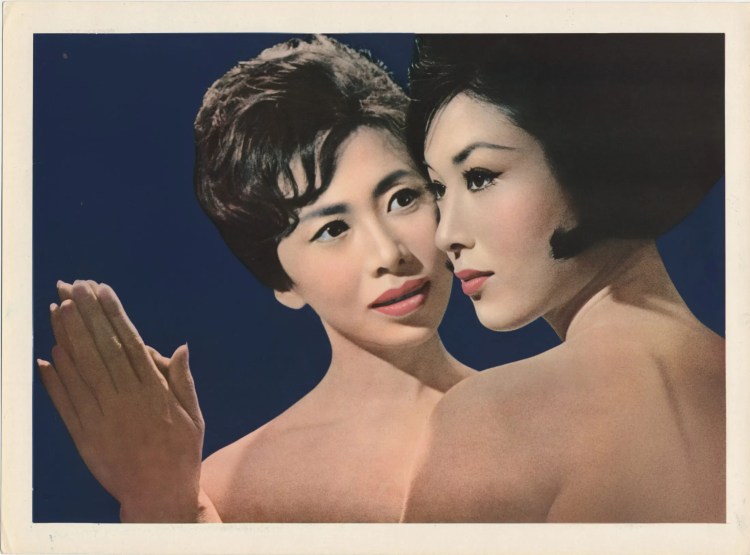
“Why is sex wrong?” a rebel nun enquires, hinting at the hypocritical atmosphere of the convent which comes to stand in for the patriarchal superstructure of the contemporary society. That it does so might in a way be surprising given that Christianity has relatively little cultural relevance in Japan save its stance as a persecuted religion during the feudal era. Director Norifumi Suzuki jumps on the nunsploitation bandwagon but does so with a baroque romanticism mixed with punkish youthfulness as two young women find themselves rebels in the house of God.

They are both there for reasons largely unconnected to religion. 18-year-old Maya (Yumi Takigawa) is searching for the truth behind her birth and her mother’s death, while Sister Ishida (Emiko Yamauchi) claims she’s been sent there by a wicked stepmother. Ishida also kicks up a stink during a class by questioning the truth of immaculate conception which is quite odd for someone who wanted to become a nun, while otherwise punished for drinking whisky in the middle of the night. Punishment does seem to be the main thrust of their religious practice with the transgressions of “adultery”, which includes all impure thoughts, murder (!), and theft taken the most seriously. On her first night at the convent Maya is woken by the sound of another nun furiously whipping herself though in fairness there just isn’t much else to do. 

Suzuki rams home the erotisicm of ritual in the baptism Maya undergoes during her initiation as a nun in which she is totally nude and instructed to stand with her arms out as if on the cross in front of the altar. She must then bend to kiss the crucifix before receiving her veil as a bride of Christ. The nuns talk of lives of eternal virginity while burying themselves in asceticism in an effort to deny their natural desires but have to a degree sublimated their lust in violence. The most common form of punishment is whipping, while Maya is later tortured with thorns and artfully battered by roses. When one nun steals money in guilt for having abandoned her impoverished family to begin her spiritual journey to Christ, she confesses herself to a priest who offers her the same amount so that she can help her family and ease her conscience by returning it. But in reality the priest has tricked her. He resents that she feels as if her sin has been forgiven and she may forget her guilt, cruelly telling her that she will never hear the voice of God before going on to violate her. 

The act of betrayal, of himself breaking the code to which he should subscribe, is only a echo of an societal corruption which allows men to abuse their power often with the complicity of the women around them such as the abess who has long been in love with him. Kakinuma (Fumio Watanabe) is a man whose faith has been shaken. He bears the scars from exposure to the atomic bomb in Nagasaki which is centre of Christianity in Japan. After telling Hisako (Yayoi Watanabe) that God will not see her, he asks if anyone has actually seen him and why he does nothing when his people suffer. 

Both he and the abbess are trapped in a hell of their own making, though as the girls both say the convent is akin to a prison. When Hisako’s sister visits her they talk to each other through glass as if she were a prisoner, though in many ways she is oppressed by her own repressed desires while those of the other nuns have begun to drive them quietly out of their minds and into sadomasochistic fury. This peculiar madness is only deepened by the arrival of a new Mother Superior who returns from Europe insistent on rooting out “witches” in league with the devil. Suzuki signals the absurdity by playing a chorus of elation when a tortured nun wets herself over a tablet featuring a crucifix in the inversion of a bizarre Edo-era ritual designed to identify secret Christians who were at that point illegal. 

To break free of the covent and return to her liberated life in contemporary Japan as seen in the cheerful opening sequences of her date with Kenta (Hayato Tani), Maya must also free her mother’s ghost and the souls of her sisters by forcing Kakinuma to reckon with his crimes if in the most ironic of ways. Suzuki shoots with febrile romanticism, the pastel colours of the church lending it a hellish glow even before the resurrection of a ghost enacts karmic revenge in a feverish atmosphere of romantic jealously and masochistic repression.


Original trailer (no subtitles)

*Norifumi Suzuki’s name is actually “Noribumi” but he has become known as “Norifumi” to English-speaking audiences.

The 12th Suspect (열두 번째 용의자, Ko Myoung-sung, 2019)

An inspector calls on a small group of artists in the immediate aftermath of the Korean War in Ko Myoung-sung’s taut psychological thriller, The 12th Suspect (열두 번째 용의자, Yeoldu beonjjae Yonguija). Set almost entirely within a tiny tea house, Ko’s steely drama lays bare the contradictions of the new society in slide towards authoritarianism which is itself a product of the failure to deal with the legacy of the colonial past while preoccupied about the “communist” threat in the quite literally divided nation. 

The Oriental Teahouse is home to a collection of poets, painters, and Bohemians seeking refuge from the everyday difficulties of life in the post-war city. Their peaceful idyll is rocked by the revelations that one of their number, Doo-hwan, died on a mountain the previous evening most likely murdered. As it turns out, no one seems to have liked Doo-hwan very much. He was “hateful and ignorant” not to mention a bad poet though many are sceptical of the story wondering if he might simply have had an accident. In any case, the newcomer to the cafe turns out to be a policeman, Ki-chae (Kim Sang-kyung), who confirms that Doo-hwan died of a gunshot wound and sets about asking a series of increasingly intense questions about his relations with the cafe’s denizens. 

To begin with, Ki-chae seems to be a Columbo-like avuncular detective, polite and sympathetic in his questioning until revealing his true purpose at which he turns into something of a firebreathing demon with a very particular vision of “justice”, hunting down “communist spies” in order to keep the South safe. As the murder weapon appears to be a Soviet-issue pistol, he assumes the killer(s) may be linked to the North accusing one of the patrons of having aided and abetted a cousin who was on the other side while throwing a book on Stalin at a university professor who desperately tries to explain that he’s had it since studying in Russia in his youth when times were different. 

Meanwhile, the policeman’s authoritarian sense of justice is gradually exposed as a kind of fascim born of his experiences under Japanese colonial rule. Doo-hwan may have died because of his actions during in the war when he collaborated with Japanese officers agreeing to send young men from his village as conscript soldiers to die for Japan on the frontlines or else as exploited slave labour in the coal mines. Ki-chae is hiding his own dark past while his quest for justice is riddled with corruption masked as patriotism as he vows to wipe out the “communist” threat in order to build a more secure Korea. “The existence of communists is a great misfortune to this country and also a danger” he adds before descending into a violent rage stamping on the face of his interviewee. 

His almost hysterical anti-communism is manifested in a general hatred for the kind of people who frequent the Oriental Teahouse, firstly taking them to task for their lifestyles in a time of chaos and privation while later viewing them as cowardly shirkers evading their duty to go to war. “I won’t let you ruin our country” he snarls while simultaneously embarking on an ill thought through argument that the communists are unfairly benefitting from the dire economic situation to “provoke good people”. He justifies his actions in insisting that everything he does is in order to prevent another “horrible war” while continuing to intimidate them into some kind of confession. His questioning reveals the petty jealousies and minor tensions between the artists along with the unreliability of their testimony while eventually exposing their small acts of resistance, cafe owner Suk-hyeon (Heo Sung-tae) determined to stand up to authoritarianism rather than forever be oppressed by it though others it seems are frightened enough by the potential dangers of rebellion to consider turning on their friends and allies. Locked in the tiny cafe with two soldiers blocking the exit, the artists are cornered and terrified as Ki-chae pits one against the other while all around them the prognosis looks bleak in a society in which men like Ki-chae wield ultimate power controlling the future through burying the past.


Original trailer (English subtitles)

Ajin: Demi-Human (亜人, Katsuyuki Motohiro, 2017)

Katsuyuki Motohiro’s 2001social drama Transparent: Tribute to a Sad Genius had attempted to show the government acting with compassion having discovered humans with a potentially dangerous power, in that case the unfortunate ability to broadcast their every thought. Rather than locking them up in labs, the government had allowed the Transparents to live in the community under the caveat that they must never be told of their ability while continuing to monitor them secretly and in fact micromanaging their lives with less than ethical attention. 2017’s Ajin (亜人), adapted from the manga by Gamon Sakurai, is in many ways Transparent’s flip side in which the government has discovered the existence of a series of people known as Demi-Humans with super fast healing ability meaning that they cannot die from injury and has been conducting what is essentially vivisection on them justifying themselves that “the Ajin are the precious key to the evolution of mankind”. 

Nevertheless, they are mindful that the public would not accept it if they knew the government’s claims of “protecting” Ajins was a smokescreen to disguise the fact they’ve been experimenting on them, let alone selling the results to commercial companies for the production of chemical weapons among other things. Previously a regular medical student, Kei Nagano (Takeru Satoh) is the third Ajin to be unmasked in Japan after being hit by a bus only to heal rapidly and stumble away. After a brief period of torture, Kei is “rescued” by crazed terrorist revolutionary leader Sato (Go Ayano) and his underling Tanaka (Yu Shirota), escaped Ajins 1 and 2, but becomes their enemy after he refuses to turn against the scientists who had been torturing him pointing out that killing them would only make him feel worse and is therefore counterproductive. 

The implication is that 20 years of brutal torture at the hands of mad scientists has turned Sato into a crazed fascist hellbent on the extinction of the human race, seeking an “autonomous” space for Ajin along with full civil rights for Demi-Humans. Though we are told that only three Ajin have been unmasked so far in Japan, the implication is that there are many more living quietly some of whom Sato recruits after putting out a call for all disenfranchised Demi-Humans to join his revolution not for equality but domination. It’s this movement Kei can’t support, the classically “good” Ajin who disapproves of Sato’s actions and wants to leave peacefully alongside humanity. As such, there’s something a little uncomfortable in his inevitable decision to team up with the people who were just vivisecting him in order to stop Sato achieving his goal of guaranteed civil rights for people like him asking for nothing more than that his family be protected and he be left alone and given a new ID to live quietly in somewhere in Japan when all of this over. 

The unpalatable implication seems to be that minorities are only worthy of respect if they serve those in power, both Kei and another closeted Ajin benefiting directly and individually by siding with humanity though humanity may not honour the various promises it makes while they are partially complicit in the torture and exploitation of other Ajins. Sato’s basic request is only to given his full rights in the freedom from torture, but even this cannot be granted because of the threat he presents to humanity in that the inability to die means that he cannot be controlled through violence. Ironically enough Sato does seem to believe himself to be the next step in human evolution, after 20 years of brutal torture believing that humanity is a lesser being which those like him are intended to replace. 

Kei meanwhile encounters kind humans such as Mrs. Yamanaka (Kazuko Yoshiyuki) who kindly offers him a place to hideout because when you see someone is in trouble you just help them even if a baying mob later turn up at your door to ask why. There may be a minor allegory in the way the Ajins are treated, feared by and excluded from regular society, forced to keep their true natures secret in order to live a “quiet” life but than again Sato and his cohort of equally crazed young Demi-Humans who presumably have never been tortured are depicted as quasi-fascist radicals selling their own organs on the medical black market and eventually prepared to unleash a chemical weapon on Tokyo to make it unliveable for regular humans in order to claim their own space. Nevertheless, Motohiro’s drama is at its best during its high impact, well choreographed action sequences displaying some top quality visual effects as the Ajins produce their ghostly avatars or reassemble themselves after catastrophic injury even if the discomfort of the underlying messages cannot be entirely escaped. 


Original trailer (no subtitles)

Target (薔薇の標的, Toru Murakawa, 1980)

By 1980 Toru Murakawa was an in-demand director thanks largely to his extremely successful collaborations with late ‘70s icon Yusaku Matsuda. Fresh off the back of the Game series, Toei Central Film hired him to do for their aspiring star Hiroshi Tachi what he’d done for Matsuda with grimy noir Target (薔薇の標的, Bara no Hyoteki). Interestingly enough Target shares its Japanese title with the 1972 drama The Target of Roses, a truly bizarre thriller in which a hitman stumbles on an international nazi conspiracy that was penned by the same screenwriters but is otherwise entirely unconnected with the earlier film and shares no common plot elements whatsoever. 

Set firmly within the contemporary era, the action takes place in Yokohama and is essentially a tale of proto-heroic bloodshed as the hero, Hiroshi (Hiroshi Tachi), seeks vengeance for the death of his best friend, Akira, during a drug deal which is ambushed by a third party who make off with both the drugs and the money killing Akira in the process. Hiroshi goes to prison for four years and then sets about getting some payback on his release by chasing down the Idogaki gang through gunman Yagi who he believes was directly responsible for Akira’s death. 

The plot is perhaps straight out of the Nikkatsu playbook, a little less honour than you’d find in the usual Toei picture though also cynical and nihilistic in keeping with the late ‘70s taste for generalised paranoia. Hiroshi is soon targeted by the Idogaki gang, but is saved by an old prison buddy, Kadota (Ryohei Uchida), who is a little older than he is and to an extent has a noble reason for his life of crime in that he has a son who became disabled after contracting polio and wants to get enough money together to make sure he’ll be alright when he can no longer look after him. Kadota then adds a third a man, Nakao, a former narcotics cop who jokes that he was kicked off the force for rape but according to Kadota was forced out for noble reasons after his attempt to help a friend backfired. The three men team up to turn the tables on Idogaki by ambushing his own drug deal with, in a throwback to ‘60s Sinophobia, gangsters from Shanghai. 

Meanwhile Hiroshi is caught between the life he had before and the contemporary reality in reuniting with his former girlfriend Kyoko (Yutaka Nakajima) who has evidently become the mistress of a wealthy man and is presumably the mysterious benefactor who paid all his legal fees. After a meet cute at a florist he also strikes up a tentative relationship with a wealthy young woman, the daughter of a CEO who plans to move to Mexico. Despite the rising prosperity of Japan in the early ‘80s, pretty much everyone has their sights set on going abroad, Kadota planning to head to Canada after making sure his son is well provided for. Yet Hiroshi is trapped in the Japan of the past, obsessed with vengeance for his friend while torn by his relationship with Kyoko who similarly wants to exit her comfortable yet compromised life to return to a more innocent time at Hiroshi’s side while unbeknownst to him the mistress of high ranking Idogaki boss Hamada. 

What becomes clear is that there is no prospect of escape from contemporary Japan, not even perhaps in death, Hiroshi left alive but dead inside at the film’s conclusion having committed a kind of spiritual suicide born of the dark side of what remained of his honour in seeking vengeance for the death of his friend who had seemingly only participated in the drug deal at Hiroshi’s command in an effort to improve the fortunes of their gang. Once again produced by Toei’s subsidiary Toei Central Film, Target has lower production values than the films Murakawa was making with Matsuda (who has a small yet memorable cameo as a rockstar whose life has been ruined by drugs) with non-synchronised dialogue and a grimy aesthetic which only adds to its sense of fatalistic nihilism otherwise enlivened by Murakawa’s artful composition and atmosphere of moral ruin in which there is no more humanity nor justice.