Qualia (クオリア, Ryo Ushimaru, 2023)

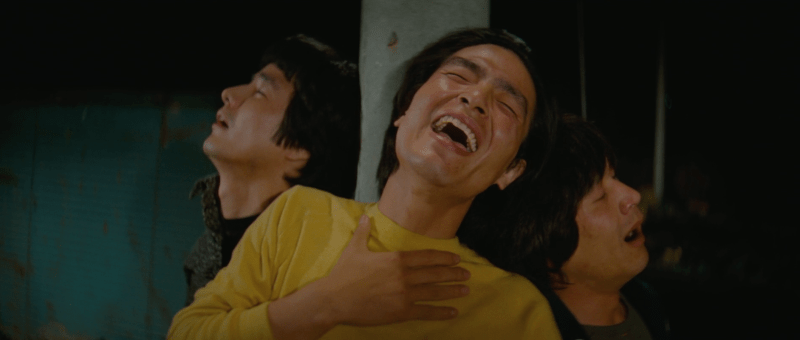
“What is happiness for a chicken?” a recent recruit to a chicken farm wonders, though as she later points out they all meet a grim fate in the end. Yuko (Kokone Sasaki), a timid, quiet woman is much like the chickens she farms though apparently content with her captivity echoing only that it’s enough for her that she feels needed by the family who otherwise mistreat her. Actor Ryo Ushimaru’s directorial debut Qualia (クオリア) examines the place of women in the contemporary family along with its seething resentments and petty paybacks. 

On spotting one hen that’s being bullied by the others, Yuko places it in a protective cage and wonders if it will one day be able to return to the others while perhaps aware that it echoes her own circumstances. Having married into the family of her husband, Ryosuke (Kenta Kiguchi), she’s become little more than a drudge bullied by her embittered sister-in-law Satomi (Maya Kudamatsu) who walks with a cane after an accident caused by her brother which gives her some additional leverage over him. Perhaps to escape the sense of constraint he feels in his familial relationships, Ryosuke has been having an affair with a woman from a roadstop that buys their eggs, Saiki (Ruka Ishikawa), who has spun a tale about a false pregnancy in an attempt to get him to take their relationship more seriously. When that doesn’t quite work, she fetches up and the farm and is mistaken for a job applicant, overjoyed on realising the position comes with room and board. The unsuspecting Yuko is all too eager to accept her, almost browbeaten by Saiki into overriding her internalised compulsion to clear it with Satomi and Ryosuke first. 

Yuko is such a people pleaser that even after finding out about Saiki’s claims to be carrying her husband’s child she welcomes her into their home as if tacitly admitting her inferiority to this other woman who has done what she couldn’t do in conceiving a child. Much more direct by nature, Saiki cruelly retorts that becoming a mother is the key part of being a wife while making pointed and barbed remarks that express her desire to elbow Yuko out of the way and take her rightful place at Ryosuke’s side. After moving in, she quickly takes over the domestic space by requesting that she be allowed to help with the cooking and cleaning while Yuko takes care of the chickens outside, playing the part of the perfect housewife in an attempt to undercut Yuko’s place within the family.

Yet she also seems to feel sorry for Yuko and disapproves of the way Ryosuke treats her with his bullying manner and emotional coolness. Ryosuke had told her that he never loved Yuko and had married her only because his sister told him to, hinting at his feelings of emasculation amid this otherwise matriarchal environment where Satomi effectively rules the roost. The irony is that there are supposedly only female chickens on the farm which is how they ensure none of the eggs they send out are fertilised. If they find out any of the new chicks they take in are male, they get “removed” by conflicted farmhand Taichi (Chikara To) who is a bit of chicken obsessive and finds it hard to square his affection for the birds with this responsibilities as a farmer which mean they’ll all be “removed” when they stop laying and therefore lose their purpose.

The same is true for Yuko. Unable to conceive she’s now being replaced by a subsequent generation and has lost the will to fight back unable even to say that she objects to any of these new arrangements. Ryosuke, a rooster in the henhouse though one whose masculinity is scrutinised, seems to want a reaction from her but all she can tell him is that she treasures the memory of him proposing to her with all the chickens cheering them on and that she’s satisfied just with that one romantic moment. The question remains whether she too will one day find the courage to fly the coop and escape her bullying at the hands of the other women or otherwise discover a way to reassert herself that doesn’t leave her at their mercy. In any case, Ushimaru’s quirky, surreal dramedy eventually discovers that chickens too can fly if only they’re given the chance to do so.


Qualia screened as part of this year’s Nippon Connection

Original trailer (English subtitles)

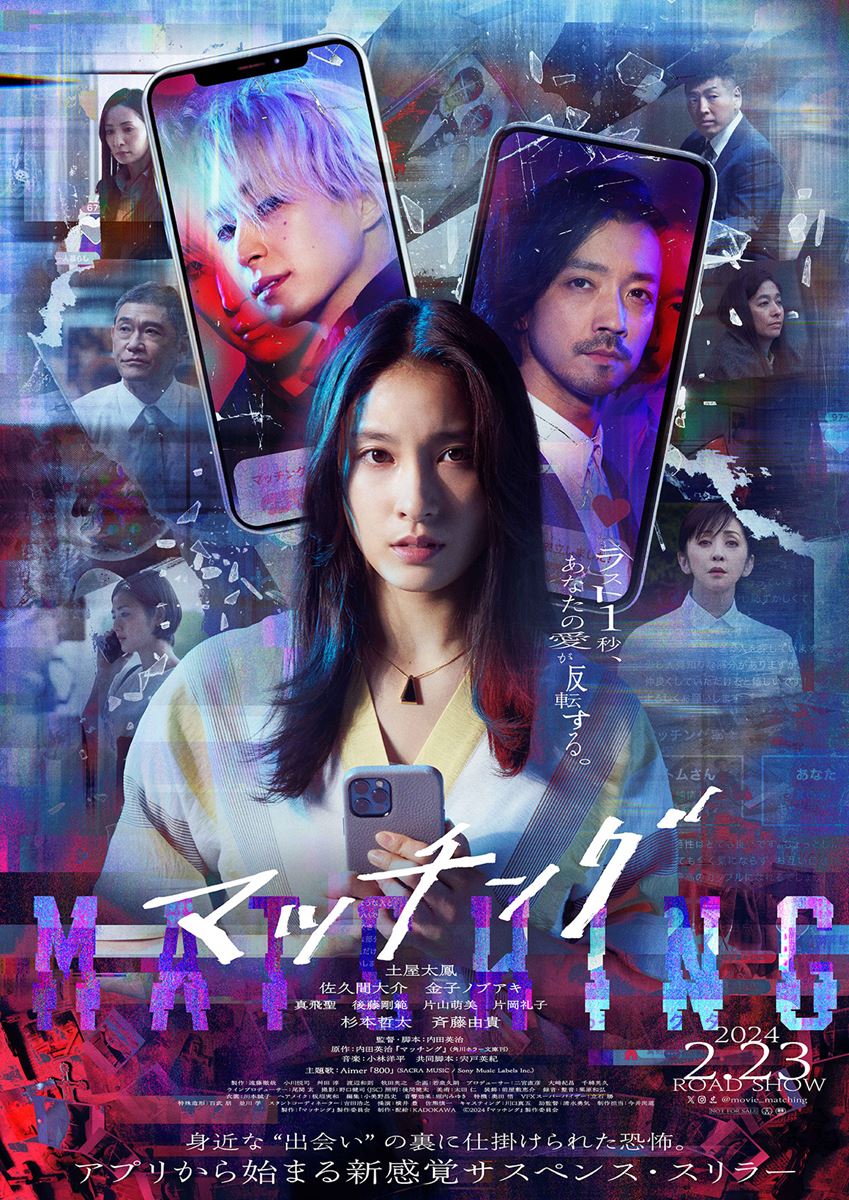
Ichiko (市子, Akihiro Toda, 2023)

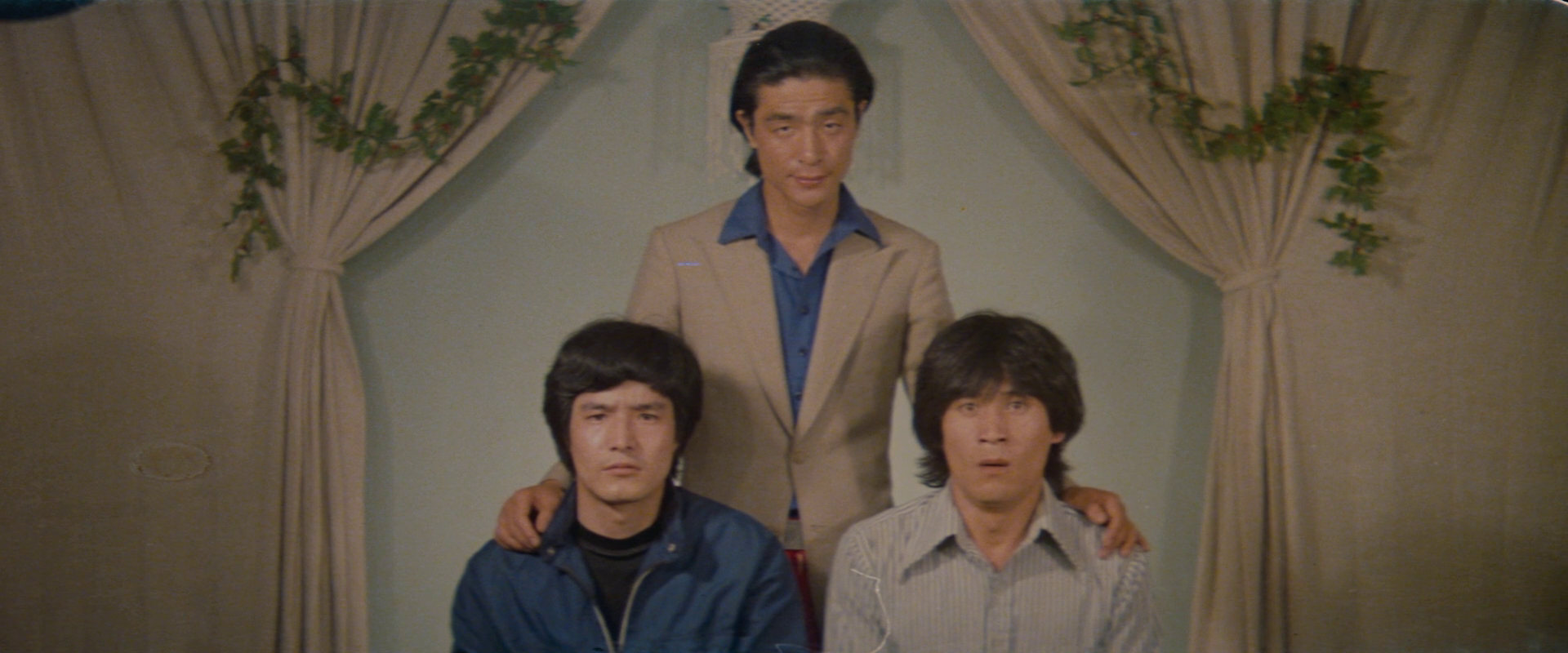
If for some reason your name were taken from you and it became much easier to live by some other person’s name that you were compelled to use, would you be content to be them or be prepared to go to extreme lengths to reclaim your own identity? Based on his own play, Akihiro Toda’s Ichiko (市子) explores similar themes to his 2018 film The Name as the absent heroine fights to reassert herself just as we try to piece her together to a create semblance of the whole being we may never truly understand.

In many ways, it’s absence that defines Ichiko (Hana Sugisaki) who like the mysterious spirit of a fairy tale must be gone as soon as she is seen. Or at least, you could forgive Yoshinori (Ryuya Wakaba) for feeling this way when his girlfriend of three years suddenly disappears soon after he’d presented her with marriage papers. It’s not until he’s visited by a policeman, Goto (Shohei Uno), sometime later that he’s forced to admit he actually knew very little about her. He assumed she’d had a difficult past, and neither of them said too much about themselves so he doesn’t know if her parents are still alive, where she was from, or if she has any family or friends she might have gone to. What shocks him most, however, is that Goto informs him that on paper at least the woman named Ichiko Kawabe does not exist.

Flashing back across several years from Ichiko’s childhood to the present day, we see people call her by another name which she often tries to correct telling them that her name is Ichiko but it isn’t originally clear to us if this is because she’s being forced to live under false name or if she merely dislikes the name she was given and wishes to be “Ichiko” instead. In any case, she appears to have developed a healthy fear of letting anyone in thanks to her incredibly disordered home life. At times, would-be friends attempt to visit, but are either kicked out or merely horrified by what they see there and leave soon afterwards putting an end to the friendship. That might in itself explain why she may wish to be someone else, but in fact what she wants is the right to be herself.

Gradually it becomes clear that because of the way Japanese society works, Ichiko has been forced to live two lives as one and can live neither fully. It’s not quite right to call it a double life or to say that she multiple personalities but more that she cannot quite locate herself within herself and is increasingly distressed in being forced to answer to a name which is not her own and live someone else’s life for them. Later she explains that all she wanted was a “normal” existence though this is the very thing denied her in part because she is denied her rightful identity though there is something quite poignant in her remaining innocence. Her touching description of finding happiness in the scent of miso soup wafting from ordinary houses at dinner time expresses her desire for the comfort and safety of a conventional family she never really had or may perhaps have experienced for a brief moment in early childhood. 

Ironically enough, she exclaims that she likes walking in the rain because it washes everything clean though for her it will spell disaster in quite literally revealing the skeletons buried in her past and with them exposing the precarious web of lies on which her adult life was based in an attempt solely to recapture the authenticity of her essential identity. A further irony may be that the identity she ends up with may not even be her own but that of someone else who decided they no longer wanted theirs, perhaps because the world had also been unkind to them and so they did not understand its worth. As the policeman says, she did what she had to do survive whether that be lying about who she was or otherwise burying her other self literally or metaphorically. Dark and melancholy, Toda’s twisty psychological mystery has its poignant qualities but ultimately asks whether living as your true self is worth the price or it’s better just to accept the name that fate and society have dealt you.


Ichiko screened as part of this year’s Nippon Connection

Original trailer (English subtitles)

Belonging (とりつくしま, Kahori Higashi, 2024)

What if you could come back after you died and watch over those close to you while possessing a familiar if inanimate object? Her second film this year, Kahori Higashi’s Belonging (とりつくしま, Toritsukushima) adapts a novel by her mother in which the recently deceased are asked to choose a “belonging” to sink into given that they seemingly still have lingering attachments to this world. Yet simply watching can itself by painful while it might not do to linger too long in a place where everything is moving on except you.

That’s a possibility that comes to mind the second story featuring a little boy who asks to inhabit the blue climbing frame at the park. He wistfully watches other kids he used to play with pass by and later meets a little sister for the first time, but all these other children will grow up while he will not even if other children will their place. The kindly woman (Kyoko Koizumi) sitting in the school room that doubles as Belonging’s office doesn’t mention what happens if the object is destroyed or moved as something like a climbing frame might be though we later discover that depleted objects can no longer hold their charges which are then dragged back to the afterlife. 

Of course, there’s always the possibility that an object that was precious to you was not so precious to others and may end up being sold or given away as one old woman discovers realising the beloved grandson she hoped to spend eternity with has sold the camera she gave him. The heroine of the first sequence, Koharu, installs herself in a coffee cup featuring a design of a triceratops she and her husband bought on a trip to the museum which he continues to fondle and treasure though Koharu watches him being a tentative relationship with another woman who urges him to buy new mugs as a symbolic moving on from his late wife. 

For Wataru, the coffee cup may already in a sense have been possessed by her spirit though he sees her more in a plant he keeps watering unaware that it’s artificial. Objects can have a kind of presence and carry something of their former owners with them even if not literally possessed but being trapped inside an inanimate object is also frustrating and at times painful. They can no longer act or interact but are mere passive observers at the mercy of their loved ones who may be readier to move than they’d assumed or otherwise dispose of or lose the objects the deceased assumed would be precious to them. 

The heroine of the final sequence might have this right when she chooses to possess an item she knows will only give her a limited time, not even minding when she’s denied the full resolutions of her anxieties in seeing her teenage son win a baseball game while he continues to call her number and recite pleasantries like some kind of mantra. She acknowledges that it might not be good for her or her son to stay too long, she just wants to see he’ll be alright before moving on to the afterlife. The woman from Belonging seems to approve of her choice though her own backstory remains unclear, present both in this world and in the other. 

Making brief detours to introduce us to some strange people in the part such as a female banzai double act and a not-quite-couple, the film is at pains capture both everyday life and the poignancy of loss as the various spirits look for new places to belong while the world around them continues to change and evolve in ways they no longer can. In the park, an old man dances comically much to the dismay of his female companion who is trying to read her book, claiming that he’s going to keep living to the very end which at least expresses a vibrant desire for life in some ways free of the lingering attachments that bind the recently deceased to our world but perhaps also trap them here in solitary museums of past love in which their presence may be felt but also unacknowledged. 


Belonging screened as part of this year’s Nippon Connection

Original trailer (English subtitles)

God Seeks in Return (神は見返りを求める, Keisuke Yoshida, 2022)

It’s perfectly natural a lot of the time to feel as if you expect nothing in return for helping someone, after all it’s only what you should do as a fellow human being. But really we do expect something even if it’s just acknowledgement and it can be hurtful and upsetting if don’t feel we get it while the sensation that we’re being taken advantage of can leave us feeling silly for having offered in the first place. Keisuke Yoshida’s Good Seeks in Return (神は見返りを求める, Kami wa Mikaeri wo Motomeru) revels in these human paradoxes as a self-confessed nice guy is pushed to breaking point by the fallout from all his attempts to be neighbourly which seem to have backfired exponentially. 

Then again, Tamogami (Tsuyoshi Muro) almost certainly does at least hope for something in return when he agrees to help out struggling YouTuber Yuri (Yukino Kishii) with her moribund channel by enlivening it with his skills in video editing and design. He isn’t helping her in order to engineer a sexual relationship, and in fact turns Yuri down when she suddenly disrobes exclaiming that it’s the only way she can repay him for his kindness, but does appear interested and is additionally irritated when she begins hanging out with a bunch of vlogger cool kids he thinks are just exploiting her naivety. Yuri had already payed him back with homemade beef stew, an offer that was accepted in the interest of friendship, but her constant references to repayment of a favour expose her idea of relationships as essentially transactional which to be fair they well may be. Even so, she appears somewhat guileless, opportunist rather than calculating and desperate for attention.

That might be why she can’t see that the reason she became unexpectedly popular after agreeing to a “body paint” stunt with a pair of more established YouTubers is that people wanted to see her naked which is why they’re always requesting more of the same. The first half of the film plays as quirky comedy, an offbeat romance between a nice middle-aged man and a dippy young woman who thinks she’s no good at anything and incapable of being alone. But things soon turn sour when one of Yuri’s stunts seems like it might have serious consequences for a local business owner and Tamogami has to muster all of his PR skills to put this particular fire out. The simple friendship between them that was brokered by a weird ogre-like mascot suit Yuri christens Jacob is disrupted by Yuri’s desire for fame as she undergoes a complete personality transformation after falling in with a group of more successful, media savvy YouTubers who have fancy design skills and marketing teams. She dismisses Tamogami as old-fashioned and joins in when the others make fun of him in rejection of the genuine friendship that had arisen between them.

When a friend he’d helped out financially and even stood guarantor on his debts takes his own life Tamogami is deep in the hole. Finally he wonder’s if he shouldn’t have something in return for all the unpaid labour he’s been doing for Yuri but she predictably brushes him off until he finally embarks on a weird vendetta trying to “expose” her YouTube channel for being founded on lies and exploitation. There may be something in her that’s regretful, wistfully looking at the sweater Tamogami had given her with cute illustrations of her and Jacob on it, while her new “god” Murakami openly mocks him leaving her conflicted about the dark side of their new internet endeavour effectively bullying a guy whose only crime was being nice and bit too dull and middle-aged for her new hipster friends sure to drop her like she’s hot as soon as something goes wrong.

Though not as extreme as some of Yoshida’s other films, God Seeks in Return suggests that nice guys never prosper but also that no one’s really as “nice” as they think they are. We wall want something in return even if it’s just a thank you and not to be belittled or taken advantage of. There can be something paradoxically selfish in niceness in which people do it more for their own gratification or to feel they are better than those they help and conversely the same in those who take advantage of others. In it’s way bleak and melancholy in its vision of human relationships, the film nevertheless holds out a faint hope in the reality of the genuine connection between its mismatched heroes no matter how dark and twisted it may eventually become.


God Seeks in Return screens 1st June as part of this year’s Nippon Connection

International trailer (English subtitles)

Dreaming in Between (逃げきれた夢, Ryutaro Ninomiya, 2023)

Everyone keeps asking Suenaga (Ken Mitsuishi) is if he’s okay. He has these tiny moments in which it looks like he’s on pause, sudden instances of stillness in which he stares vacantly into space. We start to wonder if he’s experiencing some kind of mental distress, having a stroke or developing dementia as those around him seem perplexed about his his behaviour which to us seems cheerful and pleasant. In fact, it seems confusing and unfair that he’s held in such contempt by his wife and daughter not to mention the pupils at his school and sullen young woman at the cafe he often frequents. 

A man of a certain age with a once overbearing father now mute and living with dementia in a retirement home, Suenaga is indeed undergoing a crisis of life. A year away from retirement, he begins to wonder what it was all for and how his relationship with his family became what it is today. He asks his wife Akiko (Maki Sakai) if they somehow gradually became estranged from each other in an impassioned speech in which he begs for love that neither she or his daughter are very minded to give him. Perhaps we can infer from the surprised reactions to his cheerfulness and attempt to take an interest in his daughter’s life that he hasn’t always been this way, though he too seems confused and perhaps not so much trying to make a mends but only to be his real self at what he fears may be the close of his life. 

When he surprises the waitress at a local cafe he goes to frequently by sitting in a different seat and then neglecting to pay the bill, it’s not really clear whether he actually forgot or did so deliberately as an attempt to assert himself. Likewise when he makes a clumsy attempt to embrace his now emotionally estranged wife or calls in sick to work it seems like more examples of his strange behaviour, yet Suenaga claims he’s becoming more of himself and on looking back over his life so far feels dejected and unfilled.

This  sense of mid life crisis is exposed in his conversation with Minami (Miyu Yoshimoto), the waitress at the cafe and an former pupil. He reveals that he wanted to become a head master but didn’t make it, and thinks he was only appointed deputy head because of picking up so many cigarette butts dropped by his rebellious charges, Minami is in many ways his opposite number, young and grumpy yet also grateful to him in another way restoring meaning to his life when she tells him that his words once saved her when he told her that she was fine the way she was. Even so she goads him a little, joking and maybe not really that he should give her his retirement money so she can have a better life. Echoing the opening conversation with his father, Minami hints she may soon quit the cafe to become a bar hostess or sex worker to save up before eventually emigrating Greece.

For all his teacherlyness, Suenaga seems to be a man who wants to be more understanding. He takes an interest in his pupils though they assume he doesn’t and again tells Minami that people should live the way they choose. In the rawness of their final parting, he tells her not to do anything she’ll regret but then adds that maybe she should, as if a life with no regrets is not really lived or perhaps reflecting that despite his own unhappy circumstances he does not really regret the life he’s lived. 

Filming in 4:3, Ninomiya makes great use of closeups, not least of Mitsuishl’s cheerful expression which somehow carries with it a great sorrow amid his own disappointments and yearnings. False or otherwise, there is something touching the connection of these dejected souls, the ageing teacher and the former pupil looking for permission to move on with her life but also teaching something to Suenaga in her sullen defiance and the eventual drive to keep going. Quiet and gentle if suffused with melancholy, Ninomiya’s poignant drama does indeed seem to argue that people in general are alright as they are but false acts jollity are as likely to confuse as console.


Dreaming in Between screens 1st June as part of this year’s Nippon Connection

Original trailer (English subtitles)

Children of the Great Buddha (大仏さまと子供たち, Hiroshi Shimizu, 1952)

Following Children of the Beehive, and Children of the Beehive What Happened Next, Hiroshi Shimizu completes the trilogy with Children of the Great Buddha (大仏さまと子供たち, Daibutsu-sama to Kodomotachi) this time taking place n Nara and focussing on war orphans who remained alone but are trying to make new lives for themselves as tour guides around the temples of the ancient capital. The existence of tour guides in itself implies a change in circumstances in a resurgent tourist industry while it’s also true that Nara is one of the few cities to have escaped the war largely unscathed and free from the destruction seen in industrial centres such as Tokyo or Osaka or that seen in Hiroshima or Nagasaki. 

There is indeed a particular contrast between the ragged children and the guests they escort who appear generally well dressed and seem to have employed them partly out of a sense of pity. The oldest of the boys, Ko, is later gifted some better clothing but doesn’t wear it explaining that he couldn’t get customers dressed like that so he’s put the nice clothes away in a box. The film never really makes it clear where the boys sleep though they can assumed be homeless or otherwise that the temples themselves are their home. Ko has been able to save up some vouchers and sent away for a pair of binoculars putting the Nio guardian statues down as the addressee. He takes his job very seriously and is slightly put out when he discovers part of his patter is inaccurate, made up by his mentor, Ichuin, who has since been adopted by a temple as a novice monk, to better entertain the customers. 

Ichiuin tells a sculptor the boys collectively refer to as “Mr Failure” that his superiors at the temple are quite upset about this new trend in tourism, that they fear people only come to admire the statues as pieces of art rather than to worship Buddha. The fact that people now have money and time for travel signals that the age of post-war privation is coming to an end though those who arrive from outside Nara also talk of destruction and a sense of displacement. A demobbed soldier remarks that it’s only in Nara that he feels he’s come “home” hinting at a concept of Japaneseness that’s survived in the ancient capital but not elsewhere. Meanwhile, Ko is charged with escorting a Japanese-American woman travelling alone in a rented car having returned to visit her grandparents’ graves. The woman, who the boys refer to as “Miss Second Generation,” treats them warmly and includes them in her picnic which itself is quite elaborate and made with rare and expensive foodstuffs. Later her purse goes “missing,” leading Ko to assume some of the other boys have taken it. He’s right, they have. But they were too frightened to spend any of the money because there was such a lot of it expressing this new idea of America as a land of plenty in contrast to Japan at the end of the Occupation.

When Ko takes the money back to her she buys him new clothes, leading the other boys to incorrectly assume she’s going to adopt him and he’ll be leaving for a better life in America. Despite the sense of solidarity that’s arisen between the orphans, they continue to long for more conventional families or at least to be adopted as Ichiuin has been by the temple. Genji, Ko’s friend, has longing for a small statue of Buddha from a local shop only to end up heartbroken on learning it’s been sold. But the woman who buys it unexpectedly offers to adopt him, aligning Genji himself with the statue and explaining that she had a son his age but he died. Genji originally seems reluctant, saying he will stay with Ko perhaps partly out of guilt but is later persuaded though Ko declares that he will always be at the temple. Caught in a kind of limbo, he religiously listens to the missing person programmes for news of his father whose whereabouts, like many even so many years after the war, are still unknown. 

This may be one reason behind the hope that the orphans of Japan could sleep in the lap of Buddha if in a more literal sense, that they maybe embraced by a more spiritual entity in a society that otherwise appears indifferent to their fate. In any case, Shimizu spends a lot of time with the statues capturing them in a documentary style as if we ourselves were receiving this tour and becoming acquainted with the picturesque environment of the ancient capital somehow free from the corruptions of the war itself or the post-war era and in its own way accepting of these orphaned children to whom it offers a home in Buddha’s palm if not quite so literally.


Children of the Great Buddha screens at Japan Society New York on 1st June as part of Hiroshi Shimizu Part 2: The Postwar and Independent Years.

Children of the Beehive: What Happened Next (その後の蜂の巣の子供たち, Hiroshi Shimizu, 1951)

All things considered, Hiroshi Shimizu’s Children of the Beehive ended with the happiest ending it was possible to have to in the Japan of 1948 despite the tragedy that colours its final scenes. Yet for some reason, Shimizu returns three years later to ask what happened to the orphan boys afterwards having adopted several war orphans himself. What results is a strangely meta experience of documentary-style fiction focussing on the sense of community that has arisen at the Beehive. 

The excuse for this is a visit from a journalist for a magazine who wants to ask what’s happened to the boys since then. Yoshibo, who did not die, once again takes centre stage along with Shin who continues to be a leader among the boys while Ho also takes a prominent role as the facility’s cook. Echoing Introspection Tower, the key element is that the orphanage is dependent on the children’s labour which is seen as character-building and a means for them to develop a social conscience though the former soldier now looking after the kids reveals that there are no real rules, the children do as much as they want. They are given access to education through regular visits from tutors, the soldier explaining that it was awkward for the older children whose education had been interrupted to be in classes with kids much younger than them. Most of the boys are currently engaged in building a cabin to be used as a schoolroom and study base.

But the soldier also resents the journalist’s coming. In a meta touch, the journalist came because of the film and then several more kids turn up after seeing the magazine article along with one adult man who declares it’s his lifelong dream to cultivate the land while looking after orphans. A rather cynical Shin points out that’s what everybody says, while a sign on the chalkboard inside instructs the kids to ask visitors to leave politely rather than scaring them away. The soldier’s objections are easily understandable given that the magazine article also provokes the arrival of well-meaning people who want to help but generally end up creating more problems. Two young women turn up with the intention of spending their holiday helping out and get stuck in without even really asking but quickly upset the routines and rhythms that have been set up at the beehive. The soldier explains that the children value their work and enjoy it so a pair of adults doing their jobs for them isn’t helping, rather it makes them feel as if they’ve been deprived of something or haven’t been doing their work properly. The other problem with do-gooders is they obviously can’t stay longterm so there will be another period of adjustment to go through when they eventually leave. 

The presence of the two women also adds a note sexism that hadn’t been present before though this time around there are also female orphans who didn’t feature in the first film including Reiko who is Ho’s kitchen rival eventually kicking him out claiming it’s ”women’s work” with the approval of the two women. Ho later counters her by repeating the same thing but claiming that he told her what do as if trying to claim his right to superiority as a male. Meanwhile, the openness of the first film seems to have ben diluted in the unwillingness to accept newcomers given the scarcity of resources. Shin talks the others into accepting a pair of orphans who appear to have been bullying him only for them to run off with the other boys’ things leaving him feeling responsible in his decision to bring them into the group. 

In any case, the main thrust of the film is concerned with how the orphans live now and captures their cheerful industry through a series of episodes from working together to catch a racoon to being given a science lesson accompanied by a cute animated sequence of a butterfly. A strange subplot in which the mother of one of the boys long assumed to have died contacts the magazine but eventually decides against meeting her son on learning he is happy at the Beehive hints at post-war displacement and reinforces the idea that the children are completely dependent on this community and the mutual solidarity of their fellow orphans which might also in its way explain why some may later decide to leave. Shimizu’s lengthy tracking shots along with the misty rural landscape lend the Beehive an elegiac quality even while insisting that the war orphans are living happily in a kind of commune largely divorced from the chaotic and increasingly selfish post-war society. 


Children of the Beehive: What Happened Next screens at Japan Society New York on 31st May as part of Hiroshi Shimizu Part 2: The Postwar and Independent Years.

Drive Into Night (夜を走る, Dai Sako, 2022)

Small-town futility leads to tragedy when two frustrated scrapyard workers attempt to cover up a crime in Dai Sako’s dark psychological drama Drive into Night (夜を走る, Yoru wo Hashiru). Oppressive in its atmosphere, the film situates itself in a world of constant humiliations where life is cheap and reputation everything. Its heroes seek escape from their disappointing existences through consumerism and extra-marital affairs, but no longer see much of a future for themselves while even the dissatisfying present seems to be ebbing away from them. 

Asked what makes his life fun, Akimoto (Tomomitsu Adachi) replies “not much”. A classic mild-mannered guy, he’s regarded as the office dogsbody and at the beck and call of his abusive manager, Hongo (Tsutomu Takahashi). When a new female sales representative, Risa (Ran Tamai), visits the yard, Hongo runs Akimoto down in front of her apologising for having such a useless employee who does nothing other than drive around all day. His sense of masculinity is also wounded by an older colleague who tries to sell he and his friend Taniguchi (Reo Tamaoki) some kind of aphrodisiac but reflects that Akimoto is too “tame” to ever make use of it, while even Taniguchi needles him about being a 40-year-old man who’s never had a girlfriend and still lives at home with his parents. In many ways he’s the classic “nice guy”, but there’s also something a little dark about him that makes it seem as if he may snap any moment. That may have been what happened when he and Taniguchi went to a bar with Risa shortly after she’d been coaxed into a works drink with Hongo. Something obviously went dreadfully wrong in the night, because Risa is soon reported missing and both Akimoto and Taniguchi begin behaving oddly. 

It is true enough that both men, and many of their colleagues, also consider themselves to be on the scrap heap. Akimoto is tempted to quit his job to put distance between himself and the scrapyard but reflects that he’s unlikely to find another job even if quitting so suddenly might arouse suspicion as Taniguchi warns him. Meanwhile, he knows the yard is in trouble. They have him running round doing cold calls but returning empty handed, while office workers are constantly fielding calls about unpaid invoices. His irritation is palpable when he spots the boss, Miyake, leaving one morning soon after he arrives, loading expensive golf clubs into his fancy car. Hongo bullies him, but later says he does it out of respect because Akimoto is the only one who bothers to do his job properly. But then again even Hongo concedes that hard work gets you nowhere. Most of his paycheques go on child support and he often sleeps in his car in the car park. The only reason he’s not been fired is that he has a personal connection to Miyake.

Even so, this fairly tenuous relationship does not really explain why Miyake goes to such great lengths to protect Hongo when he becomes the prime suspect in Risa’s disappearance and is framed by Taniguchi and a guilty Akimoto. It may be in a way that he really does think of the company as a kind of family, as perhaps do the loan sharks who keep calling them after Akimoto ends up in debt having joined a weird cult encourages him to think there is nothing wrong with him and the fault is all with an unaccepting world. The cult leader tells him that he is “full of anger”, which perhaps he is. This being in the immediate aftermath of the coronavirus pandemic, Akimoto is often questioned about still wearing a mask long after most people have abandoned them and part of the reason is as an attempt to hide his true self. After joining the cult he takes it off, but soon adopts another disguise in dressing in Risa’s clothes as his mental state continues to decline. 

Taniguchi meanwhile makes an effort to continue with his “normal” life which includes visiting his mistress. Unbeknownst to him, his wife Misaki (Nahana) is also having an affair with the consequence that neither of them is able to fully devote themselves to their young daughter Ayano who eventually ends up in a potentially dangerous situation because of her parents’ various transgressions. Nevertheless, despite discovering that her husband may have been involved in a murder it’s Misaki who decides that he has to “protect our family” above all else. Amid all of this, Risa becomes almost literally lost before later being unceremoniously dumped like so much scrap. After framing Hongo, Taniguchi tries to convince Akimoto that Risa isn’t their problem anymore as they each struggle to hang on to the previously disappointing realities they had been so desperate to escape. 

It has to be said that aside from the misogyny of its worldview, there is also an uncomfortable quality in the film’s characterisation of a shady Chinese businessman who of course knows how to get rid of bodies along with the fact his chief associate is Korean-Japanese gangster. Though the film’s strongest character may in fact be the Filipina bar hostess, Gina (Rosa Yamamoto), on whom Akimoto fixes most of his hopes who defiantly tells the cult leader that she’s happy with her life and has no reason to join his organisation, Akimoto exposes himself by telling her she’s wrong because he doesn’t see why a “foreigner”, “a woman”, who works in a “dirty” bar, could be happy or averse to being “saved” by him. Still he insists that he hasn’t “changed”, it’s the world that’s changed around him. Taniguchi later says something similar, and they each may have a point. In any case, this world is largely one of resentment and futility in which there is no release. Sako captures the drudgery of his protagonists lives with crushing naturalism but also perhaps little sympathy.


Original trailer (no subtitles)

Image of a Mother (母のおもかげ, Hiroshi Shimizu, 1959)

“Does happiness even exist nowadays?” replies a still youngish widow pushed towards the prospect of remarriage but for her own reasons reluctant. The final film from Hiroshi Shimizu, Image of a Mother (母のおもかげ, Haha no Omokage) examines the changing nature of family dynamics through the experiences of a blended family and a little boy whose grief and loneliness in the wake of his mother’s death are little acknowledged by those around him who are unable to understand why he cannot simply just move on.

This may partly be down a practical mindset having not so long ago experienced a time in which there was so much death it would not have been possible to grieve it all, but there is something nevertheless quite insensitive in the way little Michio (Michihiro Mori) is more or less told he must forget his late mother. Though it appears she only passed away less than year previously, Michio’s father Sadao (Jun Negami) is under immense pressure from his uncle to remarry so that Michio will have a mother. The latest prospect in what seems to be a long running series of possible matches is a widow Sadao’s own age with a young daughter. Sonoko (Chikage Awashima) works in the canteen at the local hospital where Sadao’s uncle delivers the tofu from his shop but is originally quite resistant to his attempts at matchmaking before finally giving in. Neither of them really wanted to marry again and the meeting itself is quite awkward but against the odds they do actually get on and eventually decide to get married. 

Sonoko is a very nice woman and kind to Michio, determined care for him as if he were her own son but hurt by his continuing distance towards her. Aside from the emotional distress, it’s also true that Sonoko is under a lot of pressure to present herself as the perfect image of motherhood especially having joined a larger extended family from whom she may fear judgement though are actually very fond of her and glad they found someone so nice. The extended family in particular are quite put out that Michio has yet to call Sonoko “mum,” and are cross with him for not doing so while Sonoko too is forced to feel as if it’s a slight on her character, that she’s not living up to her new role and the otherwise happy family they’ve begun to build may fall apart if she can’t completely win Michio over. 

The family don’t seem to understand at all that Michio is still attached to his late mother’s memory, and the insensitive attitude of Sadao’s younger cousin Keiko (Satoko Minami) does much to fuel the fire in her insistence that Michio hide the photograph of his mother to which he is still saying goodbye when he leaves each morning for school. They tell him that because he has a new mother now he must forget the old, but to him it seems like a betrayal. He likes Sonoko, and he likes being mothered, but he can’t bring himself accept her in the place of the mother he’s lost. It’s not Sonoko who tells him he must do any of this, and in fact she is the one who tries to suggest that there’s room for more than one mother even if the idea is immediately rejected by her daughter Emiko (Sachiyo Yasumoto). But it’s many ways this attempt to hide the past, to avoid dealing with it that prevents the new family from cementing itself. Only once the adults have listened to and fully accepted Michio’s feelings does he finally feel comfortable enough to call Sonoko his mother. 

Even so, Michio’s bullying at the hands of his classmates who keep feeding him stories about evil stepmothers points to a lingering stigma towards remarriage and families that might differ from the norm. In this he finds himself doubly conflicted, defending Sonoko to his obnoxious classmates while unable to accept her at home. Maintaining the lateral tracking shots that become increasingly prevalent in his later career, Shimizu makes the most of the scope frame to capture Michio’s loneliness and isolation if also that of Sonoko who finds herself in an awkward situation trying to adjust to this new family life in what was another woman’s home knowing she can’t ever take her place but must try to find her own within it. Yet what he gives them in the end is a kind of mutual salvation that promises new futures for both and that even nowadays happiness may still exist.


Image of a Mother screens at Japan Society New York on May 23/30 as part of Hiroshi Shimizu Part 2: The Postwar and Independent Years.

Blind Detective (盲探, Johnnie To, 2013)

Ever get that feeling someone is looking at you, but actually they were looking at someone else? The mismatched cops at the centre of Jonnie To’s black comedy love farce Blind Detective (盲探) seem to encounter this phenomenon more often than most as To and screenwriter Wong Ka-Fai delight in waltzing the audience towards an unexpected conclusion filled with ironic symmetries and persistent doubling as the detectives role-play their way towards truths literal and emotional. 

Former policeman Johnston (Andrew Lau Tak-wah) lost his sight after ignoring an eye problem in order to solve his case and has been working as a kind of private detective ever since, looking into cold cases with reward money attached. His old buddies, however, have a habit of exploiting him as they do while trying to stop a series of sulphuric acid attacks unfairly denying him his payout by following him and then technically arresting the criminal “first” so his work doesn’t count. That is however how he first meets agile yet clueless heiress/struggling investigator Ho (Sammi Cheng Sau-man) who lives in a palatial flat left to her by her parents. Regarding him as the god of solving crime, Ho asks Johnston to help her solve a mystery which has plagued her since childhood in the disappearance of Minnie (Lang Yueting), an “unsociable” young girl with no friends who confessed to her that she was worried about becoming the kind of person who could kill for love as her mother and grandmother had done. Little Ho was frightened and stopped hanging out with Minnie even though she stood outside her apartment block just staring up at her in loneliness. Adult Ho feels guilty and ashamed, hoping she can make amends by finding out what happened to her friend. 

Like the earlier Mad Detective, Johnston has a special gift and unconventional investigational style which involves a lot of method acting and physical role-play even going to far as to force Ho into getting the same tattoo as one of the victims in a case he’s pursuing. His sightlessness at times allows him to see what others do not, but even his gaze is occasionally misdirected. Ironically enough he’d put off asking out his crush until after he finished his case only to then go blind, while she in turn had put off seeking out hers until after her competition only to lose sight of him, Johnston never realising that when he thought she was looking at him she was actually looking at someone else. The same thing happens with Ho and Minnie, Ho unaware of all the facts never realising there might have been another reason for Minnie’s behaviour. Frequently they look for one thing and find something else, accidentally uncovering a prolific cross-dressing cannibal caveman serial killer living alone in the woods surrounded by skeletons which turns out to have little relationship to their original case save for its tangential link in the killer’s preference for brokenhearted women. 

Everything is disguised as something else, the killer of the first case setting up the crime scene to look like his victims killed each other with no one else present while two brokenhearted souls stowaway in wardrobes hoping to reunite with lovers who have rejected them, the second later changing their appearance in order to get a second chance. Love does indeed make you do strange things, the sulphuric acid thrower apparently taking some kind of indirect revenge for his wife’s infidelity as he reveals through a manic phone call first berating and then forgiving her while randomly buying a big bottle helpfully marked “sulphuric acid” from a local supermarket. Yet in this screwball comedy throwback it takes a little while for the oblivious Johnston to realise that he’s fallen for his infatuated new partner who can’t quite be sure he hasn’t fallen for her bank balance instead. 

Despite the persistent darkness of serial killings and crimes of passions, Blind Detective is at heart a romantic comedy filled with absurdist, slapstick humour in which the heroes literally tango their way to emotional authenticity, a dance which in part at least requires each partner to look away from the other. To’s delightfully arch comical mystery romance is a tale of misdirected glances and buried truths but eventually allows its equally burdened detectives to step away from their personal baggage and embrace a happier future. 


Original trailer (English subtitles)