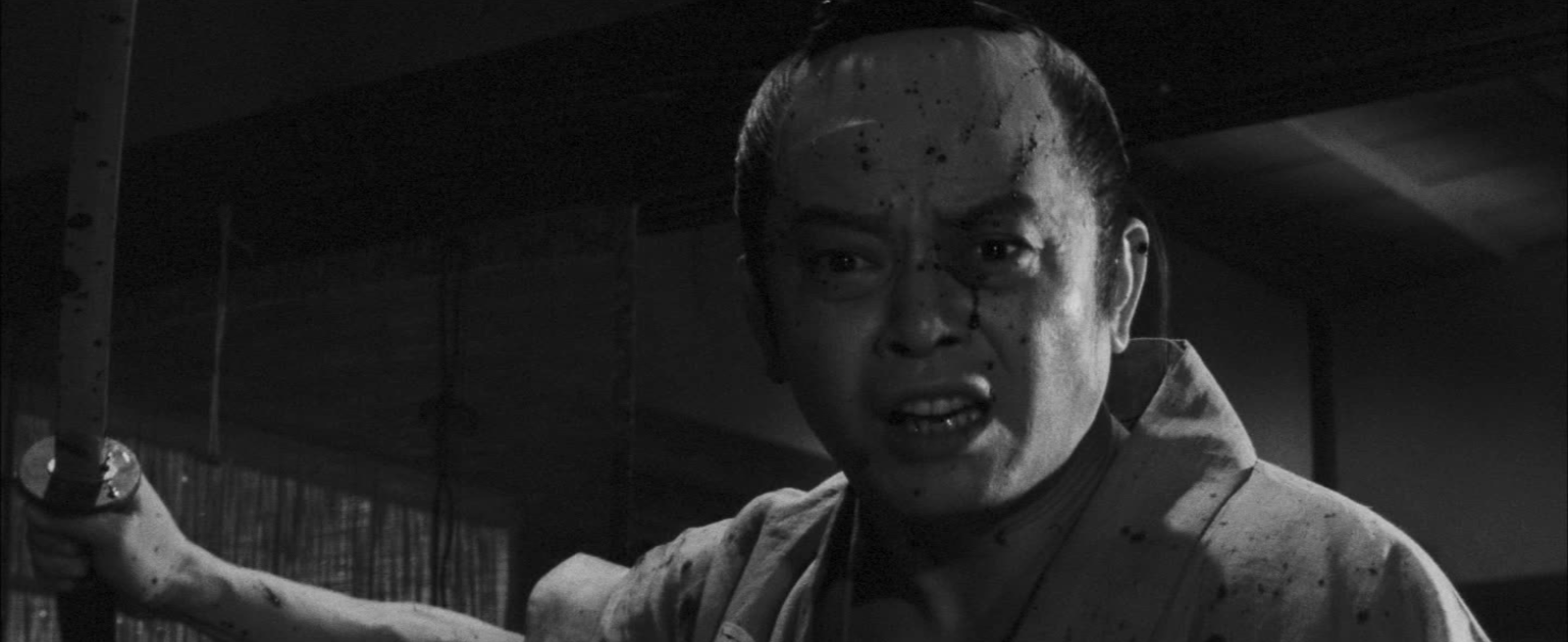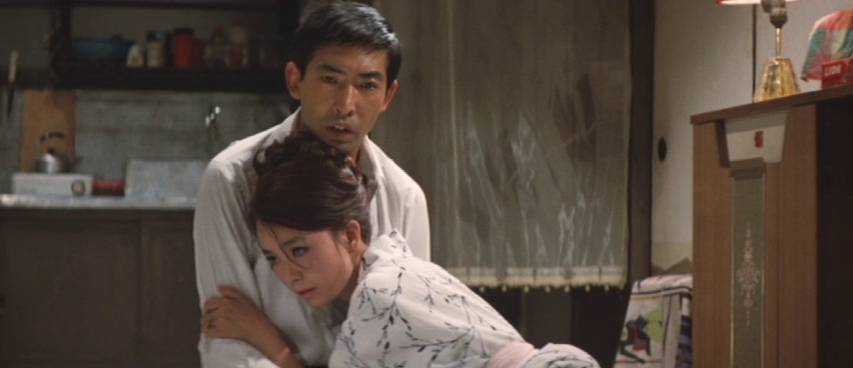
A Water Mill (물레방아, Lee Man-hee, 1966)

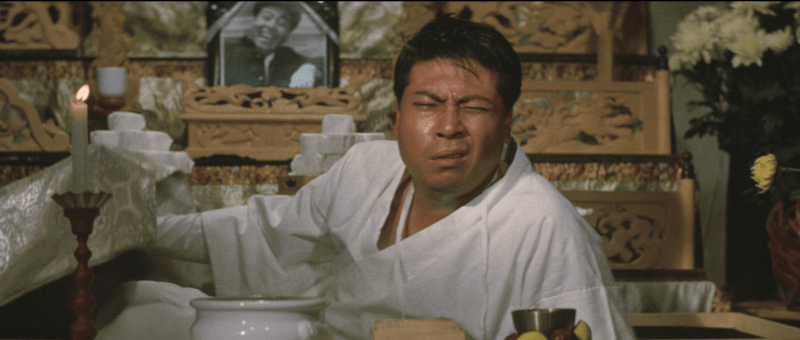
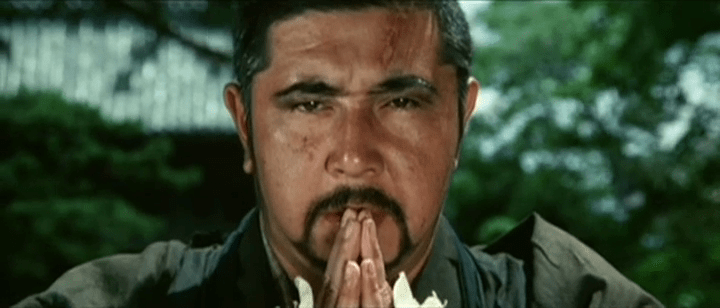
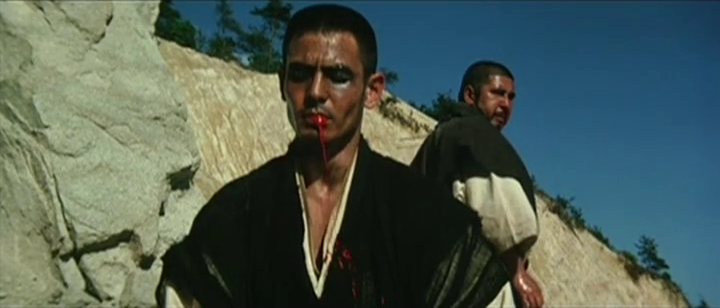
It’s not every day you wander into your own funeral. Or to be more precise, the death rite that Bong-won (Shin Young-kyun) unwittingly intrudes on in Lee Man-Hee’s feudal era fable A Water Mill (물레방아, Mullebanga) is for someone who died in a time no can remember. The old lady who explains it to him says that it happened long before she was born, implying at least the villagers have been enacting this ritual since time immemorial yet it’s almost as if Bong-won were walking towards a point of origin, drawn inexorably by forces beyond his control to play his part in this immortal ritual dance.

To that extent, Bong-won becomes a kind of “everyman” in this cautionary tale by virtue of the fact that he is nameless. Asked for his surname, he says he isn’t sure. It might be Kim or Park, later someone else says Lee which fills out the triumvirate of Korea’s most common family names. He says at one point that he doesn’t remember his mother, but thinks that she may have been a sex worker and his father a man who didn’t pay. But the fact he has no last name places him firmly at the bottom of the feudal hierarchy and most at the mercy of its hypocrisies and contradictions. He was on his way somewhere else when he fatefully found a sock floating the river that seems to flow towards him from his own future but that he will later gift perhaps to its original owner, the mysterious Geum-boon (Ko Eun-ah) with whom he falls in a deep, obsessive love that takes over the whole of his life.

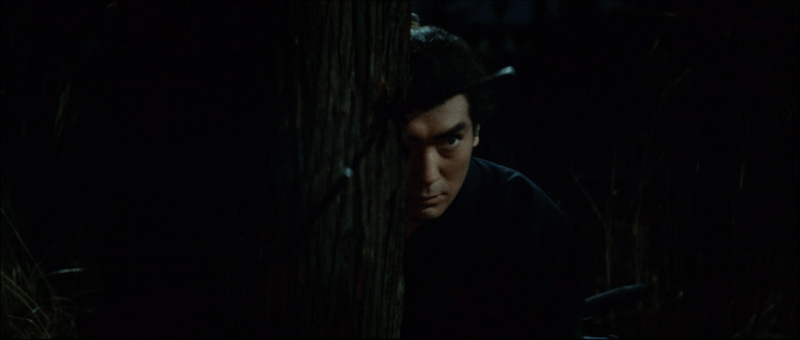
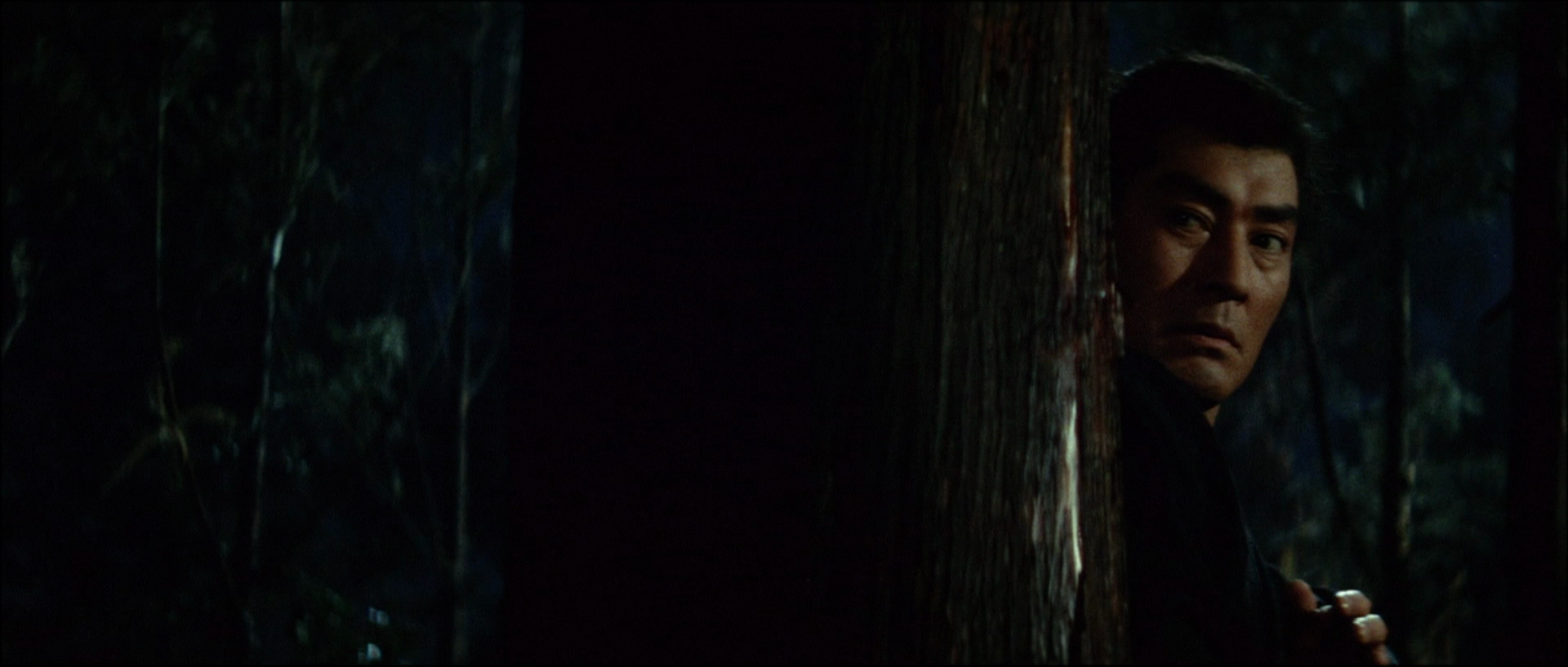
Others in the village tell him that there is no such woman. An old man assures him she must have been some kind of ghost or supernatural creature come to trick him and Geum-boon does indeed take on a kind of eeriness. After deciding to stay in the village and look for her, Bong-won catches sight of Geum-boon in a forest glade bathing naked in a pool as the bright summer sun beats down on her but when he eventually makes his way down the mountain she has already disappeared. In chasing Geum-boon, he chases death but most evidently in the ways his obsession with her causes him to contravene the feudal order. He rebels against the landlord he was working for in refusing to collect her debt, then contracts himself to another in order to pay it so that he might marry her.

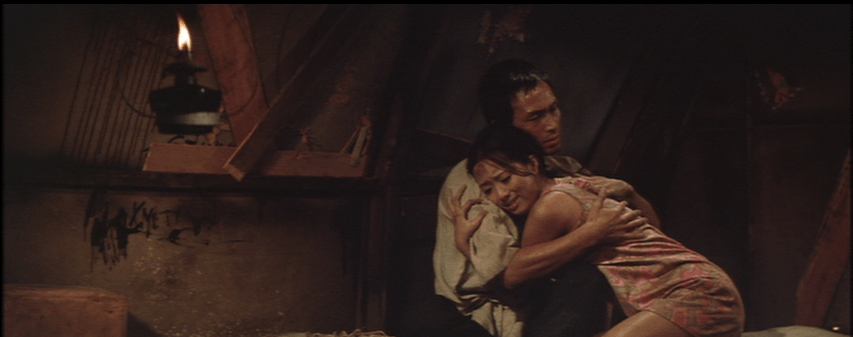
But ghost or not, Geum-boon is herself constrained by feudalism’s aggressive patriarchy. Force married to an invalid, she cared for him for three years until his death and then is pressed for his debts by the local landlord who wields them against her in order to claim her body. Married to Bong-won who has become an indentured servant, she is once again pursued by a landlord insistent on his droit du seigneur who exiles Bong-won to the pottery fields to get him out of the way. Geum-boon’s ambivalence does seem to give her a sometimes demonic quality as she laughs in the face of the landlord like something possessed and though she at first seems to like Bong-won and fear the attentions of the landlord she is also intrigued by the frankness of his current mistress who sees in her relationship with him the possibilities of transgressing class boundaries not to mention escaping a dull husband who will never be anything other than a servant. 

The film seems to suggest that Bong-won is powerless, while Geum-boon does at least have some power to wield. Even the landlord tells her that he has nothing to offer other than his money and power and even if becoming lady of the manor is a little far-fetched it seems unreasonable to criticise her if she did decide to become the landlord’s mistress as the path towards overcoming her circumstances lies in trading her body for influence. One could argue Bong-won does the same in leveraging his strength and his labour, but all it buys him is further exploitation and the eventual humiliation of knowing the landlord has been sleeping with his wife. 

Feudalism therefore destroys natural human emotions such as love when all life is transactional in a constant, and largely futile, struggle for survival. Bong-won turns to the spiritual realm for help, asking a shaman how he can win back his wife but she gives him the rather bizarre instructions to steal three sets of underwear and throw them in the river on 3rd August while bowing to the west. Needless to say, that doesn’t work out very well for him. The fates truly do seem to be against Bong-won. Lee adds a touch of supernatural dread as Bong-won finds himself surrounded by howling winds as he fatefully makes his way towards the water mill and his destiny. The ritual dance is perfectly recreated as Bong-won and Geum-boon retake their roles in the play, their actions matching those of the masked players as Bong-won collapses on the bridge just as the demon had though there is no positive resolution in what is now both reality and fable. What we’re left with is the tragedy of feudalism, but also the maddening futility of obsessive desire for that which is and has always been ever so slightly out of reach.


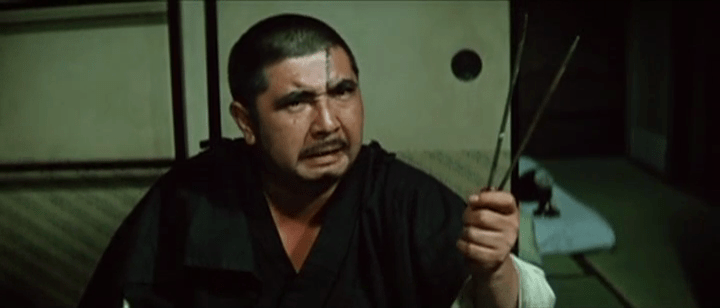
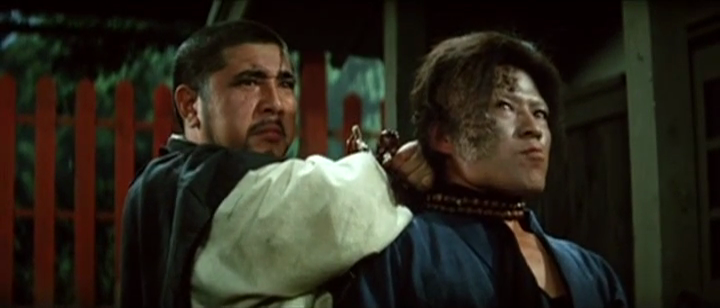
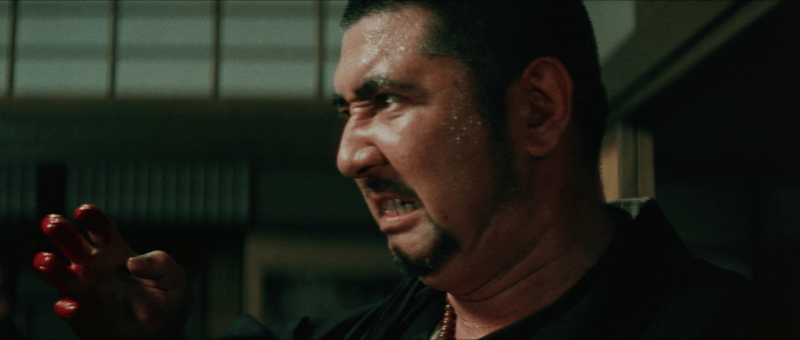
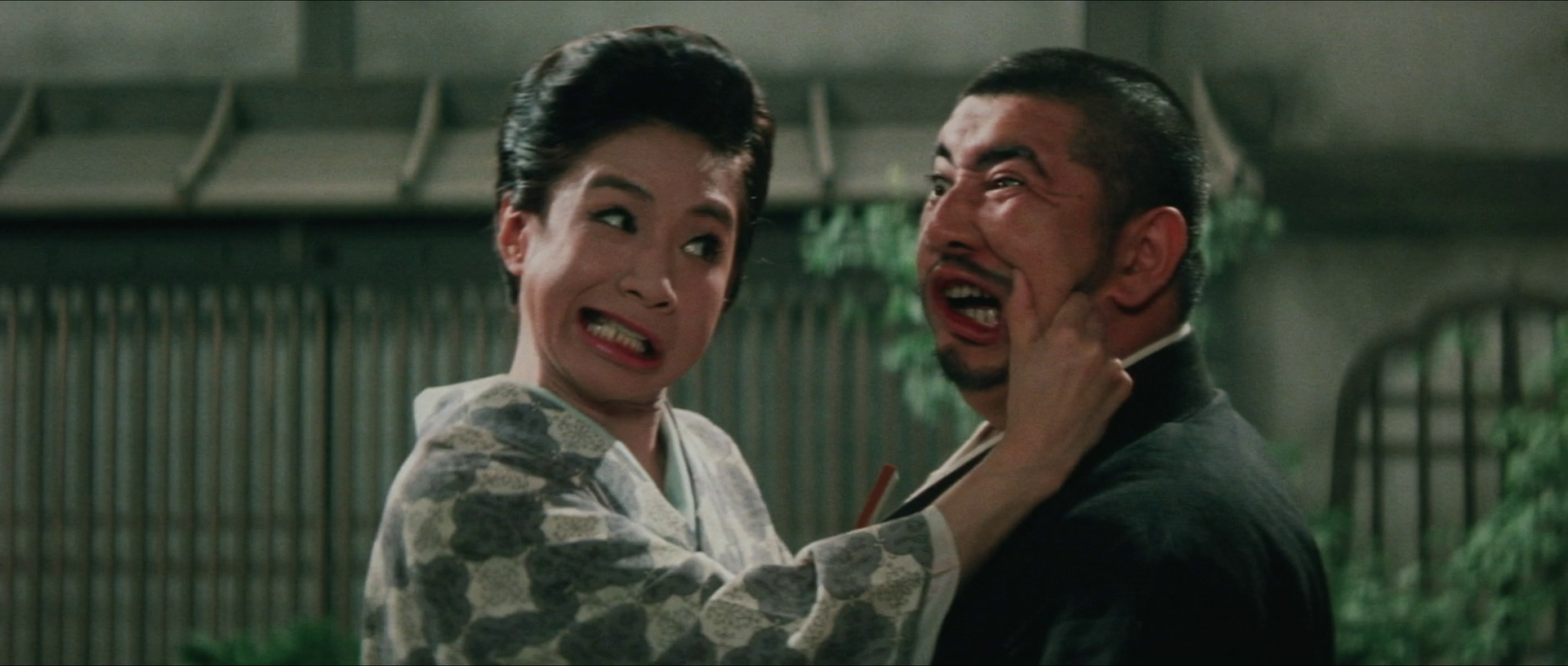
Hoodlum Soldier (兵隊やくざ, Yasuzo Masumura, 1965)

The opening voiceover of Yasuzo Masumura’s Hoodlum Soldier (兵隊やくざ, Heitai Yakuza) explains to us that the settlement we’re looking at is effectively a huge prison in the desert inhabited only the Japanese military from which there is no escape. To ram the point home, the camera lingers on the decomposed skeleton of Japanese infantrymen half-buried in the mud only a short distance from the fort’s borders. This is the fate of the soldier, it seems to tell us with nihilistic futility as if in effect all of these men are already dead while imprisoned inside the death cult that is militarism. 

Yet, our heroes will eventually escape. At least that’s how it seems at the end of the film though there are a further eight instalments in this series. A mismatched pair who develop something akin to a sadomasochistic relationship, they each resist this system in opposing ways. “College boy” Arita (Takahiro Tamura) is just waiting out the end of his contract, continually refusing promotions so that he will be discharged at the end of his three-year term and allowed to return to Tokyo a free man. Omiya (Shintaro Katsu), by contrast, is a man who has no real concept of hierarchy or authority. As he later says, he doesn’t do anything he doesn’t want to do and it’s not so much that he resists authority but is simply indifferent to it.

As Arita explains, the the army is a hierarchy that’s founded on violence. The mildest infraction is dealt with through a process of slapping in which those of higher status assert their authority by inflicting violence on those below. We’re told that laws have recently been put in place to regulate the violence implemented as disciple with excessive force now apparently frowned upon leaving this culture of slapping as the only accepted form of judging an action right or wrong though it’s also clear that these rules are not always respected even by those who made them. The very system is then itself corrupt and unfair, which Arita knows and therefore contrives to live outside of it in so much as he does not participate in this chain of violence.

Neither does Omiya but in an opposing way. On joining the unit, he simply does not react to being slapped by his superior officer and in that way makes it clear that he cannot be controlled by violence. He does not fight back, but only uses to violence to oppose what he sees as injustice and it’s this refusal to just accept the unfairness of army life that makes him a thorn in the side to army command. They assign a reluctant Arita as his mentor, much to his chagrin because he fears that Omiya will get him into trouble and damage his chances of making it to his discharge without incident. But the funny thing is that Omiya does submit himself to Arita’s authority precisely because he does not brutalise him and never uses violence as a means of control. Omiya respects Arita, and therefore listens to him when he explains why a particular course of action is disadvantageous to himself and will only result in further violence. 

To Arita, Omiya at times seems like a bullheaded brawler who thinks a fight is over when someone is knocked out or surrenders and is unable to see the potential for reprisals, but he’s smarter than he gives him credit for and the bond between them is quite genuine even at times homoerotic as they each declare they don’t want to be parted from each other seemingly the only two sane men marooned amid the folly of war in Manchuria. Omiya respects Arita because he does not use violence against him, but in other senses perhaps craves it and is willing to inflict violence on himself in order to save Arita from being forced to do so by the system under which they live which would obviously cause him mental anguish. The power dynamics between them shift as the fortunes of the war decline with Arita eventually declaring that Omiya is now his superior and may issue him orders which he will then obey.

The statement may however be ironic in that they are in the process of escaping the hierarchal society by hijacking its most potent symbol, a train. Omiya declares themselves free of it in pointing out that China stretches to the borders of Russia and Europe as if the whole world were now open to them that they are no longer bound by the walls of the literal prison that is the army camp and the symbolic ones of the militarist society ruled by violence. As Arita had pointed out, the camp ran itself like a prison and was akin to a yakuza society with the different factions often at war with each other. Goverened by macho posturing, every transgression must be solved through violence to approve each man’s status with Omiya’s perpetually high in part because he doesn’t really care very much for the hierarchy only for what he sees as righteousness. 

The two men bond with a Japanese sex worker who they realise is just as trapped as they are by the force that underpins militarism, violent patriarchy. She also feels her situation to be futile, that even if she should return to Japan there will no future for her because of her past in sex work while she currently has no more control than they do and is simply pulled around by her employers to wherever the army goes now that the frontlines are in constant flux and the retreat south has begun. Arita and Omiya free themselves by decoupling from the train leaving the sleeping soldiers yet to awake from the cruel spell of militarism inside while they seek freer futures. Our heroes are men who in effect simply choose to remove themselves from an absurd and destructive social order which speaks just as well to the contemporary society of docile salarymen living in a different kind of prison but perhaps no more free than previous generations while tied to a feudalistic, patriarchal social hierarchy. 


Hoodlum Soldier screened as part of this year’s Camera Japan.

Original trailer (no subtitles)

A Wanderer’s Notebook (放浪記, Mikio Naruse, 1962)

Many of Mikio Naruse’s most famous films are adapted from the work of Fumiko Hayashi, a pioneering female author who chronicled the life of a working class woman with startling frankness. Yet his dramatisation of her life, A Wanderer’s Notebook (放浪記, Horo-ki), is both a little more reactionary than one might have expected and surprisingly unflattering even in the heroine’s eventual triumph in escaping her poverty through artistry. Even so if perhaps sentimentalising the economically difficult society of the 1920s in emphasising the suffering which gave rise to Hayashi’s art, the film does lay bare the divisions of class and gender that she did to some extent transgress in pursuit of her literary destiny. 

Naruse and his screenwriters Toshiro Ide and Sumie Tanaka bookend the the film with a literal “lonely lane” which the young Fumiko walks with her itinerant salespeople parents. As a small child, she sees her father arrested for a snake oil scam peddling some kind of wondrous lotion, setting up both her disdain for men in general and her determination not to be deceived by them at least unwittingly. She has no formal education but is a voracious reader well versed in the literary culture of the time and intensely resentful of if resigned to her poverty. In the frequent sections of text which litter the screen taken directly from her novels, she details her purchases, wages, and longing for the small luxuries she can in no way afford. 

As an uneducated woman in the 1920s her working opportunities are few. She exasperatedly relates standing in a queue with hundreds of other women waiting for an interview for a company job only to be told they’ll let her know, while her other opportunity involves meeting a theatre director at a station who later takes her to his hotel/office and makes it plain he’s not really interested in her CV. She gets a job at the office of a stockbroker, but lies about being able to do accounts and is flummoxed by double entry bookkeeping getting herself fired on day one. After a brief stint in factory painting toys, she leaves with a friend to become a hostess but is also fired on her first day for getting drunk and being unwilling to ingratiate herself with the boorish men who frequent such establishments. 

Despite her animosity, she is drawn towards men who are callous and self-involved, firstly taking up with a poet and actor who praises her work but turns out to have several “wives” on the go, and then begins living with a broody writer, Fukuchi, who is insecure and violent, resentful at her success in wake of his failure. Perhaps because of her experiences, she seems to resent any hint of kindness though sometimes kind herself, lending money to her friend whose mother is in need and often ready to stand up for others whom she feels are being mistreated. A kindly widower in the boarding house where she lives with her mother, Yasuoka, falls in love with her but she repeatedly rejects him partly as someone suggests because he is not handsome, but mainly because of his goodness and kindness towards her. Nevertheless, he continues to support always ready in her time of need though having accepted that she will never return his feelings or accept his proposal. 

Perhaps her might have liked to have been kinder, but was too wounded by her experiences to permit herself. In any case at the film’s conclusion in which she has achieved success and in fact become wealthy it appears to have made her cold and judgemental. She instructs her maid to send a man away believing he is from a charity set up to help the poor, insisting that the poor must work for industry is the only path out of poverty implying that as she managed it herself those who cannot are simply not applying themselves when she of all people should know how fallacious the sentiment is. As if to bear out the chip on her shoulder, she forces her mother to wear a ridiculous kimono from a bygone era that is heavy for an old woman and makes her feel foolish because of her own mental image of the finery she dreamed of providing her on escaping the persistent hardship of their lives. 

As she says, she’s no interest in the socialist politics espoused by the literary circles in which she later comes to move, pointing out that the poor have no time for waving flags. One of her greatest supporters is himself from a noble family despite his progressive politics and in truth can never really understand the lives of women like Fumiko. He describes her work as like upending a rubbish bin and poking through it with a stick, at once fascinated and repulsed by a frankness he may see as vulgar. At one point he accuses her of writing poverty porn, playing on her humble origins for copy and becoming something of a one note writer. 

In truth, the film is not really based on the novel from which it takes its title but on the play that was adapted from it, while the novel itself was apparently reworked and republished several times in response to reader taste giving rise to a series of questions both about its essential authenticity and what it was that it was attempting to convey. In the film at least, moments after her literary success, Fumiko is challenged by a fellow female writer, Kyoko, who was once her love rival, that she cheated in a contest by failing to submit Kyoko’s entry until after the deadline had passed, though as it seems she would have won anyway. She is occasionally underhanded, perhaps because she feels she has no other choice, but then as we can see there is no particular solidarity between women save the kindly landladies who often let her delay her rent payments. Fumiko feels herself to be alone and her quest is not really for literary success but simply for her next meal, though she feels the slights of the bitchy women and arrogant men who mock her commonness while simultaneously exploiting it as entertainment. 

On the one hand, her success seems to signal a triumph of independence having freed herself from the need to depend on terrible men though she also she seems to have met and married a warmhearted painter who cares for her and supports her work while she has also been able to give her mother the level of comfort they both once dreamed of. Even so, the unavoidable fact that she dies at such a young age implies she’s worked herself into an early grave in a sense punishing her for her rejection of contemporary social norms undercutting her achievements with some regressive moralising while the one thing she still desires, rest, is given to her only in death. In Takamine’s highly stylised performance, as some have implied perhaps intended to mimic the silent screen, Fumiko is at once a carefree young woman who dances and sings and a melancholy fatalist with a self-destructive talent for choosing insecure and self-involved men, but above all else a woman walking a lonely road towards her own fulfilment while searching for a way out of poverty that need not transgress her particular sense of righteousness. 


Original trailer (no subtitles)

Sound in the Mist (霧の音, Hiroshi Shimizu, 1956)

In the opening scenes of Hiroshi Shimizu’s Sound in the Mist (霧の音, Kiri no Oto), a young woman tells another that “as women, we need to create our own happiness,” though as it turns out it’s something that neither of them are really able to do. A classic melodrama, the film once again hints at Shimizu’s mistrust of romance and the frustrating inability of men and women to communicate or embrace their love for one another even when the seeming barriers preventing it have been removed.

To that extent, it’s interesting that the chief disagreement between unhappily married botanist Kazuhiko (Ken Uehara) and his wife Katsuyo is over her feminist politics and desire to devote herself to women’s emancipation under the new post-war constitution. The main bone of contention is that she wants to sell a mountain owned by Kazuhiko’s family to fund her political career though as he later says this mountain is his life. In any case he lets her sell it, believing there’s no point putting up a fight. He puts up even less of one in his relationship with Tsuruko (Michiyo Kogure), his assistant who is hopelessly in love with him yet after his wife’s angry visit decides to absent herself feeling as if she’s in the way.

It was her friend Ayako, a Tokyo dancer, who told her that women need to make their own happiness but in the end she couldn’t do it either. She was similarly involved with a weak-willed married man who continued to vacillate over leaving his wife offering the justification that he didn’t want to mess things up for his children. Eventually the pair find escape through double suicide which only emphasises the futility of their romantic connection. Tsuruko similarly makes several comments about the idea of death and dying, stating that if she were to die she’d want to go to a particular spot in the mountain which seems like heaven to her.

Though Katsuyo describes it as a “filthy” place the cabin does indeed become a kind of haven, a bubble of apparently chaste love and longing inhabited only by Kazuhiko and Tsuruko as the voiceover says hiding out from post-war chaos. Tsuruko seems to be the kind of woman Kazuhiko regards as the ideal wife in that she cares for him and supports his work even if he tells Katsuyo he just needed someone to run errands and do the grocery shopping so Tsuruko is there as his maid. Both are at pains to emphasise that no physical relationship exists between them but are otherwise prevented from acting on the their love because of Kazuhiko’s marriage along the existence of his daughter, Yuko (Keiko Fujita), who may be adversely affected by her parents’ decision to divorce in an age when such things were less common.

Kazuhiko continues to return to the mountain cabin which has since become an inn at regular intervals to see the Harvest Moon, as does Tsuruko though she also carries a degree of shame that makes her fear re-encountering Kazuhiko having become a geisha apparently solely to ensure her proximity to the mountain. Once again filming with the gentle lateral motion familiar from his later films, Shimizu focuses on the landscape and suggests that these lovers are only free to love in the natural world unconstrained by the petty concerns of civilisation which prevent them from embracing their desires. The sound in the mist is perhaps that of Kazuhiko’s latent romanticism and the implication that to him it may be better to suffer for love than to accept it. The same may be true for Tsuruko who is equally powerless if filled with regret that in the end she gave up so easily rather than fight for the love of her life.

On the other hand, the cabin seems to have given rise to a love match between Kazuhiko’s daughter Yuko and her husband who vow to continue the tradition of coming to the inn on the occasion of the Harvest Moon which marks both their wedding anniversary and the time they met. Yuko’s melancholy expression on coming to an understanding of her father’s “special memories” suggests a gentle sympathy but also that this younger generation is freer to love though no less romantic.The poignant closing scenes in which Kazuhiko wanders into the mist are nevertheless filled with irresolution, regret, and a longing that express only a deep sadness for the misconnections and misunderstandings of a less open past.


Sound in the Mist screens at Japan Society New York on May 23/30 as part of Hiroshi Shimizu Part 2: The Postwar and Independent Years.

The Lost World of Sinbad: Samurai Pirate (大盗賊, Senkichi Taniguchi, 1963)

Seemingly drawing influence from the series of Arabian fantasy films from Hollywood, Senkichi Taniguchi’s Lost World of Sinbad: Samurai Pirate (大盗賊, Dai Tozoku), sees the director reunite with Toshiro Mifune who had made his debut in the director’s Snow Trail which could not be more different from this crowd-pleasing adventure movie. The film is loosely based on the life of 16th century merchant Luzon Sukezaemon who eventually fled to Cambodia after all his possessions were seized by Hideyoshi Toyotomi and he was condemned on some trumped up charges.

The film’s opening scenes perhaps reflect this incident as Luzon (Toshiro Mifune) is branded a pirate and set to be burned at the stake, narrowly escaping after bribing an official with drugs. Resentful, Luzon decides he might as well become a pirate after all as he’s pretty sick of Japan and fancies seeking his fortune on the open seas only his ship is quickly destroyed in a storm and all his crew killed while the treasure he was carrying is seized by the fearsome Black Pirate (Makoto Sato). Washing up in a mysterious place aesthetically a mashup between South East Asia and the Middle East, Luzon is cared for by a hermit and then becomes embroiled in intrigue on finding out that the tyrannical king has been seizing local women in exchange for unpaid taxes and imprisoning them within his harem.

Luzon’s dreams are for riches and status so his sudden discovery of a love of justice is a bit of a surprise, but then he’s also most interested in the princess Yaya (Mie Hama) because he spotted one the necklaces from his treasure chest around her neck which suggests she might have a lead on the Black Pirate. Princess Yaya is engaged to a prince from the Ming kingdom which threatens a wider kind of geopolitical destabilisation should anything go wrong with this marriage which is a distinct possibility seeing as the corrupt Chancellor (Tadao Nakamaru) has been colluding with an evil witch to kill the king and seize the kingdom.

Rather than a pure pirate movie the film contains fantasy elements such as the presence of a Western-style castle which is clearly modelled on the one from Disney’s Snow White along with a weird hermit whose powers are weakened every time he sees an attractive woman. It is not, however, the kind of tokusatsu the English title bestowed by the US release implies as it contains no real monsters instead focussing its special effects on the magic used by the witch, who can turn people to stone with her eyes, and the hermit who can turn himself into a fly or disappear in a puff of blue smoke. Despite the prominent inclusion of SFX master Eiji Tsuburaya these effects are repeated several times are really the only ones featured in the film. 

In any case, what’s in play is famous merchant Luzon’s redemption arc in which he recovers the treasure but gives it back to the people, symbolically abandoning his dreams of wealth and status for something a little more community minded in vowing to sail the seven seas pursuing justice throughout the world. Having been a victim of authoritarianism in Japan, he rises up against tyranny abroad while teaming up with a group of local bandits and several times proudly proclaiming himself as Japanese though in a movie conceit everyone speaks his language including the Black Pirate who is later exposed as a snivelling fool tricked by the Chancellor on the promise of a chance to marry the Princess Yaya. Most of the derring do is reserved for the final sequence in which Luzon and the bandits storm the castle to defeat the evil chancellor but the screenplay also packs in genre elements such as trap doors and secret dungeons which keep Luzon busy as he does his best to overthrow an oppressive regime if only to put the rightful king back on the throne in the hope that might be better. Taniguchi certainly makes the most of his elaborate sets and costumes, creating a sense of tempered opulence along Middle-Eastern themes while adding a touch of the mythic in the attempt to weave a legend around the real life figure of Luzon Sukezaemon as a bandit revolutionary selling dreams of freedom on the sea as a pirate more interested in justice than money in otherwise corrupt society.


The Kamikaze Guy (カミカゼ野郎 真昼の決斗, Kinji Fukasaku, 1966)

The hero of Kinji Fukasaku’s Kamikaze Guy (カミカゼ野郎 真昼の決斗, Kamikaze Yaro: Mahiru no Ketto) is described as cheerful and with a spirited personality though unfortunately not very bright. A vehicle for rising star Chiba, the film was intended as the first in a series starring its bumbling hero, Ken Mitarai, though no other instalments were ever produced. In any case, it seems to echo the lighter side of Nikkatsu’s borderless action line along with Toho’s spy spoofs in its wrong man tale of wartime legacy and corporate duplicity. 

Often called “Mr. Toilet” because of the way his name is pronounced, Ken (Sonny Chiba) is a slightly sleazy private plane pilot who has pinups on the roof of the cockpit. According to the voiceover, there is no bottom to the depths of his crassness which is a sentiment later borne out by his attempt to pick up a woman on a ski slope by uttering the immortal lines “please don’t think I’m a creep, just hear me out.” However, events take a turn for the strange when the pair of them are witness to a murder. Ken valiantly tries to help, but is later brought in as a suspect himself, partly as the police are annoyed by his smugness. The woman, Koran (Bai Lan), turns out to be from Taiwan which is where Ken ends up flying only to discover that his cargo is the body of an old man he also encountered at the slopes. 

In keeping wth the growing internationalism of mid-1960s Japanese cinema, the film travels to Taiwan but does so in a rather complicated way as Ken is drawn into a plot concerning three men responsible for the death of a Japanese official shortly after the war killed because he wanted to return 200 billion yen’s worth of diamonds stolen from the local population. While on his travels, Ken runs into a woman who was trafficked to the island at the age of 15 and later cheated out of the money she’s saved to return. The film almost flirts with the awkward relationship between the two nations and Japan’s imperialist past but in the end does not quite engage with it save for the brief appearance of the indigenous community which seems to stand in for layers of historical and contemporary colonialism.

In any case, the murdered man was Japanese as were the two of the three currently being targeted in the assassination plot Ken is being framed for. Ken’s defining characteristic is his bumbling earnestness in which his determination to get to the bottom of the mystery only lands him in further trouble. At one point he even tries to stop the villain escaping by standing in front of the plane with his arms wide open as if it hadn’t really occurred to him that a man who has already killed a number of people is unlikely to be deterred by the thought of killing one more. Nevertheless, it provides the film with one of its more memorable and quite incredible sequences as Ken grabs on to the wing support as the plane is taking off and eventually climbs his way inside.

Chiba reportedly designed the action sequences himself and his martial arts skills are very definitely on display in the unusually well accomplished fight scenes while the film also contains a lengthy and expertly choreographed car chase albeit one occasionally interrupted by random bison and an indigenous parade. Perhaps because of this manly tone, there is an unfortunate strain of semi-ironic misogyny that runs through the film with frequent exclamations that women are too quick to jump to conclusions while Ken later seems slightly put out that Koran is “using her feminine wiles” to combat the bad guys. 

By the same token, there is something a little ironic and subversive in the film’s use of the term kamikaze, self-adopted by Ken to emblematise his devil may care nature while otherwise setting the action in a nation once colonised by Japan that holds a celebratory gala in Ken’s honour for his assistance in retrieving the gold and returning it to the Taiwanese people. Perhaps in another sense, it echoes a new willingness to make restitution with the past even if Ken bumbles his way into it and does so by accident taking on both the new and destructive capitalism of the post-war society and the toxic wartime legacy and freeing himself from them, literally a body flying in midair with no direction but his own.

Original trailer (no subtitles)

Yakuza Hooligans (893 愚連隊, Sadao Nakajima, 1966)

“The world has changed,” an old school street thug is repeatedly reminded after his release from prison into a new Japan amid the tides of rising prosperity. An early effort from Sadao Nakajima, Yakuza Hooligans (893 愚連隊, 893 Gurentai) situates itself in cultural and generational abyss among those who find themselves locked out of the new society and unable to escape the immediate post-war era in part perhaps because they may not really want to.

At least it seems that way for the central trio of “hooligans” who later explain to their sometime mentor that they aren’t doing petty crime because of a lack of other options but out of devilment and a childish rebellion against a world they feel doesn’t accept them. As the film opens, they’re running a petty scam luring queuing passengers into unlicensed cabs for which they are almost arrested, stiffing the cabbie that helps them escape and then conning a takoyaki vendor out of a free lunch. Several times they’re criticised for “bullying the weak,” most obviously in their sideline seducing women and forcing them into sex work or blackmailing men who sleep with them. 

They are, however, fairly weak themselves. They like to describe themselves as a “democratic” institution in which everyone is equal and everything is shared fairly but despite supposedly having no boss they’re bossed around by almost everyone and when challenged by actual yakuza quickly back down. A generation older, failed kamikaze Sugi is released from prison after spending 15 years behind bars for killing a Chinese man as part of a petty crime gang formed in the immediate chaos after the war. Unlike his former associate Kurokawa, Sugi too claims that he doesn’t see the point in having a boss but like the younger men flounders unable to see a place for himself in the new society.

Sugi doesn’t approve of the more immoral sides of their business, particularly the rape and trafficking of women but proves just how out of touch he is when he asks the guys why they can’t just swipe some rice or clothing. In the immediate post-war period, rice and kimono were the only things which held their value but in a newly consumerist Japan they’re in plentiful supply and in fact worth relatively little. While he was inside, his former girlfriend married someone else and had a child, burning the tattoo she once had of his name on her arm clean away. She tells him that she’s sorry, but she’s happy and she doesn’t want anything to disrupt the life she has now. Falling for a middle-aged woman unhappy in her marriage and subsequently forced into sex work by the gang, he dreams of a happy family life and ultimately risks all on a confrontation with his old yakuza pal Kurokawa.

The film seems to suggest that the writing’s on the wall for men like Kurokawa too. His old school world of regimented, authoritarian gangsterdom doesn’t fit in the new Japan anymore than Sugi’s corrupted post-war idealism. A subplot revolving around Ken, a mixed-race member of the gang who hates the way they treat women because his mother was raped by a US serviceman positions the Occupation as another source of corruption leaving nothing behind itself other than moral decline and lasting trauma. But as Nobuko later says as long as you’re alive you have to go on searching for something and if one place is the same as another then you might as well move. 

The hooligans, however, seem stuck in the past. They can’t stand up for themselves or mount any real resistance to their circumstances, continuing to “bully the weak” in an attempt to mask their own weakness until racing headlong towards a confrontation with the yakuza along a bridge which quite literally hasn’t been finished yet symbolising their mutual inability to progress into the new society. Shooting with a heavy dose of irony enhanced by the whimsical jazz score, Nakajima captures a sense of contemporary Kyoto as an alienating environment caught between the ancient and the modern in which men like Sugi and the hooligans are permanently displaced yet lack the desire to escape because the newly consumerist society has little to offer them. 


Original trailer (no subtitles)

A Bloodthirsty Killer (殺人魔 / 살인마, Lee Yong-min, 1965)

Clearly influenced by the classic Japanese ghost cat movie and the work of Nobuo Nakagawa, Lee Yong-min’s nightmarish slice of gothic horror The Bloodthirsty Killer (殺人魔 / 살인마, Salinma) winds a tale of female revenge though somewhat incongrusouly positioning the vengeful spirit’s oblivious husband as the hero who must attempt to save his family by exposing the corruption at its centre. That corruption is intensely and exclusively female but informed mainly by entrenched patriarchy along with growing anxieties amid increasing wealth disparity. 

As in Nakagawa’s The Lady Vampire, a woman makes a surprise reappearance 10 years after being declared dead looking exactly as she had the last time her husband saw her while also featuring in a painting though this time not in the nude but melting as soon as the confused hero, Simok (Lee Ye-chun), picks it up for a closer look. Lee opens with an incredibly gothic, dreamlike sequence in which a creepy man watches Simok walking in the rain before taking him to a gallery that turns out to be entirely empty. A security guard informs him that the exhibition is over, the painting of Aeja (Do Kum-bong) the only one remaining. It also transpires that Simok has made his trip on the one day a year ghosts roam the earth, as the creepy taxi driver points out gesturing towards a field which appears to be full of white-clothed figures. Eventually he arrives at an eerie house in the woods where he meets the main who painted the portrait only to see him murdered by Aeja while the painter survives long enough to hand him the painting and explain that it contains “a secret”.

This secret will relate closely to Simok’s family which on his return home we can see is affluent and apparently happy. Simok lives in a large, Western-style house that is perfectly primed for gothic horror. When he tries to explain to his wife, Hyesuk (Lee Bin-hwa), what he thinks has happened, a cabinet door mysteriously opens on its own before the couple begin hearing the screams of Simok’s mother who claims a ghost tried to strangle her in her room. All things considered, it does not actually take them very long to agree that ghosts are real and they’re being targeted by one though the reason remains obscure to all, or perhaps to all but Hyesuk whose demeanour immediately changes. Despite having gone into a frenzy when her eldest daughter Mihwa was snatched by the ghost, she quickly makes her way to her hidden stash exclaiming that she’s still “young and rich” and plans to enjoy the rest of her life. The ghost can take her kids, but it won’t get her. 

This is of course entirely contrary to contemporary codes of motherhood especially as we realise that one of the causes of Aeja’s downfall was her childlessness. Three years into her marriage with Simok, she had born no children and earned the animosity of her mother-in-law (Jeong Ae-ran) who it seems did not really like her and felt that she did not live up to her traditional ideas of idealised femininity. Perhaps partly for aesthetic reasons seeing as she is a ghost, Aeja dresses exlcuvely in hanbok in contrast to Hyesuk who in flashbacks is seen in only Western clothing and declares herself jealous and resentful not only of the couple’s material comfort but of how happy they seem to be. A kind of poor relation, Hyesuk plots revenge on societal unfairness in wilfully disrupting Simok’s household by manipulating patriarchal social codes in causing Simok to believe Aeja has been having an affair during his lengthy business trips to Japan.

By the same token, she also takes advantage of the grandmother’s affair with a married doctor (Namkoong Won) which is taboo on several levels the first simply being the existence of sexual desire in a middle-aged woman. Later, once she has been possessed by the ghost cat, Simok’s mother will similarly manipulate him in claiming that she has spent all her life in his service clinging to the memory of her dead husband who left her widowed at 30 as an advocation of idealised womanhood. Though Simok has realised that she was no longer his mother but a ghost cat on catching sight of her reflection, he was unable to kill her because of all her reminders about her maternal suffering. It’s the desire to maintain this facade that encourages her to reject Aeja after Hyesuk engineers her walking in on her mother-in-law and the doctor, insisting that Hyesuk, who is pandering to her, would make a much better daughter-in-law than the righteous and wronged Aeja. 

Aeja’s revenge is also against all of these oppressive social codes that have contributed to her demise though it was other women who eventually brought it about in their enforcement and manipulation of the codes of femininity. Recalling a moment from Hajime Sato’s Ghost of the Hunchback in a which a shamaness drops in having spotted all the evil emanating from the house, another woman later turns up and seems to want to help giving Simok a magic talisman he eventually uses to save his kids who have been imprisoned, perhaps for their own safety, inside some Buddhist statues. In contrast to Aeja’s rage, Hyesuk’s greed, and the mother-in-law’s shame, the mysterious woman is gentle and self-assured if a little eerie. Just as a cross can stop a vampire, so a Buddhist rosary can fend off a ghost cat while it’s an appeal to Buddha that eventually helps to break the curse transforming the portrait into a lotus instead. 

In any case, Lee adds a playful irony to the genre as the grandmother in particular begins to take on feline mannerisms, hissing and pawing at the Buddhist statues while licking her granddaughter’s face in a way even her grandson Woong realises is “disgusting” and not something his grandmother was usually accustomed to doing. In a nod to Yotsuya Kaidan, Aeja’s metamorphosis into a vengeful ghost is accompanied by a loss of her hair, symbolising her loss of femininity, along with a large disfigurement over her eye that has become closely associated with that of Oiwa. Then again, he also has fun with a transformation scene as the grandmother is defeated and turns back into a cat complete with a tiny dress that shrinks with her. What he otherwise conjures is however an eerie sense of dread hanging over a superficially happy home with a terrifying secret at its centre, though what it does in the end suggest with its ambiguous messaging is that the father will eventually have to take responsibility for his family and play an active role in the domestic space if he is to escape this very particular curse of familial corruption.


Female Slave Ship (女奴隷船, Yoshiki Onoda, 1960)

Playing out much more like a classic serial than war movie, Yoshiki Onoda’s Female Slave Ship (女奴隷船Onna dorei-sen) takes a curiously flippant approach to the conflict along with a moral perhaps a little at odds with similar films of the time. Adapted from a novel by Jun Funazaki, the film begins as spy thriller but ends up drifting into pirate territory as a Japanese solider with an incredibly important mission is shot down on his way to Tokyo, rescued by a freighter carrying women en route to being sex trafficked in Shanghai, and then captured by pirates who want to sell him to a Chinese spy working for the Americans. 

It’s right at the end of the war and Japan is losing quite badly they think because of advancements made in radar by the Allied forces. They’ve been passed blueprints for a better radar system by a German contact and so Lt. Sugawa (Bunta Sugawara), stationed in Malaya, has been charged with bringing them back to Tokyo disguised as a photo of a pretty young woman they’re going to say is his sister. Perhaps the most surprising thing about the film is that Sugawa abandons his mission quite quickly and instead devotes himself to rescuing the women, vowing not to return to Tokyo without them despite the fact that this vital information he’s carrying could supposedly turn the tide of the war.

Even so, this manly chivalry defines his code of heroism. He is constantly trying to escape and defiantly stands up both to the captain of the tugboat, who is not actually in charge, but also to the pirate captain (Tetsuro Tanba) who doesn’t really seem to be doing much of anything. Among the crew of pirates is a Japanese man who later confirms that he’s a deserter but alternately switches sides, first offering to team up with Sugawa because he’s fed up with the discrimination he faces from the other pirates, and then betraying him before doing the same thing again but claiming that he feels bad about deserting and wants to do something for Japan now that his Japaneseness has been truly awoken.

It was indeed other Japanese people who were operating the slave ship, chief of them being the Queen (Yoko Mihara) who rules the boat with an iron hand but then uses her sex appeal to curry favour with the pirate captain while simultaneously developing feelings for Sugawa who is equally drawn to a meek young woman, Rumi (Utako Mitsuya), who was tricked onto the boat on the promise of a nursing job in Manchuria. Most of the other women, few of whom are actually given any characterisation, are established sex workers and resolved to their fates but all feel bad for and protective of Rumi. Though she’s the one Sugawa is closest to, it’s quite refreshing that the women are otherwise treated as equals rather than looked down on because of their occupation with Sugawa insistent on rescuing them all before they can be sold in Shanghai. 

As is usual for these kinds of films, the chief villain is Chin (Shuji Kawabe), a Chinese man apparently with ties to the Americans who has somehow found out about the radar plans, even knowing that they’re presented on a photo of a woman, and wants to capture Sugawa to get his hands on them. The bounty causes a rift between the pirate captain and Chin with the pirate captain wanting in on the deal and Chin not really willing to share, though there is a clear implication that these mercenary pirates are on the wrong the side in working with the Chinese and Americans while the slave ship was more on the level of not being okay but definitely not as bad. 

In any case, it comes down to a battle of masculinity between the monkey-loving pirate captain and his trusty whip, and Sugawa’s good old-fashioned chivalry. Surprisingly chaste given its racy title, even the pirates are more of the drunken and lascivious type than violent and rapacious, the film has a rather odd sensibility landing somewhere between jungle adventure and wartime escapade in which an earnest young man bravely carries the weight of the nation on his shoulders while doing his best to address a more immediate threat and rescue 12 captive women from the evils of Japan’s imperialist expansion. 


Original trailer (no subtitiles)

Volunteering for Villainy (悪人志願, Tsutomu Tamura, 1960)

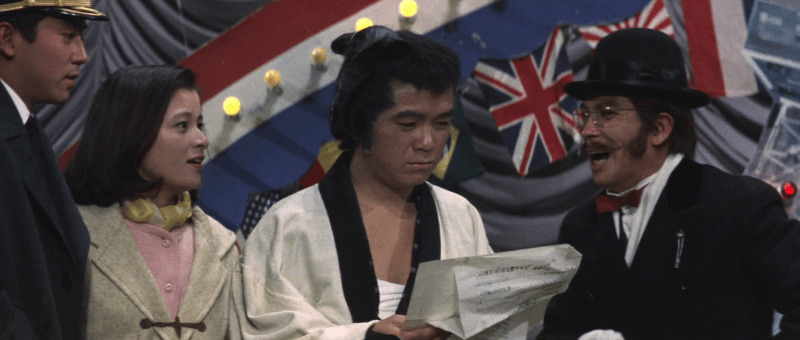
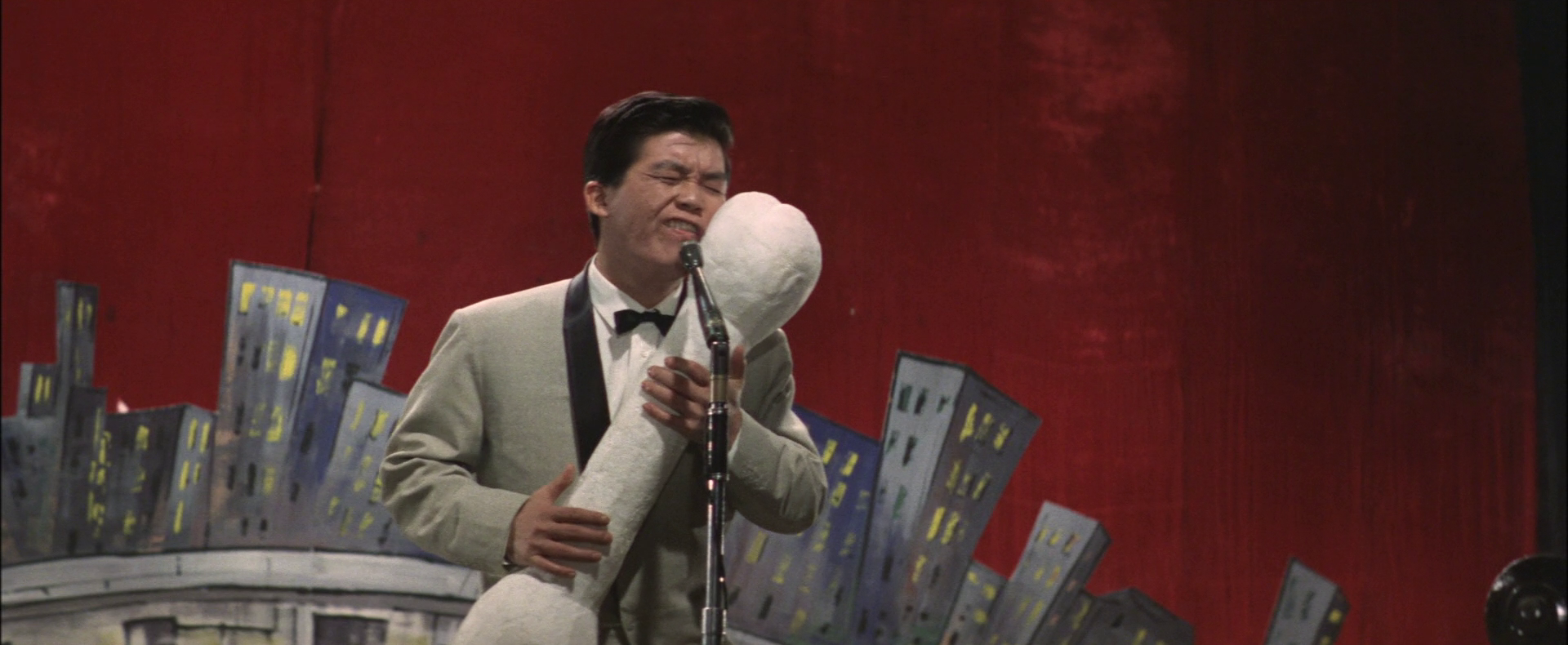
Tamotsu Tamura is best known as a screenwriter who worked closely with Nagisa Oshima, though he did actually direct a film himself at the beginning of his career. Having originally planned to become a reporter, Tamura was offered a job at Sankei Shimbun but his employment was postponed for medical reasons and he decided to retake the entrance exam for Shochiku joining the studio in 1955. Unfortunately Volunteering for Villainy (悪人志願, Akunin Shigan, AKA The Samurai Vagabonds) was not successful at the box office and Tamura soon left Shochiku along with Oshima and became a screenwriter at his independent production company. 

In any case, the film is very reminiscent of New Wave filmmaking both in terms of theme and aesthetic. It repurposes a moribund quarry town as an almost literal purgatorial space casting the protagonists into a deep hole from which they are eternally unable to escape. As the film opens, a collection of children are taunting a young woman, Hide (Kayoko Hono), calling her a murderer and castigating her for failing to die, though it later transpires that they’ve been hired by a henchmen of Tatsuo (Masahiko Tsugawa), the brother of the man she was involved in double suicide with who is determined to become some kind of local dictator.

But even he is in some ways rebelling against his powerlessness as the son of a local politician he brands as phoney and corrupt. Tatsuo claims he hates people who claim to be good but aren’t, in much the same way as Hide claims she can no longer trust anyone. Tatsuo seems to want revenge for the death of his brother for which he holds Hide responsible but insists he doesn’t want to settle it with money nor is he in favour when a shady local man makes vague allusions to having her bumped off.

When a new recruit, Yasuo (Fumio Watanabe), joins the quarry he becomes its latest kicking bag not least because it was Hide who escorted him into town. Yasuo has a stammer and incredibly meek manner that leans towards obsequiousness. “You’re as obedient as a dog,” people often remark with Tatsuo later astutely observing that he’s the sort of person who can’t do anything without someone telling him to do it. Yet it later seems as if his desire to obey, to be liked and accepted by those around him, has led him to commit a terrible crime claiming that he only did what everybody wanted done even if they were too afraid to say so.

Ashamed of himself and his corrupted masculinity Yasuo alternately rebels and overcompensates. He refuses to hit Hide when ordered to by Tatsuo, and to sleep with her when forced by the other men, but later hits and sleeps with her possibly not quite consensually when his masculinity is challenged. The irony is that Tatsuo who claimed he wouldn’t tolerate anyone defying him cannot control Hide’s free spirit and is therefore unable to overcome his powerlessness. He bullies and harasses her insisting that she leave town, but Hide refuses to go and is continually unbothered by the way she’s treated. Hide also eventually rejects Yasuo for his cowardice, severing her ties to him on realising that he informed on one of the other men who was fugitive from justice to curry favour with Tatsuo and take the heat off himself. She tells Tatsuo that though he’s always wanted things his own way, she’s always decided for herself, infuriating him with her free decision to leave having realised how petty and meaningless it was to stay in this petty and meaningless purgatory of broken and hopeless men. 

Tamura shoots with a roving and curious camera that takes on a life of its own swooping through the dorms but lends a degree of mythic eeriness to the final confrontation in the quarry as the workers begin to dot the skyline looking down at Hide below in a scene somehow reminiscent of L’Avventura. The town’s only bright spot is presented by Tatsuo’s younger sister Kiyoko (Chiaki Tsukioka) as the voice of reason even as she  brands everything boring and meaningless but thereby suggesting that it might not have to be this way. Her words, however, fall on largely deaf ears save those of Hide perhaps finally awake to her own agency only to have it immediately crushed by fragile masculinity.