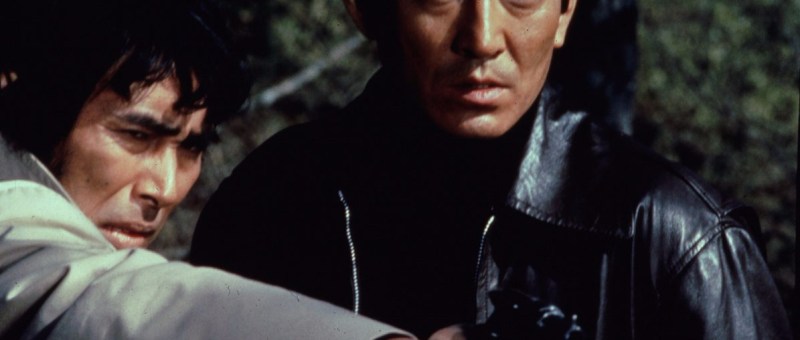
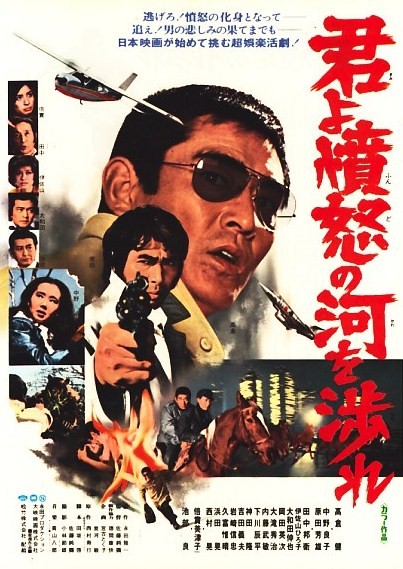
 Most people, when faced with being framed for a crime they did not commit, become indignant, loudly shouting their innocence to the rooftops and decrying injustice. Prosecutor Morioka (Ken Takakura) reacts differently – could he really be a master criminal and have forgotten all about it? Does he have an evil twin? Is he committing crimes in his sleep? The answer to all of these questions is “no”, but Morioka will have to go on a long, perilous journey in which he pilots his first solo aeroplane flight, fights bears, and escapes a citywide police net via horse, in order to find out. Junya Sato’s adaptation of the Juko Nishimura novel Manhunt (君よ憤怒の河を渉れ, Kimi yo Fundo no Kawa o Watare, AKA Dangerous Chase, Hot Pursuit) is a classic wrong man thriller though it has to be said thrills are a little thin on the ground.
Morioka’s very bad day begins with a woman (Hiroko Isayama) pointing at him and screaming, clutching the arm of a policeman and insisting that Morioka is the man who burgled her a few nights ago and stole her diamond engagement ring. Morioka is very confused but goes calmly to the police station before asking to see an officer he knows, Yamura (Yoshio Harada). Unfortunately, at the police station things only get worse as they dig up another witness (Kunie Tanaka) who says Morioka mugged him in the street for his camera. Beginning to doubt his sanity Morioka is sure things will be sorted out when they search his apartment, only when they get there they do indeed find a camera, the ring hidden in his fish tank, and a whole lot of dodgy money. Realising the game is up and that his prosecutor buddies aren’t interested in helping him, Morioka takes to the road to clear his name, finding himself increasingly compromised every step of the way.
This being Japan Morioka’s options for disappearing are limited – it’s not as if he can dye his hair or radically change his appearance, he’ll have to make do with sunshades and burying his face in the collar of his mac. Looking askance at policemen and trying to avoid people reading newspapers, he tries to investigate his case beginning with his accusers who, predictably, are not quite who they seemed to be. When one of them ends up dead Morioka can add murder suspect to his wanted card but at least he correctly figures out that this all goes back to one particular case his boss was very keen to rule suicide but Morioka was pretty sure wasn’t.
During his quest Morioka picks up an ally – Mayumi (Ryoko Nakano), the daughter of a wealthy horse trader with political ambitions whom he saves during a random bear attack. Mayumi falls instantly in love with him and despite the best efforts of one of her father’s underlings determines to help him clear his name. Morioka is an honest sort of guy but does also pick up another girl in the city (a cameo appearance by Mitsuko Baisho) who rescues him and takes him home to recuperate from an illness. Much to her disappointment he only has eyes for Mayumi who unexpectedly saves the day thanks to her herd of horses, not to mention her father’s “kind offer” of a light aircraft which Morioka will have to learn to pilot “on the fly”.
Eventually Morioka gets himself confined to a dodgy mental hospital to find the final clue during which time he uncovers a corporate conspiracy to manufacture drugs which turn people into living zombies, all their will power removed and compliance to authority upped. Rather than a dig at corporate cultism, enforced conformity, and conspiratorial manipulation, the Big Pharma angle is a just a plot device which provides the catalyst for Morioka’s final realisations – that having experienced life on the run he can never return to the side of authority. For him, the law is now an irrelevance which fails to protect its people and the “hunted” are in a much stronger position than the “hunters”. Accepting his own complicity in the adventure he’s just had, he willingly submits himself to “justice” for the rules he broke as a man on the run but it looks like those sunshades, the anonymous mac, and the beautiful and loyal Mayumi are about to become permanent fixtures in his impermanent life.

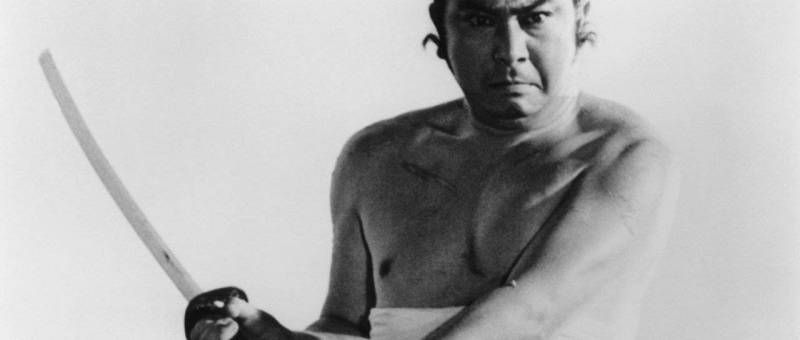

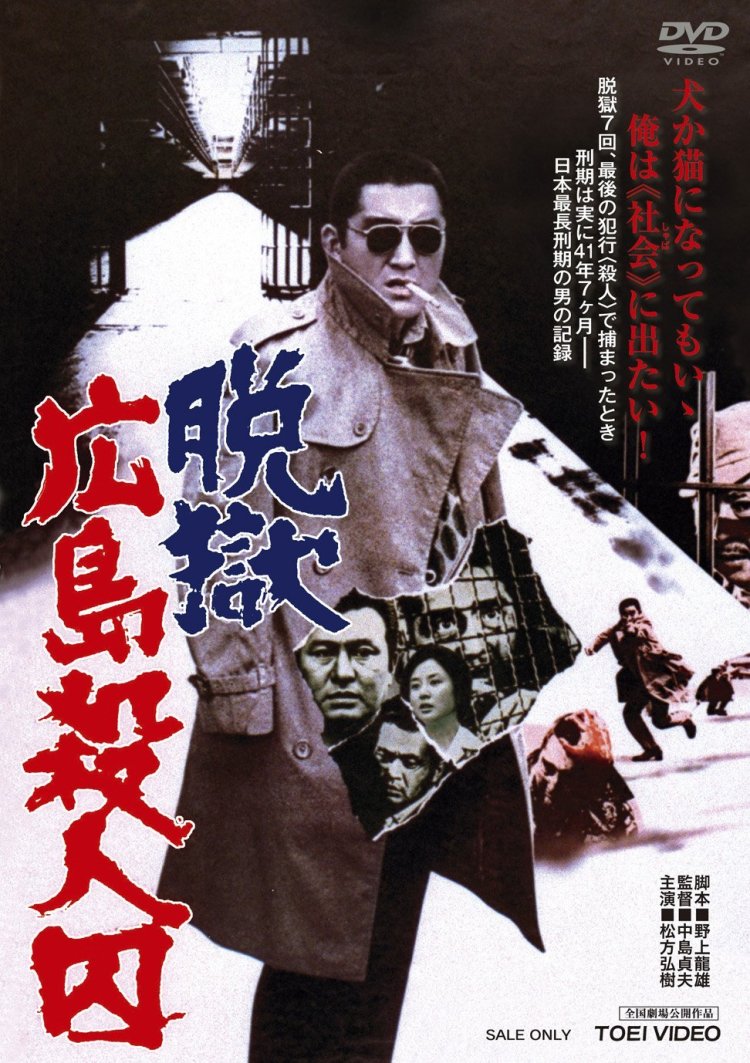 Sadao Nakajima had made his name with Toei’s particular brand of violent action movie, but by the early seventies, the classic yakuza flick was going out of fashion. Datsugoku Hiroshima Satsujinshu (脱獄広島殺人囚, AKA The Rapacious Jailbreaker) follows in the wake of seminal genre buster,
  Windows on Worlds