The Possessed (妖婆, Tadashi Imai, 1976)

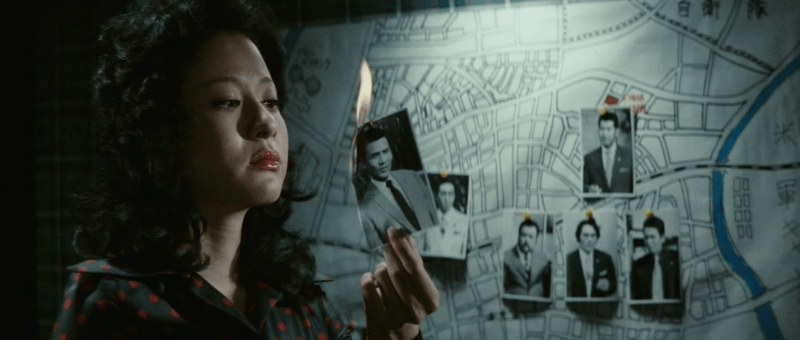
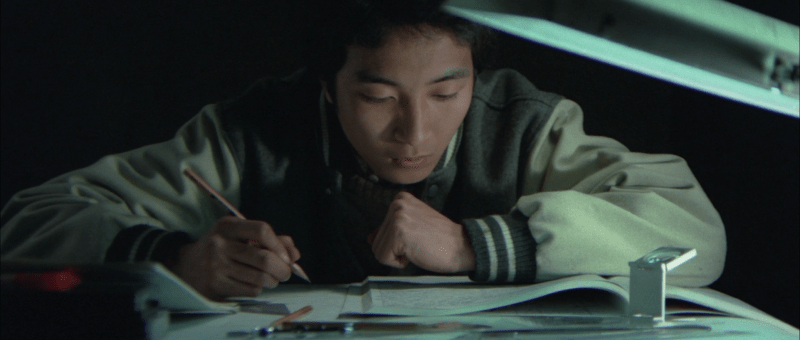
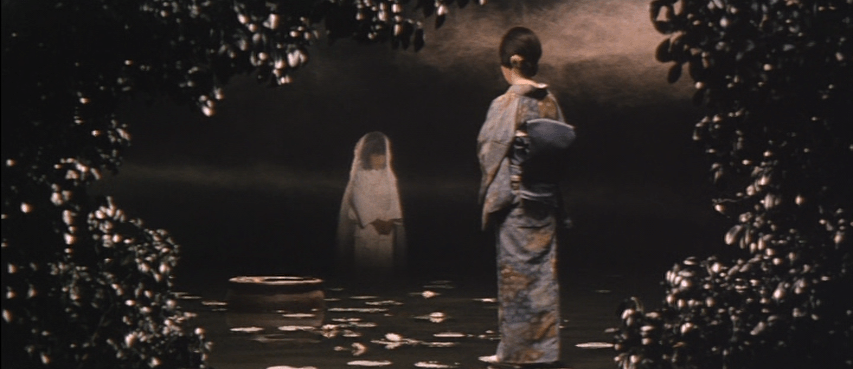
Shinto priests, black magic, and demonic possession. As the opening voiceover of Tadashi Imai’s The Possessed (妖婆, Yoba) remarks, you can hardly believe that such things could happen in the modern world alongside cars, trains, and telephones yet the tale we’re about to be told begins in 1919. Based on a story by Akutagawa, the film is however less a contemplation of ancient superstition amid rising modernity than the destructive patterns of class and patriarchy which conspire against the lives of two women who had once been good friends. 

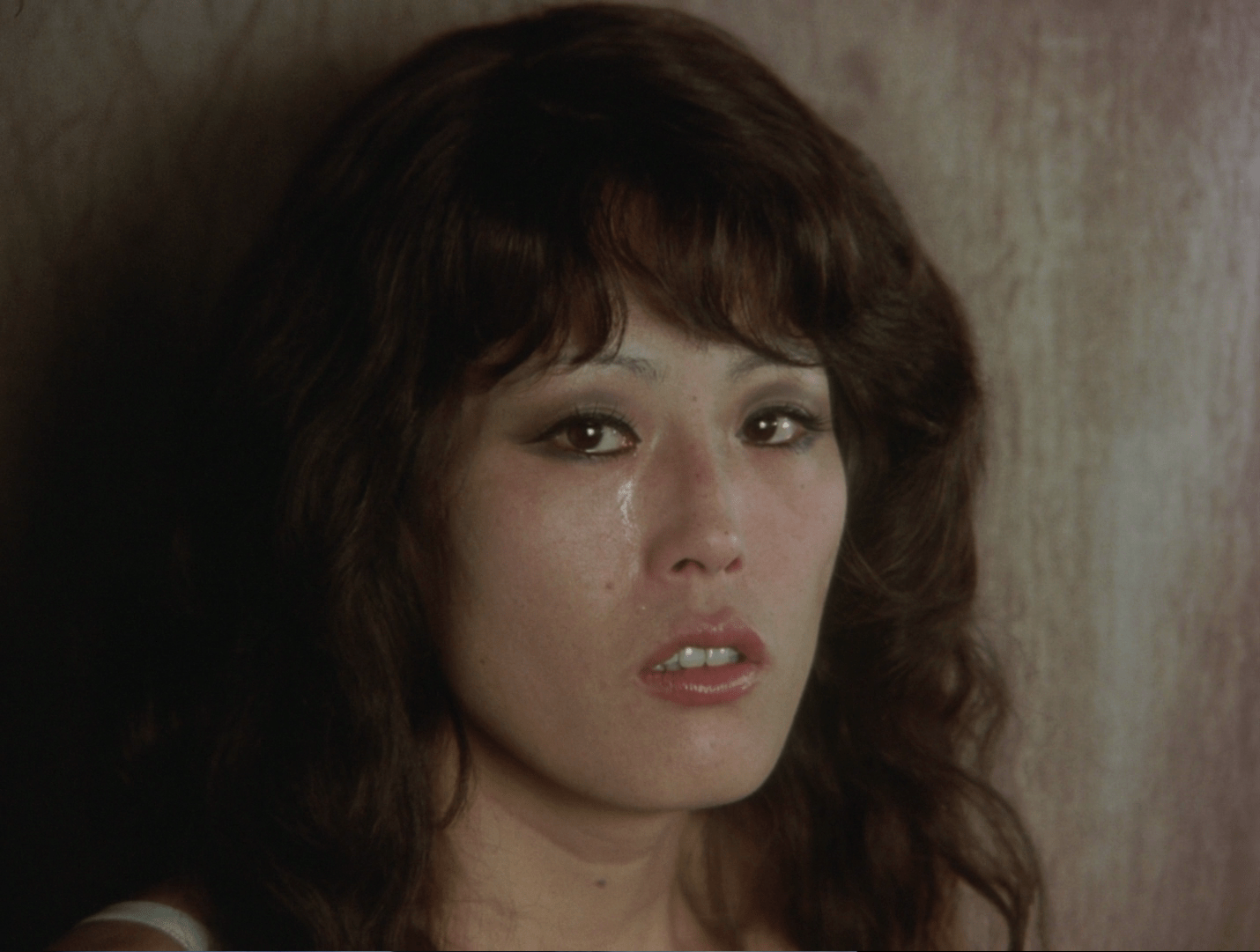
In 1919, Shima (Machiko Kyo) marries Shinzo (Shinjiro Ehara) who has taken her name and become the presumptive heir of her family. Everyone at the wedding remarks on what a good catch he is, adding almost as an after thought that Shima seems happy about it too. The problem is that Shinzo is repeatedly unable to consummate the marriage. Part of this seems to be down to his wounded masculinity in having married into the family. He resents being under the thumb of his father-in-law along with the rumours that he only married Shima for her money even though this appears to be exactly what he has done. Perhaps further humiliated by his inability to perform, Shinzo tells Shima that it’s her fault because there is something wrong with her body that prevents him from becoming sufficiently aroused. Being a sheltered woman of the Taisho era, Shima wonders if her husband has a point and visits a doctor to find out but as expected he tells her there’s nothing at all wrong with her and it’s most likely Shinzo’s performance anxiety that is to blame. 

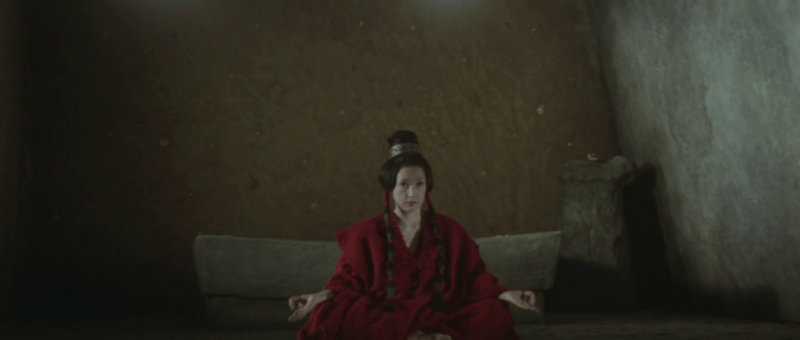
However, when her cousin Sawa’s (Kazuko Ineno) comb is found inside Shinzo’s kimono sleeve, the family begin to realise that the problem is he prefers her. He later admits as much and reveals that he’s planning to move closer to the family’s goldmine in Hokkaido and install Sawa in a house there as his common law wife with Shima left behind as a spouse of symbolic value. Shima has already felt herself haunted, but it’s at this point that the family brings in a Shinto priest who explains that Shinzo is possessed by an evil spirit though also giving the more rational advice that she should probably divorce him. Shima is forced to endure a strange ritual including purification by waterfall, but is also sexually assaulted by the randy priest though it it’s not completely clear that she fully realises what has happened to her. 

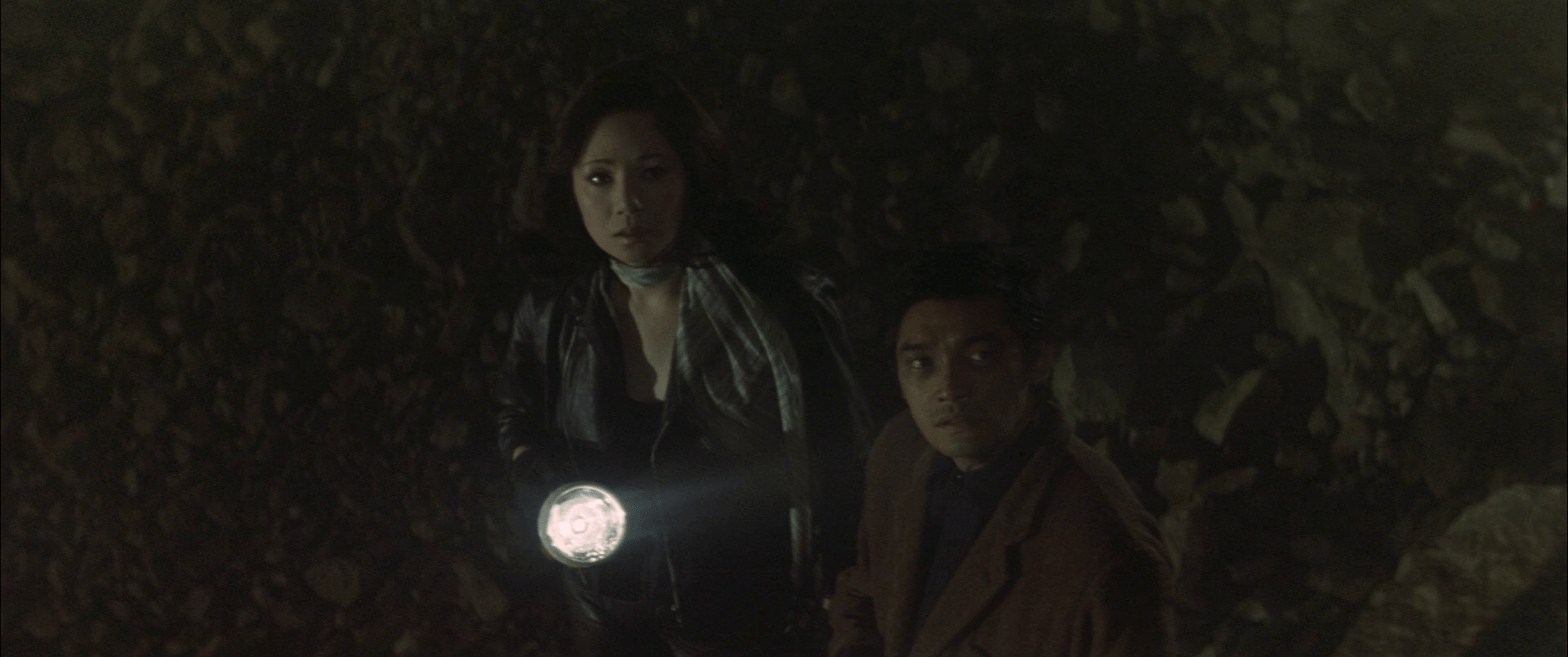
The implication is that the family treated Sawa as a kind of poor relation they trotted out to keep Shima company because she was an only child. Having grown resentful of Shima’s class privilege, Sawa’s jealousy manifested as covetousness that made her intent on taking whatever Shima had. She too later resorts to shamanistic black magic, fearful that Shima bears her a grudge for ruining her life and hoping to neuter any dark energy that she might be emanating in order to protect her teenage daughter Toshi (Miki Jinbo) who, ironically, has been betrothed to the son of a kimono shop named Shinzo (Taro Shigaki). 

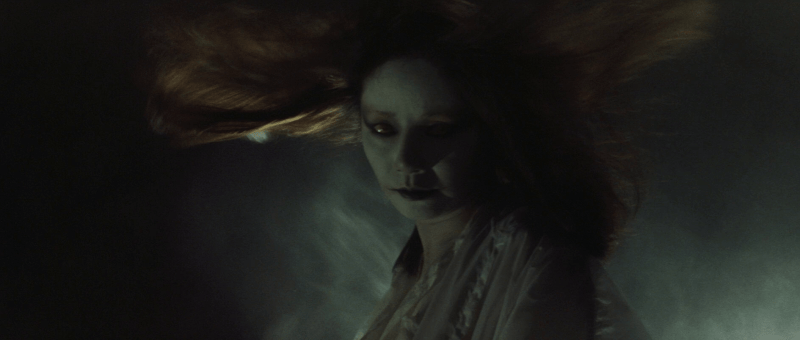
Sawa never married and bore her child out of wedlock. She implies that she depended on men for financial support but never elaborates further. Shima, meanwhile, has been able to build an independent life for herself as a well-respected tailor. “It’s not normal for someone to suffer this much” a shamanically-inclined midwife later tells her when she too becomes pregnant out of wedlock but loses both the child and the man. The boot is perhaps on the other foot, Shima envies the life Sawa has with the one thing that will always be denied her, a child of her own. The midwife had once again told her that she was possessed, this time by the vengeful spirit of her lover’s daughter with his legal wife she fears may have been drowned deliberately by her mother out of jealousy. 

Shima is given a talisman of beads from the goddess of mercy, Kanon, and told that she can have what she wants if she prays hard enough, but Sawa is told the same thing and ends up going too far with the help of a shamaness praying to Basara Okami who later affirms that Sawa’s request comes with a price for the god wants Shima as a human sacrifice which is not really what Sawa had in mind. There is perhaps something symbolic in Shima’s gradual wasting away, becoming old before her time in her loneliness and sorrow (she is only supposed to be 33 at the film’s conclusion, actress Machiko Kyo was 52 at the time) even if she were not having the life force sucked out of her by a supernatural entity, though both women eventually pay a heavy price for their jealousy set against each other by a fiercely patriarchal and classist society which forces them to compete for husbands and standing. 

Imai’s photography is noticeably eerie if occasionally surreal as in the frequent and increasing sight of frogs, usually sign of good fortune or fertility but here ominous harbingers of supernatural dread in league with dark shamanistic forces. As the voiceover admits, it’s difficult to believe that these primitive ideas can exist side by side with the motor car but then again jealousy is as old as time itself and unlikely to disappear from the human psyche anytime soon even if in this case it could have been avoided if only the world were a little more equal. The film’s conclusion suggests it may now be, in a way, with a love match in the younger generation bringing the cycle of envy and resentment to a close even if the vengeful ghost of Shima may still be lurking somewhere in the shadows. 


The Sea of Genkai (任侠外伝 玄海灘, Juro Kara, 1976)

Juro Kara was an avant-garde playwright and theatre practitioner whose work was a part of the Little Theatre Movement which rejected conventional naturalism and prioritised the physicality of the actor over text and dialogue. Though he performed as an actor in films by other avant-garde filmmakers such as Shuji Terayama and Nagisa Oshima, he directed only one film. By these standards, the The Sea of Genkai (任侠外伝 玄海灘, Ninkyo Gaiden: Genkai Nada), a co-production with the Art Theatre Guild, may seem surprisingly conventional, but is also highly unusual not only in ATG’s filmography but also in its subversions of the yakuza film. 

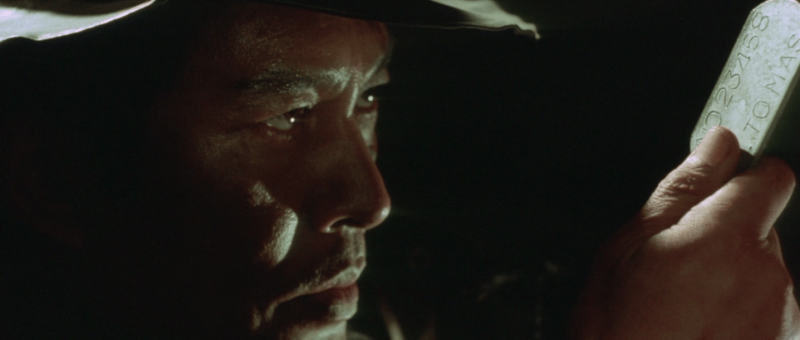
The Japanese title is prefaced by “ninkyo gaiden” which makes it sound like a spin-off to a ninkyo eiga or chivalrous gangster movie, which turns out to be incredibly ironic because there is no chivalry or honour here only cruelty and exploitation. Set in the port of Shimonoseki where boats leave for Korea, the film follows dejected petty yakuza Kondo (Noboru Ando) as fate finally catches up with him. He and his boss Sawaki (Jo Shishido) were once students together and took a job in Busan dealing with the corpses of American soldiers killed in the Korean War. Sent to deliver dog tags to widows, Sawaki spits in a distraught woman’s face and then attempts to rape her, only there is another couple in her home and the man soon wakes to challenge him. Kondo and Sawaki are then drawn into a brutal and ugly fight during which Kondo knocks out the man while Sawaki rapes the widow. The other woman then threatens them with a knife, taking back the dog tag only for Sawaki to pounce and strangle her. Sawaki then flees the scene confused by what he’s done, but Kondo stays behind and rapes the second woman’s corpse before leaving her for dead. 

Kondo later relates that he’s been unable to sleep with women ever since his experience of necrophilia in Korea in 1951. Kura often cuts back to the bundle of dog tags Kondo has been keeping all this time which hang by his window like a wind chime. He watches them sway and hears them jingle with the violent motion of Sawaki’s raping the woman, hanging that of, presumably, a random man around the second woman’s neck as he in turn rapes her body. He later finds a woman who reminds him of the one he raped while dead among a cohort of those he’s in the process of sex trafficking who has unwittingly put on one of the dog tags like an ironic necklace while taking a bath in his apartment on the invitation of his more sensitive associate Taguchi (Jinpachi Nezu). On catching sight of Kojun (Reisen Ri), he’s struck by a literal flashback that is a clear homage to Henri-Georges Clouzot’s Les Diaboliques as he watches a “dead” woman rise from a bath. Later he rapes her too, presumably the first (though not the last) “living” woman he’s had sexual contact with in 25 years. 

The dog tags take on a still more ironic relevance in the Korean song which plays over the opening titles and is sung frequently by the trafficked women. The song is sweet and innocent, narrated by a woman who is preparing a “flower garland” for someone that she loves, but its imagery is subverted in Kondo’s grim necklace of dog tags taken from fallen men. Even Sawaki describes him as someone who has been dead for 20 years while preparing to sacrifice him to curry favour with their creepy Tokyo boss Tahara (Taka Ohkubo) who permanently wears black gloves on both hands even while shirtless, while Kondo later sings a song characterising himself as a “black dog” who never stood a chance in this broken world of ruined dreams. Penned by Kura himself and performed by Ando, this song more clearly reflects his absurdist dialogue style in its deeply melancholy imagery as Kondo fully succumbs to his image of death. 

Kondo’s actions come to emblematise the continued violence inflicted on the bodies of Korean women by Japanese men from the colonial era onwards. The woman from the bath, Kojun, suffers continually throughout the film and is later forced to perform in strip shows by the Sawaki gang. She is clever, and fierce, but the world is all against her and the only answers that she ever gets as to why her “uncle” forced her to stowaway on a smuggling boat to Japan only further deepen the wounds inflicted by a deeply corrupted, imperialistic patriarchy. Kojun develops a fondess for Taguchi because he is the only man who doesn’t try to rape her and in fact saves her from being raped though later said to be impotent and rejected by the other gang members for his refusal to participate in their despoiling of the Korean women. Bloodstained underwear becomes a symbol of sexualised violence countered only by the plain white pairs Kojun later buys for Taguchi after replacing her own ruined clothing.  

She and Taguchi attempt to protect themselves by bringing the receipts, threatening to release the smuggling account books and expose a host of dodgy dealings if the Sawaki gang come for them, but in the end there is no escape. Taguchi finds himself wading through oil-soaked waters with his dreams in ruins before finally breaking the chain though it’s unclear if it will really free him. Bleak beyond measure in its deeply tragic denouement, Kara’s intense drama offers no respite from its nihilistic world of violence and exploitation and leaves us quite literally floundering in a dark sea of inevitable corruption. 


Trailer (no subtitles)

꽃목걸이 – 이영숙 (1972)

(꽃목걸이 = “flower necklace”. There doesn’t seem to be an official romanisation of singer 이영숙 (李英淑)’s name, but it does appear in a few places as “‘Iyeongsuk”, or “Lee Young Sook”. A contemporary romanisation would render it as “Lee Yeong-suk”)

Father of the Kamikaze (ゝ決戦航空隊, Kosaku Yamashita, 1974)

By the mid-1970s, Japanese cinema at least had become much more comfortable with critiquing the wartime past, considering it from a greater distance than the often raw depictions of war in the films from the previous two decades. 1974’s Father of the Kamikaze (ゝ決戦航空隊, A Kessen Kokutai), however, is among the few to skew towards the nationalist rather than the ambivalence or simple anti-war messages of other similarly themed films of its era. 

Starring ninkyo icon Koji Tsuruta who served in the air force himself, the film is a kind of biopic dedicated to Admiral Onishi who oversaw the kamikaze operations at the end of the war. As is pointed out, Onishi had been against the war in general terms even before its inception and is originally against the philosophy behind the kamikaze squadrons but as Japan’s fortunes continue to decline he becomes its biggest advocate citing a kind of sunk cost fallacy that it would be in someway unfair to the men that have already died to surrender while insisting that suicide missions are the only feasible way to turn the tide because one kamikaze could take out a hundred men by destroying battleships singlehandedly. 

The film in part attributes this extreme solution to the prevailing with your shield or on it philosophy of the contemporary society which placed extreme shame on the act of being taken prisoner. In the prologue that opens the film, a squadron of downed pilots whose heroic deaths have already been recorded is discovered alive in an American prisoner of war camp but as being a prisoner of war is so shameful and would reflect badly on the military, the decision is taken to fix the books by sending the men on a mission from which they are not intended to return. Onishi is opposed to the plan, he asks why they can’t find a way for the men to live, but the decision is already made. In any case, he describes the action of a suicide mission as a “beautiful ideal” even when insisting that a war cannot be fought in that way not least for purely practical reasons in that they do not have the resources to be wilfully sacrificing skilled pilots and their planes. 

Having come round to the idea, however, Onishi is a crazed zealot who cannot accept the idea of surrender and even goes so far as to barge into a cabinet meeting to urge ministers against a truce even though the war is clearly lost. To his mind, the only way to honour the sacrifices of those who’ve died is to fight to the last man. Kozono (Bunta Sugawara), another officer opposed to the kamikaze, eventually meets a similar fate in refusing to obey the order to lay down his arms and ending up in a psychiatric hospital. His objection had partly been that it’s wrong to turn men into ammunition, but also that the kamikaze project is itself defeatist and self-defeating when there are men such as himself who are committed to fighting on.  

In this the film leans into the image of militarism as a death cult in which dying for the emperor is the only noble goal of the whole imperial expansion. In its eventual lionising of Onishi’s image, his bloody suicide atop a white cloth resembling the flag of Japan while his parting words scroll across the screen in text, it does not shy away from his more problematic aspects in which he fails to object to a request from a junior officer that soldiers should be allowed to test their swords on American prisoners of war, roundly telling a subordinate who breaks protocol to insist that such a thing is not only morally wrong but will ruin their international reputation that he has no need to think of consequences because Japan will win this war. He claims to want to find a way of defeat that will satisfy the living and the dead, but in reality cannot accept it not least in that it would entail admitting that he sent 2600 young men to their deaths for nothing. 

Tsuruta brings the same level of pathos to his performance as he did in playing conflicted yakuza stoically committed to a destructive code, but there’s no getting away from the fact that the film focuses mainly on Onishi’s personal suffering as a man who sent other men to die for a mistaken ideal and then could not admit his mistake offering an apology only in his death in which he urged the young people of Japan to work to rebuild the nation in the name of peace. In switching to the present day and showing us Onishi’s dilapidated former residence and in fact the room in which he died with its tattered shoji and peeling paintwork, he veers towards the nationalistic in uncomfortably reinforcing the nobility of his death rather than the folly of war or absurdist tragedy of the kamikaze programme. Adopting a quasi-jitsuroku approach with frequent use of onscreen text, a narratorial voiceover, and stock footage of kamikaze in action Yamashita may portray war as madness in Onishi’s crazed devotion but cannot help depicting it as a “beautiful ideal” even in the undignified violence of Onishi’s ritual suicide. 


Operation Plazma in Osaka (実録外伝 大阪電撃作戦, Sadao Nakajima, 1976)

The precarious balance of the post-war yakuza society begins to crumble in Sadao Nakajima’s jitsuroku eiga, Operation Plazma in Osaka (実録外伝 大阪電撃作戦, Jitsuroku gaiden: Osaka dengeki sakusen). The Japanese title might more accurately be translated as “shock tactics in Osaka” which is a neat encapsulation of the turf war which arises when a larger gang from Kobe decides to muscle in and take over the city while a small upstart continues to agitate contemplating taking the whole prize for themselves. 

Inspired by a real life turf war which took place in Osaka in 1960, the film opens with classic jitsuroku voiceover revealing that a precarious balance had been held in the local underworld since the Meiji era in part because the city is simply too big to be ruled by any one gang. But times are changing, yakuza conglomerates are in style, and so it is that the Kawada gang mounts a largely political campaign to claim the city without bloodshed, as boss Yamaji (Akira Kobayashi) puts it, by convincing the smaller gangs to join up with them. According to the voiceover, however, it wasn’t Kawada that upset the balance but a small upstart group that came out of nowhere, Soryu. 

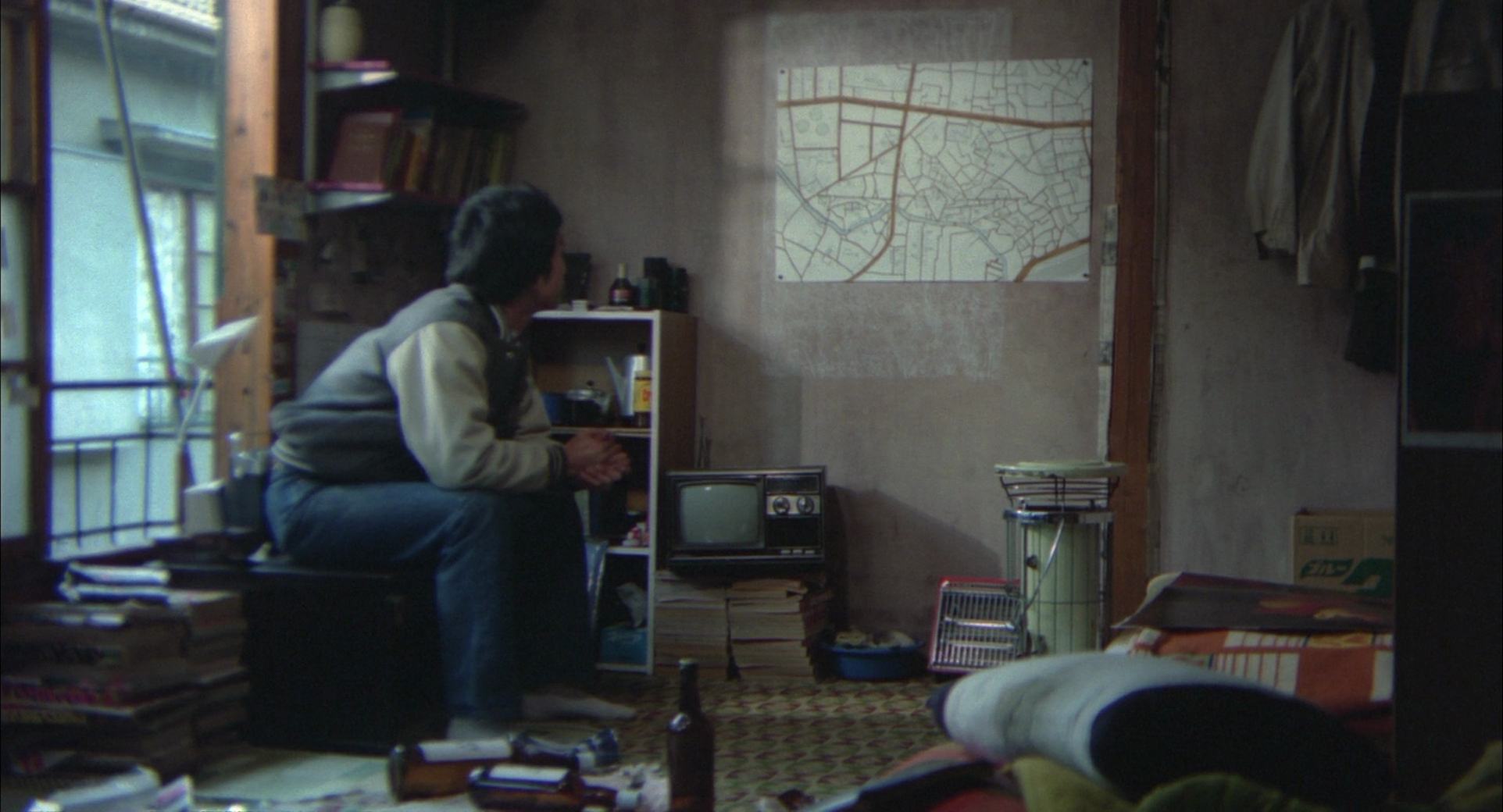
The screen then cuts to a map of Osaka, while the stills behind the credits feature the Tsuruhashi Market in Korea town. The thing about the Soryu group is that many of its leading members are ethnically Korean which sets them apart from most of the other mobsters in town. Even so, it’s hotheaded Yasuda (Hiroki Matsukata) that first gets them in trouble by getting into a fight with Takayama (Tsunehiko Watase) at a boxing match after climbing into the ring himself when the guy he bet on looks like he’s about to lose. This sets up a conflict between the Soryu and the Nanbara gang who run the boxing hall, but it never takes off because the recently released Daito suddenly announces that he’s bought the “Dance Hall” the ring is being run from and wants to turn it into a cabaret bar. It seems clear that someone’s backing Daito, but no one quite knows who. 

As Yamaji had said it would be, it starts of as a very modern silent war in which he slowly seduces various yakuza gangs convincing them that they’re stronger together with a slight note of join us or die. Yasuda and Takayama are two men who don’t like being told what to do and each end up exiled from their gangs thanks to their opposition to Kawada. Having failed to assassinate Yamaji, boss Nanbara pathetically rolls over and decides to join him instead while the Soryu gang is sent on the run leaving Yasuda and and Takayama to form an unlikely brotherhood brokered by Yasuda’s odd decision to gift his nightclub singer girlfriend to his sometime rival leaving Takayama permanently in his debt and touched by his selfless gesture.

Even by the standards of the jitsuroku, Operation Plazma in Osaka is rabidly misogynistic and often sleazy with an early scene seeing the Soryu gang cause trouble by stripping a hostess naked as one pours alcohol over her body and another drinks it from between her legs. Naked women are repeatedly fondled by fully clothed men, while nightclub singer Yoshiko (Yuko Katagiri) is treated largely as a pawn, a tool used to mediate the latent homoerotic desire between Yasuda and Takayama. Then again, everything in this world is extreme. The conflicted Miyatake (Tatsuo Umemiya) who had once tried to protect Takayama eventually tries to boil a man alive to get him to reveal Takayama’s location while Nakajima’s anarchic handheld camera desperately tries to keep up with the increasingly nihilistic violence. 

The resolution arrives not with death but total defeat, the traditional yakuza forced into submission by the corporatising giant with the survivors realising they will live the rest of their lives in subjugation making an “unconditional surrender” to changing times. Yasuda had claimed that the Soryu gang was a “free democracy” standing in opposition to the latent fascism of traditional gangsterdom which then finds its way into the corporate and the extreme hostile takeover Yamaji has just performed on the city of Osaka. Suddenly all that’s left of traditional yakuza is a pinkie in a jar, a grim a reminder of what happens when those in a position to resist back down in the face of an authoritarian power.


Insiang (Lino Brocka, 1976)

“It’s your father’s fault.” the heroine of Lino Brocka’s 1976 realist melodrama Insiang is told, neatly hinting at the destructive patriarchy of the Philippines under Marcos. Like the heroine of a fairytale, Insiang (Hilda Koronel) is a radiant source of light amid the darkness of a Manila slum where jobless men drown their sorrows and burden their wives while proving their masculinity by often violent sexual conquest. Soon even she is consumed by the corruption of the world all around her against which she eventually plots her revenge. 

The chief source of Insiang’s misery is her harridan of a mother, Tonya (Mona Lisa), who has become cruel and embittered in the humiliation of her husband’s abandonment. Tonya has agreed to allow some of her husband’s relatives to stay with them as the father has lost his job, but often insults them and her harsh words weigh heavily on Insiang’s cousin Edong who is old enough to work but cannot find find a job. When Edong gets drunk and gropes Insiang’s best friend Ludy (Nina Lorenzo) who runs the local store, Tonya loses her temper and throws them all out even insisting on the return of some clothes she’d bought the children sending them away not even in rags but naked. 

Isiang confesses that she has come to hate her mother and feels no maternal connection with her at all, knowing that her coldness towards her is motivated by resentment towards her estranged father who left them for another woman. Tonya’s decision to throw out the relatives was in part motivated by her desire to move in Dado (Ruel Vernal), a thuggish man much younger than herself who guts pigs at a local slaughter house. In the end, he will be stuck himself just like one of the animals he and men in general are so often likened to. Dado has a tattoo of his own name on his chest and struts his stuff like a proud alpha male, quickly questioning the masculinity of Insiang’s sometime boyfriend Bebot (Rez Cortez) who has a giant perm and wears an earring in one ear. Insiang dislikes going to the cinema with Bebot because he has a tendency to become handsy, justifying his disregard of her discomfort by insisting that he’s a man and cannot help it. Dado later says something similar after raping an unconscious Insiang, telling the incensed Tonya that it’s not his fault because no man could fail to be “seduced” with a such a beautiful woman in the house. 

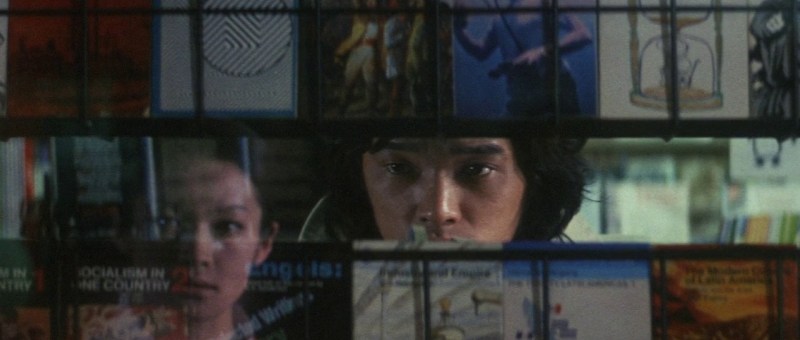
At heart, the film is a painful melodrama about the frustrated love between mother and daughter which is made impossible because of male failure. When she finds Insiang sobbing and realises Dado has raped her, Tonya tries to comfort her daughter but is soon seduced again on Dado’s return. As Ludy says, Tonya too has her needs even if her relationship with a much younger man scandalises the local community, but in the end she chooses to maintain her connection to male power rather than the emotional connection to the daughter she has come to resent as a constant reminder of her failure as a woman. To escape her impossible situation, Insiang agrees to sleep with Bebot on the condition that he will rescue her in marriage. But Bebot is also a coward who has already been warned off by Dado. He takes her to a hotel but doesn’t even have the money to pay, asking Insiang to chip in the difference. When morning comes Bebot is gone. “No one can help me with my problem but myself” Insiang tells Ludy’s sympathetic younger brother Nanding (Marlon Ramirez) who tells her that he loves her anyway even if the rumours about her unusual family situation are true and is willing to help her escape the futility of the slums as he is already preparing to do through pursuing education. 

But Insiang has already been transformed, only her revenge will buy her her release. She manipulates Dado through her sexuality and motivates her mother’s jealously to engineer the tragic outcome that will free her. But having achieved her vengeance she has only regrets in the continued absence of maternal love, while Tonya too feels much the same. Insiang takes back some of her own cruelty, though what she said was not wholly untrue, but Tonya turns away from her only to regret her inability to embrace her daughter. Trapped behind bars, she can only watch silently as Insiang walks away and does not look back. The two women are forever divided by the patriarchal society. Insiang has won a temporary victory but only in self-destruction. In Brocka’s bleak depiction of Marcos’ Manila, not even maternal love is safe from the ravages of the contemporary society.  


Insiang screened as part of this year’s Red Lotus Asian Film Festival.

Original trailer (English subtitles)

The Last Kamikaze (最後の特攻隊, Junya Sato, 1970)

Junya Sato’s The Last Kamikaze (最後の特攻隊, Saigo no Tokkotai) opens with a title card explaining that it has nothing to do with the life of Matome Ugaki, which seems disingenuous at best given that the narrative has tremendous similarities with his life. In any case, 25 years after the war in a very different Japan which is perhaps becoming more willing to reexamine its wartime history, Sato’s film nevertheless walks an ambivalent line clearly rejecting the idea of the kamikaze special attack squadrons as absurd and inhuman yet simultaneously glorifying the deaths of the men who willingly took part in them. 

For sympathetic Captain Munakata (Koji Tsuruta) the issue is one of consent and willingness more than it is of essential immorality. Placed in charge of the very first suicide attack, he elects to go himself rather than ask someone else but is first overruled before deciding to go anyway after appealing for volunteers and coming up one short. His general, Yashiro (Bontaro Miake), who had voiced his opposition to the policy in the opening sequence reminding his own commander than even when men were given impossible missions in previous wars they were always ordered to return home if possible, takes the unprecedented step of climbing into an aircraft himself in an act of protest insisting that this be the last and final time that men were ordered to their deaths. The mission, however, does not succeed. All of the pilots bar Yashiro are shot down before reaching their targets while Munakata, injured and having lost sight of the general, aborts his mission and returns to base only to face censure from his superior officers. 

Sent back to Japan, he wrestles with himself over whether his decision was one of cowardice and he turned back because he was afraid to die rather than, as he justifies, because he did not want to die in vain and did what he thought was right. Far from cowardice, it may have taken more courage for him to ignore his orders and choose to live yet there must also be a part of him that believes dying to be heroic if not to do so is to be a coward. As the situation continues to decline and suicide attacks become the only real strategy, Munakata is recalled for an ironic mission of heading the escort squad designed to protect the pilots from enemy attack so they can reach their targets. He first turns this down too not wanting to be an angel of death but is finally convinced to accept on the grounds that the men will die anyway and at least this way their deaths will have meaning. 

Munakata was greeted on his return to Japan by the sight of his father (Chishu Ryu) being carted off by the military police for expressing anti-war views, stopping only to tell him that people should be true to their own beliefs. Nevertheless, even if Munataka objects to the tokkotai strategy he does not oppose it only emphasise that the men should should be willing and resolved rather than forced or bullied. There is indeed a shade of toxic masculinity in the constant cries of cowardice along with a shaming culture that insists a man who refuses to give his life for his country is not a real man. Munakata comes to the rescue of a young recruit, Yoshikawa (Atsushi Watanabe), who twice returns from a tokkotai mission claiming engine trouble but does not try to save him only to petition his superiors that he be given ground duty until such time as he gets used to the idea of dying. Because of Munakata’s kindness in saving him from a suicide attempt after being rejected by the mother he worried for if he were to die, Yoshikawa is pushed towards a “hero’s death” that does at least help to change the mind of Yashiro’s zealot son (Ken Takakura) who knew nothing of the reasons behind his father’s suicide and believed wholeheartedly in the necessity of the special attack squadrons. 

The younger Yashiro’s rationale had been that to show compassion to a man like Yoshikawa was to shame the memories of the men who had already died, yet even in realising the futility of the gesture he still resolves to proceed towards his own death as do others like him such as a student who had been against the war and ironically consents to the suicide mission in order to end it more quickly. “There’s nowhere to run to” Yoshikawa’s mother (Shizuko Kasagi) had said on his attempted desertion, echoing the words of another that there was no escape from this war, while poignantly crying over her son’s ashes that she wishes she had raised him to be a coward. The human cost is brought fully home as the families storm the airfield fence in an attempt to wave goodbye to their loved ones as they prepare for their glorious deaths, another pilot reflecting on the fact that each of these men is someone’s precious son rendered little more than cannon fodder in an unwinnable war. Even with the escort squads, only 30% of the special attacks succeed. Most of the pilots are so young and inexperienced that even assuming they survive the anti-aircraft fire they are incapable of hitting their targets. 

To add insult to injury, Munakata returns from his final mission to an empty airfield where a drunken engineer (Tomisaburo Wakayama) explains to him that the war is over and the generals knew it 10 days earlier but still sent these men to their deaths anyway. Overcome with remorse, Munakata posits his own suicide mission but is instructed to live on behalf of all those who died only to take off and fly into a technicolor sunset as Sato switches from the period appropriate black and white to vibrant colour elegising Munakata’s death while lending it an otherwise uncomfortable heroism. Casting ninkyo eiga icons Koji Tsuruta and Ken Takakura as the infinitely noble yet conflicted pilots and employing jitsuroku-esque narratorial voice to offer historical context the majority of the audience probably does not strictly need, Sato rams home the righteousness of these men while casting them as victims of their times trying their best to be true to what they believe but finding little prospect of escape from the absurdity of war. 


The Pledge (博奕打ち外伝, Kosaku Yamashita, 1972)

The gangster code slowly consumes series of men each trying to do the right thing but hamstrung by the actions of others in Kosaku Yamashita’s yakuza tragedy, The Pledge (博奕打ち外伝, Bakuchiuchi Gaiden). It is indeed a promise between brothers which damns them all, but the roots of it lie in repressed emotion and a desire to protect other people’s feelings by keeping a destructive secret while trying to satisfy oneself that one has behaved properly even if no one else understands. 

The battleground is Wakamatsu, Kyushu, where outsider Egawa (Koji Tsuruta) has united the local boatmen and is undercutting the prices of a rival gang led by Omuro (Tomisaburo Wakayama). While Omuro is out of town, his right-hand man Taki (Hiroki Matsukata) has decided to take advantage of a minor squabble between some of his guys and Egawa’s to initiate a small scale turf war hoping to take the river back under their control. He does this by kidnapping Egawa’s younger brother Masakazu (Goro Ibuki) to lure him to their headquarters alone, something of which Omuro does not approve on his return but decides to go with as an excuse to bring his rivalry with Egawa to a head. Just as the pair are squaring off, a mutual friend, Hanai (Ken Takakura), arrives and intervenes convincing the two men to lay down their arms for the moment at least.

It could be argued that it is this interrupted fight that is resolved in the film’s conclusion if only by inexorable fate. In a repeated motif, Omuro keeps to the code and is exasperated and disapproving of Taki’s underhanded tactics but accepts the responsibility for them himself knowing that Taki acted only on his behalf and his recklessness is only an expression of his love for him. There is indeed something homoerotic in the relationship between the two men as Omuro cradles a wounded Taki and attempts to comfort him that the fault is all his own, while resolving to accept Taki’s actions and build on them rather than try to deescalate or try to apologise. 

The real crisis occurs when the boss, approaching 60 which represents the full circle of a life, decides to name Omuro as a successor rather than the anticipated Hanai. Hanai stoically accepts though intending to leave the gang and travel to another part of Japan but other members of the clan are perplexed, little understanding the boss’ decision in feeling that Omuro is not of good character whereas Hanai is easily the better choice. As it transpires, the boss has made his decision deliberately in order to mitigate the fact that Hanai is secretly his illegitimate son whose origins he has kept secret in deference to his legal wife. He chooses not to name him as a successor in order to avoid causing him problems in his later life while justifying himself that he has not made the decision for dynastic reasons or out of simple favouritism. Yet the relationship between the two men, father and son, is raw and painful if founded on a deep understanding that leaves them unable to meet each other directly with emotional honesty. 

Because of his father’s decision, Hanai forces Egawa to promise that he will not antagonise Omuro which leads to problems in his own gang with his men angry and confused, unable to understand why Egawa is letting Omuro walk all over him. Compounding the problem, Egawa’s errant brother Tetsu (Bunta Sugawara) returns unexpectedly and as Egawa cannot tell him about the pledge without disclosing Hanai’s secret, thinks his brother is being messed around and raids Omuro’s offices to reclaim money he had extorted from Egawa. He learns the truth from devoted geisha Hideko (Yuko Hama) who is deeply in love with Egawa yet largely unable to act on it again because of the gangster code while pledging that she’d sooner die and prove her devotion to him than summit herself to Taki, who is also in love with her, even when he threatens her with a knife. 

The yakuza code dictates that Omuro must die though he is little more than a passive antagonist all too willing to accept the evil deeds that Taki did on his behalf because of the code of loyalty though he would not have dared to do them himself. Secrecy and repressed emotion drag all into a dark web of self-destructive violence until reaching their inevitable conclusion and perhaps bringing one cycle to a close if only in the birth of another. 


Original trailer (no subtitles)

Dead Angle (白昼の死角, Toru Murakawa, 1979)

The jitsuroku yakuza movie which had become dominant in the mid-70s had often told of the rise and fall of the petty street gangster from the chaos of the immediate post-war era to the economically comfortable present day. The jitsuroku films didn’t attempt to glamourise organised crime and often presented their heroes as men born of their times who had been changed by their wartime experiences and were ultimately unable to adjust themselves to life in the new post-war society. Adapted from a serialised novel by Akimitsu Takagi which ran from 1959 to 1960, Toru Murakawa’s Dead Angle (白昼の死角, Hakuchu no Shikaku) by contrast speaks directly to the contemporary era in following a narcissistic conman who has no need to live a life of crime but as he says does evil things for evil reasons. 

Prior to the film’s opening in 1949, the hero Tsuruoka (Isao Natsuyagi) had been a law student at a prestigious Tokyo university where he nevertheless became involved in the Sun Club, a student financial organisation launched by mastermind Sumida (Shin Kishida) who eventually commits suicide by self-immolation when the organisation collapses after being accused of black market trading. An unrepentant Tsuruoka resolves to start again, rebuilding in the ashes as a means of kicking back against hypocritical social institutions and rising corporate power by utilising his legal knowledge to run a series of cons through the use of promissory notes to prove that the law is not justice but power. 

In this Tsuruoka has an ironic point. He doesn’t pretend what he’s doing is legal, only that he’s safeguarded himself against prosecution. When a pair of yakuza thugs break into his office and threaten him in retaliation for a con he ran on a shipping company, he reminds them that as they’ve had him open the safe it would make the charge of killing him robbery plus murder which means automatic life imprisonment rather than the few years they might get for simply killing him without taking any money. He always has some reason why the law can’t touch him, while implicitly placing the blame on his victims who were often too greedy or desperate to read the small print and therefore deserve whatever’s coming to them. In at least one case, Tsuruoka’s victimless crimes end up resulting in death with one old man whom he’d double conned, pretending to give him the money he was owed but getting him drunk and talking him into “re-investing” the money with him, takes his own life by seppuku in the depths of his shame not only in the humiliation of having been swindled but losing his company, who had trusted him, so much money. 

You could never call Tsuruoka’s rebellion an anti-capitalist act, but it is perhaps this sense of corporate tribalism symbolised by the old man’s extremely feudalistic gesture that Tsuruoka is targeting. As his wife Takako (Mitsuko Oka) tells him, Tsuruoka should have no problem making an honest living. After all he graduated in law from a top university, it’s not as if he wouldn’t have been financially comfortable and it doesn’t seem that the money is his primary motive. While Takako continues to insist that he’s a good person who wouldn’t do anything “illegal”, his longterm geisha mistress Ayaka (Yoko Shimada) knows that he’s an evil man who does evil things for evil’s sake and that’s what she likes about him. Elderly businessmen are always harping on about the “irresponsible youth” of the day but all are too quick to fall for Tsuruoka’s patter while he is essentially nothing more than a narcissist who gets off on a sense of superiority laughing at the law, the police, and the corporate landscape while constantly outsmarting them. 

In this, the film seems to be talking to the untapped capitalism of the 1970s. Like Tsuruoka, the nation now has no need to get its hands dirty and should know when enough is enough but is in danger of losing sight of conventional morality in the relentless consumerist dash of the economic miracle. That might explain why unlike the jitsuroku gangster pictures, Murakawa scores the film mainly with an anachronistic contemporary soundtrack along with the ironic use of saloon music in the bar where Tsuruoka’s associates hook an early target, and the circus tunes which envelope him at the film’s opening and closing hinting that this is all in some ways a farce even as Tsuruoka is haunted by the ghosts his narcissistic greed has birthed. Then again perhaps he too is merely a product of his times, cynical, mistrustful of authority, and seeking independence from a hypocritical social order but discovering only failure and exile in his unfeeling hubris. 


Original trailer (no subtitles)

A Tale of Sorrow and Sadness (悲愁物語, Seijun Suzuki, 1977)

Famously, Seijun Suzuki was let go by Nikkatsu in 1968 after studio bosses became fed up with his apparently “nonsensical” filmmaking. Exiled from the film world, Suzuki made do with TV work before making his comeback with, rather surprisingly, a media satire based on a manga by Ashita no Joe’s Ikki Kajiwara. A Tale of Sorrow and Sadness (悲愁物語, Hishu Monogatari) is at once a dissection of the fluctuating class and social systems of a nation entering an era of high prosperity and a condemnation of the consumerist corruptions of a society increasingly ruled by celebrity.

It is in the corporate that the corruption begins. With mild overtones of cold war paranoia, Nichei Fabrics is alarmed that a rival firm has brought on a top Russian gymnast as a brand ambassador and is convinced they need to find someone who can steal her thunder. Fashion co-ordinator Tadokoro (Masumi Okada) comes to the conclusion that they need a homegrown star and decides to make one by grooming a promising lady golfer to become both a champion and a minor celebrity after achieving an underdog victory in a prestigious tournament. 

One might ask weather society at large is likely to take much interest in who wins the Japanese Women’s Golf Tournament, but then everyone loves an underdog victory and Tadokoro seems to think he can make them care through carefully managed media manipulation. Golf is also, of course, thought of as an upperclass pursuit beloved by a new class of salaryman despite its origins, as sportswriter Miyake (Yoshio Harada) describes them, as a pastime invented by farmers to stave off boredom. Reiko (Yoko Shiraki), Miyake’s girlfriend whom he is in a way agreeing to sell to Tadokoro, is ostensibly a working class woman raising her orphaned little brother who discovered a natural talent for golf while working as a caddy for veteran male golfer, Takagi (Shuji Sano), now her mentor. She is not, however, a natural media star, something not helped by the brand’s decision to photograph her wearing wedge shoes and eventually a bikini on the green to showcase their leisurewear which she otherwise would not necessarily be wearing during a regular golfing tournament. 

The colour green ironically becomes a kind of harbinger of doom, caught in the reflection of psychotic stalker housewife Kayo (Kyoko Enami) and later that of Reiko herself while she is otherwise offered sickly green cocktails or projected against predominantly green backgrounds. The house that Nichiei build for her comes with a tiny putting green that more resembles the catwalk it eventually becomes in the crazed bacchanal organised by Kayo in which she orders the other neighbourhood housewives to strip a near catatonic Reiko of the few clothes she is still permitted to wear. The early photo shoot marked the beginning of a gradual erasure of her identity and its replacement by Reiko the star, to Tadokoro, and Reiko the champion golfer to Miyake. 

Much of Reiko’s golfing technique seems to centre on a kind of cosmic ordering, insisting that she is one with the ball which will land exactly where she envisages it while ignoring her competitor’s attempts to make conversation with her warning that a golfer’s career is long and it’s a bad idea to offend ones seniors. A moment with her stylist is chilling its similarity as she’s told to believe herself happy so that she can smile for the cameras with the otherwise vacant look of a manufactured celebrity. She repeats these mantras to herself constantly even as her own personality is overwritten in part by Nichei fabrics and in part by Kayo who jumps in front of her car while Miyake is driving and thereafter blackmails her into almost total servitude. 

The other housewives had objected to Reiko’s presence in describing her as “low-class” and suggesting that she must be some man’s mistress because it seems unlikely to them that a pro golfer could earn the kind of money to buy a house in their neighbourhood. Their opinion of her is confirmed in their complaints about her noisy garage door, though in truth Reiko doesn’t own the house it almost owns her given that it is provided for her by Nichiei so she can get to the studio to film the daytime show they’ve created for her which mainly seems to be about fashion rather than golf which she now has almost no time to practice despite Tadokoro’s plan for her to participate in a high profile contest against a top American golfer. A classic curtain twitcher, Kayo is taken with the idea of having a celerity living next door and, already ostracised by the other housewives for being a little odd, worms her way into her life eventually deriving a quasi-sexual thrill in being able to manipulate a famous face. “I’m the only one who knows her hair’s not real!” she squeals watching Reiko on TV with her new wig after hacking her hair off as a means of punishment for hitting her with the car. 

Kayo might be, in another way, the true victim of this system. Her life is obviously materially comfortable, but she’s trapped in the role of the conventional housewife while largely ignored by her salaryman husband and, as they have no children, left on her own all day with nothing to do. When she tells Reiko that she’s lonely and just wants a friend, it goes someway to explaining her otherwise bizarre behaviour as it also does for Reiko who later chuckles when Kayo randomly asks her to sleep with her husband as a favour replying that’s it’s fine “because we’re friends”. Reiko’s body, often caught by Suzuki naked in classical poses, is misused by just about everyone from Kayo to Nichei to Miyake, leaving her little more than a grinning mannequin completely hollowed out and devoid of all individuality. 

In some ways, Kayo’s decision to invite the neighbourhood women into Reiko’s home, letting them try on her clothes, drink her booze, and generally jump all over her nice new life, could be seen as an attack on everything she represents by these otherwise conservative women who resent her class transgression and independent success. Yet it’s also a very personal act of self-destruction in erasing this image of herself through that of Reiko which she has equally created. It’s another kind of self-destruction that ends the film and may be another kind of bid for freedom, an attempt to free Reiko from psychological disintegration at the hands of the consumerist society until it all quite literally goes up in smoke. A tale of sorrow and sadness indeed, Reiko is eventually consumed by the consumerist society, a little ball hit into its hole and unable to climb out, while the flames rise all around her.  


A Tale of Sorrow and Sadness Japan Society New York on Feb. 11 as part of the Seijun Suzuki Centennial.

Original trailer (no subtitles)

Dodes’ka-den (どですかでん, Akira Kurosawa, 1970)

By the late 1960s, Akira Kurosawa was in the midst of a creative crisis having spent two years working on the Japanese segments of the Hollywood war film Tora! Tora! Tora before he was eventually let go by the parsimonious US producers who feared he was spending too much money and making too little progress. Meanwhile, the studio system which had supported his career was collapsing and could no longer offer the kinds of budgets necessary for his personal brand of epic cinema. Teaming up with Masaki Kobayashi, Kon Ichikawa, and Keisuke Kinoshita, he formed the Club of the Four Knights production company but the first and only film they produced, Dodes’kaden (どですかでん), was not perhaps the kind of film many were expecting.

Inspired by a novel by Shugoro Yamamoto, the film like The Lower Depths focuses on a small community living in a slum only in this case on the edge of the modern city. Shot in classical 4:3, it was also Kurosawa’s first foray into colour and makes the most of his painterly eye with its surrealist backdrops and exaggerated sunsets. Once again there is the feeling that these people are already dead or trapped in a kind of purgatory unable to escape their desperate suffering, the slum as much of a mindset as a physical place. “Life is nothing but pain to me” one man claims, stating his hope that he die as quickly as possible while relating the sad story of his life: falling into depression when his sons were killed in the war and losing his wife, business, and finally home to the Tokyo air raids. Yet he is reminded that his family live on in him as long as he does and to kill himself is to kill them too, rediscovering a desire to survive even in his suffering. 

Another man, Hei (Hiroshi Akutagawa), dresses in a soldier’s uniform and wanders around like a zombie with, as one person puts it, the eyes of a dead man. Later a woman comes to find him, but he is seemingly unable to reawaken himself and move on from his trauma, now numbed to life, an already spent force. A young woman, Katsuko (Tomoko Yamazaki), is little different. Never speaking she has been raised by her uncle who begins sexually abusing her while her aunt is in hospital. She says that she wants to die, stabbing the only boy who showed her kindness because she feared he’d forget her. 

These people have largely been forgotten, living almost in another era and entirely cut off from mainstream society in a kind of etherial purgatory. Like the residents of The Lower Depths, a degree of fantasy is necessary for their survival a case in point being that of a beggar and his son who live an abandoned car and fantasise about the kind of house they’d build, a vast modernist building in white with a swimming pool. Like Katsuko, the boy is let down by his father who remains the car and sends him out to beg for food, telling him off when he lights a fire to boil fish as the man at the sushi shop had told him to do insisting, with disastrous results, that as it’s pickled it doesn’t need to be cooked. The furthest out of the residents, the pair have an almost grotesque appearance, their faces tinged with a morbid green. 

But then the couples living at the centre seemed to have found an antidote to despair in a surreal process of wife swapping now unable to remember whose husband is whose despite being neatly colour coded in matching outfits. A man with a nervous tic defends his grumpy yet fiercely loyal wife, and another man raises several children who may not be biologically his but are loved all the same. The old man who acts as a kind of confidant giving out advice and settling disputes through benevolent trickery has evidently learned how to live in this world and gets by as best he can while the son of the melancholy woman who runs the tempura stall drives an imaginary train through the slum the rhythm of which gives the film its name in its slow and certain progress towards nowhere at all. Heartbreakingly there are moments where the young man can hear the train in the distance, but it remains forever out of reach. Dodes’kaden didn’t do very well at the box office or with critics, its lack of success of cited as a factor in Kurosawa’s attempt to take his own life the following year, yet had perhaps set him on a new artistic course of colour and light which would define the further direction of his later career.


Dodes’ka-den screens at the BFI Southbank, London on 15th & 16th January 2023 as part of the Kurosawa season.