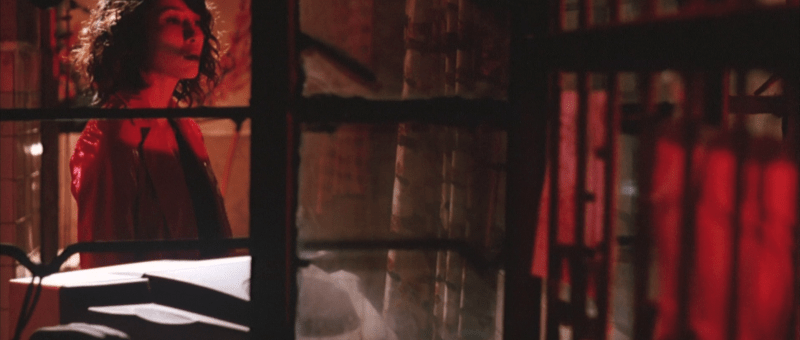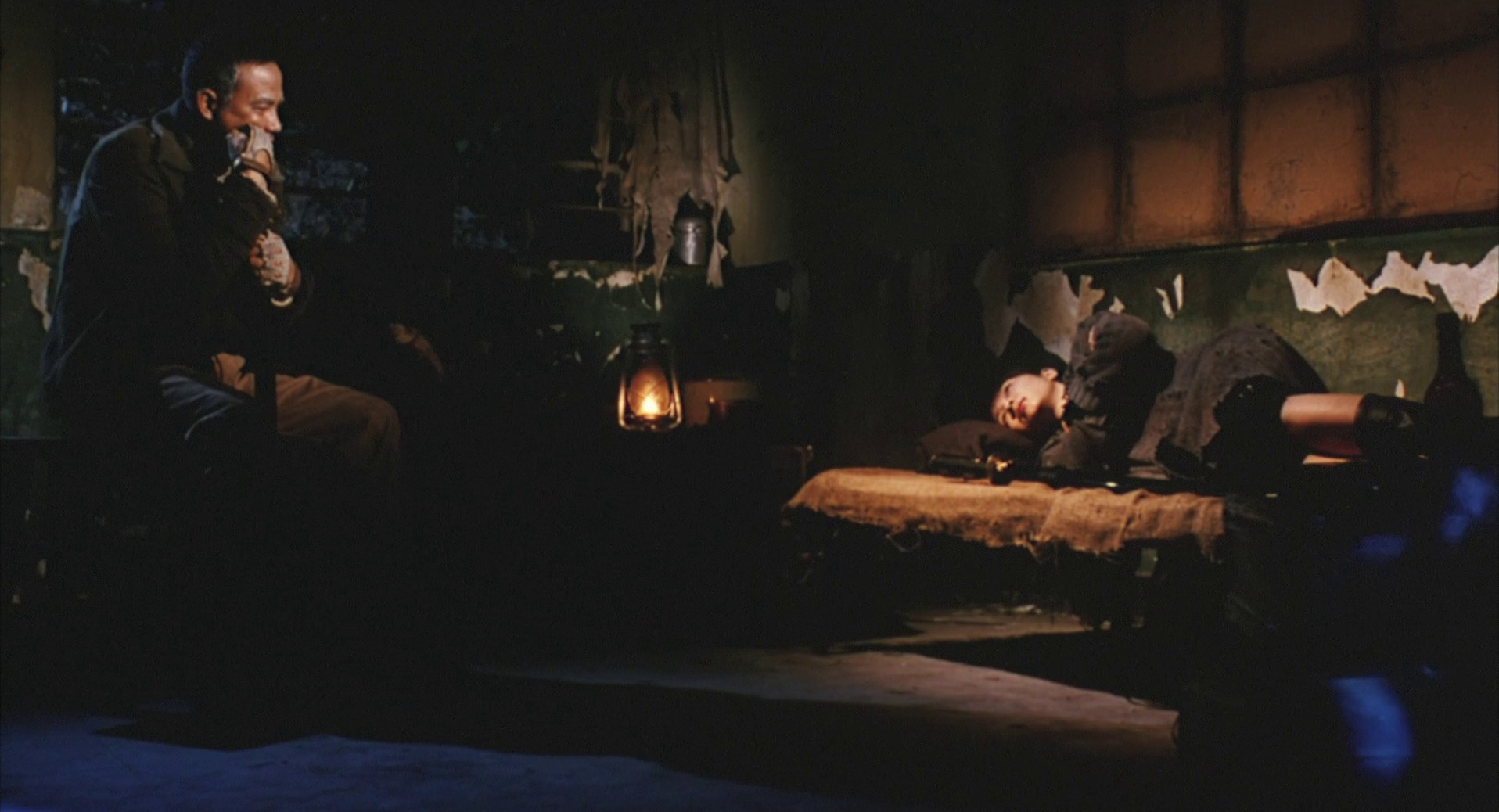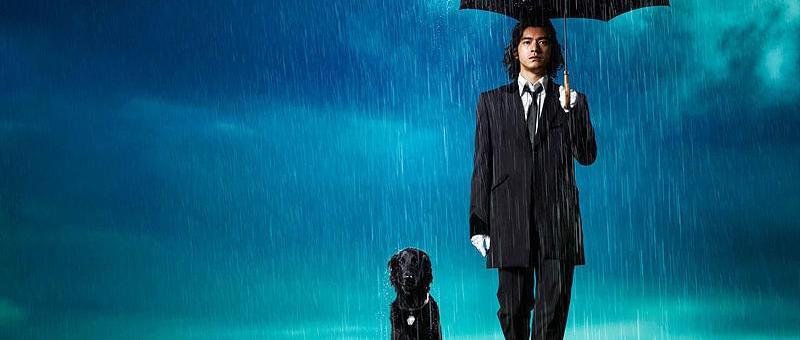
Sweet Rain: Accuracy of Death (Sweet Rain: 死神の精度, Masaya Kakehi, 2008)

“What do you think about death?” a charming grim reaper awkwardly asks, seemingly taking into account the answers given when deciding whether his “subject” should survive or if the untimely death they’re about to meet should be final. Adapted from the novel by Kotaro Isaka, Masaya Kakehi’s Sweet Rain: Accuracy of Death (Sweet Rain: 死神の精度, Sweet Rain: Shinigami no Seido) contemplates what it means to live well, how to go on living in the midst of pain and suffering, and finally how to know when it’s time to accept the finality of death. 

Chiba (Takeshi Kaneshiro) is a grim reaper and it’s his job to decide whether those involved in unexpected deaths, those not due to old age, illness, or suicide, should be allowed to live. According to his partner, who appears alternately as a black dog or raven, Chiba always chooses to “proceed” but something is obviously a little different with his latest job monitoring customer services representative Kazue (Manami Konishi) in the seven days leading up to her demise. Kazue is currently being harassed by a repeat caller who keeps calling the helpline asking for her personally and has recently graduated to pestering her about meeting up in person. It’s easy to see which way this could go, though luckily for her she ends up meeting Chiba who acts as a kind of protector when she’s hassled yet again by a different set of creeps in a park. As he gets to know her, Chiba learns of Kazue’s loneliness and sense of despair having endured more than her fair share of loss which has convinced her that everyone around her dies and she’s destined to be alone. But whether down to Chiba’s interference or otherwise, a surprising twist sees her offered a gig as a top idol star, leading Chiba to conclude that she has not yet fulfilled her purpose and should be granted more time. 

The expected romance does not quite take place, though Chiba is indeed becoming more interested in human life along with death while fascinated by music which he describes as humanity’s greatest invention. As we gradually gather, Chiba’s three jobs occur at lengthy temporal intervals, though the music store he frequents appears to be a constant and almost unchanged. Bar a hyper-realistic humanoid robot appearing in the final section in which Chiba is sent to assess an elderly hairdresser (Sumiko Fuji), these different temporal spaces are in another sense an extension of the present in which technology does not otherwise change substantially. Chiba picks up an iPod belonging to a petty yakuza on job two but continues to listen to CDs while the hairdresser seems to be doing her job the old-fashioned way and the kids that come to her store all collect Pokémon/Top Trumps-style paper cards. 

Yet Chiba is also a fish out of water, constantly confused by contemporary slang and with a strong tendency towards taking things literally. His discombobulation with language and custom is perhaps enhanced by the casting of Takeshi Kaneshiro who is half-Taiwanese and grew up in Taiwan speaking Mandarin as his first language, later working predominantly in Chinese-language cinema. In the audience perception he carries with him a quality of otherness that adds to the ethereality of his existence as a grim reaper. His appearance changes with each of his subjects, firstly appearing as a handsome young man, then as a grizzled yakuza complete with sunshades, and finally as a slacker student with each of his portals mirroring his destination from telephone booths to emergency exits and shopfront doors. As a grim reaper he has long unruly hair and wears a suit a loosened tie, but perhaps has little identity of his own and laments that he has never seen a blue sky because it is always raining whenever he is in the mortal world.  

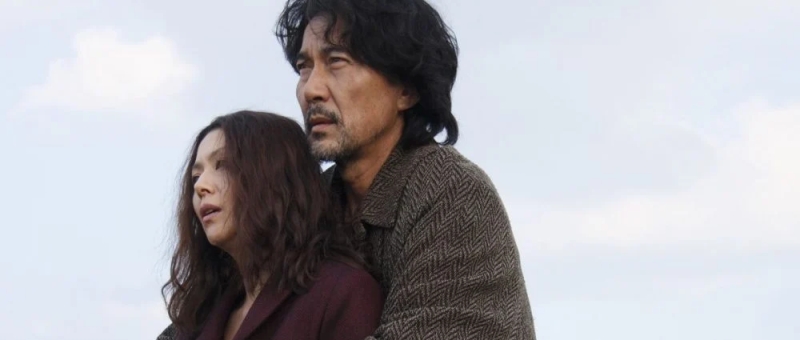
The rain might well symbolise the pain and suffering around him as he lives among those who are about to die, but he himself feels that death is nothing special. As the old lady points out, that might be because it’s all he sees, he never visits people while they’re alive and knows nothing of life nor what it is to leave it. The old lady too experienced a lot of loss in her life and came to the conclusion that she was in some way cursed, severing her connection with those she truly loved believing she could only bring them harm and choosing to live all alone. “The sun in the sky’s nothing unusual but it’s important that it be there,” she adds, “death’s like that, maybe”. In any case she seems to have lived a long life that was happy enough even if it was “nothing special” and she can die with no regrets while Chiba too begins to learn something of the world’s ordinary beauty in his first glimpse of a sunny sky even if one overshadowed by the spectre of death. 


Trailer (no subtitles)
4bia (สี่แพร่ง, Youngyooth Thongkonthun, Banjong Pisanthanakun, Parkpoom Wongpoom, Paween Purijitpanya, 2008)

A quartet of Thai directors come together for four tales of horror in the appropriately titled 4bia (สี่แพร่ง). Though the stories are largely unconnected save for a few common details that locate them in the same universe, they each deal with a particular kind of anxiety and different sorts of ghosts who for various reasons are haunting the protagonists. What’s certain is that if you’re targeted by an otherworldly spirit, finding escape will not be easy.

That’s something quite obvious even in the first episode in which a young woman trapped alone in her apartment after breaking her leg in a horrific car crash begins chatting with a total stranger who sends her a random text message. Of course, replying to a message like that is not very sensible and even perhaps dangerous, as Pin (Maneerat Kham-uan) herself may release when she asks the (presumably) male messenger to send a photo only to be sent back the one she just sent of herself with the reply that he’s in it next to her. In any case, the real malevolent force here seems to be loneliness itself which is what motivates Pim to message back having already spent 100 days without interacting with another human being. The messenger has also spent the same amount of time alone in what he calls a “cramped space,” which is why he wants company. It’s gradually revealed that the pair share a kind of destiny which is an inversion of the kinds of meet-cutes you might find in a romantic comedy that makes Pim’s 100 days a purgatorial space of borrowed time in which she might as well have been a ghost herself.

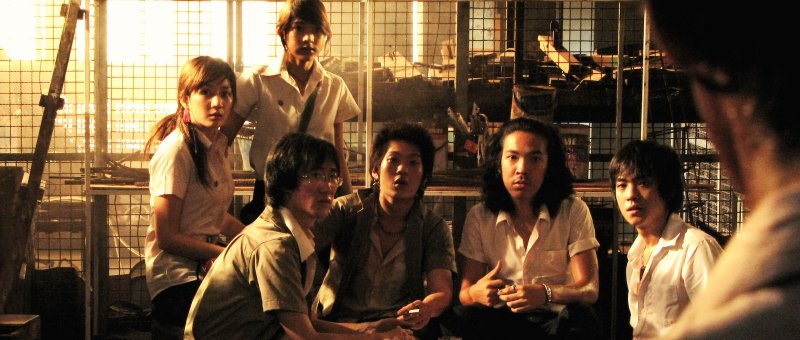
But in the second chapter, Tit for Tat, it’s almost the opposite of loneliness that’s the problem as bunch of delinquent high school students and recreational drug users bully a bookish boy, Ngid (Nattapol Pohphay) and end up killing him. The boy then becomes a vengeful spirit and uses black magic to take them all out. Though one of them quips that they need to start smoking less weed, there’s no real question that the ghost is real or that the gang pretty much deserve what’s coming to them for having been so obnoxious in real life. The later part of the drama focuses on Pink (Apinya Sakuljaroensuk), a peripheral member of the gang who did try to tell the others to stop but otherwise did nothing to help Ngid and is punished for her sin of omission, though she does eventually think of a way to break the curse if only ironically in poetic justice for simply standing by and watching in the face of injustice. 

The third sequence, Banjong Pisanthanakun’s Man in the Middle is, however, a meta textual-delight that asks why ghosts in films always have long hair and pale faces. Four boys go on a rafting trip and swap campfire stories about how you should never sleep on the end when you’re close to the jungle in case a succubus comes to get you. When they get into an accident on the water and are separated, it leads to a sense of suspicion as some wonder if their friend actually died and is a ghost come to haunt them who, like in the Sixth Sense, may not know he’s dead. Though the twist maybe somewhat predictable, the tale is told with good humour and a sense of narrative cohesiveness that is lacking in some of the other chapters. 

Similarly, the final instalment Last Fright, is a chamber piece focusing on a stewardess who is unexpectedly charged with escorting a princess (Nada Lesongan) who’s fallen out of favour on her trip to Thailand where she spent her honeymoon. Pim’s (Laila Boonyasak) secret is that she’s been having an affair with the princess’ husband whom she met on their honeymoon flight which is why the incredibly imperious woman tortures her all the way through the flight before dying in a hotel room on arrival. Pim must, for reasons that don’t really make sense, escort the body back only to begin going out of her mind while haunted by the princess’ spirit. This is the only sequence which flirts with the idea of the ghost not actually being real but a manifestation of Pim’s guilt, or else a vengeful spirit come to punish her not for her secondary crime but for the transgression of adultery. Despite its potentially moralising overtones it’s a pretty chilling moment on which to end the film suggesting that in the end there is no real escape either from a vengeful ghost or your own questionable decisions.


4bia is available as part of Umbrella Entertainment’s Thai Horror Boxset.

International trailer (English subtitles)

Sasori (さそり, Joe Ma Wai-Ho, 2008)

Sasori had been dormant for a decade before being resurrected in this Hong Kong co-production directed by Joe Ma. She is, however, a very different Nami Matsushima (Mizuno Miki) who becomes less a feminist avenger than a sociopathic killer, albeit one fixated on revenge and with ambivalent feelings towards her former lover, Hei Tai (Dylan Kuo Pin-Chao), who evidently did not have enough faith in her to realise that she didn’t murder his entire family just because she felt like it.

Nevertheless, in contrast to other Namis, she did make the decision to do it and went through with stabbing Hei Tai’s sister in the heart right in front of him even if she did it to protect him from the crooks who’d invaded their home. Motives are never explicitly explained, but it’s later suggested that Hei Tai’s professor father may have been knocked off by a rival scholar/gangster researching “inhuman organ treatment”. In any case, the goons that break into her home sexually assault Nami and tell her the only way to save Hei Tai is to help them kill his father and sister. Unfortunately, Hei Tai does not seem to recognise the position she was in nor her transgressive love for him, so is filled with boiling rage and resentment. Curiously, Nami never actually explains either, but is by that point mired in a women’s prison where she contends with the sleazy warden (Lam Suet) and the cellblock’s toughest lady, Dieyou (Natsume Nana), through the medium of cage-based mud wrestling.

This Nami’s transformation is obvious when she rips the loose skull fragment from a woman with learning difficulties she’s befriended and uses it to kill Dieyou. The moment at which she kills Dieyou’s sister, a woman she has no quarrel with, solely to unbalance her rival is presented as a kind of climax in which Nami herself appears to get off on the act of killing. During this earlier stretch of the film, Nami’s victims are largely female and killed for petty reasons. Seemingly cowed and beaten down, she does what the warden says rather than opposing him or like other Nami’s stabbing him in an eye. 

This does, however, eventually allow her to escape if as a corpse rescued by a mysterious “corpse collector” (Simon Yam Tat-Wah) who gifts her a Japanese sword and teaches her kung fu so she can achieve her revenge. It’s at this moment that she becomes a kind of supernaturally powered embodiment of vengeance, but it’s immediately made clear that the only revenge she seeks is personal. Spotting a pimp kicking a sex worker in the street, she strikes him down but only tells the sex worker that she doesn’t plan to kill her too otherwise making no further attempt to help her. Ma then takes the action back to its manga roots, relying on obvious wirework to lend a kind of unreality to the fight scenes even if the hand-to-hand combat is generally more realistic. 

But at the same time, Nami steps into a more arthouse space in a meditation on time and memory that seems to be borrowing a little from Old Boy or perhaps 2046 as she walks into a bar where the barman tells her that he can hypnotise people to erase their memories though he doesn’t they should. Re-encountering Hei Tai who no longer remembers her or his past life as a policeman, she finds herself ambivalent about her revenge, on one level resenting him and on another wondering if she has the right to start over without the problematic fact of her having been responsible for the deaths of Hei Tai’s whole family. 

There are many things that don’t really make all that much sense, from the inhuman organ research to Hei Tai’s possibly selective amnesia. Nevertheless, Ma piles on the style with a particularly 2000s Hong Kong aesthetic with its neon lighting and woozy camera work but also adopts a retro sensibility brought out by the use of mainly post-sync sound in which the Japanese actors are dubbed into Cantonese. By the film’s conclusion, Nami has once again become a legend but this time a much less palatable one not so much avenger for an oppressed minority as a cold-blooded and sadistic vigilante interested in little more than personal revenge.


International trailer

Nanayo (七夜待, Naomi Kawase, 2008)

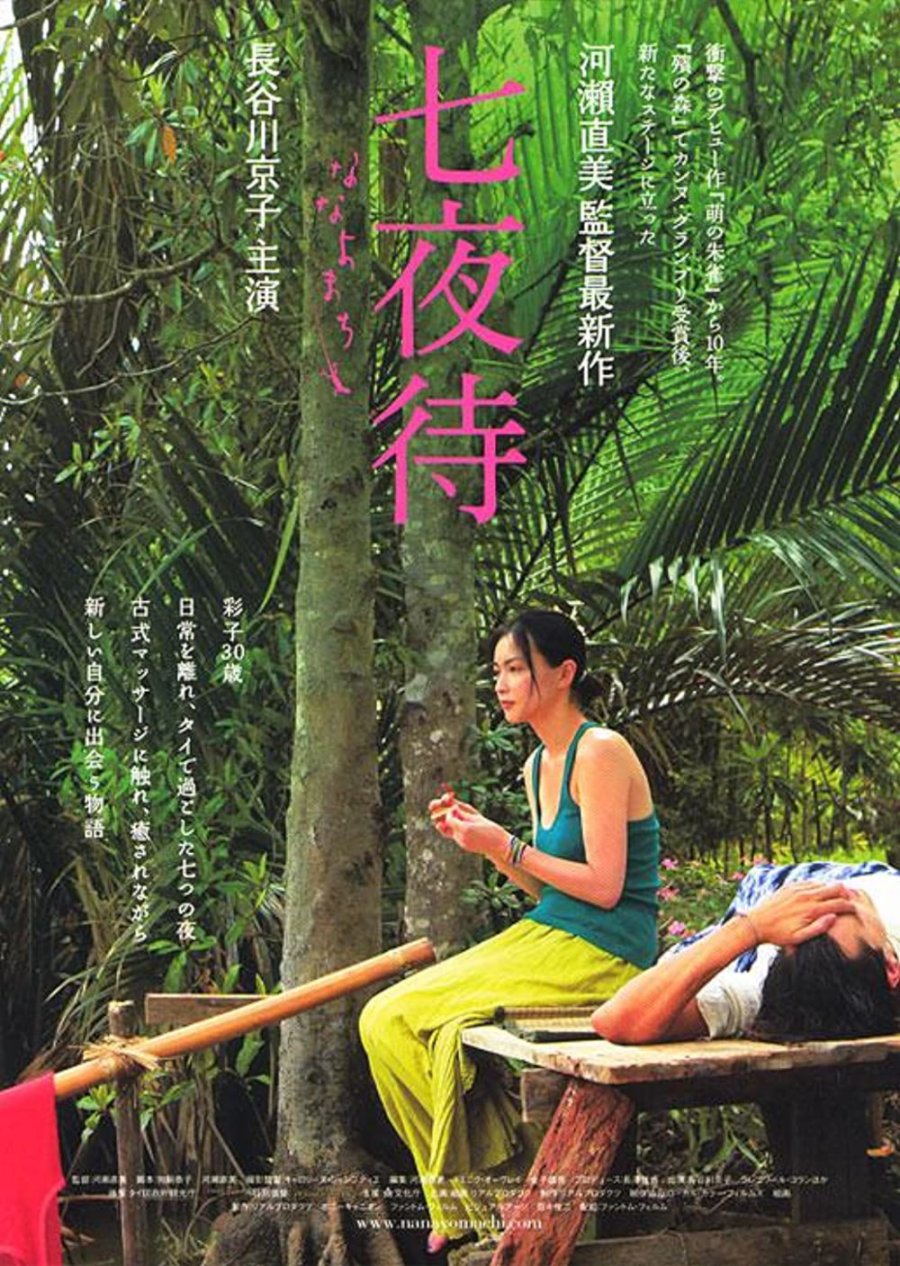
Naomi Kawase had provoked a minor upset with her unexpected Grand Prix win for 2007’s The Mourning Forest and has since earned a reputation as a festival darling. Her followup film, 2008’s Nanayo (七夜待, Nanayomachi), however, failed to make much of an impact in the international festival scene and seems to have been more or less forgotten, considered among the most minor of Kawase’s disparate filmography. In some ways it picks up where The Mourning Forest left off as a young woman looks for meaning in the primitive beauty of nature, but it’s also a major departure in being the first of her films made outside of Japan and dealing with far broader themes from her familiar focus on familial disconnection to oblique references to the traumatic legacies of colonialism and the inefficiency of language as a tool for communication. 

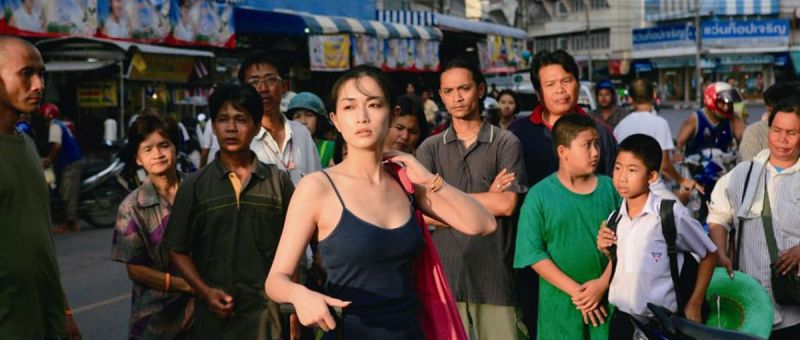
The heroine, Saiko (Kyoko Hasegawa), arrives in Thailand it seems without much of a plan or a clear idea of where she’s going. Largely unable to communicate in any language other than Japanese, she wanders around lost looking for her hotel until someone is able to explain to her that she’s in completely the wrong place, and as the hotel is too far to walk she’d best take a taxi. The taxi driver, however, can’t understand her either but for some reason agrees to take her. Saiko falls asleep and wakes up sometime later to realise he’s driven her out to the middle of nowhere, belligerently insisting she get out of the car. Understandably fearing the worst, she manages to dodge past him and run off into the forest leaving her bags behind. Eventually she encounters a random Frenchman, whom she can’t understand either, who takes her back to the small guest house he’s staying at to learn Thai massage. Later the taxi driver, Marwin (Netsai Todoroki), turns up too and in a weird coincidence it turns out that he’s the brother of the woman running the massage school, Amari (Kittipoj Mankang). 

Despite having no common language, the four of them along with Amari’s half-Japanese son Toi (which in Japanese anyway means “far”) become an odd kind of family, relying on universal human gestures in an effort to communicate. To this extent, it is perhaps a shame that the film is subtitled in that the impossibility of true understanding through verbal communication seems to be a key theme. At one point, Frenchman Greg (Grégoire Colin) opens up to Saiko about his reasons for coming to Thailand, that he’d been in denial of his homosexuality and is finally beginning to accept himself. Perhaps he tells her precisely because she will not understand, but it’s an immense irony that her first question is to ask if the pretty bracelet on his wrist was a gift from a girlfriend. In their shared mix of broken English, she thinks he’s saying “lovely” when he’s really just trying to say that it looks like rain. 

Meanwhile, Amari has some Japanese, presumably learnt from Toi’s absent father of whom she gives no further details. Marwin later implies that she met him through some kind of sex work, and we later see him fall out with his daughter over something much the same in accusing her of being in a compensated relationship with a foreigner while she fires back that it’s none of his business seeing as he failed as a father in proving unable to support her financially. When Saiko makes the perhaps unwise decision to get in Marwin’s cab, it’s in the process of being vacated by a drunk and extremely rude Englishman who yells some vaguely racist abuse at him and then walks off with a Thai beauty. The prevalence of sex work appears as an extension of contemporary colonialism, something of which both Greg and Saiko may be accidentally guilty in coming to Thailand to look for something as nebulous as spiritual awakening, beckoned in by orientalist notions of Eastern mysticism. Amari, while never resenting Saiko, perhaps sees in her an echo of her absent lover, repeatedly asking her son if he’d want to meet his father or to visit Japan. The climactic fight which emerges seemingly out of nowhere is fought over Amari’s decision to send Toi to a temple to train as a monk, affirming that Saiko wouldn’t understand because her country is “beautiful and rich”, explaining that she wants her son to grow up rich spiritually not to be materialistic, though Saiko herself describes Japan only as “peaceful” lacking the warmth that she feels in the Thai people.  

Saiko of course cannot understand because she has absolutely no idea what anyone is saying, realising only that Toi has gone missing and everyone is so intent on arguing in several languages that no one’s bothering to look for him. She doesn’t understand why everyone’s shouting at her when she’s only a bystander, perhaps another comment on the legacy of colonialism, while to Marwin it seems obvious that the boy’s run off because he doesn’t want to be a monk and is sad thinking his mum doesn’t want him anymore. When Saiko finds him, it seems that he’s particularly preoccupied with whether or not his father loved his mother, perhaps beginning to understand the complexities of his birth and his dual nationalities. 

Once again adopting an elliptical structure, Kawase builds slowly towards the scenes which opened the film in which Toi and Marwin prepare to enter the temple as monks, the moment attaining a kind of spiritual catharsis which seems at odds with the conflicts of the preceding scenes which asked if Amari was right to separate from her son and force him to become a monk against his will. The temple scene is followed by a ritual dance similar to that in Shara in which Saiko seems to cast off her gloominess in spiritual release, building on earlier scenes in which she idly fantasised about intimate massages from a Japanese monk (Jun Murakami) apparently achieving an entirely different kind of enlightenment. Touch, Kawase seems to say, is the only true communication, leaving it to former soldier Marwin to expound on how we’re all different and speak different languages but we should love each other rather than kill in war. There is danger everywhere he explains, though Kawase’s gentle pan to the tranquility of life on the wide river might seem to contradict him.  


Trailer (no subtitles)

Connected (保持通話, Benny Chan, 2008)

A kidnapped woman’s only hope is a distant stranger in Benny Chan’s intense thriller, Connected (保持通話). Inspired by 2004’s Cellular, Chan shifts the action to contemporary Hong Kong with all of its global anxieties but eventually insists that we are all in a sense connected and have a responsibility to each other in the face of corrupt authorities and an increasingly selfish society. In contrast to other techno thrillers, technology is not threat but cure enabling unlikely alliances and facilitating justice both legal and emotional as the heroes work together yet apart to unscramble the shady threat that follows them. 

Mainlander and top robotics engineer Grace Wong (Barbie Hsu) is having a fairly normal day dropping her daughter Tinker off at school before heading into work only to be blindsided by an oncoming truck and stolen away to a secret location. With no clue what’s going on she realises the landline in the shack where they’re keeping her is still connected but one of the goons smashes it before she can get through to anyone. Using her engineering skills she’s able to rewire the surviving bits but can only make random connections which is how she ends up getting through to conflicted debt collector Bob (Louis Koo) who has problems of his own as his son, raised by his sister after his wife’s death, is supposed to be emigrating to Australia this very day and will forever lose faith in his father for his constant disappointments if he doesn’t make it to the airport by 3pm. 

Bob’s buried goodness is immediately signalled by his discomfort with his job as he watches the more violent members of crew harass and intimidate a lone woman and her crying children in an ironic mirror of his son and Grace’s daughter both also in tears while pulled into the orbit of vicious outside forces. Though originally reluctant, assuming he’s on the receiving hand of a prank call, Bob soon comes to realise that Grace and also her daughter are in real danger and after an early attempt to enlist the police fails he is the only one who can save her. Nevertheless, he is torn between conflicting responsibilities, this one to a stranger and the other to his son who has entirely lost faith in him because of his broken promises and internalised shame over the nature of his job. He finds himself doing quite extraordinary things to keep both promises which further mark him out as a “good person”, such as firing a gun at the floor to get the attention of a bored shop clerk who’d been trolling him but then insisting on paying the full amount for his phone charger and not even stopping for the change. 

Even so, there’s further conflict on the horizon when it turns out the crooks, led by a spooky Mainlander, are carrying Interpol badges leaving a huge question mark about what’s really going on, who the good guys are in this situation and whose side everyone else is on. Unthinkable in the current cinematic climate, the spectre of police corruption raises its ugly head though despite having failed to respond when originally hailed wronged hero cop Fai (Nick Cheung) eventually jumps into action after noticing something suspicious enabling Bob to fulfil his heroic missions and followthrough on his promises. 

Filled dry black humour, Chan’s worldview is tinged with an irony that also makes its way into the extremely elaborate action sequences including a car chase that later plows through an entire truck of Pepsi Max, and a flirtatious boyfriend who swears to protect his lady love for all eternity only to run off at the first sign of danger. Yet there’s also an idealistic faith in human goodness in Bob and Fai’s refusal to back down in the face of injustice, each of them somewhat revitalised in their quests to rescue Grace whose engineering skills made the whole thing possible in the first place along with her determination of save herself and protect her family. It really is all connected, the intricate, slow burn mystery gradually revealing itself thanks to the growing connection between the heroes, each of them strangers but stepping up when needed unable to abandon someone in danger while refusing to allow corrupt authority to treat their homeland with such contempt.


Original trailer (Traditional Chinese / English subtitles)

Tokyo Sonata (トウキョウソナタ, Kiyoshi Kurosawa, 2008)

Orphaned salarymen are the soulless ghosts haunting an increasingly empty city in Kiyoshi Kurosawa’s eerie tale of urban anxiety Tokyo Sonata (トウキョウソナタ). Undermining the certainty of the traditional family, Kurosawa paints it as a simulacrum dependent on each member playing their respective role blindly or otherwise, though in this case the integrity of the family unit is shaken by an economic intervention in which the accepted rules of the society have been upended with a vindictiveness that seems inexplicably unfair. 

This is the bargain of the salaryman dream. A man like Sasaki (Teruyuki Kagawa) now aged 46 came of age at the tail end of an era of economic prosperity. He was brought up in an atmosphere of jobs for life in which the corporate family was almost more “real” than the emotional which is one reason why it comes as such a shock when his boss effectively divorces him. He’s found someone new, planning to outsource Sasaki’s entire department to China while less than kindly explaining that as he has no other skills he of no more use to the company. Sasaki immediately clears his desk in anger, walking home early with a pair of carrier bags then, after meeting his son in the street, attempting to climb in through an upstairs window to avoid alerting his wife, Megumi (Kyoko Koizumi), to the fact he’s home early.

Sasaki is unable to tell her that he’s lost his job in part because of the acute embarrassment it would cause him. Somewhat dazed and confused, he’s become one of many disenfranchised salarymen who survived the 15 years of economic stagnation only to have the rug pulled out from under them. Being a salaryman was in a way his whole identity and without it he doesn’t know who he is, which is one reason he puts on a suit every day and goes to sit in the park surrounded by other similarly dressed men with briefcases who now seem to haunt the city like crows ominously dotting the horizon. In a repeated motif, Kurosawa shows us people trapped in kafkaesque queuing situations shuffling around buildings while prevented from moving forward but forced to keep pace with the increasingly glacial environment. At the moment an old school friend he runs into, Kurosu (Kanji Tsuda), seems to give up he is swept into a great parade of the suited and hopeless while Sasaki hovers on its edges. 

It’s this threat to Sasaki’s masculine pride which is largely founded on his economic ability to support a family that kickstarts a chain reaction in his home even he becoming increasingly violent and authoritarian in an effort to overcome the sense of humiliation and powerlessness he feels after being made “redundant”. His younger son, Kenji (Kai Inowaki), tells him he wants to learn the piano but Sasaki irritably shuts him down either because he’s now worried about the money or simply sees it as a frivolous waste of time. Later when Megumi asks him why he won’t he change his mind he insists that he has to stick to his original decision otherwise it would undermine his patriarchal authority as a father. 

But this “authority” was perhaps already largely illusionary given that an intense work schedule meant he was rarely home to do much parenting. After finding out Kenji spent his lunch money on piano lessons behind his back he ironically shouts at him for lying and keeping secrets even though this is obviously what he himself has been doing in keeping up the illusion of his identity as a conventional salaryman. His older son, Takashi (Yu Koyanagi), was keeping secrets too his being his desire to join the US military believing that Japan no longer has a future for him in an atmosphere of stagnation not only economic but emotional and spiritual. Takashi tells his mother she should leave Sasaki, but to her question of who would play the role of mother replies that it makes no difference simultaneously encouraging her to reclaim an individual identity and perhaps robbing her of one just as Sasaki lost his in being shorn of his salaryman credentials. 

Lying on the sofa one evening she raises her arms and poignantly asks someone to lift her up but Sasaki has already gone to bed without even looking at her. Her life as a housewife is thankless and emotionally unfulfilling. Donuts she spent ages making go uneaten while her husband and sons brood on their own problems alone. At a car dealership, the salesman shows her a people carrier explaining that it’s perfect for family camping trips while she gravitates towards a red convertible, mesmerised by the way the roof can just disappear as if it were literally freeing her of her stultifying existence. On showing Takashi the shiny new driving license she’s just got as a symbol of her desire for independence, he scoffs that she’ll never use it but she counters him that it’s for “ID” which it is in more ways than one.

The family is imploded, the illusions of a conventional middle-class life upturned as Sasaki and Megumi each ask themselves if there’s a way to start again and escape their sense of middle-aged futility and disappointment. Cracking under the weight of conventionality, the foundations begin to fracture but the family nevertheless finds itself returning if with greater degrees of clarity and perhaps with less inclination to play the play the roles assigned to them rather than those they might wish to play as embodied by Kenji’s moving performance at the piano capturing all of the chaos and confusion of the world around him but finding in it also harmony and a gentle breeze that feels almost as if the city itself were breathing once again.


Tokyo Sonata screens Feb. 18 as part of Family Portrait: Japanese Family in Flux

International trailer (English subtitles)

Sorasoi (そらそい, Katsuhito Ishii, Shunichiro Miki, Yuka Osumi, 2008)

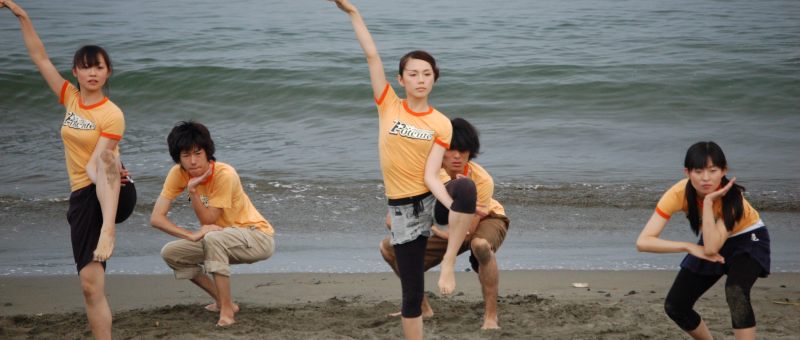
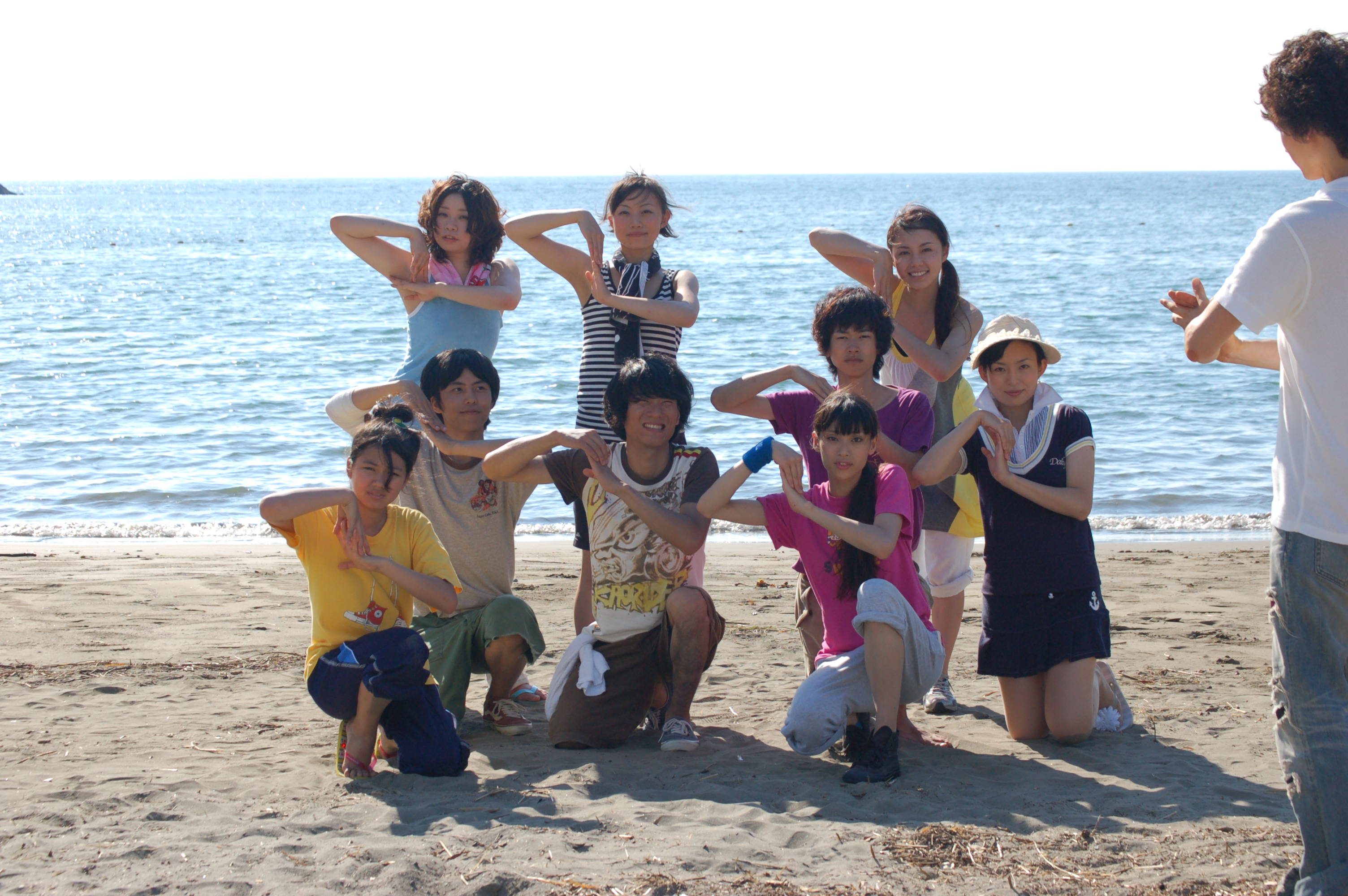
Students on a dance summer camp pick up a few lessons in authenticity and self-confidence while staying in an out of the way coastal hotel in Katsuhito Ishii, Shunichiro Miki, and Yuka Osumi’s goofy comedy Sorasoi (そらそい). Reuniting Ishii and Miki after Funky Forest, the film is less episodic in nature than the directors’ other work and quirky rather than surreal but otherwise offers some of the same lessons as those found in Party 7 as the students begin to discover new things about themselves and others while practicing dance on the beach. 

Led by teacher Tabe (Sota Aoyama) who claims to have been a top dancer with the Royal Ballet before an injury ended his career, the dance team consists of four girls and three boys all of whom Tabe regards as no hopers with little motivation to succeed. A trio of men lounging in donuts floating nearby in the sea gently mock them from a distance, but nevertheless utter a few words of encouragement as they leave the beach. Meanwhile, another young woman, Yuri (Sayuri Ichikawa), arrives to stay at the hotel after approaching the local tourist information office and asking for a reservation at somewhere that isn’t listed in the phonebook. 

Her request may echo that of Party 7’s Miki and her reasoning is similar in that she is clearly hoping to take some time out and doesn’t want to be bothered as evidenced by her decision to ignore missed calls and texts on her phone. The inn owner is forever trying to convince her to travel to a nearby beauty spot named the Cape of Love and its Lovers’ Bell though also dropping in casually that people sometimes take their own lives there which may be irresponsible given Yuri’s ambiguous mental state. In any case, she quickly catches the attention of student Ryu (Ryu Morioka) who begins pursuing her in a friendly if decidedly inappropriate way. 

The three guys tell each other that they’re only doing dance to get girls and that the fact the ones from the dance troupe aren’t interested in them can be excused because they are “different”. Engaging in stereotypically crude male banter one of them later tries to steal the girls’ underwear but as it turns out, at least two of them do actually like dancing and discover new things about themselves in the midst of their romantic pursuits, Ryu’s for Yuri and Atsushi’s (Atsushi Yoshioka) for Kano (Kanoko Kawaguchi ), a mysterious kimono’d woman who arrives to visit. The girls meanwhile are similarly focussed on romance with Ai (Ai Makino) besotted with the grumpy teacher Tabe and Kikka (Kikka) dropping entirely unsubtle hints that she’s in love with the seemingly straight Mako (Masako Satoh) who thinks she’s just playing around. 

They are all, however, keeping some kind of secret mainly because they fear being judged by others whether it relates to their sexuality, having embellished their CV, or having told a slightly bigger lie to help achieve their dancing dreams. What each of them learns is that it doesn’t matter very much if their dancing isn’t very good so long as they enjoy doing it and feel good about spreading that joy to others. Yuri, meanwhile, has some much more grown up dilemmas to consider especially as it transpires she may have been attempting to escape an abusive relationship with a degree of pressure placed on her from various directions to return because her boyfriend is “really a good guy” who made a “mistake” in a momentary fit of temper which is a fairly dated and uncomfortable sentiment to see presented so uncritically even in 2008. Nevertheless, the sense of discomfort is somewhat undercut in a counter courtship from Ryu who offers a sweet and romantic note that leaves the ball entirely in her court. 

In the best tradition of summer break movies, the film’s relaxed atmosphere adds to its laidback charm as do the unfussy indie visuals while the enthusiastic performances from a largely amateur cast of students from Ishii’s acting school (bar the participation of Warped Forest’s Fumi Nikaido and Ryu Morioka) reinforce the central messages of working hard at something you love whether it goes anywhere or not. The mutual solidarity of those around them with similar dreams affords the students the confidence to be more of who they are while clarifying what it is they may actually want out of life even if for some the future still seems uncertain.


Sorasoi is released in the UK on blu-ray on 17th July as part of Third Window Films’ Katsuhito Ishii Collection.

Original trailer (English subtitles)

Happy Flight (ハッピーフライト, Shinobu Yaguchi, 2008)

“We’re part of a whole system” the chief mechanic insists with exasperation, irritated with an employee being too thorough, “what if this delays departure?”. Best known for ensemble comedies, of which Happy Flight (ハッピーフライト) is one, Shinobu Yaguchi had originally envisaged a disaster movie only to change tack realising that aircraft accidents really are (thankfully) extremely rare and the backstage workings of an airport might well lead themselves to comedy. Even so, it’s perhaps surprising that sponsor airline ANA who were apparently heavily involved in the project allowed themselves to be seen in a less than perfect light even if their pilots and ground staff do indeed save the day when potential disaster strikes. 

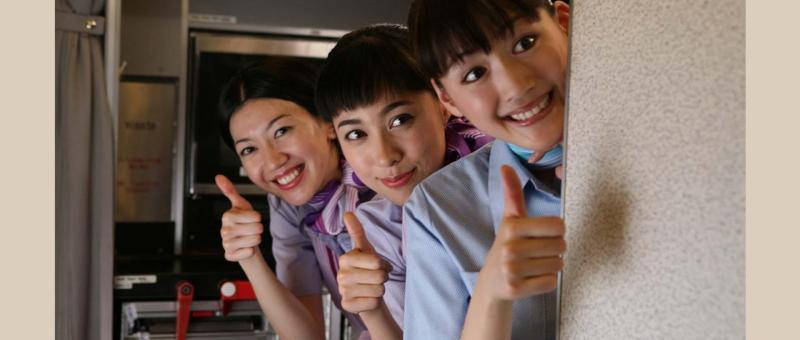
Like any good farce, Yaguchi throws just about every potential problem into one basket beginning with the fact that this flight to Honolulu is the final exam for co-pilot Suzuki (Seiichi Tanabe) who is hoping to earn a promotion to captain though a disastrous performance in the simulator may have dimmed his expectations. It’s also the first flight for chirpy air hostess Etsuko (Haruka Ayase) still harbouring some delusions about the glamour of the flight attendant life while the plane itself is late in and technically speaking needs a couple of repairs though the airline is already a little jumpy about the number of delays impacting their services recently and the chief mechanic thinks some of them can wait. A junior engineer takes it on himself to change a part and incurs the wrath of his boss for taking to long, but is perhaps privately worried he didn’t do it properly and later alarmed when the plane runs into trouble worried that his missing wrench might be the cause. Aside from the pressing typhoon, the other problem is a flock of annoying seagulls normally taken care of by an old man nicknamed “bird guy” who warns them off with a shotgun only today he’s been accosted by the “bird lovers alliance”, while the airport is also surrounded by a bunch of obsessive aviation enthusiasts recording every detail and uploading them online. 

If something can go wrong then it will, as it does when the backup sensors stop working leaving the pilots flying blind, but even before that consumer aviation is first and foremost a customer facing business with the airline concentrating on ensuring that passengers have a good experience so they don’t lose their business to a rival. That’s one reason they’re so paranoid about avoiding delays, but also find themselves dealing with aggressive passengers each intent on receiving individual attention forgetting for a moment that the plane is full of other people who also have needs and demands. Still learning the ropes, Etsuko struggles to understand her place in the machine only to redeem herself later through a little lateral thinking following a culinary disaster while becoming quietly disillusioned with the unexpectedly stressful side of her otherwise glamorous profession. Meanwhile stern purser Reiko (Shinobu Terajima) gives them all a masterclass in deescalating an entitled customer’s rage by stroking his ego with some well-placed psychology. 

This being a comedy it all turns out alright in the end even if Suzuki has undergone something of a baptism of fire and Etsuko has had her eyes opened to the reality of the flight attendant life. Despite everything going wrong at the same time, it goes right when it needs to thanks to the teamwork and dedication of the disparate team from the guys in the air control weather department to the scrambling ground staff arranging meals and accommodation for passengers unable to reach their destination. There’s even the hint of a happy ending for check in supervisor Natsumi (Tomoko Tabata) who was dead set on quitting her job because it doesn’t afford her any opportunities to meet nice guys, while what it does seem to largely contain is fending off the three teenage aeroplane enthusiasts who hang out in arrivals and dealing with various passenger crises. They are indeed all part of whole system, and that’s good and bad in that they all feel under pressure to get planes in the air on time which perhaps encourages them to overvalue efficiency at the cost of safety, but also makes it easier to spring into action in order to fend off a crisis should one occur so that everyone can have a “happy flight” blissfully ignorant of the minor panic under the bonnet of this not so well oiled machine. 


Happy Flight streams until 27th February in several territories as part of Japanese Film Festival Online 2022.

International trailer (English subtitles)

Gu Gu the Cat (グーグーだって猫である, Isshin Inudo, 2008)

Gu Gu the cat posterJapanese cinema has long been in love with the local flavour movie. It may be true that many otherwise fantastic examples of the small subgenre have a “sponsored by the tourist board” aesthetic, but then the pure “furusato” love is usually genuine enough and often proves infectious. Gu Gu the Cat (グーグーだって猫である, Gu Gu Datte Neko de Aru) is a case in point in its fierce determination to sell the benefits of trendy Tokyo suburb Kichijoji – an upscale bohemian neighbourhood well known for being home to artists and dreamers who take care to foster the kind of hometown spirit you wouldn’t normally associate with city living. The film is also, however, the story of a struggling middle-aged mangaka who is forced to deal with a long delayed existential crisis after her elderly cat passes away.

Ça Va had been living with Asako (Kyoko Koizumi) for the last 15 years but passed away while she and her team were working flat out on a special Christmas issue. Asako is of course devastated and not least because she feels guilty that perhaps she was too busy to notice that Ça Va was ill until it was too late. According to her assistant Naomi (Juri Ueno), Asako’s career had been faltering even before Ça Va passed away – the Christmas issue had been the only thing she’d produced all year leaving her team of assistants out of pocket and worried for the future. Grief-stricken as she is, Asako eventually decides to get a new cat, Gu Gu, enabling a rebirth in her professional as well as personal lives.

Based on an autobiographical story by mangaka Yumiko Oshima, Gu Gu the Cat wastes no time in reminding us that being a mangaka is a precarious business. Asako is well acclaimed as an artist and has inspired countless young women with her shojo manga (Naomi not least among them) but is still pressed into working insane hours to meet publication deadlines and is constantly badgered by her publishing company to provide new material. Her mother (Chieko Matsubara), meanwhile, just wants her to settle down and get married before it’s “too late”.

Asako’s mother’s nagging may seem like the usual kind of conservatism that is a little embarrassed by an unmarried middle-aged woman, as well as with the idea of a woman having a career and especially in manga which is a “popular” art and therefore less respectable than literature or painting. It is also, however, born of knowing her daughter and seeing that there is a part of her that hasn’t quite matured thanks to working on manga all her adult life which has left her feeling isolated and lonely in a way a cat might not be able to satisfy. This is perhaps why potential love interest Seiji (Ryo Kase) describes all her manga as “sad”, and why Asako is somewhat uncomfortable with being treated as a “famous author” rather than as a person.

Gu Gu the cat takes a back seat to most of the action (as cats are want to do) but does help engineer a meeting with Seiji who, despite being much younger than Asako, begins to reawaken in her a sense of desire if not exactly for romance then perhaps for life. Following a familiar pattern, however, Asako re-channels that desire into her manga – coming up with an idea in which a teenager suddenly grows old, neatly mirroring her sudden sense of having become “a woman of a certain age” overnight without really noticing. Having lost Ça Va, Asako attempts to come to terms with lost time in accepting that many choices have already been made and opportunities lost. In that sense there is something sad in Asako’s decision to remain alone in knowing that in the end she lost love because she was too timid to claim it, but then, the answer isn’t new romance but an acceptance of being happy in the present in the knowledge that things change and people leave but it will all be OK in the end.

Based on Oshima’s real experiences, Inudo’s film takes a turn for the melodramatic towards its conclusion which feeds back into his “live every day” message but is perhaps a little heavy for the cheerful slice of life drama surrounding it. Likewise, his strange decision to sell the joys of Kichijoji (which appear to be many) through an American Eikaiwa teacher narrating a journey through the area in the manner of a TV programme aimed at tourists is a particularly strange one which in no way benefits from its surreal plot revelation. Nevertheless, Gu Gu the Cat is a warm and affectionate tribute to this seemingly warm and quirky area which acts as a kind of coming of age story for its middle-aged heroine who, in a sense, births herself in coming to an acceptance that life goes on and the best you can do go along with it for as long as you can.


Original trailer (English/Chinese subtitles)

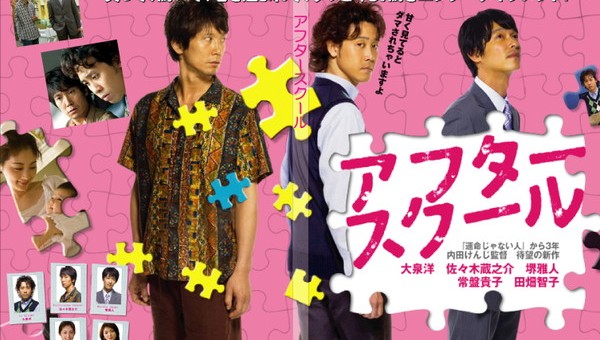
After School (アフタースクール, Kenji Uchida, 2008)

after school posterKenji Uchida is well known for intricately constructed farces but he takes intrigue to new heights in After School (アフタースクール), allowing a mid-way twist to completely reverse everything you thought you knew. Yet at heart Uchida’s film is as uncynical as it’s possible to be even when our heroes find themselves embroiled in a large-scale conspiracy of corporate corruption, organised crime, and police machinations. What begins with a confession spirals outwards into a complicated web of deception and counter-deception proving it really is all connected, even if not quite in the way you first thought.

A salaryman, Kimura (Masato Sakai), enters a reverie staring at the pregnant woman (Takako Tokiwa) sitting opposite him over breakfast, flashing back to a breezy middle school day when she (presumably) nervously handed him a letter.  Kimura leaves for work and borrows the fancy Porche belonging to his high school teacher middle school friend, Jinno (Yo Oizumi), to go to a work meeting in Yokohama. While he’s away the woman goes into labour leaving Jinno to take care of everything but alarm bells start ringing when no one can reach Kimura the following morning. Meanwhile, Kimura has been seen with a mysterious woman at a hotel which seems to have right royally spooked his bosses who have hired a shady private detective, Kitazawa (Kuranosuke Sasaki), to track Kimura down. Kitazawa thinks his best bet is to start at Kimura’s old middle school – which is where he runs into Jinno who agrees to help look for his friend.

As might be assumed, all is not quite as it seems. Shady PI Kitazawa is in deep with the yakuza to whom he apparently has massive gambling debts. At a low ebb, he decides to ask his male assistant to run away with him to Sapporo (which he agrees to do) but this case just might be his salvation, especially once he works out that both ends are connected and he could technically double his pay out with a little strategic blackmail. Kitazawa is as cynical as they come. He thinks nothing of invading Kimura’s life and is fully prepared to make use of Jinno’s seeming innocence, claiming that naivety and pureheartedness make him sick. Later he attempts a pathetic act of petty revenge against Jinno for no real reason that could have ruined his entire life but instead ends up another cog in the grand wheel of Uchida’s finely crafted farce.

Kitazawa’s cynicism is eventually what leads to his downfall. His detective brain so wired for motives and gains is unable to process the idea that some actions are merely altruistic and offer no further reward than the pleasure of helping a friend. Jinno, at first a goofy school teacher with an improbably expensive car, soon becomes the film’s MVP and the only still point in a constantly turning world. Taken to task by Kitazawa for his continuing goodness, Jinno offers a perfectly schoolmasterly reply to the effect that there’s a snotty kid like him in every class, sneering away too cool for school and decrying everything as boring when really the problem isn’t school, it’s Kitazawa.

What eventually looked like a sordid affair turns into a beautiful romance as the truth is gradually revealed. The title refers not just to the setting of the initial flashback, but also to the entirety of adult life. Jinno’s innocence and goodness are belittled by Kitazawa who accuses him of being stuck in middle school with a childishly naive way of seeing the world. This is in a sense true, Jinno has never lost his childlike sense of justice and fair play, willing to go great lengths to help his friends even if it puts him in danger and forces him into some sticky situations which are not his natural milieu, but Jinno’s faith and loyalty are the qualities which eventually see him through and make possible the poignant, hopeful ending despite all that has gone before. Corrupt politicians preaching “family values” whilst associating themselves with dodgy corporations who are taking back handers from the yakuza, hidden policemen, shady PIs – there’s certainly a lot of darkness here but if anything is going to beat it, it’s sincerity and goodness rather than guile and cunning.


Screened as part of the Japan Foundation Touring Film Programme 2018.

Screening again:

  • Queen’s Film Theatre – 18 February 2018
  • Filmhouse – 6 March 2018
  • Showroom Cinema – 18 March 2018

Original trailer (no subtitles)