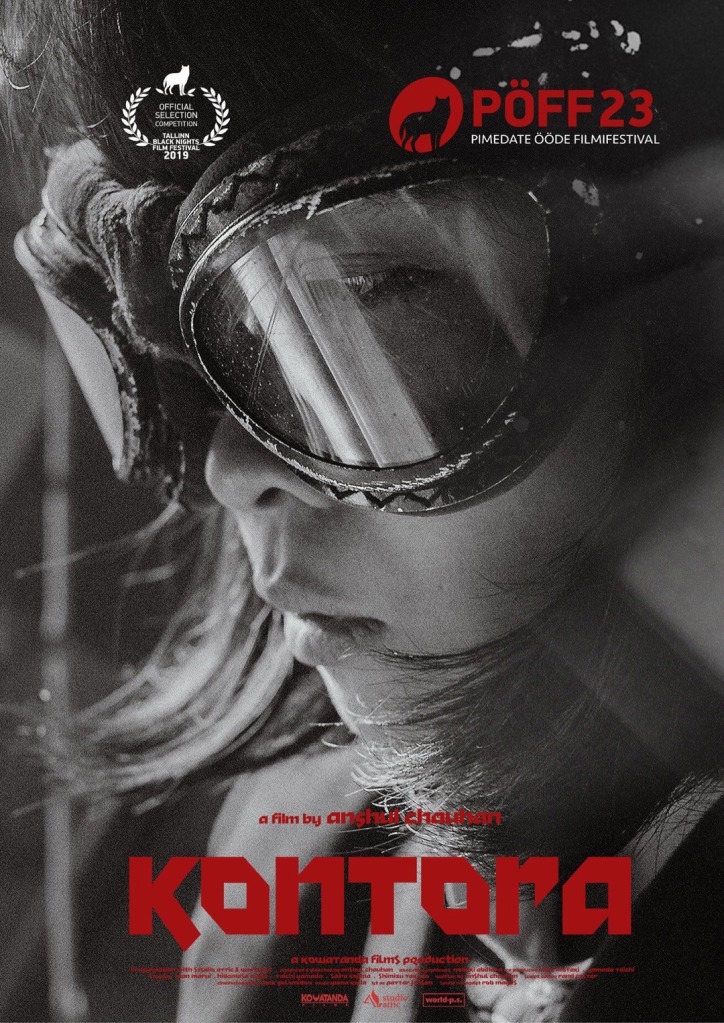
Kontora (コントラ, Anshul Chauhan, 2019)

Copyright © 2020 Kowatanda Films

Life is a series of oppositions, the past conflicting with the future, the young with the old, selfishness with altruism, but without conflict there can be no sense of forward motion. That’s largely where the heroine of Anshul Chauhan’s second feature Kontora (コントラ) has found herself, stuck in a “one horse” town with no sense of excitement, longing for the bright lights of Tokyo while fiercely rejecting her distant father in favour of gentle companionship with her compassionate grandad. It’s not until after he passes away, however, that she begins to realise there were things in his life that he was never able to tell her. 

Teenager Sora (Wan Marui), in her final year of high school, discovers this on finding her grandfather’s body. Understandably panicked she looks over the box of World War Two mementos he appeared to have been poring over just before died and hurriedly hides them so her father (Takuzo Shimizu) won’t see. After the funeral she finds herself fondling his old pilot’s helmet and goggles while reading his war diary, filled with beautifully drawn illustrations and terrible memories of torture and privation. Writing such a diary must have been quite a risk, seeing as Sora’s grandfather recounts only fear and dissatisfaction, envious of the young men who failed the draft and got to continue with their student lives while he is lonely and desperate but claims no longer to be able to understand love. For Sora, however, the most important thing is that her grandfather mentions burying his “metal arm” in the forest. She commits herself to finding it, bunking off school to go digging on a nearby mountain. 

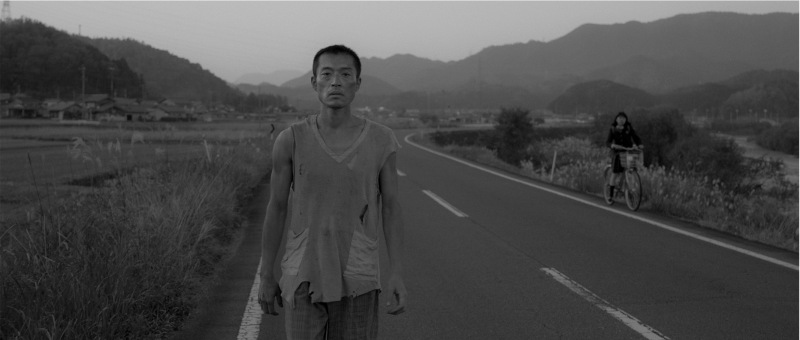
Meanwhile, she also begins spotting a strange young man (Hidemasa Mase) around town who is dressed in rags and seemingly can only walk backwards. The man enters her life in a more concrete sense when he literally collides with her father’s car while the pair are returning from a fairly disastrous family dinner over which her father’s cousin Yoshiji (Takuzo Shimizu) had made an inappropriate bid to get him to sell the family home so he could use it to house workers at his factory, even offering to give Sora a job to make sure she’s looked after. Questioned about her future plans, Sora had mentioned hoping to go to Tokyo, which comes as a shock to her dad and is abruptly shutdown by Yoshiji who can’t see what the point in that would be. His own daughter, Haru (Seira Kojima), went to Tokyo to become a dancer but seems to have returned somewhat chastened and now works in his factory, as if proving his point that there is no future for girls like Sora other than shifting straight into small-town life seconds after graduating high school. 

Sora’s dad leaves the gathering drunk and angry, which is why his first thought is abandoning the injured man on the roadside so he won’t have to deal with a drunk driving charge. Sora, however, refuses to abnegate her responsibly and insists on making sure the man is OK, leading to a compromise in which they take him home to monitor overnight. Still unconvinced, Sora’s dad kicks him out in the morning, but Sora chases him down and brings him back, dressing him in grandad’s clothes and stunned when she hears him singing one of grandad’s songs. 

The man’s presence highlights a key difference between Sora and her distant father. Sora is intrigued and unafraid, she tries to talk to the man and is very interested to find out why he only walks backwards but is also accepting of his silence. Her father meanwhile sees only danger. His first thoughts are only to expel the man by whatever means possible, eventually jumping to conclusions born of prejudice that he may have somehow harmed Sora. Sora, meanwhile, jealously keeps the diary to herself, never sharing her newfound quest with her father until forced into the open at which point she tells him that the diary had given her life a sense of purpose that she was reluctant to share with anyone else. Secrets revealed, the rift between father and daughter begins to heal while the mysterious man looks on in silence, perhaps knowing that grandad had other messages to give that are still waiting to be uncovered. 

Strangely, no one seems to stop to consider that grandad may have buried his “metal arm” for good reason, and that it should perhaps stay that way (especially if a heartless arch capitalist like Yoshiji ends up getting his hands on it). Nevertheless, unearthing the buried past begins to solve the mystery of grandad and enable a kind of healing. The man keeps walking round and round in circles, backwards as if walking against the future, caught on a treadmill of repetitive anxieties and unable to move forward. Sora may be at that point herself, stuck in a moment of adolescent confusion unable to step into adulthood and having lost her only guide and confidant. It may be, in some ways, troubling that she finds her direction through embracing a violent past, but there is indeed a moment of healing in two eras meeting which allows time to reassume its proper flow. Ethereal and mysterious, Kontora is both coming-of-age tale and a melancholy fable of griefs both national and personal in which forward motion is possible but only in facing the past head on and waving it goodbye as you turn around to walk towards a more positive future.


Kontora screens on March 12/13 as part of this year’s Osaka Asian Film Festival.

Original trailer (English subtitles)
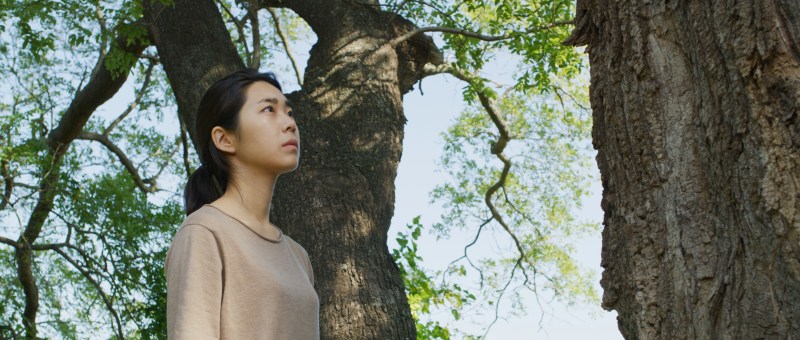
Way Back Home (비밀의 정원, Park Sun-joo, 2019)

Can you ever really “move on” from trauma, or do you simply have to learn to live with it? The heroine of Park Sun-joo’s Way Back Home (비밀의 정원, Bimil-eui Jeong-won) thought she’d made peace with the past by trying her best to forget it, but an unwelcome intrusion reminds her that it’s not only the echoes of something terrible that happened to her when she was very young that shaped her life, but everything that happened afterwards. Now preparing to move into a new phase, she realises that in order to start a new family she’ll have to repair her fractured relations with the old. 

As a high school student, Jeong-won (Han Woo-yun) was abducted and raped by a stranger who was never caught. 10 years later, she’s in her mid-20s and is preparing to move into a family home with her husband, Sang-u (Jun Suk-ho), a carpenter who works with her uncle (Yoo Jae-myung) and aunt (Yum Hye-ran) in their studio while she also has a job as a swimming instructor. The couple are currently trying for a baby, but Jeong-won recently had a miscarriage and fears that the assault may have affected her ability to bear a child despite the doctor’s assurances that there is nothing medically wrong. Then, she gets an unexpected phone call from a detective in her hometown informing her that they’ve had a hit on the DNA from her case and think they’ve caught the man who raped her but need her to come in and verify a few details. 

Not really wanting to revisit the past she’d convinced herself she’d moved on from, Jeong-won ignores the policeman’s calls but after he contacts her mother (Oh Min-ae) and turns up at her door, alerting Sang-u, she has no choice but to face the matter head on. Sang-u is understandably blindsided, not quite sure how to deal with this very sensitive new information, wanting to be there for his wife but frustrated that she doesn’t seem to want him involved. He tries to talk to her about it, but she flatly explains that it’s not something she’s prepared to discuss with him. 

Intellectually understanding that his wife needs space, Sang-u can’t help but feel shut out, hurt that Jeong-won doesn’t feel comfortable allowing him into this extremely vulnerable space. Jeong-won begins to pull away, pretending that everything’s fine, getting on with packing for their move as if nothing had happened. Meanwhile, he begins to piece things together, realising that her past trauma must have something to do with her strained relationships with her mother and So-hui (Jung Da-eun), the younger sister she always seems to be reluctant to see. 

The traumatic event in itself is not the central source of Jeong-won’s suffering but the sense of rejection she felt from her family along with an internalised shame. Jeong-won’s mother sent her to live with her uncle and aunt because she thought it might be easier to move on in a different environment, but all Jeong-won felt was that her family no longer wanted her around. Jeong-won’s aunt thinks the reason she doesn’t want to see So-hui, who is around 10 years younger and therefore around the age she was at the time of the attack, is resentment in feeling that her mother sent her away to protect her younger sister from the social stigma of being involved with a case of sexual assault, but as might be expected the situation is far more emotionally complex than anyone is able to intuitively understand. 

So-hui, meanwhile, is also hurt, travelling to the city on her own to make sure her sister is alright because she isn’t answering her calls. Fearing rejection, Jeong-won distances herself from Sang-u, mourning the relationship she had with him which was founded partly on the fact he didn’t know and therefore existed in world in which the assault had never happened. She resents being worried over because other people’s concern only reminds her of her victimhood. During his summing up at the trial, the prosecution lawyer argues that Jeong-won’s life stopped in 2008 while her attacker went on living guilt free, leaving her to suffer alone. Jeong-won might not quite agree with that assessment, she thought she’d moved on and lived an otherwise happy, normal life despite the terrible thing which happened to her, but if she wants to move forward she will indeed have to face not only the source of her trauma but the familial fracturing which followed it, finding the way back home through emotional openness and understanding along with a willingness to be vulnerable in a place of safety.


Way Back Home screens on March 11/15 as part of this year’s Osaka Asian Film Festival.

Original trailer (English subtitles)
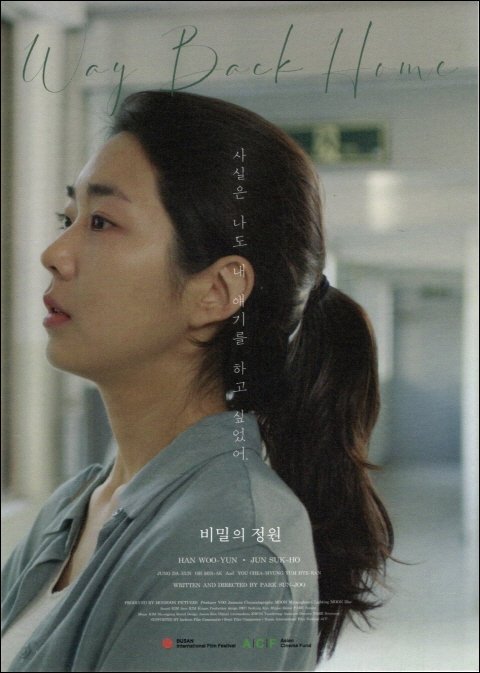
Introduction to the film by director Park Sun-joo from the Busan International Film Festival (activate English subtitles from the subtitle button)

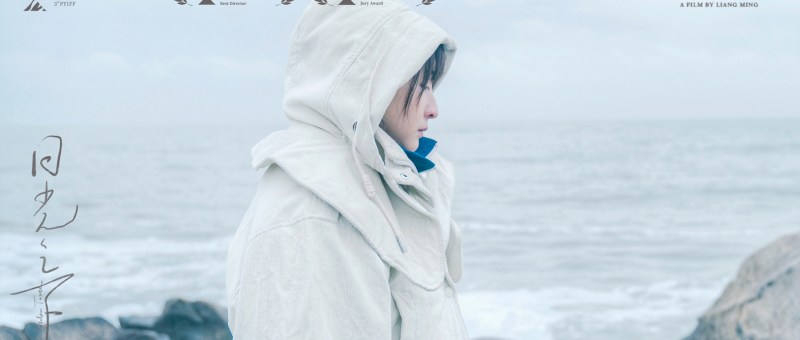
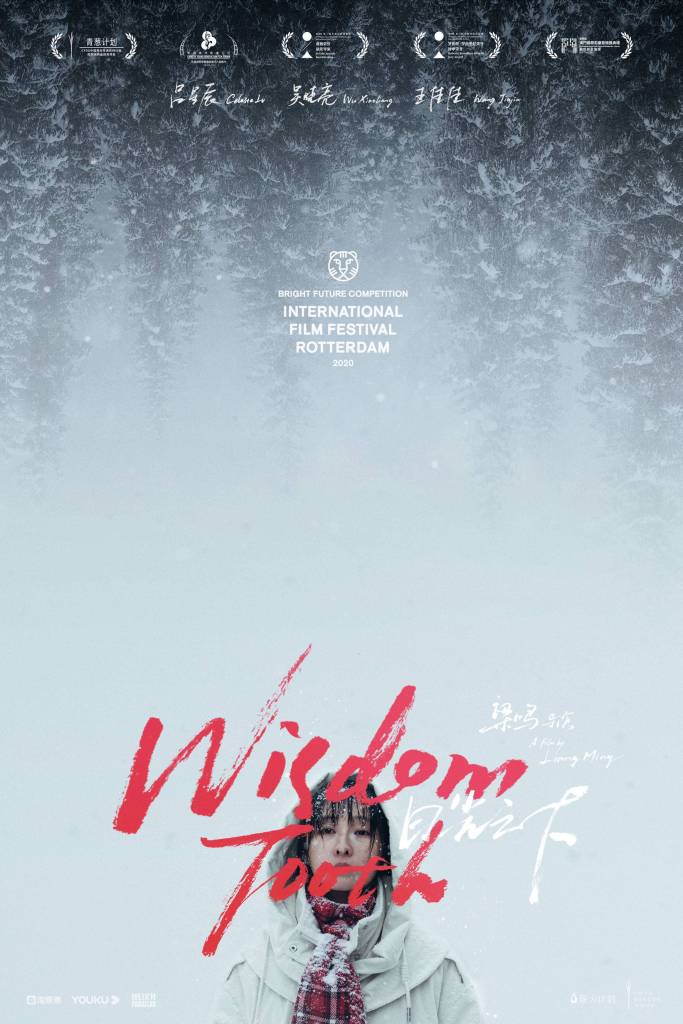
Wisdom Tooth (日光之下, Liang Ming, 2019)

A young woman rides the waves of changing times in Liang Ming’s Wisdom Tooth (日光之下, Rìguāng Zhīxià). Perhaps innocence is something slightly painful you’re better off without, but awakening to life’s light and shade can be a difficult process. Gu Xi (Celeste Lv) is suffering with a dull ache in her jaw and the solution is, apparently, merely pain killers but you can only numb yourself so long before you have to make a choice of whether to go on living with the pain, or free yourself from it. 

A young, if slightly immature woman, Gu Xi has a job in a local hotel and lives alone with her half-brother, Gu Liang (Wu Xiaoliang), who, until recently, has eked out a living as a fisherman. A recent oil spill revealed to have occurred some time ago but covered up by the authorities has put paid to that, while Xi also finds her job under threat because she has an undocumented status and there is shortly to be some kind of inspection. Having grown up without a mother and entirely ignorant of who her father might have been, Xi feels acutely anxious about her circumstances and is dependent on Liang for a sense of security. It is therefore unsettling for her when he develops an interest in the sophisticated Qingchang (Wang Jiajia), daughter of local mob boss Zhou (Chen Yongzhong) and a recent returnee from South Korea where she had been living with her mother. 

A mirror image of Xi, Qingchang is everything she she’s not. Xi is well known for wearing her brother’s clothes, dressing like a tomboy for reasons that are a combination of poverty and affection, where Qingchang has wardrobes full of the latest fashions brought back with her from overseas including a beautifully crafted Hanbok featuring an elaborate embroidered design. As much as she’s resentful and intimidated, Xi can’t help admiring the slightly older woman, captivated by her sense of self assuredness, and eventually develops a sisterly bond with her even while fearing that she may steal her brother away. 

A further intrusion, however, disrupts their tentative familial bonding. A fisherman found dead and floating on the sea hints at a burgeoning turf war between local bosses Zhou, Qingchang’s father and Liang’s employer now that he’s taken a job as a security guard at the docks, and Jiang (Tao Hai), a melancholy Christian who owns the hotel where Xi had been working. Though warned by others that Jiang seemed “creepy”, Xi feels indebted to him because her job at the hotel was saved after she approached him to intervene. Her habit of recording the conversations around her to listen to later presents her with a problem when she discovers that Zhou may have bumped off the fisherman himself and is planning to frame Jiang for the crime. Jiang, it seems is also receiving protection money to ensure the fishermen’s safety, apparently a promise he wasn’t able to keep. Xi is pulled three ways. She loses confidence in Qingchang who is now both tainted by association and a figure of mild discomfort, while fearful that if she reveals what she knows, serves justice and repays a debt by clearing Jiang, she will ruin her brother’s happiness and risk his rejection. 

Trapped in he realms of childhood, what she most wants is to preserve her status quo. Liang is everything to her – brother, father, and somewhat uncomfortably a figure of romantic impossibility. Her feelings towards Qingchang are mired in complexity, a nascent attraction perhaps underlying her sense of jealousy either misdirected through her complicated feelings for her brother or simply finding its anchor for the first time. An angry speech at her brother’s birthday party during which she inappropriately reads out a semi-explicit passage from a lesbian novel hints at an attempt to resolve an attraction she feels is taboo, though it is unclear for whom it is directed. As with most young people, she must come to an accommodation with the fact that her world is changing. A childhood promise that she and her brother would never marry, preserving their family of two forevermore, was always unrealistic but she struggles to let go of the idea of permanence in a childish sense of familial security. Like the oil polluting the seas, her world is coloured by uncertainties but like anyone else she discovers that her agency is limited and whatever choice she makes others will make their choices too. That dull ache in her jaw is a reflection of the ills of the world around her, an inconvenient tooth that needs to be plucked out and discarded leaving only the cold comfort of adult wisdom behind in its place. 


Wisdom Tooth screens on March 11/14 as part of this year’s Osaka Asian Film Festival.

Yellow Ribbon (당신의 사월, Ju Hyun-sook, 2019)

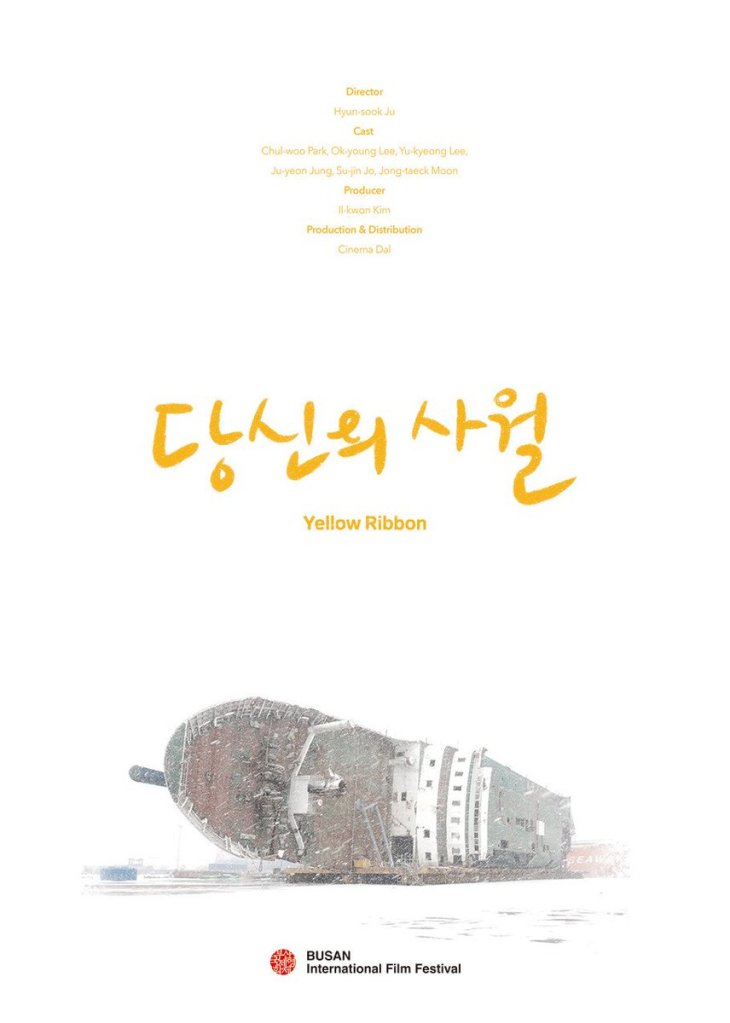
On 16th April, 2014, a ferry en route from Incheon to Jeju Island sank taking the lives of 304 passengers many of whom were high school students on a school trip. The Sewol Ferry Disaster went on to have wide-scale political ramifications, eventually feeding into the discontent with the government of Park Geun-hye who, it was discovered, had been uncontactable for seven hours during the height of the crisis, later refusing to account for her whereabouts. Ju Hyun-sook’s documentary Yellow Ribbon (당신의 사월, Dangsin-eui Sawol) is, in some senses, usual in that it follows not those directly bereaved by the tragedy but those caught on its edges, ordinary men and women who find themselves haunted by national trauma. 

What each so clearly recalls is the sense of helplessness that they felt as bystanders watching from the shore. All of them believed the passengers would be rescued, no one envisioned a tragedy unfolding, and so they were lulled into a false sense of security by the media’s mistaken reports that everyone had been saved. Fisherman Lee Ok-young was among the first to realise that the information being given out by the media was incorrect when he sailed out towards the ferry and saw the shadows of those trapped inside. In fact, many of those who were rescued from the wreck were saved by good samaritan boats who came to help, Korea’s coastguard didn’t show up until 40 minutes later. Ok-young is, however, among the most directly affected, later finding the body of one of the students caught on a rope he was using for seaweed farming. 

Ever present in the background, usually taking photos, is the young woman’s father – a constant reminder of the scale of the tragedy. It was dignity of the families which first struck Park Cheol-woo, the owner of a coffee shop in Korea’s political centre near the presidential residence of the Blue House. Hearing that the families were due to make a visit, he felt very strongly that they must be protected. Jung Ju-yeon, a woman in her 50s working in human rights education, felt something much the same and decided to participate in the protests alongside the bereaved parents in a show of solidarity. 

The government, meanwhile, continued to pursue its authoritarian line allowing pundits to brush off the disaster as no different from a traffic accident while trying the shame the protestors into silence. Hoping to blacken his name, the conservative press discredited a hunger striking father by bringing up the fact he was divorced, as if lying the tragedy at his own feet in an attempt to deflect the government’s responsibility for the failure to protect the children. The sense of abnegated responsibility is something which continues to weigh on teacher Jo Su-jin who finds herself meditating on the selfless teachers who sacrificed their lives trying to save their students. She wonders what she would have done in their position, reflecting on the choices which must have passed through their minds knowing that they too had family waiting for them.  

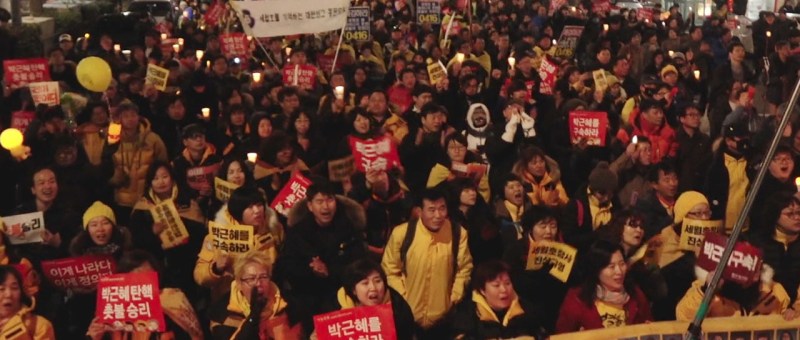
Park Cheol-woo wishes he could forget, but is haunted by the spectre of the tragedy, as is the husband of Jung Ju-yeon who was hired to create a series of illustrations and forced to relive the pain and suffering of all who were involved. The weight of indignation eventually fed into the Candlelight Protests which ultimately brought down the government of Park Geun-hye but the feelings of helplessness have not dissipated because justice has not been served and too many unanswered questions remain. There are no explanations for the confluence of circumstances which allowed the tragedy to happen, nor for the failure of authority which proved itself incapable of protecting its citizens.

Yet there are signs of hope. Lee Yu-kyeong was a high school student herself when the tragedy occurred, watching helplessly on a TV screen as hundreds of other kids just like her lost their lives. They trusted the authorities to protect them and they did as they were told, but the authorities let them down. Lee Yu-kyeong is now an archival studies student, hoping to contribute by honouring their memories, making sure they are never forgotten so that nothing like this ever happens again. Yellow Ribbon is a document of national trauma, but also perhaps of healing as those touched by tragedy attempt to look forward by building a safer society founded on a sense of mutual protection. 


Yellow Ribbon screens in Amsterdam on March 6/8 as part of this year’s CinemAsia Film Festival.

Trailer (English subtitles)

Introduction by director Ju Hyun-sook from the Busan International Film Festival (activate English subtitles by pressing subtitle button)

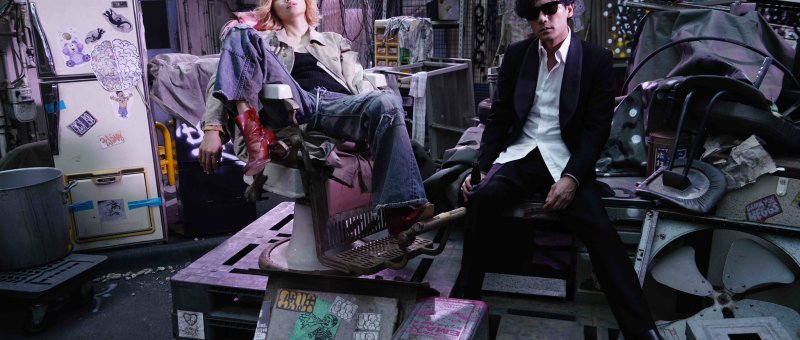
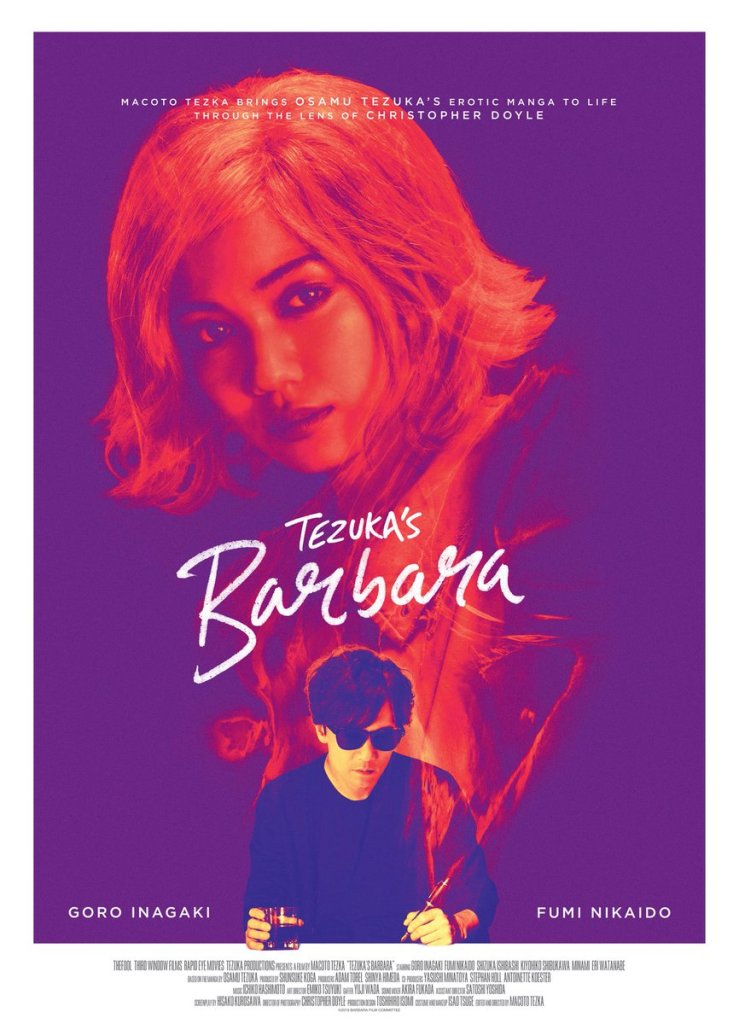
Tezuka’s Barbara (ばるぼら, Macoto Tezka, 2019)

The relationship between an artist and his muse (necessarily “his” in all but a few cases) is at the root of all drama, asking us if creation is necessarily a parasitical act of often unwilling transmutation. Osamu Tezuka’s Barbara (ばるぼら), brought to the screen by his son Macoto Tezka, takes this idea to its natural conclusion while painting the act of creation as a madness in itself. The hero, a blocked writer, describes art as a goddess far out of his reach, but also the cause of man’s downfall, framing his creative impotence in terms of sexual conquest that lend his ongoing crisis an increasingly troubling quality. 

Yousuke Mikura (Goro Inagaki) was once apparently a well regarded novelist but has hit a creative block. While his friends and contemporaries are winning awards and national acclaim, he’s become one of “those” writers busying himself with potboilers and eroticism to mask a creative decline. Passing a young woman collapsed drunk in a subway, something makes him stop and turn back. Surprisingly, she begins quoting romantic French poetry to him, and actually turns out to be, if not quite a “fan”, familiar with his work which she describes as too inoffensive for her taste. Mikura takes her home and invites her to have a shower, but later throws her out when she dares to criticise an embarrassingly bad sex scene he’s in the middle of writing. Nevertheless, he’s hooked. “Barbara” (Fumi Nikaido) becomes a fixture in his life, popping up whenever he needs a creative boost or perhaps saving from himself. 

Strangely, Barbara is in the habit of referring to herself using a first person pronoun almost exclusively used by men, which might invite us to think that perhaps she is just a manifestation of Mikura’s will to art and symbol of his destructive creative drive. He does indeed seem to be a walking cliché of the hardbitten writer, permanently sporting sunshades, drinking vintage whiskey, and listening to jazz while obsessing over the integrity of his art. We’re told that he’s a best-selling author and previously well regarded by the critics, but also that he has perhaps sold out, engaging in a casual relationship with a politician’s daughter and cosying up to a regime he may or may not actually support. He’s beginning to come to the conclusion that he’s a soulless hack and the sense of shame is driving him out of his mind. 

Mikura’s agent Kanako (Shizuka Ishibashi) certainly seems to think he’s having some kind of breakdown, though the jury’s out on whether her attentions towards him are professional, sisterly, or something more. There isn’t much we can be sure of in Mikura’s ever shifting reality, but it does seem a strange touch that even a rockstar writer of the kind he seems to think he is could inspire such popularity, recognised by giggling women wherever he goes yet seemingly sexually frustrated to quite an alarming degree. His world view is an inherently misogynistic one in which all women seem to want him, but he can’t have them. A weird encounter in a dress shop is a case in point, the assistant catching his eye from the window display turning out to be a devotee of his work because of its “mindlessness”, something which annoys Mikura but only causes him to pause as she abruptly strips off for a quickie in the fitting room. Tellingly, the woman turns out to be an inanimate mannequin, literally an empty vessel onto which Mikura can project his fears and desires, which is, perhaps, what all other women, including Barbara, are to him. 

Yet who, or what, is Barbara? Chasing his new “muse”, Mikura finds himself on a dark path through grungy subculture clubs right through to black magic cults, eventually arrested on suspicion of drug use. There is something essentially uncomfortable in his dependency, that he is both consuming and consumed by his creative impulses. Inside another delusion, he imagines himself bitten by potential love interest Shigako (Minami), as if she meant to suck him dry like some kind of vampire succubus, but finds himself doing something much the same to Barbara, stripping her bare, consuming her essence, and regurgitating it as “art”. Either an unwitting critique of the various ways in which women become mere fodder for a man’s creativity, or a meditation on art as madness, Barbara seems to suggest that true artistry is achieved only through masochistic laceration and the sublimation of desire culminating in a strange act of climax that stains the page with ink.  


Tezuka’s Barbara screens in Amsterdam on March 6/7 as part of this year’s CinemAsia Film Festival.

International trailer (English subtitles)

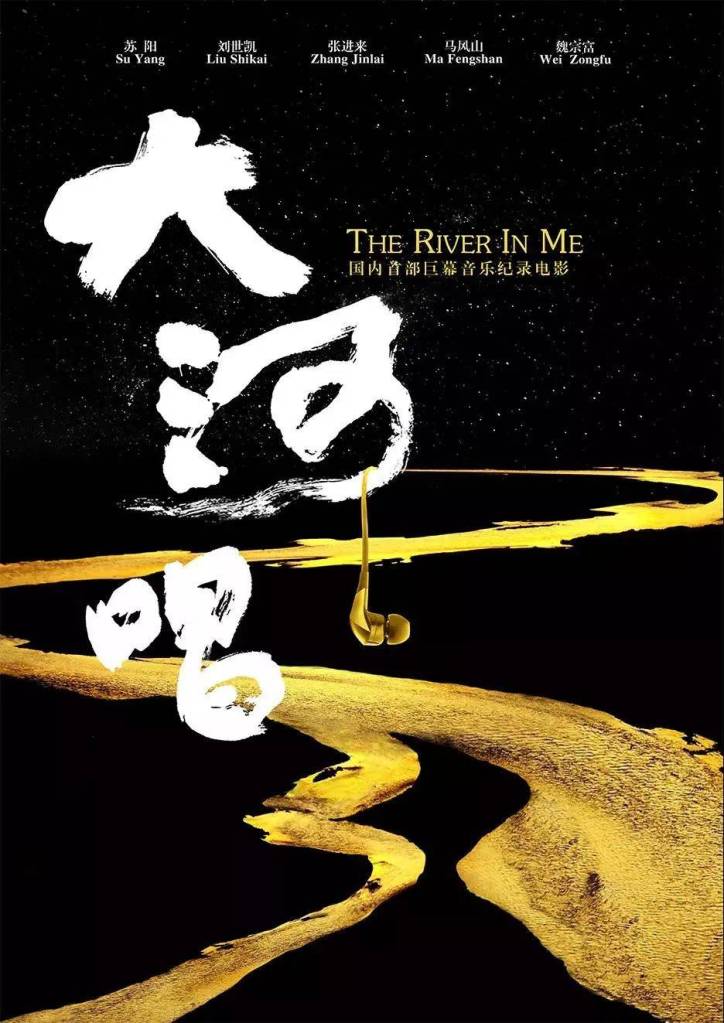
The River in Me (大河唱, Ke Yongquan, Yang Zhichun, He Yuan, 2019)

Can the old arts survive in the modern world or are they destined to fade away with the passing of time? Folk singer Su Yang is determined to preserve them, if only by assimilation, blending traditional folksong with Western rock to bring it into the modern era. While some complain that Su’s singing is inauthentic, he argues that authenticity, in that sense at least, isn’t the point. The only thing that matters is whether people like it and can feel something of themselves and of ages reflected in the ancient rhythms. 

Now a successful musician, Su is not originally from the country but moved to rural Yinchuan, Ningxia in Northwest China with his parents when he was seven. He later says it was the music of Yinchuan which touched him not because it is the greatest of cities but because it’s the one which most intersected with his life. Through his travels, Su meets up with a series of other practitioners of traditional arts mostly also from Ningxia and the surrounding area as he and they dwell on survival. 

Itinerant singer Liu Shikai makes a living playing the Sanxian, but fewer and fewer people are interested in listening while in private he feels himself lonely as a twice widowed father of three, especially as his youngest daughter has now married leaving him at home alone. Su laments something similar, reflecting that there’s no New Year for him. His festivities will consist of working and drinking, while his family can see him on TV from the comfort of their homes. Su’s brother complains endlessly about the annual Spring Gala (while watching it anyway), finding the show totally lacking in any kind of substance and becoming more boring by the year. His astute daughter, however, points out that his criticism is unfair or at least stating the obvious because the Spring Gala reflects “youth culture” which is perhaps flashy and superficial but equally is not intended to appeal to middle-aged men. Su appears on the program himself but might agree, seeing as it’s his mission statement to put a little soul back into the mainstream by bringing the rhythms of the Yellow River to contemporary society. 

Back in the country, meanwhile, folksongs are serving the same purpose they always have, expressing joy in the natural world and bringing communities together through choral solidarity. Then again, Hua’er singer Ma Fengshan, sometimes finds himself at odds with his. A member of the muslim minority, his house is filled with religious texts that he is unable to read because they are in Arabic which he doesn’t speak. Some have told him that he should spend more time on religious study, but all he wants to do is sing, while others actively oppose Hua’er for its “salacious” qualities, aware the songs can be used as a form of flirtation and convinced that they have the potential to cause marital breakdown and infidelity. In spite of everything, Ma keeps singing and is eventually joined by other members of his community wearing traditional dress to celebrate Hua’er music. 

For puppeteer Wei Zongfu, however, the future seems far less bright. Now ageing himself, he’s accepted that his descendants won’t want to succeed him and there are few people interested in learning shadowplay. The leather puppets crafted by his grandfather are so precious to Wei that he didn’t even want to take them to use in Su’s showcase of traditional arts in fear they might be damaged or stolen, opting for a safer paper play instead, but is now contemplating what’s best to do with them after he dies and if the art itself can survive when there is no one to perform it. 

That’s a problem also faced by Zhang Jinlai, the harangued head of a Qinqiang Opera troupe frequently at odds with his co-star wife who berates him for employing too many actors when they aren’t making any money. With economic factors to consider, he finds it hard to keep his troupe together and is pushed towards making “innovations” that might appeal to a younger audience but wishes to remain “authentic”. Su’s suggestion, by contrast, is that in the end you can only move forward, the old arts may have to adapt or die. Some may not approve of his modern take on the traditional, but in his own way he’s saving Hua’er song and helping to pass it on to future generations, in his own words extending the rhythms of the Yellow River to all corners of the world. 


The River in Me screens in Amsterdam on March 4/8 as part of this year’s CinemAsia Film Festival.

Original trailer (English subtitles)
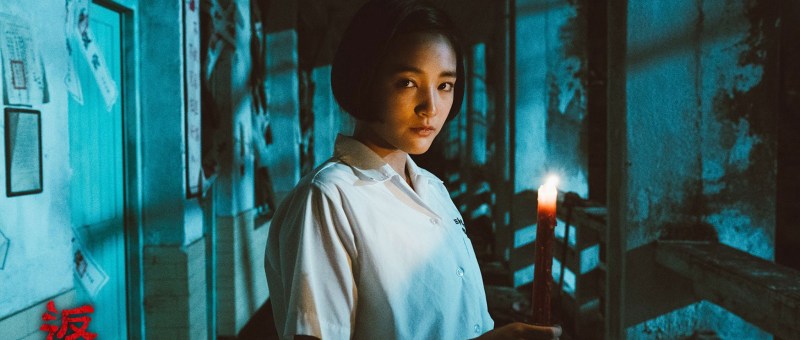
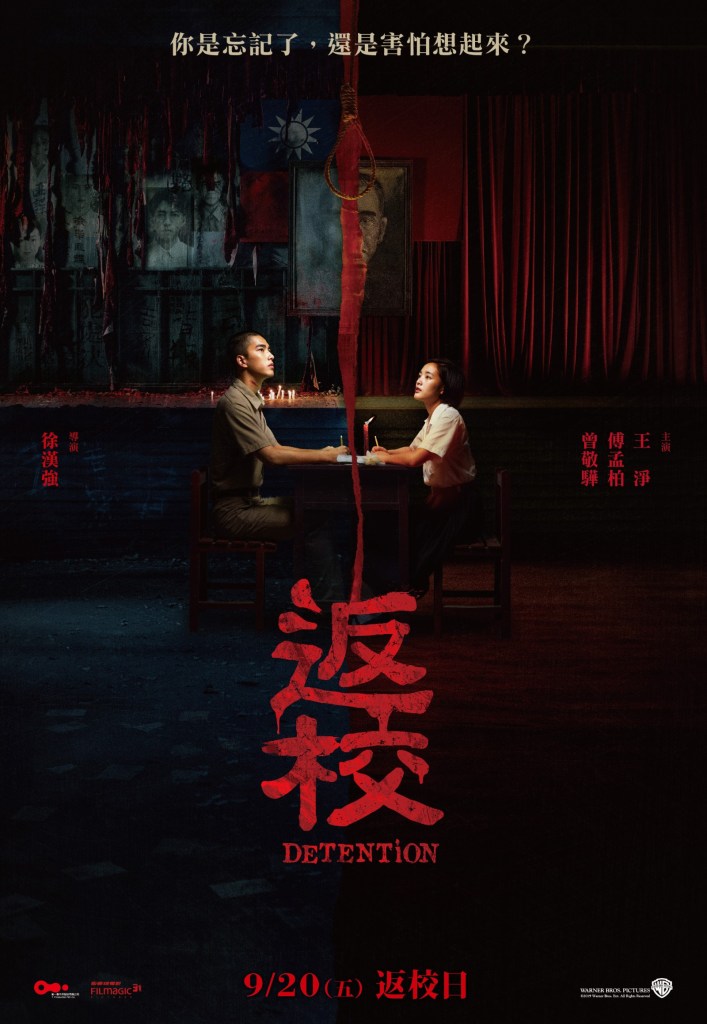
Detention (返校, John Hsu, 2019)

“Have you forgotten or are you scared of remembering?” a mysterious supernatural force seems to ask the heroine of John Hsu’s ironically named Detention (返校, Fǎn Xiào). In fact, the Chinese title means something close to “back to school”, hinting at its central message which uses the, it argues forgotten, tyranny of the “White Terror” to remind us that freedom is hard to win but harder still to keep. An unfortunately timely message given the assaults on democracy across the world but even more so given the recent protests in Hong Kong which have found support in Taiwan as it too looks back on its complicated history.

Based on a popular survival horror video game, Detention’s first hero is idealistic student Wei Zhong-ting (Tseng Ching-hua) who we quickly learn was picked up and tortured by the military police for reading books banned by the regime as part of an underground club run by two of his teachers – mild-mannered artist Zhang (Fu Meng-po) and stern musician Yin (Cecilia Choi Sze-wan). Set in 1962, the film finds itself at the height of the “White Terror”, a period of martial law which lasted for 38 years, during which any resistance real or perceived towards Chiang Kai-shek’s Kuomintang government was brutally suppressed with thousands tortured, imprisoned, or killed by the regime.

Wei finds himself in a lucid nightmare, trapped in his school building which has become derelict and seemingly abandoned while cut off by a raging flood. Gradually he starts to piece together memories of what must have happened, realising that his fellow club members seem to be absent and something must have happened with the military police. While in the school he runs into a fellow classmate, Fang Ray-shin (Gingle Wang Ching), though she doesn’t quite seem to remember him. Having apparently fallen asleep and woken up in this nightmare world, Fang seems even less clear about what’s going on than Wei but desperately wants to find their teacher, Zhang, with whom, we learn, she has fallen in love. 

Plagued by horrifying visions that maybe repressed memories or simple nightmares, the pair are chased by giant monsters dressed in KMT uniforms standing in for the terror of living under an authoritarian regime. Only, these particular nightmare soldiers are literally “faceless” in that their hollowed out skulls, which themselves sit on fetid, rotting corpses, are filled only by a mirror making plain that the faces of the “faceless” regime are our own. Fang and Wei become convinced that someone has betrayed them by giving one of the illicit books to arch militarist teacher Inspector Bai, but they can’t be sure who it was, finally doubting even themselves in their inability to remember the exact circumstances which brought them here. 

Flashing back to the “real” world, we discover that one sort of oppression cannot help but lead to others. Fang’s father is a respected soldier and supporter of the ruling regime, but he’s also abusive towards his wife, enforcing a rule of fear and violence even within his own home. Her mother has taken to religion in order resist him, regretting her marriage and furiously praying that he will soon be “gone for good”. “Gone for good” becomes a kind of mantra for others straining to free themselves from obstacles to their desires. Fang learns all the wrong lessons from her parents, allowing herself to be corrupted by their twin failures – her father’s in being a willing participant in the oppression of others, and her mother’s in subverting the world in which she lives in an attempt to free herself from violence. 

Yet, as Zhang later tells her, no one is really at fault because they are all victims of the oppressive rule of the KMT. The ruined schoolhouse becomes a kind of repository for the orphaned memories of a forgotten past. You can tear it down and build a fancy apartment complex over the top, but the ghost of authoritarianism is always lurking on the horizon, and capitalist success will not safeguard your freedom. Those left behind have to tell the story so  this never happens again because those who fail to learn from history are doomed to repeat it. Zhang imagined himself a narcissus, living in his own world without caring what other people thought and claiming that the solidarity of silent understanding is the best cure for loneliness, but he lived in times in which he had no freedom in which to live, sacrificing his own future to become the selfless roots of emancipation blooming only for those who will come later.


Detention screens in Amsterdam on March 5/7 as part of this year’s CinemAsia Film Festival. It will also screen in Chicago on March 26th as part of the 10th Season of Asian Pop-Up Cinema.

Original trailer (English subtitles)
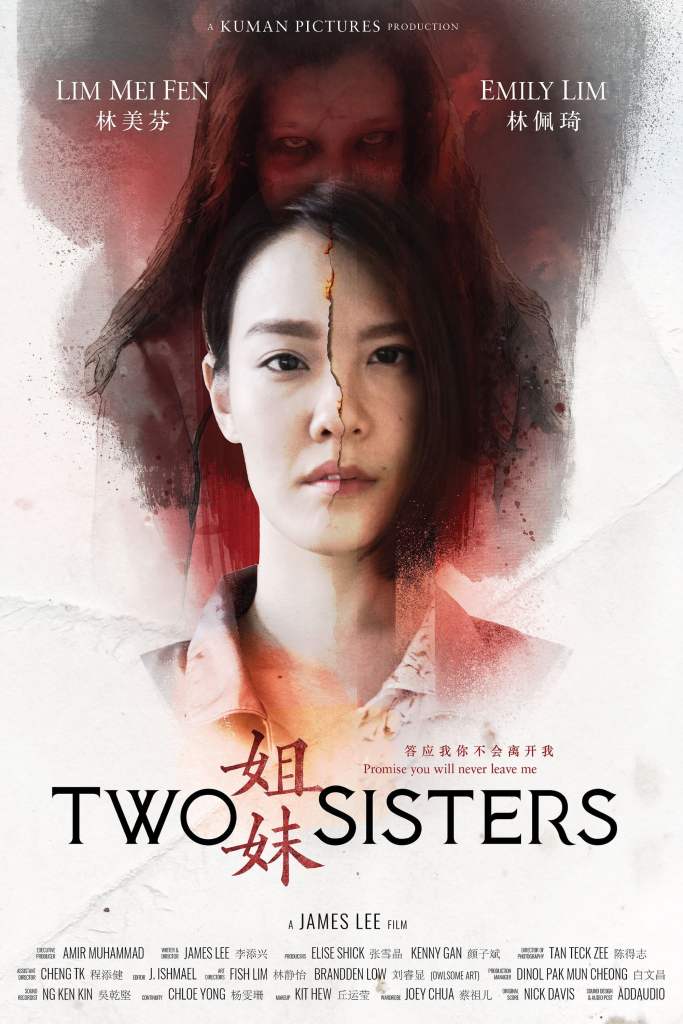
Two Sisters (姐妹, James Lee, 2019)

The family home is supposed to be a place of safety, but what can you do when it’s also a source of trauma? The young women at the centre of James Lee’s psychological horror Two Sisters (姐妹, Jiěmèi) are each trying to put their houses back in order but find that their pasts are full of locked doors, crying women, and things which go bump in the night. In the end the past is the one thing you can’t protect yourself from, but not knowing can also be its own kind of hell, an inescapable puzzle that forever corrupts the image of the self. 

Elegant and successful, Mei Xi (Emily Lim) has just published her first book – a horror novel about a woman with multiple personality disorder which is, she tells her fans at a reading, a metaphor for the dual lives many women are forced to lead because of the pressures of living under the patriarchy. Meanwhile, her home life appears to be chaotic. We see her swallow a selection of pills before a one night stand cheerfully leaves her well-appointed apartment, only for her manager, John, to interrogate her after she’s late for an appointment wondering what she was doing the night before which prevented her from answering any of his calls. She reminds him that that’s none of his business. They may have slept together once but it meant nothing to her and anyway he’s a married man. Xi hopes they can keep their relationship “professional” going forward, attempting damage control on a possibly self-destructive business move. 

The main issue, however, is that her father has recently died and she’d like to sell the family home but needs the consent of her younger sister, Yue (Lim Mei Fen), who has been in a mental institution for over a decade. The doctors tell her that Yue has made good progress and they think it might be time to discharge her from the hospital so that she can start trying to reintegrate into mainstream society. Xi agrees to take custody of her, but there is an understandable distance between the two women. Yue is uncertain that Xi will be there when she needs her, partly because she neglected to visit her in the hospital on her last birthday and had apparently seen her only infrequently, Xi claims because she was busy with her book. Meanwhile, Yue is still unable to recall any of her childhood and is determined to move back into their family home in the hope of finally finding the truth behind whatever it was that happened to her. 

As expected, not everything is quite as it seems. A locked door is never a good sign, especially when there are multiple locks to unpick, but as soon as the women try to open it their shared reality begins to crumble. “What’s the point in knowing the truth?” Yue eventually asks an increasingly confused Xi, “it’s too late to change anything now”. The two women are each haunted, literally and metaphorically, by the ghost of their mother who died when they were small in circumstances neither of them are able to remember. 

The real horror lies in the family home. Badly let down by parental betrayal, the sisters attempt to rescue each other from shared trauma but are each trapped by the inescapability of the house. “I’ll always be by your side” Xi offers as words of protection, but is entirely unable to protect herself from the traumatic past. Yet Lee ends on a note of discomfort which sees Xi apologise to her mother for something that is in no way her fault, as if she had in some way betrayed her when quite the reverse is true. Xi’s words at the book reading prove truer than she knew them to be. She herself has her dualities, as did her mother, as a victim of patriarchal oppression which in this case has a sadly literal quality. The women of the Mei household struggle to free themselves from male violence and are perhaps destroyed by its memory which manifests itself in the ominous spectre of the family home which, rather than a place of love and mutual support, is a kind of prison filled with locked doors and dark secrets. 


Two Sisters screens in Amsterdam on March 6/7 as part of this year’s CinemAsia Film Festival.

Original trailer (English subtitles)
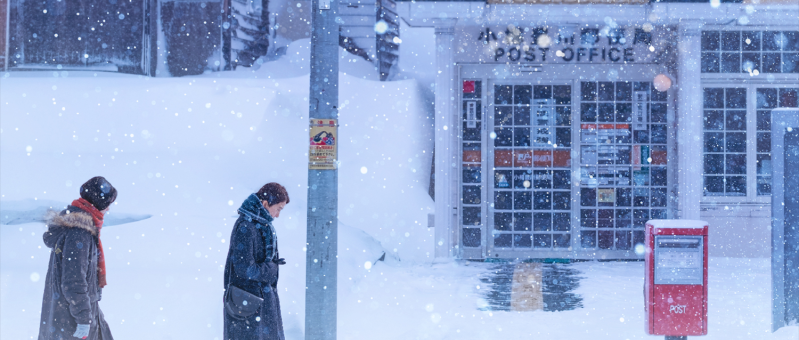
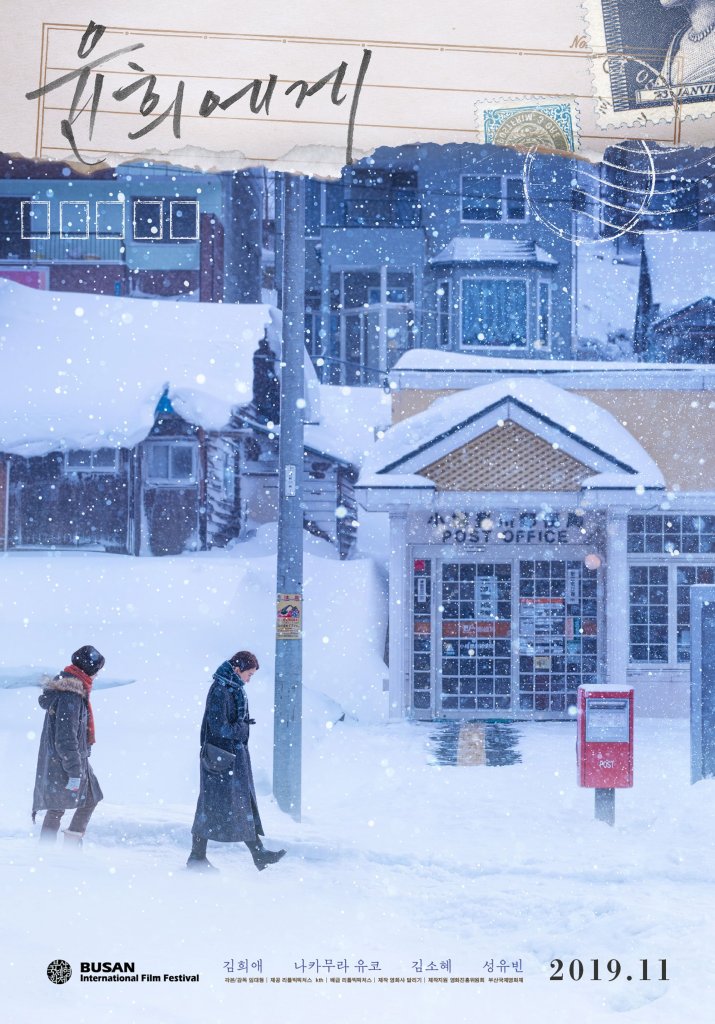
Moonlit Winter (윤희에게, Lim Dae-hyung, 2019)

It goes without saying that the world is very different now than it was 20 years ago, but change happens slowly and primarily benefits those who come later rather than those trying to live as it’s happening. The two women at the centre of Lim Dae-hyung’s Moonlit Winter (윤희에게, Yoon-hee-ege) are a case in point, painfully separated and forced into self-isolation born of internalised shame while perhaps filled with unspeakable longing. In a sense, they each live within that moonlit winter, a cold and lonely place yet not without its beauty. 

In Japan, an older woman, Masako (Hana Kino), mails a letter she finds lying around in her niece’s room, unsure if she’s doing the right thing but perhaps hoping for a kind of shift. Presumably, Masako cannot read the contents of the letter as they’re written in Korean (though later read to us in Japanese), and addressed to a “Yoon-hee”. It’s Yoon-hee’s daughter Sae-bom (Kim So-hye), however, who first picks it up and begins to realise, perhaps for the first time, that her rather distant, lonely mother is a woman too with a painful past she knows nothing of. Written with a kind of melancholy finality and the sincerity of a letter never quite intended to be sent, the heartfelt words hint at a past heartbreak in which the author, Jun (Yuko Nakamura), hopes that she won’t make the recipient uncomfortable but felt that she had to write to let her know that she still thinks and dreams of her after all this time. 

Finally receiving the letter, Yoon-hee (Kim Hee-ae) is not “uncomfortable” or at least in the way that Jun had feared she might be. Recently divorced after years of unhappy marriage to a drunken policeman (Yoo Jae-myung), Yoon-hee has a job in a canteen at a factory and lives alone with her teenage daughter who is in the last year of high school and preparing to head off to university in Seoul. Intrigued by the letter, Sae-bom begins to become curious about why her mother is the way she is. She tries asking her uncle, but he’s fantastically unhelpful, and then questioning her father but he only tells her that her mother is the kind of woman who makes others feel lonely. That strikes Sae-bom as ironic because she chose to stay with her mother after her parents’ divorce precisely because she thought she seemed the lonelier.

Jun, meanwhile, is a lonely figure too but perhaps wilfully so. She tells her aunt Masako with whom she’s been living all this time that she chose to come to Japan with her father after her parents split up because he didn’t care about her (hence why she’s always lived with the unmarried aunt), while she was all her mother ever cared about. In retrospect, it sounds as if, as she said in the letter, she ran away, afraid that her mother would notice something in her she did not want to be noticed. Perhaps Masako has noticed something too which is why she sent the letter, though she’d never bring it up directly. A well-meaning though tone deaf and entirely insensitive relative (Sho Yakumaru) tries to use the occasion of her father’s funeral to talk Jun into a blind date with his Korean friend, an offer she flatly refuses but he keeps badgering her anyway. Eventually she stops the car and insists on walking home at which point he realises you probably shouldn’t be matchmaking at a funeral but she cuts him off again, telling him that’s not the reason for her intense annoyance but stopping short of explaining what is. 

Jun has one of those faces, slightly mysterious, pensive as if she’s about to say something important but never actually does. Another woman (Kumi Takiuchi) thinks she recognises that quality in her and edges towards a kind of confession but Jun shuts her down, brutally telling her that the only secret she’s keeping is being half-Korean, advising that if she too has a “secret” she’d best keep it to herself. Even more than Yoon-hee, Jun has lived a life of isolation, too afraid to be her real self and terrified of being seen. 

But for the younger generation things are perhaps different. Sae-bom is at a romantic crossroads of her own, acknowledging that her high school romance may be about to end seeing as nice but bland boyfriend Kyung-soo (Sung Yoo-bin) is not exactly her intellectual equal and cannot accompany her to a university in Seoul. After realising that the sender of the letter is female, Sae-bom seems unfazed, still curious about this hidden part of her mother’s life and rooting for her to find a kind of happiness. In the habit of taking photos (using a camera which turns out to have been a present given to Yoon-hee as an apology from her mother for the family’s belief that there was no point in sending a girl to university) Sae-bom declares that she only photographs beautiful things rather than people, but takes photos of her mother all the time, capturing her at her most mysterious but rarely smiling. Railroaded into a life of conventional success that eventually failed, Yoon-hee has become an empty, directionless shell unable to live her own life while filled with an internalised sense of shame that leaves her feeling guarded and worthless.

Yet through the arrival of the letter she begins to reconnect with her younger self, her repressed desires, and impossible longing for Jun. With the gentle support of a daughter and aunt respectively, the two women begin to rediscover the courage to live, not necessarily in embracing romance, but accepting themselves for who they are and rejecting the sense of shame that has defined each of their lives. The winter may at last be ending and they may not yet have it in them to ask for the stars, but they’ll always have the moon. 


Moonlit Winter screens in Amsterdam on March 6/8 as part of this year’s CinemAsia Film Festival.

Original trailer (English subtitles)
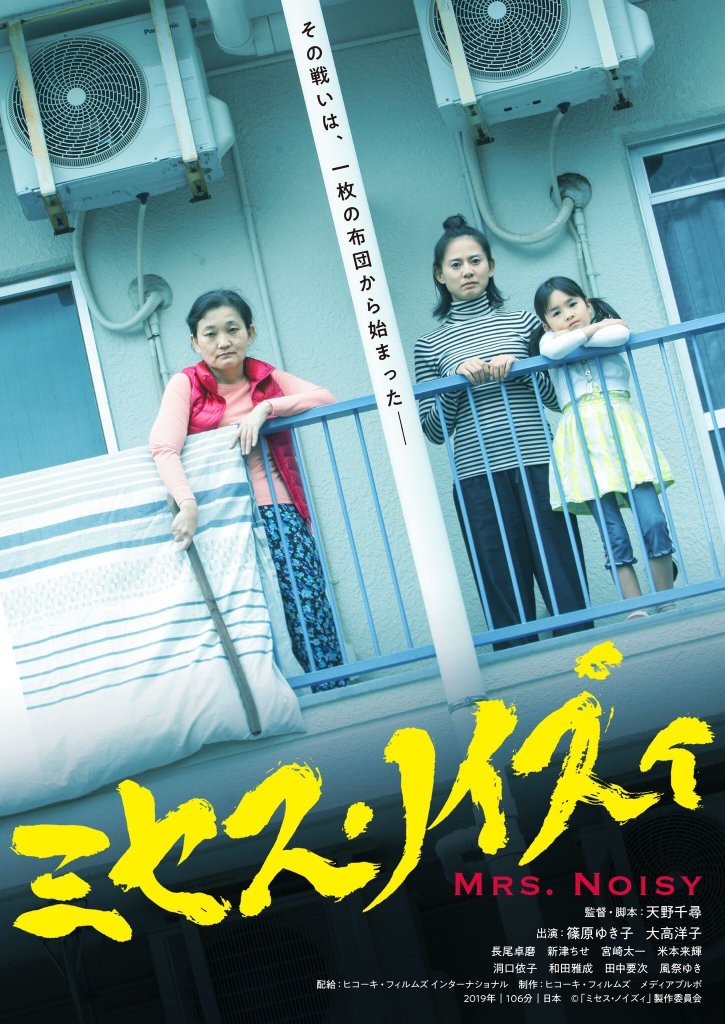
Mrs. Noisy (ミセス・ノイズィ, Chihiro Amano, 2019)

“Cases involving two parties must be viewed from differing angles” according to a lawyer trying to point out why a case that was cast iron days before is now a non-starter. Most of us know it’s a bad idea to judge people on appearances, but few of us have made the leap to acknowledging that it’s wrong to judge people at all, especially when you don’t and can’t know what’s happening in other people’s lives. Being self-involved is hardly a crime, but if it’s a bad quality in a human being it’s an unforgivable sin in a writer, which is why the heroine of Chihiro Amano’s Mrs. Noisy (ミセス・ノイズィ), apparently inspired by an early viral video phenomenon, is struggling to overcome a nasty case of writer’s block. 

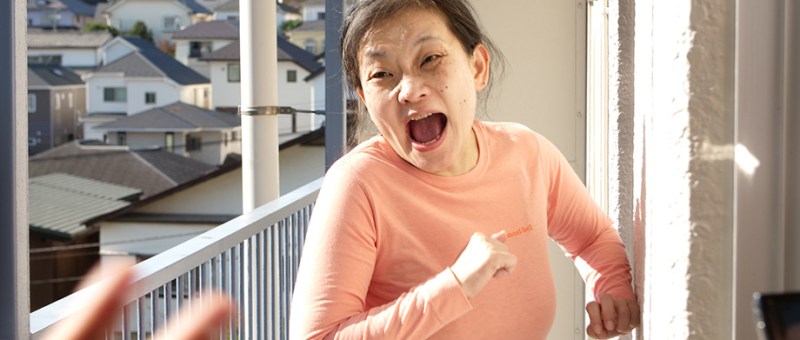
Some years ago, under a pen name, novelist Maki (Yukiko Shinohara) made a name for herself with an award-winning book. After giving birth to her daughter, Nako (Chise Niitsu), she swore motherhood wouldn’t slow her down but six years later she’s published nothing of note. After moving to a new apartment with her freelance musician husband Yuichi (Takuma Nagao), Maki hopes to kick her writing career back into gear but an immediate spanner is thrown in the works by a strange noise early in the morning that turns out to be the old woman next-door furiously beating her futon. Maki asks her to stop, but her impatience only gets her neighbour’s back up and starts an ongoing conflict that only worsens after Nako, feeling neglected by her mother’s dedication to her work, wanders off and the neighbour, Miwako (Yoko Ootaka), accompanies her to the park. 

Later, we’re shown things from Miwako’s point of view and realise that when she said there were “reasons” she was out beating a futon at 6am she was telling the truth. Not only that, she tried to explain but was abruptly cut off by an impatient Maki who was not in the mood to listen. It doesn’t help that the Japanese word for “bugs” also means “ignore”, but many of the upcoming problems could have been resolved with a little more patience and politeness, which is something Maki decided she didn’t need to bother with in deciding not to go around introducing herself to her new neighbours as is the usual custom.  

Likewise, when Yuichi abruptly announces he can’t watch Nako the following day as planned, it’s easy enough to think he’s being unreasonable, letting his wife down and implying his career’s more important than hers, but that rather ignores the fact that his explanation is perfectly reasonable in that freelancers cannot (in contrary to popular opinion) dictate when and where they work, and that he offers to keep Nako occupied that evening instead so Maki can meet her deadline. As time wears on, we start to doubt Maki’s sense of subjectivity, realising that she’s begun to blame all of her problems on the old woman next door whom she doesn’t even really know. 

Of course, there are other conflicts, social and generational differences. To a woman of Miwako’s age, it seems “common sense” for an older woman to look after a little girl who seems lonely, in the same way it seems “common sense” that’s it’s wasteful to throw out perfectly good food just because it’s slightly misshapen, but then the world is not as accepting of “common sense” as it likes to think it is. To Maki, a younger woman not used to living in a tight knit community, it seems inappropriate to take someone else’s child to the park without checking with them first. Admittedly, Nako’s claim that Miwako’s husband (Taiichi Miyazaki) gave her a bath (not quite what happened) also sets alarm bells ringing, as perhaps it should, but again could have been settled with much less acrimony if it weren’t for an unfortunate personality clash between the two women in which Miwako offers some “common sense” advice that Maki herself is to blame for her daughter wandering off, touching a nerve in Maki’s conflicted sense of maternity that sees her cruelly firing back and drawing something of a battle line. 

Perhaps unpredictably, Yuichi sides with Miwako, pointing out that whatever Maki says, the fact remains that Nako wandered off because she felt neglected. Maki’s mother (Yuki Kazamatsuri) tells her that she needs to pay more attention to her husband and family, be more of a “wife” and make an effort with the housework, which sounds like old-fashioned sexism and perhaps it is but there’s also truth in it in that Maki really is only thinking about herself. Her editor too tries to guide her to a self-realisation that will reinvigorate her writing career, but she remains blinkered and obtuse. Maki decides Miwako is a batty old woman, and takes bad advice from her get rich quick cousin (Masanari Wada) to use her as a model for a story which becomes a big hit with a new, younger editor who selects it as a serialised column in a magazine for young people where its snarky mean-spiritedness finds a natural audience. Her cousin even uploads a video of the two women comically fighting on the balcony which goes viral and sends sales through the roof. But the meanness of the new, online world is something which cannot be controlled and can have terrible, unforeseen consequences when ordinary people become the focus of malicious rumour and painful ridicule. 

Even so, Maki takes a long time to see the light. She bristles when her editor tells her that her work is shallow, but fails to understand that the cause of its shallowness is her own unwillingness to engage with the world around her. “Following the surface of things is pointless” he tells her, only by taking the time to understand others can she write with true authenticity. Maki assumed Miwako was a horrible old woman after seeing her swipe offerings from a roadside shrine, only to later realise that she in fact replaces them every day (and perhaps it was her who put those cute little clothes on the statues to keep them warm). You can’t know what’s going on in other people’s lives, but if you don’t take an interest eventually people will stop taking an interest in you. 


Mrs. Noisy screens as the Opening Night movie of this year’s CinemAsia Film Festival on 4th March where the director Chihiro Amano will be in attendance to present the film.