Two Sisters (姐妹, James Lee, 2019)

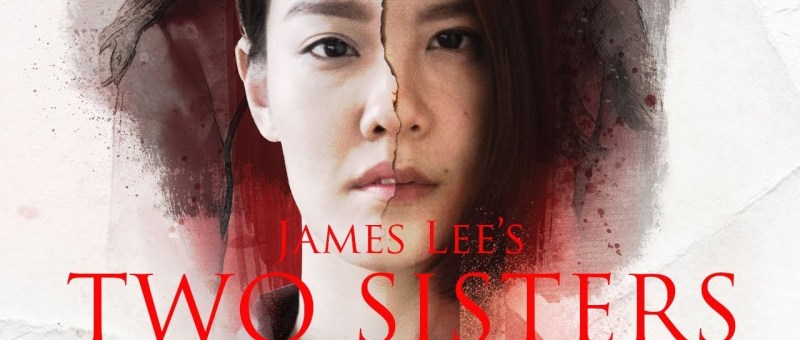
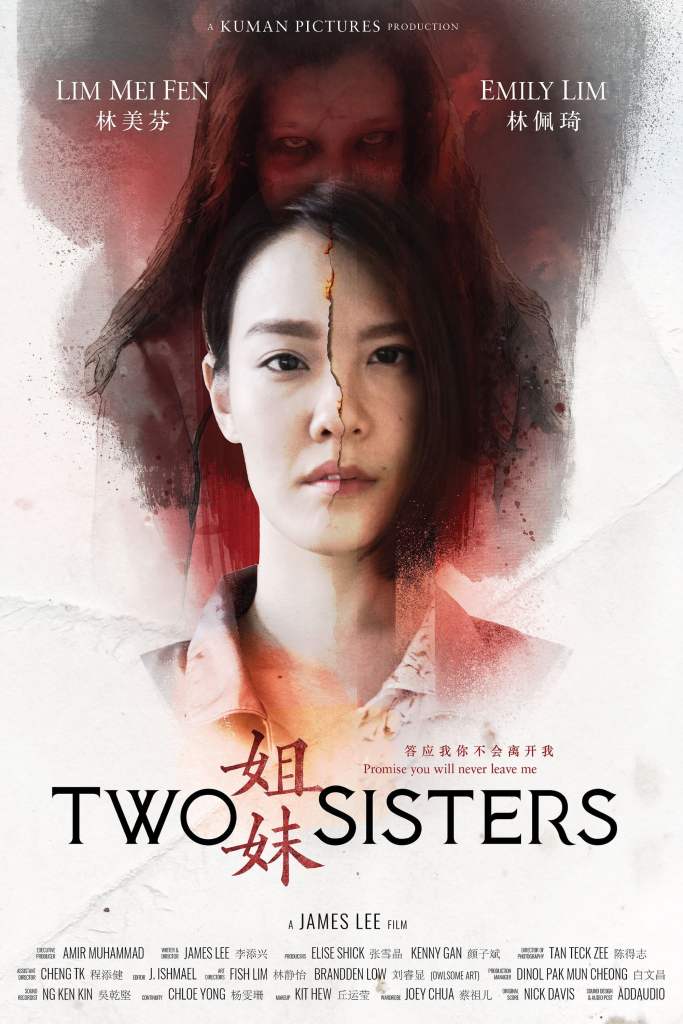
The family home is supposed to be a place of safety, but what can you do when it’s also a source of trauma? The young women at the centre of James Lee’s psychological horror Two Sisters (姐妹, Jiěmèi) are each trying to put their houses back in order but find that their pasts are full of locked doors, crying women, and things which go bump in the night. In the end the past is the one thing you can’t protect yourself from, but not knowing can also be its own kind of hell, an inescapable puzzle that forever corrupts the image of the self. 

Elegant and successful, Mei Xi (Emily Lim) has just published her first book – a horror novel about a woman with multiple personality disorder which is, she tells her fans at a reading, a metaphor for the dual lives many women are forced to lead because of the pressures of living under the patriarchy. Meanwhile, her home life appears to be chaotic. We see her swallow a selection of pills before a one night stand cheerfully leaves her well-appointed apartment, only for her manager, John, to interrogate her after she’s late for an appointment wondering what she was doing the night before which prevented her from answering any of his calls. She reminds him that that’s none of his business. They may have slept together once but it meant nothing to her and anyway he’s a married man. Xi hopes they can keep their relationship “professional” going forward, attempting damage control on a possibly self-destructive business move. 

The main issue, however, is that her father has recently died and she’d like to sell the family home but needs the consent of her younger sister, Yue (Lim Mei Fen), who has been in a mental institution for over a decade. The doctors tell her that Yue has made good progress and they think it might be time to discharge her from the hospital so that she can start trying to reintegrate into mainstream society. Xi agrees to take custody of her, but there is an understandable distance between the two women. Yue is uncertain that Xi will be there when she needs her, partly because she neglected to visit her in the hospital on her last birthday and had apparently seen her only infrequently, Xi claims because she was busy with her book. Meanwhile, Yue is still unable to recall any of her childhood and is determined to move back into their family home in the hope of finally finding the truth behind whatever it was that happened to her. 

As expected, not everything is quite as it seems. A locked door is never a good sign, especially when there are multiple locks to unpick, but as soon as the women try to open it their shared reality begins to crumble. “What’s the point in knowing the truth?” Yue eventually asks an increasingly confused Xi, “it’s too late to change anything now”. The two women are each haunted, literally and metaphorically, by the ghost of their mother who died when they were small in circumstances neither of them are able to remember. 

The real horror lies in the family home. Badly let down by parental betrayal, the sisters attempt to rescue each other from shared trauma but are each trapped by the inescapability of the house. “I’ll always be by your side” Xi offers as words of protection, but is entirely unable to protect herself from the traumatic past. Yet Lee ends on a note of discomfort which sees Xi apologise to her mother for something that is in no way her fault, as if she had in some way betrayed her when quite the reverse is true. Xi’s words at the book reading prove truer than she knew them to be. She herself has her dualities, as did her mother, as a victim of patriarchal oppression which in this case has a sadly literal quality. The women of the Mei household struggle to free themselves from male violence and are perhaps destroyed by its memory which manifests itself in the ominous spectre of the family home which, rather than a place of love and mutual support, is a kind of prison filled with locked doors and dark secrets. 


Two Sisters screens in Amsterdam on March 6/7 as part of this year’s CinemAsia Film Festival.

Original trailer (English subtitles)
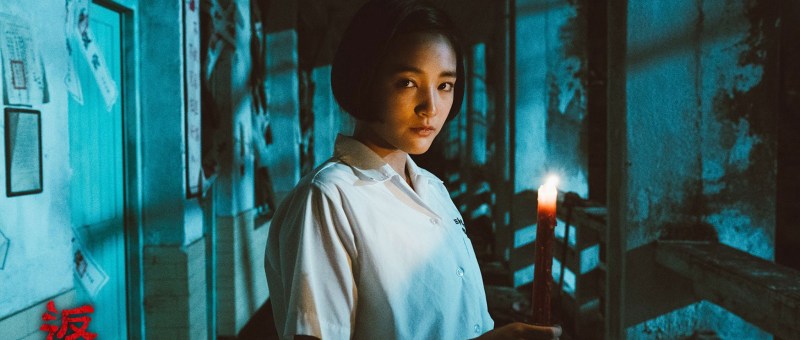
Moonlit Winter (윤희에게, Lim Dae-hyung, 2019)

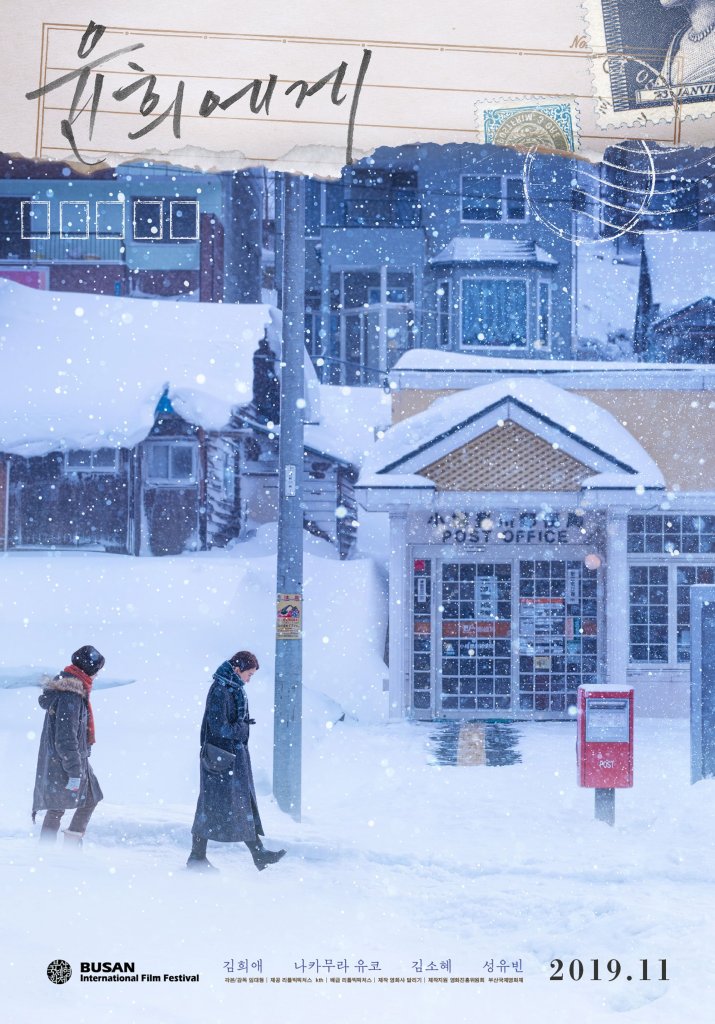
It goes without saying that the world is very different now than it was 20 years ago, but change happens slowly and primarily benefits those who come later rather than those trying to live as it’s happening. The two women at the centre of Lim Dae-hyung’s Moonlit Winter (윤희에게, Yoon-hee-ege) are a case in point, painfully separated and forced into self-isolation born of internalised shame while perhaps filled with unspeakable longing. In a sense, they each live within that moonlit winter, a cold and lonely place yet not without its beauty. 

In Japan, an older woman, Masako (Hana Kino), mails a letter she finds lying around in her niece’s room, unsure if she’s doing the right thing but perhaps hoping for a kind of shift. Presumably, Masako cannot read the contents of the letter as they’re written in Korean (though later read to us in Japanese), and addressed to a “Yoon-hee”. It’s Yoon-hee’s daughter Sae-bom (Kim So-hye), however, who first picks it up and begins to realise, perhaps for the first time, that her rather distant, lonely mother is a woman too with a painful past she knows nothing of. Written with a kind of melancholy finality and the sincerity of a letter never quite intended to be sent, the heartfelt words hint at a past heartbreak in which the author, Jun (Yuko Nakamura), hopes that she won’t make the recipient uncomfortable but felt that she had to write to let her know that she still thinks and dreams of her after all this time. 

Finally receiving the letter, Yoon-hee (Kim Hee-ae) is not “uncomfortable” or at least in the way that Jun had feared she might be. Recently divorced after years of unhappy marriage to a drunken policeman (Yoo Jae-myung), Yoon-hee has a job in a canteen at a factory and lives alone with her teenage daughter who is in the last year of high school and preparing to head off to university in Seoul. Intrigued by the letter, Sae-bom begins to become curious about why her mother is the way she is. She tries asking her uncle, but he’s fantastically unhelpful, and then questioning her father but he only tells her that her mother is the kind of woman who makes others feel lonely. That strikes Sae-bom as ironic because she chose to stay with her mother after her parents’ divorce precisely because she thought she seemed the lonelier.

Jun, meanwhile, is a lonely figure too but perhaps wilfully so. She tells her aunt Masako with whom she’s been living all this time that she chose to come to Japan with her father after her parents split up because he didn’t care about her (hence why she’s always lived with the unmarried aunt), while she was all her mother ever cared about. In retrospect, it sounds as if, as she said in the letter, she ran away, afraid that her mother would notice something in her she did not want to be noticed. Perhaps Masako has noticed something too which is why she sent the letter, though she’d never bring it up directly. A well-meaning though tone deaf and entirely insensitive relative (Sho Yakumaru) tries to use the occasion of her father’s funeral to talk Jun into a blind date with his Korean friend, an offer she flatly refuses but he keeps badgering her anyway. Eventually she stops the car and insists on walking home at which point he realises you probably shouldn’t be matchmaking at a funeral but she cuts him off again, telling him that’s not the reason for her intense annoyance but stopping short of explaining what is. 

Jun has one of those faces, slightly mysterious, pensive as if she’s about to say something important but never actually does. Another woman (Kumi Takiuchi) thinks she recognises that quality in her and edges towards a kind of confession but Jun shuts her down, brutally telling her that the only secret she’s keeping is being half-Korean, advising that if she too has a “secret” she’d best keep it to herself. Even more than Yoon-hee, Jun has lived a life of isolation, too afraid to be her real self and terrified of being seen. 

But for the younger generation things are perhaps different. Sae-bom is at a romantic crossroads of her own, acknowledging that her high school romance may be about to end seeing as nice but bland boyfriend Kyung-soo (Sung Yoo-bin) is not exactly her intellectual equal and cannot accompany her to a university in Seoul. After realising that the sender of the letter is female, Sae-bom seems unfazed, still curious about this hidden part of her mother’s life and rooting for her to find a kind of happiness. In the habit of taking photos (using a camera which turns out to have been a present given to Yoon-hee as an apology from her mother for the family’s belief that there was no point in sending a girl to university) Sae-bom declares that she only photographs beautiful things rather than people, but takes photos of her mother all the time, capturing her at her most mysterious but rarely smiling. Railroaded into a life of conventional success that eventually failed, Yoon-hee has become an empty, directionless shell unable to live her own life while filled with an internalised sense of shame that leaves her feeling guarded and worthless.

Yet through the arrival of the letter she begins to reconnect with her younger self, her repressed desires, and impossible longing for Jun. With the gentle support of a daughter and aunt respectively, the two women begin to rediscover the courage to live, not necessarily in embracing romance, but accepting themselves for who they are and rejecting the sense of shame that has defined each of their lives. The winter may at last be ending and they may not yet have it in them to ask for the stars, but they’ll always have the moon. 


Moonlit Winter screens in Amsterdam on March 6/8 as part of this year’s CinemAsia Film Festival.

Original trailer (English subtitles)
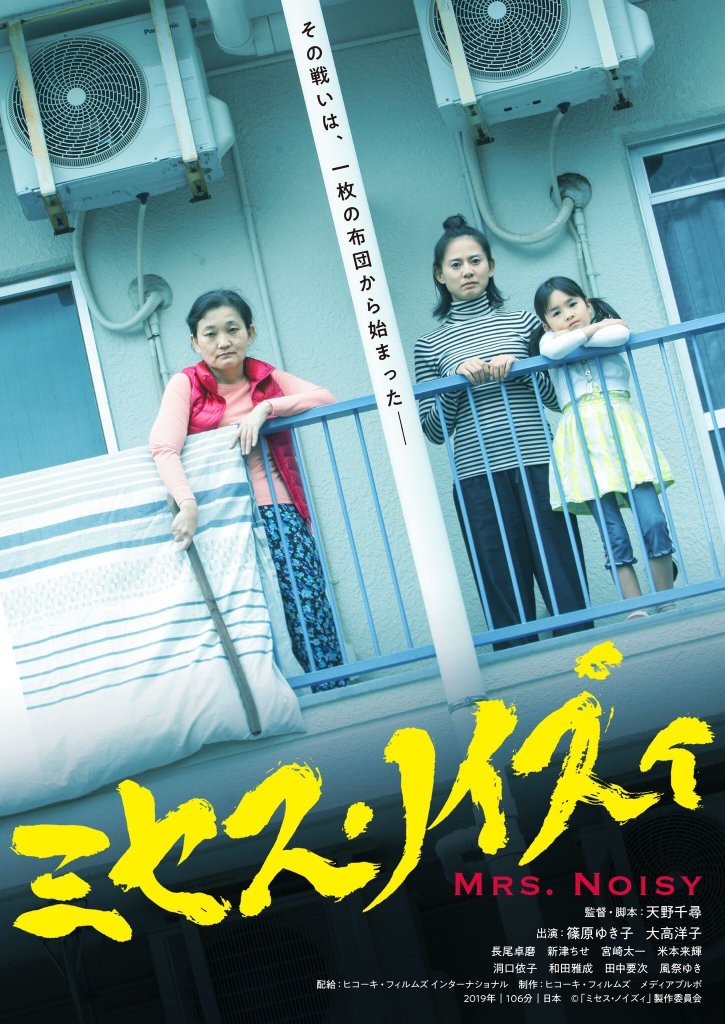
Mrs. Noisy (ミセス・ノイズィ, Chihiro Amano, 2019)

“Cases involving two parties must be viewed from differing angles” according to a lawyer trying to point out why a case that was cast iron days before is now a non-starter. Most of us know it’s a bad idea to judge people on appearances, but few of us have made the leap to acknowledging that it’s wrong to judge people at all, especially when you don’t and can’t know what’s happening in other people’s lives. Being self-involved is hardly a crime, but if it’s a bad quality in a human being it’s an unforgivable sin in a writer, which is why the heroine of Chihiro Amano’s Mrs. Noisy (ミセス・ノイズィ), apparently inspired by an early viral video phenomenon, is struggling to overcome a nasty case of writer’s block. 

Some years ago, under a pen name, novelist Maki (Yukiko Shinohara) made a name for herself with an award-winning book. After giving birth to her daughter, Nako (Chise Niitsu), she swore motherhood wouldn’t slow her down but six years later she’s published nothing of note. After moving to a new apartment with her freelance musician husband Yuichi (Takuma Nagao), Maki hopes to kick her writing career back into gear but an immediate spanner is thrown in the works by a strange noise early in the morning that turns out to be the old woman next-door furiously beating her futon. Maki asks her to stop, but her impatience only gets her neighbour’s back up and starts an ongoing conflict that only worsens after Nako, feeling neglected by her mother’s dedication to her work, wanders off and the neighbour, Miwako (Yoko Ootaka), accompanies her to the park. 

Later, we’re shown things from Miwako’s point of view and realise that when she said there were “reasons” she was out beating a futon at 6am she was telling the truth. Not only that, she tried to explain but was abruptly cut off by an impatient Maki who was not in the mood to listen. It doesn’t help that the Japanese word for “bugs” also means “ignore”, but many of the upcoming problems could have been resolved with a little more patience and politeness, which is something Maki decided she didn’t need to bother with in deciding not to go around introducing herself to her new neighbours as is the usual custom.  

Likewise, when Yuichi abruptly announces he can’t watch Nako the following day as planned, it’s easy enough to think he’s being unreasonable, letting his wife down and implying his career’s more important than hers, but that rather ignores the fact that his explanation is perfectly reasonable in that freelancers cannot (in contrary to popular opinion) dictate when and where they work, and that he offers to keep Nako occupied that evening instead so Maki can meet her deadline. As time wears on, we start to doubt Maki’s sense of subjectivity, realising that she’s begun to blame all of her problems on the old woman next door whom she doesn’t even really know. 

Of course, there are other conflicts, social and generational differences. To a woman of Miwako’s age, it seems “common sense” for an older woman to look after a little girl who seems lonely, in the same way it seems “common sense” that’s it’s wasteful to throw out perfectly good food just because it’s slightly misshapen, but then the world is not as accepting of “common sense” as it likes to think it is. To Maki, a younger woman not used to living in a tight knit community, it seems inappropriate to take someone else’s child to the park without checking with them first. Admittedly, Nako’s claim that Miwako’s husband (Taiichi Miyazaki) gave her a bath (not quite what happened) also sets alarm bells ringing, as perhaps it should, but again could have been settled with much less acrimony if it weren’t for an unfortunate personality clash between the two women in which Miwako offers some “common sense” advice that Maki herself is to blame for her daughter wandering off, touching a nerve in Maki’s conflicted sense of maternity that sees her cruelly firing back and drawing something of a battle line. 

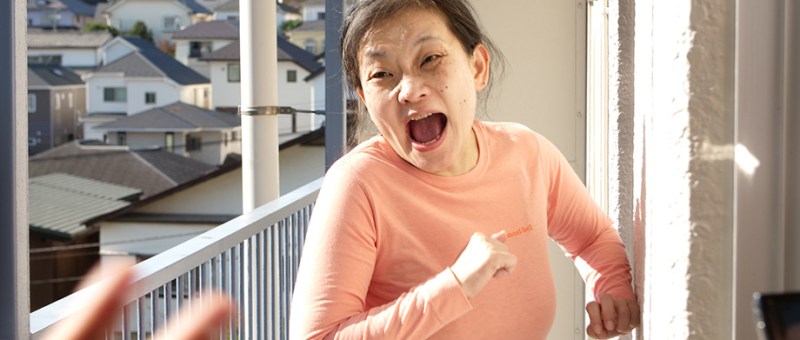
Perhaps unpredictably, Yuichi sides with Miwako, pointing out that whatever Maki says, the fact remains that Nako wandered off because she felt neglected. Maki’s mother (Yuki Kazamatsuri) tells her that she needs to pay more attention to her husband and family, be more of a “wife” and make an effort with the housework, which sounds like old-fashioned sexism and perhaps it is but there’s also truth in it in that Maki really is only thinking about herself. Her editor too tries to guide her to a self-realisation that will reinvigorate her writing career, but she remains blinkered and obtuse. Maki decides Miwako is a batty old woman, and takes bad advice from her get rich quick cousin (Masanari Wada) to use her as a model for a story which becomes a big hit with a new, younger editor who selects it as a serialised column in a magazine for young people where its snarky mean-spiritedness finds a natural audience. Her cousin even uploads a video of the two women comically fighting on the balcony which goes viral and sends sales through the roof. But the meanness of the new, online world is something which cannot be controlled and can have terrible, unforeseen consequences when ordinary people become the focus of malicious rumour and painful ridicule. 

Even so, Maki takes a long time to see the light. She bristles when her editor tells her that her work is shallow, but fails to understand that the cause of its shallowness is her own unwillingness to engage with the world around her. “Following the surface of things is pointless” he tells her, only by taking the time to understand others can she write with true authenticity. Maki assumed Miwako was a horrible old woman after seeing her swipe offerings from a roadside shrine, only to later realise that she in fact replaces them every day (and perhaps it was her who put those cute little clothes on the statues to keep them warm). You can’t know what’s going on in other people’s lives, but if you don’t take an interest eventually people will stop taking an interest in you. 


Mrs. Noisy screens as the Opening Night movie of this year’s CinemAsia Film Festival on 4th March where the director Chihiro Amano will be in attendance to present the film.

Ride Your Wave (きみと、波にのれたら, Masaaki Yuasa, 2019)

“The next wave is already on the horizon waiting for you to catch it” according to the heroine of Masaaki Yuasa’s uncharacteristically uncomplicated Ride Your Wave (きみと、波にのれたら, Kimi to, Nami ni Noretara) offering words of comfort to her dejected soon-to-be boyfriend over his continuing failure to master the surfboard. It’s advice she struggles to follow herself, however, after she’s blown off course by unexpected tragedy. Yet, nothing’s ever really as off course as you think it is and the waves she must learn to ride are her own and hers alone. 

Oceanography student Hinako (Rina Kawaei) is something of a mess. She’s moved out on her own to study at university in Chiba, but is struggling with the transition to adult life, unable to unpack her things or cook herself a decent dinner. Nevertheless, she’s become a “hero” to dashing fireman Minato (Ryota Katayose) who watches her bravely ride the waves from the roof of the fire station. The pair finally meet when some irresponsible students have an impromptu fireworks party that ends up setting fire to Hinako’s building, leaving her marooned on the roof cradling her surfboard at which point she’s rescued by Minato heroically appearing in a cherrypicker. She offers to teach him to surf, they go for coffee, and eventually fall hopelessly in love. Their romance, however, is cut short when Minato heads to the beach alone in stormy seas and drowns trying to save a jet skier who’s got into trouble. Unable to deal with the grief, Hinako avoids the sea altogether but begins to believe she is seeing Minato in every watery surface and can in fact summon him by singing their favourite song. 

Fellow firefighter Wasabi (Kentaro Ito), himself a little in love with the formerly fearless Hinako, tries to jolt her out of her “delusion” by asking how this could have happened to her, once so brave and independent now filled with grief and anxiety. Minato, whose name literally means “harbour”, had promised to protect her, staying by her side forever. Faced with her first serious relationship going far too well, Hinako identified a potential problem in her possible over reliance on her extremely capable boyfriend, preferring to wait until she was able to ride the waves alone before taking the next step. Minato wanted the same thing, encouraging her growth while providing a “safe harbour”, but his sudden absence has left her afraid to move forward and unwilling to leave the land. 

Delusion or not, Hinako clings to her lost love, carrying around “Minato” in a tiny flask of water or filling up an inflatable porpoise and walking it all around town to the constant consternation of the locals. What she learns, on one level, is that she has to learn to save herself, but also that in doing so she can help to save others. Learning something about Minato’s past and the reasons which eventually led to him becoming a fireman persuade her that she ought to use whatever skills she has for the common good. Meanwhile, the lovelorn Wasabi learns something similar after reconnecting with Minato’s spiky sister Youko (Honoka Matsumoto) who was once a shut-in refusing to go to school where her rather abrasive manner made her an outcast but found a new strength in self-acceptance on hearing Wasabi declare that just being herself was good enough for him. 

Youko decides to pick up her brother’s dream of opening an artisanal coffeeshop, which is nice but also a little shortsighted in that it does not allow her to pursue a dream that’s entirely her own other than through finding the courage to embrace the risk of romance. Likewise, Hinako and Wasabi are largely carried along in Minato’s wake, but nevertheless make unambiguously good decisions in choosing to dedicate their lives to helping others, accepting that that’s often less about grand heroic gestures than it is about small moments of connection. Hinako realises that she has to let go of the past, however painful, for Minato’s good as well as her own, while finding her sea legs to take her into a more promising future. After all, the waves keep coming. Minato recedes into the great confluence of life, while Hinako gains the courage to ride the waves alone, no longer afraid to leave the shore but in search of new horizons. 


Screened as part of the Japan Foundation Touring Film Programme 2020.

UK Trailer (English subtitles)

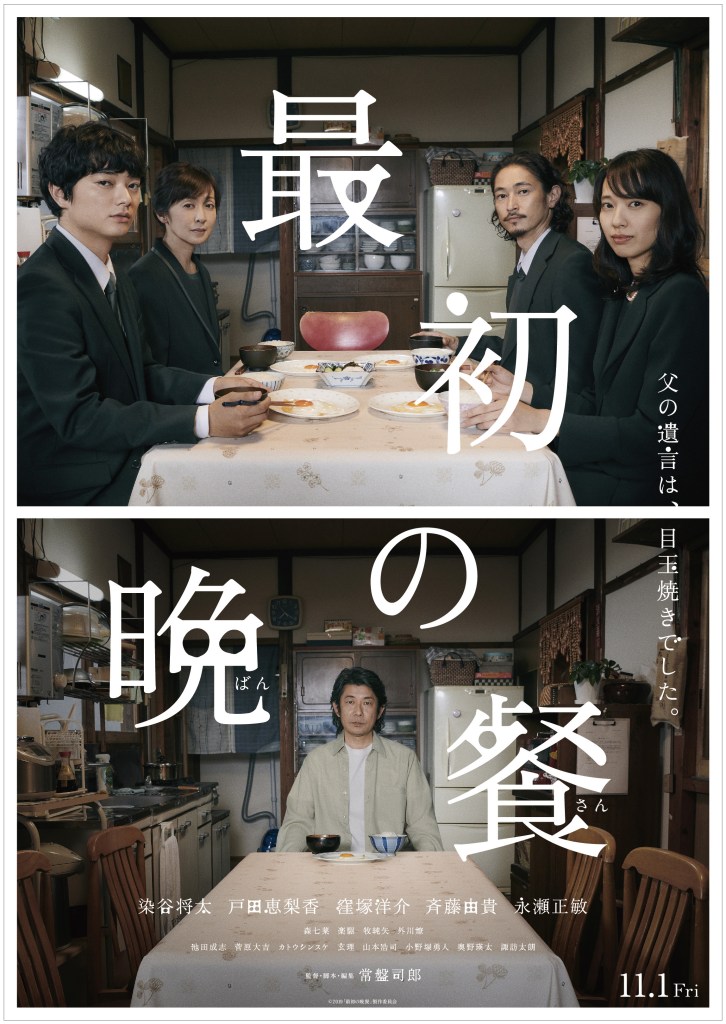
The First Supper (最初の晩餐, Shiro Tokiwa, 2019)

“Family” – what does it mean? The concept itself has been under examination for some time, at least as far as the “family drama” goes, but Shiro Tokiwa’s The First Supper (最初の晩餐, Saisho no Bansan) has it more positive than most as its somewhat emotionally distant hero begins to piece his back together and rediscover his place within it. He does so largely through the Proustian power of food as his lonely step-mother does her best to unite the family by reviving warm memories of the various meals they shared together. 

Yet, as Rintaro (Junya Maki / Shota Sometani), a Tokyo-based freelance photographer grappling with the art/commerce divide, is insensitively told at his father’s funeral, his is not an “ordinary” family. That would be (partly) because it was a blended one. Rintaro and his sister Miyako (Nana Mori / Erika Toda) were being brought up by their single father, Hitoshi (Masatoshi Nagase), their mother having apparently left the family, before he brought Akiko (Yuki Saito) and her teenage son Shun (Raiku / Yosuke Kubozuka) to live with them. As a grown man, Rintaro still claims not to be able to understand what his father was thinking, why he wanted to start a “new” family by bringing Akiko and Shun into their home, especially as it led to him giving up his lifelong love of mountaineering to get a steady job in a factory. It never seems to occur to him that perhaps his father simply fell in love again and wanted to share his life with a woman who loved him, becoming a father figure to her teenage son in welcoming an expansion to their family. 

There is, perhaps, still a resistance to the entire idea of blended families or even remarriages especially in the more conservative countryside. Dealing with an offensive uncle, Rintaro fires back that this kind of thing is perfectly normal and no kind of issue at all in Tokyo, so he’s not sure what the problem is but it’s clear that there is still a degree of disapproval of Hitoshi and Akiko’s union even 20 years later. Part of that might be to do with the circumstances of their meeting which we later discover had their share of moral ambiguity. That central secret, and the ones which spur off it, is the reason that Rintaro has never quite been able to put his family together, while Miyako, married at a young age and now the mother of two daughters, is experiencing a degree of marital strife with her mild-mannered husband (Shinsuke Kato) who accuses her of cheating with an old classmate at a reunion. 

Akiko stuns them all by abruptly announcing that she’s cancelled the caterers for the wake and is planning to cook herself, serving up a selection of dishes one wouldn’t usually expect at a funeral but which she claims are taken directly from Hitoshi’s will and each reflect a particular memory of their life together as a family. There is a gaping hole, however, in that we don’t see Shun. “Why should he come?” Miyako replies to Rintaro’s questions, “He’s an outsider here”. A rather cold cut-off for a step-brother, even one you haven’t seen in a long time, and a partial negation of the idea of families not bound by blood even if it’s snapped partly out of hurt. 

While Miyako struggles to reconcile herself to her place within her new family and her decision to form it, Rintaro chats on the phone to his sympathetic girlfriend, Rie (Hyunri), who has, perhaps surprisingly, not accompanied him on this emotionally difficult occasion. The problem seems to be, however, that he’s told her not to come even though she’d have liked to be there and it doesn’t seem as if anyone would have objected. An agent ringing him at a spectacularly bad time to tell him he hasn’t won a competition is forced to reveal, in the nicest possible way, that he narrowly lost out because his pictures are “cold”, he has no affection for his subjects and it shows. He remains diffident in his relationship with Rie because he hasn’t worked out this whole family thing for himself and is worried he simply doesn’t know how to fit into one. 

Through re-experiencing his childhood through the meals shared with his father, Rintaro begins to regain a sense of belonging, discovering what it was that lay at the heart of his family drama and why it eventually led to a painful breakup. Before all that, however, they’d been happy. Trying to quell a spat between Miyako and Shun over different kinds of miso soup not long after they moved in, Akiko declares that from now on she’s only making one, “blended”, kind for everyone though the choice is theirs whether or not they choose to eat it. Truths are shared, new understandings are reached, and the family is in some sense restored. Their childhoods explained, Miyako and Rintaro begin see a path forwards towards a happy family life of their own while taking their bittersweet memories with them, no longer burdened by anxious insecurity but strengthened by a new sense of belonging that has nothing to do with blood.


The First Supper screens in New York on Feb. 16 as part of this year’s New York Asian Film Festival Winter Showcase.

Original trailer (no subtitles)

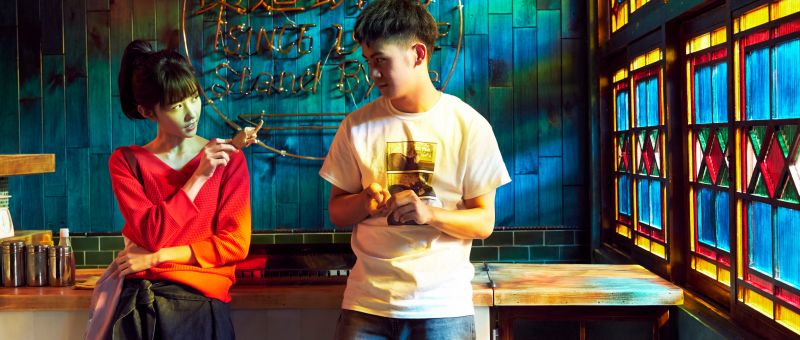
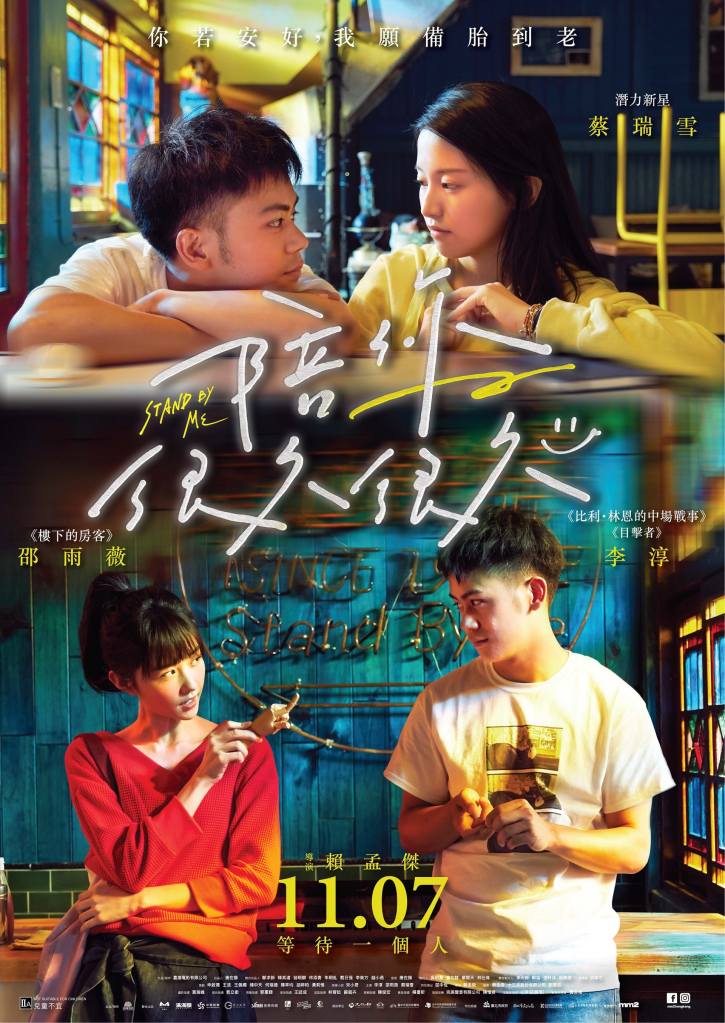
Stand By Me (陪你很久很久, Lai Meng-jie, 2019)

“Teenage days we all need a romance that hurts” exclaims a rejected teen, too shy to declare her crush directly but trying to achieve a kind of closure by literally shouting it from the rooftops in Lai Meng-jie’s charming teenage rom-com, Stand By Me (陪你很久很久, Péi Nǐ Hěn Jiǔ Hěn Jiǔ). For Jiu-Bing (Mason Lee), however, his romance has gone on a little longer than just his teenage years. He’s been silently in love with Bo-he (Ivy Shao Yu-Wei) since he was 12, but their relationship has remained at the innocent level of childhood friendship. Nevertheless, all of his subsequent decisions have been taken with one aim in mind, being at Bo-he’s side to protect her. Now that they’re grown, he’ll have to come to terms with the fact that their relationship is inevitably going to have to change in one way or another. 

As with most youngsters, those changes arrive as they set off for university (he’s enrolled in the same one as her for that reason alone). No matter how close you are, it can be quite claustrophobic having someone buzzing around you all day and Bo-he is beginning to get fed up with Jiu-Bing’s continuing immaturity. He’s promised to “protect” her, but often ends up in trouble himself and needs her to rescue him. It’s Bo-he that finds him a place to stay after he accidentally blows up his new student dorm and gets kicked out, only it turns out to be half of a teenage girl’s bedroom above a family bakery, rented out by high schooler Xia-Tian (Tsai Jui-Hsueh) without her father’s (Chu Chung-heng) permission as an enterprising way to get a little more pocket money. Meanwhile, Bo-he has fallen for a handsome, heroic classmate, Mai-zi (Edison Song Bai-Wai), who is, in every stereotypical way, the perfect man. 

In an ironic twist, Jiu-Bing’s part-time job is as a “pacer”, supporting other runners as they make their way towards the finish line but eventually dropping back himself. He takes pride in being there for people, protecting and encouraging them, but still struggles to accept the fact that his chosen role inevitably means he’ll spend his life celebrating the successes of others rather than his own. Jiu-Bing eventually has this fact thrown in his face when a romantic rival describes him as nothing more than a rebound guy, implying that Bo-he only sees him as a fallback she can rely on when some other boy breaks her heart but will never really want to be with in the long term. 

On one level, Jiu-Bing is fine with that. He really does just want Bo-he to be happy even if it’s with someone else, but still struggles with the decision of whether to speak his feelings out loud and risk ruining their friendship or keep silent and live with the pain of being just her friend forever. As one of his eccentrically nerdy friends puts it, companionship is the “dark matter” that supports a relationship, but the jury’s still out on whether companionship alone is enough to go the distance. Meanwhile, he remains entirely oblivious to the fact that Xia-Tian is beginning to develop feelings for him that place her in exactly the same place as he is with Bo-he. Maybe he just thinks of Xia-Tian as a crazy little sister, and maybe Bo-he just thinks of him as a troublesome little brother who will always need looking after despite his constant protestations that all he wants is to be able to “protect” her. 

What Jiu-Bing learns however is that being a pacer is no bad thing. It’s much better to run with someone than to run alone, but there are times when you just need to set a pace for yourself so you can figure out how far you can run. There are more ways to love than just the romantic, though maybe that’ll come in time but perhaps not from the direction you’d expected. “Being heard and accepted is nothing we can decide” Xia-Tian adds, and what is teenage romance other than coming to an acceptance that sometimes you love people who don’t love you back? But then sometimes they do, and if you never say anything you’ll never know. Jiu-Bing has some growing up to do, and a few decisions to make so he can figure out where it is he ought to be – supporting from the sidelines or waiting with flowers near the podium. Either way, Lai Meng-Jie’s charming teenage rom-com is a refreshingly progressive take on the genre which allows it’s “nice guy” hero to find solace in the authenticity of his generosity while its heroine embraces her own sense of agency entirely independent of her romantic destiny. 


Stand By Me screens at Chicago’s Gene Siskel Film Center on Feb. 17 where the full lineup for the upcoming 10th season of Asian Pop-Up Cinema will also be unveiled. Director Lai Meng-jie will be in attendance for an introduction and post-screening Q&A.

Original trailer (English/Traditional Chinese subtitles)

Zone Pro Site: The Moveable Feast (總舖師, Chen Yu-hsun, 2013)

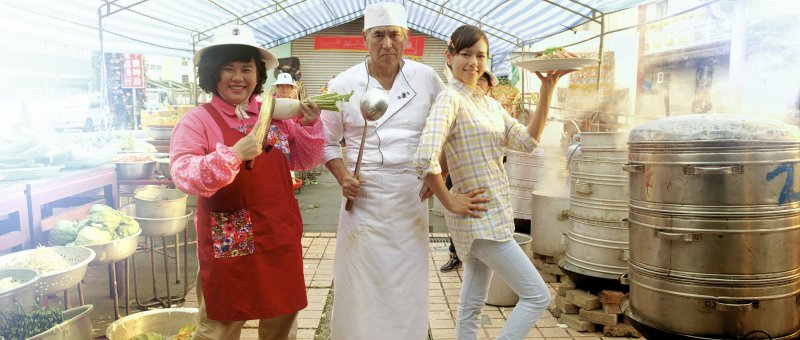
In these high speed days, it’s sometimes difficult to remember that “cooking means something” or at least it should do according to “Doctor Gourmet” Hai (Tony Yang). A warm tribute to the Taiwanese tradition of bandoh outdoor banquets, Zone Pro Site: The Moveable Feast (總舖師, Zǒng Pù Shī) positions the figure of the chef as a kind of conduit bridging the gap between people through the art of well cooked food. Heroine Wan (Kimi Hsia Yu-chiao), however, thoroughly rejected the ambitions of her top chef father and determined on a life in the city with her heart set on becoming a famous model, actress, and celebrity. 

Life in Taipei is however hard. Career success is hard to come by and duplicity lurks round every corner. Wan learns this to her cost when two shady guys turn up on the pretext of delivering a birthday cake only to explain to her that her boyfriend, whose loans she’s unwisely co-signed, has skipped town and left her with the bill. Confused and afraid, Wan decides to skip town herself, planning to head back to her hometown and ask her mother for help. What she discovers however is that her mother is on the run too after losing the family restaurant partly through her subpar cooking skills which could never match those of her late husband, and partly through the betrayal of his apprentice who poached all their best customers and set up on his own. Despite being “in hiding”, the only way Puffy (Lin Mei-hsiu) has been able to make ends meet is by putting on an impromptu dance show in the central square to promote her small noodle stall. Luckily for them both, Wan makes a chance encounter on the train with a nice young man, Hai, who turns out to be a “Doctor Gourmet” specialising in “fixing” failing restaurants.

His arrival comes at just the right moment as Wan and her mother get a visit from potential clients – a sweet older couple who first met 50 years previously at a wedding catered not by Wan’s father Master Fly Spirit, but by his now departed mentor. Wan’s mother was going to turn the request down because neither she nor Wan know how to make the traditional dishes the couple are looking for, but Wan makes an impromptu decision to try and make their wedding dreams come true, warning them that it might take a little extra time and not quite match up to their romantic expectations. 

Wan’s problem is that she always hated her family’s restaurant. She resented the heat and the smell and the grease, often placing an empty box over her head and retreating into a fantasy world to escape the chaos. Her father wanted her to take over, leaving her a notebook filled with his recipes which was unfortunately stolen by a homeless man who mugged her at the station, but she was dead set on escape and becoming a “someone” in the city. Unlike her mother, however, she has real talent for cooking and is equally skilled at using her good looks and sweet nature to get things done. Soon after her arrival at the noodle stand, she’s already got herself a gang of geeky groupies calling themselves “Animals on Call” who are ready to do pretty much anything she asks of them. 

That comes in handy when Puffy persuades her to enter a national cooking competition where her rival is none other than Tsai, the apprentice who betrayed them, backed up another famous ex-chef Master Ghost Head (Hsi Hsiang) who has a fiery temper and spent some time in prison which might be why he still dresses like an ultra cool motorcycle guy from the ‘70s. There were apparently three great masters, the other being the eccentric  Master Silly Mortal (Wu Nien-jen) who is later discovered living in a subway tunnel where he keeps the art of bandoh alive through a literal underground restaurant where his regulars bring him a selection of ingredients before sitting down to enjoy a communal meal. It’s Silly Mortal whose food is said to evoke human feelings who guides Wan towards a series of epiphanies about the nature of “traditional” food. According to him, there are no rules about what goes together, and having a “traditional” heart is really about embracing the true nature of bandoh. Only by having a heart full of joy can you make good food. 

Equally eccentric in some respects, Hai takes a back seat after reminding Wan that cooking is really a way of sending a coded message to its intended target. The two goons eventually join the team, working together earnestly to prepare for the biggest banquet of all which is both the old couple’s wedding celebration and the competition’s finale. Master Ghost Spirit talks about taking the “grief” out of meat through fine cutting, while Master Silly Mortal is all about putting positive emotions in, but the missing piece of the puzzle is Master Fly Spirit who sends his final message to Wan only after death as she rediscovers him through his recipes. Not quite giving up on her celebrity career, Wan embraces her inner chef, happy with the idea of making lunchboxes to sell at the station with her new friends and family rather than chasing money through oddly nihilistic cuisine as Tsai had done. In the end, it’s all about joy and togetherness, sharing tasty food in the open air where anyone and everyone is welcome to bring whatever they have to the table.


Zone Pro Site: The Moveable Feast screens in New York on Feb. 16 as part of this year’s New York Asian Film Festival Winter Showcase.

International trailer (English subtitles)

Kakegurui (映画 賭ケグルイ, Tsutomu Hanabusa, 2019)

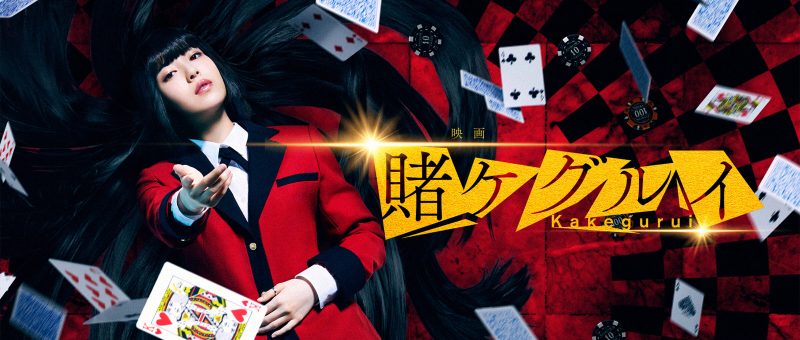
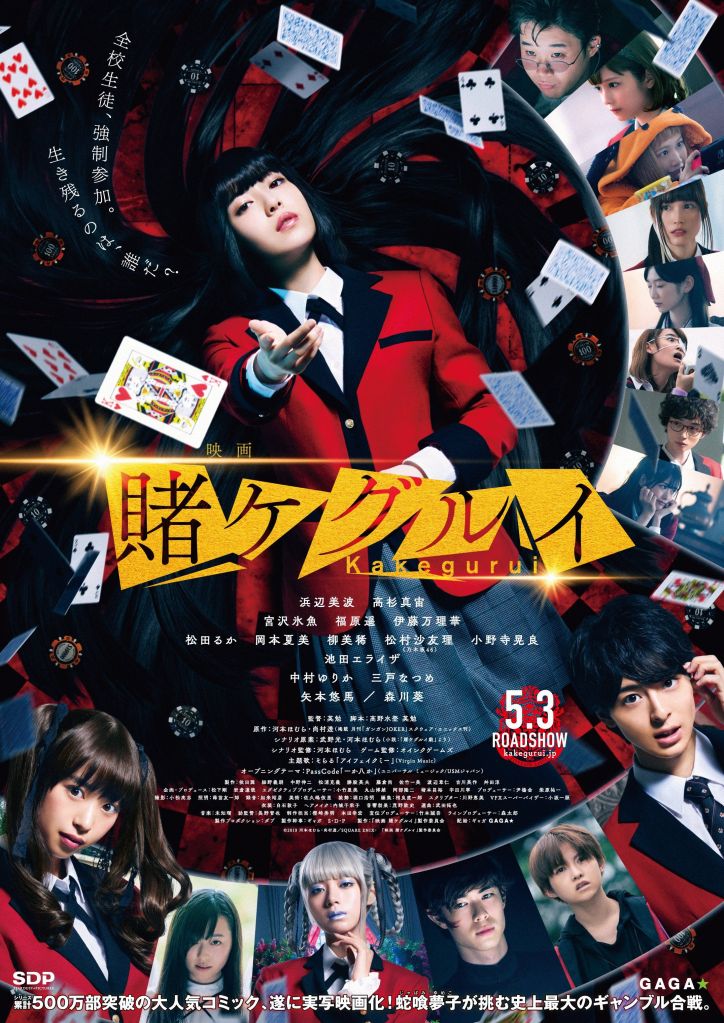
Gambling, the ultimate act of faith or the height of anarchic genius? Based on the hit manga which has already been adapted as a popular TV anime, Kakegurui (映画 賭ケグルイ) is the sequel to two seasons of a live action TV drama set in a school where hierarchy is decided not by grades or by fists, but by prowess at the gaming tables. Those who lose so badly they bankrupt themselves become a kind of subhuman underclass, tied up like dogs and routinely humiliated, while the Student Council becomes a stand in for an oppressive social order ruling over all and enforcing the law with an iron hand. 

Into this high stress environment walks Yumeko Jabami (Minami Hamabe), a transfer student to the elite Hyakkaou Private Academy determined to bend its rules to her own advantage. Meanwhile, Student Council President Kirari Momobami (Elaiza Ikeda) is forced to deal with a new and unexpected threat – The Village, a small cult made up of students who have rejected the system, dropped out to live a hippy lifestyle in the grounds, and refuse to participate in “meaningless” games of chance. Their priest-like leader, Amane Murasame (Hio Miyazawa), once beat Kirari at cards becoming something like a god of gambling, but lost his zeal for the game after losing the only thing he ever cared about. 

Where he opposes the system passively yet pointedly, Yumeko rebels in her own, fiercely individualistic way by superficially conforming, becoming a top gambler, but only because she is exercising a free choice to do so. She plays for kicks alone, and generally wins because she isn’t stressed enough about losing to let it bother her. This individualist streak makes her a hidden threat against Kirari, but one that might in itself be an interesting gamble for the infinitely bored Student Council President. 

While Yumeko’s individualism threatens to unbalance the system, The Village presents a collectivist threat, agitating wholesale revolution and an end to the oppressive rule of the Student Council which renders losers inhuman. Yet there’s an essential irony in The Village’s creepy monotony that stands in stark contrast to Yumeko’s seeming conformity but insistence on her own freedom. Your life’s your own, she later explains, it’s annoying if people try to manipulate it. In this instance she’s talking not about the “life plans” handed out by the Student Council, but the egotistical desire to “save” the lives of others without considering if they want them saved or if you’re merely infringing on their personal freedom in attempting to make choices for them based entirely on your own value system. 

Murasame perhaps bet something he shouldn’t have and technically won, but ended up losing anyway which is what has made him turn against gambling. Yumeko, meanwhile, believes that the only way to be truly free to entrust yourself to luck and destiny. That is, however, somewhat disingenuous, because what Yumeko excels at is mind games, essentially manipulating those around her in order to win. Yumeko plays players, not cards, and is rarely played herself. Unlike Murasame’s righthand woman Arukibi (Haruka Fukuhara), she doesn’t care that much what people think. Arukibi, meanwhile, is desperate for approval and is playing her own game just to get someone’s attention which makes her a volatile, if easily manipulated, opponent.

Essentially, Murasame wants freedom outside of the system where Yumeko has found it within, but her philosophy is perhaps the more dangerous in that it proposes total freedom that has no regard for the systems of governance. Then again, maybe this is all a long con to get better cakes in the cafeteria, merely gaming the system rather than actively undermining it. Nevertheless, for Yumeko life is risk, rebelling against an oppressive social order through the anarchic individualism of living by “chance”. Living in a society as highly regimented as this is a high stakes game, but you can’t win if you don’t play, and you need to play smart. That’s the peculiar irony of life at Hyakkaou Private Academy where the Student Council literally owns your future but you can win it back by playing them at their own game. Bet your life, win your freedom Yumeko seems to say but she still makes sure to bring cake for everyone, not just the “winners” or the privileged few. 


Screened as part of the Japan Foundation Touring Film Programme 2020.

International trailer (English subtitles)

Her Sketchbook (世界は今日から君のもの, Masaya Ozaki, 2017)

Many young people struggle to find their place in the world, but for young Mami who largely just wants to be left alone, the struggle is all the greater. Less a hikikomori drama than a tale of destructive parenting and buried talents, Her Sketchbook (世界は今日から君のもの, Sekai wa Kyou kara Kimi no Mono) charts the gradual blossoming of a young woman who begins to take root after finding the right environment in which to thrive, encouraged by others who take the time to see and appreciate her for who she is rather than all they fear she’s not. 

A shut-in since dropping out of middle school, Mami (Mugi Kadowaki) has recently taken a factory job but is laid off after a little misadventure at the seaside leaves her with an injury that prevents her from strenuous labour. Her father Eisuke (Makita Sports), recently made redundant himself, is worried for her future and wants her get out more so he sets her up with a job that seems ideal, testing games for bugs at a software company. It’s there that she crosses paths with harried project manager Ryotaro (Takahiro Miura) who is getting fed up with the artistic temperament of his usual character designer. He drops a sketch covered in markup notes and she tries to hand it back to him but is too shy and ends up taking it home where she diligently corrects it according to his instructions and mails the revised illustration to the address on the bottom, trying to make up for her failure in being unable to approach him in person. The new drawing is exactly what Ryotaro had envisioned, but he has no idea who the mystery illustrator is. Nevertheless, he decides to start mailing additional requests to the unfamiliar email address. 

Eisuke thinks he’s doing the best for his daughter, but even he in unguarded moments describes her as odd and a failure. He had no idea that she had any kind of “talent”, believing she was just sitting in her room twiddling her thumbs. But for Mami, the discovery of her boxes of illustrations is something of a mixed blessing. She’s glad people seem to be pleased, but partially resents the new attention and quickly realises that they’ve misunderstood her capabilities. She’s good at mimicking the style of others and correcting proofs according to instructions, but struggles when asked to come up with ideas of her own. 

That struggle is essentially a mental block on being able to see herself. Always a little “different”, Mami never fit in at school and while her father fretted that she wasn’t making friends, her mother (You) was content to let her be. Unfortunately that wasn’t because she accepted her daughter for who she was and wanted to support her, but that she knowingly or otherwise used her difference against her as a reason to keep her close. Now having left the family for unclear reasons, Mami’s mother remains possessive and domineering, never missing an opportunity to undermine her daughter’s sense of confidence or to remind her that she doesn’t belong in regular society. Mami’s struggle is, in that sense, to break free of her mother’s toxic parenting and reject her view of her as someone who is entirely unable to lead a normal life as independent adult. 

Essentially infantalised, Mami finds herself learning adult life lessons at an accelerated pace but also battling unhelpful attempts to exploit and misuse her hikikomori past. A sleazy public servant who threatens to assault Mami after bringing home her drunken friend from a bar convinces her to appear at a panel he’s running on the hikikomori phenomenon but completely ignores everything she tells him, trying to twist her words to suit his own hypotheses in presenting her as someone who has successfully reintegrated into mainstream society. He wants her to say that she took the factory job to help out after her dad was laid off, but really she took it because his being home all day was quite annoying so she got a job to avoid him. The public servant simply isn’t listening, but a shy little girl in the back is and finally knows there’s nothing wrong with her and she’s not alone. 

What gives Mami the courage to move forward is the gentle encouragement of her new friends who never treat her as if she’s weird or incapable and are prepared to be patient while she finds her footing. Just like the flower in the flip book she draws while waiting for inspiration, Mami blossoms after finding the right environment in which to thrive, gaining confidence from other people’s confidence in her but resolving to take things one step at a time, harnessing her newfound talent to claim a space for herself in a world opening up before her.  


Screened as part of the Japan Foundation Touring Film Programme 2020.

International trailer (English subtitles)
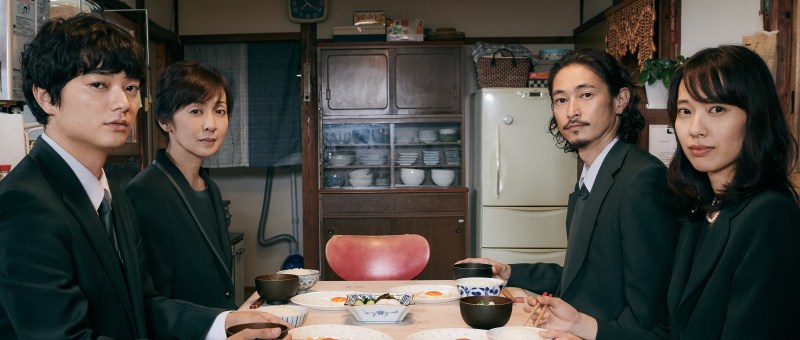
The House Where the Mermaid Sleeps (人魚の眠る家, Yukihiko Tsutsumi, 2018)

In most countries, the legal and medical definitions of death centre on activity in the brain. In Japan, however, death is only said to have occurred once the heart stops beating. The bereaved parents at the centre of The House Where the Mermaid Sleeps (人魚の眠る家, Ningyo no Nemuru Ie), adapted from the novel by Keigo Higashino, are presented with the most terrible of choices. They must accept that their daughter, Mizuho, will not recover, but are asked to decide whether she is declared brain dead now so that her organs can be used for transplantation, or wait for her heart to stop beating in a few months’ time at most. As their daughter was only six years old, they’d never discussed anything like this with her but come to the conclusion that she’d want to help other children if she could. Only when they come to say goodbye, Mizuho grasps her mother’s hand giving her possibly false hope that the doctor’s assurances that she is brain dead and will never wake up are mistaken. 

The situation is further complicated by the fact that the Harimas were in the middle of a messy divorce when they got the news that Mizuho had been involved in an accident at a swimming pool. Kazumasa (Hidetoshi Nishijima), Mizuho’s father, is the CEO of a tech firm specialising in cutting edge medical technology mostly geared towards making the lives of people with disabilities easier. He does therefore have a special interest in his daughter’s condition and is willing to explore scientific solutions where most might simply accept the doctor’s first opinion. His wife, Kaoruko, meanwhile has a deep-seated faith that her daughter is still present if asleep and will one day wake up. 

It so happens that one of Kazuma’s researchers (Kentaro Sakaguchi) specialises in a new kind of technology which hopes to restore motor function through artificial nerve signals controlled by computers and electromagnetic pulses. He hatches on the idea of using the technology to improve his daughter’s quality of life by letting her “exercise” to maintain muscle strength, but despite the excellent results it achieves in terms of her health, it takes them to a dark place. Muscle training might be one thing, but having Mizuho make meaningful gestures is another. They don’t mean to, but they’re manipulating her body as if she were a puppet, even forcing her to smile without her consent. 

Kazumasa starts to wonder if he’s gone too far. Seeing his daughter’s face move with no emotion behind it only proves to him that she is no longer alive. Meanwhile, he comes across another parent raising money to send his daughter to America for a life saving heart transplant and begins to feel guilty that perhaps his decision was selfish. The father of the other girl sympathises with him and confides that they can’t bring themselves to pray for a donor because they know it’s the same as praying for another child’s death, but Kazumasa can’t help feeling he’s partly responsible because he made the choice to artificially prolong his daughter’s life but now realises that she is little more than a living a doll. 

This is something brought home to him by Kaoruko’s increasing desire to show their daughter off. Her decision to take her to their son Ikuo’s elementary school entrance ceremony instantly causes trouble with the other parents who feign politeness but are obviously uncomfortable while the children waste no time in ostracising Ikuo because of his “creepy” sister. Kazumasa privately wonders if Kaoruko’s devotion has turned dark, if she’s somehow begun to enjoy this new closeness with her daughter to the exclusion of all else and has lost the power of rational thought. He can’t know however that perhaps she’s coming to the same conclusion as him, but it finding it much harder to accept that they might have made a mistake and all their interventions are only causing Mizuho additional suffering.

What’s best for Mizuho, however, is something that sometimes gets forgotten in the ongoing debate about the moral choices of her parents and relatives. Kazumasa’s colleagues accuse of him of misappropriation in monopolising a key researcher, hinting again at the “selfishness” of his decision to expend so much energy on treating someone whom many believe to be without hope when there are many more in need. The researcher in turn accuses Kazumasa of “jealousy” believing that he has displaced him as an “artificial” father working closely with Kaoruko in caring for their daughter. The “life” in the balance is not so much Mizuho’s but that of the traditional family which is perhaps in a sense reborn in rediscovering the blinding love that they shared for each other which will of course never fade. What they learn is to love unselfishly, that love is sometimes letting go, but also that even in endings there is a kind of continuity in the shared gift of life and the goodness left behind even after the most unbearable of losses.


Screened as part of the Japan Foundation Touring Film Programme 2020.

Original trailer (English subtitles)