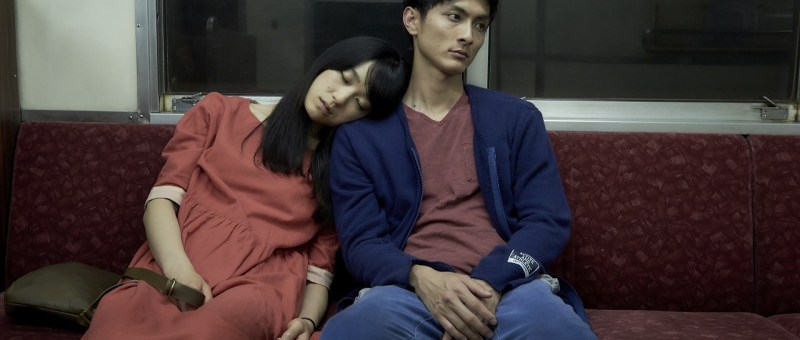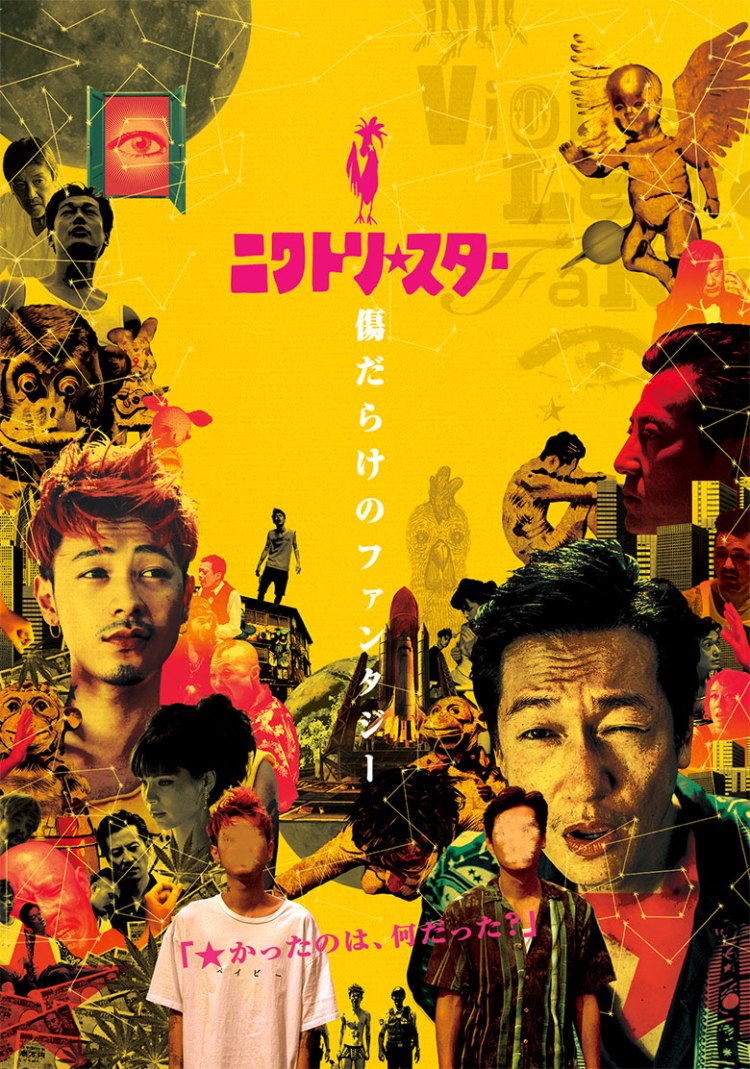
Smokin’ on the Moon (ニワトリ★スター, Kanata Wolf, 2017)

Smokin' on the Moon posterSlacker drama has become a mainstay of the Japanese indie scene as aimless young men drift freely in a society which promises them little and threatens to take much. Even so they’ve rarely been quite so genially lost as the pair at the centre of Kanata Wolf’s Smokin’ on the Moon (ニワトリ★スター, Niwatori★Star) whose relatively serene life of stoner bliss is radically derailed after a dramatic encounter with a psychotic yakuza drug dealer. Dreaming of escape, a better life somewhere else, the pair find themselves taking very different paths as they reflect on their familial pasts, broken dreams, and future promises.

34-year-old Sota (Arata Iura) and his younger unofficial roommate and official best friend Rakuto (Ryo Narita) live a “simple” life of casual work which pays for rent and getting stoned if not much else. They are broadly “happy” with their aimless drop out lives and determined not to get involved with the shadier sides of their underworld existence by avoiding the pull of hard drugs and gangster hang outs. All that ends up going by the wayside when their dealer, Jay (Peron Yasu), is offed by sadistic yakuza Hatta (Kanji Tsuda) who makes a point of dropping in on the boys to ask them if they know where Jay might be in order to make sure they don’t. Being directly confronted with gangster violence sparks Sota into a series of epiphanies as he suddenly realises that the stoner life is not a good fit for a man of 34, while Rakuto, who has few other options, considers throwing his lot in with Hatta if only to remain on the sidelines of organised crime.

Sota, son of an Osakan okonomiyaki restaurant owner (Eiji Okuda), left home in flight of family legacy, bored with boring small-town life and resentful of his “destiny” as the heir to a family business. Eight years in Tokyo, however, have been largely wasted, squandered away on constant evasion with nothing more to show for his time than a few crazy stories and a deeply held friendship. Sota does at least have a safety net, he can always go home to a family that will welcome him with open arms. Rakuto is not so lucky. Harbouring deep seated resentment towards his mother who was unable to protect him from a violent step-father, Rakuto fled Okinawa to escape the memory of a traumatic childhood which is perhaps why he finds himself becoming a surrogate father to a little boy whose mother, as it turns out an old friend of his, desperately tries to kick a crack habit given to her by an unforgiving city even as it crushed her dreams of musical success.

Discovering an old report card on which he’d written that his greatest ambition was to work hard for his family, Rakuto decides he needs to buck up and become a responsible husband and father who can provide a stable home for a woman and a child. There are, however, few opportunities for middle-school dropouts and even those there are Rakuto has already disqualified himself from thanks to his stoner looks which include fiery red hair and several prominent tattoos (prohibited in almost every conceivable “decent” job in Japan). Thus he feels his only option is to become a kind of errand boy for Hatta, naively believing he will allow him to remain in the shallower end of the gangster pool just dealing weed and making deliveries rather than pushing hard drugs or getting involved in violence. While Sota finds peace in the country, Rakuto begins to build the family life he’d always dreamed of while trying to cope with the constant anxieties of being an underling to a bunch of unhinged crooks.

Wolf shifts registers throughout – starting off in stoner comedy where our heroes inhabit a bohemian world of gay bars and randy landladies, shifting into crime thriller as the nasty gangsters rear their heads, and then finally ending up in masculine melodrama as Sota recounts the sad story of his friend who, despite his good heart, finds himself a victim of fate rather than of himself or even of his society. Mixing strange animation and surrealist diversions with an affecting tale of friendship, Smokin’ on the Moon is another sad story of those unable to find their place in the world taking refuge in each other only to find a melancholy compromise even as fate threatens to rob them of the little joys they’ve found.


Smokin’ on the Moon screens at New York Asian Film Festival 2018 on 10th July at 9.15 pm plus Q&A with director Kanata Wolf

(Kanata Wolf (かなた狼) previously known as Yuichiro Tanaka (たなか雄一狼). Surname is Wolf as per official website).

Original trailer (no subtitles)

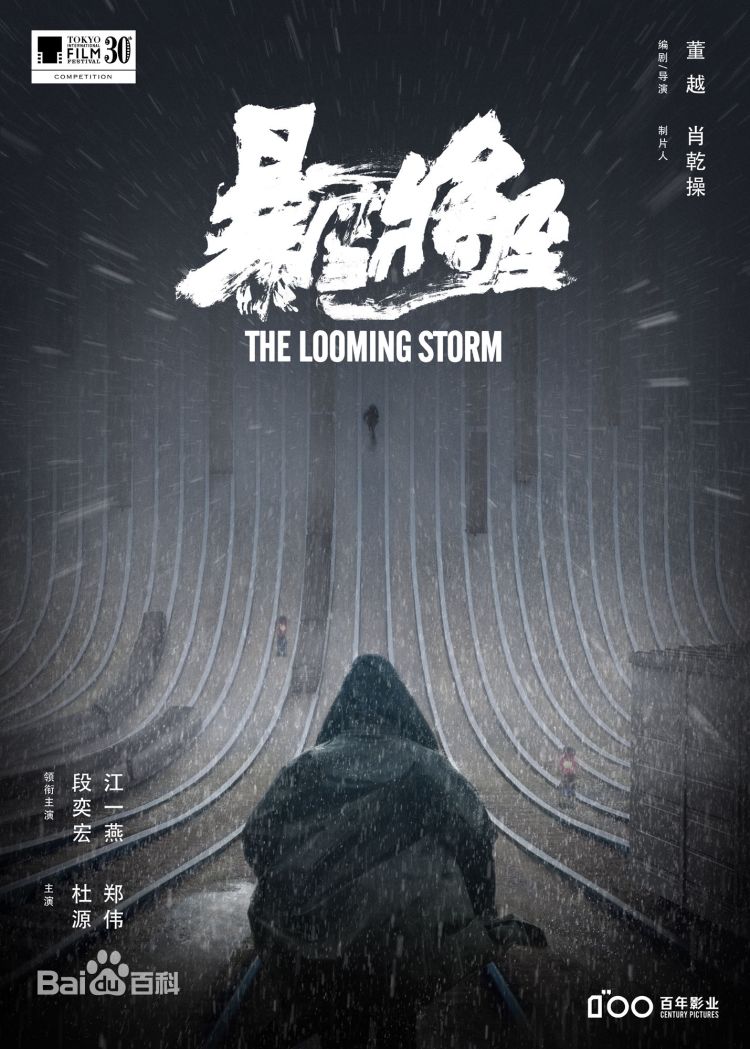
The Looming Storm (暴雪将至, Dong Yue, 2017)

The Looming Storm posterGreat changes were afoot in China in 1997. While the rest of the continent contended with the Asian Financial Crisis, China saw the death of reformer Deng Xiaoping who had begun the business of putting the nation’s economy on a modern footing – something which was still very much in progress under the then premier, Jiang Zemin. The old unprofitable factory cities and the work unit system were on their way out, but with little in the way to replace them save the hope for a new and glorious future. The hero of Dong Yue’s debut, The Looming Storm (暴雪将至, Bào Xuě Jiāngzhì) has an unhappy destiny in that his name uses characters which could be translated as “unnecessary remnant of a glorious nation”. He, like many of his generation, is one caught out by his country’s sudden shifts and finds himself living out a fantasy, chasing at shadows and eventually destroying himself in a misdirected attempt to attack a society which has all but forgotten him.

We begin at the end – in 2008, Yu Guowei (Duan Yihong) is released from prison as a parolee, awaiting the return of his ID card and along with it his official existence as a member of society. Flashing back to 1997, Guowei is the security officer at the local factory. Having proved himself efficient in catching petty criminals thieving from the communal resources, Guowei gets himself a “model worker” commendation and the nickname “Detective Yu”. Fancying himself as a top investigator and there being very little to do in this no horse town, Guowei is, in a sense, excited when another body of a young woman turns up near the factory closely matching the pattern of other recent murders and hinting at a serial killer. Seeing as the police are short staffed in any case, the local sheriff decides to humour Guowei by allowing him to go on trying to solve the case on his own.

Guowei investigates the crime with methods he’s learned from hardboiled movies – staking out the crime scene and asking awkward questions in an illicit local disco where, it is suggested, some of the victims may have been earning money through casual sex work. He becomes obsessed with shadowy figures, faces hidden by raincoats, who lurk on the periphery anonymous and almost unseen but yet unsettling. Guowei finds and chases his quarry, only to abandon a friend in need while the suspect gets away leaving Guowei with only his shoe as a possible clue.

During his model worker speech, Guowei somewhat milks the occasion but proudly states that he intends to live a “meaningful live”. Given the depressing drudgery of his existence it’s unclear how he intends to do that, but then his “investigation” becomes his great and glorious destiny – something which will bring both meaning and acclaim to his otherwise meaningless existence. Like many of his age, Guowei has learned to be proud of his contributions to society through his work but remains unaware that the security bureau is not well respected. Everyone knows Guowei is a pure hearted sort who cannot be corrupted and pretends to respect him for it, but in reality they find him priggish and ridiculous. Unbeknownst to him to there have been many more mysterious thefts he’s never discovered because the entire factory and even his own assistant are engaged in a complex system of bribery to cover them all up.

When the factory is unceremoniously shut down, all Guowei is left with is his need to find the killer. Striking up a relationship with a pretty sex worker, Yanzi (Jiang Yiyan), who dreams of opening her own hair salon in Hong Kong – another new horizon in 1997 though one she fears she may never see, Guowei perhaps has another shot at building a “meaningful life” but rejects it, suppressing his natural desires for his obsessive pursuit in deciding to use his new muse as bait. Time and again, Guowei backs away from the reality, unwittingly sacrifices friends and lovers in service to his self created narrative in which he is a hero seeking justice whose victory is all but assured. Having discovered the truth, Yanzi’s eyes are opened – she has woken up from the beautiful dream of a possible future while Guowei is still boyishly dreaming of becoming a hero in an unheroic world.

Dong paints the industrial factory town in tones of washed out browns and greys as the rain falls without end, muddying the streets and thickening the air. Having made a life changing transgression, Guowei is asked what the point in any of this really was and seemingly has no answer, his fantasy perhaps shattered by his single act of horrifying violence intended for the world in which he lived which had already robbed him of so much, but vented on a possibly innocent party all because of a personal conviction more akin to prejudice. A victim of changing times denied his future, the “meaningful life” that would allow him to greet the new century with head held high, Guowei creates a new narrative for himself in which he can be the hero but there is a storm always looming and Guowei has been swiping at ghosts flickering on the peripheries of his fracturing mind. Eventually Guowei too decides it’s time to leave this place only to find no way out from the blizzard conditions which continue frustrate the path towards his future.


The Looming Storm screens at New York Asian Film Festival 2018 plus Q&A with director Dong Yue on 9th July at 9.30pm.

Original trailer (English subtitles)

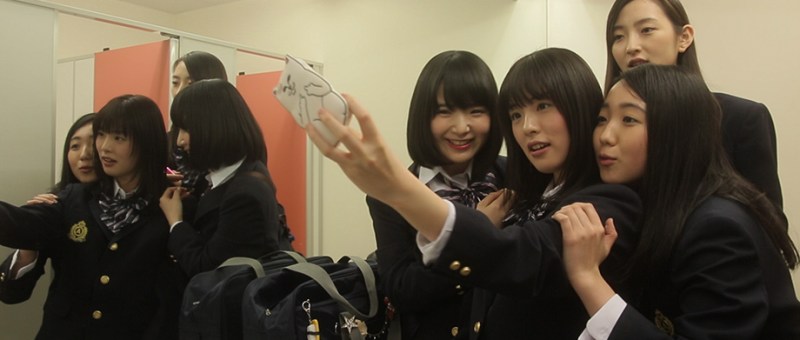
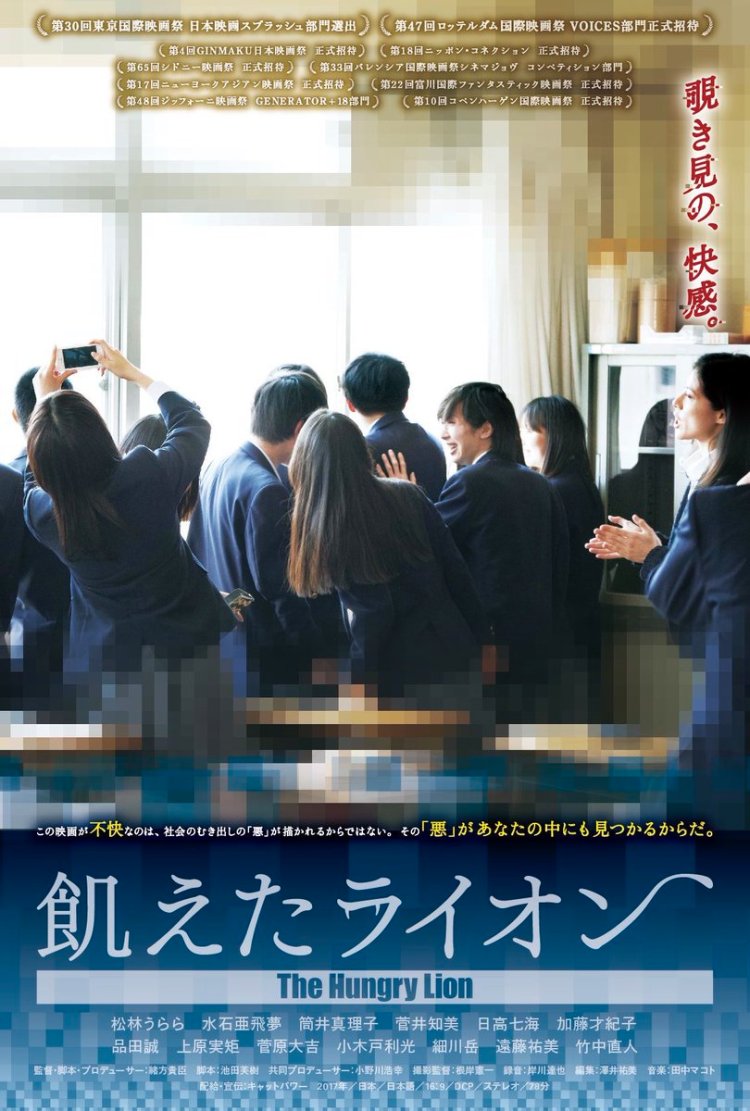
The Hungry Lion (飢えたライオン, Takaomi Ogata, 2017)

Hungry lion posterRumour has a strange power. A baseless lie, no matter how innocuous, can quickly derail a life but the power of lie with a tiny grain of, if not truth exactly but circumstantial evidence, can prove ruinous when there are vested interests at play which make belief an attractive prospect. The heroine of Takaomi Ogata’s The Hungry Lion (飢えたライオン, Ueta Lion) finds herself at the centre of such a storm through no fault of her own, becoming a victim not only of her country’s restrictive social codes, tendency towards victim blaming, and reluctance to deal openly with “unpleasant” topics, but also more directly of the latent jealousy lurking in her closest friends which finds a convenient home in someone else’s scandal. Nobody will come to her rescue, her “disgrace” has exiled her from the group and she finds herself abandoned as a lonely a sacrifice to the hungry lion that feeds on social shame.

High school teacher Mr. Hosono is not exactly popular with his students. He is strict with the boys but less so with the girls, as he proves greeting one tardy student who blames a train accident for his late arrival by berating him about his regulation busting necklace while allowing a female student, Hitomi (Urara Matsubayashi), who arrives a couple of minutes later to take her seat unharrassed. Midway through the register, Mr. Hosono is called away and eventually arrested in connection with the viral video all the kids were looking at before he arrived which appears to show him in a compromising position with a student. For one reason or another, a rumour spreads that Hitomi is the girl in the video. She isn’t, but few believe her strenuous denials and her life becomes one of constant strife not only because of the bullying itself, or the injustice of being falsely accused and then disbelieved by those closest to her, but by the way she is made to feel embarrassed and shamed for causing trouble to others even though she herself has done nothing wrong.

A “relationship” between a teacher and a student is never appropriate, and Mr. Hosono has at least been removed from his position at the school, but no one seems very interested in identifying the girl in the video in order to help her, only to spread ruin and rumour. Hitomi is not the girl in the video, but even if she had been there is no support on offer to her as a person who has been abused by someone in a position of power she should have been able to trust, nor are there any measures in place to ensure her academic life will not be unduly damaged by becoming involved in such a traumatic incident. Aware of the rumours, the school accepts Hitomi’s assertion that she is not the girl but still suspends her to avoid “awkwardness” and protect their own reputation. Likewise, her own mother and sister are far from supportive, berating her for bringing shame on the family and creating problems for them in making the family a target rather than standing by her in her ordeal whether she had been the girl or not.

The rumour itself seems to spring from persistent shaming and stigmatisation of atypical families. Hitomi is 18 and she has a boyfriend who is a little older. He has some shady friends and likes to push buttons as he does by causing mild embarrassment to Hitomi by taking her into the curtained off “adult” section of the local video store in an attempt to shock her. Nevertheless the pair eventually make their way to a love hotel (where they are not age checked) and he films her in a compromising position. Girls talk and Hitomi’s friends all know about her relationship which is also plastered all over her social media on which she is something of a star. Some of her friends are jealous but also harbour a degree of disapproval and the mere fact that she is already sexually active ties her to the girl in the video and casts her in an “impure” light in the cute and innocent world of high school girls. Similarly, her boyfriend’s estimation of her drops after she consents to sleep with him while his leering friends make lewd comments and regard her as an “easy” girl who has lost the right to refuse their advances.

Ostracised for essentially becoming a “fallen woman”, Hitomi is left entirely alone with no one to turn to for support. Later, authorities are keen to stress that it’s important to speak out if you’re suffering because adults will always help children but like everything else they are just empty words. The school give out a pamphlet on the importance of prudence when using social media, but refuse to accept their responsibility in failing to protect their students. The news meanwhile becomes obsessed with tearing apart Hitomi’s family, laying the blame at their feet, insisting that Hitomi’s downfall is in someway a result of her parents’ divorce even blaming her mother for having the audacity to find a “boyfriend” before her children were fully grown. The image we had of Hitomi is suddenly reversed. No longer is she a “slutty schoolgirl” involved in an illicit relationship with her teacher, but a neglected child damaged beyond repair by “liberal modern society”.

Reputation is what matters, but reputation is easily manipulated and rewritten, muddy even when objective truth is revealed. Ogata shoots in brief vignettes, each severed from the next by a stark black screen which forces us to examine the objectivity of each scene as distinct from the others, assembling our own versions of “objective” truth which are in fact guided by Ogata’s carefully crafted editing. Fake news has an agenda, truth does not, but it’s often much easier to believe the lie especially if the lie benefits us much more than the truth or enables us to feel superior to someone we secretly think needs taking down a peg or two. Society is a hungry lion which feeds on shame, externalised and internalised, as those who find themselves on the wrong sides of a series of social taboos become unwilling sacrifices to its unkind, unforgiving, and unrelenting hunger for suffering.


Screening at New York Asian Film Festival 2018 on 30th June, 2.45pm.

Original trailer (English subtitles)

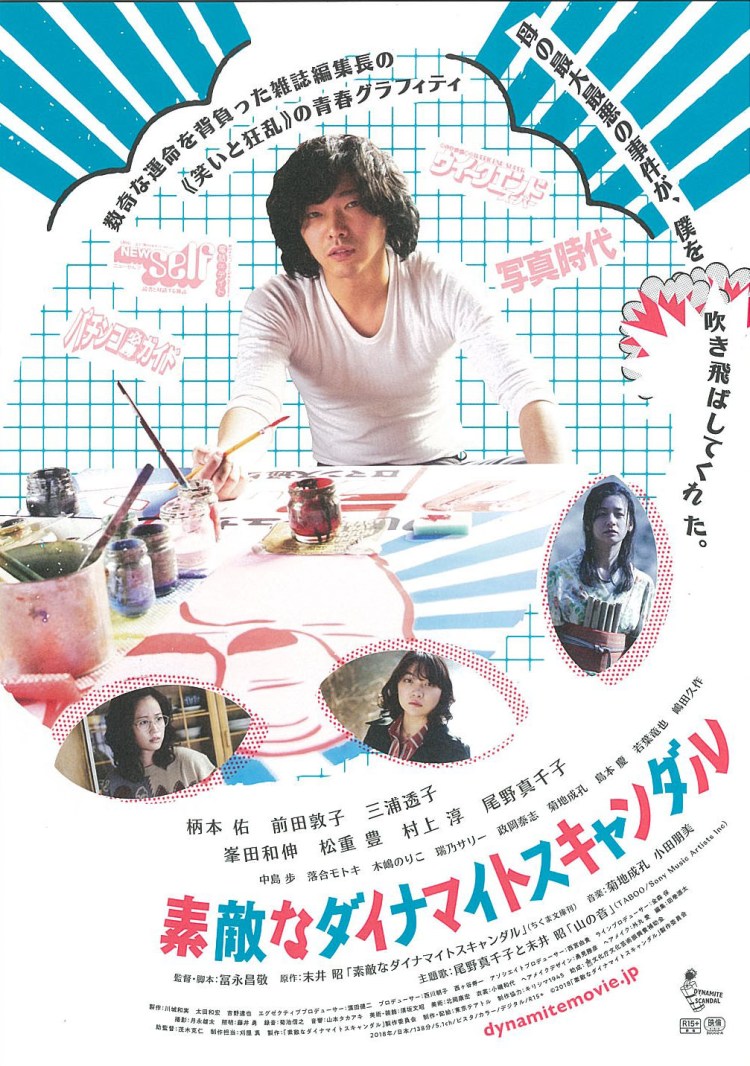
Dynamite Graffiti (素敵なダイナマイトスキャンダル, Masanori Tominaga, 2018)

Dynamite Graffiti posterThe division between “art” and “porn” is as fuzzy as the modesty fog which still occasionally finds itself masking “obscene” images in Japanese cinema, but for accidental king of the skin rag trade Akira Suei it’s question he finds himself increasingly unwilling to answer even while he employs it to his own benefit. Back in the heady pre-internet days of the 1980s, Suei was the public face behind a series of magazines along differing themes but which all included “artistic” images of underdressed women in provocative poses alongside more “serious” content provided by such esteemed figures as Daido Moriyama and Nobuyoshi Araki in addition to stories and essays penned by “legitimate” authors and the more scurrilous fare written by Suei himself. Inspired by one of Suei’s essays “Dynamite Graffiti” (素敵なダイナマイトスキャンダル, Sutekina Dynamite Scandal), Masanori Tominaga’s ramshackle biopic has the informal feel of a man telling his sad life story to a less than attentive bar girl as he takes us on a long, strange walk through the back alleys of ‘70s Japan.

The entirety of Suei’s (Tasuku Emoto) life is lived in the wake of a bizarre childhood incident in which his mother (Machiko Ono), suffering with TB and trapped in an unhappy marriage to a violent drunk, chose to commit double suicide with the young man from next door. Perhaps there’s nothing so strange about that in the straightened Japan of 1955, but Suei’s mother chose to end her life in the most explosive of ways – with dynamite stolen from the local mine. Carrying the legacy of abandonment as well as mild embarrassment as to the means of his mother’s dramatic exit, Suei finds himself a perpetual outsider drifting along without the need to feel bound by conventional social moralities as symbolised by the “ideal” family.

What he longs for, by contrast is freedom and independence. Bored by country life he dreamt of moving to the city to work in a factory, but the problem with factories is that they’re mechanical and turn their employees into mere tools with no possibility of personal expression or fulfilment. Spotting an advert for courses in “graphic design”, Suei’s world begins to open up as he embraces the bold new possibilities of art even as it wilfully intersects with commerce.

Taken with the new philosophy of design as the message, a means of “exposing” oneself and ultimately enabling true human connection, Suei remains frustrated by the limitations of his role as a draughtsman for local advertisers and, inspired by a friend’s beautiful poster, finds himself entering the relatively freer creative world of the “cabaret” scene as a crafter of signboards and flyers. The cabaret bars are little better than the factories, exploiting the labour of women who themselves are the product, but Suei’s distaste is soon worn down by constant exposure. From the clubs and cabarets it’s only a natural step towards erotic artwork, nudie photographs, and finally a vast magazine empire of “literary” pornography.

Suei’s accounts of his youth are filled with a lot of high talk about the possibilities of art, of his desire to remove the masks which keep us divided so that we might all know “true” human love. Whether his adventures in adult magazines can be said to do that is very much up for debate. They are, as he freely admits, expressions of male fantasy – exposing a perhaps unwelcome truth about the relationships between men and women even as they continue to exploit them. Yet Suei’s own desire to find something more than a potential for titillation in his work continues to dwindle as he finds himself engaged in increasingly complicated schemes to avoid censure from the police while simultaneously insisting that his magazines are both “artistic” and not.

His insistence that the photographs are “artistic” becomes his primary weapon in getting sometimes vulnerable young women to agree to take their clothes off. Abandoning his loftier aspirations, Suei sinks still further into the smutty morass whilst still maintaining the pretension that his magazines are not like the others. He neglects his wife (Atsuko Maeda) to chase fleeting affections with unsuitable or unstable women, one of whom eventually descends into a mental breakdown which provokes in him only the realisation that his desire for her was a romantic fantasy which her illness has now dissipated. Art is an explosion, Suei claims, but his mother was the explosive force in his life, blowing him off course and leaving him too wounded to embrace the reality he so desperately claims to crave but continues to reject in favour of the same kind of male fantasies his magazines peddle.

Everyone around Suei seems to be damaged. Nary a face in the red light district is without a bandage or bruise of some sort. These are people who’ve found themselves at the bottom of the ladder and are desperately trying to scrap their way up. Times change and Suei’s empire implodes. Porn is swapped for pachinko as the exploitable pleasure of choice paving the way for yet another reinvention which sees him throw on a kimono to rebrand himself as his own mother and self-styled pachinko expert. You couldn’t make it up. Still, perhaps there is something more honest in Suei’s pachinko persona than it might first appear even if his present “art” is unlikely to enlighten us to the true nature of love.


Dynamite Graffiti is screening as the opening night movie of this year’s New York Asian Film Festival.

Original trailer (no subtitles)

Animal World (动物世界, Han Yan, 2018)

Animal World Poster 1Greed is good. So Michael Douglas once told us many years ago and if Animal World (动物世界, Dòngwù Shìjiè) is anything to go by, the Gordon Gekkos of the world have not changed their tune. Inspired by Nobuyuki Fukumoto’s manga Kaiji: The Ultimate Survivor, Han Yan’s anarchic gambling drama is the latest in a long line of films to ask serious questions about a perceived moral decline accompanying the rapid economic development of the Chinese state occurring largely during the lifetime of the pure hearted hero Zheng Kaisi (Li Yi Feng) who has been dealt a bum deal and is doing very little to resist it. Describing himself as “crazy” (not unfairly, as it turns out), Kaisi is perhaps the last good man but his resolve is severely tested when he finds himself trapped aboard the good ship Destiny and forced to bet his life on a game of rock, paper, scissors.

Kaisi was one of the smartest kids in town but his father’s early death when Kaisi was eight and his mother’s long term illness have left him all alone in the world. Defeated and without hope, Kaisi’s only job is playing a sad clown at a local arcade and, in a failing he continues to find humiliating, he has to rely on childhood friend and putative sweetheart Qin (Zhong Dongyu), who is also his mother’s nurse, for the money to pay the medical fees that keep his mum in an actual room and not out in the corridor with all the other paupers. Another childhood friend of Kaisi’s, Li Jun (Cao Bingkun), claims to be in a similarly sticky situation and offers Kaisi a sweet deal if only he’ll consent to mortgaging the family apartment. Reluctant but backed into a corner, Kaisi agrees only to realise that not for the first or last time Li Jun has thrown him under the bus and he’s now on the hock for all his friend’s debts which seem to belong to a shady underworld kingpin by the name of Anderson (Michael Douglas). Anderson offers him a way out – he can win it all back and more if he agrees to submit himself to a high stakes game of chance way out in international waters aboard a disused warship called “Destiny”.

Describing himself as “crazy”, Kaisi has a strange fascination with clowns which extends past his occupation and directly into his psyche. Imprinted with a violent kids’ cartoon in which a vigilante clown metes out justice with a smile during a traumatic childhood incident, Kaisi feels as if there is a clown trapped inside him which wants to come out at moments of intense emotionality. Floating away in flights of fancy, he reimagines his enemies as weird space creatures and sees himself cut them down with twin samurai swords in the cramped environment of an otherwise empty subway car. Reality and imagination become blurred as we watch Kaisi run through a scenario in his head only to cut back to the “real” world where he more often than not decides to let things go. Despite his internal crazy clown, Kaisi is a defeated and passive figure who has been drifting aimlessly without hope or purpose, too afraid even accept the affection of his childhood sweetheart Qin due to his internalised insecurity regarding his lack of financial stability.

Dealt a bum deal by life, Kaisi has been relegated to an oppressed underclass with little chance of escape. He is, however, honest and pure hearted unlike his dodgy real estate broker friend, Li Jun. “Destiny” becomes a microcosm for exploring the evils of capitalism as the players quickly realise that they are only involved in a sub game – while they risk their lives at the gaming tables, the fabulously wealthy are busy betting on them from behind two way mirrors. Shady impresario Anderson gives a rousing introduction to proceedings, but pointedly omits to add anything about cheating. Cheating is not just allowed, it is encouraged, to a point at least, and playing the angles strongly advised. Games of chance are never quite just that and Kaisi’s finely tuned mathematical brain finally gets an excuse to kick back into action after a long period of wilful indolence.

Repeatedly, Kaisi is told that “loyalty” means nothing in this “animal world” where the only thing that counts is “profit”. While he is good hearted and originally taken in by the schemes of others, he is not naive and is able to see the “animal world” for what it is even if he refuses to become a full part of it. Maintaining his faith in the power of friendship proves to be a mistake, but still Kaisi realises that he’d much rather be a “clown” ridiculed for his principles than a soulless mercenary who’d sell out a friend for money. His attitude perhaps stands in stark contrast to those around him who’ve each found themselves at the Destiny for different reasons, some more eager than others to give in to their desperation. A mild critique of the heartlessness of a fiercely competitive society and its inbuilt societal inequalities, Animal World is a beautifully designed, surreal and anarchic tribute to fighting the good fight even if everyone else thinks you’re a “crazy clown”.


Animal World is released in UK cinemas from 29th June courtesy of Cine Asia. Check out the official website to find out where it’s playing near you including screenings across Europe and the rest of the world!

Original trailer (Mandarin, no subtitles)

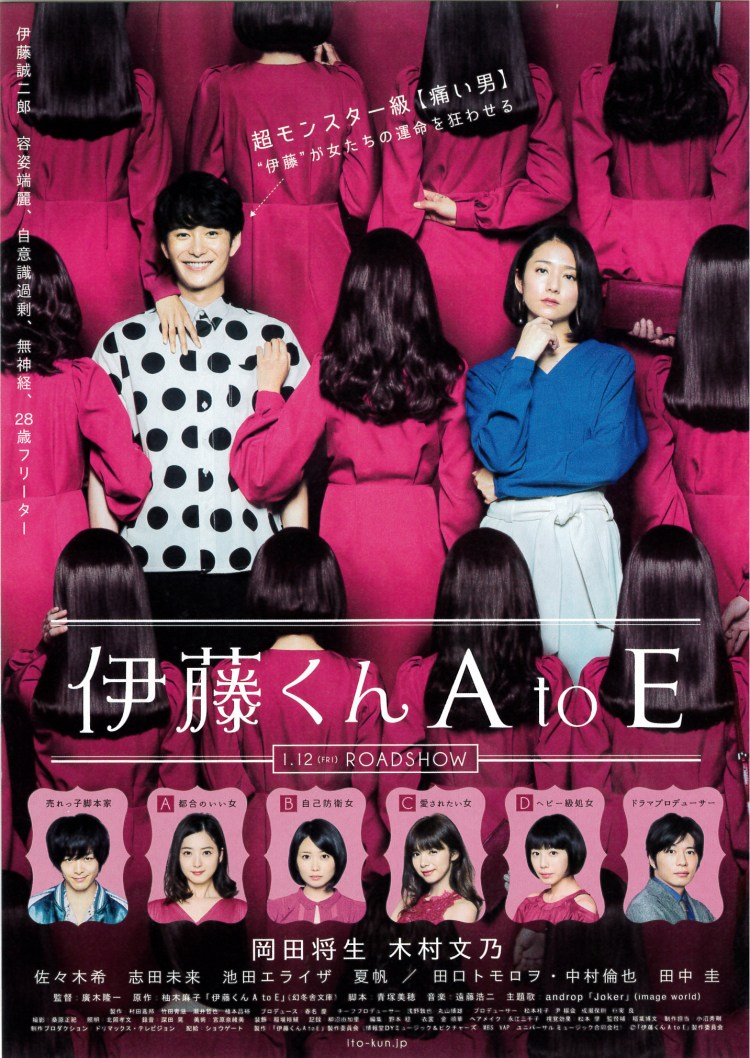
The Many Faces of Ito (伊藤くん A to E, Ryuichi Hiroki, 2018)

Many Faces of Ito posterRyuichi Hiroki’s career has been oddly varied, but he’s never been one to avoid straying into uncomfortable areas. Adapted from the novel by Asako Yuzuki, The Many Faces of Ito (伊藤くん A to E, Ito-kun A to E) explores the risks and rewards of modern existence through the prismatic viewpoint of five women messed around by the same terrible man as he seems to breeze through life buoyed up by the sense of superiority he gains through their unwavering appreciation. Then again perhaps his air of ultra confidence is yet another mask for his insecurity as he paints every failure as a conscious rejection, sneering superciliously at the desires of others while wilfully negating his own. Our guide, a blocked TV drama scriptwriter, may have imagined this entire scenario as she attempts to break through her own sense of painful inertia but it remains true that the world she inhabits is far from kind to women seeking the key to their own destinies.

32-year-old Rio (Fumino Kimura) won a scriptwriting competition which developed into a top TV hit some years previously but has struggled to replicate her success and now makes her living teaching screenwriting and acting as an expert on love for women captivated by the idealised romance of her debut “Tokyo Doll House”. Her longterm editor/producer (and former lover but that’s a problem we’ll get to later) encourages her to mine her romance sessions for possible material through interviewing women with unusual romantic dilemmas on the pretext of helping them find a way out. Rio, now jaded and cynical, is of a mind to make money from other people’s misery and the advice she gives is less in service of her clients and more in that of the story as she tries to engineer “naturalistic” drama but as in all things, her writing becomes increasingly personal and she is in effect in dialogue with herself.

Unbeknownst to Rio, each of the four women she decides to interview is involved with the same man – Ito (Masaki Okada), who is, because coincidence is real, a student in her screenwriting class. With his patterned black and white shirts and handsome yet somehow anonymous appearance, Ito is earnest but superior, shifting from over eager puppy to dangerously possessive stalker. 28-year-old Tomomi (Nozomi Sasaki) has been carrying a torch for him for five years longing for an intimacy that will never develop while Ito insensitively tells her about his crush on a workplace colleague, Shuko (Mirai Shida). Shuko is in no way interested in his advances but Ito refuses to take no for an answer, eventually forcing her to leave the company because of his constant harassment. Wounded, he retreats to university “friend” Miki (Kaho) who he knows has been nursing a long time crush and is shy and naive enough for him to push around without much resistance. Luckily (in one sense) Miki has a devoted roommate, Satoko (Elaiza Ikeda), who is keen to look out for her friend but there is perhaps more to this relationship than meets the eye and Satoko’s jealously eventually pulls her too into Ito’s web of romantic destruction.

The question Rio finds herself asking if each of these women, and she herself in her failure to get over the betrayal of her producer Tamura (Kei Tanaka) who eventually broke up with her to marry someone else, is in a sense complicit in their own inability to move forward. It’s almost as if their collective sense of low self-esteem and fear of rejection has conjured up its own mythical monster in the figure of Ito who displays just about every male failing on offer. He uses and abuses and when rejected proudly states that he never wanted that anyway because he’s simply far too good for whatever it is that you might prize. Yet through battling his cruelty and emotional violence, each of the women is able to cut straight through to the origin of all their problems, correctly identifying what it is that ails them and committing to moving forward in spite of it even if the part of themselves they most feared was the one the saw mirrored in Ito’s insecurities.

The “battle” between Ito and Rio comes out as a draw which sees them both lose but only provokes a final confrontation which is as much with Rio herself as it is with the Itos of the world. Ito rejects his failure, sneers at the TV industry and claims to have loftier goals but Rio has figured him out by now and correctly assesses that his life philosophy is to back away from the fight to avoid the humiliation of losing. Pushed by the unexpectedly profound interventions of fellow writer KazuKen (Tomoya Nakamura) who reminds her that she was once a writer unafraid to bare her soul, Rio realises that a life without risk is mere emptiness and the soulless (non)existence of a man like Ito is no way to live. To be alive to is open yourself up to pain, but if you refuse to engage in fear of getting hurt you might as well be dead and if what you want is to make art you’ll have to lift the lid on all that personal suffering or you’ll never be able to connect. Each of our timid ladies finds themselves ready to stand tall, no longer willing to afford the likes of Ito the esteem which allows him to sail on through papering over his lack of self-confidence by sapping all of theirs. The masks are off, and the game is on.


Currently streaming on Netflix in most territories along with the companion TV drama.

Original trailer (no subtitles)
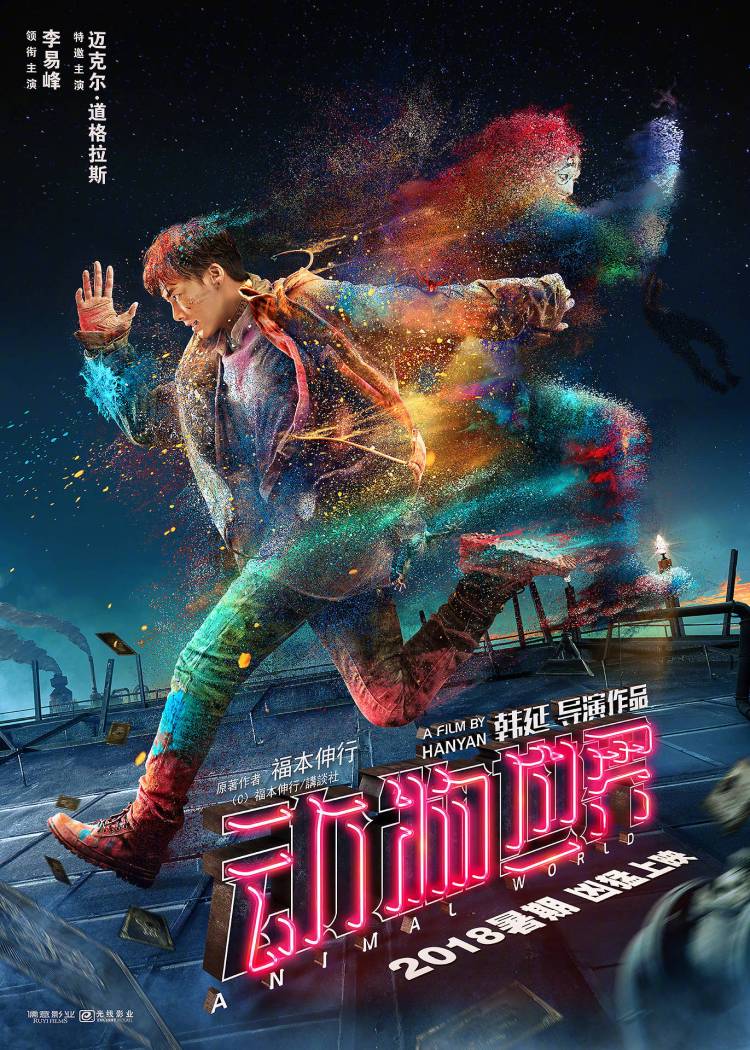
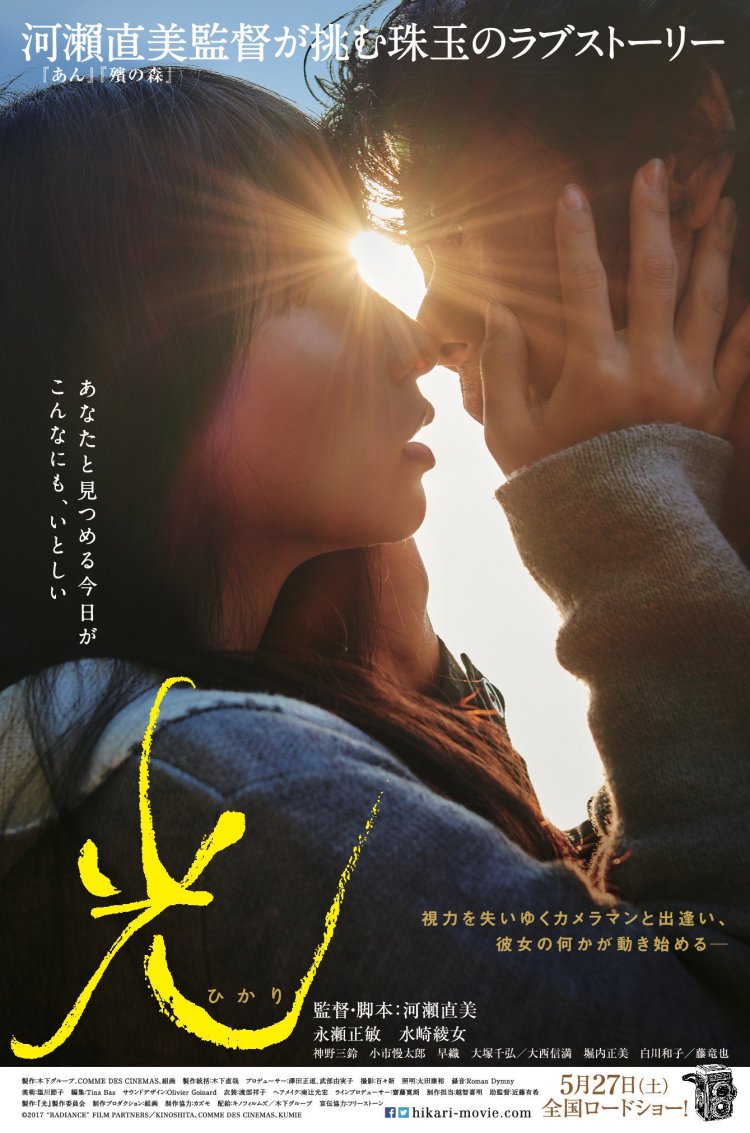
Radiance (光, Naomi Kawase, 2017)

radiance posterAs a producer claims part way through Naomi Kawase’s Radiance (光, Hikari), the aim of cinema is to connect with other people’s lives. Yet connection is something each of our conflicted protagonists seem to struggle with and something which continues to elude them as they try and fail to find the meaning in the messages of sound and image. Radiance wants to guide us to the light, but its clearest dialogue is with itself or more practically in discussion of translation as an act of intense connection even as its messages flicker in the breeze, caught in a moment of transition from one soul to another. Yet what Kawase finds is that the message is carried, even if it cannot be “translated” into text, or image, or sound, it is felt all the same.

As the film opens a young woman, Misako (Ayame Misaki), observes the world around her and turns her observations into a poetic monologue. Her actions are a kind of rehearsal for her day job which involves creating the script for an audio description that will enable people with visual impairments to enjoy cinema. In order to improve her practice, Misako and her producer hold a number of focus meetings with a group of visually impaired people who can critique her script and point out any potential weak points or moments of confusion. Most of the members of the group are of a mind to be helpful though perhaps overly polite but one, Nakamori (Masatoshi Nagase), is particularly critical of Misako’s approach and unforgiving when voicing his concerns.

Unlike most of the other participants, Nakamori is partially sighted but is suffering from a degenerative condition in which he will eventually lose his sight entirely. This fact is particularly difficult for him to come to terms with as he had previously been an award winning photographer and is losing a key part of his identity in having to face the day when he will have to put his camera down for good.

One of the other ladies at the focus session, pointing out that Misako’s script for the audio description of the film is in effect a subjective commentary, elaborates that what she got from Misako’s narration was a sense of ruined of beauty, of sadness, and the inescapable sense of loss for something that can never be recovered. The film itself is, apparently, the story of a lifelong romance approaching its end as a husband prepares to say goodbye to his wife as she slips away from him. The themes, as we later find out, are ones eerily relevant to Misako who is still mourning the loss of her father while she watches her mother fade away as dementia takes its hold.

The beauty of transience, of the sense of loss before loss, becomes the central message of the film within the film – the message that Misako could not seem to see because she was afraid to look. Fed up with Nakamori’s constant criticisms, she accuses him of lacking imagination but her own act of “seeing” is then exposed as superficial, merely a catalogue of actions without meaning or import but delivered with a subjectivity that, as Nakamori cruelly points out, “gets in the way” of his ability to connect fully with the visual world that Misako is trying to create. 

Misako misses the messages because there are things that cannot be directly understood without conscious effort – the elderly film director tells her that her interpretation of the final scenes is too “hopeful”, as a young woman she cannot comprehend the futility of a old man’s desire for life. Age cannot talk to youth, and sound cannot talk to image but still the attempt is made and a message delivered albeit imperfectly. Nakamori, having given his life to the art of photography, is eventually forced to abandon the thing he loves most only to discover something else existing underneath it while Misako is forced to confront the superficiality of her act of “seeing” which makes her attempt to “translate” image into sound a hollow exercise – something which can only be corrected by a willingness to accept that the medium is not the message. Kawase’s messages may be trite, on one level, but there is something beautiful in continuing to chase the light as it dwindles knowing that in the darkness the flame still burns.


International trailer (English subtitles/captions)

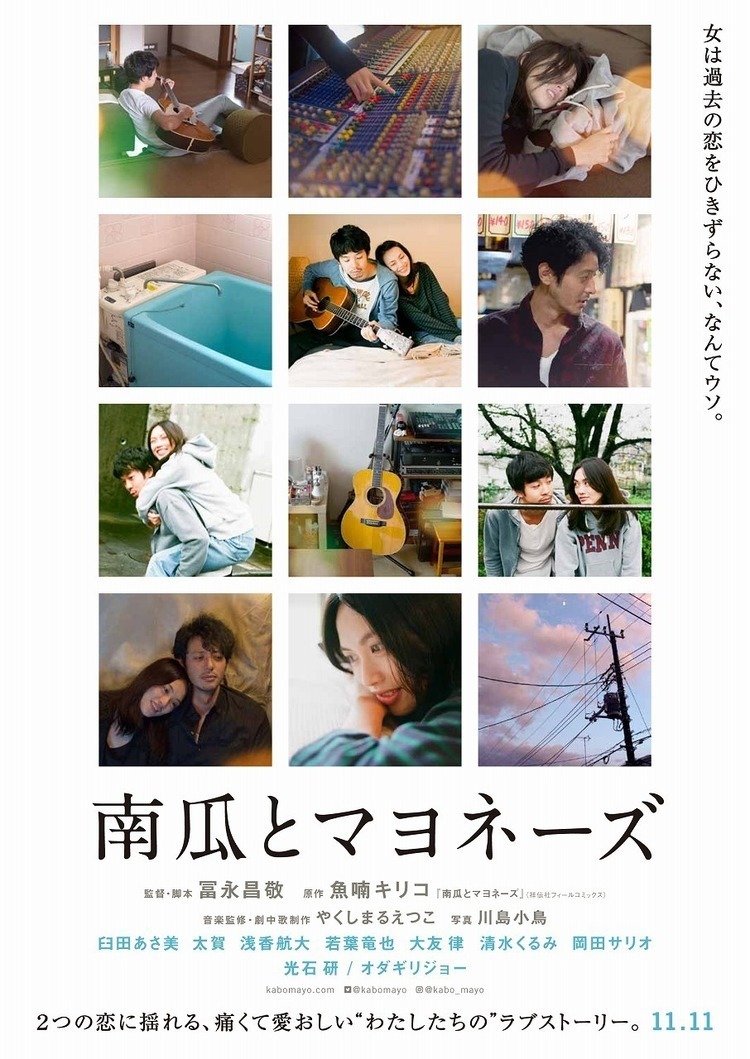
Pumpkin and Mayonnaise (南瓜とマヨネーズ, Masanori Tominaga, 2017)

Pumpkin and Mayonnaise posterIt’s important to be supportive towards your partner’s dreams, but what if your support is actually getting in the way of their development? The question itself never seems to occur to the heroine of Pumpkin and Mayonnaise (南瓜とマヨネーズ, Kabocha to Mayonnaise) as she descends deeper and deeper into a dark web of wilful self sacrifice hoping that her singer songwriter boyfriend will finally get his act together and come up with some new material. Adapted from the manga by Kiriko Nananan, Masanori Tominaga’s charting of a modern relationship is perhaps slightly more hopeful than those which have previously featured in his movies but nevertheless takes his heroine to some pretty dark places all in the name of love.

Tsuchida (Asami Usuda) is a 20-something woman living with her aspiring rock star boyfriend, Seiichi (Taiga). In order to facilitate his art, she has convinced him to give up work while she supports the couple financially through her job at live music venue. Seiichi, however, remains conflicted about the arrangement and hasn’t written anything of note in months. In fact, as Tsuchida tells a colleague, he barely leaves the house which means he’s not likely to be suddenly inspired either. What Seiichi doesn’t know is that the money from Tsuchida’s regular job isn’t quite enough and she’s started supplementing her income through working in a hostess bar. Though not naturally suited to the work, she soon picks up a “particular” client (Ken Mitsuishi) who offers her some “overtime” at a hotel. Tsuchida isn’t quite sure but having come so far she can hardly turn back now, even if the guy is a pervert with a school girl fetish. Hiding the money in a cigarette box in shame, Tsuchida is eventually caught out and forced to confess to Seiichi who is horrified, placing a serious strain on their relationship.

Just as her relationship with Seiichi starts to go south, Tsuchida runs into an old flame, Hagio, who is everything Seiichi isn’t – brash, arrogant, confident, and very much not the sort of man to make a life with. Nevertheless, Tsuchida can’t help looking back and remembering how madly in love she was with Hagio (Joe Odagiri), forgetting that she was just as madly in love with Seiichi or she wouldn’t have gone to all this trouble for his benefit. Hagio himself cites Tsuchida’s all or nothing intensity as one reason he ended the relationship the first time round, she was just too into him and he found it annoying.

Seiichi, a quieter, introspective sort, never found Tsuchida’s devotion irritating but the pressure of her expectation was perhaps a barrier to his artistic success. Staying home all day, bored and depressed, Seiichi rarely found the inspiration to write between brooding about his lack of progress and feeling guilty that he couldn’t pull his economic weight. To his credit, Seiichi harbours no particularly sexist notions towards Tsuchida’s being the family earner, but he does mildly resent a barbed comment from a friend who criticises him for his “purist” stance in accusing his former band members of selling out when he is being kept by his girlfriend. Likewise, he doesn’t reject Tsuchida for engaging in prostitution or for “cheating” on him, but turns his anger inward in resenting that she felt forced to go such great lengths for the music that he isn’t quite so confident about anyway.

The problem is that Tsuchida gets far too into her idealised notions of romance rather than directly engaging with the person in front of her. She pushed Seiichi towards music and encouraged him to fulfil his dreams but in the end stifled them with her unforgiving intensity. Likewise, she ends up over engaging in Hagio’s hedonistic, devil may care lifestyle and never really stops to think where it’s going to take her. Only near the end does she begin to approach a level of self realisation which allows her to see that her relationship with Hagio will never work out because she remains afraid to enter a true level of intimacy with him in fear that he won’t like what he sees and will leave her.

Told from Tsuchida’s perspective with frequent voice overs to let us in on her interior monologue, Pumpkin and Mayonnaise is a messy “grownup” love story between three people who are still in the process of growing up. Artistic integrity rubs up against relationship dynamics as Tsuchida is forced to examine her own behaviour and realise she often, intentionally or otherwise, sabotages her dreams by attempting to impose her own singular vision upon them rather than simply let them be. As in real life, there may not be a “happy” ending, in one sense at least, but there is still the possibility of one further down the line for a woman who’s finally accepted herself and is willing to let others do the same.


Screened at Nippon Connection 2018.

Original trailer (no subtitles)
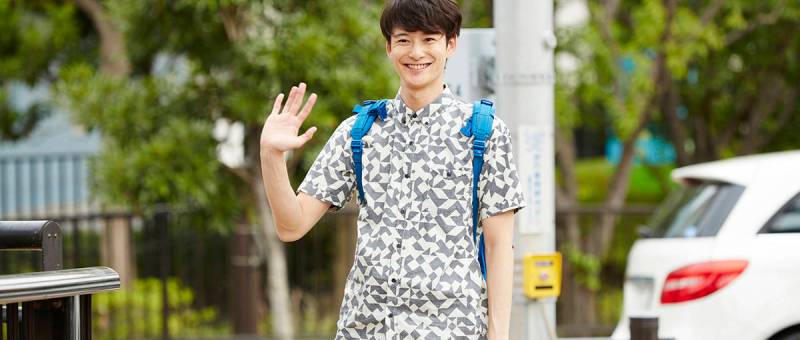
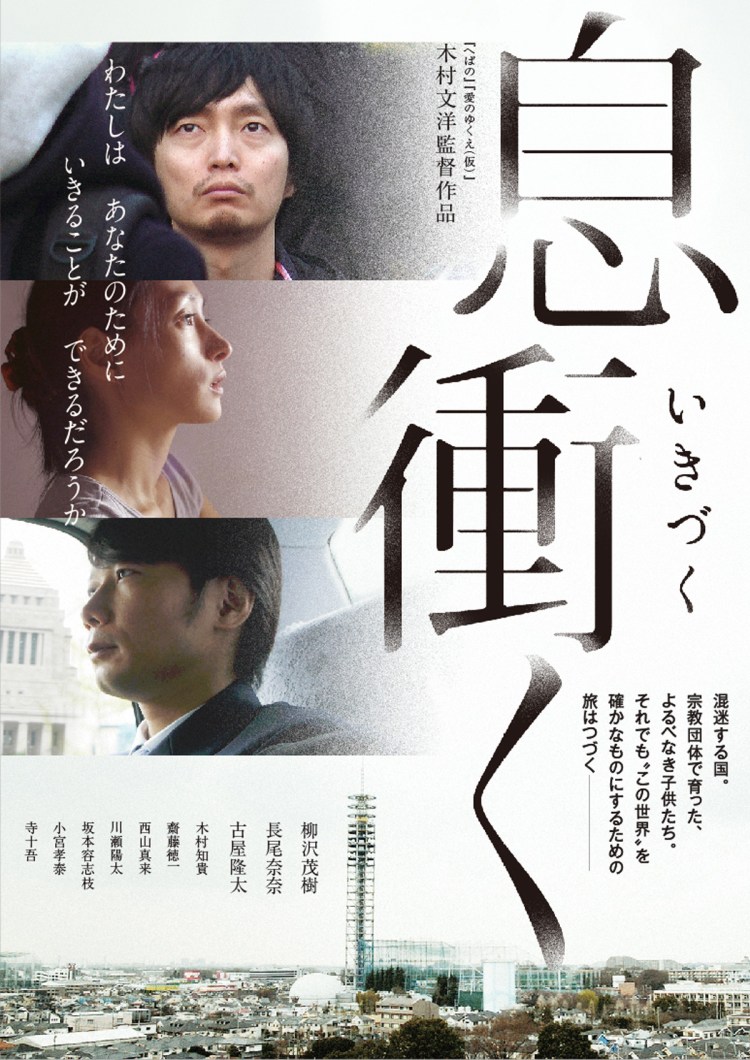
Breath of Rokkasho (息衝く, Bunyo Kimura, 2017)

Breath of Rokkasho posterIndividual desire versus responsibility to the collective is something of a major theme in Japanese cinema. The fallible ideologue at the centre of Breath of Rokkasho (息衝く, Ikizuku) believes individualism is the key to world happiness, implying that a collection of fulfilled individuals would amount to a fulfilled society, but then again his logic is perhaps hard to follow when he cares so little for other people’s freedom. Taking place in the post-Fukushima world, Rokkasho wants to extend this idea through examining the complexity of the anti-nuclear movement and the political forces which advocate for it while ordinary people largely sit back in silent disapproval. The ideal society, if there even is such a thing, will probably not be built by those in power but by those who manage shake off the problematic legacy of the past in order to embrace their “individual” wills but with the collective good in mind.

Norio (Shigeki Yanagisawa), Yasuyuki (Ryuta Furuya), and Yoshi (Nana Nagao) were raised in a politicised Buddhist cult, The Seed Association, which has a strong interest in ecological affairs and therefore the anti-nuclear movement. Each lacking fatherly input, the three youngsters fell under the spell of the cult’s most prominent member, Mr. M (Satoru Jitsunashi). Mr. M however abruptly upped and left them, abandoned without hope or answers. 20 years later, Norio is a civil servant also working for the Seed Association on political campaigns while Yasuyuki has become the new golden boy whom many tout as the natural successor to Mr. M. Yoshi left the sect at a much younger age and is now a single mother in the middle of what seems to be a fairly messy divorce.

Looking up at the Tanashi Tower (also known as Sky Tower West Tokyo) – a “state of the art” radio tower completed in 1989 midway through a period of unprecedented economic prosperity and named after the town which used to stand here the name of which literally means “no rice”, the three kids ask Mr. M if it’s possible to see the Nighthawk Star from down below. He tells them he doesn’t know, but they can look for it together. Mr. M did not help them, he disappeared and left them with only more questions and an even shakier relationship with their familial pasts. Each badly let down by parental figures who either abandoned their families to join the cult out of nuclear fear, committed suicide, or were simply distant and neglectful, neither Norio, Yasuyuki, or Yoshi has been able to step into the adult world with any degree of confidence or faith in its teachings.

Only by confronting their difficult pasts can the trio begin to unblock their individual paths. A visit to the long absent Mr. M who has apparently embraced full individualism as a hermit farmer who dresses in a comical baby chick’s costume complete with squeaky claw-shaped slippers, begins to show them that their faith in his teachings may have been misplaced. Mr. M claims that the human race is not yet strong enough to live only by thinking of its own happiness, something that he feels would bring the greatest happiness to all mankind. Refusing to recognise the “selfishness” of his philosophy, Mr. M has withdrawn from society and made himself the centre of a happy nation of one.

Parental betrayal becomes a major theme, eventually extending to the paternity of the state in its repeated failures to protect and care for its children. The English title of the film references the Rokkasho nuclear reprocessing facility which has become an ongoing scandal in its 20-year series of construction delays with 23 postponements issued since its original 1997 projected date for completion. Norio, the melancholy civil servant, hails from the town himself – in fact his mother took him away from it precisely because she feared a nuclear disaster. Yet The Seed Association, or anyone else for that matter, has not been able to solve the nuclear issue even in the post-Fukushima era. Engaged in the business of “politics” the sect’s intentions have become blurred as they contemplate their survival in an ever shrinking society, subject to the same political games of manipulation and backbiting as any other party. Gradually disillusioned with the cult’s hypocrisy and didacticism, Norio considers forging his own path – something which sets him at odds with Yasuyuki whose faith is also shaken only he’s invested far too much to allow himself to acknowledge it.

The Japanese title, by contrast, simply means to gasp for air. Trapped fast in society filled with corrupt, conflicting values each of the three struggles to find a foothold for themselves as they flounder wildly without guidance or aim. Yet in being forced to confront themselves and their pasts there is a movement towards progress, or at least a strong desire to find it. They, like their nation, have been betrayed and struggled to deal with their betrayal, but have managed to find their own essential truth even so and along with it the ability breathe deeply even when the air is thickening.


Screened at Nippon Connection 2018.

Original trailer (no subtitles)
Moon and Thunder (月と雷, Hiroshi Ando, 2017)

Moon and Thunder posterThe family is coming in for another round of fierce criticism in Japanese cinema where the “family drama” has long been revered as a representative genre. Hiroshi Ando who has hitherto been more interested in atypical romantic relationships is the latest to reconsider whether family is really all it’s cracked up to be in adapting Mitsuyo Kakuta’s novel, Moon and Thunder (月と雷, Tsuki to Kaminari). Two children from dysfunctional homes now fully grown struggle to adapt themselves to the nature of adult society, unsure if they should remove themselves from it entirely or force themselves into the socially expected roles they fear they don’t know how to play. Yet perhaps what they find in the end is not so much a talent for conventionality as an acceptance of life’s many imperfections.

20-something Yasuko (Eriko Hatsune) lives alone in her family home following the death of her father (Jun Murakami). She has an unsatisfying job in the local supermarket and is in an unsatisfying relationship with a co-worker who wants to get married but she isn’t convinced. Yasuko’s striving for an “ordinary” life is disrupted when Satoru (Kengo Kora), the son of one her father’s former girlfriends who lived with them for a few months 20 years ago, suddenly tracks her down. The reconnection between them is instant and easy but also confused, somewhere between siblings and lovers as they resume the physical intimacy they shared as children but on an adult level.

Satoru, a drifter like his flighty mother (Tamiyo Kusakari), pushes Yasuko towards a consideration of the idea of family which she’d long been resisting. She becomes determined to track down the biological mother who abandoned her when she was just a toddler, hoping to find some kind of answer to the great riddle of her life. Her birth mother, however, fails her once again. Kazuyo, faking tears for the reality show cameras reuniting her with her daughter, is a selfish woman who claims she left her country home because it was boring and that she left her daughter behind because she said she didn’t want to go. Feeling as if she’s being blamed for her own abandonment Yasuko is left with only more confusion and resentment but does at least discover something by accidentally encountering her younger half-sister, Arisa (Takemi Fujii), who shows her that life with her mother might not have been very much different than without.

Yasuko and Satoru revert to their childhood selves because that brief period 20 years ago is the only time either of them ever experienced what they felt to be a “normal” family life as they played together happily and were well fed and cared for by adults acting responsibly. It was however all over too soon – Naoko, Satoru’s drifting mother, upped and left just as she always does. Someone probably left her years ago, and now she makes sure to leave them first before she can be can rejected. Naoko is the only “mother” Yasuko can remember, and her abandonment the most painful in her long memory of abandonments. First came Satoru, and then Arisa her sister, and finally Naoko too returning, filling Yasuko’s home with an instant family that at times seems too perverse and difficult to bear.

Yet she struggles with the idea of “family” itself as something she’s supposed to want but perhaps doesn’t out of fear it will fail her. She considers marrying her workplace boyfriend even though it appears she doesn’t particularly like him and they aren’t suited, solely because his proposal offers her the “normal”, “conventional” kind of life she both fears and longs for. With Satoru she has found a kind of love that is more complicated than most, two lonely children looking for a home and finding it in each other but each fearing that they will not be able to bear the anxiety of its potential end. Yet rather than continue onward along the same dull path she’d walked before, longing for soulless normality, what Yasuko discovers is that she’ll be OK on her own even if things don’t work out in the way that most would consider “normal”. Abandoning past and future, Yasuko begins to accept her presence in the present as a woman with possibilities rather than a passive object clinging onto the life raft of “normality”, accepting that nothing is forever but that once something starts it never really ends.


Screened at Nippon Connection 2018.

Original trailer (no subtitles)